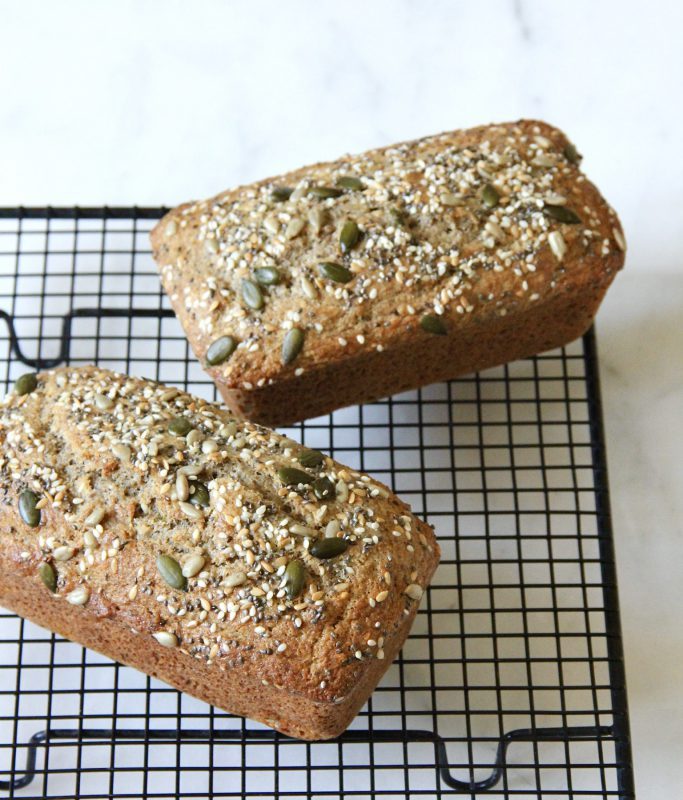
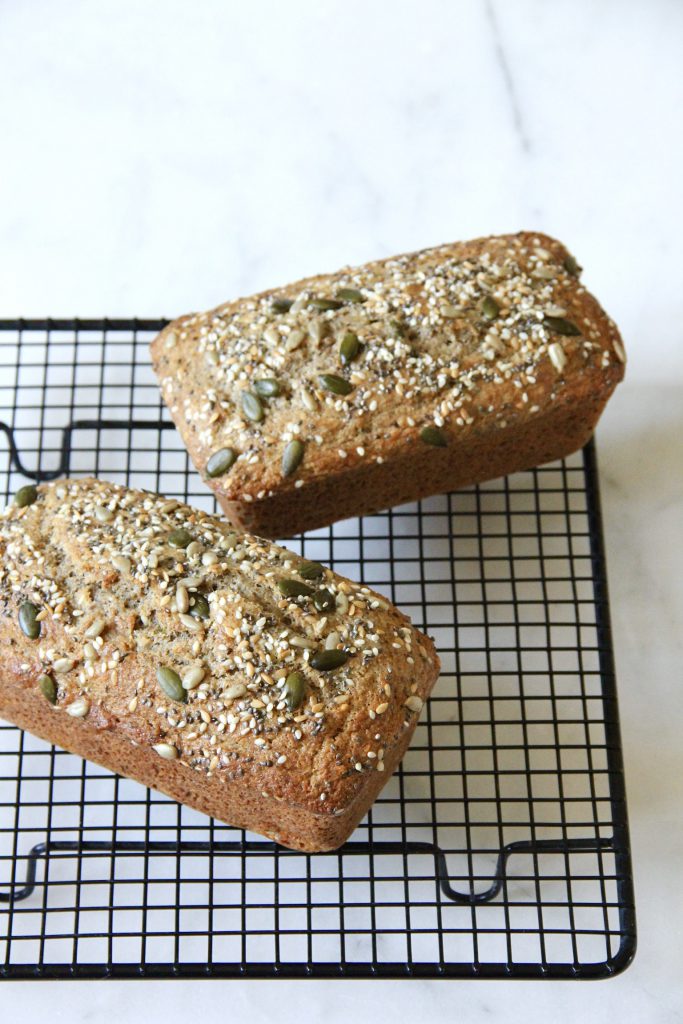
Seeded Banana Bread

I love this recipe for using up bananas which are past their sell by date. Somehow, you can never quite have the right number of bananas. It’s either too few or too many. And whenever I have too many I either freeze them ready to make smoothies out of, or turn them into this lovely cake.

This originally was my mum’s recipe, but I’ve added a few twists which my mum has now incorporated herself. She used to use butter, but for speed and nutritional value, I switched it to extra virgin olive oil. At first she protested, then she baked her first loaf using it and was converted immediately, proclaiming how much easier it was in comparison to melting and cooling the butter. The recipe also happens to be so simple, and forgiving! If you don’t have some of the ingredients they’re easy to swap in and out, and you can change the flavour of your bread depending on what you have, or what you fancy. If you want something more fruity, substitute some of the seeds for dried fruits, or even fresh or frozen for a delicious burst of flavour.

I also use two different types of flour to help maximise the diversity of the foods I’m eating each week. Of course I won’t be having this every week, but when I do I’d like to think that I can still be good while being naughty. The same goes for the seeds. I use a wide variety and generally use a premixed packet and then add in whatever I think is missing.

This recipe can easy be multiplied up according to how many bananas you have, but a word of caution. When using a 2lb tin or larger, the centre of the cake can sometime fail to rise due to the density and weight. This banana bread is not light and fluffy like a traditional sponge cake. It is loaded with fibre from seeds and whole grain flours which help increase the nutritional content of this treat. If multiplying up you can try baking in multiple small tins or in individual cupcake cases – just alter the timings so that a skewer inserted into the centre comes out clean. Anything beyond what you want to eat fresh can be frozen – I slice my loaf and freeze it so I can pull out a slice or two depending on how many I need.
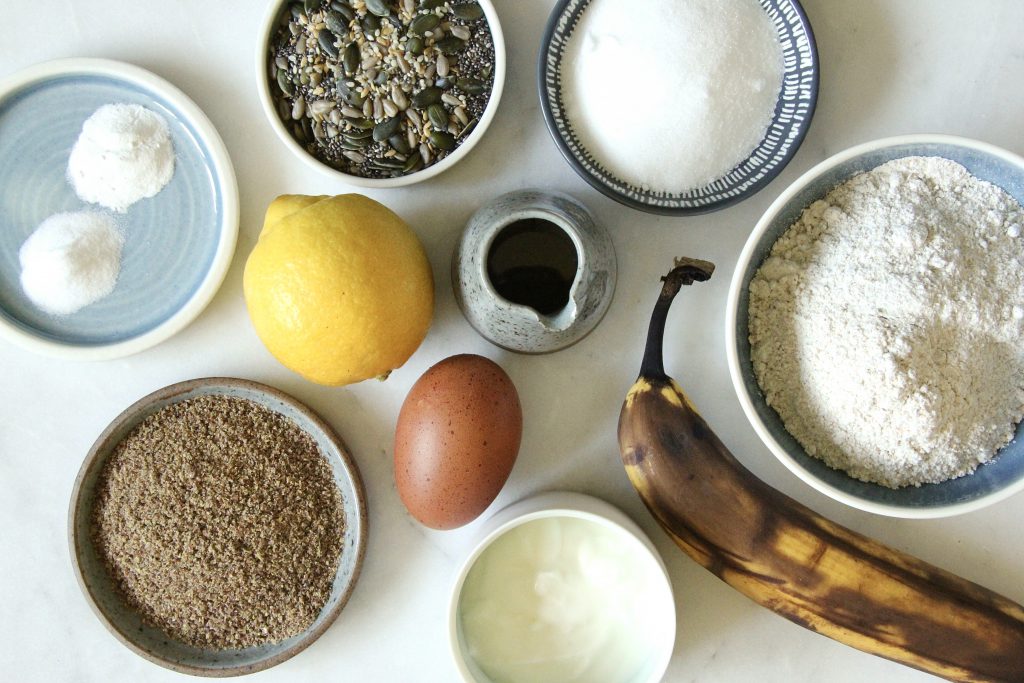
Serves 8

Ingredients

  • 1 large ripe banana
  • 80g dairy yoghurt (if using non-dairy add 10g extra fat)
  • Zest and juice of 1/2 an unwaxed lemon
  • 1/2 tsp vanilla paste or essence
  • 50ml EVOO
  • 1 large egg
  • 60g rye flour
  • 60g spelt flour
  • 20g ground linseeds
  • 1/2 tsp baking powder
  • 1/2 tsp bicarbonate of soda
  • 50g caster sugar
  • 40g mixed seeds + extra for sprinkling over the top
Method

  • Line a 1lb loaf tin and preheat the oven to 150°C fan/ 160°C convection
  • Mash the banana with the yoghurt, followed by all the remaining wet ingredients.
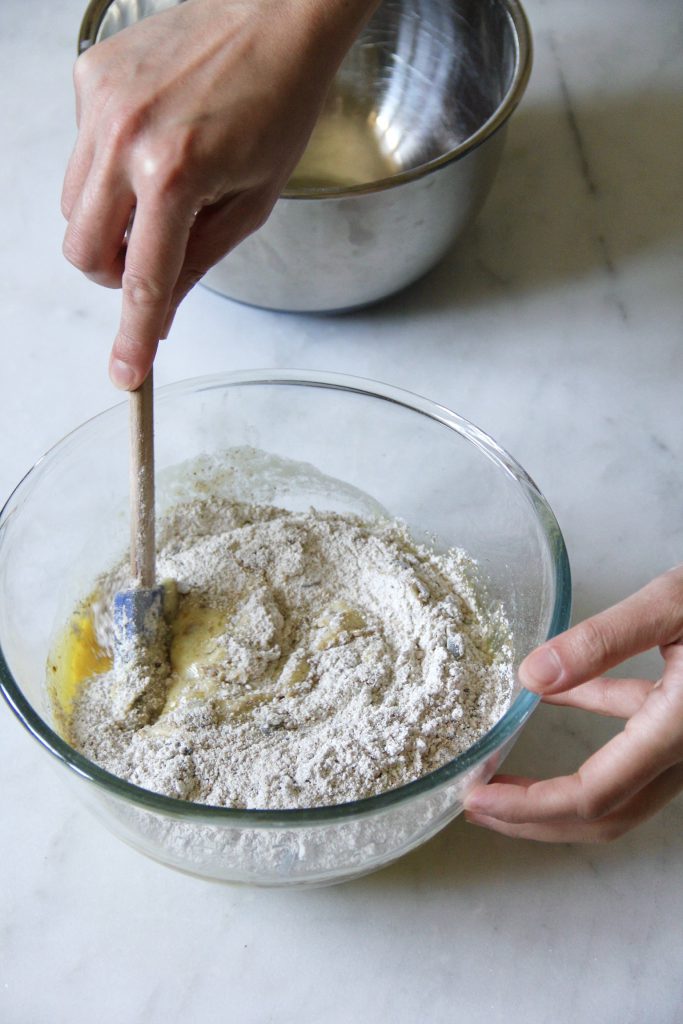
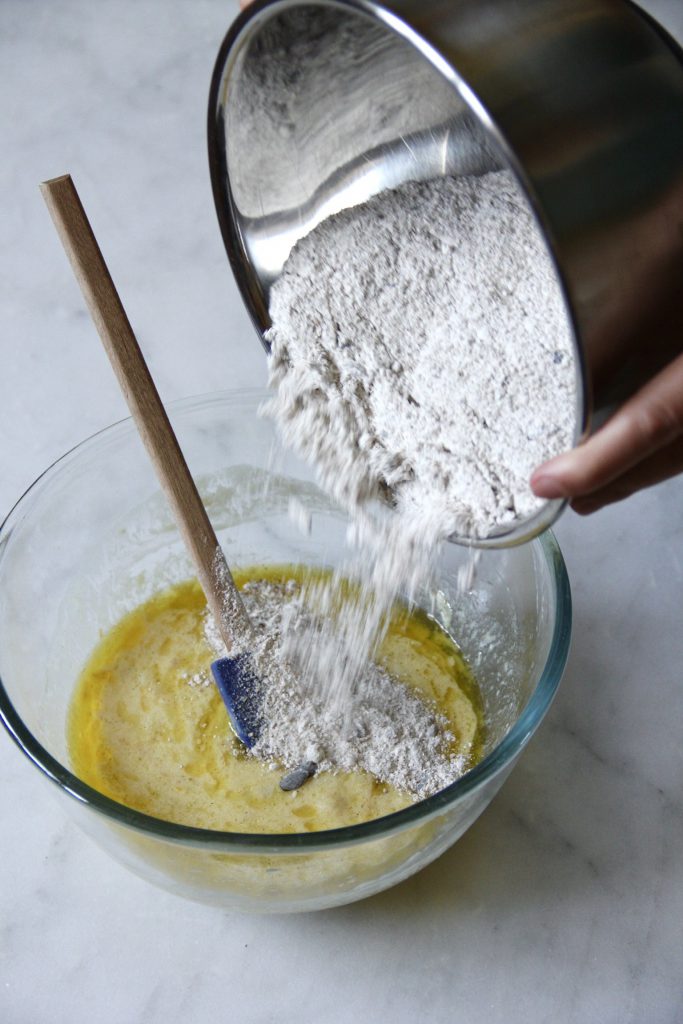
  • Mix all the dry ingredients together. Then combine with the wet ingredients and mix till combined.
  • Pour the mixture into the tin, sprinkle with seeds and bake for 35-40 minutes till a skewer inserted into the centre comes out clean.
  • Remove from the oven and turn out onto a wire rack to cool.

Per serving: 208kcal/ 10.5g fat/ 6.8g saturated fat/ 18.5g carbohydrates/ 3.5g fibre/ 5.5g protein
Sourdough

Sourdough. Risen with wild yeast, which come from Bert who lives in my fridge. Something so simple it is literally flour, water and salt. That’s it. It’s as simple as that, yet can be transformed into the most delicious bread. My recipe takes around 36 hours, and while it’s got only a few steps which require a lot of attention, it is well worth the wait. I always make 2 loaves, one to eat fresh on the day, and one sliced and frozen ready for eating later in the week.

If you haven’t got a starter, there’s no reason you can’t make one and have it ready to bake with in a week. Simply start by mixing 50% wholemeal and 50% white plain flour together. Take a handful and mix it with lukewarm water and leave in a cool area for a few days. Once you see bubbles forming, start to feed you starter by discarding about 80%, and adding 1:1 water and 50/50 flour blend to make a thick batter. Repeat this process ever day till it predictively rises and falls between feeds.

For a full tutorial length video visit my YouTube channel.

Makes 2 small loves, 1 large loaf, 3 pizza bases, or 1 large focaccia

Recipe

  • 15g starter
  • 25g wholemeal flour
  • 25g plain flour + extra for dusting
  • 100g strong wholemeal flour
  • 400g strong white flour
  • 8g salt
  • Seeds (optional)
  • Rice flour
  • Ice cubes

Method

  • Start the night before you plan to make the dough. Take 15g of your starter culture, add 50ml lukewarm water, 25g wholemeal flour and 25g plain white flour and mix well. Leave covered overnight at room temperature for around 10 hours. This is your leaven.
  • The next morning, mix the strong flours together in a large container. Measure 300ml of 25°C water, add 100g of leaven and mix. Pour over the flour and mix till a stiff dough forms. Cover and leave to rest for 30-45 minutes.
  • Measure 50ml of 25°C water and add 8g of salt. Stir to dissolve and pour over the dough. Mix in, scrunching and breaking the dough up. Once fully mixed cover and rest for 45-60 minutes.
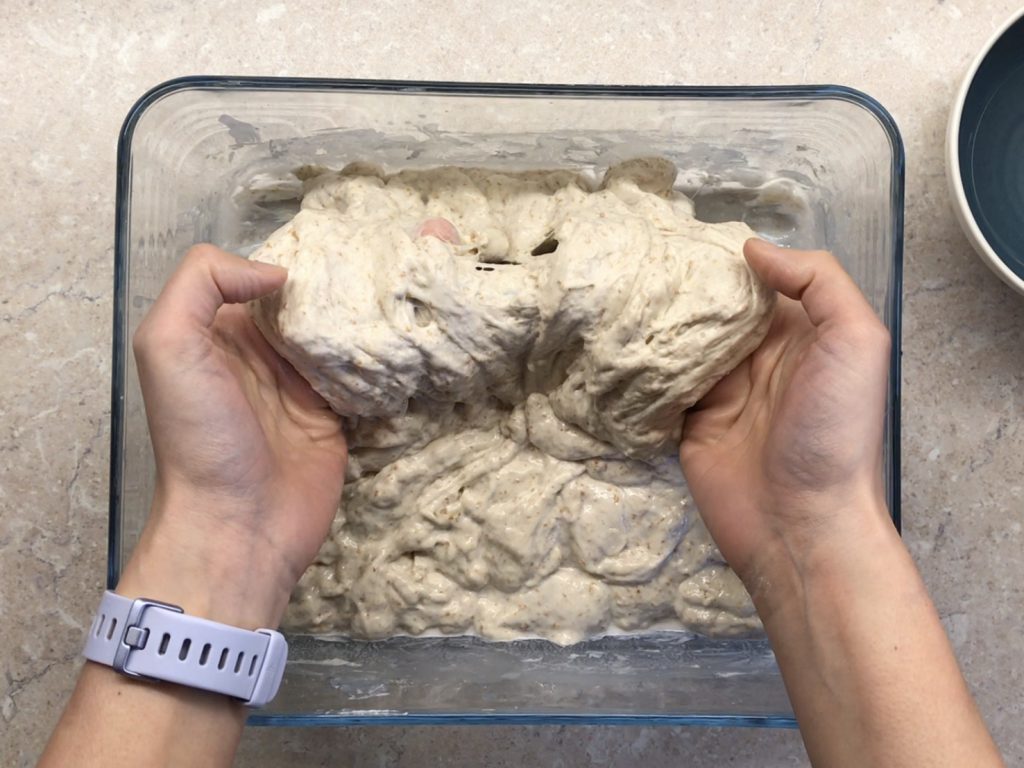
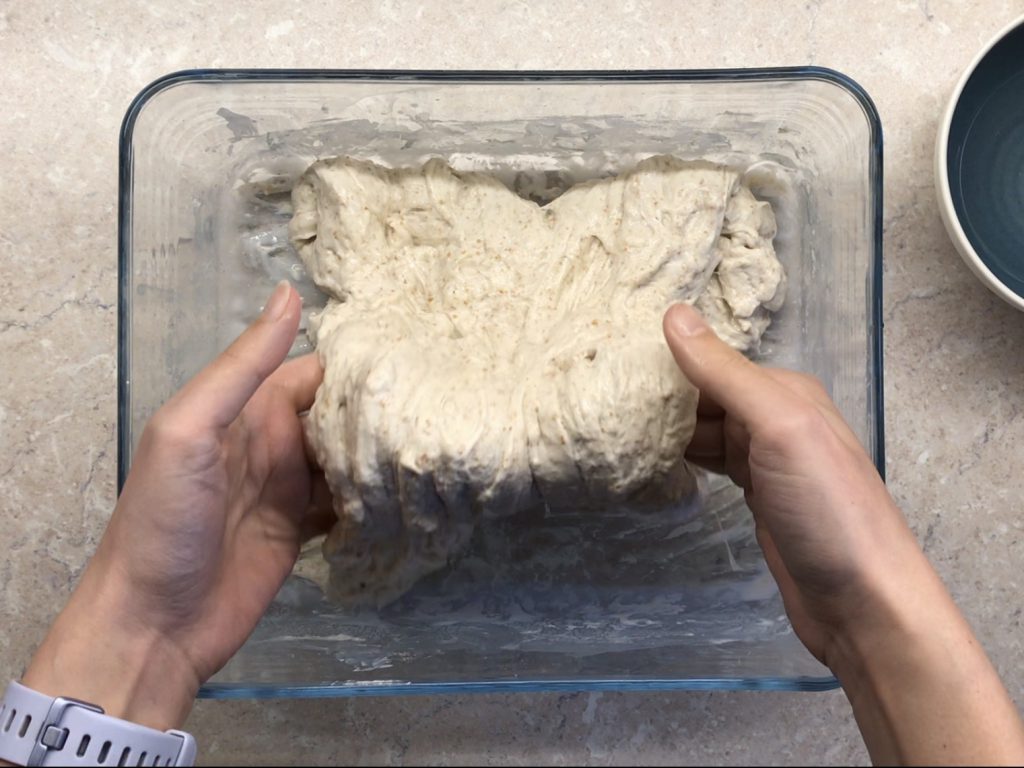
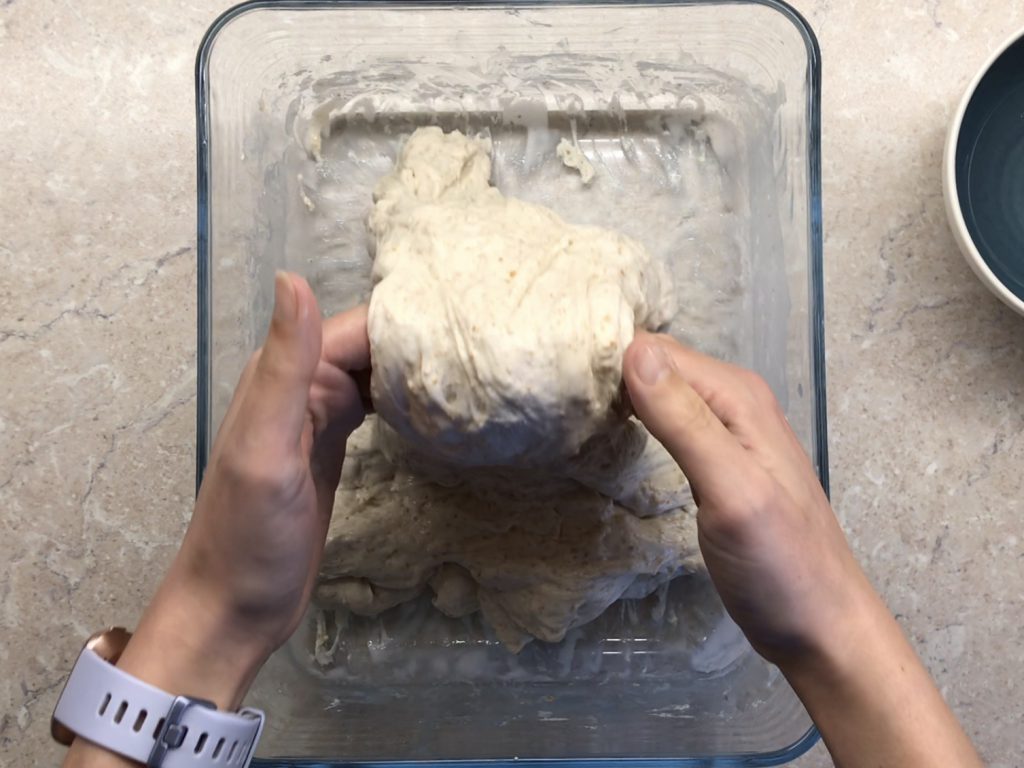
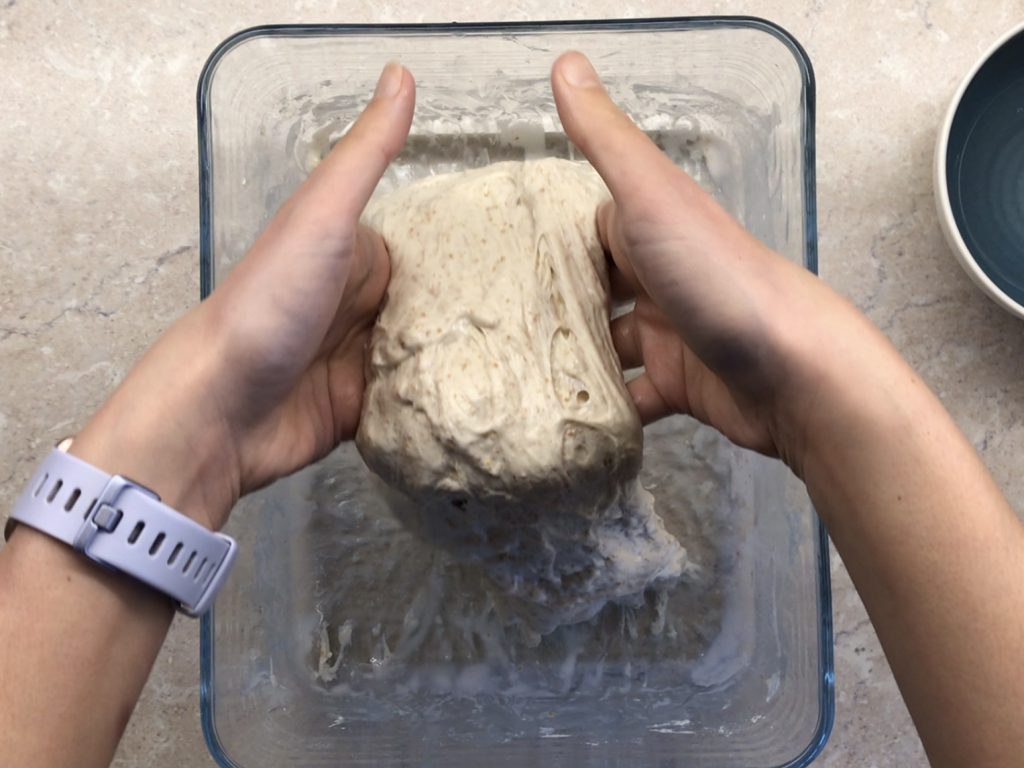
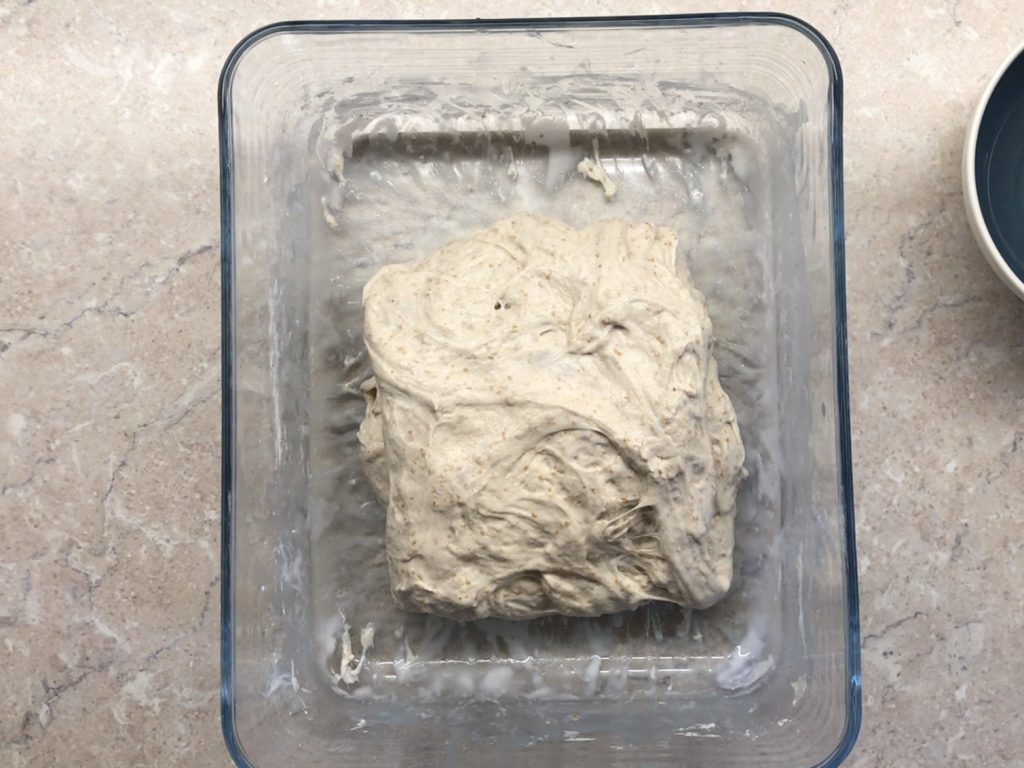
  • Dipping your hands in water to prevent the dough from sticking to you, perform a coil turn. Start by folding the top half of the dough under itself. Repeat for the bottom half of the dough. Turn the container 90° and repeat the process, folding the top half of the dough underneath itself and the bottom half of the dough underneath itself. This is one coil foil. Cover and leave for 45-60 minutes.
  • Repeat the process 3 more times. If you wish to add anything to the dough, do it before performing the second coil fold.
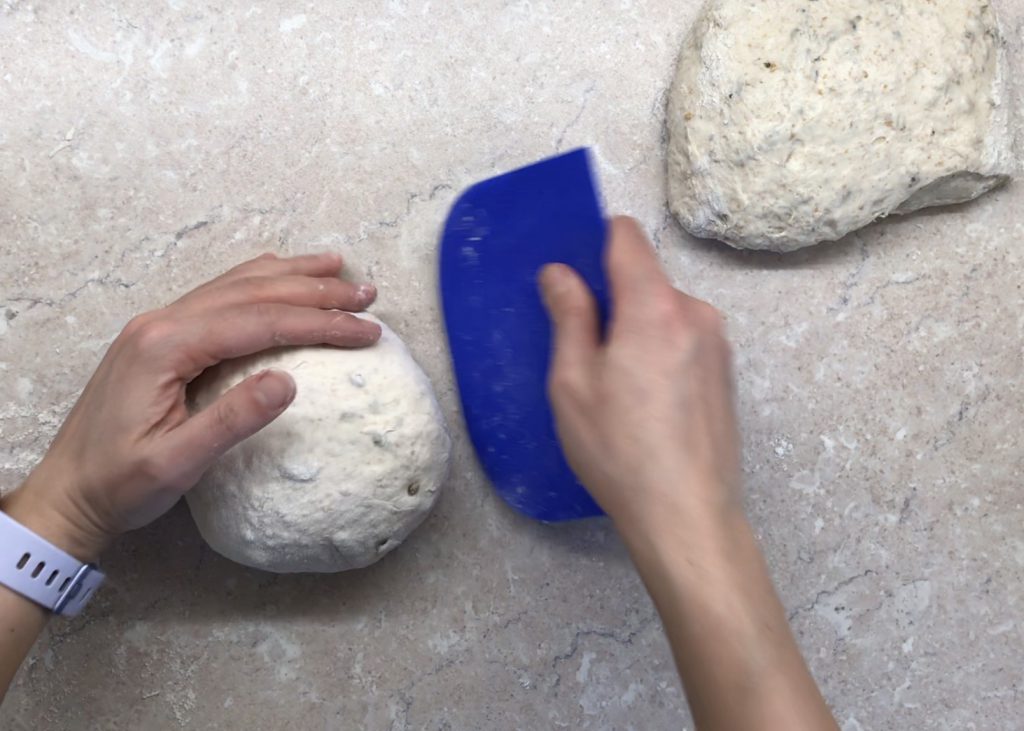
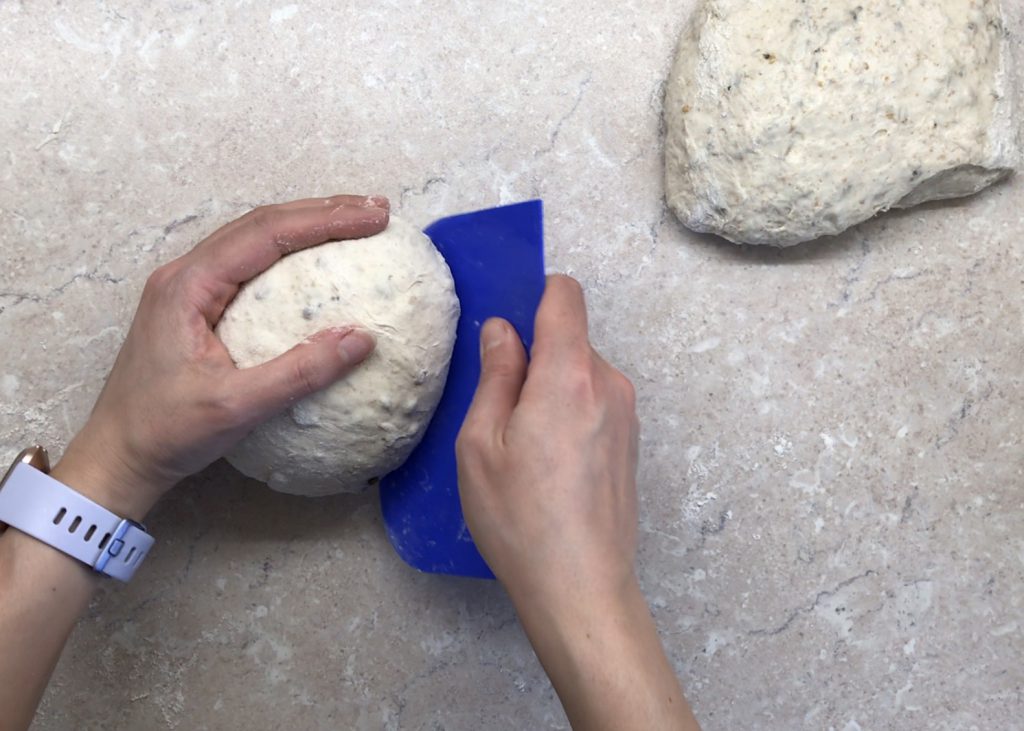
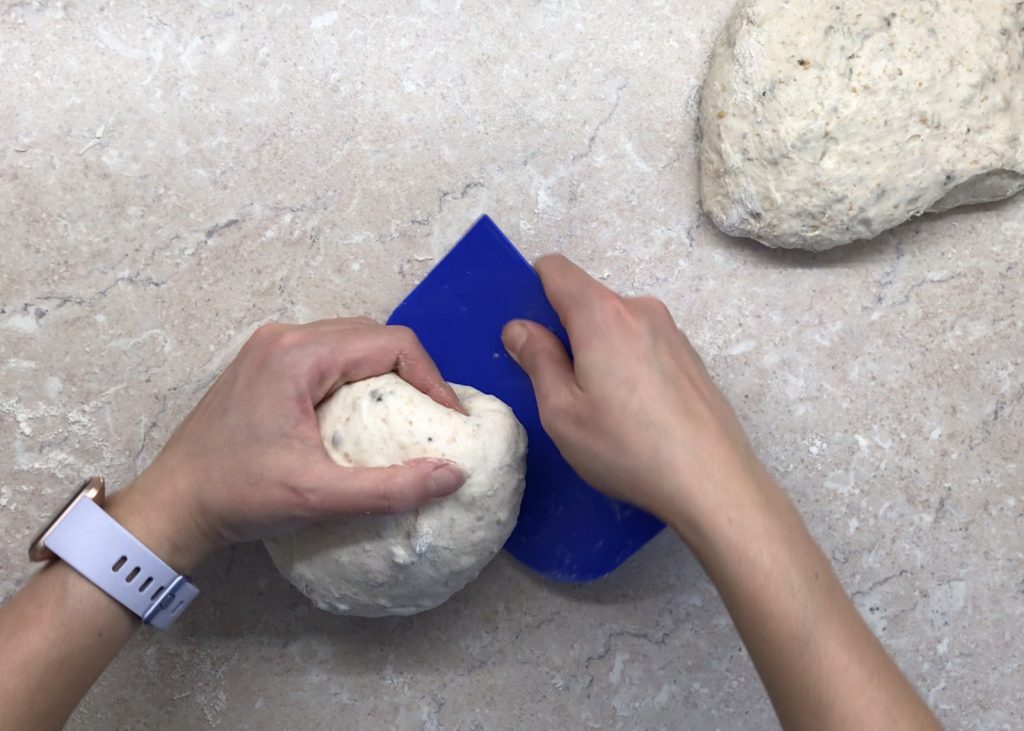
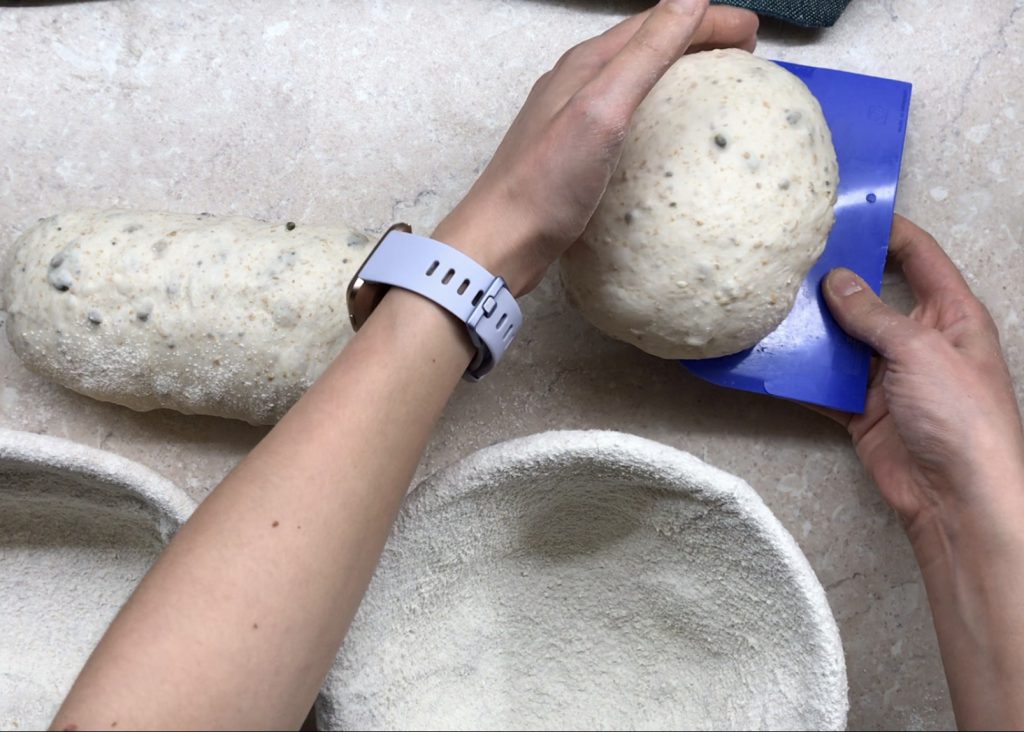
  • After a 60 minute rest after the 4th coil fold, use a dough spatula to pull the dough out onto the work surface and dust with a 50/50 mixture of plain flour and rice flour. If making 2 loaves, cut the dough into two and flip so the floured side is not on the bottom. Build tension in the dough by folding the edges into the centre of the dough, trying to incorporate as little flour as possible. Flip the ball over, and, using one hand and the dough spatula, work in a series of turns and pulls to create tension on the surface of the ball. Leave to rest on the worktop covered in a tea towel for 30 minutes.
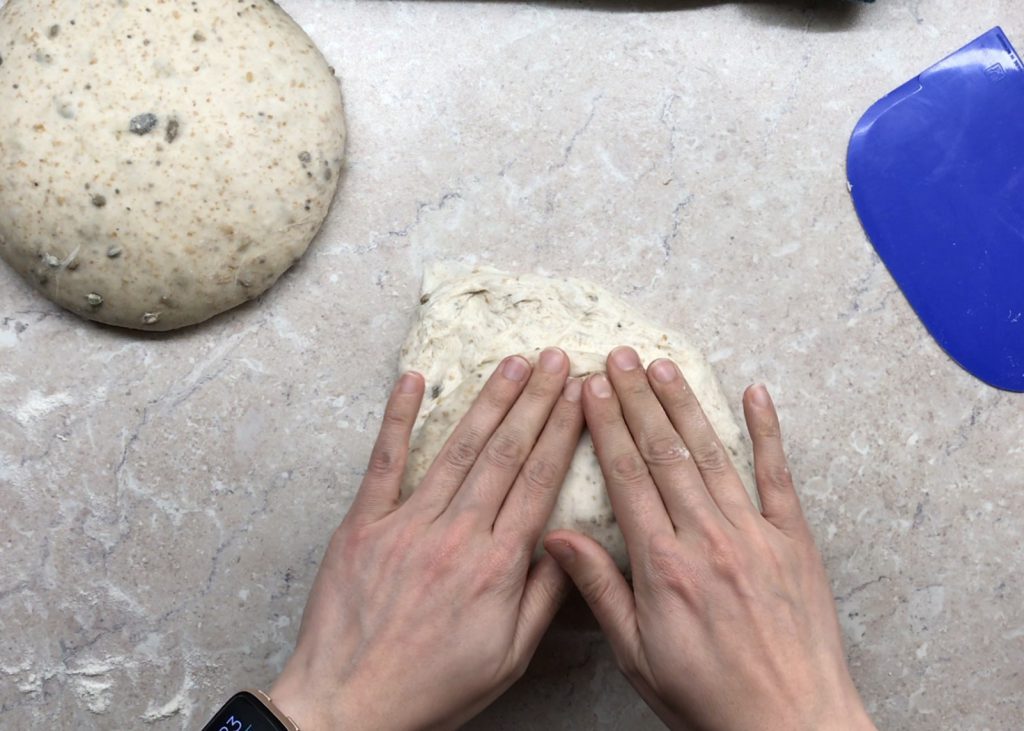
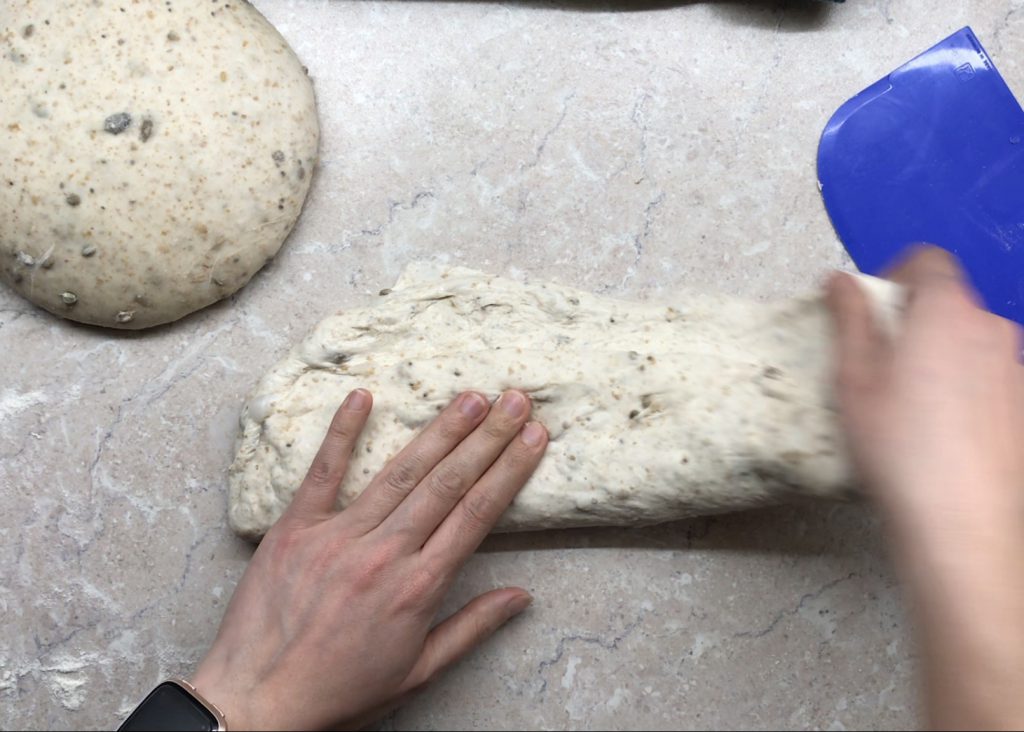
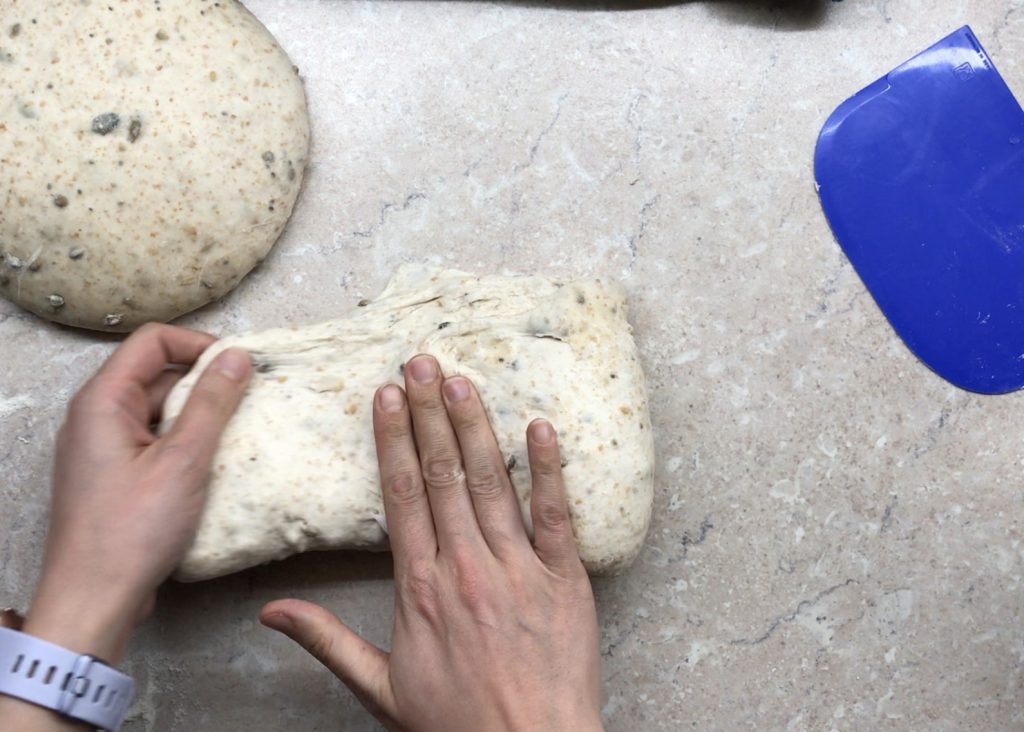
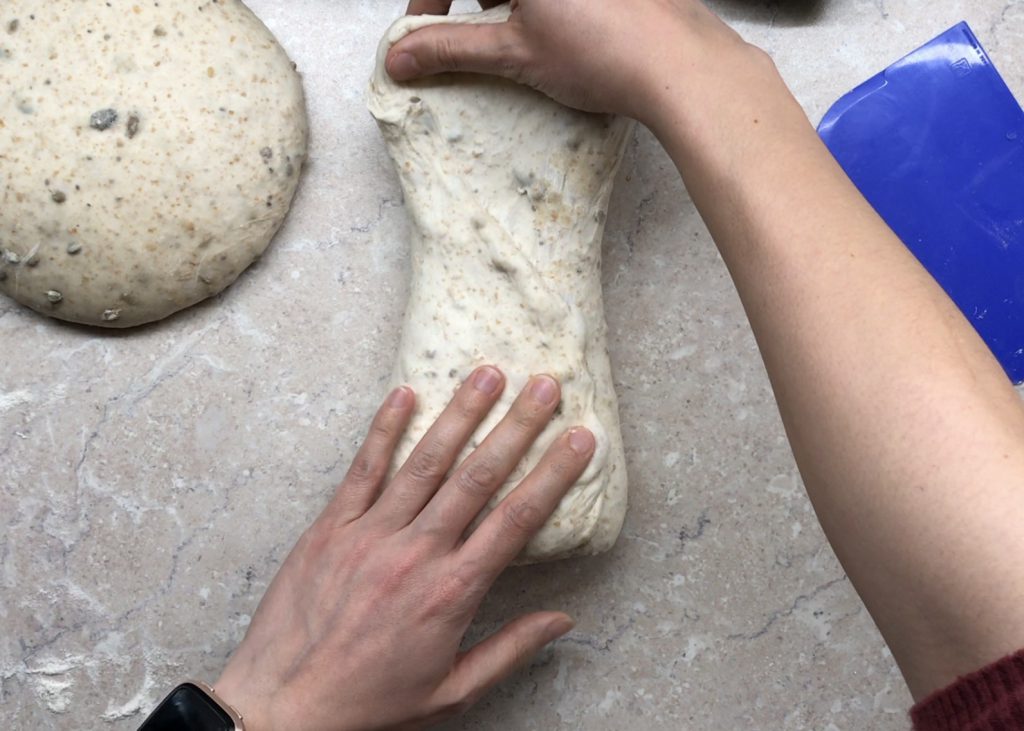
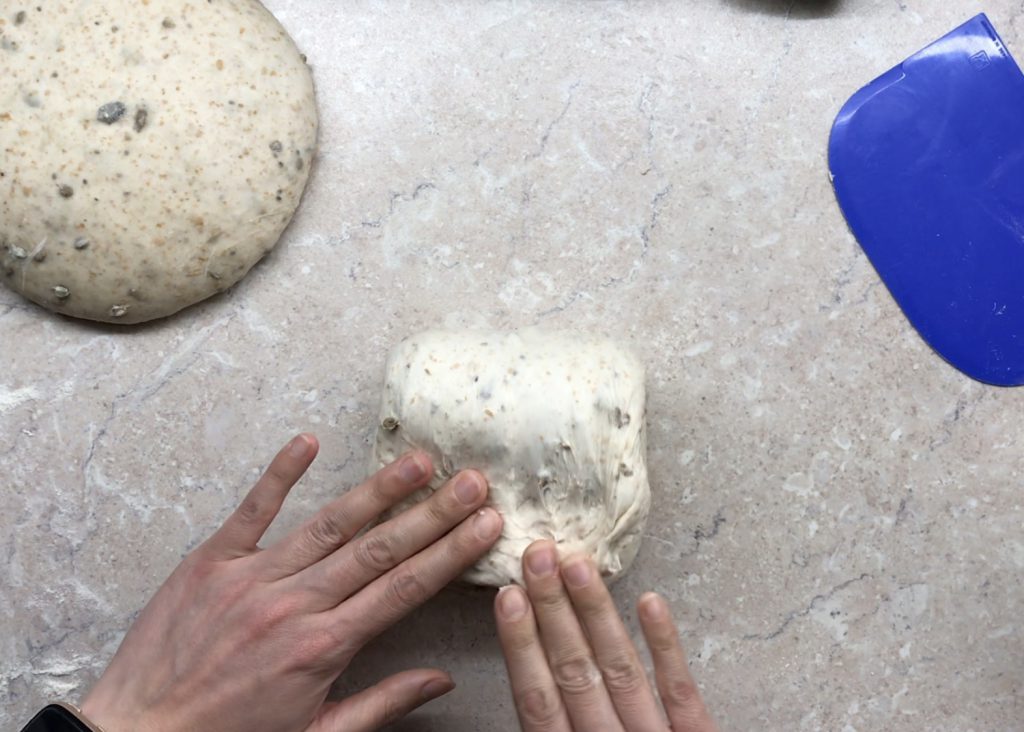
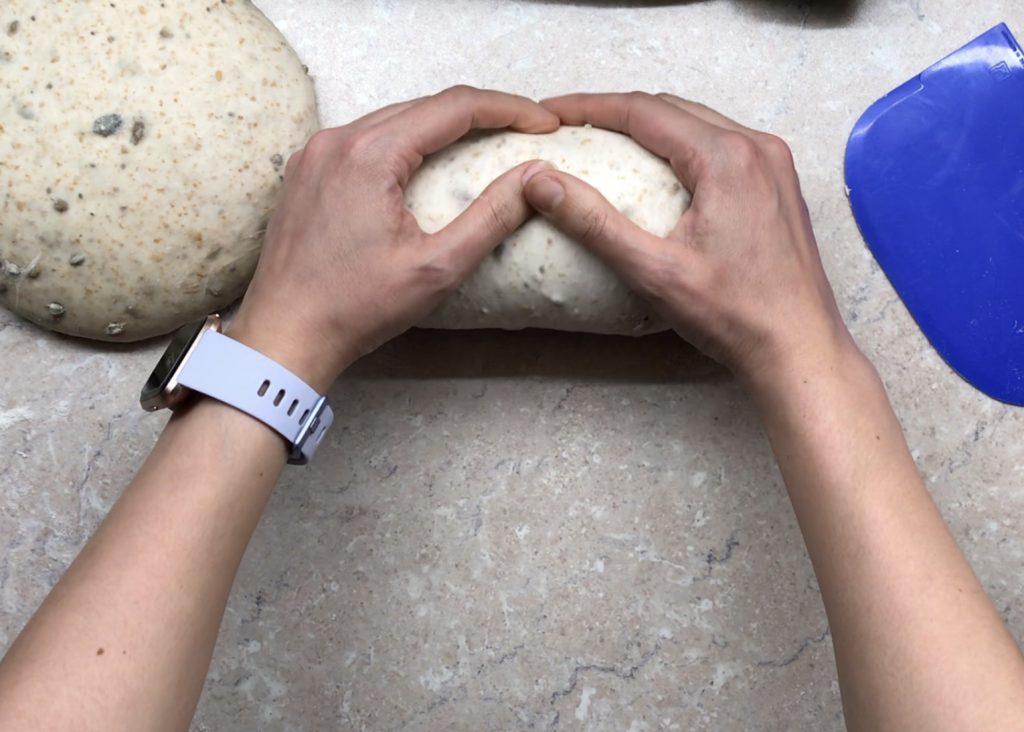
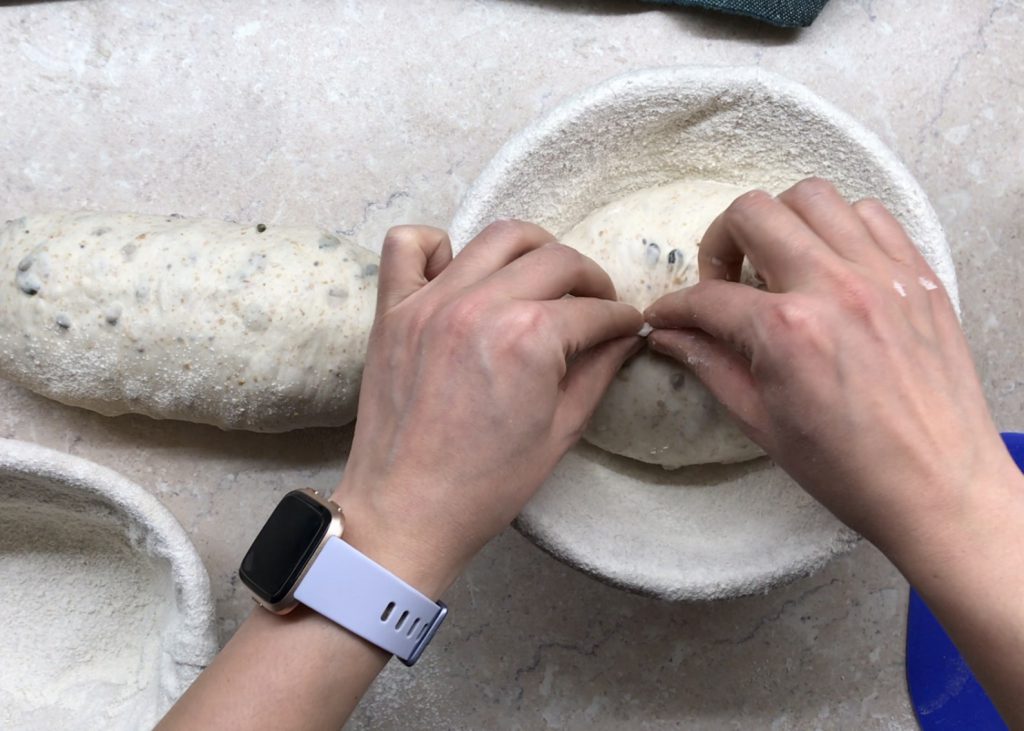
  • Lift each ball off keeping the round shape, flipping it do the underside is now the top. Take care not to knock out air, gently stretch the dough out, folding the bottom half almost to the top. Stretch the sides out, folding the right side into the centre followed by the left side. Finally, take the top, stretch out and fold up and over, and roll the whole ball away so the seams are on the bottom. Round the corners by cupping your hands around and gently pulling to create tension over the surface. Leave to rest for 1 minutes.
  • Dust a proving basket and transfer the shaped dough seam side up, pinching to maintain tension. Cover and leave to rise overnight in the fridge.
  • The next day, preheat the oven to maximum with a cast iron Dutch oven inside. Allow to reach temperature and leave for a further 20 minutes.
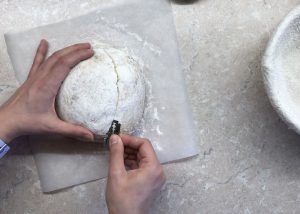
  • Remove the dough from the oven and cut a piece of baking parchment larger than your dough. Uncover the dough, place the parchment over the top and gently invert the dough out onto the work surface on the parchment. Dust off any excess flour, and make a deep, yet shallow angled cut across the surface of the bread. This cut will allow for “oven spring”. An unscored loaf will be stunted and may burst.
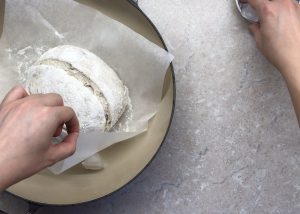
  • Moving as quickly and safely as possible, remove the bottom pan of the Dutch oven from the oven, leaving the lid in the oven, and place the dough and parchment into the pan. Add a few ice cubes to the pan under the parchment and immediately return to the oven, close the lid to trap the steam, shut the oven door and drop the oven temperature to 230°C and bake for 20 minutes.
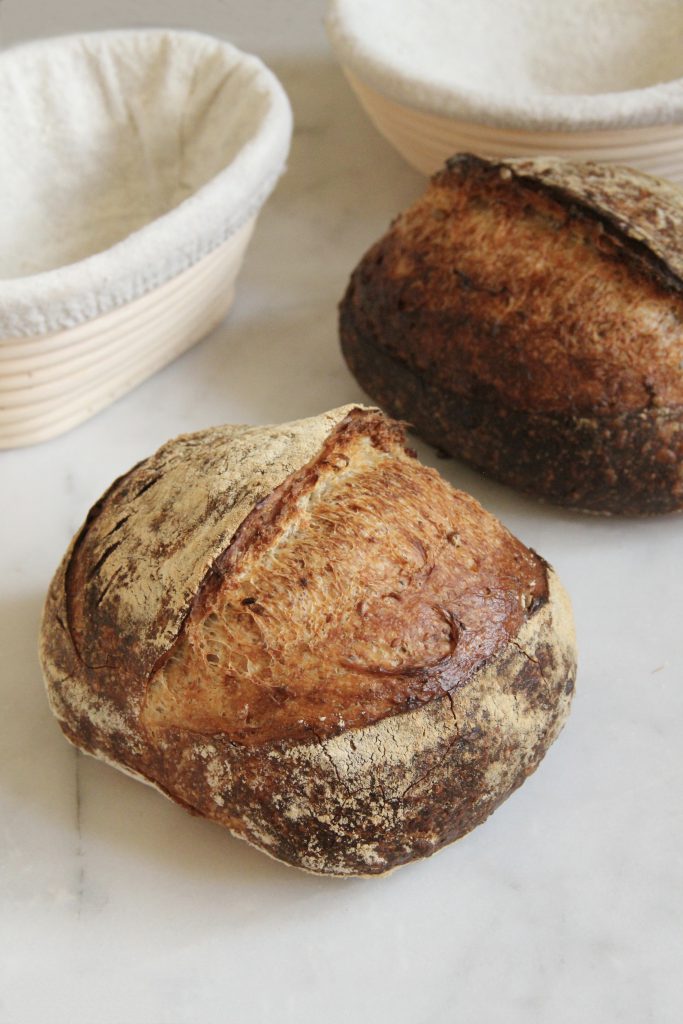
  • After 20 minutes, remove the lid and bake for a further 20 minutes till the crust is dark and crispy. Remove and allow to cool on a wire rack. Listen to your bread sing from the oven as the crust cools and crackles.
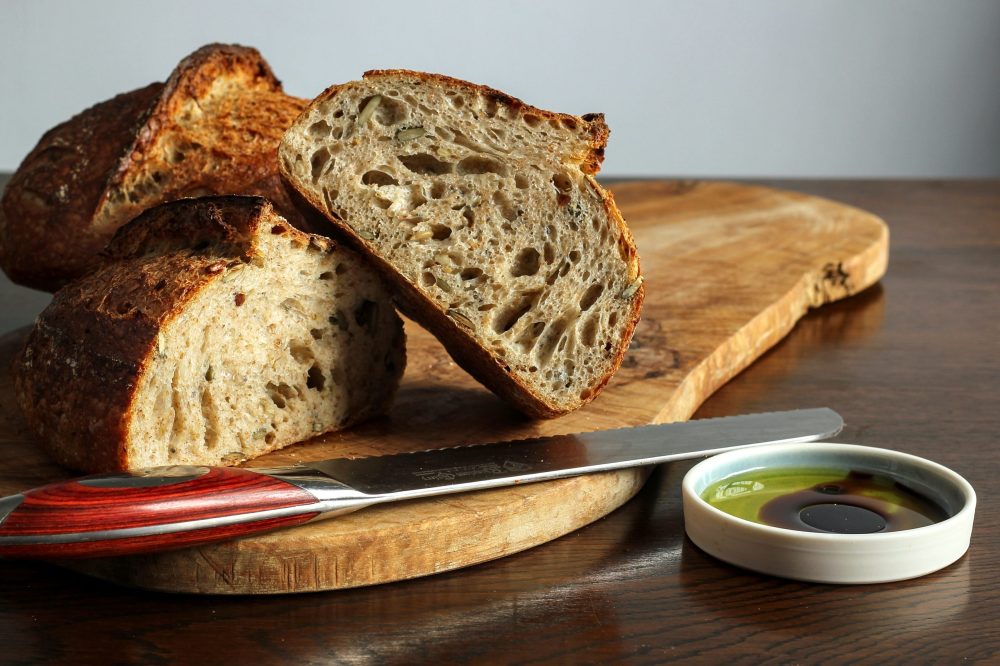
  • Once cooled slightly, slice and dip into balsamic vinegar and extra virgin olive oil.

Wholemeal Pancakes

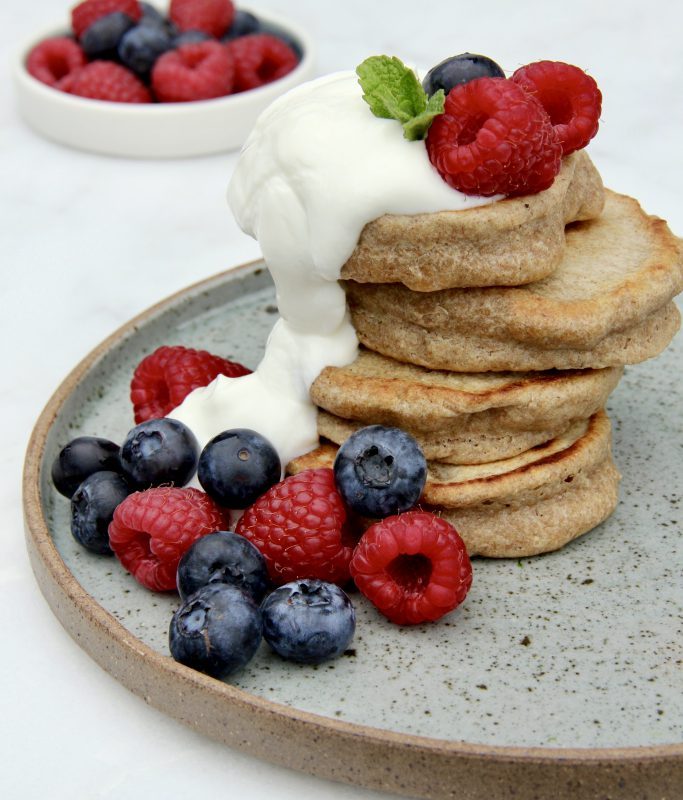
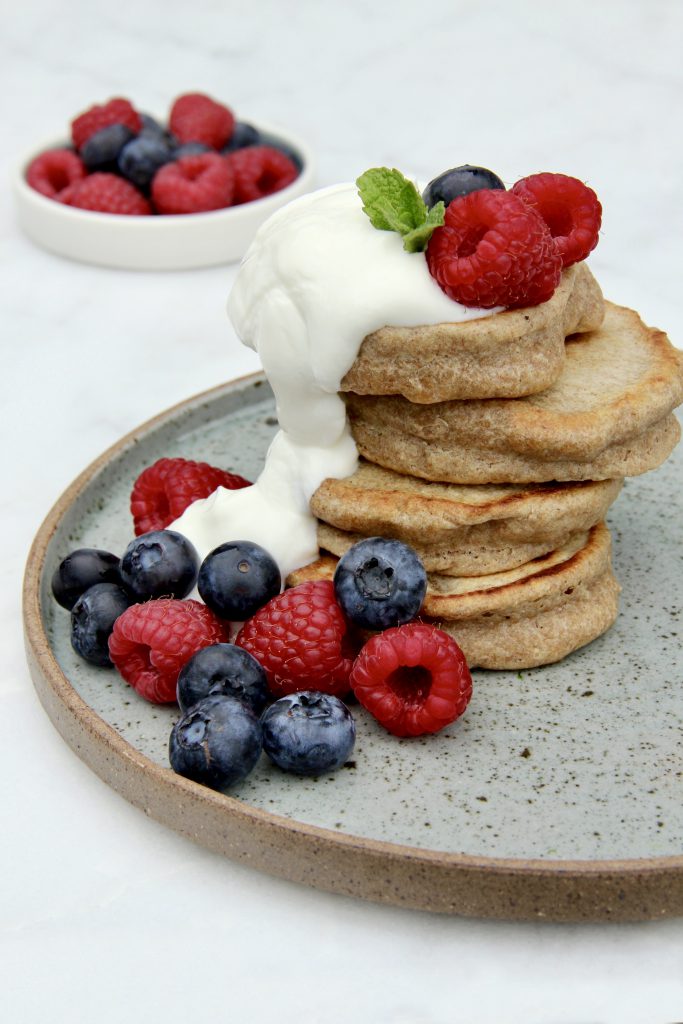
Start the day right with my wholemeal pancakes. These breakfast treats are delicious straight out of the pan and finished with your favourite toppings. You can go classic with berries and yoghurt as I have done below, or make a drizzle of tahini and honey, or even go more savoury with bacon and eggs.

Each portion of pancakes on their provides you with 6.4g fibre. That’s 21% of your daily fibre recommendation without having even added anything to them, so it really is a perfect way to start you day.

What if you don’t have wholemeal flour to hand? Not a problem, you can use plain flour, but this drastically reduces the fibre content down to just 1.8g per portion of pancakes, so if possible, add some high fibre ingredients back in such as ground linseeds, or try topping with my chia and blueberry compote.

Serves 2

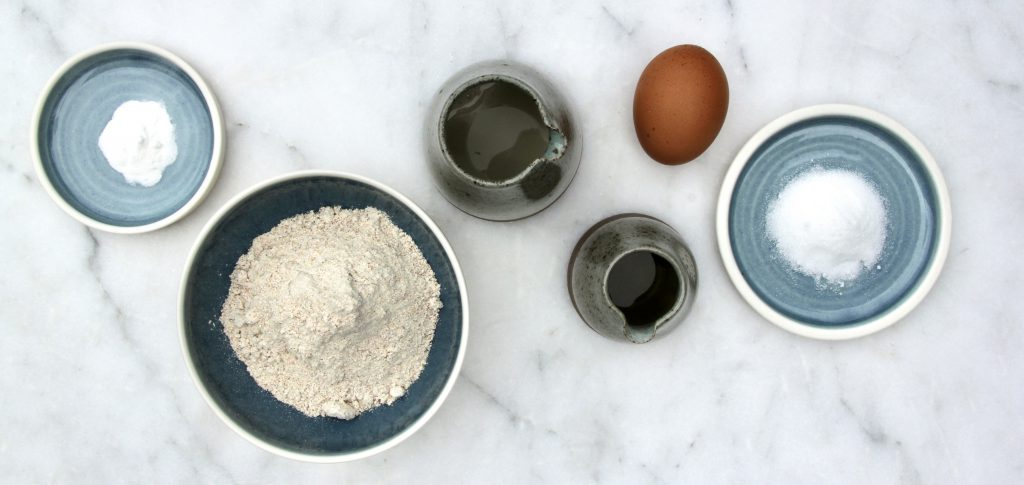
Ingredients

  • 120g wholemeal flour
  • 1 tsp baking powder
  • 2 tsp caster sugar
  • 1 medium egg
  • 80ml milk of choice (I’ve used almond)
  • 1 tbsp extra virgin olive oil + extra for cooking

Method

  • Mix the dry ingredients together
  • Mix the wet ingredients together, then combine with the dry ingredients.
  • Heat a pan over a medium heat with a drizzle of oil and drop a spoonful of batter into the pan. Add more batter depending on the size of you pan.
  • Turn the pancake over after 2 minutes, ensuring they are golden brown. Cook for a further 2 minutes on the second side.
  • Best served immediately from the pan with your favourite pancake topping.

Per 3 pancake serving: 384kcal/ 18.1g fat/ 2.9g saturated fat/ 46.0g carbohydrates/ 6.4g fibre/ 9.7g protein
Blueberry Compote

Blueberries have been shown to have health benefits for our hearts. So this St. Valentine’s Day why not treat the one you love to a heart healthy meal!

In a recent study published by the polyphenol research group at King’s College London, researched demonstrated that consumption of blueberries every day helped reduce endothelial function in healthy humans. Endothelial function is a marker of heart health

In addition, the same authors noted a decrease in systolic blood pressure of around 5 mmHg, about the equivalent shown in clinical trials using medical agents to lower blood pressure.

The only caveat to this research is that the study used wild blueberries, not commercially grown blueberries, so results might not be completely comparable when using shop bought berries. However, blueberries can be part of a healthy diet and there is no reason not to include them in your diet, and in addition there are lots of other important nutritional factors found in blueberries including fibre, vitamins and minerals which contribute to a healthy diet.

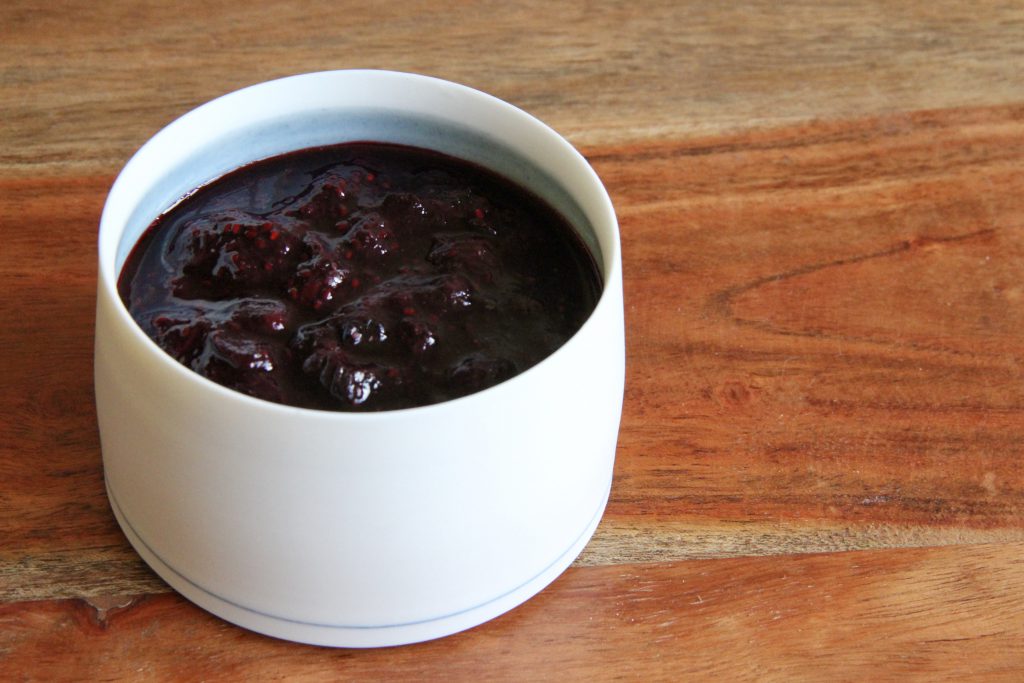
My easy blueberry compote takes just 5 minutes and only uses 3 ingredients. In addition you can store it in the fridge for a week, or freeze in portions ready to use at short notice.

Recipe

  • 250g fresh or frozen blueberries
  • 1 tsp honey
  • 10g chia seeds

Method

  • Place the blueberries and honey into a pan and cook on the lowest heat on your hob, stirring occasionally. Cook for around 4 minutes till all the blueberries have burst open.
  • Remove from the heat and add the chia seeds. Stir in and allow to thicken for 1 minute.

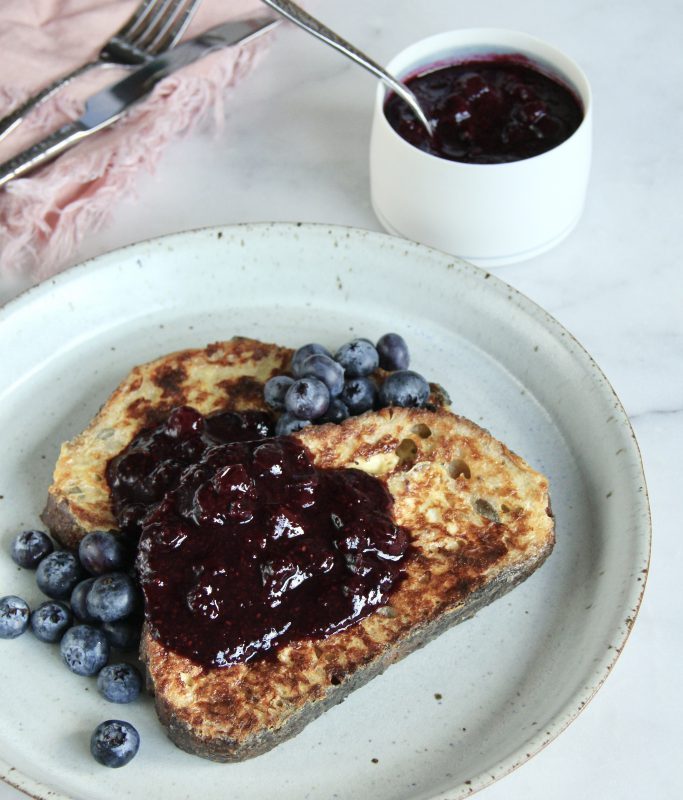
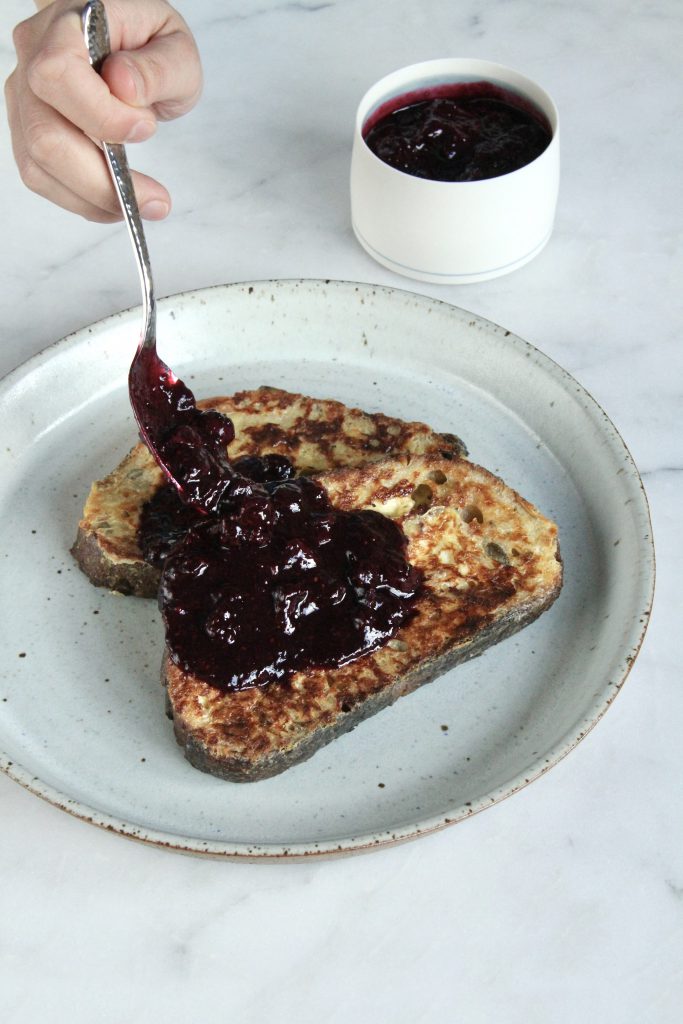
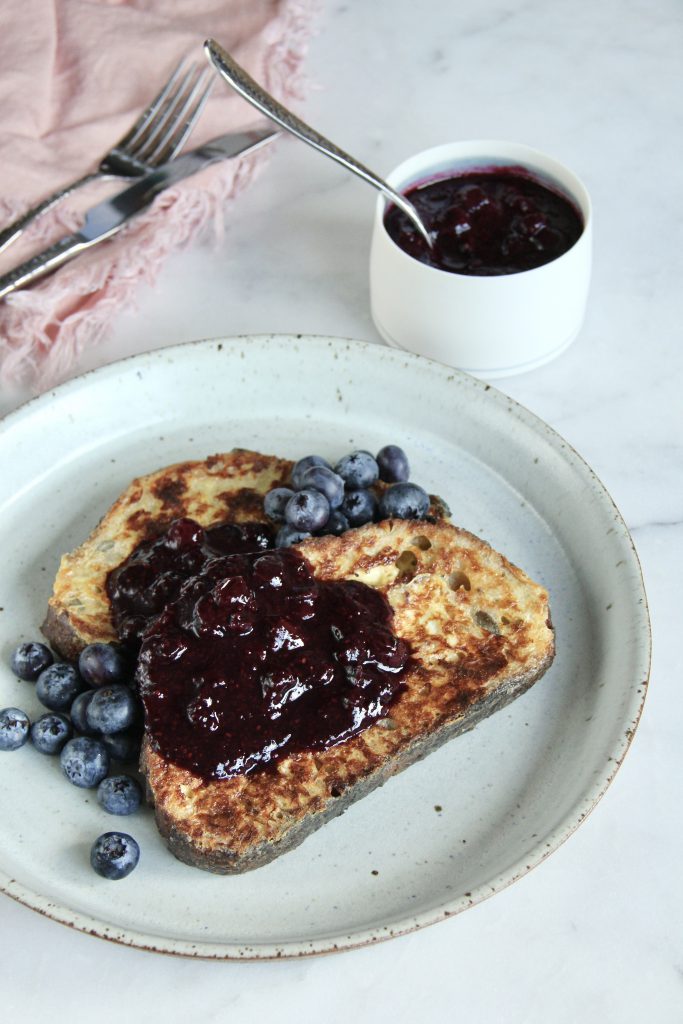
Delicious served on top of porridge for breakfast, with yoghurt for a quick pudding, or with French toast for brunch as I have done.

Per serving 115kcal/ 1.8g fat/ 0.3g saturated fat/ 41.2g carbohydrates/ 4.7g fibre/ 1.8g protein
Chocolate, Cherry and Coconut Granola

Granola is king in our house. We eat loads of it for breakfast, as a quick snack and sometimes even as a substitute for pudding! But shop bought granola sometimes isn’t the healthiest breakfast cereal to turn to. Often it is high in sugar, loaded with fats and has a few basic ingredients in it such as oats and sweetened dried fruits. Additionally, so many brands put 0.5% hazelnuts into the mix (why?!?!) which renders me out of the equation due to a nut allergy.

Homemade granola means I can add what I want

So I endeavoured to make my own range, which is either reduced or no added sugar, uses healthy fats, has a diverse range of fibre sources, uses unsweetened fruit wherever possible, and only has ingredients in there that I can eat, so feel free to swap anything out to fit in with your dietary requirements.

I developed this particular recipe for my chocoholic sister-in-law who loves sweet treats. Although not a sugar free granola, it’s definitely not as sweet as the generic shop bought granola, and packs in much more nutritious value, and as a bonus is also vegan!

I hope you enjoy making this recipe. Feel free to alter the fruits used, add alternative nuts if you aren’t allergic, or even change the chocolate if you’re not looking to make a vegan granola (I’m thinking white chocolate and raspberry!!!).

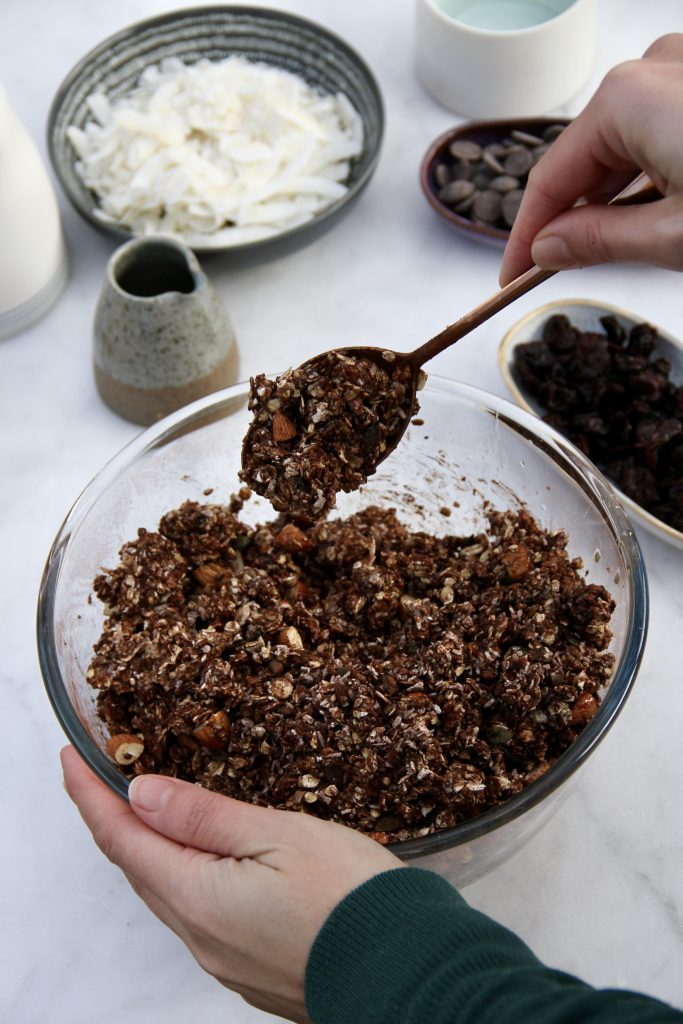
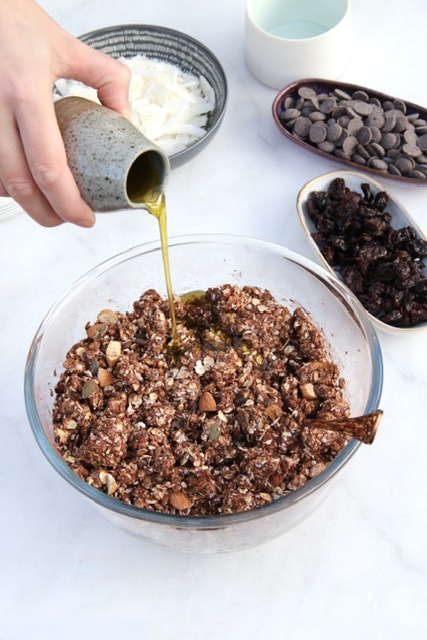
Making this granola is really easy, but takes a little time. Adding water and maple syrup allows some of the starch in the oats to come out and helps make clusters traditionally achieved by using high sugar and harder fats such as palm oil. Sometimes I even let the wet oats sit before adding in further ingredients so that the clusters really form. Then I add the fat: extra virgin olive oil! Packed full of polyphenols and phytochemicals which have been shown to be beneficial for heart, brain and even gut health.

Extra Virgin Olive Oil

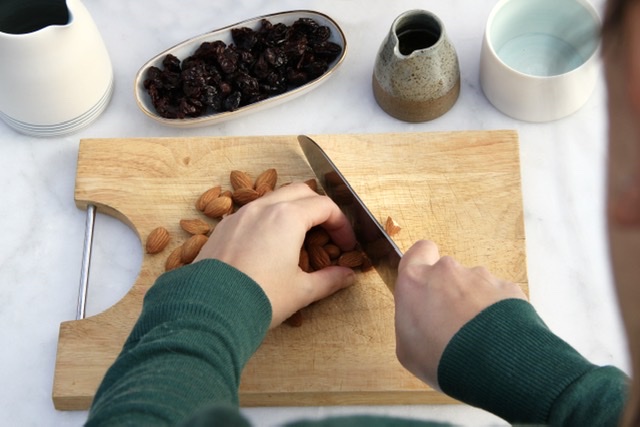
You can use whatever seeds you have to hand, but try to get a good variety in there. This recipe will help you achieve 10 of your 30 different plant foods for the week, which we know is beneficial to overall health. I also hand chop whole almonds so that you get really large chunks of the nuts. This gives a really nice crunch, but we also know from research on almond consumption, eating roasted chopped almonds can increase some strains of butyrate-producing gut bacteria, which is thought to be beneficial for health. Additionally, in a recent review of studies investigating almond consumption, there were beneficial outcomes on cardiometabolic markers such as lowering total cholesterol and LDL-cholesterol levels in comparison to non-almond consuming groups.

Roughly chop the almonds to keep them in large chunks

Finally, a slow bake means you get lovely crunchy granola, I tried to speed things up in one of my recipe testing sessions. Sadly you get a slightly burnt toasted flavour which wasn’t to my liking, but some of my testers did actually enjoy they taste!

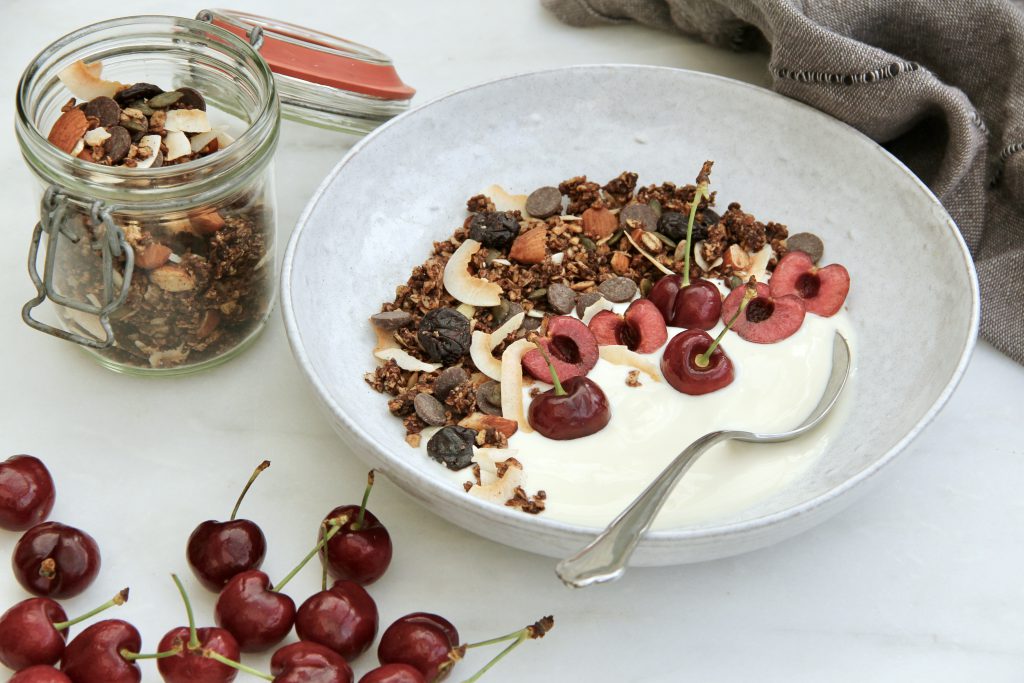
I love this granola with either dairy free milk, or a dairy free yoghurt such as a coconut yoghurt – just make sure you check the nutritional information to make sure it isn’t loaded with hidden sugar! Check out my previous post for a recent UK publication looking at the sugar reduction in yoghurts over the past few years.

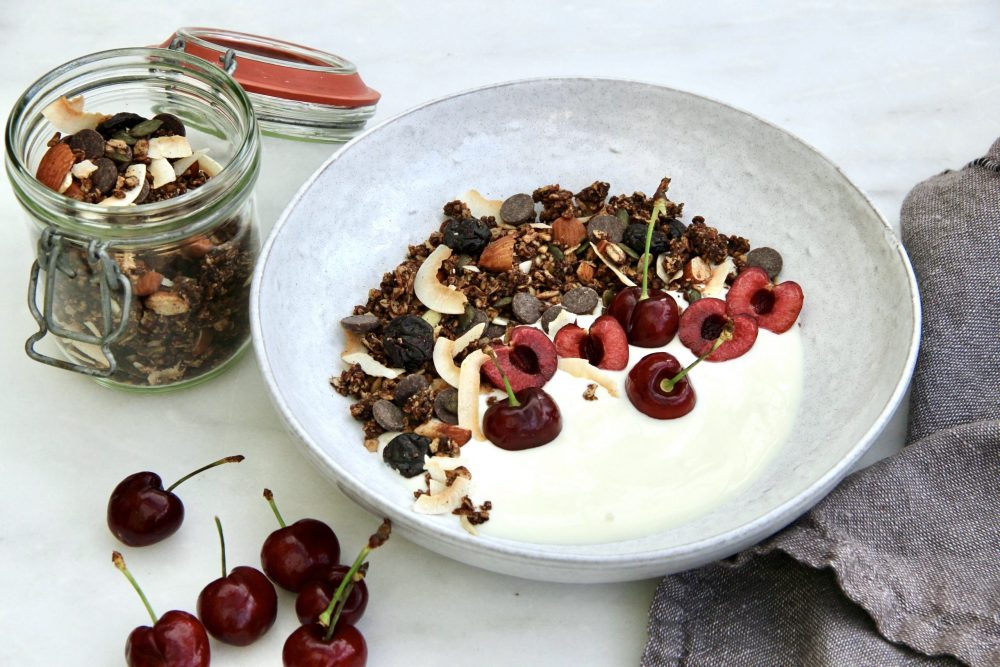
Delicious served with creamy coconut yoghurt and fresh cherries

Recipe

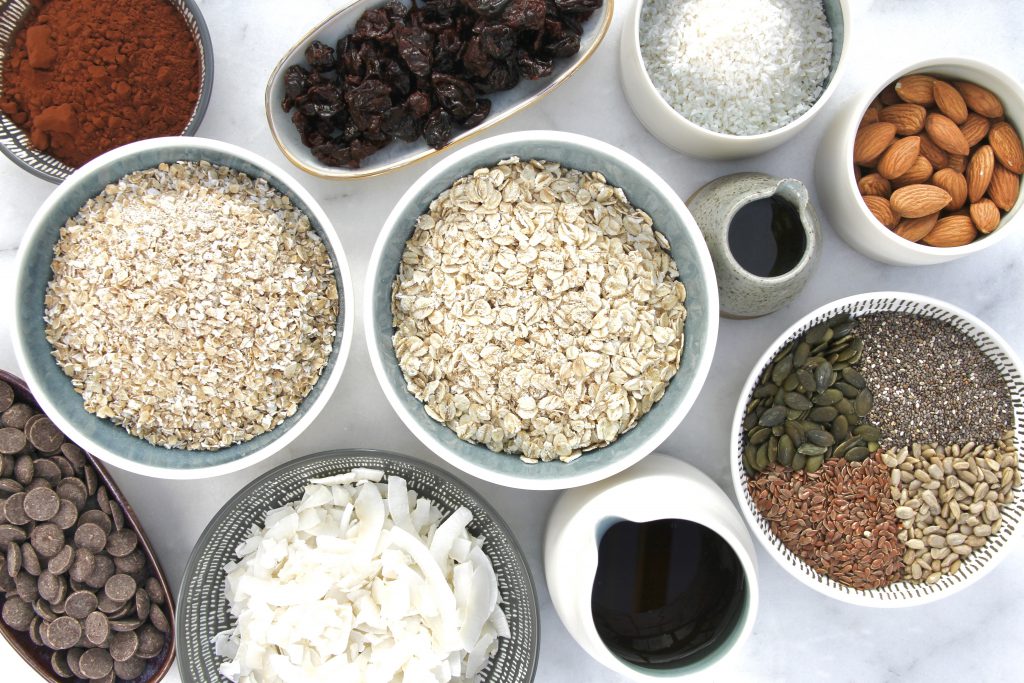
  • 150g rolled oats
  • 150g jumbo oats
  • 30g cocoa powder
  • 50g desiccated coconut
  • 25g chia seeds
  • 25g pumpkin seeds
  • 25g sunflower seeds
  • 25g linseeds (flax)
  • 50g maple syrup
  • 80g almonds, roughly chopped
  • 60g extra virgin olive oil
  • 50g coconut flakes
  • 90g dried cherries
  • 100g dark chocolate chips of choice
Granola ingredients

Method

  • Preheat the oven to 130°C/125°C Fan/ ​12 GM
  • Add the oats, cocoa powder, desiccated coconut, almonds, seeds, maple syrup and water to a large bowl and mix together. Let large clumps form.
  • Add the olive oil and mix
  • Spread out onto a tray, pushing the mixture down to help form more clumps
  • Bake in the oven for 90 minutes, gently turning the mixture at 30, 50, and 70 minutes
  • Add the coconut flakes to the tray at 70 minutes to gently toast for the last 20 minutes
  • After 90 minutes of cooking, remove from the oven and allow to cool completely
  • Add the cherries and chocolate to the granola and store in an airtight container for up to 2 weeks
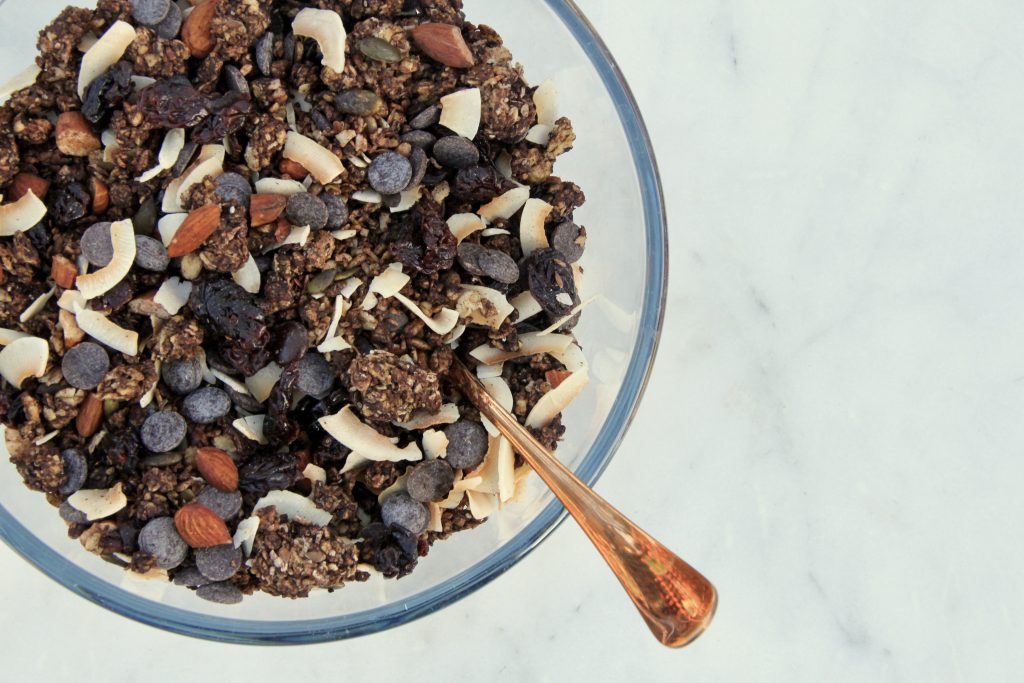
Cherry, chocolate and coconut granola

Per 50g serving 226kcal/ 10g fat/ 5.4g saturated fat/ 21.3g carbohydrates/ 4.7g fibre/ 5.8g protein
Frozen Berry Overnight Oats

Overnight oats are a fantastic way of getting a quick and nutritious breakfast. So easy to make, taking just 5 minutes, and you can use whatever you have in stock at home. Then, just let it sit in the fridge overnight, and it’s hassle free grab-and-go breakfast in the morning.
In a recent publication, researchers at The University of Leeds reinvestigated the sugar content of yoghurts available in UK supermarkets. This was in response to their previous investigations published in 2018 with BJM which looked at the nutrient content of yoghurts back in 2016.

Yoghurt is often described as a healthy food, which it is, but the original study highlighted that less than 10% of available yoghurts were low in sugar, that’s <5g free sugar per 100g. Startlingly, almost no yoghurts aimed at children were low in sugar, which could contribute to childhood obesity and dental caries.

In their new paper, they compared the sugar content of the same yoghurts from 2016, and found that there was a 13% decrease in the sugar content over the past 2 years, highlighting a potentially positive effect public policy can have. Additionally, the greatest reduction in sugar were seen in children’s drinks and fruit yoghurts, while the number of different children’s and organic products also decreased by 23% and 27% respectively since the original dataset taken in 2016.

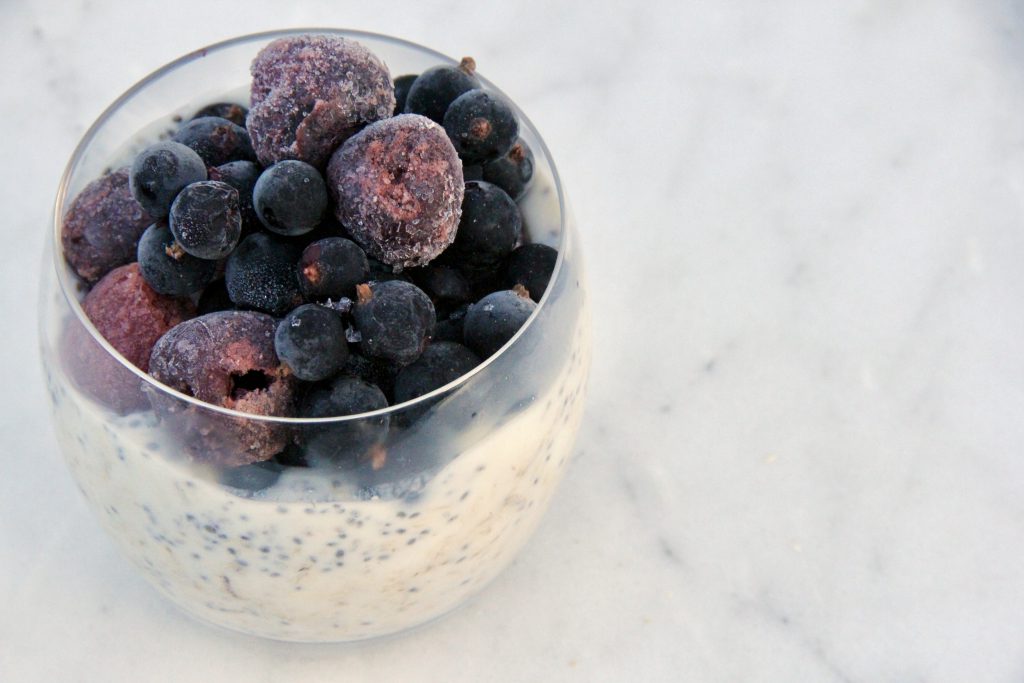
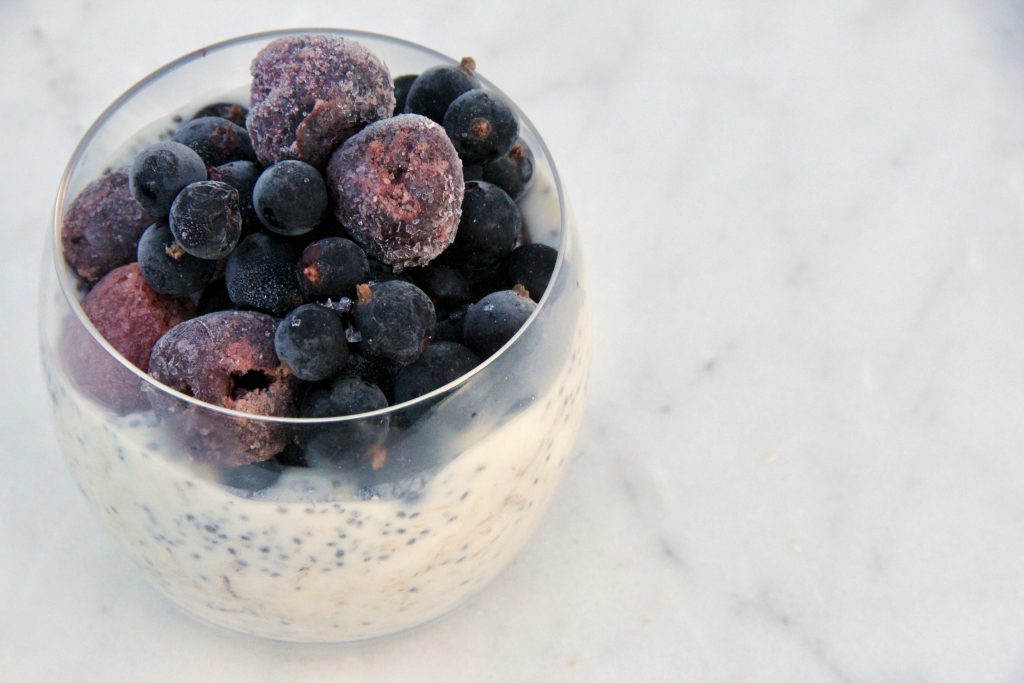
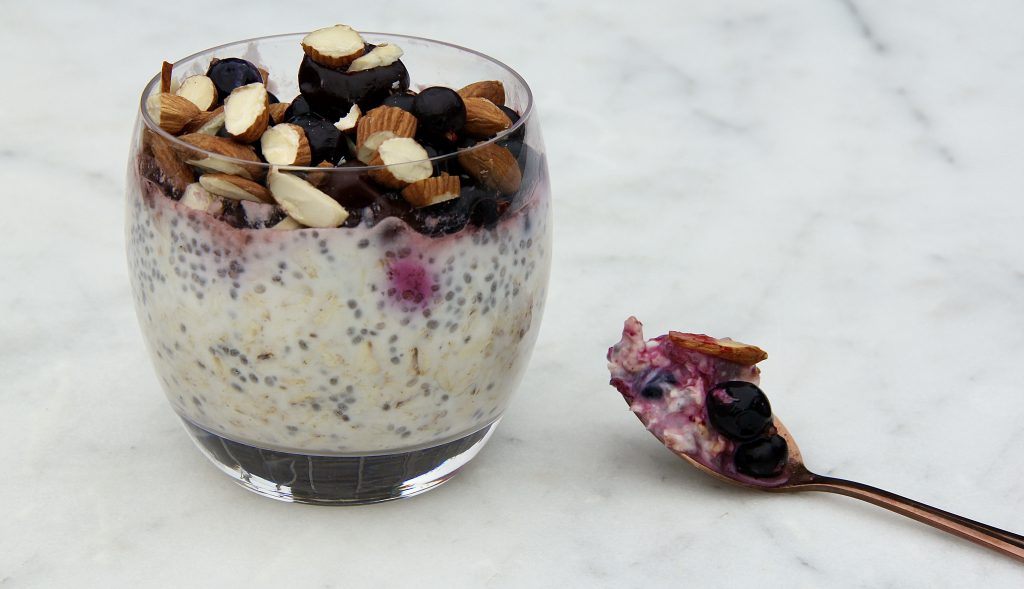
Overnight oats with frozen berries

Using a plain yoghurt is considered the best option, sweetening it yourself with whole fruit, which can be fresh or frozen.

Ingredients

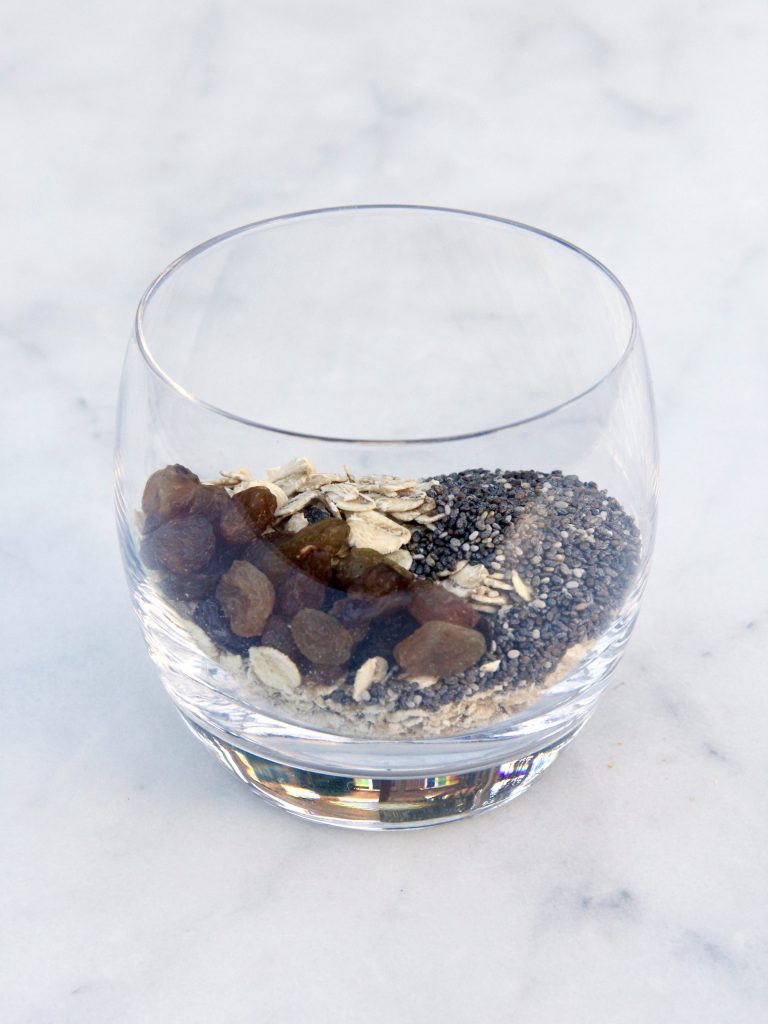
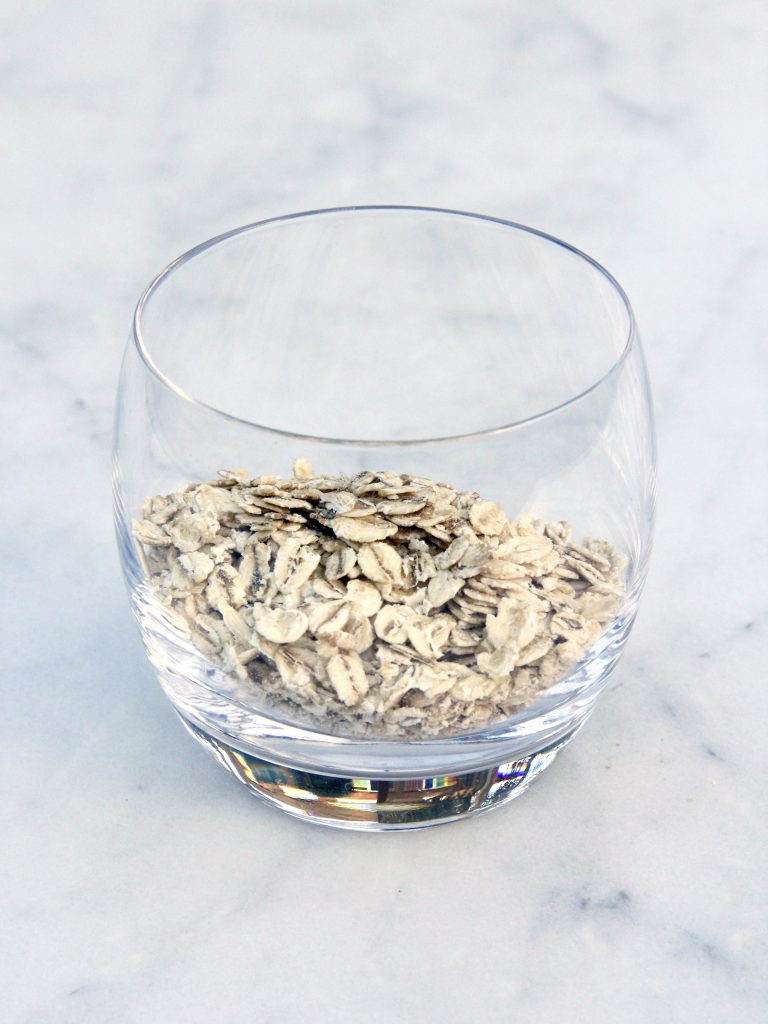
  • 40g whole oats
  • 10g chia seeds
  • 10g sultanas
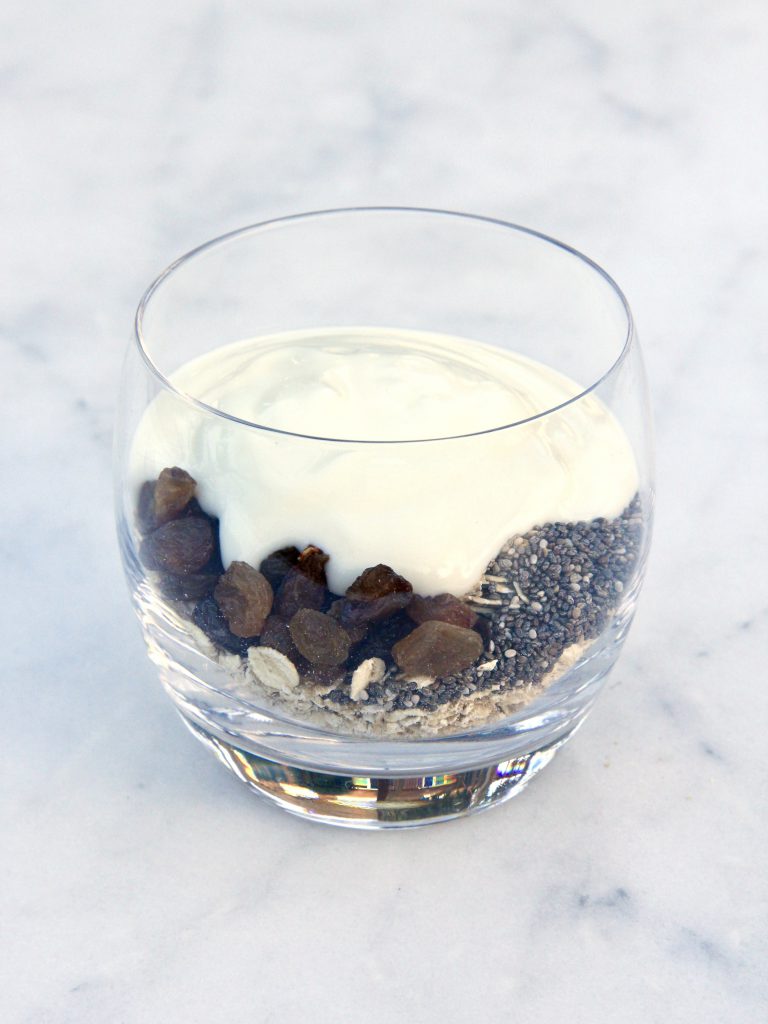
  • 80g plain yoghurt
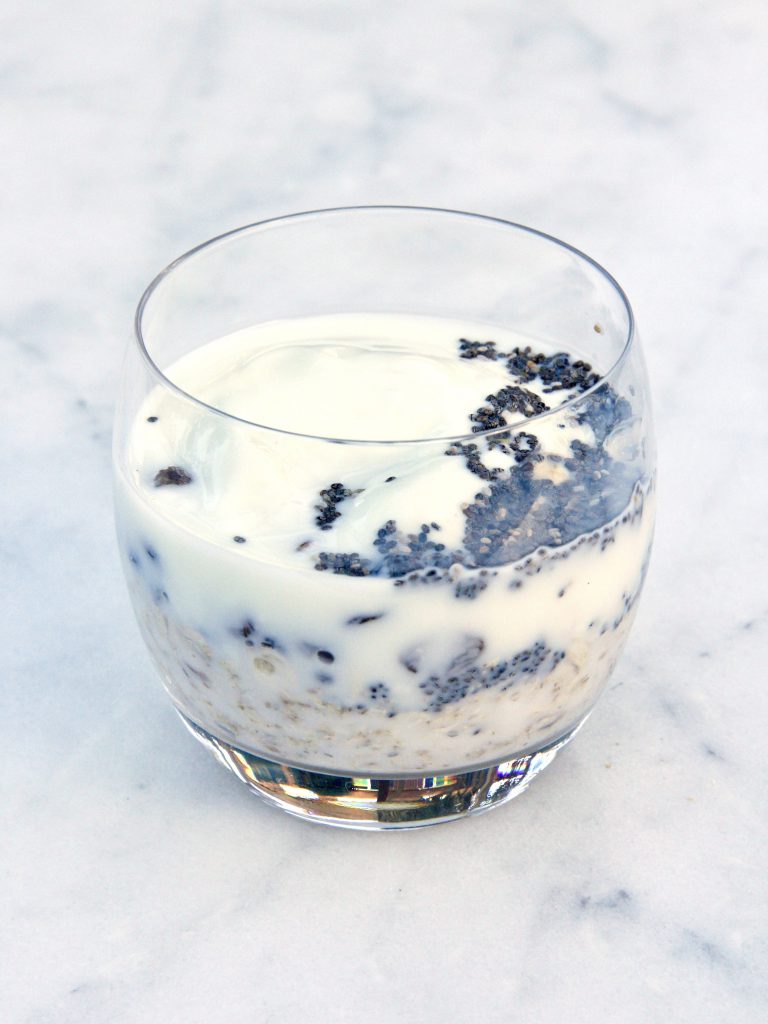
  • 80ml milk, I have used kefir
  • 50g frozen cherries
  • 50g frozen blackcurrants
  • 15g chopped almonds

Method

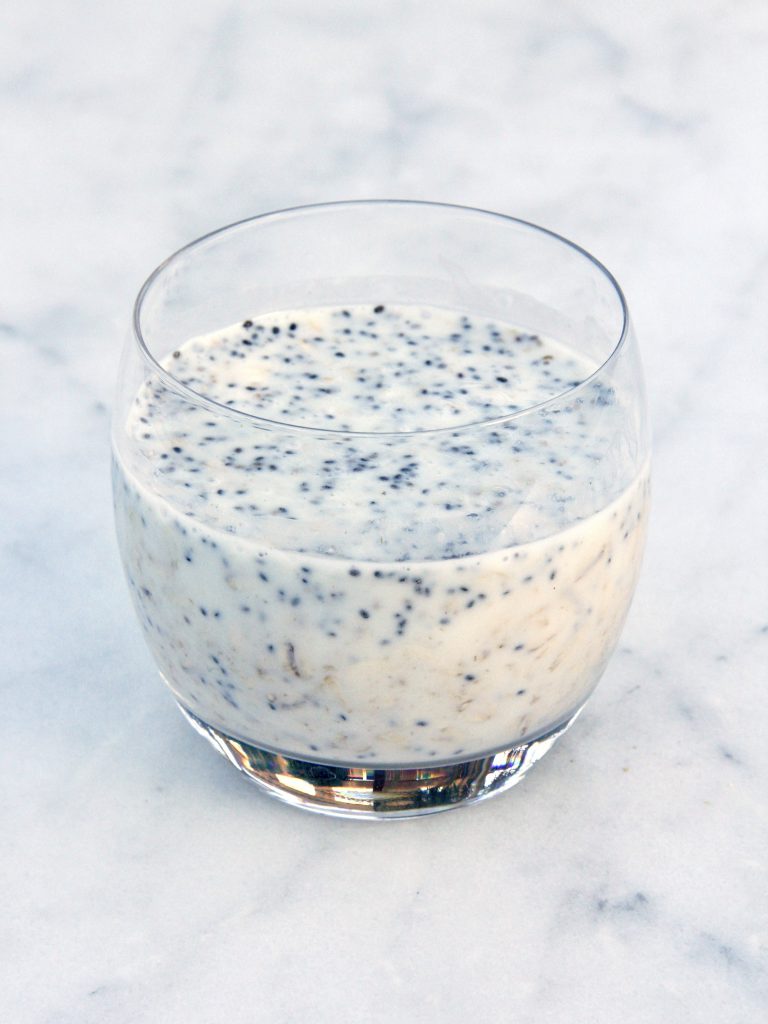
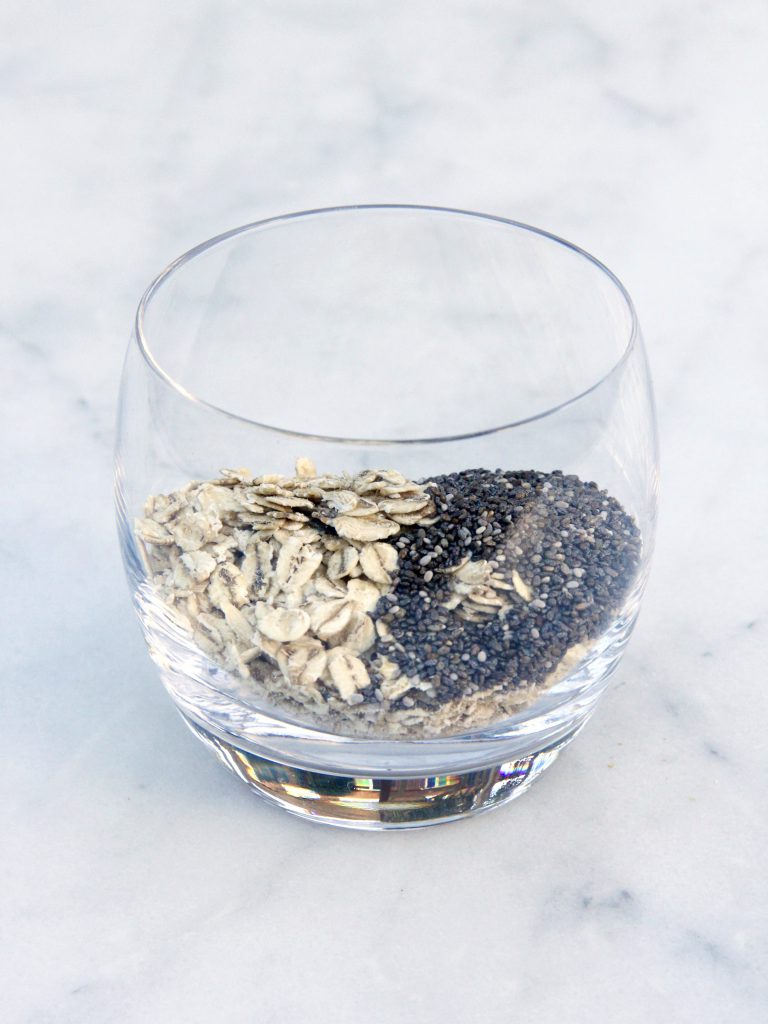
  • Mix the oats, chia seeds, sultanas, yoghurt and milk together till there are no lumps.
  • Top with the frozen fruit, cover, and leave overnight in the fridge.
  • Add the chopped almonds just before eating.
Overnight oats with nuts and berries