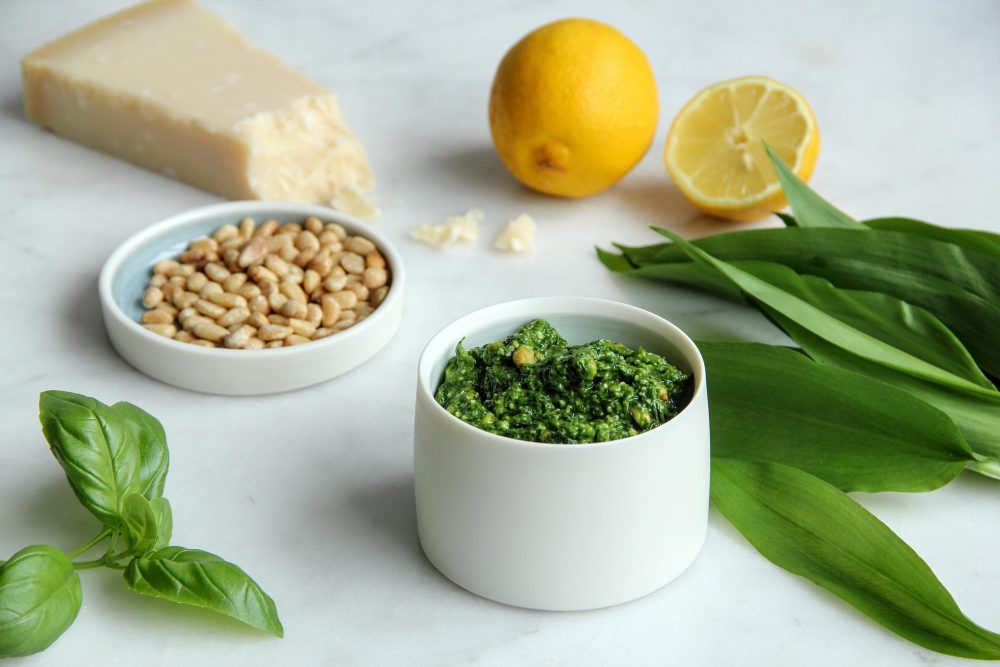
Wild Garlic Pesto

Wild Garlic Pesto

Could wild garlic be a low FODMAP alternative to garlic?

A 2019 paper investigated the fructan content of wild garlic and other herbs commonly used in Bulgaria. From their analysis, the authors found that the total fructans (FODMAPs) were lower in wild garlic in comparison to chives (2.2g vs 5.7g per 100g dried weight). Interestingly, people following low FODMAP diets tolerate chives and are encouraged to use chives in place of onions in recipes. While this research hasn’t been validated by Monash University, the leading site for low FODMAP food analysis, the finding suggest it may be worth self-challenging yourself! If you happen to know that garlic is one of your trigger foods and are able (and willing) to try this herb, please do get in touch to let me know how you got on.

Serve 4-5 people

Ingredients

  • 100g wild garlic, roughly chopped
  • 30g basil, leaves and stalks roughly chopped
  • 3 tbsp extra virgin olive oil
  • 1 tsp lemon juice
  • 40g toasted pine nuts
  • 45g parmesan, grated

Method

  • Blend the wild garlic, basil, olive oil and lemon juice together.
  • Add the pine nuts and parmesan and blend to the consistency of your choice – I prefer to keep mine with some texture in it.

Delicious served with my egg pasta recipe. If you want a double hit of wild garlic, try adding in a handful of wild garlic to make it vibrant green.

Wild Garlic Egg Pasta

Any leftover pesto can be stored in an airtight container in the fridge for up to 5 days – layer a little oil over the top to help reduce any oxidation. Alternatively, you can freeze your pesto in containers, or in ice cube trays for future use.

NOTE: Wild garlic looks very similar to the poisonous Lily of the Valley. If you aren’t sure, do not pick. Alternatively, it is available to buy for supermarkets, farmer’s markets, and to grow at home from garden centres.
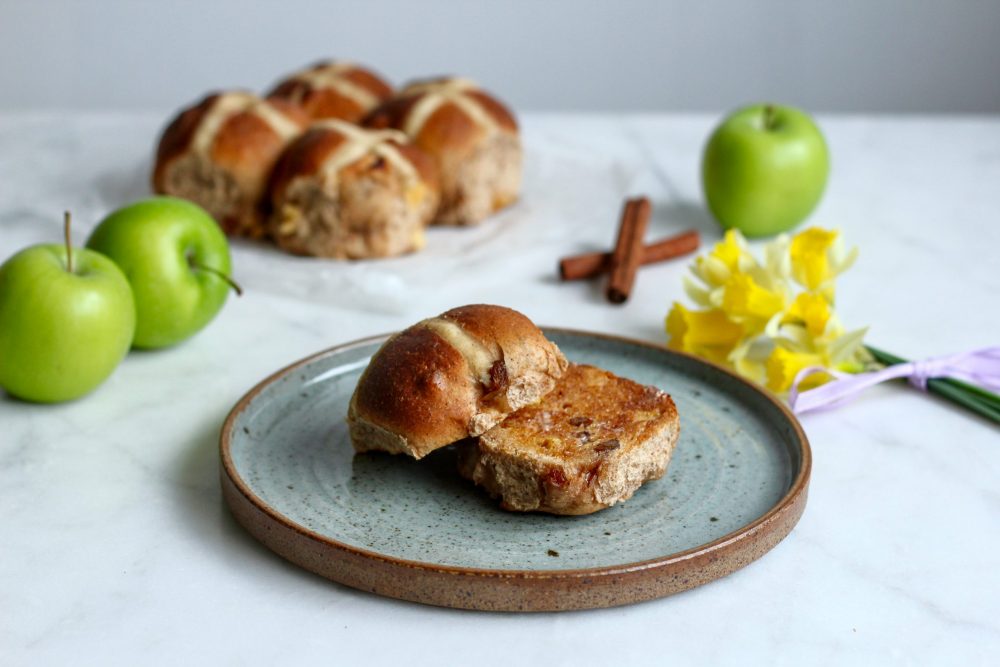
Apple and Cinnamon Hot Cross Buns

Best of both Apple and Cinnamon Hot Cross Buns combining the goodness of wholemeal flour with sweet cinnamon and apple to give a delicious but healthy twist to this Easter classic. This recipe is adapted from Julie Jones‘s Soulful Baker cookbook.

Makes 9 buns

Ingredients

For the buns

  • 50g butter, melted
  • 175g strong white flour
  • 175g strong wholemeal flour
  • 35g caster sugar
  • 1 tsp ground mixed spice
  • 2 tsp ground cinnamon
  • 7g fast action yeast
  • Up to 160ml tepid water
  • 1 egg
  • 50g sultanas
  • 50g dried apple, roughly chopped

For the crosses

  • 10g butter
  • 40g strong white flour
  • 45ml water

For the glaze

  • 75ml water
  • 1 tbsp sugar
  • 1 large pinch cinnamon
  • 1 large pinch ground mixed spice

Method

  • Add all the dried ingredients for the buns, except the fruit, into a stand mixer. Add the butter, egg and 150ml water.
  • Mix on a low speed for 10 minutes, adding the remaining 10ml of water if the dough looks a little dry – it should be just sticky.
  • After 10 minutes add the dried fruit and mix for a further 2 minutes till incorporated.
  • Form into a ball, cover, and allow to rise till doubled in size for around 1.5 hours.
  • Once the dough has doubled in size, knock it back and divide the ball into 9 equal pieces.
  • Roll each piece into a tight ball without any fruit sticking out the top as these will burn.
  • Place the balls in a 3×3 formation in a baking tin roughly 20cmx20cm lined with baking parchment.
  • Cover and allow to prove for 30 minutes.
  • Preheat the oven to 200°C fan.
  • Melt the butter for the crosses and then whisk in the flour and water to make a thick pipe-able paste. Transfer into a piping bag and snip the end to make a small hole.
  • Pipe crosses (or whatever you fancy) across the tops of the buns.
  • Bake in the oven for 15 minutes till golden brown.
  • Meanwhile, in a saucepan, heat the water, sugar and spices to make the glaze.
  • Once the buns are cooker, immediately brush with the glaze.
  • Transfer to a wire rack, remove the baking parchment and allow to cool.

Per bun: 256kcal/ 6.6g fat/ 3.6g saturated fat/ 40.0g carbohydrates/ 5.2g fibre/ 7.8g protein

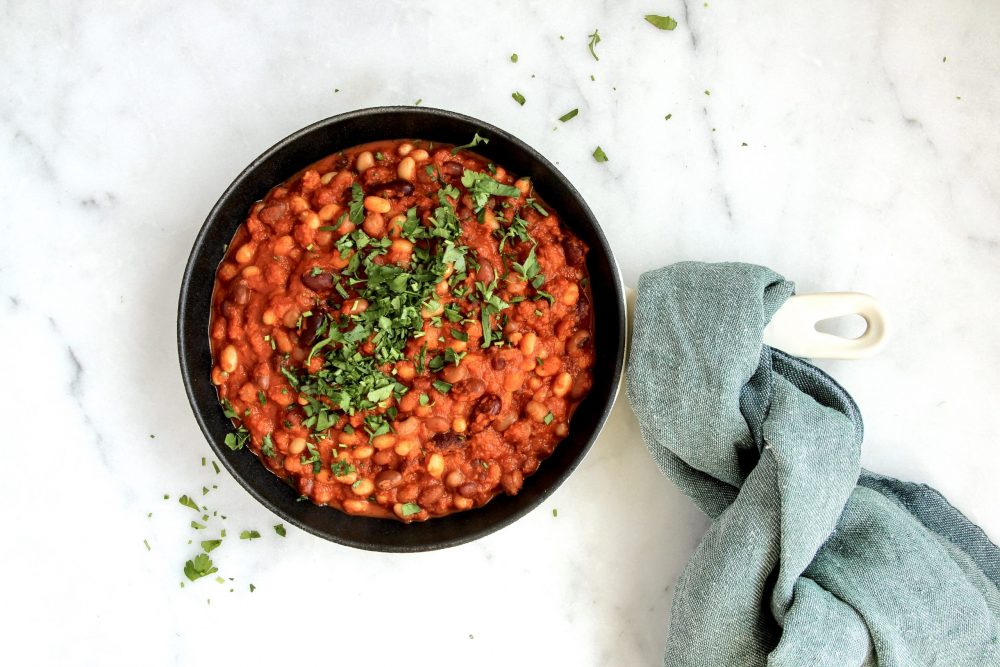
Smokey Baked Beans

Making your own baked beans can be so satisfying and give you greater control over what goes into them. A quick investigation into baked beans sold in UK supermarkets shows that the average 200g portion of standard baked beans will contain 1g of salt (ranging up to a staggering 1.6g).

It’s Salt Awareness Week (8th-14th March 2021), which aims to highlight the reduction of salt intakes. The UK recommendation is a maximum of 6g salt per day. However, the National Diet & Nutrition Survey showed that the average person was eating 8.4g salt in 2018-2019.

The greatest contributors to salt in our diet comes from processed foods and includes bread, cheese, and meat products such as bacon. Around 8% of our salt intakes comes from pre-prepared vegetables such as frozen chips, mashed potatoes and tinned produce. Watch out for tinned beans, pulses and vegetable is water with added salt. Additionally, watch out for tinned tomato products which add salt in. While salt is a preservative, it is not really needed in these products.

If you are looking to reduce your salt intake, you might find things taste a little bland at first. After a few weeks your tastebuds will become more sensitive to salt. You can always add other flavours to food to help in this transition period; try adding herbs, spices, lemon/lime juice or pepper to your meal.

These homemade baked beans contain a fraction of the salt content of their tinned counterparts, containing just 0.14g per 200g serving. Not only that, but you’ll also benefit from 8.7g of fibre and 11 different plant foods for fibre diversity. In addition, my baked beans are naturally sweetened using a carrot and smoked paprika, meaning there’s no added sugar to these beans either.

Store any leftover beans in an airtight container in the fridge for 3-4 days, or alternatively freeze in handy portions ready for a quick and easy meal.

Makes 7 portions

Ingredients

  • 2 large garlic cloves, roughly chopped
  • 1 large carrot (100g), grated
  • 1 tbsp extra virgin olive oil
  • 500g passata
  • 2 tsp smoked paprika
  • 1/2 tsp ground white pepper
  • 1/4 tsp mixed herbs
  • 1/2 tsp white wine vinegar
  • 2 tbsp tomato puree
  • 1 tin of haricot beans in water
  • 2 tins of mixed pulses in water

Method

  • Add the garlic, carrots and oil to a large pan and cook over a gentile heat for 5 minutes till softened.
  • Add the passata, herbs and spices, vinegar, tomato puree and 100ml water. Cook for a further 15-20 minutes over a low heat till the carrots become soft.
  • Blend to a smooth sauce and add the beans.
  • Cook over a low heat with the lid on for 15 minutes, stirring occasionally.

Per 200g serving 163kcal/ 3.4g fat/ 0.6g saturated fat/ 19.9g carbohydrates/ 8.7g fibre/ 9.5g protein/ 0.14g salt

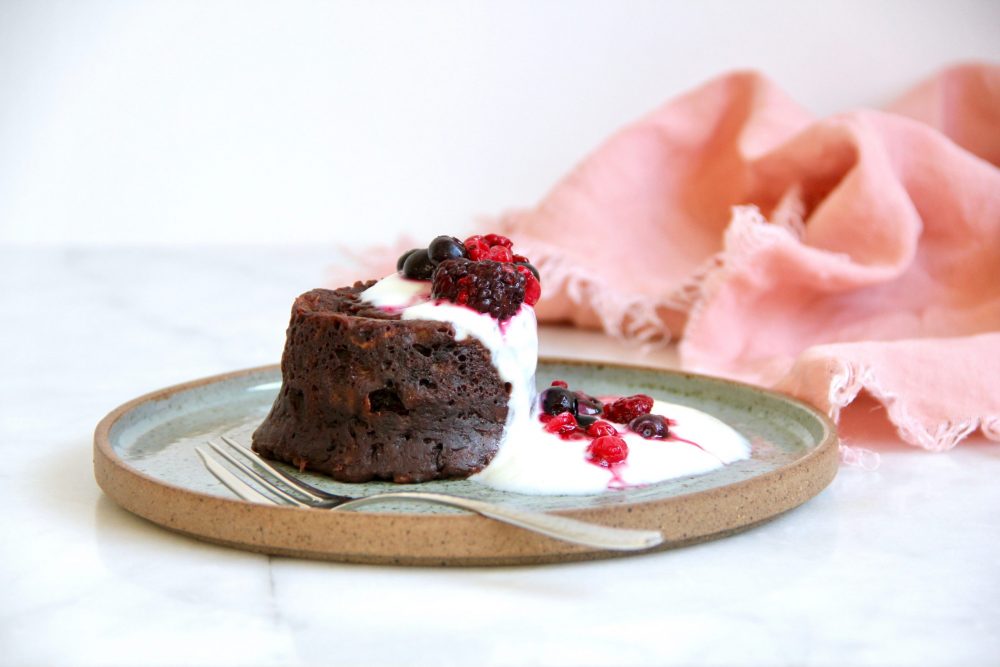
Microwave Cocoa and Banana Cake

The easiest (and quickest) way to use up some brown Fairtrade bananas from the bottom of your fruit bowl. These little cakes make the perfect pudding in a hurry. There’s also no added sugar thanks to the natural sweetness of the extra ripe bananas, and the addition of a date.

Each cake provides you with 4 different plant points for your weekly tally. If you can resist eating it straight out of the ramekin (be careful as it’s super hot!!) you can turn it out onto a plate and serve it with your choice of toppings. It’s the perfect brunch served with plain yoghurt and berries, but you could always opt for something more indulgent such as custard or ice cream if eating it for dessert.

Sourcing both Fairtrade bananas and cocoa means that those working in the food chain will get a fair wage; from the farmers who grow the produce, to those who process it into the final product so they can have a better standard of living. Fairtrade Fortnight 2021 runs from 22nd February to 7th March. Look out for the Fairtrade logo on popular items such as bananas, chocolate, coffee, tea, flowers and clothing.

Serves 2

Ingredients

  • 60g butter
  • 2 very ripe Fairtrade bananas (total weight 175-200g)
  • 1 egg
  • 1 Medjool date, finely chopped or 20g chopped dates
  • 60g self-raising flour
  • 15g Fairtrade cocoa powder

To serve (optional)

  • Yoghurt
  • Defrosted frozen berries

Method

  • Melt the butter in the microwave for 30 seconds till very soft. Add the bananas and mash into a lumpy paste.
  • Mix in the egg and chopped date.
  • Add the flour and cocoa powder and mix till just combined.
  • Pour into 2 large ramekins. Cook each cake for 90-100 seconds in the microwave (900 W) till puffed up and cooked. If you still have raw batter keep microwaving 10 seconds at a time till cooked.
  • Leave to cool for 30 seconds before turning out onto a plate and serving with yoghurt and berries.

Per serving: 499kcal/ 29.1g fat/ 18.0g saturated fat/ 31.9g carbohydrates/ 6.3g fibre/ 9.2g protein

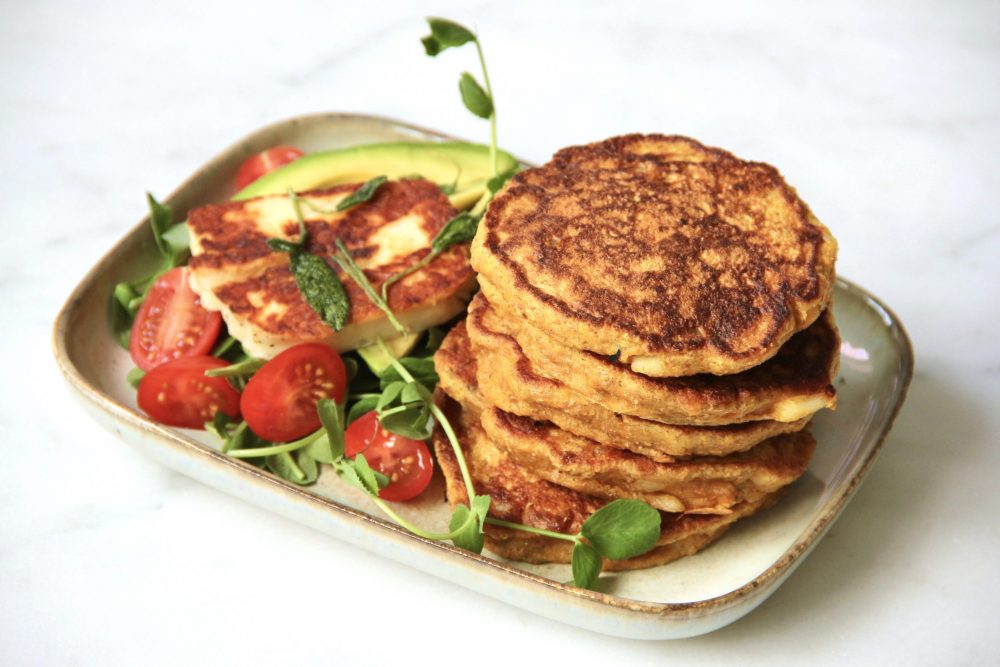
Roasted Squash and Halloumi Pancakes

I love the combination of sage and squash. It’s one of my favourite winter flavour duo! Delicious any time of the day; serve at brunch with an egg cooked to your liking, or serve as lunch, or even dinner as a starter or main dish. These would be delicious with a soured cream sauce on the side, or make a spicy tomato and avocado salsa.

Serves 4 as a lighter meal or starter, or 2 as a main

Ingredients

  • 350g squash in large chunks, skin left on
  • 1 large egg
  • 10 sage leaves, finely diced
  • 250ml milk
  • 1 block of halloumi, cut into four 1cm thick slices and the remaining finely shredded
  • 150g wholemeal flour
  • 1 tsp baking powder
  • 1/4 nutmeg, grated
  • Olive oil for frying

Method

  • Roast the squash in a pre-heated oven set at 180°C for up 45 minutes till soft. Allow to cool slightly before peeling off the skin. You should have approximately 180-200g cooked squash.
  • Mash the squash in a large bowl, before adding in the sage, egg, milk and diced halloumi.
  • In a separate bowl, mix the remaining dry ingredients before combining with the wet ingredients. Mix to form a batter the consistency of thick double cream.
  • Heat a frying pan over a medium heat and add 1/2 tsp olive oil.
  • Allowing space between each pancake, take a ladel of batter and make a round for each pancake, allowing the mixture to spread naturally. Cook in batches according to the size of your frying pan.
  • Cook for 2 minutes per side, flipping with a spatula once bubbles have risen to the surface and the edge starts to dull. Cook for a further 2 minutes on the second side.
  • Keep cooked pancakes warm in an oven set to 100°C on a tray, keeping pancakes to a single layer if possible.
  • Once all the pancakes are cooked, add the remaining slices of halloumi to the pan and fry till crispy and golden on both sides.
  • Serve the pancakes in stacks and top with crispy halloumi.

Per serving: 406kcal/ 21.4g fat/ 11.3g saturated fat/ 33.4g carbohydrates/ 5.9g fibre/ 19.0g protein

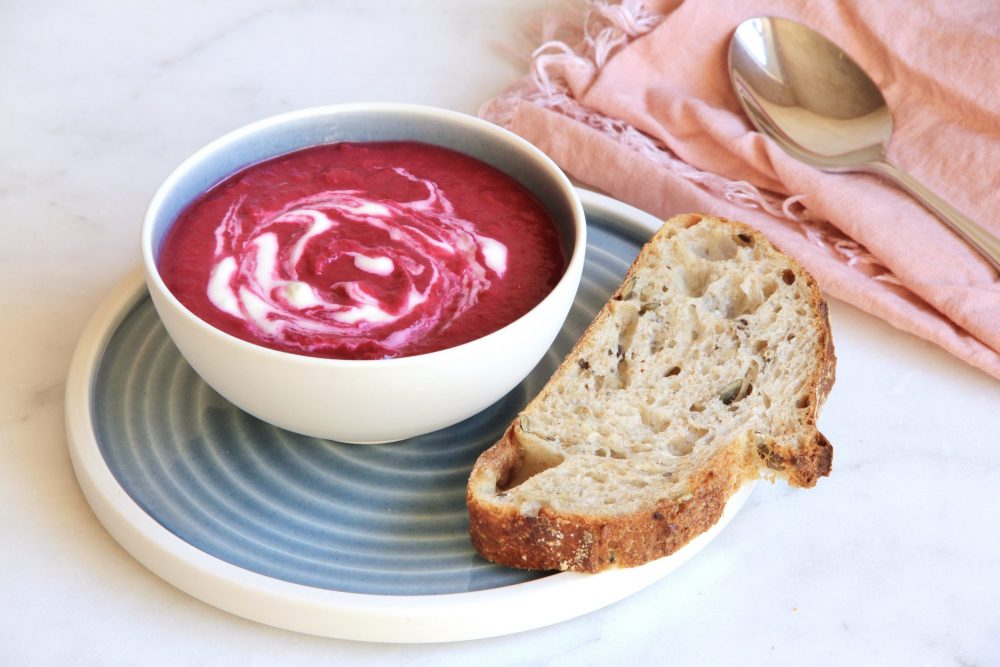
Beetroot, Parsnip and Horseradish Soup

Seasonal root vegetables make a simple, but super tasty soup which packs a punch. Fresh horseradish is super pungent and will got “straight up your nose”. I suggest starting with half the amount of fresh horseradish and tasting before adding more. Once you find the level you’re happy with you can stop. However, if you accidentally over do it, add a little extra creme fraiche which will help tone the heat down.

Cant get fresh horseradish? No problem, swap in some creamed horseradish or horseradish sauce. Or if the mustard flavour is not to your taste you could add ginger in instead which will add a warmth to the soup.

To make vegan omit the creme fraiche and use a dairy free yoghurt or dairy free cream alternative.

Serves 5

Ingredients

  • 1 large onion, sliced
  • 1 tbsp extra virgin olive oil
  • 2 cloves of garlic, roughly chopped
  • 400g parsnips, scrubbed (or peeled) and chopped into large chunks
  • 220g potatoes, scrubbed and cut into large chunks
  • 300g beetroot, peeled and cut into large chunks
  • 20g fresh horseradish, or to taste, finely grated
  • 60g creme fraiche

Method

  • In a large pan heat the onions and oil and cook over a low heat till soft and translucent.
  • Add the garlic and cook for a further minute.
  • Add the parsnips, potatoes and beetroot to the pan along with 900ml water. Bring to the boil and allow to simmer for 30 minutes.
  • Blend the soup till smooth and add the horseradish to taste.
  • Serve in bowls and top with a spoon of creme fraiche with sourdough bread on the side to dip in.

Per serving: 245kcal/ 10.4g fat/ 3.4g saturated fat/ 30.7g carbohydrates/ 7.0g fibre/ 4.6g protein

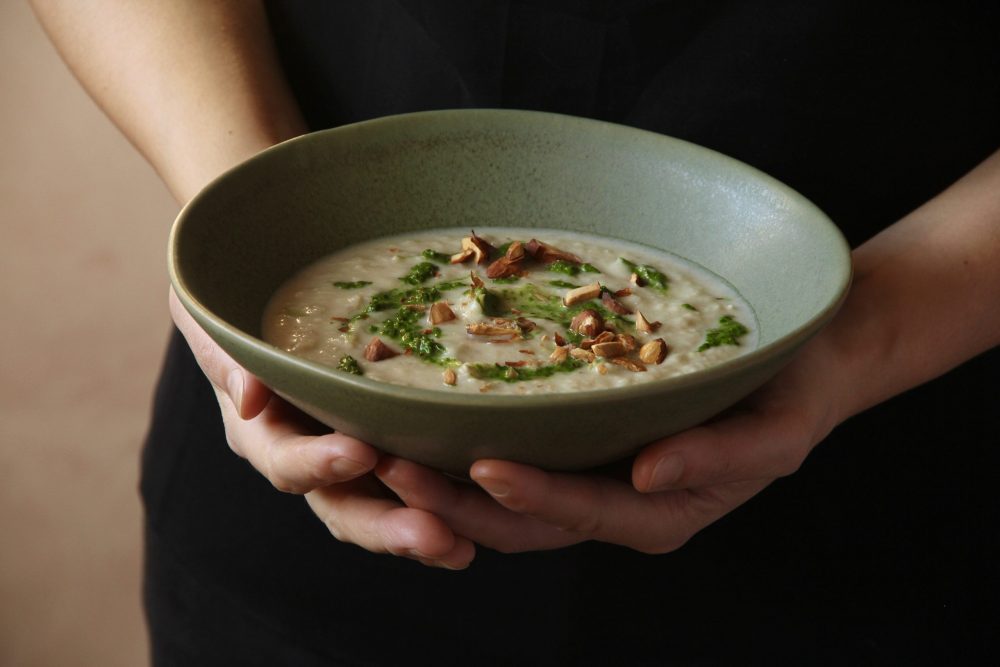
Jerusalem Artichoke Soup with Spinach and Almond Pesto

Seasonal Jerusalem artichokes fresh from the allotment. These little beauties are packed full of a prebiotic called inulin. Prebiotics are types of carbohydrates which our body is unable to digest, so it passes through the digestive tracts which feeds our gut bacteria. If you have a meal full of prebiotics you may feel a little bloated or gassy after, but nothing to worry about, it is just your gut microbiota enjoying their meal after you.

The inulin content of fresh Jerusalem artichokes varies according to the variety, growing conditions and storing conditions. Inulin content has been estimated to at 17-20.5% of fresh tuber weight.

A really easy way to use Jerusalem artichokes is to make them into a soup, the perfect starter to any dinner party which will wow your guests with their deliciously sweet flavour. Most soup recipes tell you to peel Jerusalem artichokes. If you can, try washing them thoroughly with a vegetable scrubber instead. This will save on time (as they can be fiddley to peel!), alongside helping reduce any food waste. The skins also have lots of fibre in them, like any root vegetable, so another good reason to leave them on and maximise on the fibre!

Serves 4 as a main or 6 as a starter

Ingredients

For the soup

  • 1 tbsp extra virgin olive oil
  • 1 large onion, sliced
  • 2 sticks of celery, sliced
  • 4 cloves or garlic, roughly chopped
  • 1kg of Jerusalem artichokes, scrubbed and cut into 1″ chunks
  • 300ml chicken or vegetable stock
  • 250ml dry white wine
  • 5 sprigs of thyme
  • 100ml double cream (optional to leave out or use a plant-based alternative)

For the pesto

  • 50g skin on almonds
  • 2 tbsp extra virgin olive oil
  • 50g spinach leaves
  • 1 garlic clove
  • 1 tsp lemon juice

Method

  • Gently cook the onions and celery in the oil in a large pan, allowing them to soften without colouring.
  • Add the garlic and artichokes and cook for a further 2 minutes before adding the stock, wine and 600ml of water.
  • Add the thyme, bring to the boil and allow to simmer for 45 minutes till the artichokes are soft.
  • Meanwhile, roast the almonds at 180°C for 10-15 minutes, shaking occasionally, till golden brown. Allow to cool.
  • Blend the olive oil, spinach, garlic, lemon juice and 1 tbsp water to a smooth paste.
  • Add half the roasted almonds and blend into the chunky pesto consistency.
  • Once the artichokes are cooked, remove the thyme stems and blend the soup till as smooth as possible.
  • Add the cream, if using.
  • Serve in bowls, topped with pesto and the remaining roasted almonds roughly chopped over the top.

Per main serving: 635kcal/ 30.0g fat/ 10.8g saturated fat/ 51.8g carbohydrates/ 6.8g fibre/ 11.6g protein

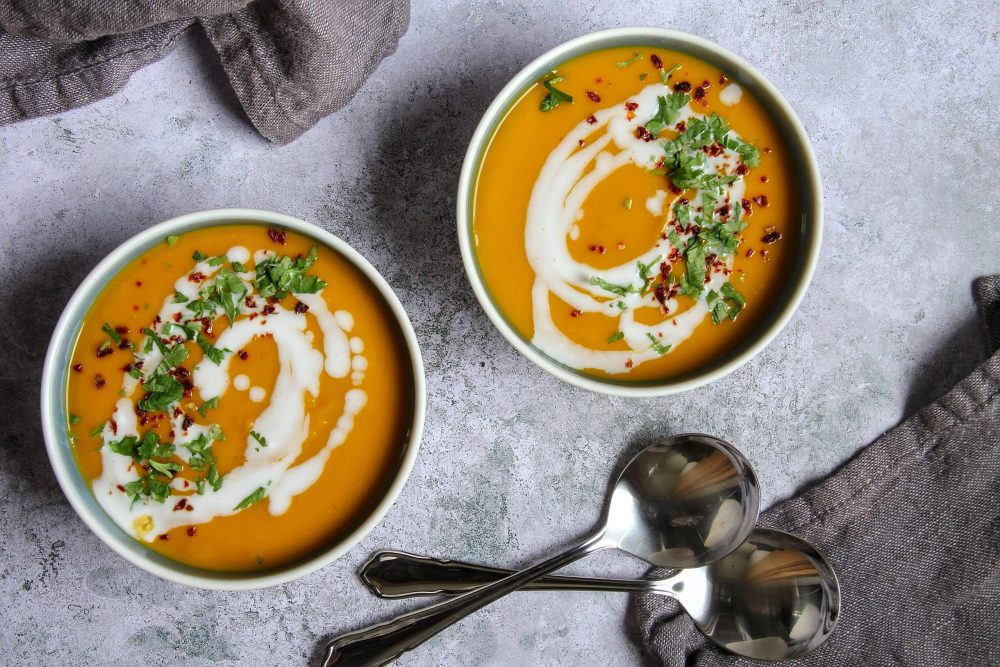
Spiced Pumpkin & Lentil Soup

Soup with a delicious autumnal twist making the most out of seasonal pumpkins which are being carved up for Halloween.

Sadly, over half the pumpkins carved at Halloween are under-utilised. The flesh and seeds of carving pumpkins are all edible, even once they have been carved. Pumpkins are a great source of beta-carotene, the precursor to vitamin A as suggested by the gorgeous golden-orange hue of the flesh and, in most cases, skins. A word of caution, if your pumpkin happens to have green skin your soup will adopt a “chip shop curry sauce” colour. Don’t worry, it will still be equally delicious!

If you don’t have any pumpkins hanging around you can substitute butternut squash or sweet potato as an alternative. These vegetables are still high in beta-carotene, an antioxidant that has previously been shown to help reduce the risk of heart disease and certain cancers.

Serves 4

Ingredients

  • 2 large onions, roughly chopped
  • 2 tbsp extra virgin olive oil
  • 4 cloves of garlic, roughly chopped
  • 3 tsp ground cumin
  • 2 tsp ground turmeric
  • 1 tsp dried chilli, or to taste
  • 200g red lentils
  • 500g pumpkin, skin on and roughly diced
  • 200ml coconut milk
  • 10g stock powder
  • 15g fresh coriander, finely sliced

Method

  • Gently fry the onion and oil in a large pan till soft and translucent. Add the garlic and cook for a further 2 minutes.
  • Add the dried spices and cook till fragrant before adding in the remaining ingredients with 1 litre of boiling water.
  • Allow to simmer for 20 minutes till the lentils and pumpkin are cooked through and soft.
  • Blend till smooth and serve.

Per serving: 447kcal/ 18.6g fat/ 2.3g saturated fat/ 50.7g carbohydrates/ 7.6g fibre/ 16.4g protein

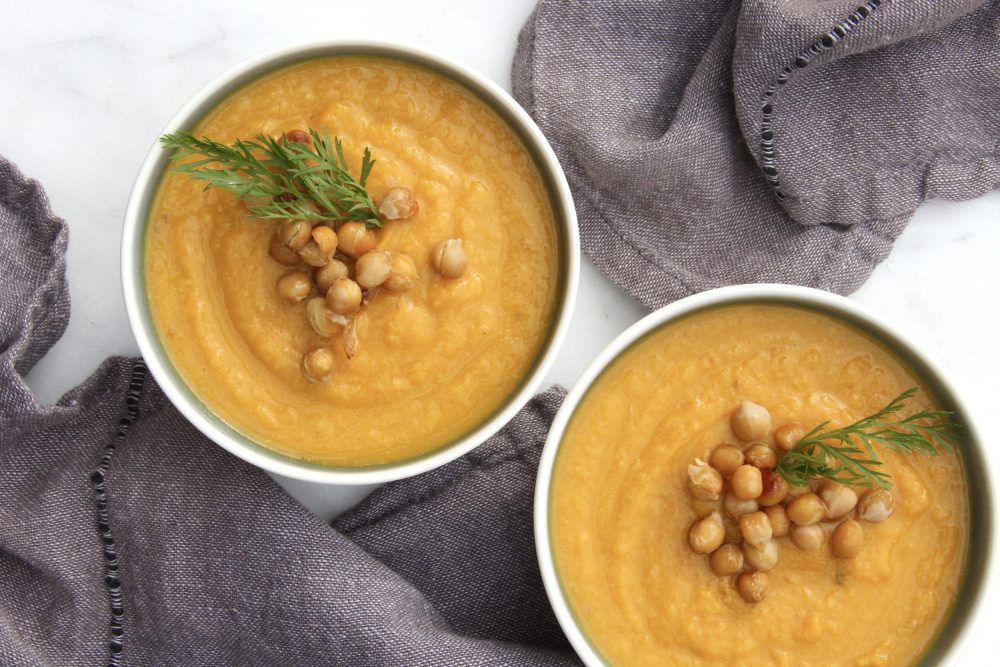
Roasted Butternut Squash, Carrot and Chickpea Soup

Autumn is upon us, so therefore so is soup season. I always enjoy a good bowl of hot soup on a crisp cold Autumn day, but sometimes I find myself wondering how to get the protein in for the meal. Using beans, pulses or lentils is a great way to include some protein in a soup meal.

In an effort to save time and reduce food waste I don’t peel the squash or carrots. Instead I scrub them before removing the tops and tail. The skin is easily blended into the soup and will contribute to some of the fibre content. What is not to love?

Any leftover soup can be stored in the fridge in an airtight container for up to 5 days. Alternatively, this soup freezes really well so you can make a large batch of this to pull out when you need a quick lunch.

Serves 4

Ingredients

  • 2 tbsp extra virgin olive oil
  • 400g butternut squash, cut into 1″ cubes
  • 400g carrots, cut into 1″ pieces
  • 1 large onion, cut into 1″ pieces
  • 4 clove of garlic, skin on
  • 1 tin of chickpeas, drained and rinsed
  • 1 stock cube of choice

Method

  • Preheat the oven to 180°C fan/ 190°C convection.
  • Mix all of the ingredients, except the stock cube, in a large roasting tin. Roast in the oven for 1 hour, stirring half way through.
  • Boil 900ml of water and add the stock cube.
  • Remove the garlic cloves from their skins and add the roasted vegetables to the stock.
  • Blend the soup to the consistency of choice and serve.

Per serving: 276kcal/ 11.5g fat/ 1.7g saturated fat/ 32.7g carbohydrates/ 8.0g fibre/ 7.0g protein

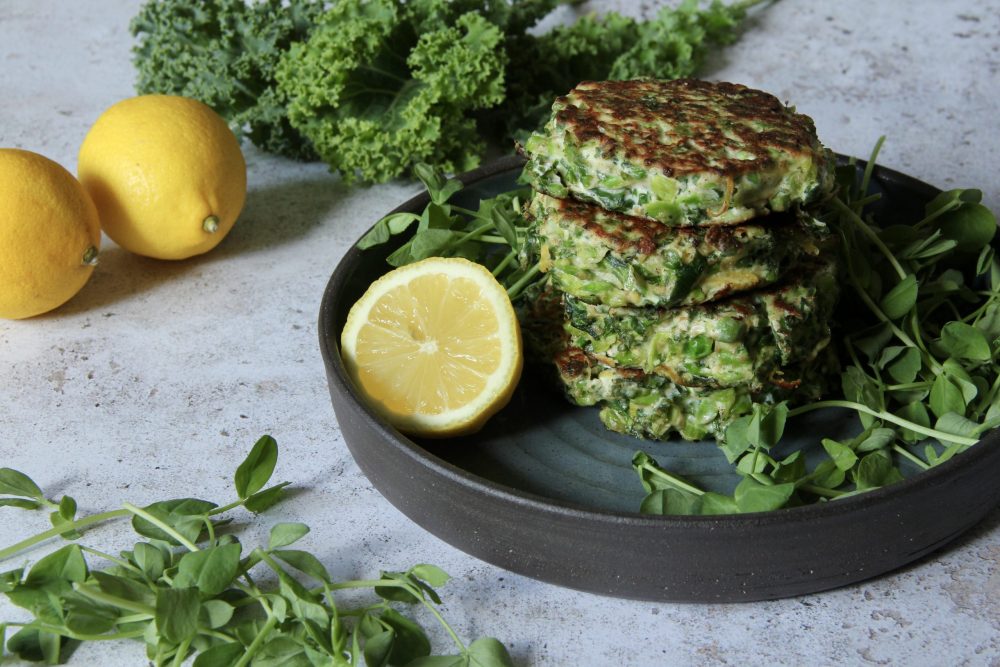
Green Kale Fritters

I’ve got so much kale growing at the allotment. Both curly kale and Cavolo Nero. I love them both, and I believe they both have their place in particular dishes. These fritters, however, will benefit from any type of kale you grow or can buy in the shops. Alternatively, if you don’t have kale you could use other green leafy vegetables such as cabbage, spinach, Swiss Chard or spring greens.

I also use frozen peas and edamame beans. Much cheaper and handy as they are kept in the freezer ready for use whenever you want. Frozen vegetables can also often have higher nutrient content as they are picked at their peak and then frozen within hours, locking in nutrients that may be lost otherwise.

If you need to make gluten-free fritters, use gram flour or rice flour instead of wholemeal flour. I use wholemeal because it helps with the fibre content of the fritters, but also is something I keep in the cupboard as a staple. The flour’s role in the fritters is just to help bind them together. When I didn’t add the flour in during recipe testing they fritters were extremely fragile and would easily fall apart. While they tasted great, I thought they were too difficult to handle.

These fritters are delicious simply served with a wedge of lemon and some salad leaves of choice. Serving with the lemon after cooking adds vitamin C which can help your absorb the plant-based iron from the beans and kale. You could add any other toppings of your choice such as a poached egg to make the perfect brunch, or top with hummus, guacamole, soured cream or your favourite sauce.

Makes 8 fritters

Ingredients

  • 150g kale, finely sliced
  • 75g frozen peas, defrosted
  • 75g frozen edamame beans, defrosted
  • 250g ricotta
  • 3 large eggs
  • Zest of 1 lemon
  • 8-10 mint leaves, finely sliced
  • 15g parsley, finely sliced
  • 1/2 a nutmeg, grated
  • 30g wholemeal flour, or if making gluten-free gram flour or rice flour
  • 2 tsp extra virgin olive oil

To serve

  • Salad leaves of choice
  • Lemon wedges
  • Poached egg (optional)

Method

  • Place the sliced kale into a large bowl. Boil the kettle and pour over the kale to blanch for 30 seconds before draining and running under cold water to maintain the bright green colouring. Drain as much water from the kale.
  • In a separate large bowl add the peas and edamame beans and crush before adding all the remaining ingredients except the flour.
  • Add the kale and mix to distribute throughout the batter. Add the flour and mix.
  • Preheat large frying pan and heat over a medium heat with 1 tsp oil.
  • Take a heaped spoonful of batter and place into the pan to form a fritter. Cook in batches for 2-3 minutes per side till golden brown.
  • Serve the fritters with fresh pea shoots and lemon wedge, and optional top with a poached egg.

Per 2 fritters: 232kcal/ 13.7g fat/ 5.0g saturated fat/ 10.9g carbohydrates/ 4.1g fibre/ 15.5g protein

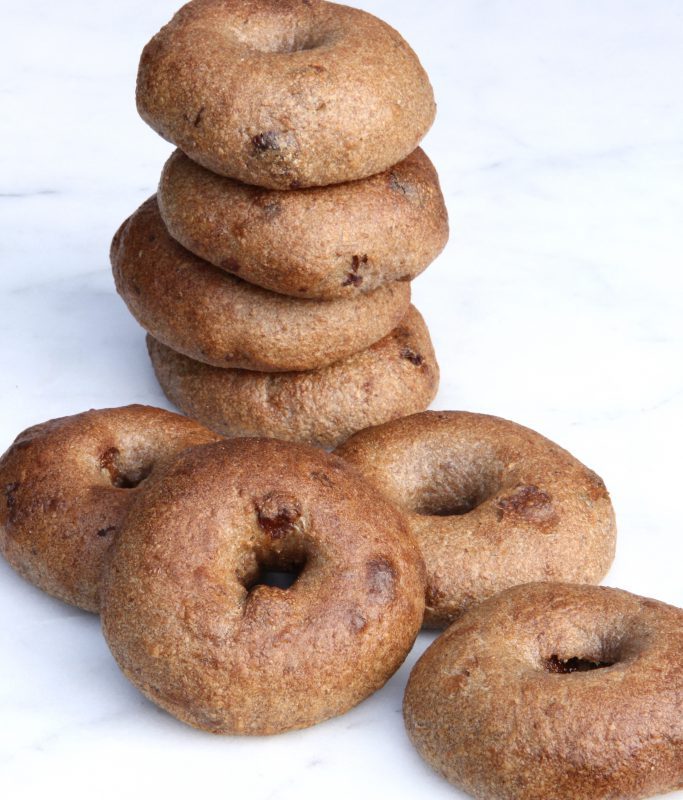
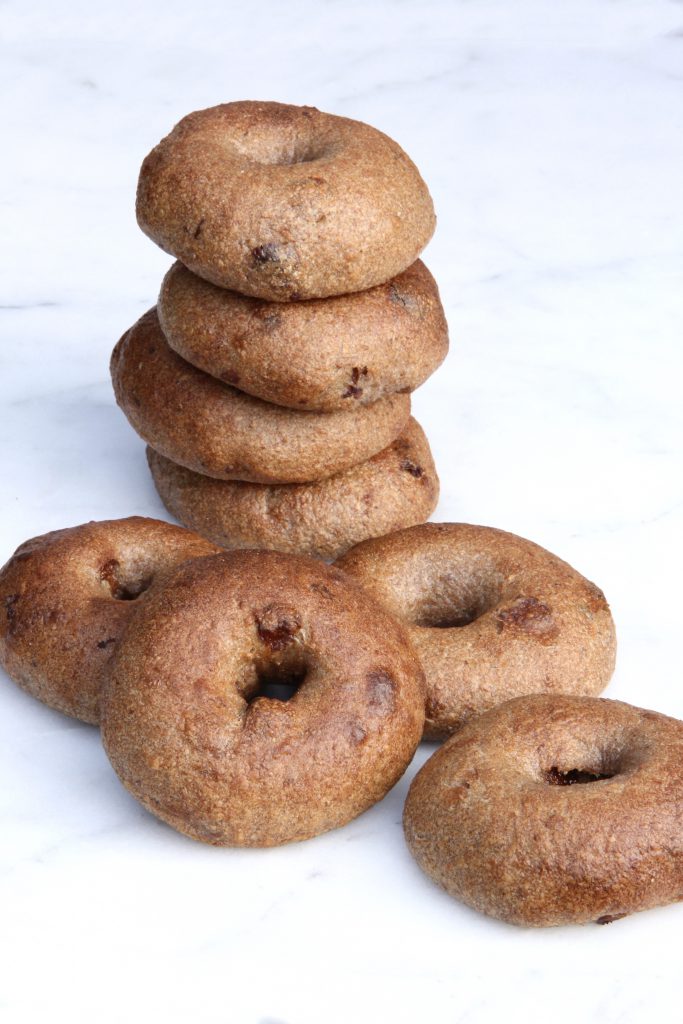
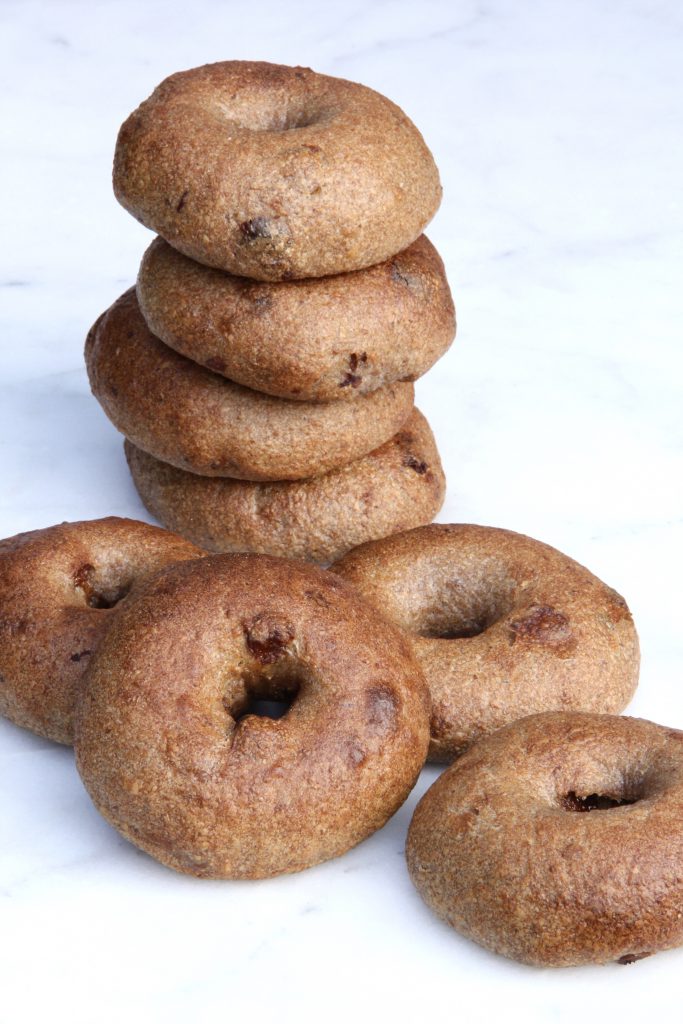
Sourdough Cinnamon and Sultana Bagels

When I presented seeded multigrain sourdough bagels to my brother, the first thing he said was that I needed to make cinnamon and raisin sultanas. So grateful(!) but I took the constructive criticism and made this recipe for him.

I’ve adapted the Margot Bakery sourdough bagel recipe. It’s a great recipe, however, I could never fit 12 bagels onto my baking sheets, and the volume of dough was too large for my stand mixer! I also wanted to incorporate more wholemeal flour as a way of increasing the fibre content. I also didn’t have the malt syrup, so for anyone who wishes to make vegan bagels, swap the honey back out for the original malt syrup.

You could of course do the more traditional approach of cinnamon and raisin bagels, but I have always preferred sultanas over raisins. Other fruits that would work well in this recipes include dried blueberries, cranberries or cherries.

The bagels are best eaten fresh on the day, although still delicious if left for a day or two. A great way to capture that freshness is to slice the bagels in half and then freeze. This way they are ready to pop straight into the toaster from the freezer and are ready to be eaten within minutes.

Makes 12 bagels

Ingredients

For the leven

  • 35g 50:50 strong white: strong wholemeal flour
  • 115g 50:50 strong white: strong wholemeal flour
  • 25g granulated sugar

For the dough

  • 20g honey or malt syrup if making vegan
  • 180g strong white flour
  • 180g strong wholemeal flour
  • 400g plain flour
  • 12g salt
  • 10g ground sweet cinnamon
  • 120g sultanas

Extras

  • Vegetable oil
  • 50:50 mix plain flour: rice flour
  • 2 tsp bicarbonate of soda
Sourdough Cinnamon and Sultana Bagels

Method

  • The morning before making the bagels, refresh your starter with 35g 50:50 strong white: strong wholemeal flour and 35g water. Mix and leave for 10-12 hours.
  • The night before making the bagels, in a large jar mix 70g of the refreshed starter mixture, 115g 50:50 strong white: strong wholemeal flour, the sugar and 70g water. Leave for 10-12 hours.
  • The next day, mix all the remaining ingredients, 425g water and 250g of the refreshed starter. Knead the dough on a medium setting of a stand mixer fitted with a dough hook, frequently scraping down the sides and hook, for around 8-10 minutes. Alternatively, you can work the dough by hand, but it will be sticky so resist the urge to add extra flour. Knead for 10 minutes.
  • Lightly grease a 3l container. Transfer the dough, cover and allow to rest at room temperature for 3 hours.
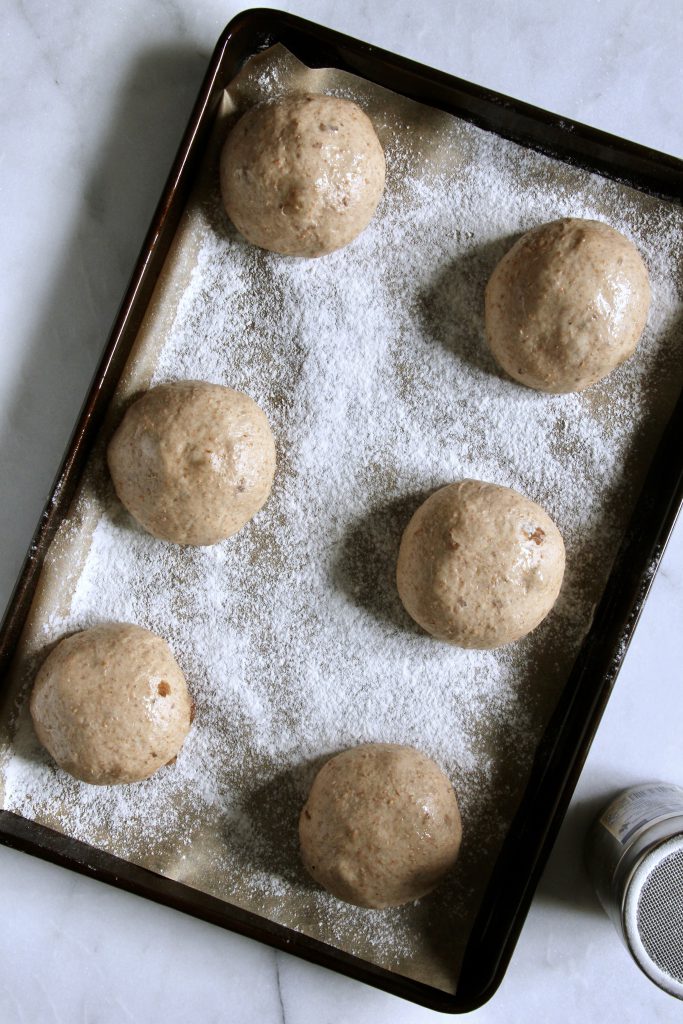
  • Line 2 large baking trays with baking parchment and dust with 50:50 rice and plain flour.
  • Divide the dough into 12 equal portions and roll out into neat balls. Try to tuck any sultanas into the dough to prevent burning when baking.
  • Place 6 balls evenly spaced out onto a tray and cover with lightly oiled clingfilm. Leave to rest for 1 hour at room temperature.
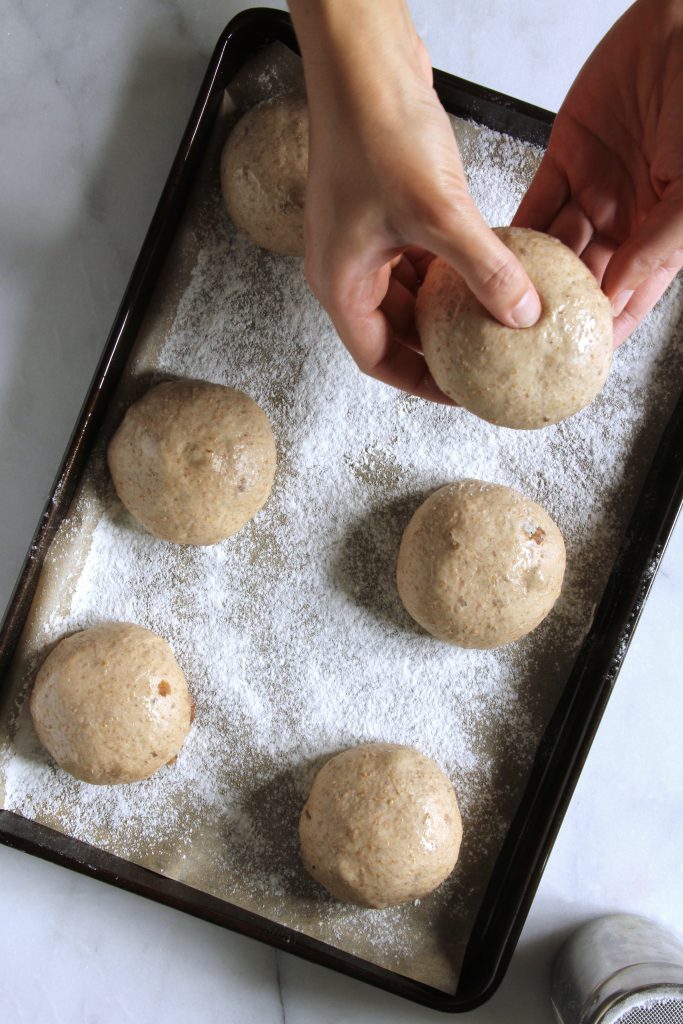
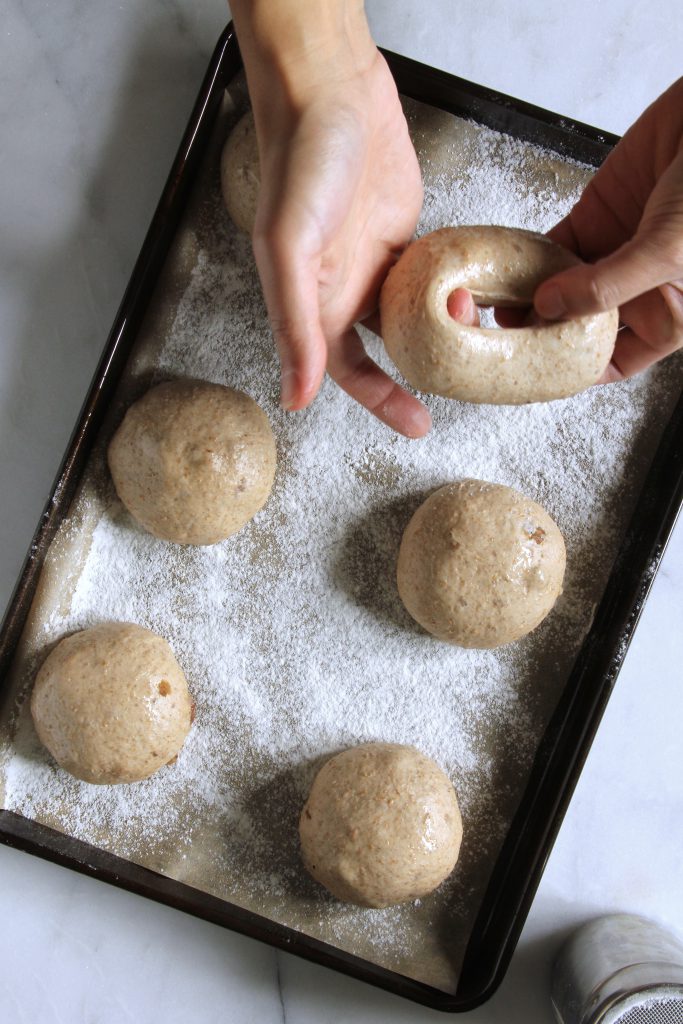
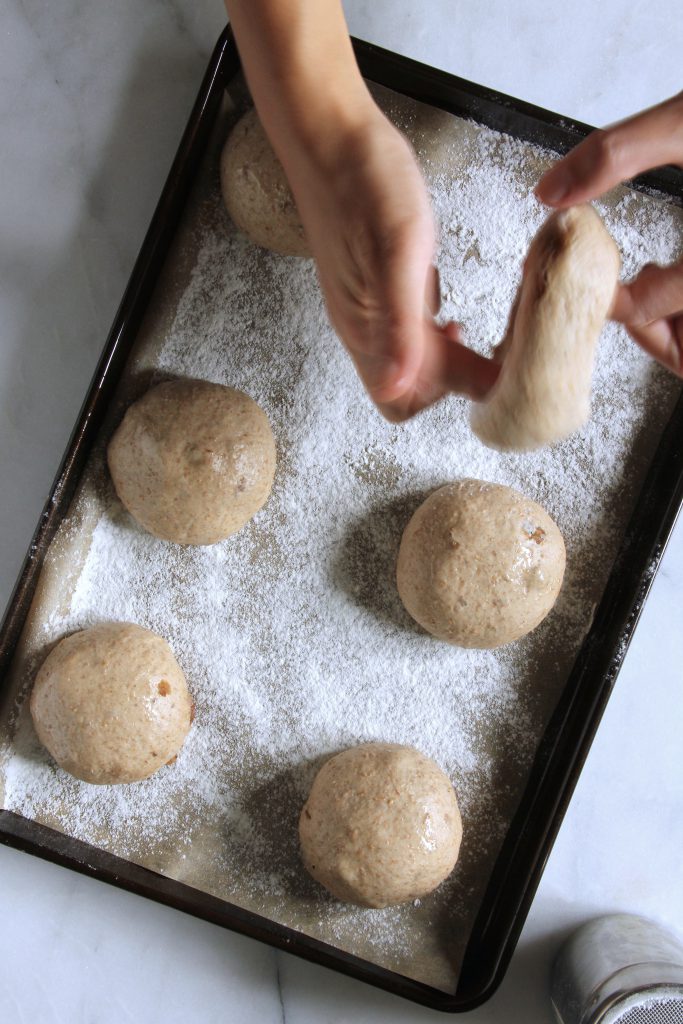
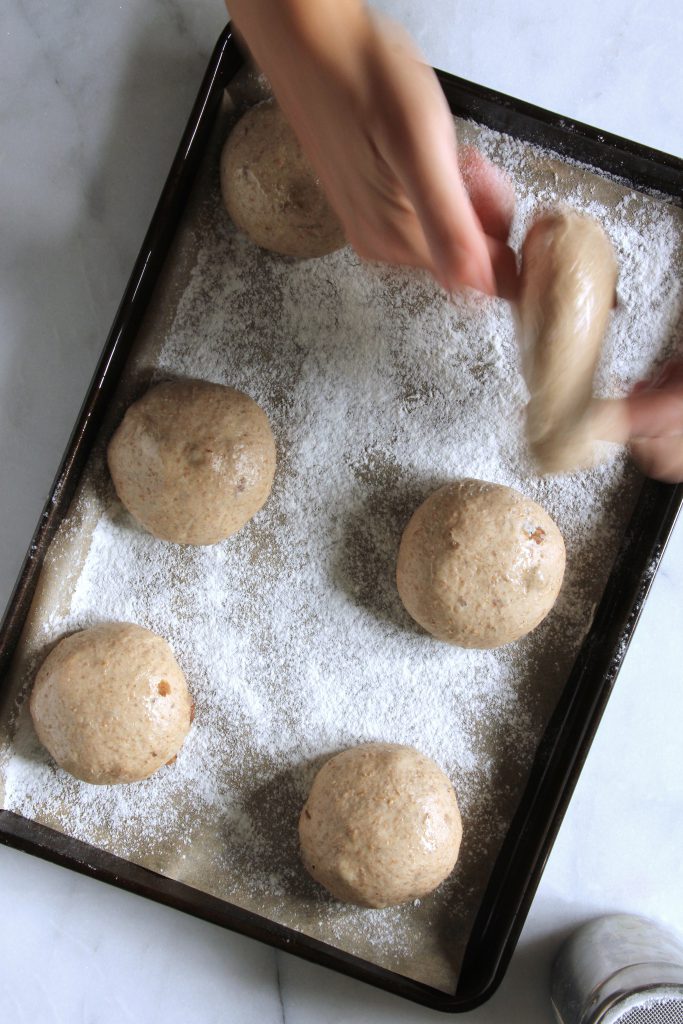
  • Peel back the clingfilm, take one ball and make a hole in the centre of the ball. Using two fingers, stretch the ball into a bagel shape using a winding motion. Redust the parchment with 50:50 rice and plain flour and place the bagel back down.
  • Repeat for the remaining 5 balls on the baking tray.
  • Starting back with the first bagel, repeat the winding stretch to open the bagel back up.
  • Cover back up with the oiled cling film and leave to prove at room temperature for 3-6 hours depending on the temperature of the room; in warmer weather prove for a shorter period of time.
  • Transfer to the fridge overnight for up to 24 hours.
  • The next day remove the bagels from the oven and allow to return to room temperature.
  • Preheat the oven to 220°C fan/240°C convection, place a tray in the bottom of the oven, and bring 2l of water to the boil in a large pan.
  • Once the water is boiling add the bicarbonate of soda.
  • Boil the bagels in batches of up to 3 depending on the size of your pan for 30 seconds.
  • Remove and allow to dry slightly on a wire rack before transferring to a clean baking sheet lined with baking parchment, allowing space for them to expand in the oven.
Boiled bagels ready for baking
  • Once all the bagels are boiled, boil 200ml water.
  • As quickly as possible, place the trays of bagels into the oven and pour the boiled water into the tray at the bottom of the oven.
  • Close the door to trap as much steam as possible. Reduce the temperature of the oven to 20°C and bake for 15 minutes.
  • After 15 minutes, remove the tray of water and if your bagels are on split levels, rotate your trays around for even cooking. Bake for a further 8-9 minutes.
  • Remove and allow to cool on a wire rack.

Per bagel: 205kcal/ 1.2g fat/ 0.2g saturated fat/ 41.2g carbohydrates/ 3.1g fibre/ 6.6g protein

Vegetable and Tofu Gyoza

These easy to make dumplings look rather impressive. They also happen to be vegan, but if you wish you can add other flavours to the mix such as oyster sauce, fish sauce, or replace the tofu with an alternative source of protein.

If you want, you can also make a large batch of dumplings and freeze them. Simply line a baking tray with baking parchment and arrange the dumplings so they don’t touch. Freeze and then place into bags for up to 3 months. You can cook them straight from frozen, just add an extra few minutes onto the steaming time to make sure they are piping hot in the centre.

These little dumplings are delicious served with a simple dipping sauce made from soy sauce, sesame oil and rice wine vinegar. You can also add other flavours such as chilli, spring onion or sesame seeds. Alternatively, they are amazing dipped in some shop bought hoisin sauce!

Serves 3 as a starter

Ingredients

  • 1 portion of dumpling skins
  • 2 dried shiitake mushrooms, soaked and finely diced. Reserve the soaking liquid
  • 100g firm tofu
  • 30g cabbage, finely sliced
  • 30g carrot, finely diced
  • 30g bamboo shoots, finely sliced
  • 1 spring onion, finely chopped
  • 10g coriander, finely chopped
  • 1/2 tsp fresh ginger, very finely diced
  • 1 tsp sesame oil
  • 1 tsp Shaoxing wine
  • 2 tsp light soy sauce
  • 1 tsp cornflour
  • 1/2 tsp rapeseed oil

Method

  • Mix all of the ingredients, except the rapeseed oil, and 2 tablespoons of the reserved shiitake mushroom liquid together. Gently heat in a pan or wok till the cabbage has softened and the liquid has become slightly thick so it coats all the ingredients, about 2-3 minutes. Add extra mushroom liquid if needed.
  • Allow the mixture to cool to room temperature.
  • Take 1 dumpling skin and fill it with a heaped teaspoon of the mixture. Pinch the end and then pleat the top half of the skin onto the bottom half of the skin to create a slight crescent shape.
  • Add the rapeseed oil to your frying pan to stop the dumplings from sticking, and arrange them so they have at least 1 cm between each dumpling. You may need to cook them in batches depending on the size of your pan.
  • Cook for 2-3 minutes over a low-medium heat so they are golden on the bottom. Then add hot water to cover the bottom third of the dumpling and immediately cover with a lid to steam the dumplings.
  • After 5 minutes, remove the lid and allow any remaining liquid to evaporate off, allowing the bottoms to crisp for 1 minute.
  • Remove the dumplings onto a plate and enjoy hot with a dipping sauce of your choice.

Per serving: 230kcal/ 5.8g fat/ 1.3g saturated fat/ 33.2g carbohydrates/ 3.6g fibre/ 9.7g protein