Squash, Kale and Ricotta Baked Shells

Seasonal autumnal butternut squash, roasted to maximise the flavour. Leaving the skin on the squash increases the fibre content, so don’t be tempted to peel! It’ll save you time, keep your gut bacteria happy, and increase the flavour of the whole dish as it caramelises in the over from its first roasting!

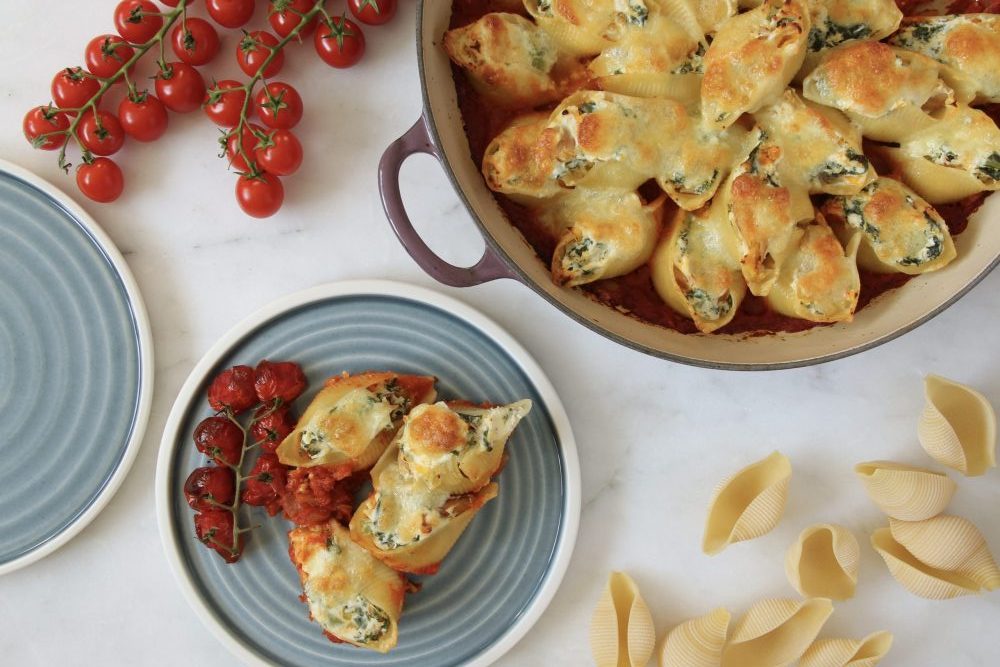
I like to leave everything a little chunky, this way you can actually see what you’re eating, whether it be the creamy ricotta, soft butternut squash or kale. The final topping of mozzarella gives a lovely golden hue to the whole dish, as well as giving some lovely texture which I always can’t resist to leave to the final mouthful.

This dish is perfect for wowing a crowd at a dinner party. It can happily sit in the fridge for a day or two, and by cooking the pasta in advance and allowing it to cool in the present of oil, you increase the fibre content through the formation of something called resistant starch. So don’t be afraid to prepare in advance and then whip out at a later date (even if it’s just for a mid-week dinner!). Alternatively, assemble the dish bar the final crown of mozzarella and you can freeze portions which can be cooked at a later date.

Serves 5

Recipe

  • 500g Butternut Squash, skin on and cubed
  • 200g giant pasta shells
  • 1 tbsp olive oil
  • 120g kale, sliced
  • 1 tsp rapeseed oil
  • 2 large onions, chopped
  • 3 cloves garlic
  • 350g rough passata
  • 500g ricotta
  • ¼ nutmeg, grated
  • 1 ball mozzarella

Method

  • Set the oven to 150°C fan/160°C convection. Place the butternut squash on a roasting tray and cook for 20 minutes till golden brown. Turn the oven up to 180°C.
  • Meanwhile, cook the pasta for 2 minutes less than the packet instructions. Drain and mix the olive oil over to stop the shells from sticking.
  • Steam the kale over boiling water for 4 minutes.
  • In a large ovenproof dish, gently sauté the onions in rapeseed oil over a low heat. Once soft add the garlic, cook for a further minute before adding the passata and cook till reduce by a third.
  • Meanwhile, mix the ricotta and nutmeg together and season to taste with salt and pepper. Break up the roasted squash roughly, add to the ricotta mix with the kale. Stuff the pasta shells with the mixture.
  • Off the heat, arrange the stuffed shells into the dish and top each shell with mozzarella.
  • Bake in the oven for 20-25 minutes till golden brown and bubbly.
  • Delicious served with roasted vegetables or a side salad.

Per serving 417kcal/ 20.0g fat/ 9.3g saturated fat/ 34.6g carbohydrates/ 5.0g fibre/ 18.6g protein
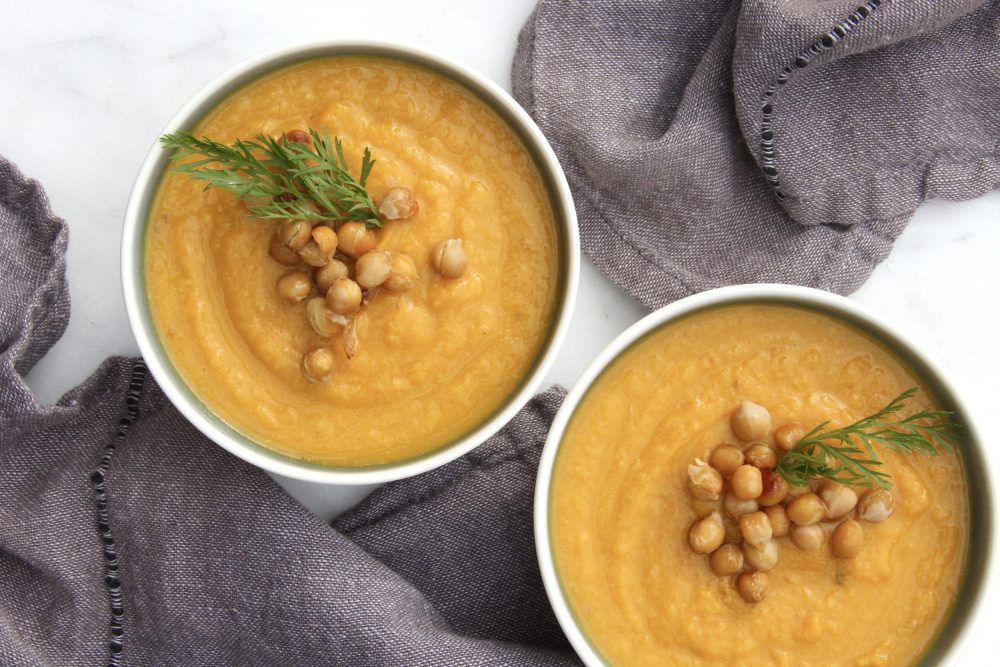
Roasted Butternut Squash, Carrot and Chickpea Soup

Autumn is upon us, so therefore so is soup season. I always enjoy a good bowl of hot soup on a crisp cold Autumn day, but sometimes I find myself wondering how to get the protein in for the meal. Using beans, pulses or lentils is a great way to include some protein in a soup meal.

In an effort to save time and reduce food waste I don’t peel the squash or carrots. Instead I scrub them before removing the tops and tail. The skin is easily blended into the soup and will contribute to some of the fibre content. What is not to love?

Any leftover soup can be stored in the fridge in an airtight container for up to 5 days. Alternatively, this soup freezes really well so you can make a large batch of this to pull out when you need a quick lunch.

Serves 4

Ingredients

  • 2 tbsp extra virgin olive oil
  • 400g butternut squash, cut into 1″ cubes
  • 400g carrots, cut into 1″ pieces
  • 1 large onion, cut into 1″ pieces
  • 4 clove of garlic, skin on
  • 1 tin of chickpeas, drained and rinsed
  • 1 stock cube of choice

Method

  • Preheat the oven to 180°C fan/ 190°C convection.
  • Mix all of the ingredients, except the stock cube, in a large roasting tin. Roast in the oven for 1 hour, stirring half way through.
  • Boil 900ml of water and add the stock cube.
  • Remove the garlic cloves from their skins and add the roasted vegetables to the stock.
  • Blend the soup to the consistency of choice and serve.

Per serving: 276kcal/ 11.5g fat/ 1.7g saturated fat/ 32.7g carbohydrates/ 8.0g fibre/ 7.0g protein

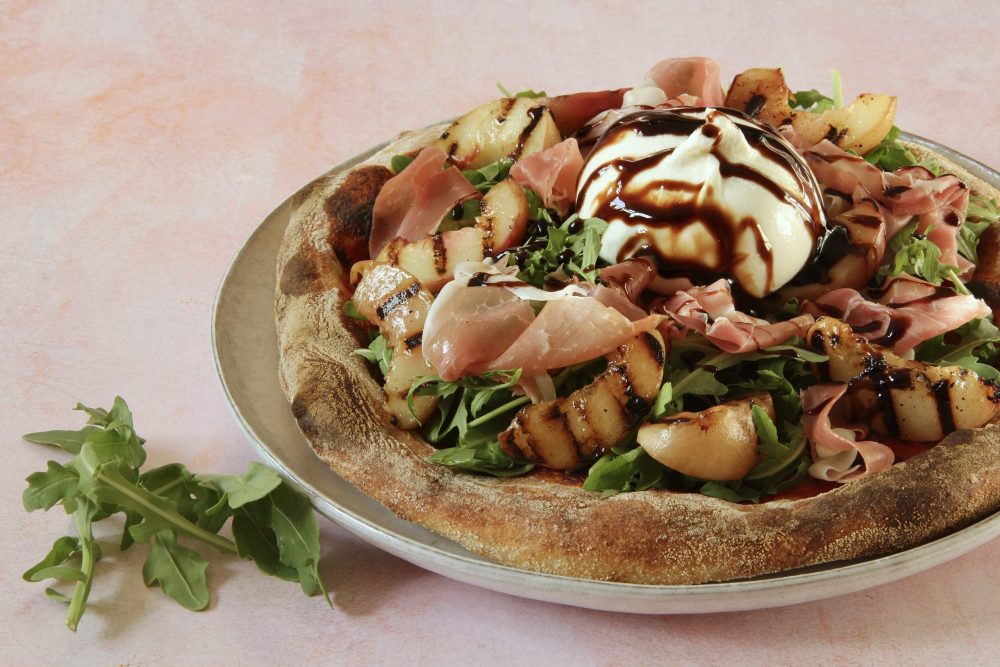
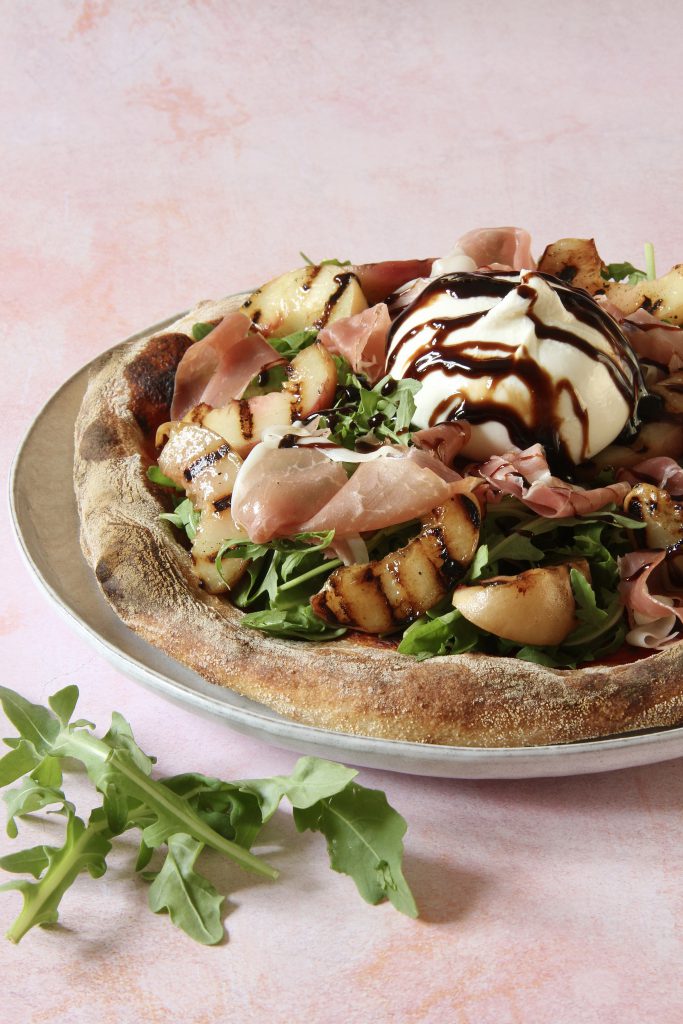
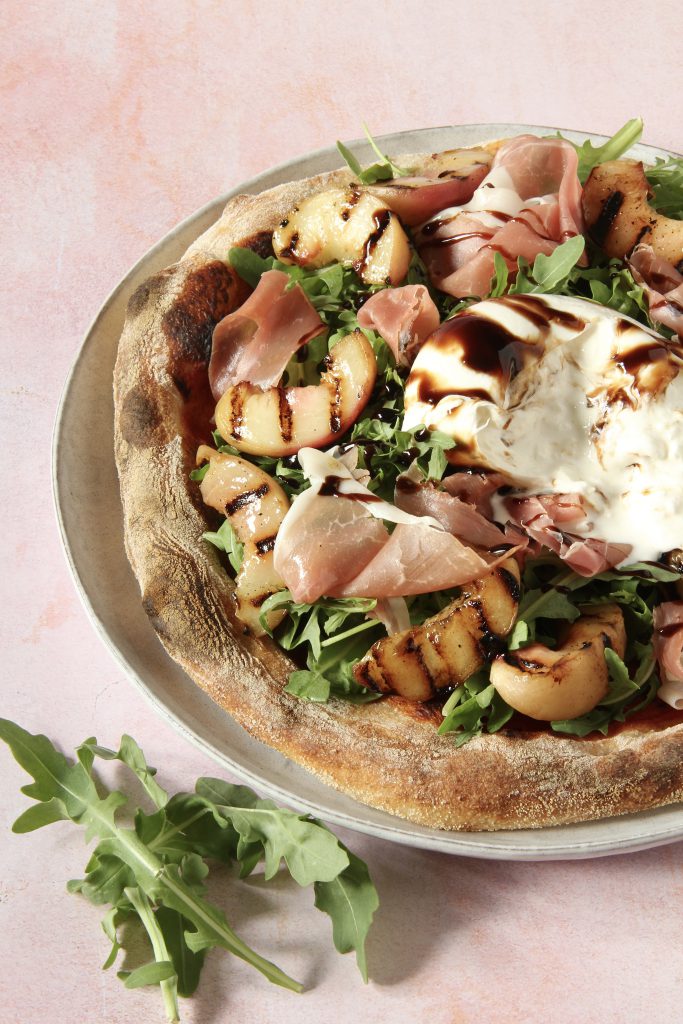
Burrata and Grilled Peach Salad Pizza

I made this for my friend who is an avid supporter of my sourdough pizzas, simply to give her something different to try. She may have protested slightly at the thought of having a “salad pizza”, but at the end of a week’s stay with me in my lockdown food bubble, this turned out to be one of her favourite foods we ate. And we ate a lot of foods!

This is easily adaptable to be vegetarian by omitting the Parma ham, and was in part inspired by a famous pizza chain’s vegan pizza dish I saw an old colleague have some 15 years ago. I must admit that back then, before I had started my path down nutrition, the thought of a cheeseless salad pizza did not appeal in the way it would do now.

If you are vegan, the base pizza dough recipe is completely vegan. You can still top it with the salad and grilled peaches, and it would be delicious as is, but I suspect the vegan dairy-free alternative cheese would make a wonderful addition to it.

Makes 1 pizza, serves 2

Ingredients

  • 1/3 portion of pizza dough
  • Semolina for dusting
  • 100g passata
  • 2 large ripe peaches or nectarines, cut into wedges
  • 1 tsp extra virgin olive oil
  • 80g rocket, watercress, baby leaf spinach or pea shoots
  • 3 slices of Parma ham
  • 1 ball burrata
  • Drizzle of balsamic glaze

Method

  • Preheat the oven to maximum temperature (mine is 275°C fan) and place a heavy bottom tray/pizza stone in the middle of the oven. Allow the oven to reach temperature and wait a further 10 minutes to ensure the tray is fully heated.
  • Dust the work surface with semolina, take a ball of dough and place it on the semolina and finely dust with flour.
  • Using your fingers, press around the edge 1 cm in to form a crust.
  • Using the palm of your hand, press inside this line to flatten the dough in the centre.
  • When you can press it no more, pick the dough up and using your knuckles, gently ease the dough out so it becomes thin and slightly transparent. Take care not to rip the dough. Ensure the base has an even covering of semolina.
  • Transfer the pizza base onto a pizza peel.
  • Add 100g passata over the base, up to but not on the crust part of the dough.
  • Transfer the pizza onto the tray in the oven using a strong and decisive forward and back motion to slide the pizza off the peel.
  • Cook the pizza for 6-7 minutes depending on the temperature of your oven. The pizza should have very dark golden blistered crusts, and the passata will have evaporated some of the liquid.
  • Meanwhile, heat a heavy-based griddle pan over a high heat.
  • Coat the peach wedges in the oil before grilling for 1-2 minutes per side.
  • Remove the pizza and allow to rest for 1 minute.
  • Scatter the pizza with the salad leaves and grilled peaches. Tear the Parma ham and evenly distribute over the pizza. Place the burrata ball in the centre and drizzle with the balsamic glaze.
  • Best eaten straight away.

Per serving: 756kcal/ 23.0g fat/ 11.4g saturated fat/ 88.7g carbohydrates/ 8.3g fibre/ 27.9g protein

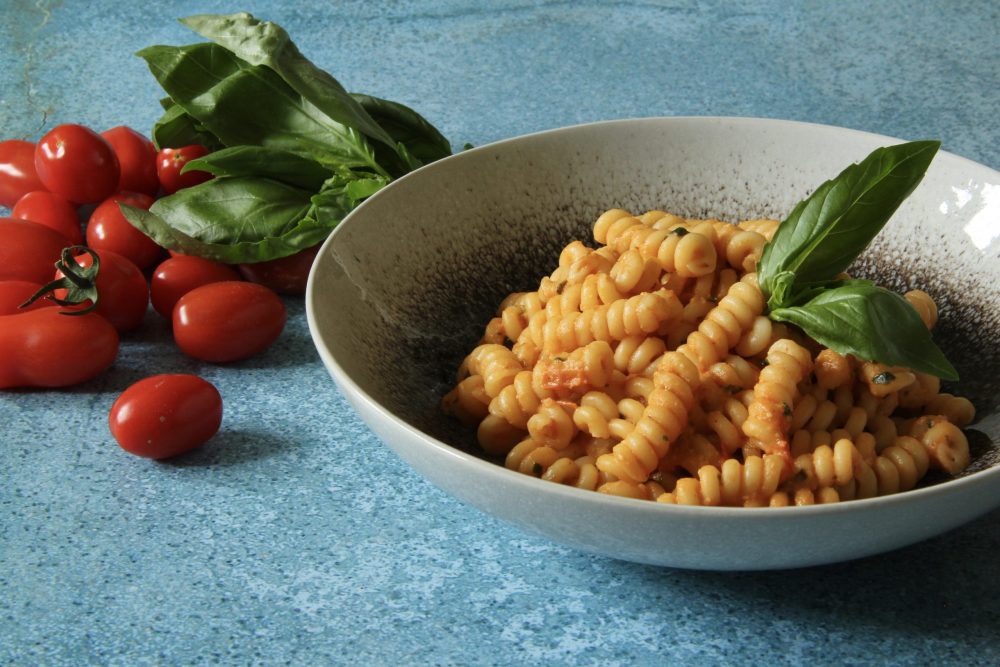
Tomato and Pine Nut Sauce

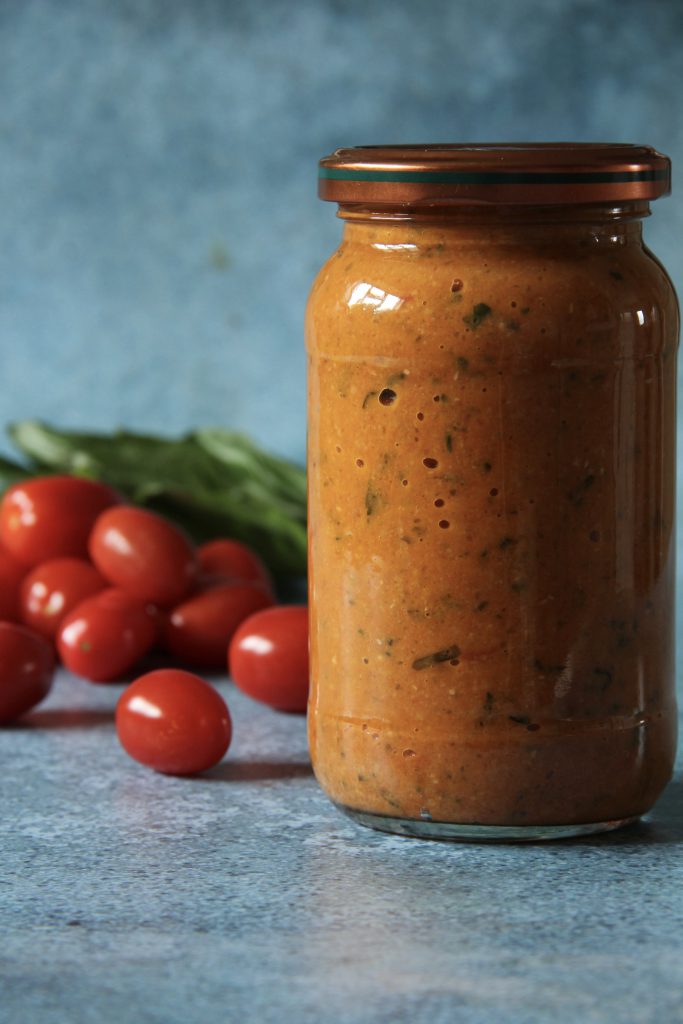
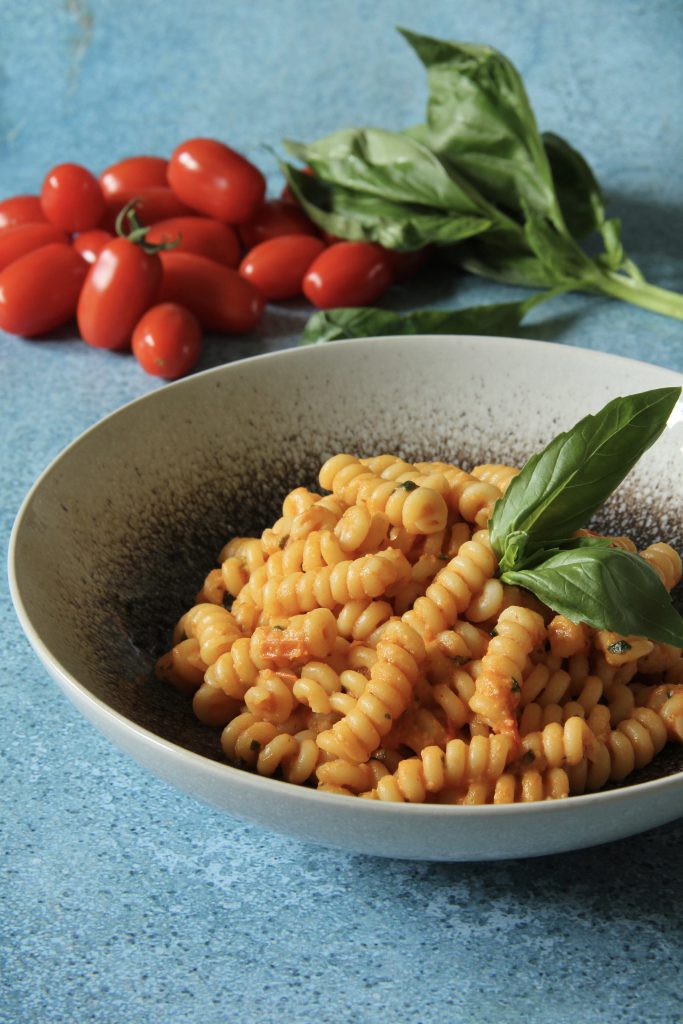
Using my homegrown sun-ripened tomatoes and pairing it with pine nuts makes for the most delicious and creamy sauce, yet is completely vegan! Perfectly paired with freshly cooked pasta, you could also use it over roasted vegetables, marinated cuts of meat, fish, or tofu, or spread it over freshly toasted bread to make a quick bruschetta.

Any left overs can be stored in the fridge in an airtight container for up to a week, or frozen for up to 3 months.

Makes 4 servings

Ingredients

  • 2 large onions, finely diced
  • 1 tbsp extra virgin olive oil
  • 500g tomatoes, roughly diced
  • 1 bunch of fresh basil, leaves and stalks
  • 50g pine nuts

Method

  • Cook the onions and oil together over a low heat till the onions become translucent and soft.
  • Add the tomatoes and roughly chopped basil stalks, bringing to a light boil over a medium-low heat. Keep cooking till the volume has reduced by a third and the mixture becomes thicker, about 20 minutes.
  • Meanwhile, lightly toast your pine nuts under the grill for a few minutes, turning frequently to prevent them from burning. Keep them lightly golden to retain their natural sweetness.
  • Add the basil leaves and pine nuts to the tomato mixture and blend till smooth.

Per serving: 163kcal/ 13.0g fat/ 1.2g saturated fat/ 8.3g carbohydrates/ 2.4g fibre/ 3.4g protein

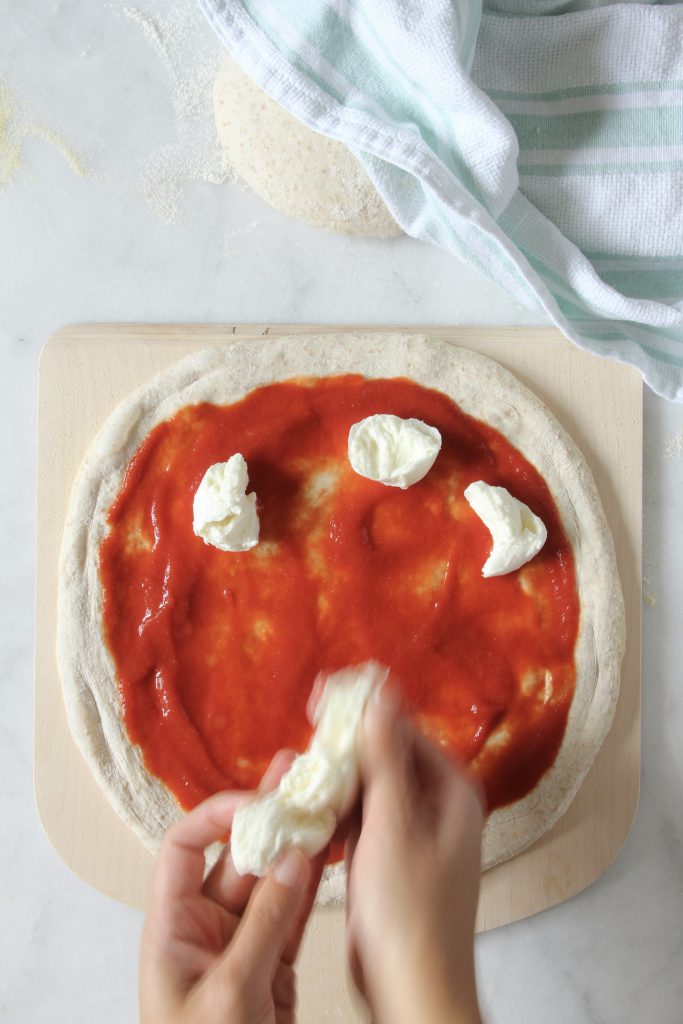
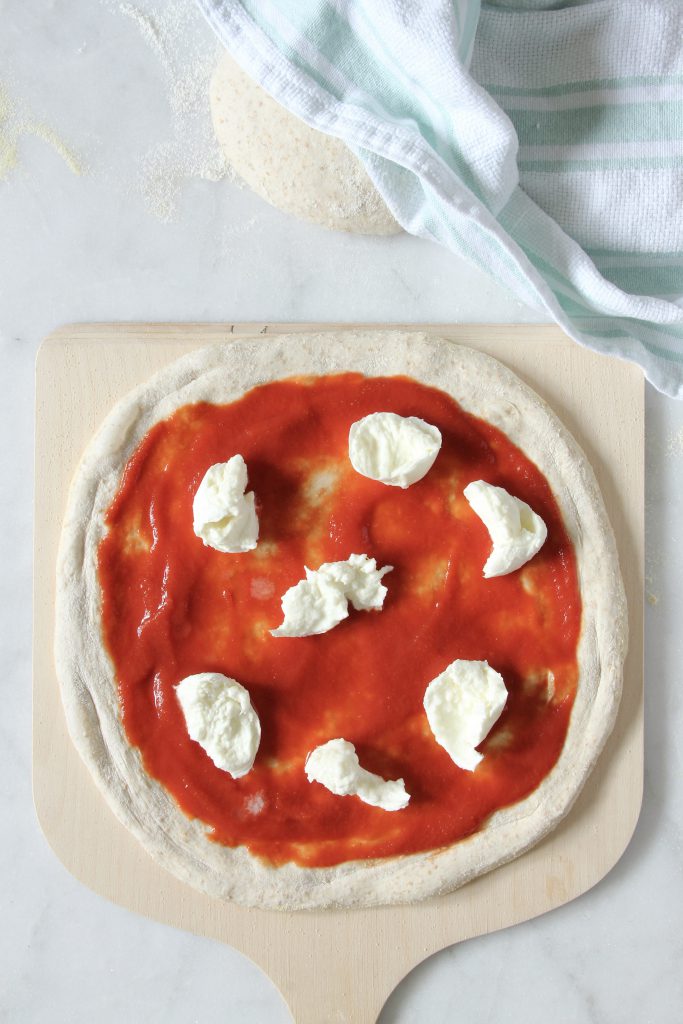
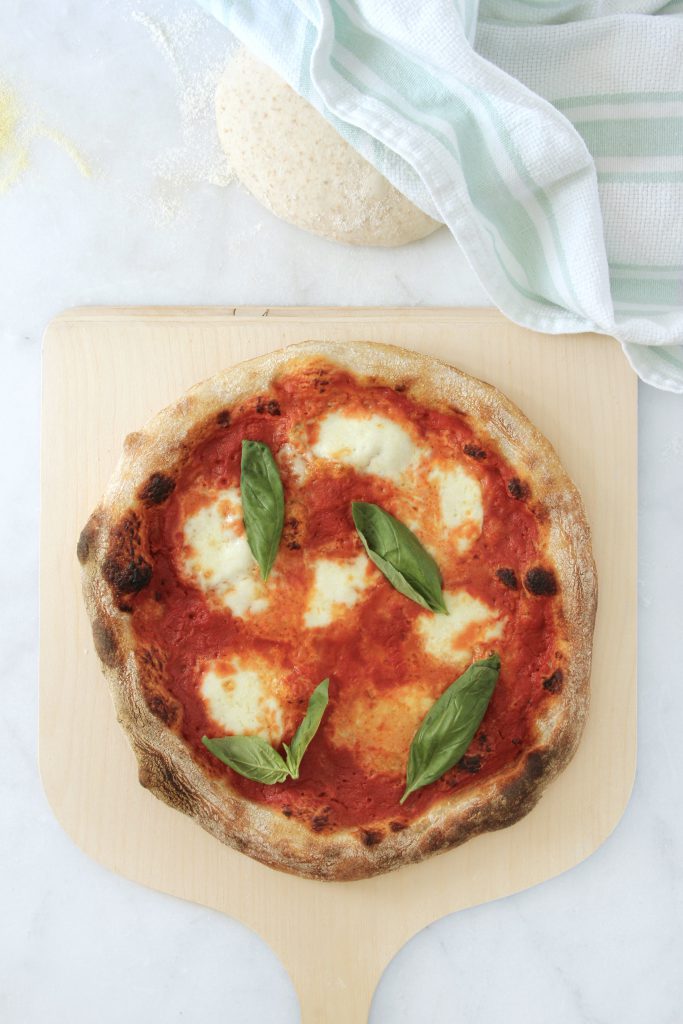
Sourdough Margherita Pizza

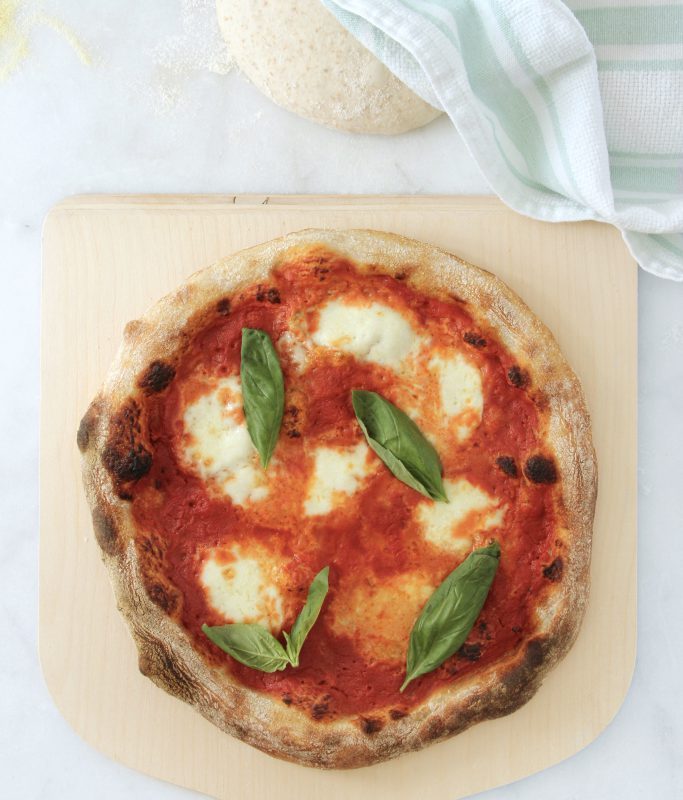
Simple, classic, completely delicious. You could pimp it out with any toppings you wish, or just keep it as is.

The trick is to have a very thick pizza pan or a pizza stone. These retain the heat when you put the pizza on to cook, resulting in a crispy base. I use a cast iron pizza pan, which can seriously retain its heat.

Use my sourdough base recipe, picking up after the 30 minute bench rest.

Makes 3 pizzas

Ingredients

  • 300g passata
  • 150g buffalo mozzarella
  • 3 springs of fresh basil
  • Semolina and flour for dusting

Method

  • Preheat the oven to maximum temperature (mine is 275°C fan) and place a heavy bottom tray/pizza stone in the middle of the oven. Allow the oven to reach temperature and wait a further 10 minutes to ensure the tray is fully heated.
  • Dust the work surface with semolina, take a ball of dough and place it on the semolina and finely dust with flour.
  • Using your fingers, press around the edge 1 cm in to form a crust.
  • Using the palm of your hand, press inside this line to flattern the dough in the centre.
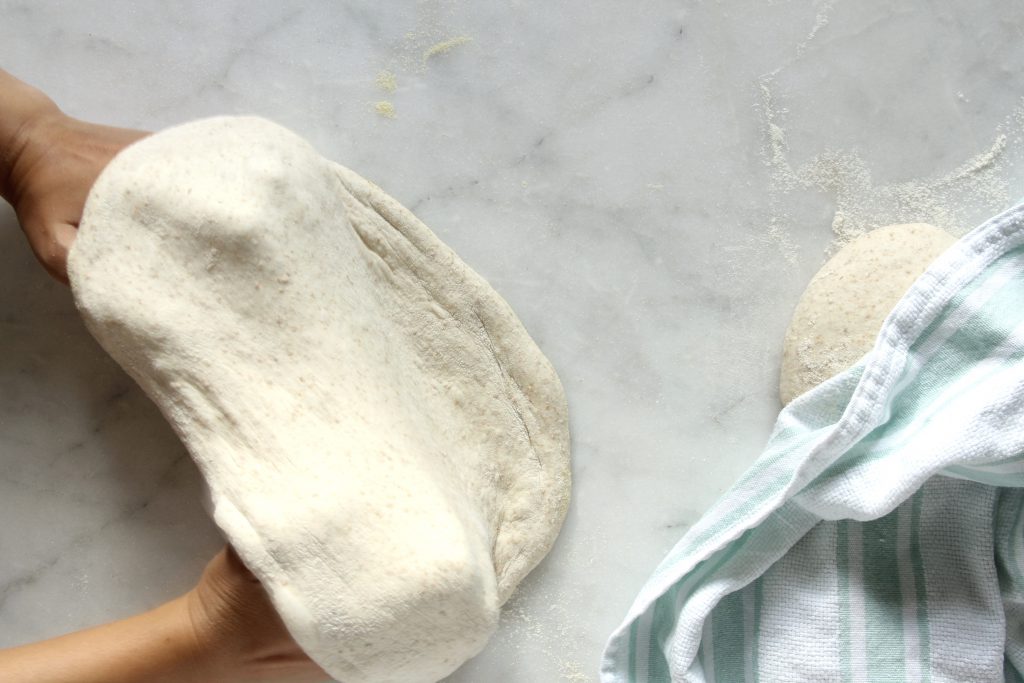
  • When you can press it no more, pick the dough up and using your knuckles, gently ease the dough out so it becomes thin and slightly transparent. Take care not to rip the dough. Ensure the base has an even covering of semolina.
  • Transfer the pizza base onto a pizza peel.
  • Add 100g passata over the base, up to but not on the crust part of the dough.
  • Tear 50g buffalo mozzarella into large chunks and scatter over the passata.
  • Transfer the pizza onto the tray in the oven using a strong and decisive forward and back motion to slide the pizza off the peel.
  • Cook the pizza for anywhere between 6-9 minutes depending on the temperature of your oven. The pizza should have very dark golden blistered crusts, and the mozzarella and passata should be bubbling and start turning golden.
  • Remove the pizza, and scatter with fresh basil leaves.
  • Best eaten straight away.

Per whole pizza: 1028kcal/ 13.3g fat/ 7.2g saturated fat/ 145.4g carbohydrates/ 12.3g fibre/ 38.6g protein

Sourdough Pizza Base

Easy to make sourdough pizza bases which are almost foolproof. You will need a minimum of 4 hours to make the bases, but in cooler temperatures it may take a little longer. Alternatively you can make the dough over a longer period of time in increase the flavour complexity of the base by allowing a longer fermentation. You can choose what you prefer, I tend to go for a medium fermentation of between 6-8 hours to get the texture and flavour I personally enjoy for my pizzas.

Makes 3 pizzas

Ingredients

Starter

  • 15g starter, refreshed 10-12 hours prior to use
  • 25g strong wholemeal flour
  • 25g strong white flour

For the dough

  • 100g strong wholemeal flour
  • 400g strong white flour
  • 8g salt

Method

  • The night before making pizzas, mix the starter, flours and 50ml filtered water together in a jar. Leave for 10-12 hours at room temperature.
  • The next day, mix the two flours in a large flat bottomed dish.
  • Measure 300ml tepid water (25°C) and add 100g starter refreshed the night before. Mix till homogenous and add to the flour, mixing well.
  • Leave covered with a tea towel for 30 minutes.
  • Measure 75ml tepid water and add the salt, mixing till dissolved.
  • Add to the autolysed mixture and mix till evenly distributed.
  • Cover and leave for 45 minutes.
  • Complete 1 coil fold, cover, and rest for 45 minutes
  • Repeat 3 more coil folds 45 minutes apart.
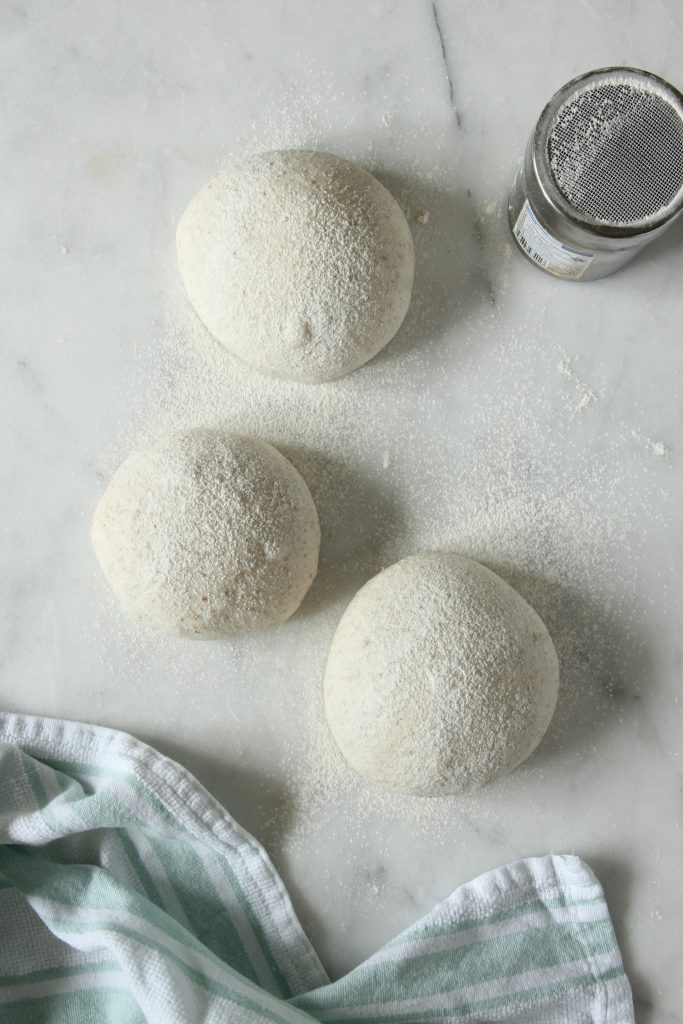
  • After resting for 45 minutes after the fourth coil fold, tip the dough out onto the work surface and dust liberally with a 50:50 mixture of rice flour and white flour.
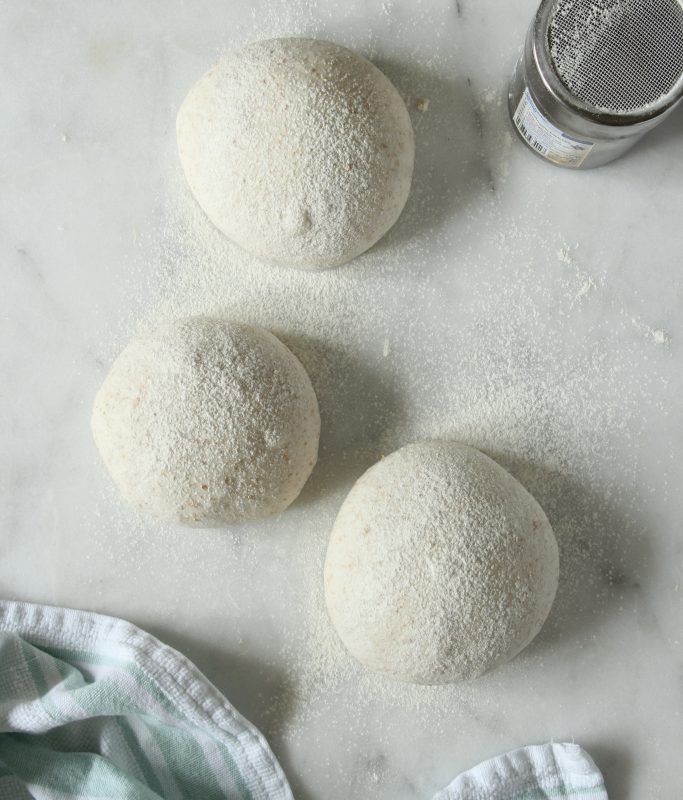
  • Divide the dough into 3 equal portions and flip each portion so it is flour side down.
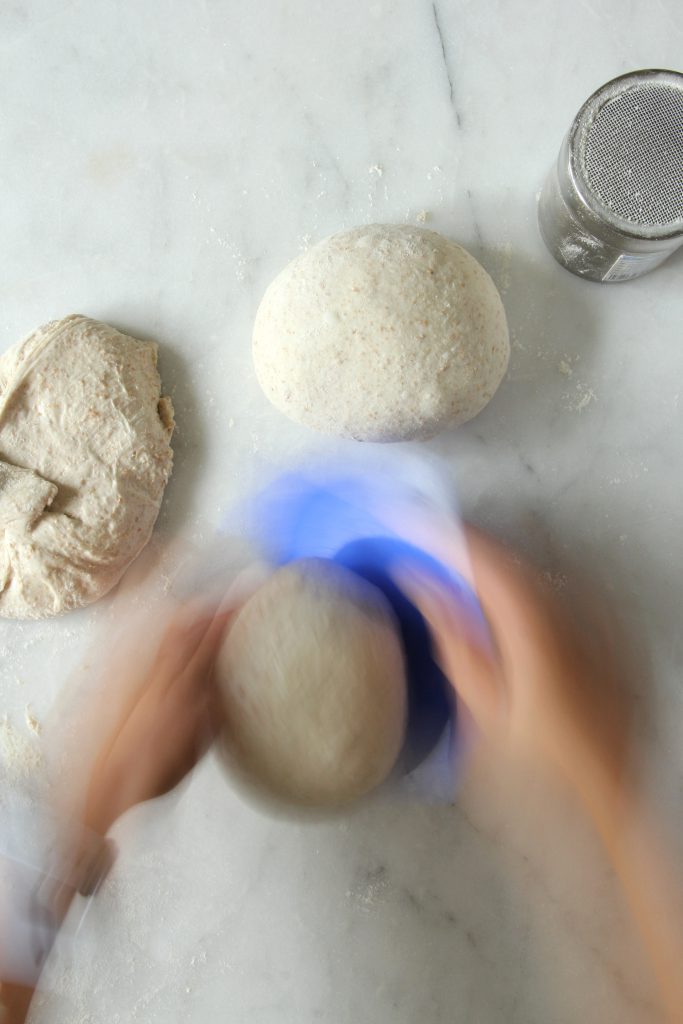
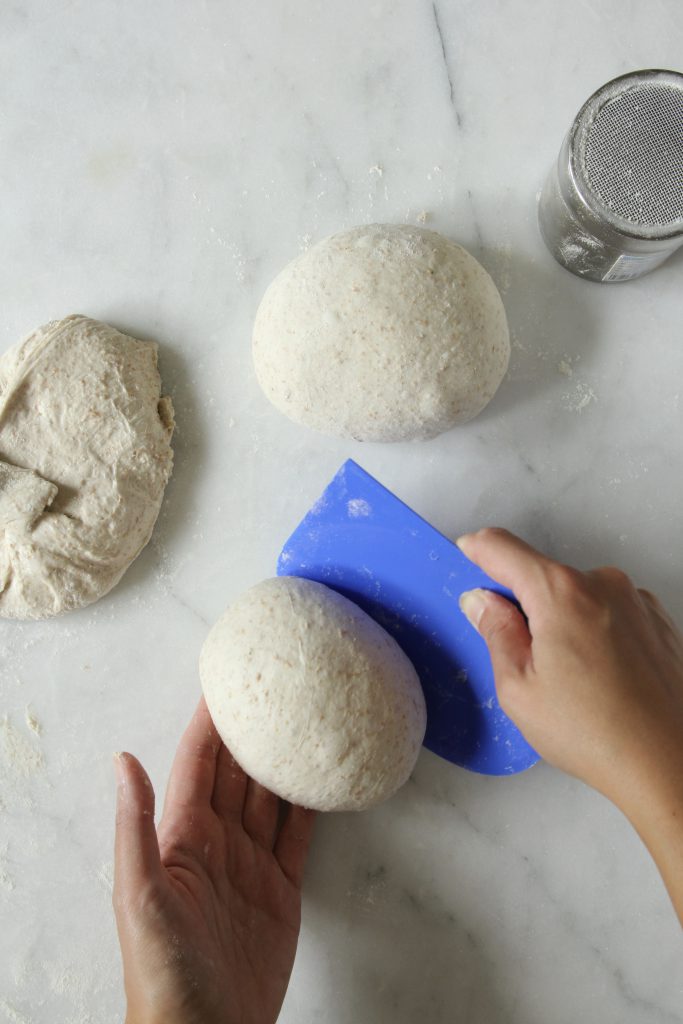
  • Working with one piece at a time, fold the corners into the centre, trying to incorporate as little flour as possible whilst creating tention in the skin. Use a dough scraper to help. Repeat with the remaining dough.
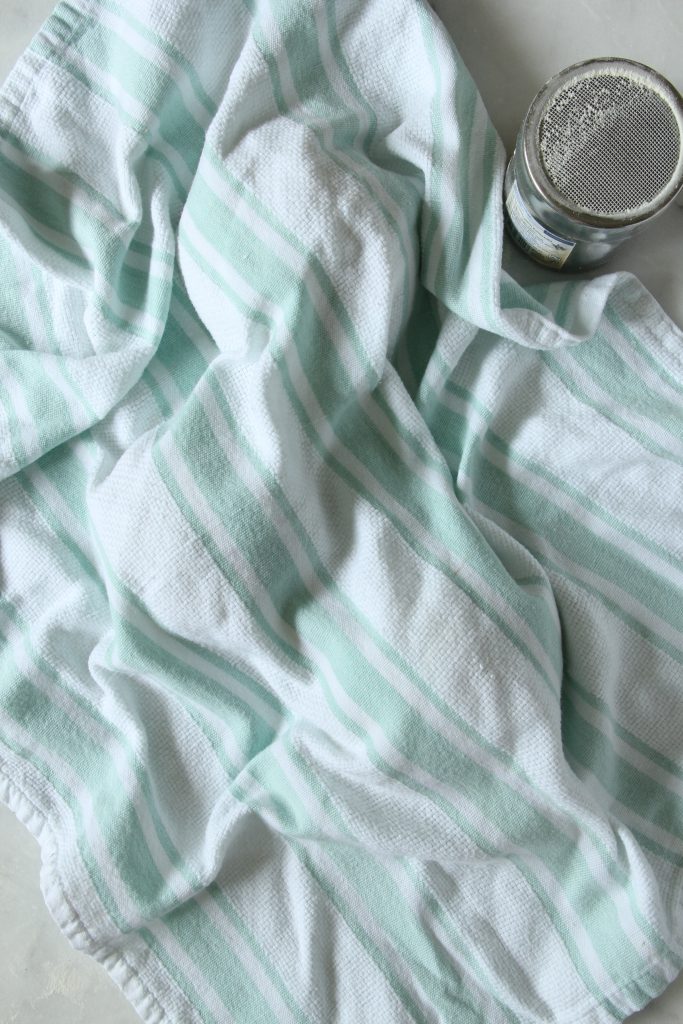
  • Place the dough balls on the dusted work surface and cover with a clean tea towel and leave to rest for 30 minutes.

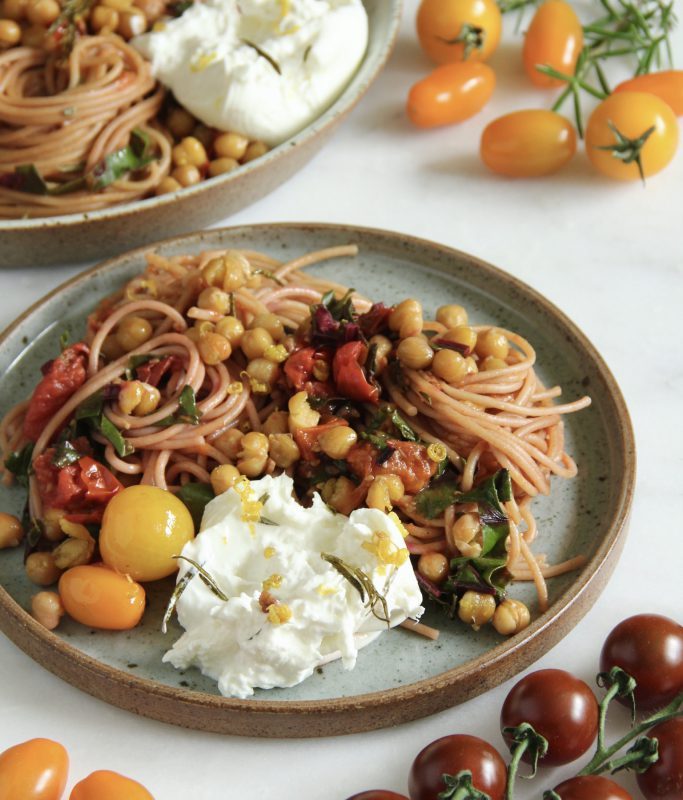
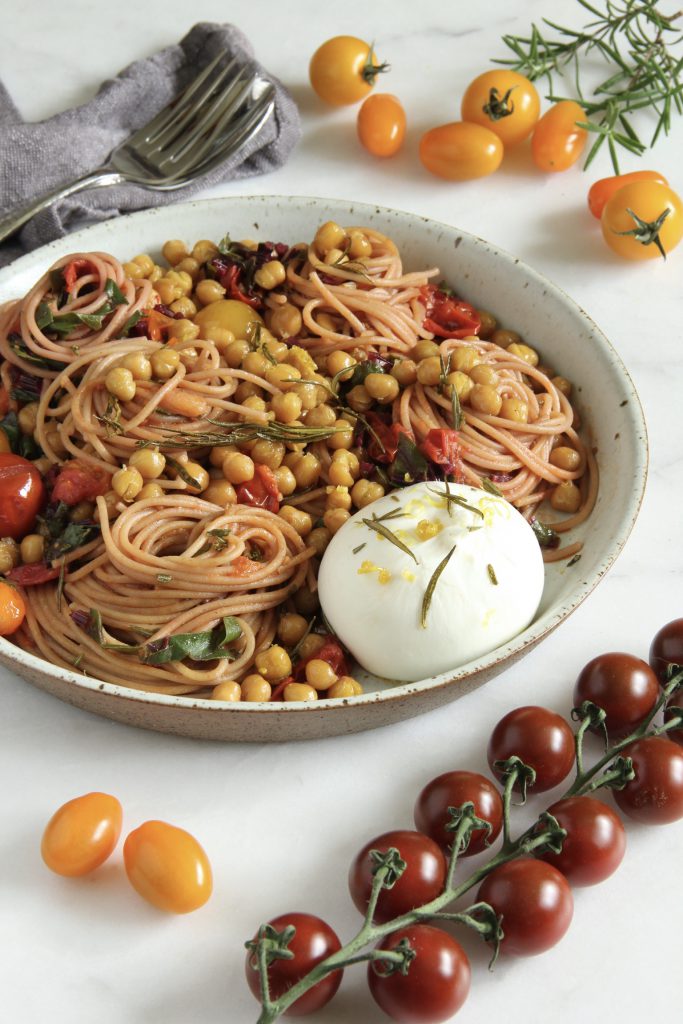
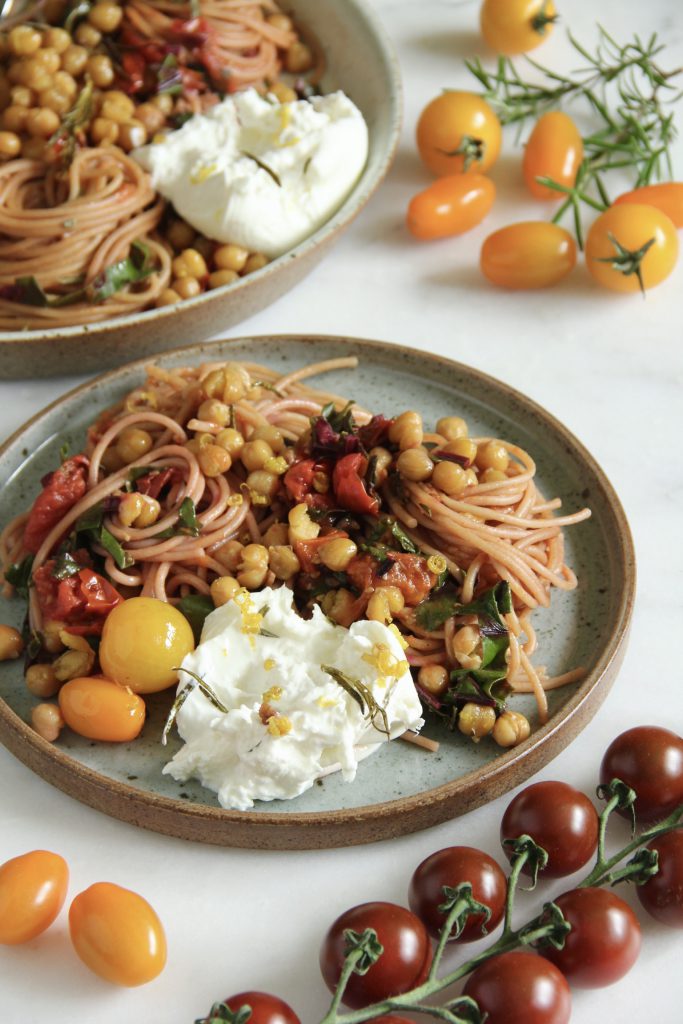
Crispy Lemon Rosemary Chickpea and Burrata Summer Pasta

I’m trying to find some inventive ways to use up the leftover beetroot leaves as I process them to try to preserve the taste of summer. Beetroot leaves are so similar to perpetual spinach or Swiss chard. For every homegrown beetroot given out, I also say to my willing receiver “did you know you can eat the leaves too?” There is absolutely no reason to waste them so apart from giving them to the chickens as a little treat, I’m also trying to utilise them myself. If you can get hold of whole beetroots with the leaves still attached, or are growing them yourself (or being gifted as I am doing with so many beetroots!) then you absolutely must try them!

The standard purple beetroots still contain some of the bright purple-red colouring found in the bulb, so I would only assume there are some of the same health benefits from eating the leaves as there are from the actual beetroot itself, although it a smaller quantity which is reflected in the light staining you get from the leaves themselves. There hasn’t been any research into this as far as I can see, but at the end of the day it is green and leafy, and as it’s not toxic to humans, I can only assume there must be some good to eating them whole vegetable from root to leaf.

For me, eating beetroot leaves is a true taste of summer, and something I am currently relishing. I hope that you can get your hands on some beetroot leaves, but if you can’t, or decide you need a little reminder of Summer when it’s dark and gloomy in Winter, use baby leaf spinach, kale or even cabbage.

While I think that standard “white” spaghetti would look more aesthetically pleasing, I am always drawn to using wholemeal pasta wherever possible due to the extra fibre (from 7g fibre per portion up to almost 12g). I also think it helps enhance the slight earthiness of the beetroot leaves.

Serves 3

Ingredients

  • 1 tin of chickpeas, drained and rinsed
  • 3 springs of rosemary, leaves removed from 1 sprig and roughly chopped
  • Zest of 1 unwaxed lemon
  • 2 tbsp extra virgin olive oil
  • 250g cherry tomatoes
  • 2 cloves of garlic
  • 1/2 tbsp balsamic vinegar
  • 200g wholemeal pasta
  • 150g beetroot leaves, roughly chopped
  • 1 ball of fresh burrata

Method

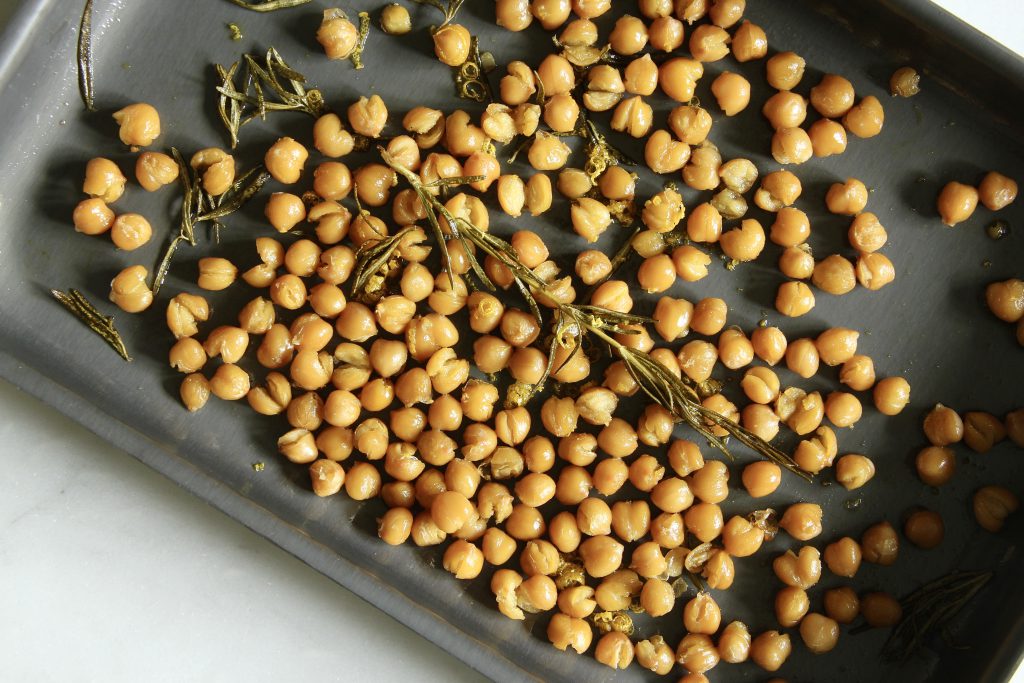
  • Mix the chickpeas, 1 tbsp oil, lemon zest, and 2 spring of rosemary in a baking tray. Bake at 180°C fan/ 200°C convection/gas mark 6 for 15 minutes till crispy and fragrant.
  • Meanwhile, add the tomatoes, garlic and remaining oil to a saucepan, and cook for 5 minutes, before adding the balsamic vinegar and chopped rosemary. If needed add a little water to stop it from sticking.
  • Boil the wholemeal pasta for 2 minutes less than the instructions, reserving a little pasta water.
  • Add the beetroot leaves into the tomato sauce before mixing in the cooked pasta. Return to the heat for 1 minute, adding some of the reserved pasta water if required to loosen the sauce.
  • Serve with the crispy chickpeas, crispy rosemary, and the burrata ball over the top.

Per serving: 501kcal/ 14.2g fat/ 7.0g saturated fat/ 70.0g carbohydrates/ 11.8g fibre/ 18.6g protein
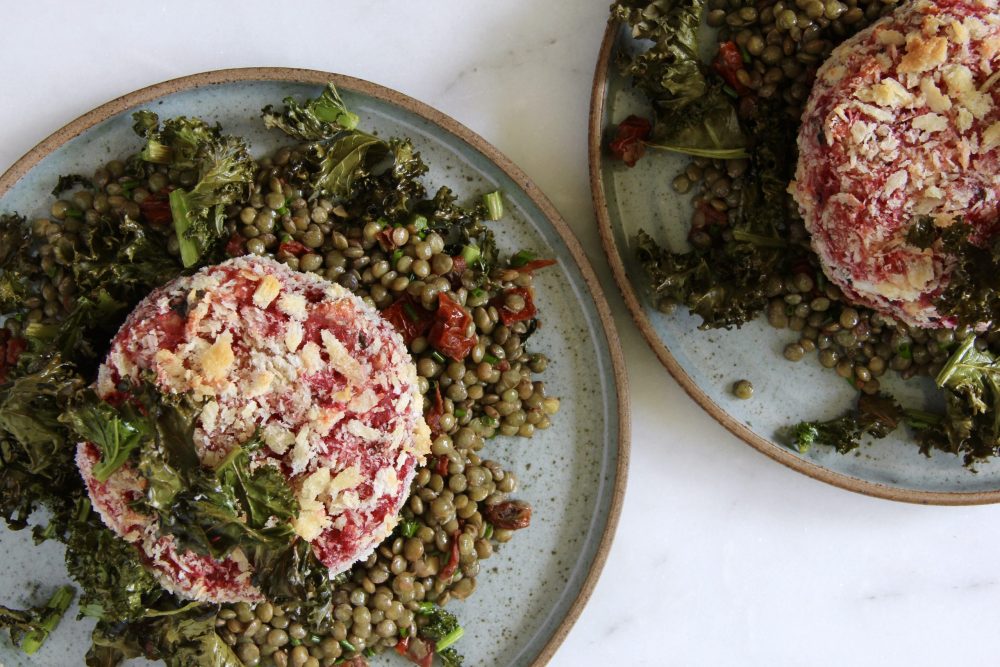
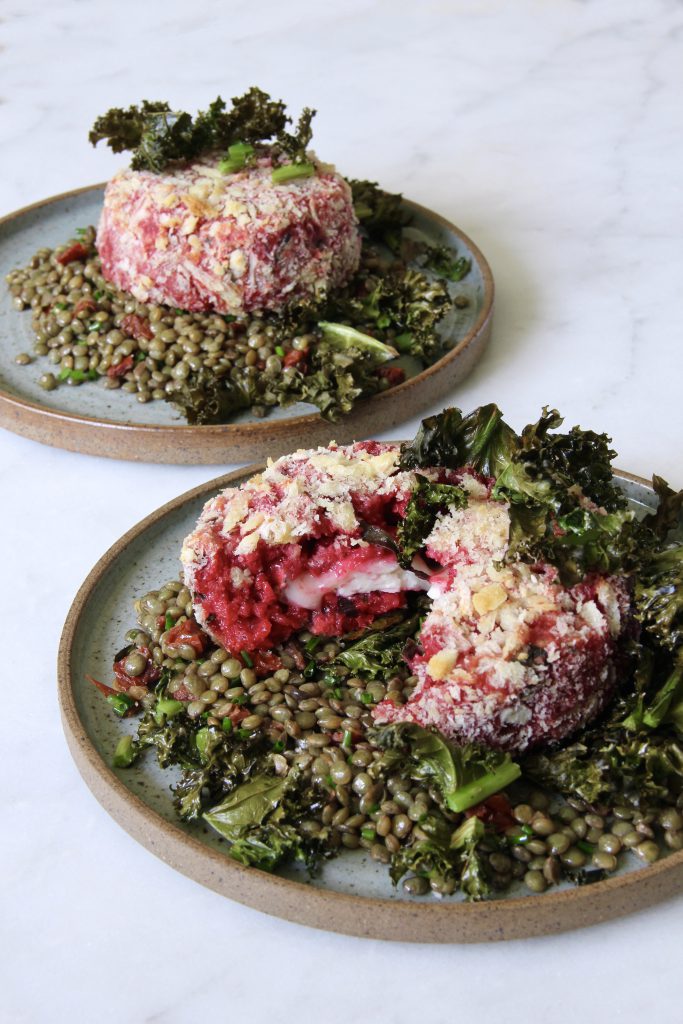
Goat Cheese Stuffed Beetroot Risotto Cakes

Got some leftover risotto from my Beetroot and Goat Cheese Risotto recipe? Here’s how to turn it into a delicious alternative dish which will give you an excuse to make extra risotto next time! Alternatively, you could make these beetroot and goat cheese risotto cakes from the get-go, but it’s best to cool the mixture in the fridge overnight. This is also a handy way of increasing resistant starch, something our bodies are unable to digest, but the microbes in our guts love them and it makes them happy!

Serves 2

Ingredients

  • 40g goat cheese, cut into 2 slices
  • 300g leftover beetroot risotto, chilled in the fridge overnight
  • 30g plain flour
  • 1 small egg, beaten
  • 50g breadcrumbs, I have used panko
  • 1 tbsp extra virgin olive oil

Method

  • Preheat the over to 180°C fan, 200°C convection.
  • Take the beetroot risotto and fill a food ring halfway up with the risotto.
  • Place the goat cheese slice into the centre and completely cover with more risotto mixture, ensuring the cheese is fully encased.
  • Season the flour and then dust the risotto cake on all sides with the flour, evenly coating all the sides.
  • Coat the rice cake in the beaten egg before rolling in the panko breadcrumbs.
  • Place on a lined baking tray, drizzle with the olive oil.
  • Bake for 15 minutes till golden brown and crispy.

Delicious served with a warm salad of lentils and crispy kale as made in my Roasted Squash, Kale and Lentil Winter Salad.

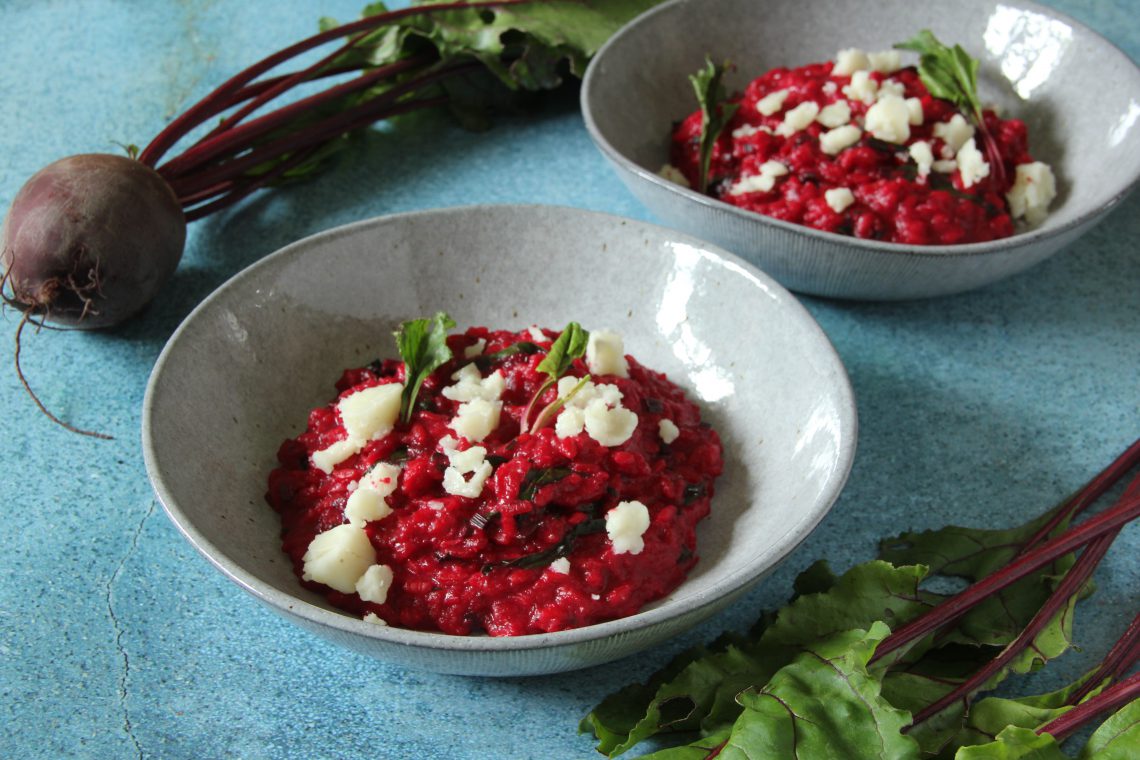
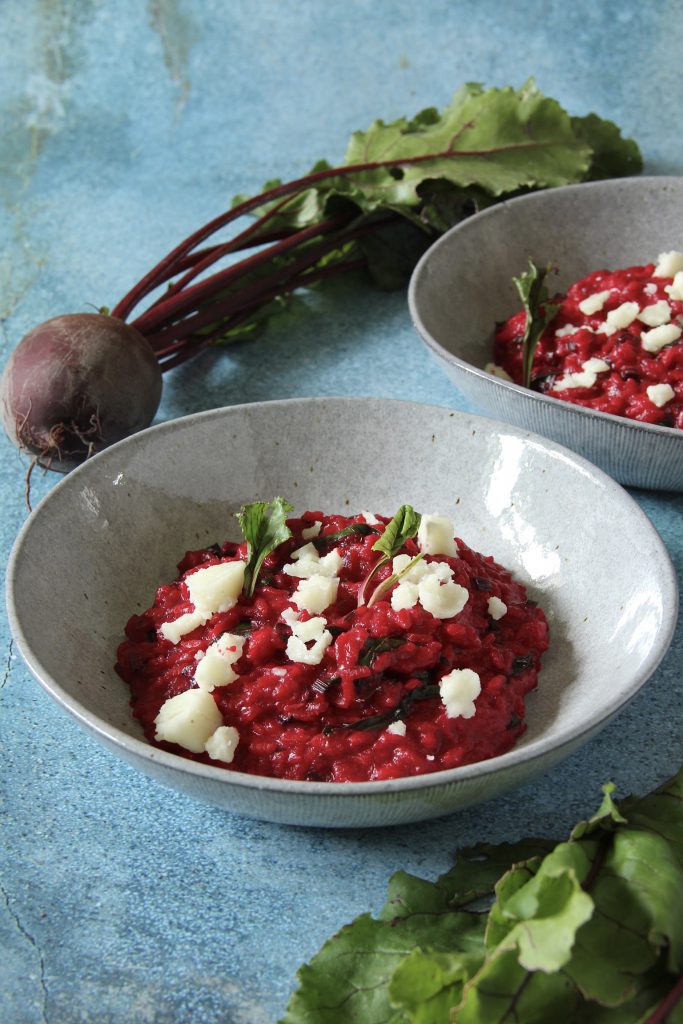
Beetroot and Goat Cheese Risotto

I love the colour of this dish. It can’t help but put a smile on your face. Such a bright red-pink colour from the fresh beetroots and it’s something that will also make your gut microbiota smile too…. if they had faces!

Beetroots are naturally high in nitrates, something that has been found to help reduce blood pressure, improve blood flow and possibly have an effect on athletic performance. How? Nitrates are converted to nitric oxide in the body, which has an effect on our blood vessels, dilating them and allowing greater delivery of oxygenated blood to our muscles when consumed prior to exercise.

A 2013 review of UK and Australian studies concluded that the nitrates in the beetroot (usually consumed as beetroot juice) can help improve endurance as measured by time to exhaustion. There are also benefits to gym-goers too as a separate study, conducted in 2016, found that beetroot juice improved performance in resistance training. Those who consumed a 70ml shot of beetroot juice (400mg nitrate) prior to training were able to complete more reps to failure compared with those taking a placebo control.

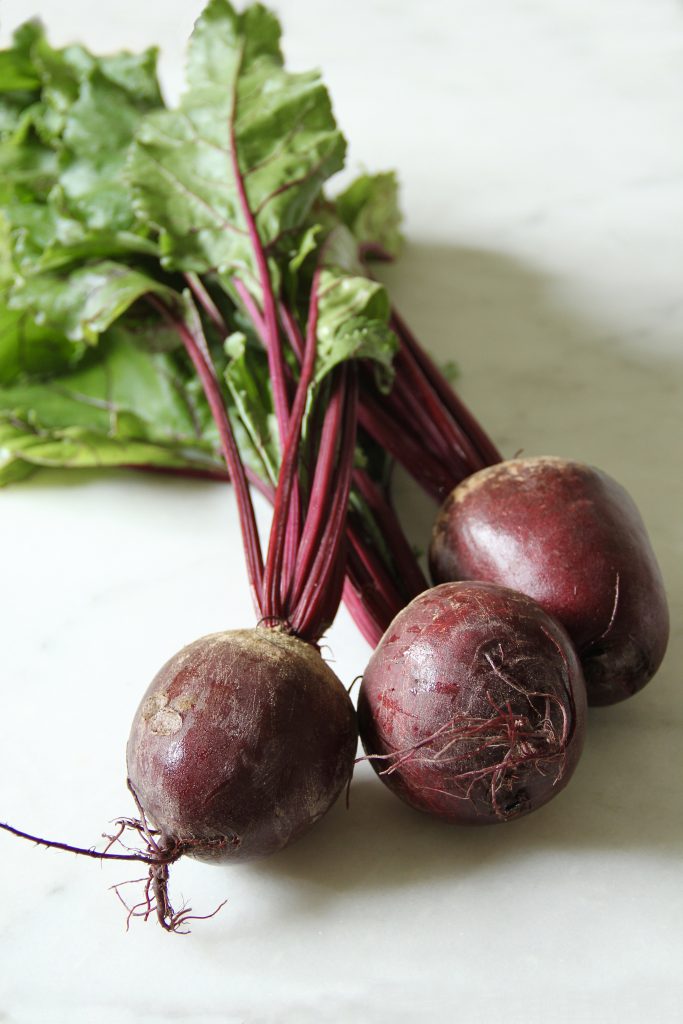
If you don’t have fresh beetroot you can use pre-cooked beetroots, but the colour will be slightly faded due to the high temperatures used to vacuum pack and store them. Simply skip boiling the beetroot, blending directly into the hot stock, and start the risotto straight away. Another alternative would be to buy beetroot juice, however, the fibre will be removed from this, so I would use this if it is your only option available. If you don’t have the leaves still attached to the beetroot, try using spinach, rainbow chard, or kale as an alternative.

Serves 4 as a main course

Ingredients

  • 350g peeled beetroot, cubed
  • 10g stock powder
  • 2 onions, finely diced
  • 30ml extra virgin olive oil
  • 3 garlic cloves, finely chopped
  • 300g risotto rice
  • 150ml white wine
  • 4 sprigs of thyme
  • 60g parmesan, grated
  • 150g beetroot leaves, roughly chopped
  • 60g goats cheese

Method

  • Place the beetroot and stock powder into a large pan and add 400ml boiling water. Cook for 10 minutes to soften the beetroot and blend till smooth. Return to the heat and keep ward without boiling.
  • Meanwhile, sweat the onions in the oil till soft and translucent. Add the garlic and cook for a further 2 minutes.
  • Add the rice, coating all the grains in the oil and gently toast before adding the white wine. Stir continuously.
  • Once the wine has been absorbed by the rice, add a ladle of beetroot stock. Keep stirring and adding stock till all the stock has been used up. If you need to use more liquid, add boiling water.
  • When the rice is almost cooked to al dente, add the beetroot leaves and allow to wilt.
  • Take off the heat and stir in the parmesan cheese.
  • Plate up and crumble the goat cheese over the top.

Per serving: 488kcal/ 11.0g fat/ 6.2g saturated fat/ 72.0g carbohydrates/ 5.0g fibre/ 17.4g protein
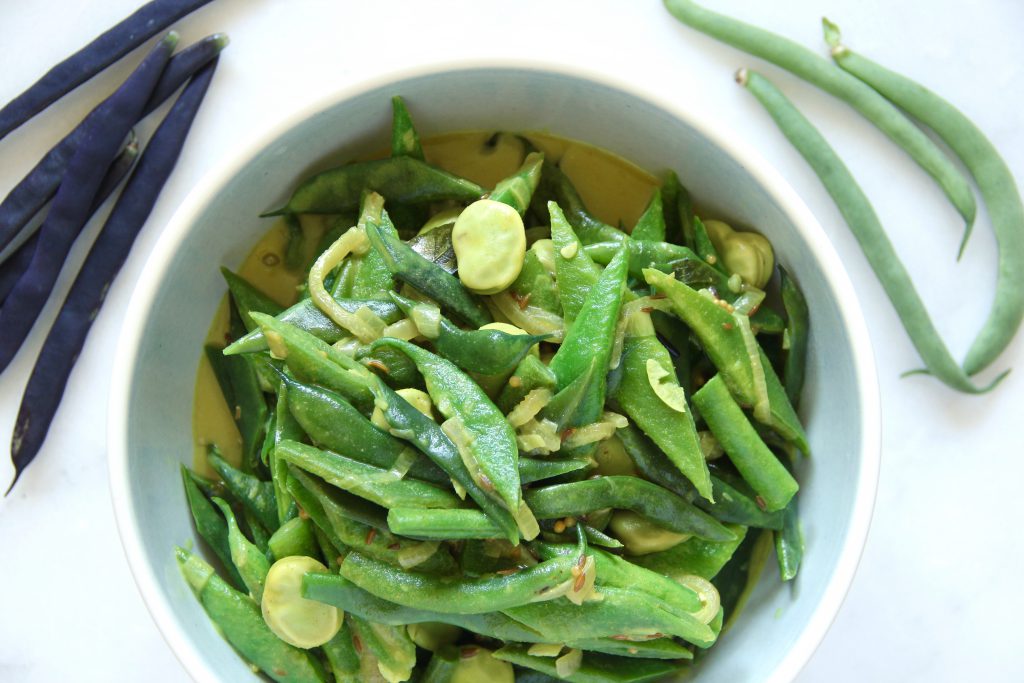
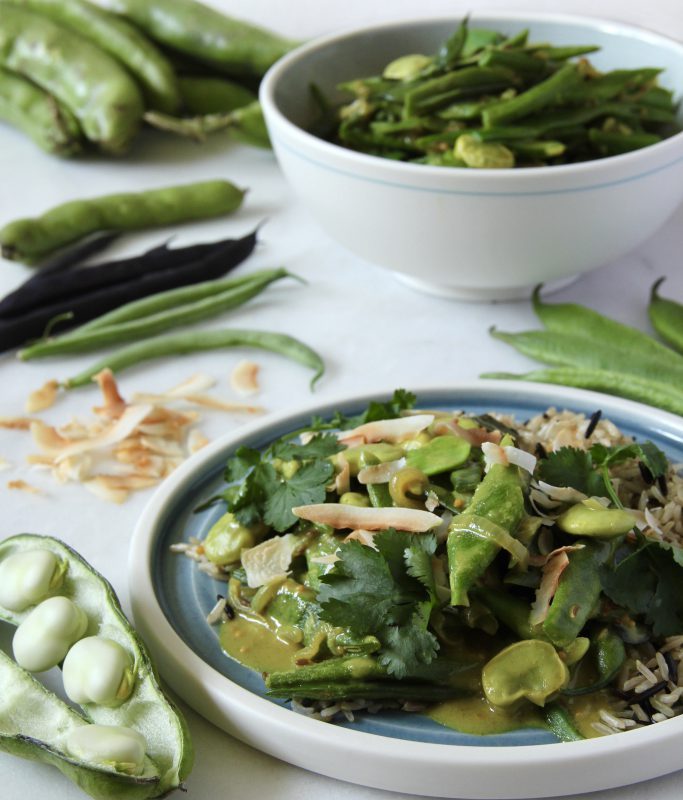
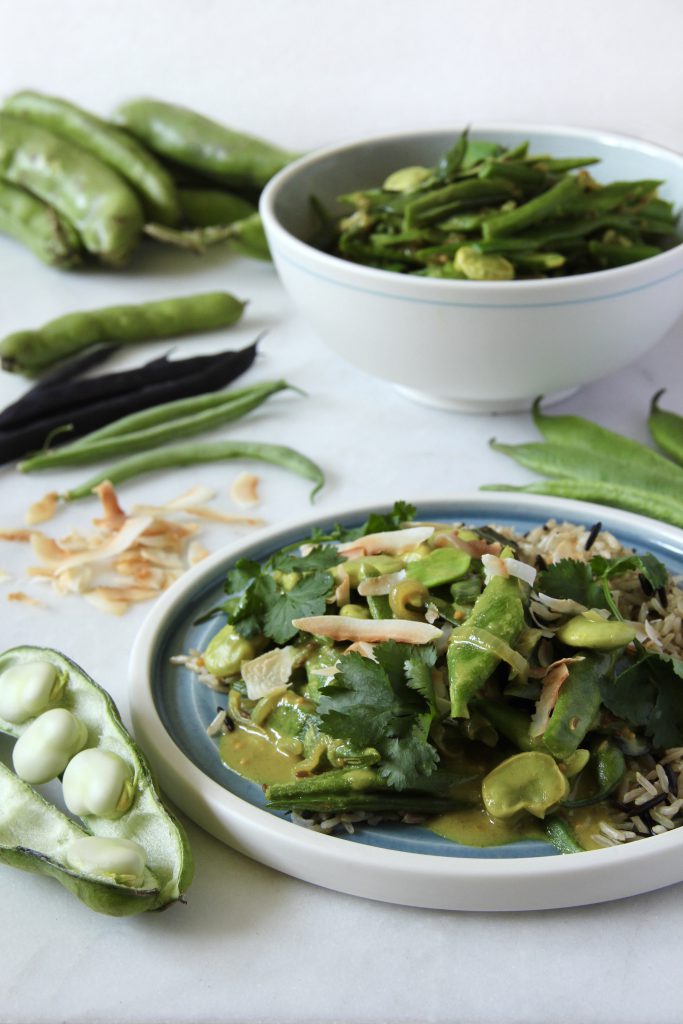
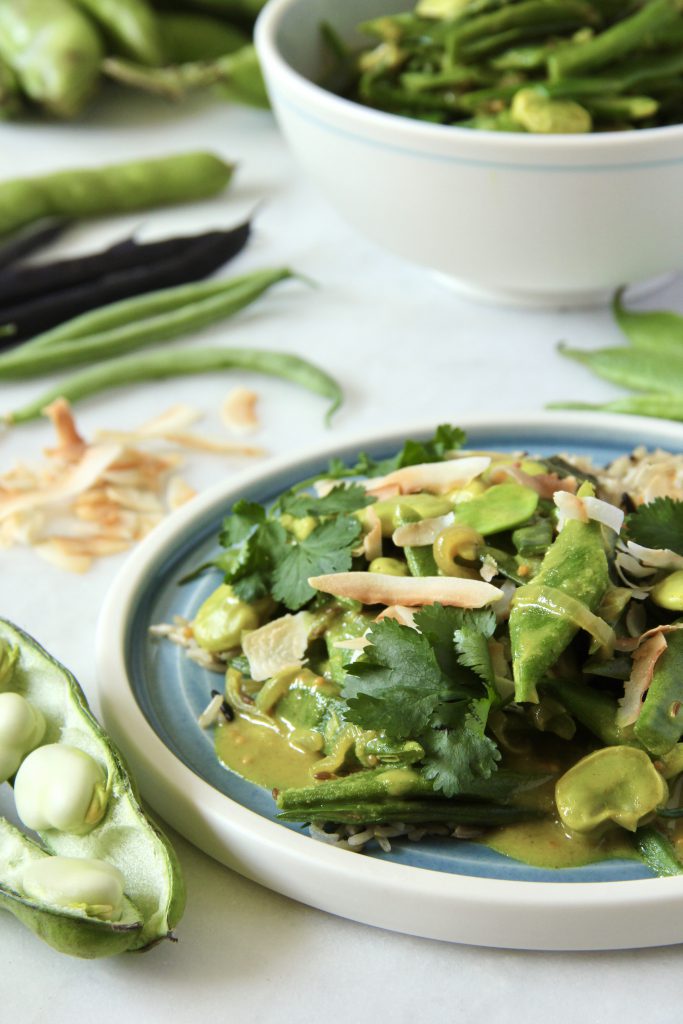
Green Bean Curry

I’m a firm believer that curries taste best when cooked long and slow, and often taste best the next day once the flavours have had time to mingle. However, there is always an exception to the rule, and this is it.

For those who are growing their own beans, you may be over-run with a large glut and not sure how to use them all up. Otherwise it’s time to buy some British seasonal beans while they’re in stock and make this delicious summer curry. Alternatively, you can buy frozen broad beans to make the dish all year round.

Serves 6

Ingredients

  • 2 onions, sliced
  • 1 tbsp vegetable oil
  • 3 garlic cloves, roughly diced
  • 1cm piece of ginger, finely diced
  • 15g butter
  • 2 tsp cumin seeds
  • 2 tsp mustard seeds
  • 1 tsp garam masala
  • 2 tsp turmeric
  • 1/4 tsp salt
  • Large pinch of curry leaves
  • 900g mixed green beans e.g. podded broad beans, runner beans, green beans, dwarf beans, all chopped into roughly equal sizes.
  • 300ml coconut milk

To serve

  • Brown basmati rice
  • Toasted coconut flakes
  • Fresh coriander

Method

  • Gently fry the onions in the vegetable oil till soft and translucent, but without colouring.
  • Add the garlic and ginger and cook for 2 minutes before adding the butter and spices.
  • Add the beans and stir to coat in the spices. Add the coconut milk and cook for 5 minutes. If the curry looks a little dry, add some water.
  • Serve over steamed rice and top with toasted coconut flakes and fresh coriander leaves.

Per serving: 195kcal/ 12.7g fat/ 2.4g saturated fat/ 12.3g carbohydrates/ 6.5g fibre/ 5.5g protein
Carrot Top Pesto

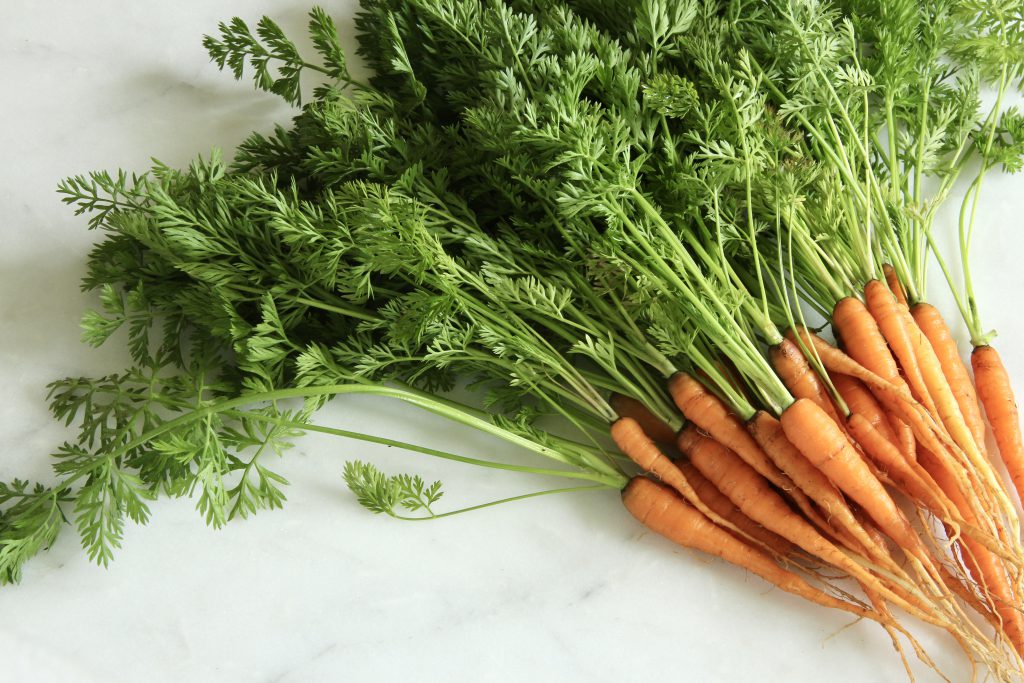
Late spring, or early summer means thinning the carrots out at the allotment so we can grow some nice big carrots ready for long winter days. I always get sad at being forced to choose which carrots will go on to grow, sometimes to the point where I leave too many baby carrots in the soil.
I always try to make sure I put the tiny carrots to good use. Sometimes I simply wash them and eat them there and then. Nothing like a simple snack to keep me going! However, I have now come to terms with this cruel to be kind nature, and make sure nothing is waste.

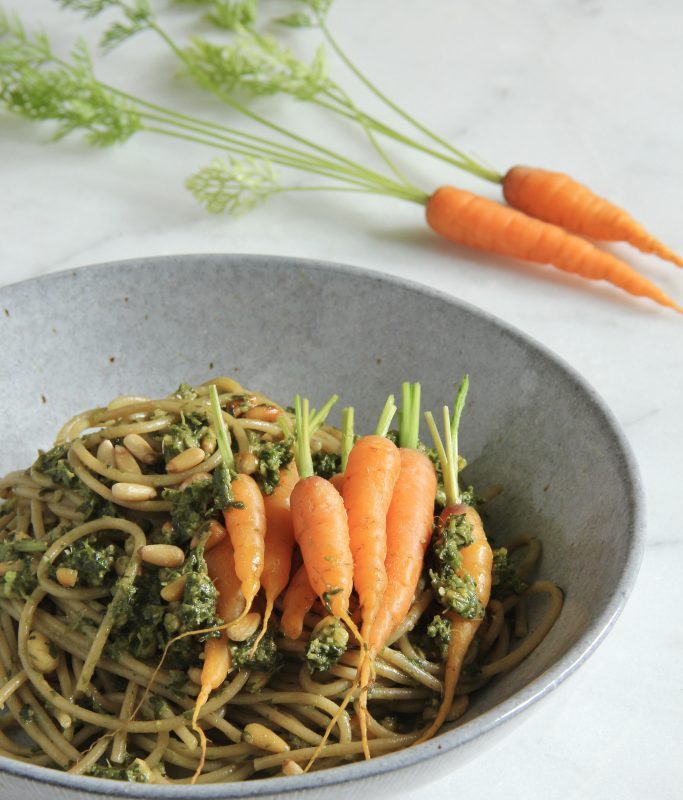
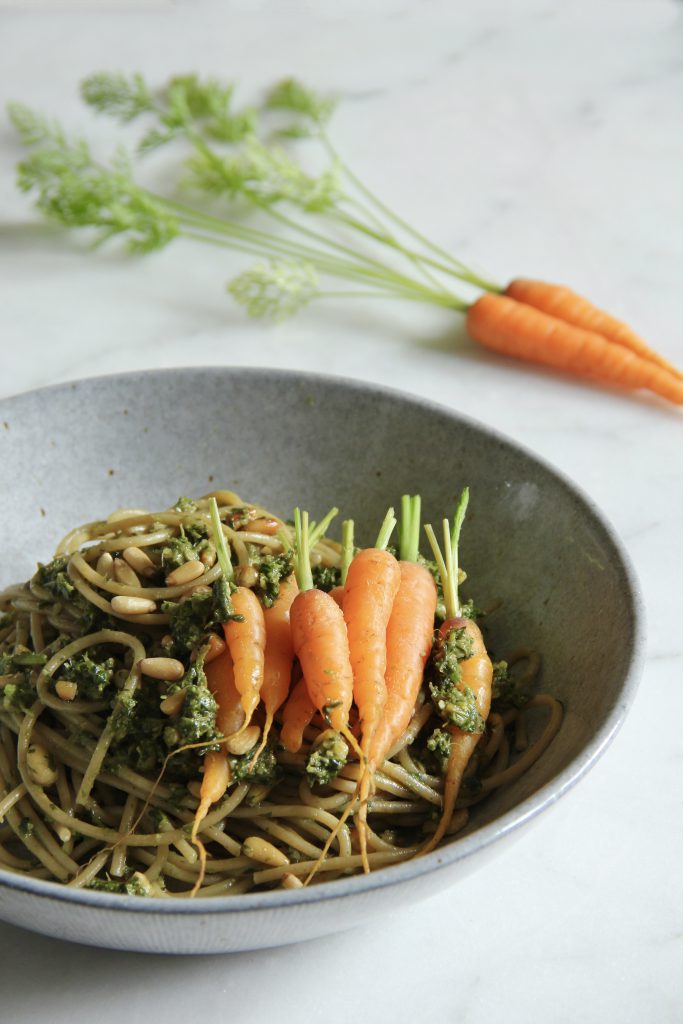
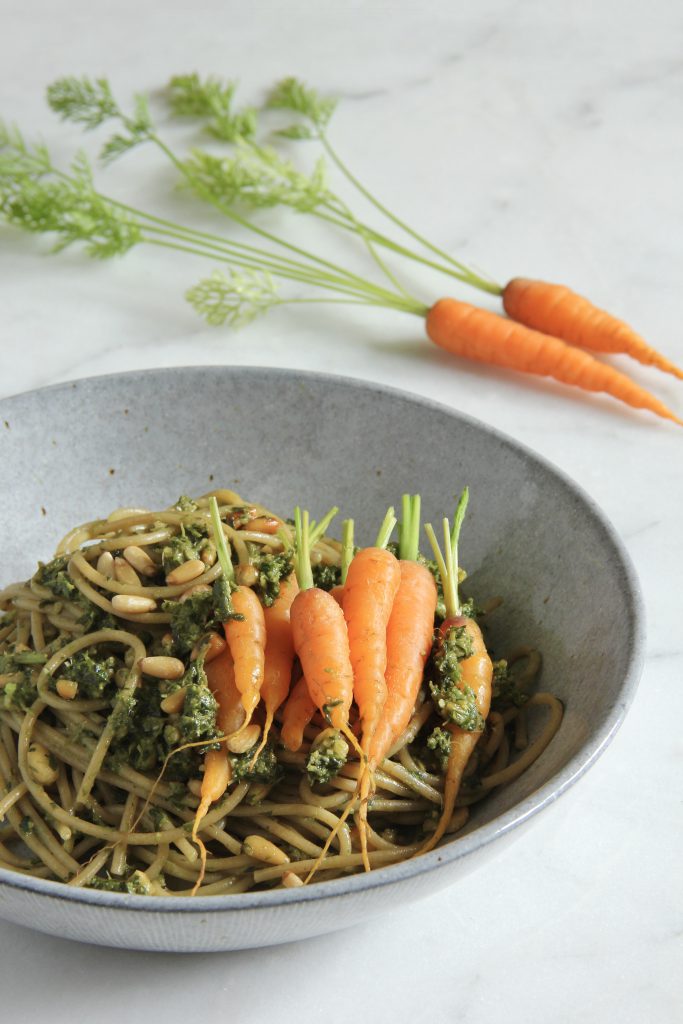
Carrot top pesto with baby carrots is my answer to this. The young and tender leaves make the most delicious and earthy pesto which is delicious when served simple through hot pasta. The pesto is so simple to make, and if you have too many carrot tops you can always freeze the pesto for use at a later date.
Nutritionally speaking there has been very little research conducted on carrot leaves. One study commented on how carrot leaves can be used to fortify chicken’s diets to make the yolks of the eggs they lay more orange in colour due to the carotenoids present in the leaves! Something I have not tested my chickens on yet!

Ingredients

  • A large bunch of carrot tops (about 100g), roughly chopped
  • 1 bunch of basil (30g), roughly chopped
  • 2 tbsp extra virgin olive oil
  • 1 garlic clove
  • 40g pine nuts, toasted
  • 45g parmesan cheese, grated

Method

  • Place the carrot tops, basil, olive oil and garlic into a food processor and blend till smooth.
  • Add the pine nuts and parmesan and blend to the consistency desired – I prefer to have some unblended pine nuts in my pesto.
  • Hey pesto! You’re done!

Courgette, Feta and Mint Fritters

At present I currently have courgettes coming out of my ears! 1 courgette plant would be sufficient to feed a small family with a steady supply of courgettes each week. So naturally we have 10 plants (not to mention the questionable marrow-looking plants) and I am spending all my free time trying to work out new ways of giving courgettes away to unwilling neighbours – they are all currently sick of courgettes too!

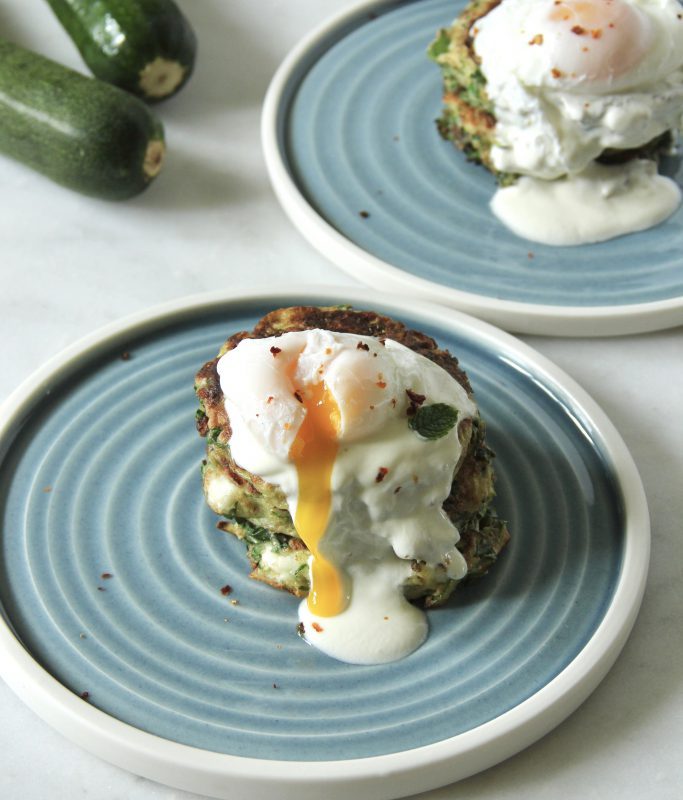
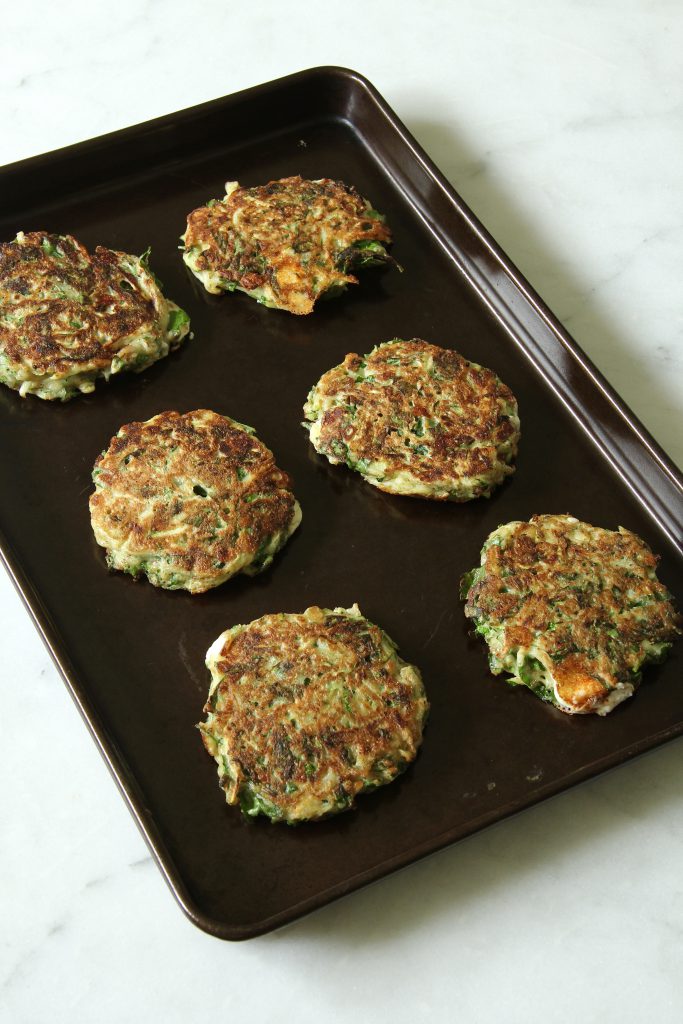
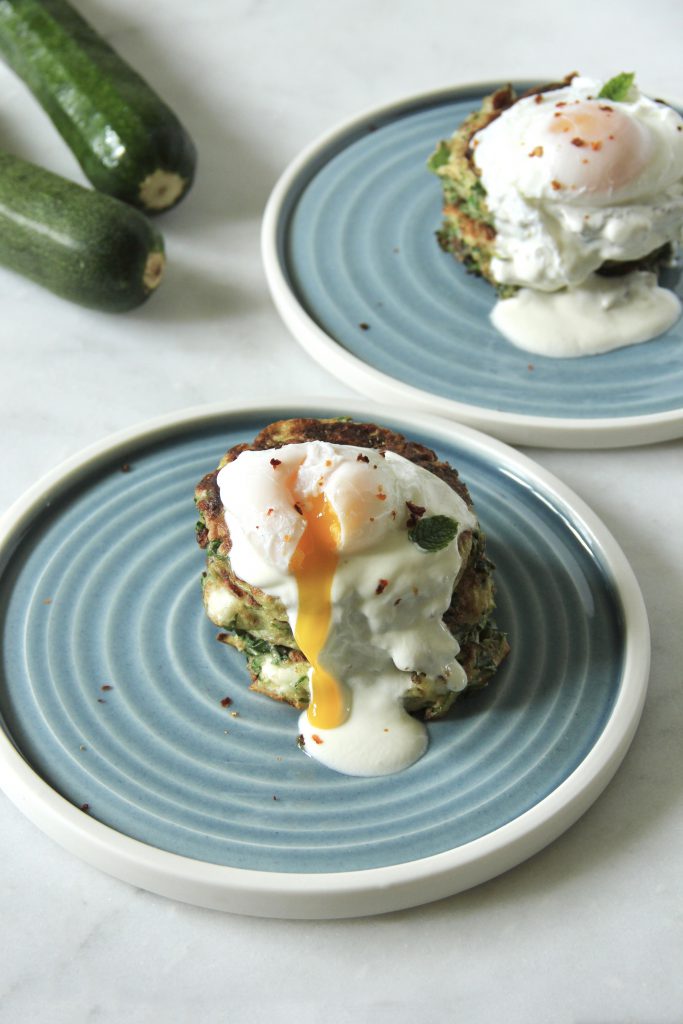
Making these super light fritters is the perfect way of using up a courgette or two. You simply do not realise you are eating courgette till you have wiped the plate clean.

Serves 2

Ingredients

  • 1 medium courgette, around 180g, grated
  • 1 medium egg
  • 50g wholemeal flour
  • 1/2 tsp baking powder
  • 50ml milk
  • 10 mint leaves, finely sliced
  • 1 garlic clove, finely grated
  • 40g flat leaf parsley, roughly chopped
  • 70g feta cheese, crumbled
  • Chilli flakes to taste
  • Extra virgin olive oil to fry

Options to serve with:

  • Sour cream
  • Poached egg
  • Avocado
  • Smoked salmon
  • Salad

Method

  • Combine the flour and baking powder together in a large bowl and mix. Season with pepper to taste.
  • Add the milk and egg to make a batter. Add the remaining ingredients and stir to combine.
  • Heat a pan with 1/2 tsp olive oil and add a spoonful of batter into the pan, spreading them out so each round does not touch another. You should be able to make around 6 fritters in total.
  • Fry each fritter for 2 minutes per side till golden brown. Repeat till all the batter is used. If you are making a larger quantity keep them warm on a tray in a pre-heated oven set to 100°C.
  • Serve hot with your toppings of choice.

Per 3 fritters: 265kcal/ 12.3g fat/ 7.1g saturated fat/ 23.6g carbohydrates/ 4.3g fibre/ 15.0g protein