While for many Shrove Tuesday will mean pancakes for breakfast, I prefer to have my savoury pancakes for dinner!
Whatever crepes you have left over can be donated to pudding in the form of lemon and sugar, but making this savoury dish is sure to be a crowd pleaser.
You can use ready made thin pancakes, or crepes, as long as they aren’t sweetened. If you’re making your own, this is a great opportunity to add some extra nutritious ingredients, such as I have (sesame and linseeds) to help increase the fibre content.
Serves 4
Recipe
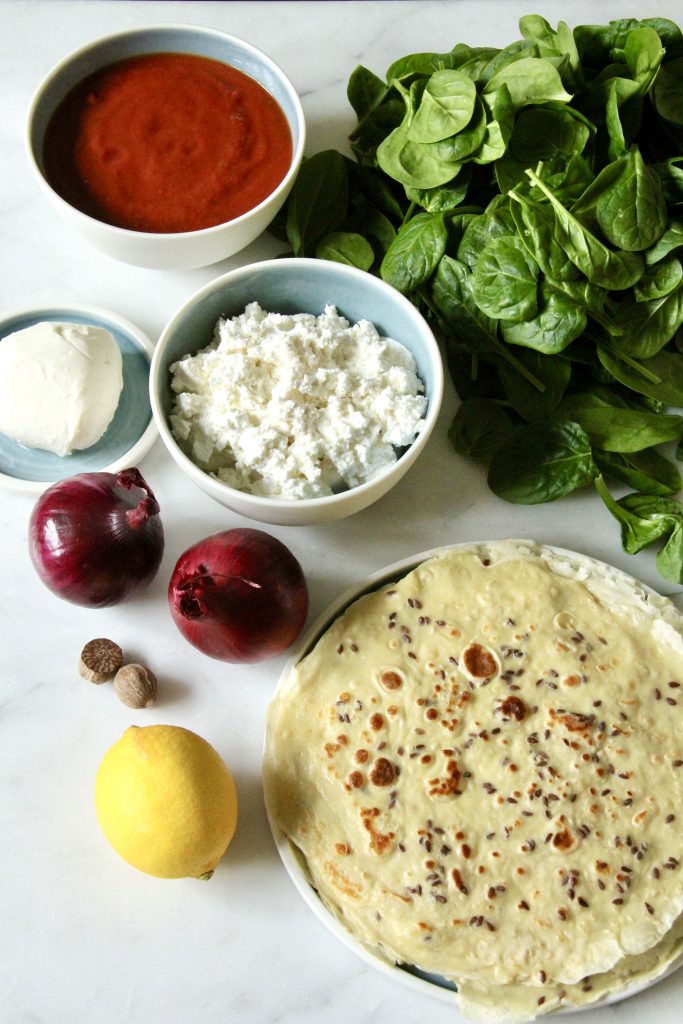
6-8 savoury pancakes
400g spinach
2 onions, I’ve used red, diced
1 tbsp olive oil
2 garlic cloves, chopped
400g passata
500g ricotta
Zest of 1 unwaxed lemon
1/4 nutmeg, grated
1 ball mozzarella
Method
Preheat the oven to 180°C/ 170°C Fan
Cook the spinach in a pan on the lowest setting till completely wilted. Allow to cool and squeeze as much liquid out using a clean tea towel. Roughly chop.
Meanwhile, cook the onions in the olive oil and allow to soften and become translucent. Add the garlic and cook for a further 2 minutes before adding the passata. Cook for 5 minutes while you prepare the pancake filling.
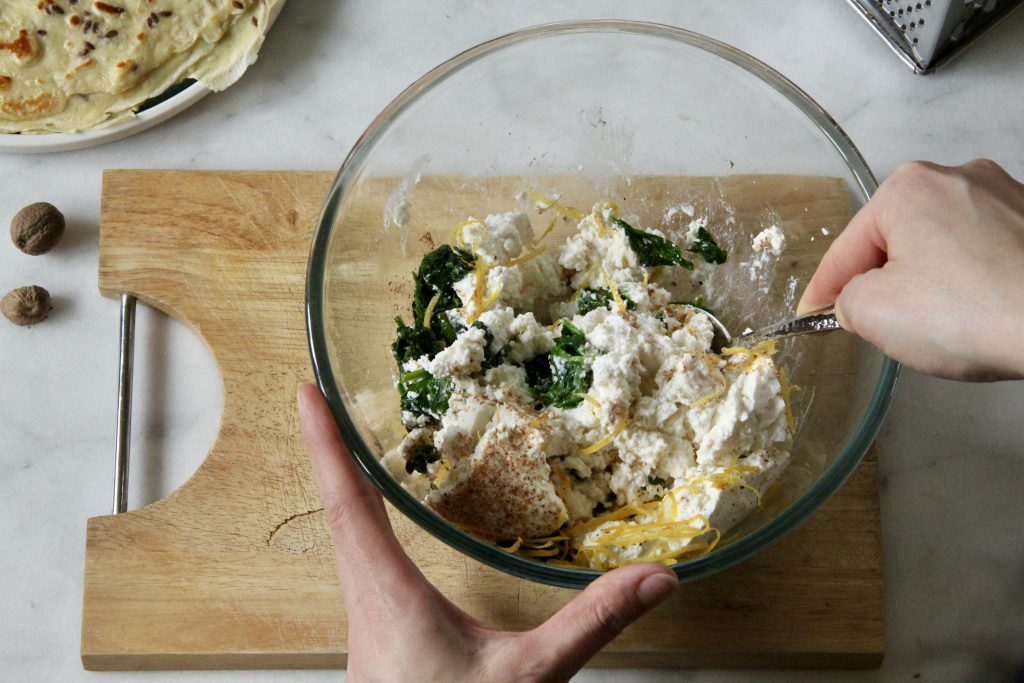
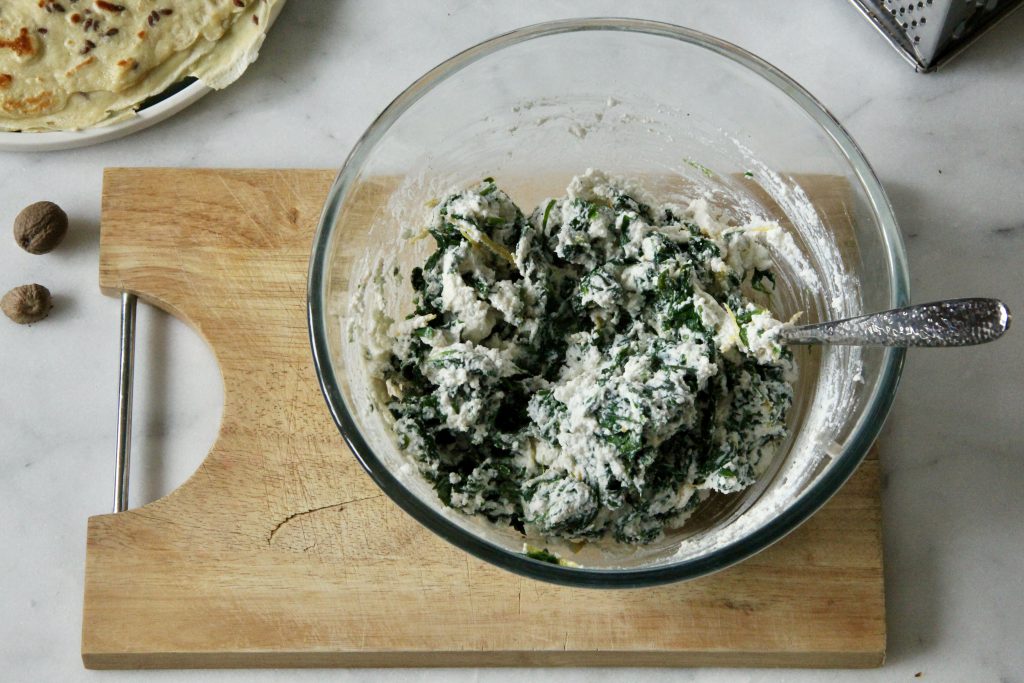
Mix the ricotta, lemon zest and nutmeg. Season to taste with salt and pepper and add the roughly chopped spinach.
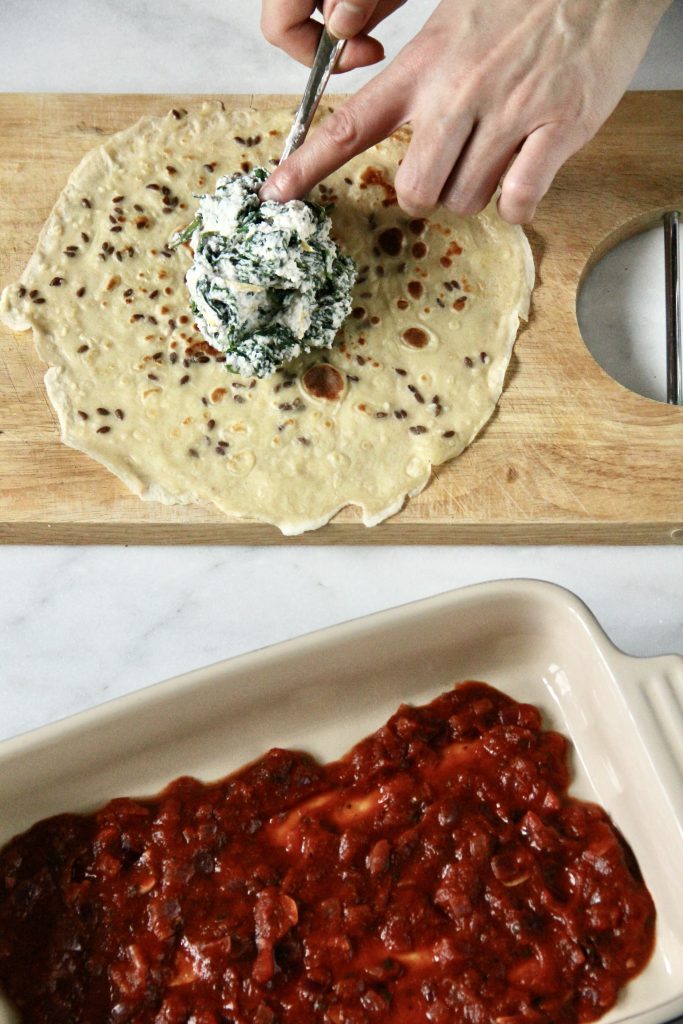
Layer half the tomato sauce into a large ovenproof dish.
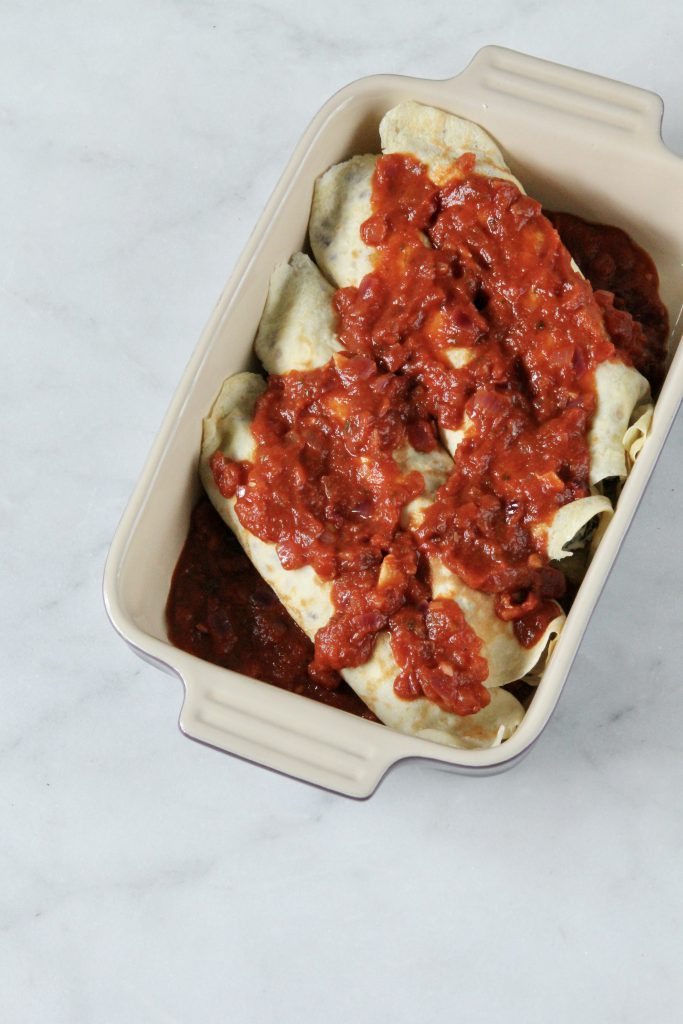
Add a generous spoonful of the ricotta mix into the middle of a pancake, spreading through the center. Roll the pancake up and place in the passata sauce. Repeat until all the pancakes and ricotta mixture are used.
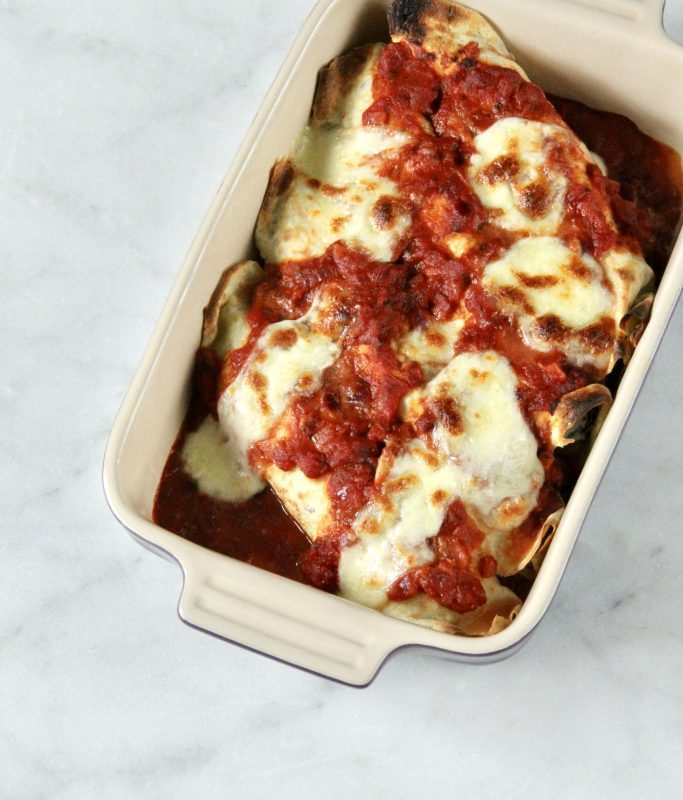
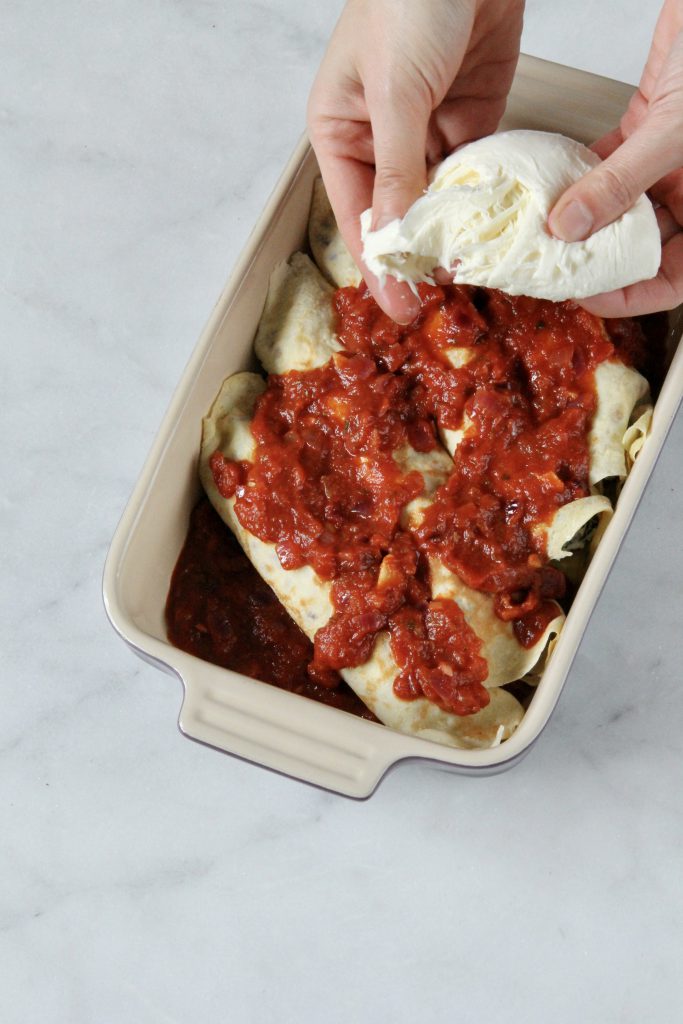
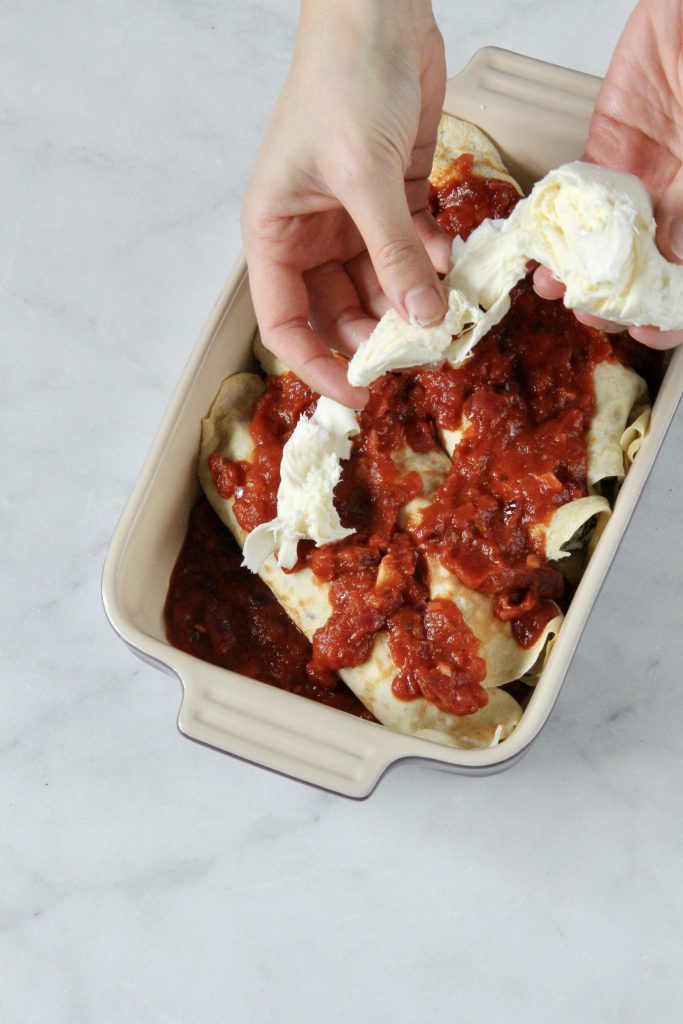
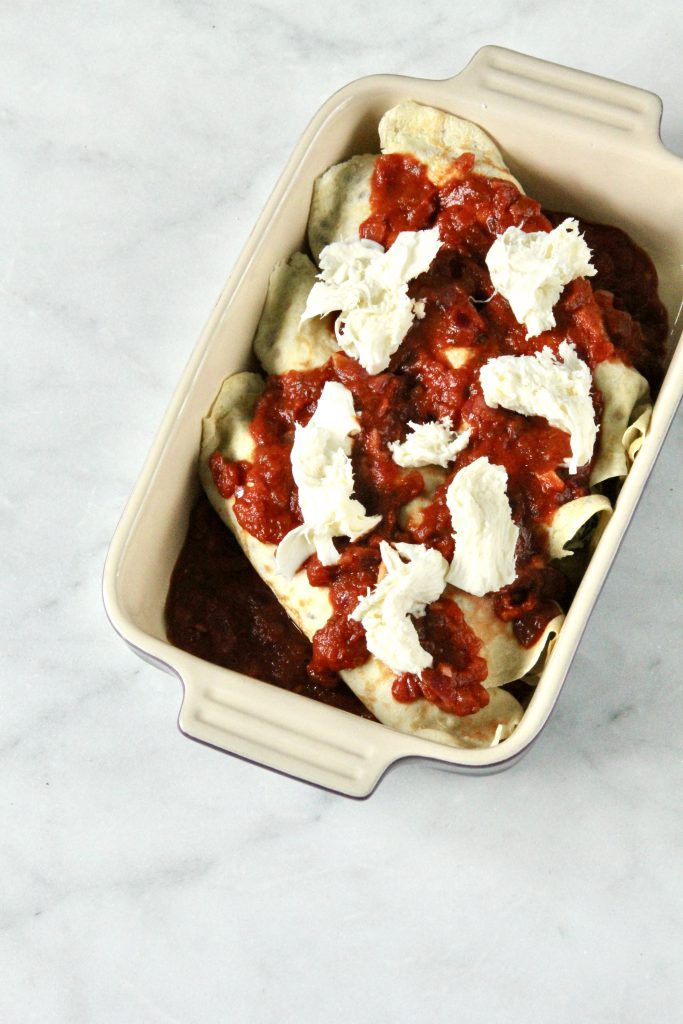
Spread the remaining tomato sauce over the tops of the pancakes and top with torn pieces of mozzarella.
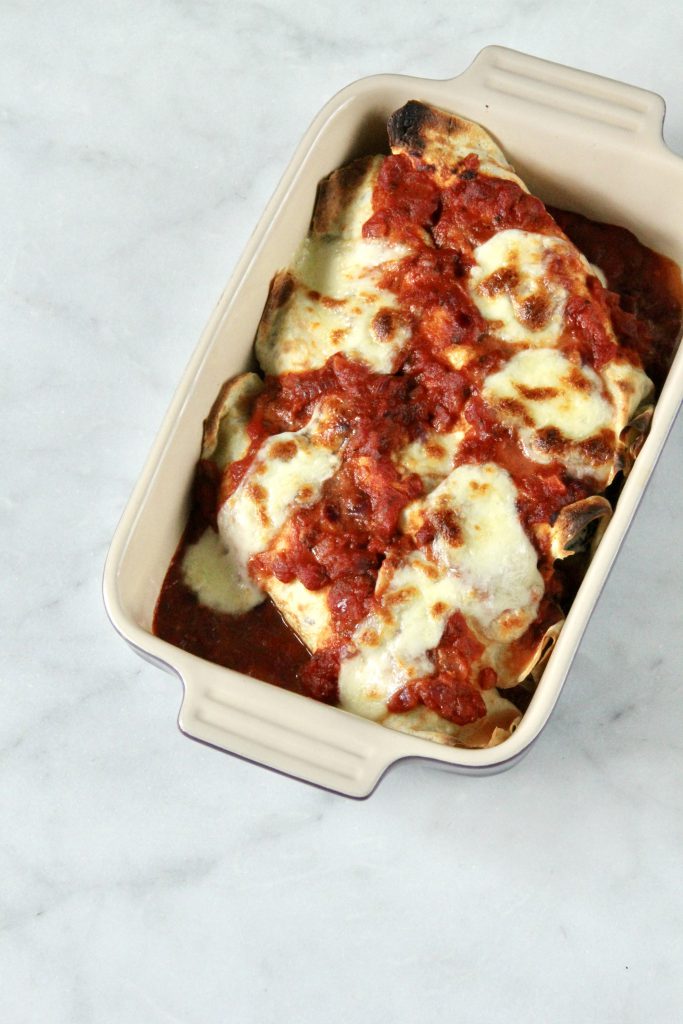
Bake in the oven for 20-25 minutes till golden brown and bubbling.
Per serving 455kcal/ 24.7g fat/ 13.7g saturated fat/ 31.2g carbohydrates/ 5.9g fibre/ 24.2g protein
Blueberries have been shown to have health benefits for our hearts. So this St. Valentine’s Day why not treat the one you love to a heart healthy meal!
In a recent study published by the polyphenol research group at King’s College London, researched demonstrated that consumption of blueberries every day helped reduce endothelial function in healthy humans. Endothelial function is a marker of heart health
In addition, the same authors noted a decrease in systolic blood pressure of around 5 mmHg, about the equivalent shown in clinical trials using medical agents to lower blood pressure.
The only caveat to this research is that the study used wild blueberries, not commercially grown blueberries, so results might not be completely comparable when using shop bought berries. However, blueberries can be part of a healthy diet and there is no reason not to include them in your diet, and in addition there are lots of other important nutritional factors found in blueberries including fibre, vitamins and minerals which contribute to a healthy diet.
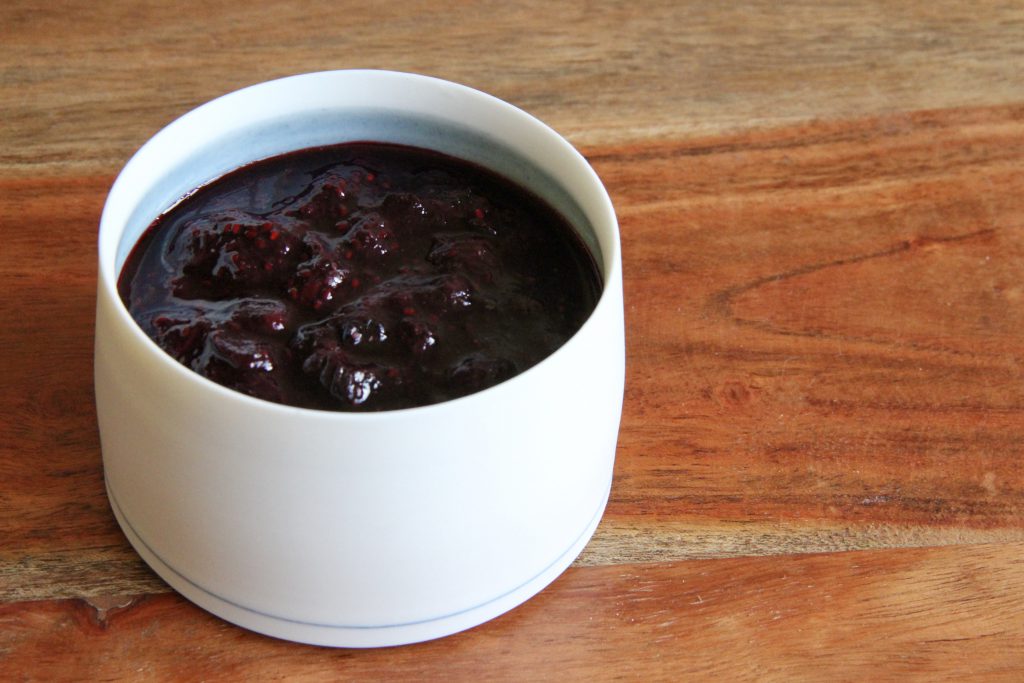
My easy blueberry compote takes just 5 minutes and only uses 3 ingredients. In addition you can store it in the fridge for a week, or freeze in portions ready to use at short notice.
Recipe
250g fresh or frozen blueberries
1 tsp honey
10g chia seeds
Method
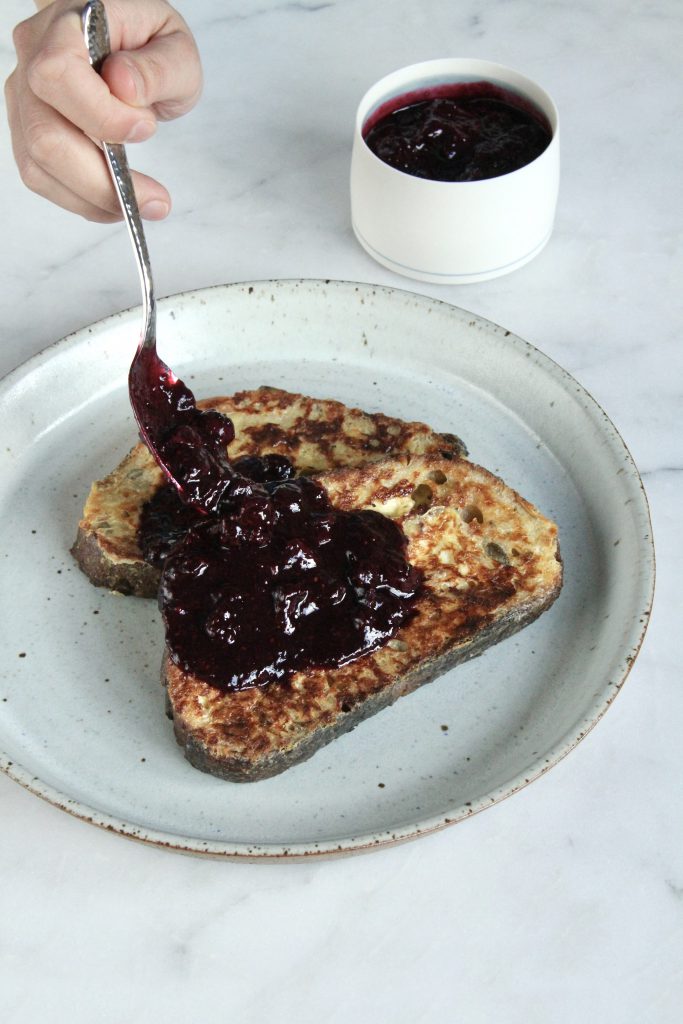
Place the blueberries and honey into a pan and cook on the lowest heat on your hob, stirring occasionally. Cook for around 4 minutes till all the blueberries have burst open.
Remove from the heat and add the chia seeds. Stir in and allow to thicken for 1 minute.
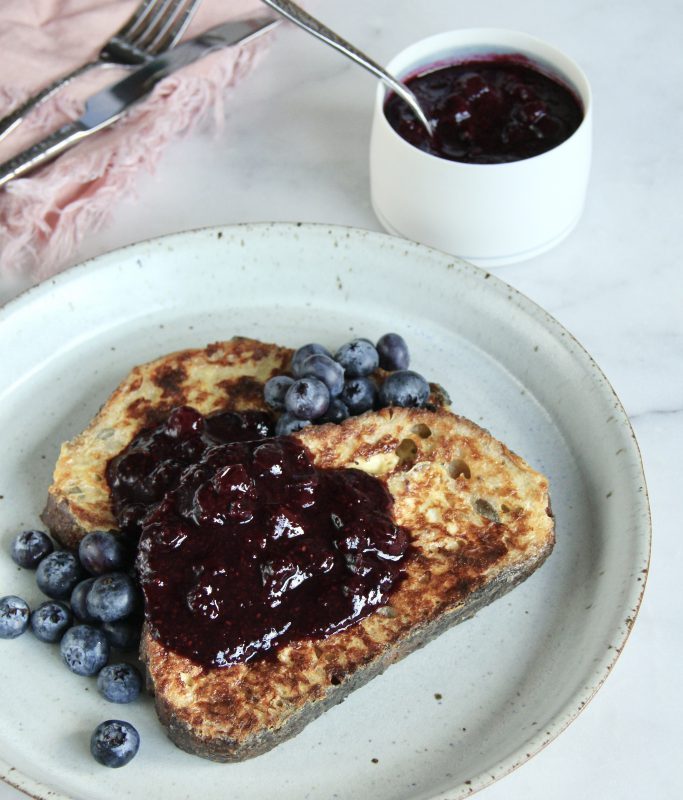
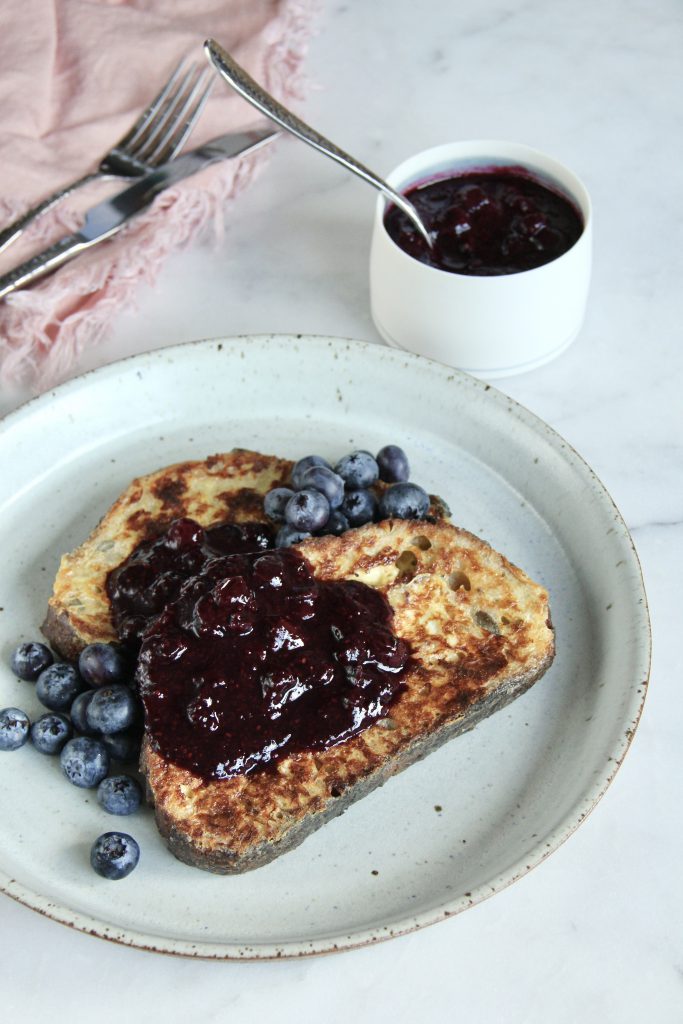
Delicious served on top of porridge for breakfast, with yoghurt for a quick pudding, or with French toast for brunch as I have done.
Per serving 115kcal/ 1.8g fat/ 0.3g saturated fat/ 41.2g carbohydrates/ 4.7g fibre/ 1.8g protein
Granola is king in our house. We eat loads of it for breakfast, as a quick snack and sometimes even as a substitute for pudding! But shop bought granola sometimes isn’t the healthiest breakfast cereal to turn to. Often it is high in sugar, loaded with fats and has a few basic ingredients in it such as oats and sweetened dried fruits. Additionally, so many brands put 0.5% hazelnuts into the mix (why?!?!) which renders me out of the equation due to a nut allergy.
Homemade granola means I can add what I want
So I endeavoured to make my own range, which is either reduced or no added sugar, uses healthy fats, has a diverse range of fibre sources, uses unsweetened fruit wherever possible, and only has ingredients in there that I can eat, so feel free to swap anything out to fit in with your dietary requirements.
I developed this particular recipe for my chocoholic sister-in-law who loves sweet treats. Although not a sugar free granola, it’s definitely not as sweet as the generic shop bought granola, and packs in much more nutritious value, and as a bonus is also vegan!
I hope you enjoy making this recipe. Feel free to alter the fruits used, add alternative nuts if you aren’t allergic, or even change the chocolate if you’re not looking to make a vegan granola (I’m thinking white chocolate and raspberry!!!).
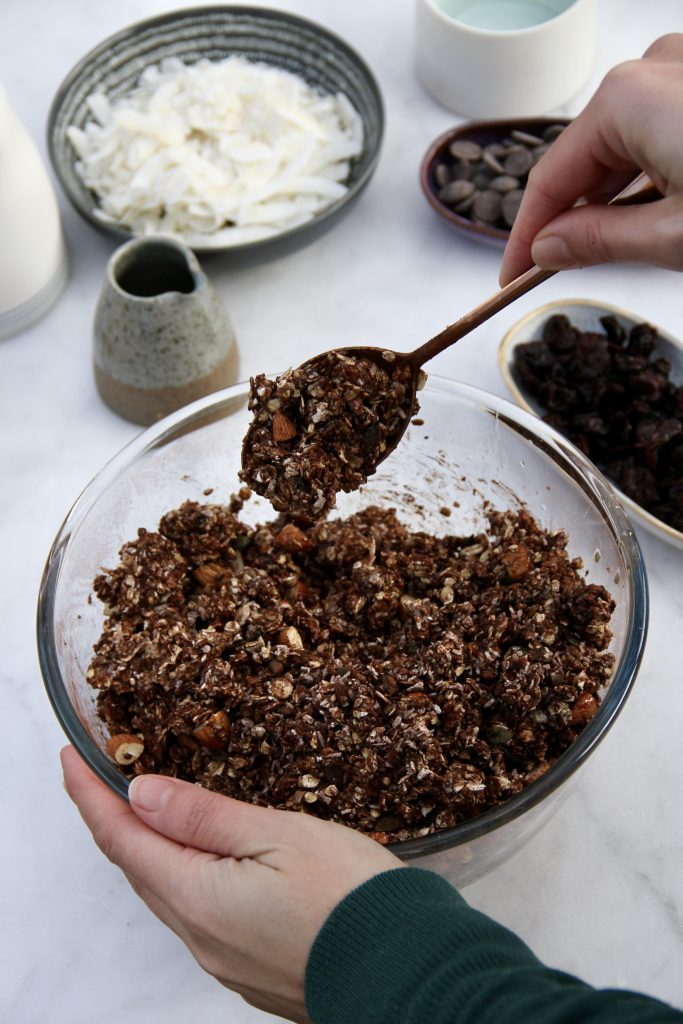
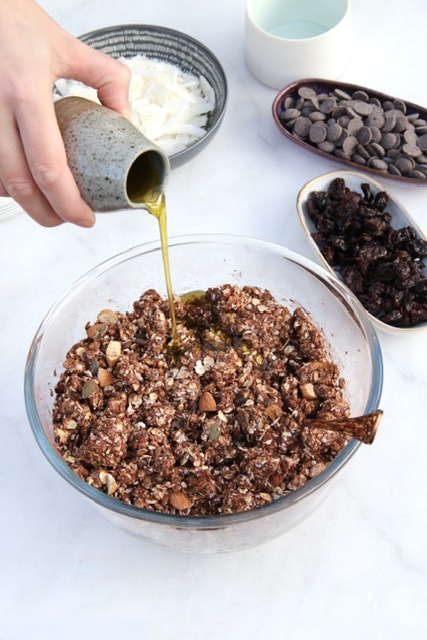
Making this granola is really easy, but takes a little time. Adding water and maple syrup allows some of the starch in the oats to come out and helps make clusters traditionally achieved by using high sugar and harder fats such as palm oil. Sometimes I even let the wet oats sit before adding in further ingredients so that the clusters really form. Then I add the fat: extra virgin olive oil! Packed full of polyphenols and phytochemicals which have been shown to be beneficial for heart, brain and even gut health.
Extra Virgin Olive Oil
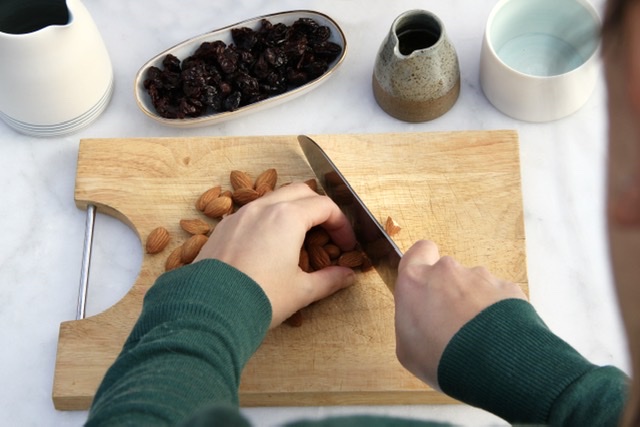
You can use whatever seeds you have to hand, but try to get a good variety in there. This recipe will help you achieve 10 of your 30 different plant foods for the week, which we know is beneficial to overall health. I also hand chop whole almonds so that you get really large chunks of the nuts. This gives a really nice crunch, but we also know from research on almond consumption, eating roasted chopped almonds can increase some strains of butyrate-producing gut bacteria, which is thought to be beneficial for health. Additionally, in a recent review of studies investigating almond consumption, there were beneficial outcomes on cardiometabolic markers such as lowering total cholesterol and LDL-cholesterol levels in comparison to non-almond consuming groups.
Roughly chop the almonds to keep them in large chunks
Finally, a slow bake means you get lovely crunchy granola, I tried to speed things up in one of my recipe testing sessions. Sadly you get a slightly burnt toasted flavour which wasn’t to my liking, but some of my testers did actually enjoy they taste!
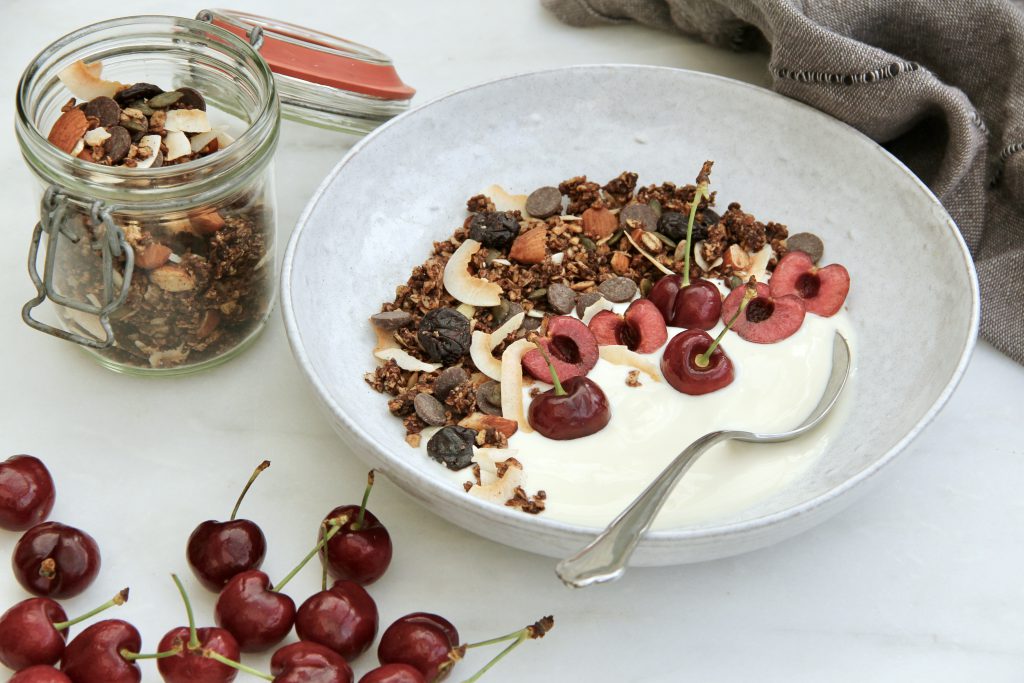
I love this granola with either dairy free milk, or a dairy free yoghurt such as a coconut yoghurt – just make sure you check the nutritional information to make sure it isn’t loaded with hidden sugar! Check out my previous post for a recent UK publication looking at the sugar reduction in yoghurts over the past few years.
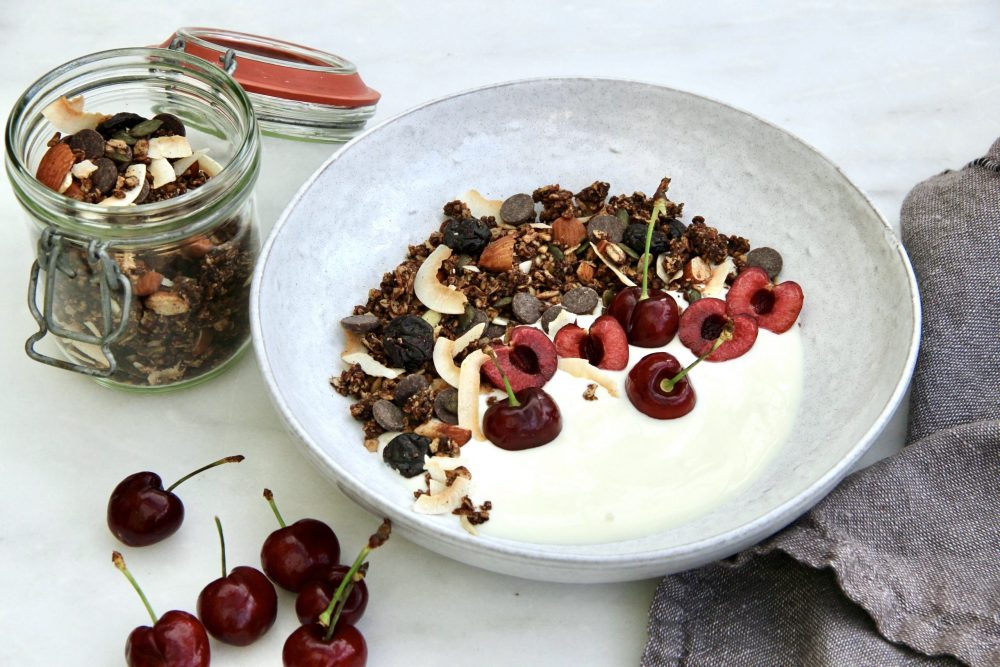
Delicious served with creamy coconut yoghurt and fresh cherries
Recipe
150g rolled oats
150g jumbo oats
30g cocoa powder
50g desiccated coconut
25g chia seeds
25g pumpkin seeds
25g sunflower seeds
25g linseeds (flax)
50g maple syrup
80g almonds, roughly chopped
60g extra virgin olive oil
50g coconut flakes
90g dried cherries
100g dark chocolate chips of choice
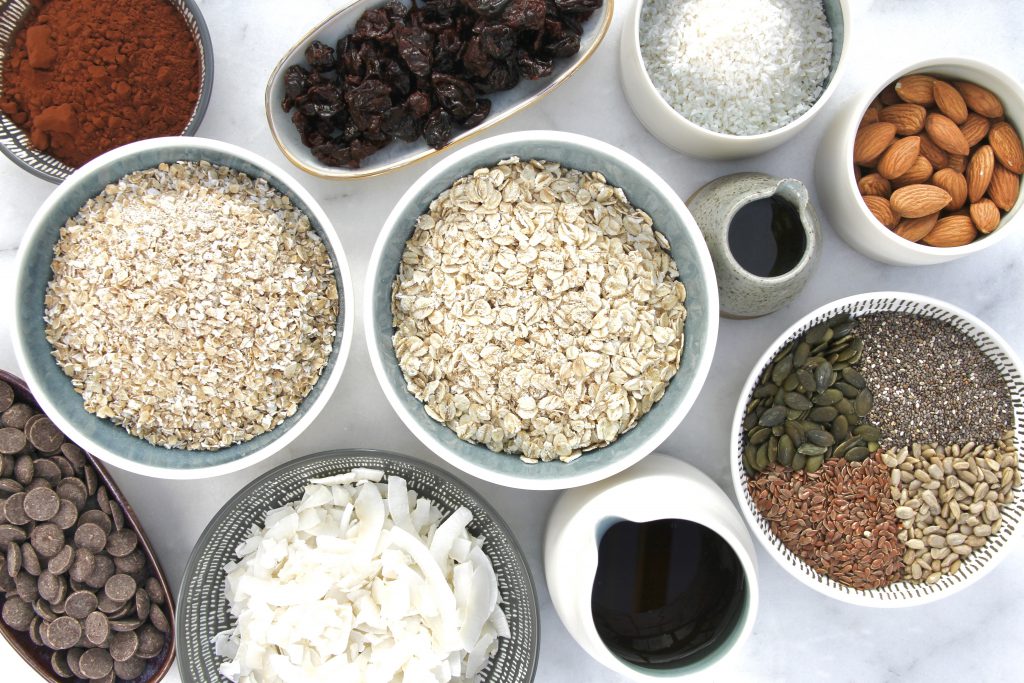
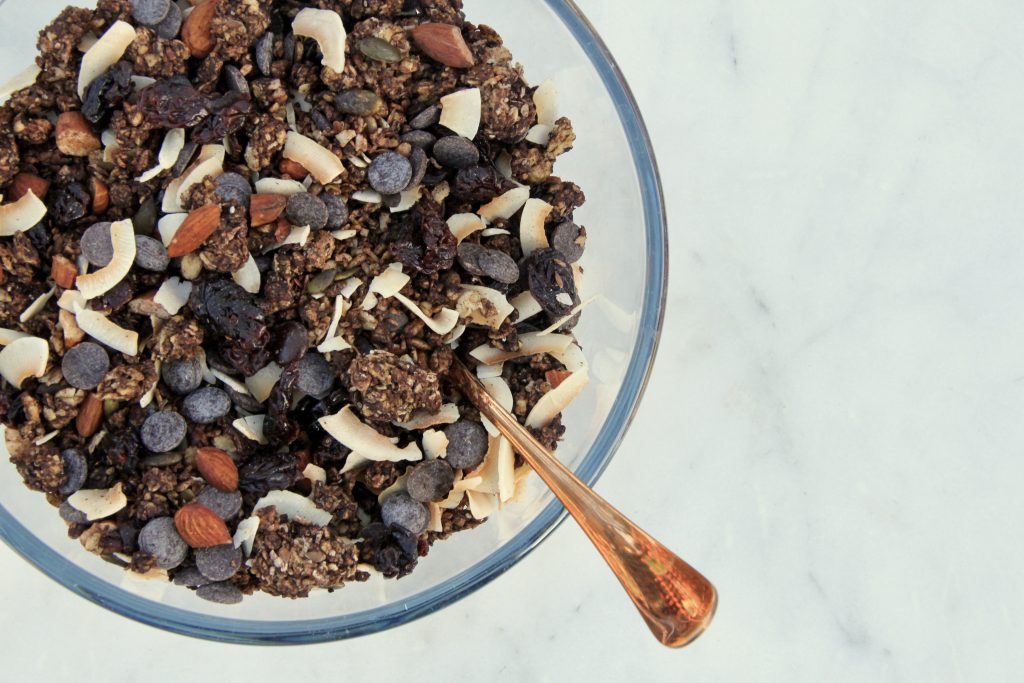
Granola ingredients
Method
Preheat the oven to 130°C/125°C Fan/ 1⁄2 GM
Add the oats, cocoa powder, desiccated coconut, almonds, seeds, maple syrup and water to a large bowl and mix together. Let large clumps form.
Add the olive oil and mix
Spread out onto a tray, pushing the mixture down to help form more clumps
Bake in the oven for 90 minutes, gently turning the mixture at 30, 50, and 70 minutes
Add the coconut flakes to the tray at 70 minutes to gently toast for the last 20 minutes
After 90 minutes of cooking, remove from the oven and allow to cool completely
Add the cherries and chocolate to the granola and store in an airtight container for up to 2 weeks
Cherry, chocolate and coconut granola
Per 50g serving 226kcal/ 10g fat/ 5.4g saturated fat/ 21.3g carbohydrates/ 4.7g fibre/ 5.8g protein
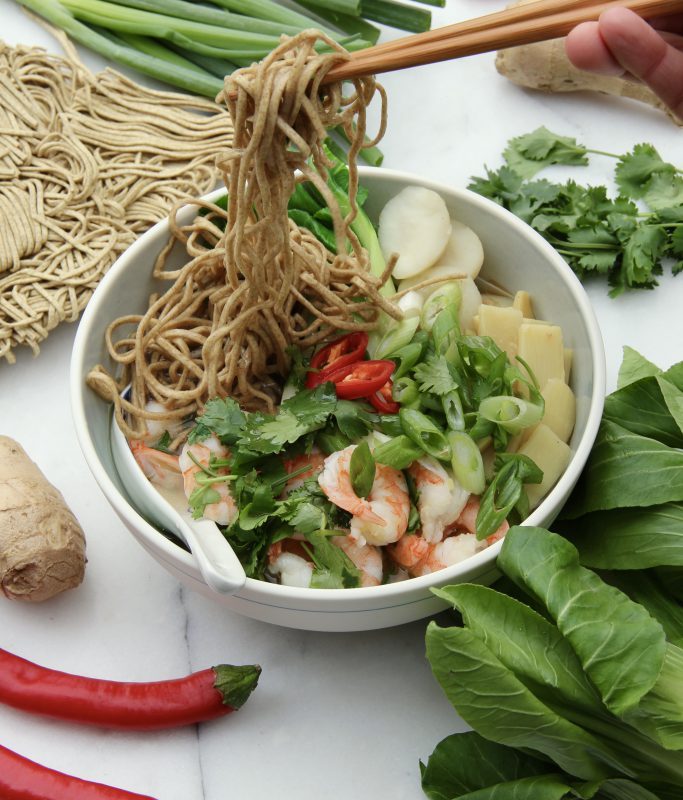
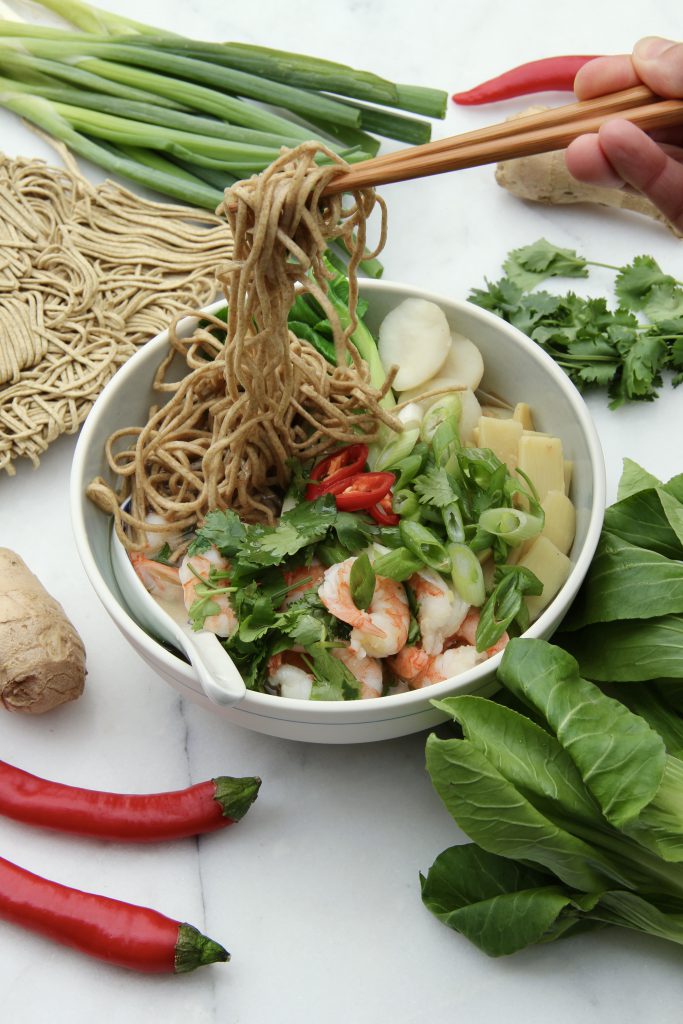
I love this recipe as it’s so adaptable. Don’t have some of the ingredients? Substitute with what you’ve got in the cupboard or fridge. All you need are the staples: noodles, stock and sesame oil. These are the key ingredients which form your foundation. From there you can build it any way you like. And the best bit, the more diversity you put into your bowl, the happier your gut microbiota will be! So don’t be afraid to try something new, or dig out an old tin of bamboo shoots which have been sitting in the back of your cupboard that you haven’t know what to do with!
Other vegetables which work well in this dish include:
Spinach
Carrot
Courgette
Beansprouts
Cabbage including Chinese Leaf
Onion
Baby corn
Mushrooms
The only other advice I can offer is to stock whole wheat noodles as a staple in you cupboard. You can find dried noodles in most supermarkets nowadays, and opting for the whole wheat option means you automatically are helping to increase your fibre intake from the get go. Remember our daily target is 30g upwards, so every gram counts.
Serves 1
Recipe
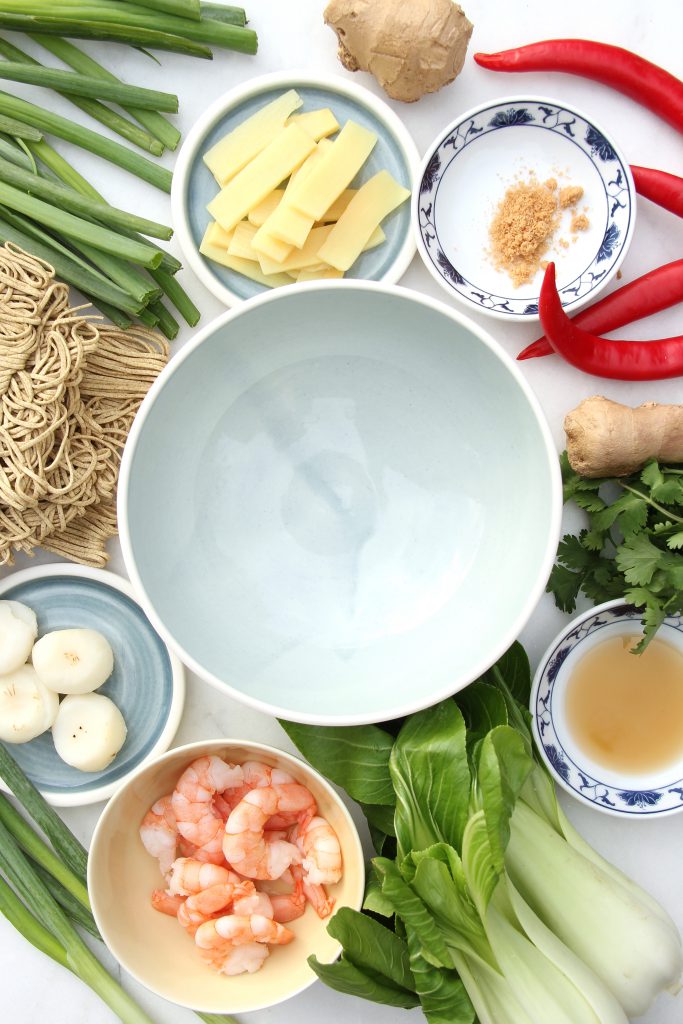
1 nest whole wheat noodles
1/2 tsp stock powder
5g ginger, finely diced
40g bamboo shoots
40g water chestnuts, sliced in half
1 pak choi, sliced
1 tsp sesame oil
1 large or 2 small spring onions, sliced
10g coriander
100g cooked prawns
Chilli slices to taste
Method
Bring 300ml water up the the boil, add in the stock powder, ginger and noodles. Cook for 1 minute less than the packet instructions.
Add the bamboo shoots, water chestnuts and pak choi for the last minute to cook.
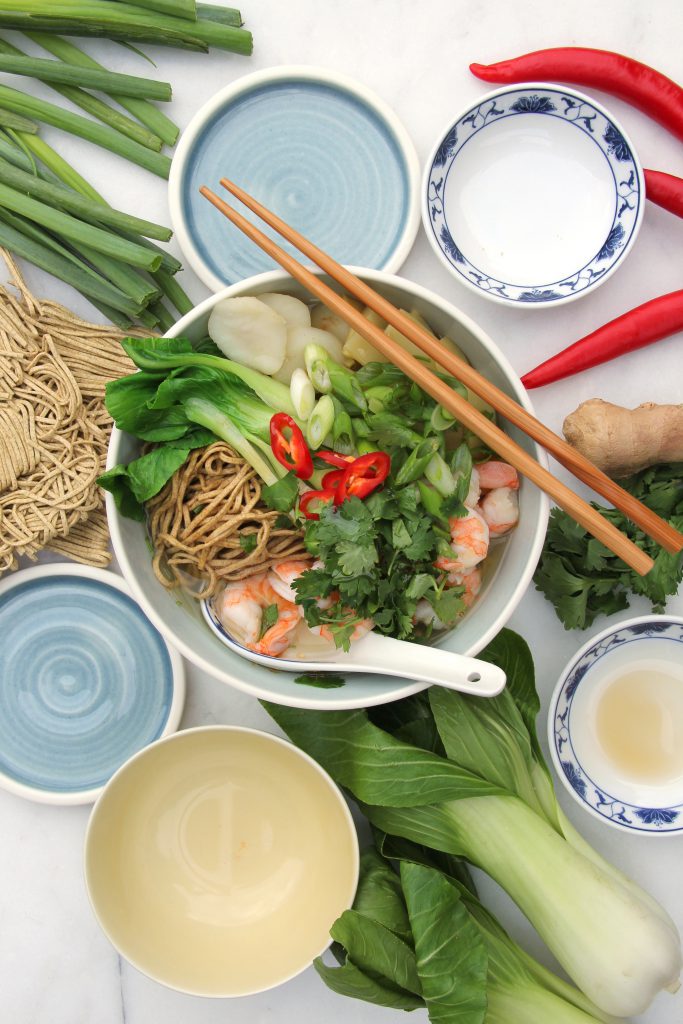
Remove from the heat, place in a serving bowl and dress with the remaining ingredients.
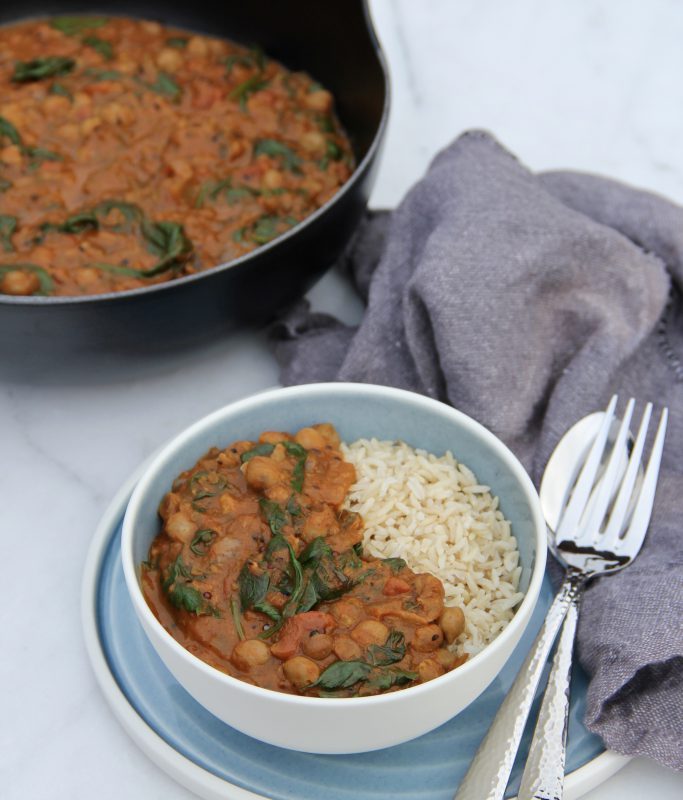
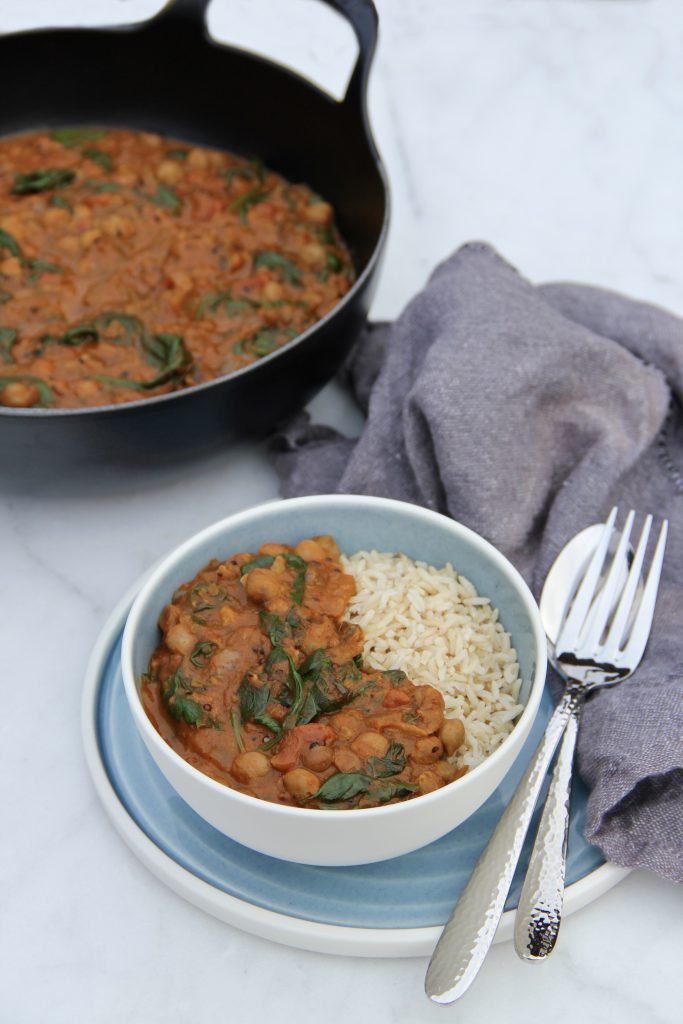
This is my store cupboard staples easy curry. I always have the tinned goods in my cupboard as backup should I find myself without anything fresh to cook with. And the best part is it taste better a day or two old, so there’s no reason why you can’t make it on a Sunday, as I have, ready for a quick and nutritious no-fuss mid-week meal.
It’s also perfect for those doing Veganuary as it is naturally vegan, and as a bonus contains over 9g of plant based protein.
Eating the rainbow
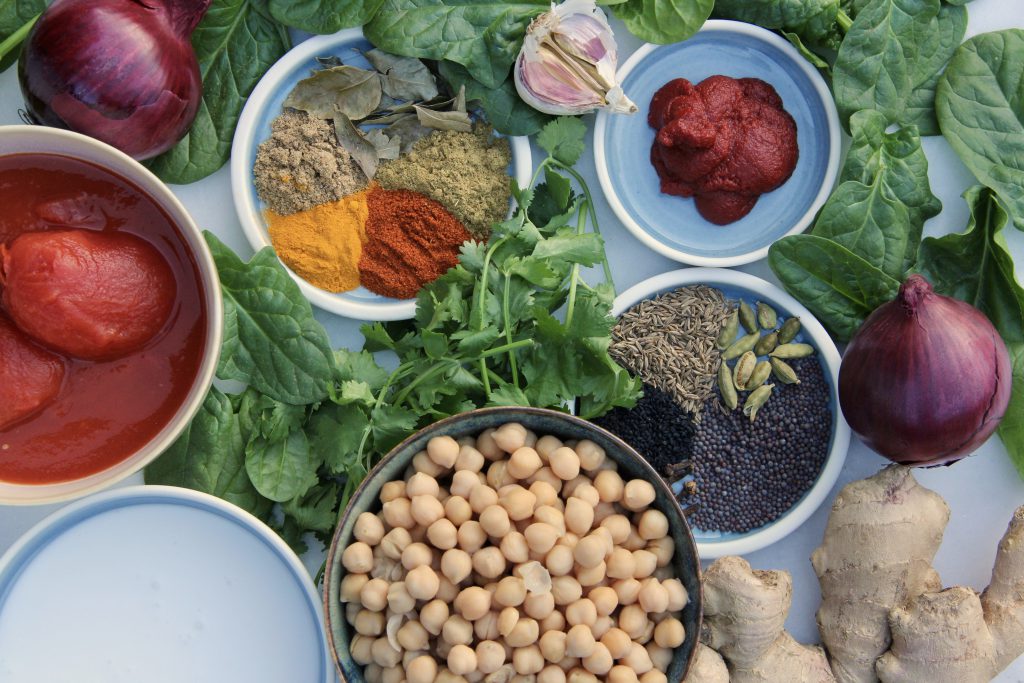
This dish is versatile in the number of plant foods, containing an array of 7 different herbs and spices to complement 8 different plant ingredients. Add the rice and you’re well on your way to your 30 different plant foods for the week. In addition, it is an excellent source of fibre, containing half the recommended daily fibre intake of 30g just in this dish alone.
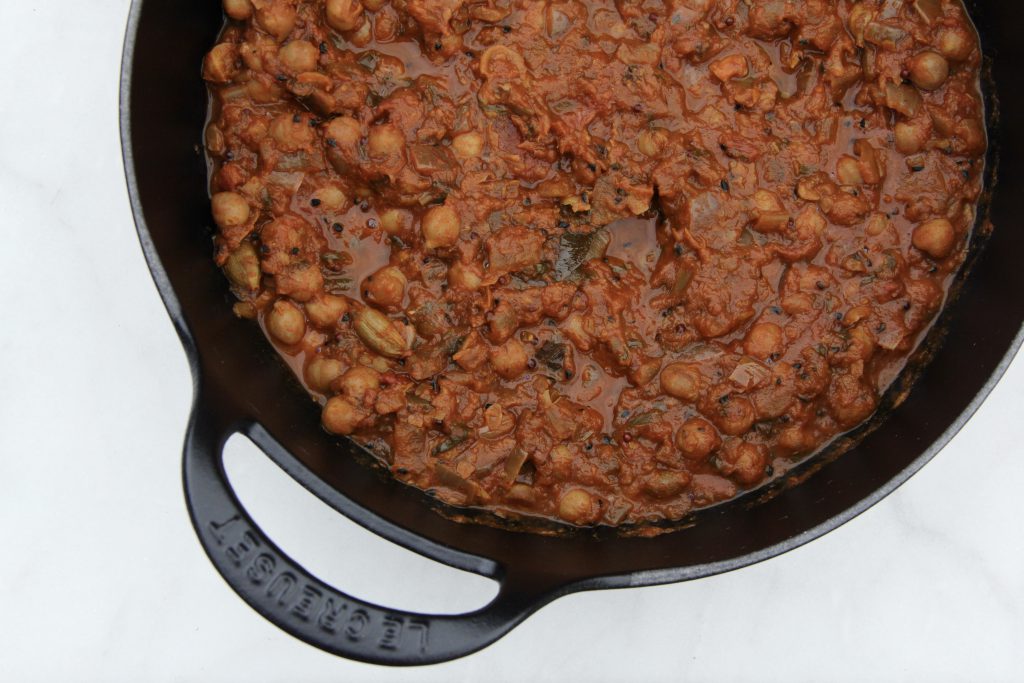
Cook the curry till thick
The trick to this dish is to cook it as slow and long as possible. If you don’t have much time to hand, it is still delicious if made within the hour, but if you have time, keep cooking on the lowest setting of your hob and top up with water when required. You could even get the curry ready, leave it overnight in the fridge and then quickly reheat it with the coconut milk and spinach the next day for a fast dinner.
The only other recommendation I can make would be to count in the cardamon pods and cloves. I hate nothing more than biting down on a whole clove mid way through my meal. Clove has a numbing effect, and is often used to help relieve tooth ache, not something I want to experience while eating my dinner. So, like a surgeon, I count them in, and then count them back out before serving, hopefully finding them all.
Serves 6
Ingredients
2 onions, sliced
2 tbsp rapeseed oil
1 thumb sized piece of ginger
5-6 cloves of garlic
1 tsp onion seeds
1 tsp mustard seeds
1 tsp cumin seeds
1 tsp cardamon seeds
6 whole cloves
1 tsp ground cumin
1 tsp ground turmeric
1 tsp chilli powder, or to taste
1 tsp ground coriander
~15 curry leaves
35g tomato puree
2 tins of chickpeas, drained and rinsed
400g tinned tomatoes
30g fresh coriander, chopped
200ml coconut milk
300g baby spinach leaves
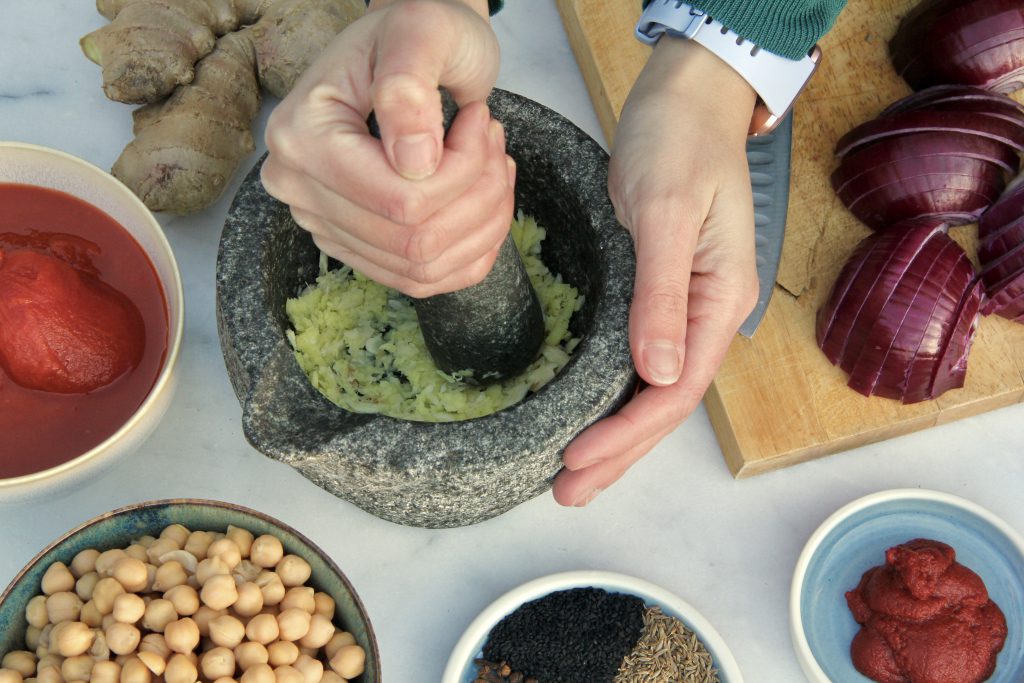
Use a pestle and mortar to crush the ginger and garlic
Method
Add the onions and rapeseed oil to a large pan and cook gently till the onions soften and become translucent.
Meanwhile, make a garlic and ginger paste in a pestle and mortar, bashing till as smooth as possible.
Add the garlic ginger paste, all the dried herbs and spices, tomato puree and chickpeas to the pan and cook together for 1 minute before adding the tinned tomatoes. Fill the empty tin with water and add the the pan.
Add the chopped coriander and allow to gently simmer away for an hour, or longer if you have the time. If the liquid reduces too much add some extra water.
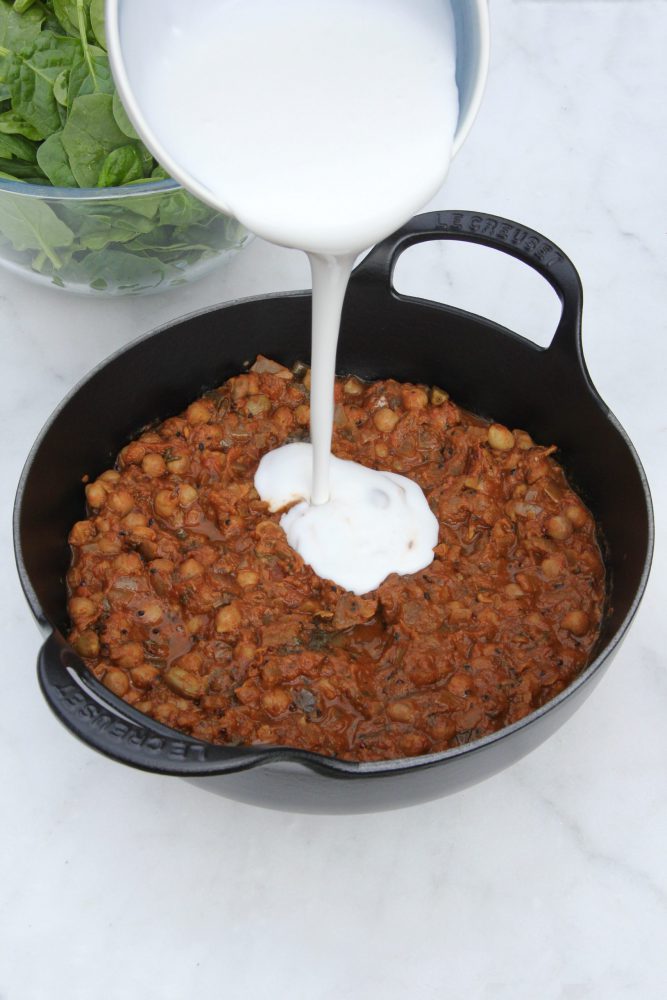
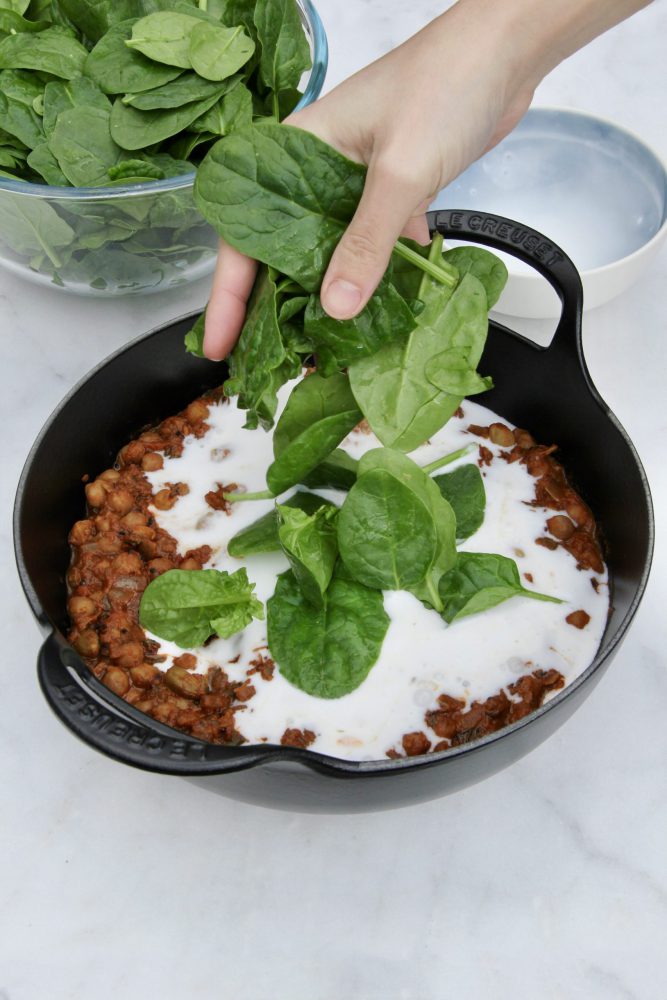
10 minutes before serving, add the coconut milk and spinach before returning to the heat to allow the spinach to wilt. Season to taste.
Remove the cardamon pods and whole cloves, and serve with rice or naan.
Per serving 258kcal/ 13.6g fat/ 1.3g saturated fat/ 21.8g carbohydrates/ 15.9g fibre/ 9.3g protein
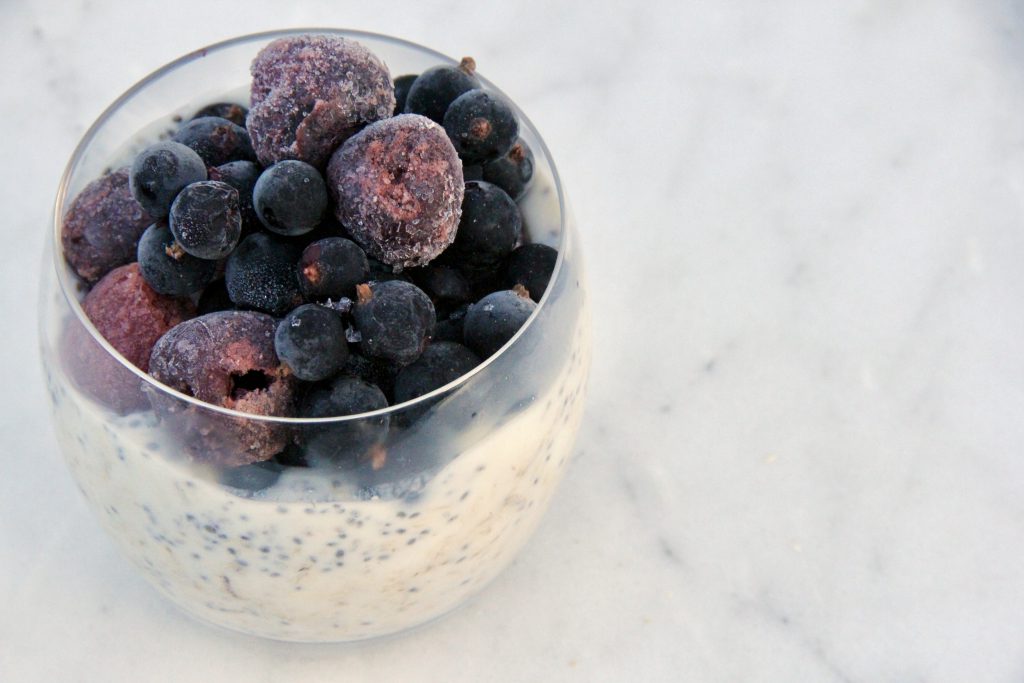
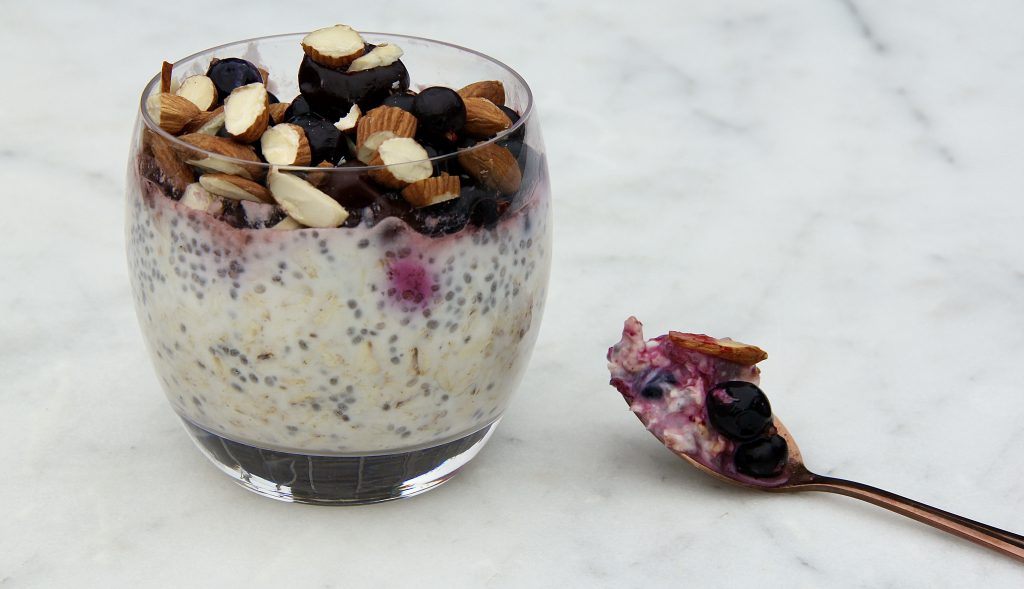
Overnight oats are a fantastic way of getting a quick and nutritious breakfast. So easy to make, taking just 5 minutes, and you can use whatever you have in stock at home. Then, just let it sit in the fridge overnight, and it’s hassle free grab-and-go breakfast in the morning.
In a recent publication, researchers at The University of Leeds reinvestigated the sugar content of yoghurts available in UK supermarkets. This was in response to their previous investigations published in 2018 with BJM which looked at the nutrient content of yoghurts back in 2016.
Yoghurt is often described as a healthy food, which it is, but the original study highlighted that less than 10% of available yoghurts were low in sugar, that’s <5g free sugar per 100g. Startlingly, almost no yoghurts aimed at children were low in sugar, which could contribute to childhood obesity and dental caries.
In their new paper, they compared the sugar content of the same yoghurts from 2016, and found that there was a 13% decrease in the sugar content over the past 2 years, highlighting a potentially positive effect public policy can have. Additionally, the greatest reduction in sugar were seen in children’s drinks and fruit yoghurts, while the number of different children’s and organic products also decreased by 23% and 27% respectively since the original dataset taken in 2016.
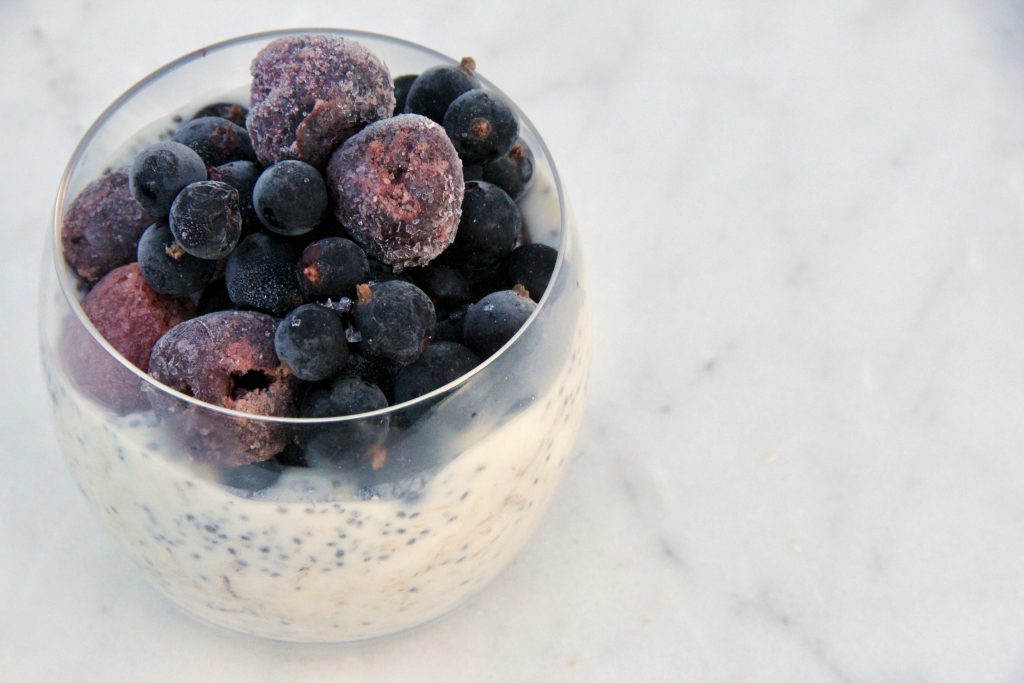
Overnight oats with frozen berries
Using a plain yoghurt is considered the best option, sweetening it yourself with whole fruit, which can be fresh or frozen.
Ingredients
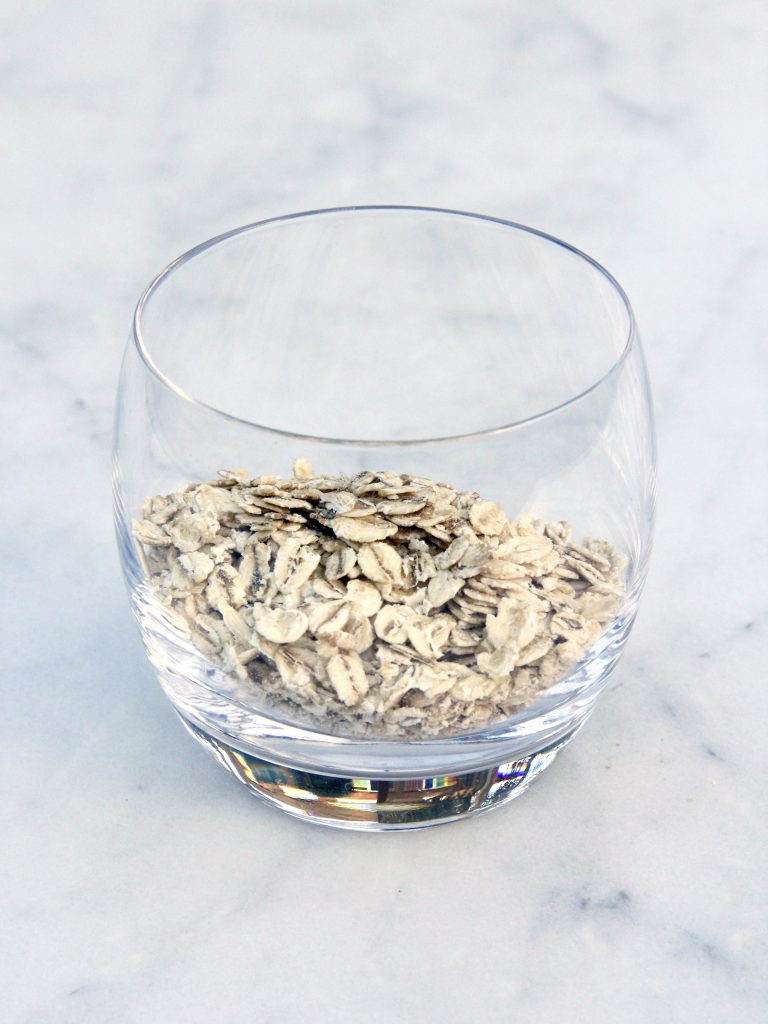
40g whole oats
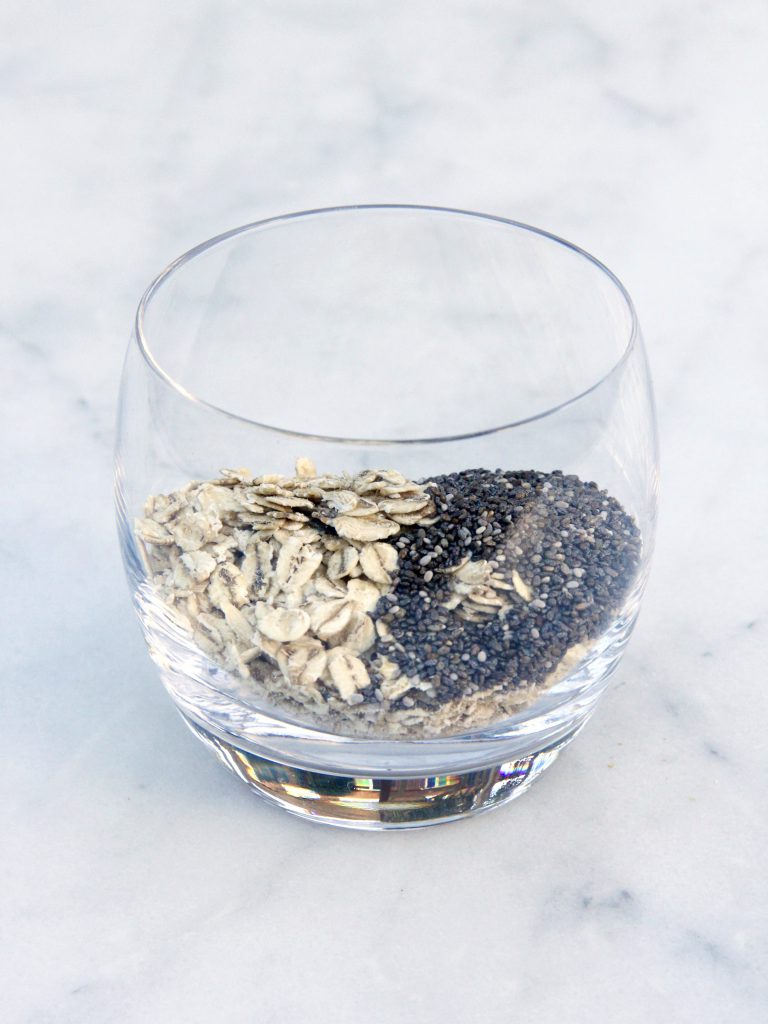
10g chia seeds
10g sultanas
80g plain yoghurt
80ml milk, I have used kefir
50g frozen cherries
50g frozen blackcurrants
15g chopped almonds
Method
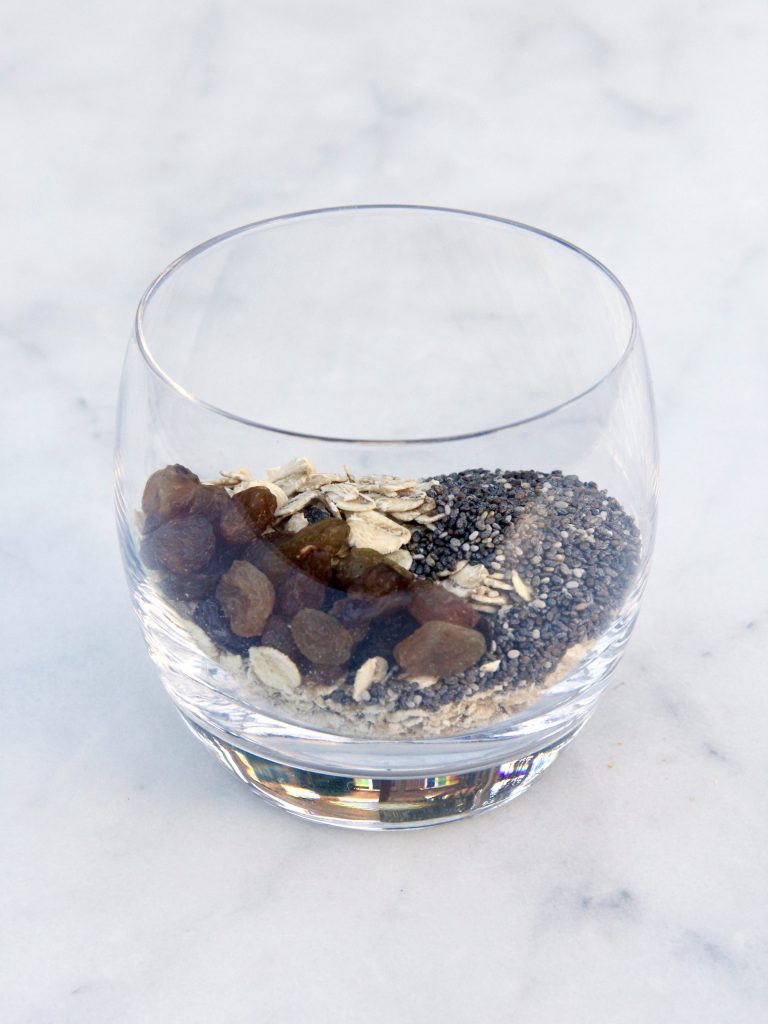
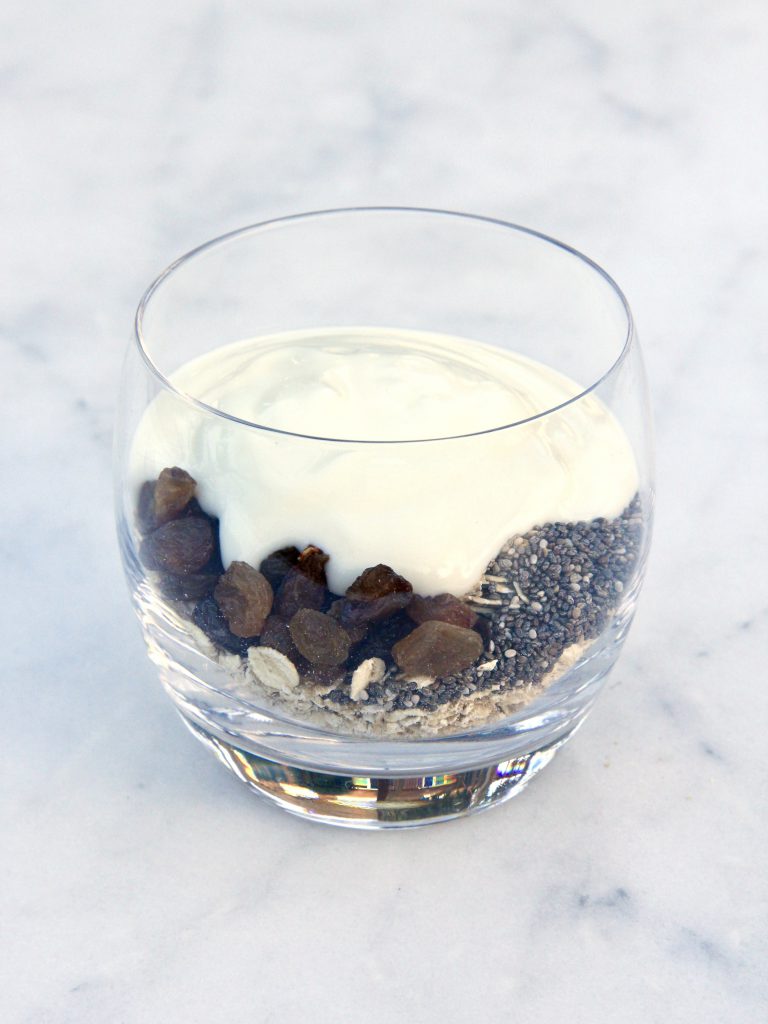
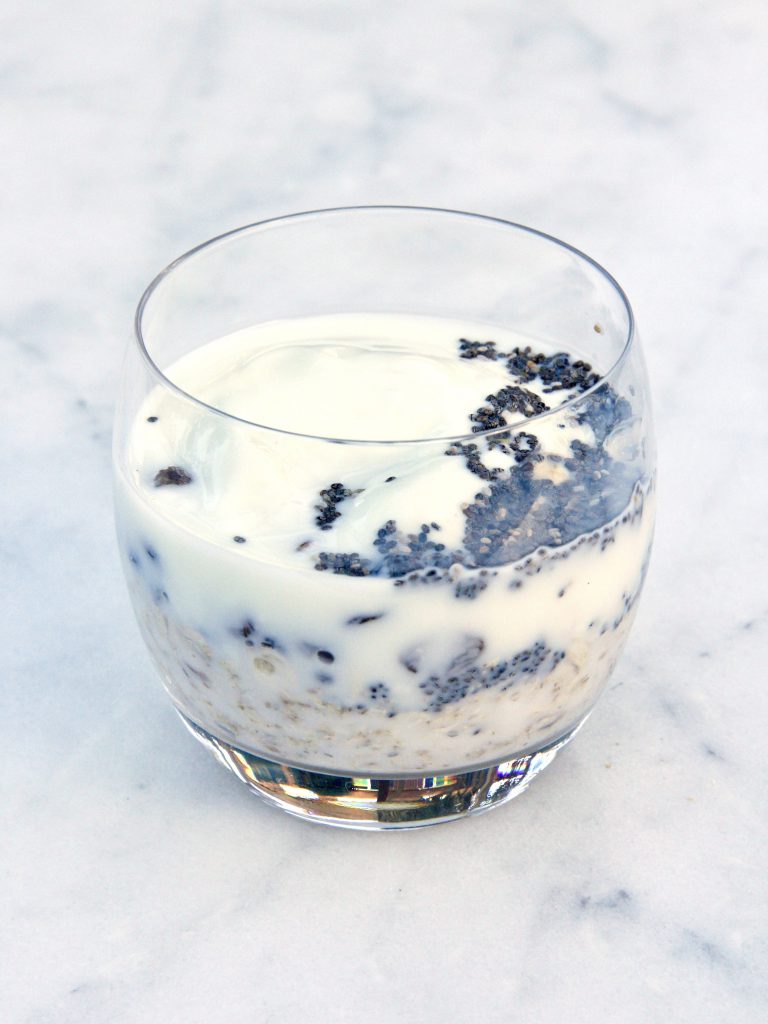
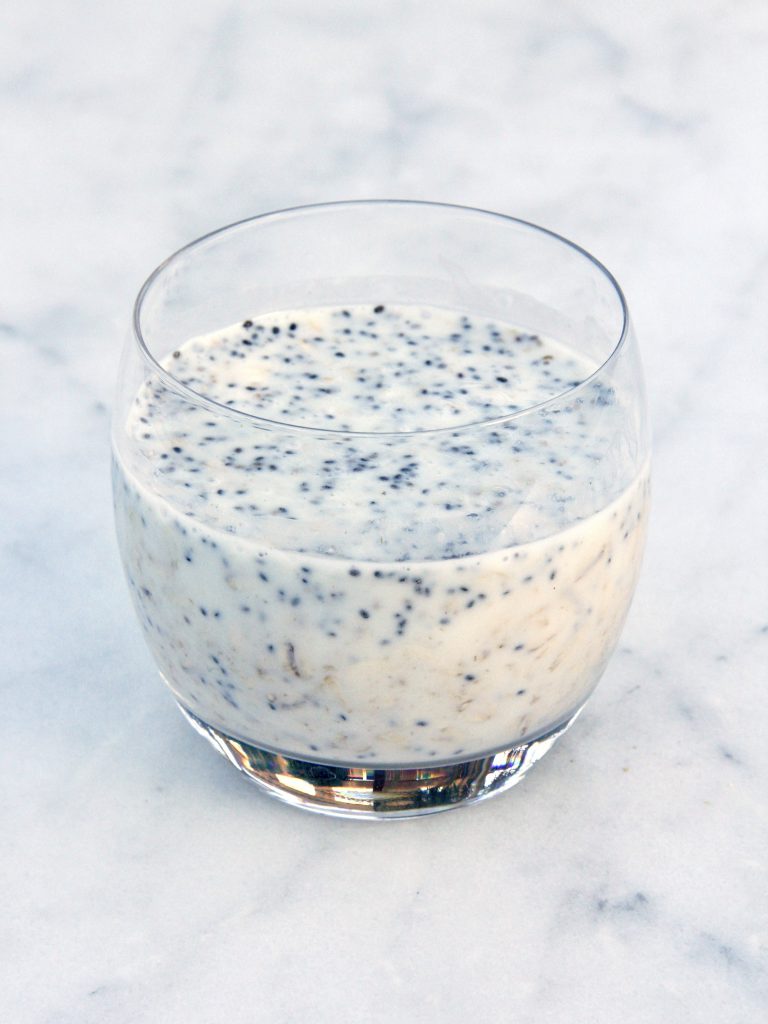
Mix the oats, chia seeds, sultanas, yoghurt and milk together till there are no lumps.
Top with the frozen fruit, cover, and leave overnight in the fridge.
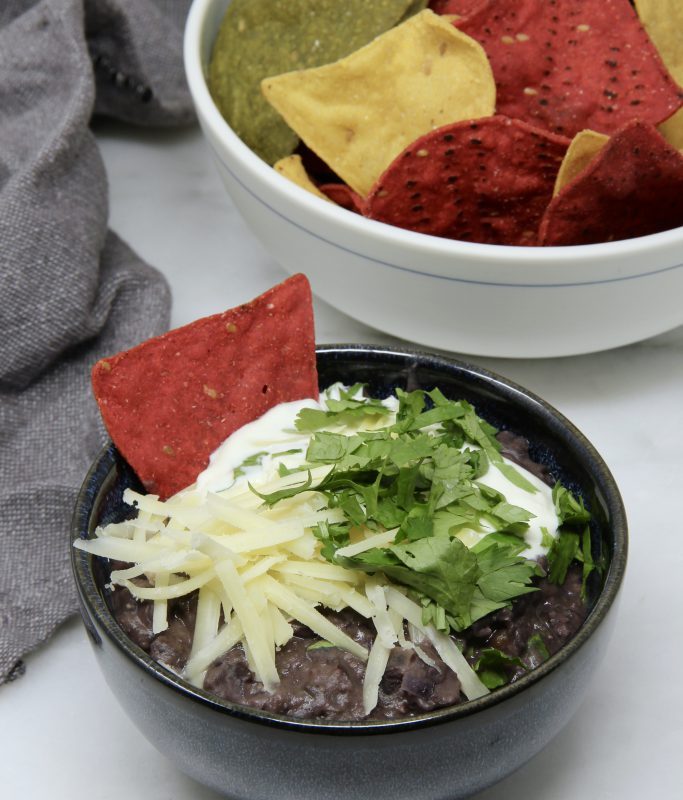
Refried beans are a party food staple in my house. I always make them whenever I’m having a gathering, but I have to be prepared and start the day before. However, this is the cheats version. I say cheat because I’m using already cooked beans from the tin. No need for soaking over night, or boiling for hours. You can decide to make these an hour before serving, without compromising on the taste.
This is a really versatile dip, something I always make in large batches as it sits well in the fridge for a week, ready to be lovingly transformed into the next meal. I love using this as a spread in a wrap for a burrito, quesadillas with melted cheese, enchiladas or even tostadas if you’re feeling fancy!
In addition, you can easily make these vegan. The recipe below is vegetarian, but if you replace the butter with rapeseed oil in the base mix, you’ll be all set for Veganuary. Then you can either use them as is, or use a vegan sour cream and cheese alternative to make the full on refried beans experience.
All that’s left to say is Happy New Year and enjoy whatever you’re doing (and eating)!
Serves 4
Recipe
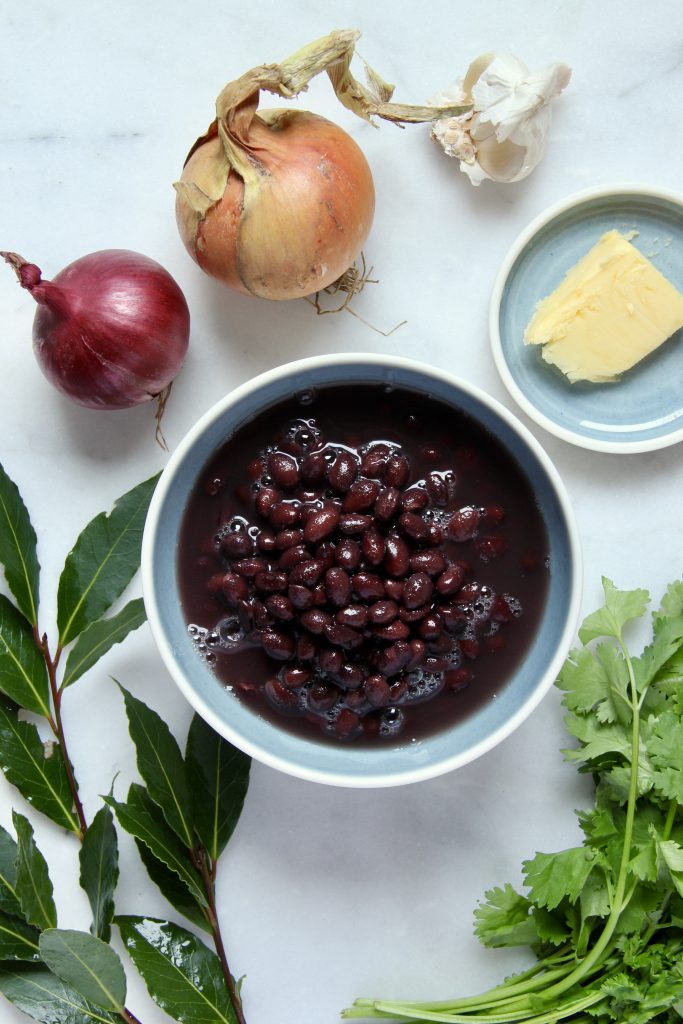
1 tin of black beans
3-4 large cloves of garlic, sliced in half
1/2 white onion
1 small bunch of coriander, stalks separated from leaves, leaves chopped
3 fresh bayleaves, crushed
1 red onion, finely diced
20g butter (or rapeseed oil if making vegan)
1 garlic clove, finely sliced
To serve (optional)
Soured cream
Cheese e.g. Cheddar, Cheshire or Wensleydale
Coriander leaves
Tortilla chips
Method
Pour the tin of black beans with their water into a pan. Fill the can with water and add to the beans.
Add the half onion, halved garlic, bayleaves and coriander stalks. Bring to the boil and allow to simmer for 30 minutes. If your beans were unsalted, add in salt to your taste.
Meanwhile, gently fry the red onion in your choice of fat till softened. Add the garlic and continue cooking for a further 2 minutes.
Drain the beans, reserving the cooking liquid. Discard the garlic, bayleaf, onion and coriander stalks.
Blend the beans with a little of the cooking water till the desired thickened of dipping. I like to keep mine quite chunky.
Add the fried onion and garlic and half the chopped coriander leaves.
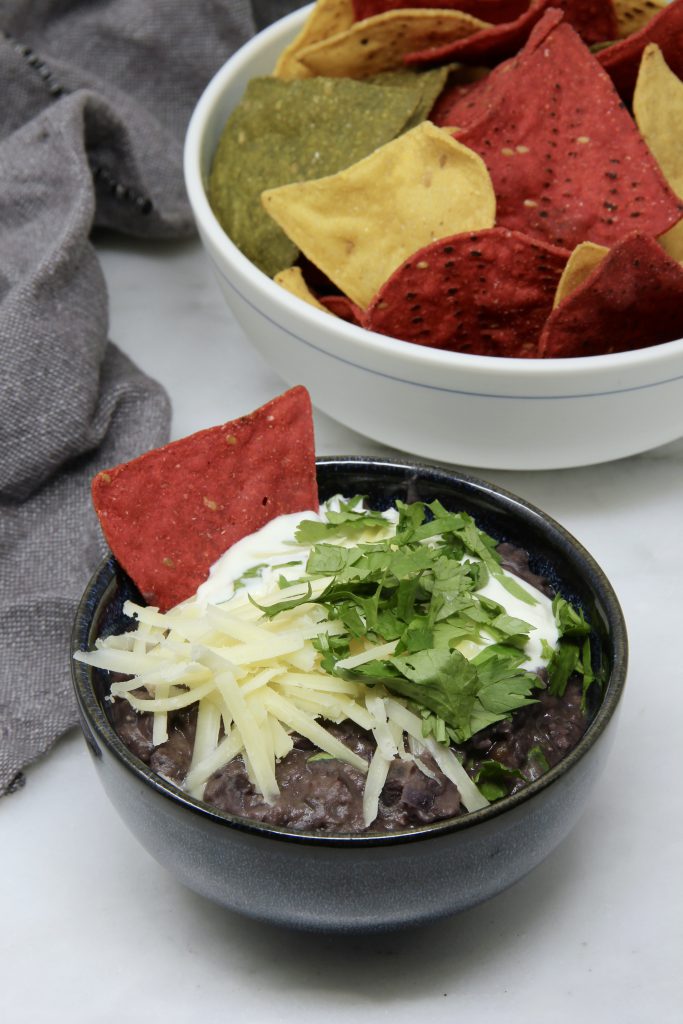
Top with soured cream, cheese and more coriander leaves and serve with tortilla chips.
PerServing of Beans 96kcal/ 2.6g fat/ 1.5g saturated fat/ 11.2g carbohydrates/ 4.7 fibre/ 4.9g protein
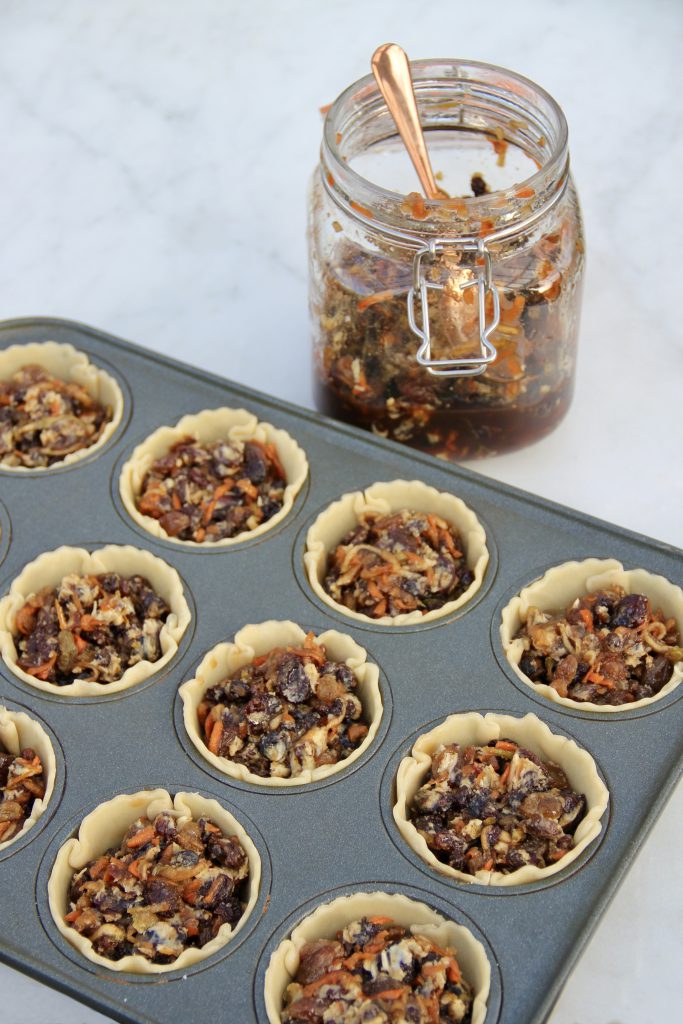
Whether you made your own mincemeat or not, there are still ways to help increase the diversity of plant fibres in your mince pies. You could try adding in some extra dried fruit to bought mincemeat, zesting in some clementine zest, or try adding carrot like in my own mincemeat recipe. And you don’t have to stop there, you can even change the pastry!
In my recipe, I use a mixture of shortcrust pastry to stay
traditional, but use a crumble topping instead, keeping it lighter, but also so
it allows me to include more plant sources. I use both oats and ground almonds
in my crumble.
Each of my mince pies contains around double that of shop bought mince pies. I always find it harder to include fibrous foods over the festive period as there are so many treats to eat! My homemade mince pies contain 8 different source of plant-based goodness, and research shows those who eat 30 or more different sources of plant-based foods per week have an increased variety of gut microbiota in comparison those who eat 10 or fewer different sources. So feed your microbiome!
These mince pies are delicious served warm with vanilla
custard, a true Christmas time treat.
If you want to make vegan mince pies, use a pre-made
vegetable oil based shortcrust pastry and top with the crumble mixture
substituting the butter for rapeseed oil.
Makes 12 deep-filled mince pies
Recipe
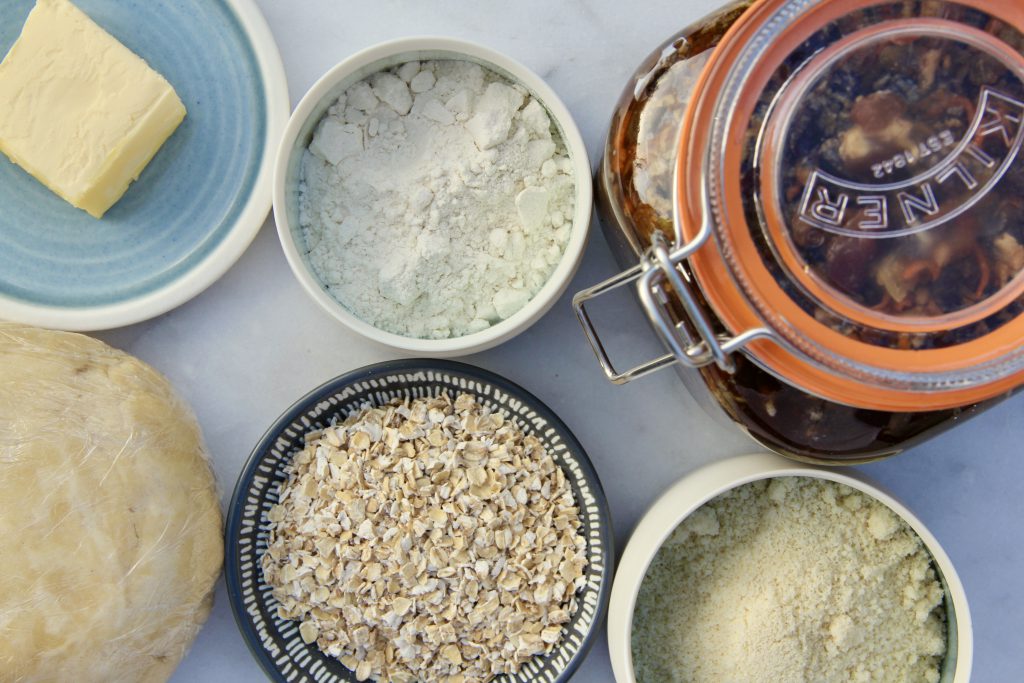
750g mincemeat, shop bought
or homemade
Short crust pastry, either
bought or homemade (see below)
75g plain flour
50g fridge cold butter
25g rolled oats
50g ground almonds
25g soft light brown sugar
Method
Preheat the oven to 200°C/180°C Fan
Roll the pastry out to 2mm, around the thickness of a 2p coin.
Cut disks of pastry out to 11-12cm diameter and line a muffin tray.
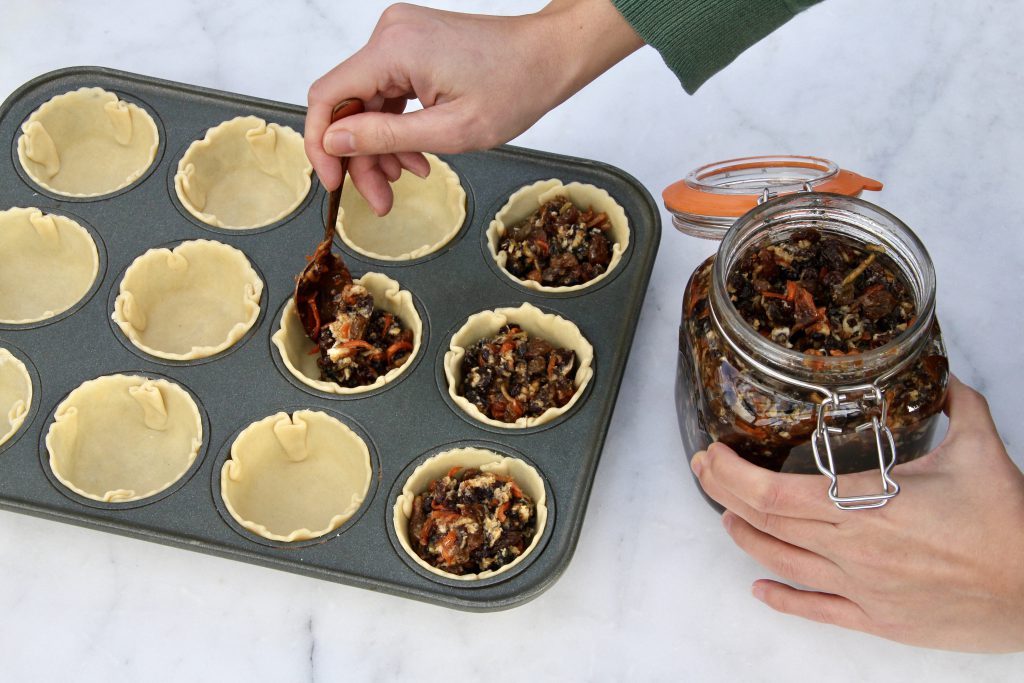
Fill each case with mincemeat, leaving a little gap at the top.
Make the crumble topping by mixing the flour and butter together until the mixture resembles fine breadcrumbs.
Add the oats, almonds and sugar and combine.
Top each mince pie with a spoonful of the crumble topping*.
Bake for 22-25 minutes till golden brown.
Cool on a wire rack
To make your own shortcrust pastry combine 225g plain flour
with 100g cold butter till it resemble bread crumbs. Add just enough cold water
to form a dough. Wrap and rest it in the fridge for 30 minutes before rolling.
Mince Pies
Per Mince Pie 327kcal/ 13.7g fat/ 4.5g saturated fat/ 48.1g carbohydrates/ 2.5 fibre/ 3.2g protein
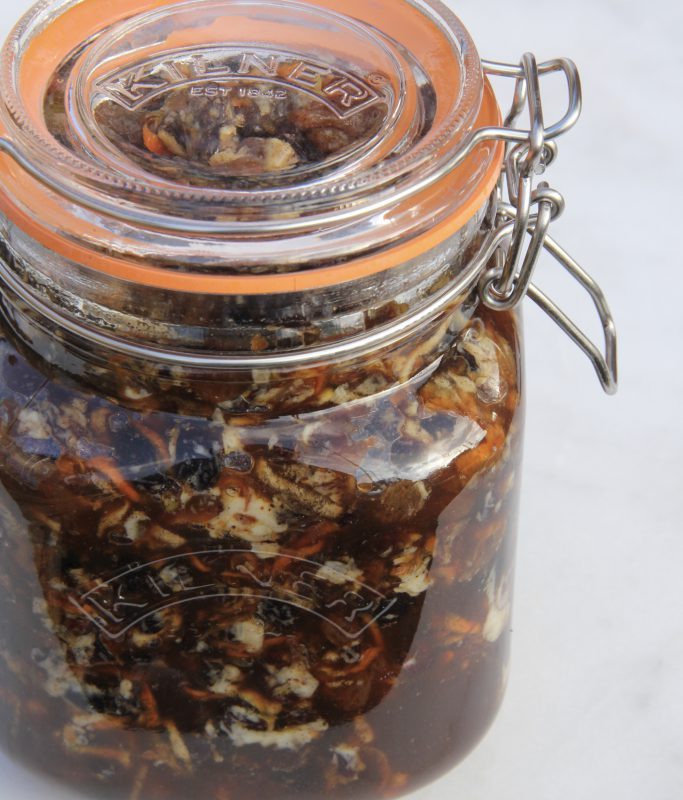
Homemade mince pies are something special at Christmas. Taking it one step further and making your own mincemeat means you can decide what goes in. For me, shop bought mincemeat sometimes feels like it’s missing some of the fruit. Making your own mincemeat is so quick, and I guarantee the flavour will be so much better than the shop bought stuff, and it’s ready to use in just 24 hours so there’s no excuses for not making your own!
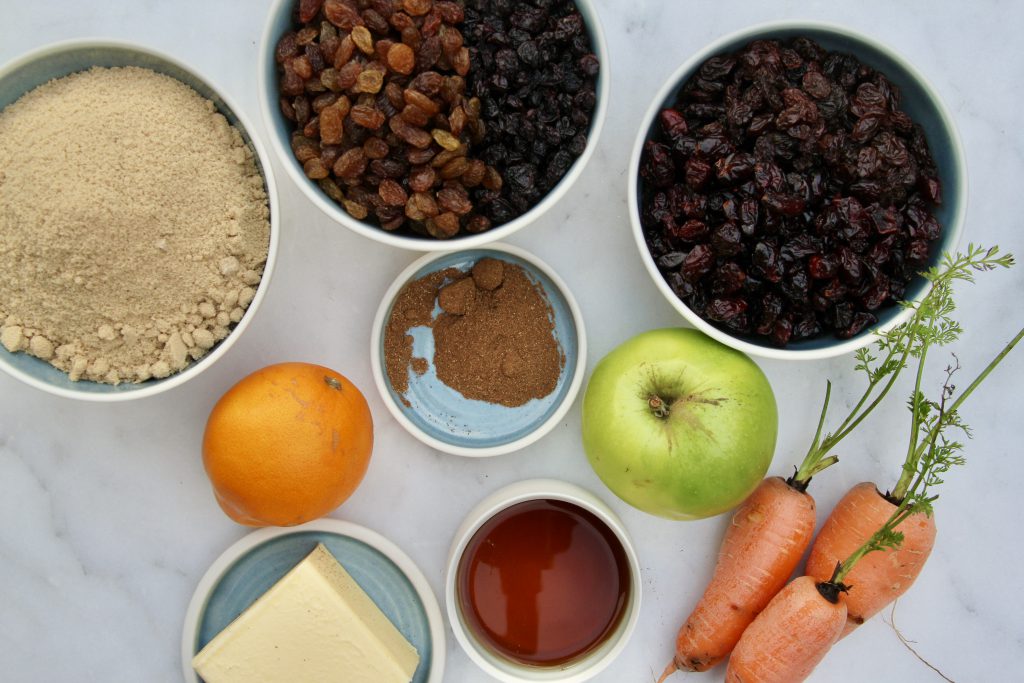
Mincemeat Ingredients
I use butter rather than suet in my recipe. I think this gives a much richer flavour, and is also vegetarian friendly. You’ll also see I don’t stop at just fruit. A sneaky carrot also makes it into the mix in my version. This is great for increasing the diversity of plant fibres in this recipe, which we know can be beneficial for your gut microbiota and gut health in general. Why not treat your microbes this Christmas too!
Overall this basic mincemeat recipe uses 6 different plant-based fibre sources, alongside mixed spice. You can substitute different fruit in depending on your taste, for example cherries, apricot or mixed peel.
A generous swig of cognac
Makes enough mincemeat for 24 deep filled individual mince pies
Recipe
200g sultanas
200g raisins
200g currants
100g dried cranberries
1 large carrot (or 3 small
like my allotment carrots!)
1 cooking apple
350g soft light brown sugar
175g fridge cold butter
(option to use vegetarian suet to make vegan, or to be a traditionalist and use
beef suet)
2 tsp ground mixed spice
1 organic orange
100ml cognac, brandy,
whisky or rum
Method
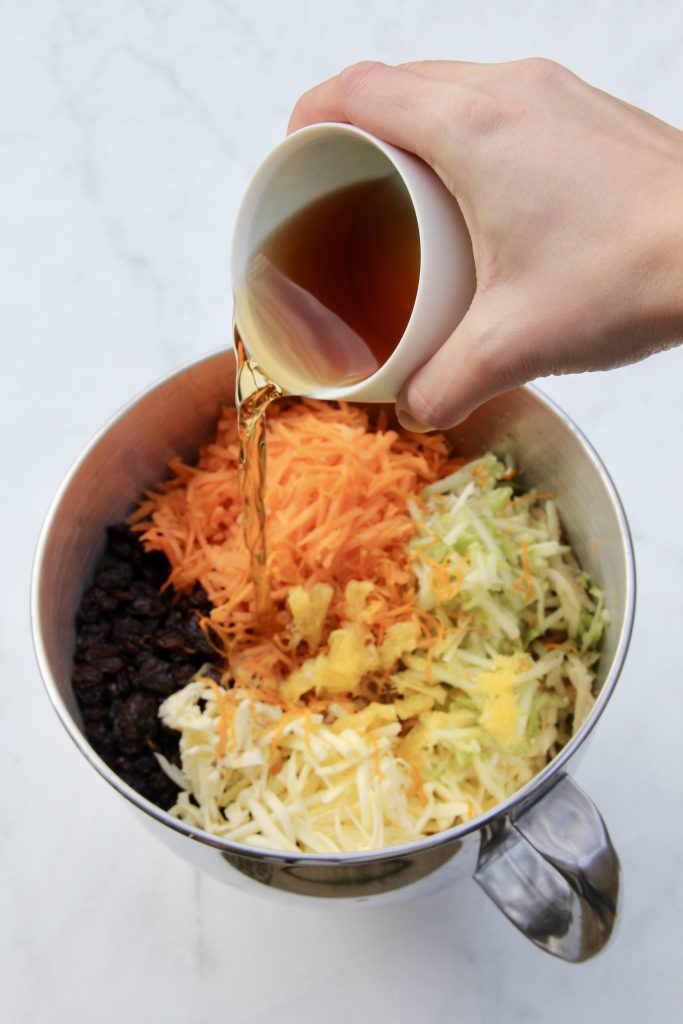
Coarsely grate the apple, carrot and butter.
Zest and juice the orange, taking as much of the segment flesh as possible.
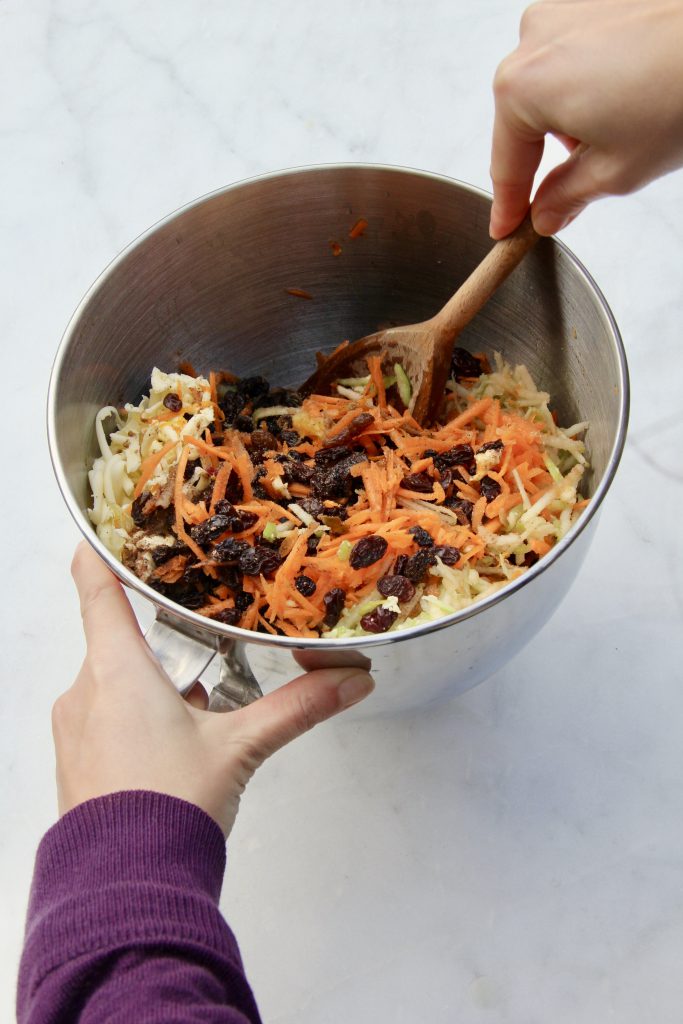
Put all the ingredients in a large bowl and mix together. Set aside covered with a tea towel.
Stir occasionally for the next 24 hours.
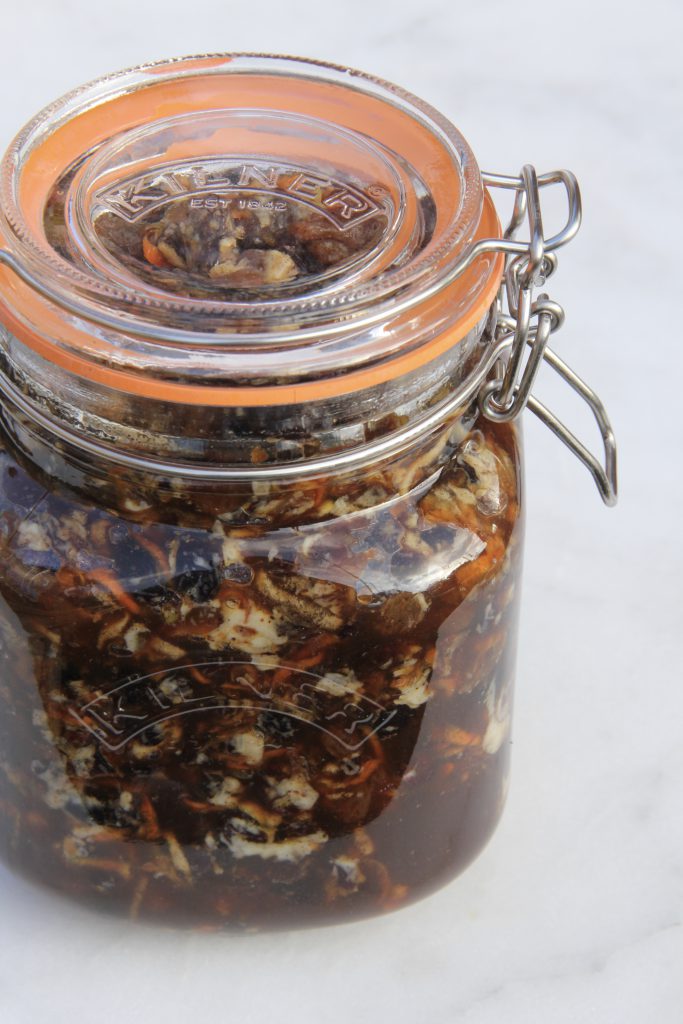
Fill previously sterilised jars with the mincemeat, ensuring to push out all the air.
Seal and leave in a cool dark place for up to 6 months to mature.
Per 100g 304kcal/ 9.2g fat/ 5.9g saturated fat/ 49.5g carbohydrates/ 2.8g fibre/ 1.4g protein
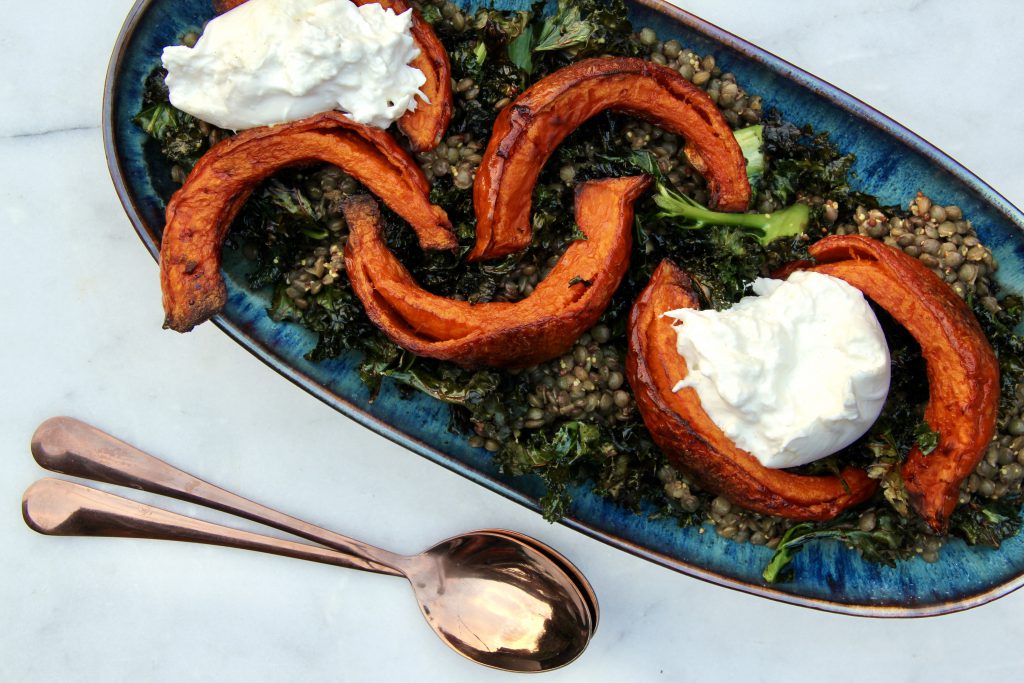
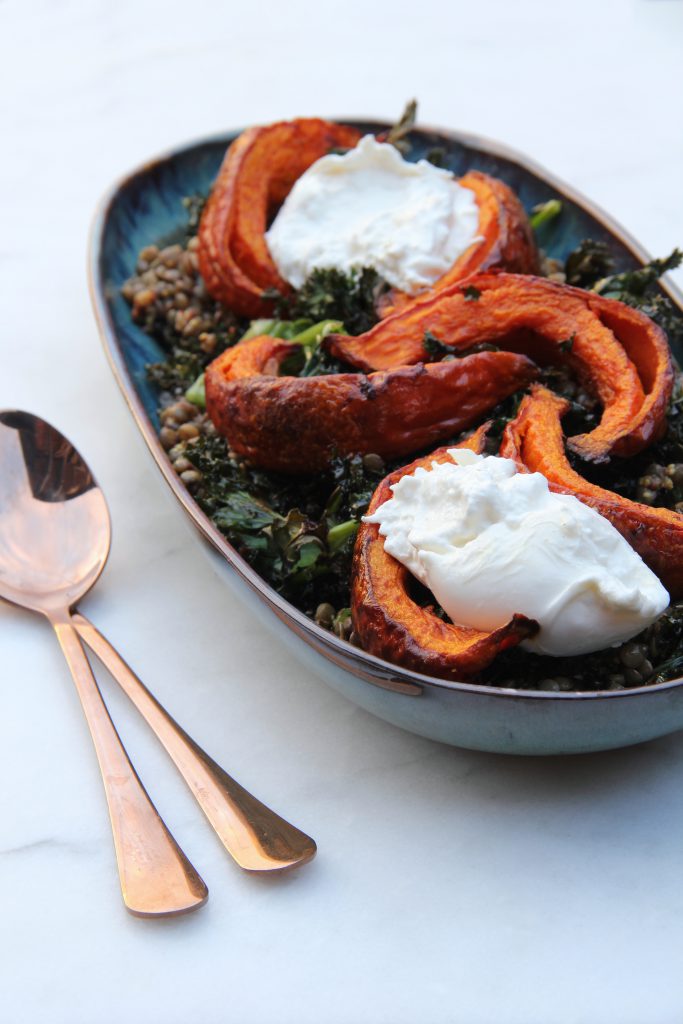
A gorgeous winter salad which uses seasonal vegetables and lets them shine as stars in the dish. Kale, a vegetable best in winter, is roasted till crispy. If you’ve never tried crispy kale, now is the time!
Combining both kale and lentils in this dish helps to increase the plant based iron. Additionally, kale is a good source of vitamin K, which has been shown to be beneficial for heart health by helping keep our arteries clearer.
Roasted Squash Winter Salad
I absolutely adore creamy burrata, a cousin of mozzarella. If you can’t find burrata in the shops, substitute with mozzarella. It will still be delicious!
Serves 2
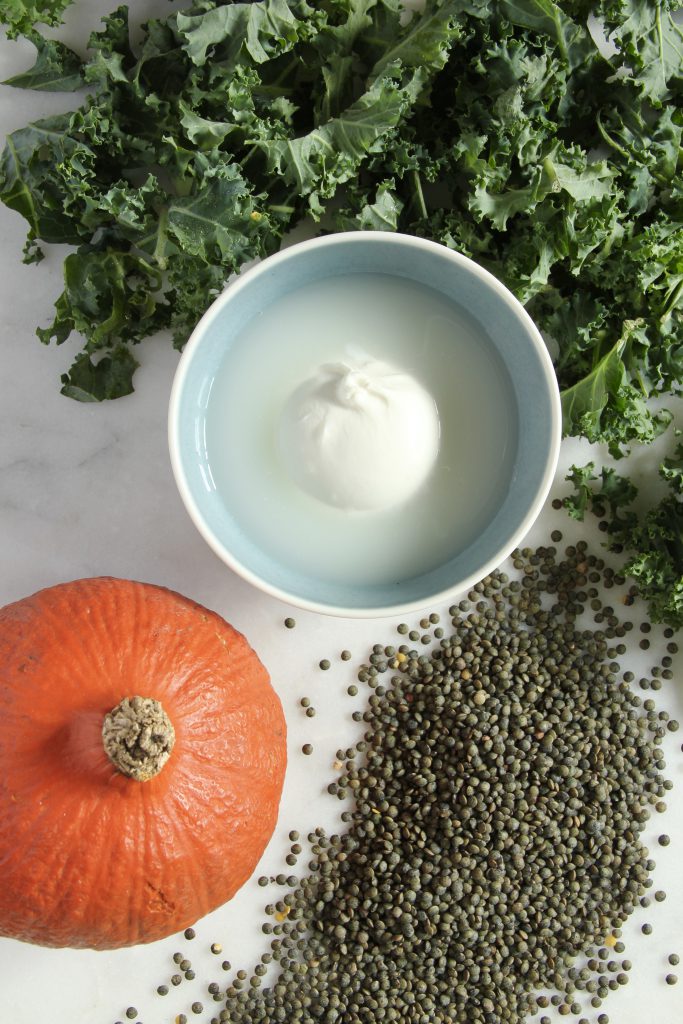
Recipe
300g Squash of choice, I’ve used Red Kuri, cut into large wedges
2 tbsp rapeseed oil
100g puy lentils
10ml balsamic vinegar
10g wholegrain mustard
10ml extra virgin olive oil
120g kale, washed and sliced into 1 inch chunks
1 ball burrata
Seasoning to taste
Method
Set the oven to 180°C fan/190°C convection. Place the squash on a baking tray and coat in 1 tbsp rapeseed oil and season. Roast for 30 minutes.
Meanwhile, cook the lentils by placing in a pan of cold water, bringing to the boil, and reducing the heat to a gentile simmer for 12-15 minutes till just firm to bite.
Drain the lentils and mix in the balsamic vinegar, mustard and olive oil.
Toss the remaining rapeseed oil with the kale, place on a second tray and roast for 8-10 minutes, turning every few minutes to allow every leaf to become crispy.
Layer the lentils, kale and squash onto plates and serve with the torn burrata ball over the top. Serve immediately.
Per serving 511 kcal/ 32.3g fat/ 12.4g saturated fat/ 32.5g carbohydrates/ 12.7g fibre/ 18.5g protein



 Dr Pippa