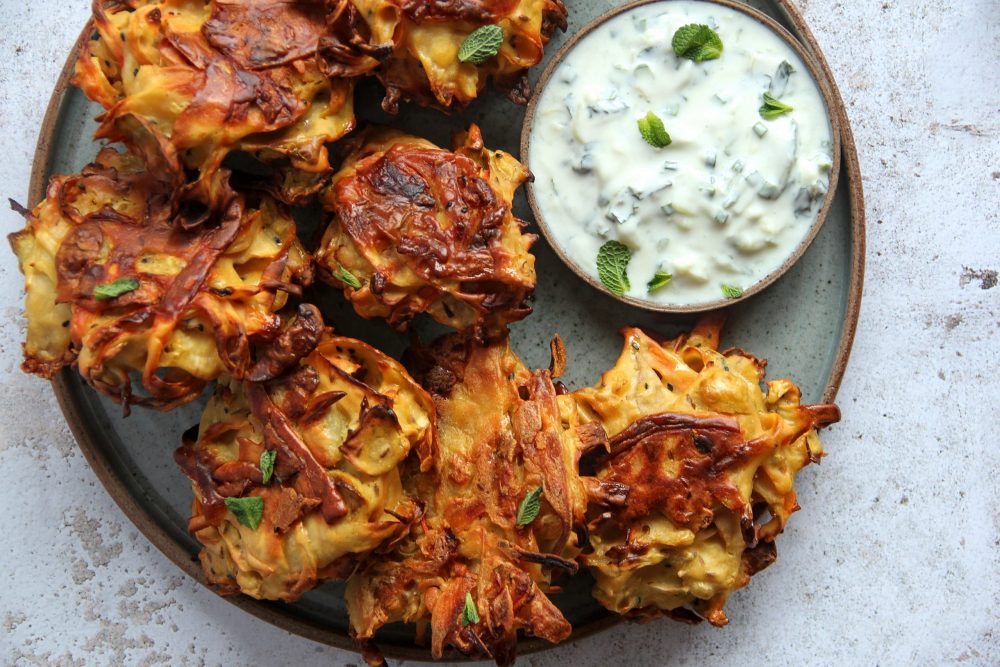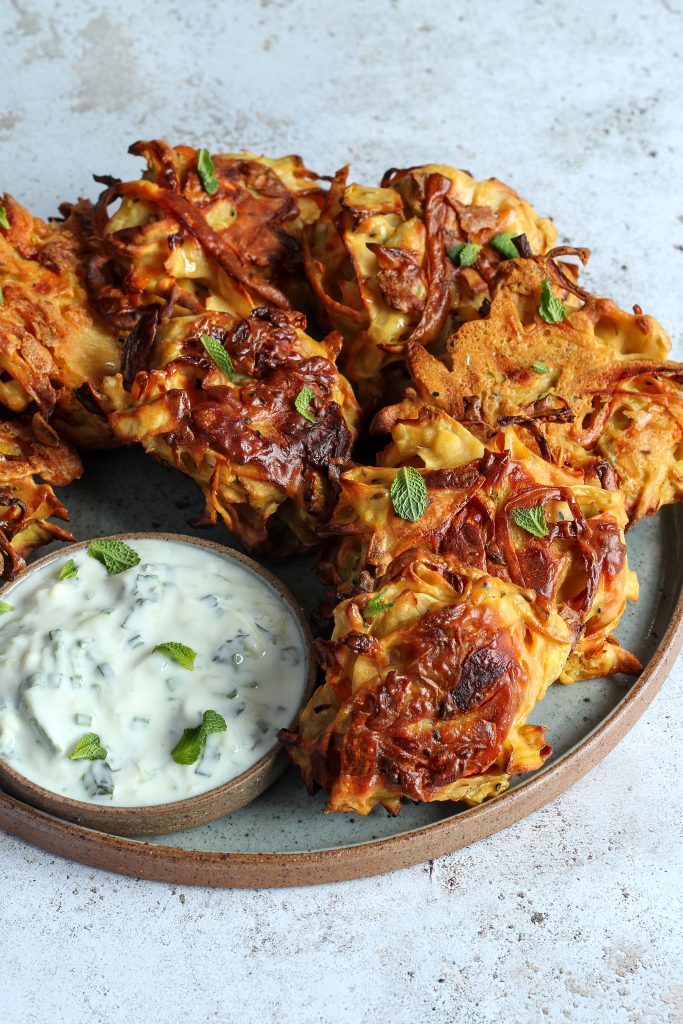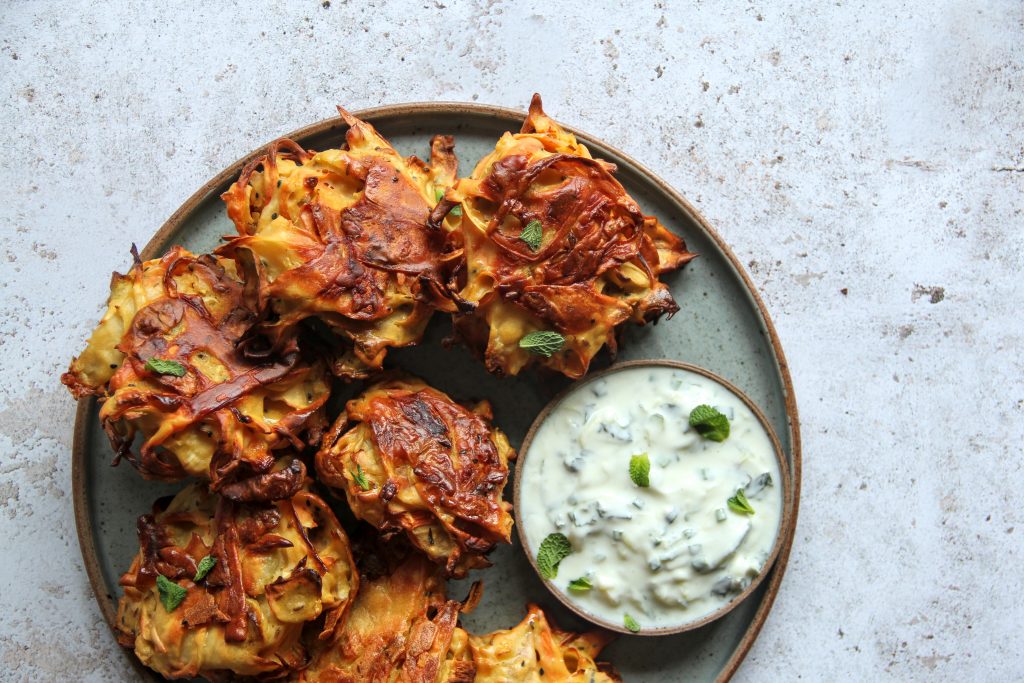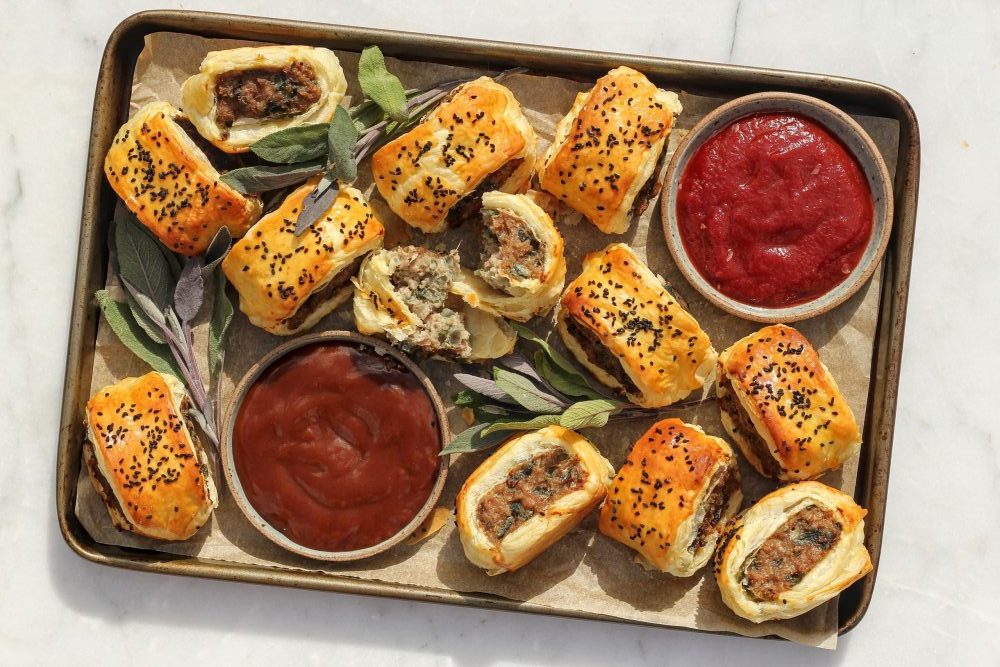
Sausage Rolls

These sausage rolls come together really easily with minimal effort, but maximal taste. Perfect to rustle up ready for a picnic when the weather looks promising without unnecessary additives in them! Get the kids involved with mixing, rolling and supervised cutting.

Makes 12 sausage rolls

Ingredients

  • 1 red onion
  • 1 tsp rapeseed or olive oil
  • 500g lean pork mince
  • 10-12 sage leaves, finely chopped
  • 1/2 tsp white pepper
  • 1/2 tsp garlic powder
  • 1/4 tsp grated nutmeg
  • 1/2 tsp bicarbonate of soda
  • 1 tbsp cornflour
  • 1 egg, beaten
  • 1 sheet of ready-made puff pastry (option to use gluten-free pastry if needed)
  • Seeds for sprinkling e.g. nigella seeds, sesame seeds

Method

  • Fry the onion in the oil over a low heat till soft and translucent. Allow to cool.
  • Preheat the oven to 200°C fan or 225°C convection
  • Mix the pork, herbs and spices, bicarbonate of soda, cornflour and half the beaten egg with the cooked onion.
  • Cut the pastry sheet into half to create two smaller rectangles. Divide the mixture in two and create a log down the centre of each pastry rectangle.
  • Brush one edge of the pastry with the remaining egg and fold the other side of the pastry up and over to tuck the meat in. Repeat with the other half.
  • Cut each log into 6 equal pieces, making 12 in total, and spread them out on a lined baking tray.
  • Brush with the remaining egg and sprinkle seeds over the top before baking for 20 minutes till golden brown.
  • Allow to cool slightly before eating.
Easy Sausage Rolls

Per sausage roll: 198kcal/ 13g fat/ 5.1g saturated fat/ 10g carbohydrates/ 1g fibre/ 10g protein/ 0.42g salt
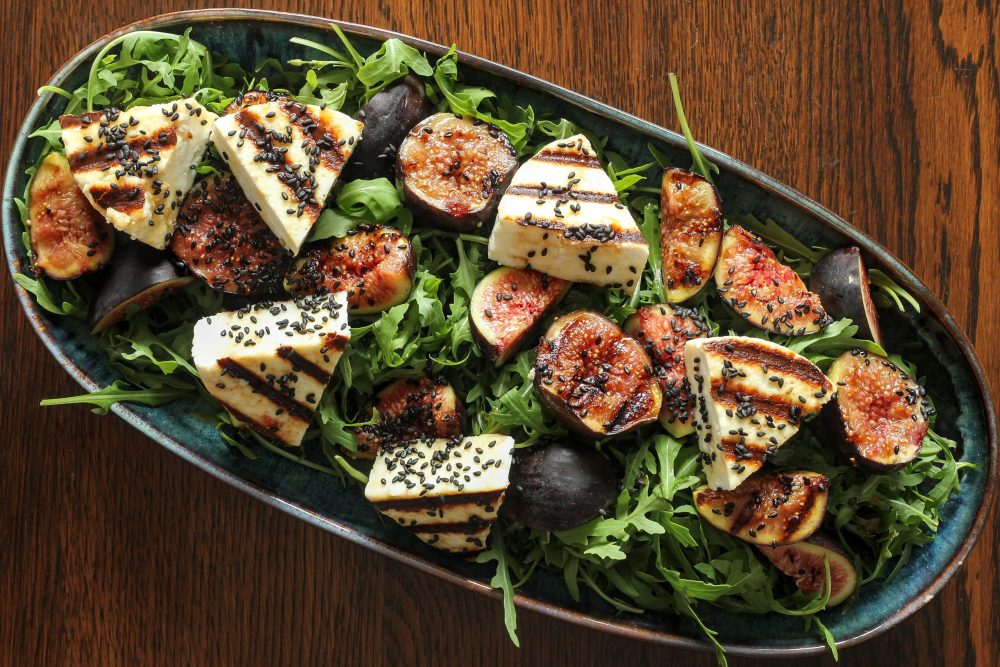
Griddled Manouri & Fig Salad

I know a lot of people love feta, but I’m afraid for me it’s one of my least favourite cheeses. I personally find it too salty, but when I saw this cheese I knew I needed to try it because I love goats cheese. For me this wasn’t as salty in taste as feta, as well as being much milder. What I didn’t realise till I had gotten home, made this dish, and thoroughly enjoyed it, was that manouri cheese is made as a by-product of the feta production, which is something I can definitely get on board with!

I also think this would be a great salad to serve at a barbecue, grilling the cheese and figs before plating up, should the UK weather start to actually resemble summer…

This salad is light enough to work as a side salad or a starter, but substantial enough to also work as a larger portion for a main meal when served with some good bread on the side.

Serves 4 as a starter or 2 as a main

Ingredients

  • 1 block of manouri cheese
  • 1 tbsp extra virgin olive oil
  • 8 figs, or around 230g, cut into halves and quarters
  • 120g rocket
  • 1 tbsp honey
  • 1 tsp black sesame seeds

To serve

  • Sourdough bread
  • 1 tbsp extra virgin olive oil

Method

  • If serving with sourdough, brush the sides with extra virgin olive oil and griddle till crispy with charred lines across the surface. Keep warm.
  • Brush the manouri with the olive oil and griddle for a few minutes on each side. Add some of the figs, brushed with any remaining olive oil – you can cook as many or as few as you like.
  • Once cooked through to your liking, add the rocket to a large serving dish and dot pieces of the cheese and figs over the top, drizzle with honey and sesame seeds.
  • Best enjoyed hot.
Griddled Manouri and Fig Salad

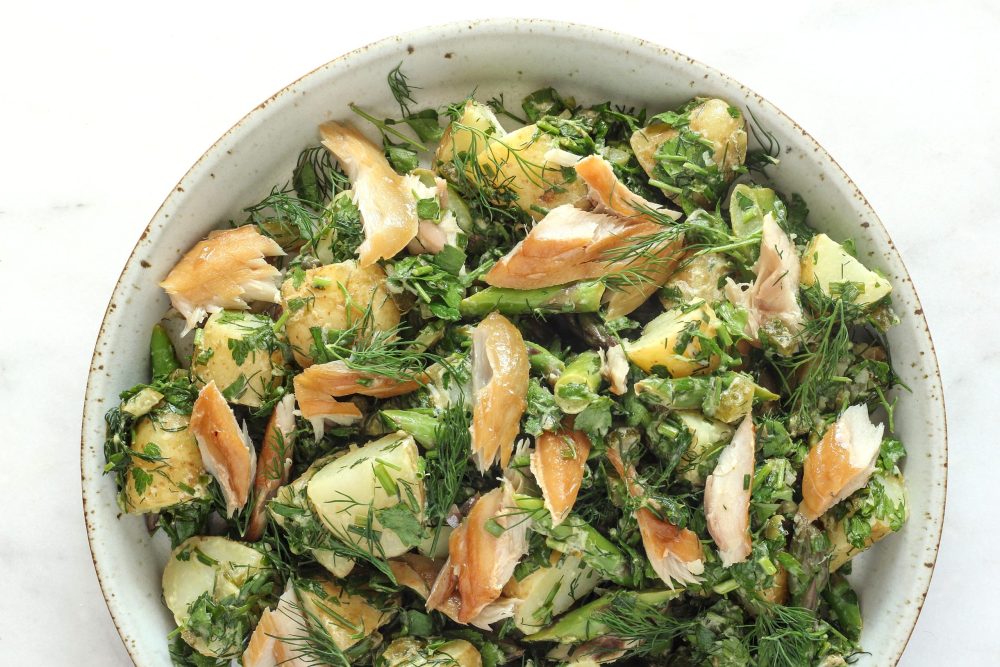
Smoked Mackerel Potato Salad

Smoked Mackerel Potato Salad

This potato salad is for all those mayonnaise haters out there! I’m using lemon juice, extra virgin olive oil and Dijon mustard as the base of the sauce, and keeping it light by using a load of chopped herbs, capers and gherkins.

Cooking and cooling potatoes allows for the starch to retrograde into something called resistant starch. Our bodies are not able to digest this type of starch, but instead, it helps to feed the microbiota living inside your digestive tract.

Serves 2 as a main, or 4 as a side dish

Ingredients

  • 500g new potatoes
  • 200g asparagus, trimmed and cut into short lengths
  • Juice of 1 lemon
  • 2 tbsp extra virgin olive oil
  • 1 heaped tablespoon of Dijon mustard
  • 40g flat-leaf parsley, finely chopped
  • 20g dill, finely chopped
  • 20g chives, finely chopped
  • 1 heaped tablespoon of capers, drained and roughly chopped
  • 2-3 gherkins, chopped
  • 1 packet smoked mackerel, skin removed and roughly flaked

Method

  • Boil the potatoes for around 15 minutes untill cooked through, adding the asparagus in for the last minute of cooking.
  • Meanwhile, prepare the sauce by mixing the lemon juice, olive oil, Dijon mustard, herbs, capers and gherkins together.
  • Drain the potatoes and asparagus and add to the sauce, mixing while hot.
  • Serve with flaked smoked mackerel over the top.
Smoked Mackerel Potato Salad

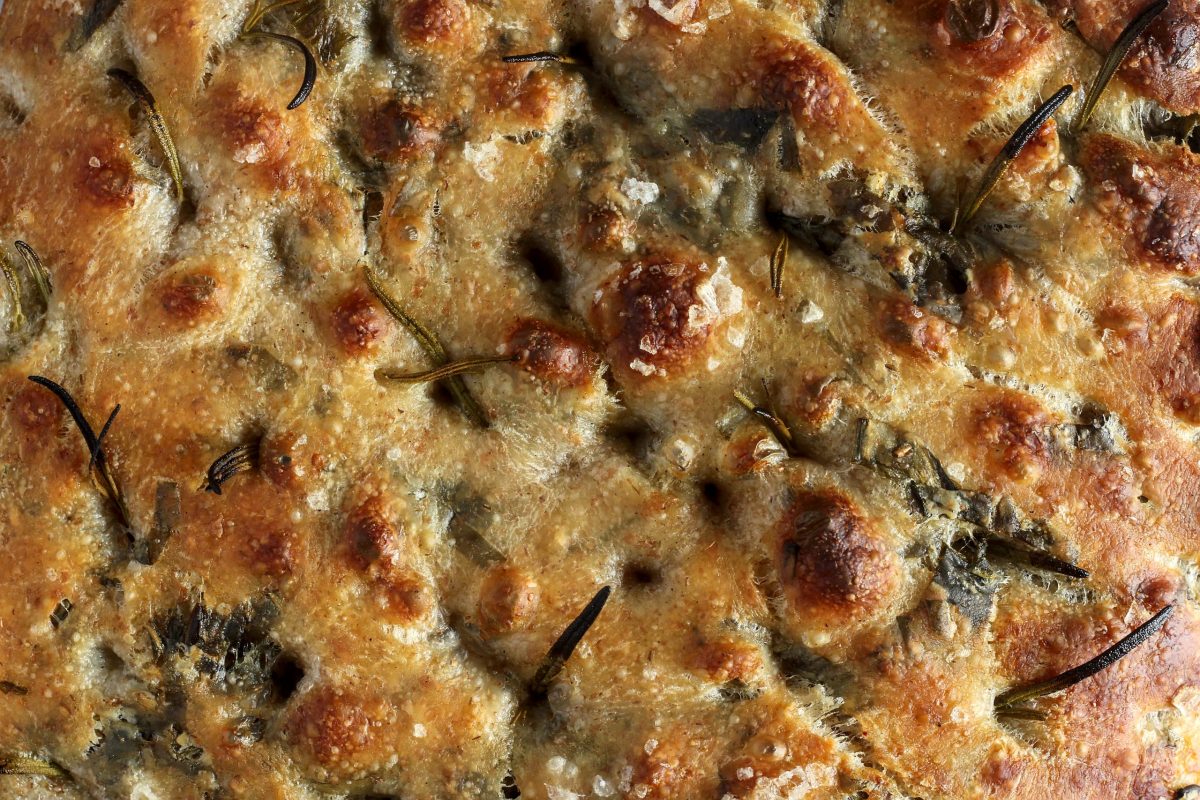
Wild Garlic Sourdough Focaccia

I’m still trying to savour the wild garlic season, and I love baking it into bread. You can freeze the bread and use it in the months to come so further preserve the flavour of it.

For more information about making sourdough and the various stages visit my page on sourdough bread.

Makes 2 x 9″ square tins, but you could bake one large, or make a very deep focaccia

Ingredients

  • 150g levain, refreshed 8-12 hours earlier
  • 15ml extra virgin olive oil plus extra for later
  • 150g wholemeal bread flour
  • 600g white bread flour
  • 12g salt plus extra to top
  • A big bunch of wild garlic, roughly chopped – the more you put in the more garlicky the flavour
  • A few sprigs of rosemary (optional)

Method

  • Mix the levain, 500ml water and 15ml olive oil together before adding the flours and mixing to make a shaggy dough. Leave for 30 minutes covered.
  • Mix 12g of salt with 75ml water till dissolved, and pour over the dough, scrunching the dough with your hand to mix it in. The dough should look very rough and almost broken into small pieces. Cover and leave for 45 minutes.
  • Over the next few hours complete 4 sets of coil folds, adding the wild garlic in during the 2nd coil fold, allowing the dough to rest for 45-60 minute between each fold.
  • Grease two non-stick baking trays with olive oil (if not using non-stick line with baking parchment and add olive oil to the parchment). Tip out don’t the work surface and divide the dough into two. Gently transfer to the baking tray and push the dough over the surface so it reaches the corners as best you can – there will be some resistance so don’t force it.
  • Cover the dough and leave in the fridge to slowly rise overnight – anywhere between 8-24 hours depending on your schedule
  • The next day preheat your oven to maximum temperature, add a small empty tray to the bottom of the oven for steam later, and remove the focaccia from the fridge.
  • Once the oven is up to temperature, uncover the dough and drizzle with a little olive oil. Using wet fingers, press your fingertips through the surface of the dough to create plenty of dimples. Add rosemary to the dimples, sprinkle with a little extra salt and then flick water over the surface of your dough with your fingertips. Adding extra moisture will give a softer crust, so if you want a very crispy top omit this step along with the steam.
  • Place the focaccia in the oven, adding water into the hot tray to create steam, closing the door as quickly as possible to trap the steam in, and reduce the oven temperature to 225°C fan/ 245°C convection for 20 minutes.
  • Remove the tray with water and bake for another 5 minutes* till the crust is golden.
  • Remove from the oven, and allow to cool on a wire rack.
Wild Garlic Sourdough Focaccia

*if baking a thicker focaccia you may need an extra 5-10 minutes to fully cook the dough.

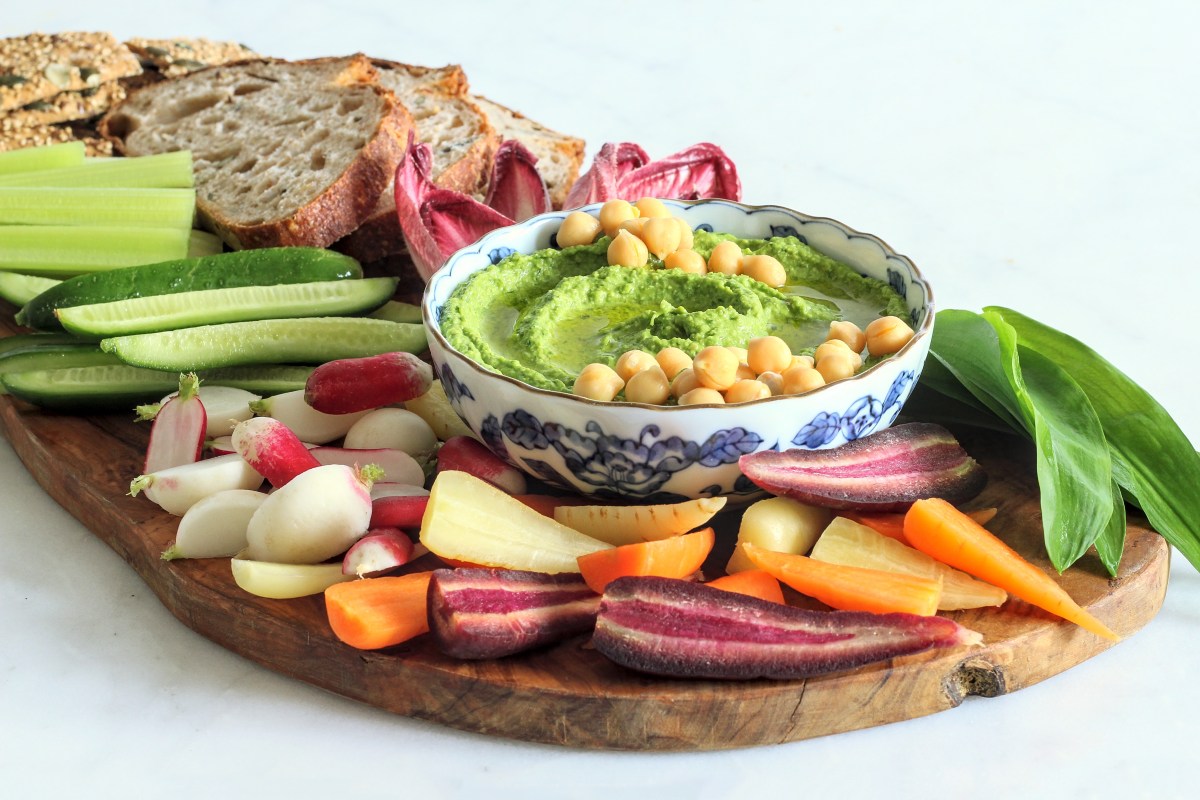
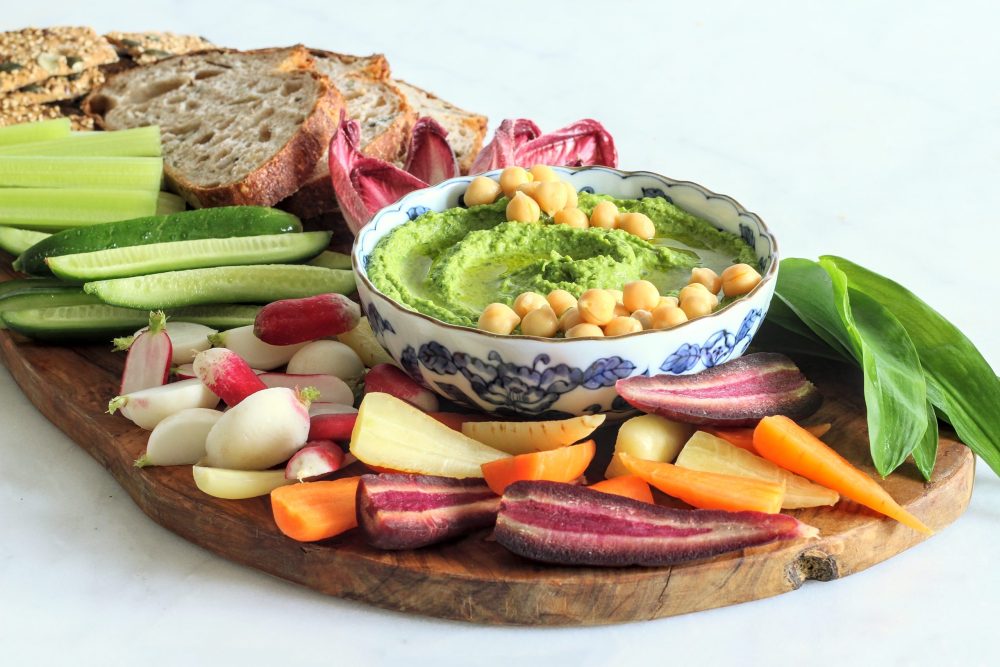
Wild Garlic Hummus

I’ve had a few requests for some wild garlic recipes which are easy, so I’ve made this Wild Garlic Hummus which couldn’t be simpler for anyone wanted to use wild garlic which has arrived in their weekly veg delivery box. You can choose how much wild garlic you want to use, and obviously the more you use, the greener it will be as well as the stronger the garlic taste – you can always add more!

Ingredients

  • 50-100g wild garlic
  • 1 tin of chickpeas
  • Juice of 1-2 lemons
  • 50g tahini
  • 2tbsp extra virgin olive oil

Method

  • Add everything to a blender and blend to a desireable consistency, adding extra lemon juice of olive oil where needed.
  • Serve with your favourite crudités, bread, crackers, storing any leftovers in an airtight container in the fridge for up to 7 days.
Wild Garlic Hummus

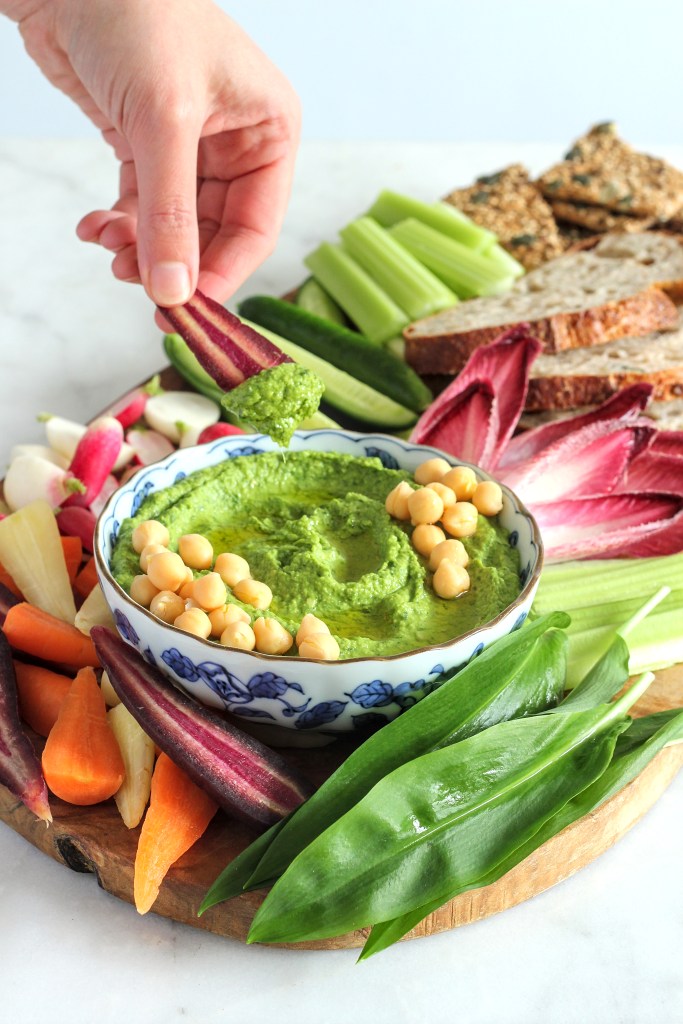
Wild Garlic Hummus

I’ve had a few requests for some wild garlic recipes which are easy, so I’ve made this Wild Garlic Hummus which couldn’t be simpler for anyone wanted to use wild garlic which has arrived in their weekly veg delivery box. You can choose how much wild garlic you want to use, and obviously the more you use, the greener it will be as well as the stronger the garlic taste – you can always add more!

Ingredients

  • 50-100g wild garlic
  • 1 tin of chickpeas
  • Juice of 1-2 lemons
  • 50g tahini
  • 2tbsp extra virgin olive oil

Method

  • Add everything to a blender and blend to a desirable consistency, adding extra lemon juice or olive oil where needed.
  • Serve with your favourite crudités, bread, crackers, storing any leftovers in an airtight container in the fridge for up to 7 days.
Wild Garlic Hummus

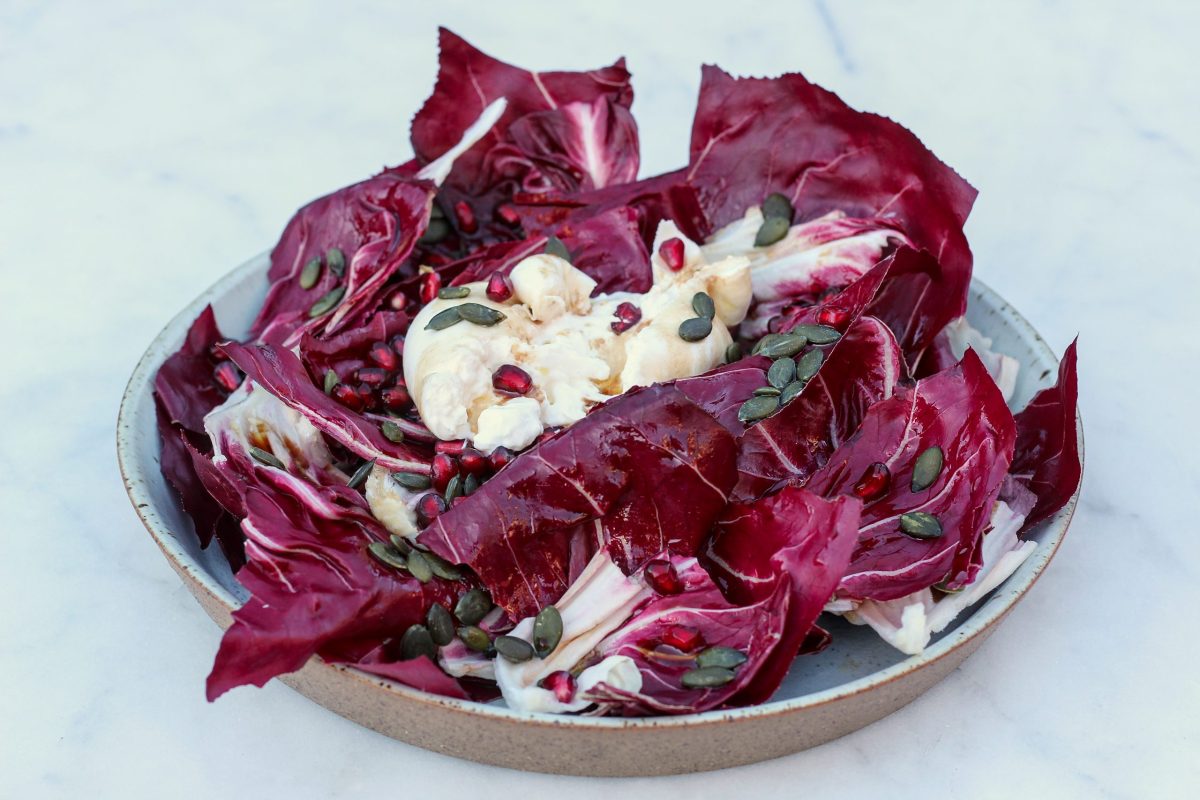
Radicchio and Burrata Salad

I had a very similar salad in a restaurant recently for a friend’s birthday. I thought I could recreate it, with a slight nutritional twist whereby each serving provides you with an actual portion of salad! It’s just as delicious as the restaurant, but knowing it’s providing that little bit of extra nutrition makes me forgive the fact that I’m actually eating a double portion of cheese in one go.

Serves 2

Ingredients

  • 6 large leaves of radicchio (160g)
  • 1 tbsp pomegranate molasses
  • 1 tbsp red wine vinegar
  • 2 tbsp extra virgin olive oil
  • 30g pumpkin seeds
  • 30g pomegranate seeds
  • 1 ball of burrata

Method

  • Mix the pomegranate molasses, vinegar and olive oil together in a small bowl
  • Tear the radicchio leaves into a more manageable size and arrange on a large plate.
  • Scatter the seeds over the top before placing the burrata in the middle and drizzling everything with the prepared salad dressing.
Radicchio and Burrata Salad

Per serving: 427kcal/ 35g fat/ 12g saturated fat/ 17g carbohydrates/ 2.3g fibre/ 10g protein

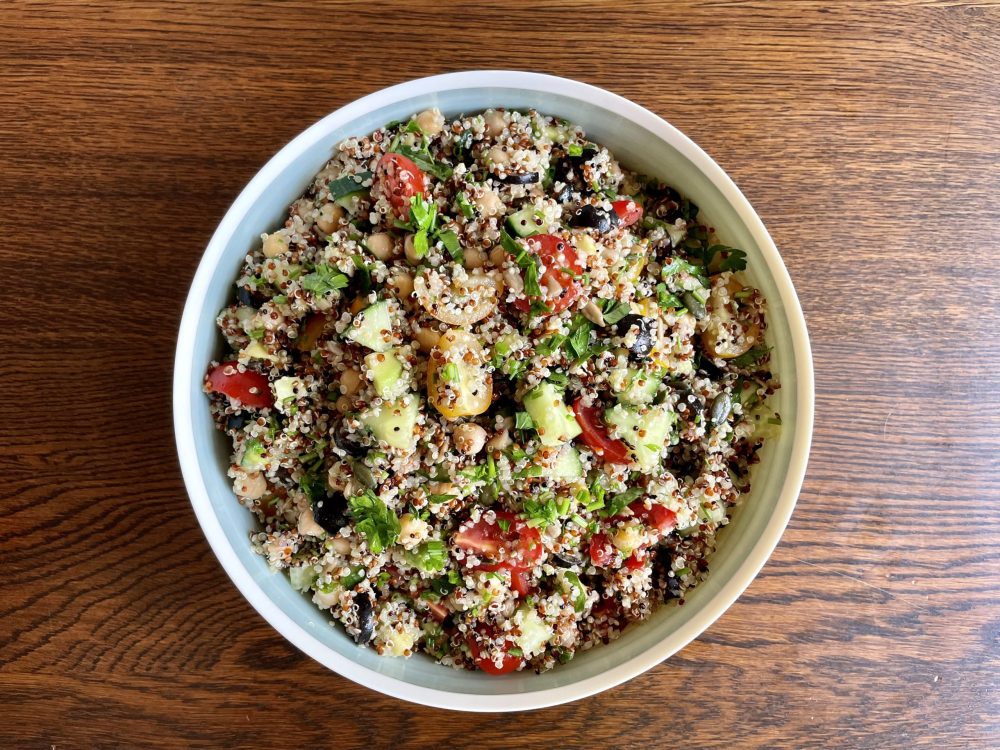
BNF’s Health Eating Week Summer Quinoa Salad

It’s the British Nutrition Foundation’s Healthy Eating Week and there are a few key health messages set out for this week:

  • Focus on fibre
  • Get at least 5-a-day
  • Using alternative protein sources
  • Staying hydrated
  • Reducing food waste

Here’s my super easy Summer Quinoa Salad recipe which incorporates all of these concepts in one dish.

Serves 4 as a main

Ingredients

  • 200g quinoa
  • 30ml extra virgin olive oil
  • 15g chives, chopped
  • 15g flat-leaf parsley, chopped
  • 200g cucumber, cubed
  • 250g cherry tomatoes, chopped
  • 1 tin of chickpeas, drained and rinsed
  • Juice of 2 lemons
  • 1 large avocado (use some of the lemon juice to prevent it from browning)
  • 80g black olives, roughly chopped
  • 20g pumpkin seeds
  • 20g sunflower seeds

Method

  • Add the quinoa to a pan with 400ml of cold water. Bring to a boil and allow to simmer for 12-15 minutes, or until all the water is absorbed. Remove from the heat and cover with a lid for 5 minutes before fluffing with a fork. Allow to cool.
  • Add the cooked quinoa to a large bowl along with all of the remaining ingredients and mix together.
  • Serve, remembering to put any spare salad away in a Tupperware in the fridge for the next day.

Per serving: 530kcal/ 29g fat/ 4.4g saturated fat/ 44g carbohydrates/ 11g fibre/16g protein

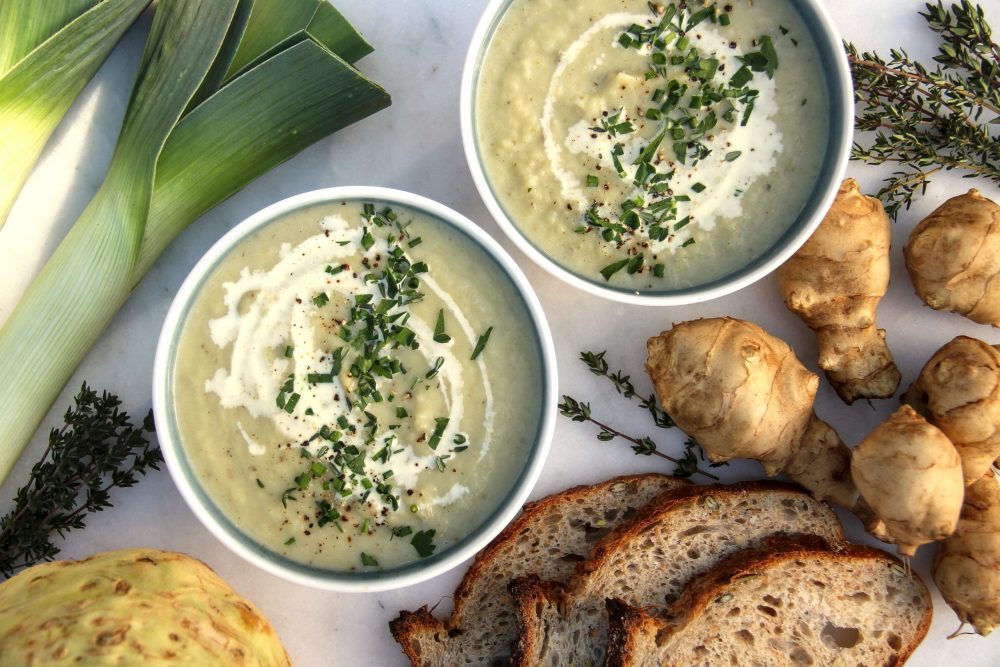
Prebiotic Winter Soup

What do Jerusalem artichokes, garlic, onions and leeks all have in common? They’re all prebiotics, which means they help feed the good bacteria in your gut.

If you’re not used to eating lots of prebiotics in your diet, you may well feel a little gassy after, but that’s your gut microbiota enjoying these special fibres. When they enjoy them, they ferment them, producing extra gas which you may notice either as bloating or flatulence. All good things, but always good to know in advance of this happening.

Serves 10

Ingredients

  • 2 tbsp extra virgin olive oil
  • 2 large onions, sliced
  • 2 leeks, sliced
  • 4 sticks of celery, sliced
  • 5 garlic cloves
  • 400g celeriac, roughly chopped
  • 800g Jerusalem artichokes, roughly chopped
  • 250ml white wine
  • 1 stock cube dissolved in 1.2l hot water
  • 1 bunch of thyme
  • 150ml double cream

To serve

  • Extra chopped herbs e.g. thyme leaves, chives, flat leaf parsley
  • Sourdough bread

Method

  • In a large pan, add the oil, onion, leeks and celery and cook for 5 mintues till soft.
  • Add the garlic, celeriac and Jerusalem artichokes followed by the wine, stock and thyme. Cook till the vegetables are soft.
  • Remove the woody herb stems before blending with the double cream. Season to taste with pepper.
  • Serve sprinkled with extra herbs and pepper and a slice of sourdough bread
Prebiotic Winter Soup

Per serving of soup: 204kcal/ 11g fat/ 5.6g saturated fat/ 15g carbohydrates/ 5.1g fibre/ 3.4g protein

No Waste Vegetable Fritters

No Waste Vegetable Fritters

Use your leftover vegetable peelings from your Christmas Dinner to make these delicious No Waste Vegetable Fritters. They are so versatile in terms of what vegetables you want to use in them. I have used a combination of potato, parsnip, carrot and sprout peelings, but other suitable vegetables include onion, cabbage, kale, cauliflower (leaves included), broccoli, mushrooms or leeks.

Save the peelings in a Tupperware in the fridge for up to 3 days before making these fritters – you can adjust the gram flour (also known as chickpea flour or besan flour) and water to the weight of the vegetables.

Delicious served with a quick riata which can easily be adapted to vegan by using a plant-based yoghurt.

No Waste Vegetable Fritters

Makes around 8 fritters

Ingredients

  • 2 tbsp rapeseed oil
  • 400g vegetable peelings e.g. carrots, potatoes, parsnips and sprouts
  • 1″ ginger, grated
  • 1 clove garlic, grated
  • 1 tsp nigella seeds
  • 1.5 tsp cumin seeds
  • 250g gram flour
  • Juice of 1 lemon

To serve

  • 250g plain yoghurt of choice
  • 100g grated cucumber
  • 1 spring onion, chopped
  • 1 handful fresh mint, chopped
  • Juice of half a lemon

Method

  • Preheat the oven to 200°C fan/ 225°C convection
  • In a large baking tray add the oil and preheat in the oven
  • In a large bowl add the remaining fritter ingredients and mix together with around 150ml water, adding extra water if needed to get a thick batter consistence.
  • Remove the tray from the oven and drop patties of the mixture into the hot oil, evenly spaced out. You should make around 7-8 fritters.
  • Cook in the oven for 10 minutes, before flipping over, gently pressing down and cooking for a further 12-15 minutes till golden brown and crispy.
  • Meanwhile, mix the raita ingredients together.
  • Once the fritters are cooked through, serve alongside the riata.

Per serving*: 198kcal/ 5.2g fat/ 0.7g saturated fat/ 25g carbohydrates/ 5.2g fibre/ 10g protein

No Waste Vegetable Fritters

*Nutritional analysis completed based on particular vegetables listed and plain low fat yoghurt.

Roasted Mushroom Pate

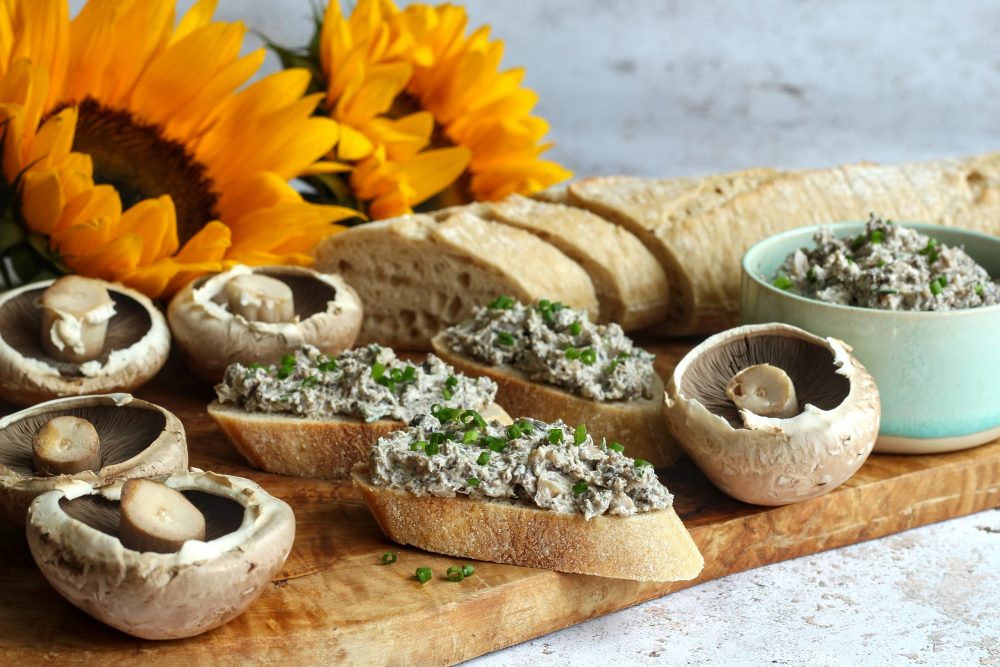
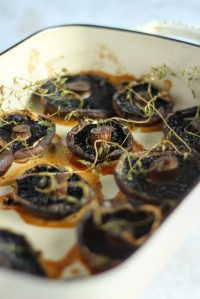
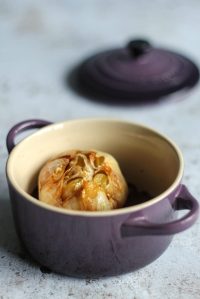
Combining deliciously roasted and sticky garlic with vitamin D-enriched mushrooms (read my previous post on enriching your mushrooms with vitamin D by clicking here) for a delicious and nutritious spread. Make a large batch and I promise you won’t regret it! Try serving these up as little canapes on thinly sliced toasted bread at your next dinner party.

Makes 17 portions

Ingredients

  • 1 bulb of garlic
  • 1 tbsp extra virgin olive oil
  • 500g mushrooms of choice
  • 1 tbsp rapeseed oil
  • 20 sprigs of thyme
  • 300g cream cheese
  • 15g chives, chopped
  • 1/2 tsp white pepper
  • 1 tbsp lemon juice

Method

  • Preheat the oven to 160°C fan/ 180°C convection
  • Slice the top off the garlic bulb to expose the very tops of the cloves. Place in a mini cocotte or on double-layered tin foil. Drizzle with the olive oil, cover and place into the oven.
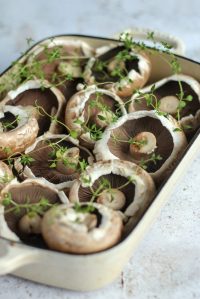
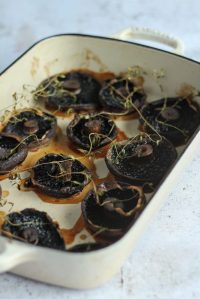
  • Meanwhile, add the mushrooms to a large tray, drizzle with the rapeseed oil and 10 sprigs of thyme. Roast in the oven for 1 hour till the mushrooms are sticky and shrunken.

  • Once the mushrooms are cooked check the garlic is soft and remove from the oven to cool – it may need a further 10-15 minutes depending on the size of your bulb and your vessel.
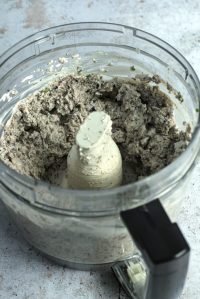
  • Once cooled, to a food processor add the mushrooms, remove the thyme leaves from the roasted thyme, chives, white pepper, and lemon. Add the remaining fresh thyme leaves and 5-6 cloves of roasted garlic. Blend to the desired consistency, checking the seasoning is to your taste.
  • Serve with crusty bread, crackers or stir into a risotto just at the end. Any leftovers can be stored in the fridge for up to 5 days, or frozen for up to 2 months.
Roasted Mushroom Pate

Per serving: 58kcal/ 4.8g fat/ 2.9g saturated fat/ 1.6g carbohydrates/ 0.5g fibre/ 1.7g protein

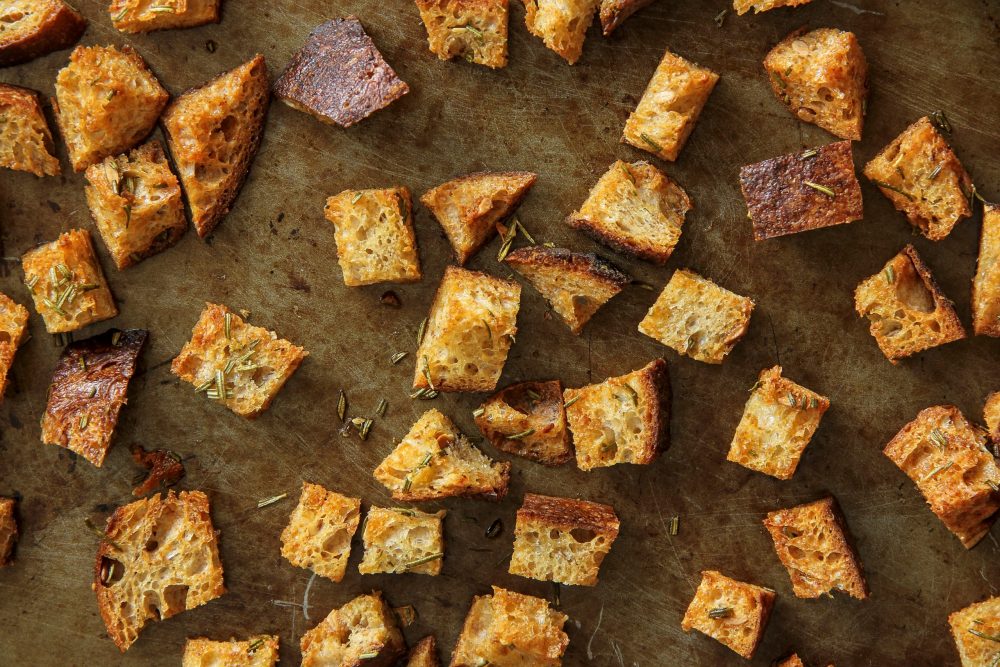
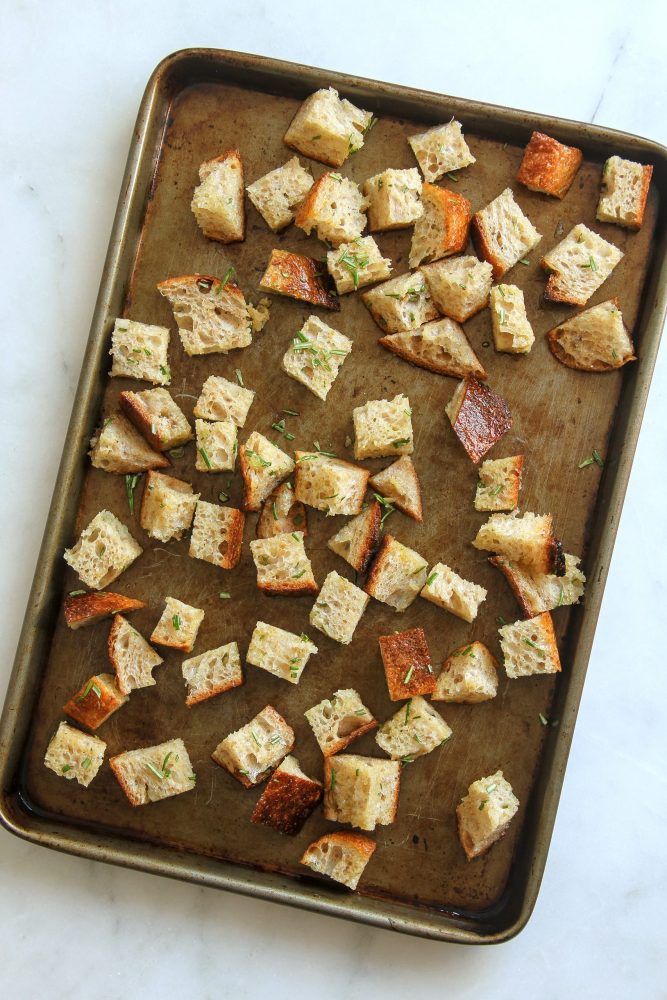
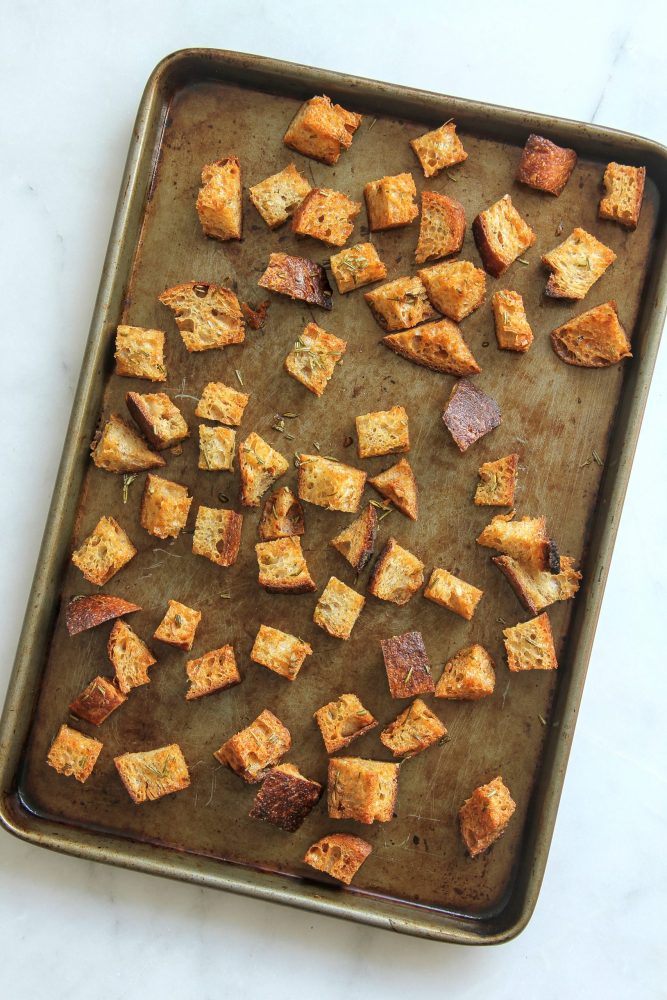
Sourdough Croutons

Sourdough Bread

If you ever have stale sourdough bread, here’s the easiest way to use it up. No food waste in this house, they keep in an airtight container for a few weeks ready to sprinkle on anything that needs and extra piece of crunch!

The recipe is super easy, I roughly uses 1 sprig of rosemary, 1 clove of garlic and 1 tablespoon of oil for every 100g of bread. But of course you can change this up according to your taste.

Ingredients

  • Sourdough bread, cut into 1″ cubes
  • Garlic cloves, crushes
  • Rosemary, roughly chopped
  • Olive oil

Method

  • Preheat the oven to 150°C fan/ 160°C convection
  • Mix the oil, garlic and herbs together in a large bowl. Add the bread cubes and mix to completely coat the cubes.
  • Transfer to a baking tray, spreading the cubes out and bake for 25-30 minutes, till golden brown and crispy.
  • Sprinkle over your favourite soups or salads, or allow to cool completely before storing in an airtight container.