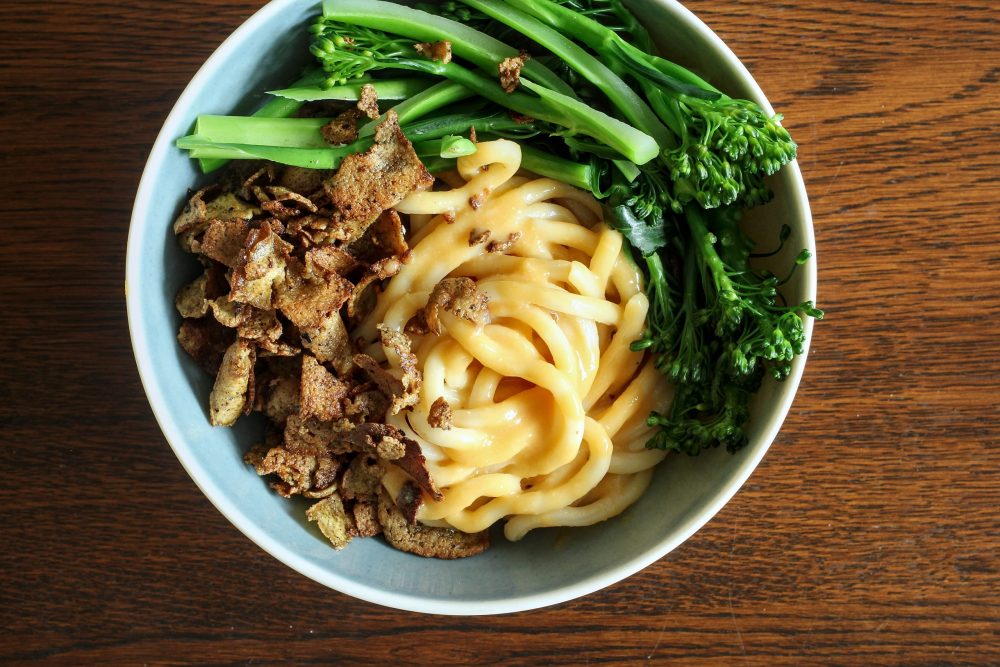
A super quick meal to make with plenty of umami flavours in addition to also providing you with your daily vitamin K requirements, needed to maintaining strong and healthy bones.
Serves 2
Ingredients
180g smoked tofu, very thinly sliced
1/2 tbsp extra virgin olive oil
1 tbsp white miso paste
2 egg yolks
30g parmesan cheese
1/2 tsp cracked black pepper
2 packets of udon noodles
200g sprouting broccoli (or Asian greens such as choi sum or gai lan)
Method
Pan-fry the tofu with the olive oil for 8-10 minutes till golden brown and crispy.
Meanwhile cook the udon noodles according to the packet instructions, adding the broccoli in for the last minute of cooking.
While the noodles are cooking make the sauce by combining the miso paste, egg yolks, parmesan cheese and cracked black pepper together, mixing well.
Using a little of the cooking water, temper the sauce to get the same consistency as double cream. Add the hot noodles and mix well till each noodle is coated with a glossy and smooth sauce.
Plate up and enjoy straight away.
Udon Carbonara
Per serving: 488kcal/ 20g fat/ 5.7g saturated fat/ 43g carbohydrates/ 7.8g fibre/ 29g protein
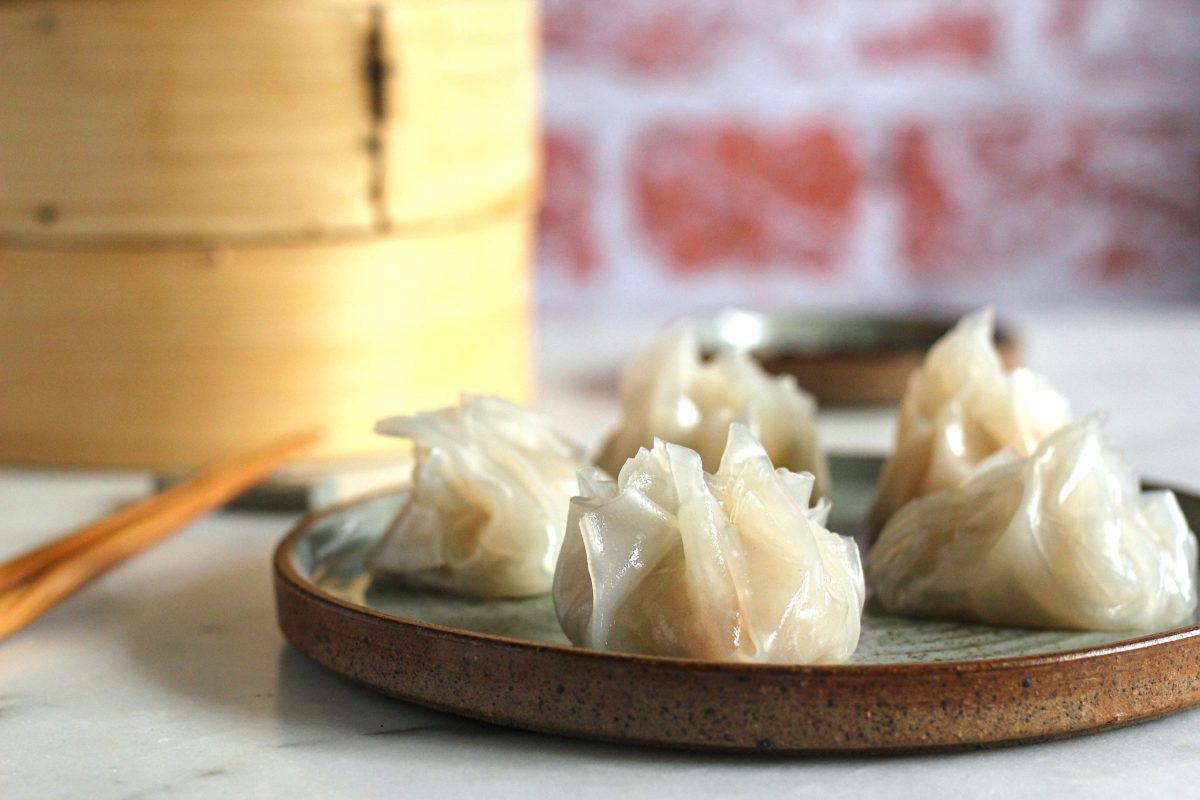
Soak 4 small squares of rice paper in cold water for 1 minute before layering 2 as a square and 2 as a diamond.
Place 1 heaped teaspoon of mixture into the middle of the rice paper and fold the diamond corners in followed by the square corners in. Pinch at the top to seal.
Place in a lined steamer and cooker for 10-12 minutes.
Enjoy hot with your favourite chilli oil or sauce.
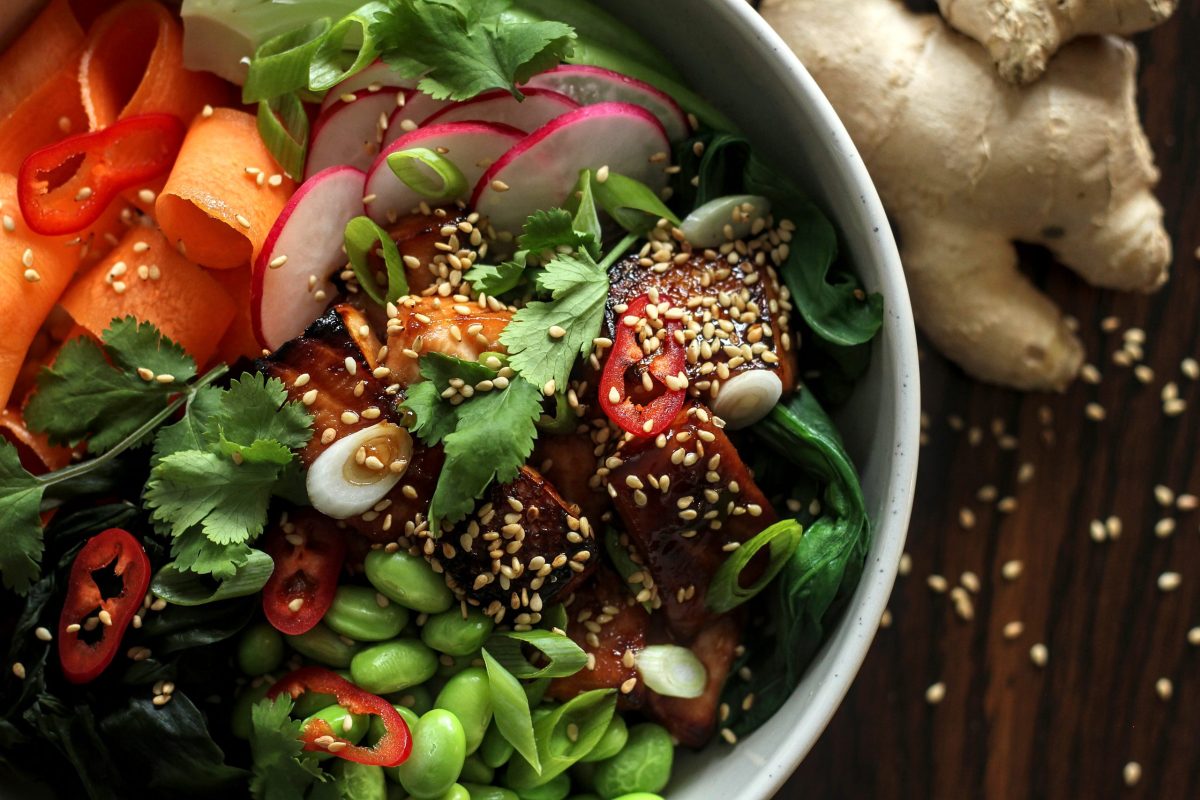
I love making this sticky and sweet salmon teriyaki, and cutting the salmon into small cubes means that there are more sticky corners where the sugar from the honey can caramelise on the fish. It also means that you can cook the salmon in 10 minutes so dinner can be served quicker!
In the UK we don’t consume enough oily fish, and I think one of the major barriers to this is that people don’t like the taste of fish. Therefore, I think if we can make a really delicious recipe using fish, yes with some added sugars, then there are still going to be benefits gained from this.
Serves 4
Ingredients
4 tbsp light soy sauce
2 tbsp honey
2 tbsp sake
4 tbsp mirin
1 tsp grated ginger
1 garlic clove, grated
500g salmon, descaled and cut into cubes
To serve
Cooked brown sushi rice
Pickled carrots
Wakame
Pak Choi
Edamame beans
Radish
Coriander
Chillis
Spring onions
Sesame seeds
Method
Heat the honey, soy sauce, mirin and sake in a pan together till reduced to half the volume, add the ginger and garlic towards the end. Allow to cool.
Preheat your oven to 225°C fan/ and 250°C convection
Mix the salmon with half the teriyaki sauce, reserving the remaining half for later. Line a baking tray and spread the salmon out evenly, spacing the pieces out.
Bake in the oven for 8-10 minutes till the edges of the salmon are sticky and charred.
Serve the salmon over the rice alongside all the veg, adding a final drizzle of teriyaki sauce over the top.
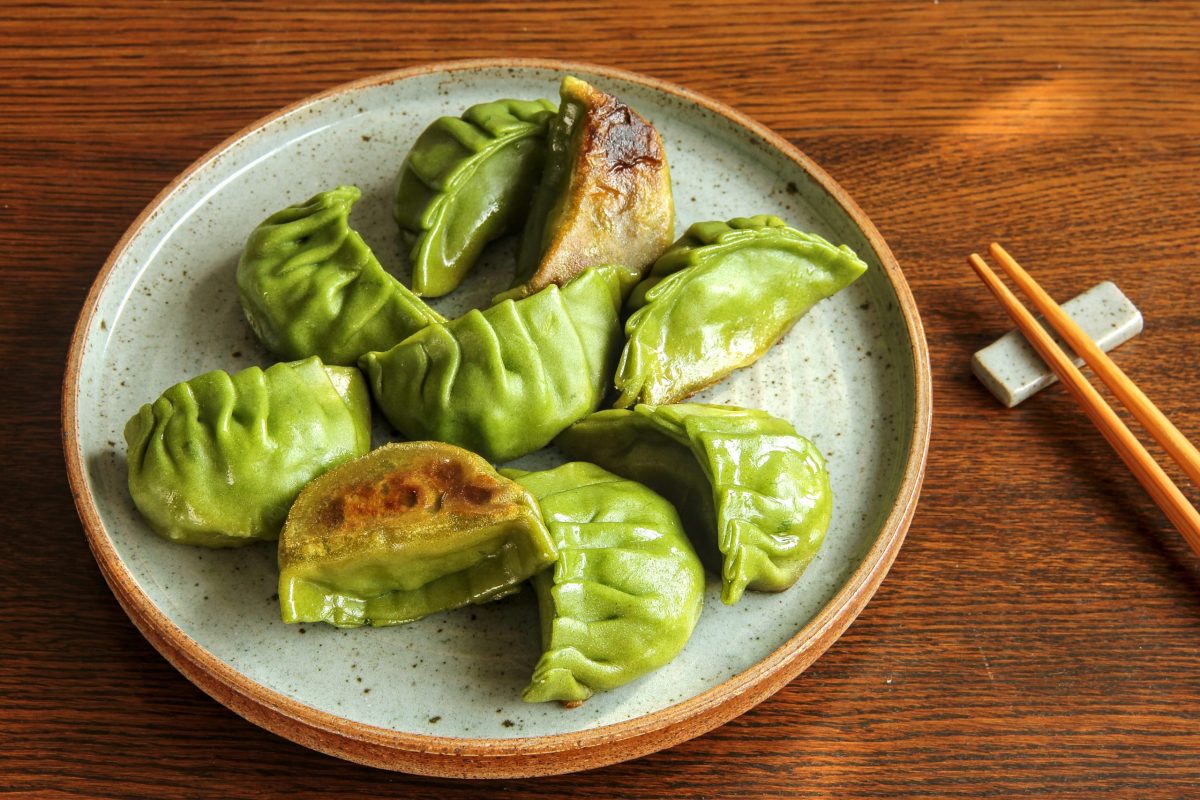
I’m not sure it would truly count as Spring if I didn’t make something glorious and green with wild garlic!
If you can’t get wild garlic, or it’s out of season, you can use garlic chives as an alternative and still get that lovely allium flavour through the dumplings. If you can’t get these either you can replace with spinach, and then add a minced garlic clove to the prawn filling – you will still get a gorgeous green hue in the dumpling wrappers, and the addition of a garlic clove to the mixture will add all the flavour you need.
Makes 12 dumplings
Ingredients
For the dumpling skins
50g wild garlic or spinach leaves
108g plain flour
12g corn flour
For the filling
150g raw prawns, minced
50g bamboo shoots, roughly chopped
5g fresh ginger, finely chopped
1 tsp corn flour
2 tsp soy sauce
1 tsp sesame oil, plus extra for cooking
White pepper to taste
(1 garlic clove, minced if using spinach)
1 tsp rapeseed oil
Method
To make the dumpling skins start by blending the wild garlic leaves to a paste. Strain the liquid off, weighing it as you do.
In a bowl, add the plain and corn flour, mixing together.
Take the strained liquid and top up with boiling water to make a total of 62g of liquid. Add this hot mixture to the flour and stir to a shaggy mixture. Cover and leave for 10-30 minutes.
Knead the dough till it is smooth and elastic. Cover and rest for 30-60 minutes.
Meanwhile prepare your filling by mixing all the ingredients together, except for the rapeseed oil.
Roll the dough into a long sausage shape and divide into 12 equal rounds.
Take one round, and cover the reaming pieces of dough, and press down with the palm of your hand on the cut surface to create a flat disk. Using a rolling pin, roll from the centre out, turn a quarter and repeat till you have created a round flat disk with a thin edge.
If not using immediately, cover to prevent it from drying it out as you continue to roll out the remaining dough.
Take one dumpling skin and fill it with a heaped teaspoon of the mixture. Using a little water over one half of the inside of the dough, start from one end and gently pinch with an overlap to seal each dumpling in a crescent shape. Repeat with the rest of the dough and mixture.
Add the rapeseed oil to a frying pan and heat gently. Arrange the dumplings so they have at least 1cm between each dumpling – you may need to cook them in batches depending on the size of your pan.
Cook for 2-3 minutes on a medium heat till the bottom turns golden on the bottom.
Boil the kettle and add water directly into the pan so it come up to the bottom third of the dumpling. Immediately cover with a lid to steam the dumplings.
After 5 minutes, remove the lid and allow any remaining liquid to evaporate off, add a dash of sesame oil to finish and crisp the bottom for 1 minute.
Remove from the pan and enjoy hot.
Wild Garlic & Prawn Dumplings
Per 4 dumplings: 232kcal/ 5.3g fat/ 0.8g saturated fat/ 32g carbohydrates/ 2.7g fibre/ 13g protein
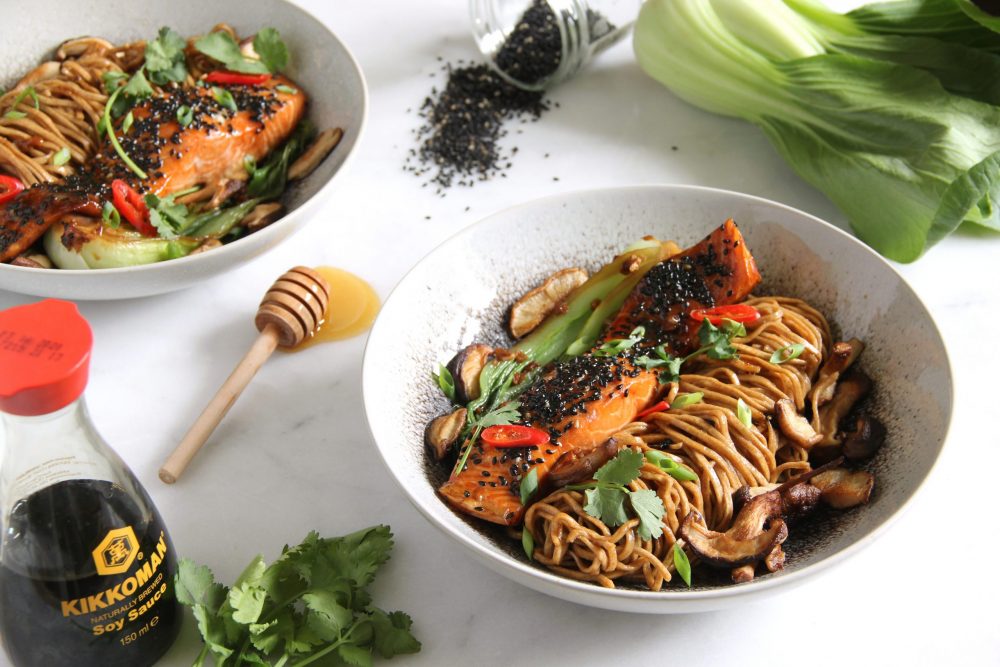
This is, after sushi of course, my absolute favourite way of eating salmon! It’s sticky, sweet, slightly crispy on the edge and full of flavour!
It’s super easy to make and there’s no need to marinade the fish if you don’t have the time, making it the perfect mid-week dinner.
This would work with other fish such as tuna, mackerel, and even white fish such as cod.
Serves 2
Ingredients
For the fish
2 slices of responsibly sourced salmon, skin descaled or removed
1 tbsp soy sauce
1/2 tsp rapeseed oil
2 tsp runny honey
2 tsp sesame seeds
For the noodles
2 nests of wholewheat noodles
1 tbsp soy sauce
1 tbsp oyster sauce
1 tsp sesame oil
White pepper, to taste
To serve
200g Pak choi
120g shiitake mushrooms
1/2 cm root ginger, finely diced
10g coriander
1 spring onion, finely sliced
Chilli, finely sliced (to taste)
Method
Marinade the salmon in the soy sauce for half an hour (or for as long as you can).
Preheat the oven to 180°C fan, 200°C convection
Heat an oven-proof frying pan over a medium heat. Add the rapeseed oil if it not a non-stick pan. Fry the salmon for 5 minutes till crispy on the bottom.
Remove from the heat and drizzle the honey over the top followed by the sesame seeds.
Bake in the oven for 8-10 minutes till cooked all the way through.
Meanwhile, cook the noodles according the packet instructions. While the noodles are cooking, steam the pak choi over the top.
In a separate pan, sautee the mushrooms in a dry pan with the ginger.
Drain and mix all the remaining noodle ingredients together.
Serve the salmon over the noodles with the vegetables on the side and scatter with coriander leaves, spring onion and chilli to taste.
Per serving: 580kcal/ 24.0g fat/ 3.4g saturated fat/ 41.7g carbohydrates/ 9.3g fibre/ 42.9g protein
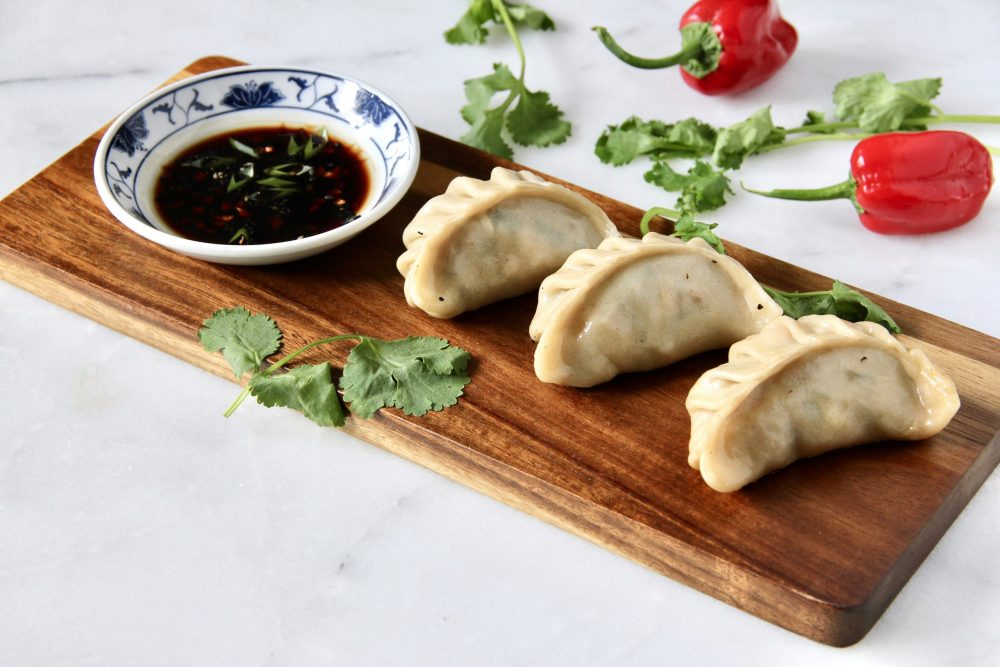
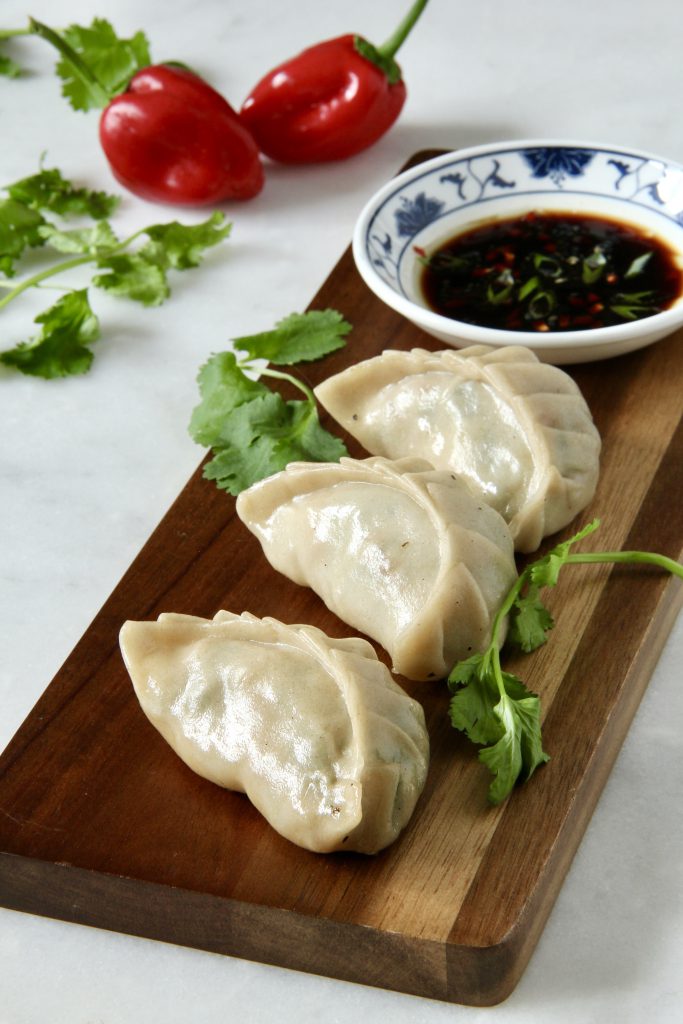
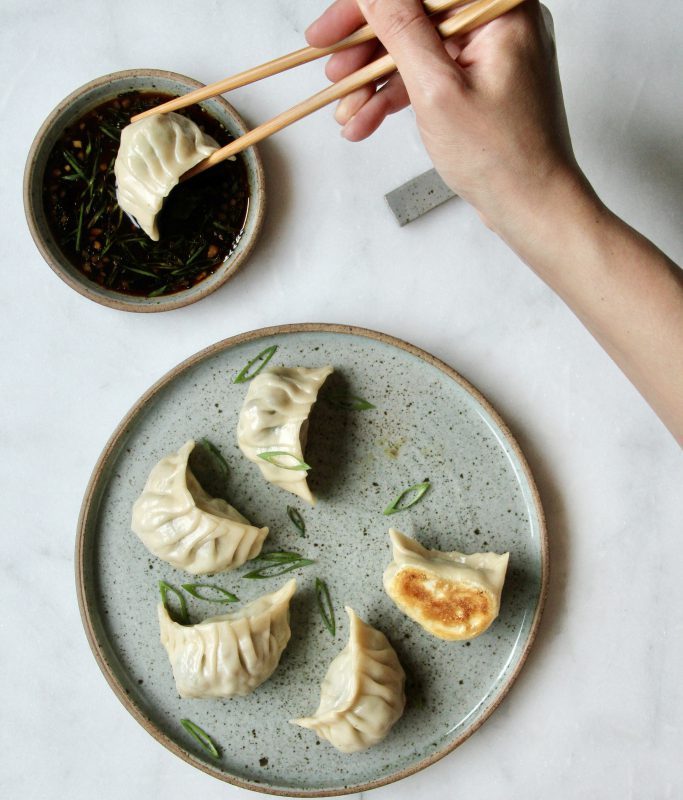
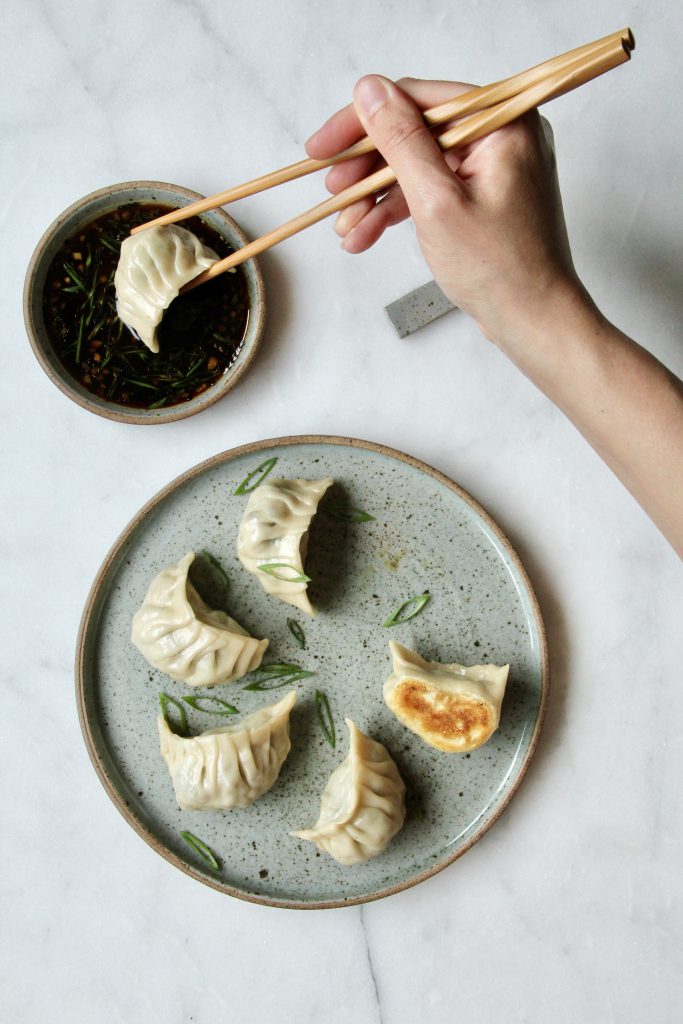
These easy to make dumplings look rather impressive. They also happen to be vegan, but if you wish you can add other flavours to the mix such as oyster sauce, fish sauce, or replace the tofu with an alternative source of protein.
If you want, you can also make a large batch of dumplings and freeze them. Simply line a baking tray with baking parchment and arrange the dumplings so they don’t touch. Freeze and then place into bags for up to 3 months. You can cook them straight from frozen, just add an extra few minutes onto the steaming time to make sure they are piping hot in the centre.
These little dumplings are delicious served with a simple dipping sauce made from soy sauce, sesame oil and rice wine vinegar. You can also add other flavours such as chilli, spring onion or sesame seeds. Alternatively, they are amazing dipped in some shop bought hoisin sauce!
2 dried shiitake mushrooms, soaked and finely diced. Reserve the soaking liquid
100g firm tofu
30g cabbage, finely sliced
30g carrot, finely diced
30g bamboo shoots, finely sliced
1 spring onion, finely chopped
10g coriander, finely chopped
1/2 tsp fresh ginger, very finely diced
1 tsp sesame oil
1 tsp Shaoxing wine
2 tsp light soy sauce
1 tsp cornflour
1/2 tsp rapeseed oil
Method
Mix all of the ingredients, except the rapeseed oil, and 2 tablespoons of the reserved shiitake mushroom liquid together. Gently heat in a pan or wok till the cabbage has softened and the liquid has become slightly thick so it coats all the ingredients, about 2-3 minutes. Add extra mushroom liquid if needed.
Allow the mixture to cool to room temperature.
Take 1 dumpling skin and fill it with a heaped teaspoon of the mixture. Pinch the end and then pleat the top half of the skin onto the bottom half of the skin to create a slight crescent shape.
Add the rapeseed oil to your frying pan to stop the dumplings from sticking, and arrange them so they have at least 1 cm between each dumpling. You may need to cook them in batches depending on the size of your pan.
Cook for 2-3 minutes over a low-medium heat so they are golden on the bottom. Then add hot water to cover the bottom third of the dumpling and immediately cover with a lid to steam the dumplings.
After 5 minutes, remove the lid and allow any remaining liquid to evaporate off, allowing the bottoms to crisp for 1 minute.
Remove the dumplings onto a plate and enjoy hot with a dipping sauce of your choice.
Per serving: 230kcal/ 5.8g fat/ 1.3g saturated fat/ 33.2g carbohydrates/ 3.6g fibre/ 9.7g protein
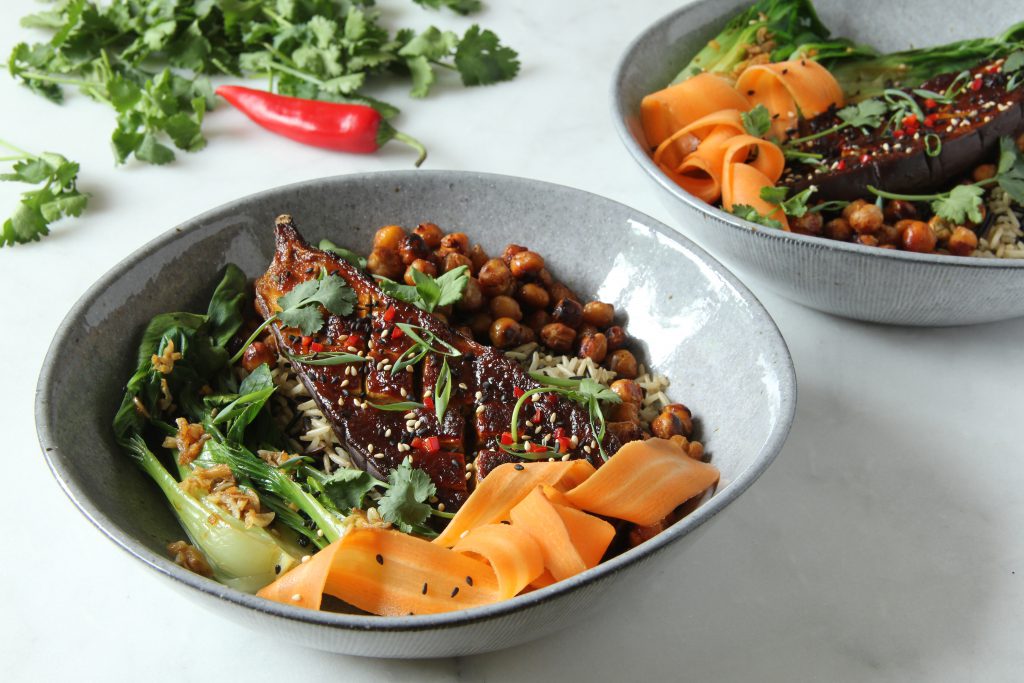
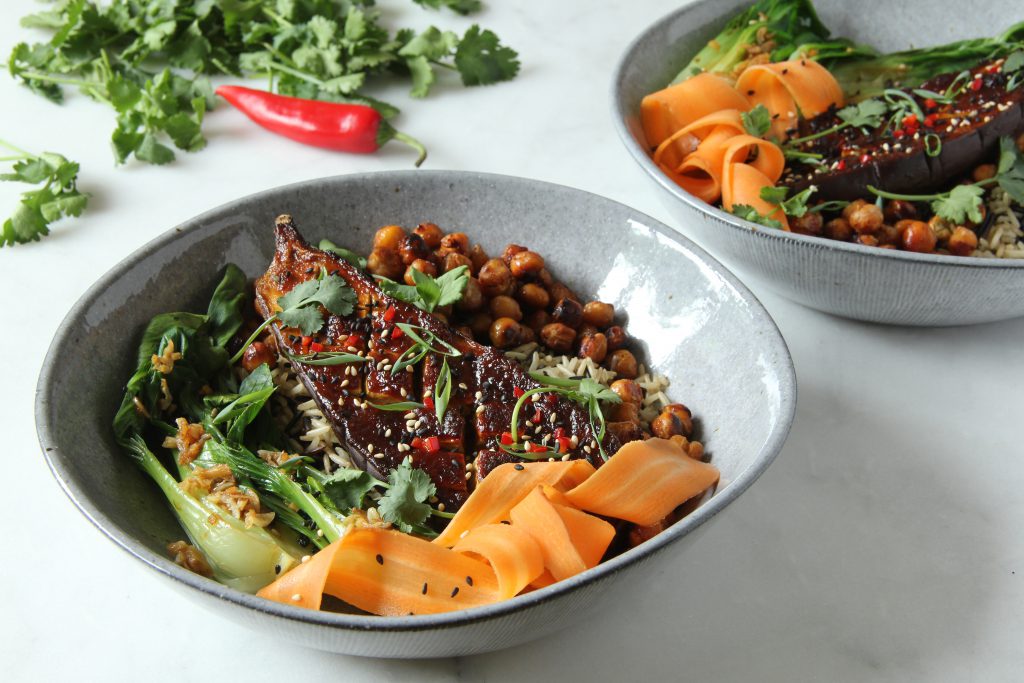
Miso is a kitchen shortcut to a deep umami flavour boost for so many different dishes. My miso aubergine in influenced by the Nobu miso black cod. I’ve changed up a few ingredients to make it slightly healthier, and this works on cod too, so for those who eat fish, you can make the same marinade, but cook the fish for less time, around 15-18 minutes depending on the size of your fillets.
If you can get sake, the traditional Japanese rice wine, that would be true to the Japanese miso cod recipe. However, if you are unable to get it, Chinese rice wine is a good substitute, as is a dry white wine.
This dish is delicious served with steamed brown and wild basmati rice, garlic ginger dressed pak choi and quick pickled carrots for further fibre diversity!
Ingredients
30ml sake
30ml mirin
5ml rice wine vinegar
2 tbsp white miso paste
20g stoned dates
1 large aubergine
200g tinned chickpeas, drained
1 tsp EVOO
1 tsp toasted sesame seeds
1 spring onion, finely sliced
Chilli to taste, finely diced
Coriander leaves
Method
Mix the sake, mirin, rice wine vinegar, miso paste, dates and 20ml water into a small pan. Cook over a low heat till the dates have softened and the alcohol has cooked off. Blend to a smooth paste.
Slice the aubergine in half and score the fresh in diamond shapes, ensuring you do not cut through the skin. Place in an oven-proof dish.
Pour the miso sauce over the cut side of the aubergine and gently open up the cuts to allow the marinade to penetrate into the flesh. Leave to marinade to 30 minutes at room temperature, or put in the fridge if making in advance.
Preheat the oven to 200°C Fan, 220°C convection, gas mark 6.
Add the chickpeas and oil to the pan with the aubergine and gently toss in any excess marinade. Add 30ml water to the pan.
Cook for 30 minutes, mixing the chickpeas after 15 minutes. If the chickpeas look like they might burn add a little extra water.
Remove from the oven and scatter with sesame seeds, spring onion, chilli and coriander.
Per serving 288kcal/ 6.6g fat/ 0.9g saturated fat/ 37.9g carbohydrates/ 10.1g fibre/ 11.8g protein
An adaptation to the bao recipe my mum taught me for when you are shorter on time but still want something delicious!
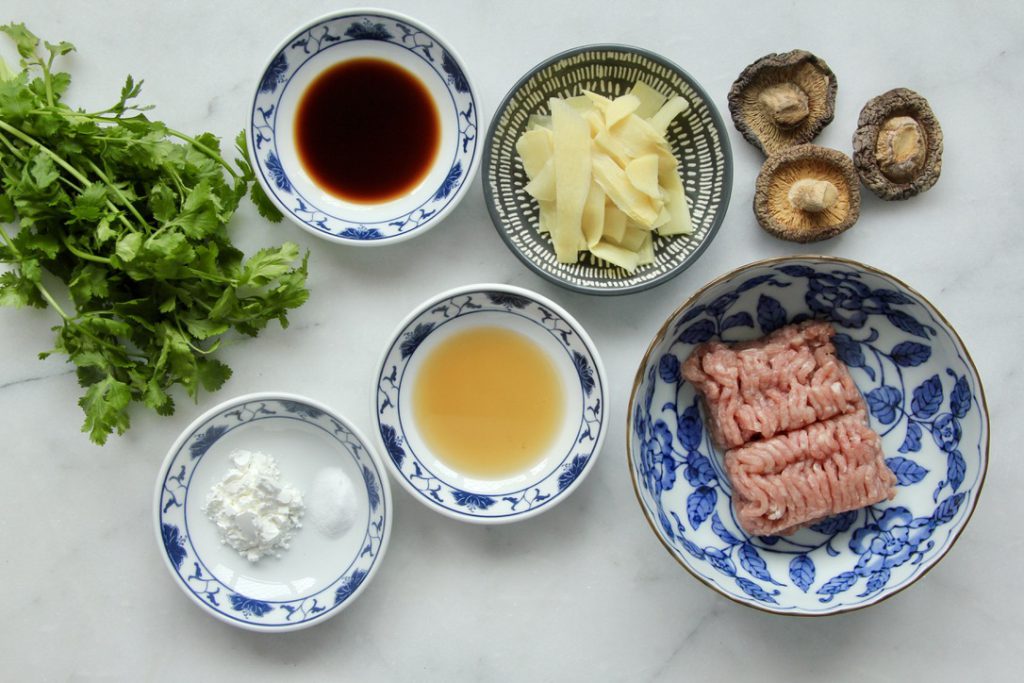
While Chinese recipes often call for pork, specifically fattier cuts such as belly of pork, I use minced turkey thigh in many of my dumpling recipes. Turkey is a leaner mince in comparison to standard pork mince (5.5g fat versus 11.6g fat per 100g respectively) yet still doesn’t dry out when cooked. This is partially due to the use of thigh meat rather than breast, which is usually much juicer, as well as the use of a tiny amount of bicarbonate of soda. The bicarbonate of soda, once mixed in with the mince, helps it stay soft and juicy, as well as give a little “bounce” which higher fat meats tend to have.
This is perfectly adaptable to whatever ingredients you wish to use. You can use firm tofu, which I also press to prevent excess water inside the dumpling. Swap weight for weight, although it can be a little more difficult to pleat the dumplings as the mixture is much more crumbly and does not stick together in the same way as meat does.
I also love to use fish and shellfish in dumplings. You could also do a mixture, one we often use in our family recipes is prawn and turkey, again traditionally it would have been pork and prawn, but we have added this little healthy swap which tastes absolutely delicious!
Folding the dumplings can be a little tricky. If you struggle the simplest shape you could make would be either a half-moon where you literally fold the skin on itself to make a semicircle shape, or you could gather all the pastry around to the top and squeeze to make a “money purse” shape. As you get more adventurous there are so many different shapes you can try.
3 shiitake mushrooms, fresh, or if dried soaked in water till soft, finely diced
35g bamboo shoots, finely sliced
15g coriander, roughly chopped
1/2 cm ginger slice, finely diced
Pinch of white pepper
Oil for cooking
Method
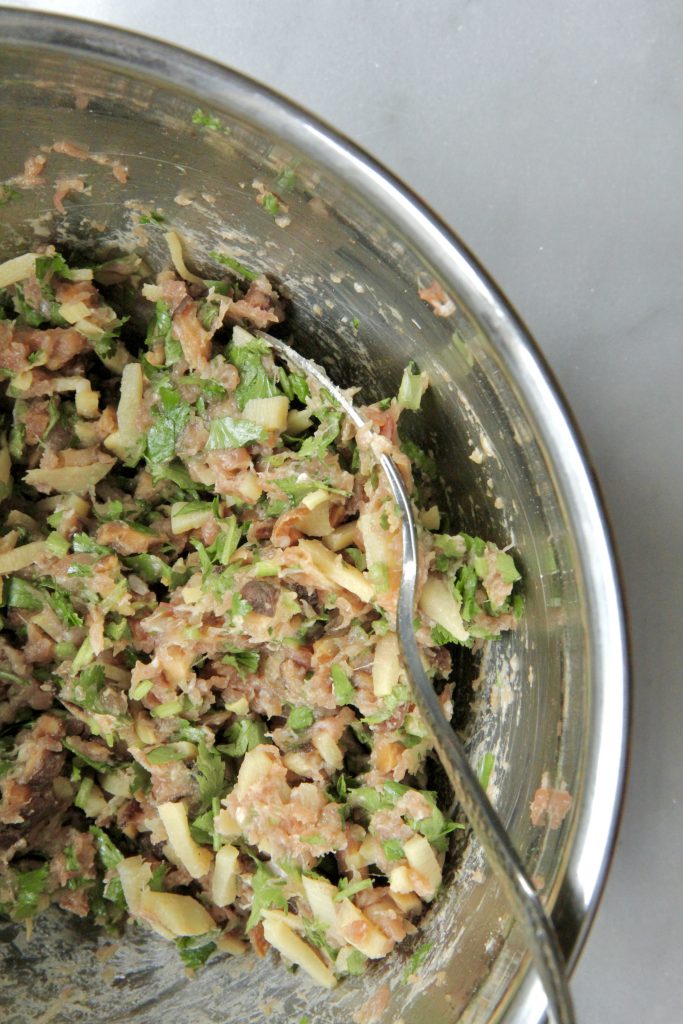
Mix the turkey mince with the bicarbonate of soda thoroughly. Then add all the remaining ingredients, except the oil for frying, and mix well.
Take 1 dumpling skin and fill it with a heaped teaspoon of the mixture. Pinch the end and then pleat the top half of the skin onto the bottom half of the skin to create a slight crescent shape.
Add a dash of oil to your frying pan to stop the dumplings from sticking, and arrange them so they have at least 1 cm between each dumpling. You may need to cook them in batches depending on the size of your pan.
Cook for 2-3 minutes over a low-medium heat so they are golden on the bottom. Then add hot water to cover the bottom third of the dumpling and immediately cover with a lid to steam the dumplings.
After 5 minutes, remove the lid and allow any remaining liquid to evaporate off, add a dash of sesame oil to finish and crisp the bottoms for 1 minute.
Remove the dumplings onto a plate and enjoy hot with a dipping sauce of your choice.
Per dumpling: 66kcal/ 1.9g fat/ 0.4g saturated fat/ 8.7g carbohydrates/ 0.7g fibre/ 3.3g protein
Easy dumpling skins which the whole family can enjoy rolling out and filling.
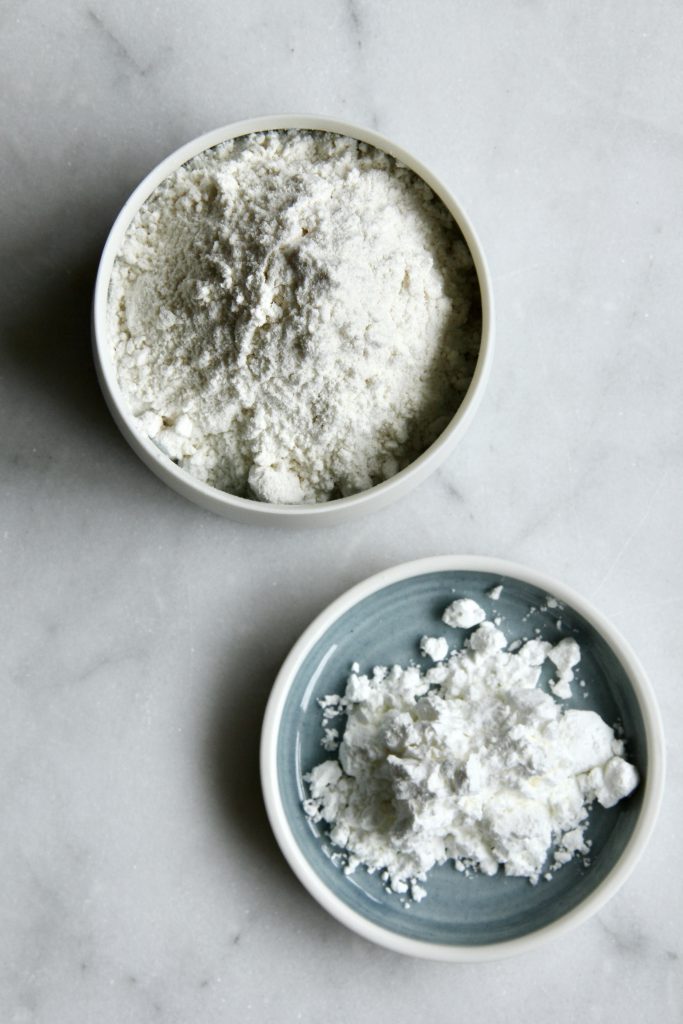
If you don’t have plain flour, use strong white bread flour and increase the ratio of corn flour in the recipe by up to 25%. Corn flour adds a silkiness to the skins, even with normal plain flour, while the high gluten content of bread flour could make the skins tough.
Makes 12 skins.
Ingredients
108g plain flour
12g corn flour
62g hot water, boiled and cooled for 5-10 minutes
Method
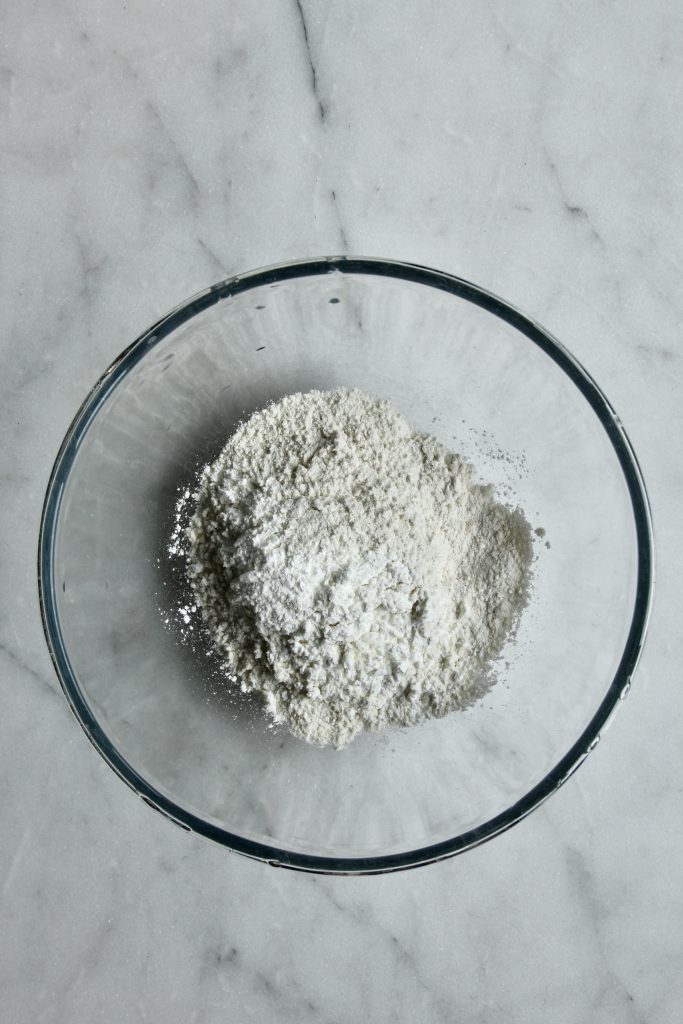
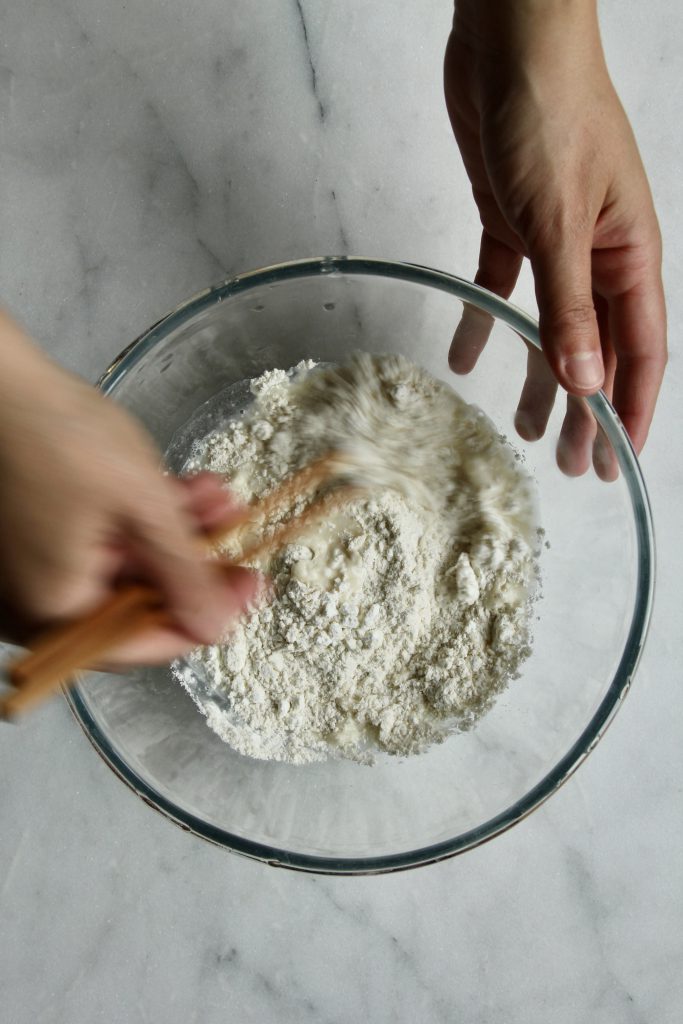
Mix the two flours together.
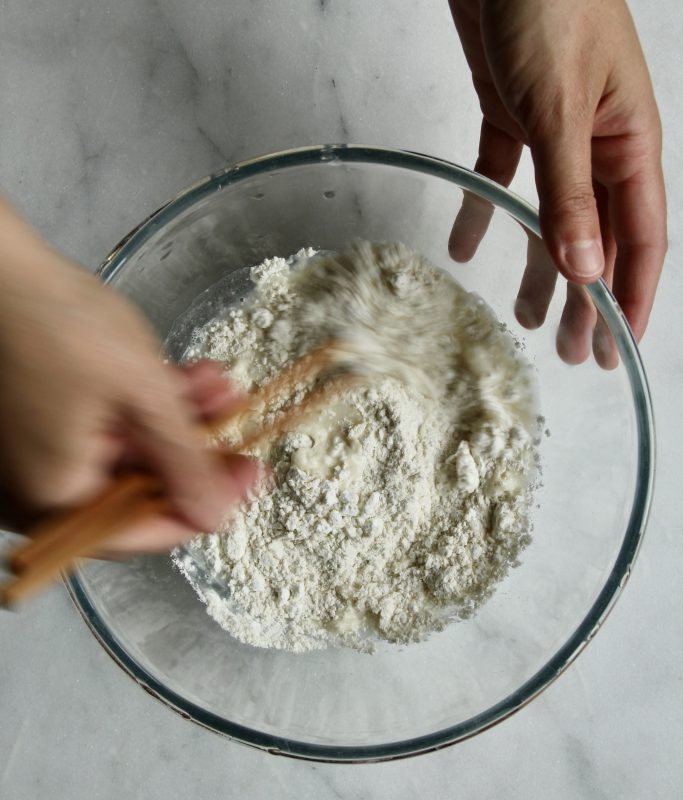
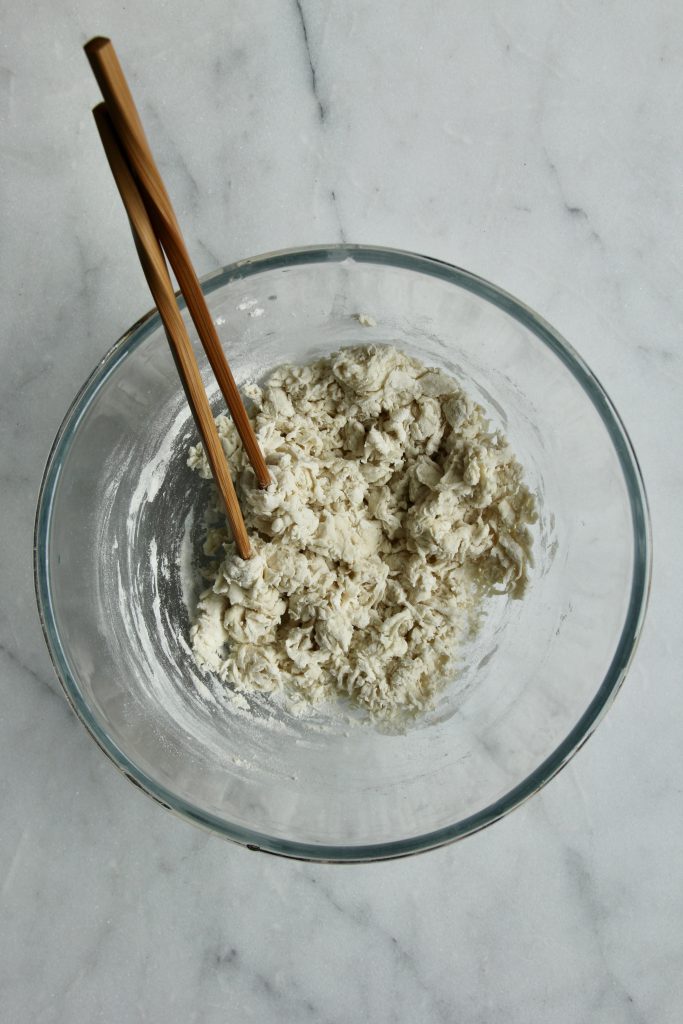
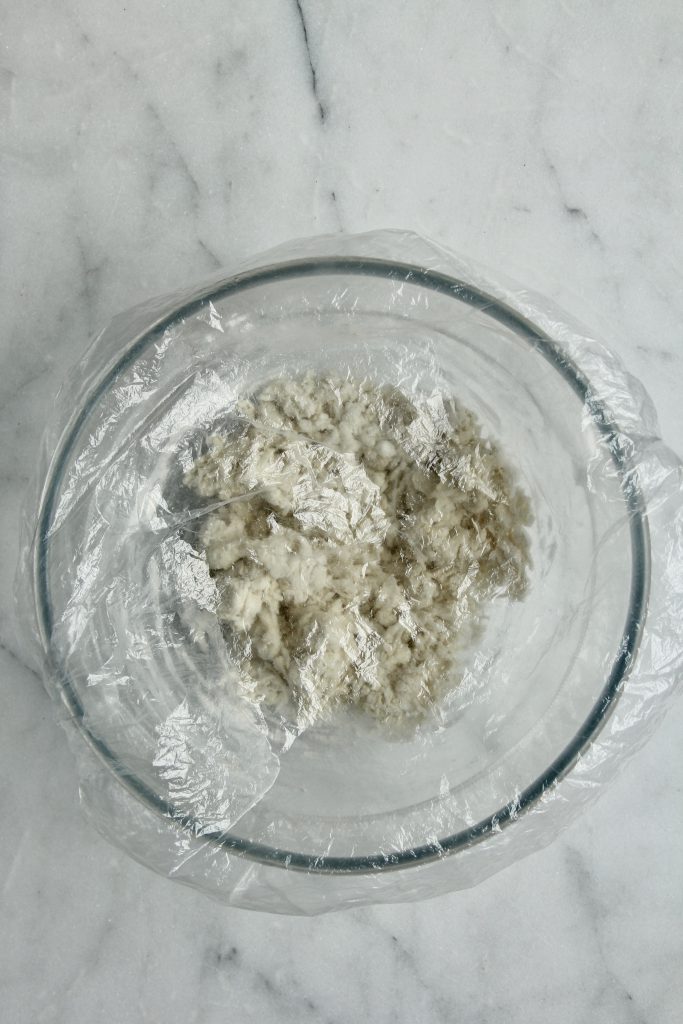
Add the hot water and stir to a shaggy mixture. Cover and leave for 10-30 minutes.
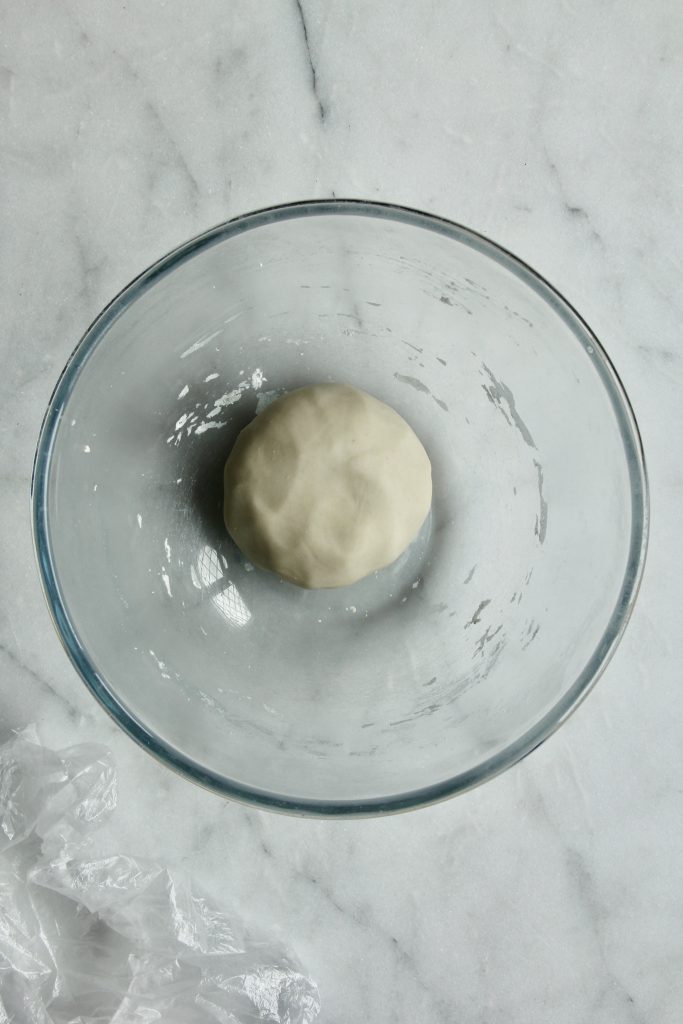
Knead the dough till it is smooth and elastic. Cover and leave for 30-60 minutes.
Roll a fat sausage shape and cut 12 equal cylinders.
Take 1 cylinder, and cover the remaining 11, press down with the palm of your hand on the cut surface of the dough to create a flat disk. Using a rolling pin, roll from the centre of the disk outwards, then turn clockwise and keep repeating around the dough to create a round flat disk with a thin edge.
If not using immediately, cover to prevent it from drying out as you continue to roll out the remaining dough.
If you wish to freeze the skins, rub a little corn flour on each side to stop them from sticking together. Freeze for up to 1 month.
Per skin 39kcal/ 0.2g fat/ 0.1g saturated fat/ 8.0g carbohydrates/ 0.3g fibre/ 1.1g protein






 Dr Pippa