Sourdough Blueberry Bagels

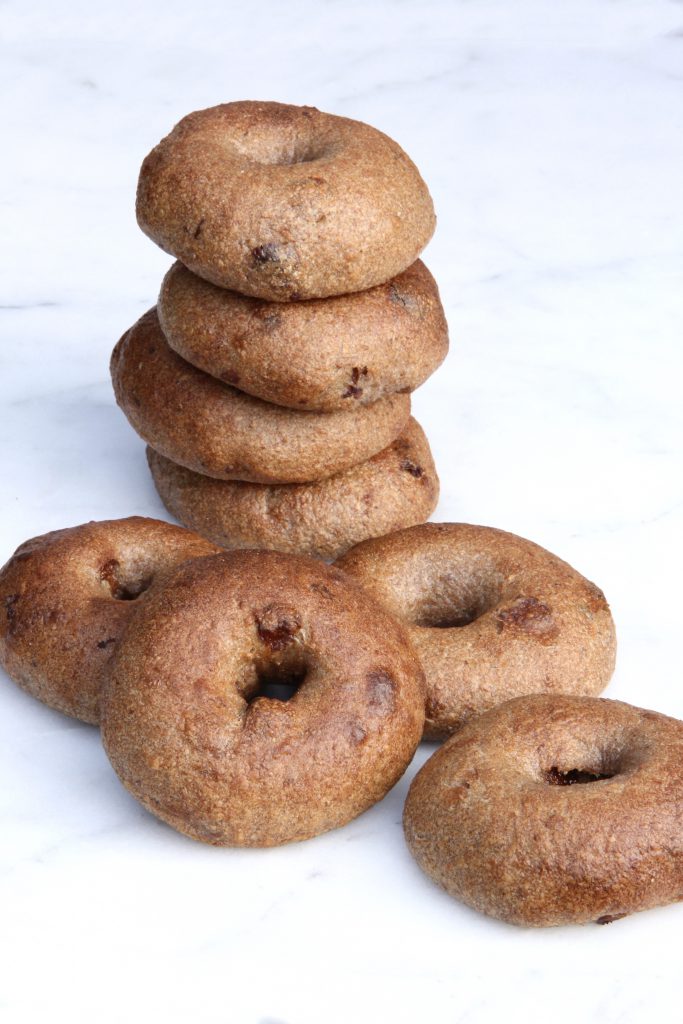
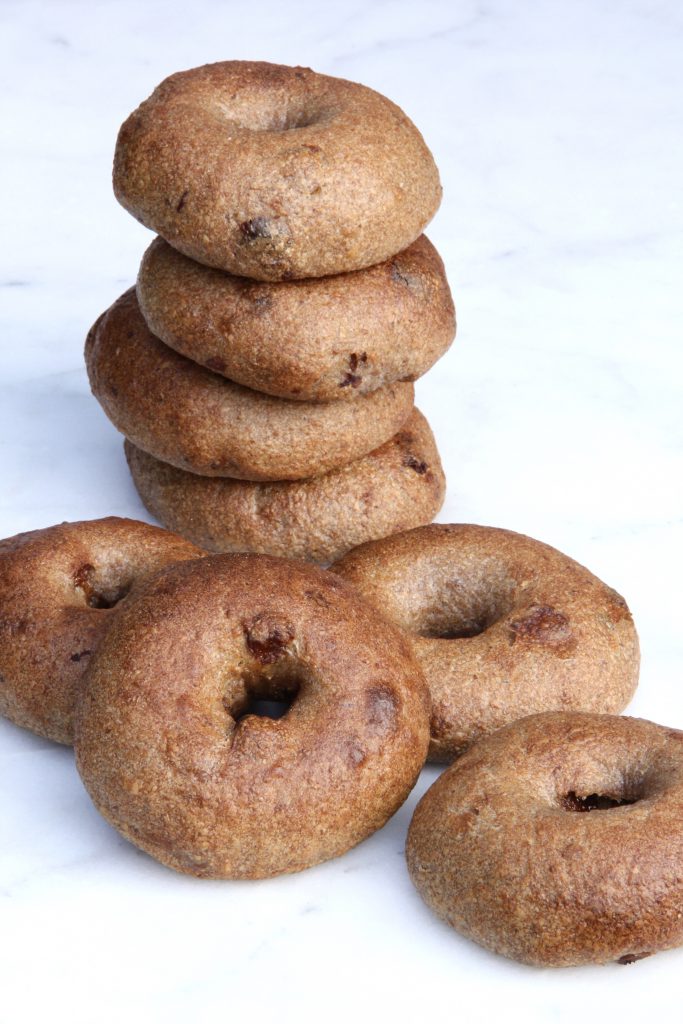
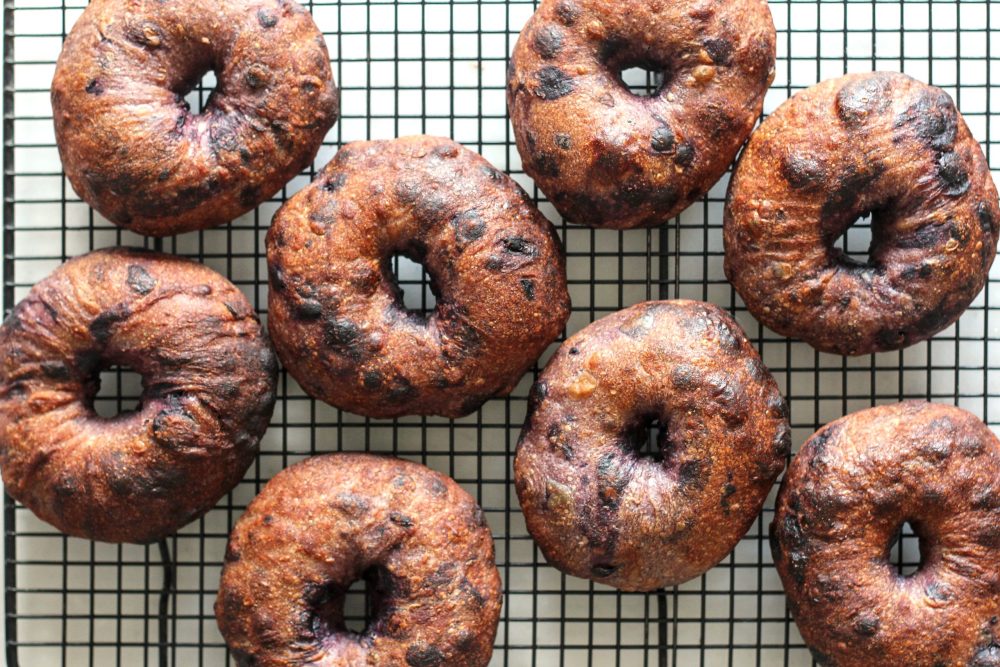
Blueberry sourdough bagels. Just a small amount of work and you will have the most delicious bagels – chewy crusts with a soft centre, filled with sweet and tangy blueberries which you know will do you good.

If you can’t find freeze-dried blueberries you can leave these out. Most shop-bought dried blueberries are sweetened with fruit juice and therefore won’t work as a replacement.

Makes 9 bagels

Ingredients

  • 200g frozen blueberries
  • 40g caster sugar
  • 150g active starter, refreshed 10-12 hours before
  • 500g bread flour
  • 8g salt
  • 75g freeze-dried blueberries (optional)
  • 20g molasses (to make vegan) or honey
  • Rice flour for dusting

Method

  1. Add the frozen blueberries to a large mixing bowl and pour over 200ml of boiling water. Allow the blueberries to thaw for 5 minutes.
  2. Add the caster sugar and sourdough starter and mix.
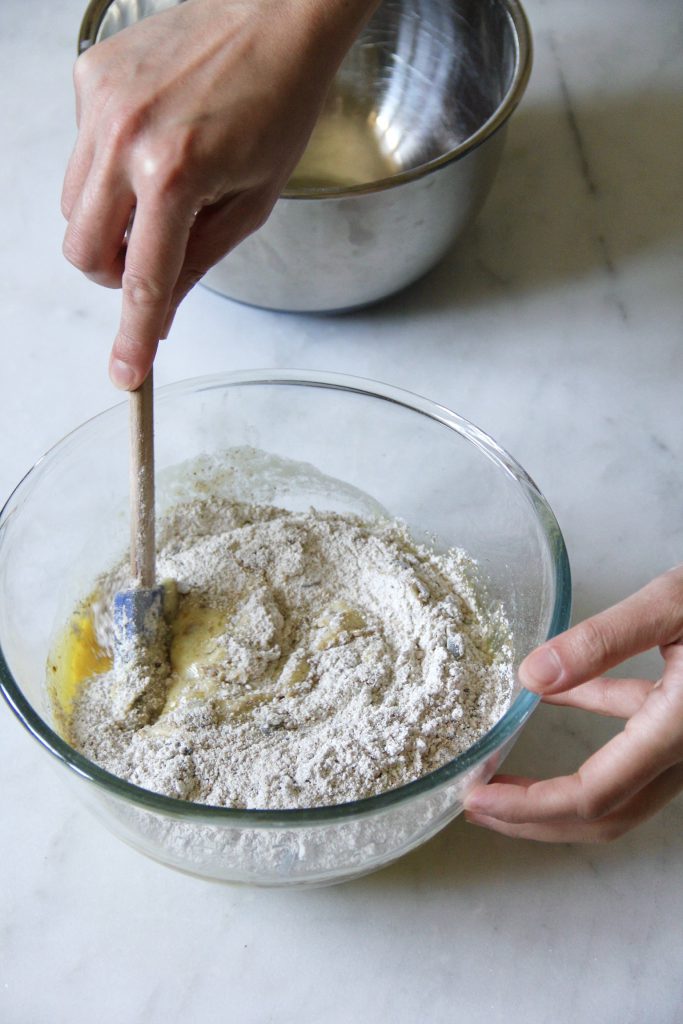
  3. Add the flour and salt, and mix in the bowl by hand for around 5 minutes before transferring to the work surface and kneading for a further 5 minutes. It will be sticky but keep working it.
  4. Transfer back to the mixing bowl, cover and rest for 1 hour.
  5. Top the dough back onto the work surface and knead for 1-2 minutes, adding the freeze-dried blueberries if using. Cover and prove at room temperature for 3 hours.
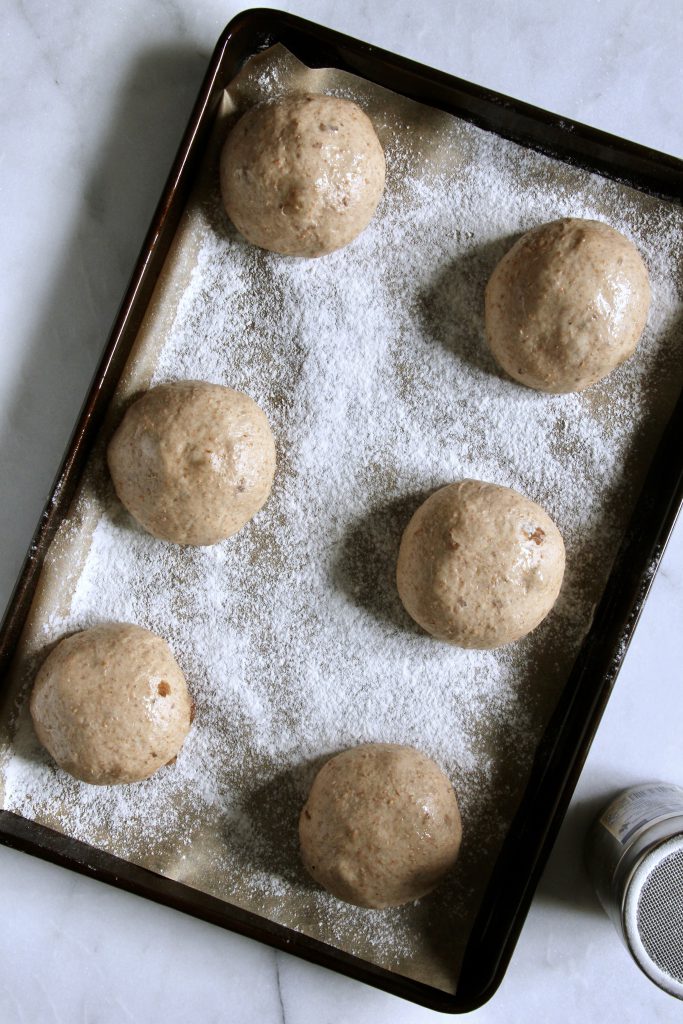
  6. Divide the dough into 9 equal portions around 125g and shape into a tight ball, using rice flour to stop them from sticking. Allow to rest for 30 minutes.
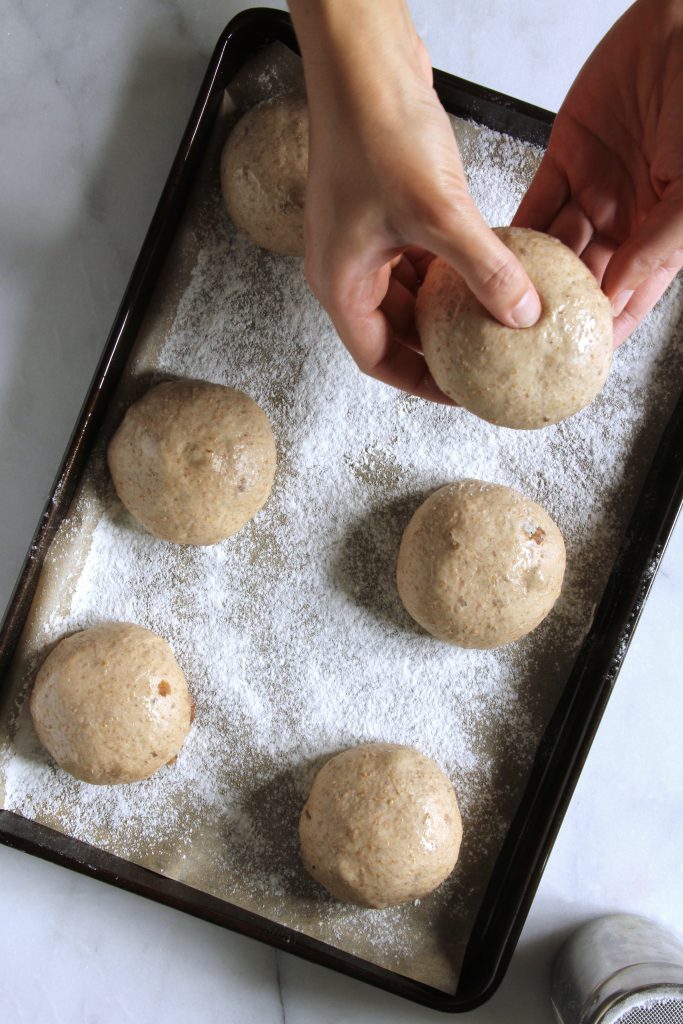
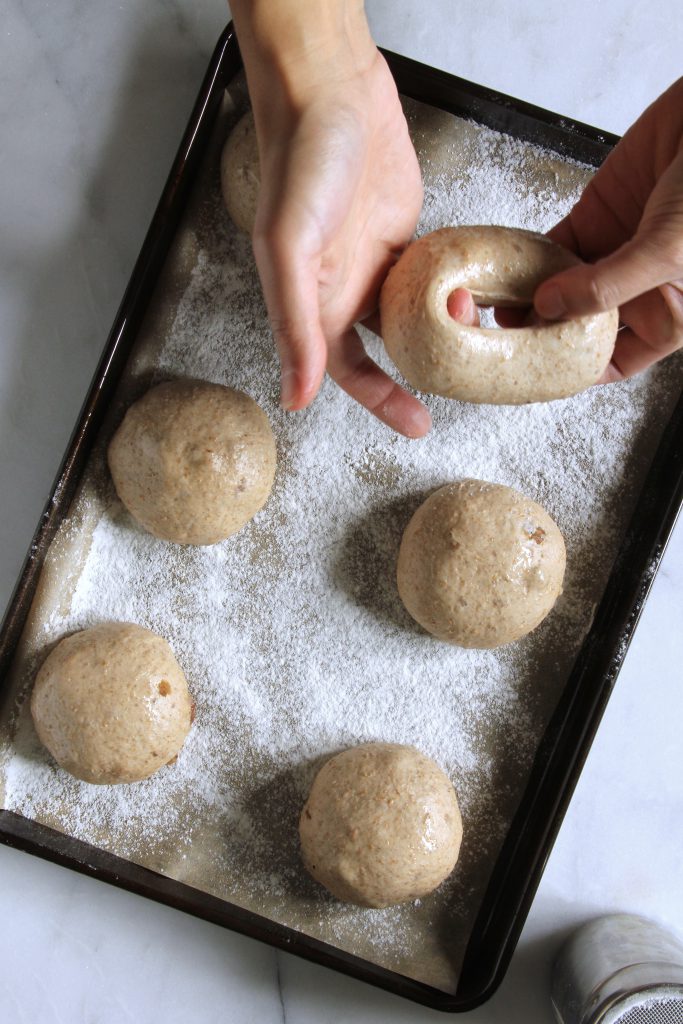
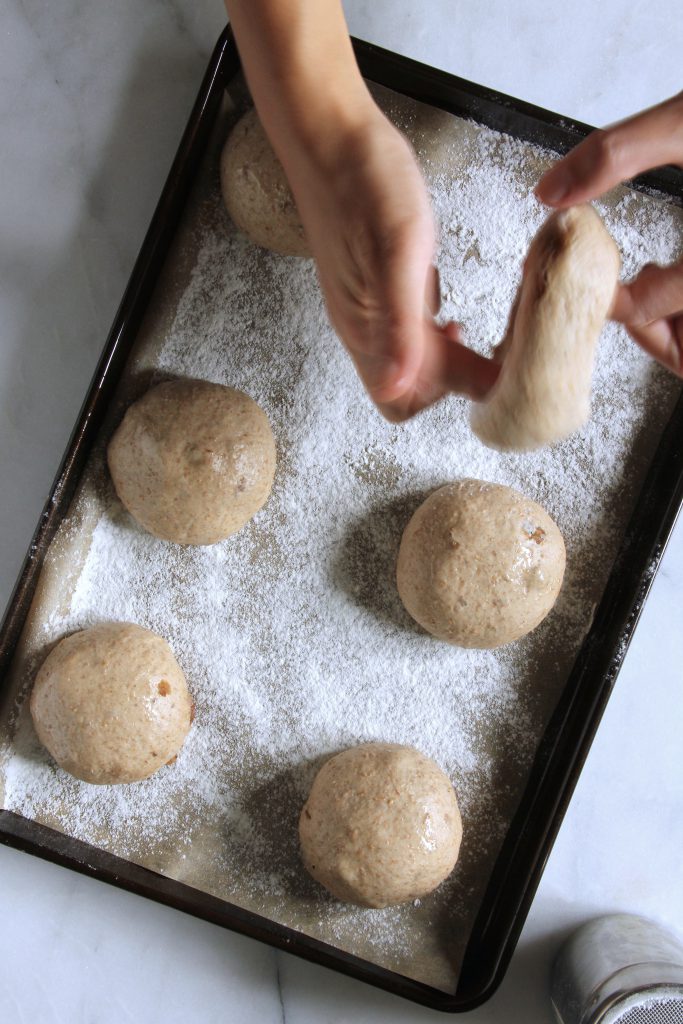
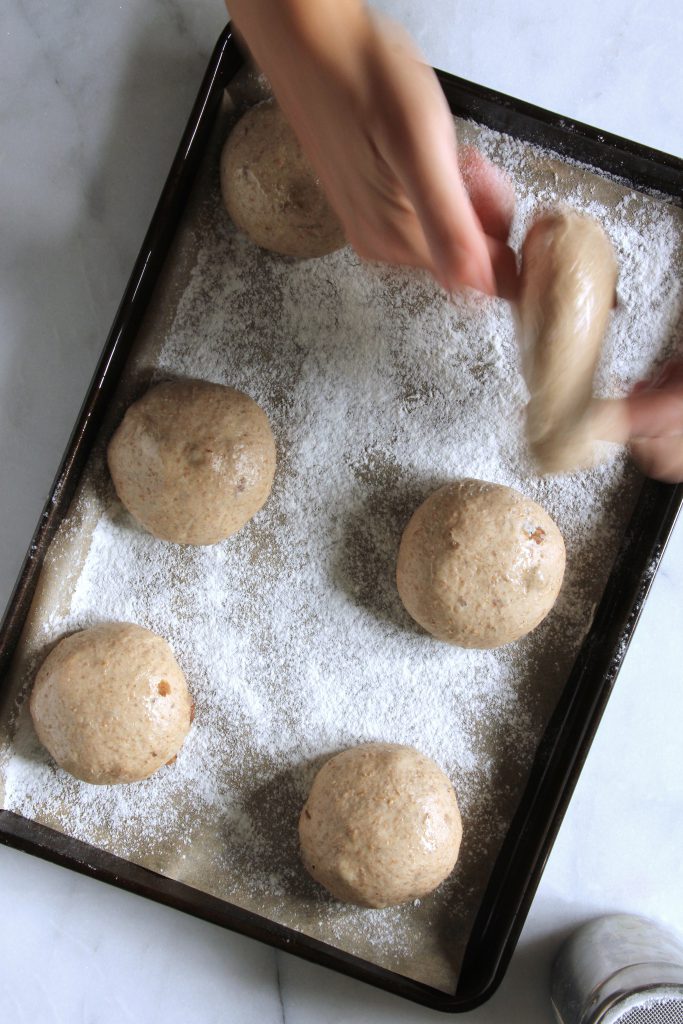
  7. Pinch the centre of each ball with your thumb and index finger, creating a hole. Then using both index fingers spin the dough around to create a bagel shape. Cover and rest in the fridge overnight, or for at least 8 hours.
  8. The next day, set the oven to 220°C fan, bring a large pan of water to a boil, and add the molasses.
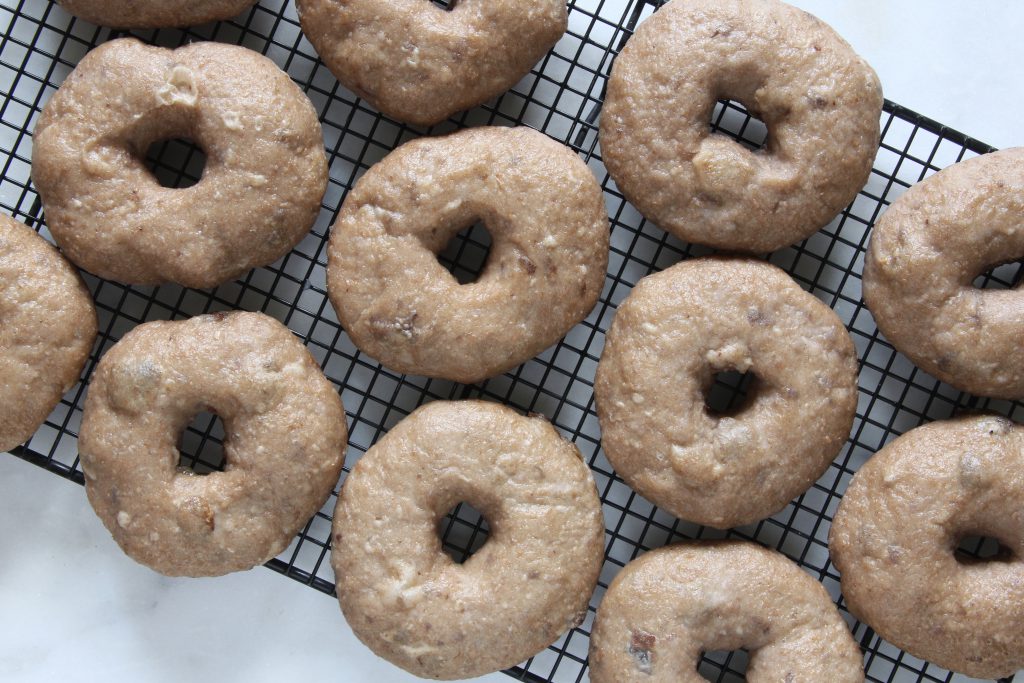
  9. Boil each bagel for 30 seconds on each side before removing onto a wire cooling rack.
  10. Bake on a lined tray for 18-20 minutes, till golden brown and nicely puffed up.
  11. Delicious served with your favourite cream cheese and extra berries.

Sicilian Caper Focaccia

Makes 1 large focaccia which will serve 8 minimum

Ingredients

  • 150g levain, refreshed 8-12 hours earlier
  • 15ml extra virgin olive oil plus extra for later
  • 150g wholemeal bread flour
  • 600g white bread flour
  • 12g salt
  • Salted caper
  • A few sprigs of rosemary

Method

  • Mix the levain, 500ml water and 15ml olive oil together before adding the flours and mixing to make a shaggy dough. Leave for 30 minutes covered.
  • Mix 12g of salt with 75ml water till dissolved, and pour over the dough, scrunching the dough with your hand to mix it in. The dough should look very rough and almost broken into small pieces. Cover and leave for 45 minutes.
  • Over the next few hours complete 4 sets of coil folds, allowing the dough to rest for 45-60 minutes between each fold.
  • Line and grease a large baking tray with olive oil. Gently transfer the dough to the baking tray and push the dough over the surface so it reaches the corners as best you can – there will be some resistance so don’t force it.
  • Cover the dough and leave in the fridge to slowly rise overnight – anywhere between 8-24 hours depending on your schedule
  • The next day preheat your oven to maximum temperature, add a small empty tray to the bottom of the oven for steam later, and remove the focaccia from the fridge.
  • Once the oven is up to temperature, uncover the dough and drizzle with a little olive oil. Using wet fingers, press your fingertips through the surface of the dough to create plenty of dimples before adding capers (with a little of their salt) and rosemary to the dimples.
  • Place the focaccia in the oven, adding water into the hot tray to create steam, closing the door as quickly as possible to trap the steam in, and reduce the oven temperature to 225°C fan/ 245°C convection for 20 minutes.
  • Remove the tray with water and bake for another 5 minutes* till the crust is golden.
  • Remove from the oven, and allow to cool on a wire rack.
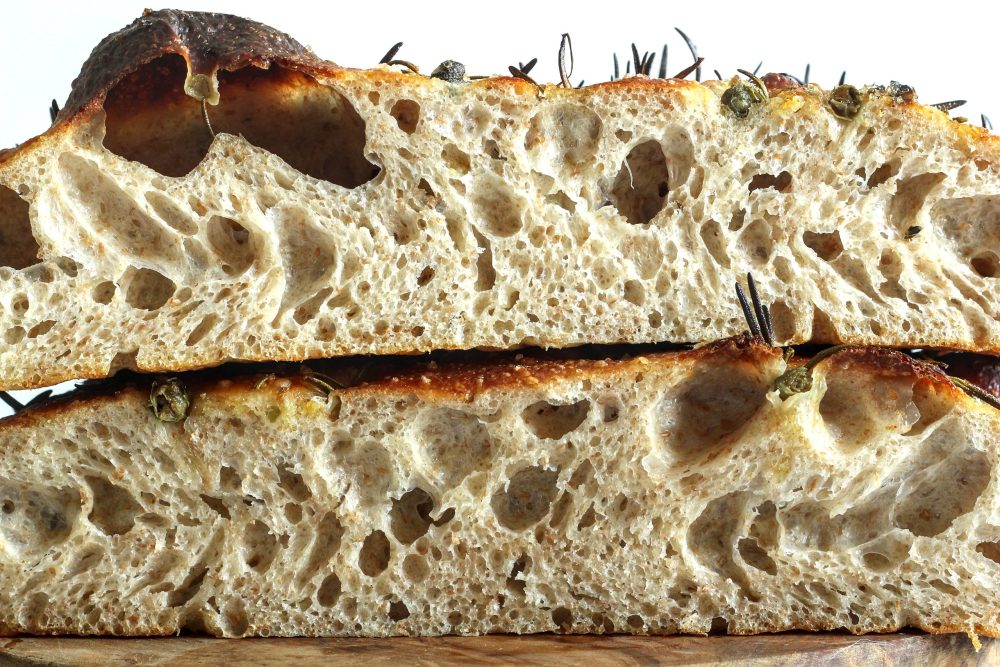
Sicilian Caper Sourdough Focaccia

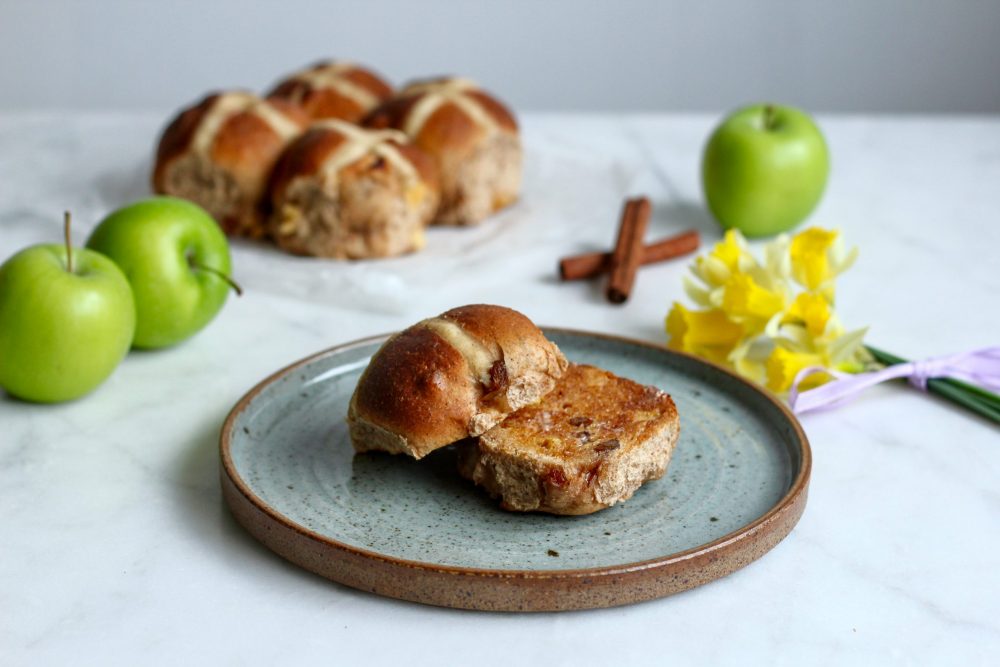
Apple and Cinnamon Hot Cross Buns

Best of both Apple and Cinnamon Hot Cross Buns combining the goodness of wholemeal flour with sweet cinnamon and apple to give a delicious but healthy twist to this Easter classic. This recipe is adapted from Julie Jones‘s Soulful Baker cookbook.

Makes 9 buns

Ingredients

For the buns

  • 50g butter, melted
  • 175g strong white flour
  • 175g strong wholemeal flour
  • 35g caster sugar
  • 1 tsp ground mixed spice
  • 2 tsp ground cinnamon
  • 7g fast action yeast
  • Up to 160ml tepid water
  • 1 egg
  • 50g sultanas
  • 50g dried apple, roughly chopped

For the crosses

  • 10g butter
  • 40g strong white flour
  • 45ml water

For the glaze

  • 75ml water
  • 1 tbsp sugar
  • 1 large pinch cinnamon
  • 1 large pinch ground mixed spice

Method

  • Add all the dried ingredients for the buns, except the fruit, into a stand mixer. Add the butter, egg and 150ml water.
  • Mix on a low speed for 10 minutes, adding the remaining 10ml of water if the dough looks a little dry – it should be just sticky.
  • After 10 minutes add the dried fruit and mix for a further 2 minutes till incorporated.
  • Form into a ball, cover, and allow to rise till doubled in size for around 1.5 hours.
  • Once the dough has doubled in size, knock it back and divide the ball into 9 equal pieces.
  • Roll each piece into a tight ball without any fruit sticking out the top as these will burn.
  • Place the balls in a 3×3 formation in a baking tin roughly 20cmx20cm lined with baking parchment.
  • Cover and allow to prove for 30 minutes.
  • Preheat the oven to 200°C fan.
  • Melt the butter for the crosses and then whisk in the flour and water to make a thick pipe-able paste. Transfer into a piping bag and snip the end to make a small hole.
  • Pipe crosses (or whatever you fancy) across the tops of the buns.
  • Bake in the oven for 15 minutes till golden brown.
  • Meanwhile, in a saucepan, heat the water, sugar and spices to make the glaze.
  • Once the buns are cooker, immediately brush with the glaze.
  • Transfer to a wire rack, remove the baking parchment and allow to cool.

Per bun: 256kcal/ 6.6g fat/ 3.6g saturated fat/ 40.0g carbohydrates/ 5.2g fibre/ 7.8g protein

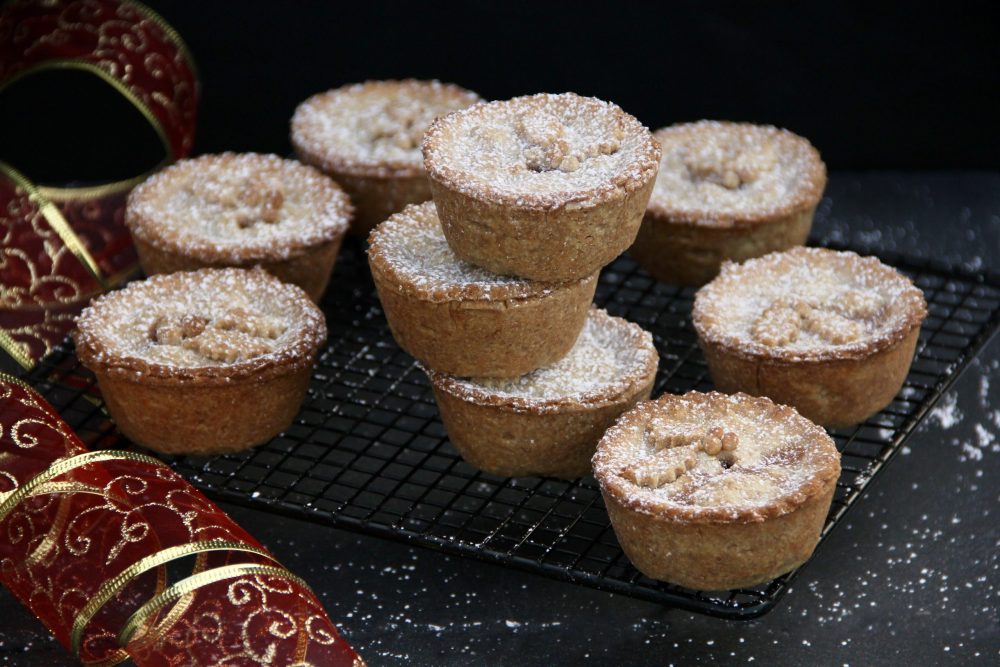
Wholemeal Mince Pies

A simple wholemeal shortcrust pastry enriched with almonds and butter to give you 8 plant points in total if using my mincemeat recipe.

If you are using shop bought mincemeat you could try adding a little extra fibre diversity by adding in some grated apple, carrot or dried cranberries.

Makes 8 mince pies

Ingredients

  • 40g ground almonds
  • 175g wholemeal flour
  • 120g fridge cold butter, cut into small cubes
  • 55g caster sugar
  • 1 medium egg
  • Plain flour for dusting
  • 1/3 portion of mincemeat (approximately 500g)
  • Egg or milk to join the pastry

Method

  • Mix the ground almonds, flour and butter in a large bowl with your fingertips till it resembles breadcrumbs.
  • Add the sugar, briefly mix, and then add the egg to bind. Knead the pastry till it forms a sticky ball, wrap it up and put it in the fridge to rest for a minimum of 30 minutes. The pastry can be made using a food processor or can be made the day in advance.
  • Preheat the oven to 180°C fan/ 200°C convection
  • Take 2/3 of the pastry and roll to 4-5mm thickness using flour to stop it from sticking. Use a circular cutter 2cm bigger than the tin hole, gently dust the underside and press into the muffin tin. Repeat to make 8 lined holes in total.
  • Fill each pastry case with around 45g mincemeat, leaving a 1cm gap from the top.
  • Take the remaining 1/2 of the pastry and roll to a thickness of 2-3mm. Take a cutter the same size as the muffin tin and cut 8 lids.
  • Using milk or egg, brush the pastry case and stick the lid down.
  • Poke a hole in the top of each pie to allow the steam to escape.
  • Optional: decorate the top with any remaining pastry, sticking it in place with the milk or egg.
  • Bake in the oven for 18-22 minutes till the pastry is golden brown and crisp.
  • Allow to cool for 5 minutes before taking out of the tray and allowing to cool on a wire rack.

Per mince pie: 358kcal/ 18.5g fat/ 10.3g saturated fat/ 41.2g carbohydrates/ 3.6g fibre/ 4.5g protein

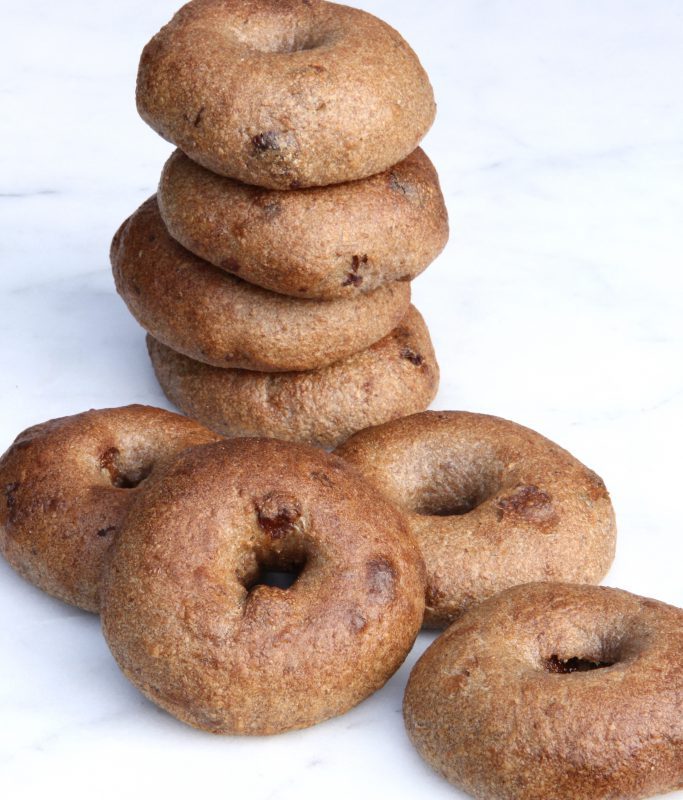
Sourdough Cinnamon and Sultana Bagels

When I presented seeded multigrain sourdough bagels to my brother, the first thing he said was that I needed to make cinnamon and raisin sultanas. So grateful(!) but I took the constructive criticism and made this recipe for him.

I’ve adapted the Margot Bakery sourdough bagel recipe. It’s a great recipe, however, I could never fit 12 bagels onto my baking sheets, and the volume of dough was too large for my stand mixer! I also wanted to incorporate more wholemeal flour as a way of increasing the fibre content. I also didn’t have the malt syrup, so for anyone who wishes to make vegan bagels, swap the honey back out for the original malt syrup.

You could of course do the more traditional approach of cinnamon and raisin bagels, but I have always preferred sultanas over raisins. Other fruits that would work well in this recipes include dried blueberries, cranberries or cherries.

The bagels are best eaten fresh on the day, although still delicious if left for a day or two. A great way to capture that freshness is to slice the bagels in half and then freeze. This way they are ready to pop straight into the toaster from the freezer and are ready to be eaten within minutes.

Makes 12 bagels

Ingredients

For the leven

  • 35g 50:50 strong white: strong wholemeal flour
  • 115g 50:50 strong white: strong wholemeal flour
  • 25g granulated sugar

For the dough

  • 20g honey or malt syrup if making vegan
  • 180g strong white flour
  • 180g strong wholemeal flour
  • 400g plain flour
  • 12g salt
  • 10g ground sweet cinnamon
  • 120g sultanas

Extras

  • Vegetable oil
  • 50:50 mix plain flour: rice flour
  • 2 tsp bicarbonate of soda
Sourdough Cinnamon and Sultana Bagels

Method

  • The morning before making the bagels, refresh your starter with 35g 50:50 strong white: strong wholemeal flour and 35g water. Mix and leave for 10-12 hours.
  • The night before making the bagels, in a large jar mix 70g of the refreshed starter mixture, 115g 50:50 strong white: strong wholemeal flour, the sugar and 70g water. Leave for 10-12 hours.
  • The next day, mix all the remaining ingredients, 425g water and 250g of the refreshed starter. Knead the dough on a medium setting of a stand mixer fitted with a dough hook, frequently scraping down the sides and hook, for around 8-10 minutes. Alternatively, you can work the dough by hand, but it will be sticky so resist the urge to add extra flour. Knead for 10 minutes.
  • Lightly grease a 3l container. Transfer the dough, cover and allow to rest at room temperature for 3 hours.
  • Line 2 large baking trays with baking parchment and dust with 50:50 rice and plain flour.
  • Divide the dough into 12 equal portions and roll out into neat balls. Try to tuck any sultanas into the dough to prevent burning when baking.
  • Place 6 balls evenly spaced out onto a tray and cover with lightly oiled clingfilm. Leave to rest for 1 hour at room temperature.
  • Peel back the clingfilm, take one ball and make a hole in the centre of the ball. Using two fingers, stretch the ball into a bagel shape using a winding motion. Redust the parchment with 50:50 rice and plain flour and place the bagel back down.
  • Repeat for the remaining 5 balls on the baking tray.
  • Starting back with the first bagel, repeat the winding stretch to open the bagel back up.
  • Cover back up with the oiled cling film and leave to prove at room temperature for 3-6 hours depending on the temperature of the room; in warmer weather prove for a shorter period of time.
  • Transfer to the fridge overnight for up to 24 hours.
  • The next day remove the bagels from the oven and allow to return to room temperature.
  • Preheat the oven to 220°C fan/240°C convection, place a tray in the bottom of the oven, and bring 2l of water to the boil in a large pan.
  • Once the water is boiling add the bicarbonate of soda.
  • Boil the bagels in batches of up to 3 depending on the size of your pan for 30 seconds.
  • Remove and allow to dry slightly on a wire rack before transferring to a clean baking sheet lined with baking parchment, allowing space for them to expand in the oven.
Boiled bagels ready for baking
  • Once all the bagels are boiled, boil 200ml water.
  • As quickly as possible, place the trays of bagels into the oven and pour the boiled water into the tray at the bottom of the oven.
  • Close the door to trap as much steam as possible. Reduce the temperature of the oven to 20°C and bake for 15 minutes.
  • After 15 minutes, remove the tray of water and if your bagels are on split levels, rotate your trays around for even cooking. Bake for a further 8-9 minutes.
  • Remove and allow to cool on a wire rack.

Per bagel: 205kcal/ 1.2g fat/ 0.2g saturated fat/ 41.2g carbohydrates/ 3.1g fibre/ 6.6g protein

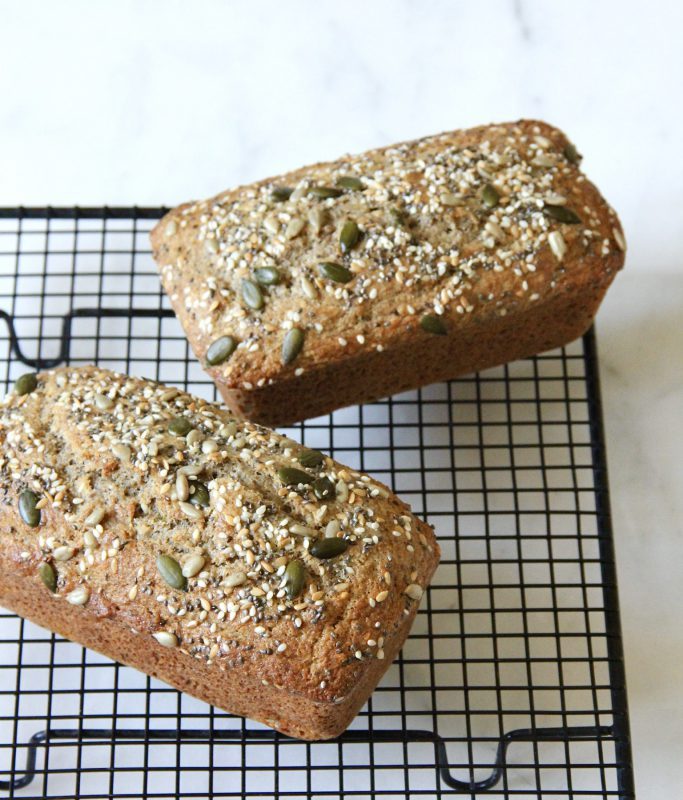
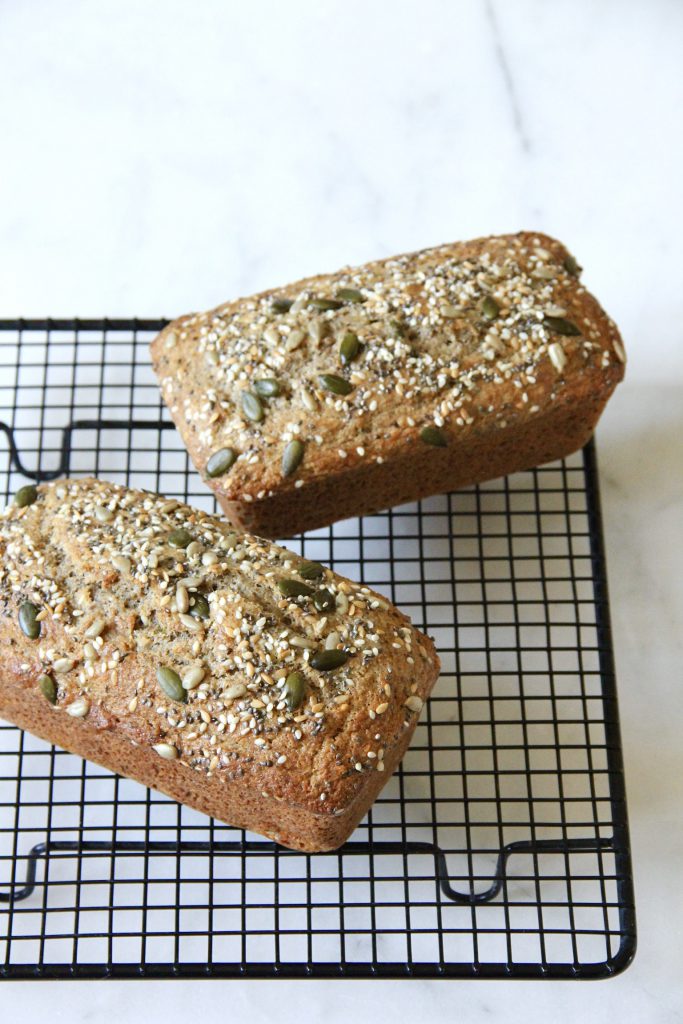
Seeded Banana Bread

I love this recipe for using up bananas which are past their sell by date. Somehow, you can never quite have the right number of bananas. It’s either too few or too many. And whenever I have too many I either freeze them ready to make smoothies out of, or turn them into this lovely cake.

This originally was my mum’s recipe, but I’ve added a few twists which my mum has now incorporated herself. She used to use butter, but for speed and nutritional value, I switched it to extra virgin olive oil. At first she protested, then she baked her first loaf using it and was converted immediately, proclaiming how much easier it was in comparison to melting and cooling the butter. The recipe also happens to be so simple, and forgiving! If you don’t have some of the ingredients they’re easy to swap in and out, and you can change the flavour of your bread depending on what you have, or what you fancy. If you want something more fruity, substitute some of the seeds for dried fruits, or even fresh or frozen for a delicious burst of flavour.

I also use two different types of flour to help maximise the diversity of the foods I’m eating each week. Of course I won’t be having this every week, but when I do I’d like to think that I can still be good while being naughty. The same goes for the seeds. I use a wide variety and generally use a premixed packet and then add in whatever I think is missing.

This recipe can easy be multiplied up according to how many bananas you have, but a word of caution. When using a 2lb tin or larger, the centre of the cake can sometime fail to rise due to the density and weight. This banana bread is not light and fluffy like a traditional sponge cake. It is loaded with fibre from seeds and whole grain flours which help increase the nutritional content of this treat. If multiplying up you can try baking in multiple small tins or in individual cupcake cases – just alter the timings so that a skewer inserted into the centre comes out clean. Anything beyond what you want to eat fresh can be frozen – I slice my loaf and freeze it so I can pull out a slice or two depending on how many I need.

Serves 8

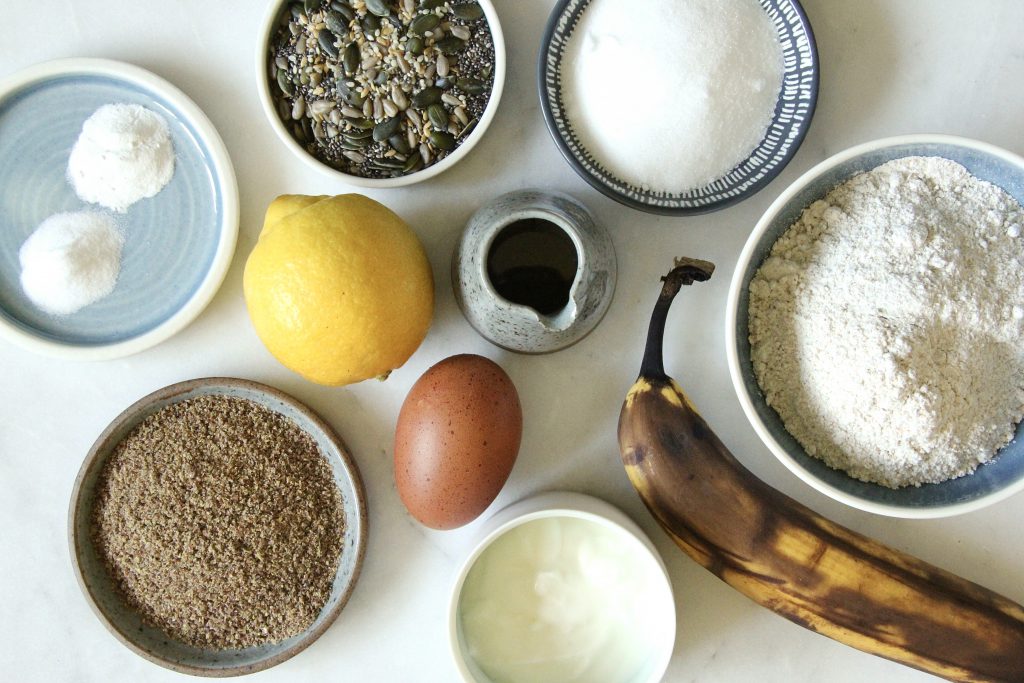
Ingredients

  • 1 large ripe banana
  • 80g dairy yoghurt (if using non-dairy add 10g extra fat)
  • Zest and juice of 1/2 an unwaxed lemon
  • 1/2 tsp vanilla paste or essence
  • 50ml EVOO
  • 1 large egg
  • 60g rye flour
  • 60g spelt flour
  • 20g ground linseeds
  • 1/2 tsp baking powder
  • 1/2 tsp bicarbonate of soda
  • 50g caster sugar
  • 40g mixed seeds + extra for sprinkling over the top

Method

  • Line a 1lb loaf tin and preheat the oven to 150°C fan/ 160°C convection
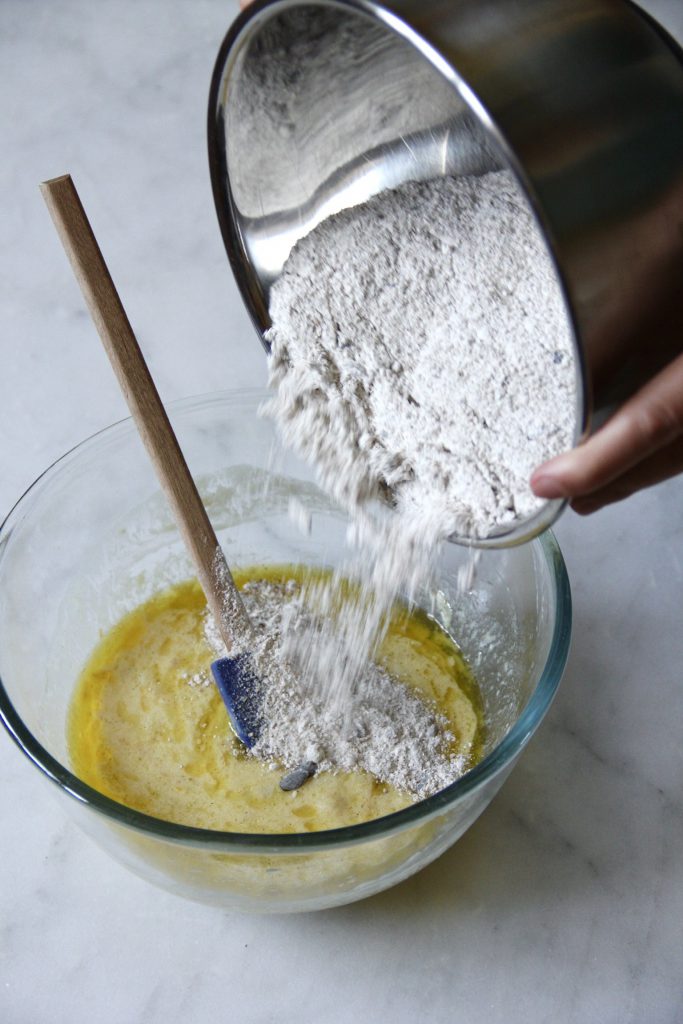
  • Mash the banana with the yoghurt, followed by all the remaining wet ingredients.
  • Mix all the dry ingredients together. Then combine with the wet ingredients and mix till combined.
  • Pour the mixture into the tin, sprinkle with seeds and bake for 35-40 minutes till a skewer inserted into the centre comes out clean.
  • Remove from the oven and turn out onto a wire rack to cool.

Per serving: 208kcal/ 10.5g fat/ 6.8g saturated fat/ 18.5g carbohydrates/ 3.5g fibre/ 5.5g protein