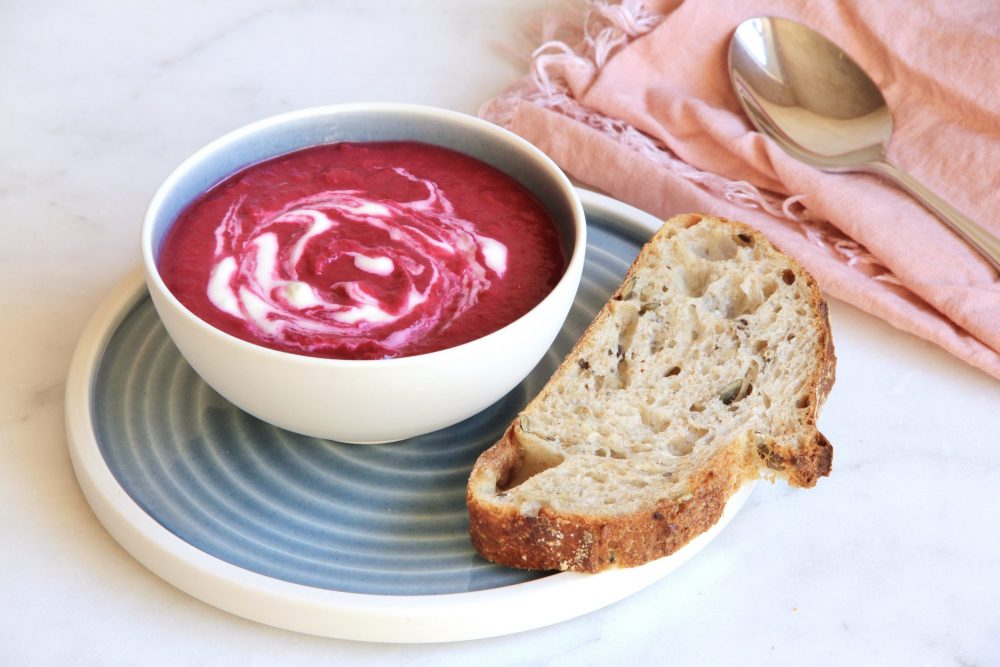
Beetroot, Parsnip and Horseradish Soup

Seasonal root vegetables make a simple, but super tasty soup which packs a punch. Fresh horseradish is super pungent and will got “straight up your nose”. I suggest starting with half the amount of fresh horseradish and tasting before adding more. Once you find the level you’re happy with you can stop. However, if you accidentally over do it, add a little extra creme fraiche which will help tone the heat down.

Cant get fresh horseradish? No problem, swap in some creamed horseradish or horseradish sauce. Or if the mustard flavour is not to your taste you could add ginger in instead which will add a warmth to the soup.

To make vegan omit the creme fraiche and use a dairy free yoghurt or dairy free cream alternative.

Serves 5

Ingredients

  • 1 large onion, sliced
  • 1 tbsp extra virgin olive oil
  • 2 cloves of garlic, roughly chopped
  • 400g parsnips, scrubbed (or peeled) and chopped into large chunks
  • 220g potatoes, scrubbed and cut into large chunks
  • 300g beetroot, peeled and cut into large chunks
  • 20g fresh horseradish, or to taste, finely grated
  • 60g creme fraiche

Method

  • In a large pan heat the onions and oil and cook over a low heat till soft and translucent.
  • Add the garlic and cook for a further minute.
  • Add the parsnips, potatoes and beetroot to the pan along with 900ml water. Bring to the boil and allow to simmer for 30 minutes.
  • Blend the soup till smooth and add the horseradish to taste.
  • Serve in bowls and top with a spoon of creme fraiche with sourdough bread on the side to dip in.

Per serving: 245kcal/ 10.4g fat/ 3.4g saturated fat/ 30.7g carbohydrates/ 7.0g fibre/ 4.6g protein
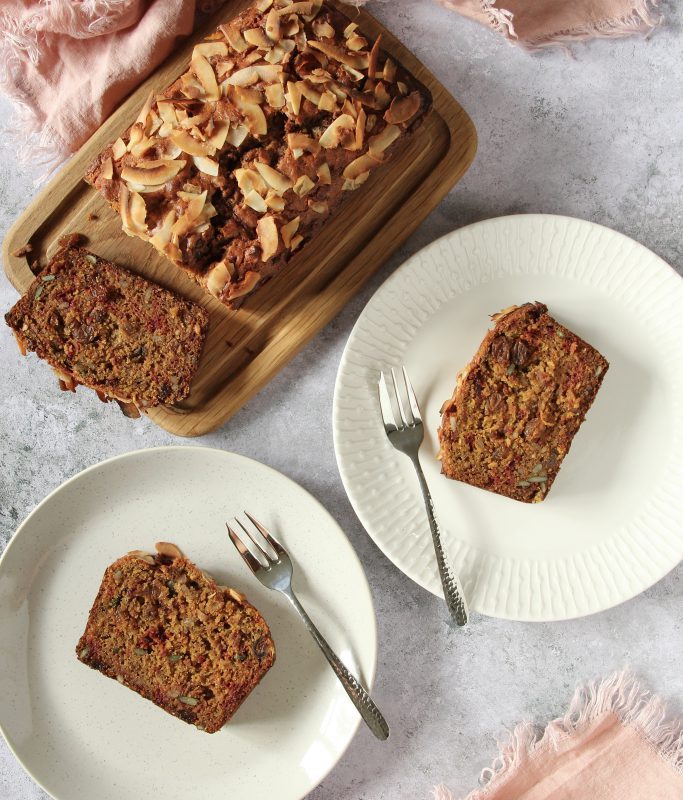
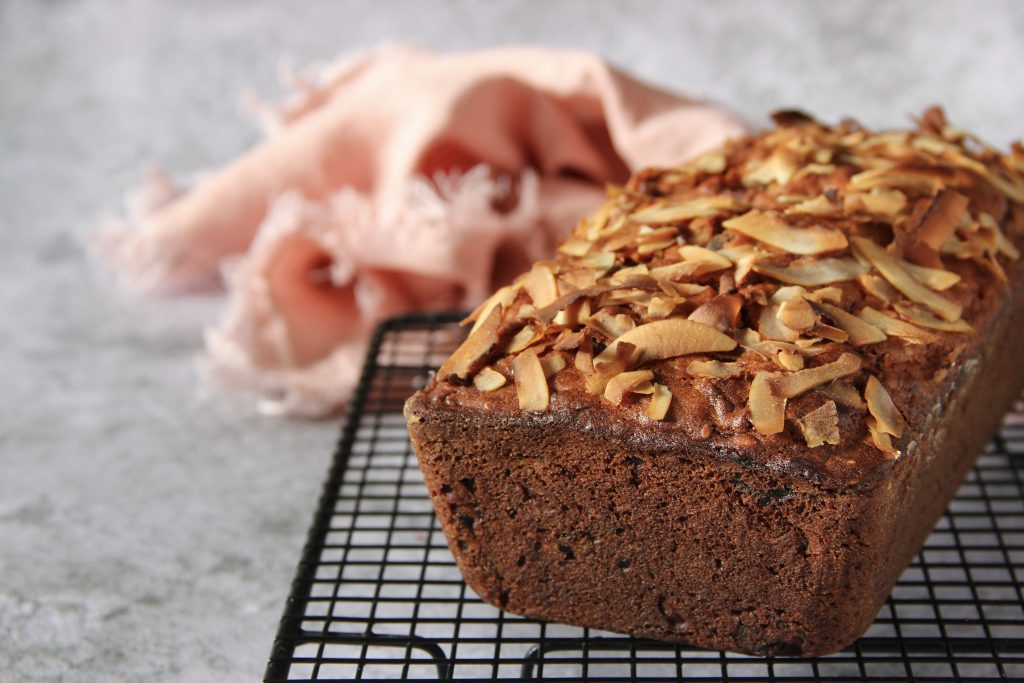
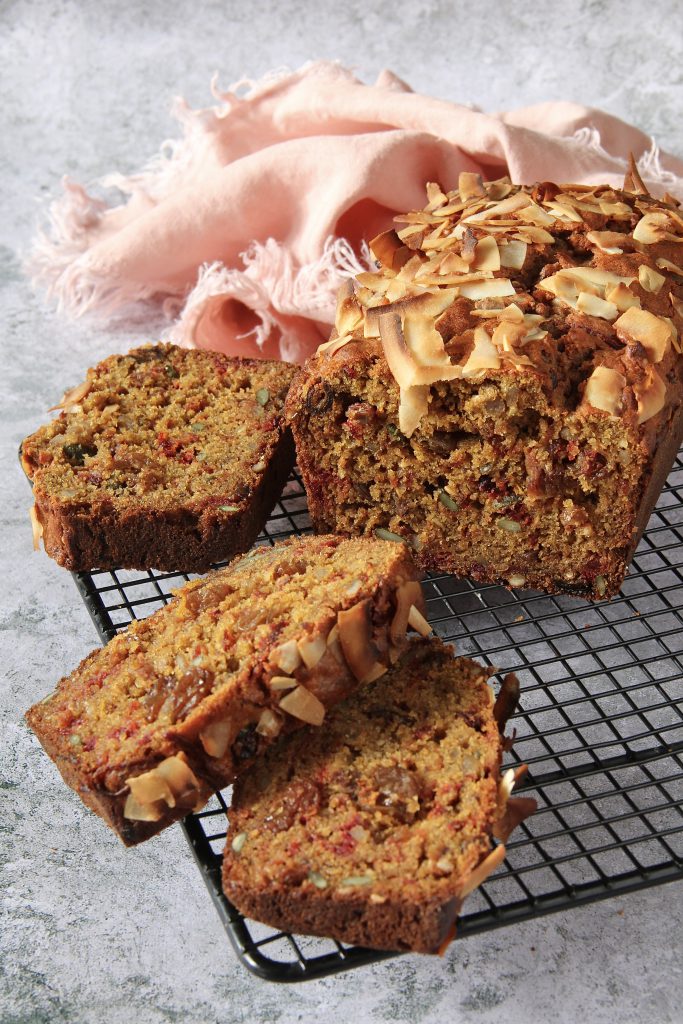
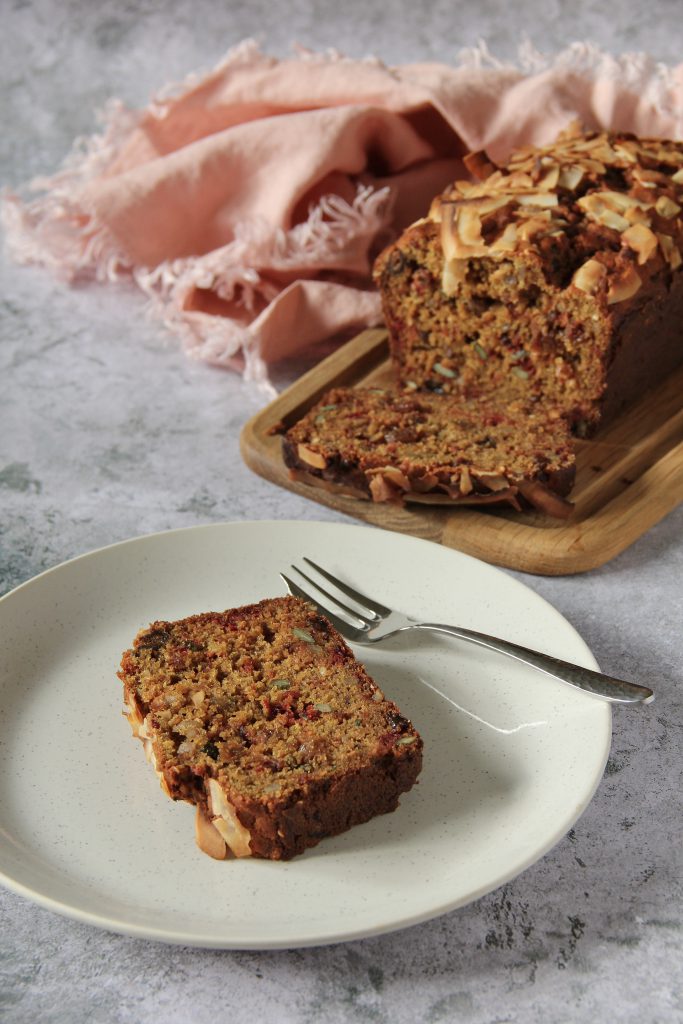
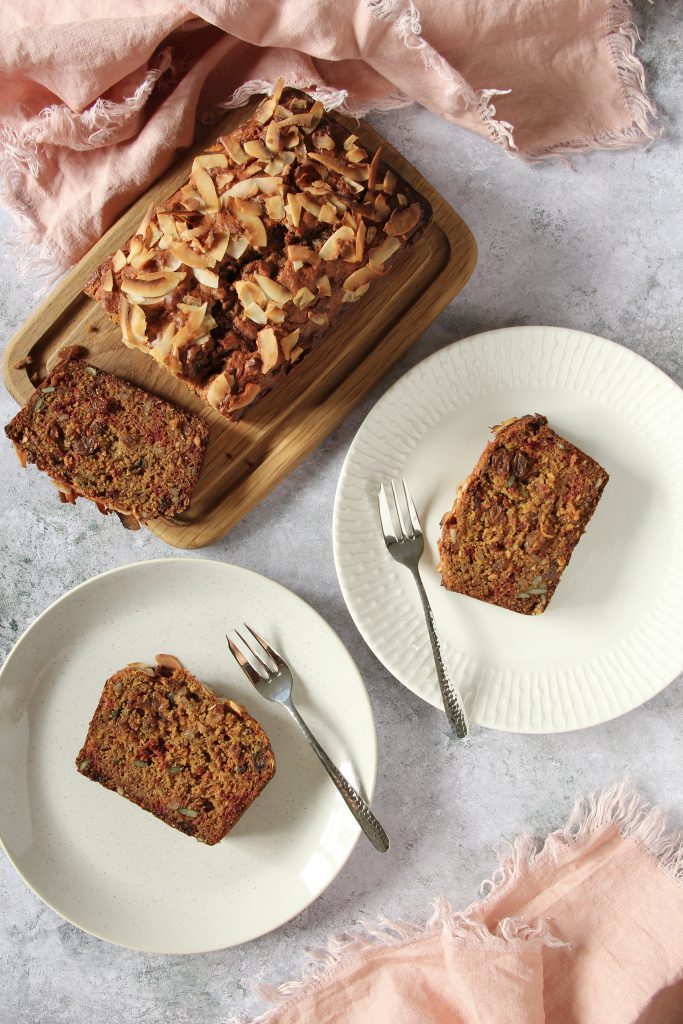
Seeded Beetroot Cake

This recipe was inspired by a recipe by Nigel Slater which I started making after growing beetroots for the first time (and rather successfully I might add). We had so many beetroots to use up I had to try to find new recipes to use them in. I thought this recipe was so delicious and was an easy way to use the rapidly growing beetroots.

I decided to make my own version of this cake seeing as there is so much added free sugars in the original recipe. While sugar is sugar at the end of the day, swapping dates in the place of sugar doesn’t make this cake much healthier than the original, but it is a nice twist which adds a little extra fibre diversity into the mix.

It’s also worth point out that while this recipe was going through the developmental stages I learnt that you cannot blend the dates directly with the oil as you would with water. It makes the most sticky mess and I almost gave up! So trust me on this one, blend with the water first and the mix in the oil at the end. That way there won’t be any frustrated cake tears.

Serves 10

Ingredients

  • Butter or oil, for greasing
  • 125g dates
  • 2 eggs, separated
  • Zest and juice of half a lemon
  • 180g self-raising flour
  • 1/2 tsp bicarbonate of soda
  • 1 tsp baking powder
  • 1/2 tsp ground cinnamon
  • 120ml extra virgin olive oil
  • 170g/5oz raw beetroot, peeled and grated
  • 75g/3oz sultanas or raisins
  • 75g/3oz mixed seeds (such as sunflower, pumpkin and linseed)
  • 10g coconut flakes

Method

  • Preheat the oven to 180°C fan/200°C convection.
  • Line a 1lb bread tin with baking parchment and grease the sides lightly.
  • In a jug, blend the dates and 50ml boiling water to a thick paste consistency. Add the egg yolks and lemon juice and mix before adding the oil and grated beetroot.
  • In a separate bowl, sieve the flour, bicarbonate of soda, baking powder and cinnamon together. Add the lemon zest, sultanas and seeds, mixing to evenly disperse them.
  • In a clean bowl, beat the egg whites to a soft peak consistency.
  • Mix the beetroot mixture with the dry ingredients, mixing to a batter before gently folding the egg whites in.
  • Pour into the lined tin, top with coconut flakes and bake for 40-45 minutes, covering with foil after 20 minutes. The cake is cooked when a skewer inserted into the middle of the cake comes out clean.
  • Leave to cool in the tin for 20 minutes before turning out onto a wire rack to cool completely.

Per slice: 291kcal/ 16.6g fat/ 2.9g saturated fat/ 28.9g carbohydrates/ 2.8g fibre/ 5.8g protein

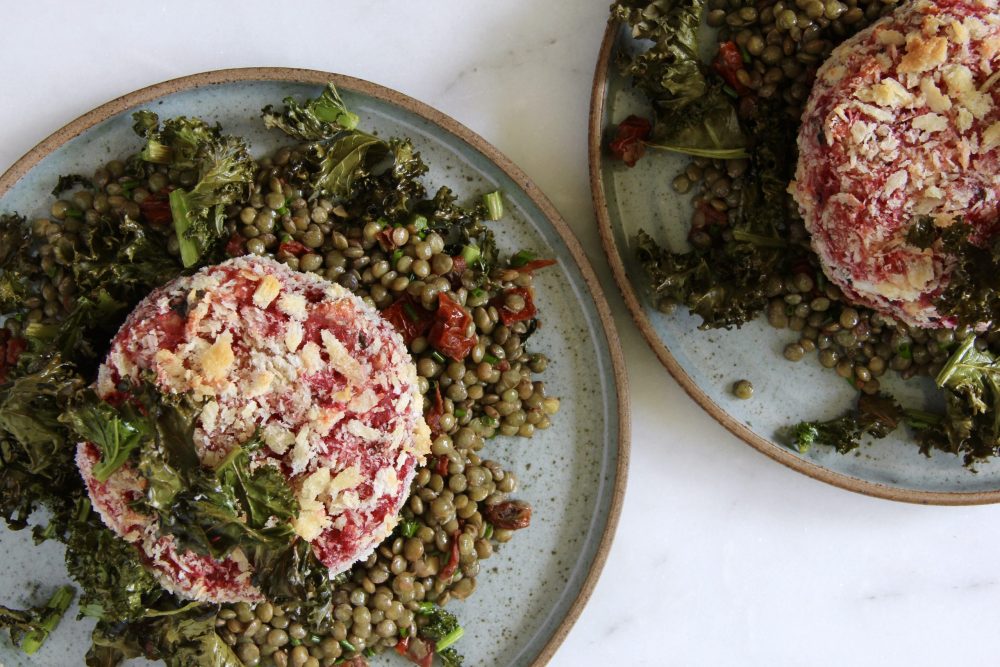
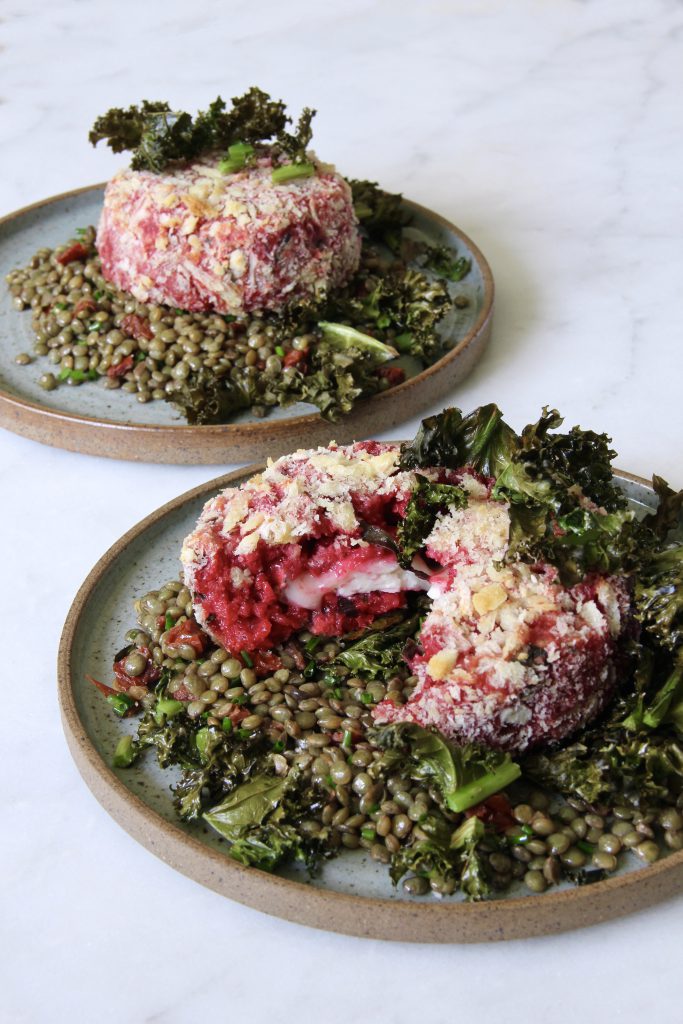
Goat Cheese Stuffed Beetroot Risotto Cakes

Got some leftover risotto from my Beetroot and Goat Cheese Risotto recipe? Here’s how to turn it into a delicious alternative dish which will give you an excuse to make extra risotto next time! Alternatively, you could make these beetroot and goat cheese risotto cakes from the get-go, but it’s best to cool the mixture in the fridge overnight. This is also a handy way of increasing resistant starch, something our bodies are unable to digest, but the microbes in our guts love them and it makes them happy!

Serves 2

Ingredients

  • 40g goat cheese, cut into 2 slices
  • 300g leftover beetroot risotto, chilled in the fridge overnight
  • 30g plain flour
  • 1 small egg, beaten
  • 50g breadcrumbs, I have used panko
  • 1 tbsp extra virgin olive oil

Method

  • Preheat the over to 180°C fan, 200°C convection.
  • Take the beetroot risotto and fill a food ring halfway up with the risotto.
  • Place the goat cheese slice into the centre and completely cover with more risotto mixture, ensuring the cheese is fully encased.
  • Season the flour and then dust the risotto cake on all sides with the flour, evenly coating all the sides.
  • Coat the rice cake in the beaten egg before rolling in the panko breadcrumbs.
  • Place on a lined baking tray, drizzle with the olive oil.
  • Bake for 15 minutes till golden brown and crispy.

Delicious served with a warm salad of lentils and crispy kale as made in my Roasted Squash, Kale and Lentil Winter Salad.

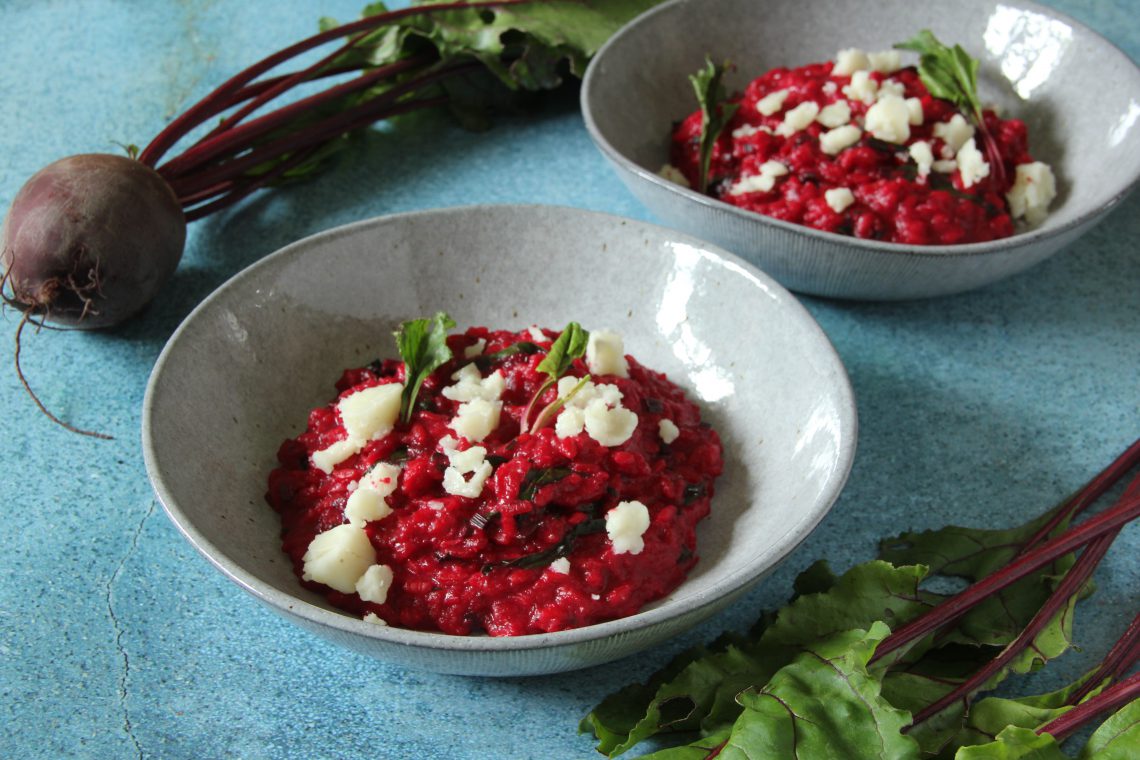
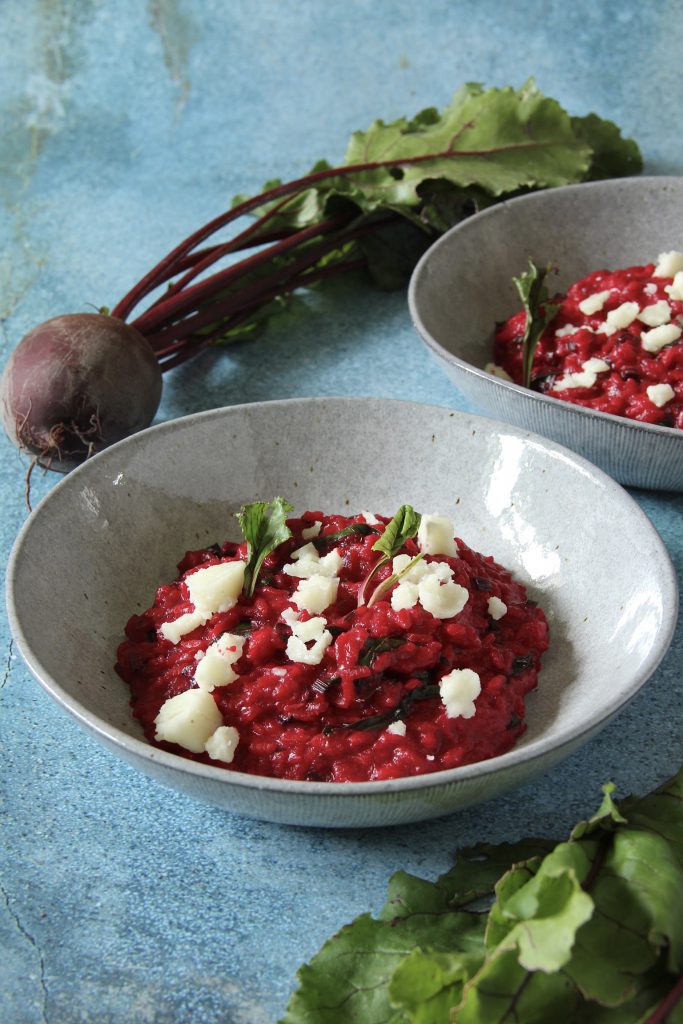
Beetroot and Goat Cheese Risotto

I love the colour of this dish. It can’t help but put a smile on your face. Such a bright red-pink colour from the fresh beetroots and it’s something that will also make your gut microbiota smile too…. if they had faces!

Beetroots are naturally high in nitrates, something that has been found to help reduce blood pressure, improve blood flow and possibly have an effect on athletic performance. How? Nitrates are converted to nitric oxide in the body, which has an effect on our blood vessels, dilating them and allowing greater delivery of oxygenated blood to our muscles when consumed prior to exercise.

A 2013 review of UK and Australian studies concluded that the nitrates in the beetroot (usually consumed as beetroot juice) can help improve endurance as measured by time to exhaustion. There are also benefits to gym-goers too as a separate study, conducted in 2016, found that beetroot juice improved performance in resistance training. Those who consumed a 70ml shot of beetroot juice (400mg nitrate) prior to training were able to complete more reps to failure compared with those taking a placebo control.

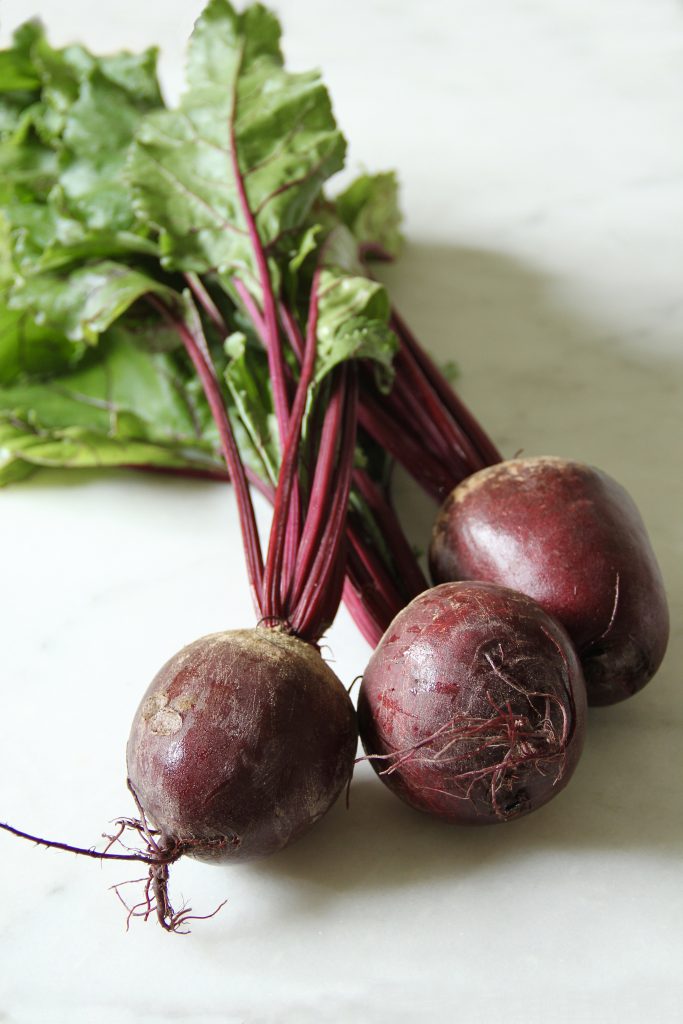
If you don’t have fresh beetroot you can use pre-cooked beetroots, but the colour will be slightly faded due to the high temperatures used to vacuum pack and store them. Simply skip boiling the beetroot, blending directly into the hot stock, and start the risotto straight away. Another alternative would be to buy beetroot juice, however, the fibre will be removed from this, so I would use this if it is your only option available. If you don’t have the leaves still attached to the beetroot, try using spinach, rainbow chard, or kale as an alternative.

Serves 4 as a main course

Ingredients

  • 350g peeled beetroot, cubed
  • 10g stock powder
  • 2 onions, finely diced
  • 30ml extra virgin olive oil
  • 3 garlic cloves, finely chopped
  • 300g risotto rice
  • 150ml white wine
  • 4 sprigs of thyme
  • 60g parmesan, grated
  • 150g beetroot leaves, roughly chopped
  • 60g goats cheese

Method

  • Place the beetroot and stock powder into a large pan and add 400ml boiling water. Cook for 10 minutes to soften the beetroot and blend till smooth. Return to the heat and keep ward without boiling.
  • Meanwhile, sweat the onions in the oil till soft and translucent. Add the garlic and cook for a further 2 minutes.
  • Add the rice, coating all the grains in the oil and gently toast before adding the white wine. Stir continuously.
  • Once the wine has been absorbed by the rice, add a ladle of beetroot stock. Keep stirring and adding stock till all the stock has been used up. If you need to use more liquid, add boiling water.
  • When the rice is almost cooked to al dente, add the beetroot leaves and allow to wilt.
  • Take off the heat and stir in the parmesan cheese.
  • Plate up and crumble the goat cheese over the top.

Per serving: 488kcal/ 11.0g fat/ 6.2g saturated fat/ 72.0g carbohydrates/ 5.0g fibre/ 17.4g protein