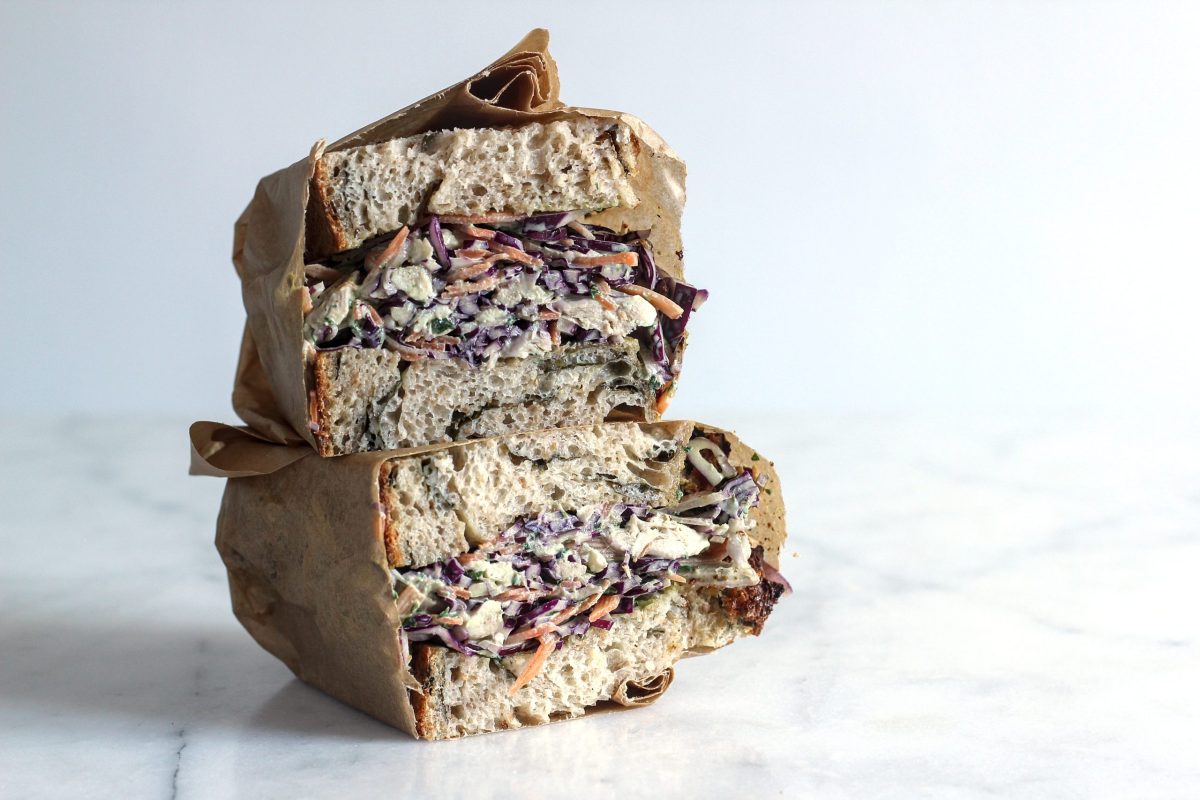
I couldn’t get the thought of this sandwich out of my head, so I had to make it! I thought the green of the wild garlic running through the mayonnaise would be much brighter, but I do love the way the purple and orange colours of the slaw still shine through.
If you don’t eat meat this would be delicious with some crushed chickpeas, or some slices of tofu crisped up in a pan or in the oven.
For the mayo
1 egg yolk
1 tsp dijon mustard
Juice of half a large lemon
100ml extra virgin olive oil
50g wild garlic, roughly chopped
For the slaw filling
1/2 an onion, finely sliced
100g red cabbage, finely sliced
1 large carrot, finely sliced
2 chicken thighs, cooked, cooled and torn into strips
Method
Make the mayo by adding the egg yolk, mustard, lemon and around 25ml oil and mix together using an emersion blender. Slowly add the remaining oil to make a thick emulsion. Add the wild garlic and blend in.
Mix the slaw ingredients together with 2/3 of the mayo and then layer thickly into slices of sourdough to make 2 deep-filled sandwiches.
Wrap the sandwiches in paper to hold while you cut them in half.
I’m still trying to savour the wild garlic season, and I love baking it into bread. You can freeze the bread and use it in the months to come so further preserve the flavour of it.
For more information about making sourdough and the various stages visit my page on sourdough bread.
Makes 2 x 9″ square tins, but you could bake one large, or make a very deep focaccia
Ingredients
150g levain, refreshed 8-12 hours earlier
15ml extra virgin olive oil plus extra for later
150g wholemeal bread flour
600g white bread flour
12g salt plus extra to top
A big bunch of wild garlic, roughly chopped – the more you put in the more garlicky the flavour
A few sprigs of rosemary (optional)
Method
Mix the levain, 500ml water and 15ml olive oil together before adding the flours and mixing to make a shaggy dough. Leave for 30 minutes covered.
Mix 12g of salt with 75ml water till dissolved, and pour over the dough, scrunching the dough with your hand to mix it in. The dough should look very rough and almost broken into small pieces. Cover and leave for 45 minutes.
Over the next few hours complete 4 sets of coil folds, adding the wild garlic in during the 2nd coil fold, allowing the dough to rest for 45-60 minute between each fold.
Grease two non-stick baking trays with olive oil (if not using non-stick line with baking parchment and add olive oil to the parchment). Tip out don’t the work surface and divide the dough into two. Gently transfer to the baking tray and push the dough over the surface so it reaches the corners as best you can – there will be some resistance so don’t force it.
Cover the dough and leave in the fridge to slowly rise overnight – anywhere between 8-24 hours depending on your schedule
The next day preheat your oven to maximum temperature, add a small empty tray to the bottom of the oven for steam later, and remove the focaccia from the fridge.
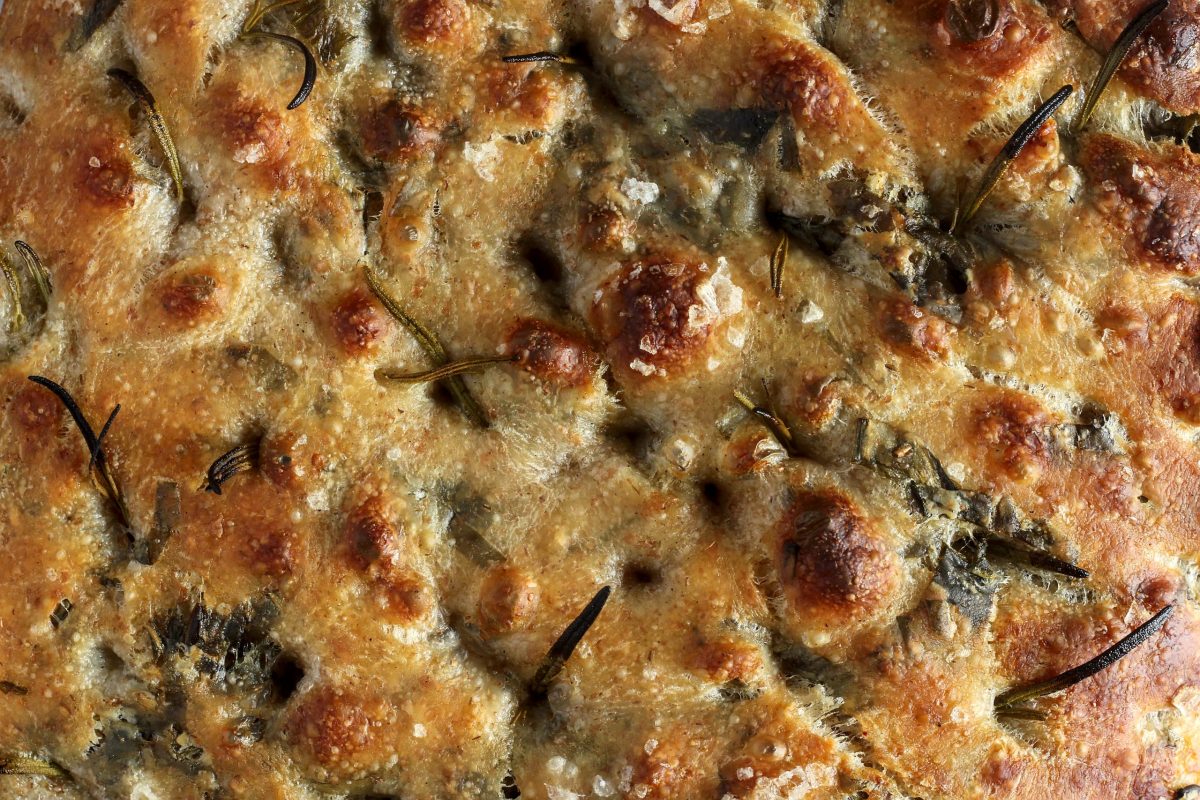
Once the oven is up to temperature, uncover the dough and drizzle with a little olive oil. Using wet fingers, press your fingertips through the surface of the dough to create plenty of dimples. Add rosemary to the dimples, sprinkle with a little extra salt and then flick water over the surface of your dough with your fingertips. Adding extra moisture will give a softer crust, so if you want a very crispy top omit this step along with the steam.
Place the focaccia in the oven, adding water into the hot tray to create steam, closing the door as quickly as possible to trap the steam in, and reduce the oven temperature to 225°C fan/ 245°C convection for 20 minutes.
Remove the tray with water and bake for another 5 minutes* till the crust is golden.
Remove from the oven, and allow to cool on a wire rack.
Wild Garlic Sourdough Focaccia
*if baking a thicker focaccia you may need an extra 5-10 minutes to fully cook the dough.
If the thought of making hot cross buns with chocolate and orange is too exotic for you, why not try my Best of Both Apple and Cinnamon Hot Cross Buns which are more traditional. But for anyone who isn’t put off by the thoughts of an unconventional hot cross bun, you’re in the right place!
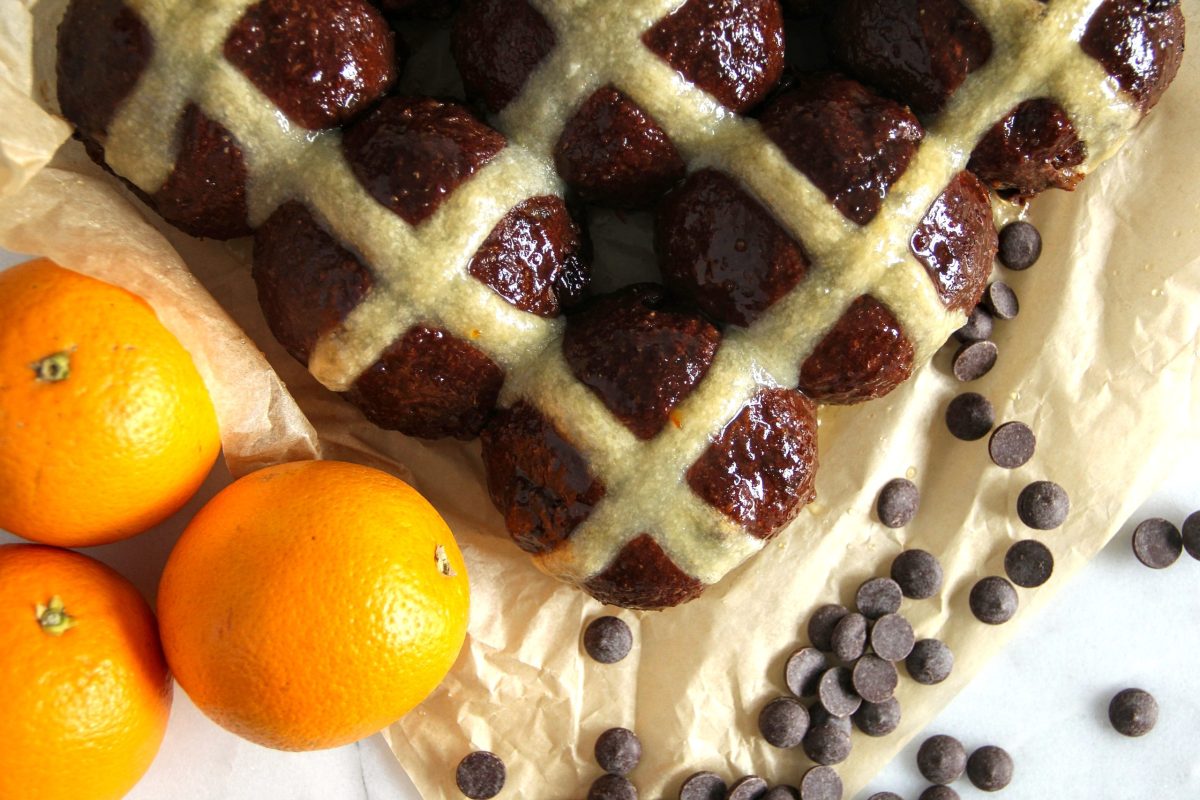
My Best of Both Chocolate Orange Hot Cross Buns are the perfect combination of sweet, fruity and spiced goodness. They’re also best of both as they use wholemeal flour to help add extra fibre to the buns, meaning each serving provides you with over 5g of fibre, helping you achieve the daily recommendation of 30g.
Makes 9 buns
Ingredients
For the buns
175g strong wholemeal flour
150g strong white flour
25g cocoa powder
30g caster sugar
2 tsp ground cinnamon
1 tsp ground mixed spice
7g fast action yeast
50g butter, melted
Zest of 2 large oranges
Juice of 2 large oranges (175ml juice with a little of the pulp, made up with water if needed)
1 egg
60g sultanas
60g mixed peel
60g dark chocolate chips
For the crosses
10g butter
40g strong white flour
45ml water
For the glaze
50g marmalade
40ml water
Method
Add all the dried ingredients for the buns, except the dried fruit and chocolate, into a stand mixer. Add the butter, egg and orange zest and juice. Mix on a low speed for 10 minutes – the dough should be just sticky. After 10 minutes add the dried fruit and chocolate and mix for a further 2 minutes till incorporated. Form into a ball, cover, and allow to rise till doubled in size for around 1.5 hours.
Once the dough has doubled in size, knock it back and divide the ball into 9 equal pieces. Roll each piece into a tight ball without any fruit sticking out the top as these will burn. Place the balls in a 3×3 formation in a baking tin roughly 20cmx20cm lined with baking parchment. Cover and allow to prove for 30 minutes.
Preheat the oven to 200°C fan.
Melt the butter for the crosses and then whisk in the flour and water to make a thick pipe-able paste. Transfer into a piping bag and snip the end to make a small hole. Pipe crosses (or whatever you fancy) across the tops of the buns. Bake in the oven for 15 minutes till golden brown.
Meanwhile, in a saucepan, heat the water and marmalade to make the glaze.
Once the buns are cooker, immediately brush with the glaze.
Transfer to a wire rack, remove the baking parchment and allow to cool.
Per bun: 328kcal/ 9.6g fat/ 5.4g saturated fat/ 50.0g carbohydrates/ 5.4g fibre/ 7.9g protein
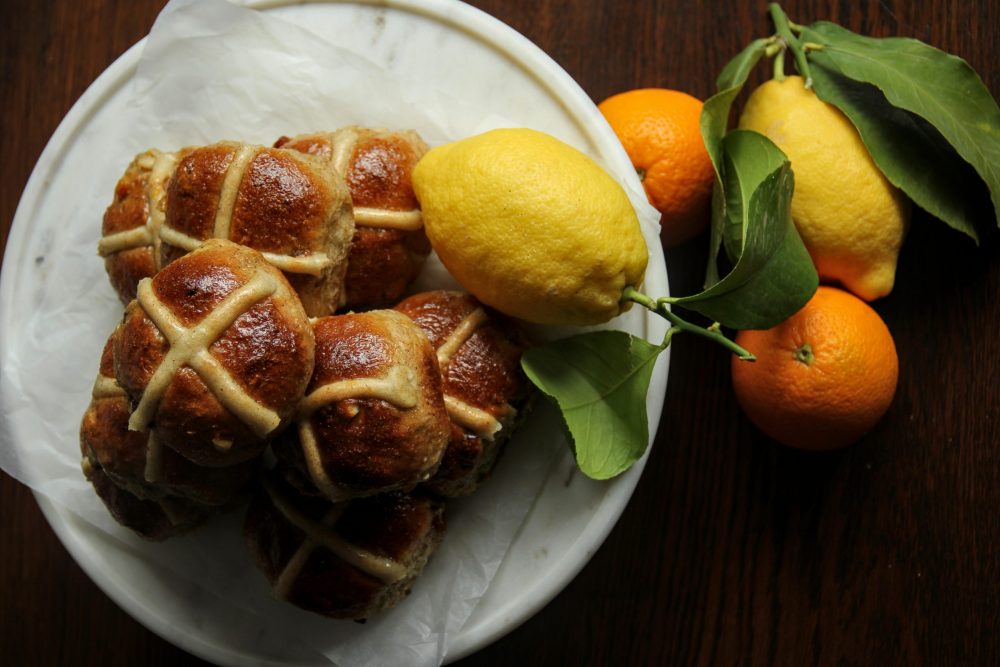
These citrusy hot cross buns are plant-based using vegetable oil and dairy-free milk to create an enriched dough without the use of dairy and eggs.
St. Clement Hot Cross Buns
Makes 9 buns
Ingredients
For the buns
2 oranges, zest and juice
100g sultanas
100g strong wholemeal flour
250g white strong flour
30g rapeseed oil, plus a little extra
7g yeast
30g caster sugar
50g mixed peel
2 tsp ground mixed spice
125ml milk, I have used unsweetened soya milk
For the crosses
5ml rapeseed oil
25g strong white flour
25-30ml water
For the glaze
50ml of reserved juice from the oranges
15g sugar
pinch of ground mixed spice
Buns ready to be bakes
Fresh out of the oven and glazed
Method
Zest and juice the oranges, reserving 50ml of the juice for later.
Weigh out the remaining orange juice and top up to 100ml if needed with water. Add the sultanas and allow to soak while you prepare the rest of the ingredients.
To a freestanding mixer bowl, add the flours, oil, yeast, sugar, mixed peel spices, soya milk and orange zest. Add in the orange juice and sultanas and knead for 5 minutes on a medium setting. Alternatively you can do this by hand but resist the temptation to add more flour – the dough should be ever so slightly sticky.
Lightly great a large bowl the oil, place the dough in and cover. Allow to double in size for 1-2 hours.
Knock the dough back and evenly divide into 9 balls.
Line a baking tin with baking paper and arrange the balls in a 3×3 format.
Cover and allow to double in size again, about 1-1.5 hours.
Once the dough has almost fully risen, preheat the oven to 200°C fan/ 220°C convection.
Prepare the batter by mixing the ingredients together to form a smooth pipeable mixture. Place into a piping bag.
Once the oven it up to temperature, pipe crosses over the tops of your buns.
Bake for 15 minutes.
Meanwhile, prepare the glaze by heating the orange juice, sugar and spices together till the sugar has dissolved.
Once the buns are cooked, generously glaze them, using all of the liquid.
Remove the buns from the tray onto a wire cooking rack, removing the baking parchment as well.
Best enjoyed fresh on the same day, or delicious toasted if a day or two old.
Per bun*: 254kcal/ 4.6g fat/ 0.4g saturated fat/ 46g carbohydrates/ 2.8g fibre/ 6.1g protein
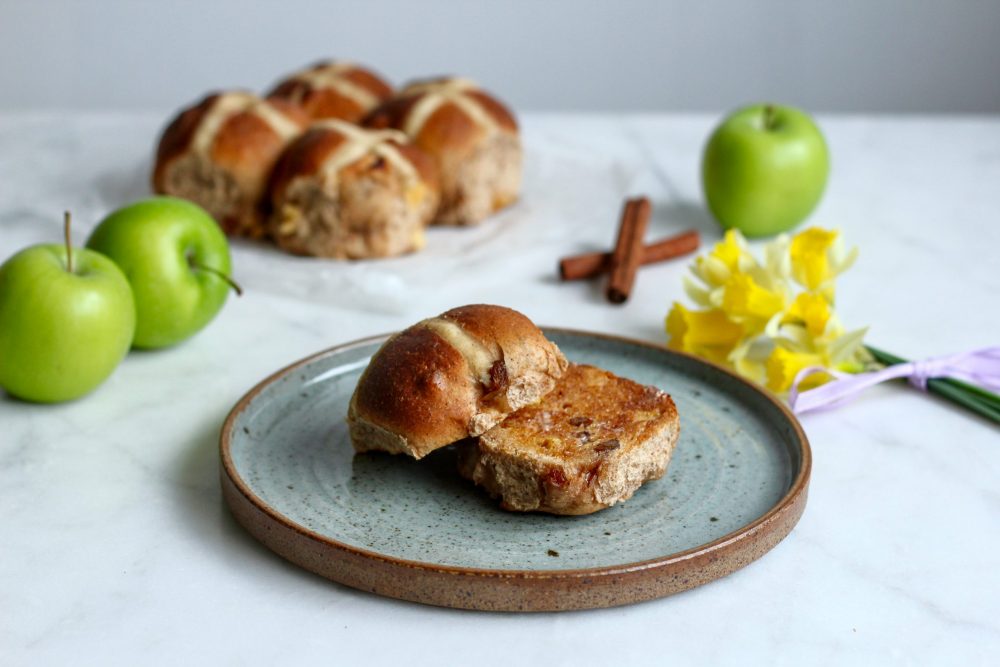
Best of both Apple and Cinnamon Hot Cross Buns combining the goodness of wholemeal flour with sweet cinnamon and apple to give a delicious but healthy twist to this Easter classic. This recipe is adapted from Julie Jones‘s Soulful Baker cookbook.
Makes 9 buns
Ingredients
For the buns
50g butter, melted
175g strong white flour
175g strong wholemeal flour
35g caster sugar
1 tsp ground mixed spice
2 tsp ground cinnamon
7g fast action yeast
Up to 160ml tepid water
1 egg
50g sultanas
50g dried apple, roughly chopped
For the crosses
10g butter
40g strong white flour
45ml water
For the glaze
75ml water
1 tbsp sugar
1 large pinch cinnamon
1 large pinch ground mixed spice
Method
Add all the dried ingredients for the buns, except the fruit, into a stand mixer. Add the butter, egg and 150ml water.
Mix on a low speed for 10 minutes, adding the remaining 10ml of water if the dough looks a little dry – it should be just sticky.
After 10 minutes add the dried fruit and mix for a further 2 minutes till incorporated.
Form into a ball, cover, and allow to rise till doubled in size for around 1.5 hours.
Once the dough has doubled in size, knock it back and divide the ball into 9 equal pieces.
Roll each piece into a tight ball without any fruit sticking out the top as these will burn.
Place the balls in a 3×3 formation in a baking tin roughly 20cmx20cm lined with baking parchment.
Cover and allow to prove for 30 minutes.
Preheat the oven to 200°C fan.
Melt the butter for the crosses and then whisk in the flour and water to make a thick pipe-able paste. Transfer into a piping bag and snip the end to make a small hole.
Pipe crosses (or whatever you fancy) across the tops of the buns.
Bake in the oven for 15 minutes till golden brown.
Meanwhile, in a saucepan, heat the water, sugar and spices to make the glaze.
Once the buns are cooker, immediately brush with the glaze.
Transfer to a wire rack, remove the baking parchment and allow to cool.
Per bun: 256kcal/ 6.6g fat/ 3.6g saturated fat/ 40.0g carbohydrates/ 5.2g fibre/ 7.8g protein
I always seem to have too much kefir, and never enough when I actually want to use it for my breakfast! If, like me, you seem to be making a lot of kefir for it to go too sour for your taste, don’t be fooled into throwing it away. That really upset me at first, when I didn’t understand my grains and fermenting. But I have now solved my kefir overflow problem – flat breads.
These are so easy to make, and taste so delicious you would never know they were made with what something that people would consider throwing away.
While I’ve had a few people scrunch their noses at me when I say I use old kefir to make these, they haven’t tried them and I’m 100% sure they would change their minds as soon as they tasted them.
When kefir goes too far and splits, you get the creamy part at the top and a yellowish clear liquid at the bottom. For me this is fermented too much for me to have in my cereal as is, and rather than waste it, I carefully tip off the clear liquid by holding a spoon to the solid top part and tilting my container. Once I’ve managed to get rid of as much as I dare, I strain the top part of the kefir off through a sieve into a container, take what I want for my breakfast, and leave the rest in the fridge. The kefir grains are then return to their normal cycle of fresh milk and left on the counter.
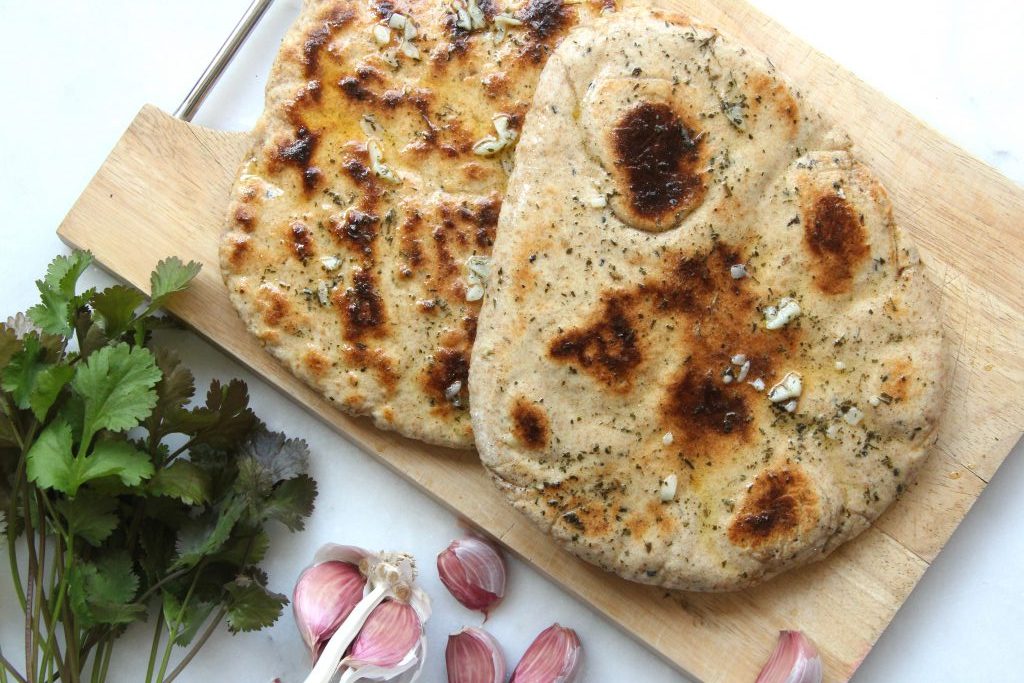
Once I have saved up a few day’s worth of kefir leftovers, I’m ready to make my probiotic loaded flatbreads. You can scale this recipe up or down depending on how much kefir you have, and how many flatbreads you want to make. These taste best fresh out of the pan, so I would only make as many as you can comfortably eat. Simply top them with your favourite sweet or savoury toppings and enjoy. Personally I love some garlic butter melted over the top as they come out fresh from the pan.
Using wholemeal flour is a great way to increase your fibre intake. If you don’t have wholemeal flour, you can use all self raising flour, but halve the baking powder. Or use other flours such as spelt or rye to help increase fibre diversity.
Makes 3 flatbreads
Ingredients
130g kefir, slightly strained
80g self-raising flour
100g wholemeal flour, plus extra for rolling
1 tsp baking powder
1 garlic clove, crushed
10g butter
Method
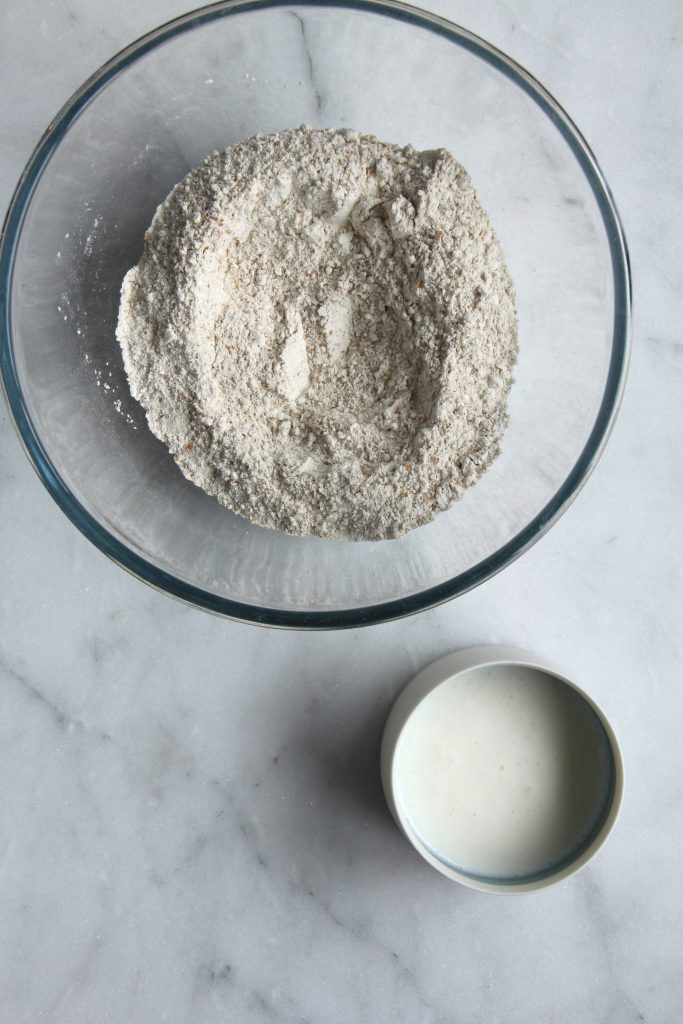
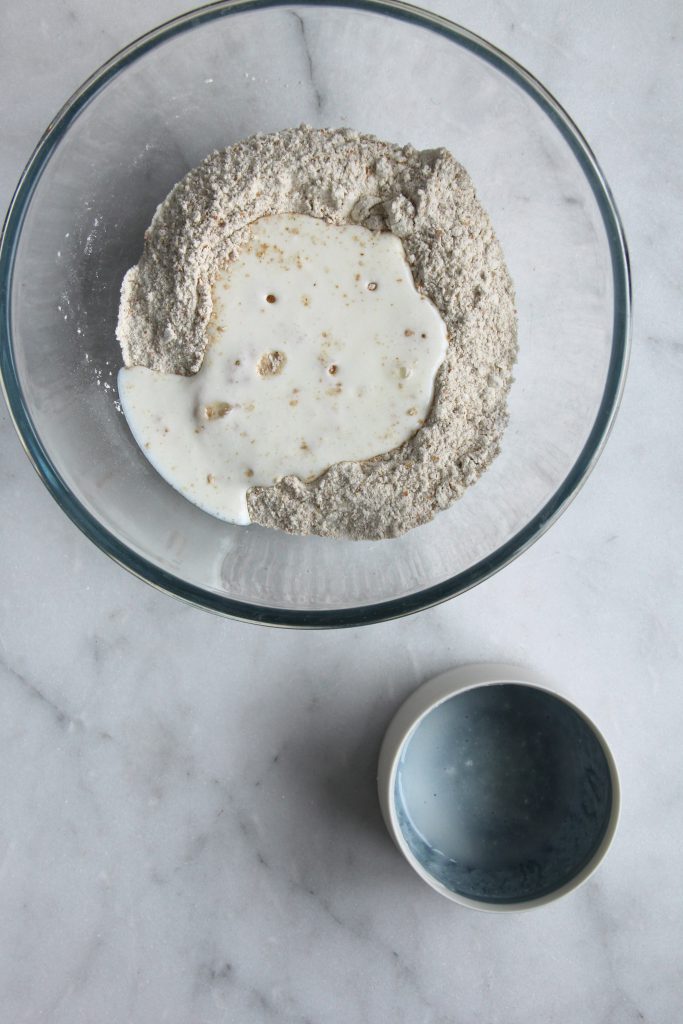
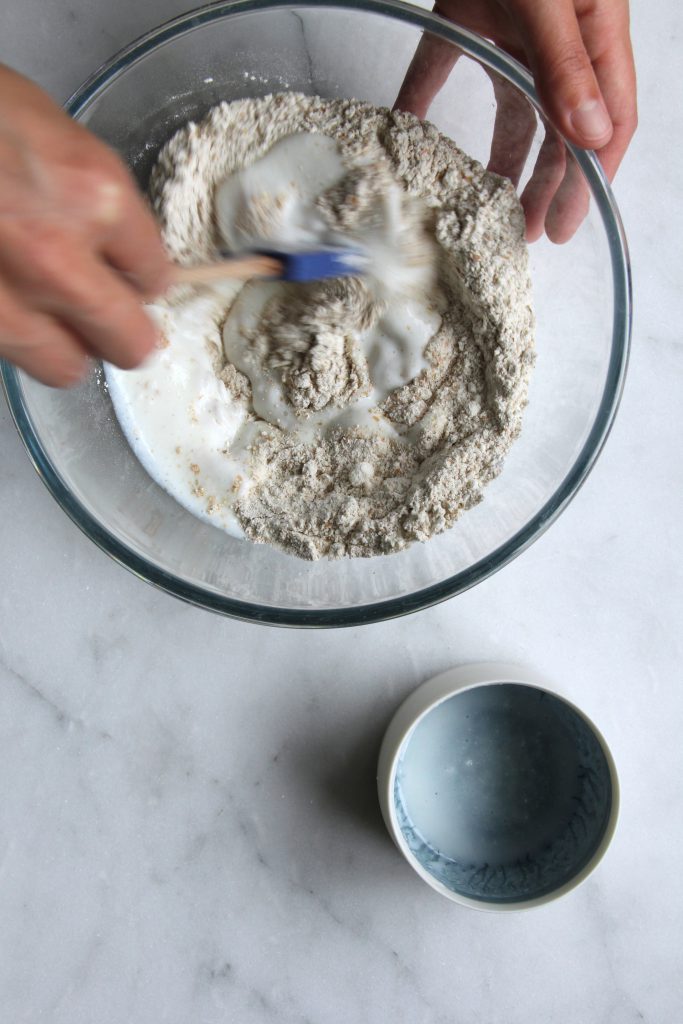
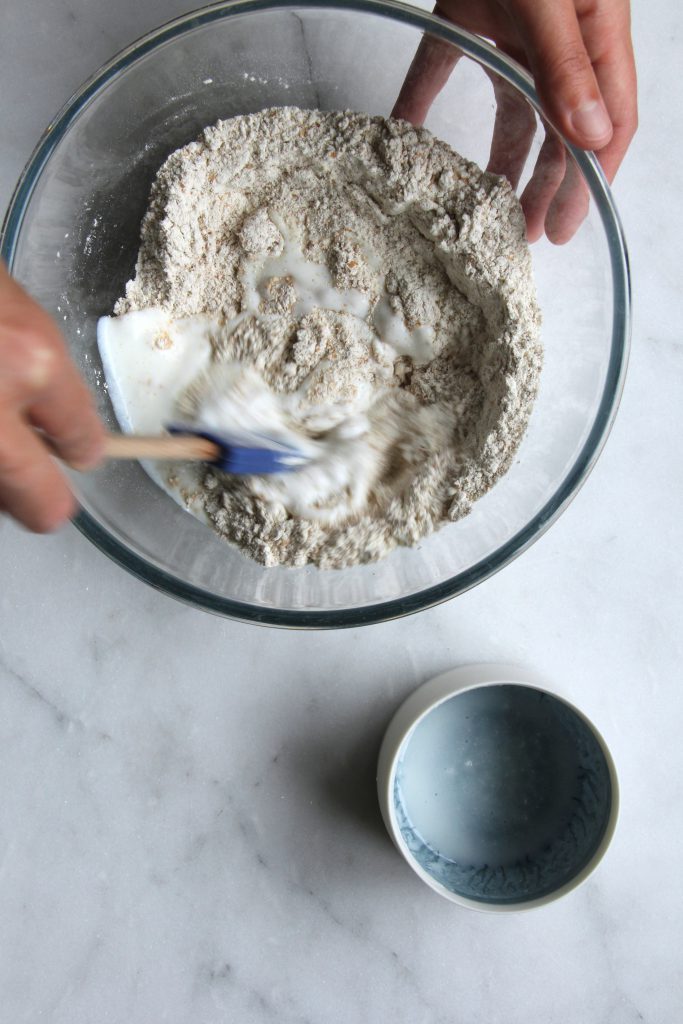
Mix all the dry ingredients together, then add the kefir. If the mixture is too sticky add a little more flour.
Knead for a few minutes till soft and smooth.
Roll out using a little flour to stop it sticking, to the thickness of a pound coin.
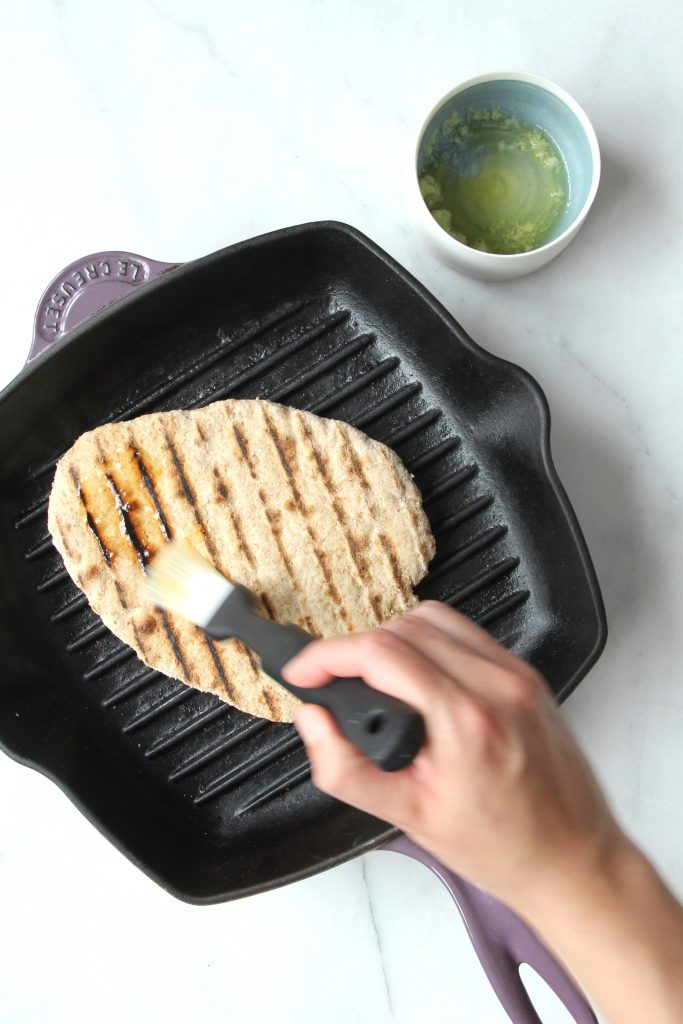
Cook in a dry pan or griddle over a medium heat for 2-3 minutes per side.
Meanwhile, gently heat the garlic and butter together till melted and the garlic fragrant.
Remove from the pan, and brush with garlic butter while hot to allow the flavorous to melt into the bread.
Per flatbread: 332kcal/ 5.2g fat/ 2.8g saturated fat/ 43.6g carbohydrates/ 4.7g fibre/ 7.4g protein
Sourdough. Risen with wild yeast, which come from Bert who lives in my fridge. Something so simple it is literally flour, water and salt. That’s it. It’s as simple as that, yet can be transformed into the most delicious bread. My recipe takes around 36 hours, and while it’s got only a few steps which require a lot of attention, it is well worth the wait. I always make 2 loaves, one to eat fresh on the day, and one sliced and frozen ready for eating later in the week.
If you haven’t got a starter, there’s no reason you can’t make one and have it ready to bake with in a week. Simply start by mixing 50% wholemeal and 50% white plain flour together. Take a handful and mix it with lukewarm water and leave in a cool area for a few days. Once you see bubbles forming, start to feed you starter by discarding about 80%, and adding 1:1 water and 50/50 flour blend to make a thick batter. Repeat this process ever day till it predictively rises and falls between feeds.
Makes 2 small loves, 1 large loaf, 3 pizza bases, or 1 large focaccia
Recipe
15g starter
25g wholemeal flour
25g plain flour + extra for dusting
100g strong wholemeal flour
400g strong white flour
8g salt
Seeds (optional)
Rice flour
Ice cubes
Method
Start the night before you plan to make the dough. Take 15g of your starter culture, add 50ml lukewarm water, 25g wholemeal flour and 25g plain white flour and mix well. Leave covered overnight at room temperature for around 10 hours. This is your leaven.
The next morning, mix the strong flours together in a large container. Measure 300ml of 25°C water, add 100g of leaven and mix. Pour over the flour and mix till a stiff dough forms. Cover and leave to rest for 30-45 minutes.
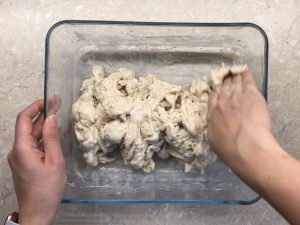
Measure 50ml of 25°C water and add 8g of salt. Stir to dissolve and pour over the dough. Mix in, scrunching and breaking the dough up. Once fully mixed cover and rest for 45-60 minutes.
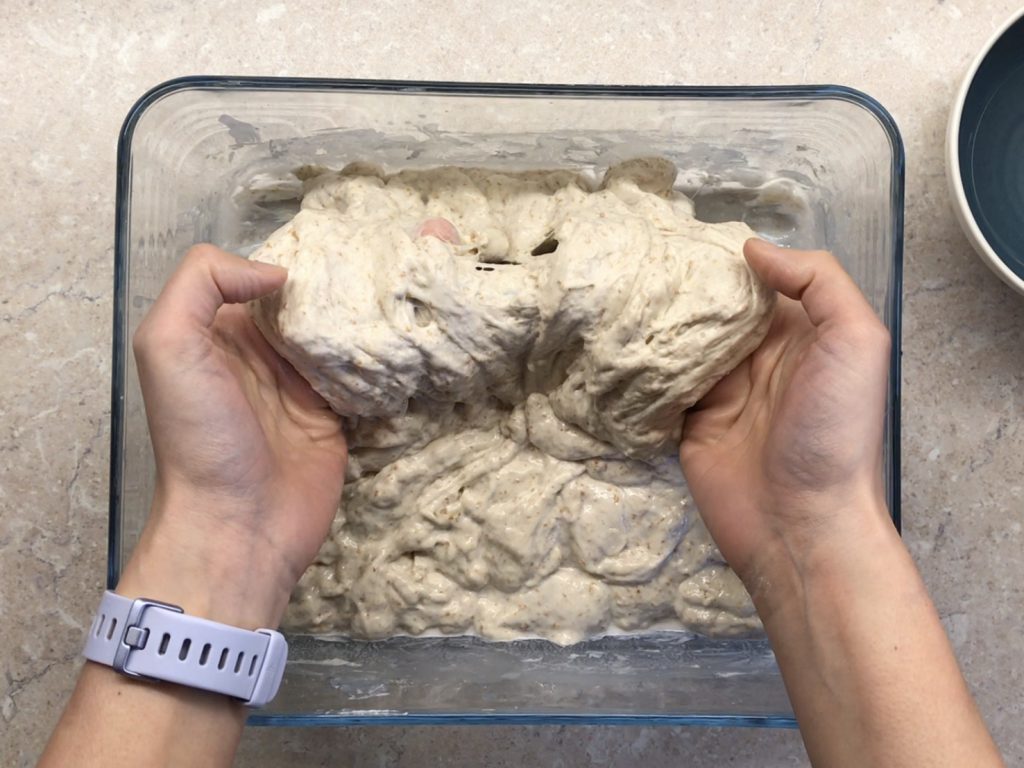
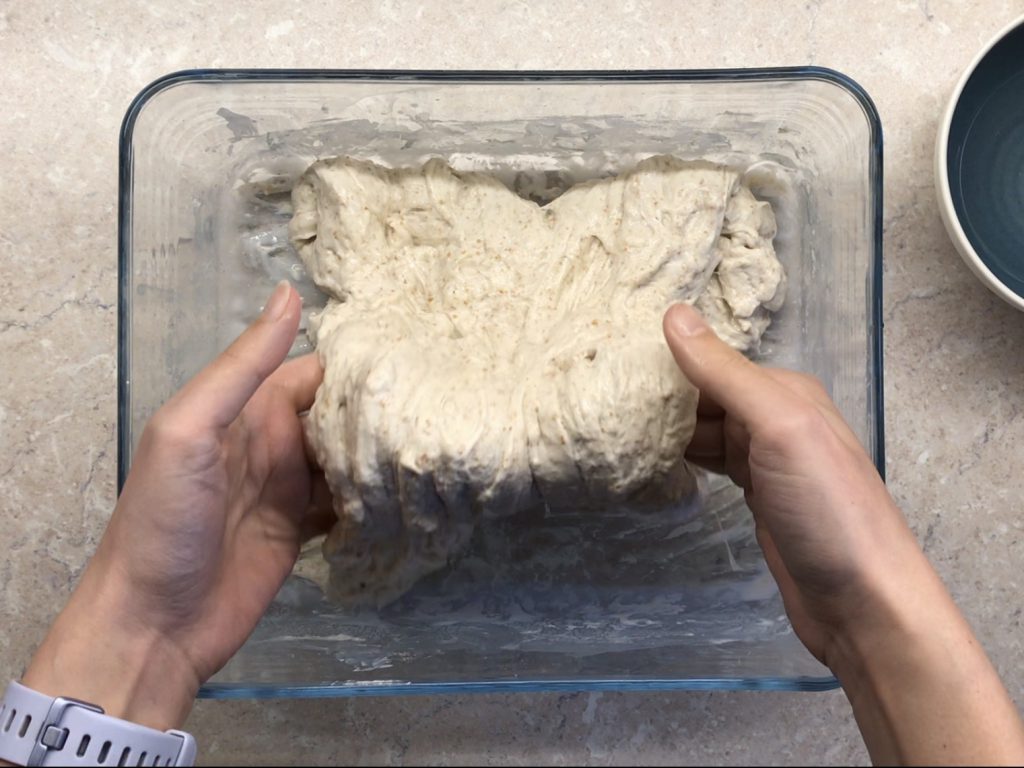
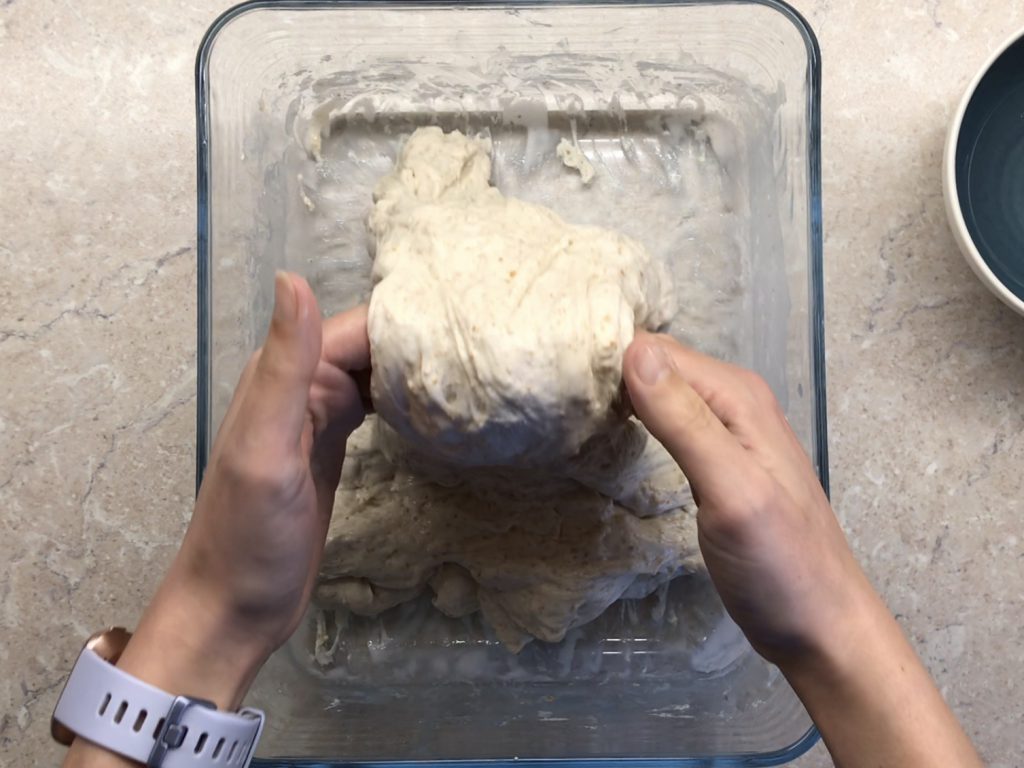
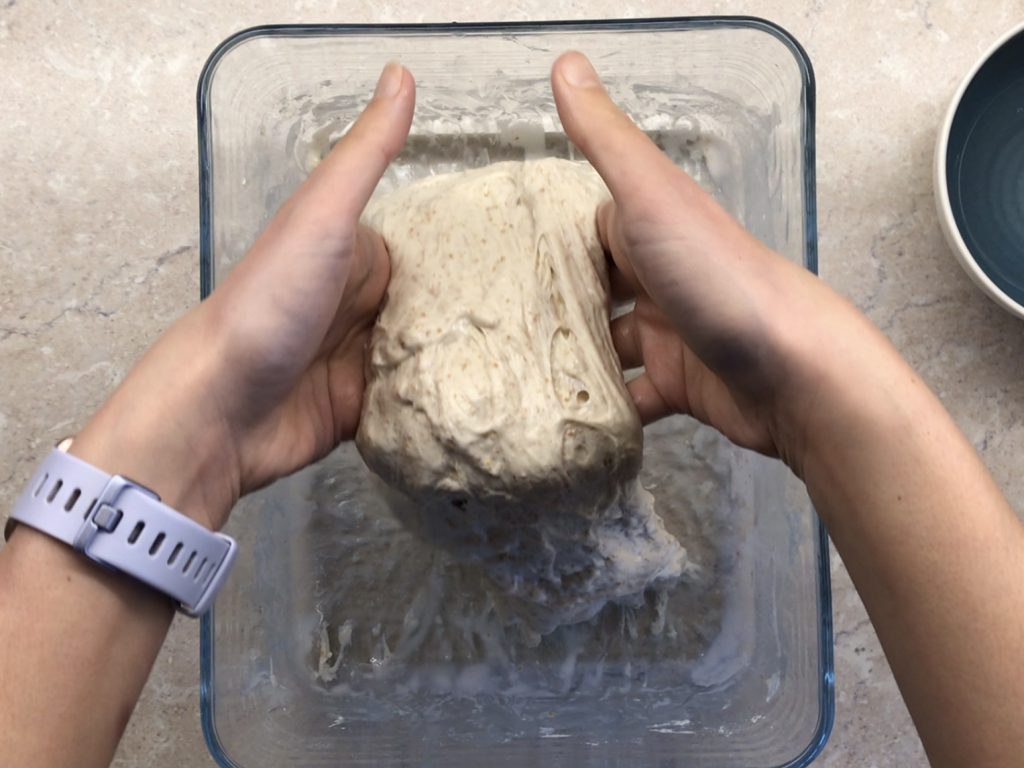
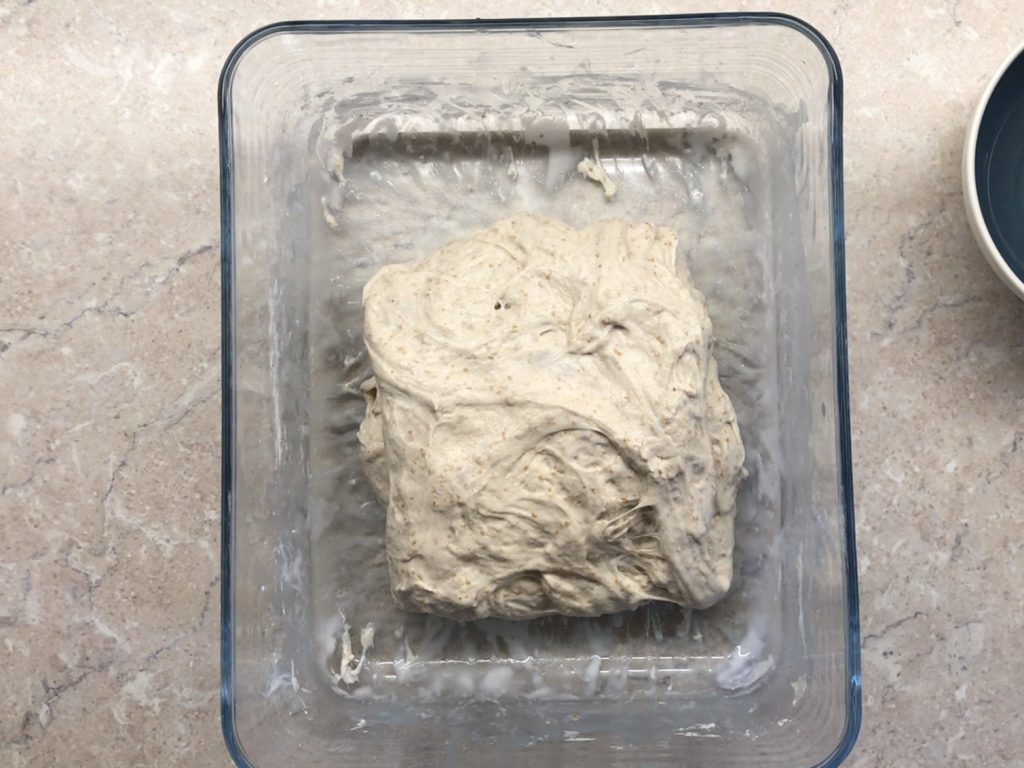
Dipping your hands in water to prevent the dough from sticking to you, perform a coil turn. Start by folding the top half of the dough under itself. Repeat for the bottom half of the dough. Turn the container 90° and repeat the process, folding the top half of the dough underneath itself and the bottom half of the dough underneath itself. This is one coil foil. Cover and leave for 45-60 minutes.
Repeat the process 3 more times. If you wish to add anything to the dough, do it before performing the second coil fold.
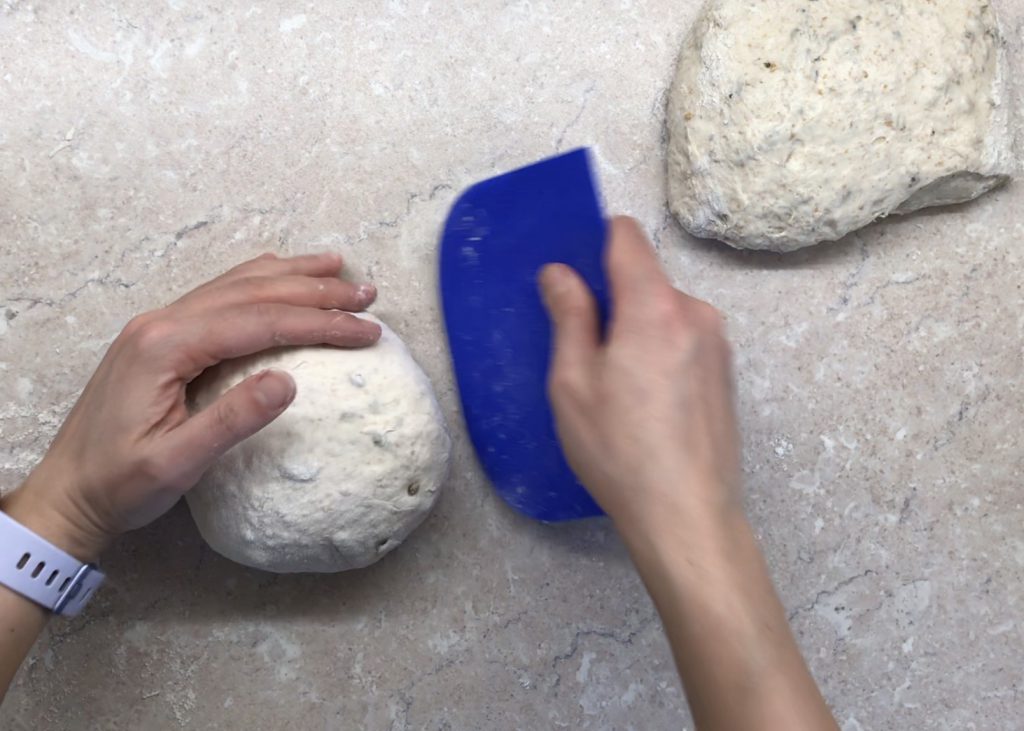
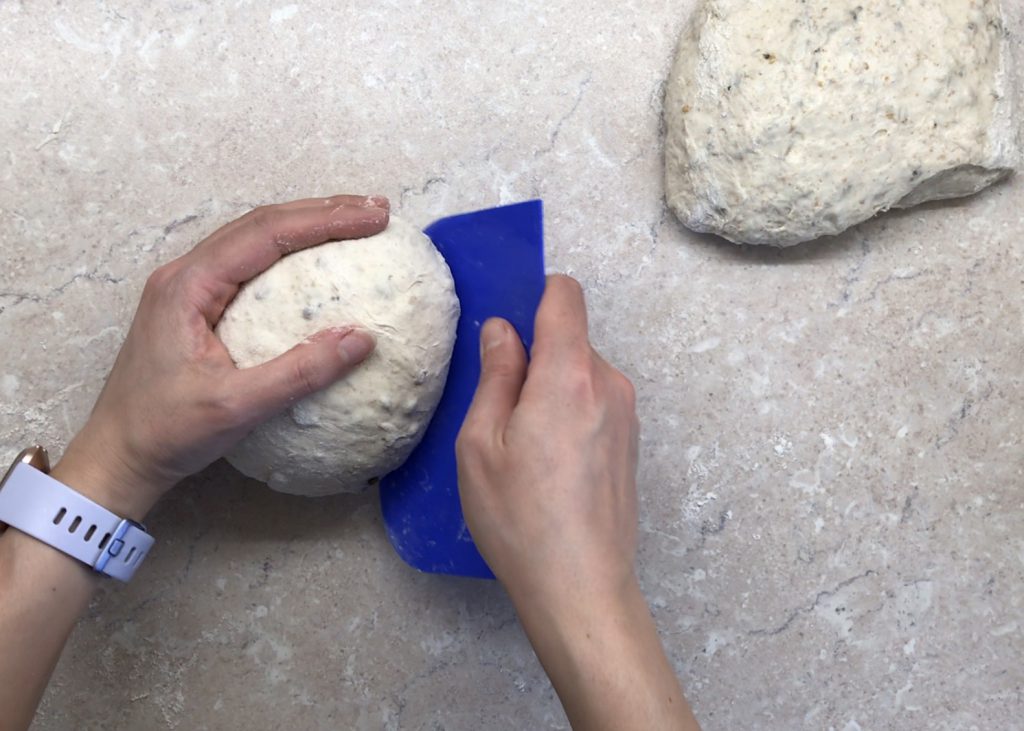
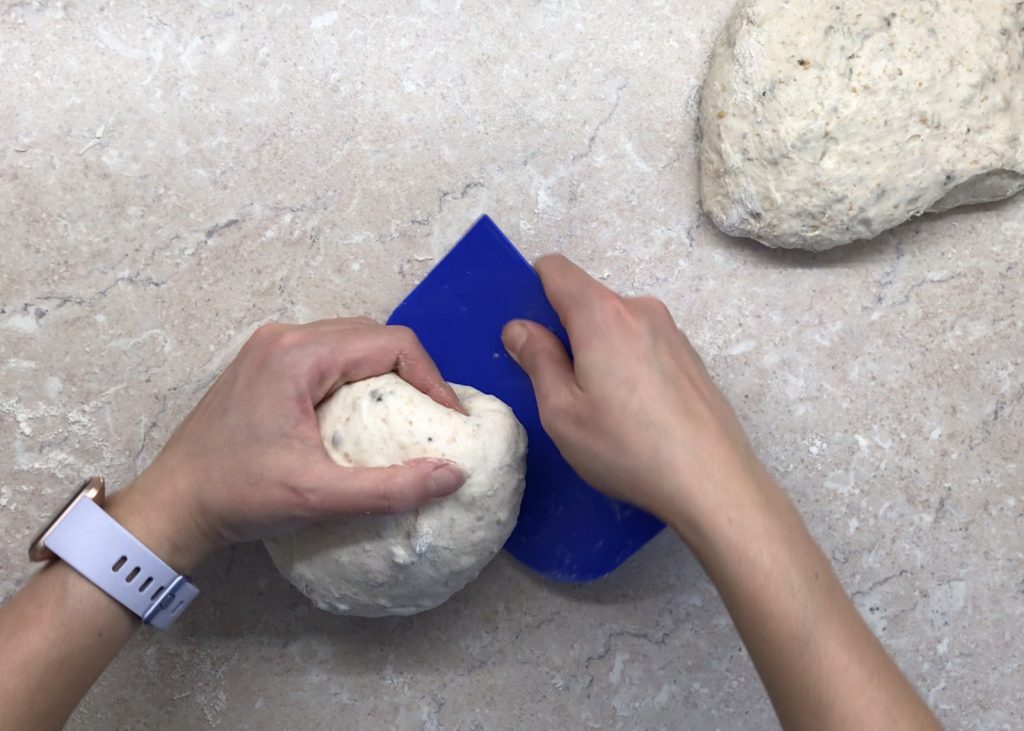
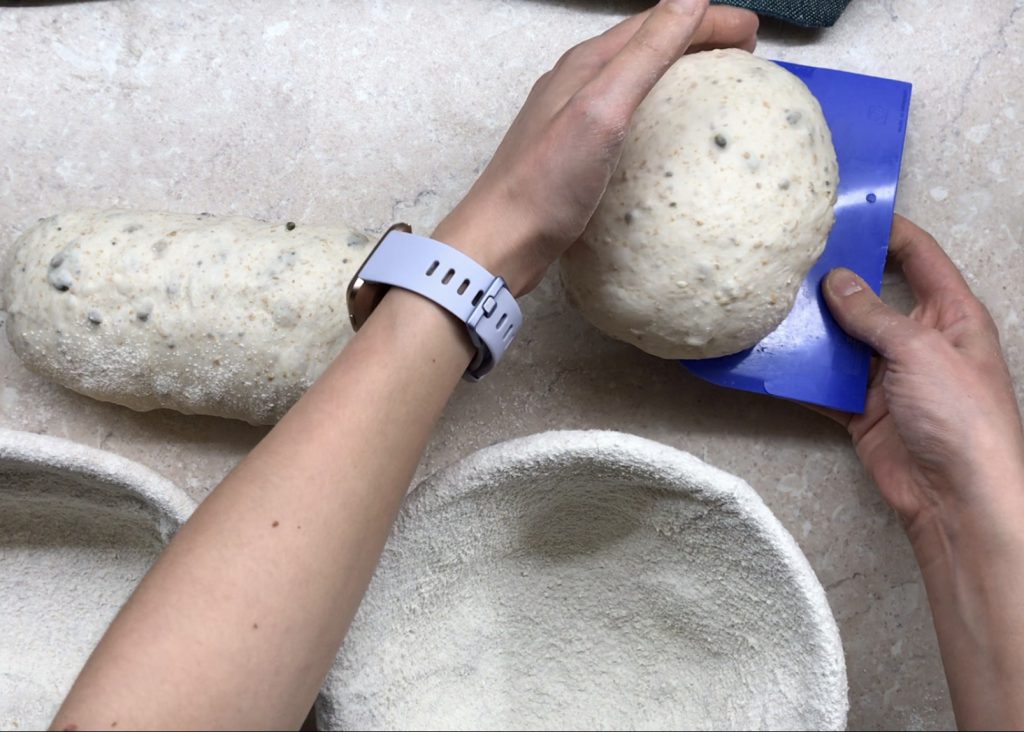
After a 60 minute rest after the 4th coil fold, use a dough spatula to pull the dough out onto the work surface and dust with a 50/50 mixture of plain flour and rice flour. If making 2 loaves, cut the dough into two and flip so the floured side is not on the bottom. Build tension in the dough by folding the edges into the centre of the dough, trying to incorporate as little flour as possible. Flip the ball over, and, using one hand and the dough spatula, work in a series of turns and pulls to create tension on the surface of the ball. Leave to rest on the worktop covered in a tea towel for 30 minutes.
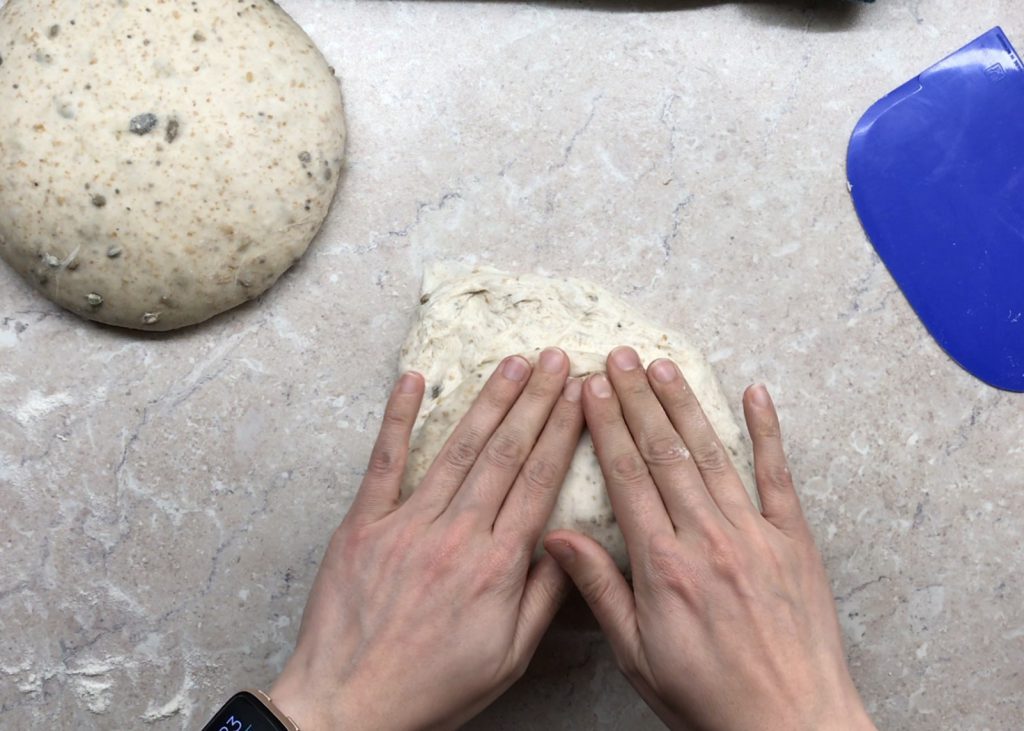
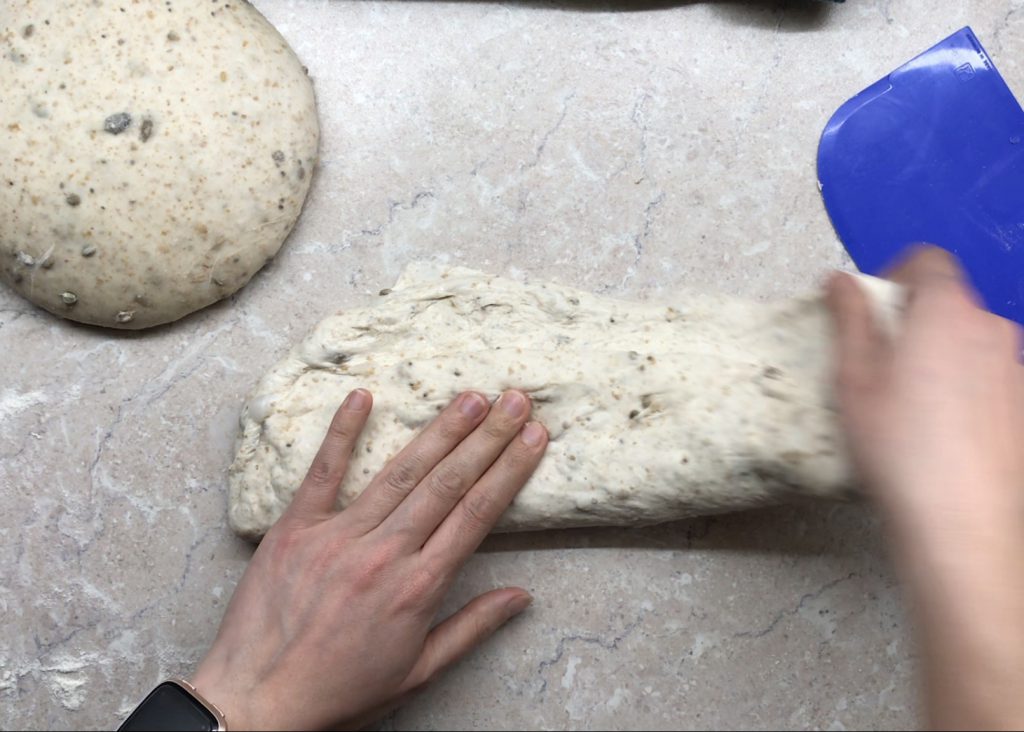
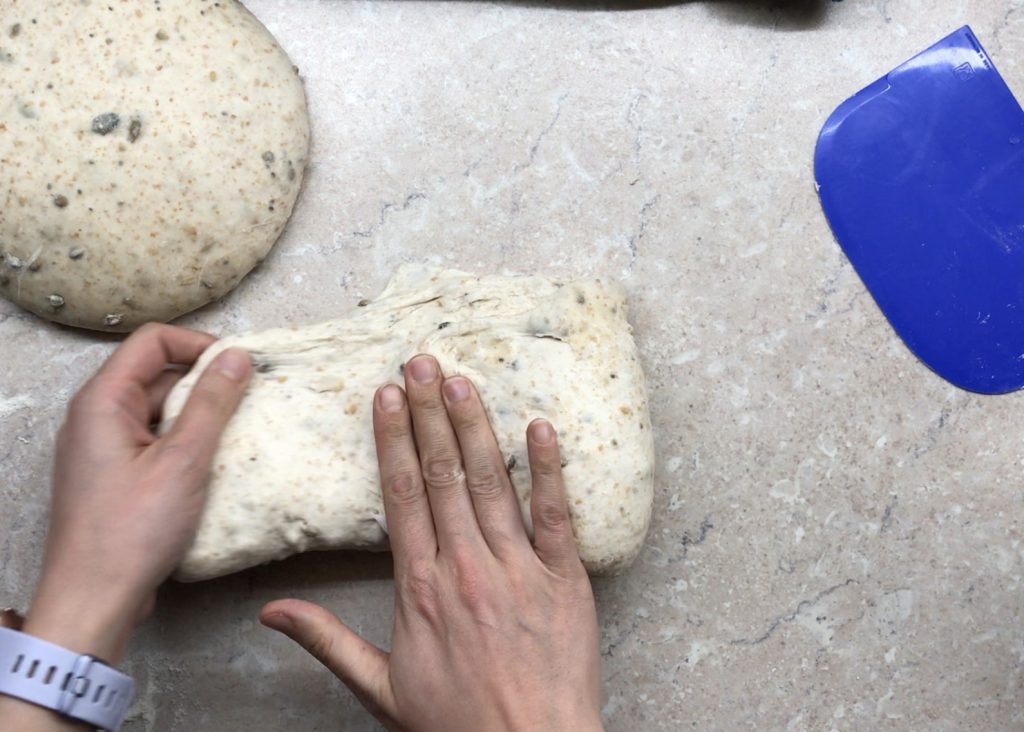
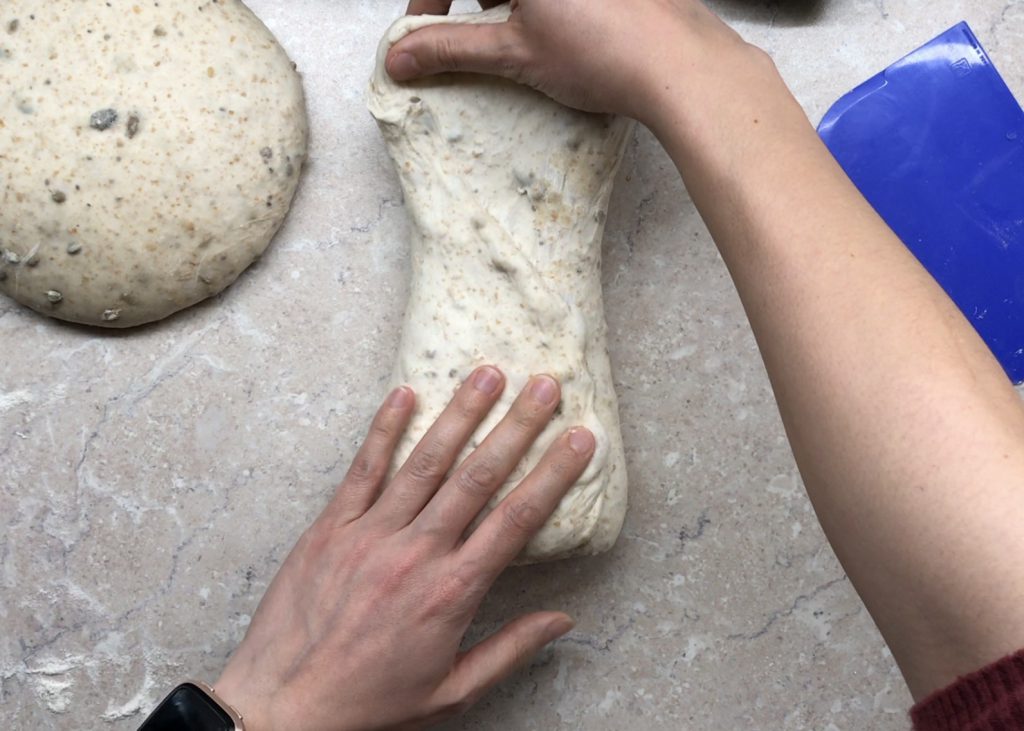
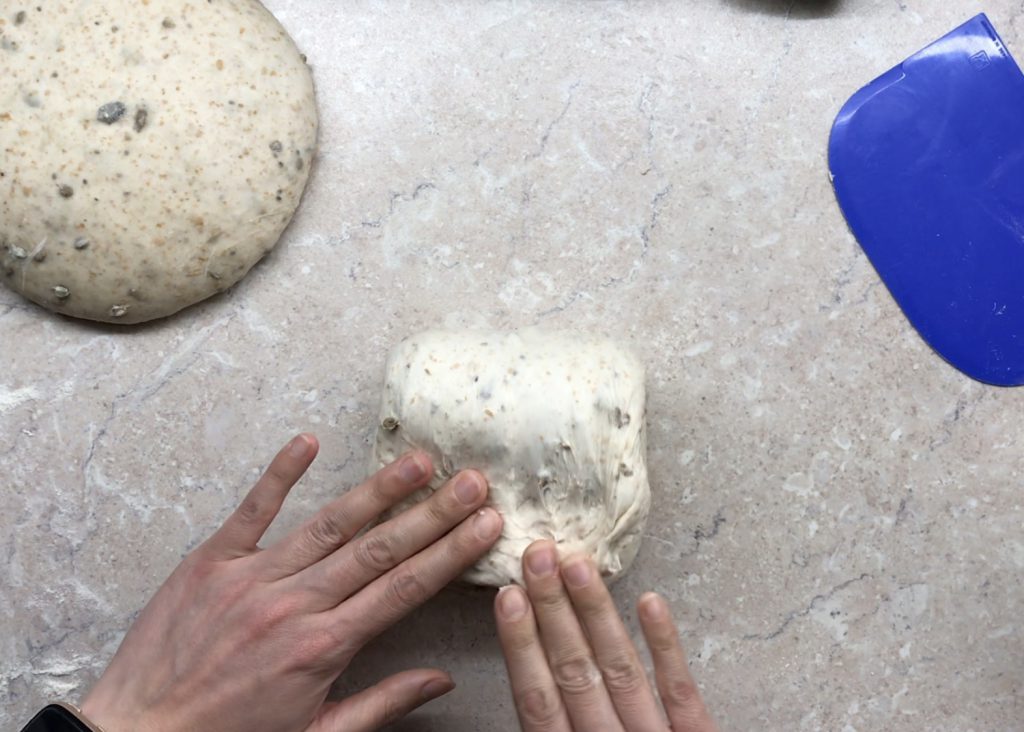
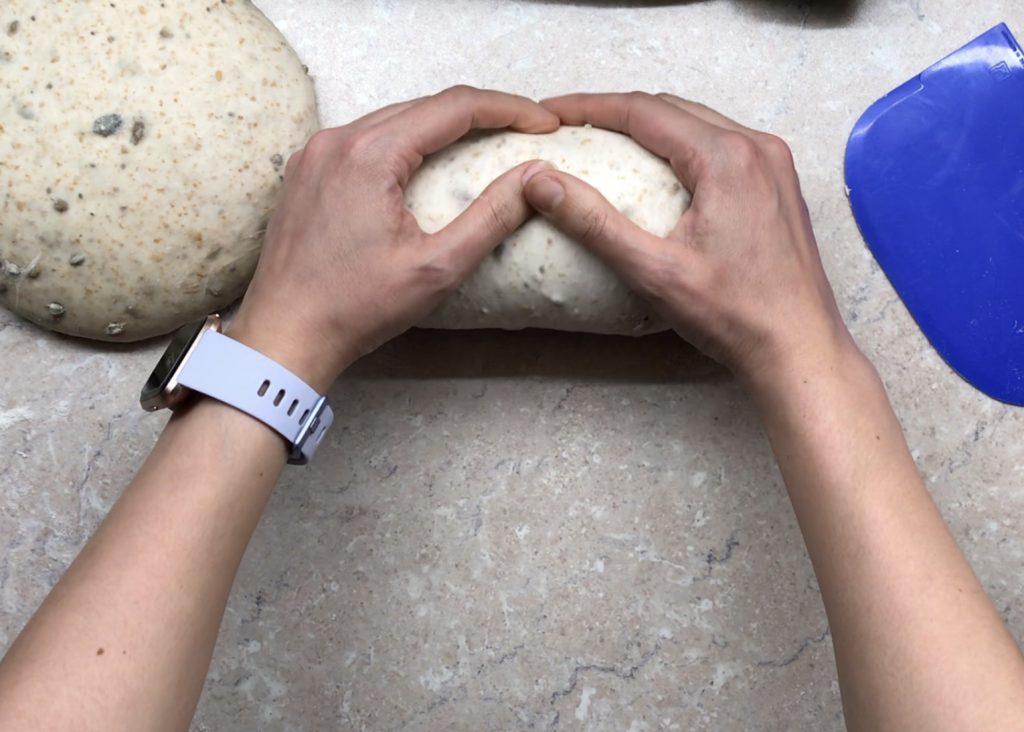
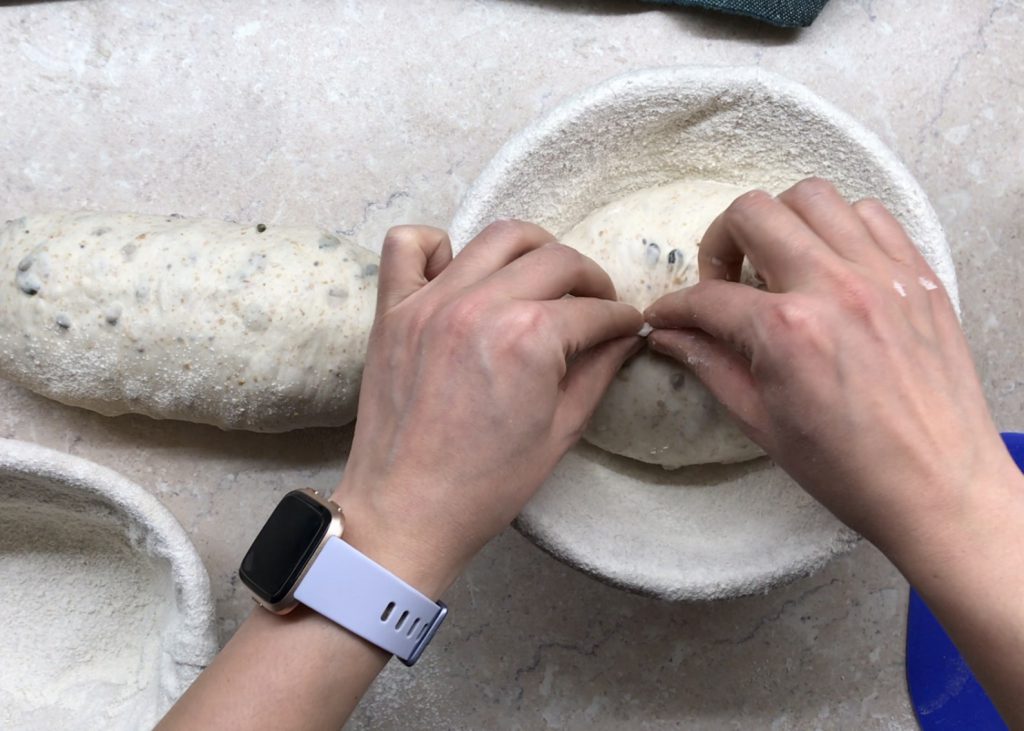
Lift each ball off keeping the round shape, flipping it do the underside is now the top. Take care not to knock out air, gently stretch the dough out, folding the bottom half almost to the top. Stretch the sides out, folding the right side into the centre followed by the left side. Finally, take the top, stretch out and fold up and over, and roll the whole ball away so the seams are on the bottom. Round the corners by cupping your hands around and gently pulling to create tension over the surface. Leave to rest for 1 minutes.
Dust a proving basket and transfer the shaped dough seam side up, pinching to maintain tension. Cover and leave to rise overnight in the fridge.
The next day, preheat the oven to maximum with a cast iron Dutch oven inside. Allow to reach temperature and leave for a further 20 minutes.
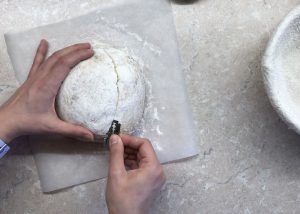
Remove the dough from the oven and cut a piece of baking parchment larger than your dough. Uncover the dough, place the parchment over the top and gently invert the dough out onto the work surface on the parchment. Dust off any excess flour, and make a deep, yet shallow angled cut across the surface of the bread. This cut will allow for “oven spring”. An unscored loaf will be stunted and may burst.
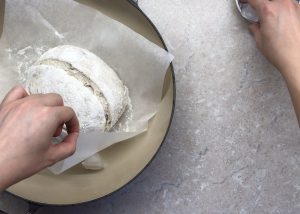
Moving as quickly and safely as possible, remove the bottom pan of the Dutch oven from the oven, leaving the lid in the oven, and place the dough and parchment into the pan. Add a few ice cubes to the pan under the parchment and immediately return to the oven, close the lid to trap the steam, shut the oven door and drop the oven temperature to 230°C and bake for 20 minutes.
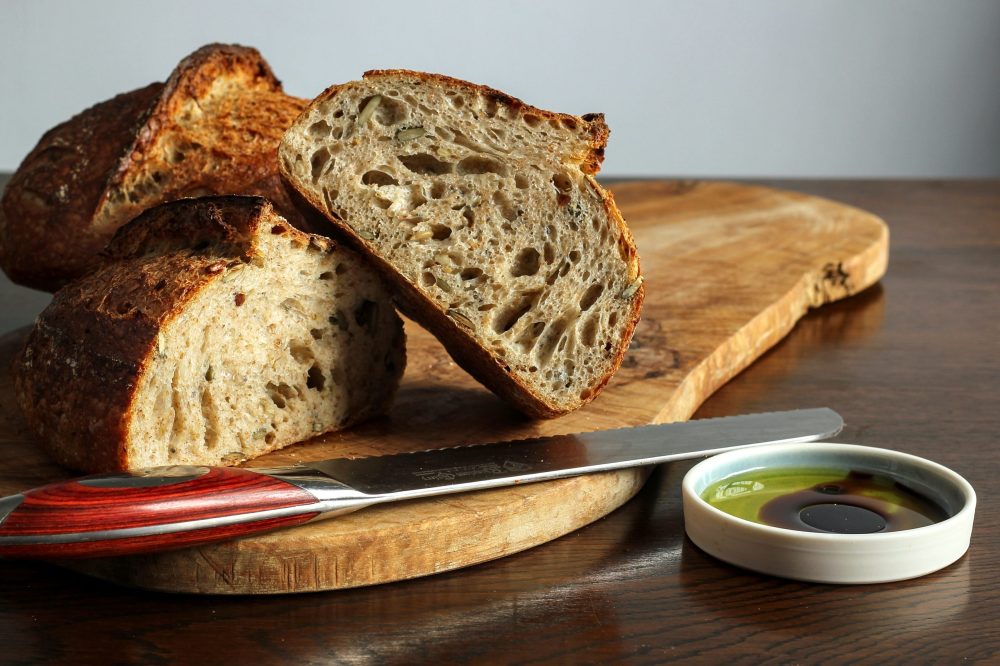
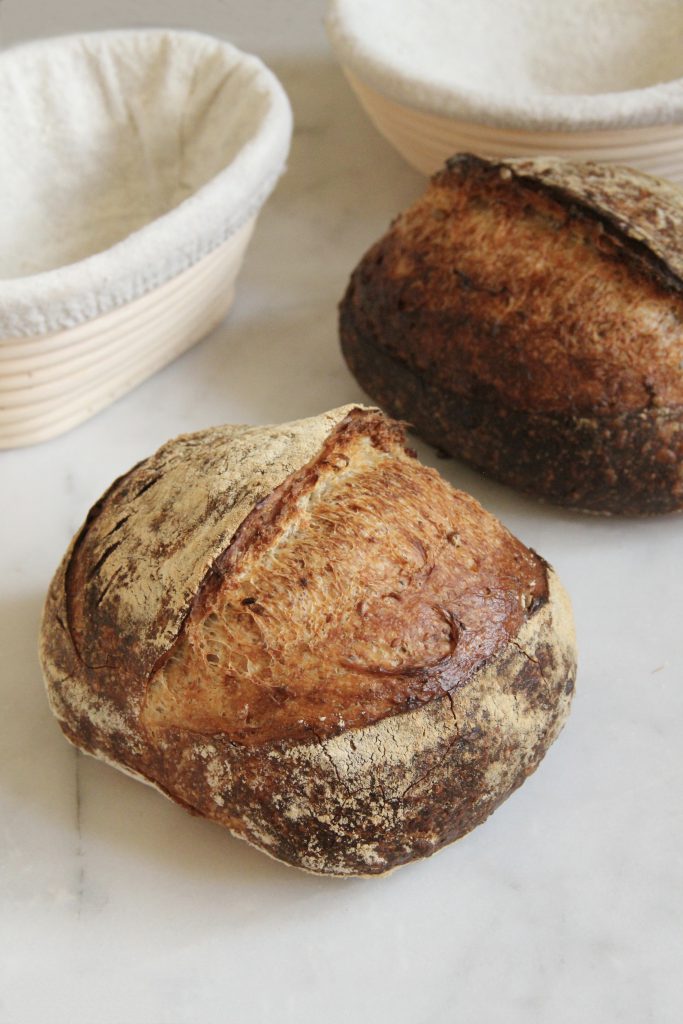
After 20 minutes, remove the lid and bake for a further 20 minutes till the crust is dark and crispy. Remove and allow to cool on a wire rack. Listen to your bread sing from the oven as the crust cools and crackles.
Once cooled slightly, slice and dip into balsamic vinegar and extra virgin olive oil.







 Dr Pippa