Easy Hummus

A super easy hummus recipe that can be ready in minutes. Use this as a healthy snack alternative, or as a component of a larger meal.

Chickpeas are good sources of plant-based iron, and the combination with lemon juice as a source of vitamin C means that the iron absorption from these sources will be increased; something that vegans and vegetarians will need to be aware of. Iron requirements differ according to sex and age; for pre-menopausal women a serving of hummus will provide 18% of iron requirements, whilst for men and post-menopausal women it’s over 30%.

Separately, chickpeas and sesame seeds, or tahini, in this case, are a good source of calcium. Each serving of hummus provides you with 8% of your daily calcium requirements, and that’s on its own. You could further increase the calcium content of your hummus meal by using broccoli crudités, or serving with brown or white bread which is fortified with calcium in the UK by law.

Makes 7 portions

Ingredients

  • 150g drained tinned chickpeas
  • 1 garlic clove, peeled
  • 45g tahini
  • 30ml extra virgin olive oil
  • Juice of 1 large lemon
  • ½ tsp ground cumin

To serve

  • Chickpeas
  • Extra virgin olive oil
  • Sesame seeds
  • Sumac
  • Vegetable crudités
  • Bread

Method

  • Add the chickpeas, garlic, tahini, olive oil, lemon juice and cumin to a food processor
  • Blend to your desired consistency, adding 1–2 tablespoons of water if needed
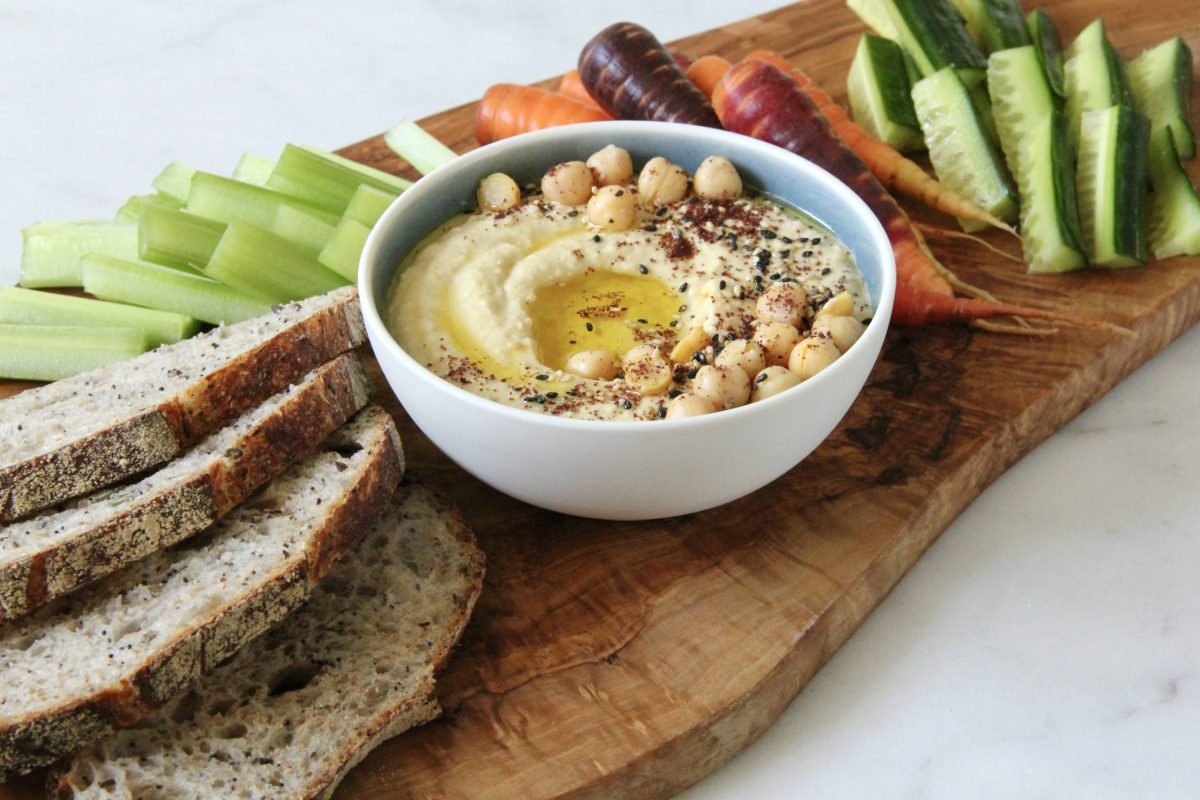
  • Serve in a bowl scattered with extra toppings such as cooked chickpeas, olive oil, sesame seeds and sumac with your favourite crudités
  • Any leftovers can be stored in the fridge in a covered container for three days

Per 45g serving: 114kcal/ 8.9g fat/ 1.2g saturated fat/ 4.0g carbohydrates/ 1.8g fibre/ 3.4g protein

For more information about key nutrients in vegan diets check out the blog I have written for MyNutriWeb.
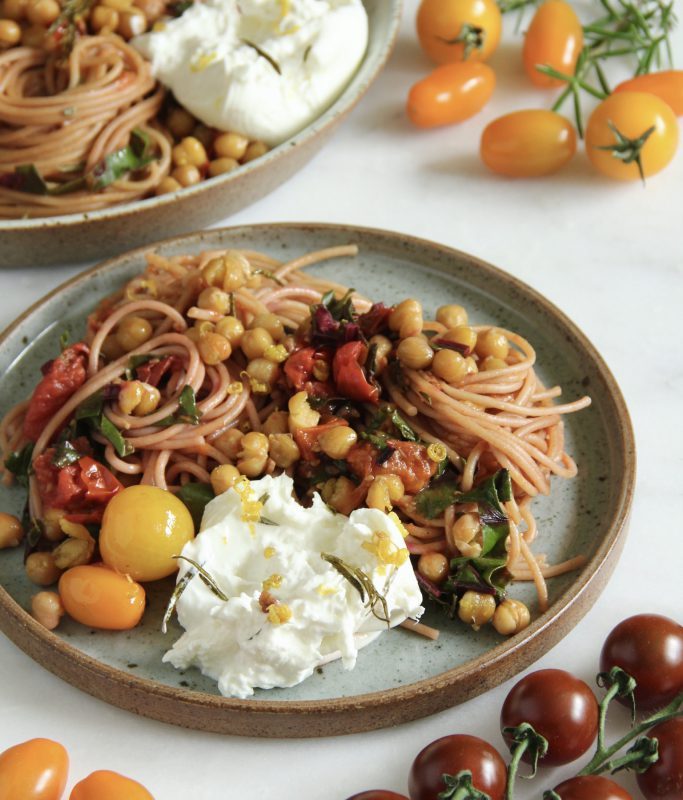
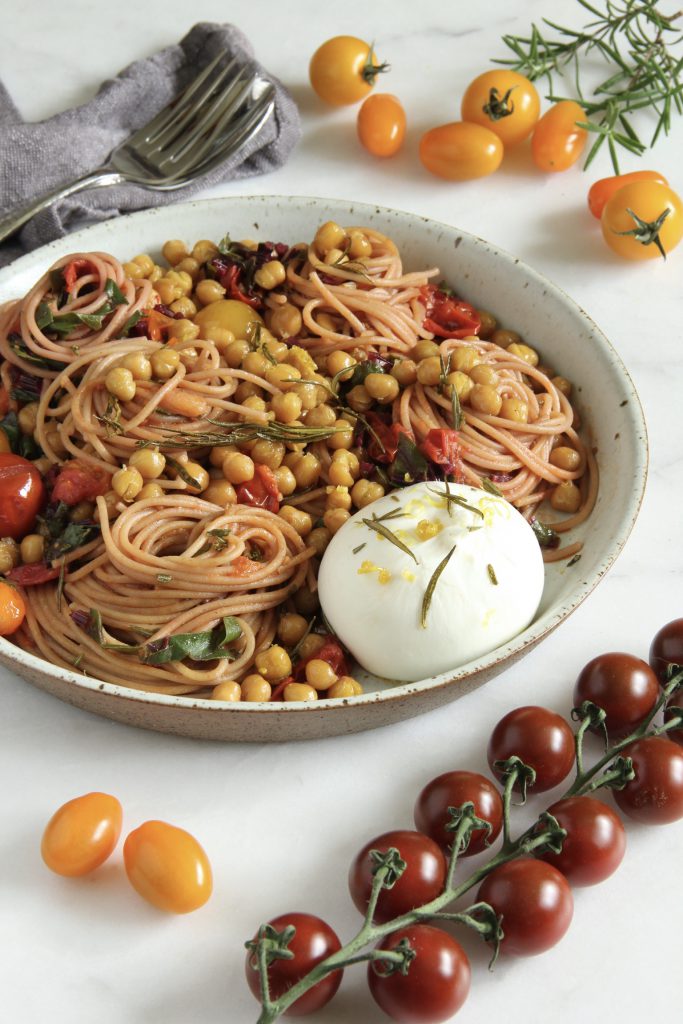
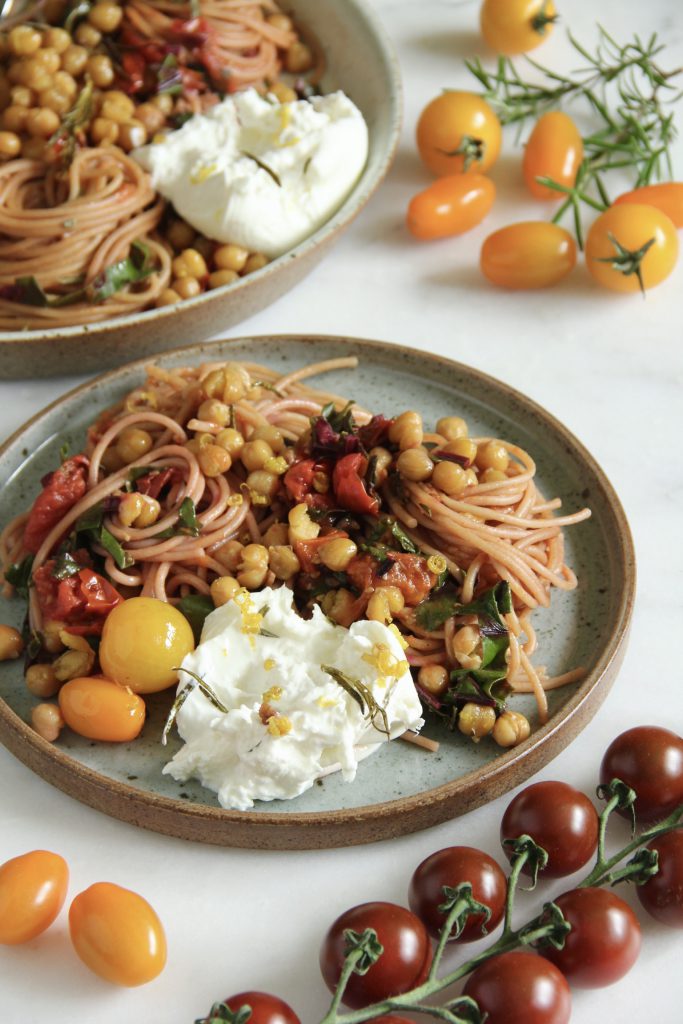
Crispy Lemon Rosemary Chickpea and Burrata Summer Pasta

I’m trying to find some inventive ways to use up the leftover beetroot leaves as I process them to try to preserve the taste of summer. Beetroot leaves are so similar to perpetual spinach or Swiss chard. For every homegrown beetroot given out, I also say to my willing receiver “did you know you can eat the leaves too?” There is absolutely no reason to waste them so apart from giving them to the chickens as a little treat, I’m also trying to utilise them myself. If you can get hold of whole beetroots with the leaves still attached, or are growing them yourself (or being gifted as I am doing with so many beetroots!) then you absolutely must try them!

The standard purple beetroots still contain some of the bright purple-red colouring found in the bulb, so I would only assume there are some of the same health benefits from eating the leaves as there are from the actual beetroot itself, although it a smaller quantity which is reflected in the light staining you get from the leaves themselves. There hasn’t been any research into this as far as I can see, but at the end of the day it is green and leafy, and as it’s not toxic to humans, I can only assume there must be some good to eating them whole vegetable from root to leaf.

For me, eating beetroot leaves is a true taste of summer, and something I am currently relishing. I hope that you can get your hands on some beetroot leaves, but if you can’t, or decide you need a little reminder of Summer when it’s dark and gloomy in Winter, use baby leaf spinach, kale or even cabbage.

While I think that standard “white” spaghetti would look more aesthetically pleasing, I am always drawn to using wholemeal pasta wherever possible due to the extra fibre (from 7g fibre per portion up to almost 12g). I also think it helps enhance the slight earthiness of the beetroot leaves.

Serves 3

Ingredients

  • 1 tin of chickpeas, drained and rinsed
  • 3 springs of rosemary, leaves removed from 1 sprig and roughly chopped
  • Zest of 1 unwaxed lemon
  • 2 tbsp extra virgin olive oil
  • 250g cherry tomatoes
  • 2 cloves of garlic
  • 1/2 tbsp balsamic vinegar
  • 200g wholemeal pasta
  • 150g beetroot leaves, roughly chopped
  • 1 ball of fresh burrata

Method

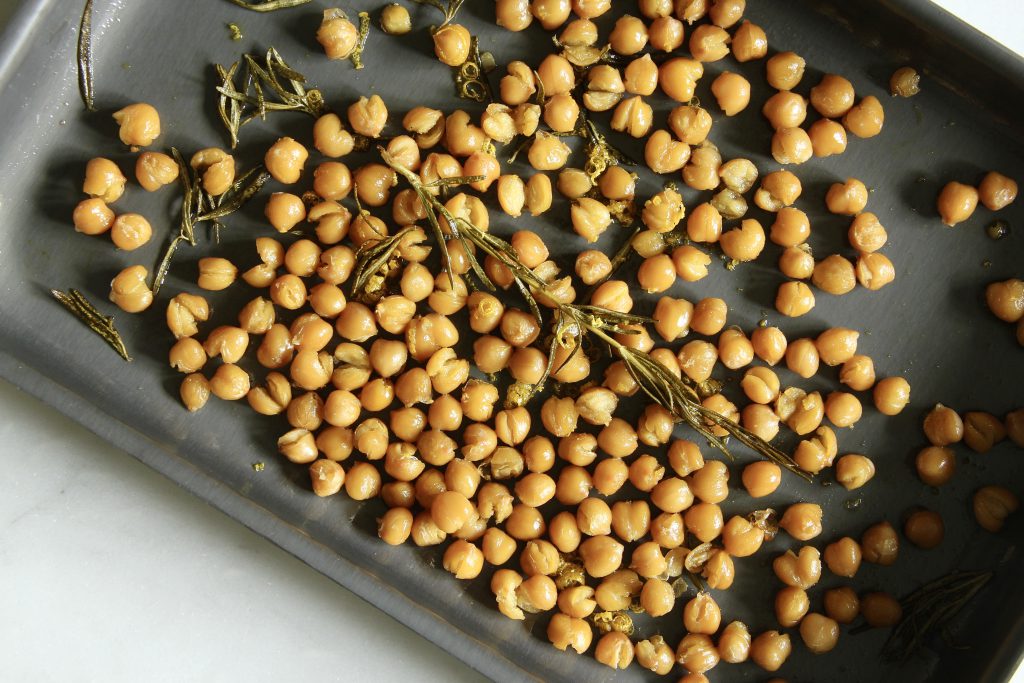
  • Mix the chickpeas, 1 tbsp oil, lemon zest, and 2 spring of rosemary in a baking tray. Bake at 180°C fan/ 200°C convection/gas mark 6 for 15 minutes till crispy and fragrant.
  • Meanwhile, add the tomatoes, garlic and remaining oil to a saucepan, and cook for 5 minutes, before adding the balsamic vinegar and chopped rosemary. If needed add a little water to stop it from sticking.
  • Boil the wholemeal pasta for 2 minutes less than the instructions, reserving a little pasta water.
  • Add the beetroot leaves into the tomato sauce before mixing in the cooked pasta. Return to the heat for 1 minute, adding some of the reserved pasta water if required to loosen the sauce.
  • Serve with the crispy chickpeas, crispy rosemary, and the burrata ball over the top.

Per serving: 501kcal/ 14.2g fat/ 7.0g saturated fat/ 70.0g carbohydrates/ 11.8g fibre/ 18.6g protein

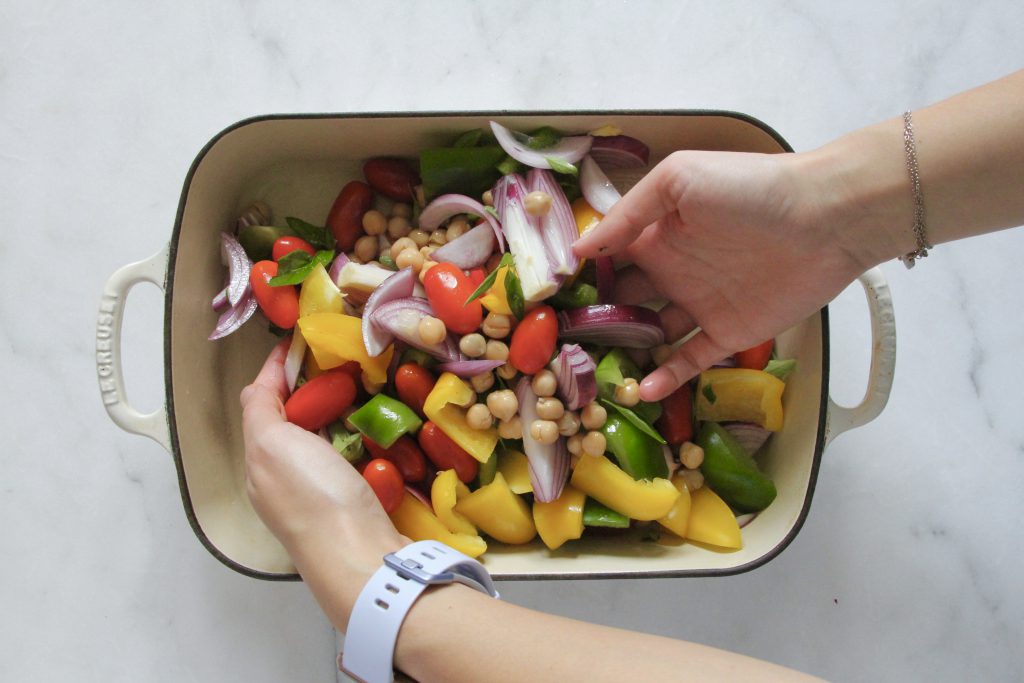
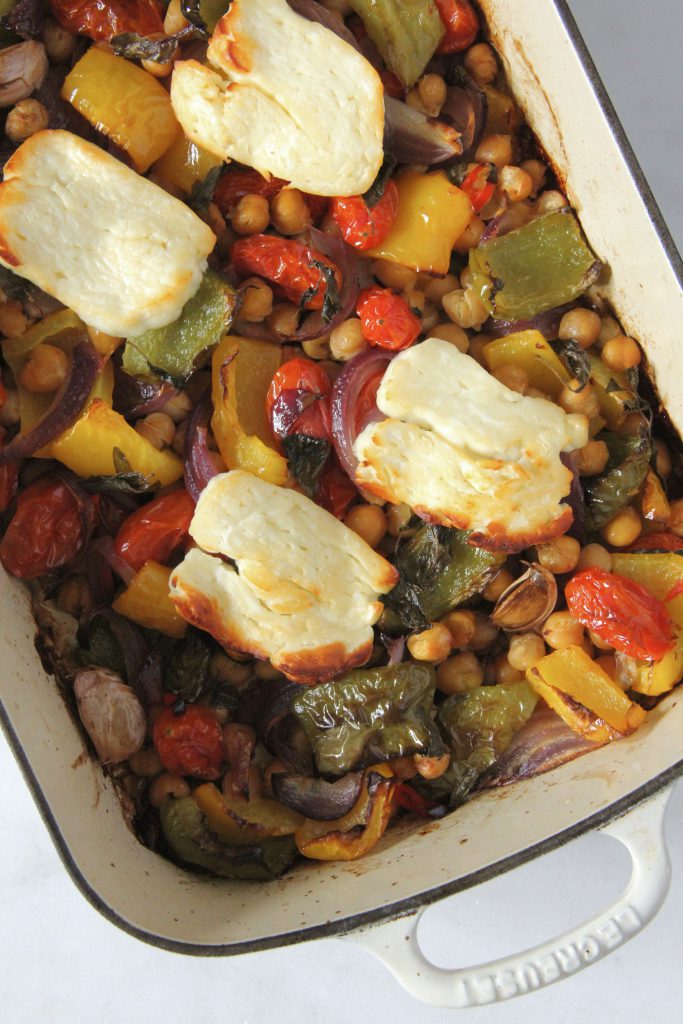
Chickpea and Halloumi Traybake

I love halloumi. The salty, squeakiness is irresistible in my household, so we always have a block or two in the fridge ready for when the fridge is a little bare.

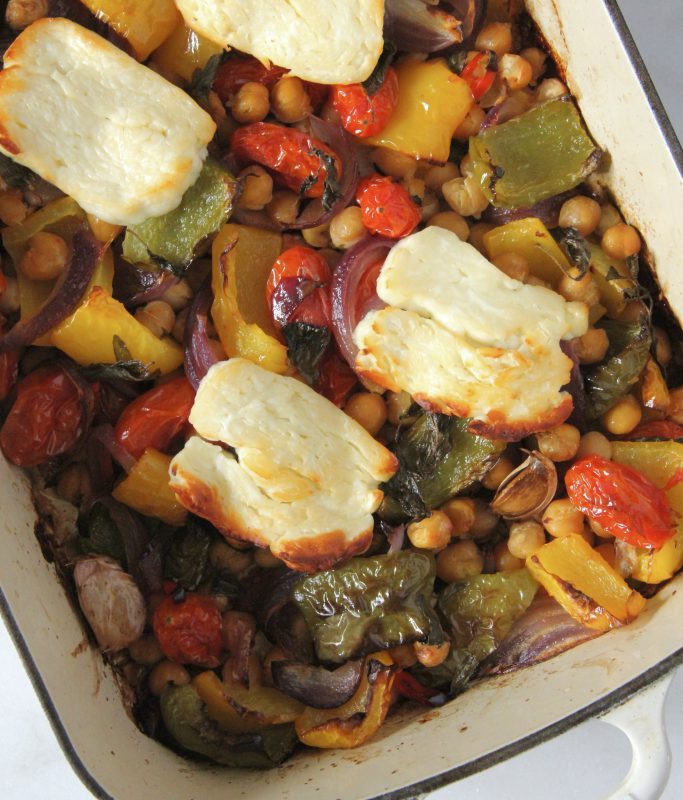
Although I am probably part of a small minority who actually likes halloumi cold, although I am in agreement that hot, crispy, golden and squidgy halloumi is the best. Even when it’s not barbecue season, I still eat it, either by frying it in a pan as part of a mean vegetarian brunch, or roasting it in the oven till it is crispy and golden on the top.

While halloumi is high in salt and fats including saturated fat, as is often found with cheeses, it is a good source of non-meat protein, especially for those wishing to reduce their meat intake. I try to use halloumi less often because of the salt content, and to help combat this when cooking with it I never season the dish with salt.

If you have the time and the will, stick the halloumi and peppers onto the barbecue to get a lovely charred flavour. The remaining ingredients can be cooked as normal in the oven, and then combine the two together to finish the dish.

I love this dish served with simple herbed couscous. You could of course serve it with rice, bulgar wheat, potato salad or even some garlic flatbreads. Alternatively, to make only one dish dirty, slice potatoes into large wedges and roast in the tray for 25 minutes with a little extra oil. Then top with the chickpeas and vegetables and carry on roasting.

Serves 2

Ingredients

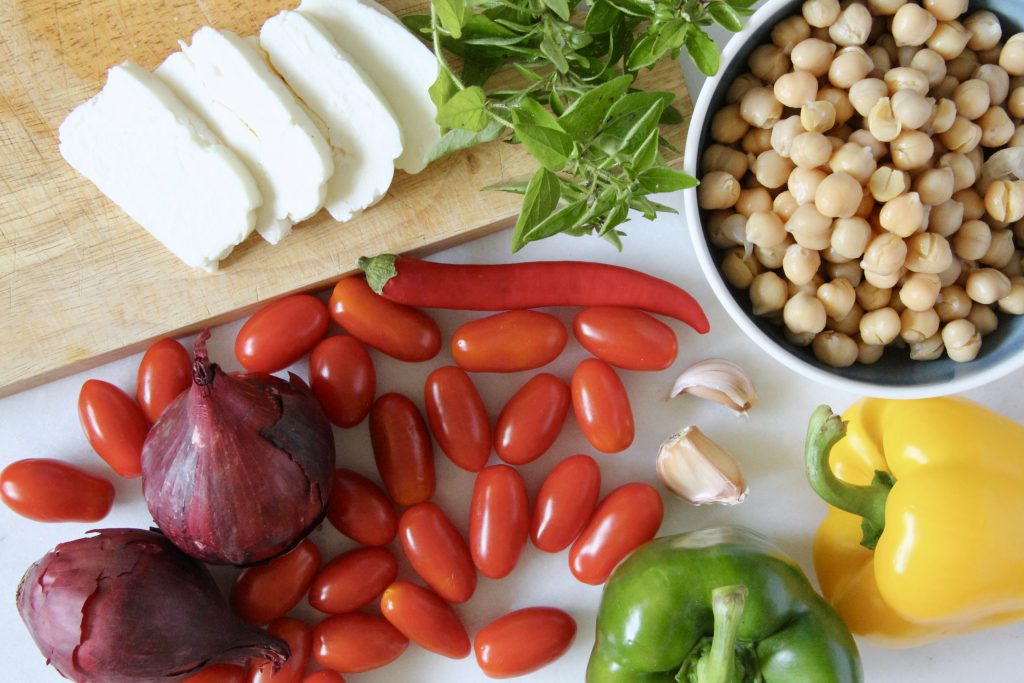
  • 1 can of chickpeas, drained and rinsed
  • 2 bell peppers, cut into large chunks
  • 1 large or two small red onions, sliced into wedges through the root
  • 200g baby plum tomatoes
  • 2 cloves of garlic, skin on
  • 3 sprigs oregano, leaves removed from stems
  • 1 red chilli, to taste, diced
  • 1 tbsp olive oil
  • 100g halloumi, sliced into large chunks

To serve

  • 100g couscous
  • Chives, finely chopped
  • Flat-leaf parsley, roughly chopped

Method

  • Preheat the oven to 180°C fan, 190°C convection
  • Mix all the ingredients except the halloumi together in an oven-proof dish. Season with pepper to taste.
  • Lay the halloumi over the top and bake in the oven for 25-30 minutes till the halloumi turns golden brown and the vegetables have softened.
  • Meanwhile, prepare the couscous by pouring 110ml boiling water over the top of the couscous with the chives and covering. Allow to steam for 5 minutes before fluffing the grains with a fork. Mix the flat-leaf parsley through.
  • Serve the chickpea and halloumi bake over the couscous and enjoy.

Per serving: 661kcal/ 25.2g fat/ 10.8g saturated fat/ 38.2g carbohydrates/ 14.2g fibre/ 26.5g protein

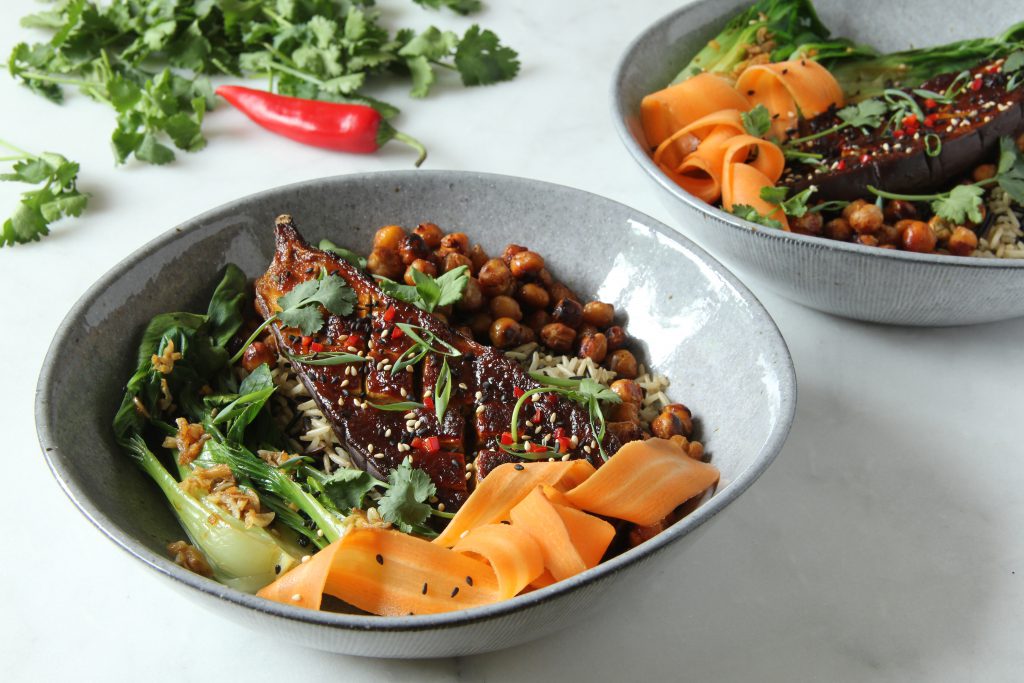
Miso Aubergine with Crispy Chickpeas

Miso is a kitchen shortcut to a deep umami flavour boost for so many different dishes. My miso aubergine in influenced by the Nobu miso black cod. I’ve changed up a few ingredients to make it slightly healthier, and this works on cod too, so for those who eat fish, you can make the same marinade, but cook the fish for less time, around 15-18 minutes depending on the size of your fillets.

If you can get sake, the traditional Japanese rice wine, that would be true to the Japanese miso cod recipe. However, if you are unable to get it, Chinese rice wine is a good substitute, as is a dry white wine.

This dish is delicious served with steamed brown and wild basmati rice, garlic ginger dressed pak choi and quick pickled carrots for further fibre diversity!

Ingredients

  • 30ml sake
  • 30ml mirin
  • 5ml rice wine vinegar
  • 2 tbsp white miso paste
  • 20g stoned dates
  • 1 large aubergine
  • 200g tinned chickpeas, drained
  • 1 tsp EVOO
  • 1 tsp toasted sesame seeds
  • 1 spring onion, finely sliced
  • Chilli to taste, finely diced
  • Coriander leaves

Method

  • Mix the sake, mirin, rice wine vinegar, miso paste, dates and 20ml water into a small pan. Cook over a low heat till the dates have softened and the alcohol has cooked off. Blend to a smooth paste.
  • Slice the aubergine in half and score the fresh in diamond shapes, ensuring you do not cut through the skin. Place in an oven-proof dish.
  • Pour the miso sauce over the cut side of the aubergine and gently open up the cuts to allow the marinade to penetrate into the flesh. Leave to marinade to 30 minutes at room temperature, or put in the fridge if making in advance.
  • Preheat the oven to 200°C Fan, 220°C convection, gas mark 6.
  • Add the chickpeas and oil to the pan with the aubergine and gently toss in any excess marinade. Add 30ml water to the pan.
  • Cook for 30 minutes, mixing the chickpeas after 15 minutes. If the chickpeas look like they might burn add a little extra water.
  • Remove from the oven and scatter with sesame seeds, spring onion, chilli and coriander.

Per serving 288kcal/ 6.6g fat/ 0.9g saturated fat/ 37.9g carbohydrates/ 10.1g fibre/ 11.8g protein

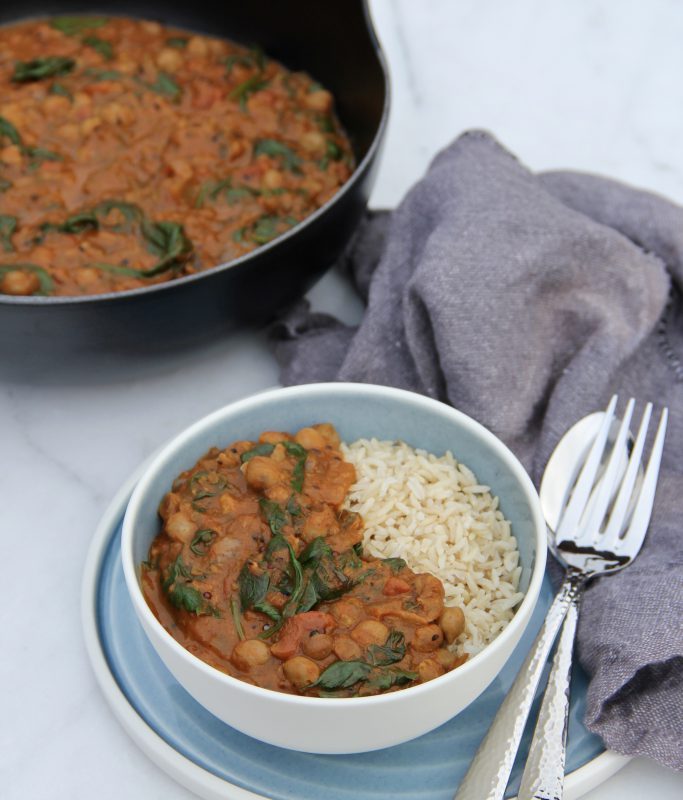
Vegan Chickpea Curry

This is my store cupboard staples easy curry. I always have the tinned goods in my cupboard as backup should I find myself without anything fresh to cook with. And the best part is it taste better a day or two old, so there’s no reason why you can’t make it on a Sunday, as I have, ready for a quick and nutritious no-fuss mid-week meal.

It’s also perfect for those doing Veganuary as it is naturally vegan, and as a bonus contains over 9g of plant based protein.

Eating the rainbow

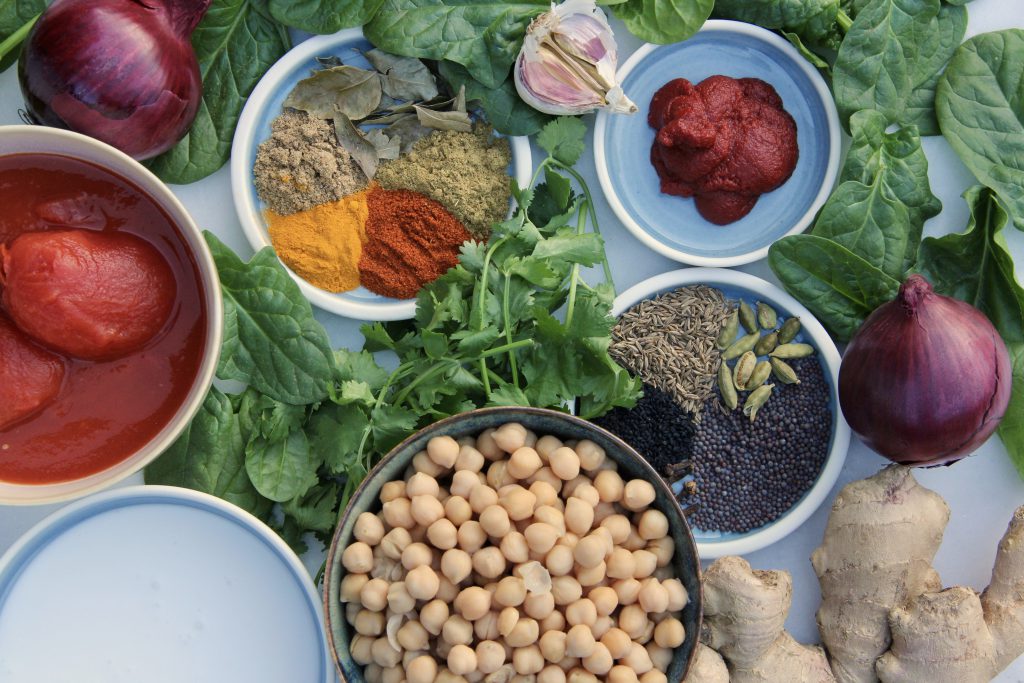
This dish is versatile in the number of plant foods, containing an array of 7 different herbs and spices to complement 8 different plant ingredients. Add the rice and you’re well on your way to your 30 different plant foods for the week. In addition, it is an excellent source of fibre, containing half the recommended daily fibre intake of 30g just in this dish alone.

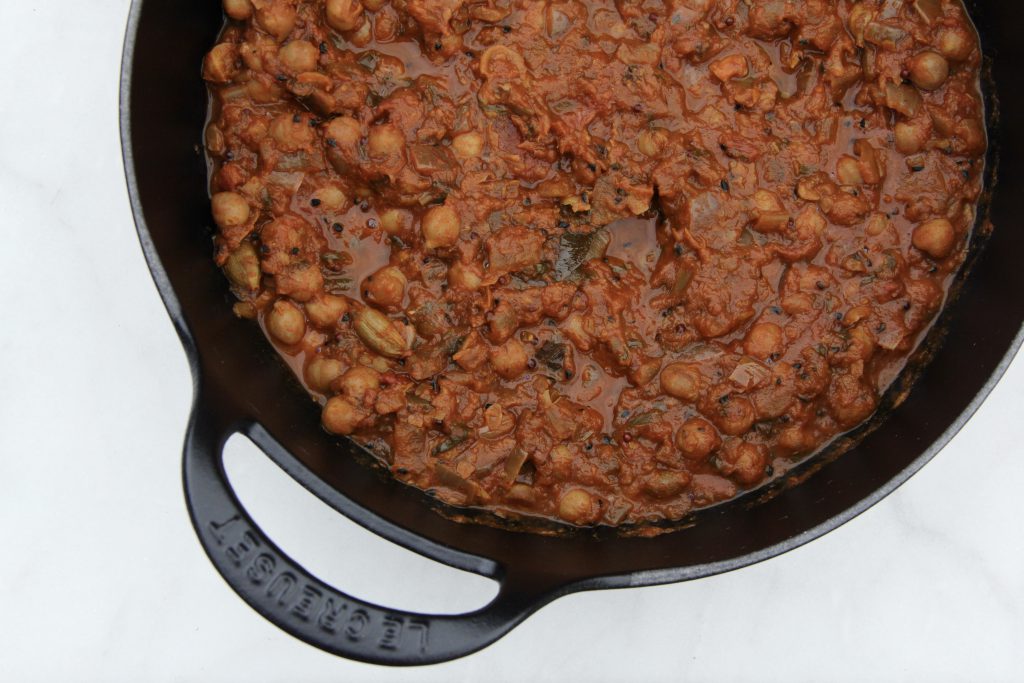
Cook the curry till thick

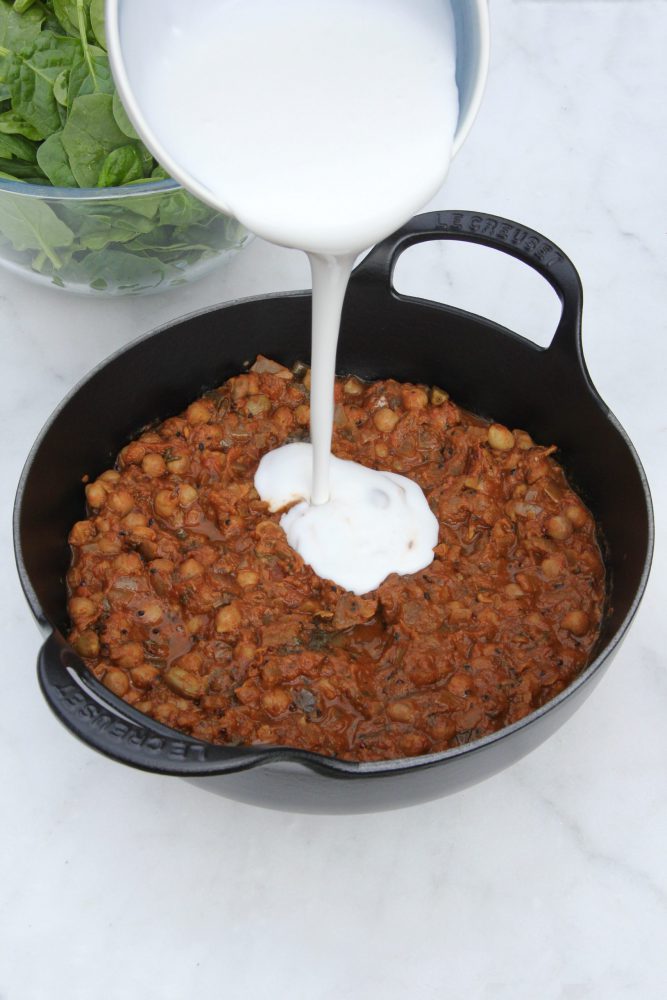
The trick to this dish is to cook it as slow and long as possible. If you don’t have much time to hand, it is still delicious if made within the hour, but if you have time, keep cooking on the lowest setting of your hob and top up with water when required. You could even get the curry ready, leave it overnight in the fridge and then quickly reheat it with the coconut milk and spinach the next day for a fast dinner.

The only other recommendation I can make would be to count in the cardamon pods and cloves. I hate nothing more than biting down on a whole clove mid way through my meal. Clove has a numbing effect, and is often used to help relieve tooth ache, not something I want to experience while eating my dinner. So, like a surgeon, I count them in, and then count them back out before serving, hopefully finding them all.

Serves 6

Ingredients

  • 2 onions, sliced
  • 2 tbsp rapeseed oil
  • 1 thumb sized piece of ginger
  • 5-6 cloves of garlic
  • 1 tsp onion seeds
  • 1 tsp mustard seeds
  • 1 tsp cumin seeds
  • 1 tsp cardamon seeds
  • 6 whole cloves
  • 1 tsp ground cumin
  • 1 tsp ground turmeric
  • 1 tsp chilli powder, or to taste
  • 1 tsp ground coriander
  • ~15 curry leaves
  • 35g tomato puree
  • 2 tins of chickpeas, drained and rinsed
  • 400g tinned tomatoes
  • 30g fresh coriander, chopped
  • 200ml coconut milk
  • 300g baby spinach leaves
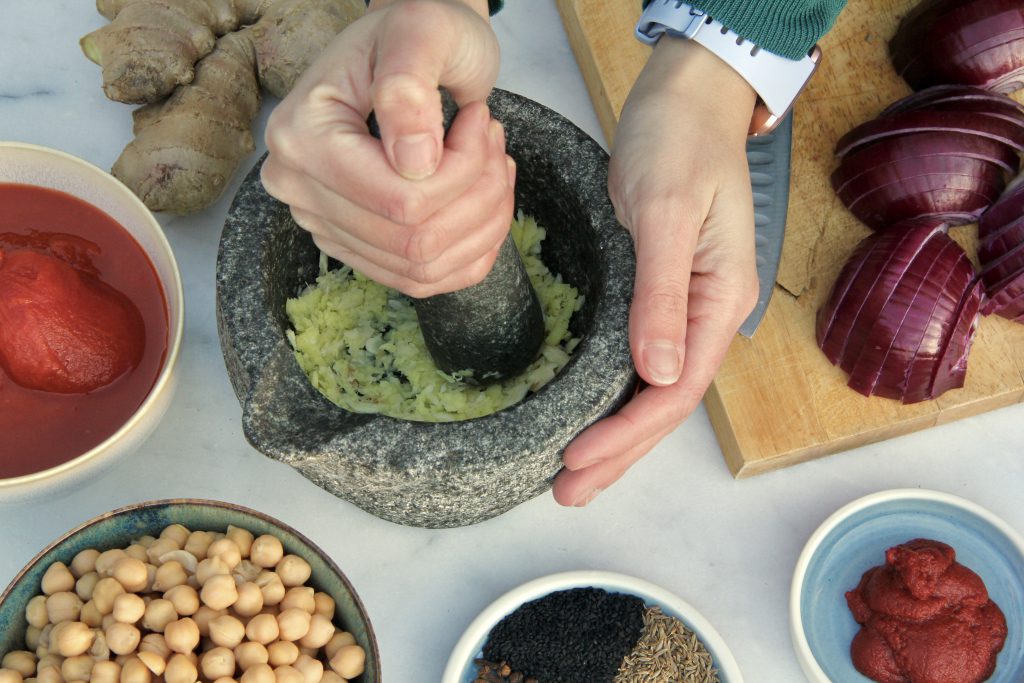
Use a pestle and mortar to crush the ginger and garlic

Method

  • Add the onions and rapeseed oil to a large pan and cook gently till the onions soften and become translucent.
  • Meanwhile, make a garlic and ginger paste in a pestle and mortar, bashing till as smooth as possible.
  • Add the garlic ginger paste, all the dried herbs and spices, tomato puree and chickpeas to the pan and cook together for 1 minute before adding the tinned tomatoes. Fill the empty tin with water and add the the pan.
  • Add the chopped coriander and allow to gently simmer away for an hour, or longer if you have the time. If the liquid reduces too much add some extra water.
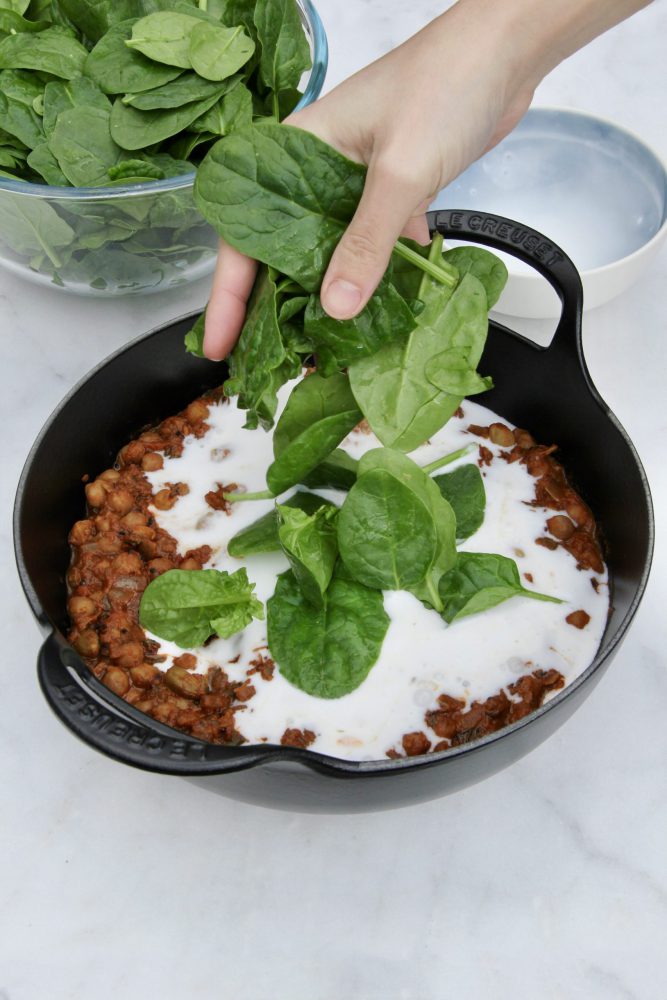
  • 10 minutes before serving, add the coconut milk and spinach before returning to the heat to allow the spinach to wilt. Season to taste.
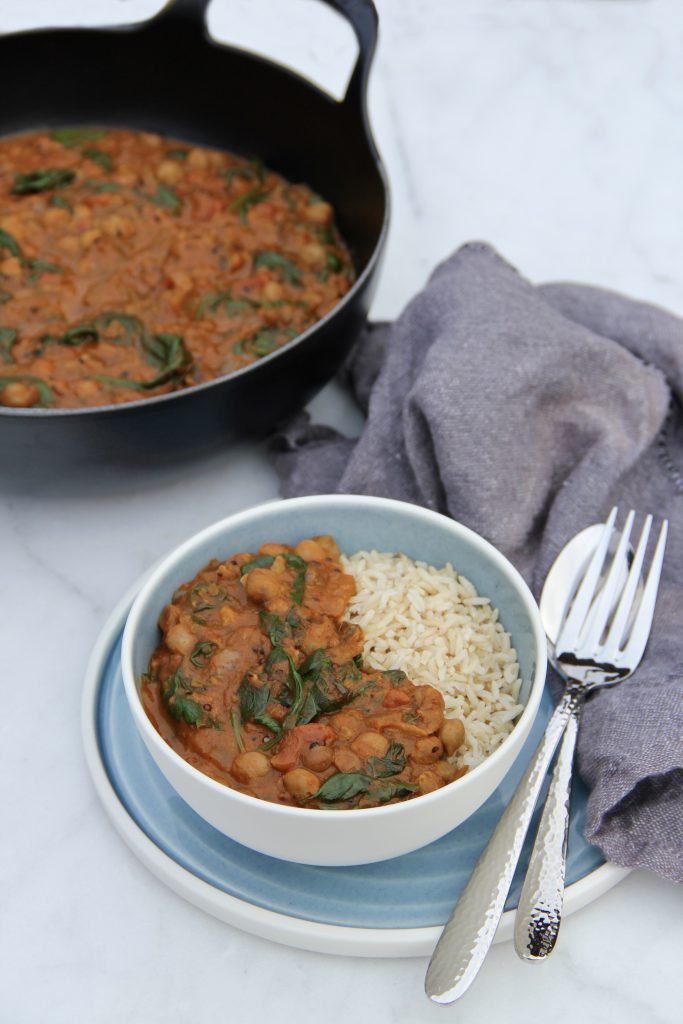
  • Remove the cardamon pods and whole cloves, and serve with rice or naan.

Per serving 258kcal/ 13.6g fat/ 1.3g saturated fat/ 21.8g carbohydrates/ 15.9g fibre/ 9.3g protein