Can Kiwi Fruit Help With Constipation?

If I was to ask you which is the best thing to eat to help with regular bowel movements, or to help relieve constipation, most of you would probably answer with prunes. They’re a classic home remedy for helping to keep you regular thanks to their high level of sorbitol. Sorbitol is a type of dietary fibre which is able to help draw water into the lumen of the gut, and therefore can help to soften hard stools, making them easier to pass.

So how do kiwi fruits come into this then? Well, kiwi fruit have more recently been hitting the headlines for their role in constipation which could be due to a specific enzyme called actinidin. Actinidin is a digestive enzyme that breaks down proteins, improves gastric emptying and may help facilitate laxation through its stimulation of receptors in the colon. Furthermore, kiwis have a high polyphenol content, which may also confer digestive health benefits. Polyphenols can promote the growth of beneficial gut bacteria, such as bifidobacteria. And finally, kiwis have a high water holding capacity and high viscosity, which helps with fecal bulking and softening.

Recent studies have demonstrated significant results in the treatment of constipation in healthy patients with IBS-C and in patients with functional constipation [1, 2]. Researchers used MRI techniques to identify the mechanism of action behind kiwi’s laxative effect and found that the consumption of two kiwi fruit daily increased water content in the small bowel and descending colon and increased colonic bulk. These MRI data are consistent with the observation that an increase in stool frequency with looser stool consistencies are seen with the consumption of two kiwi fruit daily and suggests that kiwis can be used as a natural, diet therapy for those with mild constipation [3].

Another study explored the comparative effectiveness of three natural treatments in patients with chronic constipation. This research is among the first data addressing the effectiveness and tolerability of kiwi fruit on chronic constipation in the United States. Seventy-five adults with either functional constipation or IBS type Constipation were provided around 6g of fibre per day in the form of two green kiwi fruit, 12 prunes (100g) or 12 grams of psyllium over a four-week treatment period. All participants experienced similar proportions of spontaneous bowel movements. However, the participants given kiwi fruit reported fewer adverse effects than those reported by patients treated with the prunes and psyllium. Notably, a smaller proportion of patients were dissatisfied with the kiwi fruit compared with the prunes or psyllium [4]. In addition, a randomised cross-over study looked at the effectiveness of 5g of dietary fiber from golden kiwifruit versus 5g of dietary fiber through a fibre supplement and saw similar improvements in stool consistency, straining and discomfort [5].

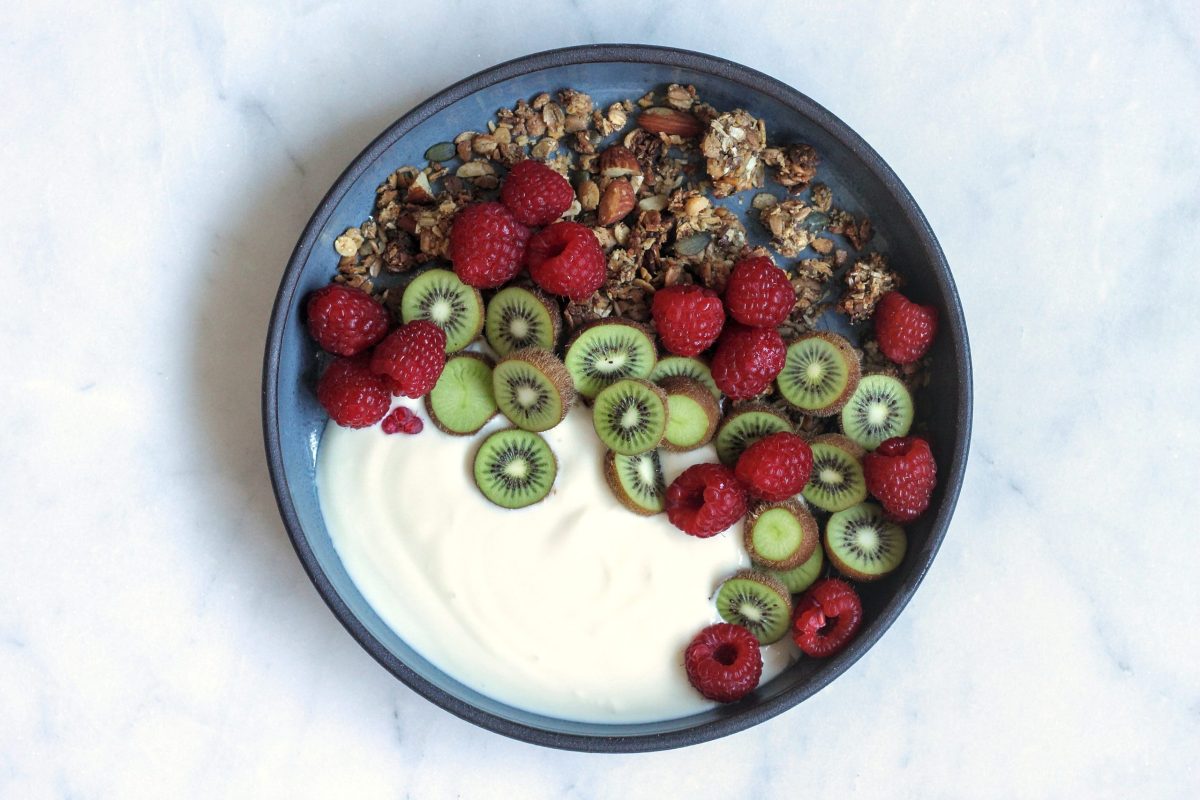
Kiwi Granola

I’ve paired my mini homegrown kiwis with no added sugar granola and some raspberries, which are another source of fibre, for the best gut-loving effect.
Roasted Butternut Squash and Red Lentil Soup

Rather than growing a carving pumpkin, I prefer to grow squash as they’re a bit more tasty than standard carving pumpkins. I’m also all about the guts, so in this recipe I’m using the whole of the edible pumpkins, with just the inedible stalk and pumpkin bum, aka the blossom end, left for the compost bin. I keep the skin of the butternut squash on the flesh – this helps save time, and prevent unnecessary food waste, but also a lot of people injure themselves when peeling squash so let’s keep the gore to fake blood.

This is also perfect to make if you are cooking something else in the oven already. You can roast the vegetables in advance, and then when you are ready turn them into the soup at a later time – just allow everything to come back to the boil for a few minutes before blending.

If you don’t have a squash to hand but still want to make this soup you can opt for pre-prepared butternut squash from the freezer which can be more convenient for some people. If this is the case try using green pumpkin seeds you can buy in the shops.

Squash and pumpkins are excellent sources of beta-carotene, which our body converts into vitamin A. We need this vitamin to help maintain healthy skin, a healthy immune system, and also help our eyes to see in the dark! Or at least that’s what the kid’s like to hear most often!

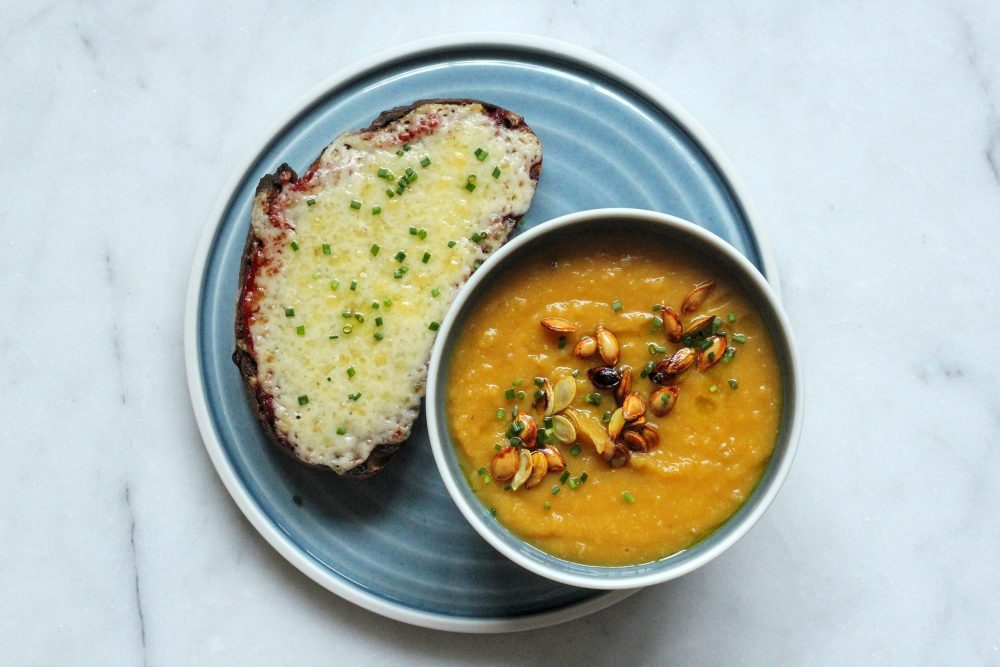
I love serving my soup with some tomato cheese on sourdough toast! It’s such a treat, and helps make this soup a balanced meal.

Makes 6 generous servings

Ingredients

  • 1 large butternut squash, cut into large chunks – mine was 1.3kg once I had prepared it
  • 3 onions, quartered
  • 1 head of garlic, the very top removed
  • 2.5 tbsp extra virgin olive oil
  • 150g red lentils
  • 1 stock cube, I used a vegetable one
  • Herbs for garnishing e.g. flat-leaf parsley or chives

Method

  • Preheat the oven to 180°C fan/ GM6
  • To a large baking tray, add the cubed butternut squash, quartered onions, garlic bulb, and 2 tbsp extra virgin olive oil. Mix to evenly coat everything with oil, and place the garlic in the middle of the tray to prevent it from burning. Roast in the oven for 45 minutes till the veg start to turn golden brown.
  • Meanwhile, prepare the squash seeds by placing the squash “guts” into a bowl and adding some water. Loosen the seeds from the stringy flesh before placing on a clean teatowel to thoroughly dry. Place the seeds into a small baking tray, adding the remaining half tbsp extra virgin olive oil and mixing to evenly coat. Place the tray at the bottom of the oven and roast for 10-15 minutes till deep golden in colour and crispy.
  • While the veg is roasting, bring around 600ml water to the boil and add the lentils and stock cube. Cook the lentils for around 10 minutes till soft.
  • Once the veg is cooked, add it to the pan with the now cooked lentils, and squeeze the garlic out of the paper. Deglaze the pan with boiling water, and then top up the water in the pan so it covers the vegetables. In total, you will need to add around 1.8l of water. Bring everything back to a boil and cook for 5 minutes before blending into a soup of your desired consistency, adding more water to thin the soup if desired, and seasoning with pepper to taste.
  • Serve the soup piping hot, dressed with a little extra olive oil if desired, and scattered with fresh herbs and crispy seeds.
Roasted Butternut Squash and Red Lentil Soup

Per serving*: 285kcal/ 8.1g fat/ 1.2g saturated fat/ 37g carbohydrates/ 11g fibre/ 11g protein

*nutritional analysis using pumpkin seeds, which are different to the seeds found in a squash

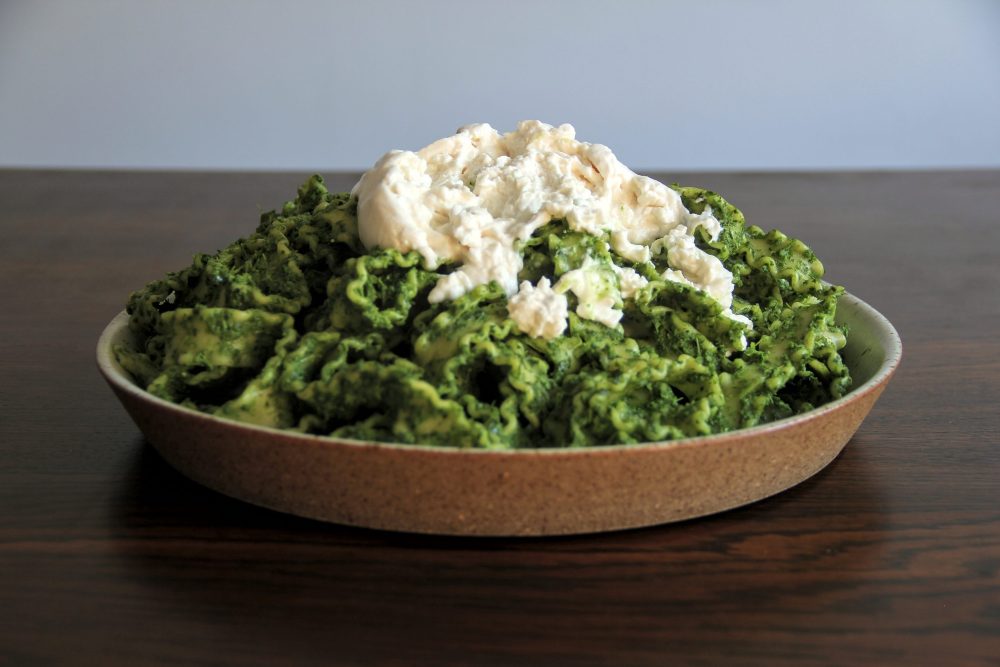
Burrella and Kale Pesto Pasta

It’s World Pasta Day and here’s my vegan version of burrata and pesto pasta – you could of course make it vegetarian if you aren’t 100% plant-based.

Serves 5

Ingredients

  • 325g kale, roughly chopped
  • 2 garlic cloves, peeled
  • 75g pine nuts, toasted (other nuts would also work well here)
  • Juice of 1 lemon
  • 2 tbsp nutritional yeast
  • 100ml extra virgin olive oil
  • 500g pasta shape of choice
  • 1 ball of Burella (for a vegan version)

Method

  • Bring a large pan of water to the boil and blanch the kale with the garlic for 1 minute before removing.
  • Blend the kale and garlic with the pine nuts, lemon juice, nutritional yeast, olive oil and a large pinch of salt till smooth – you will need a powerful blender to get a smooth sauce.
  • Meanwhile, cook the pasta according to the packet instructions, saving some pasta cooking water.
  • Once the pasta is cooked, drain and toss the kale pesto through, using a little pasta cooking water to loosen the sauce if needed.
  • Serve piled up high topped with the Burella
Vegan Kale Pesto Pasta

Per serving: 678kcal/ 33g fat/ 4.0g saturated fat/ 71g carbohydrates/ 9g fibre/ 19g protein

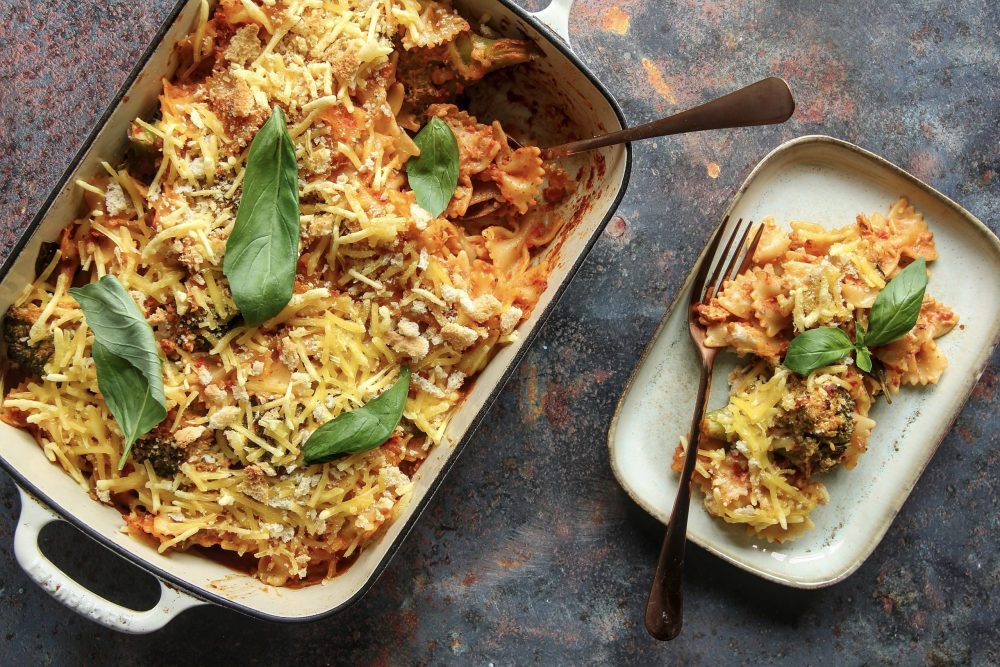
Sundried Tomato and Red Pepper Pasta Bake

This Sundried Tomato and Red Pepper Pasta Bake is so simple and yet so tasty. You could make the pasta sauce and stir it through hot pasta and sprinkle the cheese on to eat it as it is to make it every quicker, but I do like the extra texture you get from baking it in the oven.

There are many sources of vitamin B12, but plant-based sources are limited to fortified foods including some breakfast cereals, dairy alternatives, nutritional year and yeast spreads and some specially grown mushrooms.

With vitamin B12, the more frequently you have it, the less you body needs as it is more efficient at absorbing it. Therefore, if you have B12 less often, your requirements go up to 10μg/day (if only have one intake of B12), or 2000μg per week. Each serving of my pasta provides you with 3μg, which is the daily recommendation if you are having multiple sources of B12 per day. Therefore, this can help you achieve the daily requirement if paired with other vitamin B12 containing foods throughout the day.

Serves 4

Ingredients

  • 100g sundried tomatoes
  • 200g cooked red peppers in brine
  • 60g almonds
  • 30g basil, stems removed from leaves
  • 1 tbsp balsamic vinegar
  • 1 tbsp oil from the sundried tomatoes (or use extra virgin olive oil if you prefer)
  • 150ml soya milk fortified with vitamin B12
  • 20g nutritional yeast fortified with vitamin B12
  • 300g pasta
  • 300g broccoli
  • 100g vegan cheese fortified with vitamin B12
  • 2 tbsp breadcrumbs

Method

  • Bring a pan of water to the boil and cook your pasta according to the cooking instructions, adding the broccoli in for the last 4 minutes.
  • Preheat the oven to 180°C fan/ 200°C convection
  • Blend the tomatoes, peppers, almonds, basil stems, balsamic vinegar, oil, soya milk and nutritional yeast together to make a sauce.
  • Mix the sauce through the cooked pasta and broccoli, adding the basil leaves, and use a little pasta cooking water to get every scrap of sauce from the blender before pouring into a baking dish.
  • Mix the breadcrumbs and vegan cheese together and sprinkle over the top of the pasta bake. Cook for 20 minutes till golden brown and crispy.

Per serving: 704kcal/ 34g fat/ 3.2g saturated fat/ 67g carbohydrates/ 14g fibre/ 25g protein/ 3μg vitamin B12

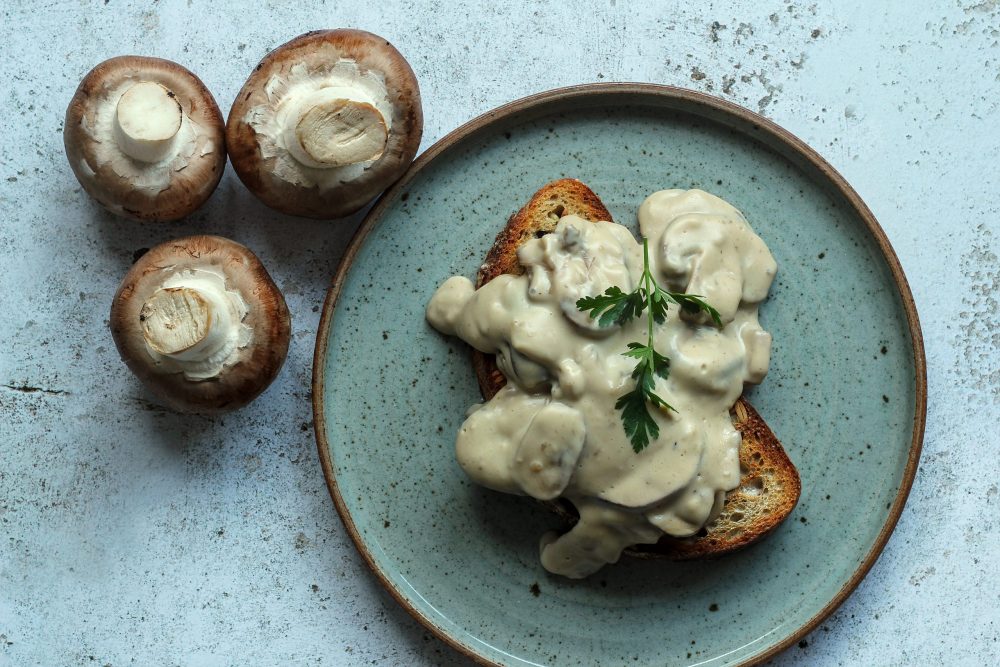
Mushrooms on Toast

This was a childhood recipe I would make it every weekend. I loved this recipe so much, but the original recipe used cow’s milk. I’ve turned it vegan by using some unsweetened soya milk and rapeseed oil in place of the butter. I still get that nostalgic feeling when eating this vegan version.

I’m using mushrooms which naturally contain vitamin D. I’ve written about this before where I talked about exposing shop-bought mushrooms to sunlight to make your own vitamin D mushrooms at home. You can buy mushrooms which have already been exposed to UVB rays, and therefore already contain vitamin D2. This can be useful if it’s not a sunny day or you don’t have time to let your mushrooms make vitamin D.

Serves 1

Ingredients

  • 10g rapeseed oil
  • 100g vitamin D mushrooms
  • 1 tbsp plain flour
  • 1 tbsp mushroom ketchup
  • 150ml unsweetened fortified soya milk
  • 1 slice of toast

Method

  • In a saucepan, heat the oil and fry the mushrooms till they release all their juices and they evapourate off.
  • Add the flour and mix into the mushrooms before adding the mushroom ketchup. Add the soya milk in a little bit at a time, stirring continuously to get a smooth sauce.
  • Once all the milk has been added, cook for a couple of minutes before serving piled high on a slice of toast
Mushrooms on Toast

Per serving: 409kcal/ 14g fat/ 1.6g saturated fat/ 56g carbohydrates/ 3.8g fibre/ 15g protein/ 6.2μg vitamin D2

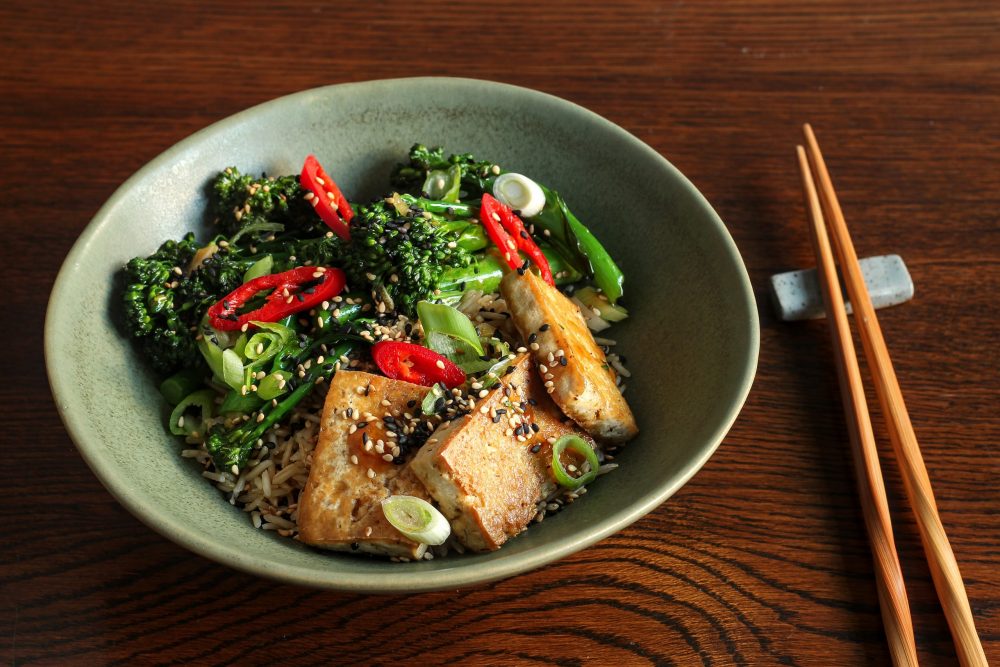
Crispy Tofu with Broccoli

Firm tofu can be a good source of calcium on a fully plant-based diet if it is set with calcium chloride or calcium sulphate rather than nigari. Here’s how I love to cook my tofu. There are plenty of other vegetables you could use in this dish such as kale, spring greens, kai lan or pak choi which all contain calcium. Alternatively, other non-calcium containing vegetables that would be delicious in this dish include onions, peppers, bamboo shoots, water chestnuts, carrots or mushrooms.

Serves 4

Ingredients

  • 1 tbsp corn flour
  • 2 tbsp mushroom sauce (vegan oyster sauce)
  • 1 tbsp soy sauce
  • 1 tsp sesame oil
  • 1/4 tsp white pepper
  • 150ml water
  • 1.5 tbsp rapeseed oil
  • 1 block of calcium set tofu
  • 300g sprouting broccoli
  • 2 garlic cloves, chopped
  • 1/2 inch piece of ginger, chopped

To serve

  • 4 portions of cooked rice
  • 2 spring onions, sliced
  • 1 red chilli, sliced
  • 2 tsp toasted sesame seeds

Method

  • Mix the corn flour, mushroom sauce, soy sauce, sesame oil, white pepper and water together and set aside.
  • Meanwhile, heat a frying pan with 1 tbsp rapeseed oil and cook the tofu on both sides for a few minutes till golden brown and crispy.
  • Remove the tofu and set aside. Turn the heat up and add the broccoli, cooking to 2 minutes till it starts to char.
  • Add the garlic, ginger and remaining oil and cook for 1 minute before adding the sauce mixture and cooking for 2-3 minutes till the sauce thickens and coats the broccoli.
  • Serve with the cooked rice and sprinkle the spring onions, chilli and sesame seeds over the top.
Crispy Tofu with Broccoli

Per serving: 408kcal/ 18g fat/ 2.8g saturated fat/ 37g carbohydrates/ 7.5g fibre/ 21g protein/ 462mg calcium*

*based on Cauldron Tofu

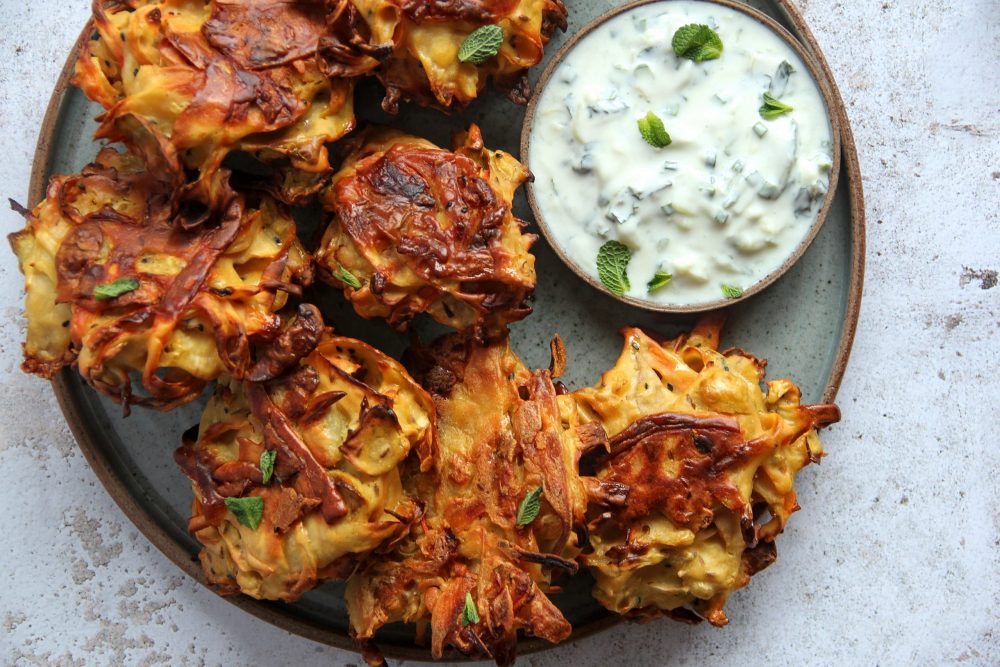
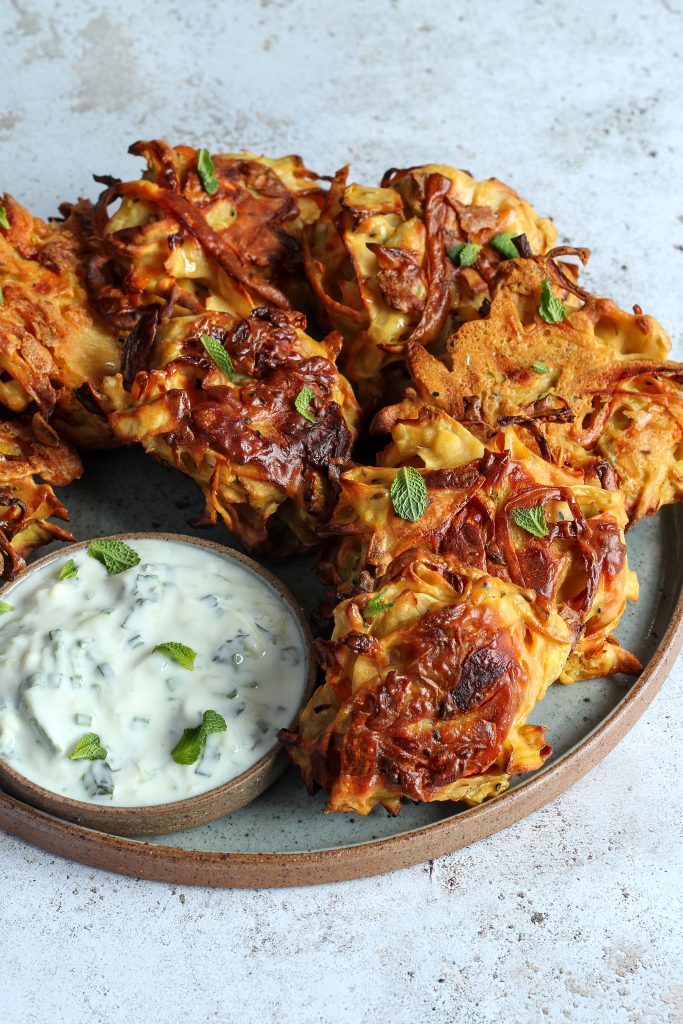
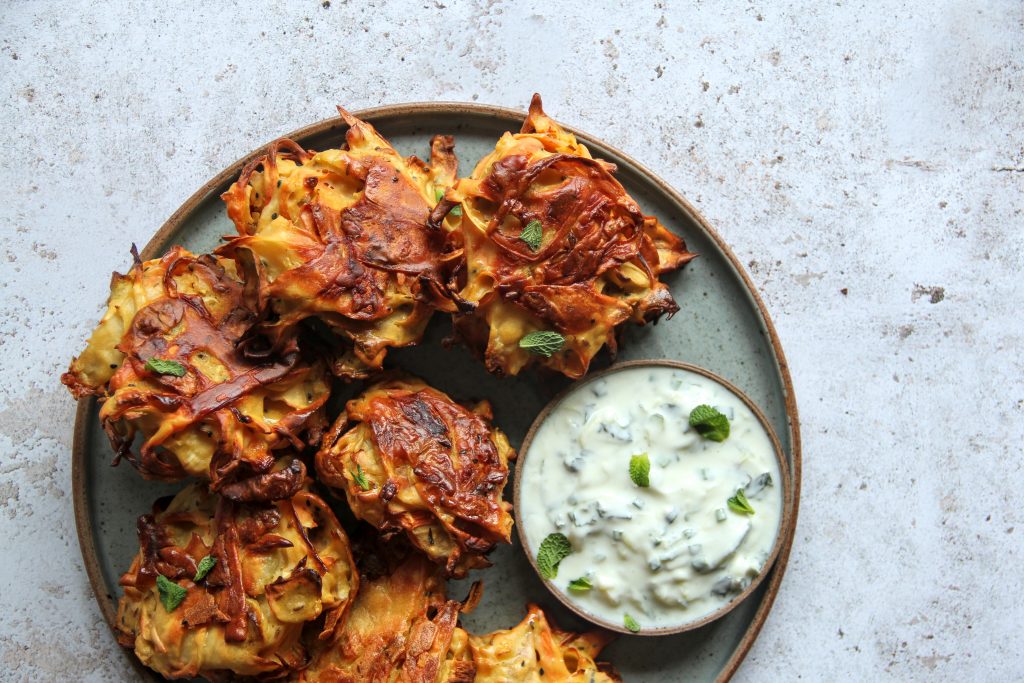
No Waste Vegetable Fritters

No Waste Vegetable Fritters

Use your leftover vegetable peelings from your Christmas Dinner to make these delicious No Waste Vegetable Fritters. They are so versatile in terms of what vegetables you want to use in them. I have used a combination of potato, parsnip, carrot and sprout peelings, but other suitable vegetables include onion, cabbage, kale, cauliflower (leaves included), broccoli, mushrooms or leeks.

Save the peelings in a Tupperware in the fridge for up to 3 days before making these fritters – you can adjust the gram flour (also known as chickpea flour or besan flour) and water to the weight of the vegetables.

Delicious served with a quick riata which can easily be adapted to vegan by using a plant-based yoghurt.

No Waste Vegetable Fritters

Makes around 8 fritters

Ingredients

  • 2 tbsp rapeseed oil
  • 400g vegetable peelings e.g. carrots, potatoes, parsnips and sprouts
  • 1″ ginger, grated
  • 1 clove garlic, grated
  • 1 tsp nigella seeds
  • 1.5 tsp cumin seeds
  • 250g gram flour
  • Juice of 1 lemon

To serve

  • 250g plain yoghurt of choice
  • 100g grated cucumber
  • 1 spring onion, chopped
  • 1 handful fresh mint, chopped
  • Juice of half a lemon

Method

  • Preheat the oven to 200°C fan/ 225°C convection
  • In a large baking tray add the oil and preheat in the oven
  • In a large bowl add the remaining fritter ingredients and mix together with around 150ml water, adding extra water if needed to get a thick batter consistence.
  • Remove the tray from the oven and drop patties of the mixture into the hot oil, evenly spaced out. You should make around 7-8 fritters.
  • Cook in the oven for 10 minutes, before flipping over, gently pressing down and cooking for a further 12-15 minutes till golden brown and crispy.
  • Meanwhile, mix the raita ingredients together.
  • Once the fritters are cooked through, serve alongside the riata.

Per serving*: 198kcal/ 5.2g fat/ 0.7g saturated fat/ 25g carbohydrates/ 5.2g fibre/ 10g protein

No Waste Vegetable Fritters

*Nutritional analysis completed based on particular vegetables listed and plain low fat yoghurt.

Hot Cross Bun French Toast

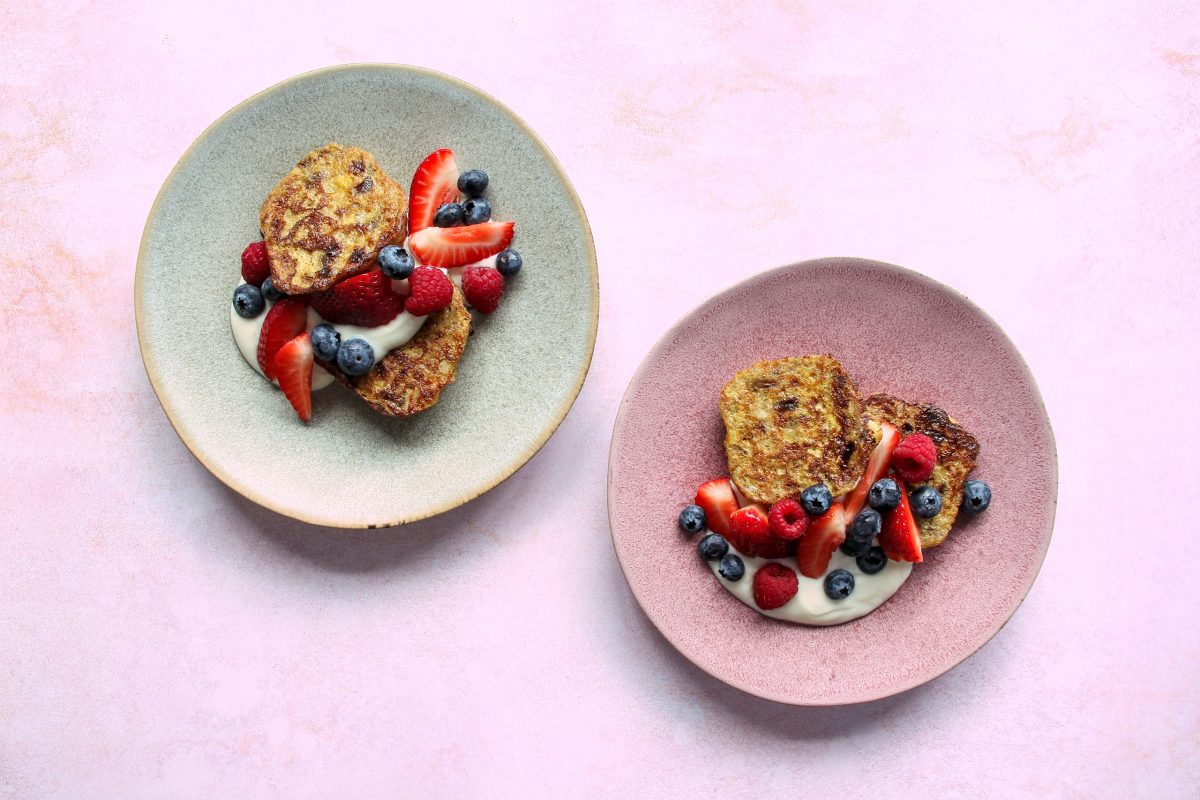
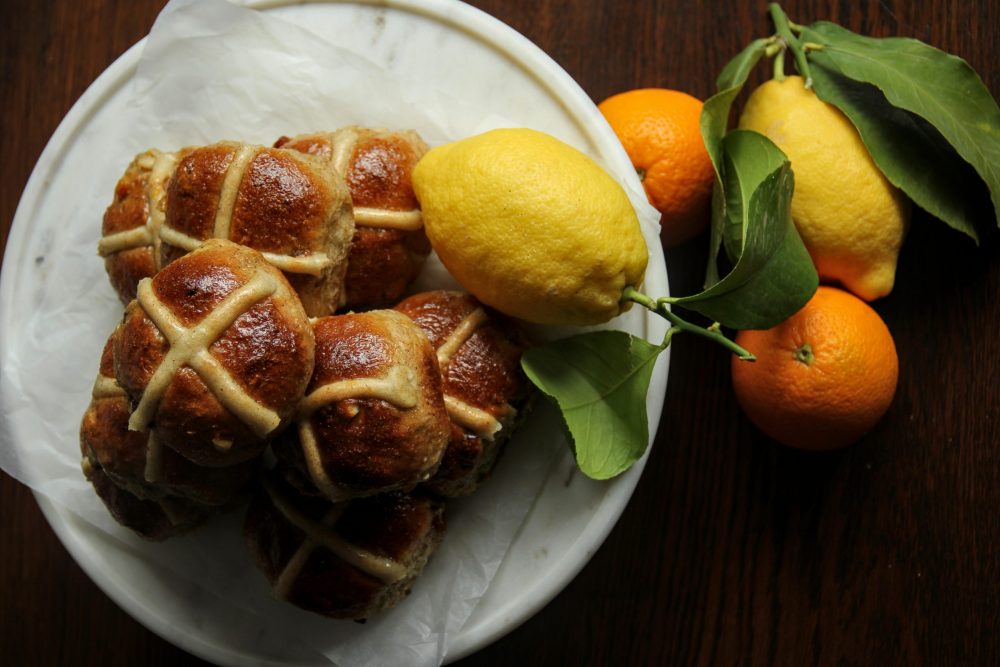
Leftover hot cross buns? Fancy an alternative breakfast this Easter weekend? Here is a delicious way to enjoy your hot cross buns. You can use shop-bought, or try my delicious Best of Both Apple & Cinnamon, or my vegan St. Clement recipes.

Serves 2

Ingredients

  • 2 hot cross buns
  • 1 egg
  • 50ml milk of choice
  • Pinch of cinnamon
  • 5g butter or cooking oil

To serve

  • Yoghurt
  • Berries

Method

  • In a flat-bottomed container, mix the egg, milk, and cinnamon.
  • Slice the hot cross buns in half and soak in the mixture for 5 minutes.
  • Heat a pan over a medium heat, and add the butter or oil.
  • Cook the soaked buns in the pan for 2-3 minutes per side till golden brown.
  • Serve hot with yoghurt and berries

St. Clement Hot Cross Buns

These citrusy hot cross buns are plant-based using vegetable oil and dairy-free milk to create an enriched dough without the use of dairy and eggs.

St. Clement Hot Cross Buns

Makes 9 buns

Ingredients

For the buns

  • 2 oranges, zest and juice
  • 100g sultanas
  • 100g strong wholemeal flour
  • 250g white strong flour
  • 30g rapeseed oil, plus a little extra
  • 7g yeast
  • 30g caster sugar
  • 50g mixed peel
  • 2 tsp ground mixed spice
  • 125ml milk, I have used unsweetened soya milk

For the crosses

  • 5ml rapeseed oil
  • 25g strong white flour
  • 25-30ml water

For the glaze

  • 50ml of reserved juice from the oranges
  • 15g sugar
  • pinch of ground mixed spice

Method

  • Zest and juice the oranges, reserving 50ml of the juice for later.
  • Weigh out the remaining orange juice and top up to 100ml if needed with water. Add the sultanas and allow to soak while you prepare the rest of the ingredients.
  • To a freestanding mixer bowl, add the flours, oil, yeast, sugar, mixed peel spices, soya milk and orange zest. Add in the orange juice and sultanas and knead for 5 minutes on a medium setting. Alternatively you can do this by hand but resist the temptation to add more flour – the dough should be ever so slightly sticky.
  • Lightly great a large bowl the oil, place the dough in and cover. Allow to double in size for 1-2 hours.
  • Knock the dough back and evenly divide into 9 balls.
  • Line a baking tin with baking paper and arrange the balls in a 3×3 format.
  • Cover and allow to double in size again, about 1-1.5 hours.
  • Once the dough has almost fully risen, preheat the oven to 200°C fan/ 220°C convection.
  • Prepare the batter by mixing the ingredients together to form a smooth pipeable mixture. Place into a piping bag.
  • Once the oven it up to temperature, pipe crosses over the tops of your buns.
  • Bake for 15 minutes.
  • Meanwhile, prepare the glaze by heating the orange juice, sugar and spices together till the sugar has dissolved.
  • Once the buns are cooked, generously glaze them, using all of the liquid.
  • Remove the buns from the tray onto a wire cooking rack, removing the baking parchment as well.
  • Best enjoyed fresh on the same day, or delicious toasted if a day or two old.

Per bun*: 254kcal/ 4.6g fat/ 0.4g saturated fat/ 46g carbohydrates/ 2.8g fibre/ 6.1g protein

*Analysis based on unsweetened soya milk

Porridge Pancakes

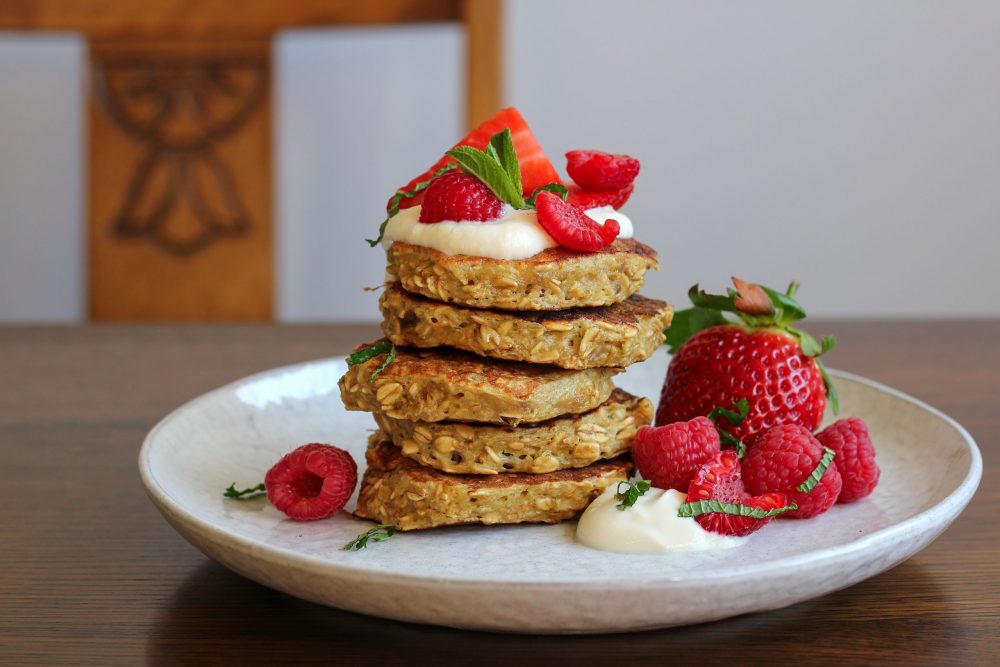
A delicious and easy way to start the day. Perfect for Pancake Day, or make a stash for on the go. Naturally sweet from the banana, these have no added sugar. You could further flavour the pancakes with fruits such as blueberries, or use dark chocolate chips for an extra sweet kick.

Use gluten-free oats to make this gluten-free, or dairy-free by using a milk alternative and yoghurt alternative (I have used soya products in this recipe).

Porridge Pancakes

Serves 2

Ingredients

  • 1 large banana
  • 1 egg
  • 100g rolled oats
  • 50ml milk of choice
  • 1/2 tsp baking powder
  • 1/2 tsp cinnamon (optional)
  • Oil for frying

To serve

  • 150g strawberries
  • 80g raspberries
  • 160g yoghurt (I have used soya yoghurt)
  • A few mint leaves

Method

  • Mash the banana in a bowl with a fork till you have very small lumps.
  • Add the remaining ingredients, except for the oil, and mix well.
  • Heat a frying pan over a low heat.
  • Wipe 1/4 tsp of oil around the pan before adding spoonfuls of the mixture, spaced out. You should be able to make 6-8 pancakes from the batter.
  • Cook for 2 minutes, before flipping and cooking for a further 2 minutes.
  • Serve in stacks with yoghurt, berries and mint.
Delicious served with fruit and yoghurt

Per serving*: 430kcal/ 11g fat/ 1.9g saturated fat/ 60g carbohydrates/ 12g fibre/ 15g protein

*Analysis based on unsweetened soya milk and unsweetened soya yoghurt

Yellow Split Pea Falafel

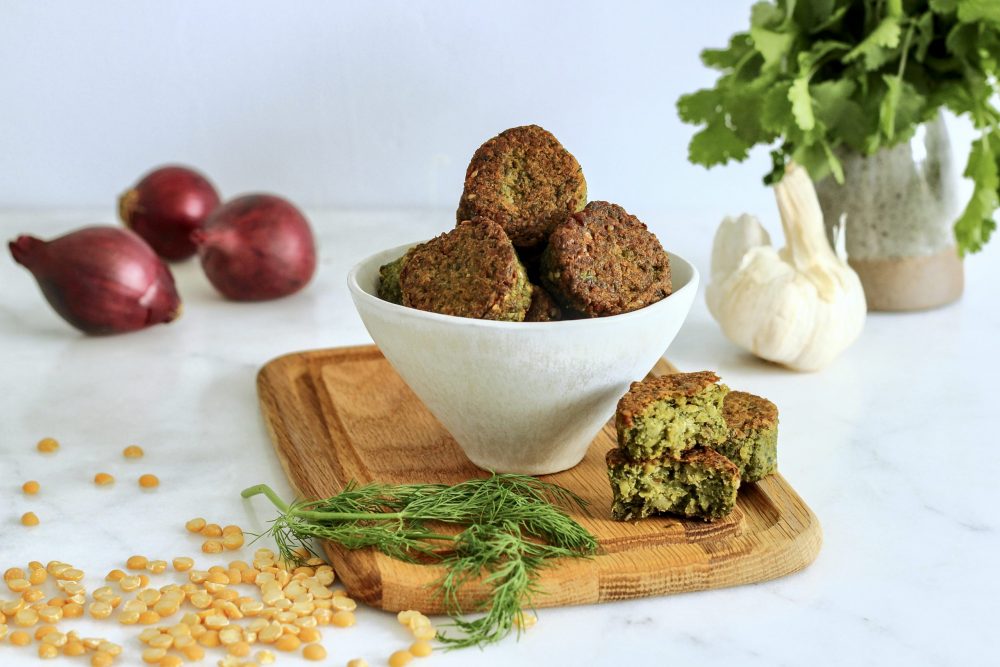
These little fritters have two main differences from the traditional falafel you would normally buy. Firstly their main ingredient is yellow split peas, as opposed to the traditional chickpea or fava bean. Secondly, they are baked in the oven rather than deep-fried. If neither of those facts have offended you then you’re in for a treat!

These make the perfect accompaniment to my easy hummus recipe to make a wrap, a nourish bowl or make large versions of the falafels and pop it in a burger bun for a vegan burger alternative.

Falafel and Hummus Salad Wrap

These falafel are packed full of nutrients, and each serving will provide you with:

  • 13g of plant protein
  • 18% of your fibre recommendation
  • 28+% of your daily iron requirements
  • 20+% of your zinc requirements
  • 10% of your calcium requirements

Serves 6

Ingredients

  • 200g yellow split peas, soaked overnight
  • 50g flat-leaf parsley, stems and leaves
  • 50g coriander, stems and leaves
  • 10g dill, stems and leaves
  • 1 medium red onion
  • 5 garlic cloves
  • 2 tsp cumin seeds
  • 1 tsp ground coriander
  • 1 tsp cayenne pepper
  • 1 tsp baking powder
  • 2 tsp sesame seeds
  • 120g gram flour
  • 3 tbsp extra virgin olive oil

Method

  • Cook the yellow split peas in fresh water for 30 minutes. Drain and allow to cool slightly.
  • Roughly chop the herb stems before adding all the ingredients into a food processor. Pulse till the desired texture of your falafels – I prefer mine to have some texture throughout.
  • Transfer to a bowl, cover and chill in the fridge for 1 hour.
  • Preheat the oven to 200°C fan/ 220°C convection. Place a heavy-bottomed tray in to preheat with the olive oil. Allow to come to temperature.
  • Meanwhile, take the cooled mixture and gently press into disk shapes. The mixture should make around 18-20 falafels depending on how big you make them.
  • Once the baking tray and oil are up to temperature, transfer the falafels in. As they hit the oil they should sizzle slightly.
  • Bake for 20-25 minutes, flipping halfway through once golden brown and crispy.

Per serving: 273kcal/ 9.3g fat/ 1.2g saturated fat/ 30g carbohydrates/ 5.4g fibre/ 13.2g protein

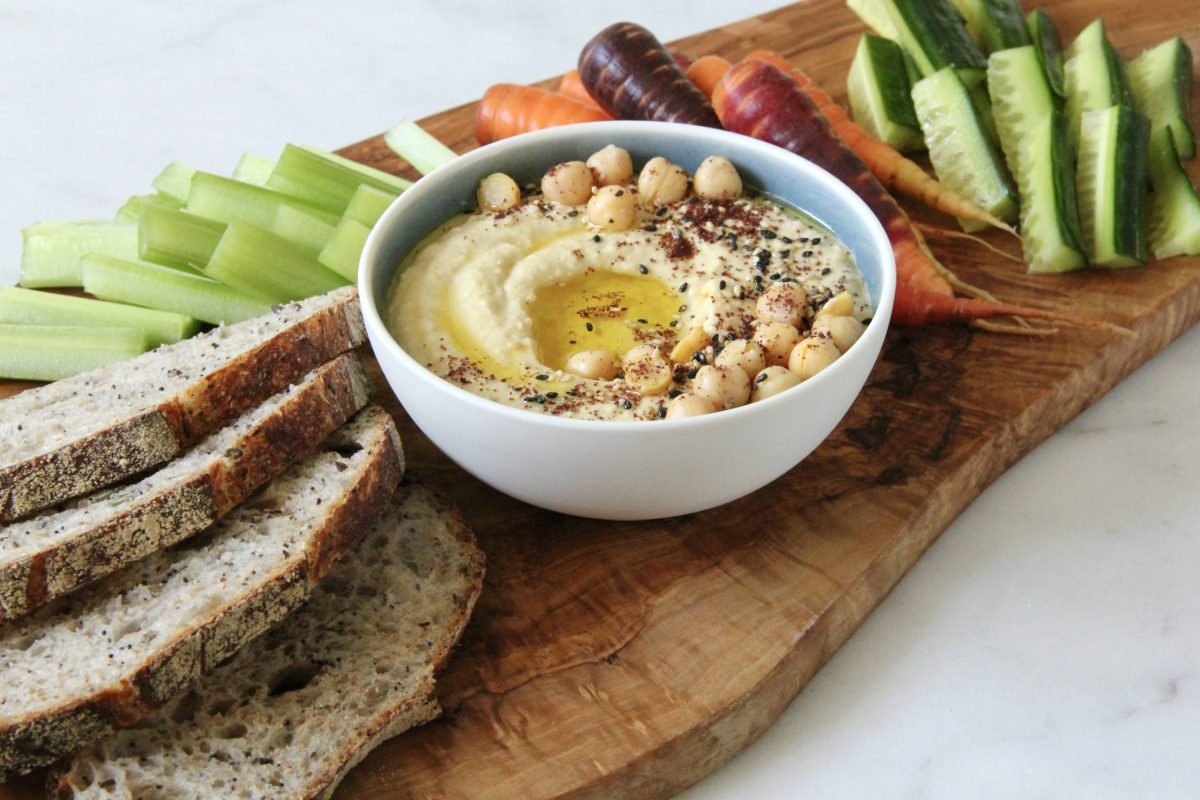
Easy Hummus

A super easy hummus recipe that can be ready in minutes. Use this as a healthy snack alternative, or as a component of a larger meal.

Chickpeas are good sources of plant-based iron, and the combination with lemon juice as a source of vitamin C means that the iron absorption from these sources will be increased; something that vegans and vegetarians will need to be aware of. Iron requirements differ according to sex and age; for pre-menopausal women a serving of hummus will provide 18% of iron requirements, whilst for men and post-menopausal women it’s over 30%.

Separately, chickpeas and sesame seeds, or tahini, in this case, are a good source of calcium. Each serving of hummus provides you with 8% of your daily calcium requirements, and that’s on its own. You could further increase the calcium content of your hummus meal by using broccoli crudités, or serving with brown or white bread which is fortified with calcium in the UK by law.

Makes 7 portions

Ingredients

  • 150g drained tinned chickpeas
  • 1 garlic clove, peeled
  • 45g tahini
  • 30ml extra virgin olive oil
  • Juice of 1 large lemon
  • ½ tsp ground cumin

To serve

  • Chickpeas
  • Extra virgin olive oil
  • Sesame seeds
  • Sumac
  • Vegetable crudités
  • Bread

Method

  • Add the chickpeas, garlic, tahini, olive oil, lemon juice and cumin to a food processor
  • Blend to your desired consistency, adding 1–2 tablespoons of water if needed
  • Serve in a bowl scattered with extra toppings such as cooked chickpeas, olive oil, sesame seeds and sumac with your favourite crudités
  • Any leftovers can be stored in the fridge in a covered container for three days

Per 45g serving: 114kcal/ 8.9g fat/ 1.2g saturated fat/ 4.0g carbohydrates/ 1.8g fibre/ 3.4g protein

For more information about key nutrients in vegan diets check out the blog I have written for MyNutriWeb.