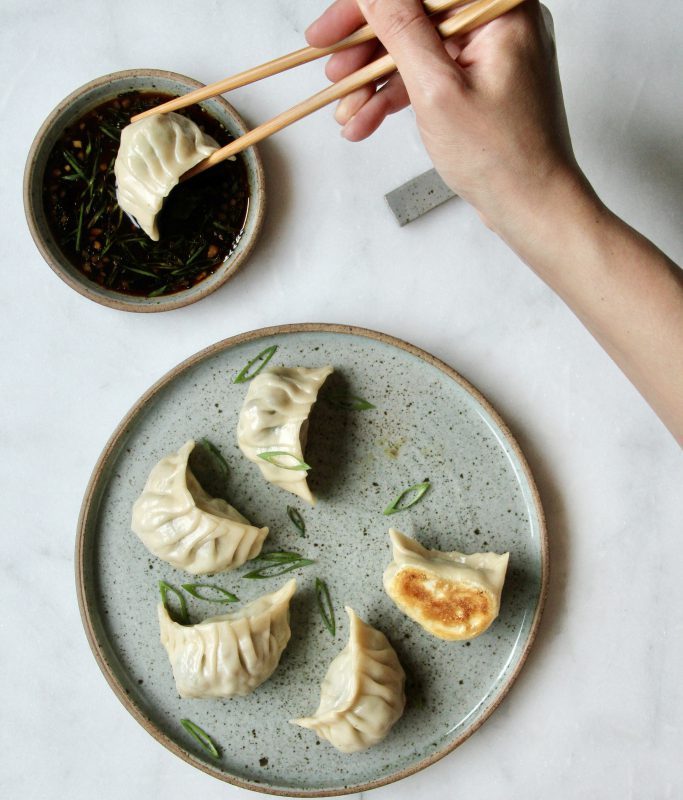
Turkey and Shiitake Mushroom Dumplings

An adaptation to the bao recipe my mum taught me for when you are shorter on time but still want something delicious!

While Chinese recipes often call for pork, specifically fattier cuts such as belly of pork, I use minced turkey thigh in many of my dumpling recipes. Turkey is a leaner mince in comparison to standard pork mince (5.5g fat versus 11.6g fat per 100g respectively) yet still doesn’t dry out when cooked. This is partially due to the use of thigh meat rather than breast, which is usually much juicer, as well as the use of a tiny amount of bicarbonate of soda. The bicarbonate of soda, once mixed in with the mince, helps it stay soft and juicy, as well as give a little “bounce” which higher fat meats tend to have.

This is perfectly adaptable to whatever ingredients you wish to use. You can use firm tofu, which I also press to prevent excess water inside the dumpling. Swap weight for weight, although it can be a little more difficult to pleat the dumplings as the mixture is much more crumbly and does not stick together in the same way as meat does.

I also love to use fish and shellfish in dumplings. You could also do a mixture, one we often use in our family recipes is prawn and turkey, again traditionally it would have been pork and prawn, but we have added this little healthy swap which tastes absolutely delicious!

Folding the dumplings can be a little tricky. If you struggle the simplest shape you could make would be either a half-moon where you literally fold the skin on itself to make a semicircle shape, or you could gather all the pastry around to the top and squeeze to make a “money purse” shape. As you get more adventurous there are so many different shapes you can try.
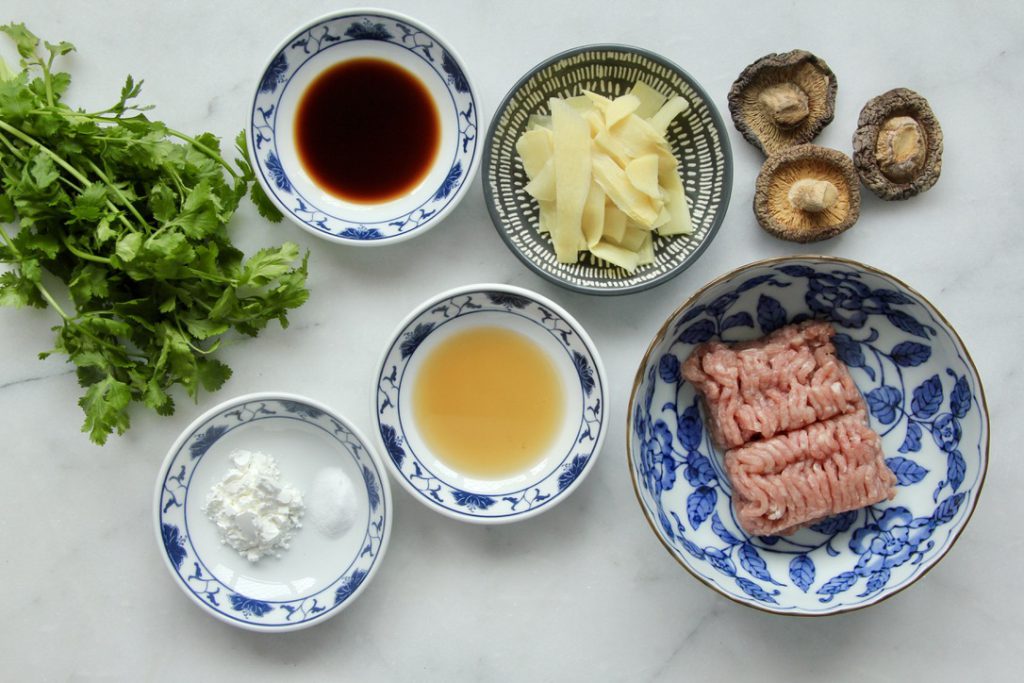
Dumpling filling ingredients

Makes 12 dumplings

Ingredients

  • 1 quantity of dumpling skins
  • 100g turkey mince, preferably thigh
  • 1/4 tsp bicarbonate of soda
  • 1 tsp corn flour
  • 1 tsp sesame oil
  • 1 tsp soy sauce
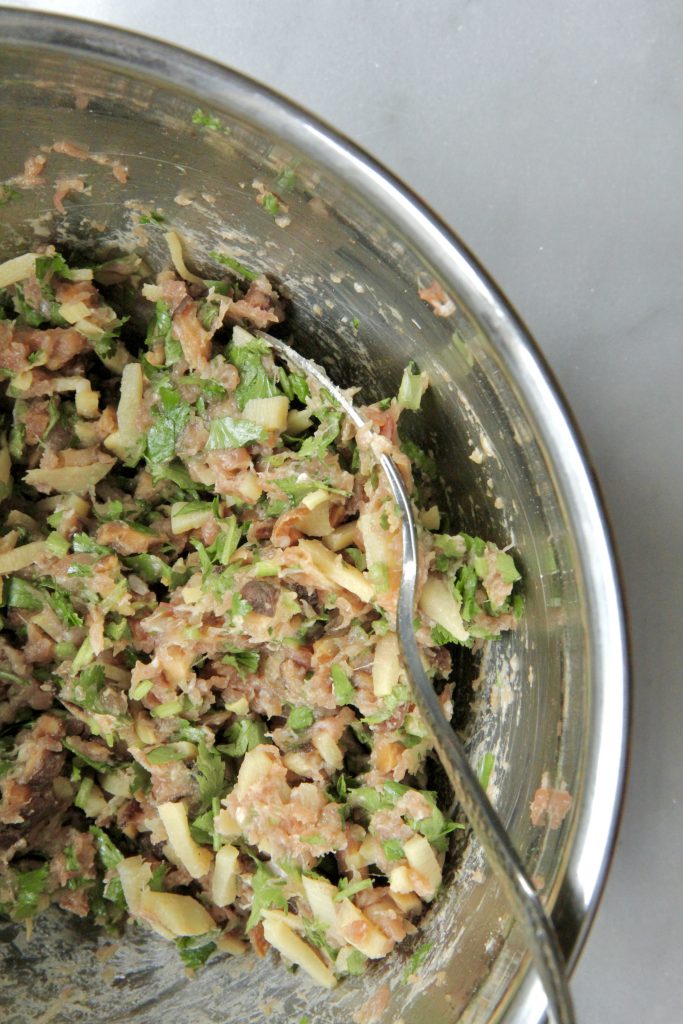
  • 3 shiitake mushrooms, fresh, or if dried soaked in water till soft, finely diced
  • 35g bamboo shoots, finely sliced
  • 15g coriander, roughly chopped
  • 1/2 cm ginger slice, finely diced
  • Pinch of white pepper
  • Oil for cooking

Method

  • Mix the turkey mince with the bicarbonate of soda thoroughly. Then add all the remaining ingredients, except the oil for frying, and mix well.
  • Take 1 dumpling skin and fill it with a heaped teaspoon of the mixture. Pinch the end and then pleat the top half of the skin onto the bottom half of the skin to create a slight crescent shape.
  • Add a dash of oil to your frying pan to stop the dumplings from sticking, and arrange them so they have at least 1 cm between each dumpling. You may need to cook them in batches depending on the size of your pan.
  • Cook for 2-3 minutes over a low-medium heat so they are golden on the bottom. Then add hot water to cover the bottom third of the dumpling and immediately cover with a lid to steam the dumplings.
  • After 5 minutes, remove the lid and allow any remaining liquid to evaporate off, add a dash of sesame oil to finish and crisp the bottoms for 1 minute.
  • Remove the dumplings onto a plate and enjoy hot with a dipping sauce of your choice.
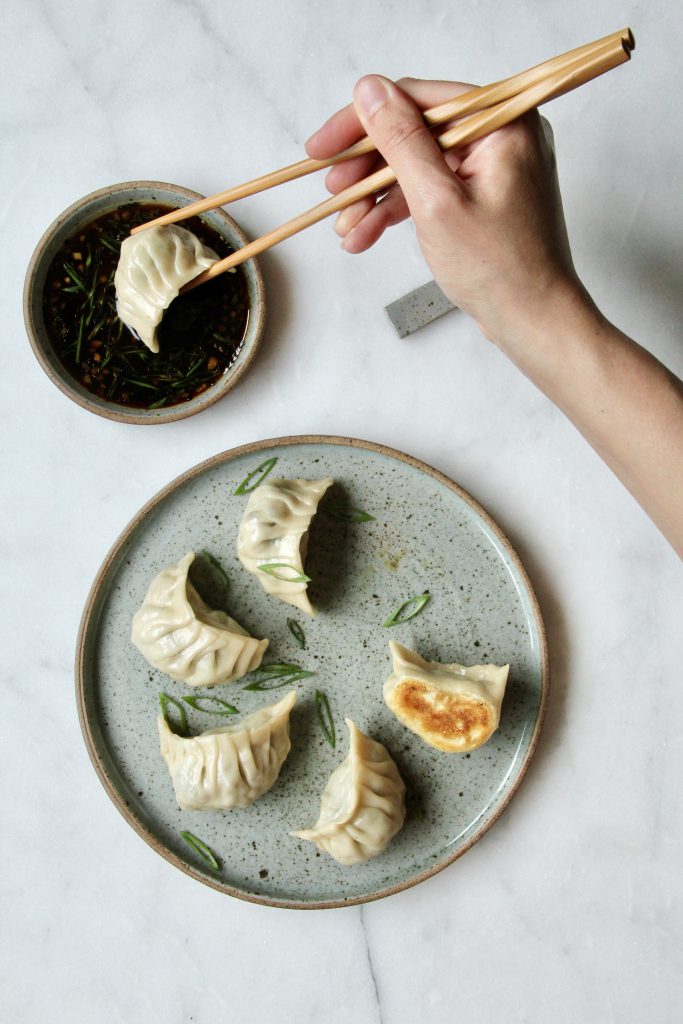
Per dumpling: 66kcal/ 1.9g fat/ 0.4g saturated fat/ 8.7g carbohydrates/ 0.7g fibre/ 3.3g protein
Easy Dumpling Skins

Easy dumpling skins which the whole family can enjoy rolling out and filling.

If you don’t have plain flour, use strong white bread flour and increase the ratio of corn flour in the recipe by up to 25%. Corn flour adds a silkiness to the skins, even with normal plain flour, while the high gluten content of bread flour could make the skins tough.

Makes 12 skins.

Ingredients

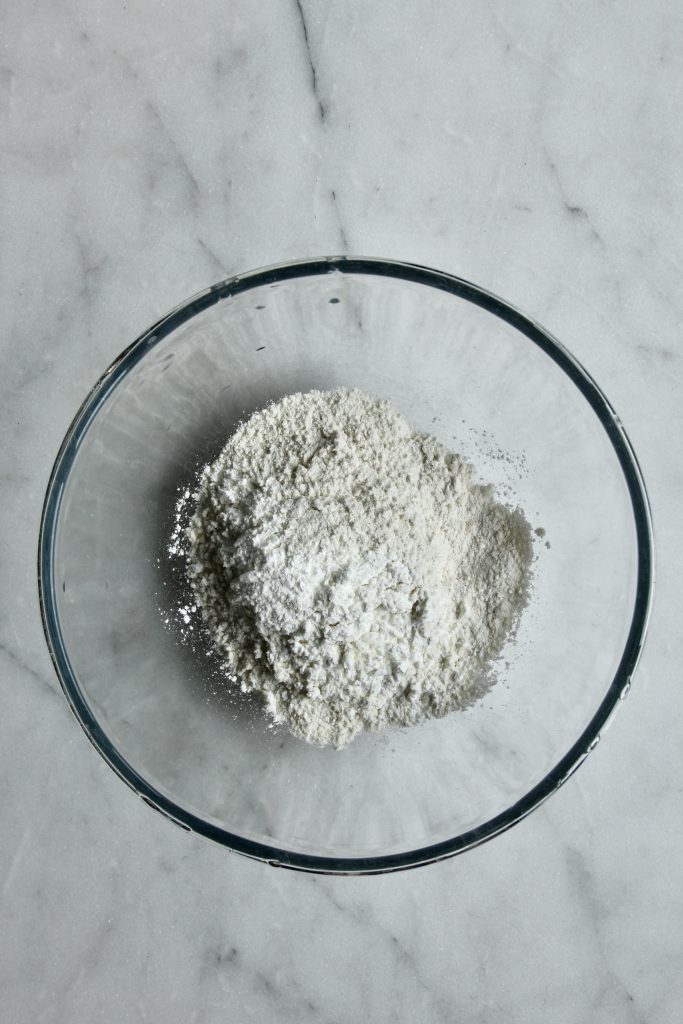
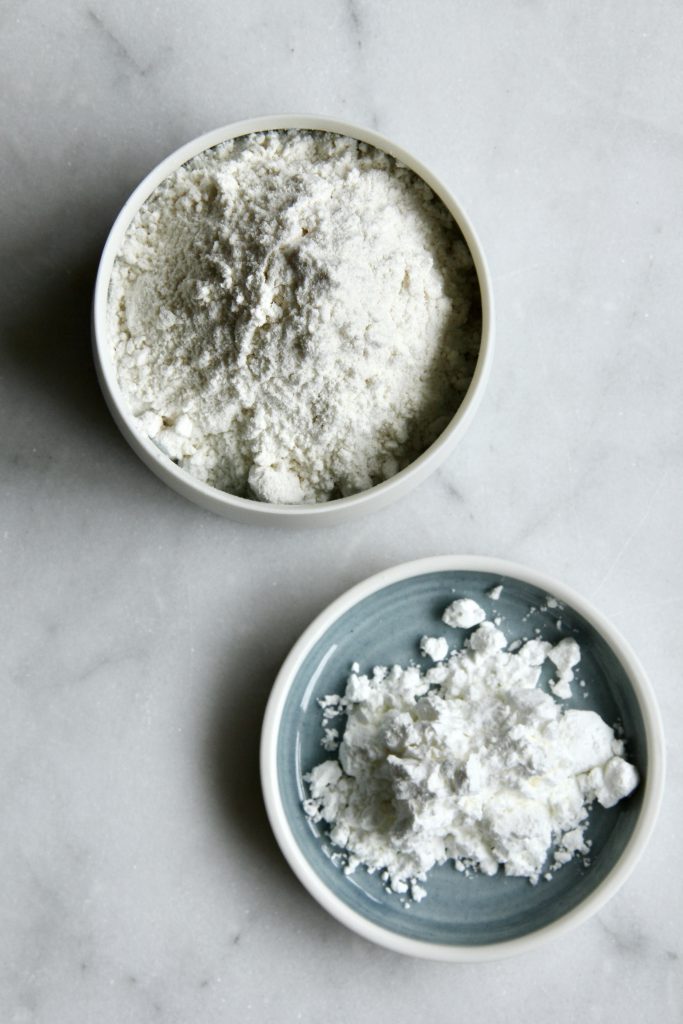
  • 108g plain flour
  • 12g corn flour
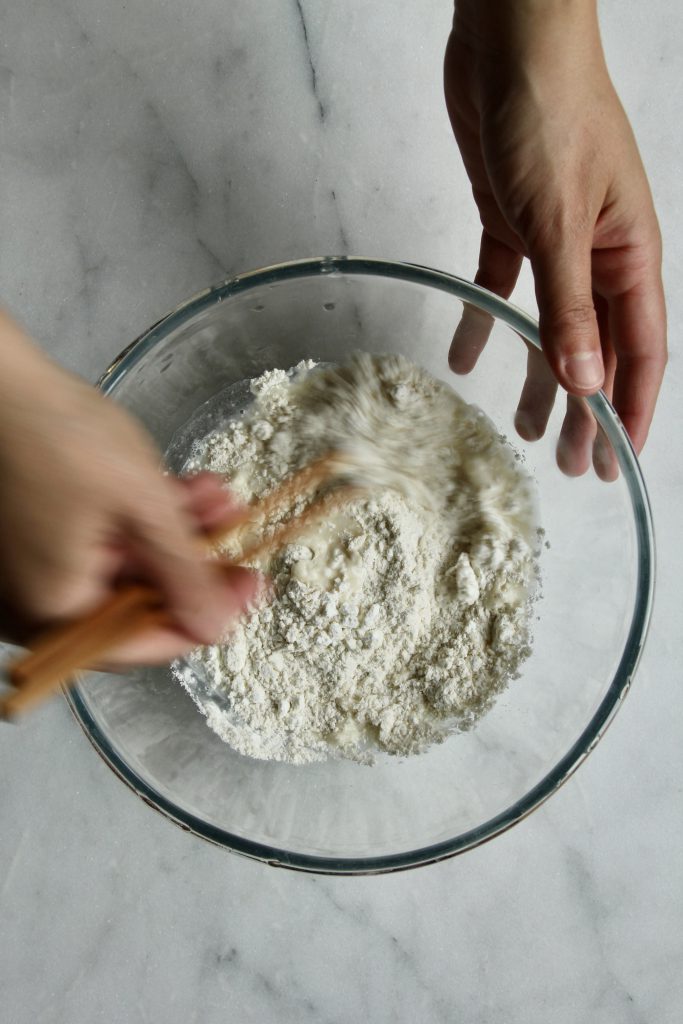
  • 62g hot water, boiled and cooled for 5-10 minutes

Method

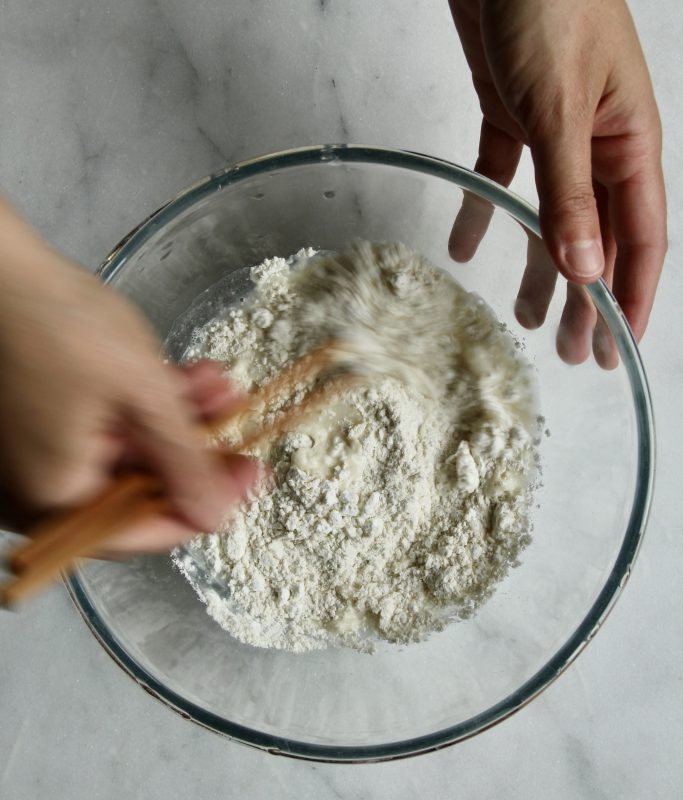
  • Mix the two flours together.
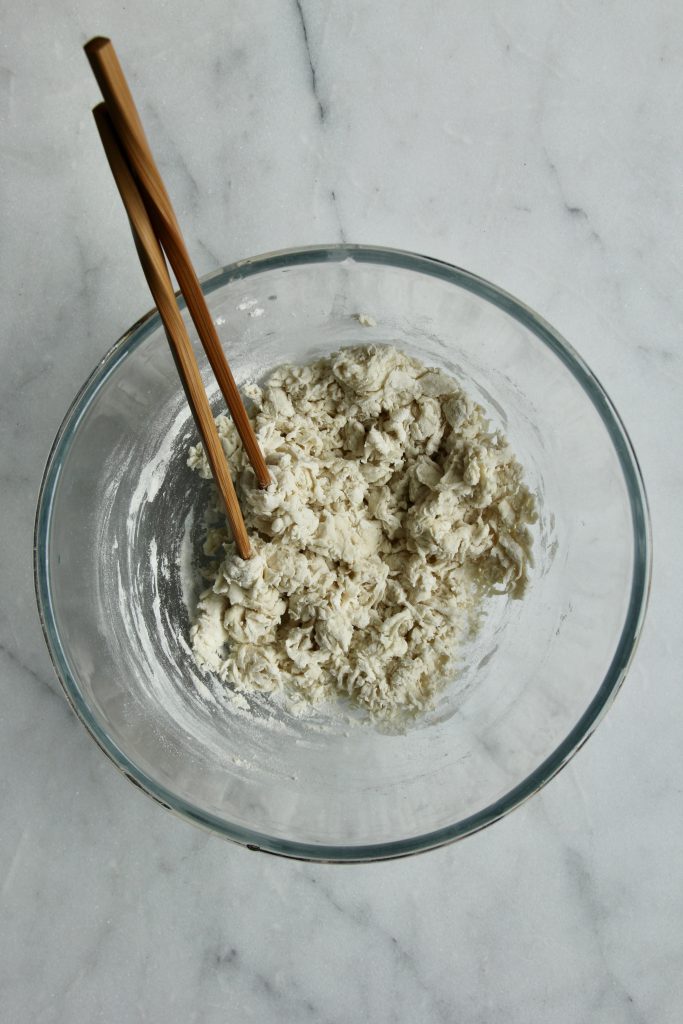
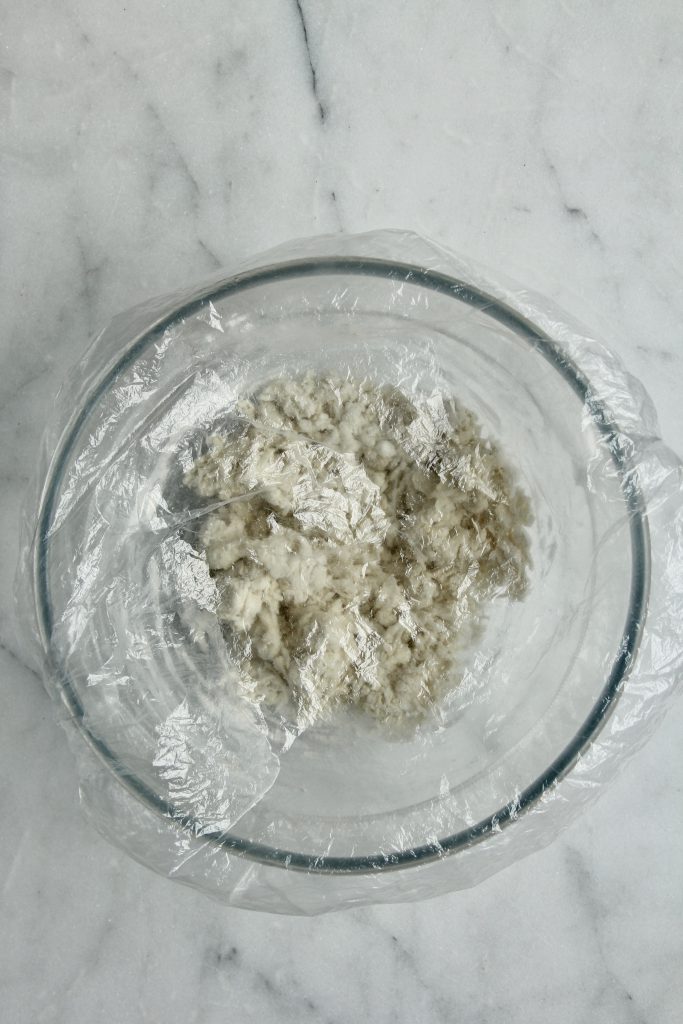
  • Add the hot water and stir to a shaggy mixture. Cover and leave for 10-30 minutes.
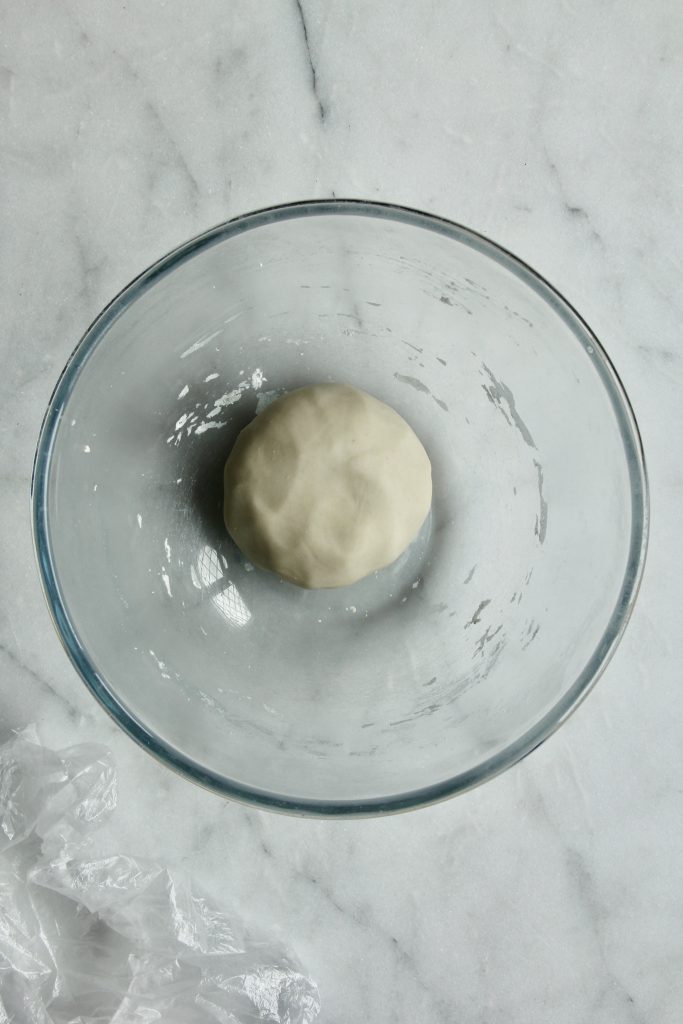
  • Knead the dough till it is smooth and elastic. Cover and leave for 30-60 minutes.
  • Roll a fat sausage shape and cut 12 equal cylinders.
  • Take 1 cylinder, and cover the remaining 11, press down with the palm of your hand on the cut surface of the dough to create a flat disk. Using a rolling pin, roll from the centre of the disk outwards, then turn clockwise and keep repeating around the dough to create a round flat disk with a thin edge.
  • If not using immediately, cover to prevent it from drying out as you continue to roll out the remaining dough.
  • If you wish to freeze the skins, rub a little corn flour on each side to stop them from sticking together. Freeze for up to 1 month.

Per skin 39kcal/ 0.2g fat/ 0.1g saturated fat/ 8.0g carbohydrates/ 0.3g fibre/ 1.1g protein

Fresh Egg Pasta

Think making your own pasta is hard work and requires fancy equipment? Think again. All it takes is flour really, however I use an egg as my liquid as I always have them thanks to the girls, and it adds a lovely golden colour. If you don’t eat eggs, substitute with either water, or try using roasted and puréed vegetables as the liquid portion.

Roughly speaking, 1 egg will give you enough pasta for 1 person as a main. I always weigh my eggs as I get widely varied egg sizes. This way I know that my pasta dough won’t be either too wet or too dry. If you make too much pasta dough, you can either store it covered int he fridge for a couple of days, freeze it as a block ready to shape at a later date, or you can shape and dry it and treat it like dried pasta when you cook it.

For a full length video visit my channel on YouTube.

Recipe

  • Eggs (water or even vegetable purée)
  • Flour, ideally “00” pasta flour or semolina, but any will do

Method

  • Weigh the cracked eggs in a bowl. Then weigh 1.5 times the weight of the eggs in flour onto the worktop.
  • Make a well in the centre of the flour and add the liquid. Slowly incorporate the flour into the liquid using your hands, a fork or a bench scraper, whatever you have.
  • Once all the flour is incorporated, start the knead the dough. Notice at the start the rough texture of the dough. After 5-10 minutes of kneading the dough should be smooth and elastic. Cover and rest in the fridge for 30-60 minutes.
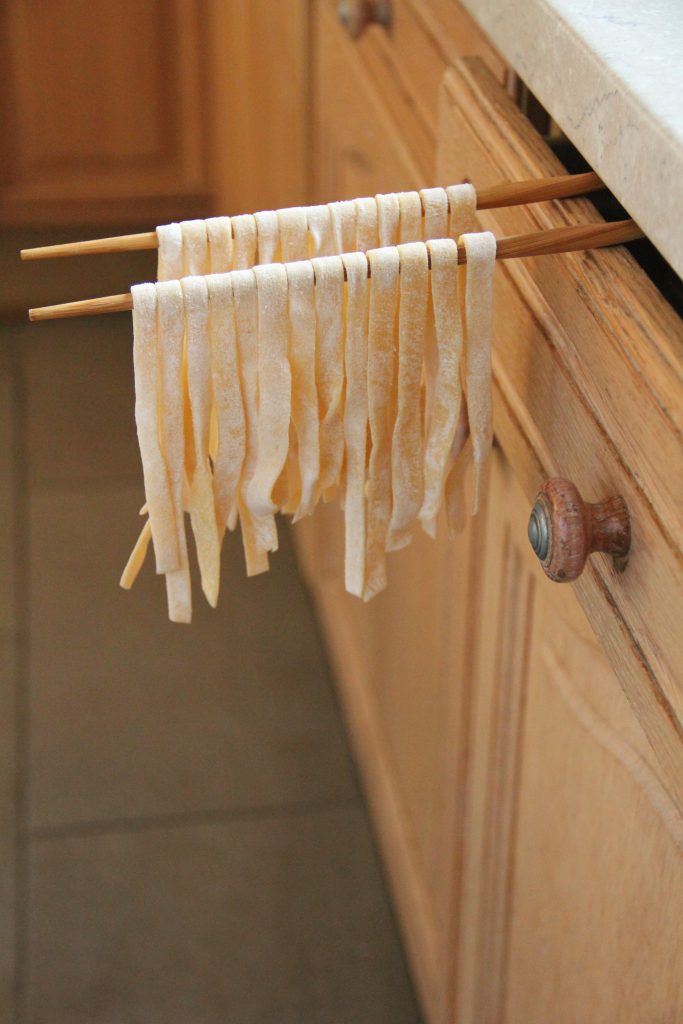
  • Use a little extra flour to stop the dough from sticking and roll it out on your work surface. To make long ribbons roll the dough as thinly as possible. Dust the pasta with flour and fold in half. Dust again and fold in half again across the same plane. Using a sharp knife cut ribbons of pasta to your desired width. Immediately unravel the strands ready for cooking.
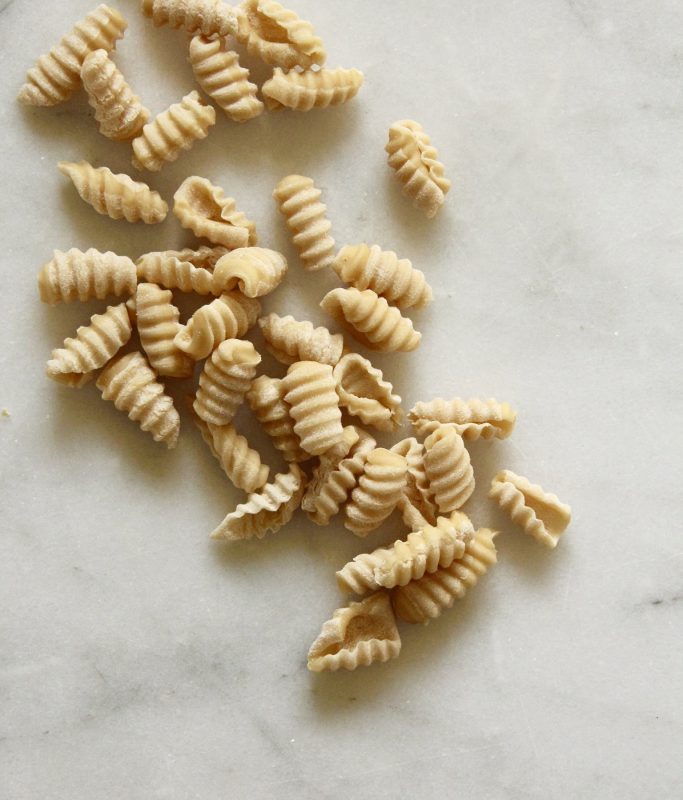
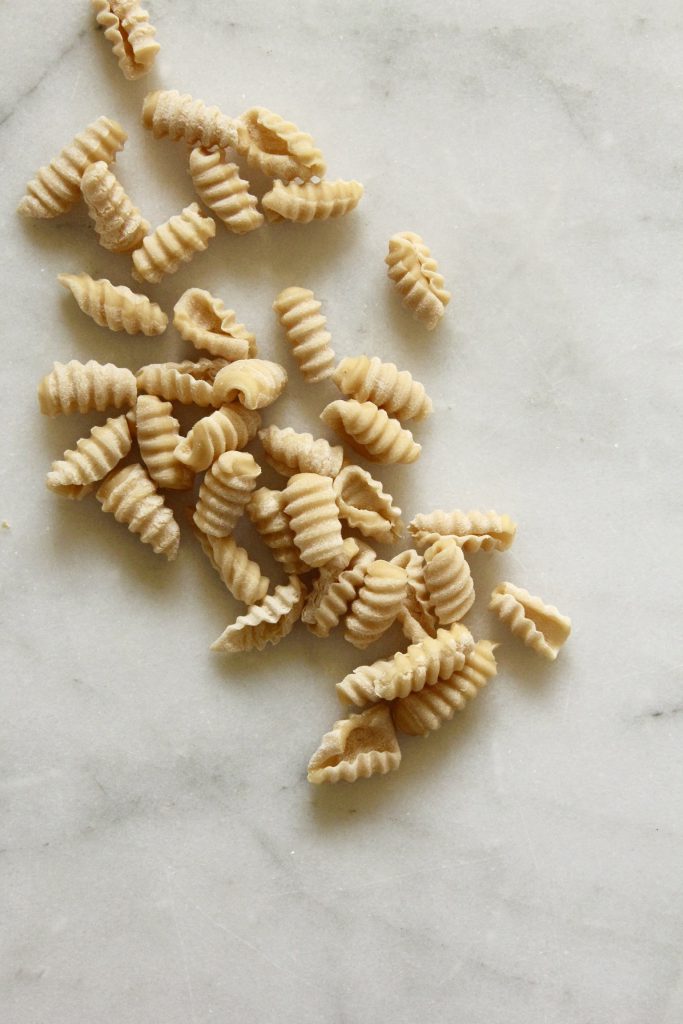
  • To make cavatelli, roll the dough out in thick strands and cut into pillow shapes. Alternatively roll the dough out in a round to the thickness of a pound coin before cutting into small squares with a sharp knife. Using a gnocchi board*, roll a piece of rough under your thumb over the board so it curls and takes the impression of the ridges. Alternatively you can do this across your work surface using your thumb or a knife.
  • Bring a large pan of salted water to the boil. Dust off any excess flour and add to the pan. Boil for 4-8 minutes depending on the thickness of your pasta. It should have a firm centre like al dente pasta.
  • Serve immediately.

*Don’t have a gnocchi board? Why not substitute in a sushi mat, or the fine side of a grater, or make your own by using a board with some skewers held in place with some elastic bands.

Isn’t this how everyone dries their pasta?