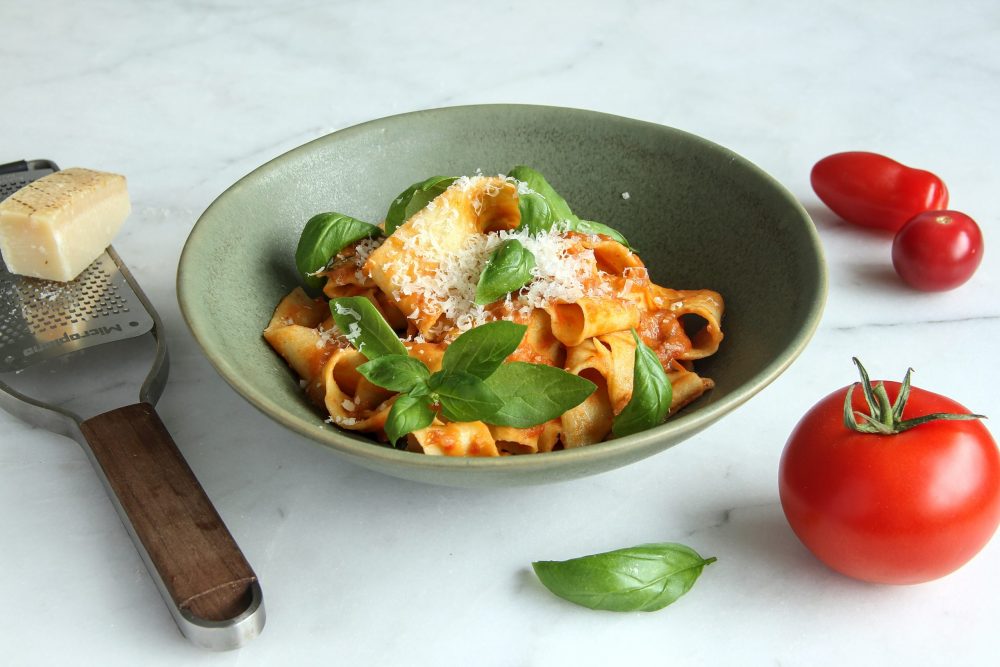
It’s World Pasta Day so I’ve created an easy, nutritious and delicious pasta sauce for the occasion. Easily adaptable to make it vegan and gluten-free by swapping parmesan for a vegan hard cheese and pasta for gluten-free pasta.
Roasted Red Pasta
Serves 4
Ingredients
600g tomatoes, roughly chopped
3 cloves garlic, left in their skins
1 red pepper, cut into quarters, seeds removed
1 large red onion, cut into quarters
3 tbsp extra virgin olive oil
100g red lentils
300ml water
To serve
300g pasta
Parmesan
Fresh basil
Method
Preheat the oven to 160°C fan/180°C convection
In a large baking tray add the tomatoes, peppers, garlic, onion and oil. Mix and roast for 1 hour.
Meanwhile, in a saucepan add the red lentils and 300ml water. Bring to a boil and simmer for 20 minutes till soft.
Once the vegetables are cooked through, remove the skin from the garlic and transfer everything to a high-speed blender with the cooked lentils and their cooking water. Blend till smooth, seasoning to taste.
Stir through freshly cooked pasta, using a little reserved pasta water to let the sauce down to your desired consistency.
Serve topped with parmesan and fresh basil.
Per serving: 530kcal/ 15g fat/ 3.6g saturated fat/ 74g carbohydrates/ 7.7g fibre/ 20g protein
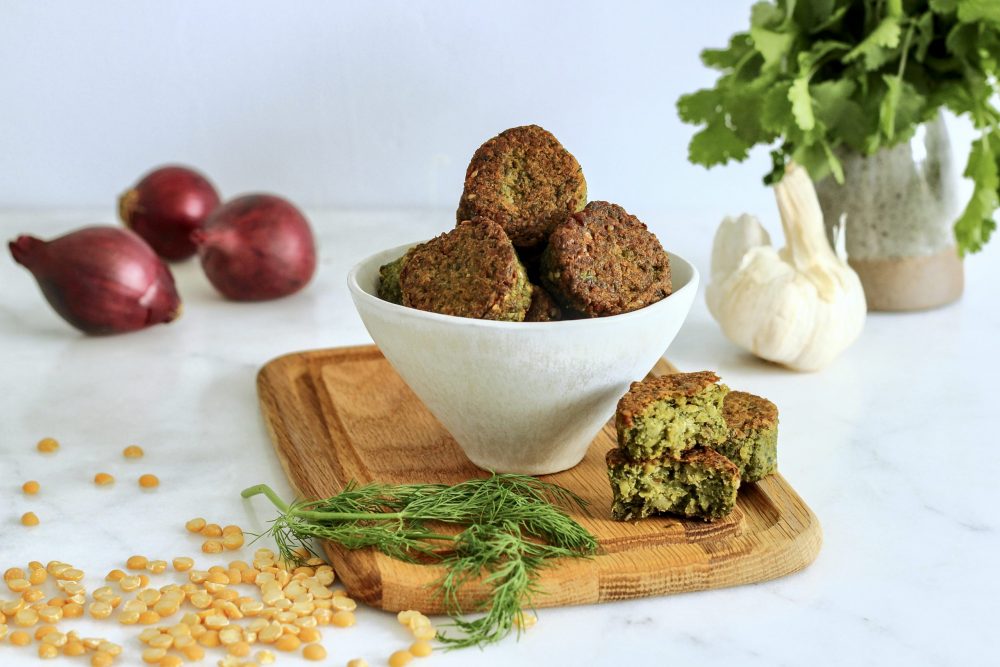
These little fritters have two main differences from the traditional falafel you would normally buy. Firstly their main ingredient is yellow split peas, as opposed to the traditional chickpea or fava bean. Secondly, they are baked in the oven rather than deep-fried. If neither of those facts have offended you then you’re in for a treat!
These make the perfect accompaniment to my easy hummus recipe to make a wrap, a nourish bowl or make large versions of the falafels and pop it in a burger bun for a vegan burger alternative.
Falafel and Hummus Salad Wrap
These falafel are packed full of nutrients, and each serving will provide you with:
13g of plant protein
18% of your fibre recommendation
28+% of your daily iron requirements
20+% of your zinc requirements
10% of your calcium requirements
Serves 6
Ingredients
200g yellow split peas, soaked overnight
50g flat-leaf parsley, stems and leaves
50g coriander, stems and leaves
10g dill, stems and leaves
1 medium red onion
5 garlic cloves
2 tsp cumin seeds
1 tsp ground coriander
1 tsp cayenne pepper
1 tsp baking powder
2 tsp sesame seeds
120g gram flour
3 tbsp extra virgin olive oil
Method
Cook the yellow split peas in fresh water for 30 minutes. Drain and allow to cool slightly.
Roughly chop the herb stems before adding all the ingredients into a food processor. Pulse till the desired texture of your falafels – I prefer mine to have some texture throughout.
Transfer to a bowl, cover and chill in the fridge for 1 hour.
Preheat the oven to 200°C fan/ 220°C convection. Place a heavy-bottomed tray in to preheat with the olive oil. Allow to come to temperature.
Meanwhile, take the cooled mixture and gently press into disk shapes. The mixture should make around 18-20 falafels depending on how big you make them.
Once the baking tray and oil are up to temperature, transfer the falafels in. As they hit the oil they should sizzle slightly.
Bake for 20-25 minutes, flipping halfway through once golden brown and crispy.
Per serving: 273kcal/ 9.3g fat/ 1.2g saturated fat/ 30g carbohydrates/ 5.4g fibre/ 13.2g protein
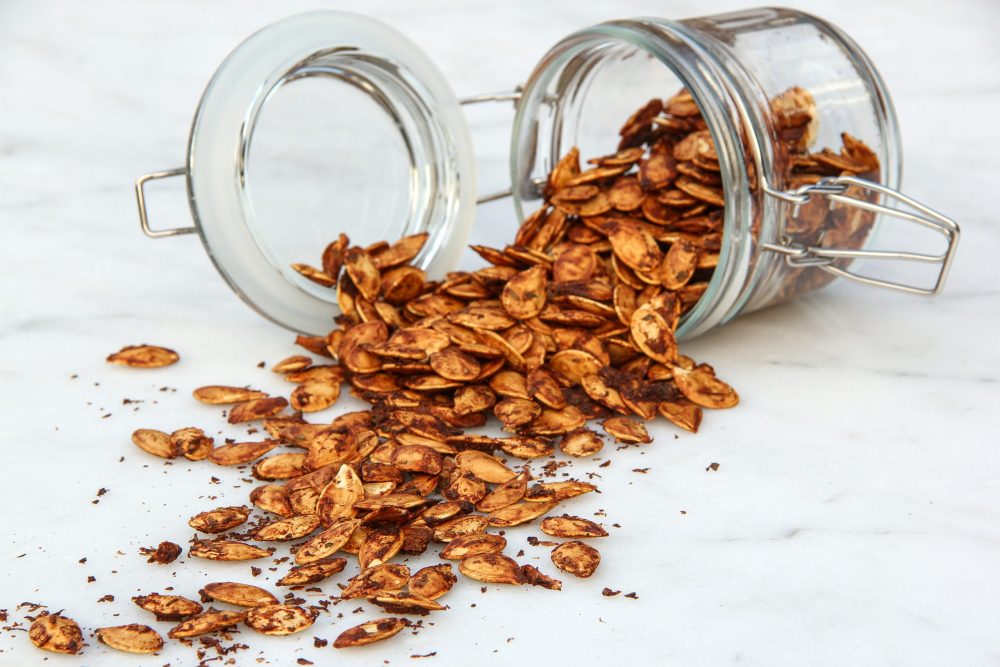
Still looking for ways to use up your pumpkin this year? I’ve covered using the skin and the flesh, so not it’s time to talk about seeds! I don’t even wash the seeds, contrary to what many other people suggest. This helps keep the recipe as simple as possible, and also means that any pumpkin fibres still attached will soak up any flavours added to them aka flavour bomb!
Pumpkin seeds are full of magnesium, phosphorus, vitamin K and manganese, as well as being a good source of antioxidants. In addition, carving pumpkin seeds are higher in fibre than standard green pumpkin seeds bought from the shop – another win for making your own!
These little seeds make the perfect snack on the go, or alternatively, use them to add textures to soups or salads.
You could roast them plain, but I love the little extra kick from the lemon and cayenne pepper – feel free to use more for a bigger kick, or substitute with chilli powder.
Ingredients
150g pumpkin seeds
1 lemon, zest and juice
1 tsp smoked paprika
1 tsp dried oregano
1 tsp dried coriander
1/4 tsp cayenne pepper (option to add more for a bigger kick, or use chilli powder)
1/4 tsp white pepper
Method
Preheat the oven to 150°C fan/ 160°C convection
Mix all the ingredients together and lay them out on a baking tray
Bake the seeds for 30-40 minutes, mixing twice during the cooking time, till crispy and you can just hear them start to pop
Allow to cool before storing in an airtight container
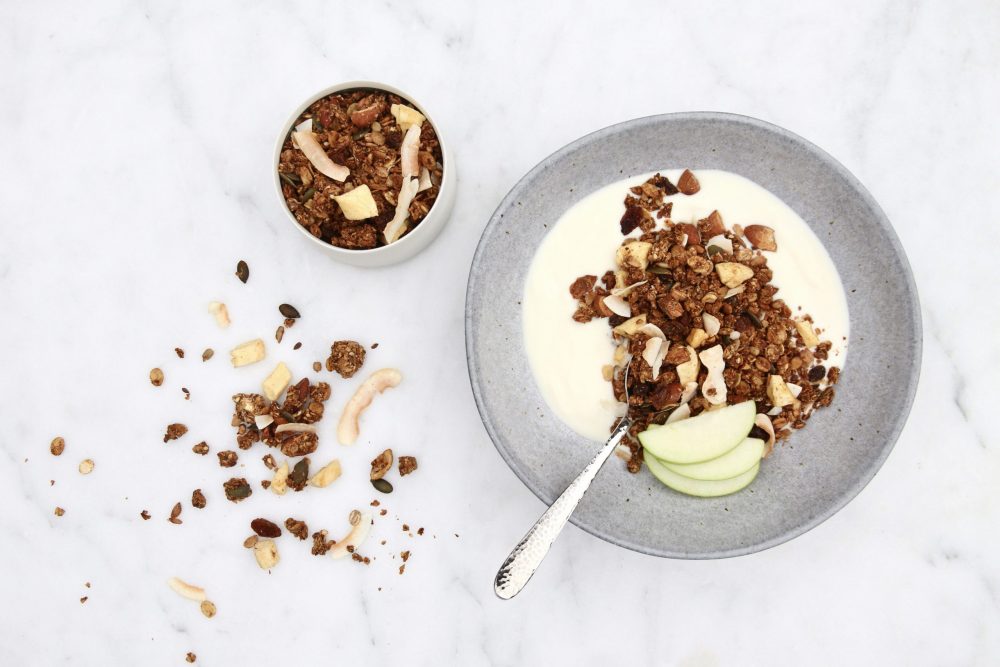
A winter version of my no added sugar granola is sure to please in the cold weather; warming cinnamon is paired with sweet apples making for the perfect pick-me-up for dark mornings.
Cinnamon is a spice containing lots of polyphenols, a type of plant chemical which is thought to be beneficial to health. In total, this granola is packed full of 16 different plant foods, providing you with just over half of your weekly diversity goal in just the granola on its own.
If you don’t have all the specific ingredients, try swapping them to maintain fibre diversity. You could use alternative grains to those listed, or use different nuts which can change the healthy fat profile of this granola.
Makes 16 servings
Ingredients
100g stoned dates
150g oats
50g barley flakes
50g rye flakes
50g spelt flakes
15g ground sweet cinnamon
75 mixed seeds (I have used 15g each of chia, linseed, sesame, sunflower and pumpkin seeds)
80g almonds, roughly chopped
50g unsweetened desiccated coconut
50g extra virgin olive oil
30g coconut flakes
70g dried unsweetened apple
70g sultanas
Method
Preheat the oven to 120°C fan/ 130°C convection
Soak the dates in 150ml boiling water for a few minutes before blending into a smooth paste.
Meanwhile, mix the cereal flakes, cinnamon, seeds, almonds and coconut together.
Add the date puree and mix everything together.
Pour the oil in, mix, and then spread out onto a tray.
Bake for 90 minutes, stirring at minutes 30, 50 and 70.
Add the coconut flakes in for the last 20 minutes, before removing and allowing to cool.
Mix in the dried fruit and store in an airtight container.
Per 50g serving: 196kcal/ 6.4g fat/ 3.3g saturated fat/ 22.3g carbohydrates/ 5.8g fibre/ 5.4g protein
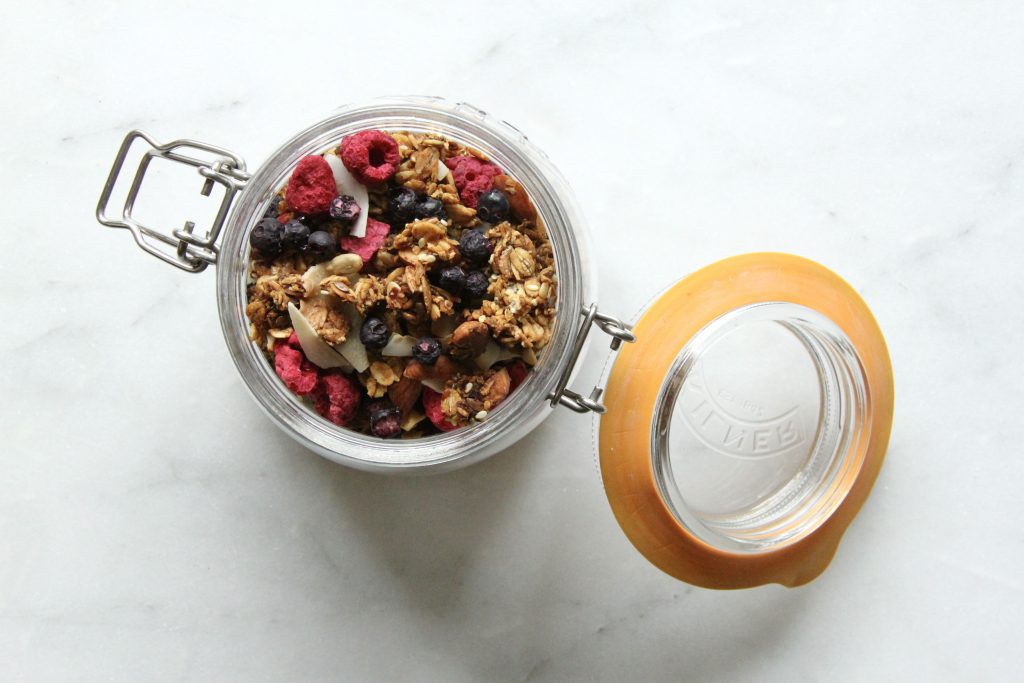
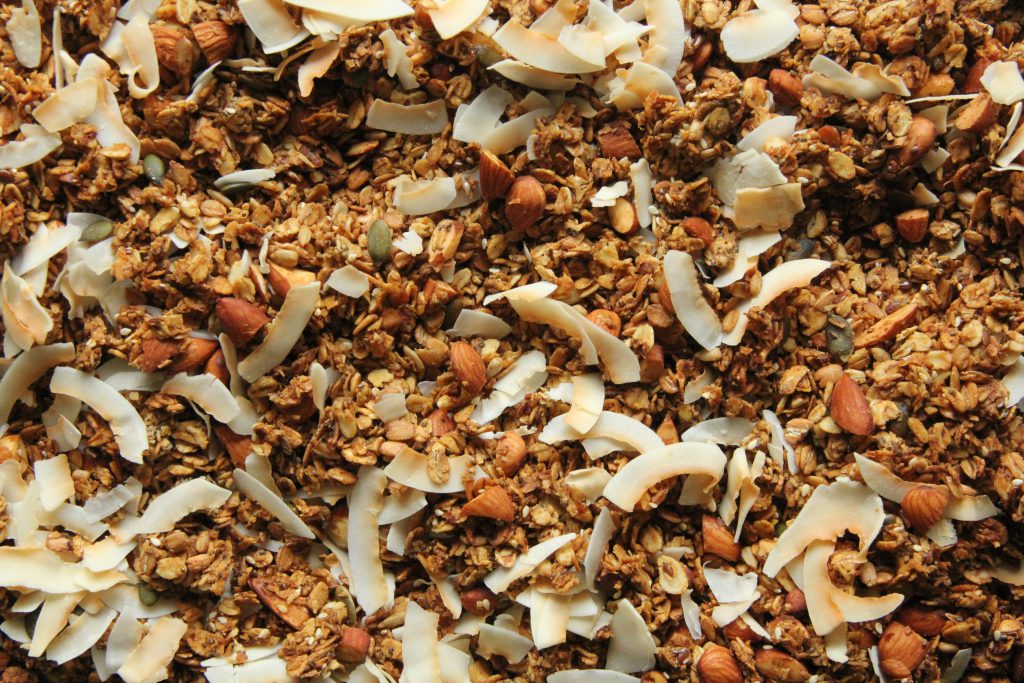
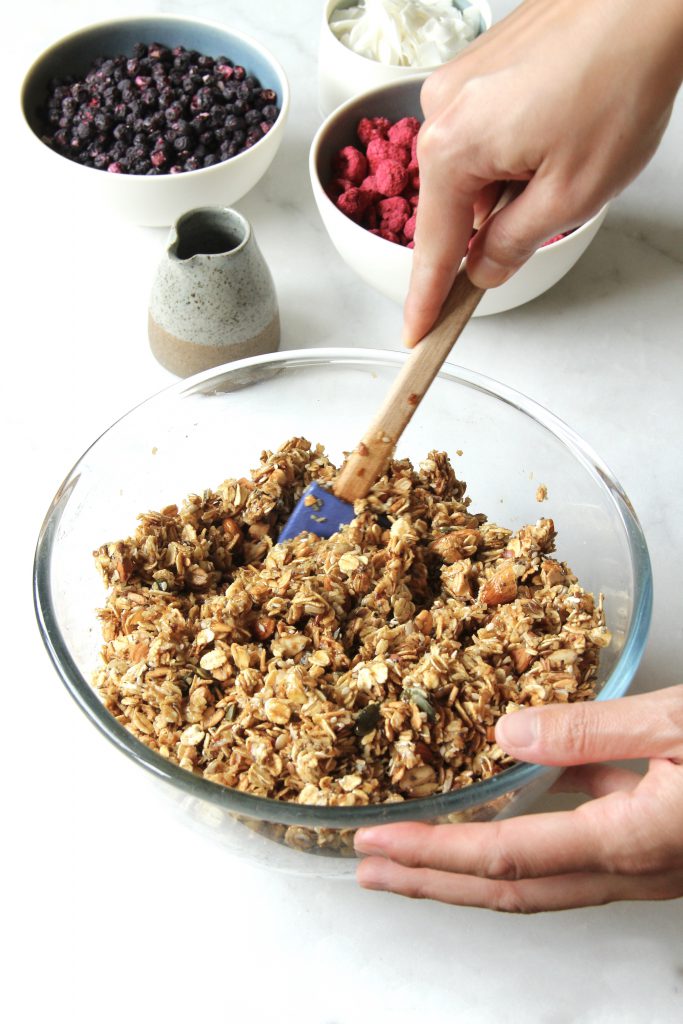
Granola doesn’t last long in my house. Whenever I make a tray, it will be gone within a few days. Seriously. It’s such a delicious way to get a variety of plant-based foods into the diet. In fact, the below recipe contains 15 plant-based foods, that’s half of your weekly recommended target. So this granola is really a winner!
In addition, each portion of granola contains 5.7g fibre. It also had another bonus of no added sugar. Instead, I used dates and blend them with hot water to create a sweet puree which helps the clusters form together. This also means it’s not overly sweet and feels much lighter than other generic granolas.
Using a variety of different cereal flakes also helps increase diversity; these are widely available at your local supermarket or health food shop. I’ve used jumbo oats with some rye, spelt and barley flakes which help increase the fibre content as well as the diversity of my weekly plant food intakes.
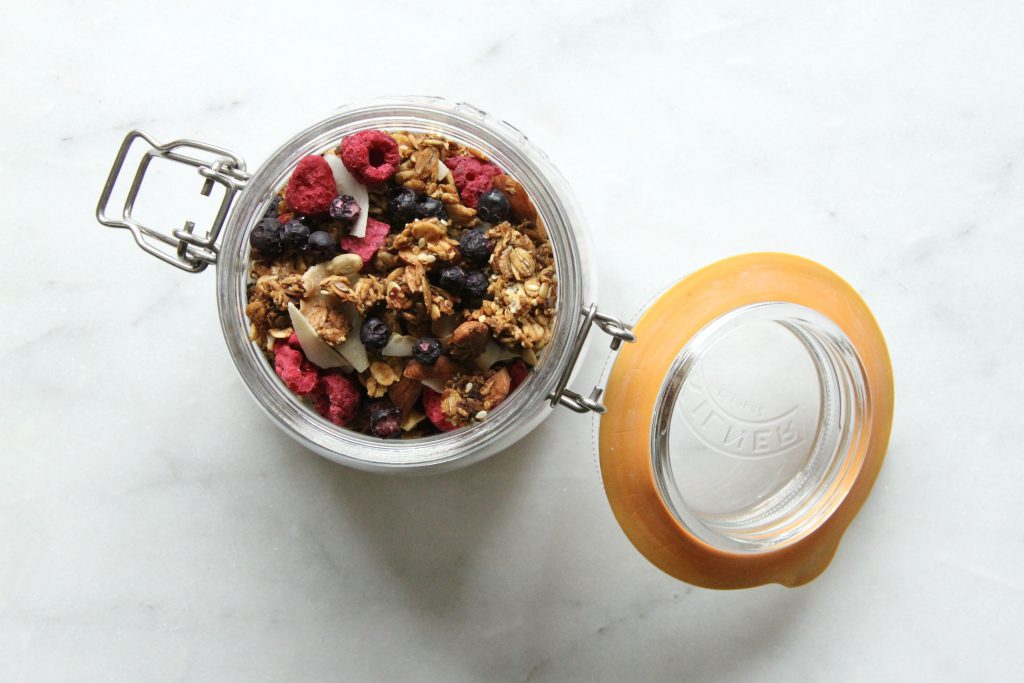
I’ve have used freeze-dried fruits in this granola. This means that they have been dried under cold conditions which are thought to help maximise the retention of heat-sensitive nutrients such as vitamin C, some B vitamins as well as phytochemicals and antioxidants. If you don’t have these to hand you can use other dried fruits such as raisins or apricots, or try adding some dehydrated vegetables for an extra fibre kick.
Makes 15 servings
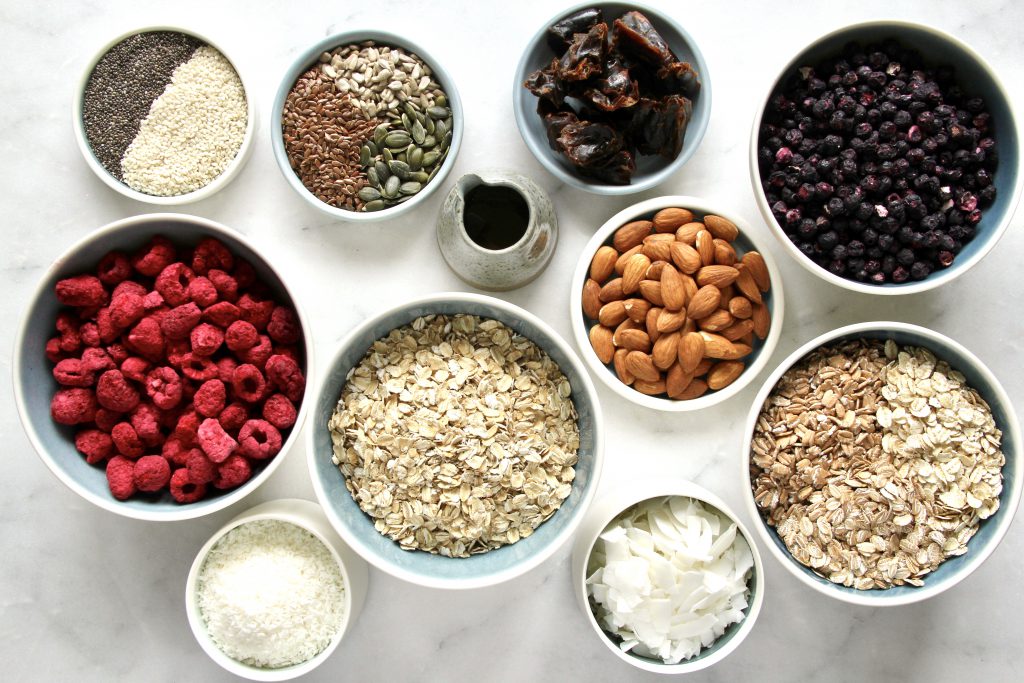
Ingredients
100g pitted dates
150g oats
50g rye flakes
50g barley flakes
50g spelt flakes
50g desiccated coconut
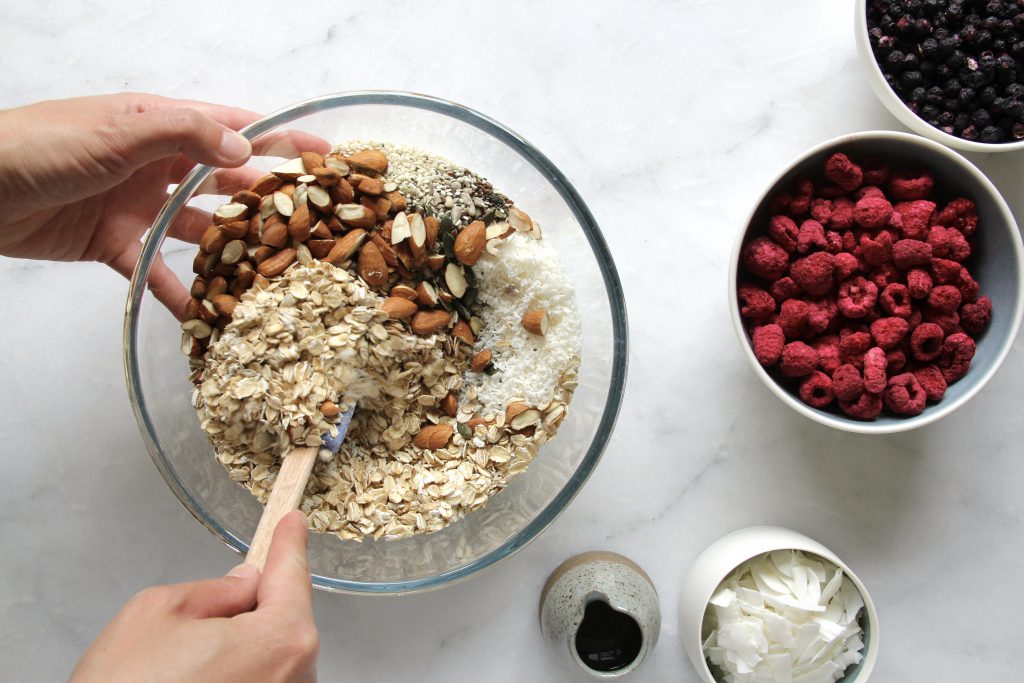
75g mixed seeds (chia, pumpkin, sunflower, sesame, and linseed)
80g almonds, roughly chopped
50ml Extra Virgin Olive Oil (EVOO)
40g coconut chips
35g freeze-dried raspberries
35g freeze-dried blueberries
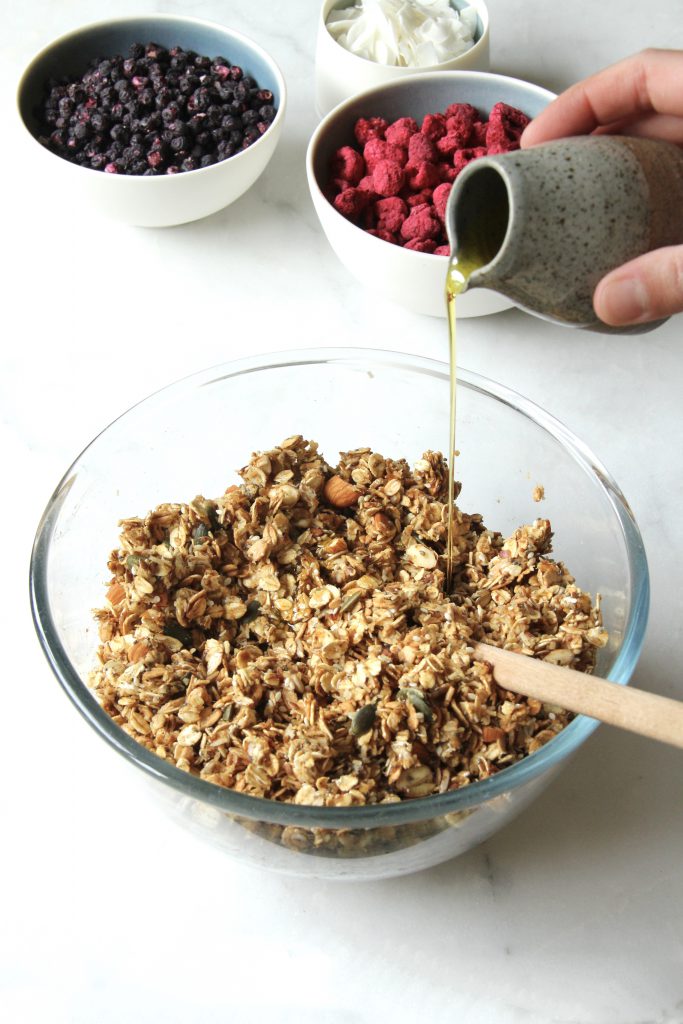
Pour in the EVOO
Mix
Pour onto a baking tray
Press down to help for clusters
Method
Preheat the oven to 120°C Fan/130°C convection or Gas Mark 1/2.
Pour 150ml boiling water onto the dates and allow them to soak.
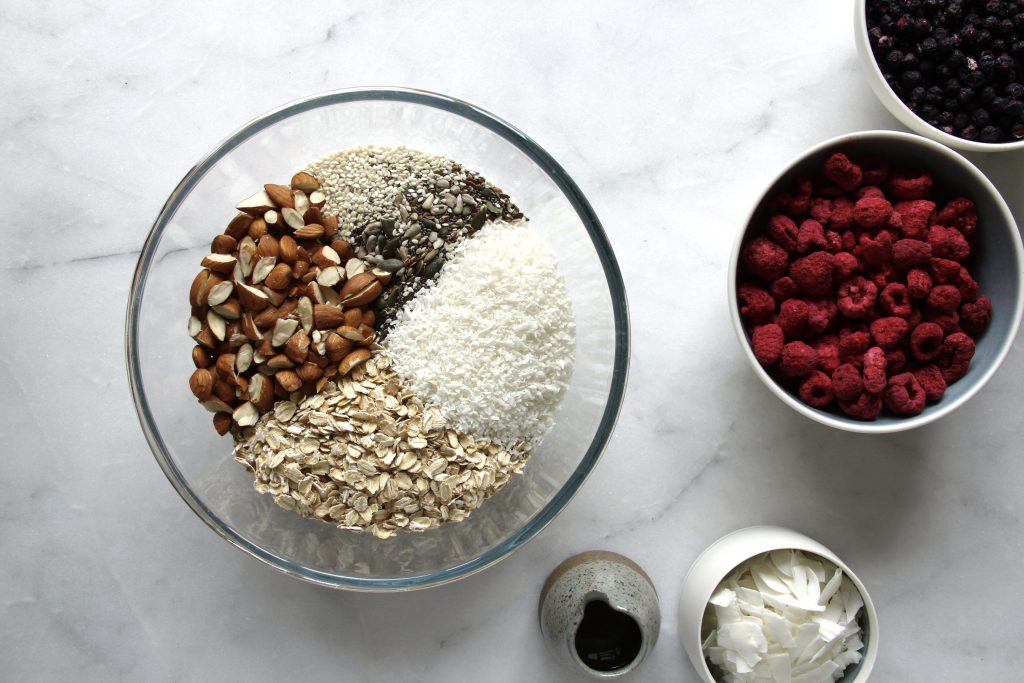
Meanwhile, mix all the oats, flakes, desiccated coconut, seeds, and nuts in a bowl.
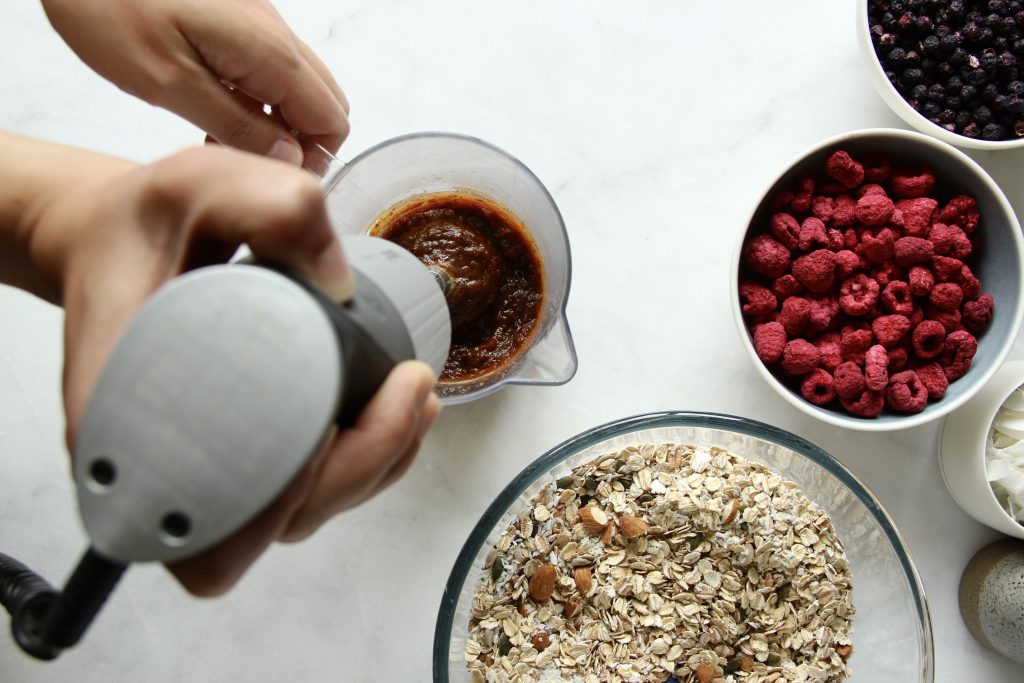
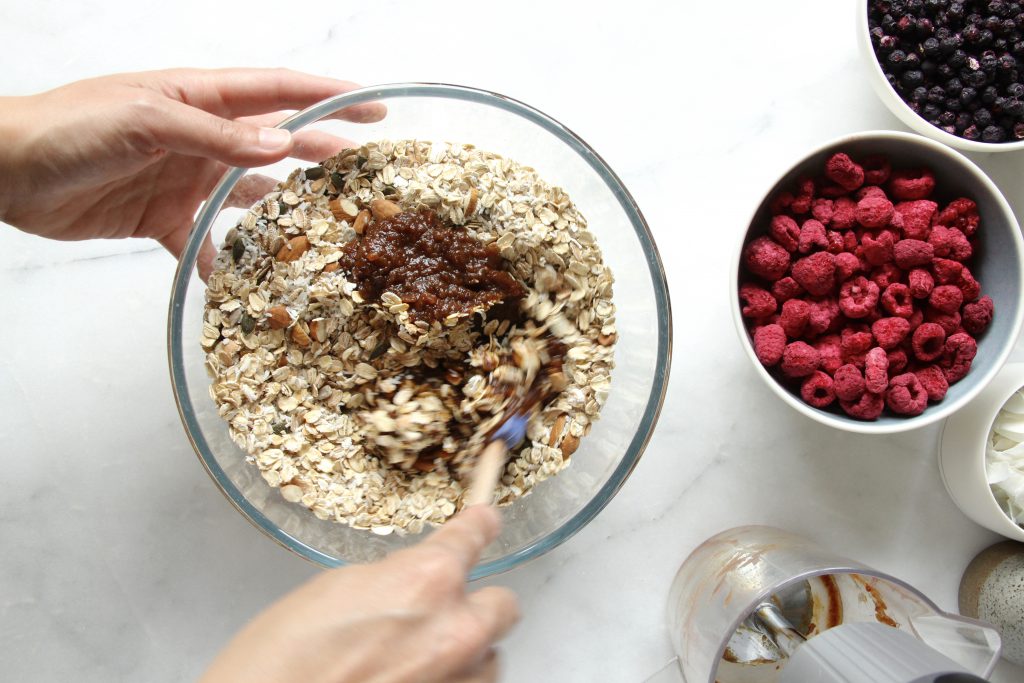
Using a hand blender or a food processor, blend the dates in the water to a puree. Empty into the dry ingredients and mix.
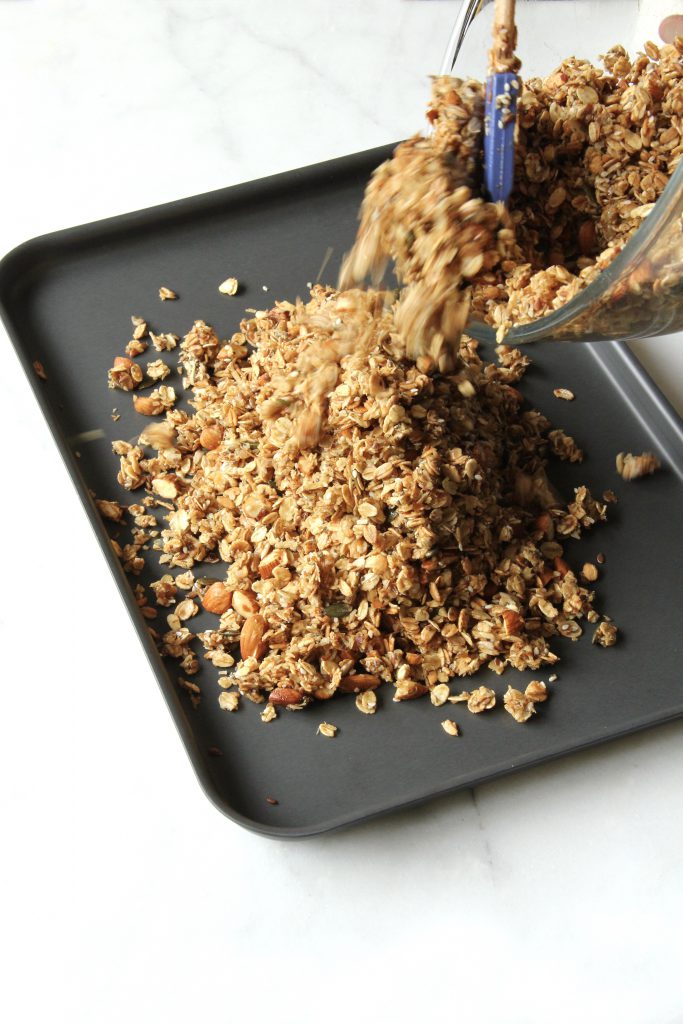
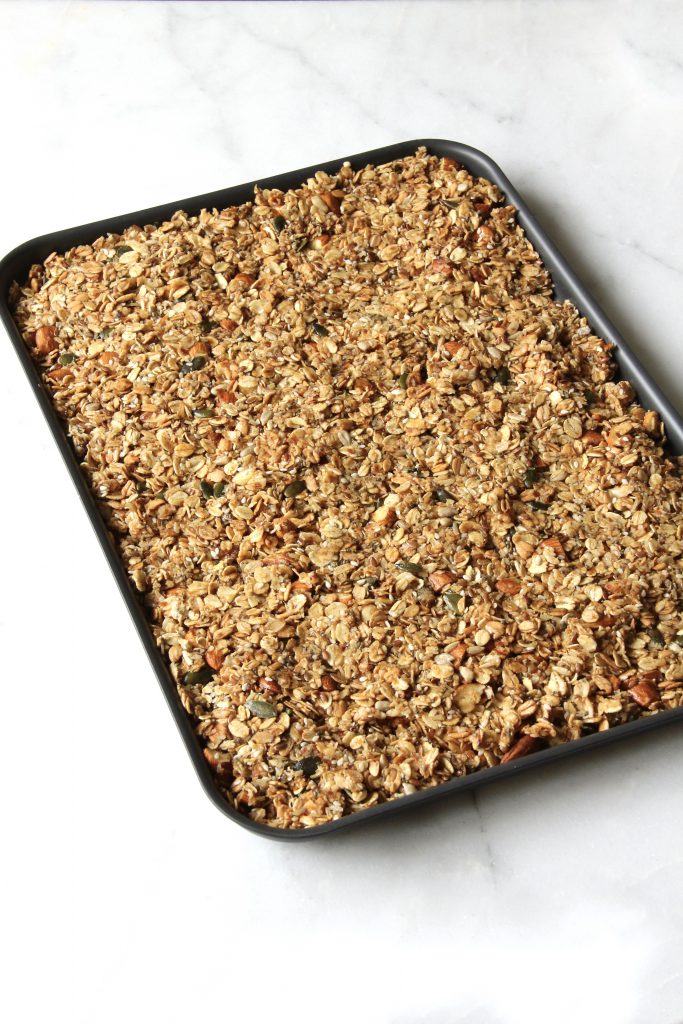
Add the EVOO and mix together. Pour onto a large baking tray and, using the back of a spoon, press the granola down to form clumps.
Cook in the oven for 90 minutes in total, gently turning the granola at 30, 50, and 70 minutes.
At 70 minutes add the coconut flakes to the mixture before cooking for the final 20 minutes.
Remove from the oven and allow to cool fully before adding in the freeze-dried raspberries and blueberries and storing in an airtight container.
Per 50g serving: 206kcal/ 7.8g fat/ 4.4g saturated fat/ 21.3g carbohydrates/ 5.7g fibre/ 5.7g protein
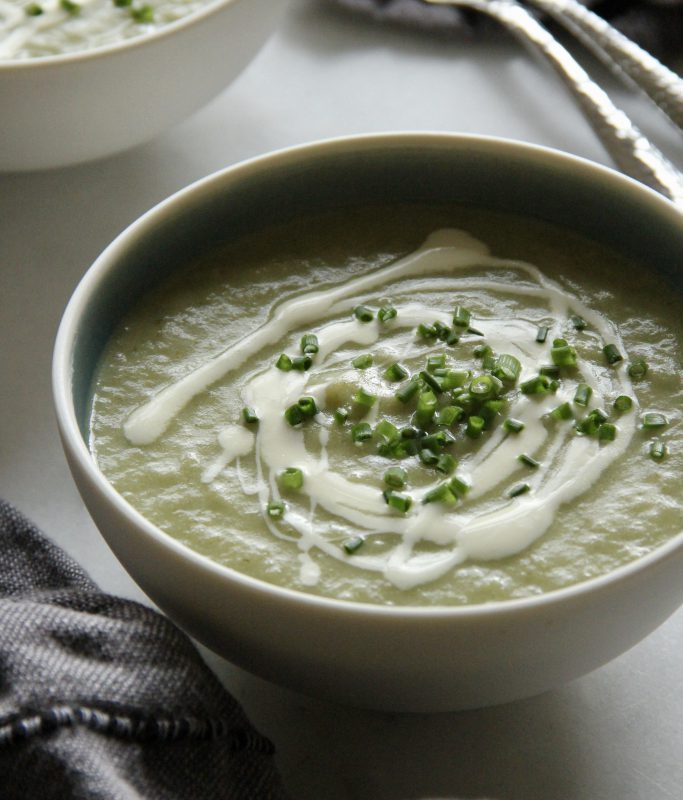
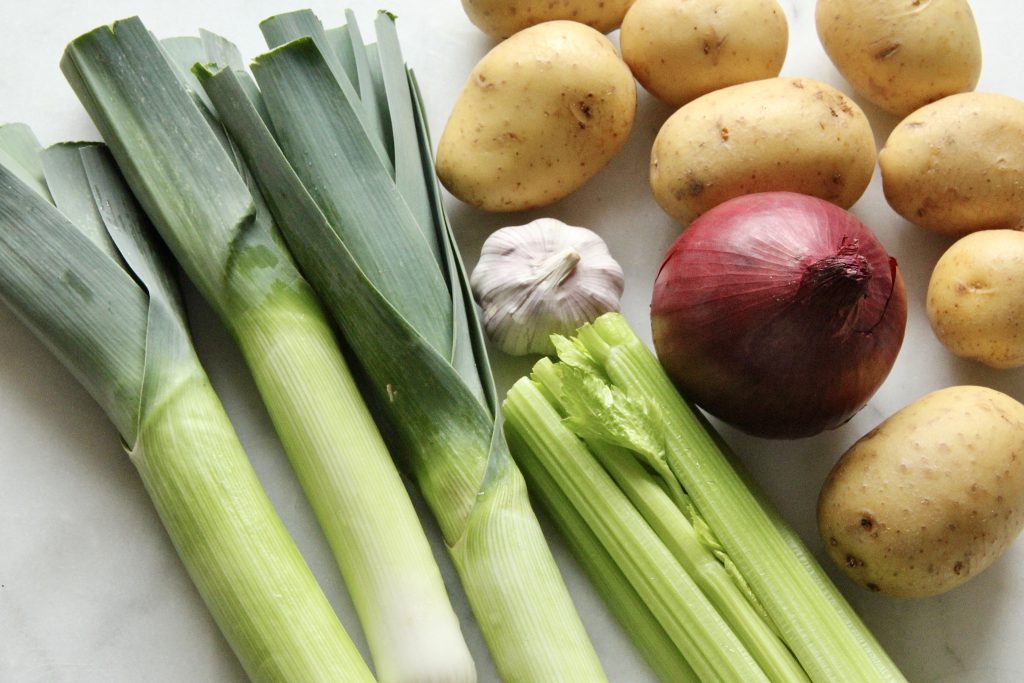
This classic soup is as simple as the name suggests. However, a couple of extra ingredients will always help, particularly those base ingredients onion and garlic. If, like myself, you are running low on onions, you can substitute in some celery, or other alternatives include spring onion or chives.
I’ve made this soup smooth, however, I do on occasion make it chunky where I leave cubes of potato and slices of leek whole to add texture to the soup. If you have the time, cut your potatoes into 1cm cubes, and slice your leeks into 0.5cm rounds. Then just before blending, take a scoop or two out and then return once the soup has been blitzed. This method works best with more waxy potatoes which don’t fall apart when cooking, but if you only have floury potatoes they work perfectly for a smooth blended soup.
Serves 8
Ingredients
2 tbsp rapeseed oil
1 large onion, finely diced
4 sticks celery, finely diced
3 leeks, finely sliced
4 cloves garlic, roughly chopped
800g potatoes, diced
15g stock powder
To serve
150ml double cream (optional)
Chives, finely chopped
Recipe
Cook the onions on a gentile heat with the oil for 5 minutes before adding the celery and continuing to cook till soft and translucent.
Add the garlic and leeks and cook for a further 2 minutes.
Add the potatoes, stock powder and top up with water till all the ingredients are almost covered, around 1.2 litres, and simmer for 20 minutes, stirring occasionally.
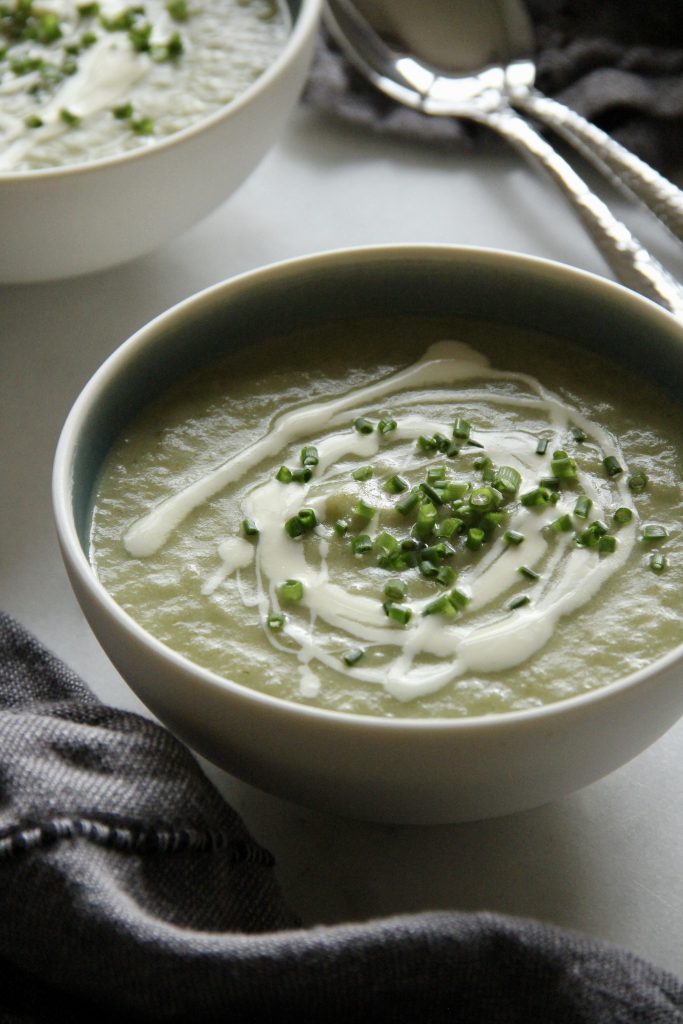
Blend the soup till smooth, finish with cream (optional) and chives, and serve.
Per serving 331kcal/ 19.3g fat/ 6.8g saturated fat/ 32.1g carbohydrates/ 5.0g fibre/ 4.6g protein
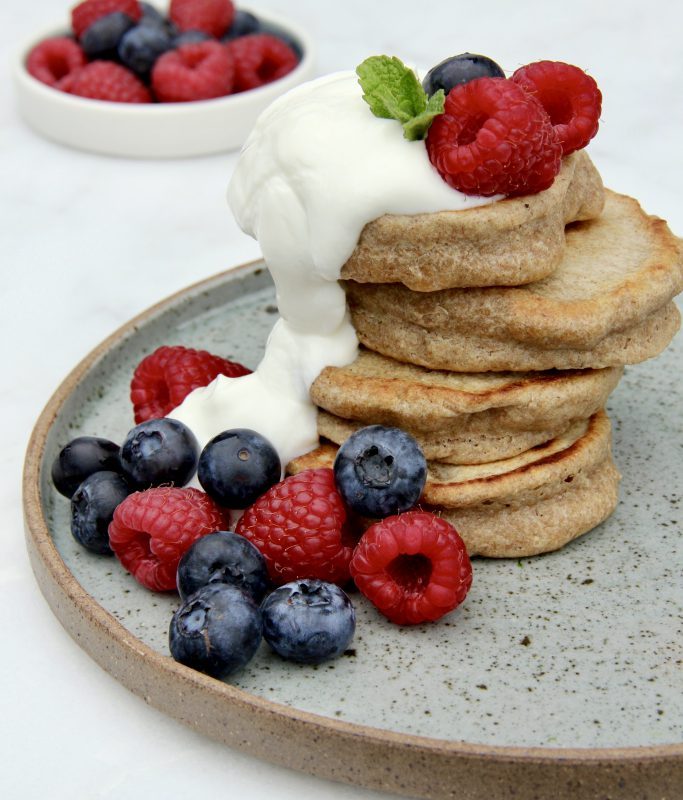
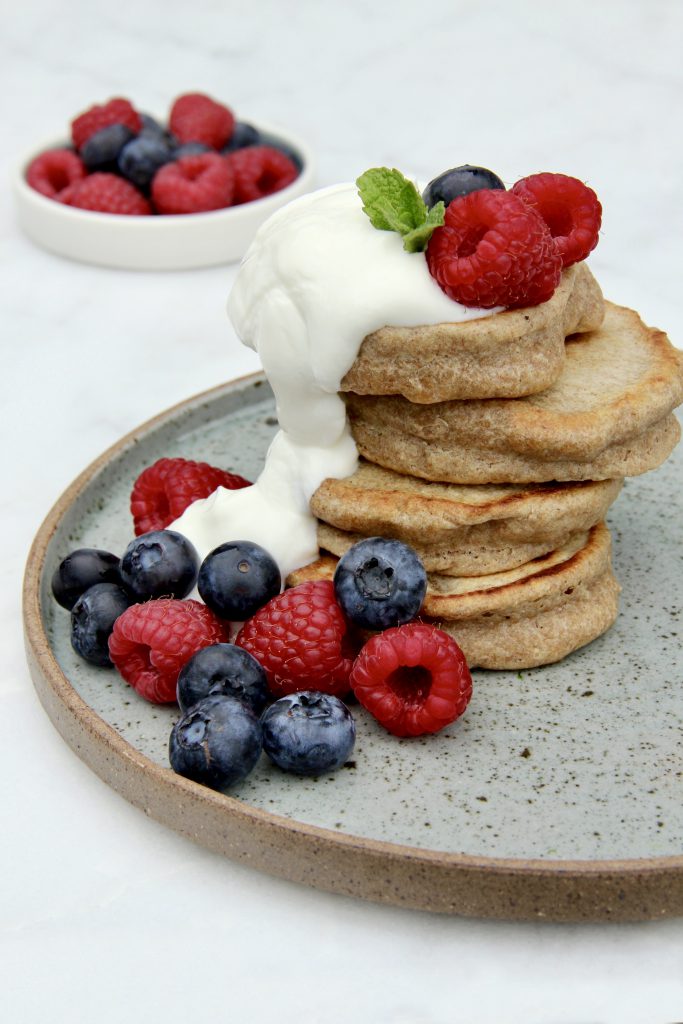
Start the day right with my wholemeal pancakes. These breakfast treats are delicious straight out of the pan and finished with your favourite toppings. You can go classic with berries and yoghurt as I have done below, or make a drizzle of tahini and honey, or even go more savoury with bacon and eggs.
Each portion of pancakes on their provides you with 6.4g fibre. That’s 21% of your daily fibre recommendation without having even added anything to them, so it really is a perfect way to start you day.
What if you don’t have wholemeal flour to hand? Not a problem, you can use plain flour, but this drastically reduces the fibre content down to just 1.8g per portion of pancakes, so if possible, add some high fibre ingredients back in such as ground linseeds, or try topping with my chia and blueberry compote.
Serves 2
Ingredients
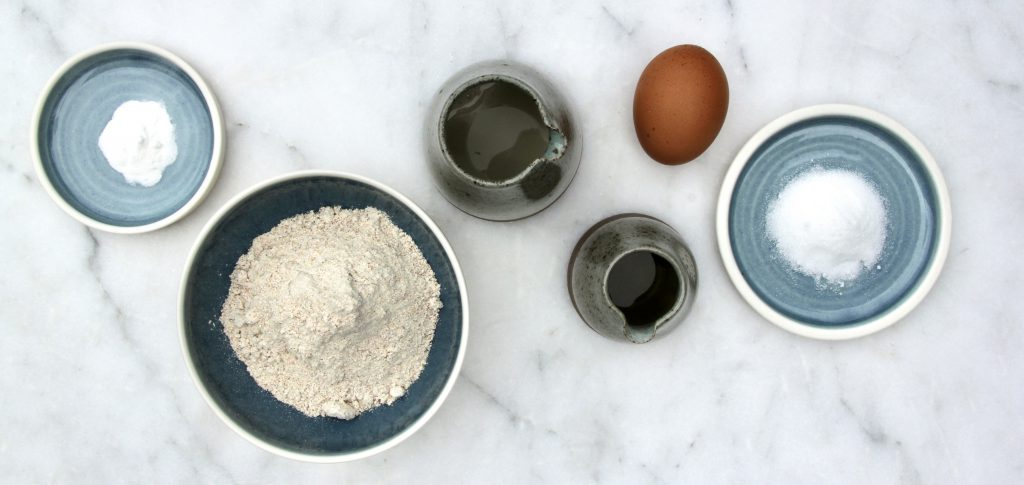
120g wholemeal flour
1 tsp baking powder
2 tsp caster sugar
1 medium egg
80ml milk of choice (I’ve used almond)
1 tbsp extra virgin olive oil + extra for cooking
Method
Mix the dry ingredients together
Mix the wet ingredients together, then combine with the dry ingredients.
Heat a pan over a medium heat with a drizzle of oil and drop a spoonful of batter into the pan. Add more batter depending on the size of you pan.
Turn the pancake over after 2 minutes, ensuring they are golden brown. Cook for a further 2 minutes on the second side.
Best served immediately from the pan with your favourite pancake topping.
Per 3 pancake serving: 384kcal/ 18.1g fat/ 2.9g saturated fat/ 46.0g carbohydrates/ 6.4g fibre/ 9.7g protein
Jerusalem artichokes are high in prebiotic inulin, which gives rise to their nickname of fartichokes! They are delicious and earthy, and are surprisingly versatile. Treat them like a potato; boiled, mashed, roasted or sautéed in a pan. Additionally they can also be treated like a water chestnut, eaten raw grated over salads or quickly cooked in a stir fry so they maintain a crunch. Get them while you can, they go like hot potatoes and are only in season during winter months.
Serves 4
Recipe
1 tbsp rapeseed oil
1 onion, finely diced
4 sticks celery, finely diced
4 garlic cloves, finely sliced
500g Jerusalem Artichokes, peeled and roughly chopped
4 carrots, roughly chopped
10g stock powder
10 sprigs thyme
850ml water
Method
Gently fry the onion in the oil till soft and translucent. Add the celery and garlic and cook for a further 2 minutes without browning.
Add the artichokes, carrots, thyme, stock and water and bring up to a gentile simmer for 20 minutes. Remove any hard herb stalks.
Remove from the heat and bend till smooth.
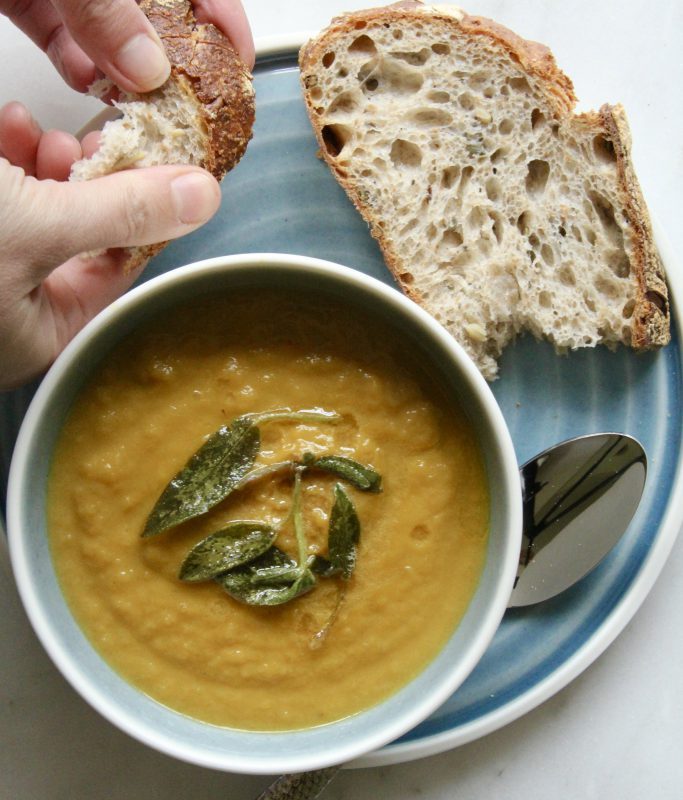
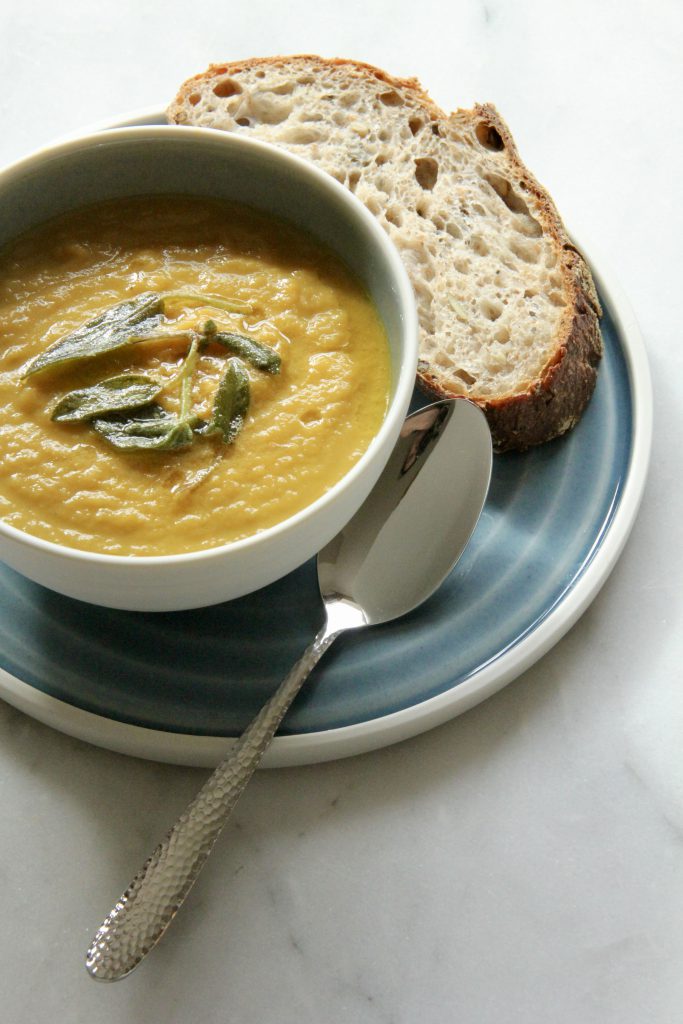
Optional extra: gently fry sage leaves in butter or olive oil till crispy and serve over the top.
Per serving 144kcal/ 4.5g fat/ 0.6g saturated fat/ 23.8g carbohydrates/ 7.3g fibre/ 3.5g protein
Perhaps an important question given the current circumstances. In short, no. The immune system is a very complex topic, with many different defence mechanisms. In order to support a normal functioning immune system, we should already be having a healthy and varied diet encompassing a wide variety of foods. We should be including fruits, vegetables, wholegrains, healthy fats and lean sources of protein. Aim for 30 different plant-based food sources a week (think fruits, vegetables, beans and pulses, wholegrains, nuts and seeds) and 30g of fibre a day wherever possible. For those who have restricted intakes, speak to your doctor or dietitian before taking supplementation. Special interest in particular nutrients which have a role in immunity may be beneficial if you are lacking them in your diet. However, the most important factor is to eat a healthy and varied diet and not to fixate on a single nutrient or a wonder pill.
Here are a few nutrients with specific roles in the immune system.
Vitamin A
Vitamin A is able to help strengthen our immune barrier by promoting mucus secretion and epithelium formation. In addition, vitamin A is needed for macrophage development, a type of protective white blood cell. Deficiencies of vitamin A can lead to a weakened immune system. Additionally, animal data has shown the vitamin A deficiency can impair T cell and antibody function.
Source of vitamin A include:
Liver
Dairy products
Yellow/orange/red fruits and vegetables such as peppers, sweet potato, carrots, papaya, mango
Dark green vegetables such as kale and spinach
Over consumption of vitamin A by supplementation can lead to vitamin A toxicity, so consult your doctor or dietitian before starting vitamin A supplementation. Special caution applies to pregnant women who are advised to avoid vitamin A supplements, liver and liver products due to the risk of birth defects.
Vitamin C is involved in proliferation, function, and movement of neutrophils, monocytes, phagocytes, and is often the first nutritional supplementation turned to when a cold or flu strikes. Previous high-quality work has shown that high intakes of vitamin C are not associated with reducing the risk of contracting a cold in the ordinary population. However, consumption of a high dose (1000-2000mcg/d) was found to reduce the length and severity of a cold. The caveat of this was that this was only effective in those people who were already regularly taking these high doses.
Sources of vitamin C include:
Citrus fruits
Berries
Kiwis
Bell peppers and chilli
Kale
Potatoes
Over supplementation of vitamin C can lead to diarrhoea, nausea, kidney stones and expensive urine. The UK reference nutrient intake for most adults is 40mcg/day. Anything above this will be excreted.
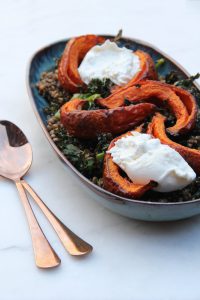
Roasted red pepper and goats cheese salad which packs in a whopping 14.5g fibre per serving – recipe coming soon!
Vitamin D
Vitamin D is thought to be able to modulate the immune response and has been linked to inflammation and the immune system, which could be due to its role in the formation of T cells. Vitamin D has also been shown to protect the lungs against infection.
Most of our vitamin D will come from supplementation. The Scientific Advisory Committee for Nutrition (SACN) recommend supplementation of 10mcg[400IU]/d for most of the population, as dietary sources are rarely adequate on their own. This is of particular importance for those living in the UK and Ireland where skin exposure to sunlight will not produce any vitamin D between October and March.
Dietary sources of vitamin D include:
Fortified foods such as milk alternatives and cereals
Egg yolks
Oily fish
Liver, including cod liver oil*
UVB exposed mushrooms
High doses of vitamin D (above 25mcg[1000IU]/d) can lead to nausea, vomiting, kidney stones, irregular heartbeats and stiffening of the arteries.
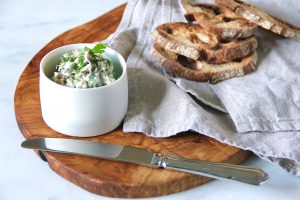
My smoked mackerel pâté recipe additionally provides you with some omega 3 fatty acids.
*not suitable during pregnancy due to a high level of vitamin A
Vitamin E
Dietary interventions looking at vitamin E supplementation have been shown to enhance cell-mediated and humoral immune responses in animals. Vitamin E supplementation has also shown increased lymphocyte proliferation, immunoglobulin levels, antibody responses, natural killer cell activity, and interleukin-2 production. In addition, vitamin E’s antioxidant effects are thought to play a role in protecting the PUFA membrane from oxidation.
Sources of vitamin E include:
Most nuts (e.g. almonds, peanuts, hazelnuts) and seeds (e.g. sunflower, pumpkin)
There isn’t enough evidence to know what the effects might be of taking high doses of vitamin E supplements each day. In the UK, the safe intake is set at 4mg for men and 3mg for women per day. Any vitamin E not utilised immediately is stored, so you don’t need to have it in your diet every day.
Zinc deficiency has been found to negatively impact many cells related to the immune system, such as: neutrophils, natural killer cells, macrophages, B cells and T cells, and has a central role in cellular growth and differentiation of immune cells that have a rapid differentiation and turnover. Use of zinc acetate lozenges daily for up to one week was associated with reduced severity and duration of a cold, but only when taken within 24 hours of the first symptoms presenting. In a separate study, zinc gluconate lozenges significantly reduced the duration of illness in comparison with placebo but had no effect on symptom severity.
Dietary sources of zinc include:
Shellfish
Red meat and poultry
Eggs
Dairy products
Nuts and seeds
Chickpeas
Lentils
Wholegrains
Too much zinc in the diet can cause a reduced uptake of copper, leading to anaemia and weak bones.
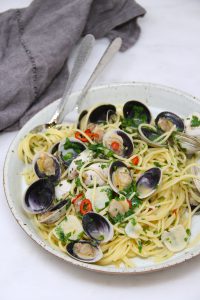
An easy way to include zinc in the diet would be to add some shellfish, such as clams, to a pasta dish.
Probiotics
Probiotics can be important for helping boost the good bacteria in your gut. You gut is responsible for around 70% of your immune system and can impact on the production of white blood cells. Recent studies have shown a link between specific strains of lactobacillus, which may reduce the risk of viral infections. However, more research into this area is needed.
Probiotic sources include:
Kefir
Live yoghurts
Live kombucha
Unpasteurised fermented foods such as kimchi or sauerkraut
Alternative ways to help boost your gut bacteria could be the use of prebiotics. Prebiotics are types of carbohydrates which feed your gut bacteria. Prebiotic foods include:
Garlic, onion and leeks
Jerusalem artichokes
Asparagus
Oats
Banana
Flaxseeds
Watch out as not all fermented foods are equal. Additionally, some fermented foods may trigger those who suffer from IBS, so follow the guidance of your dietitian if you suffer from this. Additionally, use of probiotics in health living people may not be so beneficial, but that is because your gut bacteria are already doing well on their own. Keep them happy with plenty of diverse plant food sources and fibre.
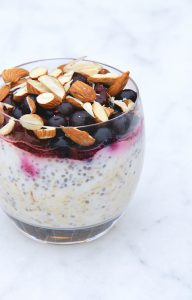
Overnight oats are a simple way of including both pre- and probiotics
Garlic
Garlic appears to enhance the functioning of the immune system by stimulating certain cell types, such as macrophages, lymphocytes and natural killer cells. Previously, studies have found that an equivalent dose of 3-6 cloves of garlic as aged garlic extract may help to reduce the severity of colds and flus. However, aged garlic contains a compound called S-allyl cysteine not found in fresh garlic.
Garlic supplementation may cause interactions with medications such as blood thinners, anticoagulants, certain oral contraceptive pills and certain HIV medication. Consult your doctor before taking garlic supplements if you are on medication. Very high doses of garlic can also be toxic… or cause social isolation….
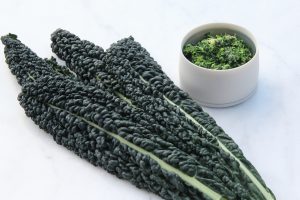
While I use garlic throughout my dishes, I simply love pesto. So versatile, you can use whatever you have to hand be it left over herbs, frozen peas or even vegetable tops such as carrots. Why not give my kale pesto a go – additionally a great source of vitamins ACE!
Chilli
Capsaicin, the chilli pepper component that produces a burning sensation, can be effective against nasal congestion and lowering inflammation, thereby reducing symptoms of colds and flus. In addition, the pain from eating chillis can lead to the release of endorphines, the body’s natural pain killer, giving a feeling of happiness and wellbeing.
Overdoing chilli can lead to diarrhoea due to irritation of the stomach or intestinal lining; or irritate those with IBS.
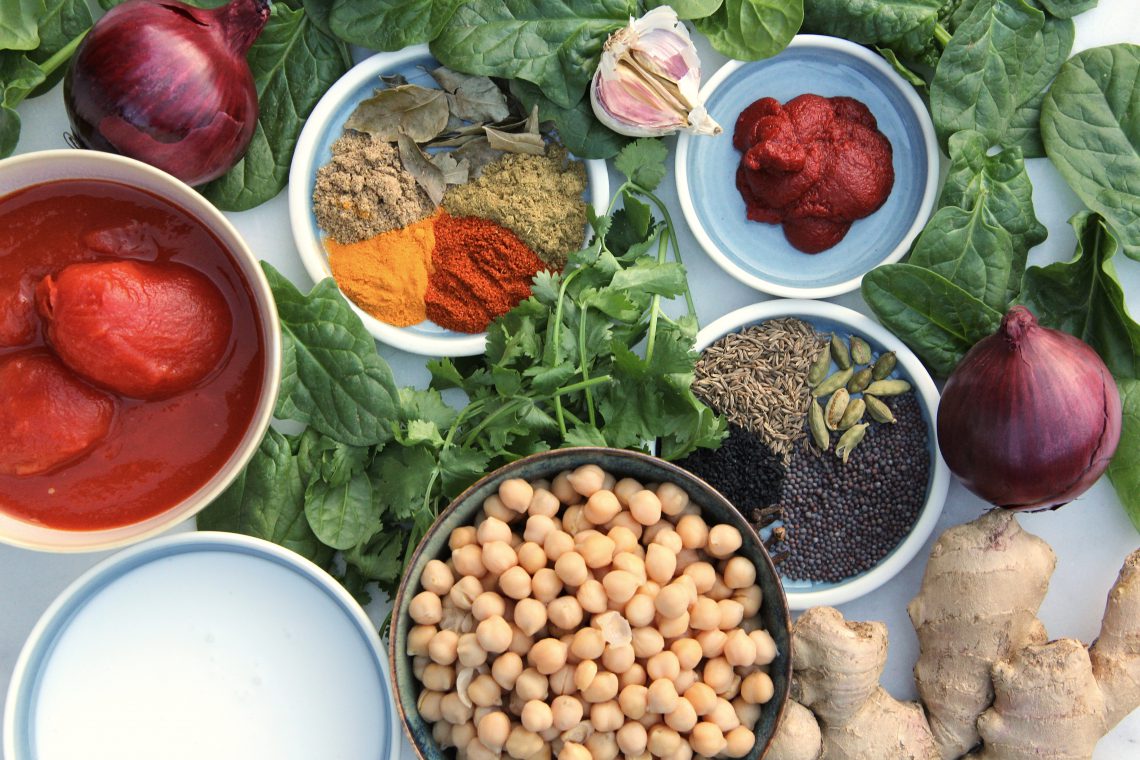
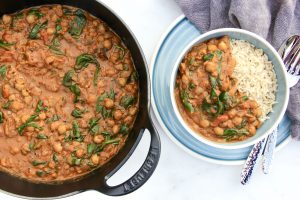
For those who can, turn up the heat with an extra chilli or two in my vegan chickpea curry.
So what is the true answer? Eat (plenty of variety), drink (preferably not alcohol), sleep (7-9 hours a day) and repeat (washing your handswith soap).
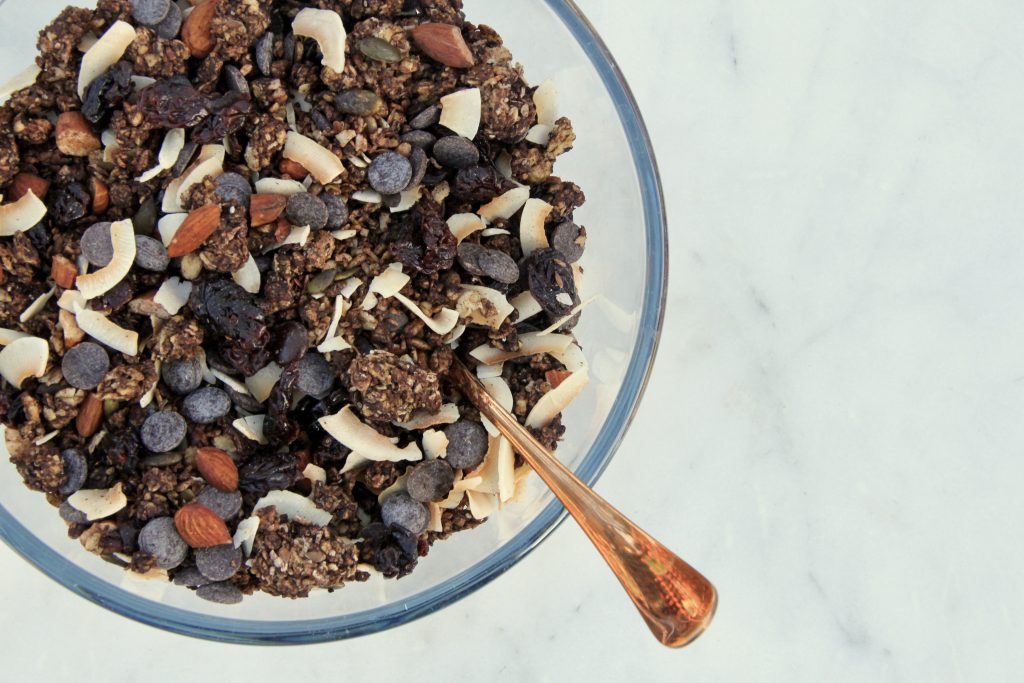
Granola is king in our house. We eat loads of it for breakfast, as a quick snack and sometimes even as a substitute for pudding! But shop bought granola sometimes isn’t the healthiest breakfast cereal to turn to. Often it is high in sugar, loaded with fats and has a few basic ingredients in it such as oats and sweetened dried fruits. Additionally, so many brands put 0.5% hazelnuts into the mix (why?!?!) which renders me out of the equation due to a nut allergy.
Homemade granola means I can add what I want
So I endeavoured to make my own range, which is either reduced or no added sugar, uses healthy fats, has a diverse range of fibre sources, uses unsweetened fruit wherever possible, and only has ingredients in there that I can eat, so feel free to swap anything out to fit in with your dietary requirements.
I developed this particular recipe for my chocoholic sister-in-law who loves sweet treats. Although not a sugar free granola, it’s definitely not as sweet as the generic shop bought granola, and packs in much more nutritious value, and as a bonus is also vegan!
I hope you enjoy making this recipe. Feel free to alter the fruits used, add alternative nuts if you aren’t allergic, or even change the chocolate if you’re not looking to make a vegan granola (I’m thinking white chocolate and raspberry!!!).
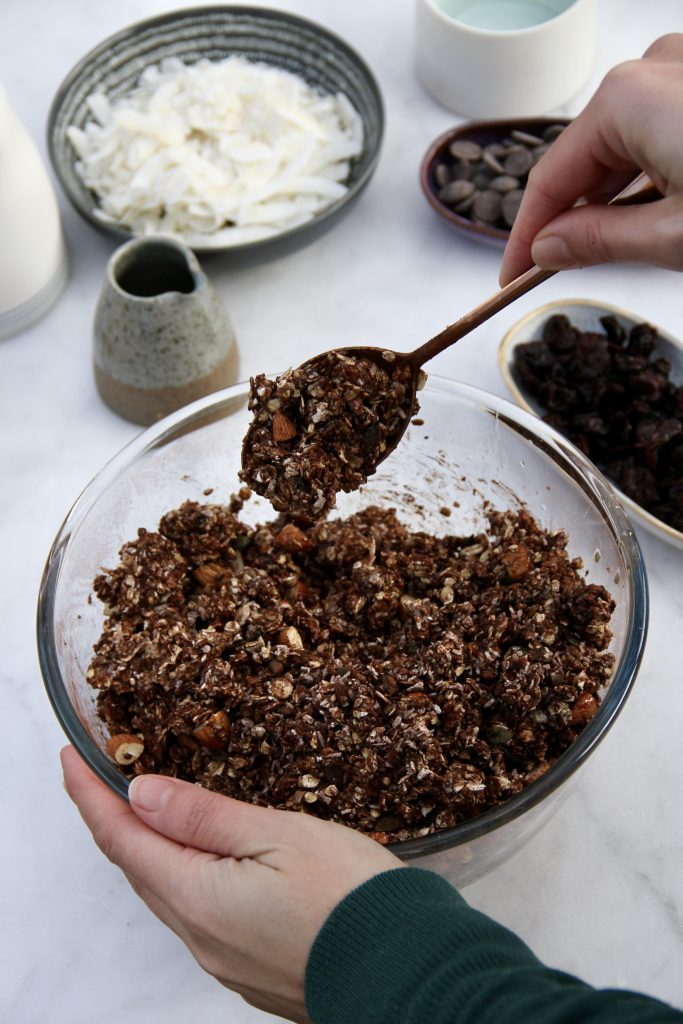
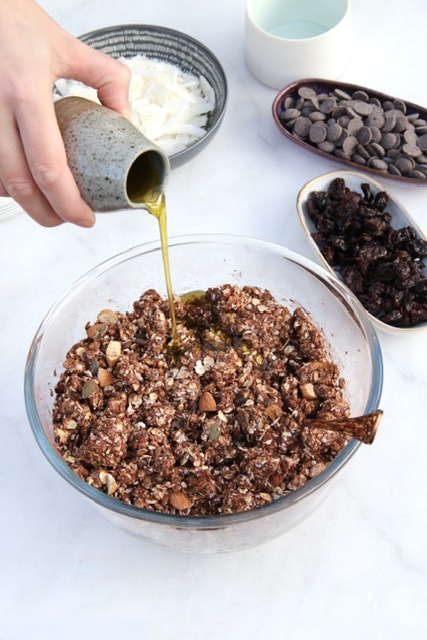
Making this granola is really easy, but takes a little time. Adding water and maple syrup allows some of the starch in the oats to come out and helps make clusters traditionally achieved by using high sugar and harder fats such as palm oil. Sometimes I even let the wet oats sit before adding in further ingredients so that the clusters really form. Then I add the fat: extra virgin olive oil! Packed full of polyphenols and phytochemicals which have been shown to be beneficial for heart, brain and even gut health.
Extra Virgin Olive Oil
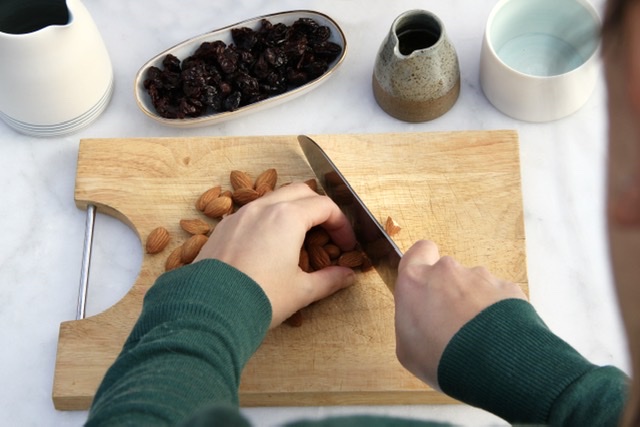
You can use whatever seeds you have to hand, but try to get a good variety in there. This recipe will help you achieve 10 of your 30 different plant foods for the week, which we know is beneficial to overall health. I also hand chop whole almonds so that you get really large chunks of the nuts. This gives a really nice crunch, but we also know from research on almond consumption, eating roasted chopped almonds can increase some strains of butyrate-producing gut bacteria, which is thought to be beneficial for health. Additionally, in a recent review of studies investigating almond consumption, there were beneficial outcomes on cardiometabolic markers such as lowering total cholesterol and LDL-cholesterol levels in comparison to non-almond consuming groups.
Roughly chop the almonds to keep them in large chunks
Finally, a slow bake means you get lovely crunchy granola, I tried to speed things up in one of my recipe testing sessions. Sadly you get a slightly burnt toasted flavour which wasn’t to my liking, but some of my testers did actually enjoy they taste!
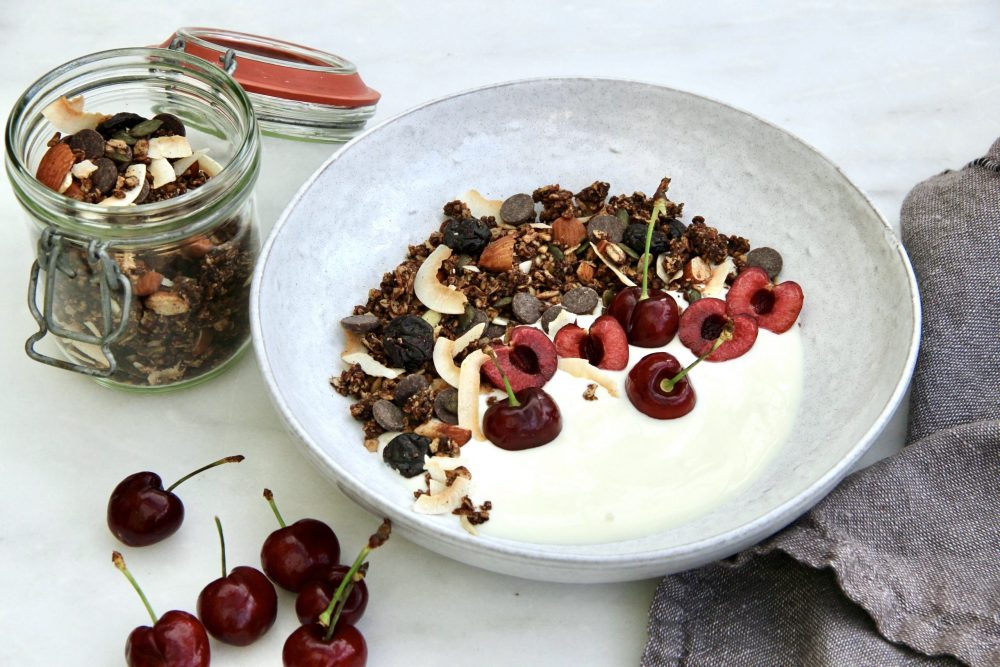
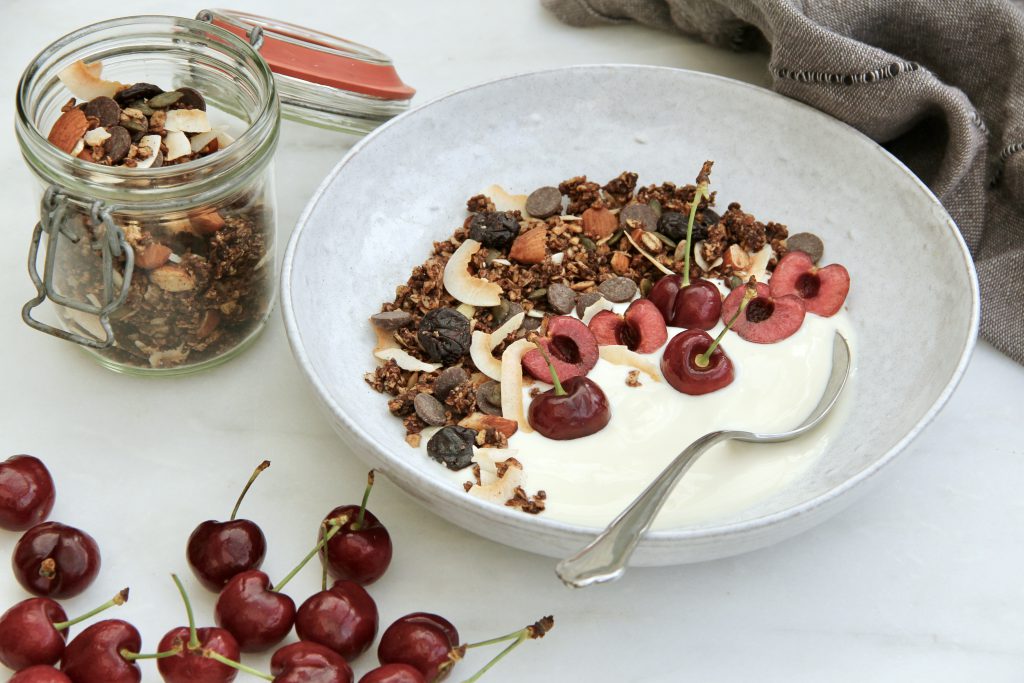
I love this granola with either dairy free milk, or a dairy free yoghurt such as a coconut yoghurt – just make sure you check the nutritional information to make sure it isn’t loaded with hidden sugar! Check out my previous post for a recent UK publication looking at the sugar reduction in yoghurts over the past few years.
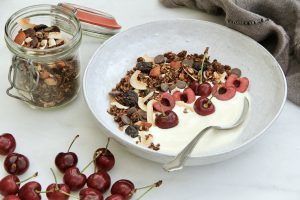
Delicious served with creamy coconut yoghurt and fresh cherries
Recipe
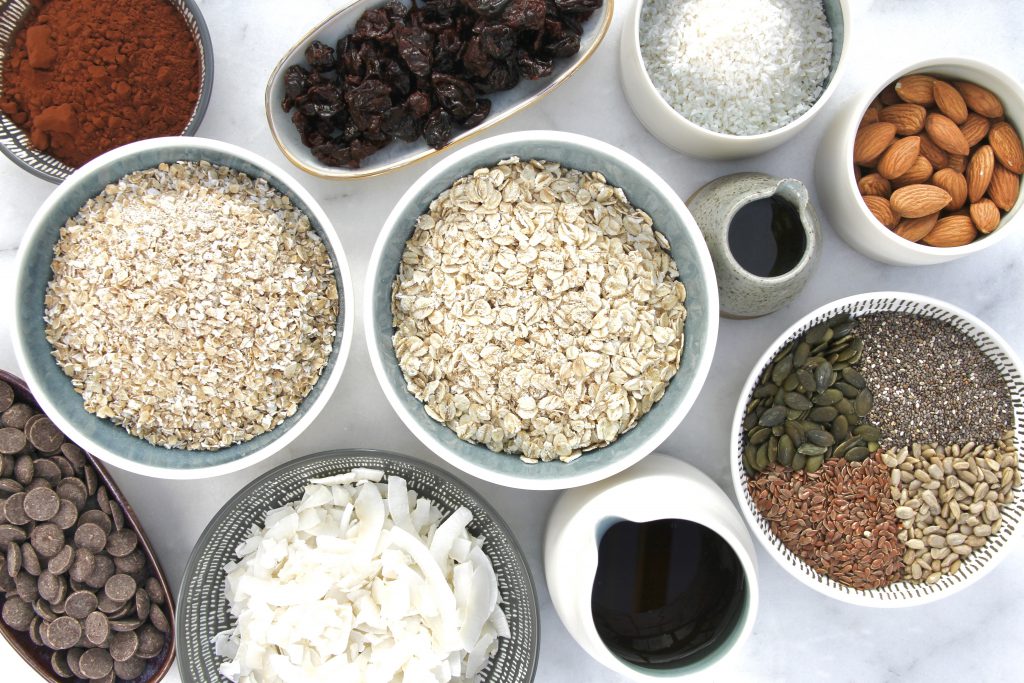
150g rolled oats
150g jumbo oats
30g cocoa powder
50g desiccated coconut
25g chia seeds
25g pumpkin seeds
25g sunflower seeds
25g linseeds (flax)
50g maple syrup
80g almonds, roughly chopped
60g extra virgin olive oil
50g coconut flakes
90g dried cherries
100g dark chocolate chips of choice
Granola ingredients
Method
Preheat the oven to 130°C/125°C Fan/ 1⁄2 GM
Add the oats, cocoa powder, desiccated coconut, almonds, seeds, maple syrup and water to a large bowl and mix together. Let large clumps form.
Add the olive oil and mix
Spread out onto a tray, pushing the mixture down to help form more clumps
Bake in the oven for 90 minutes, gently turning the mixture at 30, 50, and 70 minutes
Add the coconut flakes to the tray at 70 minutes to gently toast for the last 20 minutes
After 90 minutes of cooking, remove from the oven and allow to cool completely
Add the cherries and chocolate to the granola and store in an airtight container for up to 2 weeks
Cherry, chocolate and coconut granola
Per 50g serving 226kcal/ 10g fat/ 5.4g saturated fat/ 21.3g carbohydrates/ 4.7g fibre/ 5.8g protein
Whether you made your own mincemeat or not, there are still ways to help increase the diversity of plant fibres in your mince pies. You could try adding in some extra dried fruit to bought mincemeat, zesting in some clementine zest, or try adding carrot like in my own mincemeat recipe. And you don’t have to stop there, you can even change the pastry!
In my recipe, I use a mixture of shortcrust pastry to stay
traditional, but use a crumble topping instead, keeping it lighter, but also so
it allows me to include more plant sources. I use both oats and ground almonds
in my crumble.
Each of my mince pies contains around double that of shop bought mince pies. I always find it harder to include fibrous foods over the festive period as there are so many treats to eat! My homemade mince pies contain 8 different source of plant-based goodness, and research shows those who eat 30 or more different sources of plant-based foods per week have an increased variety of gut microbiota in comparison those who eat 10 or fewer different sources. So feed your microbiome!
These mince pies are delicious served warm with vanilla
custard, a true Christmas time treat.
If you want to make vegan mince pies, use a pre-made
vegetable oil based shortcrust pastry and top with the crumble mixture
substituting the butter for rapeseed oil.
Makes 12 deep-filled mince pies
Recipe
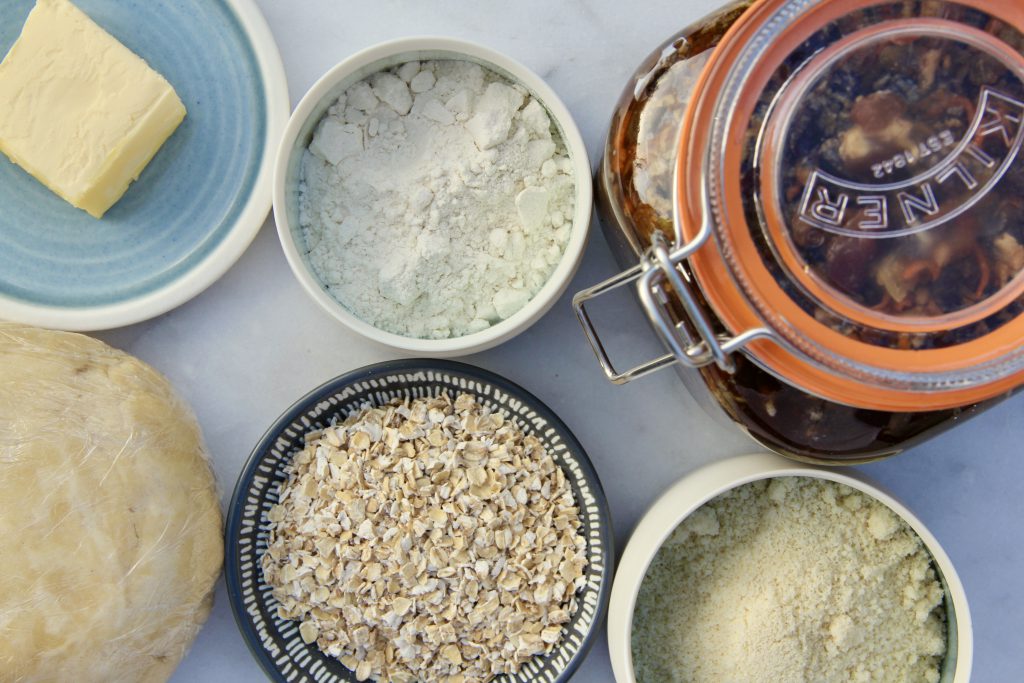
750g mincemeat, shop bought
or homemade
Short crust pastry, either
bought or homemade (see below)
75g plain flour
50g fridge cold butter
25g rolled oats
50g ground almonds
25g soft light brown sugar
Method
Preheat the oven to 200°C/180°C Fan
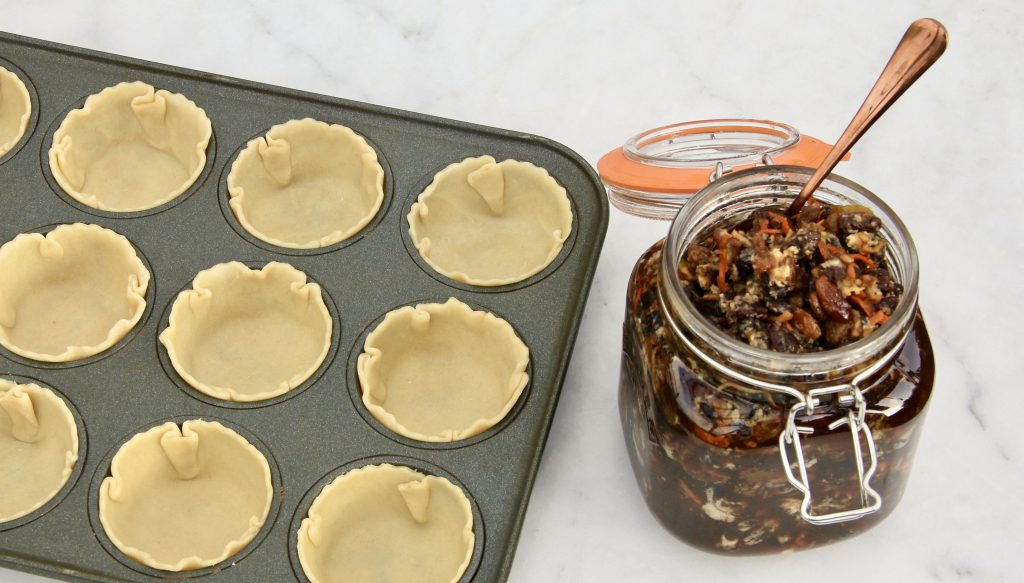
Roll the pastry out to 2mm, around the thickness of a 2p coin.
Cut disks of pastry out to 11-12cm diameter and line a muffin tray.
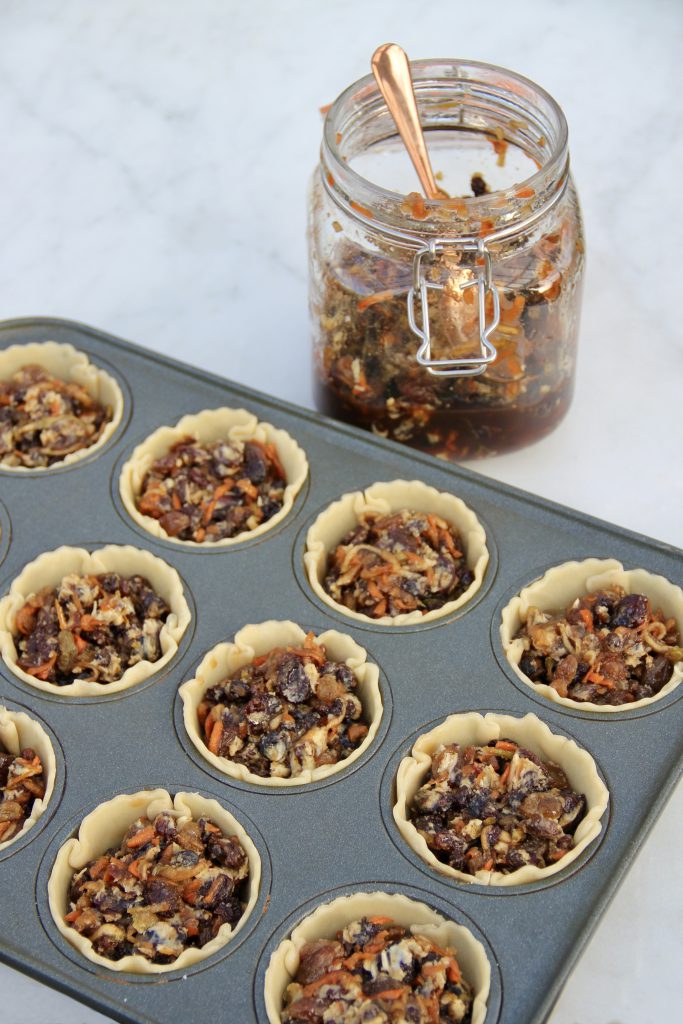
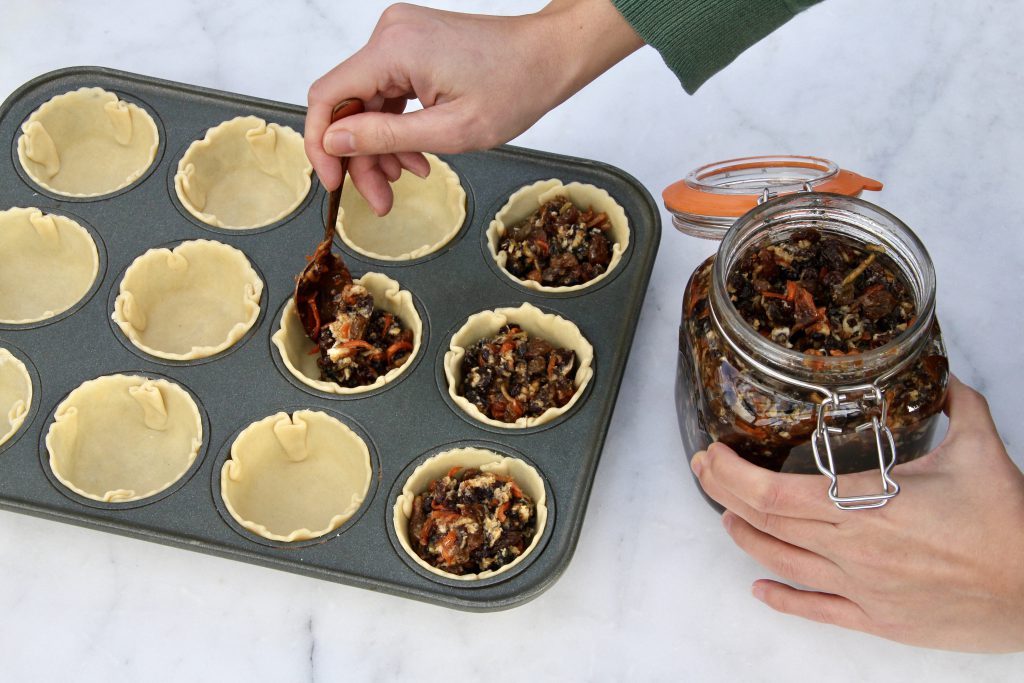
Fill each case with mincemeat, leaving a little gap at the top.
Make the crumble topping by mixing the flour and butter together until the mixture resembles fine breadcrumbs.
Add the oats, almonds and sugar and combine.
Top each mince pie with a spoonful of the crumble topping*.
Bake for 22-25 minutes till golden brown.
Cool on a wire rack
To make your own shortcrust pastry combine 225g plain flour
with 100g cold butter till it resemble bread crumbs. Add just enough cold water
to form a dough. Wrap and rest it in the fridge for 30 minutes before rolling.
Mince Pies
Per Mince Pie 327kcal/ 13.7g fat/ 4.5g saturated fat/ 48.1g carbohydrates/ 2.5 fibre/ 3.2g protein
Homemade mince pies are something special at Christmas. Taking it one step further and making your own mincemeat means you can decide what goes in. For me, shop bought mincemeat sometimes feels like it’s missing some of the fruit. Making your own mincemeat is so quick, and I guarantee the flavour will be so much better than the shop bought stuff, and it’s ready to use in just 24 hours so there’s no excuses for not making your own!
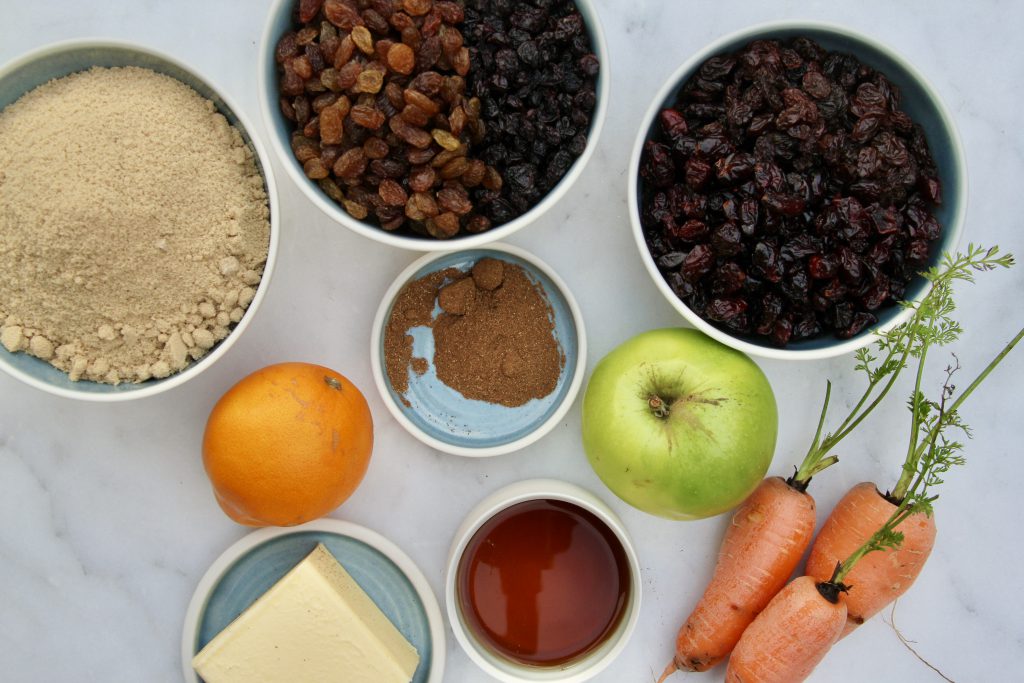
Mincemeat Ingredients
I use butter rather than suet in my recipe. I think this gives a much richer flavour, and is also vegetarian friendly. You’ll also see I don’t stop at just fruit. A sneaky carrot also makes it into the mix in my version. This is great for increasing the diversity of plant fibres in this recipe, which we know can be beneficial for your gut microbiota and gut health in general. Why not treat your microbes this Christmas too!
Overall this basic mincemeat recipe uses 6 different plant-based fibre sources, alongside mixed spice. You can substitute different fruit in depending on your taste, for example cherries, apricot or mixed peel.
A generous swig of cognac
Makes enough mincemeat for 24 deep filled individual mince pies
Recipe
200g sultanas
200g raisins
200g currants
100g dried cranberries
1 large carrot (or 3 small
like my allotment carrots!)
1 cooking apple
350g soft light brown sugar
175g fridge cold butter
(option to use vegetarian suet to make vegan, or to be a traditionalist and use
beef suet)
2 tsp ground mixed spice
1 organic orange
100ml cognac, brandy,
whisky or rum
Method
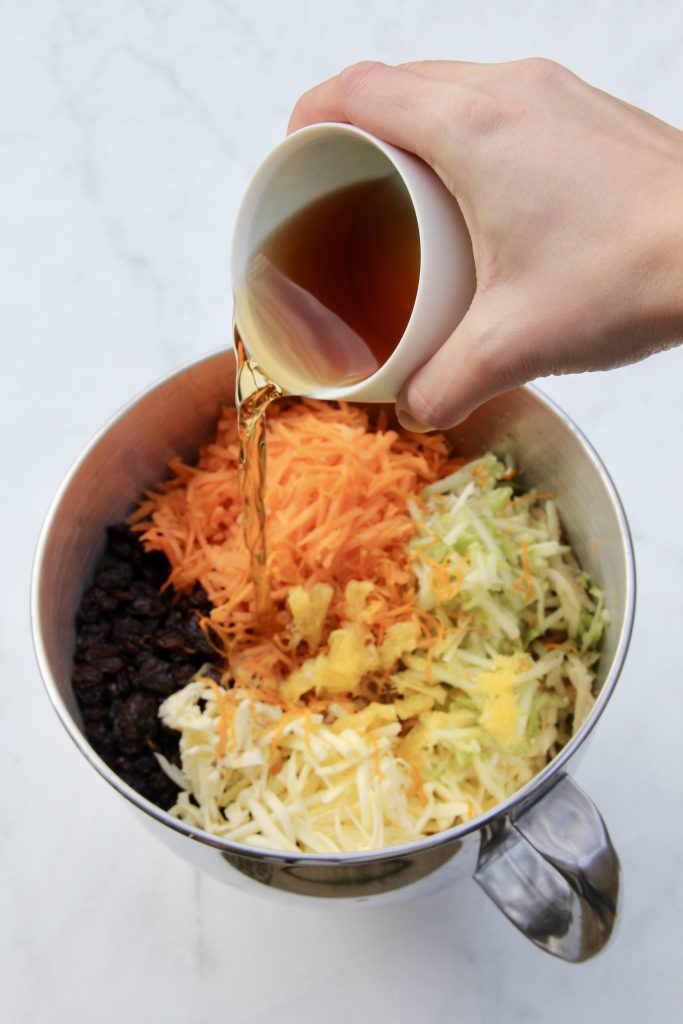
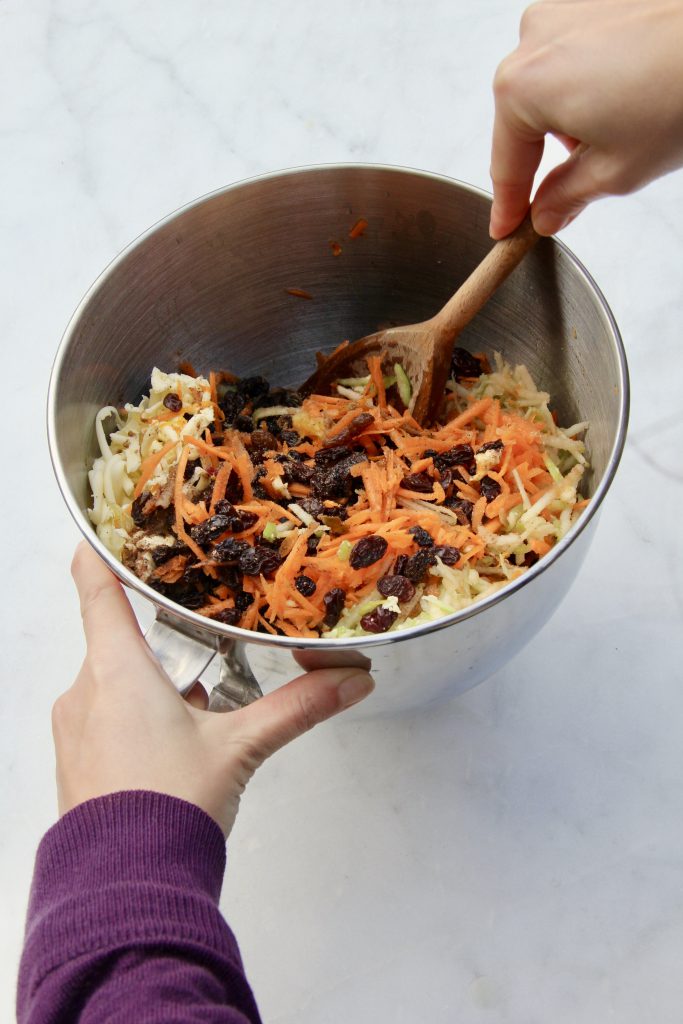
Coarsely grate the apple, carrot and butter.
Zest and juice the orange, taking as much of the segment flesh as possible.
Put all the ingredients in a large bowl and mix together. Set aside covered with a tea towel.
Stir occasionally for the next 24 hours.
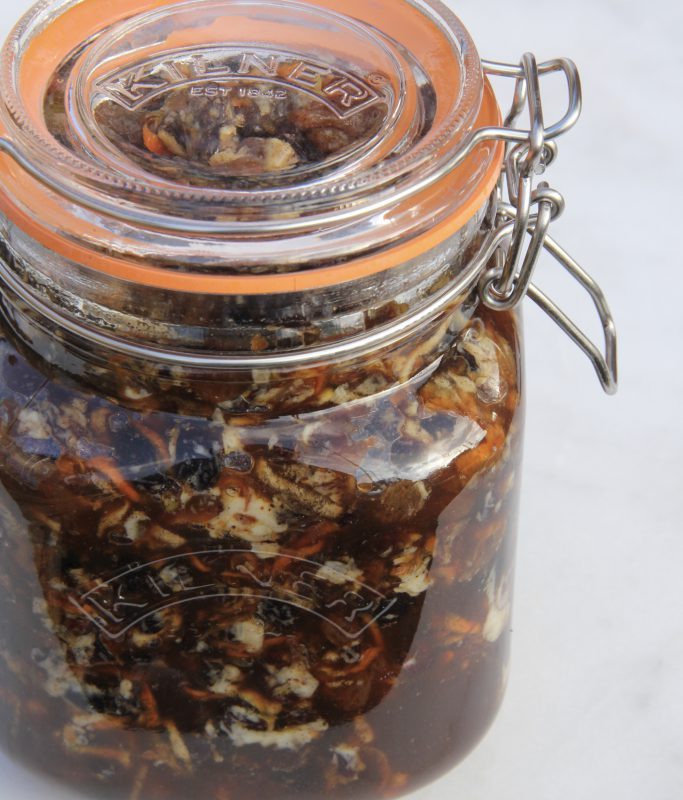
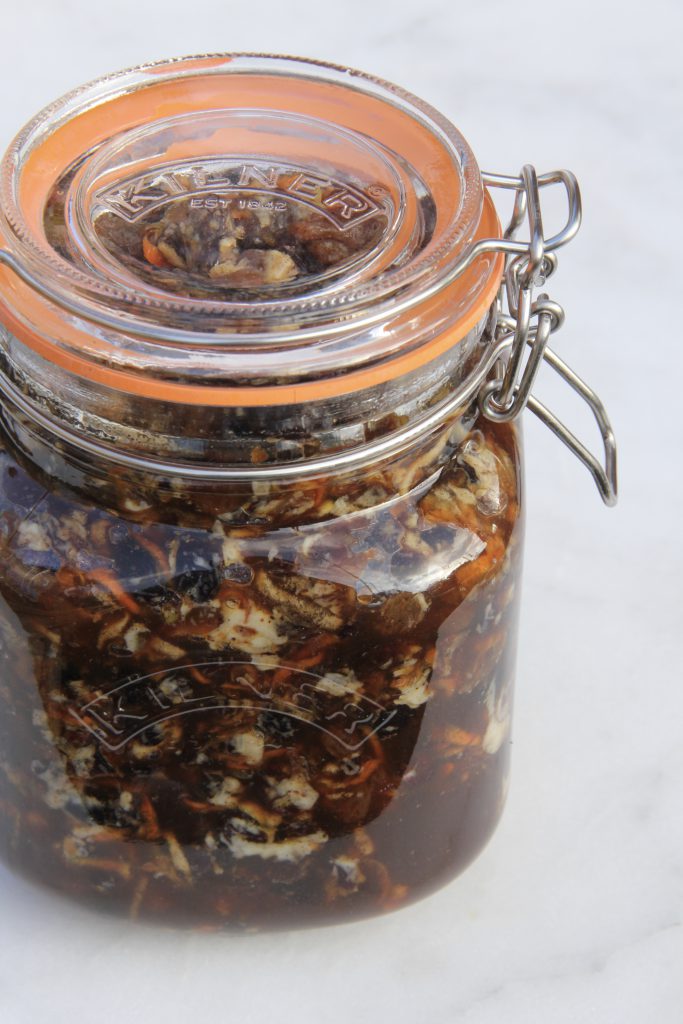
Fill previously sterilised jars with the mincemeat, ensuring to push out all the air.
Seal and leave in a cool dark place for up to 6 months to mature.
Per 100g 304kcal/ 9.2g fat/ 5.9g saturated fat/ 49.5g carbohydrates/ 2.8g fibre/ 1.4g protein






 Dr Pippa