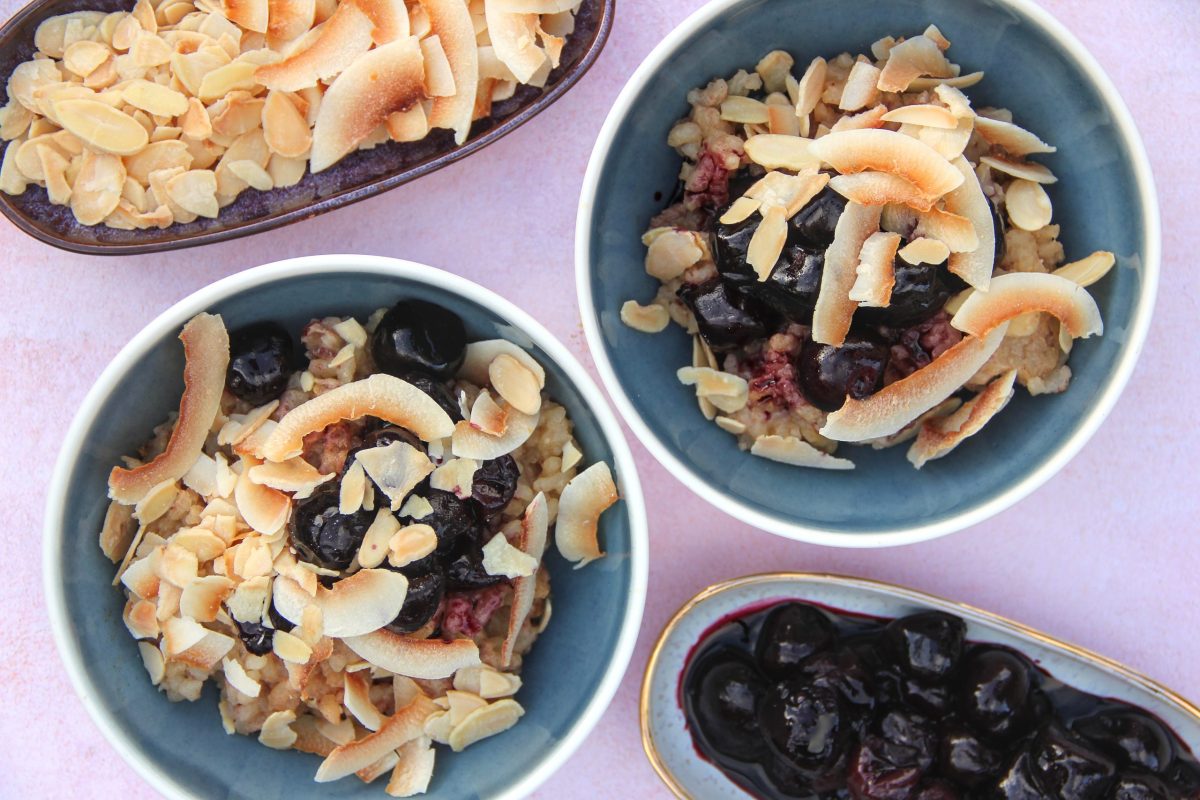
Baked Rice Pudding

Iodine is a nutrient we need to make thyroide hormones. If we don’t get enough iodine in our diets it can lead to something called goitre where our thyroid glands swell up in our necks in order to increase the capture of low levels of iodine in our diets. This was a common disease in 1950’s before iodine was used in the dairy industry to help improve sterilisation techniques for dairy cattle. Since plant-based dairy products has boomed over the years, we are starting to see the increase of this goitre again as dairy intakes are reduces. Other sources of dietary iodine include shellfish and certain white fish. For those following a fully plant-based diet it is essential that you look for alternative sources of iodine, such as fortified milk alternative products. Many products are now starting to add this nutrient back in, but not all have to be sure to carefully check the ingredients or the nutritional information chart where they will proudly state it has been added.

One delicious way I like to use iodine-fortified milk alternatives is in my Baked Rice Pudding. For the creamiest and richest rice pudding I use the barista version, very close in taste to rice pudding enriched with cream. The standard unsweetened oat milk still makes a delicious rice pudding without so much richness, and is the basis for my nutritional analysis, although most iodine containing milk alternatives are fortified to around 20μg per 100ml.

Serves 4

Ingredients

  • 5 medjool dates, pitted
  • 800ml unsweetened oat milk fortified with iodine
  • 100g pudding rice

To serve

  • 200g frozen cherries
  • 30g flaked almonds
  • 30g coconut flakes

Method

  • Preheat the oven to 130°C fan/ 140°C convection
  • Blend the dates with 400ml oat milk
  • In a large baking dish (approximately 1.3l) mix the rice, date milk and the remaining oat milk. Bake in the oven for 1 hour 45 minutes.
  • On a baking tray add the coconut and almonds. Bake for the last 10 minutes.
  • Defrost the cherries over a low heat, allowing their juices to slightly concentrate.
  • Serve the rice pudding hot with the cherries, almonds and coconut sprinkled over the top.
Baked Rice Pudding

Per serving: 399kcal/ 12g fat/ 4.8g saturated fat/ 62g carbohydrates/ 6.7g fibre/ 6.7g protein/ 45μg iodine
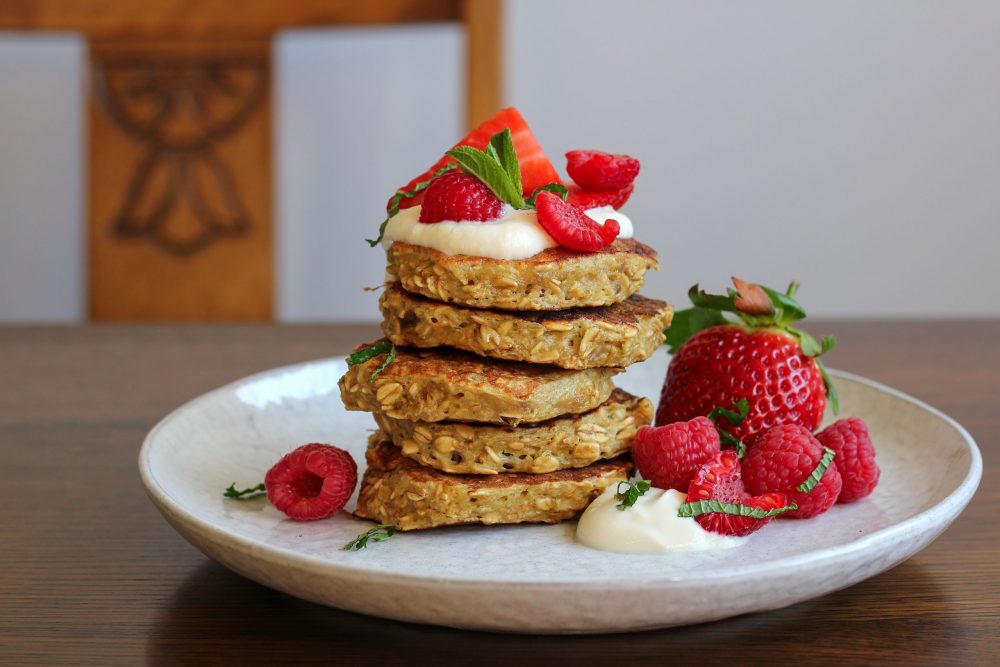
Porridge Pancakes

A delicious and easy way to start the day. Perfect for Pancake Day, or make a stash for on the go. Naturally sweet from the banana, these have no added sugar. You could further flavour the pancakes with fruits such as blueberries, or use dark chocolate chips for an extra sweet kick.

Use gluten-free oats to make this gluten-free, or dairy-free by using a milk alternative and yoghurt alternative (I have used soya products in this recipe).

Porridge Pancakes

Serves 2

Ingredients

  • 1 large banana
  • 1 egg
  • 100g rolled oats
  • 50ml milk of choice
  • 1/2 tsp baking powder
  • 1/2 tsp cinnamon (optional)
  • Oil for frying

To serve

  • 150g strawberries
  • 80g raspberries
  • 160g yoghurt (I have used soya yoghurt)
  • A few mint leaves

Method

  • Mash the banana in a bowl with a fork till you have very small lumps.
  • Add the remaining ingredients, except for the oil, and mix well.
  • Heat a frying pan over a low heat.
  • Wipe 1/4 tsp of oil around the pan before adding spoonfuls of the mixture, spaced out. You should be able to make 6-8 pancakes from the batter.
  • Cook for 2 minutes, before flipping and cooking for a further 2 minutes.
  • Serve in stacks with yoghurt, berries and mint.
Delicious served with fruit and yoghurt

Per serving*: 430kcal/ 11g fat/ 1.9g saturated fat/ 60g carbohydrates/ 12g fibre/ 15g protein

*Analysis based on unsweetened soya milk and unsweetened soya yoghurt

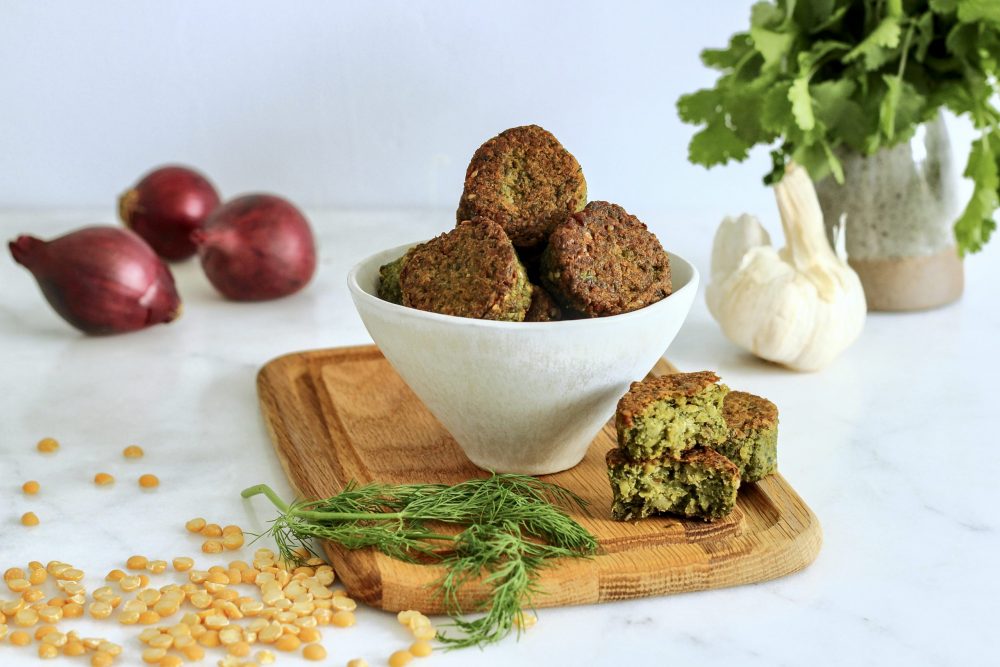
Yellow Split Pea Falafel

These little fritters have two main differences from the traditional falafel you would normally buy. Firstly their main ingredient is yellow split peas, as opposed to the traditional chickpea or fava bean. Secondly, they are baked in the oven rather than deep-fried. If neither of those facts have offended you then you’re in for a treat!

These make the perfect accompaniment to my easy hummus recipe to make a wrap, a nourish bowl or make large versions of the falafels and pop it in a burger bun for a vegan burger alternative.

Falafel and Hummus Salad Wrap

These falafel are packed full of nutrients, and each serving will provide you with:

  • 13g of plant protein
  • 18% of your fibre recommendation
  • 28+% of your daily iron requirements
  • 20+% of your zinc requirements
  • 10% of your calcium requirements

Serves 6

Ingredients

  • 200g yellow split peas, soaked overnight
  • 50g flat-leaf parsley, stems and leaves
  • 50g coriander, stems and leaves
  • 10g dill, stems and leaves
  • 1 medium red onion
  • 5 garlic cloves
  • 2 tsp cumin seeds
  • 1 tsp ground coriander
  • 1 tsp cayenne pepper
  • 1 tsp baking powder
  • 2 tsp sesame seeds
  • 120g gram flour
  • 3 tbsp extra virgin olive oil

Method

  • Cook the yellow split peas in fresh water for 30 minutes. Drain and allow to cool slightly.
  • Roughly chop the herb stems before adding all the ingredients into a food processor. Pulse till the desired texture of your falafels – I prefer mine to have some texture throughout.
  • Transfer to a bowl, cover and chill in the fridge for 1 hour.
  • Preheat the oven to 200°C fan/ 220°C convection. Place a heavy-bottomed tray in to preheat with the olive oil. Allow to come to temperature.
  • Meanwhile, take the cooled mixture and gently press into disk shapes. The mixture should make around 18-20 falafels depending on how big you make them.
  • Once the baking tray and oil are up to temperature, transfer the falafels in. As they hit the oil they should sizzle slightly.
  • Bake for 20-25 minutes, flipping halfway through once golden brown and crispy.

Per serving: 273kcal/ 9.3g fat/ 1.2g saturated fat/ 30g carbohydrates/ 5.4g fibre/ 13.2g protein

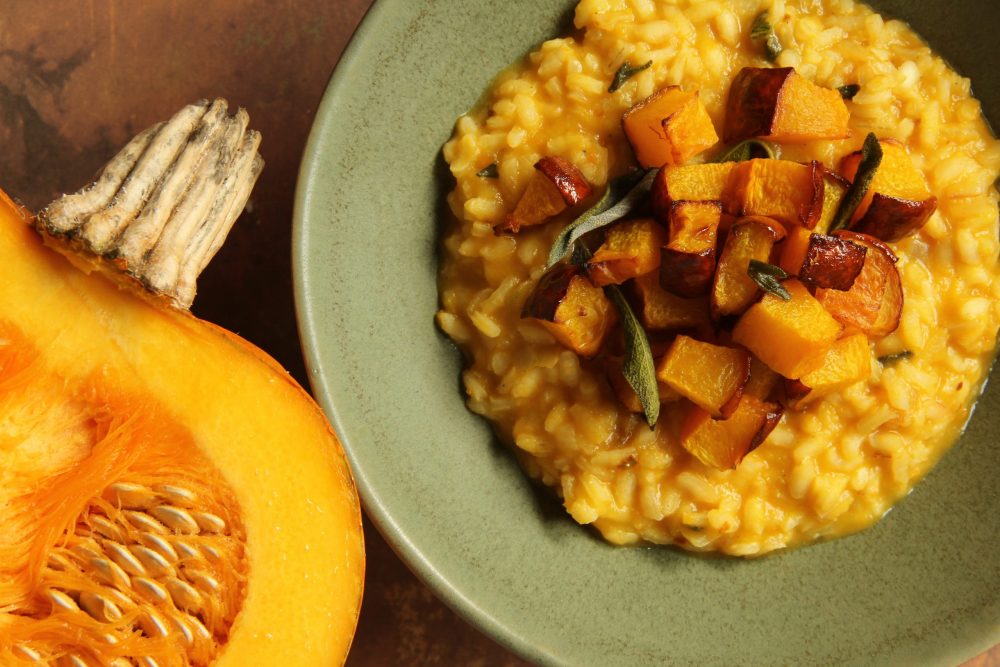
Golden Pumpkin Risotto

This is the perfect way to use up any pumpkin scraps you may have from Halloween carving! I’ve paired it with some carrot for an extra golden beta carotene boost, making the whole dish a gorgeous golden hue.
It is estimated that 14.5 million pumpkins will be wasted in the UK this year. Carving pumpkins are edible, from the skin to the flesh and even the seeds, so why not try to make use of some of the pumpkin scraps once you have carved your jack-o’-lantern. Reducing food waste helps reduce CO2 emissions, which in turn helps our planet.

It’s suitable for a gluten-free diet, just check you’re using suitable stock, or even for baby-led weaning if using a no-added salt stock (for very young babies you may need to blend/mash the rice). Optional to use homemade stock or some herbs and spices to make your own. If you want to make this dish vegan, substitute the butter for a little more oil, and the parmesan for some nutritional yeast.

Serves 4

Ingredients

  • 700ml stock
  • 100g pumpkin scraps such as inners or carving off-cuts
  • 100g carrots, roughly diced
  • 200g pumpkin, cut into cubes
  • 1/2 tsp extra virgin olive oil
  • 2-3 sprigs of sage, leaves removed
  • 1 large onion, finely diced
  • 1 tbsp extra virgin olive oil
  • 2 garlic cloves
  • 20g butter (use extra oil if making vegan)
  • 200g risotto rice
  • 150ml white wine (option to use extra stock)
  • 40g parmesan, grated

Method

  • Start by making the pumpkin stock by adding the pumpkin scraps, carrot and stock to a saucepan. Bring to the boil and simmer for 20 minutes till the pumpkin and carrots are cooked through. Blend till smooth and keep on a low heat.
  • Meanwhile, preheat the oven to 180°C fan/ 200°C convection. Add the pumpkin cubes to a baking tray and mix with 1/2 tbsp olive oil. Bake for 25 minutes, turning halfway through. Add the sage leaves and bake for a further 5 minutes.
  • While the pumpkin is roasting, take a large pan and gently cook the onions in the remaining oil till soft and translucent.
  • Add the garlic and cook for 1 minute before adding the butter.
  • Add the rice and toast for 2-3 minutes till fragrant. Add the white wine and stir.
  • Slowly add the stock, stirring the risotto continuously. As the stock is absorbed add more. If you run out of stock use boiled water to allow the rice to cook through so it has a little bite in the centre.
  • Remove the risotto from the heat and add the parmesan and 1/2 the toasted sage leaves. Season with pepper to taste.
  • Serve with the roasted pumpkin and remaining sage leaves over the top.

Per serving: 417kcal/ 15.0g fat/ 5.9g saturated fat/ 52g carbohydrates/ 5.3g fibre/ 9.2g protein

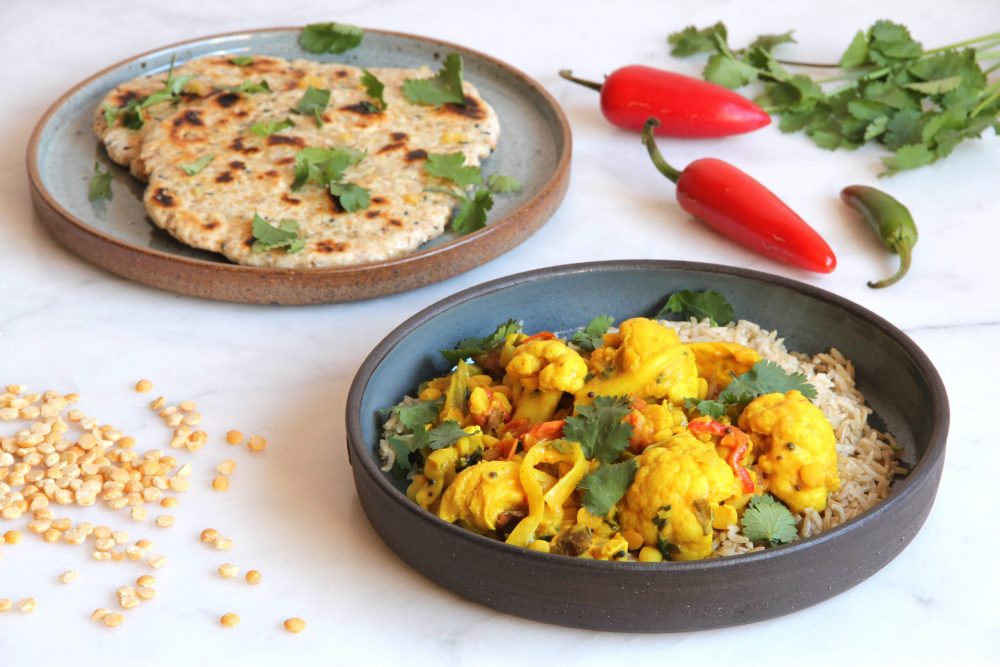
Yellow Split Pea and Cauliflower Curry

This recipe was born from a sad cauliflower and a wilted bunch of coriander left over at the end of the week which needed to be used up. It got a resounding “I rate this” from my partner as we ate leftovers the next day. Absolutely none of the cauliflower is wasted, I simply adore cauliflower leaves and for anyone who has not tried them, this is the perfect dish to utilise them.

This is a fantastic way to use up any other vegetables too. Mix and match with other cruciferous vegetables such as broccoli, Brussel sprouts or even kale, or use other vegetables such as courgette, aubergine or green beans.

Serves 6

Ingredients

  • 200g yellow split peas
  • 1 tsp mustard seeds
  • 1 tsp ground coriander
  • 2 tbsp rapeseed oil
  • 1 large or 2 small onions, sliced
  • 2″ piece of ginger, peeled and grated
  • 1 red chilli, sliced (or to taste)
  • 60g skin-on almonds, roughly chopped
  • 1 cauliflower head, cut into florets and leaves
  • 400ml coconut milk
  • 2 tsp ground turmeric
  • 200g fresh tomatoes, roughly chopped
  • 20g coriander, roughly chopped

To serve

  • Cooked rice

Method

  • Boil the split peas in plenty of water for 25 minutes, till cooked through but still firm.
  • Separately, in a large pan add the mustard seeds, ground coriander and oil over a medium heat.
  • When the mustard seeds start popping add the onion, ginger, chilli and almonds. Cook for 2-3 minutes.
  • Add the cauliflower, coconut milk, turmeric, tomatoes and half of the coriander.
  • Drain the cooked yellow split peas, reserving 50ml of cooking liquid, and to the cauliflower mix. Cook together for 5 minutes.
  • Serve with rice and the remaining coriander.

Per serving: 387kcal/ 17.3g fat/ 2.2g saturated fat/ 22.9g carbohydrates/ 16.7g fibre/ 16.8g protein

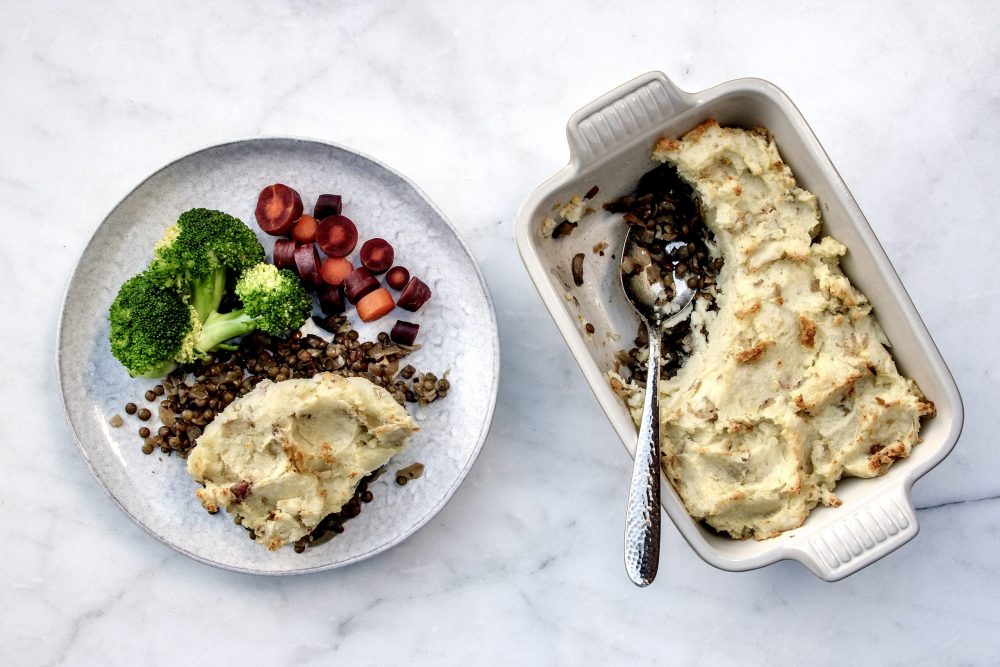
Mushroom, Lentil & Olive Oil Mash Pie

This is the recipes for those of you who already follow a vegan lifestyle. It’s also something for those who are doing Veganuary for the first time. It’s also perfect for anybody who is looking to increase their plant-based diet without necessarily being 100% vegan all the time.

This would work well with other vegetables such as leeks, celery, courgettes, or if mushrooms are not your thing use some fresh or tinned tomatoes which will cook into a tomato based sauce for the lentils to sit in.

Leaving the skin on the potatoes for the mash will make the dish quicker to prepare. You’ll also prevent any food waste as well as keep in the maximum fibre content.

Serves 2

Ingredients

  • 60g puy lentils
  • 35ml extra virgin olive oil
  • 1 large onion, finely diced
  • 1 garlic clove, finely chopped
  • 180g mushrooms, finely diced
  • 1/2 tsp vegan stock powder
  • A few sprigs of fresh thyme
  • 450g potatoes, skin left on, washed and cut into large chunks
  • 60ml soya milk

Method

  • Put the lentils into a pan and cover with plenty of cold water. Bring to the boil and then simmer for 15 minutes. Once cooked, drain the lentils reserving 2 tablespoons of cooking water.
  • Meanwhile, bring a pan of water to the boil and cook the potatoes till soft.
  • Separately, cook the onion in another pan with 10ml of olive oil over a low heat till they become soft and translucent.
  • Add the garlic and cook for 1 minute before adding the mushrooms in.
  • Add the stock powder and thyme leaves and allow to cook till the mushroom juices evaporate. Add the cooked lentils and reserved cooking liquid to the mushroom mixture.
  • Once the potatoes are cook, drain and allow to steam dry for 2 minutes. Heat the soya milk with the remaining olive oil in the pan used to cook the potatoes before adding them back in and mashing till smooth.
  • Preheat the oven to 180°C fan/ 200°C convection
  • Assemble the filling into an ovenproof dish and layer the mash over the top.
  • Bake for 25-30 minutes till the potato top turn crisp and golden brown.

Per serving: 513kcal/ 18.9g fat/ 2.9g saturated fat/ 66.6g carbohydrates/ 12.4g fibre/ 16.4g protein

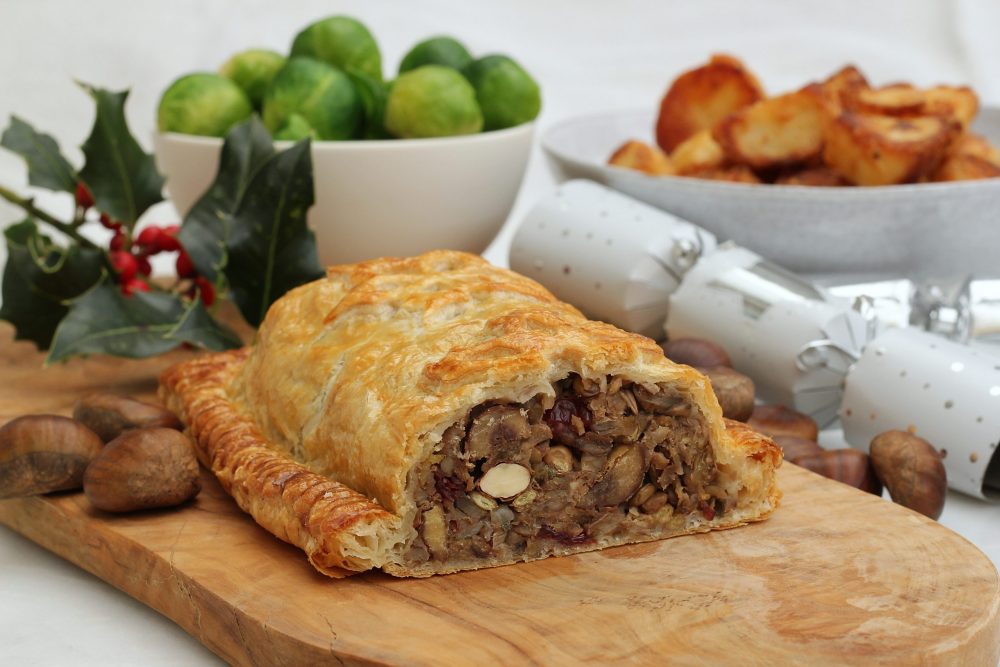
Festive Lentil, Mushroom and Chestnut Wellington

My Festive Lentil, Mushroom and Chestnut Wellington is sure to be a crowd-pleaser this Christmas. Packed full of flavours you would expect to find at Christmas and wrapped up in puff pastry. What is not to like?

This recipe is easily adapted to most dietary requirements. Swap the butter pastry to a butter-free puff pastry and swap the egg glaze for a mylk wash to give the pastry a lovely golden glow.

To make the wellington gluten-free use a gluten-free pastry and gluten-free oats. If you can’t find the oats, use 100g gluten-free flour in place of the oats and rice flour.

You can also swap a few ingredients around to suit what you fancy. If your festive tipple is not port, you could swap it for red wine, cognac or even keep it alcohol-free by using a little stock. Other herbs that would work well in this wellington include thyme, parsley or marjoram. You could also use dried herbs, but watch out as these can really pack a punch, so half a teaspoon should be plenty to give flavour. You could even change the almonds for alternative nuts such as pistachios or walnuts to give different dietary nutrients; walnuts are the only tree nut to contain significant amounts of alpha-linolenic acid, a type of omega-3 fatty acid which can be converted in the body to EPA and DHA fats found in oily fish. Great for anyone following a strictly plant-based diet or for those who don’t eat fish.

Serves 6-8

Ingredient

  • 120g green lentils
  • 3 bay leaves
  • 1 tbsp extra virgin olive oil
  • 1 red onion, finely diced
  • 200g mushrooms, finely diced
  • 10 sage leaves, sliced
  • 50g almonds, roughly chopped
  • 90g cooked chestnuts, roughly chopped
  • 50g dried cranberries
  • 60ml port
  • 50g rice flour
  • 50g cut oats
  • 400g puff pastry
  • 1 egg, beaten

Method

  • Wash the lentils in cold water. Add the bay leaves and bring the lentils to the boil. Reduce the heat to a simmer and cook for 20 minutes till the lentils are soft.
  • Meanwhile cook the oil and onion together over a low heat till soft and translucent.
  • Add the mushrooms to the onions and cook the mushrooms till the juices start to thicken slightly. Add the sage and cook for a further minute till fragrant.
  • Once the lentils are cooked, drain, remove the bay leaves and lightly mash. Add the mushroom mixture to the lentils followed by the almonds, chestnuts, cranberries, port, flour and cut oats. Mix to combine and season to taste.
  • Allow the mixture to cool completely.
  • Preheat the oven to 180°C fan/ 200°C convection.
  • Line a baking sheet with baking parchment.
  • Roll the pastry into a 35cm by 25cm rectangle. Cut lengthways down to make a 10cm by 35cm smaller rectangle. Remove 2cm from this piece to create a rectangle approximately 10cm by 33cm.
  • Place the now cooled mixture on this smaller rectangle of pastry, leaving a 1cm gap all around the edge, into a large log shape from short end to short end.
  • Using the egg, paint over the pastry seam. Lift the remaining larger rectangle of pastry over the mixture and press the pastry to seal with a fork.
  • Trim any excess pastry and use it to decorate the top of the pie.
  • Cut a small hole in the top of the wellington to allow the steam to escape and glaze the whole pie with an egg wash.
  • Bake the wellington for 25-30 minutes till golden brown all over.

Per sixth: 629kcal/ 25.3 fat/ 13.1g saturated fat/ 60.8g carbohydrates/ 8.0g fibre/ 18.3g protein

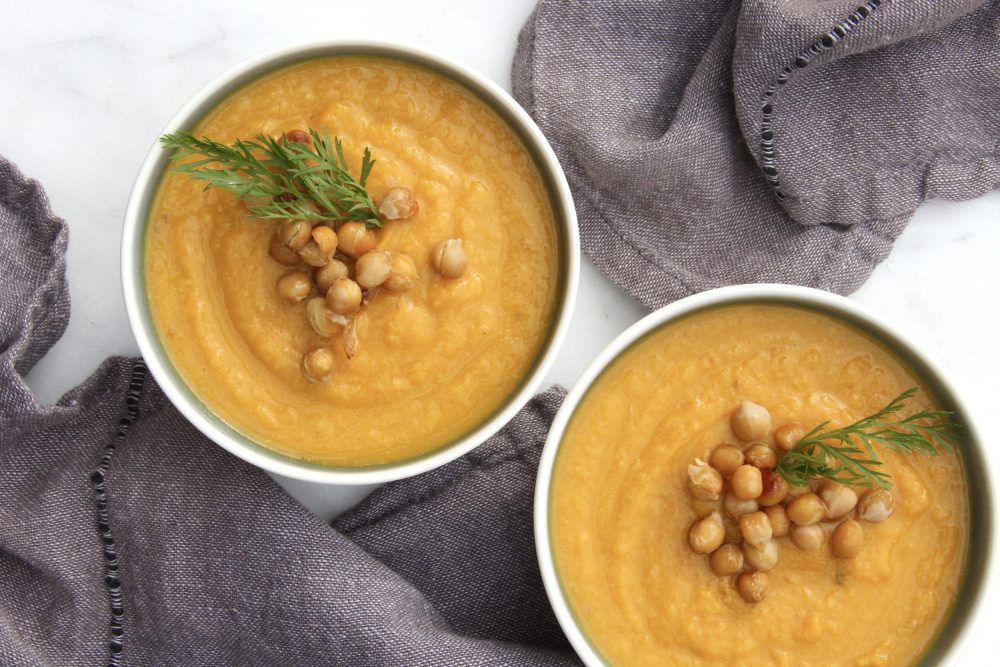
Roasted Butternut Squash, Carrot and Chickpea Soup

Autumn is upon us, so therefore so is soup season. I always enjoy a good bowl of hot soup on a crisp cold Autumn day, but sometimes I find myself wondering how to get the protein in for the meal. Using beans, pulses or lentils is a great way to include some protein in a soup meal.

In an effort to save time and reduce food waste I don’t peel the squash or carrots. Instead I scrub them before removing the tops and tail. The skin is easily blended into the soup and will contribute to some of the fibre content. What is not to love?

Any leftover soup can be stored in the fridge in an airtight container for up to 5 days. Alternatively, this soup freezes really well so you can make a large batch of this to pull out when you need a quick lunch.

Serves 4

Ingredients

  • 2 tbsp extra virgin olive oil
  • 400g butternut squash, cut into 1″ cubes
  • 400g carrots, cut into 1″ pieces
  • 1 large onion, cut into 1″ pieces
  • 4 clove of garlic, skin on
  • 1 tin of chickpeas, drained and rinsed
  • 1 stock cube of choice

Method

  • Preheat the oven to 180°C fan/ 190°C convection.
  • Mix all of the ingredients, except the stock cube, in a large roasting tin. Roast in the oven for 1 hour, stirring half way through.
  • Boil 900ml of water and add the stock cube.
  • Remove the garlic cloves from their skins and add the roasted vegetables to the stock.
  • Blend the soup to the consistency of choice and serve.

Per serving: 276kcal/ 11.5g fat/ 1.7g saturated fat/ 32.7g carbohydrates/ 8.0g fibre/ 7.0g protein

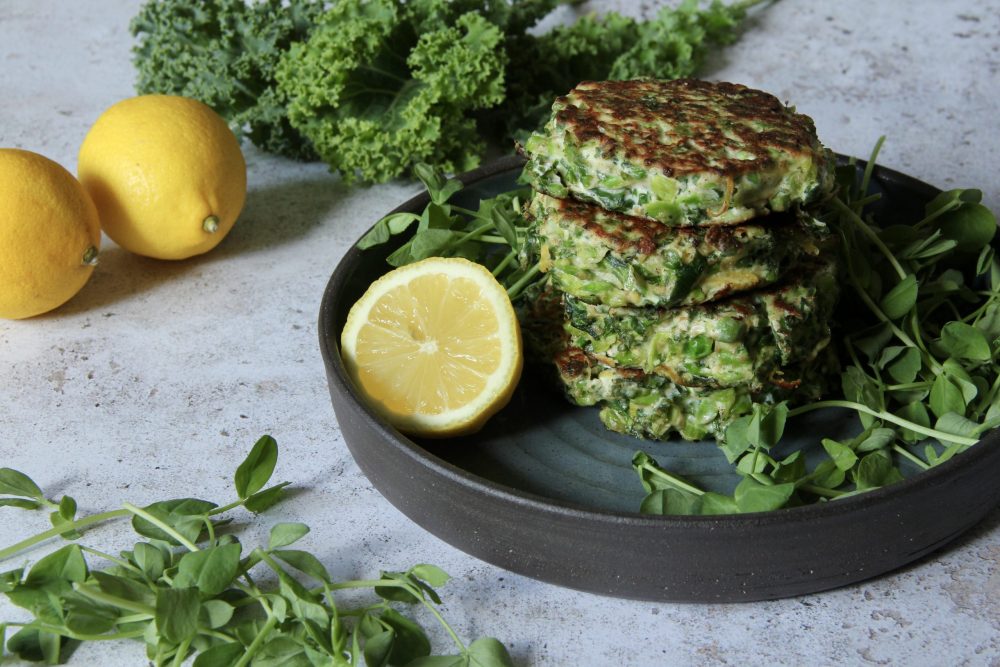
Green Kale Fritters

I’ve got so much kale growing at the allotment. Both curly kale and Cavolo Nero. I love them both, and I believe they both have their place in particular dishes. These fritters, however, will benefit from any type of kale you grow or can buy in the shops. Alternatively, if you don’t have kale you could use other green leafy vegetables such as cabbage, spinach, Swiss Chard or spring greens.

I also use frozen peas and edamame beans. Much cheaper and handy as they are kept in the freezer ready for use whenever you want. Frozen vegetables can also often have higher nutrient content as they are picked at their peak and then frozen within hours, locking in nutrients that may be lost otherwise.

If you need to make gluten-free fritters, use gram flour or rice flour instead of wholemeal flour. I use wholemeal because it helps with the fibre content of the fritters, but also is something I keep in the cupboard as a staple. The flour’s role in the fritters is just to help bind them together. When I didn’t add the flour in during recipe testing they fritters were extremely fragile and would easily fall apart. While they tasted great, I thought they were too difficult to handle.

These fritters are delicious simply served with a wedge of lemon and some salad leaves of choice. Serving with the lemon after cooking adds vitamin C which can help your absorb the plant-based iron from the beans and kale. You could add any other toppings of your choice such as a poached egg to make the perfect brunch, or top with hummus, guacamole, soured cream or your favourite sauce.

Makes 8 fritters

Ingredients

  • 150g kale, finely sliced
  • 75g frozen peas, defrosted
  • 75g frozen edamame beans, defrosted
  • 250g ricotta
  • 3 large eggs
  • Zest of 1 lemon
  • 8-10 mint leaves, finely sliced
  • 15g parsley, finely sliced
  • 1/2 a nutmeg, grated
  • 30g wholemeal flour, or if making gluten-free gram flour or rice flour
  • 2 tsp extra virgin olive oil

To serve

  • Salad leaves of choice
  • Lemon wedges
  • Poached egg (optional)

Method

  • Place the sliced kale into a large bowl. Boil the kettle and pour over the kale to blanch for 30 seconds before draining and running under cold water to maintain the bright green colouring. Drain as much water from the kale.
  • In a separate large bowl add the peas and edamame beans and crush before adding all the remaining ingredients except the flour.
  • Add the kale and mix to distribute throughout the batter. Add the flour and mix.
  • Preheat large frying pan and heat over a medium heat with 1 tsp oil.
  • Take a heaped spoonful of batter and place into the pan to form a fritter. Cook in batches for 2-3 minutes per side till golden brown.
  • Serve the fritters with fresh pea shoots and lemon wedge, and optional top with a poached egg.

Per 2 fritters: 232kcal/ 13.7g fat/ 5.0g saturated fat/ 10.9g carbohydrates/ 4.1g fibre/ 15.5g protein

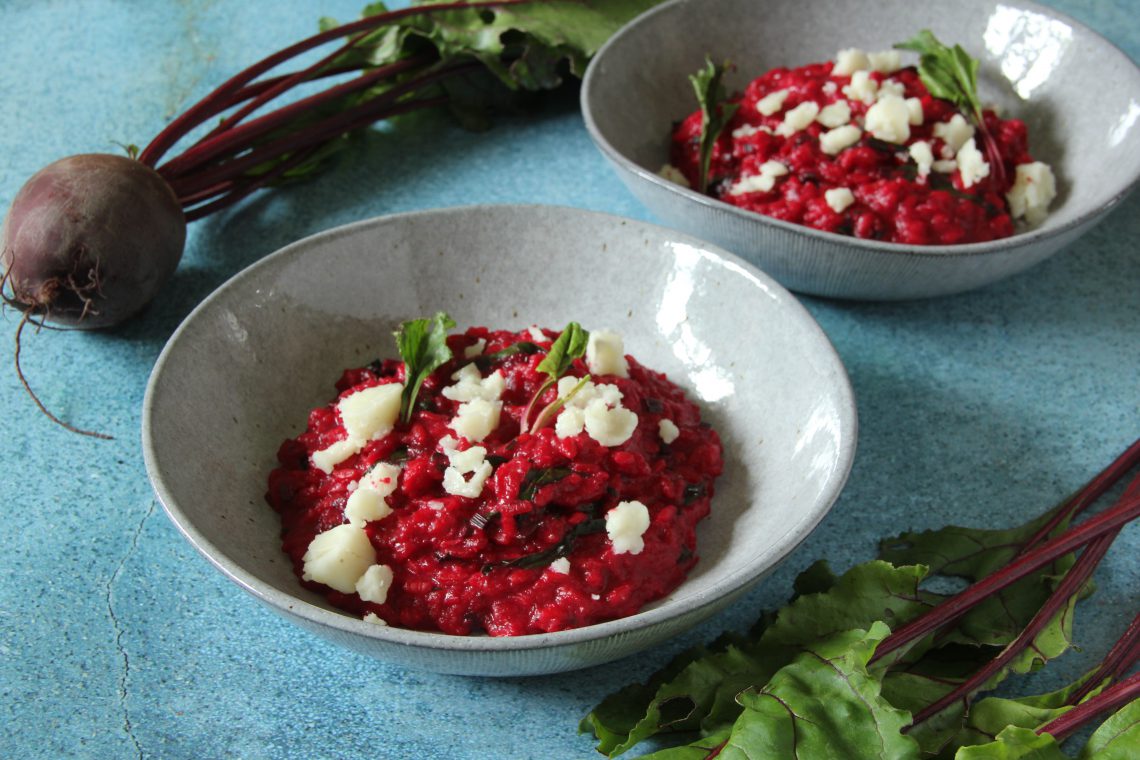
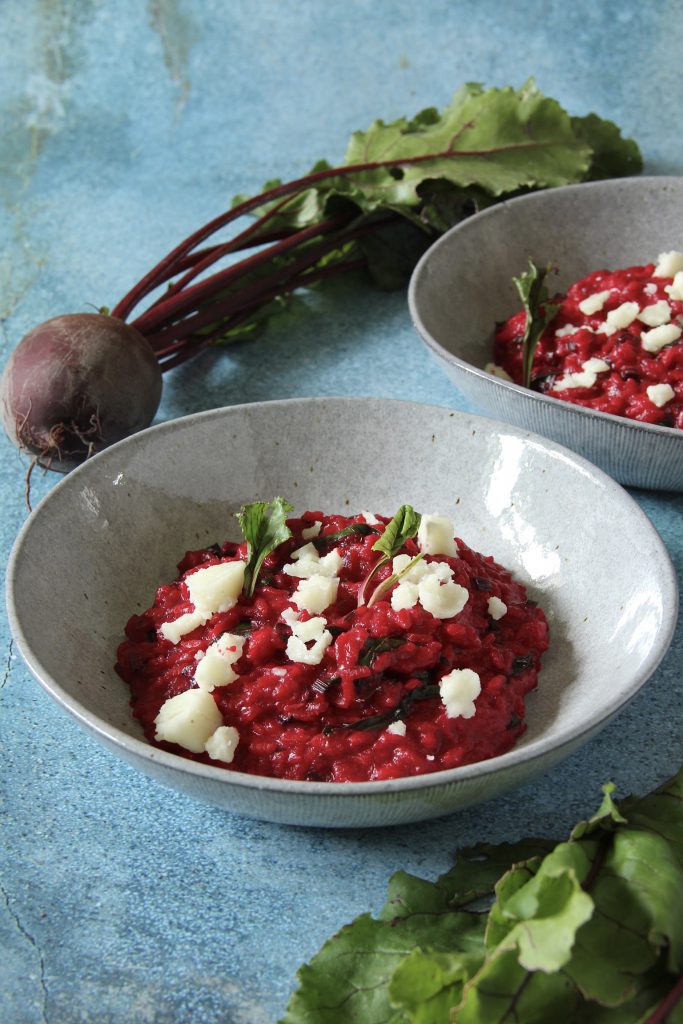
Beetroot and Goat Cheese Risotto

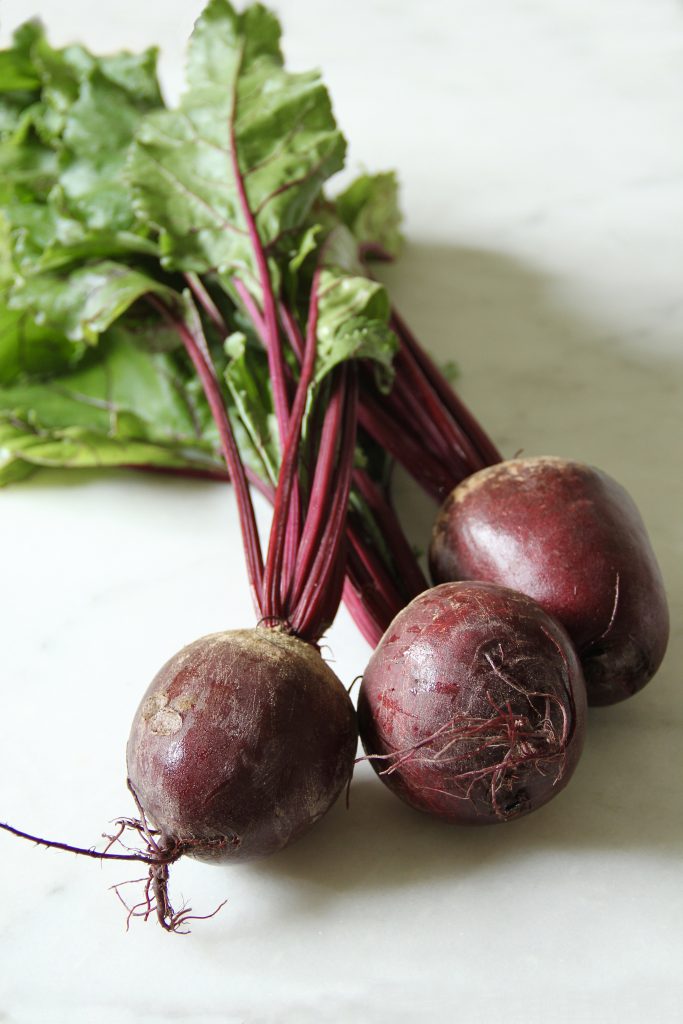
I love the colour of this dish. It can’t help but put a smile on your face. Such a bright red-pink colour from the fresh beetroots and it’s something that will also make your gut microbiota smile too…. if they had faces!

Beetroots are naturally high in nitrates, something that has been found to help reduce blood pressure, improve blood flow and possibly have an effect on athletic performance. How? Nitrates are converted to nitric oxide in the body, which has an effect on our blood vessels, dilating them and allowing greater delivery of oxygenated blood to our muscles when consumed prior to exercise.

A 2013 review of UK and Australian studies concluded that the nitrates in the beetroot (usually consumed as beetroot juice) can help improve endurance as measured by time to exhaustion. There are also benefits to gym-goers too as a separate study, conducted in 2016, found that beetroot juice improved performance in resistance training. Those who consumed a 70ml shot of beetroot juice (400mg nitrate) prior to training were able to complete more reps to failure compared with those taking a placebo control.

If you don’t have fresh beetroot you can use pre-cooked beetroots, but the colour will be slightly faded due to the high temperatures used to vacuum pack and store them. Simply skip boiling the beetroot, blending directly into the hot stock, and start the risotto straight away. Another alternative would be to buy beetroot juice, however, the fibre will be removed from this, so I would use this if it is your only option available. If you don’t have the leaves still attached to the beetroot, try using spinach, rainbow chard, or kale as an alternative.

Serves 4 as a main course

Ingredients

  • 350g peeled beetroot, cubed
  • 10g stock powder
  • 2 onions, finely diced
  • 30ml extra virgin olive oil
  • 3 garlic cloves, finely chopped
  • 300g risotto rice
  • 150ml white wine
  • 4 sprigs of thyme
  • 60g parmesan, grated
  • 150g beetroot leaves, roughly chopped
  • 60g goats cheese

Method

  • Place the beetroot and stock powder into a large pan and add 400ml boiling water. Cook for 10 minutes to soften the beetroot and blend till smooth. Return to the heat and keep ward without boiling.
  • Meanwhile, sweat the onions in the oil till soft and translucent. Add the garlic and cook for a further 2 minutes.
  • Add the rice, coating all the grains in the oil and gently toast before adding the white wine. Stir continuously.
  • Once the wine has been absorbed by the rice, add a ladle of beetroot stock. Keep stirring and adding stock till all the stock has been used up. If you need to use more liquid, add boiling water.
  • When the rice is almost cooked to al dente, add the beetroot leaves and allow to wilt.
  • Take off the heat and stir in the parmesan cheese.
  • Plate up and crumble the goat cheese over the top.

Per serving: 488kcal/ 11.0g fat/ 6.2g saturated fat/ 72.0g carbohydrates/ 5.0g fibre/ 17.4g protein

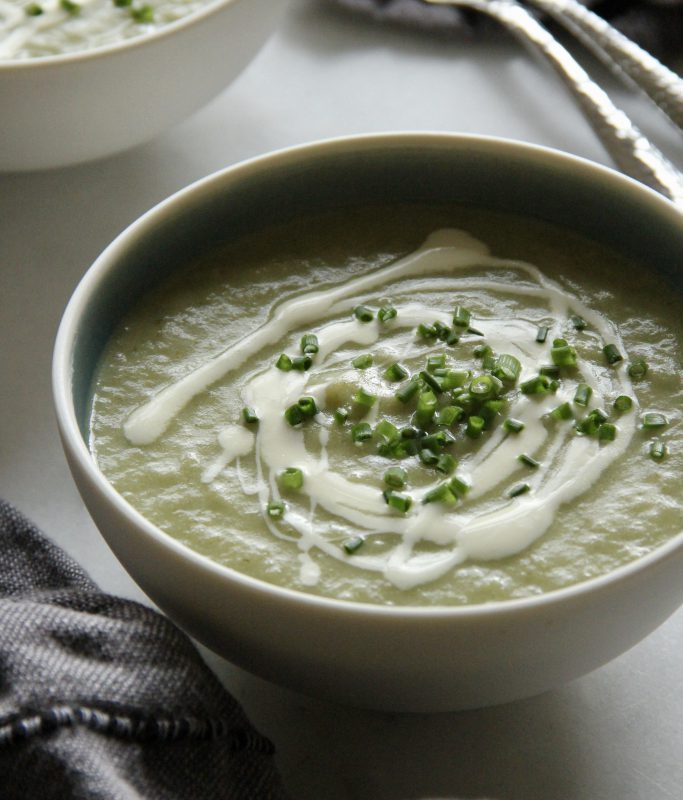
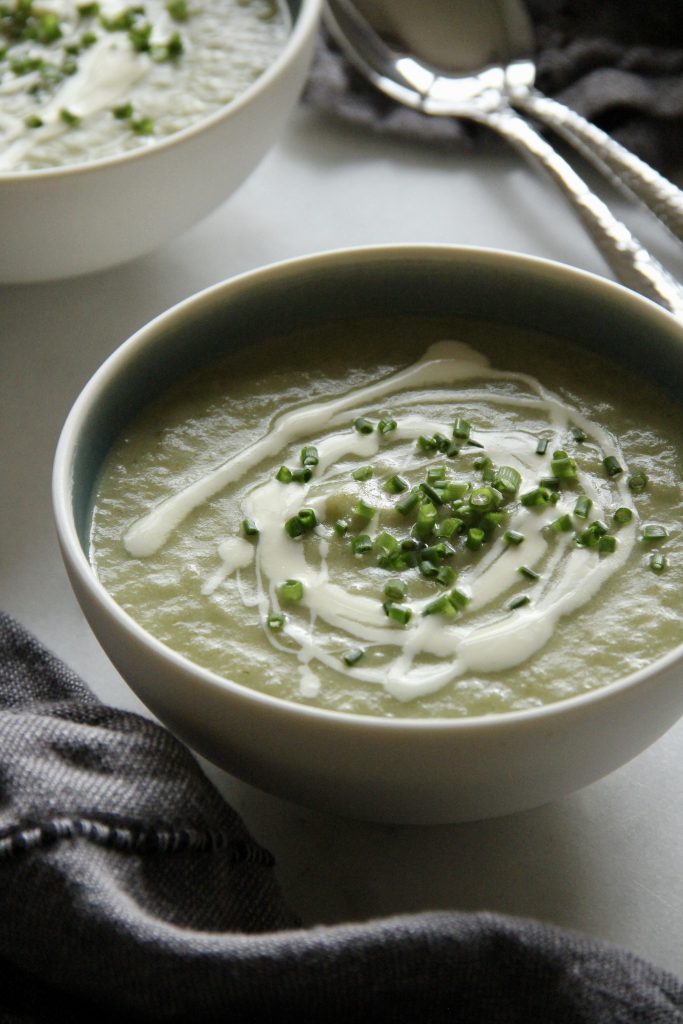
Leek and Potato Soup

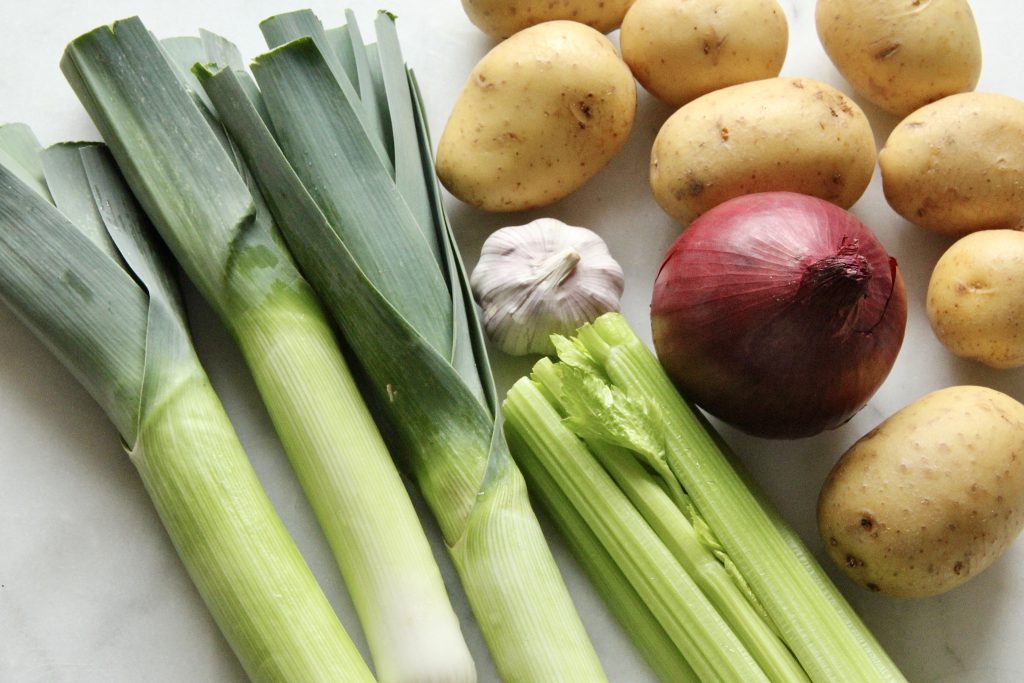
This classic soup is as simple as the name suggests. However, a couple of extra ingredients will always help, particularly those base ingredients onion and garlic. If, like myself, you are running low on onions, you can substitute in some celery, or other alternatives include spring onion or chives.

I’ve made this soup smooth, however, I do on occasion make it chunky where I leave cubes of potato and slices of leek whole to add texture to the soup. If you have the time, cut your potatoes into 1cm cubes, and slice your leeks into 0.5cm rounds. Then just before blending, take a scoop or two out and then return once the soup has been blitzed. This method works best with more waxy potatoes which don’t fall apart when cooking, but if you only have floury potatoes they work perfectly for a smooth blended soup.

Serves 8

Ingredients

  • 2 tbsp rapeseed oil
  • 1 large onion, finely diced
  • 4 sticks celery, finely diced
  • 3 leeks, finely sliced
  • 4 cloves garlic, roughly chopped
  • 800g potatoes, diced
  • 15g stock powder

To serve

  • 150ml double cream (optional)
  • Chives, finely chopped

Recipe

  • Cook the onions on a gentile heat with the oil for 5 minutes before adding the celery and continuing to cook till soft and translucent.
  • Add the garlic and leeks and cook for a further 2 minutes.
  • Add the potatoes, stock powder and top up with water till all the ingredients are almost covered, around 1.2 litres, and simmer for 20 minutes, stirring occasionally.
  • Blend the soup till smooth, finish with cream (optional) and chives, and serve.

Per serving 331kcal/ 19.3g fat/ 6.8g saturated fat/ 32.1g carbohydrates/ 5.0g fibre/ 4.6g protein

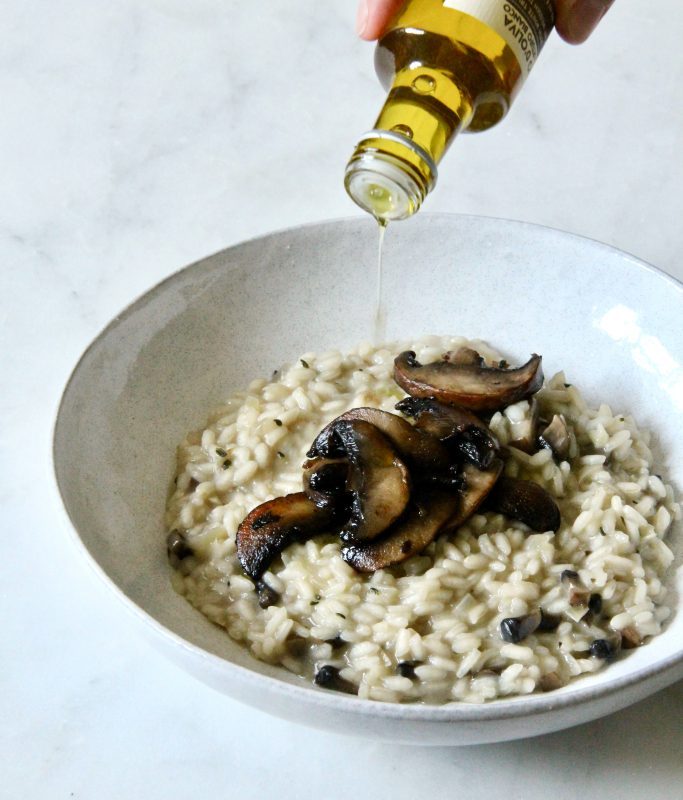
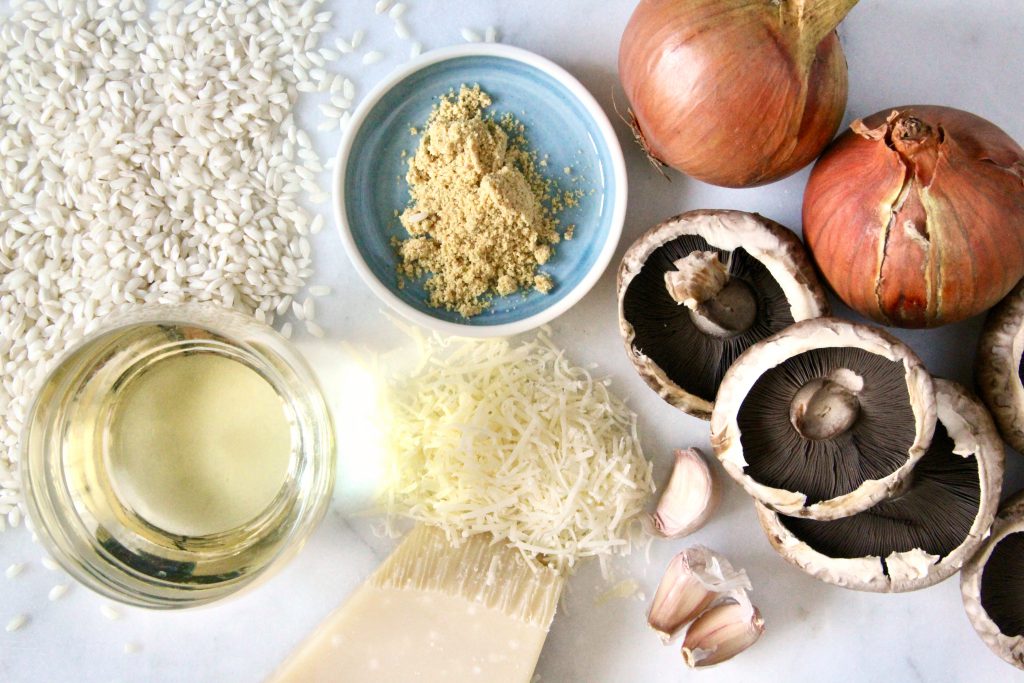
Mushroom Risotto

Risotto is such an easy dish. The only laborious part about it is the constant stirring to make sure the grains go creamy and release their starch to thicken the liquid.

You can use almost any ingredients to make the risotto too, depending on what you fancy. Roast tomatoes in the oven with garlic and herbs, or use spring vegetables such as asparagus and pea, or a lemon and pea risotto would be delicious served with a pan fried fillet of fish. The possibilities are endless really!

Serves 4

Ingredients

  • 2 tbsp extra virgin olive oil
  • 2 onions, finely diced
  • 3 garlic cloves, finely diced
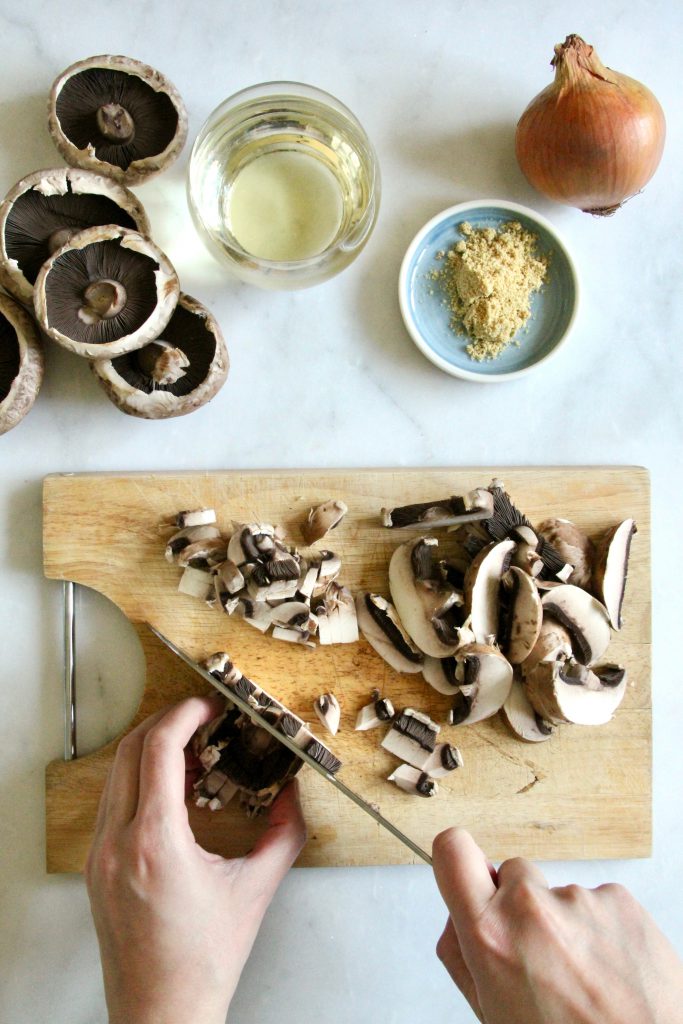
  • 300g mushrooms, half sliced, half diced
  • 300g risotto rice
  • 200ml white wine (optional)
  • 10g stock powder
  • 60g parmesan, finely grated

Method

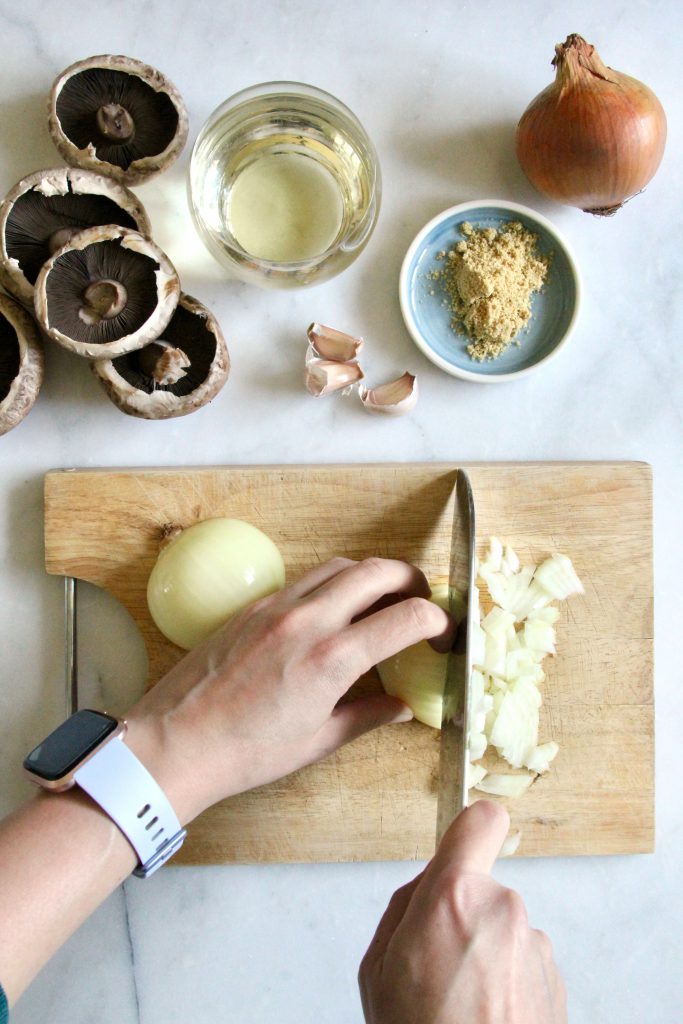
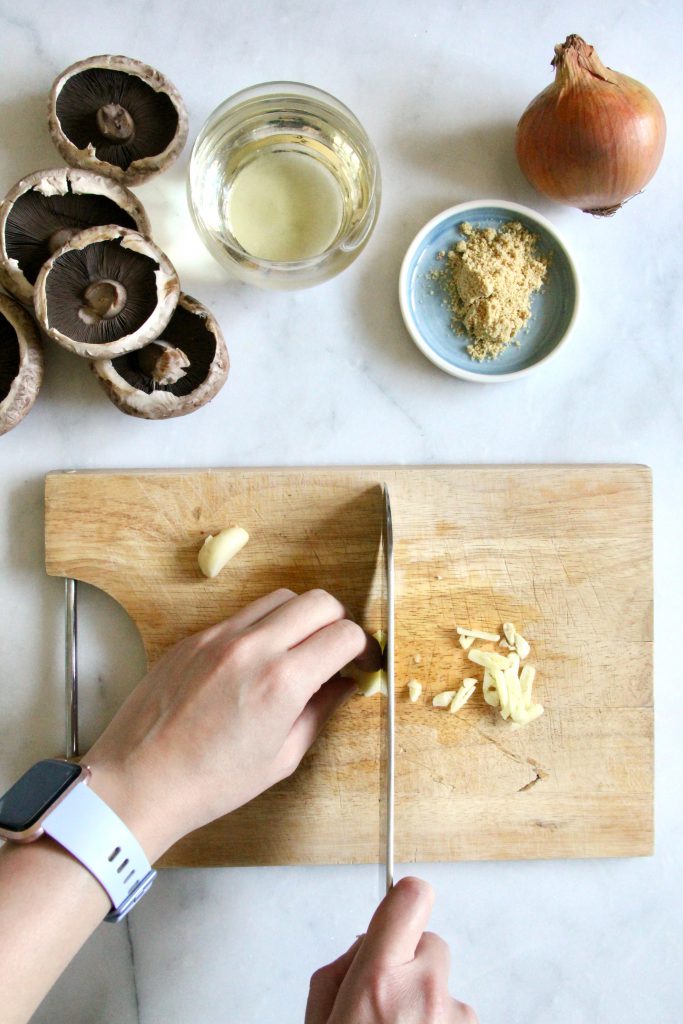
  • Sweat the onion and 1 tbsp oil together in a large pan till soft and translucent. Add the garlic and cook for a further 2 minutes.
  • Add the diced mushrooms and cook till soft.
  • Add the risotto rice, stir and cook for 1 minute before adding in the wine and stock powder. Stir continuously, adding boiling water as the liquid is absorbed. This will take around 25 minutes to cook.
  • When the rice is close to being cooked through, heat a separate pan with 1 tbsp olive oil and fry the sliced mushrooms.
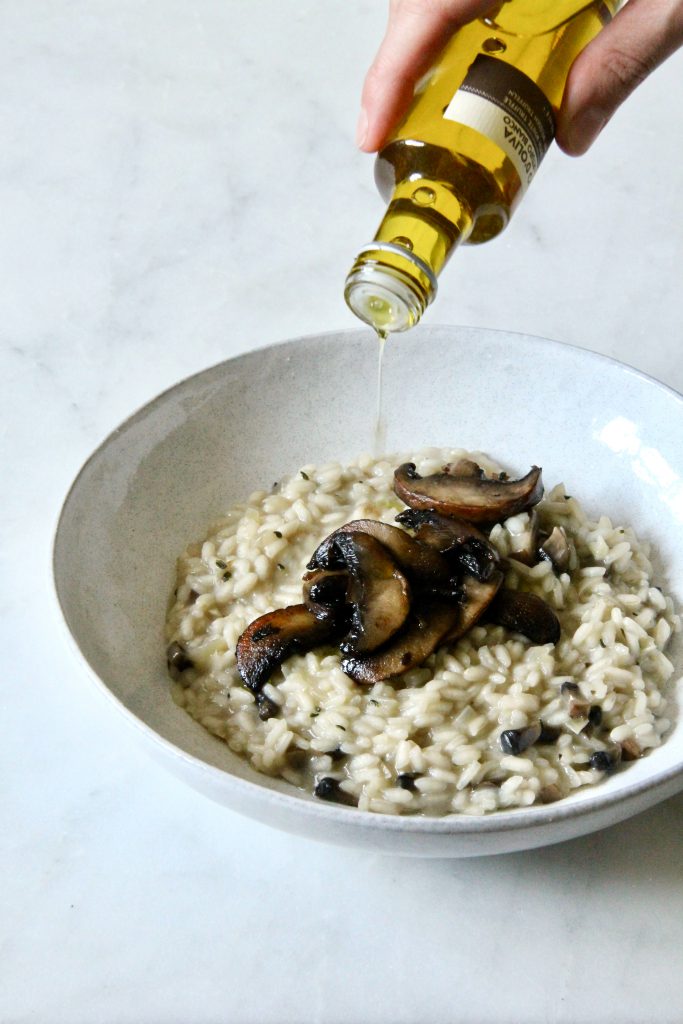
  • Turn the heat off the risotto, stir in the parmesan cheese and serve with the fried mushrooms on top.

If you’re feeling a little fancy, why not treat yourself with a drizzle of truffle oil just before you serve?