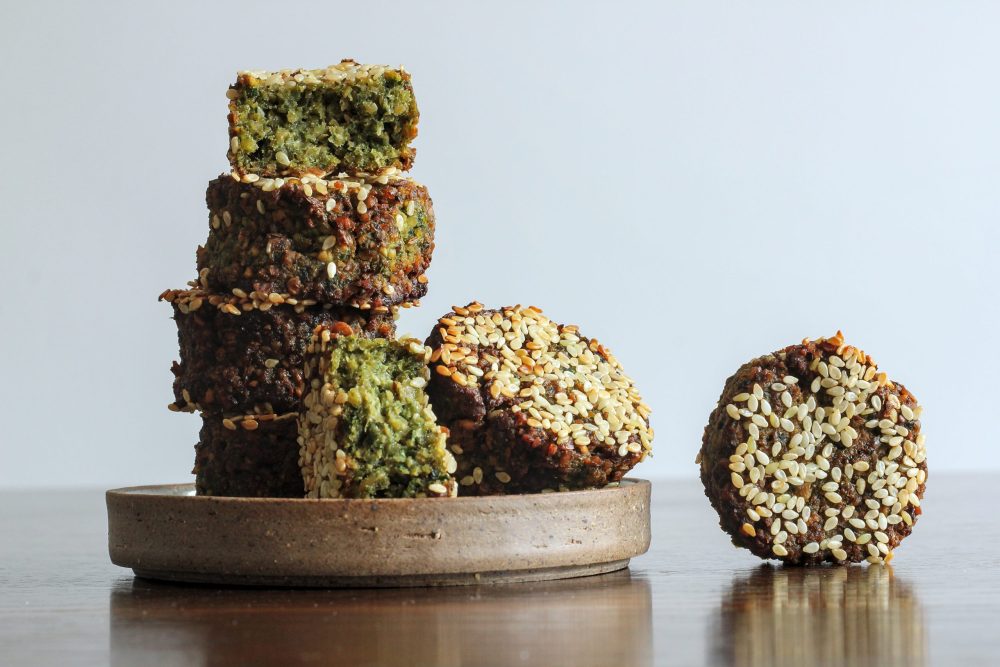
Air Fryer Falafel

I used to work at King’s College London as a postdoctoral researcher and there was this little falafel stall just around the corner which would be mine and my colleagues go to spot when we were treating ourselves to lunch out (or running back to the metabolic research unit!).

These falafel are a nod to those which I used to have more frequently than I would like to admit, but I’ve put a healthy twist on them by cooking them in the air fryer, making no deep fat frying. This helps to reduce the overall fat of the falafel, as well as using extra virgin olive oil, which is a healthy fat which probably wasn’t the oil used for frying at the stall.

Makes 24 falafel

Ingredients

  • 250g dried chickpeas, soaked for at least 8 hours in cold water
  • 1 large red onion
  • 45g flat-leaf parsley
  • 20g dill
  • 30g coriander
  • Green chillis to taste (optional)
  • 1 tbsp ground cumin
  • 1 tbsp cumin seeds
  • 1/2 tsp salt
  • 1/2 tsp bicarbonate of soda
  • 2-3 heaped tablespoons of gram flour
  • 30g sesame seeds
  • 3 tbsp extra virgin olive oil

Method

  1. Add the soaked chickpeas, onion, herbs, spices, salt and bicarbonate of soda to a blender and pulse till everything is finely chopped and combined.
  2. Mix in the gram flour to get a consistency that is still wet, but just holds together when gently pressed.
  3. Rest in the fridge for 30 minutes.
  4. Using a 2 tbsp measure, create little pucks of the mixture and gently top with sesame seeds on each of the flat sides.
  5. Place each falafel onto a non-stick baking tray (or line with baking parchment) leaving a 1cm gap between them.
  6. Brush with olive oil on the top and bake in the air fryer* for 15 minutes, flipping halfway through.
  7. Serve hot and crispy!

*option to bake in an oven set to 200°C fan for 15-20 minutes

Air Fryer Falafel

Per serving (4 falafel): 280kcal/ 12g fat/ 1.7g saturated fat/ 24g carbohydrates/ 11g fibre/ 13g protein
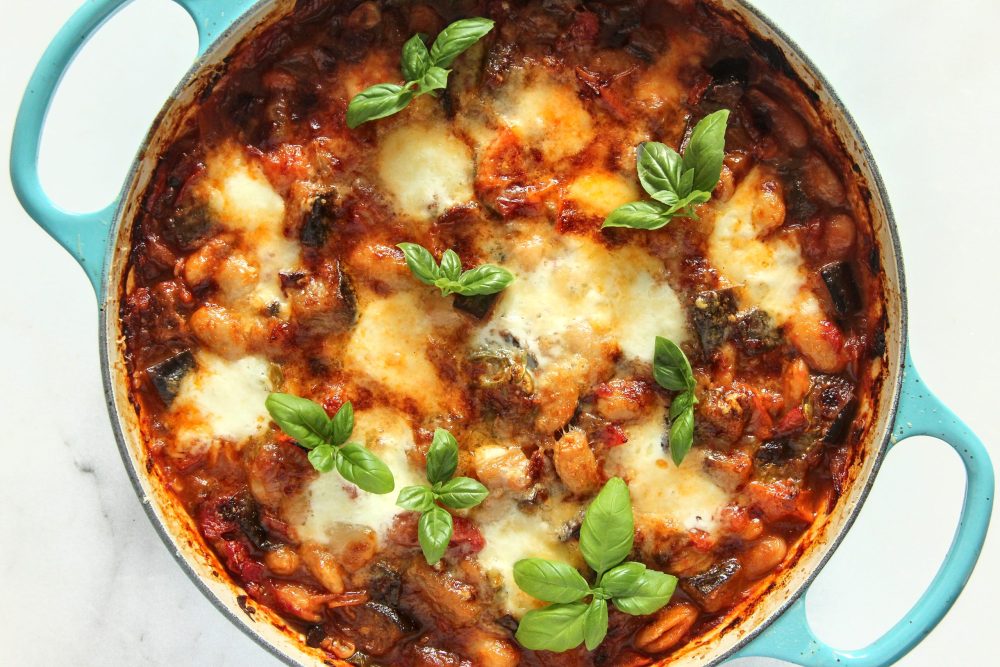
Parmigiana Beans

This whole dish could very easily be made completely in the oven, making it more hands-free.

I used Isle of Wight tomatoes and aubergines which are currently in season, and are more locally produced with fewer air miles, making them more sustainable as part of Sustainable September.

Serves 4

Ingredients

  • 2-3 red onions (300g), diced
  • 3 tbsp extra virgin olive oil
  • 2 aubergine, diced
  • 5 cloves of garlic, finely sliced
  • 1kg tomatoes, roughly chopped
  • 30g basil
  • 570g butterbeans in stock
  • 125g mozzarella
  • 50g Parmigiano Reggiano

Method

  • Preheat the oven to 180°C fan/ 200°C convection.
  • In a large ovenproof dish, cook the onions in the olive oil for 5 minutes over a medium heat before adding the aubergine. Cook for a further 5 minutes before adding the garlic*.
  • Add the tomatoes and transfer to the oven to cook for 30 minutes till the tomatoes have softened.
  • Add the beans with their stock and most of the basil, stir to combine and return to the oven, cooking for a further 10 minutes till the sauce thickens.
  • Scatter the mozzarella over the top with half the Parmigiano Reggiano and return to the oven for 10-15 minutes when the cheese has melted and is golden brown. Scatter with the remaining basil and Parmigiano before serving straight away with thick slices of bread.

*Option to do this step in the oven

Parmigiana Beans

Per serving (excluding bread): 422kcal/ 21g fat/ 8.8g saturated fat/ 28g carbohydrates/ 15g fibre/ 20g protein

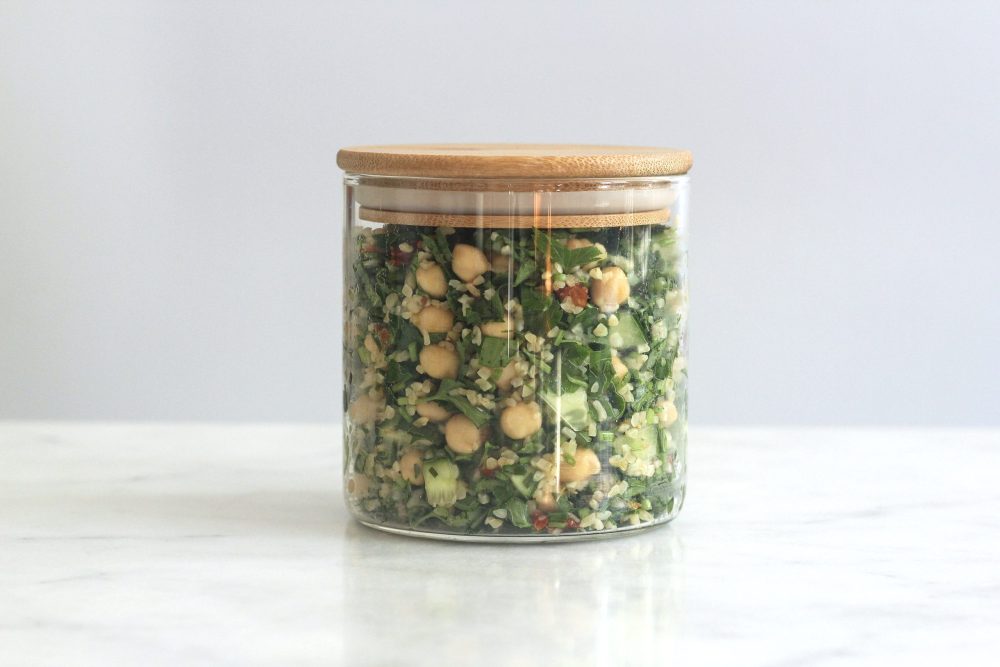
Bulgar Wheat Salad with Chickpeas

Did you know that the average Brit spends £1000 buying lunch at work over the course of the year? This cost, coupled with the single-use packaging and missed opportunity for added nutrition is why I’ve teamed up with MyNutriWeb as part of Sustainable September to help you be more sustainable when it comes to lunch. It is estimated that 28% of people look to social media to influence their lunch choices, so let me influence you with my sustainable bulgar wheat salad with chickpeas which costs less than a meal deal, is packed full of fibre, and provides 20g of plant-based protein. You can read the full blog on MyNutriWeb’s webpage.

Serves 2 but can easily be doubled up to make more lunches

  • 100g bulgar wheat
  • 20g chives, finely chopped
  • Juice of 1 lemon
  • 6 sundried tomatoes, chopped, with
  • 200g cucumber, diced
  • 100g flat-leaf parsley, chopped
  • 1 tin of chickpeas, drained (look for those with no added salt)

Method

  1. Add the bulgar wheat and chives to a large mixing bowl and pour 120ml boiling water over the top. Cover and leave to steam for 10 minutes till all the water has been absorbed.
  2. Once cooked, fluff the bulgar wheat and stir in the remaining ingredients.

Substitutions:

  • Bulgar wheat for couscous, quinoa, or orzo
  • Chives for spring onions or finely diced red onion
  • Sun-dried tomatoes for fresh, or roasted peppers, or artichokes
  • Cucumber for courgettes, or leftover roast vegetables
  • Flat leaf parsley for lettuce, rocket, watercress, spinach or any other leafy green
  • Chickpeas for any other beans e.g. butter beans, kidney beans, haricot beans
Bulgar Wheat Salad with Chickpeas

Per serving: 448kcal/ 8g fat/ 1.1g saturated fat/ 65g carbohydrates/ 18g fibre/ 20g protein

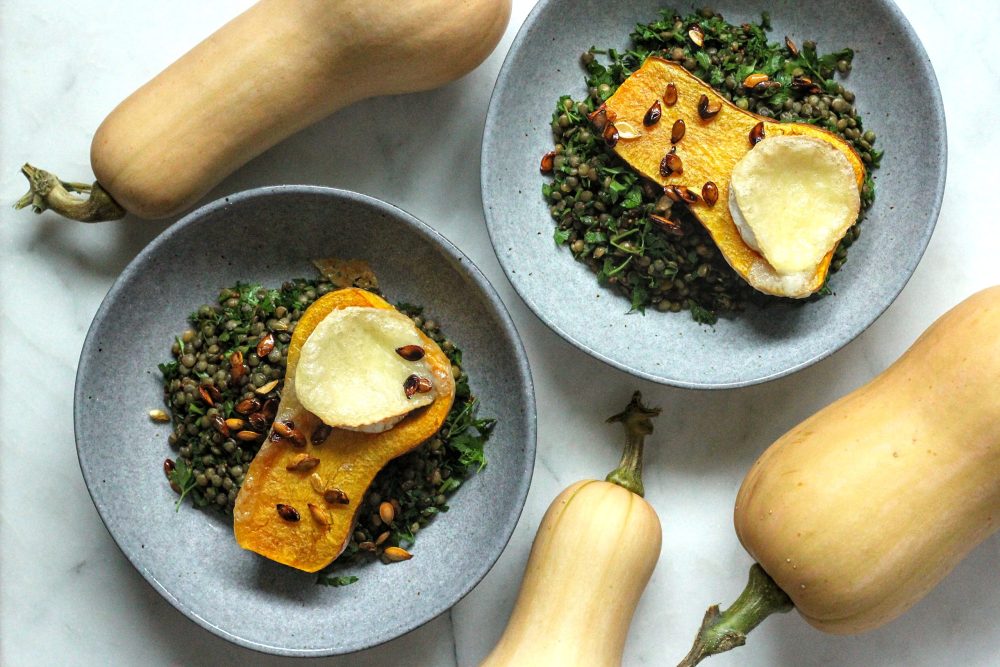
Roasted Butternut Squash and Lentil Salad

Salad means different things to different people. I refer to this as a salad, even though there is a distinct lack of green leafy vegetables as you might often think of. But trust me, this is worth adding to your repertoire!

It’s packed full of lovely ingredients that help provide a wide variety of nutrients including plenty of plant-based protein, fibre, vitamin A (in the form of beta-carotene), iron, folate and vitamin K1 to name but a few.

For those following a full plant-based diet try swapping the goat cheese for a plant-based cheese alternative, or use tofu and roast in the same way.

You also know that I love to use as much of my homegrown veg as possible. So, I’m making sure I save the seeds and roast them up as a crispy topping. It adds an extra texture dimension to the whole dish and saves edible food from going into the bin. The seeds also have slightly different nutritional properties to the flesh of the butternut squash itself, so it really is a win-win situation.

Serves 2

Ingredients

  • 1 small butternut squash, around 400g when prepared, saving the seeds
  • 2 cloves of garlic, skin on
  • 2 tbsp extra virgin olive oil
  • 100g goat cheese, sliced in half
  • 100g puy lentils
  • 1 tsp wholegrain mustard
  • 1 tbsp balsamic vinegar
  • 30g chives, finely chopped
  • 50g flat-leaf parsley, finely chopped

Method

  • Preheat the oven to 180°C fan/ 200°C convection
  • Prep the butternut squash by removing the very ends and slicing in half lengthways. Remove the seeds, but save for later. Coat the butternut squash in 1 tbsp olive oil and place on a baking tray. In a separate small ovenproof dish add the garlic and 1/2 tbsp olive oil and cover. Bake for 25 minutes.
  • Meanwhile, separate the seeds from the pulp and dry before mixing with the remaining 1/2 tbsp olive oil. Remove the roasted garlic dish and spread the seeds out over the tray, and add the goat cheese into the cavity of the butternut squash. Bake for 12-15 minutes till the seeds are crispy and the cheese has melted.
  • Meanwhile, cook the lentils by bringing them to the boil and then simmer for 12-15 minutes till soft but still with a bite.
  • Remove the garlic skins and mash the garlic into the oil with the mustard and balsamic vinegar to make a sauce. Mix into the hot lentils, and once slightly cooled mix in the herbs.
  • Serve straight away hot, or equally delicious eaten cold as leftovers the next day.
Roasted Butternut Squash and Lentil Salad

Per serving: 565kcal/ 29g fat/ 11g saturated fat/ 40g carbohydrates/ 15g fibre/ 28g protein

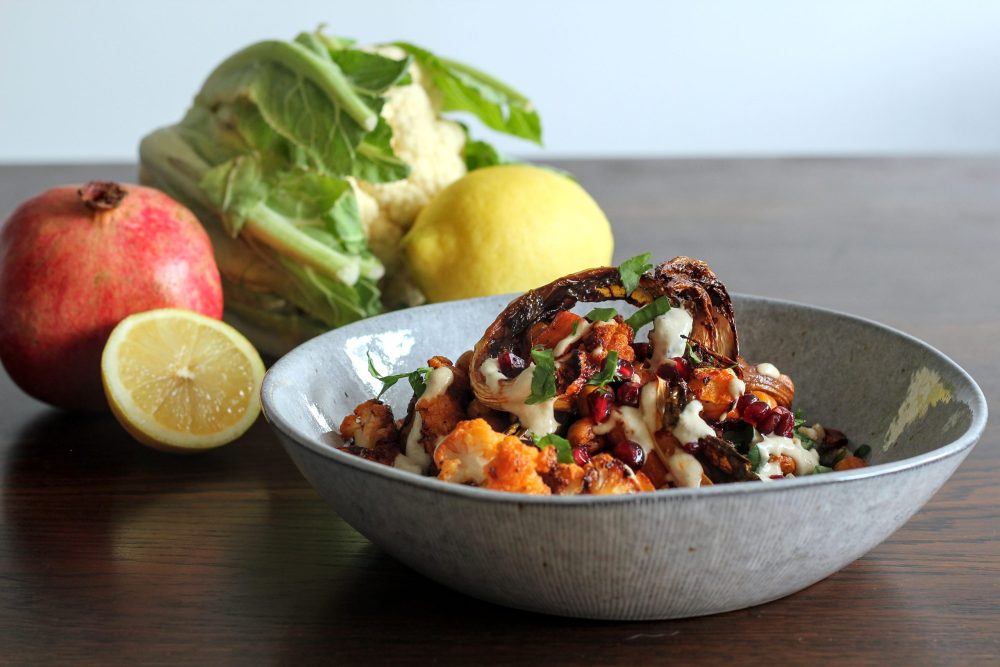
Roasted Harissa Cauliflower and Chickpea Traybake with Herbed Spelt

Using my principles of sustainable nutrition, here is a delicious recipe incorporating using more of the food we grow and reducing food waste, eating more plant-based proteins, cooking in bulk, and diversifying the foods we grow and eat. Added all together each serving of my Roasted Harissa Cauliflower and Chickpea Traybake with Herbed Spelt provides you with a whopping 19g fibre and 22g plant-based protein.

Serves 6

Ingredients

  • 1 large cauliflower head, leaves and all (1.1kg), cut up into chunks, and larger leaves sliced in half through the stem
  • 3 carrots, cut into chunks
  • 2 red onions, cut into wedges
  • 80g harissa paste
  • 2 tsp cumin seeds
  • 3 tbsp extra virgin olive oil
  • 2 tins of chickpeas, drained, rinsed and patted dry
  • 300g spelt
  • 50g flat-leaf parsley, roughly chopped
  • 30g chives, finely sliced
  • 2 tbsp tahini
  • Juice of half a lemon
  • 4 tbsp of pomegranate seeds

Method

  • Preheat the oven to 180°C fan/ 200°C convection while you prep the cauliflower, carrots and onions. Mix these veg together with the harissa paste and 2 tbsp olive oil. Spread out over 2 trays and roast for 20 minutes.
  • Mix the remaining oil and chickpeas together, and add to the trays, mixing the partially cooked veg.
  • Meanwhile, cook the spelt by bringing it to a boil in a large pan of water, and then allow to simmer for 20-30 minutes depending on the type of spelt you have. It should remain al dente in the middle. Once cooked, allow to cool slightly before adding the herbs in.
  • Make a dressing by mixing the tahini and lemon juice together. It will become thick, so thin with water to a consistency of double cream, or your preference.
  • Serve everything together, topped with the tahini dressing and sprinkle with pomegranate seeds over the top.
Harissa Roasted Cauliflower and Chickpea Bake

Per serving: 487kcal/ 10g fat/ 1.4g saturated fat/ 68g carbohydrates/ 19g fibre/ 22g protein

Can Kiwi Fruit Help With Constipation?

If I was to ask you which is the best thing to eat to help with regular bowel movements, or to help relieve constipation, most of you would probably answer with prunes. They’re a classic home remedy for helping to keep you regular thanks to their high level of sorbitol. Sorbitol is a type of dietary fibre which is able to help draw water into the lumen of the gut, and therefore can help to soften hard stools, making them easier to pass.

So how do kiwi fruits come into this then? Well, kiwi fruit have more recently been hitting the headlines for their role in constipation which could be due to a specific enzyme called actinidin. Actinidin is a digestive enzyme that breaks down proteins, improves gastric emptying and may help facilitate laxation through its stimulation of receptors in the colon. Furthermore, kiwis have a high polyphenol content, which may also confer digestive health benefits. Polyphenols can promote the growth of beneficial gut bacteria, such as bifidobacteria. And finally, kiwis have a high water holding capacity and high viscosity, which helps with fecal bulking and softening.

Recent studies have demonstrated significant results in the treatment of constipation in healthy patients with IBS-C and in patients with functional constipation [1, 2]. Researchers used MRI techniques to identify the mechanism of action behind kiwi’s laxative effect and found that the consumption of two kiwi fruit daily increased water content in the small bowel and descending colon and increased colonic bulk. These MRI data are consistent with the observation that an increase in stool frequency with looser stool consistencies are seen with the consumption of two kiwi fruit daily and suggests that kiwis can be used as a natural, diet therapy for those with mild constipation [3].

Another study explored the comparative effectiveness of three natural treatments in patients with chronic constipation. This research is among the first data addressing the effectiveness and tolerability of kiwi fruit on chronic constipation in the United States. Seventy-five adults with either functional constipation or IBS type Constipation were provided around 6g of fibre per day in the form of two green kiwi fruit, 12 prunes (100g) or 12 grams of psyllium over a four-week treatment period. All participants experienced similar proportions of spontaneous bowel movements. However, the participants given kiwi fruit reported fewer adverse effects than those reported by patients treated with the prunes and psyllium. Notably, a smaller proportion of patients were dissatisfied with the kiwi fruit compared with the prunes or psyllium [4]. In addition, a randomised cross-over study looked at the effectiveness of 5g of dietary fiber from golden kiwifruit versus 5g of dietary fiber through a fibre supplement and saw similar improvements in stool consistency, straining and discomfort [5].

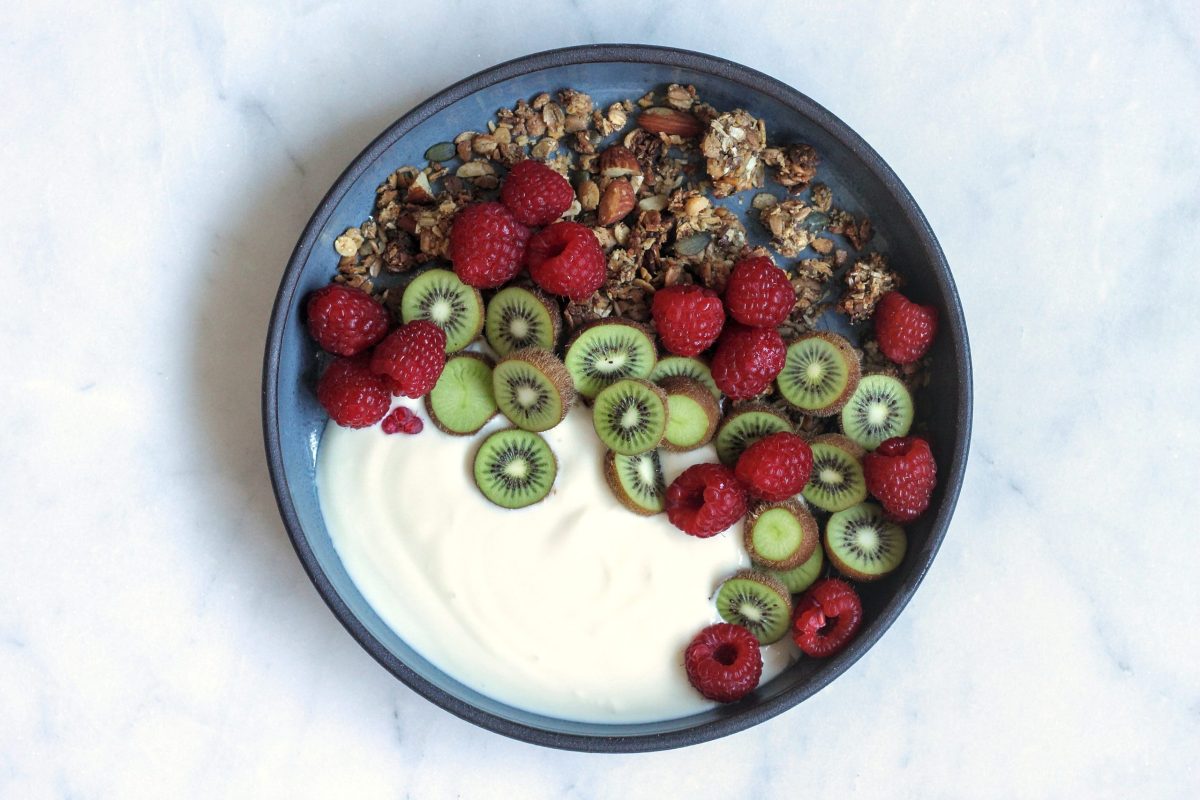
Kiwi Granola

I’ve paired my mini homegrown kiwis with no added sugar granola and some raspberries, which are another source of fibre, for the best gut-loving effect.

Chipotle Chilli Beans

Iron can be found in animal sources e.g. meat and fish (known as haem iron) or from plant sources e.g. beans, pulses, nuts and fortified product such as cereals and bread (known as non-haem).

Serves 6

Ingredient

  • 1 chipotle chilli
  • 1 tbsp extra virgin olive oil
  • 2 red onions, chopped
  • 2 sticks of celery, diced
  • 3 garlic cloves, chopped
  • 1 tsp dried oregano
  • 2 tsp smoked paprika
  • 1/2 tsp white pepper
  • 1/2 tsp salt
  • 1 tin black beans, rinsed and drained
  • 1 tin haricot beans, rinsed and drained
  • 2 bell peppers, sliced
  • 1 tin of chopped tomatoes
  • 2 tbsp tomato puree
  • 30g coriander, chopped, leaves reserved
  • 200g kale, finely sliced

To serve

  • 6 portions of cooked brown basmati rice
  • 1 avocado, sliced
  • 6 tbsp soya yoghurt
  • 30g dairy-alternative cheese
  • 1 lime, cut into 6 wedges

Method

  • Soak the chipotle chilli in 100ml boiling water for 5 minutes.
  • Meanwhile, add the olive oil, onions and celery to a large pan and cook for 5 minutes till soft. Chop the now soaked chipotle chilli and add to the pan along with the garlic and cook for a few minutes.
  • Add the dried spices, beans and peppers and cook for 1 minute before adding in the tinned tomatoes, tomato puree, chipotle soaking water and around 200ml extra water. Add the coriander stems and cook for 20 minutes.
  • In the final 5 minutes of cooking, add the kale.
  • Serve in bowls with rice, and add the optional extras of avocado, soya yoghurt, dairy-free cheese and a squeeze of lime.

Per serving: 473kcal/ 13g fat/ 2.1g saturated fat/ 64g carbohydrates/ 15g fibre/ 16g protein/ 4.1mg iron

Omega-3 Enriched Granola

Looking to increase your intake of omega-3 fatty acids when you don’t eat fish? Here’s an easy fix you can use to help increase your dietary omega-3 intake.

Makes 20 servings

Ingredients

  • 100g pitted dates
  • 30g chia seeds
  • 30g linseeds
  • 150g rolled oats
  • 50g rye flakes
  • 50g barley flakes
  • 50g spelt flakes
  • 100g chopped walnuts*
  • 30g sunflower seeds
  • 50g desiccated coconut
  • 50ml extra virgin olive oil
  • 100g sultanas
  • 100g dried cherries

Method

  • Preheat the oven to 120°C fan/ 130°C convection
  • Soak the dates in 200ml boiling water for 5 minutes, before adding the chia and linseeds and blending to a paste.
  • In a large mixing bowl add the oats, rye, barley, spelt, walnuts, sunflower seeds and coconut. Add the date paste and mix thoroughly before adding the olive oil and mixing again.
  • Spread the mixture out evenly on a baking tray. Bake for 30 minutes before turning the mixture, keeping large chunks. Bake again for 20 minutes, before flipping over again one last time, breaking up any very large chunks before baking for a final 20 minutes.
  • Allow the granola to completely cool before mixing in the dried fruit and storing in an airtight container.
Omega-3 Granola

Per 50g serving: 202kcal/ 10g fat/ 2.4g saturated fat/ 21g carbohydrates/ 4g fibre/ 4.4g protein/ 1.035g omega-3

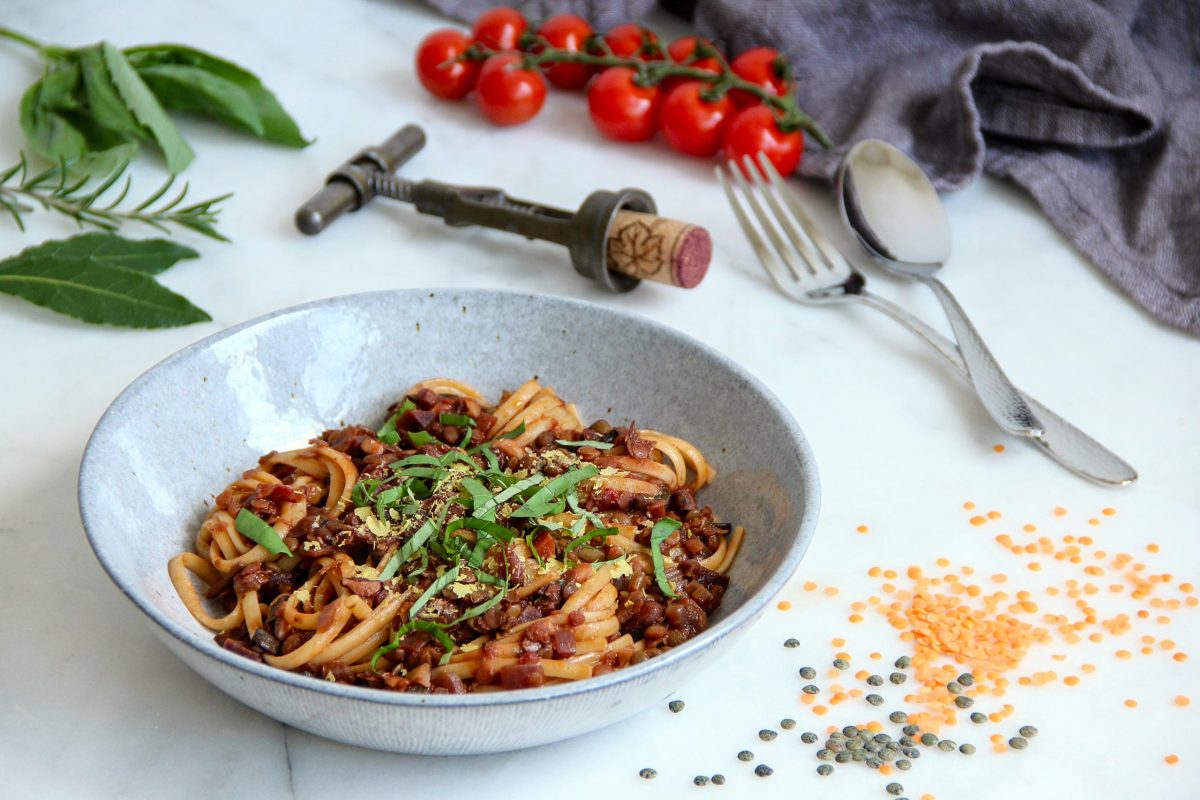
Lentil, Mushroom and Almond Ragu

A delicious meal-free ragu alternative that won’t make you wonder where the meat is!

Serves 6

Ingredients

For the ragu

  • 2 tbsp extra virgin olive oil
  • 1 large onion, diced
  • 2 sticks of celery, diced
  • 2 carrots, scrubbed and diced
  • 2 cloves of garlic, finely diced
  • 250g mushrooms, diced
  • 60g skin-on almonds, chopped
  • 100g red lentils
  • 100g puy lentils
  • 1 stock cube
  • 200ml red wine (option to replace with water)
  • 400g tinned tomatoes
  • 2 tbsp tomato puree
  • 20g dried porcini mushrooms, roughly broken
  • 3 bay leaves
  • 10 spring of thyme
  • 3 sprigs of rosemary
  • 10 sage leaves, finely chopped
  • 10 sprigs of fresh basil, stems chopped (option to save some leaves for garnish)

To serve

  • 450g spaghetti
  • Nutritional yeast (vegan) or parmesan (vegetarian)
  • Fresh basil leaves

Method

  • In a large saucepan, add the oil, onion, celery and carrot. Cook for 5 minutes without browning.
  • Add the garlic, cook for 1 minute before adding the fresh mushrooms in. Cook for 5 minutes till the mushrooms have released and reabsorbed their liquid.
  • Add all the remaining sauce ingredients along with 600ml water. Bring to the boil and then gently simmer for 45 minutes.
  • In a separate pan boil water. Cook the pasts for 2 minutes less than the packet instructions.
  • Drain the pasta and return it to the pan, reserving some of the cooking liquid.
  • Add the ragu to the pasta and stir through, adding pasta water to loosen the ragu if needed. Cook for 1 minute over a low heat.
  • Serve immediately with nutritional yeast or parmesan and fresh basil leaves over the top.

Per serving: 599kcal/ 13g fat/ 1.6g saturated fat/ 81g carbohydrates/ 13g fibre/ 26g protein

Sweet Potato and Black Bean Quesadillas

Delicious quesadillas packed full of plant-based protein from the black beans. Leave the skins on the sweet potatoes to maximise fibre content (over 17g per portion of quesadillas even before you’ve added the sides!) and reduce food waste.

Serves 3

Ingredients

  • 2-3 sweet potatoes (total 300g), cut into 1/2 inch cubes with the skin on
  • 1 tsp smoked paprika
  • 1 tsp extra virgin olive oil
  • 1 onion, diced
  • 2 garlic cloves, finely chopped
  • 1 tin of black beans, drained and rinsed
  • 1 handful of coriander, roughly chopped
  • 1 tsp dried oregano
  • 1 tsp ground white pepper
  • 100g cheese such as Cheddar cheese (I have used a lighter cheddar to keep saturated fats lower), garted
  • 3 wholemeal tortilla wraps
  • 1 tbsp extra virgin olive oil

To serve

  • Pickled onions
  • Soured cream
  • Jalapeños
  • Avocado
  • Tomato salsa

Method

  • Preheat the oven to 180°C fan.
  • Toss the sweet potato in the smoked paprika. Roast on a large baking tray for 15-20 minutes till soft. Once removed set the oven temperature to 200°C fan.
  • Meanwhile, gently fry the onion in 1tsp olive oil for 10 minutes till soft and translucent. Add the garlic and fry for a further 5 minutes.
  • In a large bowl, half mash the black beans before adding the onion mixture, sweet potatoes, oregano, white pepper and coriander. Mix together, lightly mashing the potatoes.
  • Take 1 tortilla wrap and brush with olive oil. Flip the tortilla wrap over and fill with 1/3 of the sweet potato mixture over one half of the wrap. Top with 1/3 of the cheese. Repeat with the remaining wraps and mixture.
  • Place the filled wraps onto the baking sheet used to cook the potatoes, and top with a second baking sheet.
  • Bake for 12-15 minutes till golden brown.
  • Serve cut into triangles with your choice of toppings.

Per quesadilla : 539kcal/ 18.1g fat/ 7.4g saturated fat/ 61.6g carbohydrates/ 17.5g fibre/ 24.5g protein

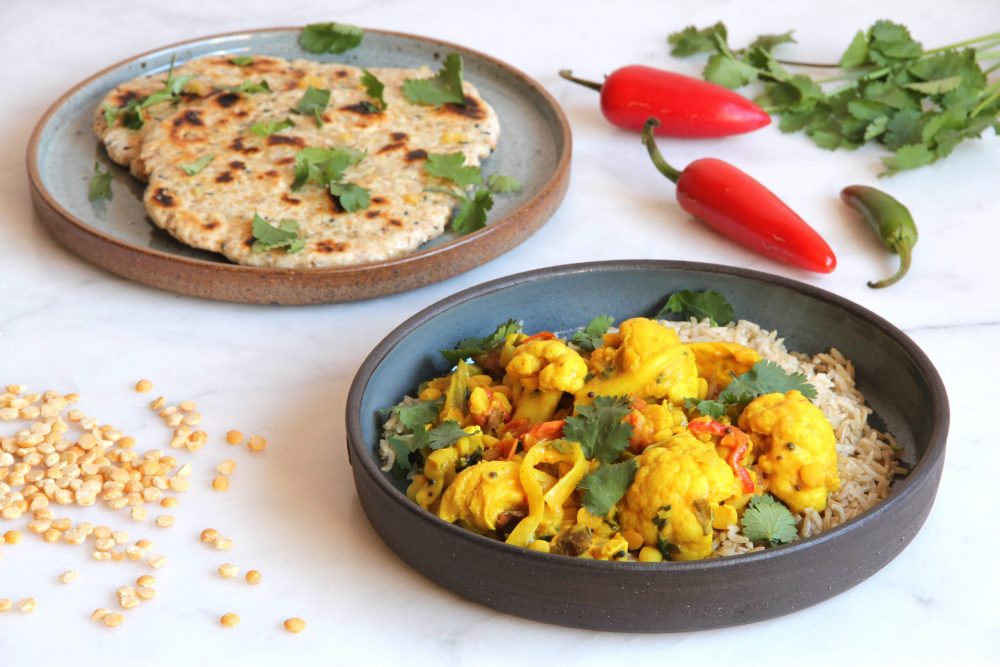
Yellow Split Pea and Cauliflower Curry

This recipe was born from a sad cauliflower and a wilted bunch of coriander left over at the end of the week which needed to be used up. It got a resounding “I rate this” from my partner as we ate leftovers the next day. Absolutely none of the cauliflower is wasted, I simply adore cauliflower leaves and for anyone who has not tried them, this is the perfect dish to utilise them.

This is a fantastic way to use up any other vegetables too. Mix and match with other cruciferous vegetables such as broccoli, Brussel sprouts or even kale, or use other vegetables such as courgette, aubergine or green beans.

Serves 6

Ingredients

  • 200g yellow split peas
  • 1 tsp mustard seeds
  • 1 tsp ground coriander
  • 2 tbsp rapeseed oil
  • 1 large or 2 small onions, sliced
  • 2″ piece of ginger, peeled and grated
  • 1 red chilli, sliced (or to taste)
  • 60g skin-on almonds, roughly chopped
  • 1 cauliflower head, cut into florets and leaves
  • 400ml coconut milk
  • 2 tsp ground turmeric
  • 200g fresh tomatoes, roughly chopped
  • 20g coriander, roughly chopped

To serve

  • Cooked rice

Method

  • Boil the split peas in plenty of water for 25 minutes, till cooked through but still firm.
  • Separately, in a large pan add the mustard seeds, ground coriander and oil over a medium heat.
  • When the mustard seeds start popping add the onion, ginger, chilli and almonds. Cook for 2-3 minutes.
  • Add the cauliflower, coconut milk, turmeric, tomatoes and half of the coriander.
  • Drain the cooked yellow split peas, reserving 50ml of cooking liquid, and to the cauliflower mix. Cook together for 5 minutes.
  • Serve with rice and the remaining coriander.

Per serving: 387kcal/ 17.3g fat/ 2.2g saturated fat/ 22.9g carbohydrates/ 16.7g fibre/ 16.8g protein

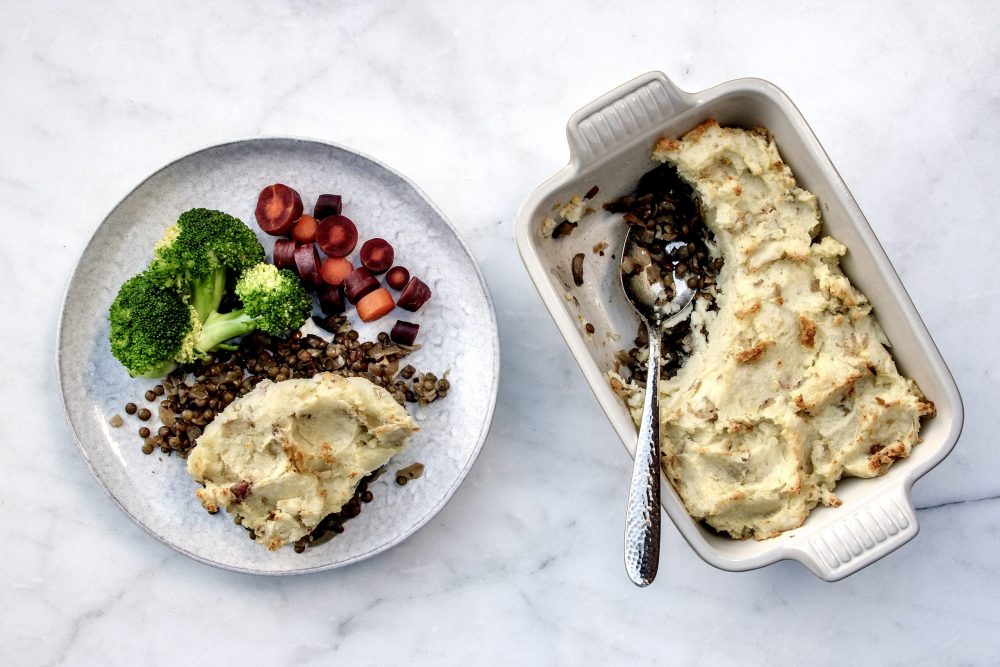
Mushroom, Lentil & Olive Oil Mash Pie

This is the recipes for those of you who already follow a vegan lifestyle. It’s also something for those who are doing Veganuary for the first time. It’s also perfect for anybody who is looking to increase their plant-based diet without necessarily being 100% vegan all the time.

This would work well with other vegetables such as leeks, celery, courgettes, or if mushrooms are not your thing use some fresh or tinned tomatoes which will cook into a tomato based sauce for the lentils to sit in.

Leaving the skin on the potatoes for the mash will make the dish quicker to prepare. You’ll also prevent any food waste as well as keep in the maximum fibre content.

Serves 2

Ingredients

  • 60g puy lentils
  • 35ml extra virgin olive oil
  • 1 large onion, finely diced
  • 1 garlic clove, finely chopped
  • 180g mushrooms, finely diced
  • 1/2 tsp vegan stock powder
  • A few sprigs of fresh thyme
  • 450g potatoes, skin left on, washed and cut into large chunks
  • 60ml soya milk

Method

  • Put the lentils into a pan and cover with plenty of cold water. Bring to the boil and then simmer for 15 minutes. Once cooked, drain the lentils reserving 2 tablespoons of cooking water.
  • Meanwhile, bring a pan of water to the boil and cook the potatoes till soft.
  • Separately, cook the onion in another pan with 10ml of olive oil over a low heat till they become soft and translucent.
  • Add the garlic and cook for 1 minute before adding the mushrooms in.
  • Add the stock powder and thyme leaves and allow to cook till the mushroom juices evaporate. Add the cooked lentils and reserved cooking liquid to the mushroom mixture.
  • Once the potatoes are cook, drain and allow to steam dry for 2 minutes. Heat the soya milk with the remaining olive oil in the pan used to cook the potatoes before adding them back in and mashing till smooth.
  • Preheat the oven to 180°C fan/ 200°C convection
  • Assemble the filling into an ovenproof dish and layer the mash over the top.
  • Bake for 25-30 minutes till the potato top turn crisp and golden brown.

Per serving: 513kcal/ 18.9g fat/ 2.9g saturated fat/ 66.6g carbohydrates/ 12.4g fibre/ 16.4g protein