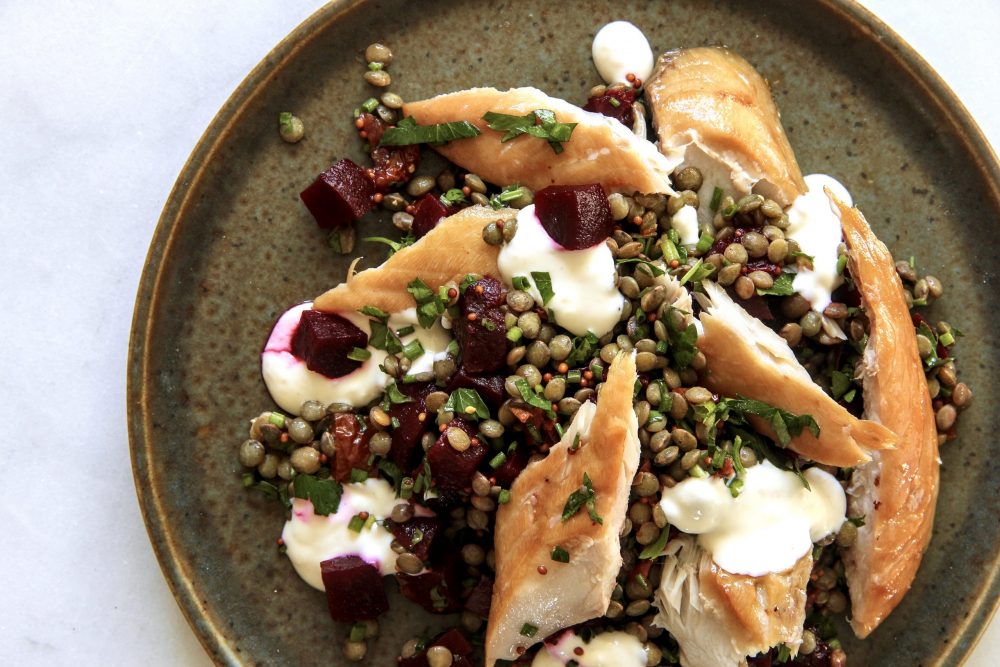
Smoked Mackerel, Lentil and Horseradish Salad

Getting oily fish in can be a challenge, and during lockdown I find it harder to get fresh fish weekly so I’ve been eating more smoked fish due to the increased shelf life. While I don’t plan on carrying this on beyond lockdown, and rather used smoked fish as a treat rather than a source of omega-3 fatty acids, for the while they have ended up as a partial staple in my lockdown diet. Here’s the lowdown on omega-3 fatty acids.

Omega-3 fatty acids area type of polyunsaturated fatty acid. These fats can’t be made in our bodies, so we rely on dietary sources instead. There are a few different forms of omega-3 fats, including eicosapentaenoic acid (EPA), docosahexaenoic acid (DHA) and alpha-linolenic acid (ALA).

Dietary sources of EPA and DHA include oily fish such as salmon, mackerel, kipper, herring, sardines and fresh tuna (but not tinned tuna); shellfish; and seaweed (but eating this more than once per week may provide too much iodine). Alternatively you can find EPA and DHA in omega-3 fortified products such as: dairy and dairy alternative products, eggs; and supplements.

ALA can be converted to EPA and DHA in our body, but this isn’t always converted in significant amounts, especially in relation to DHA, so there are less health benefits associated with consuming ALA. Dietary sources of ALA include seeds such as chia seeds, linseeds, hemp seeds (and hemp seed oil), walnuts (and walnut oil), pecans, hazelnuts; products derived from soybeans like soybean oil and tofu; rapeseed oil; green leafy vegetables and ALA supplements.

We should be aiming to eat 2 portions of fish a week, with at least 1 portion to be oily, with the upper limit set at 4 portions of oily fish per week due to pollutants being present in some fish which could build up in our bodies. Separately, women of childbearing age, pregnant or breastfeeding women should limit their intakes to two portions per week.

Using lots of store cupboard ingredients here, you could swap the fresh herbs out and use salad leaves, or use kale as an alternative vegetable. If you are really struggling to get fresh salad, or making this when you have run out of fresh foods opt for some frozen vegetables such as edamame beans or peppers. And for those who need a super quick lunch, this dish can be made in 2 minutes by using a pouch of ready-cooked lentils. Simply heat the lentils up and dress them with the herbs and spices and you’re good to go!

Serves 2

Ingredients

  • 100g puy lentils
  • 10g wholegrain mustard
  • 40g sundried tomatoes, finely chopped
  • 10g chives, chopped
  • 15g flat-leaf parsley, chopped
  • 120g pickled beetroot, finely cubed
  • 10g horseradish sauce
  • 50g reduced-fat creme fraiche
  • 2 fillets of smoked mackerel

Method

  • Place the lentils in a saucepan and cover with plenty of cold water. Bring to the boil and simmer for 12 minutes.
  • Once the lentils have cooked, drain and dress with the mustard and tomatoes whilst still hot. Allow to cool for 2 minutes before adding in the herbs.
  • Separately mix the horseradish and creme fraiche together.
  • Add the beetroot to the lentils and combine before plating up with the mackerel and horseradish sauce.

Per serving: 487kcal/ 28.6g fat/ 8.5g saturated fat/ 23.0g carbohydrates/ 12.9g fibre/ 28.2g protein
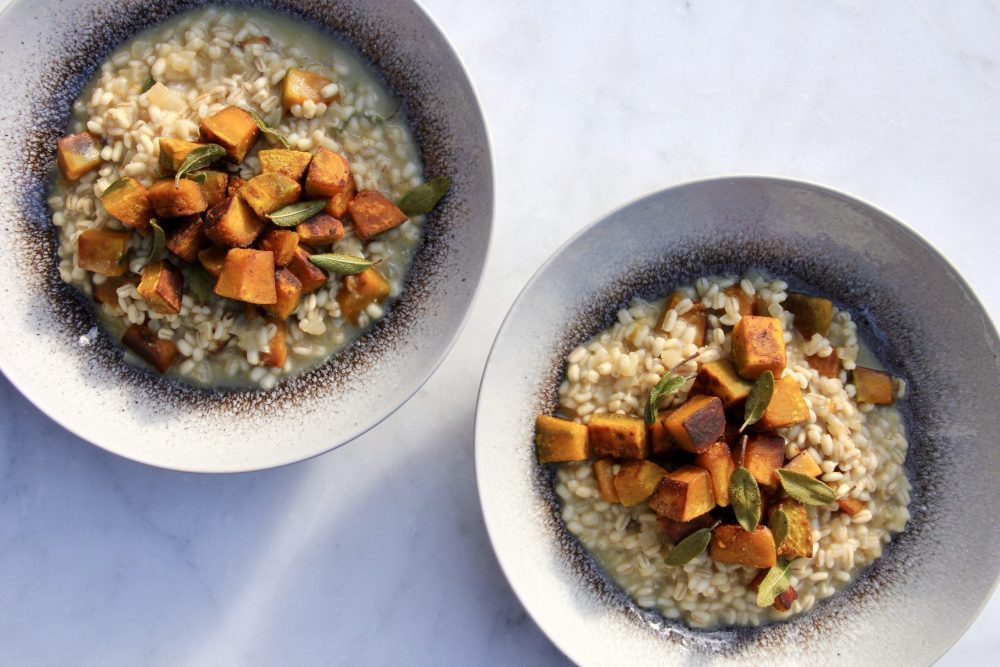
Pumpkin and Sage Pearl Barley Risotto

All the autumn flavours in this alternative risotto using pumpkin and sage. Technically, I am using a squash, Crown Price squash to be precise, but any pumpkin or firm squash will work in its place.

While I am always a fan of leaving skins of fruits and vegetables for the increased fibre and reduced time for cooking, I have removed the skin from this particular pumpkin as it is quite tough and would certainly draw attention away from the dish itself. If I were to replace the pumpkin with butternut squash I would leave the skin on. This can be done to your own personal preference.

Speaking of fibre, swapping traditional risotto rice for quick-cook pearl barley not only saves you time of cooking and stirring for a traditional risotto, but it also increases the fibre content of the dish. Replacing the pearl barley with white risotto rice would reduce the fibre content down by 4g per serving! That’s almost half the total fibre content of the dish. Pearl barley also stays a bit more al dente, which means the overall dish has a lovely firm bite which I particularly enjoy.

If you need to adapt to a dairy free version, substitute the butter for olive oil, and either omit the cheese or use a dairy-free alternative or you can use nutritional yeast for a slight cheesy flavour.

Serves 2

Ingredients

  • 1 large onion, finely diced
  • 15ml extra virgin olive oil
  • 2 garlic cloves, crushed and chopped
  • 100g quick cook pearl barley
  • 175ml dry white wine (optional to replace with water)
  • 10g stock powder
  • 20g parmesan
  • 250g pumpkin, skin peeled and cut into 1cm cubes
  • 5ml extra virgin olive oil
  • 20g butter
  • 10 large sage leaves (or 20 small leaves)

Method

  • Gently fry the onion with 15ml olive oil over a low heat till transluscent and soft. Add the garlic and cook for a further 2 minutes.
  • Bring 350ml water up to the boil in a saucepan and add the stock, keep on a low heat.
  • Add the pearl barley to the onions and toast for 2 minutes. Add the white wine and stir to help release some of the starch.
  • Take a separate large frying pan and add 5ml oil and 15g butter. Once the butter has melted add the pumpkin. Allow to brown slowly over a medium heat, stirring frequently.
  • When the wine is almost absorbed add a ladleful of hot stock, and repeat till almost all the stock has been absorbed. Check the pearly barley is cooked, but still with some bite. This should take 10-12 minutes.
  • Once the risotto is almost cooked, move the pumpkin to one side of the pan, add the remaining 5g of butter to the now clear side and fry the sage leaves for 2 minute till crisp and fragrant.
  • Remove the risotto from the heat and add half of the sage and pumpkin to the risotto with the parmesan and stir through.
  • Dish up and serve with the remaining pumpkin and sage over the top.

Per serving: 549kcal/ 22.1g fat/ 9.0g saturated fat/ 54.5g carbohydrates/ 8.5g fibre/ 12.9g protein

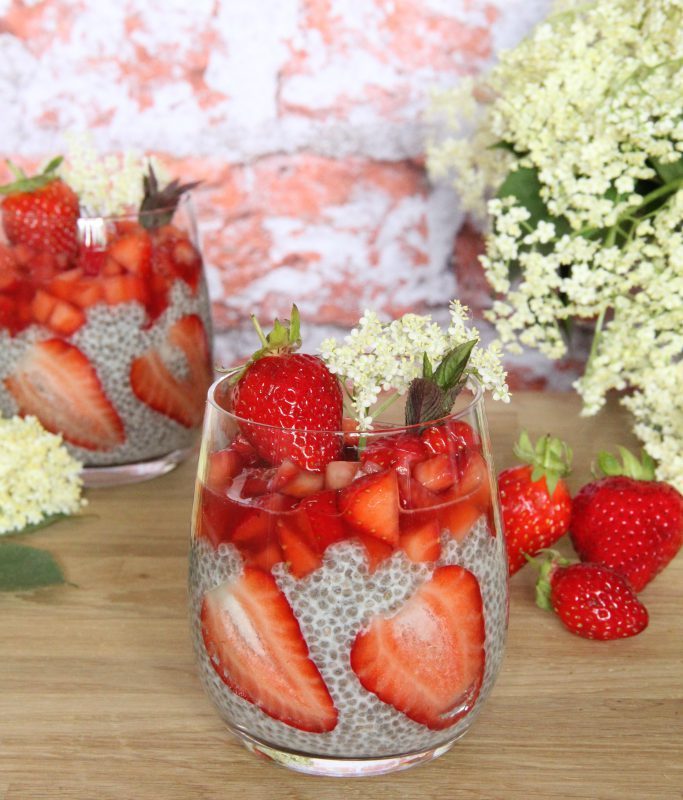
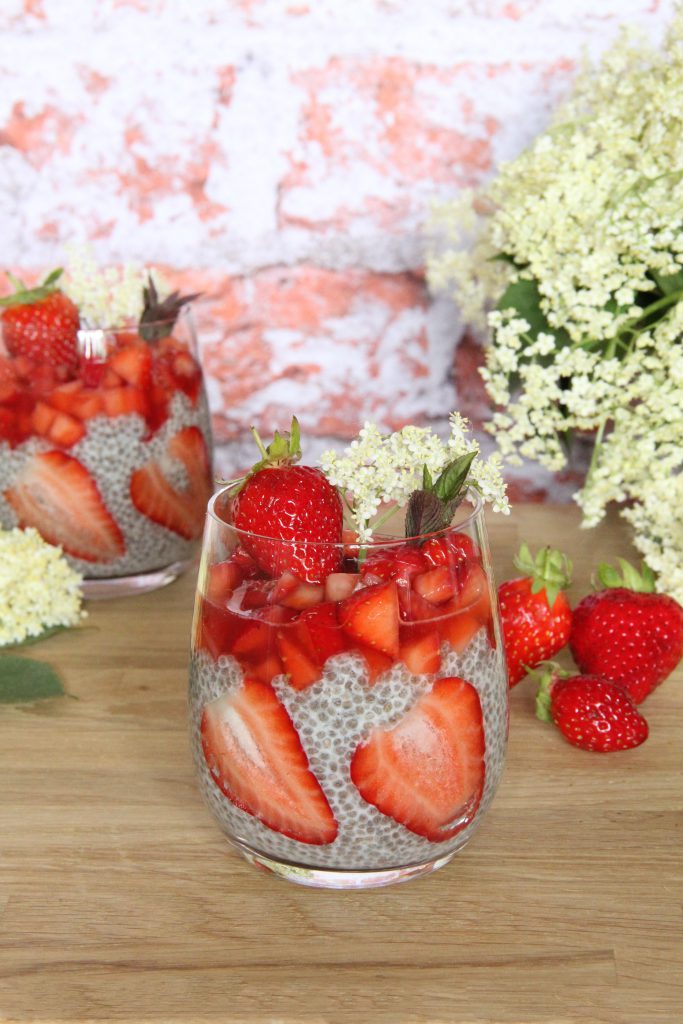
Coconut, Elderflower and Strawberry Chia Pudding

A super easy pudding which tastes so creamy yet so light and tasty. Using seasonal summer flavours, you can adapt this recipe to whatever is in season. If you don’t drink alcohol, try making it using cordial alone.

I very lightly fermented my coconut milk in my kefir grains at room temperature for 4 hours. This gives a very mild probiotic kick to the pudding, but if you don’t have your own kefir grains, or follow a vegan diet, you can just use the milk as it is.

I also keep the strawberry hulls on the whole strawberries for decoration. When I remove strawberry hulls for aesthetics, I either give the chickens a treat, or keep them in the freezer to later add to smoothies for an extra fibre diversity kick!

Serves 2

Ingredients

  • 40g chia seeds
  • 240ml coconut milk or any other milk of choice
  • 2 tbsp elderflower cordial
  • 240g strawberries plus extra for decoration
  • 2 tbsp elderflower liquor

Method

  • Mix the chia seeds, coconut milk and elderflower cordial together and leave to set in the fridge for 45 minutes.
  • Meanwhile, finely dice the strawberries and mix with the elderflower liquor.
  • Layer the chia seed mix into two glasses, layer the marinated strawberries over the top and garnish with whole strawberries, hulls and all!
Coconut, Strawberry and Elderflower Chia Pudding

Per serving: 228kcal/ 7.7g fat/ 2.4g saturated fat/ 29.9g carbohydrates/ 8.9g fibre/ 5.2g protein
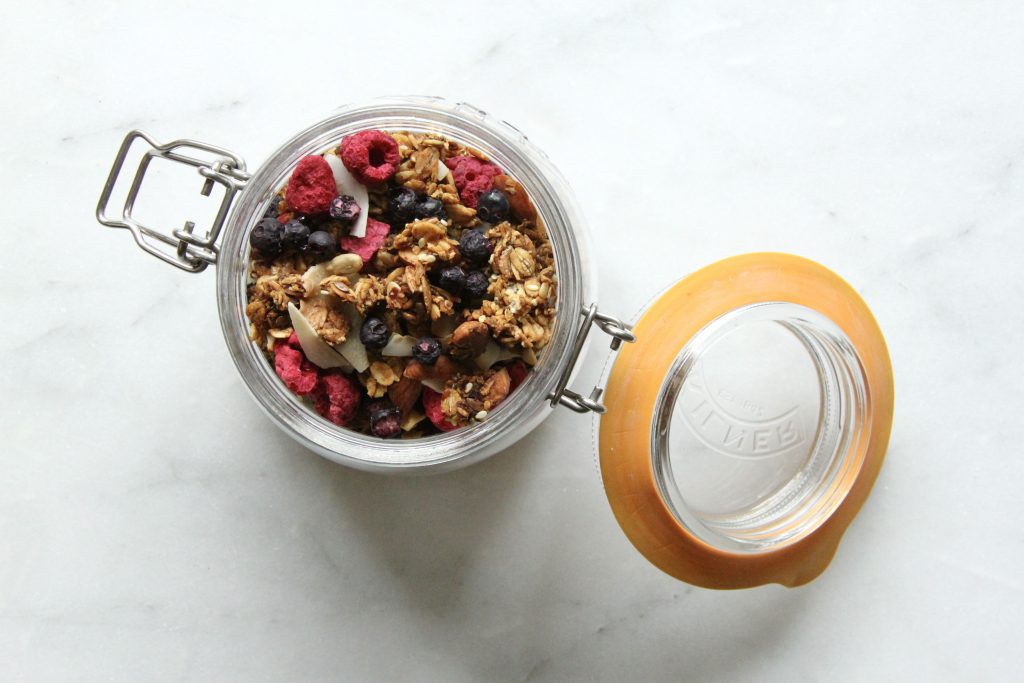
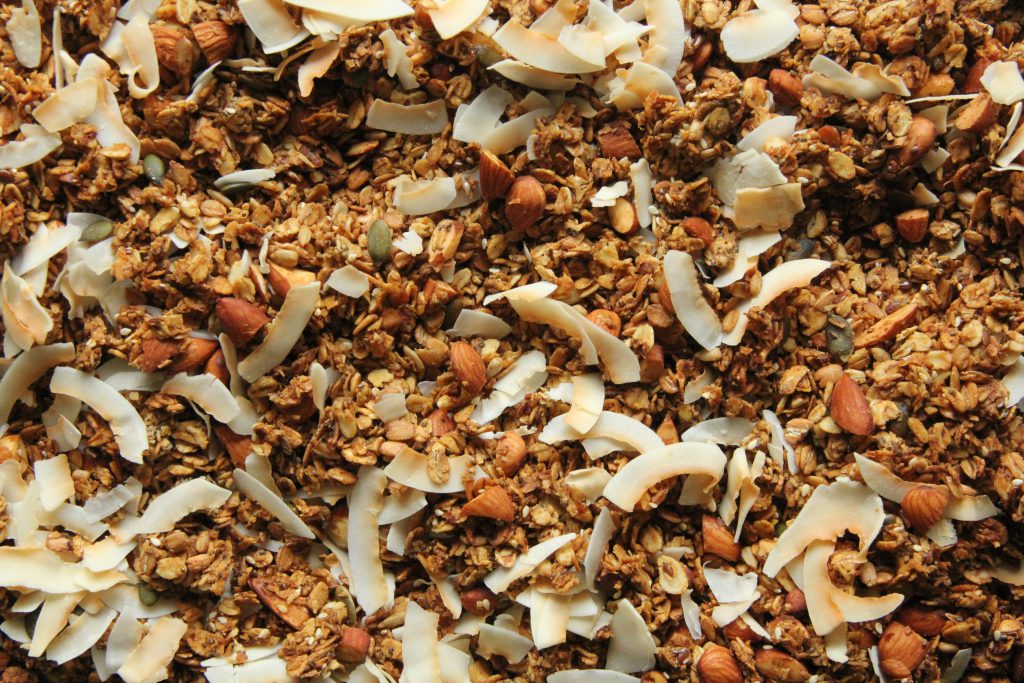
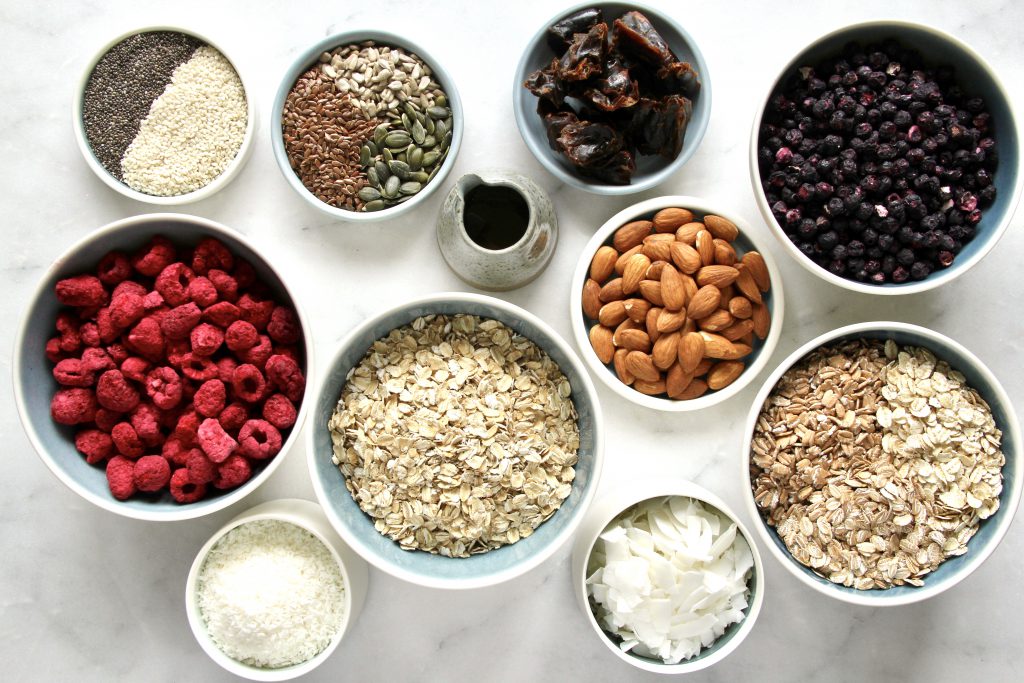
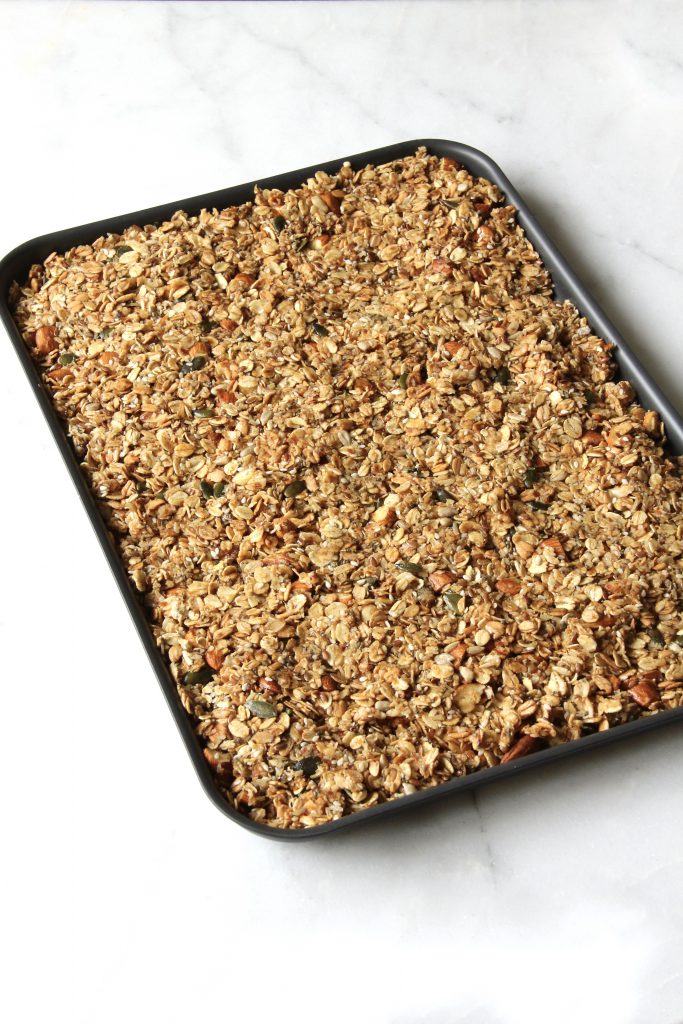
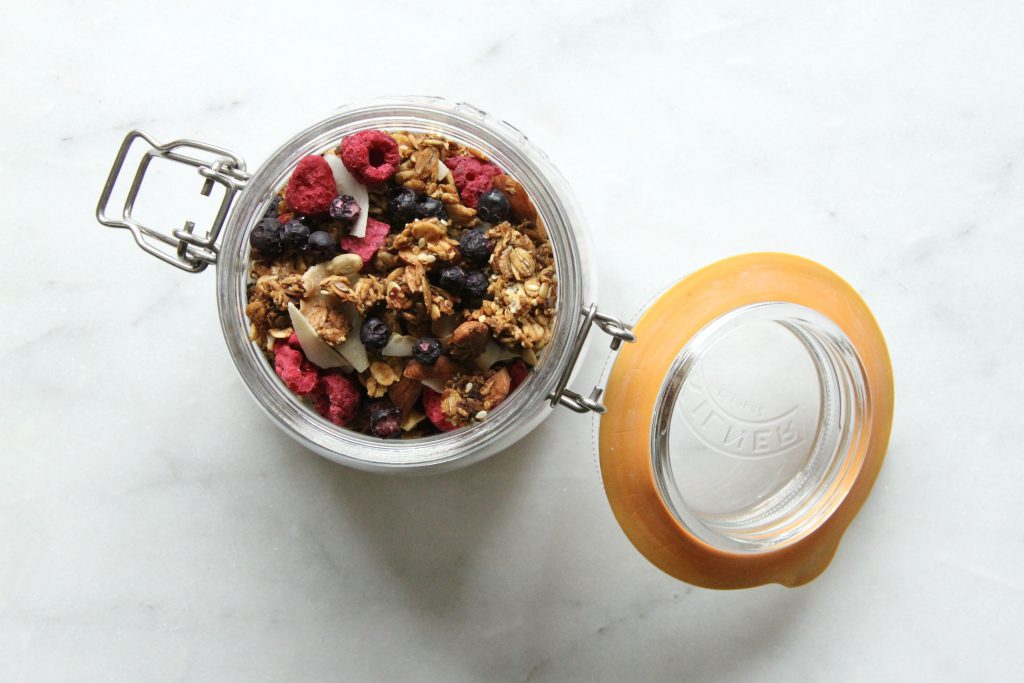
No Added Sugar Berry and Coconut Granola

Granola doesn’t last long in my house. Whenever I make a tray, it will be gone within a few days. Seriously. It’s such a delicious way to get a variety of plant-based foods into the diet. In fact, the below recipe contains 15 plant-based foods, that’s half of your weekly recommended target. So this granola is really a winner!

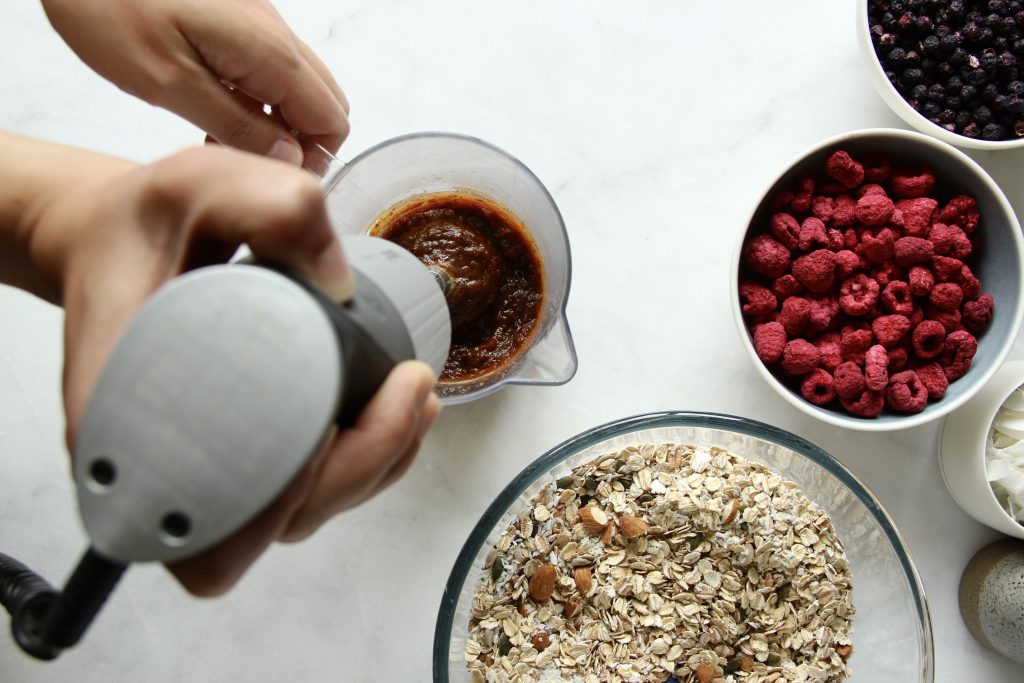
In addition, each portion of granola contains 5.7g fibre. It also had another bonus of no added sugar. Instead, I used dates and blend them with hot water to create a sweet puree which helps the clusters form together. This also means it’s not overly sweet and feels much lighter than other generic granolas.

Using a variety of different cereal flakes also helps increase diversity; these are widely available at your local supermarket or health food shop. I’ve used jumbo oats with some rye, spelt and barley flakes which help increase the fibre content as well as the diversity of my weekly plant food intakes.

I’ve have used freeze-dried fruits in this granola. This means that they have been dried under cold conditions which are thought to help maximise the retention of heat-sensitive nutrients such as vitamin C, some B vitamins as well as phytochemicals and antioxidants. If you don’t have these to hand you can use other dried fruits such as raisins or apricots, or try adding some dehydrated vegetables for an extra fibre kick.

Makes 15 servings

Ingredients

  • 100g pitted dates
  • 150g oats
  • 50g rye flakes
  • 50g barley flakes
  • 50g spelt flakes
  • 50g desiccated coconut
  • 75g mixed seeds (chia, pumpkin, sunflower, sesame, and linseed)
  • 80g almonds, roughly chopped
  • 50ml Extra Virgin Olive Oil (EVOO)
  • 40g coconut chips
  • 35g freeze-dried raspberries
  • 35g freeze-dried blueberries

Method

  • Preheat the oven to 120°C Fan/130°C convection or Gas Mark 1/2.
  • Pour 150ml boiling water onto the dates and allow them to soak.
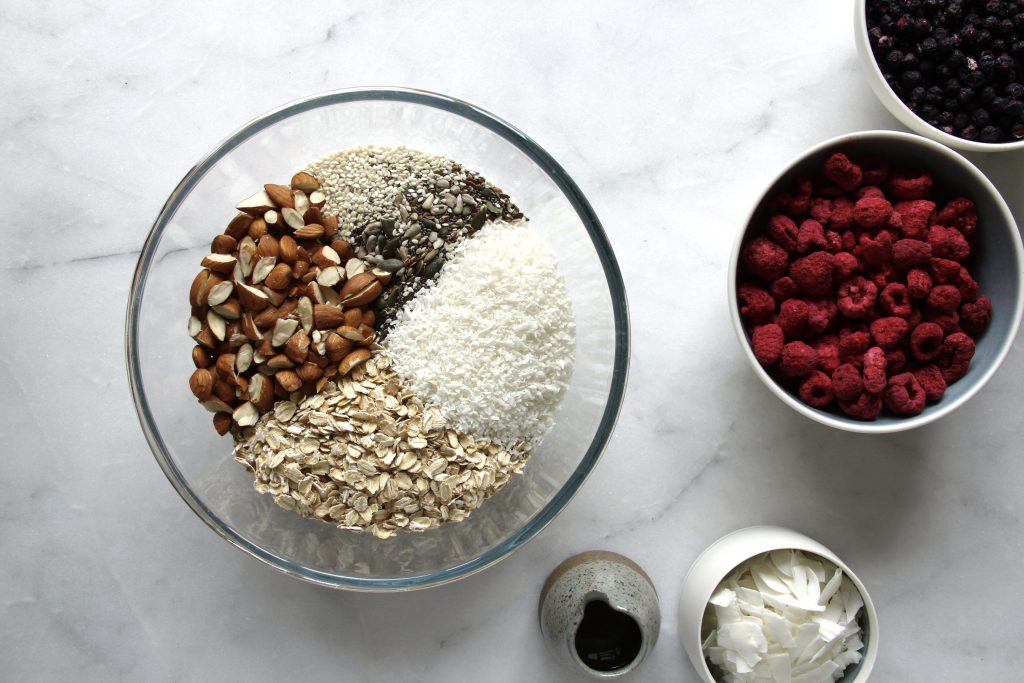
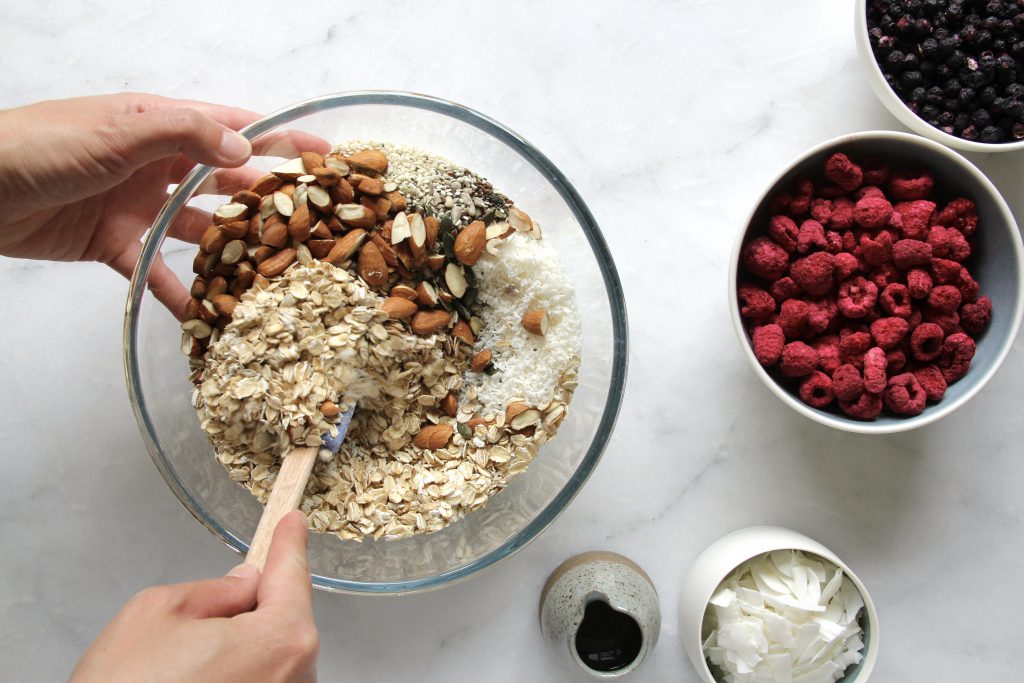
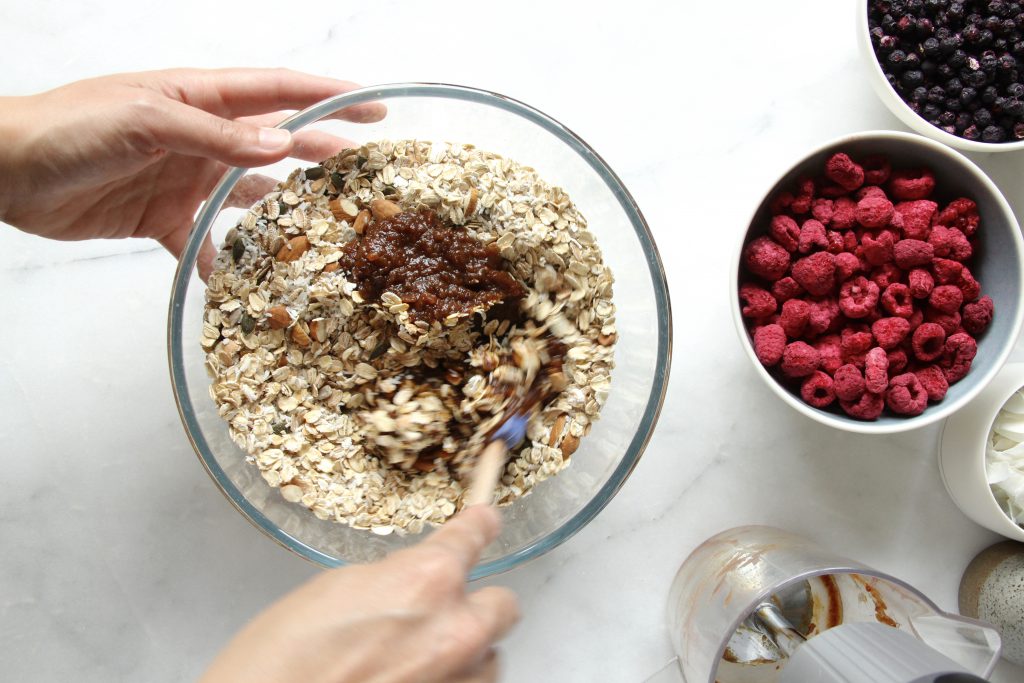
  • Meanwhile, mix all the oats, flakes, desiccated coconut, seeds, and nuts in a bowl.
  • Using a hand blender or a food processor, blend the dates in the water to a puree. Empty into the dry ingredients and mix.
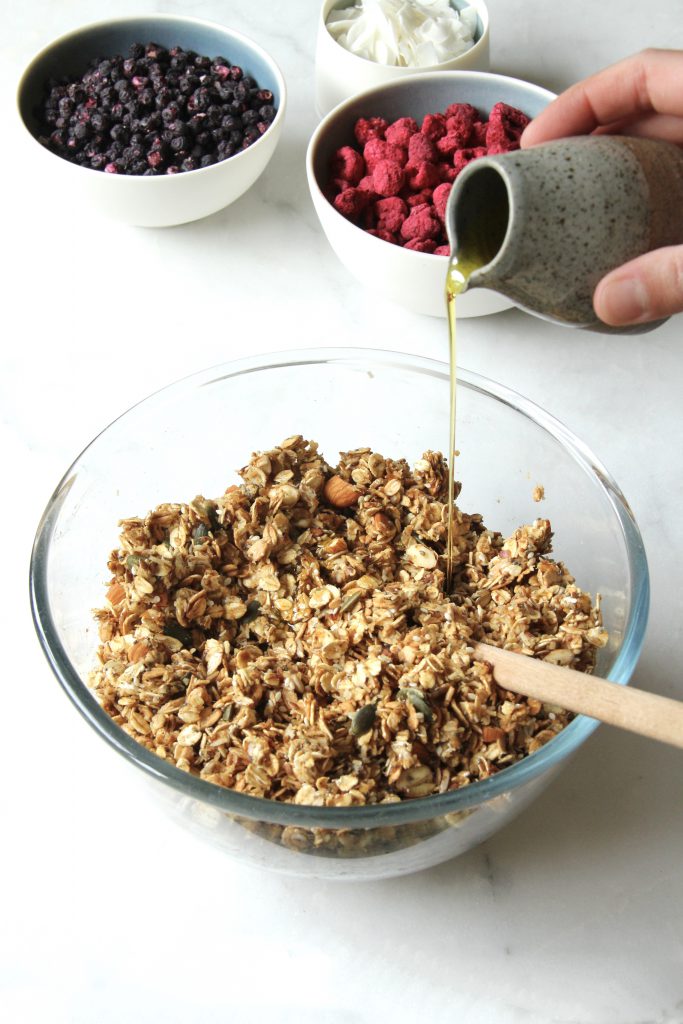
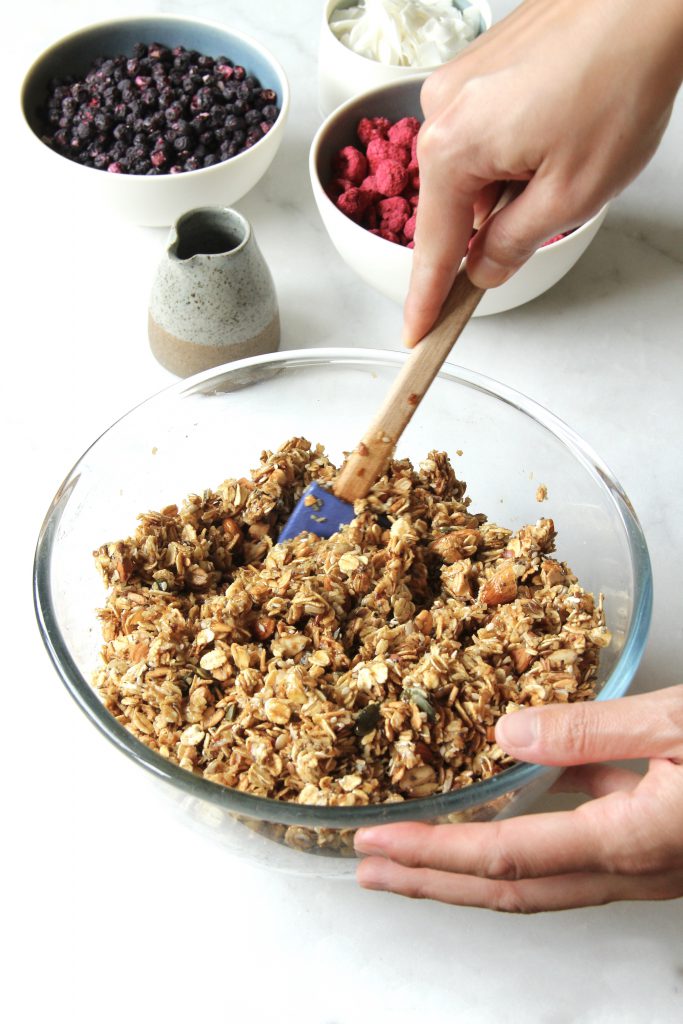
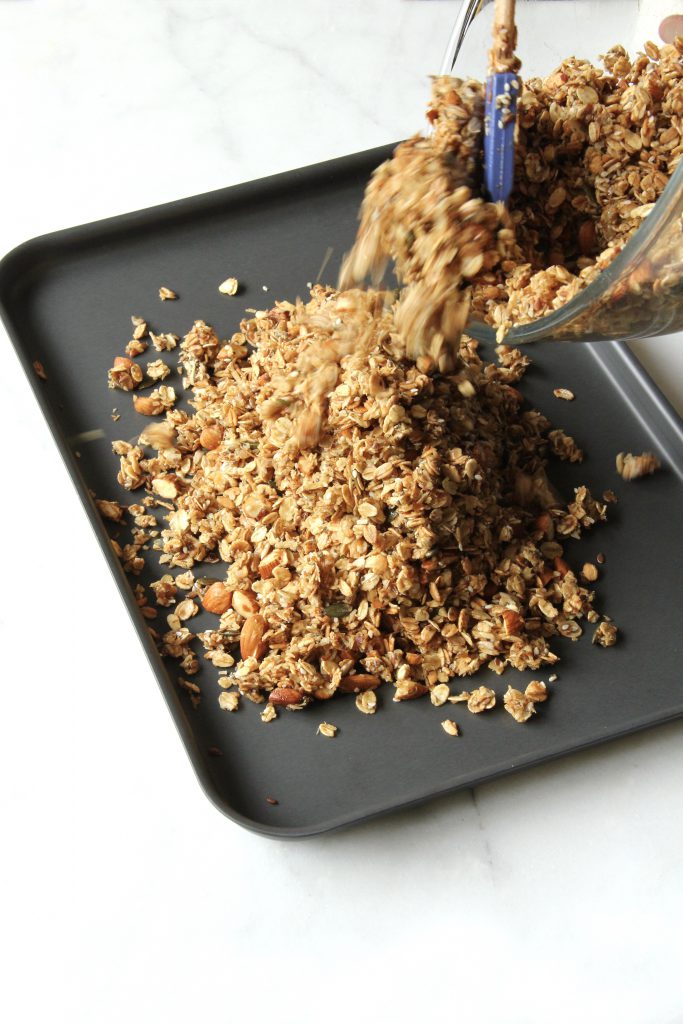
  • Add the EVOO and mix together. Pour onto a large baking tray and, using the back of a spoon, press the granola down to form clumps.
  • Cook in the oven for 90 minutes in total, gently turning the granola at 30, 50, and 70 minutes.
  • At 70 minutes add the coconut flakes to the mixture before cooking for the final 20 minutes.
  • Remove from the oven and allow to cool fully before adding in the freeze-dried raspberries and blueberries and storing in an airtight container.

Per 50g serving: 206kcal/ 7.8g fat/ 4.4g saturated fat/ 21.3g carbohydrates/ 5.7g fibre/ 5.7g protein
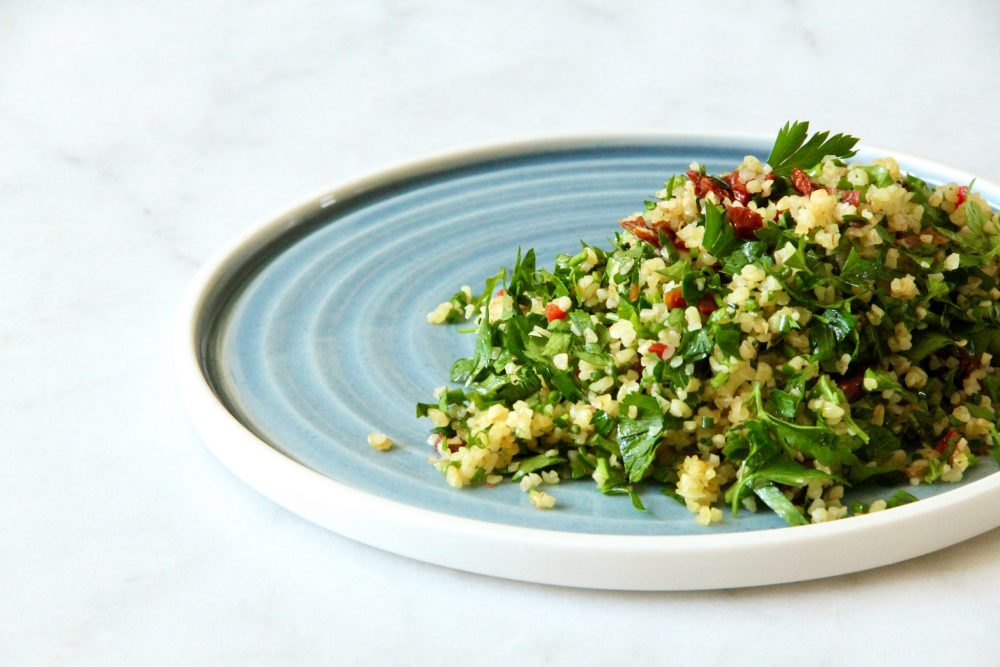
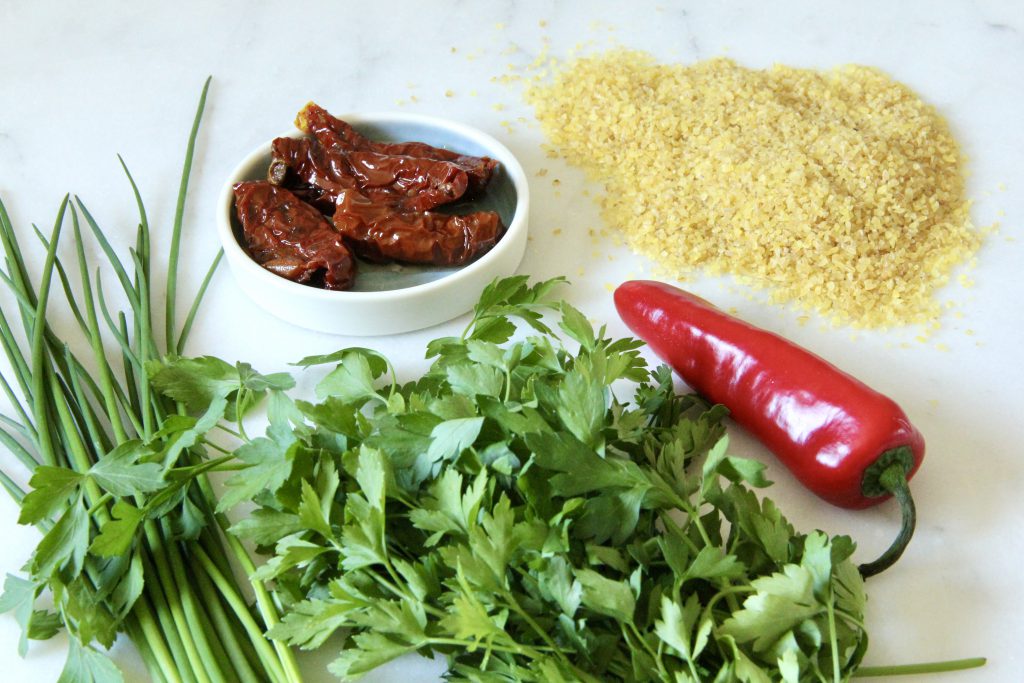
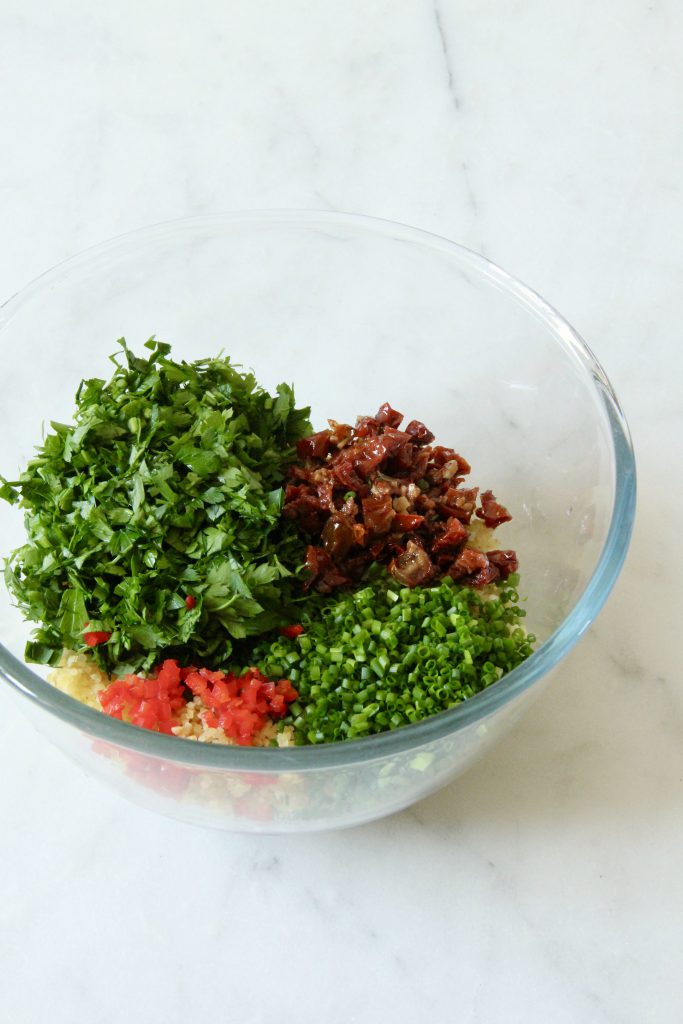
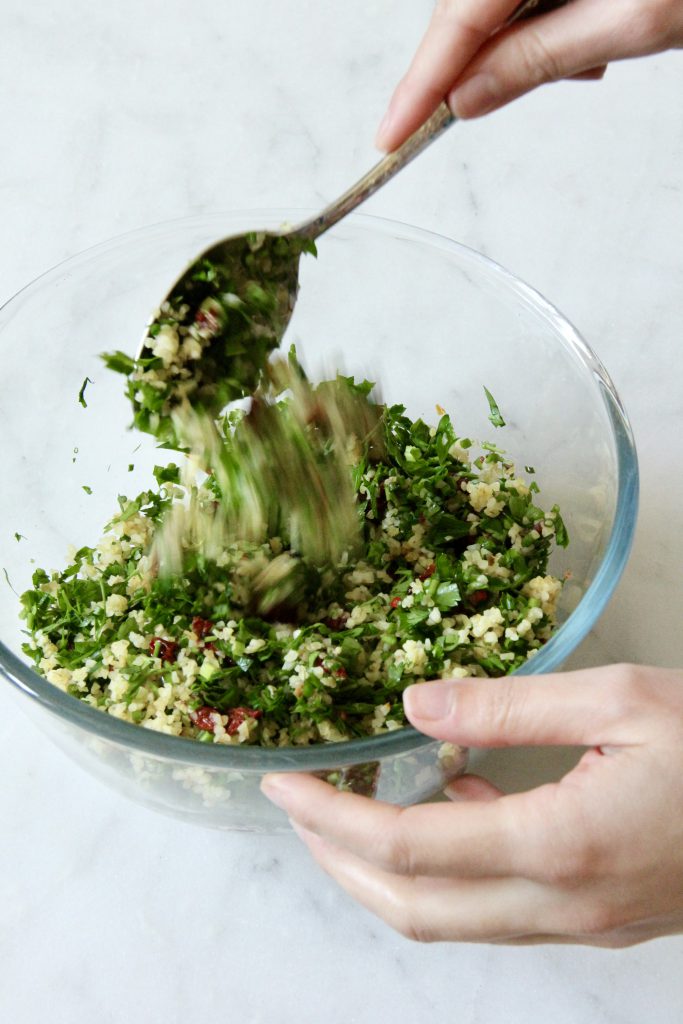
Sundried Tomato and Herb Bulgar Wheat

This is a staple in my house. I almost always have the store cupboard goods, and I grow chives in the garden so have them for most of the year, so all I really need to make sure I have bought is flat leaf parsley. And if you don’t have flat leaf parsley, you can substitute any green leaves in place, such as lettuce, rocket or even spinach.

I frequently have this as an easy lunch. I prepare it in a big batch and it will last 4 days in the fridge easily. Then I serve with with some salad vegetables, such as tomatoes, cucumber and avocado, and a source of protein. Usually I’d opt for tinned beans or cheeses such as goat’s cheese or halloumi, but fish, even tinned fish, also work well as do left over cuts of cold meat.

Ingredients

  • 100g bulgar wheat
  • 10g stock powder
  • 15g chives, finely chopped
  • 30g flat leaf parsley, finely chopped
  • 35g sun-dried tomatoes, finely sliced
  • Chilli, to taste, finely chopped

Method

  • Bring 120ml water to the boil. Add the stock powder and bulgar wheat, remove from the heat and cover. Leave to cook for 5-8 minutes.
  • Once cooked, fluff with a fork and add all the remaining ingredients.

Per serving: 144kcal/ 1.4g fat/ 0.4g saturated fat/ 27.8g carbohydrates/ 8.9g fibre/ 7.0g protein
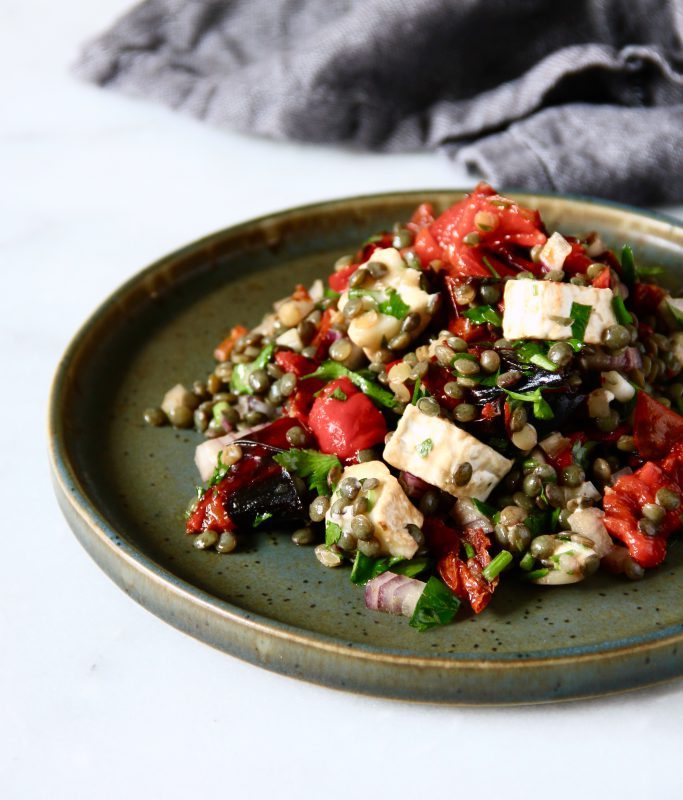
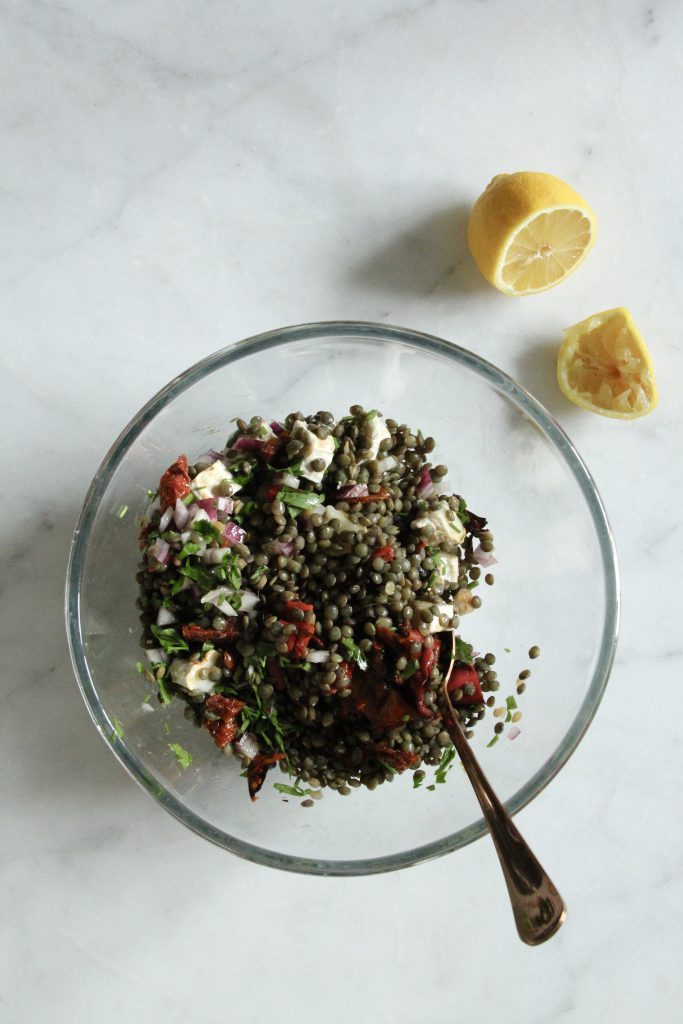
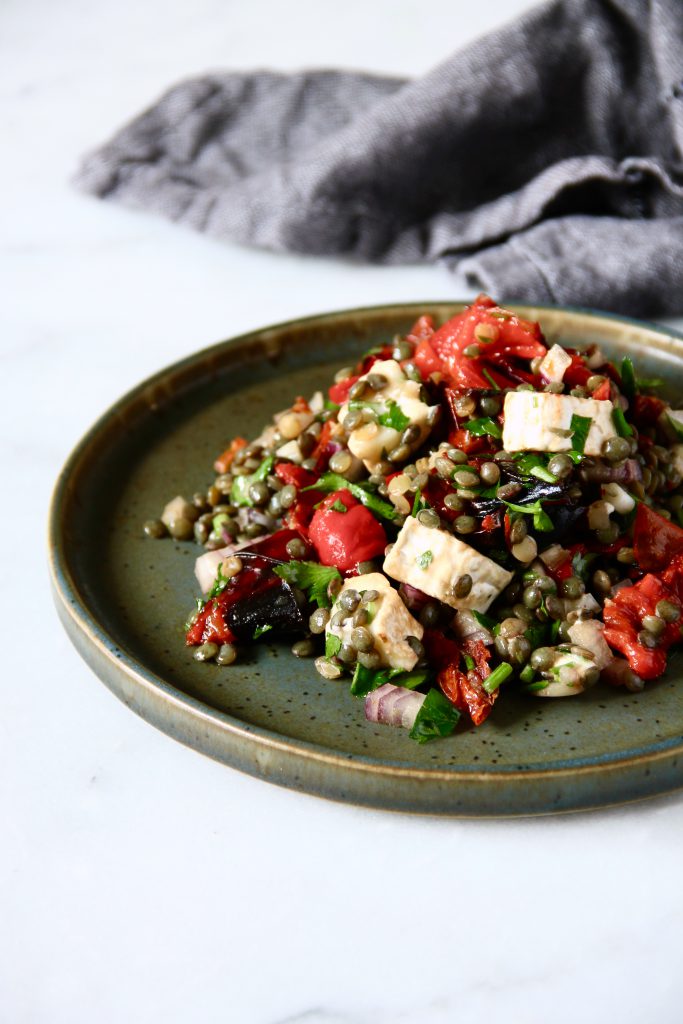
Red Pepper and Goat’s Cheese Salad

This recipe is adapted from the Meat Free Monday cookbook. I don’t think I could have assembled the ingredients any better than them, so, as they saying goes, if it ain’t broke, don’t fix it.

I do however alter the methods used. In the cookbook, they peel the peppers once cooked. You could do this if you wanted, but I leave the skins on as this add flavour, texture, fibre and also reduces the hands on time for making this dish. Win win.

I love using lentils in my salads. Not only are the a cheap cupboard food, they are packed full of plant-based protein and high in fibre. So much so, they are the biggest contributor of fibre to this dish which packs a whopping 14.6g per portion – that’s nearly half you daily target just in a single dish.
Serves 2

Recipe

  • 2 red peppers
  • 100g puy lentils
  • 60g goat’s cheese
  • 1 small red onion, finely diced
  • 3-4 sun-dried tomatoes
  • 1 bunch flat leaf parsley
  • 2 tsp olive oil
  • 2tsp balsamic vinegar
  • Juice of half a lemon

Method

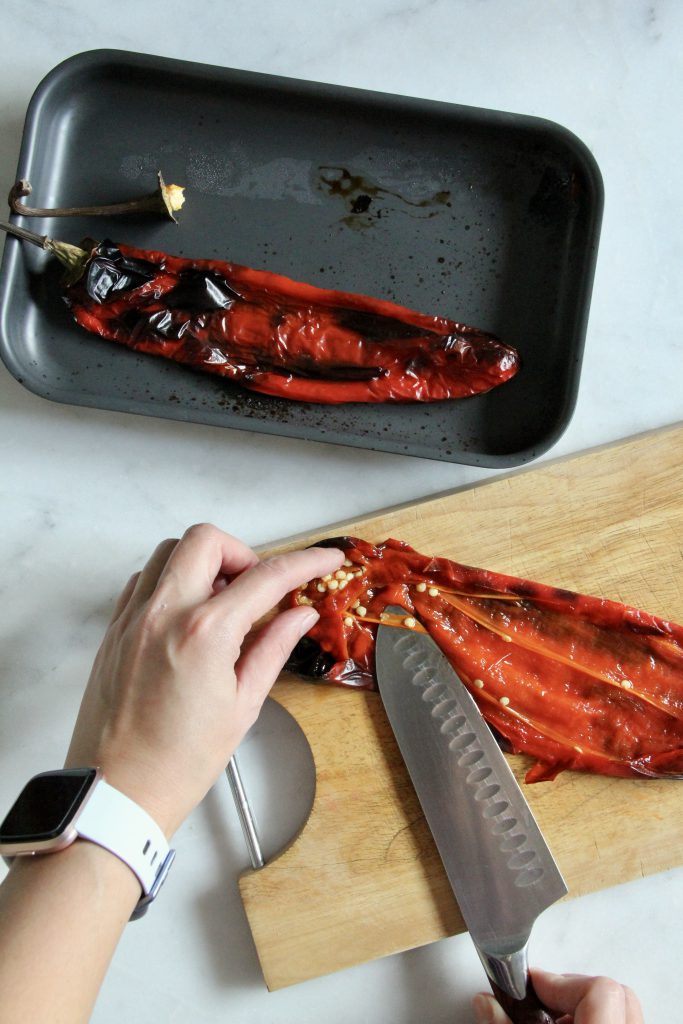
  • Preheat the oven to 200°C/ 180°C fan/ gas mark 6. Place the peppers on a tray and roast for 30 minutes till blistered. Allow to cool.
  • Meanwhile, wash the lentils and cover with cold water. Bring up to the boil for 10 minutes, and the allow to gently simmer for 15-20 minutes till just firm in the centre. Drain.
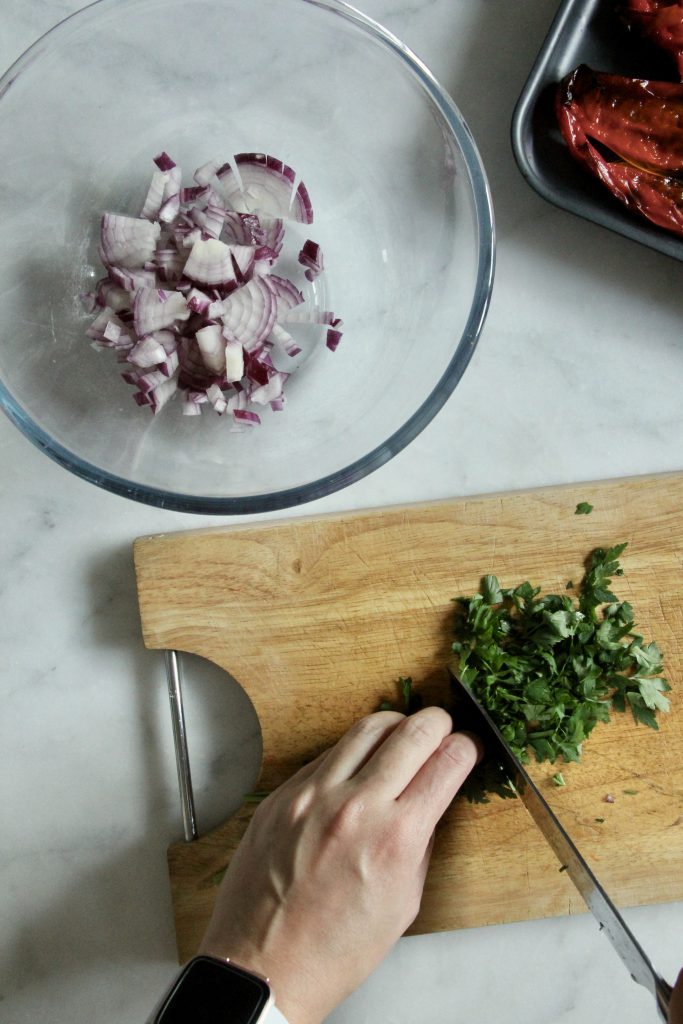
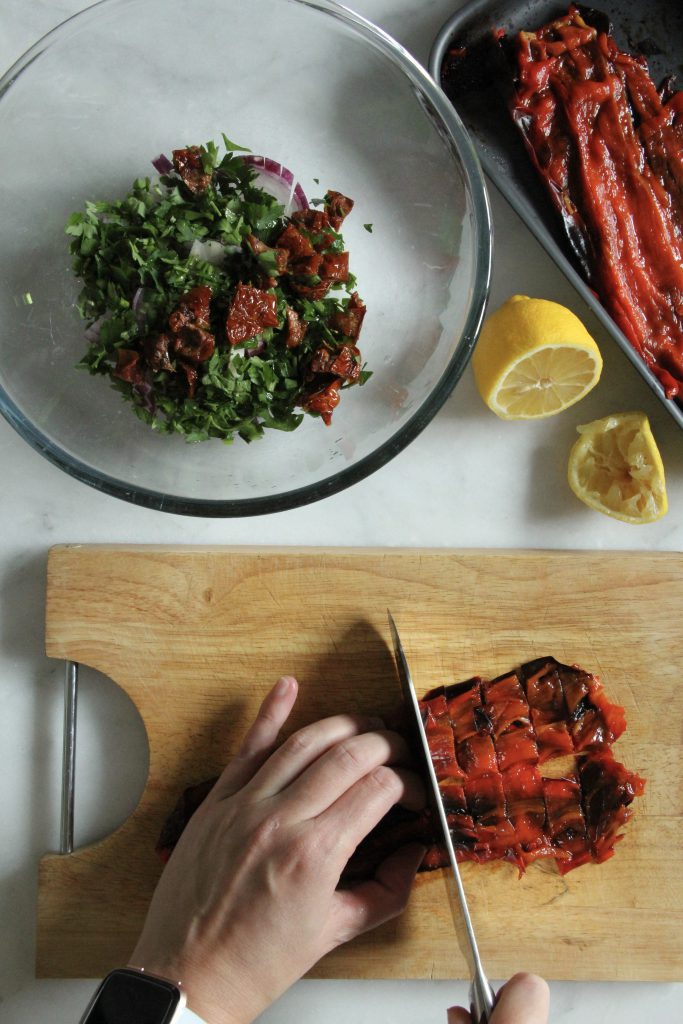
  • Once cool, de-seed and roughly chop the pepper, parsley, sun-dried tomatoes and goat’s cheese, and dress with the olive oil, balsamic vinegar and lemon juice.

Per serving 348kcal/ 13.3g fat/ 8.0g saturated fat/ 30g carbohydrates/ 14.6 fibre/ 19.6g protein
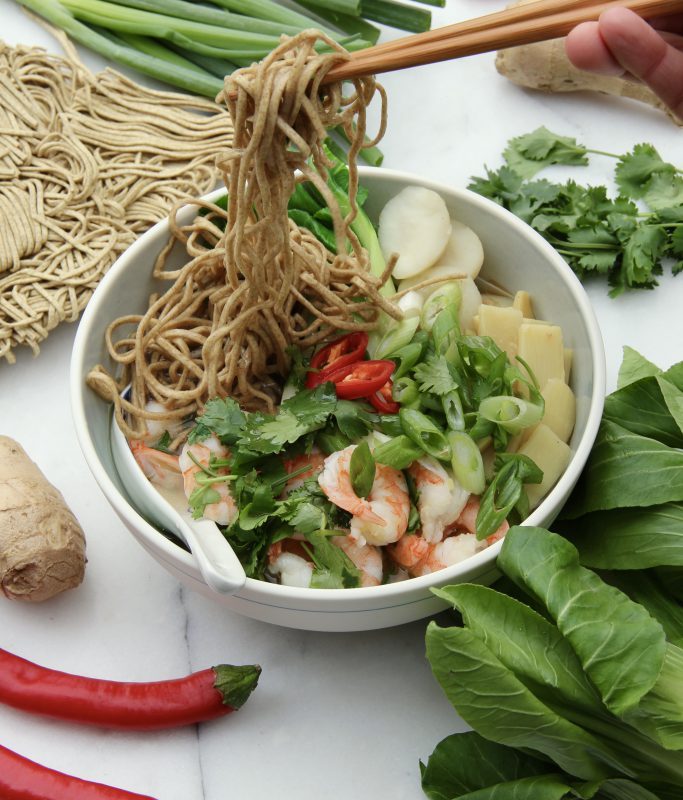
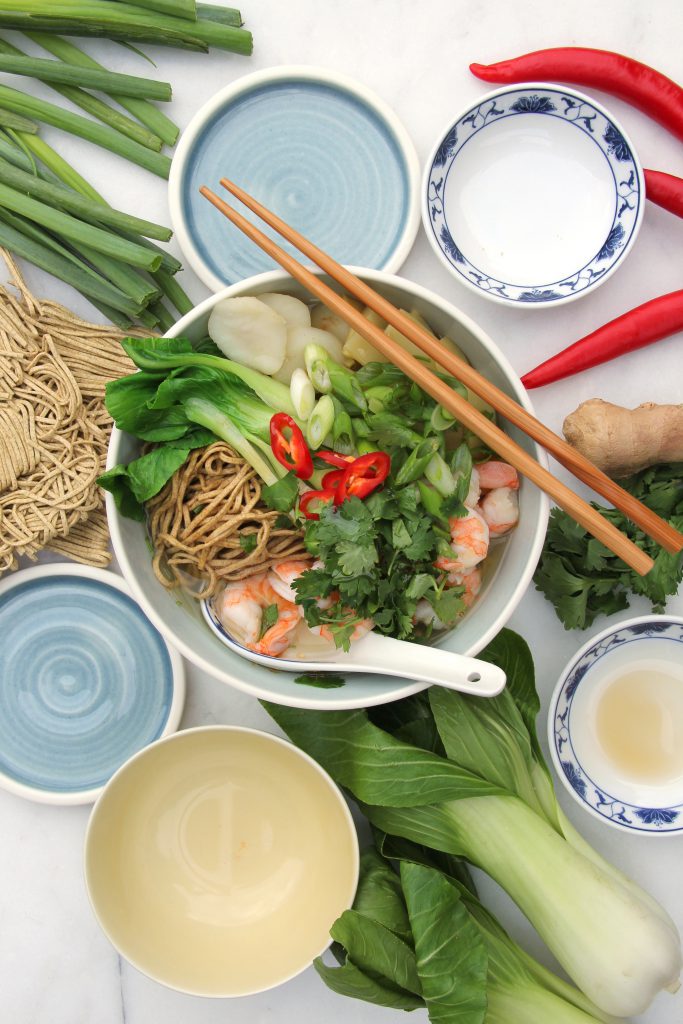
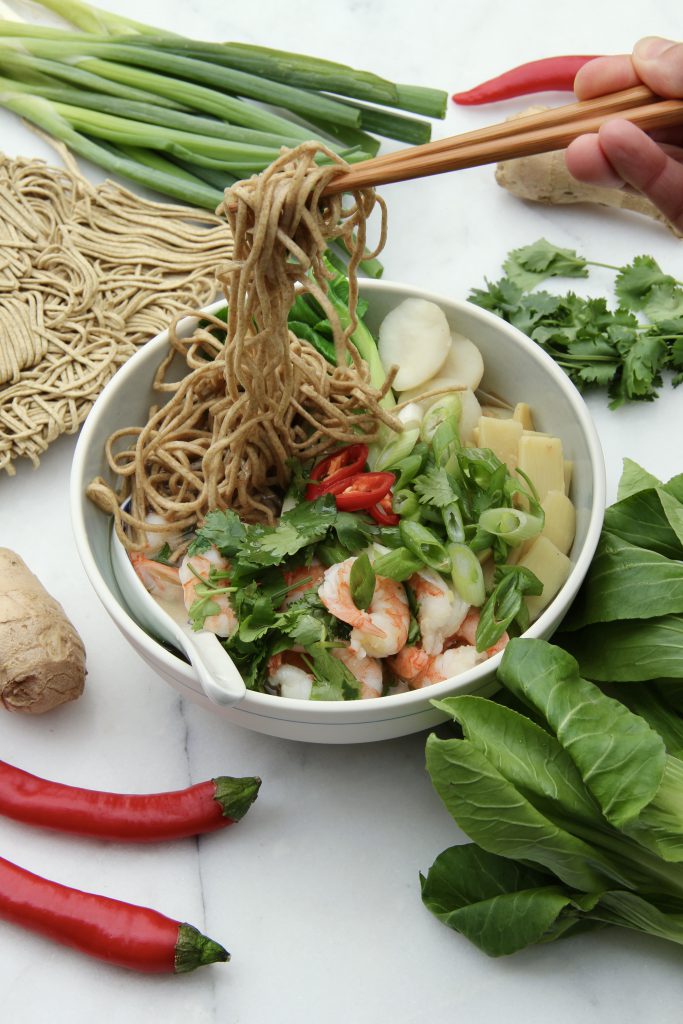
Easy Noodle Soup

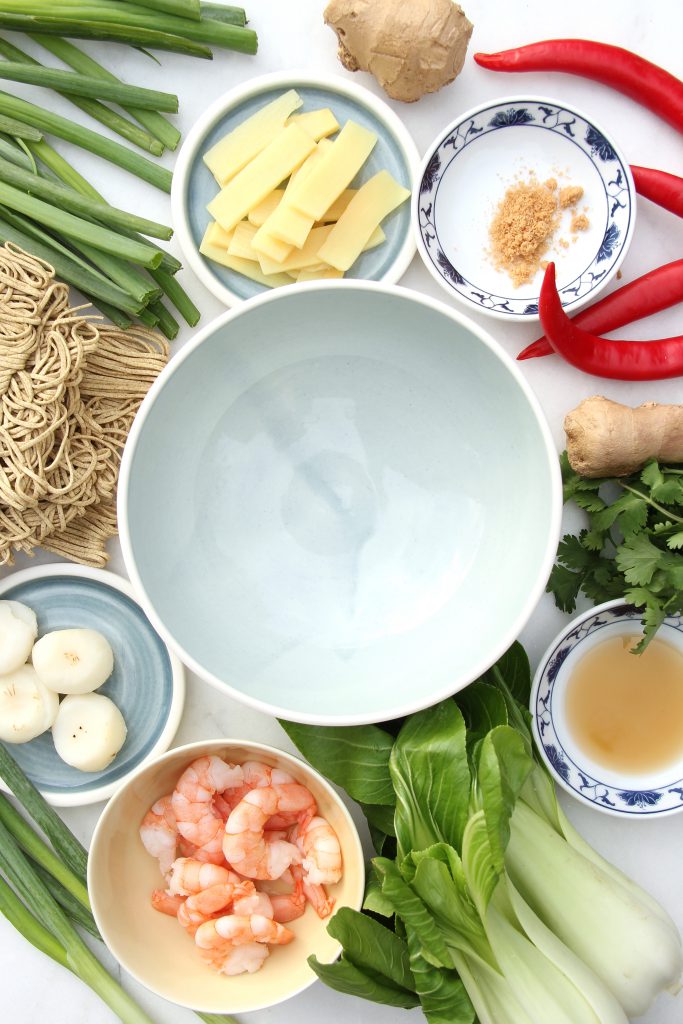
I love this recipe as it’s so adaptable. Don’t have some of the ingredients? Substitute with what you’ve got in the cupboard or fridge. All you need are the staples: noodles, stock and sesame oil. These are the key ingredients which form your foundation. From there you can build it any way you like. And the best bit, the more diversity you put into your bowl, the happier your gut microbiota will be! So don’t be afraid to try something new, or dig out an old tin of bamboo shoots which have been sitting in the back of your cupboard that you haven’t know what to do with!
Other vegetables which work well in this dish include:

  • Spinach
  • Carrot
  • Courgette
  • Beansprouts
  • Cabbage including Chinese Leaf
  • Onion
  • Baby corn
  • Mushrooms

The only other advice I can offer is to stock whole wheat noodles as a staple in you cupboard. You can find dried noodles in most supermarkets nowadays, and opting for the whole wheat option means you automatically are helping to increase your fibre intake from the get go. Remember our daily target is 30g upwards, so every gram counts.

Serves 1

Recipe

  • 1 nest whole wheat noodles
  • 1/2 tsp stock powder
  • 5g ginger, finely diced
  • 40g bamboo shoots
  • 40g water chestnuts, sliced in half
  • 1 pak choi, sliced
  • 1 tsp sesame oil
  • 1 large or 2 small spring onions, sliced
  • 10g coriander
  • 100g cooked prawns
  • Chilli slices to taste

Method

  • Bring 300ml water up the the boil, add in the stock powder, ginger and noodles. Cook for 1 minute less than the packet instructions.
  • Add the bamboo shoots, water chestnuts and pak choi for the last minute to cook.
  • Remove from the heat, place in a serving bowl and dress with the remaining ingredients.
  • Serve and slurp immediately

Per serving: 376 kcal, 7.4g fat, 1.5g saturated fat, 25.7g protein, 47.7 carbohydrates, 9.2g fibre

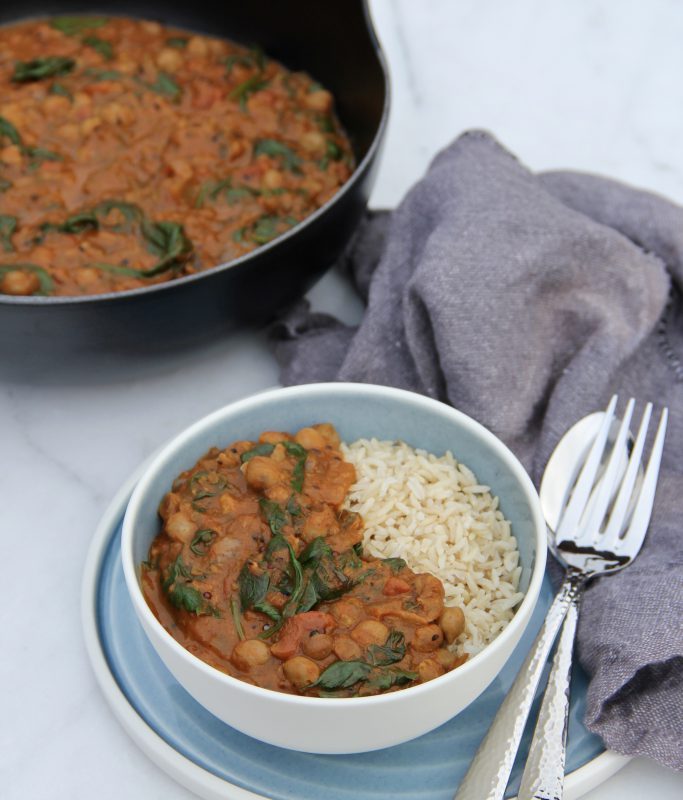
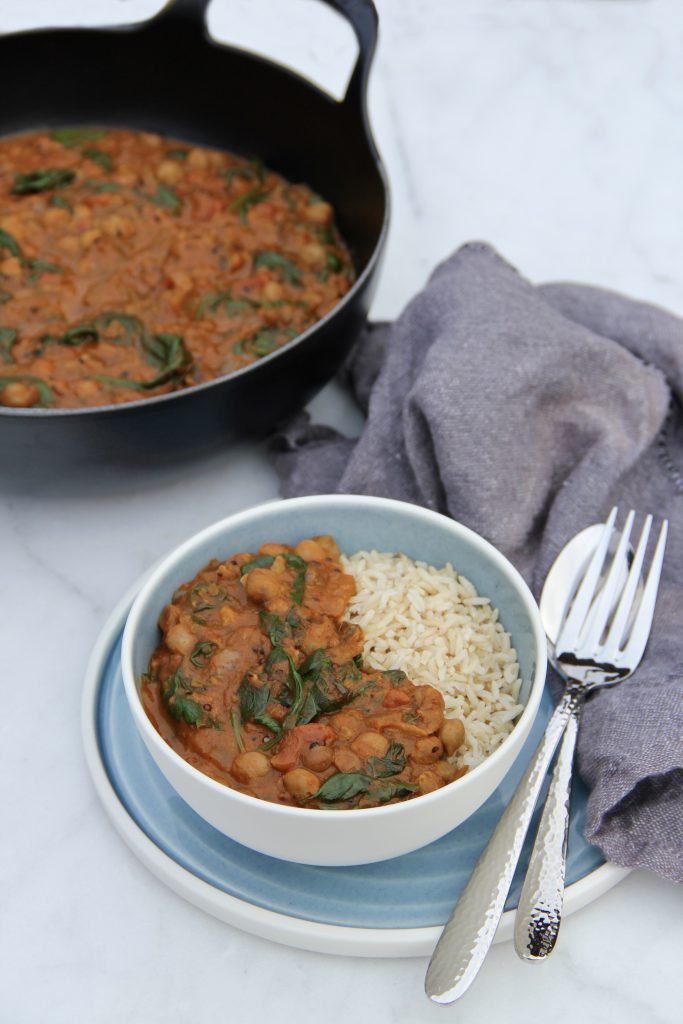
Vegan Chickpea Curry

This is my store cupboard staples easy curry. I always have the tinned goods in my cupboard as backup should I find myself without anything fresh to cook with. And the best part is it taste better a day or two old, so there’s no reason why you can’t make it on a Sunday, as I have, ready for a quick and nutritious no-fuss mid-week meal.

It’s also perfect for those doing Veganuary as it is naturally vegan, and as a bonus contains over 9g of plant based protein.

Eating the rainbow

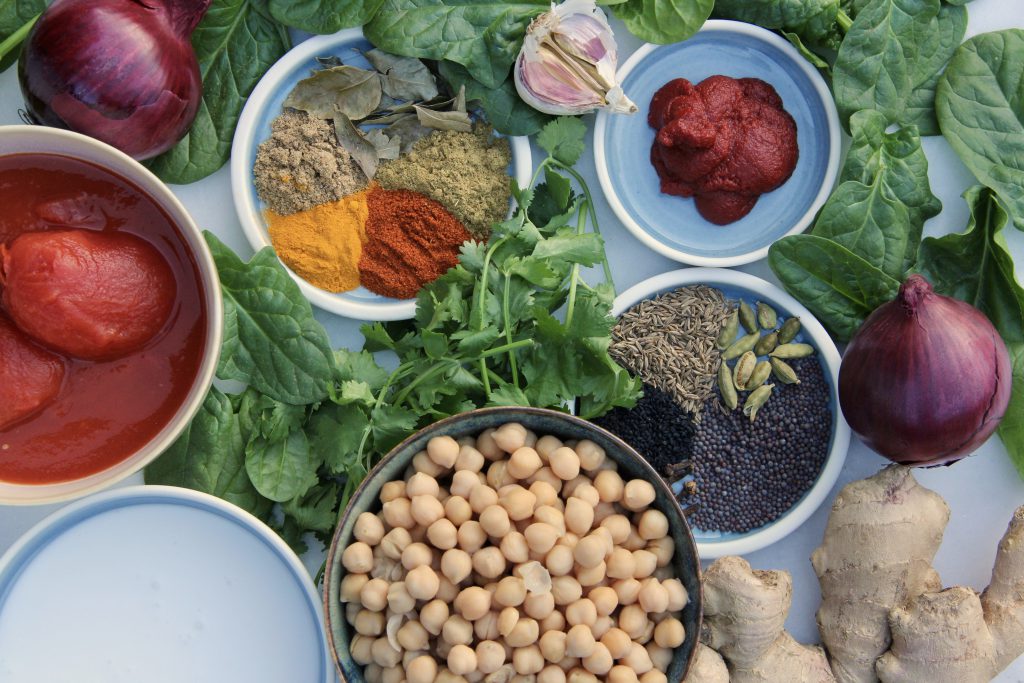
This dish is versatile in the number of plant foods, containing an array of 7 different herbs and spices to complement 8 different plant ingredients. Add the rice and you’re well on your way to your 30 different plant foods for the week. In addition, it is an excellent source of fibre, containing half the recommended daily fibre intake of 30g just in this dish alone.

Cook the curry till thick

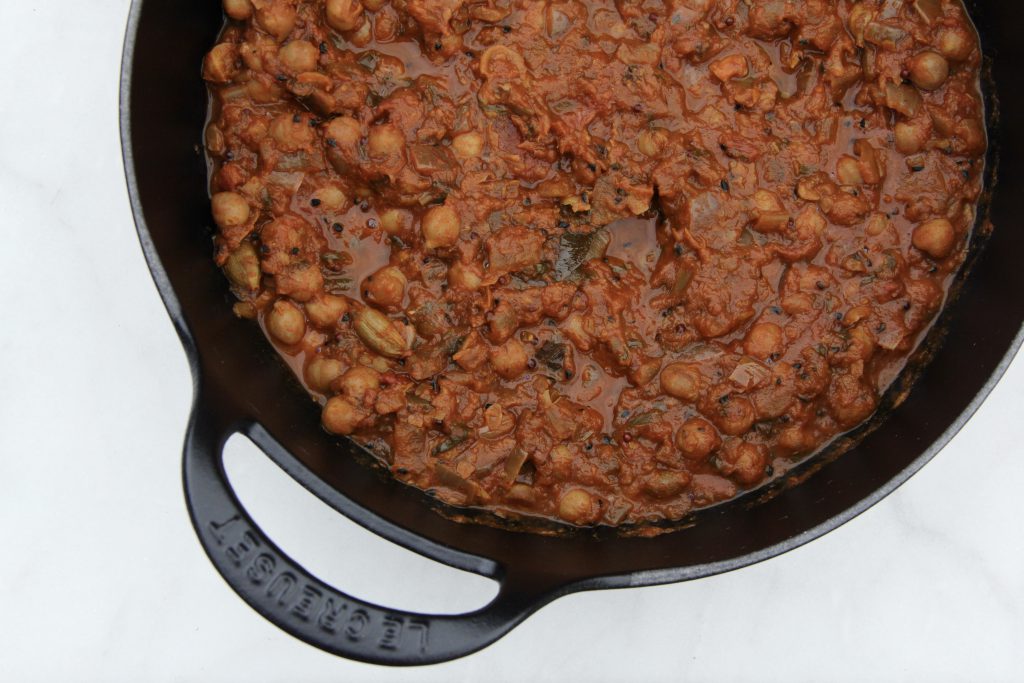
The trick to this dish is to cook it as slow and long as possible. If you don’t have much time to hand, it is still delicious if made within the hour, but if you have time, keep cooking on the lowest setting of your hob and top up with water when required. You could even get the curry ready, leave it overnight in the fridge and then quickly reheat it with the coconut milk and spinach the next day for a fast dinner.

The only other recommendation I can make would be to count in the cardamon pods and cloves. I hate nothing more than biting down on a whole clove mid way through my meal. Clove has a numbing effect, and is often used to help relieve tooth ache, not something I want to experience while eating my dinner. So, like a surgeon, I count them in, and then count them back out before serving, hopefully finding them all.

Serves 6

Ingredients

  • 2 onions, sliced
  • 2 tbsp rapeseed oil
  • 1 thumb sized piece of ginger
  • 5-6 cloves of garlic
  • 1 tsp onion seeds
  • 1 tsp mustard seeds
  • 1 tsp cumin seeds
  • 1 tsp cardamon seeds
  • 6 whole cloves
  • 1 tsp ground cumin
  • 1 tsp ground turmeric
  • 1 tsp chilli powder, or to taste
  • 1 tsp ground coriander
  • ~15 curry leaves
  • 35g tomato puree
  • 2 tins of chickpeas, drained and rinsed
  • 400g tinned tomatoes
  • 30g fresh coriander, chopped
  • 200ml coconut milk
  • 300g baby spinach leaves
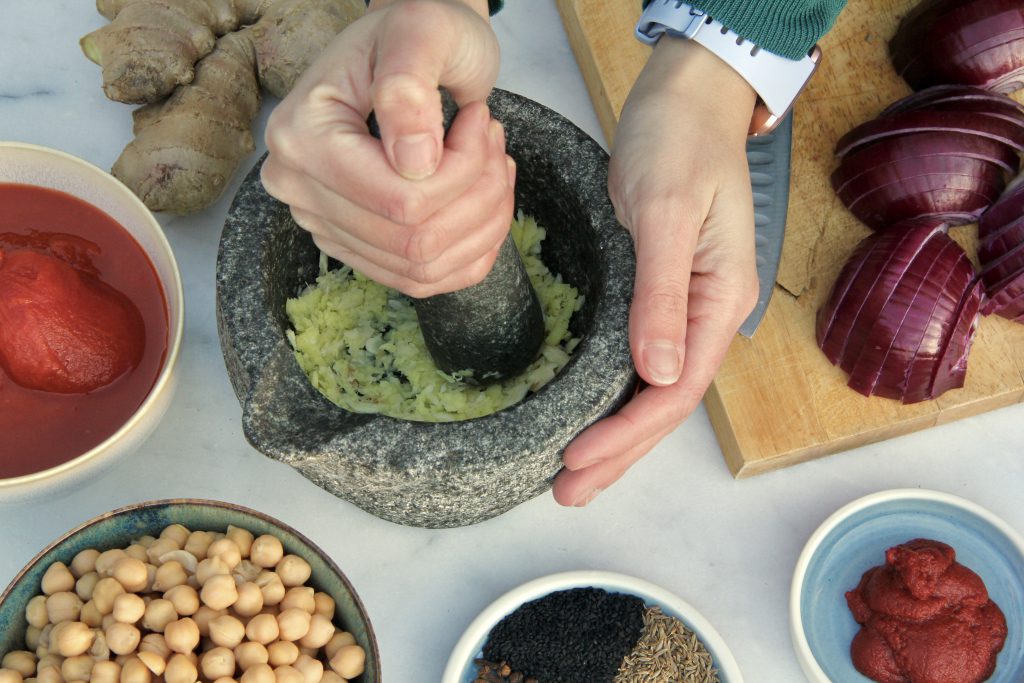
Use a pestle and mortar to crush the ginger and garlic

Method

  • Add the onions and rapeseed oil to a large pan and cook gently till the onions soften and become translucent.
  • Meanwhile, make a garlic and ginger paste in a pestle and mortar, bashing till as smooth as possible.
  • Add the garlic ginger paste, all the dried herbs and spices, tomato puree and chickpeas to the pan and cook together for 1 minute before adding the tinned tomatoes. Fill the empty tin with water and add the the pan.
  • Add the chopped coriander and allow to gently simmer away for an hour, or longer if you have the time. If the liquid reduces too much add some extra water.
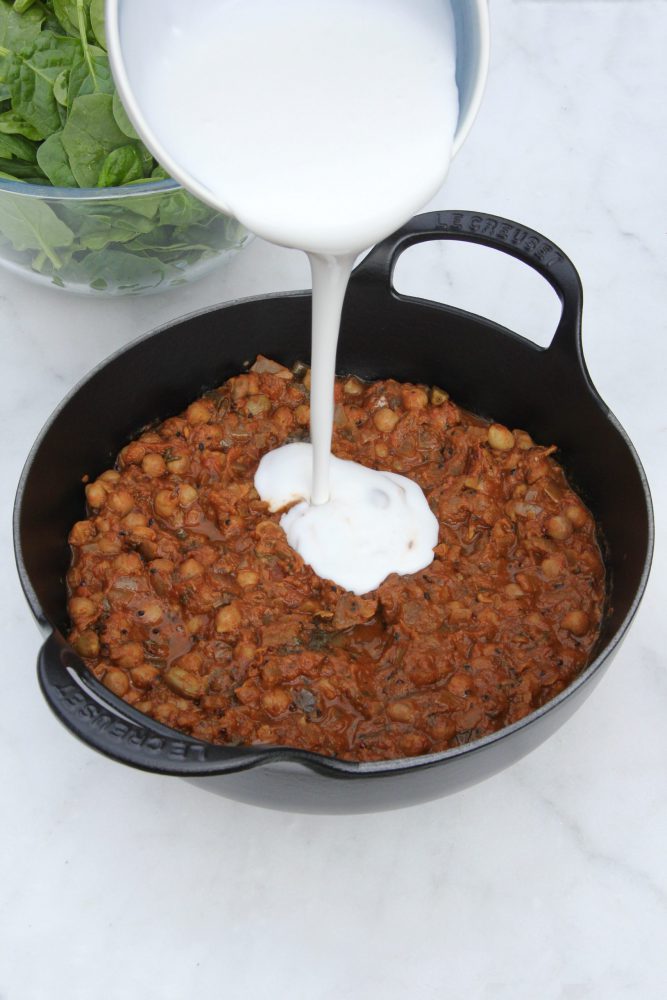
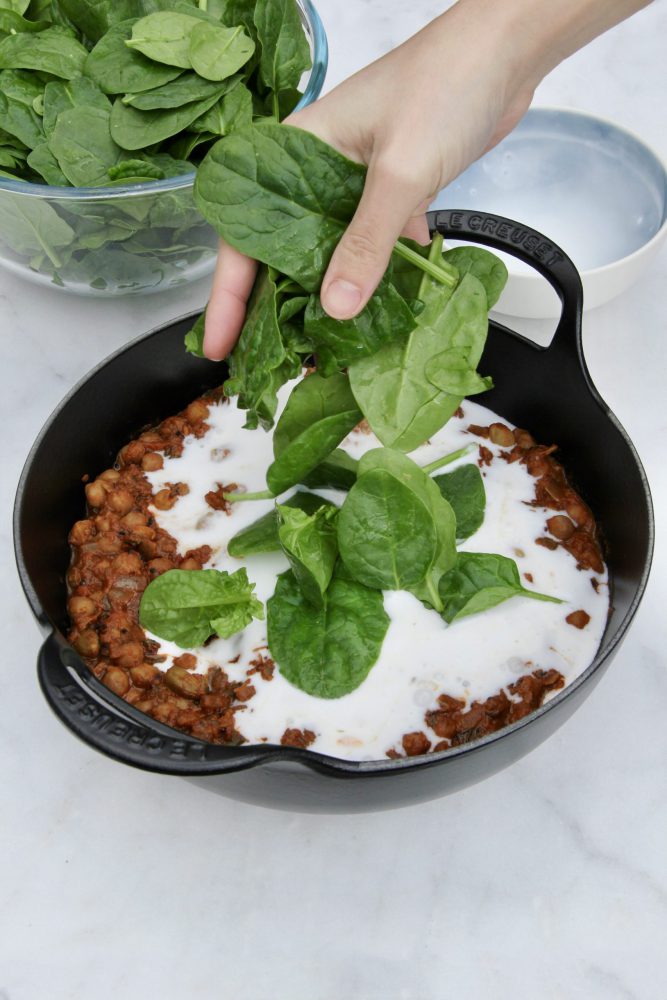
  • 10 minutes before serving, add the coconut milk and spinach before returning to the heat to allow the spinach to wilt. Season to taste.
  • Remove the cardamon pods and whole cloves, and serve with rice or naan.

Per serving 258kcal/ 13.6g fat/ 1.3g saturated fat/ 21.8g carbohydrates/ 15.9g fibre/ 9.3g protein