Sundried Tomato and Kale Pasta

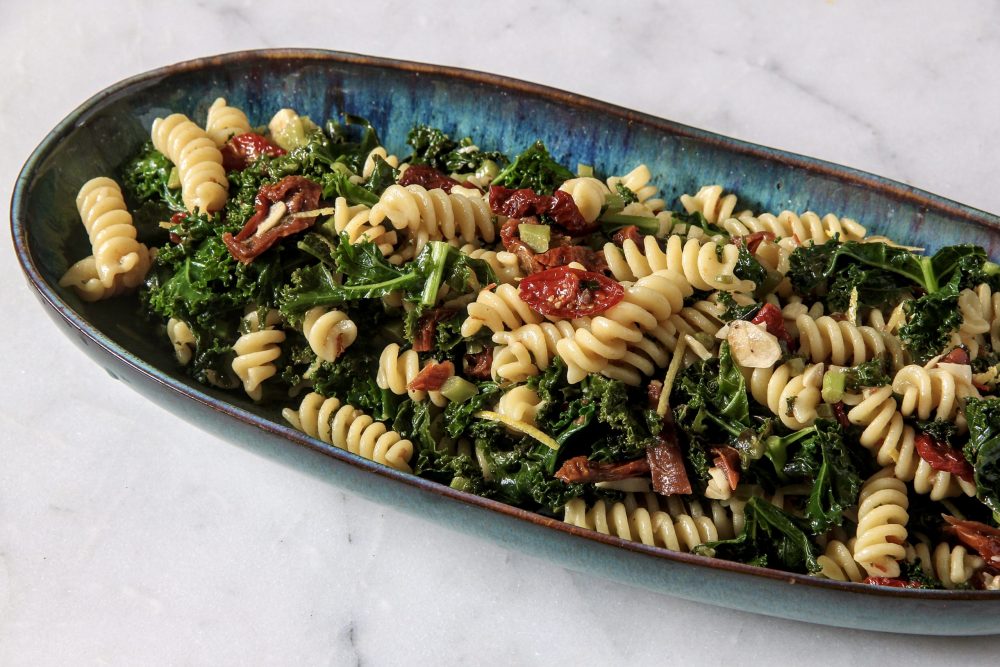
Super simple, seasonal, and takes just 15 minutes to cook. Kale is a great source of vitamin K, as well as beta-carotene which the body can convert into vitamin A.

I see loads of recipes using kale where they strip the leafy part off the central stem. I love the contrast of textures, with the stem staying crunchy as the leaves become soft. It also helps reduce food wastage by eating the whole of the produce.

Kale is a plant-based source of dietary iron. Being from a plant, it is in the form of non-haem iron which means it is harder for the body to absorb. Using the lemon juice at the end of cooking adds vitamin C to the dish which can help increase the uptake of plant-based iron.

Serves 2

Ingredients

  • 150g dried pasta of choice
  • 1 tbsp extra virgin olive oil
  • 200g kale, roughly chopped
  • 60g sundried tomatoes, drained and roughly chopped
  • 4 cloves of garlic, roughly chopped
  • 1 unwaxed lemon, zest and juice

Method

  • Bring a large pan of water to the boil and cook the pasta for 2 minutes less than the packet instructions.
  • Separately, in a frying pan cook the kale with the oil for a few minutes till slightly soft.
  • Add the garlic and sundried tomatoes and cook for a further few minutes till fragrant. If needed, add a little pasta water to stop the garlic from burning.
  • Add the pasta with a tablespoon of pasta water and add the lemon zest and juice.
  • Stir to combine and serve immediately.

Per serving: 441kcal/ 11.8g fat/ 1.6g saturated fat/ 64.9g carbohydrates/ 9.0g fibre/ 13.8g protein
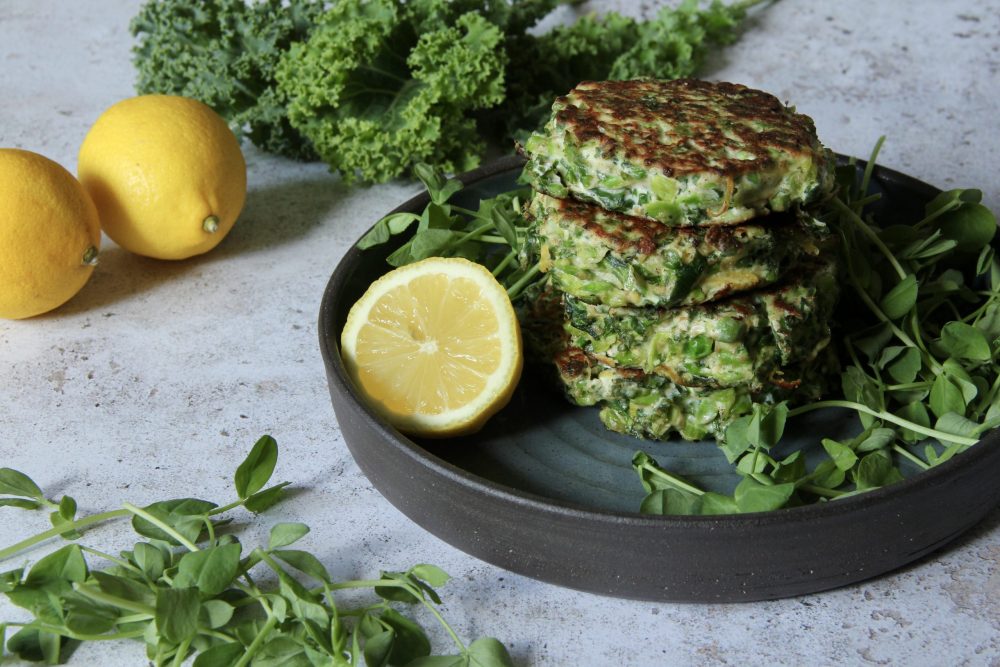
Green Kale Fritters

I’ve got so much kale growing at the allotment. Both curly kale and Cavolo Nero. I love them both, and I believe they both have their place in particular dishes. These fritters, however, will benefit from any type of kale you grow or can buy in the shops. Alternatively, if you don’t have kale you could use other green leafy vegetables such as cabbage, spinach, Swiss Chard or spring greens.

I also use frozen peas and edamame beans. Much cheaper and handy as they are kept in the freezer ready for use whenever you want. Frozen vegetables can also often have higher nutrient content as they are picked at their peak and then frozen within hours, locking in nutrients that may be lost otherwise.

If you need to make gluten-free fritters, use gram flour or rice flour instead of wholemeal flour. I use wholemeal because it helps with the fibre content of the fritters, but also is something I keep in the cupboard as a staple. The flour’s role in the fritters is just to help bind them together. When I didn’t add the flour in during recipe testing they fritters were extremely fragile and would easily fall apart. While they tasted great, I thought they were too difficult to handle.

These fritters are delicious simply served with a wedge of lemon and some salad leaves of choice. Serving with the lemon after cooking adds vitamin C which can help your absorb the plant-based iron from the beans and kale. You could add any other toppings of your choice such as a poached egg to make the perfect brunch, or top with hummus, guacamole, soured cream or your favourite sauce.

Makes 8 fritters

Ingredients

  • 150g kale, finely sliced
  • 75g frozen peas, defrosted
  • 75g frozen edamame beans, defrosted
  • 250g ricotta
  • 3 large eggs
  • Zest of 1 lemon
  • 8-10 mint leaves, finely sliced
  • 15g parsley, finely sliced
  • 1/2 a nutmeg, grated
  • 30g wholemeal flour, or if making gluten-free gram flour or rice flour
  • 2 tsp extra virgin olive oil

To serve

  • Salad leaves of choice
  • Lemon wedges
  • Poached egg (optional)

Method

  • Place the sliced kale into a large bowl. Boil the kettle and pour over the kale to blanch for 30 seconds before draining and running under cold water to maintain the bright green colouring. Drain as much water from the kale.
  • In a separate large bowl add the peas and edamame beans and crush before adding all the remaining ingredients except the flour.
  • Add the kale and mix to distribute throughout the batter. Add the flour and mix.
  • Preheat large frying pan and heat over a medium heat with 1 tsp oil.
  • Take a heaped spoonful of batter and place into the pan to form a fritter. Cook in batches for 2-3 minutes per side till golden brown.
  • Serve the fritters with fresh pea shoots and lemon wedge, and optional top with a poached egg.

Per 2 fritters: 232kcal/ 13.7g fat/ 5.0g saturated fat/ 10.9g carbohydrates/ 4.1g fibre/ 15.5g protein

Kale Pesto with Pasta

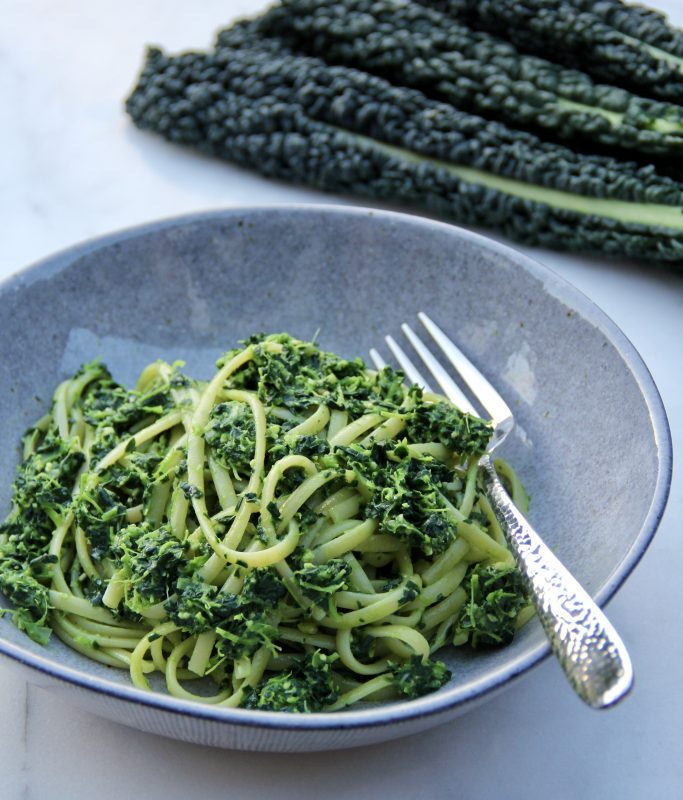
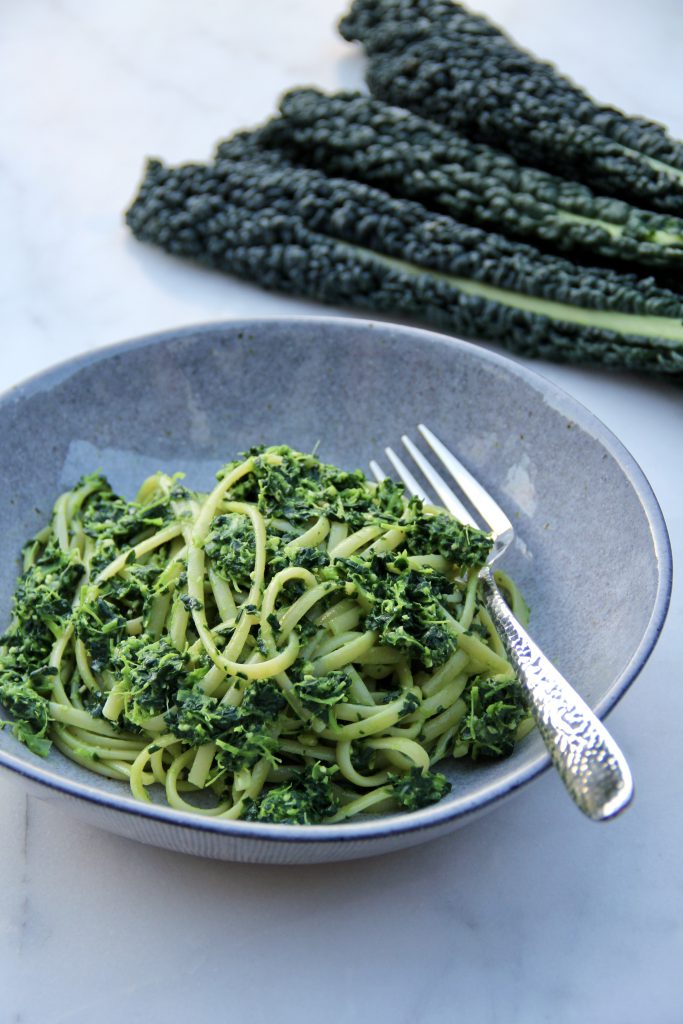
Super easy to make, taking just the time of the pasta to cook, it’s seasonal, packed full of fibre, providing 5 sources of plant-based goodness….. what’s not to love?!?

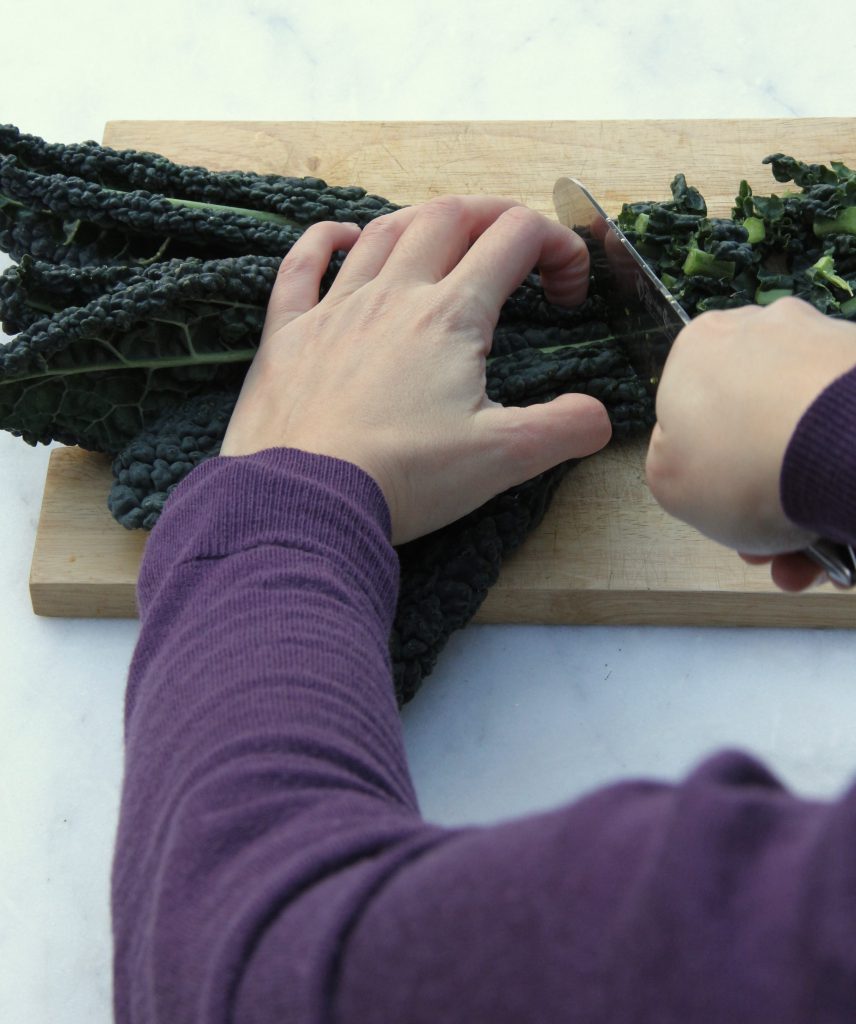
I leave the stems of the kale in. It adds an extra crunch to the dish, which I absolutely love, but also means maximising the fibre content of this dish as well as less food waste, which we really hate! Double bonus!

You could make a large quantity of this pesto and store it in an airtight container in the fridge for a few days. Alternatively, pop it into the freezer in portion sizes ready to whip out when the cupboards are looking a little bare.

Keeping the stems on the kale helps maximise the fibre content and reduce food waste

Serves 1

Recipe

  • 100g kale, washed and roughly chopped
  • 1 clove garlic, peeled
  • 15ml extra virgin olive oil
  • 20g toasted pine nuts
  • 20g parmesan, finely grated
  • 75g pasta

Method

  • Bring a pan of water to the boil. Add the kale and garlic clove and blanch for 1 minute. Remove from the water into a jug for blending.
  • Add the pasta to the boiling water and cook for 1 minute less than the packet instructions.
  • Meanwhile, blend the blanched kale and garlic, before adding the oil, pine nuts and parmesan. Blend again, adding a little pasta water if too thick.
  • Drain the pasta, reserving a little of the cooking water. Return to the pan.
  • Add the pesto and return to the heat to warm everything through. Loosen the pesto sauce with the reserved pasta water if needed. Serve immediately.

Per serving of kale pesto 388kcal/ 35g fat/ 6.7g saturated fat/ 3.8g carbohydrates/ 3.8 fibre/ 13.1g protein