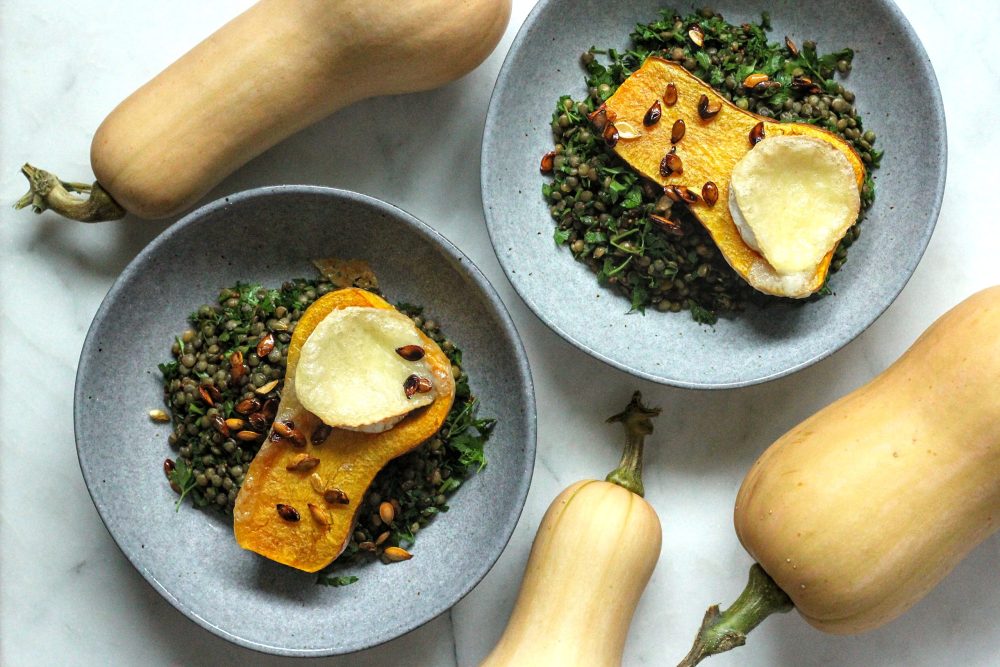
Roasted Butternut Squash and Lentil Salad

Salad means different things to different people. I refer to this as a salad, even though there is a distinct lack of green leafy vegetables as you might often think of. But trust me, this is worth adding to your repertoire!

It’s packed full of lovely ingredients that help provide a wide variety of nutrients including plenty of plant-based protein, fibre, vitamin A (in the form of beta-carotene), iron, folate and vitamin K1 to name but a few.

For those following a full plant-based diet try swapping the goat cheese for a plant-based cheese alternative, or use tofu and roast in the same way.

You also know that I love to use as much of my homegrown veg as possible. So, I’m making sure I save the seeds and roast them up as a crispy topping. It adds an extra texture dimension to the whole dish and saves edible food from going into the bin. The seeds also have slightly different nutritional properties to the flesh of the butternut squash itself, so it really is a win-win situation.

Serves 2

Ingredients

  • 1 small butternut squash, around 400g when prepared, saving the seeds
  • 2 cloves of garlic, skin on
  • 2 tbsp extra virgin olive oil
  • 100g goat cheese, sliced in half
  • 100g puy lentils
  • 1 tsp wholegrain mustard
  • 1 tbsp balsamic vinegar
  • 30g chives, finely chopped
  • 50g flat-leaf parsley, finely chopped

Method

  • Preheat the oven to 180°C fan/ 200°C convection
  • Prep the butternut squash by removing the very ends and slicing in half lengthways. Remove the seeds, but save for later. Coat the butternut squash in 1 tbsp olive oil and place on a baking tray. In a separate small ovenproof dish add the garlic and 1/2 tbsp olive oil and cover. Bake for 25 minutes.
  • Meanwhile, separate the seeds from the pulp and dry before mixing with the remaining 1/2 tbsp olive oil. Remove the roasted garlic dish and spread the seeds out over the tray, and add the goat cheese into the cavity of the butternut squash. Bake for 12-15 minutes till the seeds are crispy and the cheese has melted.
  • Meanwhile, cook the lentils by bringing them to the boil and then simmer for 12-15 minutes till soft but still with a bite.
  • Remove the garlic skins and mash the garlic into the oil with the mustard and balsamic vinegar to make a sauce. Mix into the hot lentils, and once slightly cooled mix in the herbs.
  • Serve straight away hot, or equally delicious eaten cold as leftovers the next day.
Roasted Butternut Squash and Lentil Salad

Per serving: 565kcal/ 29g fat/ 11g saturated fat/ 40g carbohydrates/ 15g fibre/ 28g protein
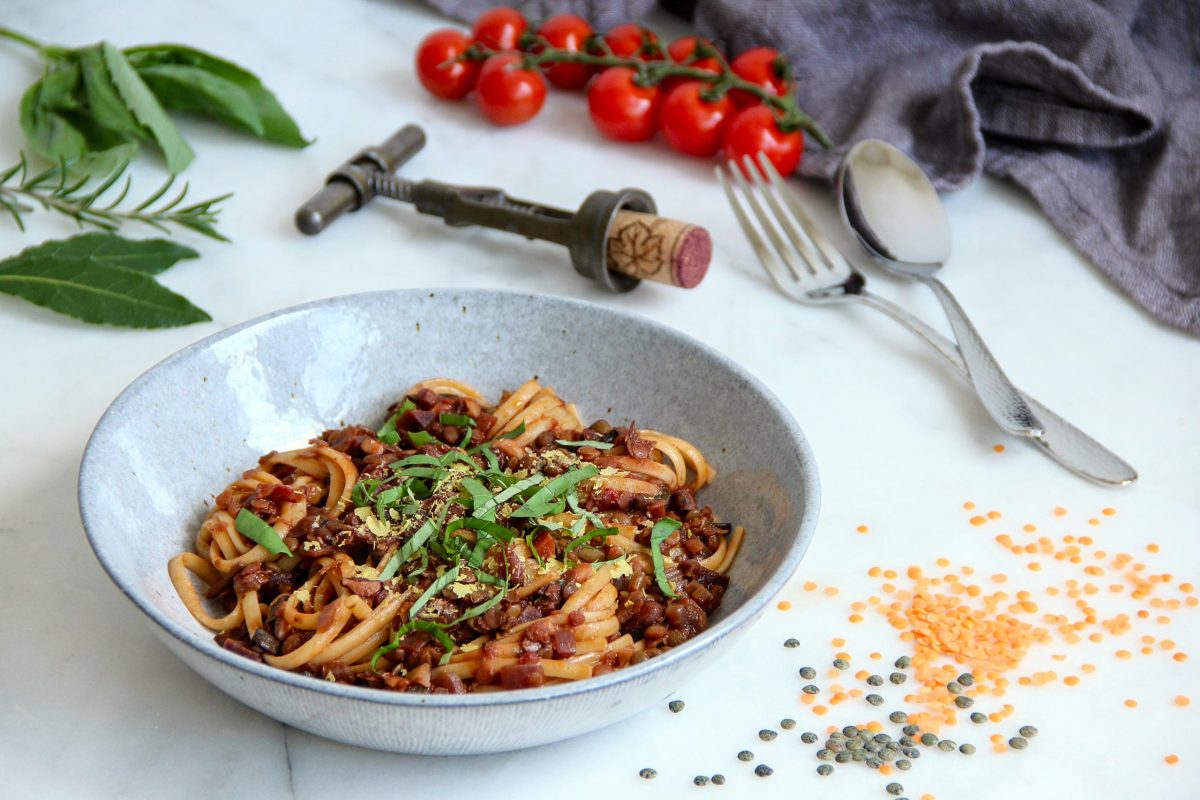
Lentil, Mushroom and Almond Ragu

A delicious meal-free ragu alternative that won’t make you wonder where the meat is!

Serves 6

Ingredients

For the ragu

  • 2 tbsp extra virgin olive oil
  • 1 large onion, diced
  • 2 sticks of celery, diced
  • 2 carrots, scrubbed and diced
  • 2 cloves of garlic, finely diced
  • 250g mushrooms, diced
  • 60g skin-on almonds, chopped
  • 100g red lentils
  • 100g puy lentils
  • 1 stock cube
  • 200ml red wine (option to replace with water)
  • 400g tinned tomatoes
  • 2 tbsp tomato puree
  • 20g dried porcini mushrooms, roughly broken
  • 3 bay leaves
  • 10 spring of thyme
  • 3 sprigs of rosemary
  • 10 sage leaves, finely chopped
  • 10 sprigs of fresh basil, stems chopped (option to save some leaves for garnish)

To serve

  • 450g spaghetti
  • Nutritional yeast (vegan) or parmesan (vegetarian)
  • Fresh basil leaves

Method

  • In a large saucepan, add the oil, onion, celery and carrot. Cook for 5 minutes without browning.
  • Add the garlic, cook for 1 minute before adding the fresh mushrooms in. Cook for 5 minutes till the mushrooms have released and reabsorbed their liquid.
  • Add all the remaining sauce ingredients along with 600ml water. Bring to the boil and then gently simmer for 45 minutes.
  • In a separate pan boil water. Cook the pasts for 2 minutes less than the packet instructions.
  • Drain the pasta and return it to the pan, reserving some of the cooking liquid.
  • Add the ragu to the pasta and stir through, adding pasta water to loosen the ragu if needed. Cook for 1 minute over a low heat.
  • Serve immediately with nutritional yeast or parmesan and fresh basil leaves over the top.

Per serving: 599kcal/ 13g fat/ 1.6g saturated fat/ 81g carbohydrates/ 13g fibre/ 26g protein

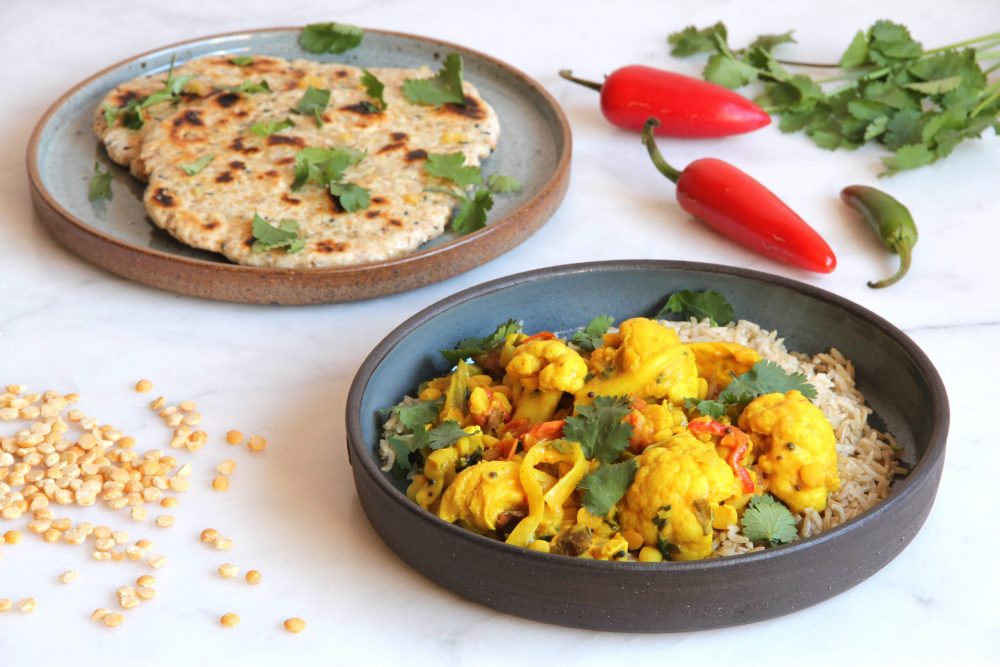
Yellow Split Pea and Cauliflower Curry

This recipe was born from a sad cauliflower and a wilted bunch of coriander left over at the end of the week which needed to be used up. It got a resounding “I rate this” from my partner as we ate leftovers the next day. Absolutely none of the cauliflower is wasted, I simply adore cauliflower leaves and for anyone who has not tried them, this is the perfect dish to utilise them.

This is a fantastic way to use up any other vegetables too. Mix and match with other cruciferous vegetables such as broccoli, Brussel sprouts or even kale, or use other vegetables such as courgette, aubergine or green beans.

Serves 6

Ingredients

  • 200g yellow split peas
  • 1 tsp mustard seeds
  • 1 tsp ground coriander
  • 2 tbsp rapeseed oil
  • 1 large or 2 small onions, sliced
  • 2″ piece of ginger, peeled and grated
  • 1 red chilli, sliced (or to taste)
  • 60g skin-on almonds, roughly chopped
  • 1 cauliflower head, cut into florets and leaves
  • 400ml coconut milk
  • 2 tsp ground turmeric
  • 200g fresh tomatoes, roughly chopped
  • 20g coriander, roughly chopped

To serve

  • Cooked rice

Method

  • Boil the split peas in plenty of water for 25 minutes, till cooked through but still firm.
  • Separately, in a large pan add the mustard seeds, ground coriander and oil over a medium heat.
  • When the mustard seeds start popping add the onion, ginger, chilli and almonds. Cook for 2-3 minutes.
  • Add the cauliflower, coconut milk, turmeric, tomatoes and half of the coriander.
  • Drain the cooked yellow split peas, reserving 50ml of cooking liquid, and to the cauliflower mix. Cook together for 5 minutes.
  • Serve with rice and the remaining coriander.

Per serving: 387kcal/ 17.3g fat/ 2.2g saturated fat/ 22.9g carbohydrates/ 16.7g fibre/ 16.8g protein
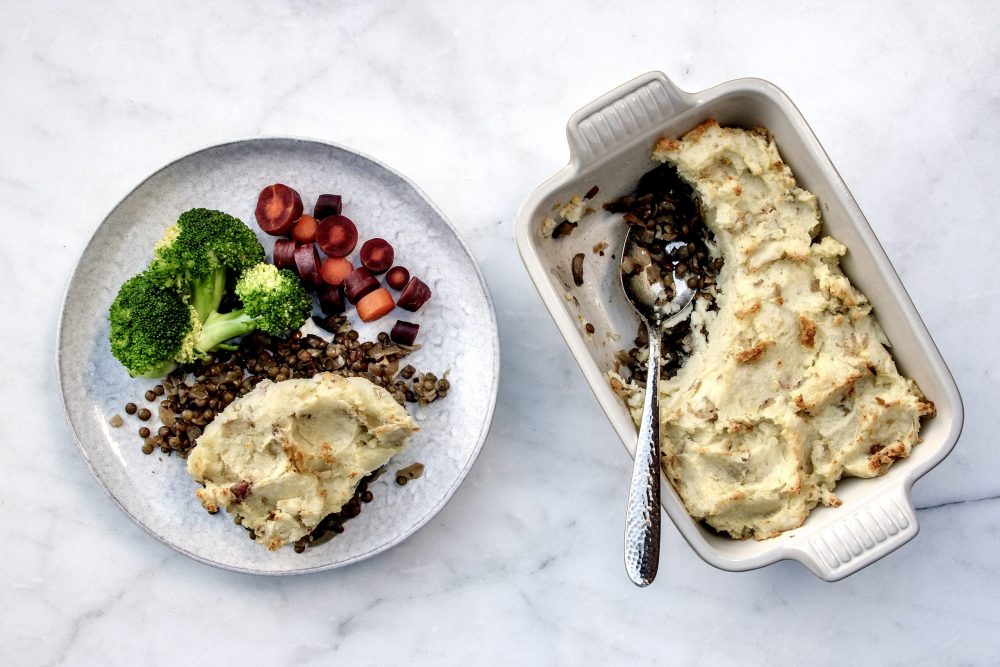
Mushroom, Lentil & Olive Oil Mash Pie

This is the recipes for those of you who already follow a vegan lifestyle. It’s also something for those who are doing Veganuary for the first time. It’s also perfect for anybody who is looking to increase their plant-based diet without necessarily being 100% vegan all the time.

This would work well with other vegetables such as leeks, celery, courgettes, or if mushrooms are not your thing use some fresh or tinned tomatoes which will cook into a tomato based sauce for the lentils to sit in.

Leaving the skin on the potatoes for the mash will make the dish quicker to prepare. You’ll also prevent any food waste as well as keep in the maximum fibre content.

Serves 2

Ingredients

  • 60g puy lentils
  • 35ml extra virgin olive oil
  • 1 large onion, finely diced
  • 1 garlic clove, finely chopped
  • 180g mushrooms, finely diced
  • 1/2 tsp vegan stock powder
  • A few sprigs of fresh thyme
  • 450g potatoes, skin left on, washed and cut into large chunks
  • 60ml soya milk

Method

  • Put the lentils into a pan and cover with plenty of cold water. Bring to the boil and then simmer for 15 minutes. Once cooked, drain the lentils reserving 2 tablespoons of cooking water.
  • Meanwhile, bring a pan of water to the boil and cook the potatoes till soft.
  • Separately, cook the onion in another pan with 10ml of olive oil over a low heat till they become soft and translucent.
  • Add the garlic and cook for 1 minute before adding the mushrooms in.
  • Add the stock powder and thyme leaves and allow to cook till the mushroom juices evaporate. Add the cooked lentils and reserved cooking liquid to the mushroom mixture.
  • Once the potatoes are cook, drain and allow to steam dry for 2 minutes. Heat the soya milk with the remaining olive oil in the pan used to cook the potatoes before adding them back in and mashing till smooth.
  • Preheat the oven to 180°C fan/ 200°C convection
  • Assemble the filling into an ovenproof dish and layer the mash over the top.
  • Bake for 25-30 minutes till the potato top turn crisp and golden brown.

Per serving: 513kcal/ 18.9g fat/ 2.9g saturated fat/ 66.6g carbohydrates/ 12.4g fibre/ 16.4g protein
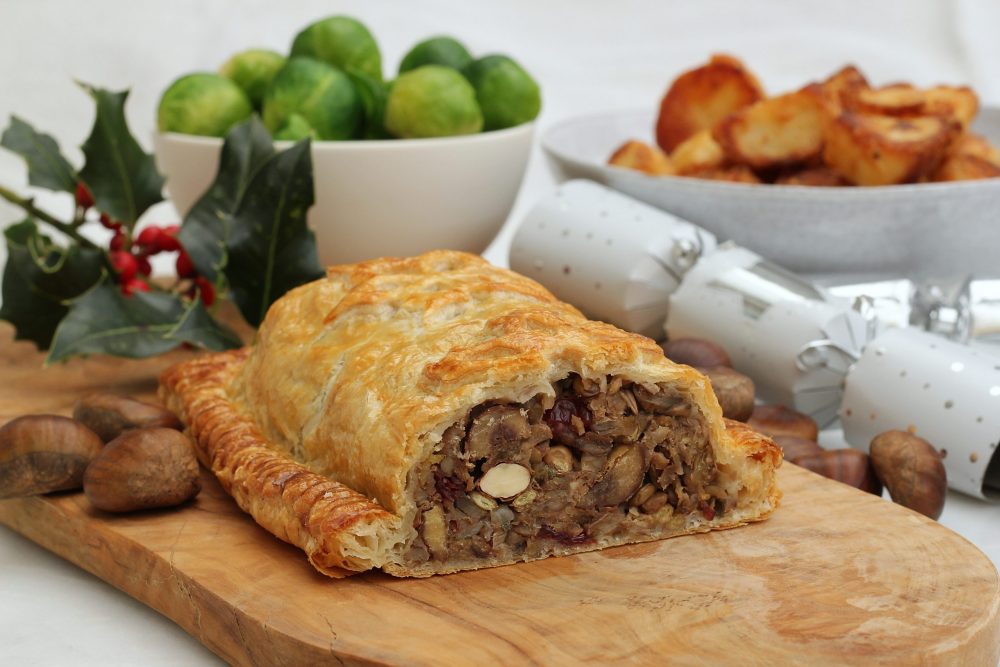
Festive Lentil, Mushroom and Chestnut Wellington

My Festive Lentil, Mushroom and Chestnut Wellington is sure to be a crowd-pleaser this Christmas. Packed full of flavours you would expect to find at Christmas and wrapped up in puff pastry. What is not to like?

This recipe is easily adapted to most dietary requirements. Swap the butter pastry to a butter-free puff pastry and swap the egg glaze for a mylk wash to give the pastry a lovely golden glow.

To make the wellington gluten-free use a gluten-free pastry and gluten-free oats. If you can’t find the oats, use 100g gluten-free flour in place of the oats and rice flour.

You can also swap a few ingredients around to suit what you fancy. If your festive tipple is not port, you could swap it for red wine, cognac or even keep it alcohol-free by using a little stock. Other herbs that would work well in this wellington include thyme, parsley or marjoram. You could also use dried herbs, but watch out as these can really pack a punch, so half a teaspoon should be plenty to give flavour. You could even change the almonds for alternative nuts such as pistachios or walnuts to give different dietary nutrients; walnuts are the only tree nut to contain significant amounts of alpha-linolenic acid, a type of omega-3 fatty acid which can be converted in the body to EPA and DHA fats found in oily fish. Great for anyone following a strictly plant-based diet or for those who don’t eat fish.

Serves 6-8

Ingredient

  • 120g green lentils
  • 3 bay leaves
  • 1 tbsp extra virgin olive oil
  • 1 red onion, finely diced
  • 200g mushrooms, finely diced
  • 10 sage leaves, sliced
  • 50g almonds, roughly chopped
  • 90g cooked chestnuts, roughly chopped
  • 50g dried cranberries
  • 60ml port
  • 50g rice flour
  • 50g cut oats
  • 400g puff pastry
  • 1 egg, beaten

Method

  • Wash the lentils in cold water. Add the bay leaves and bring the lentils to the boil. Reduce the heat to a simmer and cook for 20 minutes till the lentils are soft.
  • Meanwhile cook the oil and onion together over a low heat till soft and translucent.
  • Add the mushrooms to the onions and cook the mushrooms till the juices start to thicken slightly. Add the sage and cook for a further minute till fragrant.
  • Once the lentils are cooked, drain, remove the bay leaves and lightly mash. Add the mushroom mixture to the lentils followed by the almonds, chestnuts, cranberries, port, flour and cut oats. Mix to combine and season to taste.
  • Allow the mixture to cool completely.
  • Preheat the oven to 180°C fan/ 200°C convection.
  • Line a baking sheet with baking parchment.
  • Roll the pastry into a 35cm by 25cm rectangle. Cut lengthways down to make a 10cm by 35cm smaller rectangle. Remove 2cm from this piece to create a rectangle approximately 10cm by 33cm.
  • Place the now cooled mixture on this smaller rectangle of pastry, leaving a 1cm gap all around the edge, into a large log shape from short end to short end.
  • Using the egg, paint over the pastry seam. Lift the remaining larger rectangle of pastry over the mixture and press the pastry to seal with a fork.
  • Trim any excess pastry and use it to decorate the top of the pie.
  • Cut a small hole in the top of the wellington to allow the steam to escape and glaze the whole pie with an egg wash.
  • Bake the wellington for 25-30 minutes till golden brown all over.

Per sixth: 629kcal/ 25.3 fat/ 13.1g saturated fat/ 60.8g carbohydrates/ 8.0g fibre/ 18.3g protein

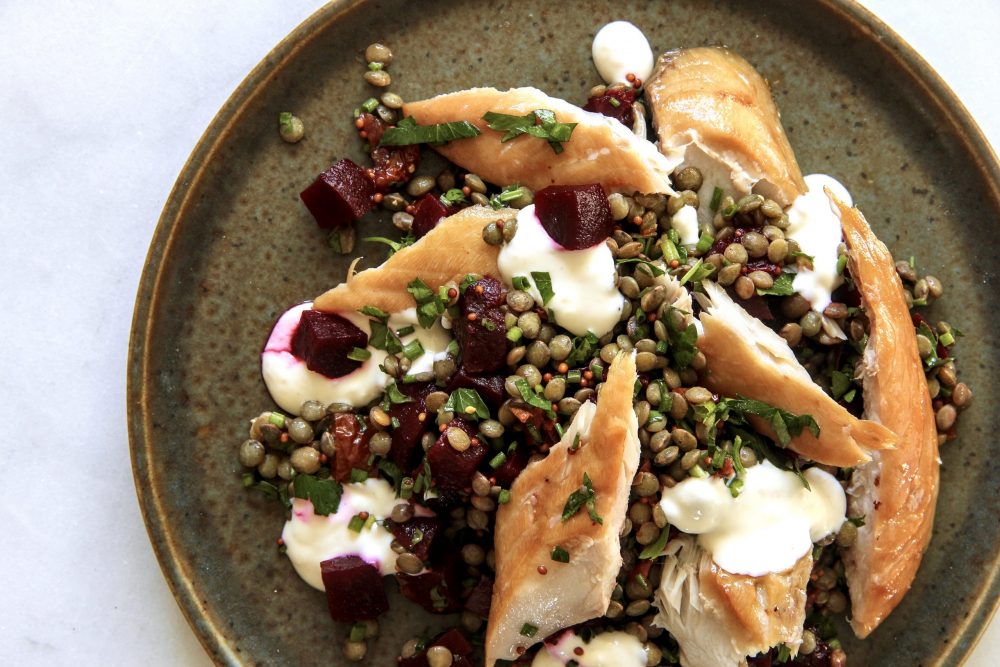
Smoked Mackerel, Lentil and Horseradish Salad

Getting oily fish in can be a challenge, and during lockdown I find it harder to get fresh fish weekly so I’ve been eating more smoked fish due to the increased shelf life. While I don’t plan on carrying this on beyond lockdown, and rather used smoked fish as a treat rather than a source of omega-3 fatty acids, for the while they have ended up as a partial staple in my lockdown diet. Here’s the lowdown on omega-3 fatty acids.

Omega-3 fatty acids area type of polyunsaturated fatty acid. These fats can’t be made in our bodies, so we rely on dietary sources instead. There are a few different forms of omega-3 fats, including eicosapentaenoic acid (EPA), docosahexaenoic acid (DHA) and alpha-linolenic acid (ALA).

Dietary sources of EPA and DHA include oily fish such as salmon, mackerel, kipper, herring, sardines and fresh tuna (but not tinned tuna); shellfish; and seaweed (but eating this more than once per week may provide too much iodine). Alternatively you can find EPA and DHA in omega-3 fortified products such as: dairy and dairy alternative products, eggs; and supplements.

ALA can be converted to EPA and DHA in our body, but this isn’t always converted in significant amounts, especially in relation to DHA, so there are less health benefits associated with consuming ALA. Dietary sources of ALA include seeds such as chia seeds, linseeds, hemp seeds (and hemp seed oil), walnuts (and walnut oil), pecans, hazelnuts; products derived from soybeans like soybean oil and tofu; rapeseed oil; green leafy vegetables and ALA supplements.

We should be aiming to eat 2 portions of fish a week, with at least 1 portion to be oily, with the upper limit set at 4 portions of oily fish per week due to pollutants being present in some fish which could build up in our bodies. Separately, women of childbearing age, pregnant or breastfeeding women should limit their intakes to two portions per week.

Using lots of store cupboard ingredients here, you could swap the fresh herbs out and use salad leaves, or use kale as an alternative vegetable. If you are really struggling to get fresh salad, or making this when you have run out of fresh foods opt for some frozen vegetables such as edamame beans or peppers. And for those who need a super quick lunch, this dish can be made in 2 minutes by using a pouch of ready-cooked lentils. Simply heat the lentils up and dress them with the herbs and spices and you’re good to go!

Serves 2

Ingredients

  • 100g puy lentils
  • 10g wholegrain mustard
  • 40g sundried tomatoes, finely chopped
  • 10g chives, chopped
  • 15g flat-leaf parsley, chopped
  • 120g pickled beetroot, finely cubed
  • 10g horseradish sauce
  • 50g reduced-fat creme fraiche
  • 2 fillets of smoked mackerel

Method

  • Place the lentils in a saucepan and cover with plenty of cold water. Bring to the boil and simmer for 12 minutes.
  • Once the lentils have cooked, drain and dress with the mustard and tomatoes whilst still hot. Allow to cool for 2 minutes before adding in the herbs.
  • Separately mix the horseradish and creme fraiche together.
  • Add the beetroot to the lentils and combine before plating up with the mackerel and horseradish sauce.

Per serving: 487kcal/ 28.6g fat/ 8.5g saturated fat/ 23.0g carbohydrates/ 12.9g fibre/ 28.2g protein

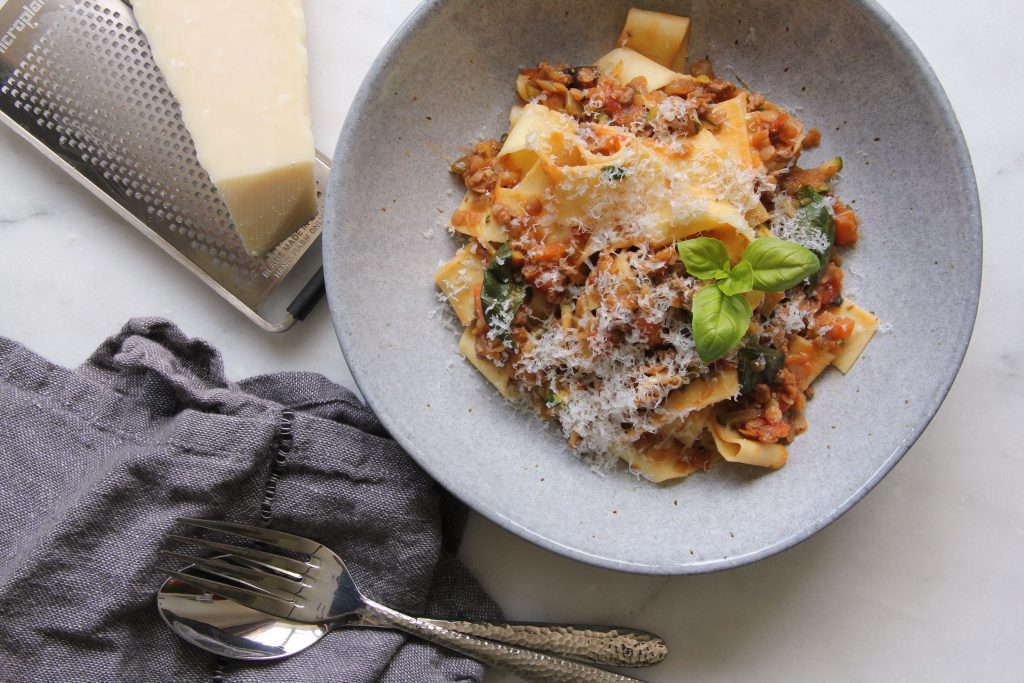
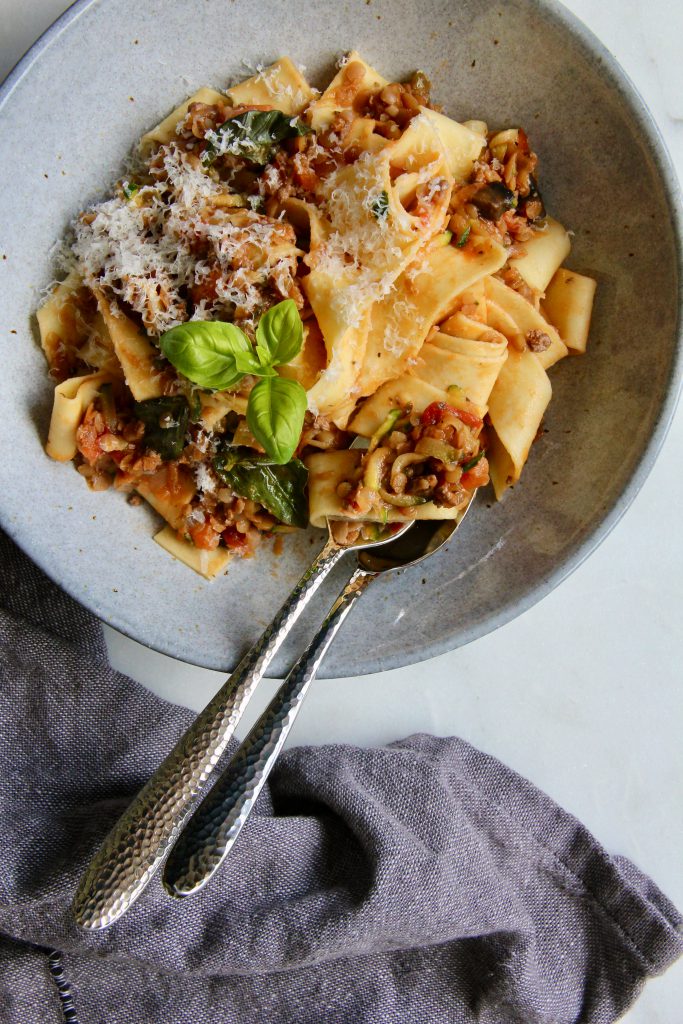
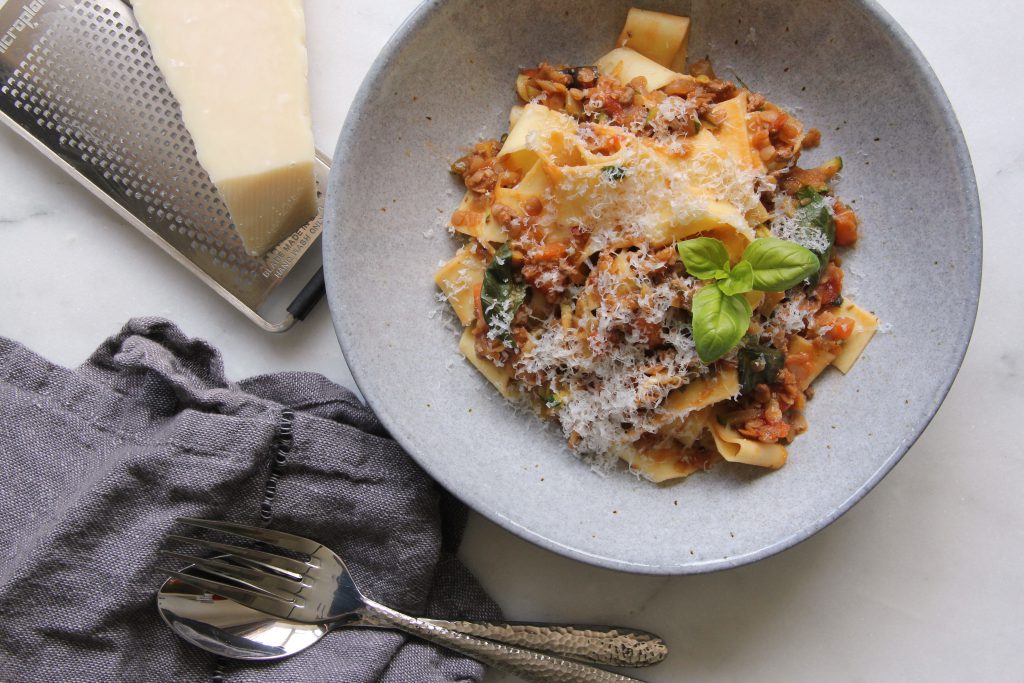
Reduced Mince Bolognese

With so many people being more conscious about what they eat and how it affects the climate, but unsure as to how they can reduce their food carbon dioxide emissions, this is the recipe for you. It’s my halfway house to enjoying a little meat, but making it go further with the help of one of my favourite store cupboard staples, lentils.

This is a recipe I developed years ago, when at University and trying to make my student budget go a little further without having to compromise on nutrition, but more importantly taste. Lentils are a fantastic way of adding some extra bulk to a meal, whilst being nutritious on their own. This is perfect for trying to reduce your meat intake in dishes such as spaghetti bolognese where meat is usually the main ingredient of the sauce. Per 100g, turkey mince contains around 23g protein, and lentils are not far shy of that figure at 19.3g protein. And if we were to use mince alone, we will be having 5g less fibre per portion of sauce.

I also use turkey mince in my bolognese, rather than beef. This developed a while ago where I switched a lot of mince based recipes towards turkey mince. It’s an extremely useful source of protein, and comparing gram to gram against other meat minces such as beef, there is a lower carbon dioxide emission (estimated mean 6.0 vs 28.7 kg CO2-eq/kg), which is again beneficial to the environment.

This Bolognese sauce is also the perfect batch cooking recipe. It makes 8 servings of sauce which can easily be frozen down in portion sizes for an easy meal at a later date. Alternatively, make a bechamel sauce and layer up with lasagne sheets, or use some chillis and kidney beans to make a chilli con carne and you’ve got yourself some easy alternative meals to enjoy.

Makes 8 servings

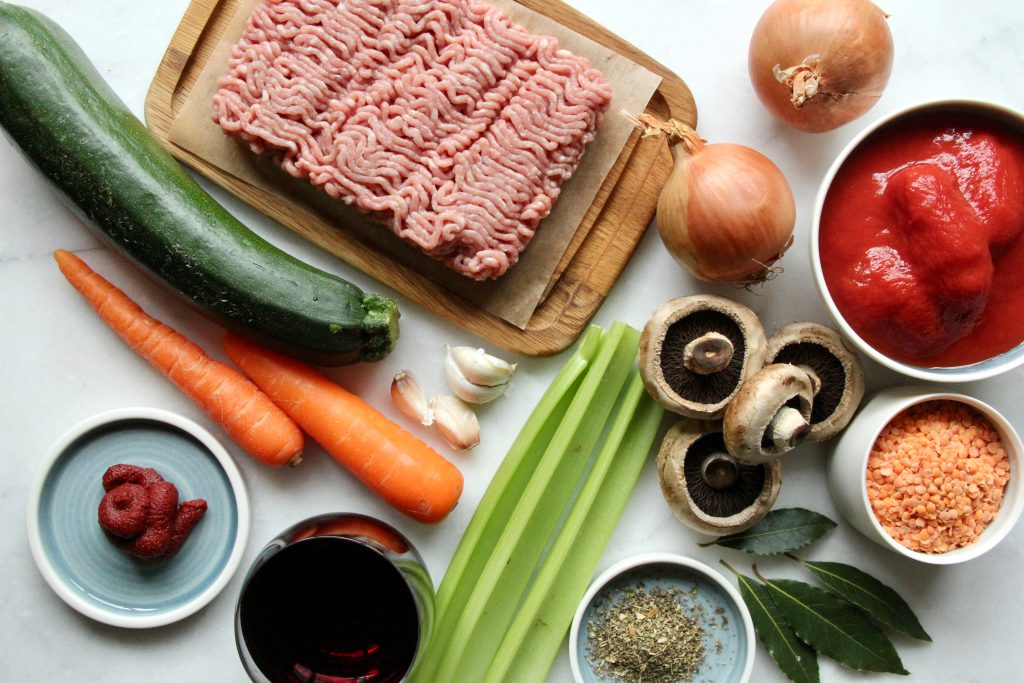
Ingredients

  • 2 tbsp extra virgin olive oil
  • 2 large onions, finely diced
  • 3 sticks of celery, finely diced
  • 4 garlic cloves, minced
  • 150g mushrooms, finely diced
  • 300g minced turkey thigh
  • 2 tbsp tomato puree
  • 1/2 tbsp mixed Italian herbs
  • 4 fresh bay leaves
  • 2 carrot sticks, finely diced
  • 600ml chicken/vegetable stock (or 1 stock cube made up to 600ml)
  • 250ml red wine
  • 1 can of chopped tomatoes
  • 250g red lentils
  • 1 tbsp Worcestershire sauce
  • 1 large courgette, grated

Method

  • Gently fry the onions and celery in the oil till soft and translucent. Add the garlic and cook for a further 2 minutes.
  • Add the mushrooms and cook till soft and their liquids have evaporated.
  • Push the vegetables to the side of the pan and fry the turkey mince in the centre till golden brown and mix with the vegetables.
  • Add the tomato puree, herbs, carrots, stock, red wine, canned tomatoes, lentil and Worcestershire sauce. Cook over a low heat stirring occasionally for 45 minutes.
  • 5 minutes before serving, add the grated courgette.
  • Serve with fresh egg pasta, parmesan and fresh basil.

Per serving of Bolognese sauce: 213kcal/ 3.6g fat/ 0.8g saturated fat/ 18.7g carbohydrates/ 7.5g fibre/ 17.5g protein

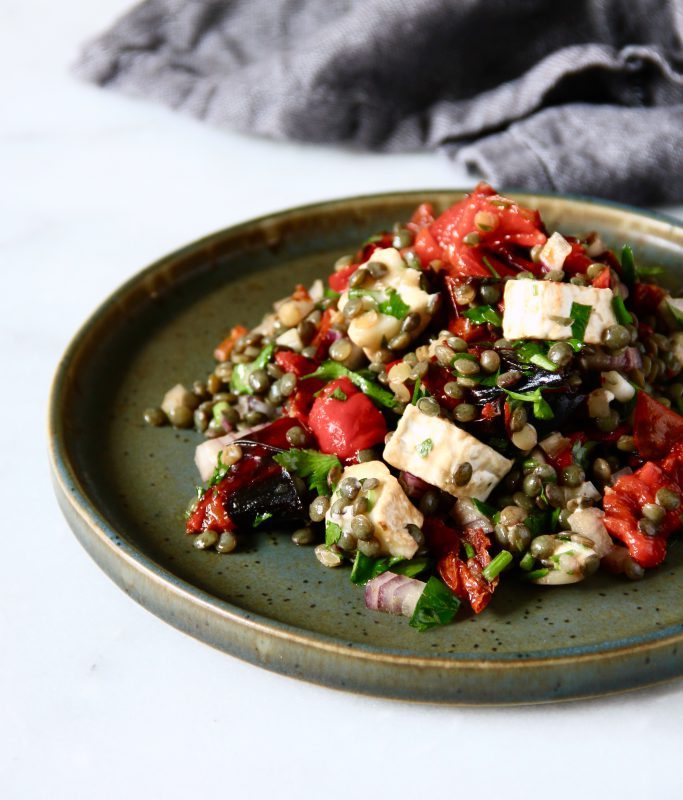
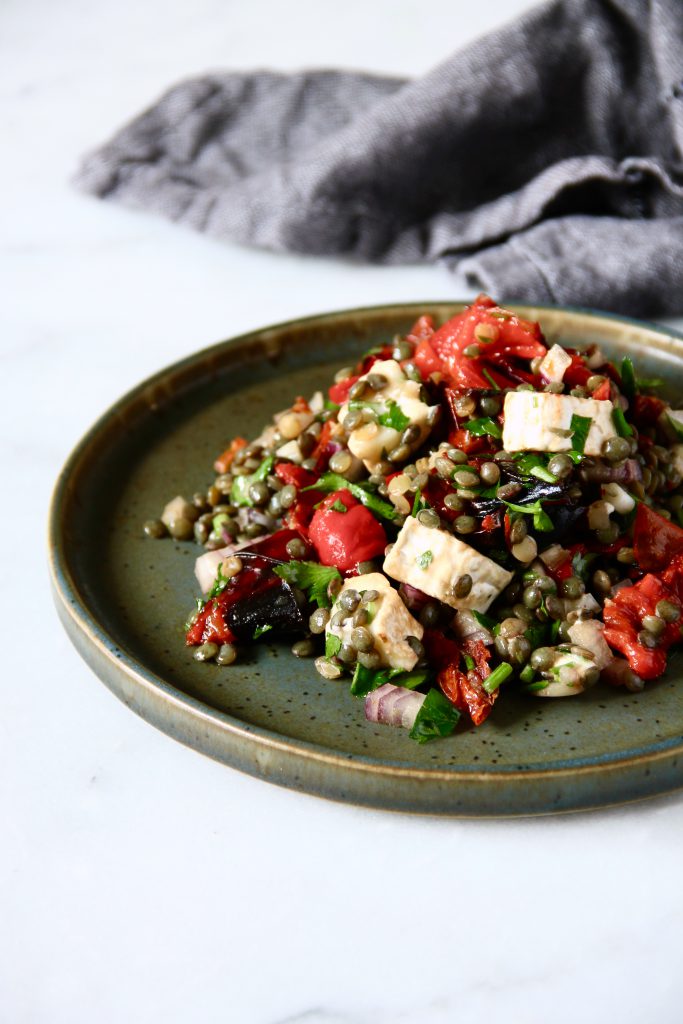
Red Pepper and Goat’s Cheese Salad

This recipe is adapted from the Meat Free Monday cookbook. I don’t think I could have assembled the ingredients any better than them, so, as they saying goes, if it ain’t broke, don’t fix it.

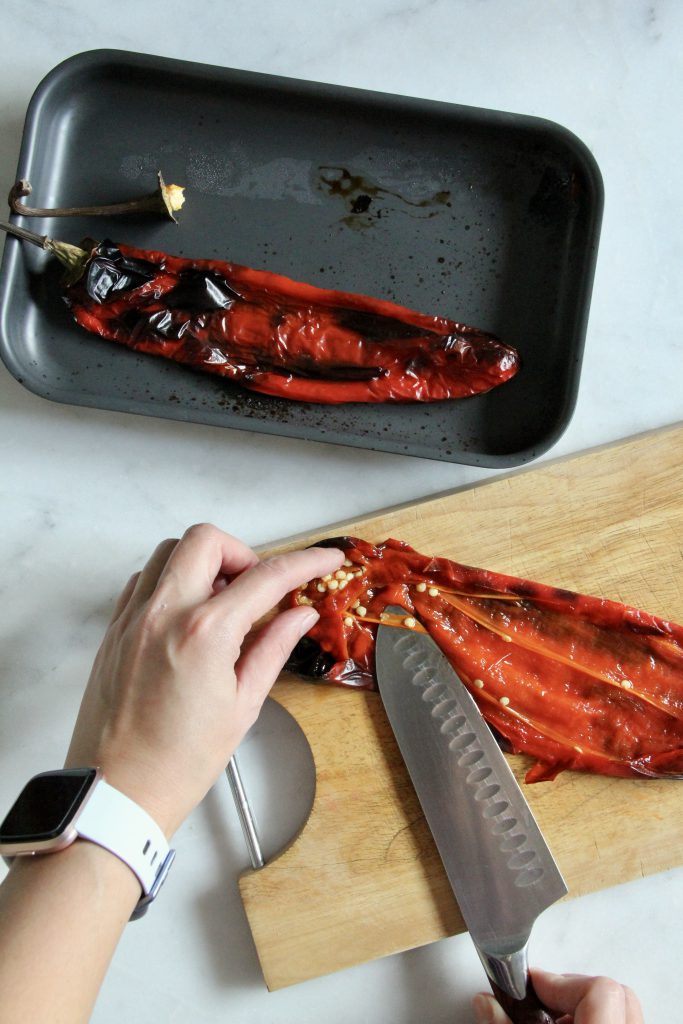
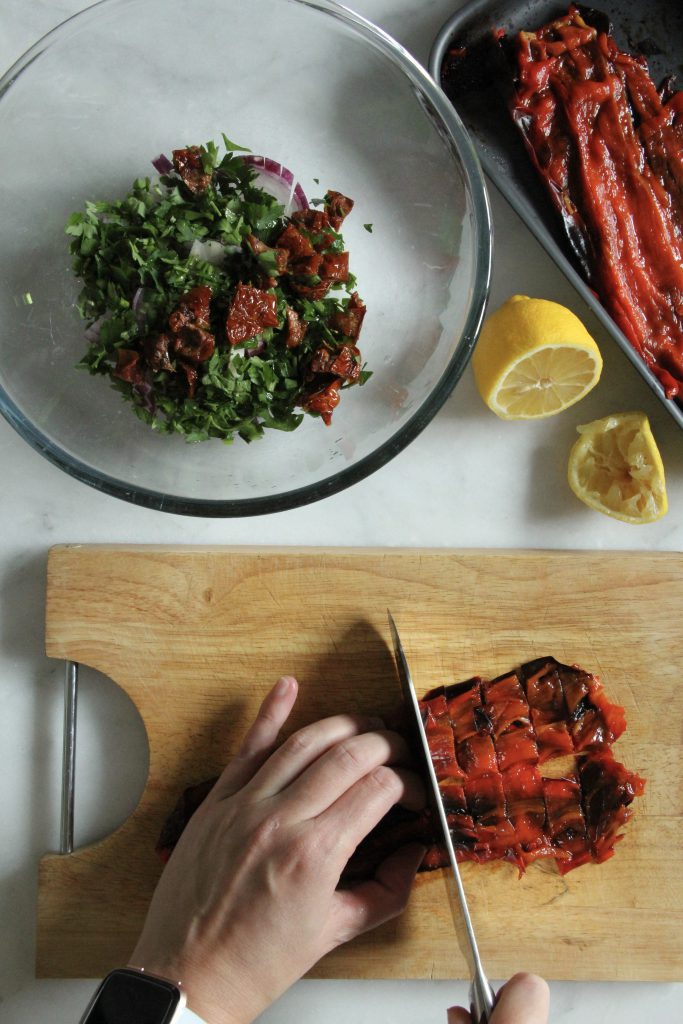
I do however alter the methods used. In the cookbook, they peel the peppers once cooked. You could do this if you wanted, but I leave the skins on as this add flavour, texture, fibre and also reduces the hands on time for making this dish. Win win.

I love using lentils in my salads. Not only are the a cheap cupboard food, they are packed full of plant-based protein and high in fibre. So much so, they are the biggest contributor of fibre to this dish which packs a whopping 14.6g per portion – that’s nearly half you daily target just in a single dish.

Serves 2

Recipe

  • 2 red peppers
  • 100g puy lentils
  • 60g goat’s cheese
  • 1 small red onion, finely diced
  • 3-4 sun-dried tomatoes
  • 1 bunch flat leaf parsley
  • 2 tsp olive oil
  • 2tsp balsamic vinegar
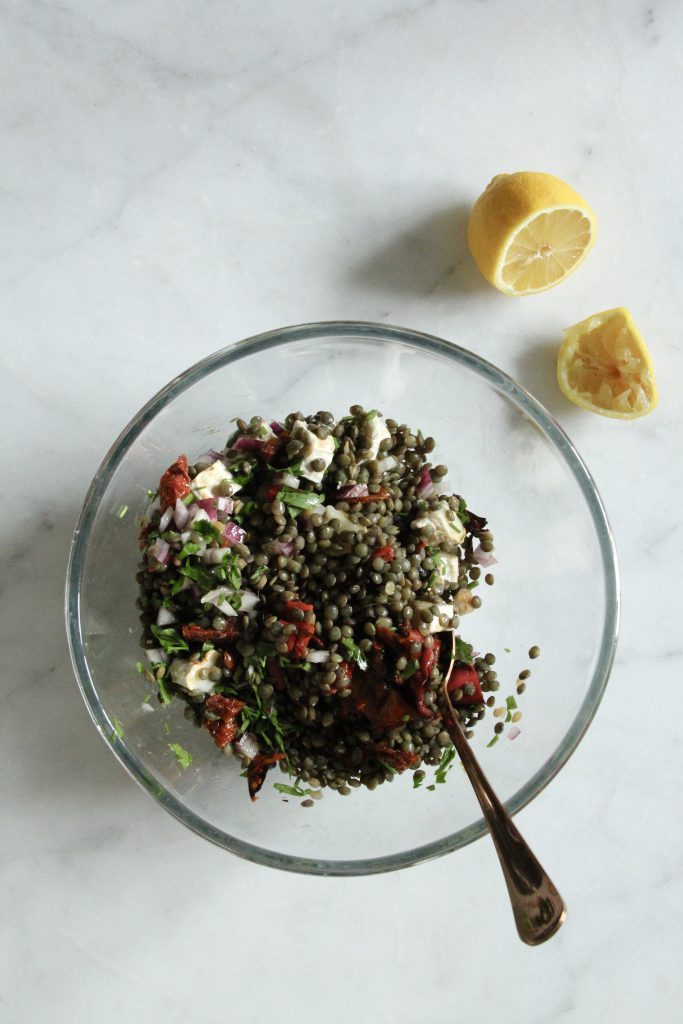
  • Juice of half a lemon

Method

  • Preheat the oven to 200°C/ 180°C fan/ gas mark 6. Place the peppers on a tray and roast for 30 minutes till blistered. Allow to cool.
  • Meanwhile, wash the lentils and cover with cold water. Bring up to the boil for 10 minutes, and the allow to gently simmer for 15-20 minutes till just firm in the centre. Drain.
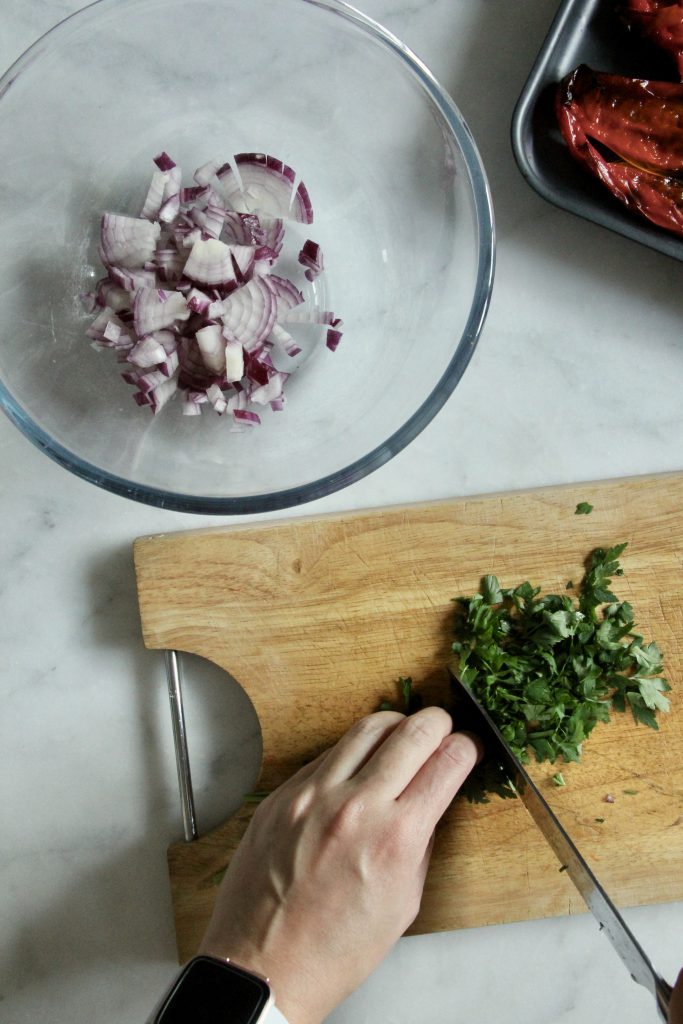
  • Once cool, de-seed and roughly chop the pepper, parsley, sun-dried tomatoes and goat’s cheese, and dress with the olive oil, balsamic vinegar and lemon juice.

Per serving 348kcal/ 13.3g fat/ 8.0g saturated fat/ 30g carbohydrates/ 14.6 fibre/ 19.6g protein