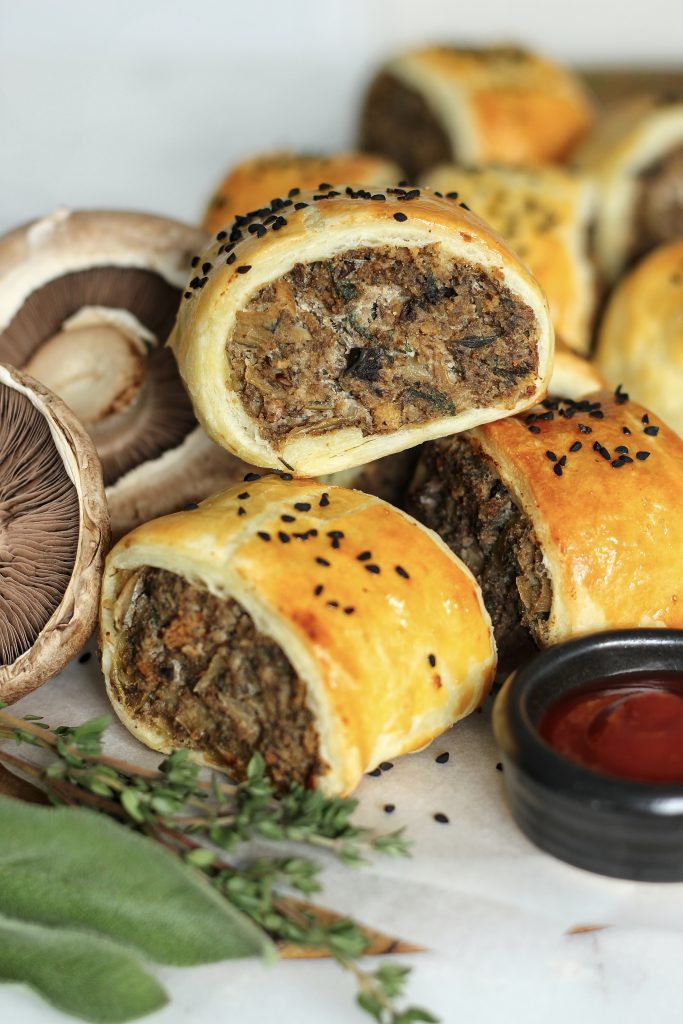
Mushroom and Tofu Sausage Rolls

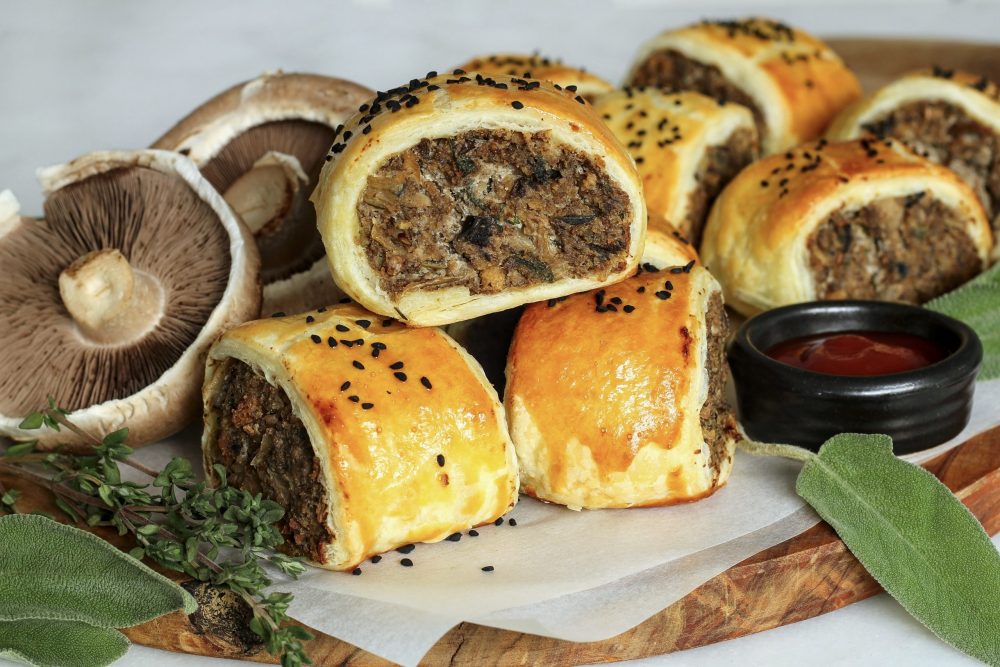
Mushroom & Tofu Sausage Rolls

For me, sausage rolls come out 2 times during the year; picnics and Christmas! While I do love a meat-based sausage roll, I wanted to create something which non-meat eaters could also enjoy without simply turning to a ready-made vegetarian sausage. This also means I’m having the benefit of plant foods, and less processed red meat which we know can be bad for our health.

You can make a bigger batch of these, partially cook them for 15 minutes and then reheat before your guests arrive for 10 minutes. Alternatively, you can freeze them down for longer-term storage. Simply cook from frozen for 15-18 minutes till crisp and piping hot.

These are also perfect for young children as they are naturally lower in salt in comparison to most shop-bought sausage rolls. Additionally, they are a softer texture inside in comparison to meat, which might be more pleasing to younger children.

To make the sausage rolls egg-free, swap the egg glaze for a milk-wash glaze.

Makes 12

Ingredients

  • 5g dried mushrooms
  • 50ml boiling water
  • 1 tbsp rapeseed oil
  • 1 onion, finely sliced
  • 2 garlic cloves, finely chopped
  • 250g mushrooms, finely chopped
  • 200g firm tofu
  • 10 sprigs thyme
  • 2 sprigs sage
  • 1 tsp pepper
  • 1/4 tsp nutmeg
  • 250g ricotta
  • 50g breadcrumbs
  • 1 sheet puff pastry
  • 1 egg, beaten
  • a few pinches of seeds e.g. nigella seeds, sesame seeds

Method

  • Pour the boiling water over the dried mushrooms to rehydrate them.
  • Meanwhile, heat the oil in a saucepan and cook the onion for 5 minutes over a low heat till soft and translucent. Add the garlic and cook for a further 2 minutes.
  • Add the fresh and rehydrated mushrooms to the onion mixture and cook till all the liquid evaporates off.
  • Add the tofu, herbs and spices and cook till dry again.
  • Drain any excess liquid off the ricotta. Add to a large mixing bowl with the breadcrumbs and the mushroom mixture. Mix well and allow to fully cool to fridge temperature.
  • Preheat the oven to 180°C fan/ 200°C convection
  • Meanwhile, cut the pastry sheet into 2 pieces through the longer edge to create two smaller rectangles. Shape the mushroom mixture into the centre of the two pieces of pastry, leaving a large gap on either long edge.
  • Using the egg, paint across one edge to act as glue. Take the edge without the egg on it and fold it over the mushroom mixture, rolling it onto the egg-washed edge to seal.
  • Cut each log into 6 pieces and place on a lined baking tray. Brush the tops with the remaining egg wash and sprinkle with seeds.
  • Bake in the oven for 25 minutes till golden brown and crispy.
  • Enjoy hot, or cold
Vegetarian Sausage Rolls

Per sausage roll: 255kcal/ 16g fat/ 7.3g saturated fat/ 14g carbohydrates/ 2.1g fibre/ 12g protein
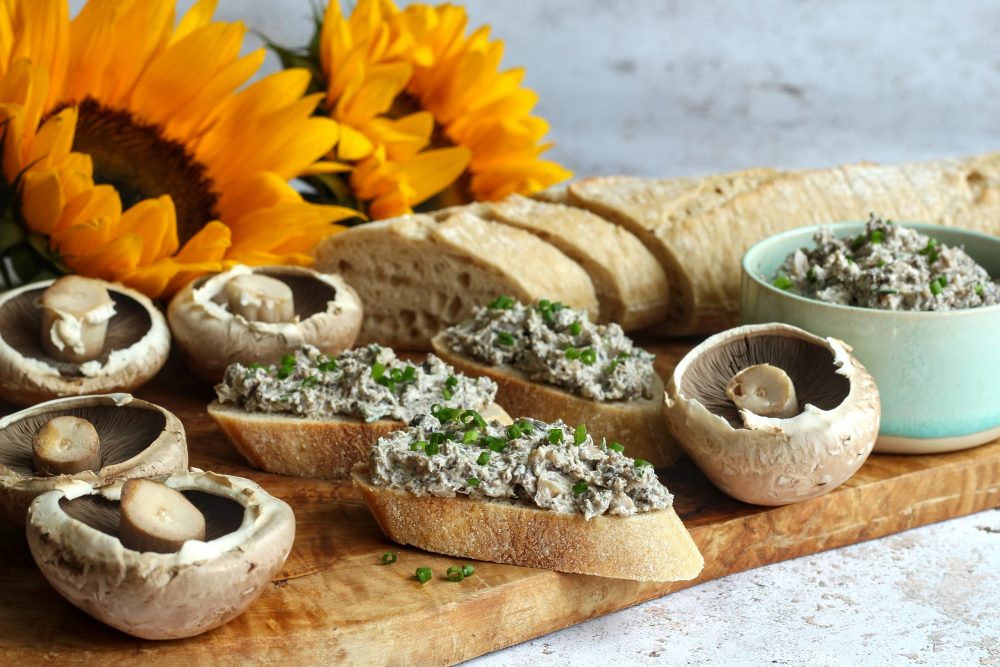
Roasted Mushroom Pate

Combining deliciously roasted and sticky garlic with vitamin D-enriched mushrooms (read my previous post on enriching your mushrooms with vitamin D by clicking here) for a delicious and nutritious spread. Make a large batch and I promise you won’t regret it! Try serving these up as little canapes on thinly sliced toasted bread at your next dinner party.

Makes 17 portions

Ingredients

  • 1 bulb of garlic
  • 1 tbsp extra virgin olive oil
  • 500g mushrooms of choice
  • 1 tbsp rapeseed oil
  • 20 sprigs of thyme
  • 300g cream cheese
  • 15g chives, chopped
  • 1/2 tsp white pepper
  • 1 tbsp lemon juice

Method

  • Preheat the oven to 160°C fan/ 180°C convection
  • Slice the top off the garlic bulb to expose the very tops of the cloves. Place in a mini cocotte or on double-layered tin foil. Drizzle with the olive oil, cover and place into the oven.
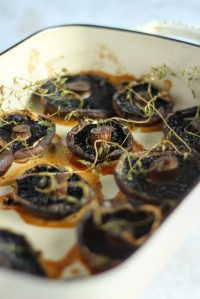
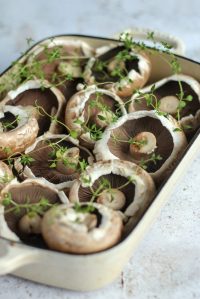
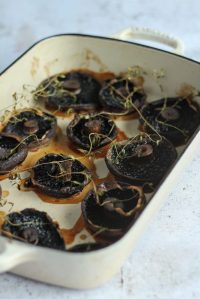
  • Meanwhile, add the mushrooms to a large tray, drizzle with the rapeseed oil and 10 sprigs of thyme. Roast in the oven for 1 hour till the mushrooms are sticky and shrunken.

  • Once the mushrooms are cooked check the garlic is soft and remove from the oven to cool – it may need a further 10-15 minutes depending on the size of your bulb and your vessel.
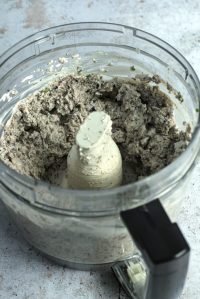
  • Once cooled, to a food processor add the mushrooms, remove the thyme leaves from the roasted thyme, chives, white pepper, and lemon. Add the remaining fresh thyme leaves and 5-6 cloves of roasted garlic. Blend to the desired consistency, checking the seasoning is to your taste.
  • Serve with crusty bread, crackers or stir into a risotto just at the end. Any leftovers can be stored in the fridge for up to 5 days, or frozen for up to 2 months.
Roasted Mushroom Pate

Per serving: 58kcal/ 4.8g fat/ 2.9g saturated fat/ 1.6g carbohydrates/ 0.5g fibre/ 1.7g protein

Vitamin D In Mushrooms

As we enter the Autumn and Winter months of the year, we lose our natural ability to make vitamin D from skin exposure to sunlight. We therefore should be looking at alternative ways to maintain our vitamin D status through our diets. I have previously written about the importance of supplementation during winter months, but there are alternative sources to supplementation if you further want to ensure your vitamin D status remains within the healthy range during the darker days.

Sun-dried and UVB irradiated mushrooms are the only non-animal-based food product with substantial amounts of bioavailable vitamin D (as D2) and, as such, have the potential to be a primary source of vitamin D in a vegetarian and vegan diet.

Most fresh-grown retail mushrooms in the UK are grown in dark, temperature-controlled rooms before being refrigerated and transported. Thus, the vitamin D2 content of most mushrooms sold is commonly less than 1μg/100g fresh weight (FW), and therefore the typical serving of mushrooms is negligible.

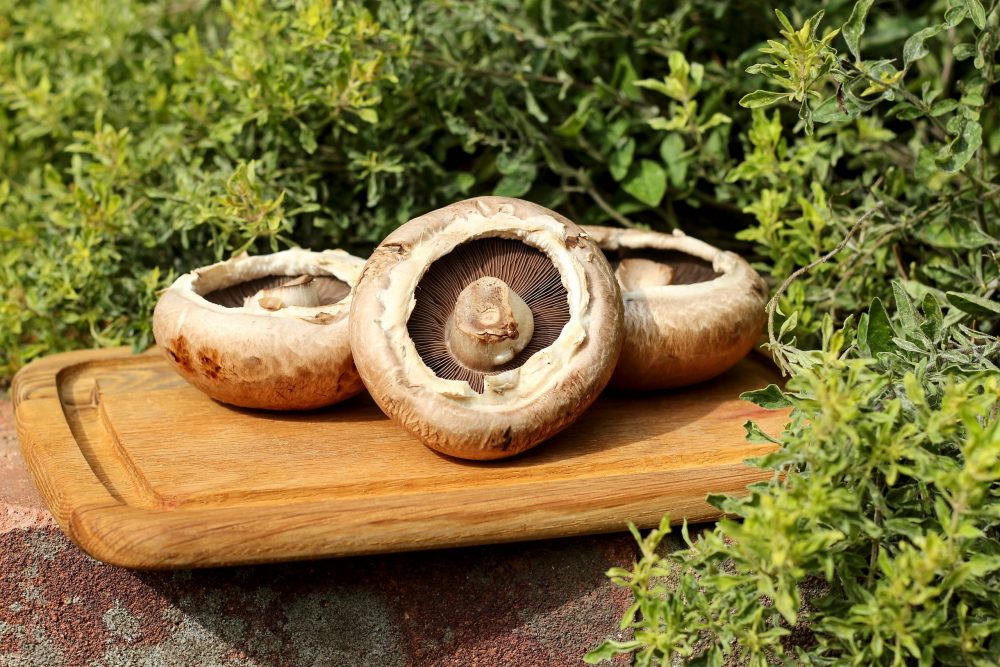
When mushrooms are exposed to midday sunlight for 15-120 minutes they will generate significant amounts of vitamin D2 (<10μg/100g FW) which approaches the recommendation for the UK which is set at 10μg/day. However, the total amount of vitamin D generated in these mushrooms is dependent on many factors, such as length of exposure, time of exposure, the surface area exposed, and weather. Increasing the surface area by slicing the mushrooms to expose more flesh can increase vitamin D production. Additionally, certain species of mushrooms will produce more vitamin D if the gills are exposed.

Commercially produced vitamin D mushrooms are exposed to specific UV radiation in the growing and/or post-harvest phase. Fresh mushrooms deliberately exposed to UV light post-harvest can produce vitamin D2 levels up to 320μg/100 FW (calculated from dried weight).

In contrast, wild mushrooms are naturally exposed to UV light and therefore contain vitamin D2, as are sun-dried mushrooms. Both wild and sun-dried mushrooms contain significant amounts of vitamin D2.

Sunbathing mushrooms to produce vitamin D2

There are plenty of mushroom-containing recipes available on my website which can easily use vitamin D-enriched mushrooms, but here are a few of my favourite!

Reference: A Review of Mushrooms as a Potential Source of Dietary Vitamin D

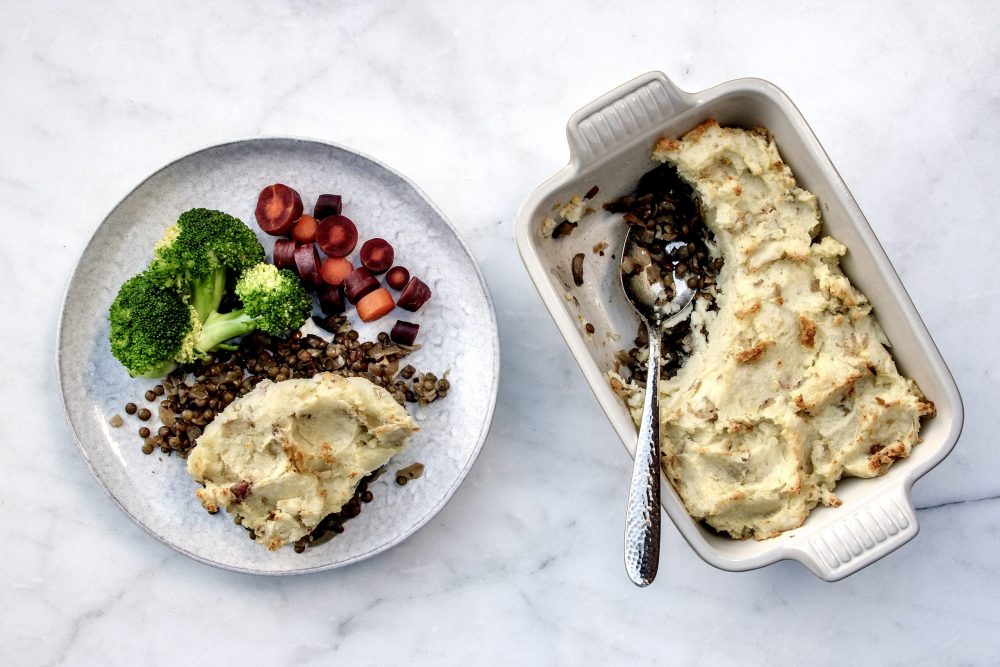
Mushroom, Lentil & Olive Oil Mash Pie

This is the recipes for those of you who already follow a vegan lifestyle. It’s also something for those who are doing Veganuary for the first time. It’s also perfect for anybody who is looking to increase their plant-based diet without necessarily being 100% vegan all the time.

This would work well with other vegetables such as leeks, celery, courgettes, or if mushrooms are not your thing use some fresh or tinned tomatoes which will cook into a tomato based sauce for the lentils to sit in.

Leaving the skin on the potatoes for the mash will make the dish quicker to prepare. You’ll also prevent any food waste as well as keep in the maximum fibre content.

Serves 2

Ingredients

  • 60g puy lentils
  • 35ml extra virgin olive oil
  • 1 large onion, finely diced
  • 1 garlic clove, finely chopped
  • 180g mushrooms, finely diced
  • 1/2 tsp vegan stock powder
  • A few sprigs of fresh thyme
  • 450g potatoes, skin left on, washed and cut into large chunks
  • 60ml soya milk

Method

  • Put the lentils into a pan and cover with plenty of cold water. Bring to the boil and then simmer for 15 minutes. Once cooked, drain the lentils reserving 2 tablespoons of cooking water.
  • Meanwhile, bring a pan of water to the boil and cook the potatoes till soft.
  • Separately, cook the onion in another pan with 10ml of olive oil over a low heat till they become soft and translucent.
  • Add the garlic and cook for 1 minute before adding the mushrooms in.
  • Add the stock powder and thyme leaves and allow to cook till the mushroom juices evaporate. Add the cooked lentils and reserved cooking liquid to the mushroom mixture.
  • Once the potatoes are cook, drain and allow to steam dry for 2 minutes. Heat the soya milk with the remaining olive oil in the pan used to cook the potatoes before adding them back in and mashing till smooth.
  • Preheat the oven to 180°C fan/ 200°C convection
  • Assemble the filling into an ovenproof dish and layer the mash over the top.
  • Bake for 25-30 minutes till the potato top turn crisp and golden brown.

Per serving: 513kcal/ 18.9g fat/ 2.9g saturated fat/ 66.6g carbohydrates/ 12.4g fibre/ 16.4g protein