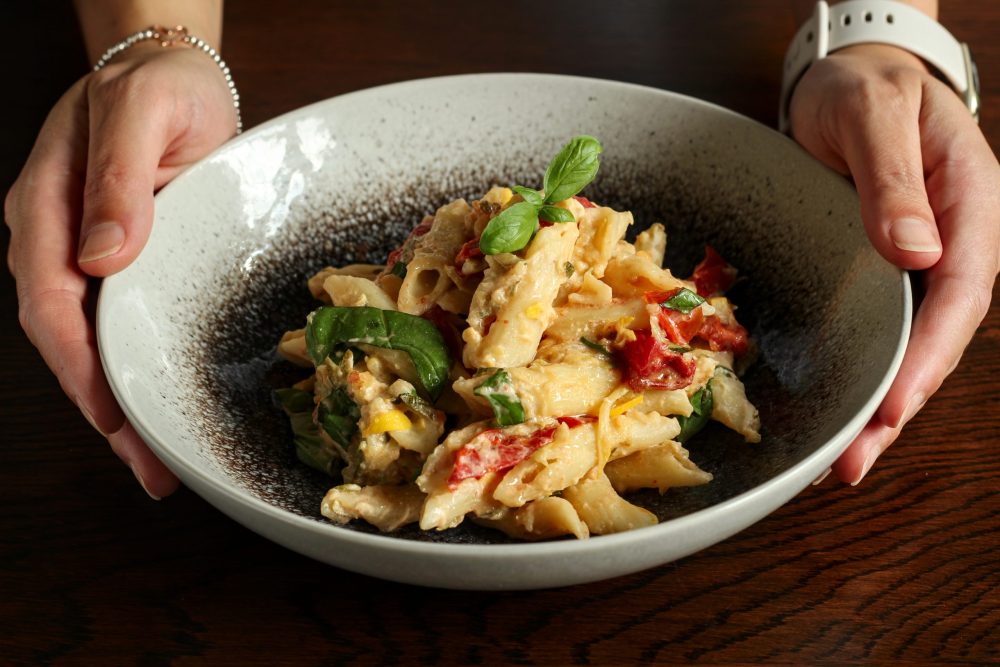
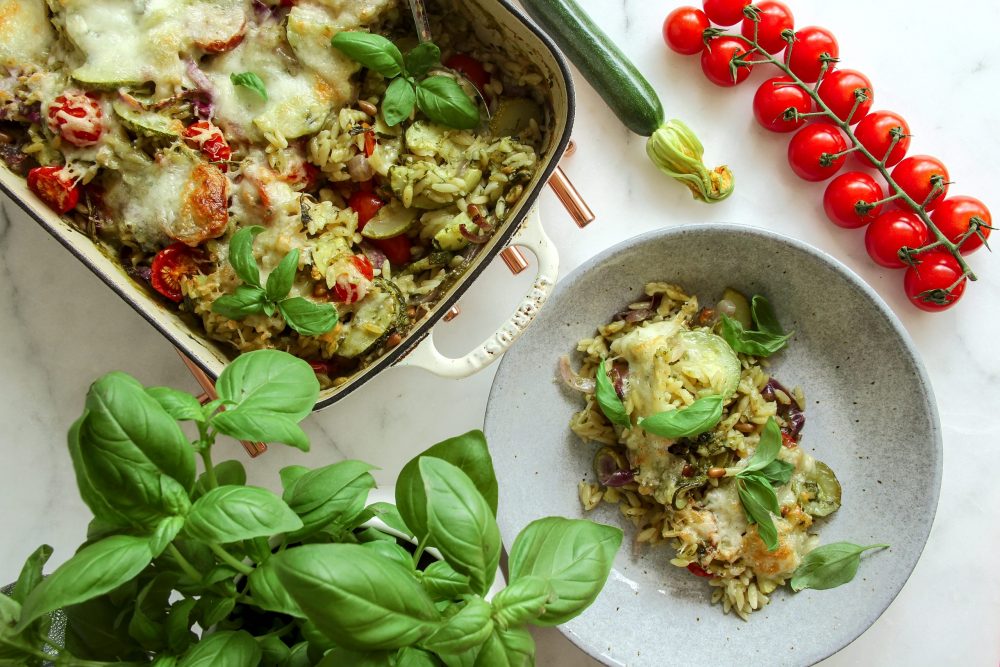
When you’re short on time but still want something freshly cooked without the hassle or the mess left after? Here’s my easy One Pan Boursin Pasta Bake which takes 5 minutes of prep and only makes 1 pan dirty!
I’m using seasonal courgettes and tomatoes to provide 2 of your 5-a-day in this dish, but if you don’t have these, or they’re not in season you can use other vegetables such as leeks, peppers, broccoli, cauliflower or even a tin of chopped tomatoes.
This dish is also naturally lower in salt, providing just 0.64g per adult-sized serving, making it family-friendly once you adjust the portion size.
Serves 3 hungry adults, or a family of 4
Ingredients
300g dried pasta with a cooking time of about 10 minutes
In a large ovenproof dish, add the pasta and place the Boursin in the middle on top of the pasta. Cover the remaining exposed pasta with the grated courgettes and sliced tomatoes.
Add the boiling water and bake in the oven for 45 minutes.
Remove from the oven and mix everything together, add in the basil and season with pepper to taste.
Delicious served hot
One Pan Boursin Pasta Bake
Per adult serving: 600kcal/ 22g fat/ 13g saturated fat/ 75g carbohydrates/ 8.2g fibre/ 19g protein/ 0.64g salt
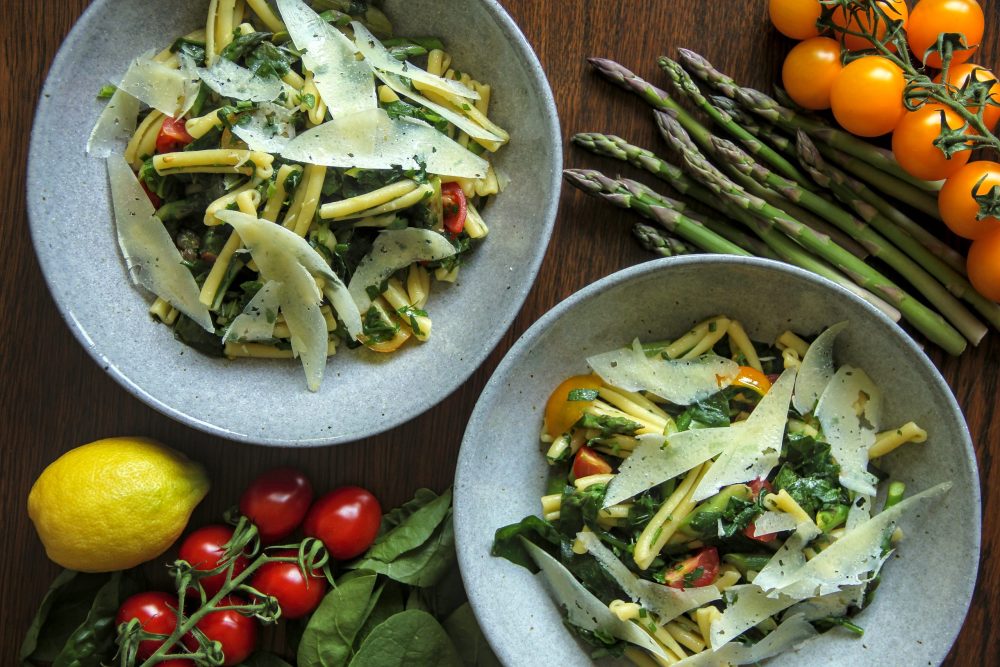
It’s British Tomato Fortnight as well as being halfway through the British Asparagus season, so I’m combining the two to make a delicious pasta salad that is perfect either hot or cold. Remember, allowing your pasta to cool helps create resistant starch which is fibre fuel for your gut microbes!
Serves 3
Ingredients
250g pasta
200g asparagus tips, roughly chopped
100g spinach, roughly chopped
3 tbsp extra virgin olive oil
1 lemon, zest and juice
100g British tomatoes, roughly chopped
1/2 bunch basil, roughly chopped
1/2 bunch flat leaf parsley, roughly chopped
1/2 bunch chives, roughly chopped
Salt and pepper to taste
30g pecorino cheese
Method
Bring a large pan of water to the boil and cook the pasta for 2 minutes less than the packet instructions. In the last minute of cooking add the asparagus tips before draining.
Add the spinach and olive oil, and stir to combine before adding all the remaining ingredients except the pecorino.
Serve the pasta in bowls, hot or cold, with pecorino shavings over the top.
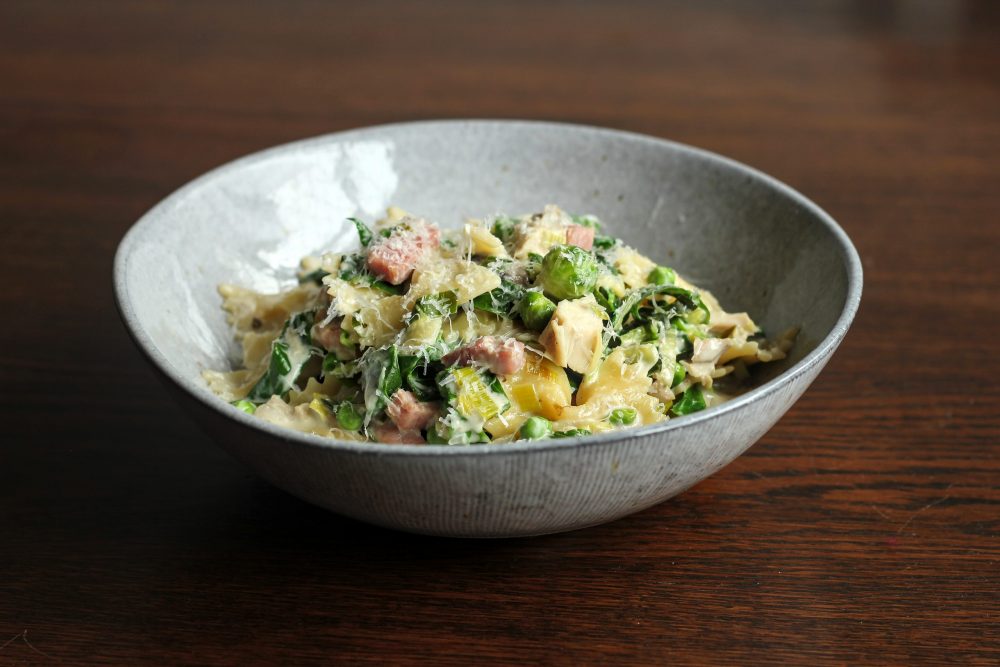
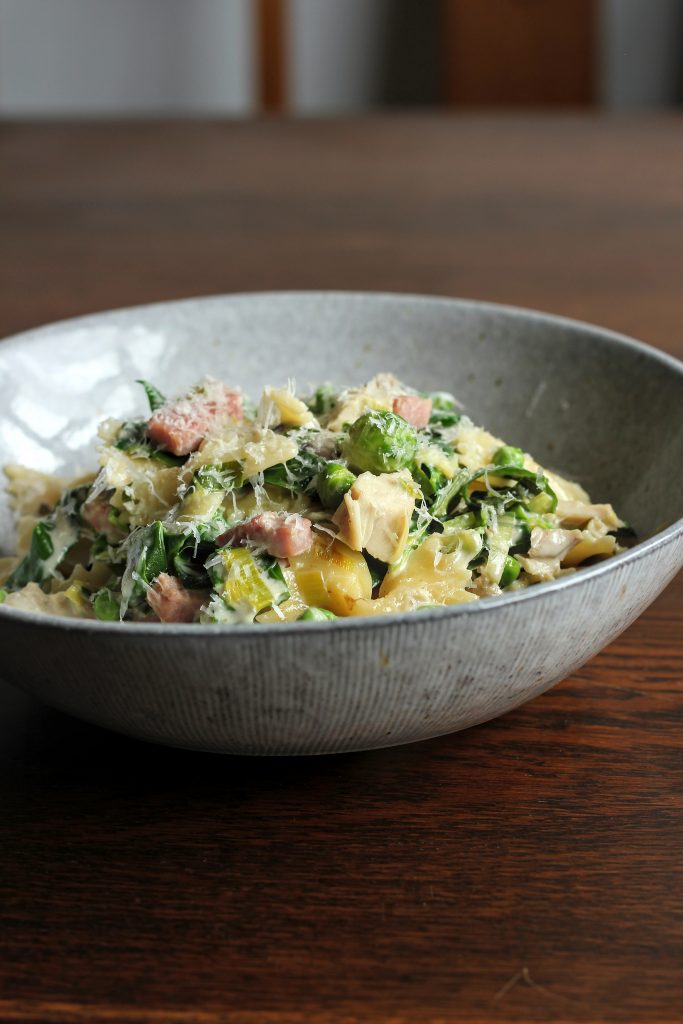
Looking for alternative ways to use up your leftovers from Christmas Day? I’ve already got a leftover pie recipe, but after making two already this year for the freezer I needed to use up my leftovers in a different way.
You can use whatever you have to hand, almost anything goes but here are a few substitutes for my recipe below:
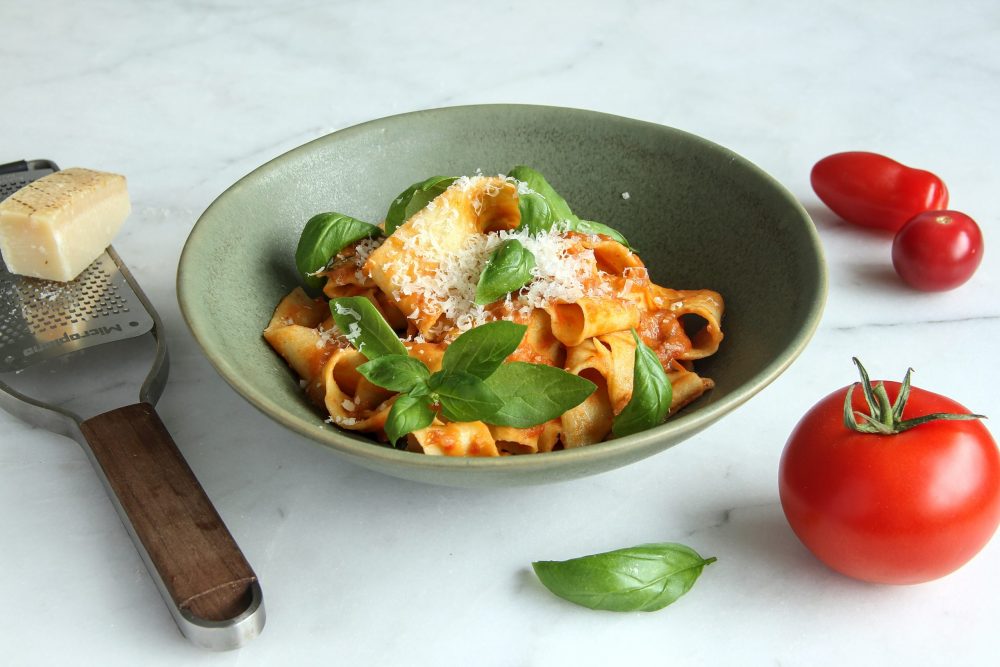
It’s World Pasta Day so I’ve created an easy, nutritious and delicious pasta sauce for the occasion. Easily adaptable to make it vegan and gluten-free by swapping parmesan for a vegan hard cheese and pasta for gluten-free pasta.
Roasted Red Pasta
Serves 4
Ingredients
600g tomatoes, roughly chopped
3 cloves garlic, left in their skins
1 red pepper, cut into quarters, seeds removed
1 large red onion, cut into quarters
3 tbsp extra virgin olive oil
100g red lentils
300ml water
To serve
300g pasta
Parmesan
Fresh basil
Method
Preheat the oven to 160°C fan/180°C convection
In a large baking tray add the tomatoes, peppers, garlic, onion and oil. Mix and roast for 1 hour.
Meanwhile, in a saucepan add the red lentils and 300ml water. Bring to a boil and simmer for 20 minutes till soft.
Once the vegetables are cooked through, remove the skin from the garlic and transfer everything to a high-speed blender with the cooked lentils and their cooking water. Blend till smooth, seasoning to taste.
Stir through freshly cooked pasta, using a little reserved pasta water to let the sauce down to your desired consistency.
Serve topped with parmesan and fresh basil.
Per serving: 530kcal/ 15g fat/ 3.6g saturated fat/ 74g carbohydrates/ 7.7g fibre/ 20g protein
An easy one-pan dish means cleaning up after eating is easy. Any leftovers are delicious the next day for lunch or dinner so don’t be put off by the large volume you make.
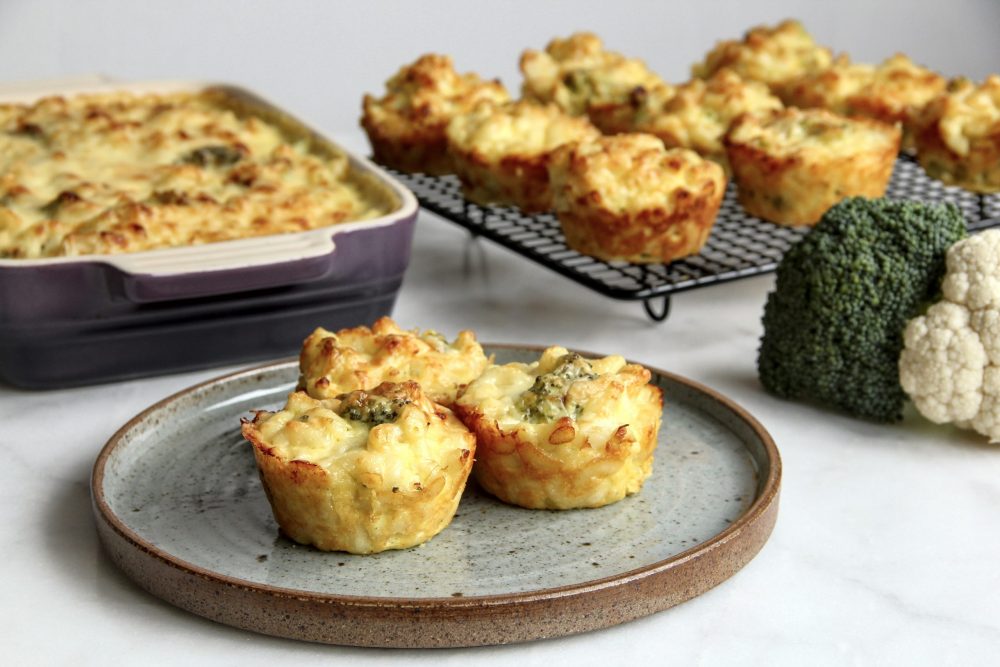
When cauliflower cheese and macaroni cheese collide.
I made this recipe for child nutritionist Charlotte Stirling-Reed. She loved the idea of these muffins for baby led weaning. For more information on this topic head to her website.
Makes approximately 15 muffins
Ingredients
180g macaroni – I have used a high fibre variety
150g broccoli, cut into small florets
150g cauliflower, cut into small florets
40g butter
45g plain flour
600ml milk*
1 tsp English mustard (optional)
120g reduced fat cheddar cheese*, grated
Pepper to taste
1 egg
Oil for greasing OR muffin cases
Method
Preheat the oven to 180°C fan/ 200°C convection
Bring a large pan of water to boil. Cook the macaroni according to packet instructions, and steam the cauliflower and broccoli over the top of the pasta as it cooks.
Meanwhile, melt the butter in a saucepan and add the flour.
Slowly add in the milk a quarter at a time, stirring to prevent any lumps.
Option to add 1 teaspoon of English mustard.
Add half the grated cheese to the mix and allow to melt. Season with pepper to taste
Once the pasta is cooked, drain and stir into the sauce with the cauliflower and broccoli.
Add the egg and mix.
Line a muffin tray with cases, or lightly grease a non-stick tray. Fill each hole with mixture (2-3 spoonful’s).
Top with the reaming half of cheese.
Bake in the oven for 18-20 minutes till golden brown.
Allow to cool completely in trays before removing unless in muffin cases, in which case you can remove after 5 minutes.
Suitable for freezing as easy grab and go options. Can be served cold, microwaved or oven heated.
*For children aged 2 and under use full fat dairy products including cheeses.
If you need an egg-free option you can omit the egg, but you will need to completely cool the bites in the tray and the chill them in the fridge before removing them so they can set in shape.
If you’re more of a traditionalist, you can make standard macaroni cheese by leaving the egg out and placing the mixture in an ovenproof dish. Simply top with the remaining half of cheese and bake in an oven set to 180°C fan for 25 minutes till golden brown and bubbling. You could also prep this dish ahead of time, pop it in the fridge and then bake for an easy mid-week meal for the family.
Per bite: 126kcal/ 5.2g fat/ 3.1g saturated fat/ 12.7g carbohydrates/ 2.2g fibre/ 6.2g protein
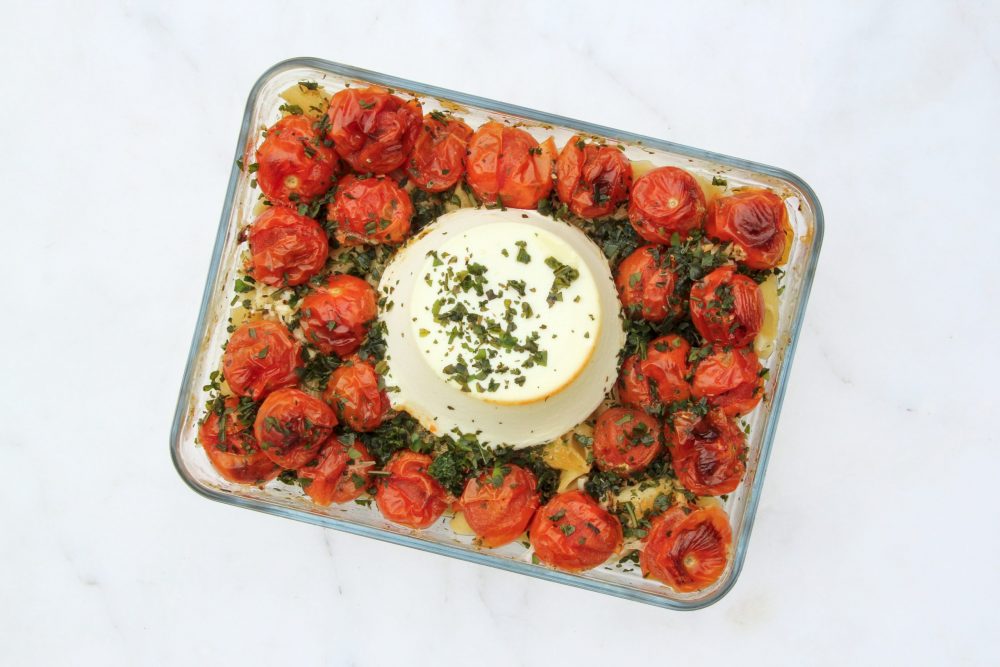
So there’s the TikTok trending baked feta and tomato pasta, and you thought it couldn’t possibly get any easier, and yet here it is. 5 minutes of food prep, bang it in the oven and 45 minutes later you simply stir and serve. It’s perfect for busy mums juggling young children thanks to swapping out the feta for ricotta cheese.
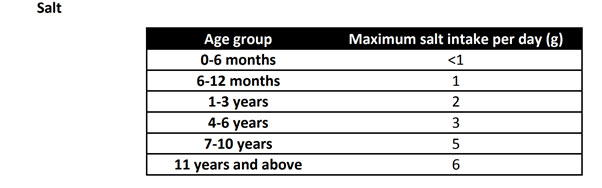
Ricotta cheese is naturally much lower in salt in comparison to feta, containing around 0.3g salt per 100g. In comparison, feta can have up to ten times that amount. Swapping the feta our for ricotta in the recipe reduces the salt per portion from 1.5g to 0.24g. The recommendation for adults is a maximum of 6g per day, and that is an upper limit rather than a target to hit (our bodies actually need less than 1g per day to survive). Too much salt can lead to diseases such a heart disease and high blood pressure, so watching your salt intake is important. For children and babies this recommendation is much lower. The table below, taken from the British Nutrition Foundation shows the maximum salt levels for children at different ages.
I developed this recipe for baby and child nutritionist Charlotte Stirling-Read which is suitable for young babies (peel the skins off the cooked cherry tomatoes if serving to young babies without teeth), toddlers and adults, making it the perfect mid-week family dinner when you’re rushed off your feet.
Serves 3 adults, or a family of 4
Ingredients
250g pasta with a 10-12 minute cooking time
1/2 tsp dried oregano
400g cherry tomatoes
2-3 garlic cloves, chopped
1 tub (250g) ricotta
2 tbsp extra virgin olive oil
1 tbsp basil, fresh or frozen
Method
Preheat the oven to 180°C fan/ 200°C convection
In a large oven-proof dish (minimum 1.8l capacity) combine the pasta, oregano and 550ml boiling water. Mix to disperse the oregano evenly.
Top with garlic and cherry tomatoes, leaving a space in the centre for the ricotta.
Turn the ricotta out into the centre and drizzle the oil over everything.
Bake in the oven for 45 minutes.
Remove from the oven, top with the basil and mix everything thoroughly, crushing the tomatoes and the ricotta to make the sauce.
Per serving: 511kcal/ 17.1g fat/ 5.9g saturated fat/ 68.7g carbohydrates/ 4.8g fibre/ 18.2g protein
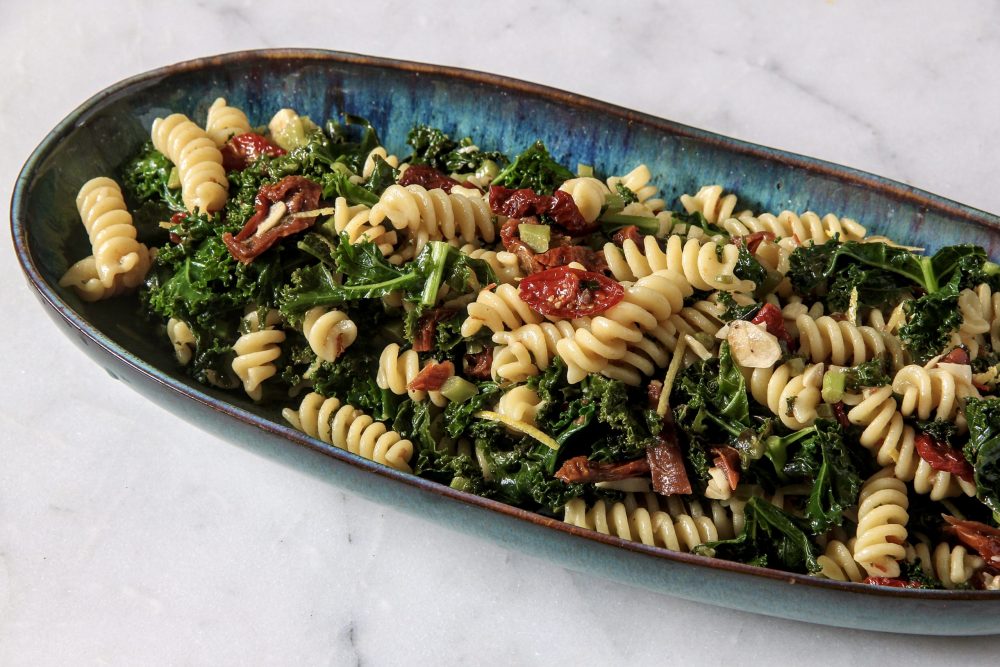
Super simple, seasonal, and takes just 15 minutes to cook. Kale is a great source of vitamin K, as well as beta-carotene which the body can convert into vitamin A.
I see loads of recipes using kale where they strip the leafy part off the central stem. I love the contrast of textures, with the stem staying crunchy as the leaves become soft. It also helps reduce food wastage by eating the whole of the produce.
Kale is a plant-based source of dietary iron. Being from a plant, it is in the form of non-haem iron which means it is harder for the body to absorb. Using the lemon juice at the end of cooking adds vitamin C to the dish which can help increase the uptake of plant-based iron.
Serves 2
Ingredients
150g dried pasta of choice
1 tbsp extra virgin olive oil
200g kale, roughly chopped
60g sundried tomatoes, drained and roughly chopped
4 cloves of garlic, roughly chopped
1 unwaxed lemon, zest and juice
Method
Bring a large pan of water to the boil and cook the pasta for 2 minutes less than the packet instructions.
Separately, in a frying pan cook the kale with the oil for a few minutes till slightly soft.
Add the garlic and sundried tomatoes and cook for a further few minutes till fragrant. If needed, add a little pasta water to stop the garlic from burning.
Add the pasta with a tablespoon of pasta water and add the lemon zest and juice.
Stir to combine and serve immediately.
Per serving: 441kcal/ 11.8g fat/ 1.6g saturated fat/ 64.9g carbohydrates/ 9.0g fibre/ 13.8g protein
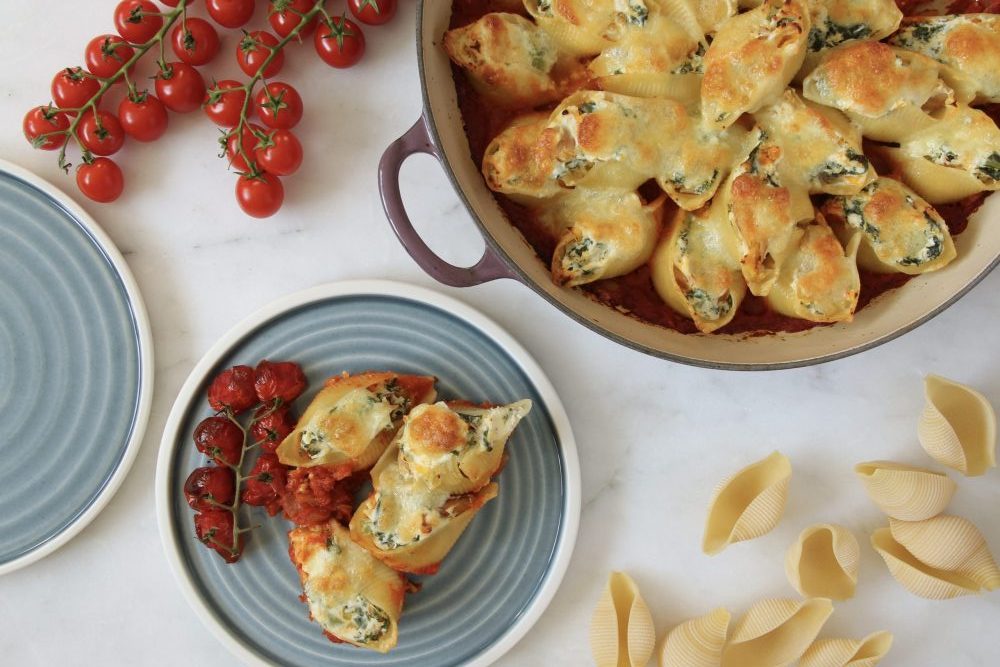
Seasonal autumnal butternut squash, roasted to maximise the
flavour. Leaving the skin on the squash increases the fibre content, so don’t
be tempted to peel! It’ll save you time, keep your gut bacteria happy, and
increase the flavour of the whole dish as it caramelises in the over from its
first roasting!
I like to leave everything a little chunky, this way you can
actually see what you’re eating, whether it be the creamy ricotta, soft
butternut squash or kale. The final topping of mozzarella gives a lovely golden
hue to the whole dish, as well as giving some lovely texture which I always
can’t resist to leave to the final mouthful.
This dish is perfect for wowing a crowd at a dinner party. It can happily sit in the fridge for a day or two, and by cooking the pasta in advance and allowing it to cool in the present of oil, you increase the fibre content through the formation of something called resistant starch. So don’t be afraid to prepare in advance and then whip out at a later date (even if it’s just for a mid-week dinner!). Alternatively, assemble the dish bar the final crown of mozzarella and you can freeze portions which can be cooked at a later date.
Serves 5
Recipe
500g Butternut Squash, skin
on and cubed
200g giant pasta shells
1 tbsp olive oil
120g kale, sliced
1 tsp rapeseed oil
2 large onions, chopped
3 cloves garlic
350g rough passata
500g ricotta
¼ nutmeg, grated
1 ball mozzarella
Method
Set the oven to 150°C fan/160°C convection. Place the butternut squash on a roasting tray and cook for 20 minutes till golden brown. Turn the oven up to 180°C.
Meanwhile, cook the pasta for 2 minutes less than the packet instructions. Drain and mix the olive oil over to stop the shells from sticking.
Steam the kale over boiling water for 4 minutes.
In a large ovenproof dish, gently sauté the onions in rapeseed oil over a low heat. Once soft add the garlic, cook for a further minute before adding the passata and cook till reduce by a third.
Meanwhile, mix the ricotta and nutmeg together and season to taste with salt and pepper. Break up the roasted squash roughly, add to the ricotta mix with the kale. Stuff the pasta shells with the mixture.
Off the heat, arrange the stuffed shells into the dish and top each shell with mozzarella.
Bake in the oven for 20-25 minutes till golden brown and bubbly.
Delicious served with roasted vegetables or a side salad.
Per serving 417kcal/ 20.0g fat/ 9.3g saturated fat/ 34.6g carbohydrates/ 5.0g fibre/ 18.6g protein
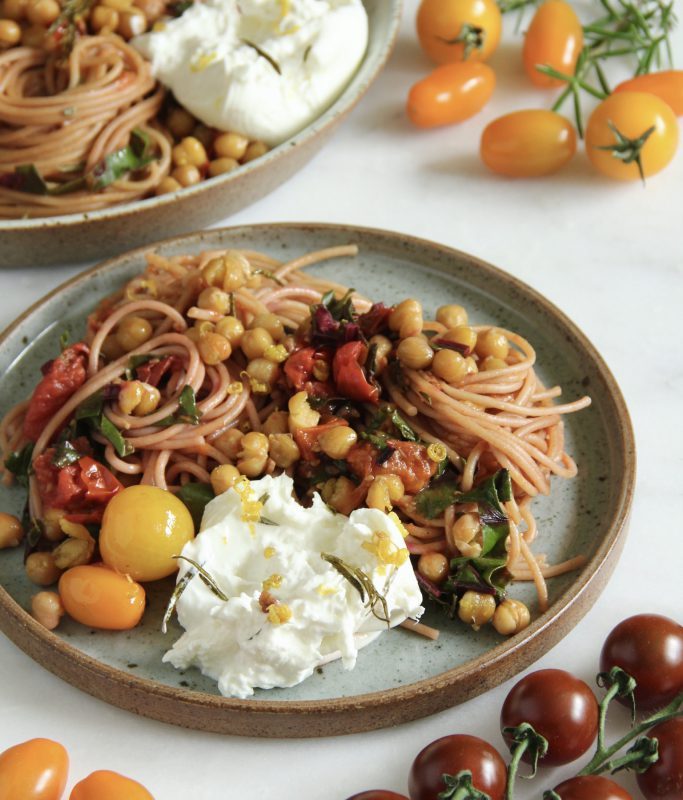
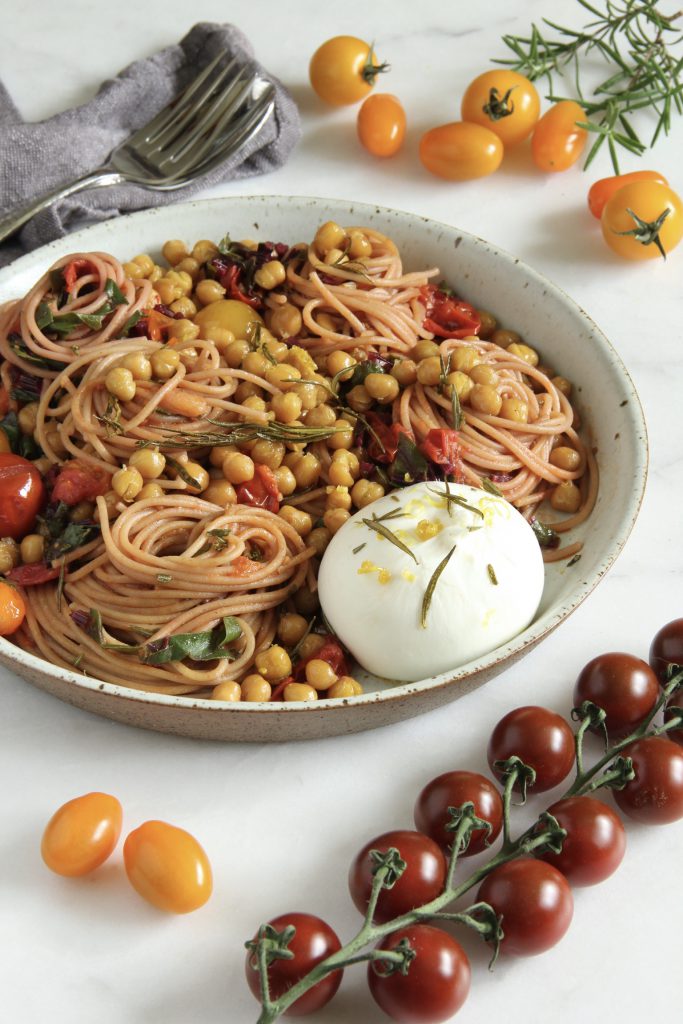
I’m trying to find some inventive ways to use up the leftover beetroot leaves as I process them to try to preserve the taste of summer. Beetroot leaves are so similar to perpetual spinach or Swiss chard. For every homegrown beetroot given out, I also say to my willing receiver “did you know you can eat the leaves too?” There is absolutely no reason to waste them so apart from giving them to the chickens as a little treat, I’m also trying to utilise them myself. If you can get hold of whole beetroots with the leaves still attached, or are growing them yourself (or being gifted as I am doing with so many beetroots!) then you absolutely must try them!
The standard purple beetroots still contain some of the bright purple-red colouring found in the bulb, so I would only assume there are some of the same health benefits from eating the leaves as there are from the actual beetroot itself, although it a smaller quantity which is reflected in the light staining you get from the leaves themselves. There hasn’t been any research into this as far as I can see, but at the end of the day it is green and leafy, and as it’s not toxic to humans, I can only assume there must be some good to eating them whole vegetable from root to leaf.
For me, eating beetroot leaves is a true taste of summer, and something I am currently relishing. I hope that you can get your hands on some beetroot leaves, but if you can’t, or decide you need a little reminder of Summer when it’s dark and gloomy in Winter, use baby leaf spinach, kale or even cabbage.
While I think that standard “white” spaghetti would look more aesthetically pleasing, I am always drawn to using wholemeal pasta wherever possible due to the extra fibre (from 7g fibre per portion up to almost 12g). I also think it helps enhance the slight earthiness of the beetroot leaves.
Serves 3
Ingredients
1 tin of chickpeas, drained and rinsed
3 springs of rosemary, leaves removed from 1 sprig and roughly chopped
Zest of 1 unwaxed lemon
2 tbsp extra virgin olive oil
250g cherry tomatoes
2 cloves of garlic
1/2 tbsp balsamic vinegar
200g wholemeal pasta
150g beetroot leaves, roughly chopped
1 ball of fresh burrata
Method
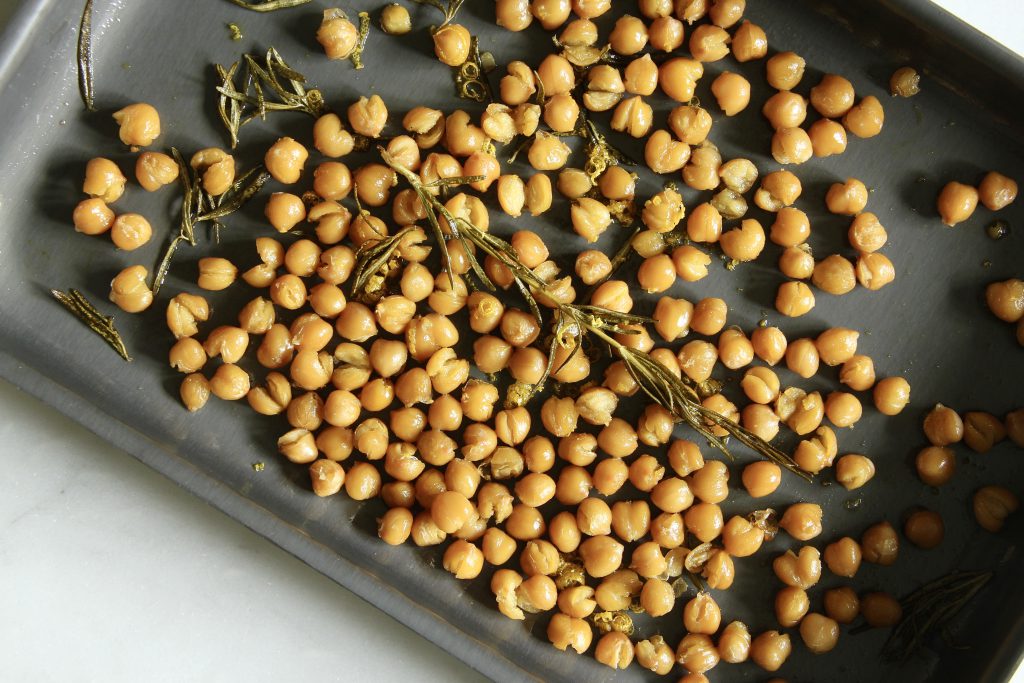
Mix the chickpeas, 1 tbsp oil, lemon zest, and 2 spring of rosemary in a baking tray. Bake at 180°C fan/ 200°C convection/gas mark 6 for 15 minutes till crispy and fragrant.
Meanwhile, add the tomatoes, garlic and remaining oil to a saucepan, and cook for 5 minutes, before adding the balsamic vinegar and chopped rosemary. If needed add a little water to stop it from sticking.
Boil the wholemeal pasta for 2 minutes less than the instructions, reserving a little pasta water.
Add the beetroot leaves into the tomato sauce before mixing in the cooked pasta. Return to the heat for 1 minute, adding some of the reserved pasta water if required to loosen the sauce.
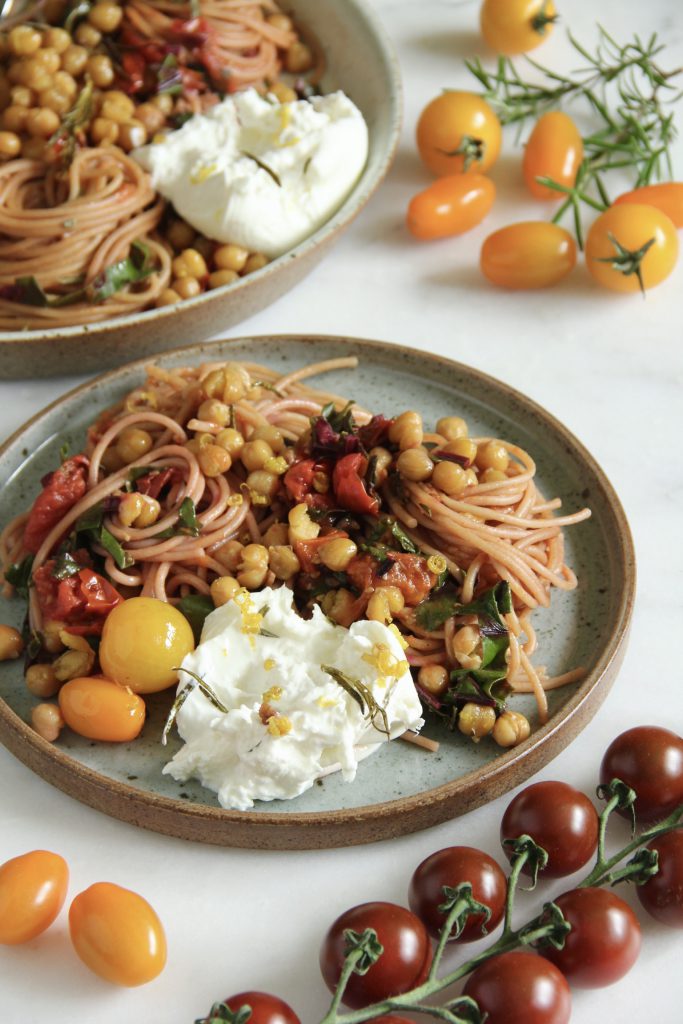
Serve with the crispy chickpeas, crispy rosemary, and the burrata ball over the top.
Per serving: 501kcal/ 14.2g fat/ 7.0g saturated fat/ 70.0g carbohydrates/ 11.8g fibre/ 18.6g protein
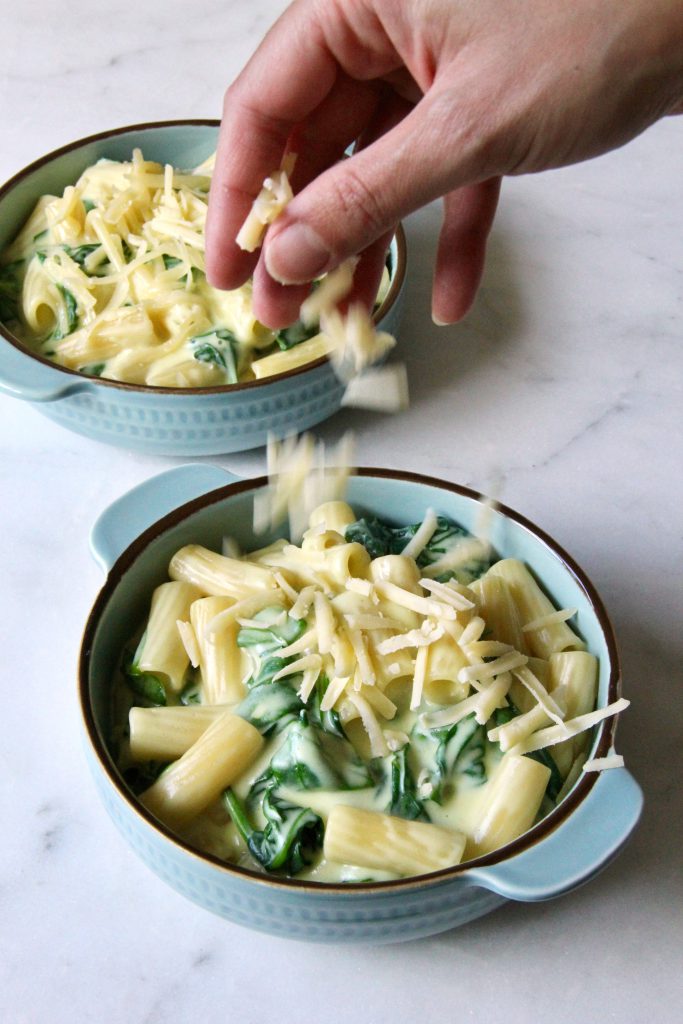
I have lovely fond memories of walking into Godalming high street and lunching with friends in the local vegetarian and yoga café.
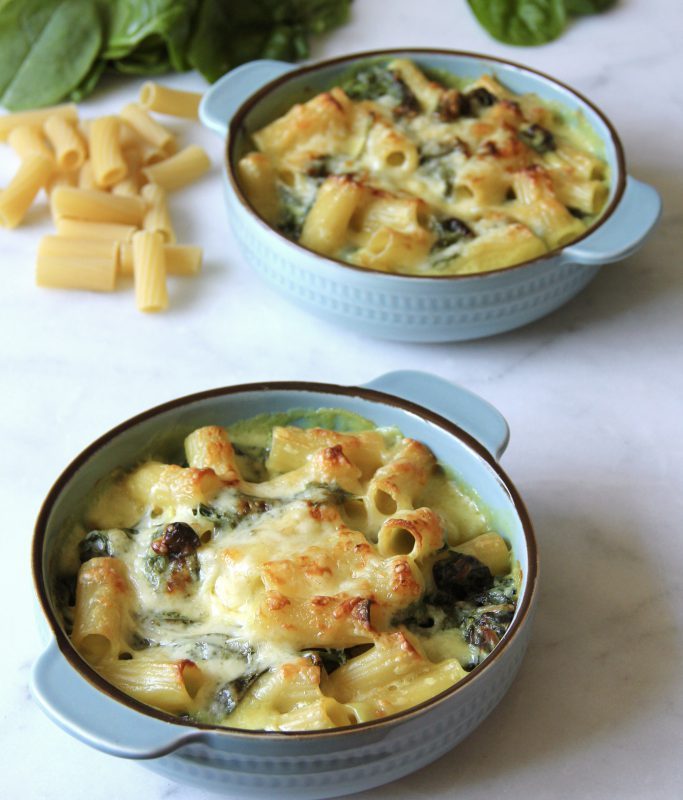
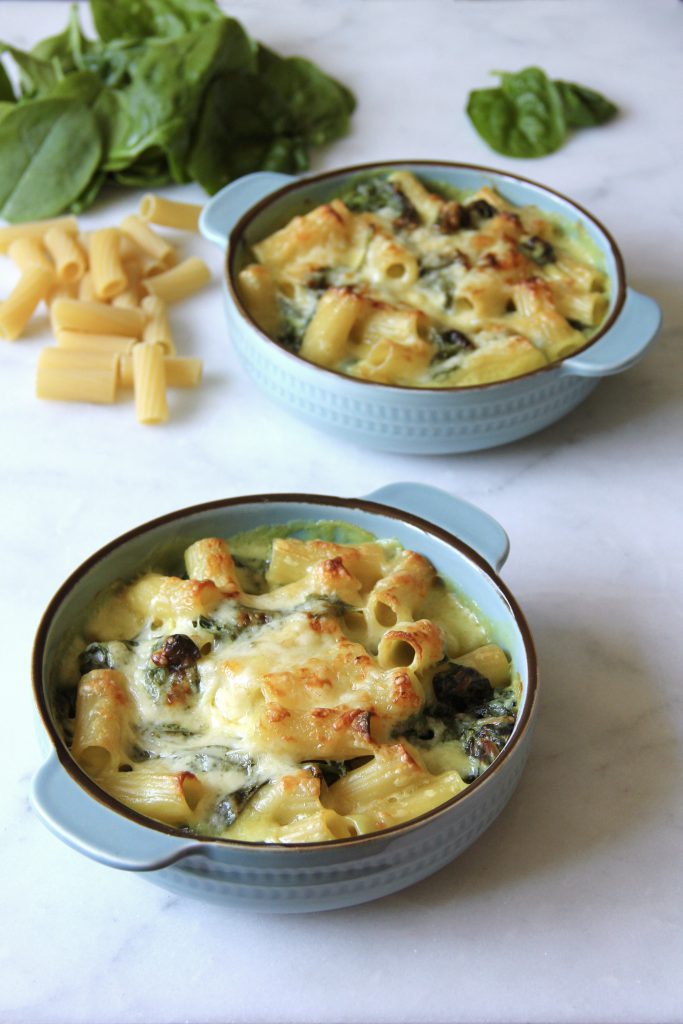
This gorgeous café, Café Mila, inspired this dish. Here I have had countless macaroni cheese dishes after walking several miles to get there, all as part of a team challenge to accumulate the highest number of steps.
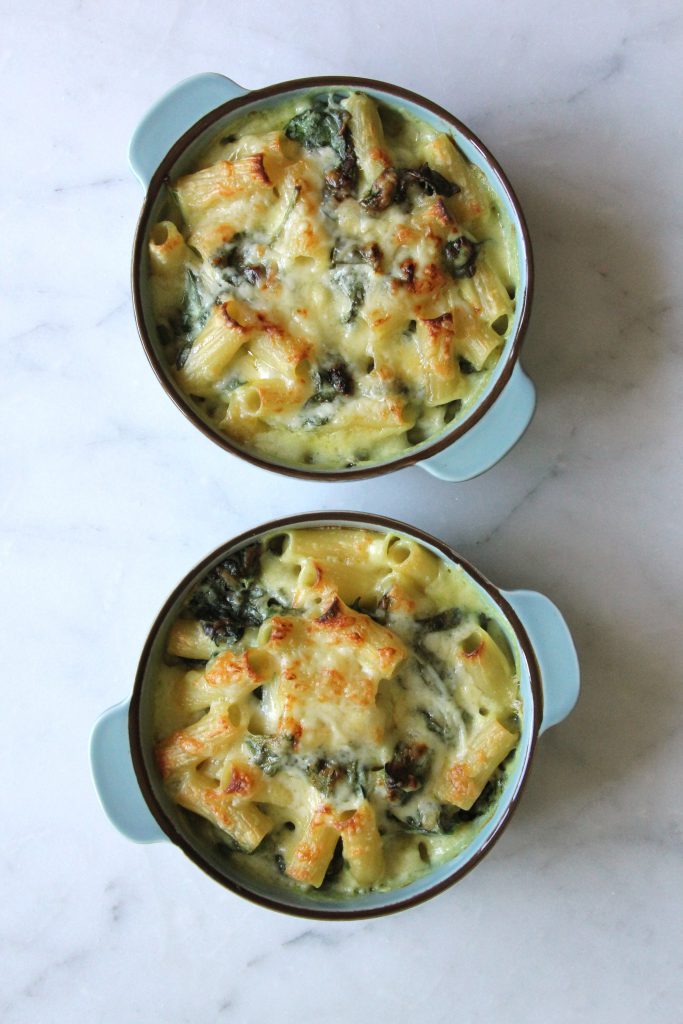
I always remember the dish coming out, golden brown bubbling cheese covering macaroni with swirls of spinach. This dish is worth the trek! I do love my macaroni cheese, so sometimes I make my own “lighter” version by using reduced-fat cheddar cheese to help keep the total saturated fat under some control. However, if you don’t eat this all the time, and I don’t, using standard fat cheddar is completely fine. In addition, using mature or extra mature cheddar gives a stronger cheese flavour which can help you keep the quantity of cheese used overall lower.
This dish is perfect to make at the weekend when you have time, and then store in the fridge for a quick and easy meal later in the week. Alternatively, why not try making a larger batch and popping one in the freezer. Cooling cooked pasta has been shown to help further increase the fibre content through the formation of resistant starch, adding other benefits to this dish!
Another great way to increase the fibre content of this dish is to use high fibre pasta. This could either be using wholemeal pasta, where the whole grain is used or alternatively, there are now ranges of high fibre pastas. These are where fibre, such as oat, are added to the pasta before it is shaped. Adding extra fibre to your diet in this way is a really easy method for increasing your fibre intake without much effort. On average UK people eat only an average of 18g fibre per day, and the target is 30g fibre per day. This dish contains 5.7g fibre, but a simple swap to fibre enriched pasta could boost the fibre up to 12g per portion!
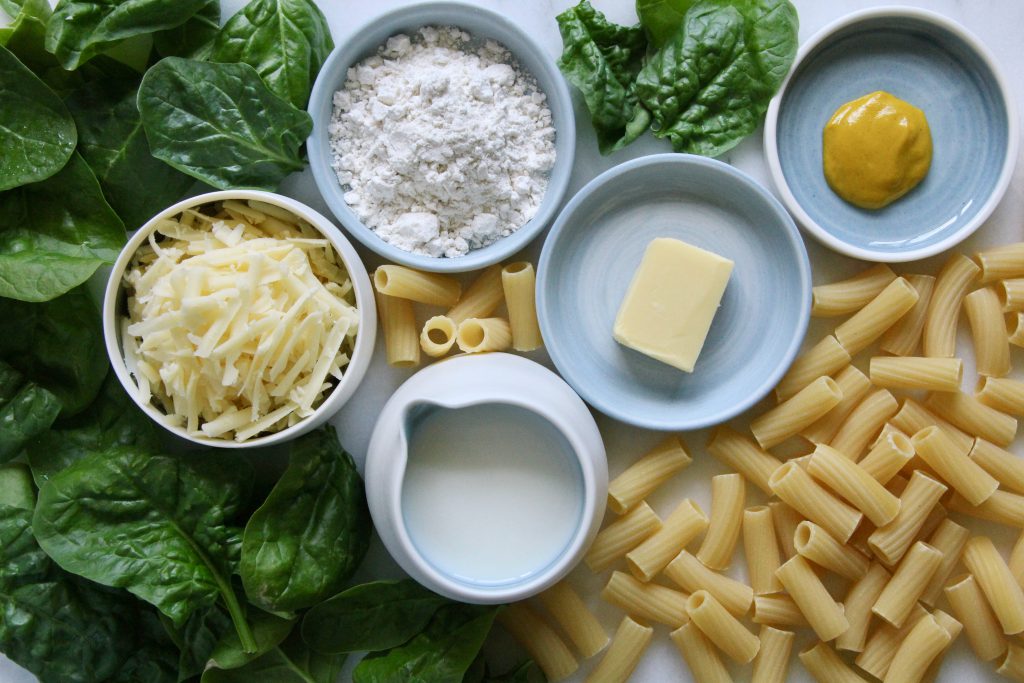
Serves 2
Recipe
15g butter
20g plain flour
360ml semi-skimmed milk
½ tsp English mustard
100g mature cheddar cheese, grated
150g dried pasta
140g spinach
Method
Set the oven to 180°C fan/190°C convection.
Melt the butter in a medium-sized saucepan. Add the flour and cook for 1 minute before adding the milk a little at a time, stirring constantly till thick. Add the mustard and half the cheddar cheese and season with pepper to taste.
Meanwhile, cook the pasta for 2 minutes less than the packet instructions.
Once the pasta is cooked, add the spinach into the cheese sauce and mix, followed by the drained pasta.
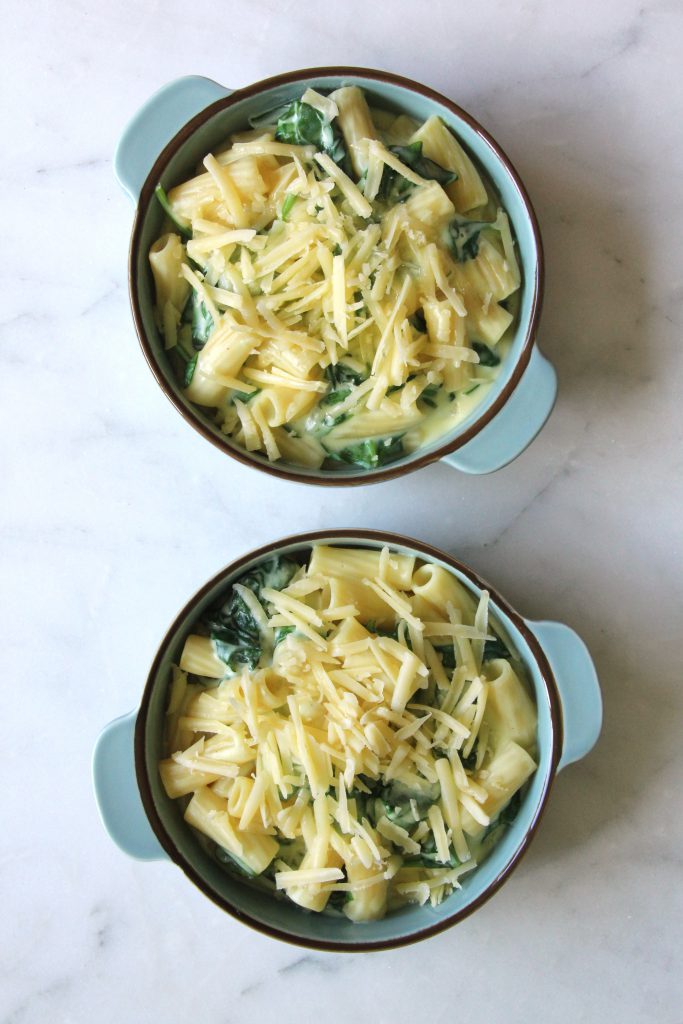
Pour everything into an ovenproof dish and top with the remaining cheese and cook in the oven for 15-20 minutes till the top is golden brown and bubbling.
Per serving: 711kcal/ 28.9g fat/ 17.4g saturated fat/ 78.6g carbohydrates/ 5.7g fibre/ 31.7g protein
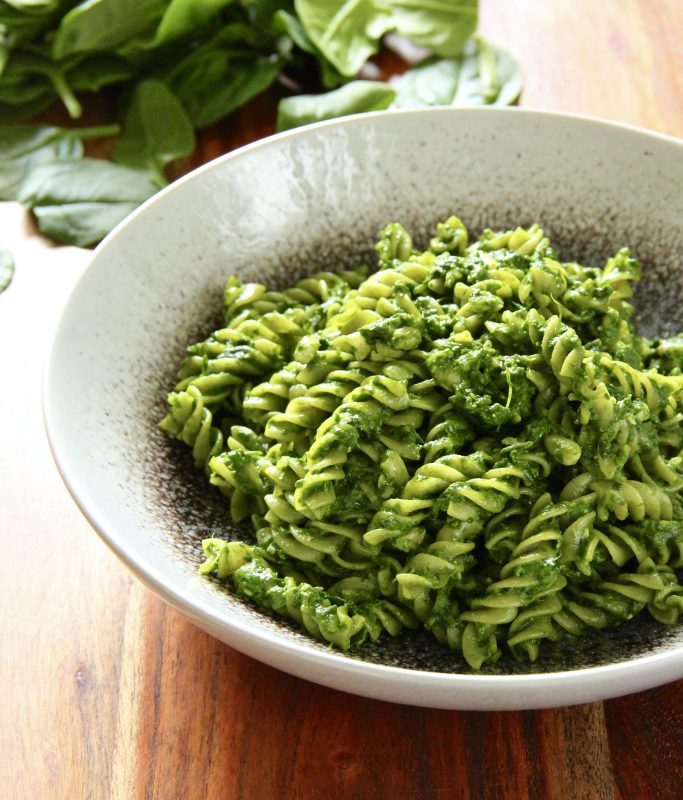
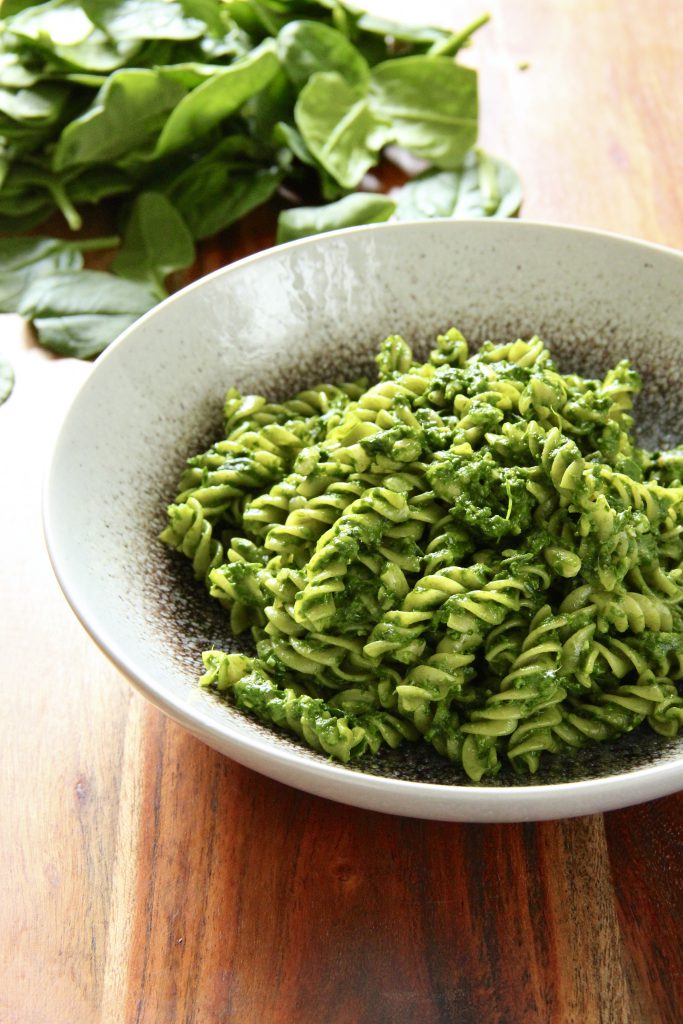
A delicious way to help increase your vegetable intake by hiding them in your pasta sauce – perfect for children who might be fussy! The vibrant green is also so alluring it may well entice them to give it a try.
It also happens to be a really quick and easy recipe. In the time it takes to bring the water up to the boil and cook the pasta, you will have made the sauce. I use this recipe to finish up big bags of spinach which we haven’t quite managed to eat during the week. Anything left over the can also be frozen for use another day. I always keep a jam jar of pesto in the freezer should I ever be caught short of a meal.
You also don’t have to limit yourself to using with pasta. It makes an excellent topping for roasted vegetables or roasted tofu. Additionally use it to make a crust on your favour meat or fish before cooking. Or try finishing of a soup with a spoonful just as you serve.
If you don’t have pine nuts, other nuts or seeds can be substituted in depending on what you have in stock.
Serves 2
Ingredients
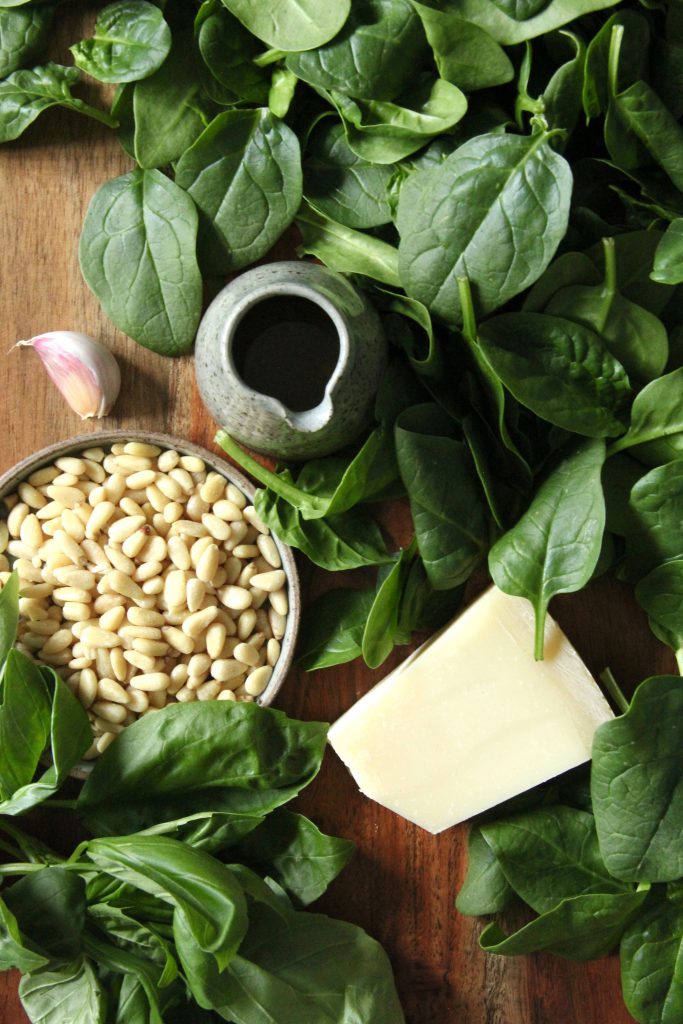
1 clove of garlic
180g baby leaf spinach
1 small bunch of basil
40ml extra virgin olive oil
40g pine nuts, toasted and cooled
40g parmesan, grated
To serve
Pasta, cooked
Method
Blend the garlic, spinach, basil, and olive oil together to a smooth paste. If you don’t have a blender chop the leaves as small as possible and use a pestle and mortar to make a paste.
Add the pine nuts and cheese and blend to your desired consistency.
Add to freshly cooked pasta with a little pasta water and cook over a low heat for 1 minute before serving.
Per serving of pesto served with pasta: 685kcal/ 39.6g fat/ 7.4g saturated fat/ 29.8g carbohydrates/ 4.0g fibre/ 18.1g protein












 Dr Pippa