Wild Garlic Pesto

Wild Garlic Pesto

Could wild garlic be a low FODMAP alternative to garlic?

A 2019 paper investigated the fructan content of wild garlic and other herbs commonly used in Bulgaria. From their analysis, the authors found that the total fructans (FODMAPs) were lower in wild garlic in comparison to chives (2.2g vs 5.7g per 100g dried weight). Interestingly, people following low FODMAP diets tolerate chives and are encouraged to use chives in place of onions in recipes. While this research hasn’t been validated by Monash University, the leading site for low FODMAP food analysis, the finding suggest it may be worth self-challenging yourself! If you happen to know that garlic is one of your trigger foods and are able (and willing) to try this herb, please do get in touch to let me know how you got on.

Serve 4-5 people

Ingredients

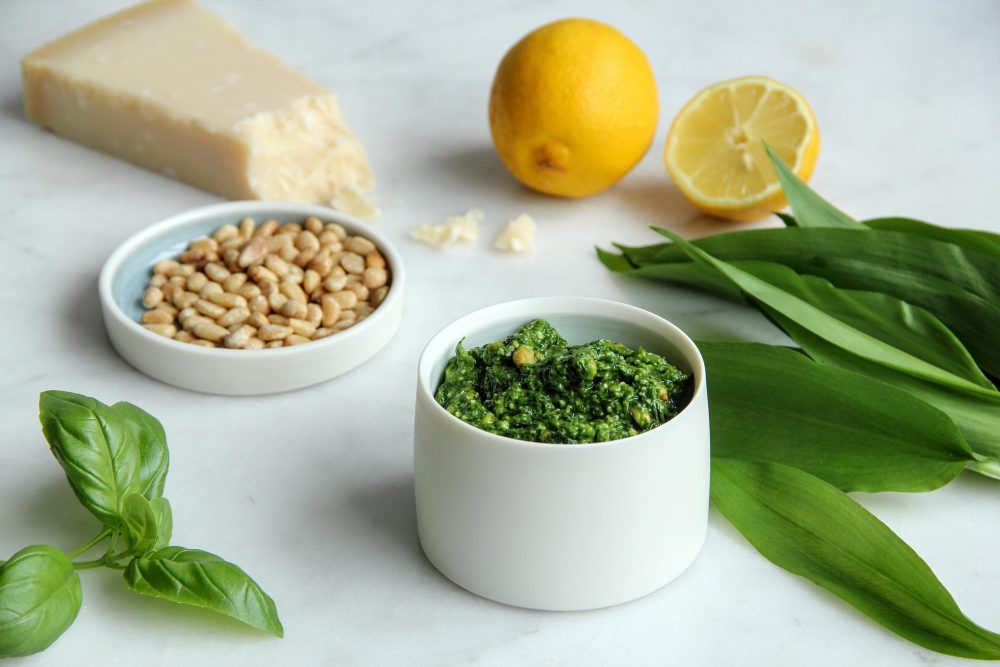
  • 100g wild garlic, roughly chopped
  • 30g basil, leaves and stalks roughly chopped
  • 3 tbsp extra virgin olive oil
  • 1 tsp lemon juice
  • 40g toasted pine nuts
  • 45g parmesan, grated

Method

  • Blend the wild garlic, basil, olive oil and lemon juice together.
  • Add the pine nuts and parmesan and blend to the consistency of your choice – I prefer to keep mine with some texture in it.

Delicious served with my egg pasta recipe. If you want a double hit of wild garlic, try adding in a handful of wild garlic to make it vibrant green.

Wild Garlic Egg Pasta

Any leftover pesto can be stored in an airtight container in the fridge for up to 5 days – layer a little oil over the top to help reduce any oxidation. Alternatively, you can freeze your pesto in containers, or in ice cube trays for future use.

NOTE: Wild garlic looks very similar to the poisonous Lily of the Valley. If you aren’t sure, do not pick. Alternatively, it is available to buy for supermarkets, farmer’s markets, and to grow at home from garden centres.
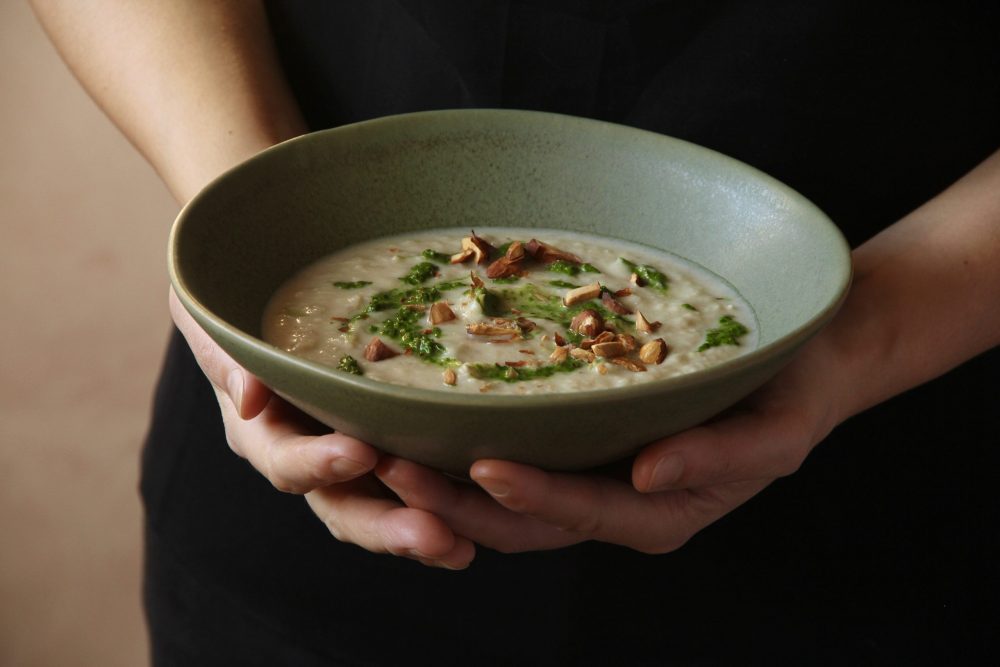
Jerusalem Artichoke Soup with Spinach and Almond Pesto

Seasonal Jerusalem artichokes fresh from the allotment. These little beauties are packed full of a prebiotic called inulin. Prebiotics are types of carbohydrates which our body is unable to digest, so it passes through the digestive tracts which feeds our gut bacteria. If you have a meal full of prebiotics you may feel a little bloated or gassy after, but nothing to worry about, it is just your gut microbiota enjoying their meal after you.

The inulin content of fresh Jerusalem artichokes varies according to the variety, growing conditions and storing conditions. Inulin content has been estimated to at 17-20.5% of fresh tuber weight.

A really easy way to use Jerusalem artichokes is to make them into a soup, the perfect starter to any dinner party which will wow your guests with their deliciously sweet flavour. Most soup recipes tell you to peel Jerusalem artichokes. If you can, try washing them thoroughly with a vegetable scrubber instead. This will save on time (as they can be fiddley to peel!), alongside helping reduce any food waste. The skins also have lots of fibre in them, like any root vegetable, so another good reason to leave them on and maximise on the fibre!

Serves 4 as a main or 6 as a starter

Ingredients

For the soup

  • 1 tbsp extra virgin olive oil
  • 1 large onion, sliced
  • 2 sticks of celery, sliced
  • 4 cloves or garlic, roughly chopped
  • 1kg of Jerusalem artichokes, scrubbed and cut into 1″ chunks
  • 300ml chicken or vegetable stock
  • 250ml dry white wine
  • 5 sprigs of thyme
  • 100ml double cream (optional to leave out or use a plant-based alternative)

For the pesto

  • 50g skin on almonds
  • 2 tbsp extra virgin olive oil
  • 50g spinach leaves
  • 1 garlic clove
  • 1 tsp lemon juice

Method

  • Gently cook the onions and celery in the oil in a large pan, allowing them to soften without colouring.
  • Add the garlic and artichokes and cook for a further 2 minutes before adding the stock, wine and 600ml of water.
  • Add the thyme, bring to the boil and allow to simmer for 45 minutes till the artichokes are soft.
  • Meanwhile, roast the almonds at 180°C for 10-15 minutes, shaking occasionally, till golden brown. Allow to cool.
  • Blend the olive oil, spinach, garlic, lemon juice and 1 tbsp water to a smooth paste.
  • Add half the roasted almonds and blend into the chunky pesto consistency.
  • Once the artichokes are cooked, remove the thyme stems and blend the soup till as smooth as possible.
  • Add the cream, if using.
  • Serve in bowls, topped with pesto and the remaining roasted almonds roughly chopped over the top.

Per main serving: 635kcal/ 30.0g fat/ 10.8g saturated fat/ 51.8g carbohydrates/ 6.8g fibre/ 11.6g protein

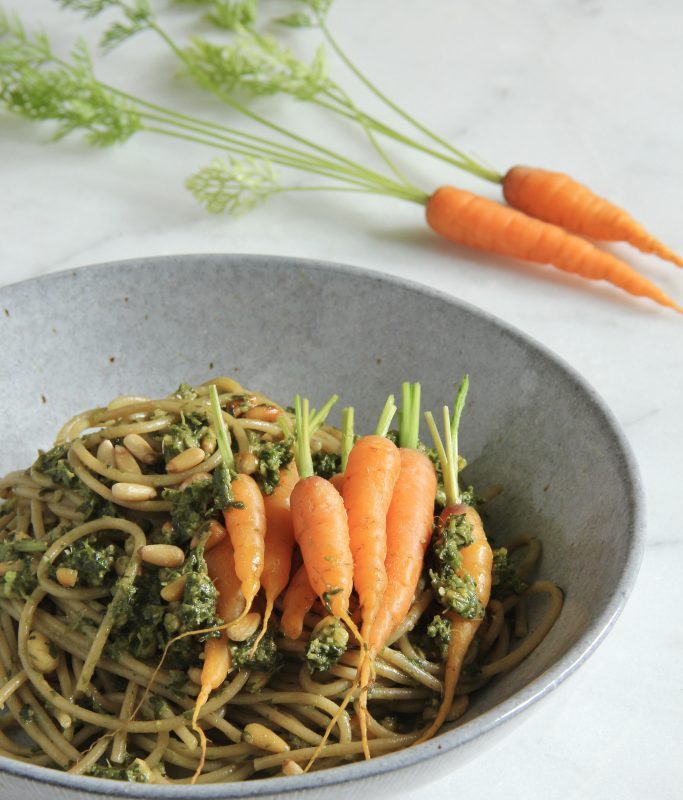
Carrot Top Pesto

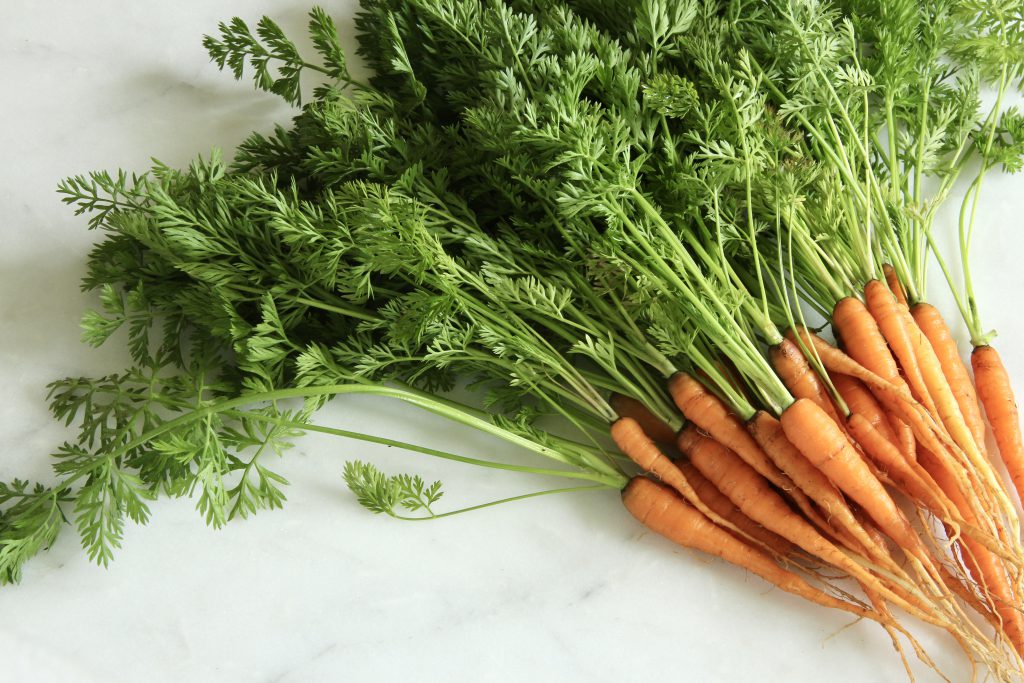
Late spring, or early summer means thinning the carrots out at the allotment so we can grow some nice big carrots ready for long winter days. I always get sad at being forced to choose which carrots will go on to grow, sometimes to the point where I leave too many baby carrots in the soil.

I always try to make sure I put the tiny carrots to good use. Sometimes I simply wash them and eat them there and then. Nothing like a simple snack to keep me going! However, I have now come to terms with this cruel to be kind nature, and make sure nothing is waste.

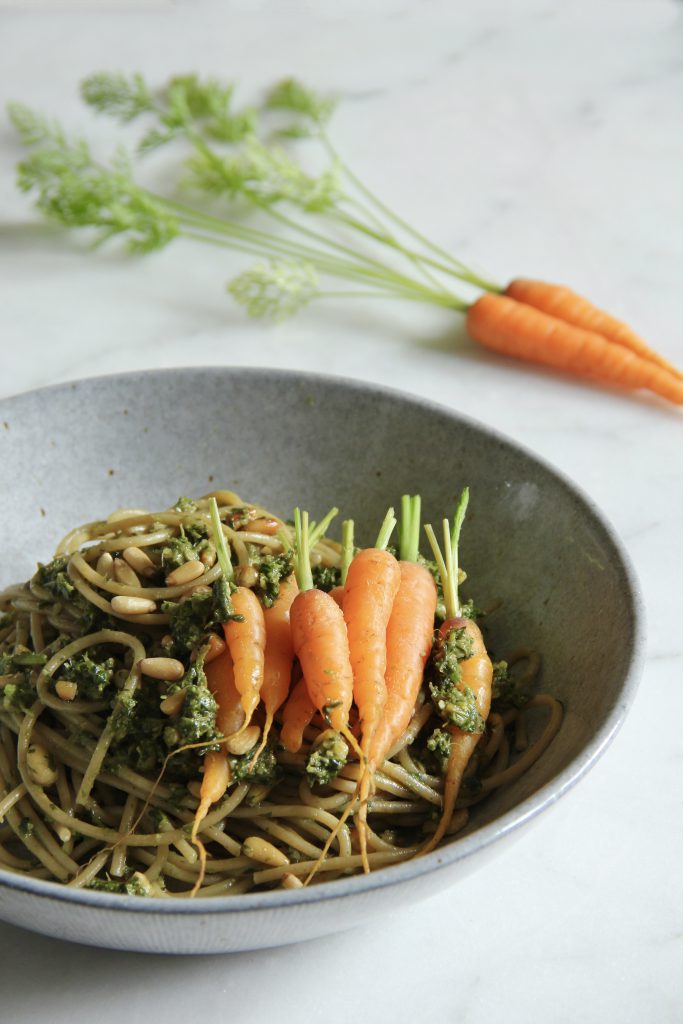
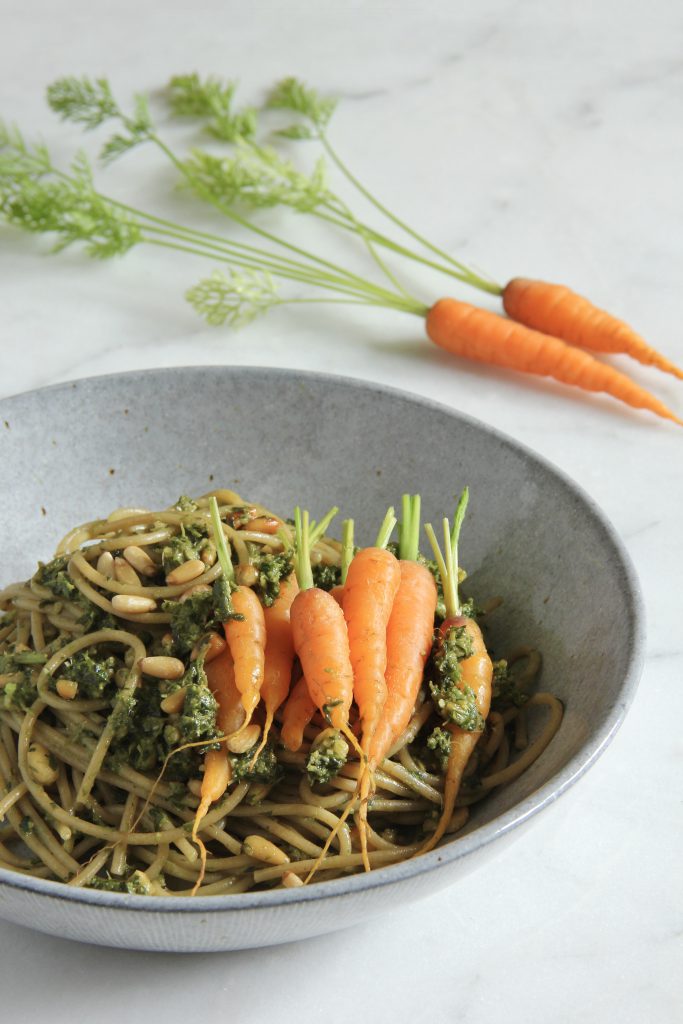
Carrot top pesto with baby carrots is my answer to this. The young and tender leaves make the most delicious and earthy pesto which is delicious when served simple through hot pasta. The pesto is so simple to make, and if you have too many carrot tops you can always freeze the pesto for use at a later date.

Nutritionally speaking there has been very little research conducted on carrot leaves. One study commented on how carrot leaves can be used to fortify chicken’s diets to make the yolks of the eggs they lay more orange in colour due to the carotenoids present in the leaves! Something I have not tested my chickens on yet!

Ingredients

  • A large bunch of carrot tops (about 100g), roughly chopped
  • 1 bunch of basil (30g), roughly chopped
  • 2 tbsp extra virgin olive oil
  • 1 garlic clove
  • 40g pine nuts, toasted
  • 45g parmesan cheese, grated

Method

  • Place the carrot tops, basil, olive oil and garlic into a food processor and blend till smooth.
  • Add the pine nuts and parmesan and blend to the consistency desired – I prefer to have some unblended pine nuts in my pesto.
  • Hey pesto! You’re done!

Spinach Pesto

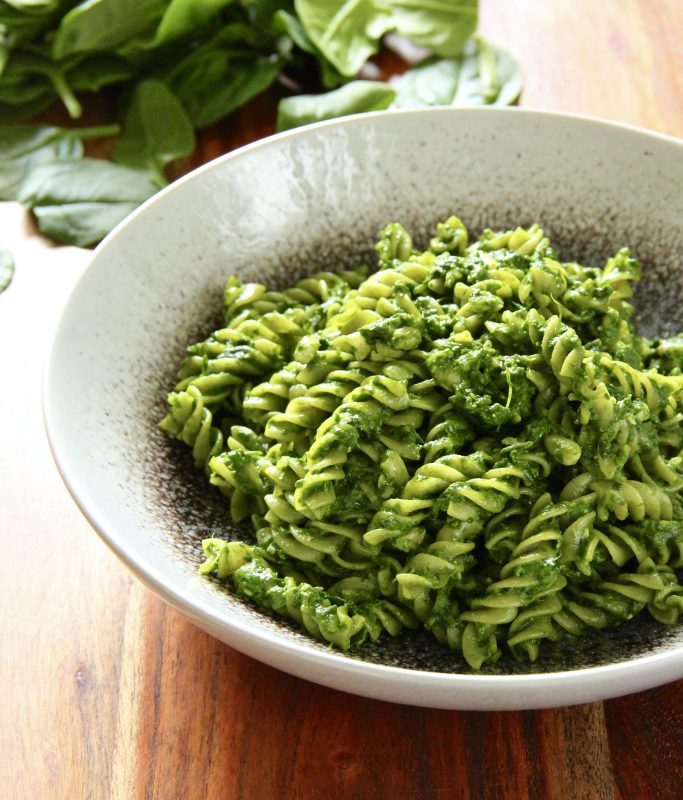
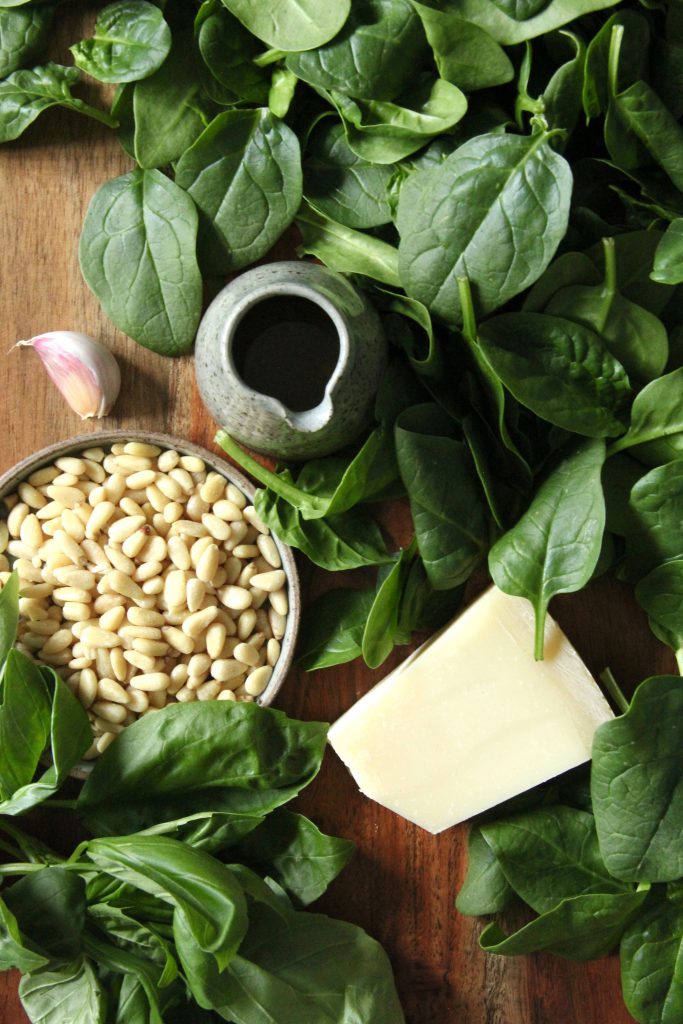
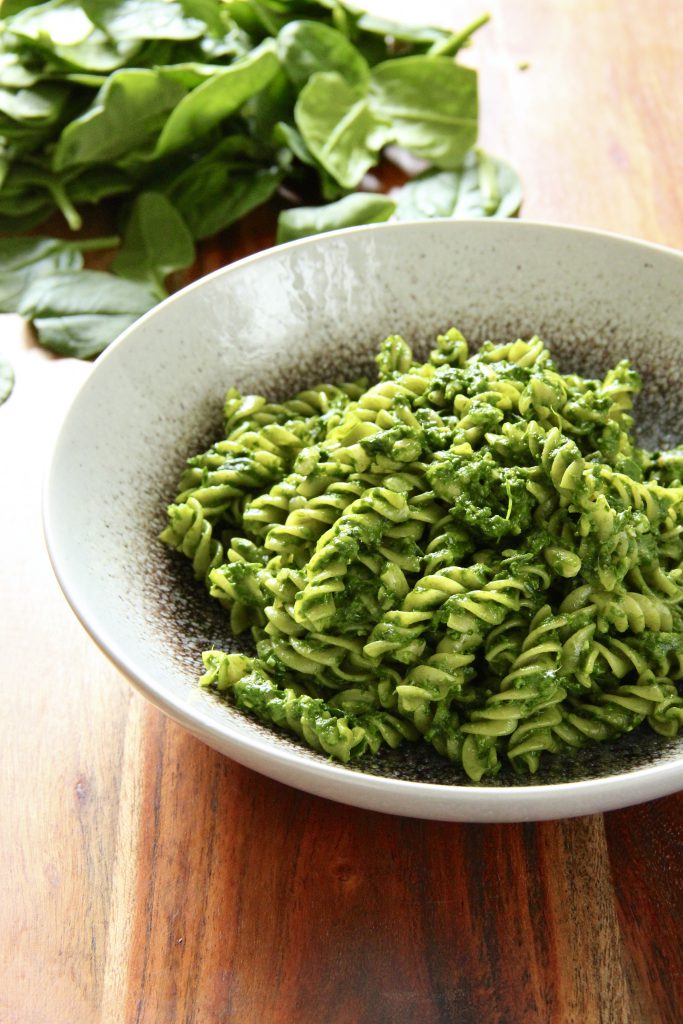
A delicious way to help increase your vegetable intake by hiding them in your pasta sauce – perfect for children who might be fussy! The vibrant green is also so alluring it may well entice them to give it a try.

It also happens to be a really quick and easy recipe. In the time it takes to bring the water up to the boil and cook the pasta, you will have made the sauce. I use this recipe to finish up big bags of spinach which we haven’t quite managed to eat during the week. Anything left over the can also be frozen for use another day. I always keep a jam jar of pesto in the freezer should I ever be caught short of a meal.

You also don’t have to limit yourself to using with pasta. It makes an excellent topping for roasted vegetables or roasted tofu. Additionally use it to make a crust on your favour meat or fish before cooking. Or try finishing of a soup with a spoonful just as you serve.

If you don’t have pine nuts, other nuts or seeds can be substituted in depending on what you have in stock.

Serves 2

Ingredients

  • 1 clove of garlic
  • 180g baby leaf spinach
  • 1 small bunch of basil
  • 40ml extra virgin olive oil
  • 40g pine nuts, toasted and cooled
  • 40g parmesan, grated

To serve

  • Pasta, cooked

Method

  • Blend the garlic, spinach, basil, and olive oil together to a smooth paste. If you don’t have a blender chop the leaves as small as possible and use a pestle and mortar to make a paste.
  • Add the pine nuts and cheese and blend to your desired consistency.
  • Add to freshly cooked pasta with a little pasta water and cook over a low heat for 1 minute before serving.

Per serving of pesto served with pasta: 685kcal/ 39.6g fat/ 7.4g saturated fat/ 29.8g carbohydrates/ 4.0g fibre/ 18.1g protein

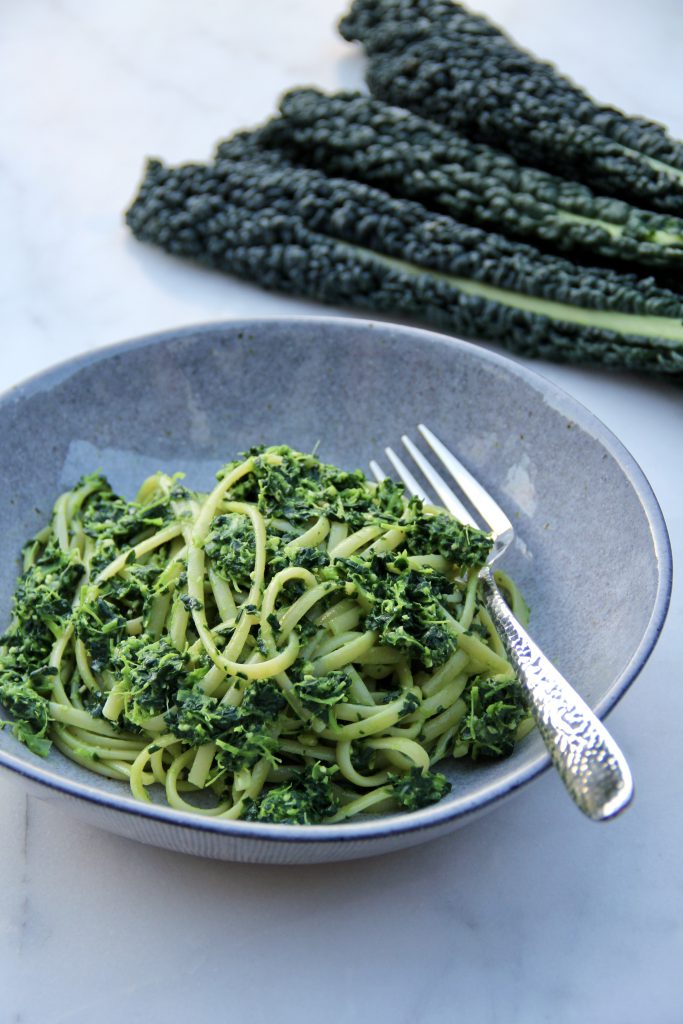
Kale Pesto with Pasta

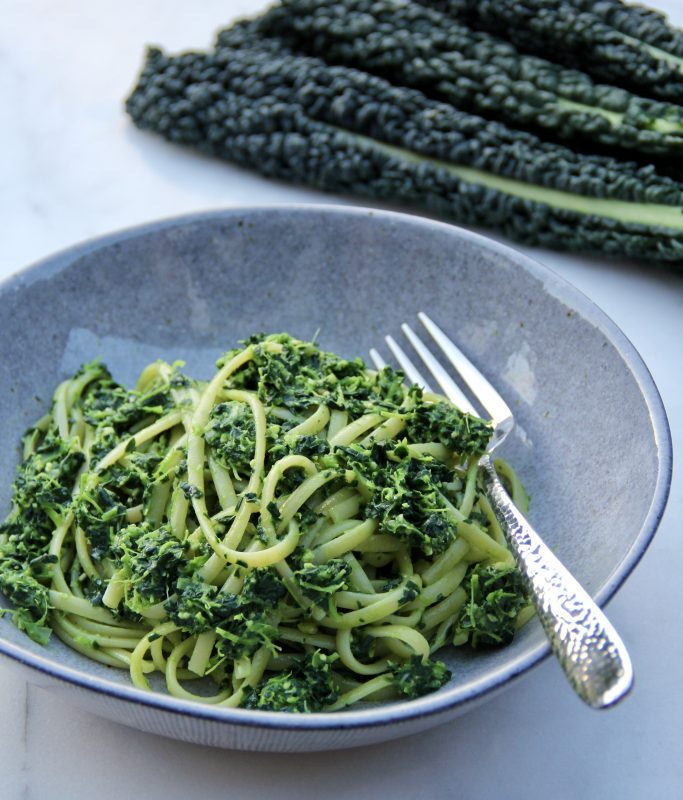
Super easy to make, taking just the time of the pasta to cook, it’s seasonal, packed full of fibre, providing 5 sources of plant-based goodness….. what’s not to love?!?

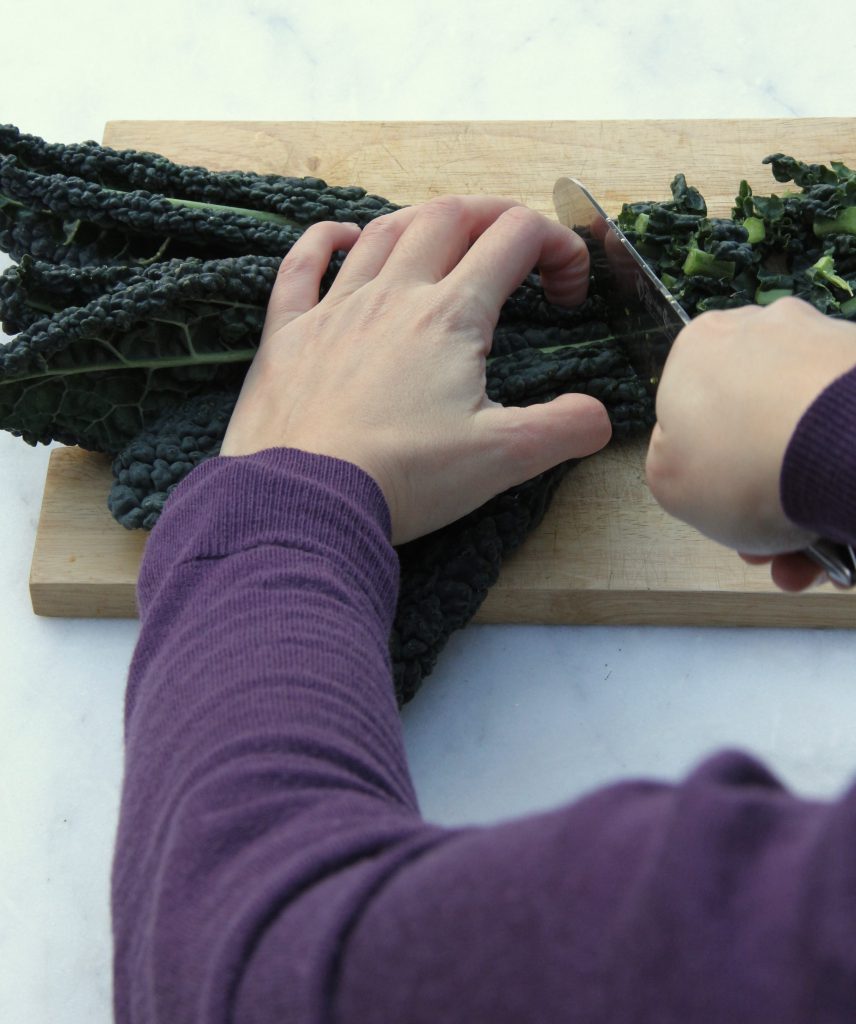
I leave the stems of the kale in. It adds an extra crunch to the dish, which I absolutely love, but also means maximising the fibre content of this dish as well as less food waste, which we really hate! Double bonus!

You could make a large quantity of this pesto and store it in an airtight container in the fridge for a few days. Alternatively, pop it into the freezer in portion sizes ready to whip out when the cupboards are looking a little bare.

Keeping the stems on the kale helps maximise the fibre content and reduce food waste

Serves 1

Recipe

  • 100g kale, washed and roughly chopped
  • 1 clove garlic, peeled
  • 15ml extra virgin olive oil
  • 20g toasted pine nuts
  • 20g parmesan, finely grated
  • 75g pasta

Method

  • Bring a pan of water to the boil. Add the kale and garlic clove and blanch for 1 minute. Remove from the water into a jug for blending.
  • Add the pasta to the boiling water and cook for 1 minute less than the packet instructions.
  • Meanwhile, blend the blanched kale and garlic, before adding the oil, pine nuts and parmesan. Blend again, adding a little pasta water if too thick.
  • Drain the pasta, reserving a little of the cooking water. Return to the pan.
  • Add the pesto and return to the heat to warm everything through. Loosen the pesto sauce with the reserved pasta water if needed. Serve immediately.

Per serving of kale pesto 388kcal/ 35g fat/ 6.7g saturated fat/ 3.8g carbohydrates/ 3.8 fibre/ 13.1g protein