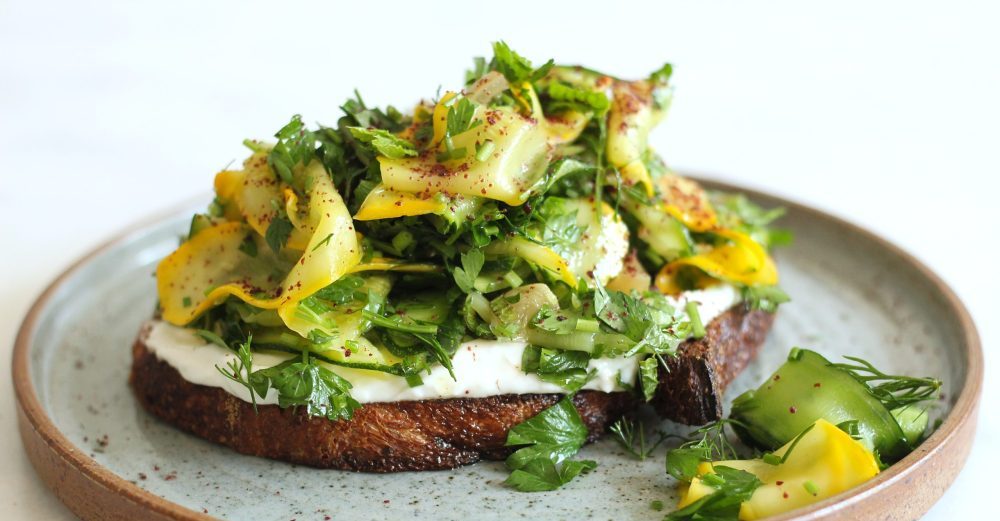
If you grow courgettes, you’ll know you can easily be overrun with them! As part of National Allotments Week I’m pledging to help you use up your courgettes this year in a series of dishes all revolving around the humble courgette. This is an effortless dish, requiring zero cooking, making it the perfect heatwave meal to prepare.
Cut the courgette into ribbons using a vegetable peeler or mandoline. Place in a bowl and sprinkle with all the salt. Massage the salt in and leave for 10 minutes to draw the water out.
Meanwhile, grate the garlic into the yoghurt and mix through.
Once the liquid has been released from the courgettes, rinse and then squeeze the excess water out before patting dry with a kitchen towel.
Add the preserved lemon, herbs and olive oil to the courgettes and mix well.
Spread the yoghurt over the sourdough before piling the courgette mix high over the top and sprinkling with sumac. Enjoy straight away.
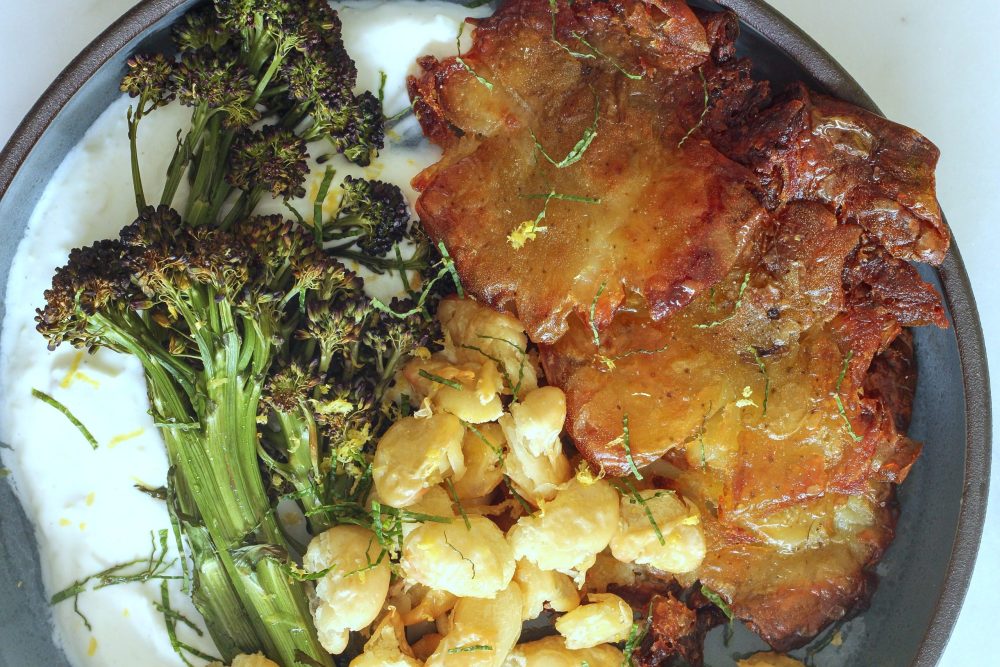
If you cook potatoes and then let them cool overnight you can create something called resistant starch, which, as the name suggests, is resistant to digestion. This means that you get to eat delicious-tasting food, and your gut microbes also benefit from the starches, which we are unable to digest, but they love!
Serves 3
Ingredients
500g new potatoes, cooked and cooled overnight
3 tbsp extra virgin olive oil
2 cloves of garlic, skin on
1 tin of cannellini beans, drained, rinsed and patted dry
250g sprouting broccoli
200g thick strained yoghurt
1 lemon, zest and juice
10 sprigs of mint, leaves finely sliced
Method
Preheat the oven to 180°C fan/200°C convection
Smash the potatoes using a large flat item so they are around the thickness of a pound coin. Place on a baking sheet and brush with 1 tbsp olive oil. Bake in the oven for 30 minutes
Flip the potatoes over to crisp up the second side, adding the cloves of garlic and brushing with more olive oil. Bake for another 30 minutes, or till the potatoes are golden brown and crunchy.
Meanwhile, run your beans with the remaining olive oil and spread out over a second baking sheet, tucking the broccoli down the centre. Roast for 20 minutes.
Once the potatoes are cooked, remove the garlic cloves from their skin and mash into the yogurt along with half the lemon zest and juice. Mix well and season with pepper to taste.
Plate up with all the elements, and finish with the remaining lemon zest and juice and a sprinkle of mint.
Roasted Smashed Potatoes with Broccoli and Beans
Per serving: 350kcal/ 11g fat/ 2.5g saturated fat/ 38g carbohydrates/ 12g fibre/ 18g protein
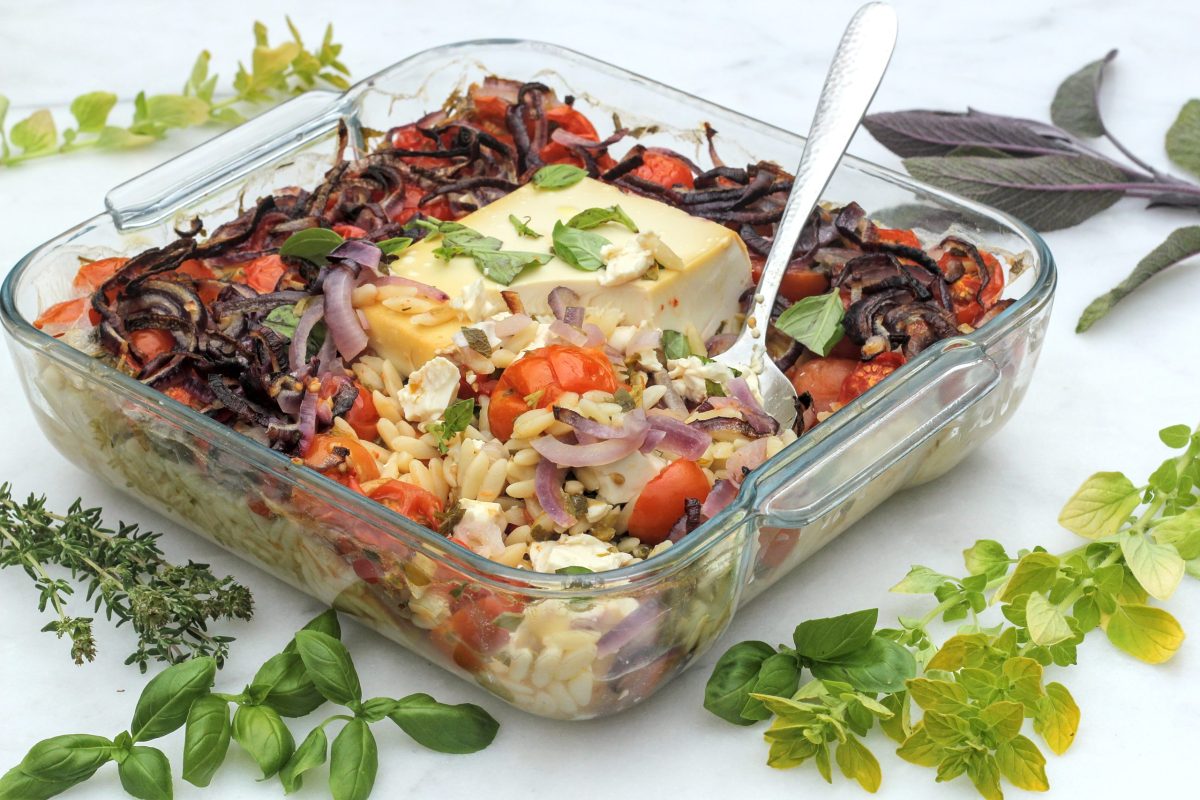
The Summer holidays are upon us, and I’m sure we’ll all be in need of inspiration for family friendly recipes!
I created this recipe for baby and child nutritionist Charlotte Stirling-Reed and it is an absolute winner. It’s really easy to prepare – all in one dish, filled with nutrition and flavour with no added salt making it the perfect family-friendly recipe!
Serves a family of 4
Ingredients
2 tbsp mixed chopped fresh or frozen herbs e.g. basil, sage, oregano, thyme OR 1.5 tsp dried mixed herbs
3 garlic cloves, grated OR 1 tsp dried garlic powder
250g orzo or other short pasta with a cooking time of around 12 minutes
400g chopped cherry tomatoes* OR 1 400g tin of chopped tomatoes
1 red onion sliced** OR 120g frozen chopped onion
2 tbsp extra virgin olive oil
1 block of soft set (silken) tofu (350g)
1 tbsp nutritional yeast
1 tsp basil (fresh or frozen)
Method
Preheat the oven to 160°C fan/180°C convection.
Mix the onion and olive oil together in a separate bowl.
Add the mixed herbs, garlic and orzo to a large ovenproof dish with 500ml boiling water and mix to evenly distribute.
Add the tomatoes over the top, the tofu in the centre and spread the onions out around the tofu.
Bake in the oven for 45 minutes.
Once cooked through add the nutritional yeast, extra basil and mix everything together before serving.
Tofu Pasta Bake
*For small babies and children cut the tomatoes into quarters
**For small babies and children cut the onion into small squares
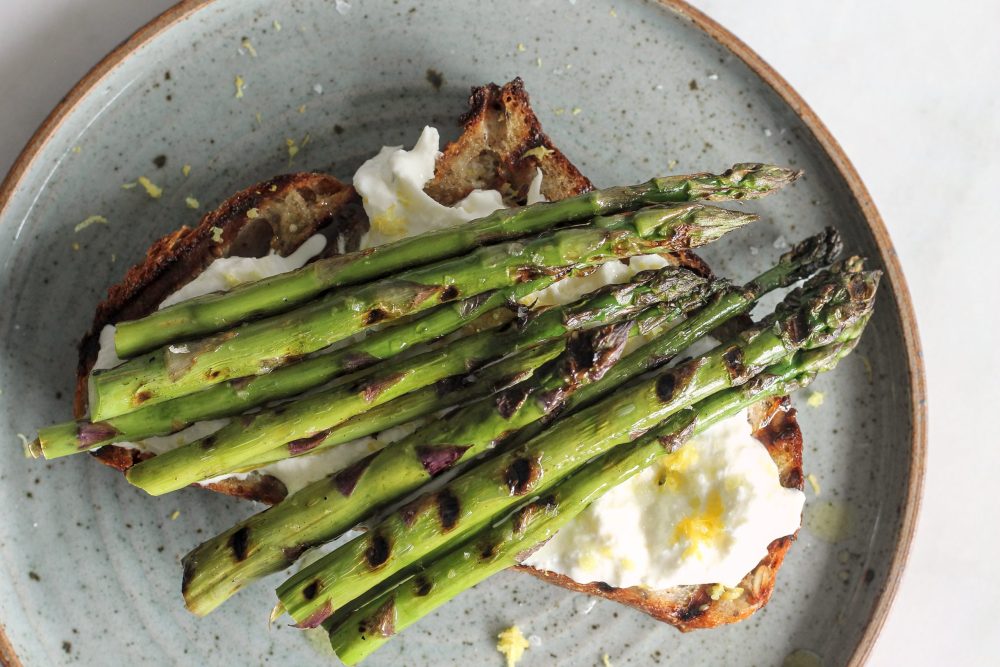
June 21st marks the end of British asparagus season, so I’m celebrating it in the same way I started – griddled and on toast with cheese.
It’s a simple yet satisfying flavour combination which is the perfect brunch or light dinner.
Serves 2
Ingredient
2 slices of sourdough
2 tbsp extra virgin olive oil
200g asparagus
1 ball burrata
Zest and juice of a lemon
Method
Brush the sourdough with olive oil on both sides before riddling in a hot pan till golden and crispy.
Brush the asparagus with olive oil and griddle for a few minutes each side.
Assemble the burrata on the toast with grated lemon zest over the top and pile the asparagus up high. Finish with a squeeze of lemon juice and any remaining olive oil.
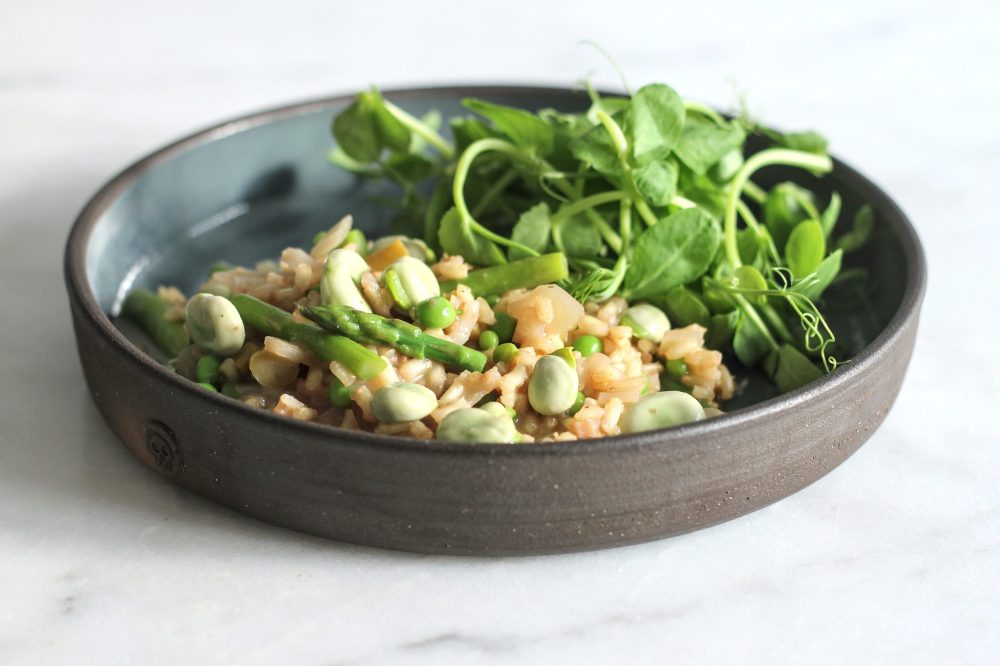
This risotto is a true labour of love, starting with growing the broad beans from scratch, to shelling them with fresh British peas, and then using wholegrain risotto rice, which, unbeknown to me up till this point, takes much longer to cook in comparison to its white counterpart. Something I feel I should have know, but may have overlooked. Therefore, I have a few simple swaps to make the process easier. Despite this, Matt said it was really delicious and I should make it again!
I was also surprised that using brown risotto rice only gave 8.6g of fibre per serving, whereas white risotto rice would have given 8.3g fibre per serving. So the addition of 0.3g of fibre per serving for me doesn’t equate to the extra time spent cooking and stirring an already labour intensive dish!
I absolutely love fresh peas straight from their pod, there is nothing that quite tastes like it. However, if you’re short on time, or if peas are not in season, use frozen peas and broad beans, or swap the seasonal asparagus for other green veg such as kale, swiss chard, purple sprouting broccoli or sugar snap peas.
Serves 5
825g broad beans in their pods, or 250g shelled
450g peas in their pods, or 100g shelled
200g asparagus, tougher stems finely chopped and tender tips cut into large lengths
1 very large onion, finely diced
4-5 cloves of garlic, finely sliced
3 tbsp extra virgin olive oil
1 tbsp butter
300g brown risotto rice (or swap to white if you prefer)
250ml dry white wine (option to leave out if preferred)
2 stock cubes
75g parmesan, grated
100g pea shoots
Method
Blanch your broad beans, peas and asparagus tips in 2l* of boiling water for 2 minutes, 30 seconds and 1 minute respectively before plunging into iced water to retain their vibrant green colour. Set aside.
Using the reserved blanching water, add your stock cubes and keep on a low heat.
In a large pan, gently soften the onions in the olive oil with the tougher asparagus stems for around 10 minutes, till the onion starts to turn translucent. Add the garlic and cook for a minute longer.
Add the butter and risotto rice and toast till fragrant, usually around 2 minutes, before adding the wine and allowing the grains to absorb the liquid.
Add a few ladles of stock at a time, and stir continuously till absorbed. Repeat this process till the rice is cooked through, but still has a slight bite to it.
Drain the broad beans, peas, and asparagus tips and add to the rice, cooking for 1-2 minutes till warmed through.
Remove from the heat and stir in the parmesan and serve with pea shoots.
*White risotto rice will use less water than brown risotto rice
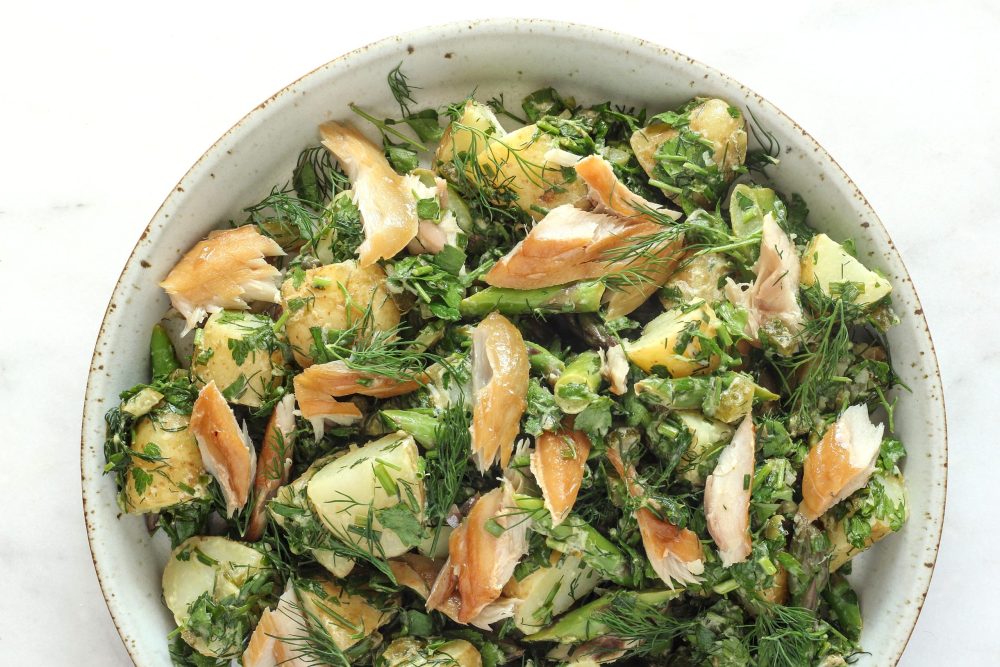
This potato salad is for all those mayonnaise haters out there! I’m using lemon juice, extra virgin olive oil and Dijon mustard as the base of the sauce, and keeping it light by using a load of chopped herbs, capers and gherkins.
Cooking and cooling potatoes allows for the starch to retrograde into something called resistant starch. Our bodies are not able to digest this type of starch, but instead, it helps to feed the microbiota living inside your digestive tract.
Serves 2 as a main, or 4 as a side dish
Ingredients
500g new potatoes
200g asparagus, trimmed and cut into short lengths
Juice of 1 lemon
2 tbsp extra virgin olive oil
1 heaped tablespoon of Dijon mustard
40g flat-leaf parsley, finely chopped
20g dill, finely chopped
20g chives, finely chopped
1 heaped tablespoon of capers, drained and roughly chopped
2-3 gherkins, chopped
1 packet smoked mackerel, skin removed and roughly flaked
Method
Boil the potatoes for around 15 minutes untill cooked through, adding the asparagus in for the last minute of cooking.
Meanwhile, prepare the sauce by mixing the lemon juice, olive oil, Dijon mustard, herbs, capers and gherkins together.
Drain the potatoes and asparagus and add to the sauce, mixing while hot.
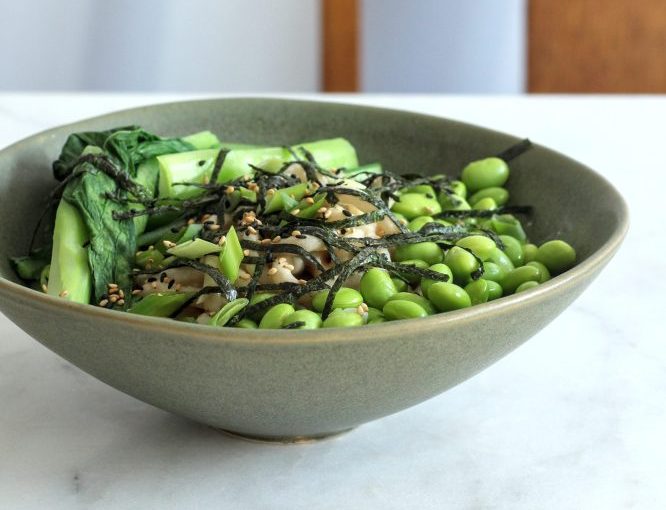
This is my perfect working from home lunch when I have have 10 minutes to cook something. I want it to be nutritious but quick, and this is the perfect meal for that. You can sub the vegetables with what you have, but I always have frozen edamame beans in the freezer ready for a quick snack or meal. They’re a great source of plant-based protein, really affordable and conveniently shelled in the pack so you can just add them to whatever you’re cooking for the last minute or two.
Serves 2
Ingredients
1 garlic clove, minced
1/2″ piece of ginger, minced
3 tbsp tahini
1 tbsp mirin
1 tsp soy sauce
1 tsp sake
2 packs of udon noodles
160g choi sum
160g edamame beans
3 spring onions, finely sliced
2 sheets nori, cut into thin strips
1 tsp sesame seeds
Method
Cook the udon noodles according to the packet instructions, adding the veg in for the last minute of cooking.
Meanwhile make the sauce by combining the garlic, ginger, tahini, mirin, soy sauce and sake together.
Toss the cooked noodles in the sauce to evenly coat, adding some cooking water to get a smooth sauce consistency to your liking, and add the veg, garnishing with the spring onion, nori and sesame seeds.
10 minute sesame noodles
Per serving: 511kcal/ 23g fat/ 3g saturated fat/ 48g carbohydrates/ 11g fibre/ 21g protein
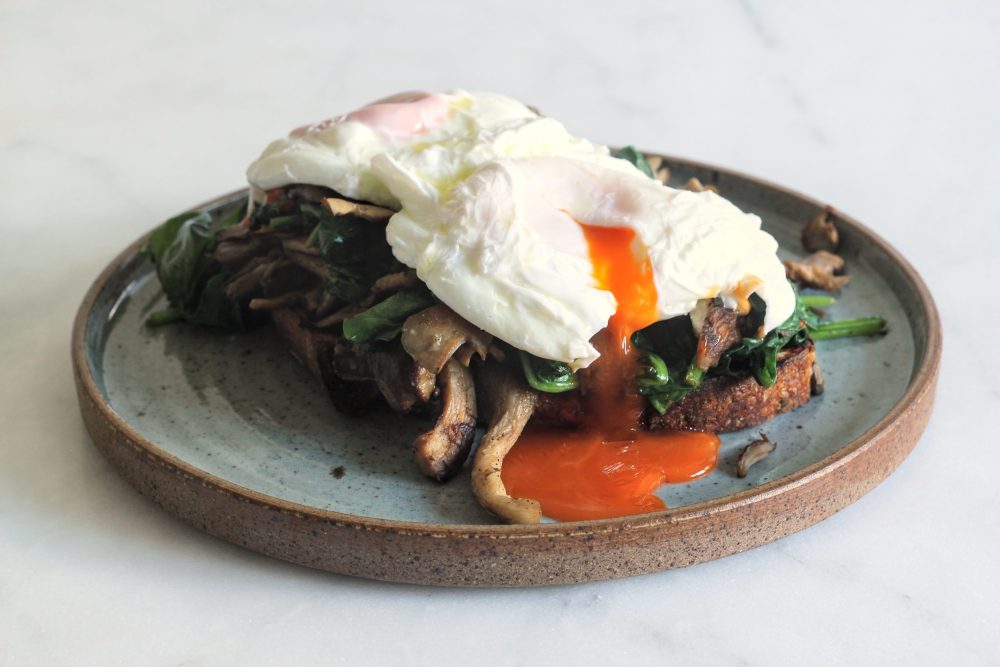
The Easiest Bank Holiday Brunching that’s perfect for my savoury tooth. It would also make the perfect light dinner, or post-gym meal thanks to the combination of carbohydrates, protein, and healthy monounsaturated fats in this dish.
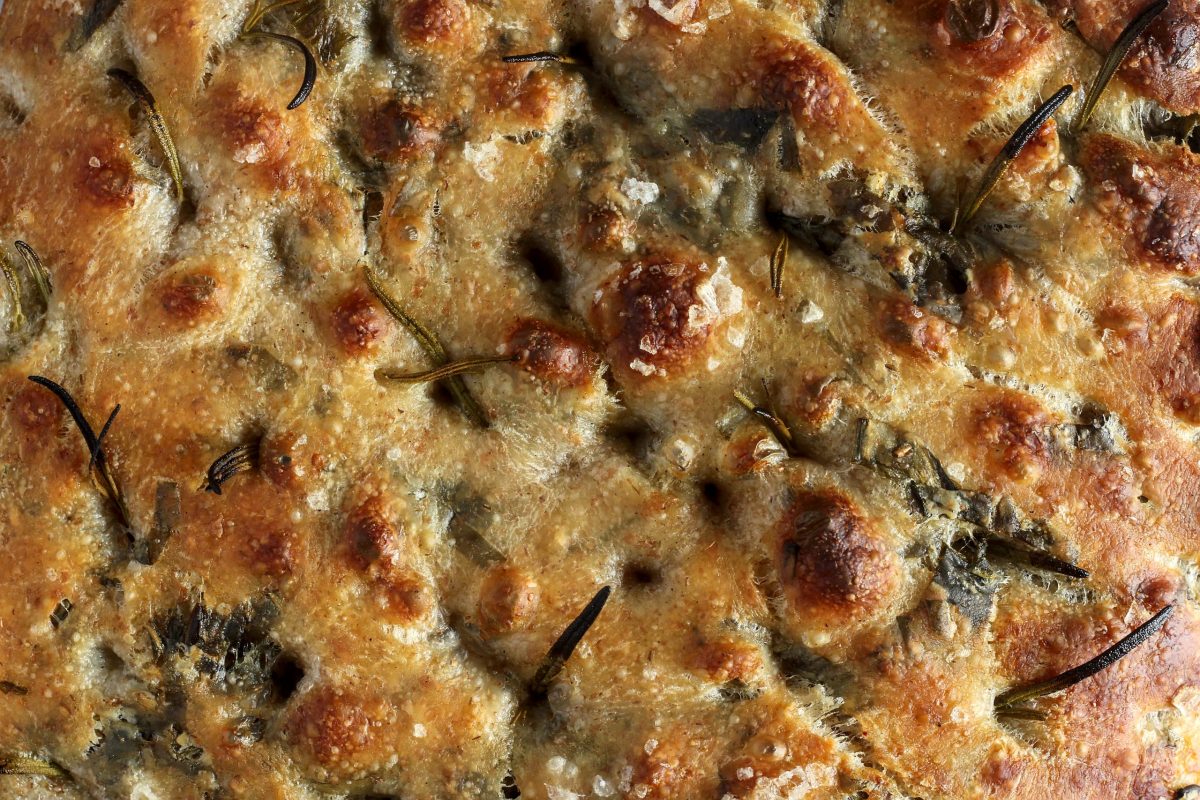
I’m still trying to savour the wild garlic season, and I love baking it into bread. You can freeze the bread and use it in the months to come so further preserve the flavour of it.
For more information about making sourdough and the various stages visit my page on sourdough bread.
Makes 2 x 9″ square tins, but you could bake one large, or make a very deep focaccia
Ingredients
150g levain, refreshed 8-12 hours earlier
15ml extra virgin olive oil plus extra for later
150g wholemeal bread flour
600g white bread flour
12g salt plus extra to top
A big bunch of wild garlic, roughly chopped – the more you put in the more garlicky the flavour
A few sprigs of rosemary (optional)
Method
Mix the levain, 500ml water and 15ml olive oil together before adding the flours and mixing to make a shaggy dough. Leave for 30 minutes covered.
Mix 12g of salt with 75ml water till dissolved, and pour over the dough, scrunching the dough with your hand to mix it in. The dough should look very rough and almost broken into small pieces. Cover and leave for 45 minutes.
Over the next few hours complete 4 sets of coil folds, adding the wild garlic in during the 2nd coil fold, allowing the dough to rest for 45-60 minute between each fold.
Grease two non-stick baking trays with olive oil (if not using non-stick line with baking parchment and add olive oil to the parchment). Tip out don’t the work surface and divide the dough into two. Gently transfer to the baking tray and push the dough over the surface so it reaches the corners as best you can – there will be some resistance so don’t force it.
Cover the dough and leave in the fridge to slowly rise overnight – anywhere between 8-24 hours depending on your schedule
The next day preheat your oven to maximum temperature, add a small empty tray to the bottom of the oven for steam later, and remove the focaccia from the fridge.
Once the oven is up to temperature, uncover the dough and drizzle with a little olive oil. Using wet fingers, press your fingertips through the surface of the dough to create plenty of dimples. Add rosemary to the dimples, sprinkle with a little extra salt and then flick water over the surface of your dough with your fingertips. Adding extra moisture will give a softer crust, so if you want a very crispy top omit this step along with the steam.
Place the focaccia in the oven, adding water into the hot tray to create steam, closing the door as quickly as possible to trap the steam in, and reduce the oven temperature to 225°C fan/ 245°C convection for 20 minutes.
Remove the tray with water and bake for another 5 minutes* till the crust is golden.
Remove from the oven, and allow to cool on a wire rack.
Wild Garlic Sourdough Focaccia
*if baking a thicker focaccia you may need an extra 5-10 minutes to fully cook the dough.
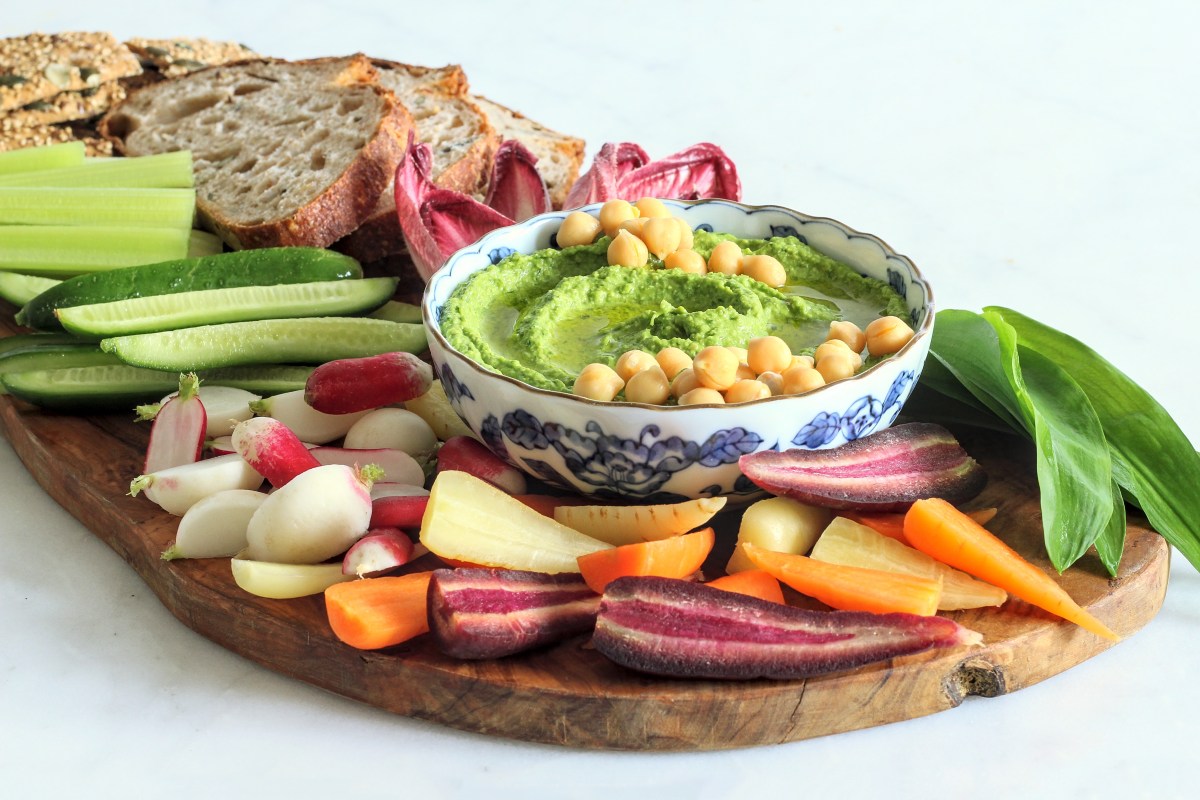
I’ve had a few requests for some wild garlic recipes which are easy, so I’ve made this Wild Garlic Hummus which couldn’t be simpler for anyone wanted to use wild garlic which has arrived in their weekly veg delivery box. You can choose how much wild garlic you want to use, and obviously the more you use, the greener it will be as well as the stronger the garlic taste – you can always add more!
Ingredients
50-100g wild garlic
1 tin of chickpeas
Juice of 1-2 lemons
50g tahini
2tbsp extra virgin olive oil
Method
Add everything to a blender and blend to a desireable consistency, adding extra lemon juice of olive oil where needed.
Serve with your favourite crudités, bread, crackers, storing any leftovers in an airtight container in the fridge for up to 7 days.
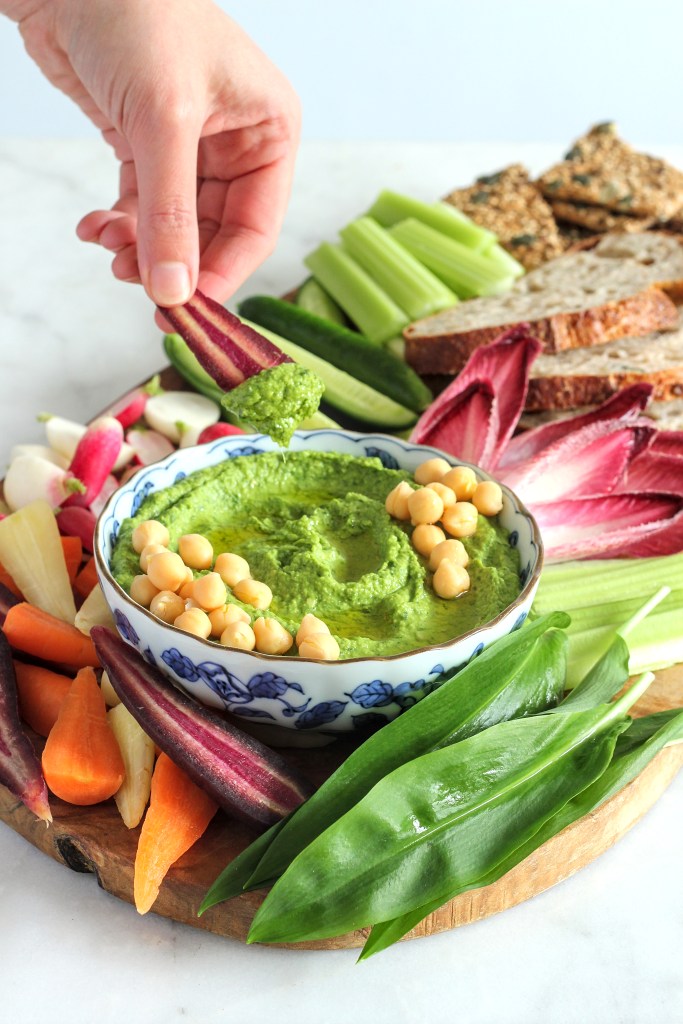
I’ve had a few requests for some wild garlic recipes which are easy, so I’ve made this Wild Garlic Hummus which couldn’t be simpler for anyone wanted to use wild garlic which has arrived in their weekly veg delivery box. You can choose how much wild garlic you want to use, and obviously the more you use, the greener it will be as well as the stronger the garlic taste – you can always add more!
Ingredients
50-100g wild garlic
1 tin of chickpeas
Juice of 1-2 lemons
50g tahini
2tbsp extra virgin olive oil
Method
Add everything to a blender and blend to a desirable consistency, adding extra lemon juice or olive oil where needed.
Serve with your favourite crudités, bread, crackers, storing any leftovers in an airtight container in the fridge for up to 7 days.
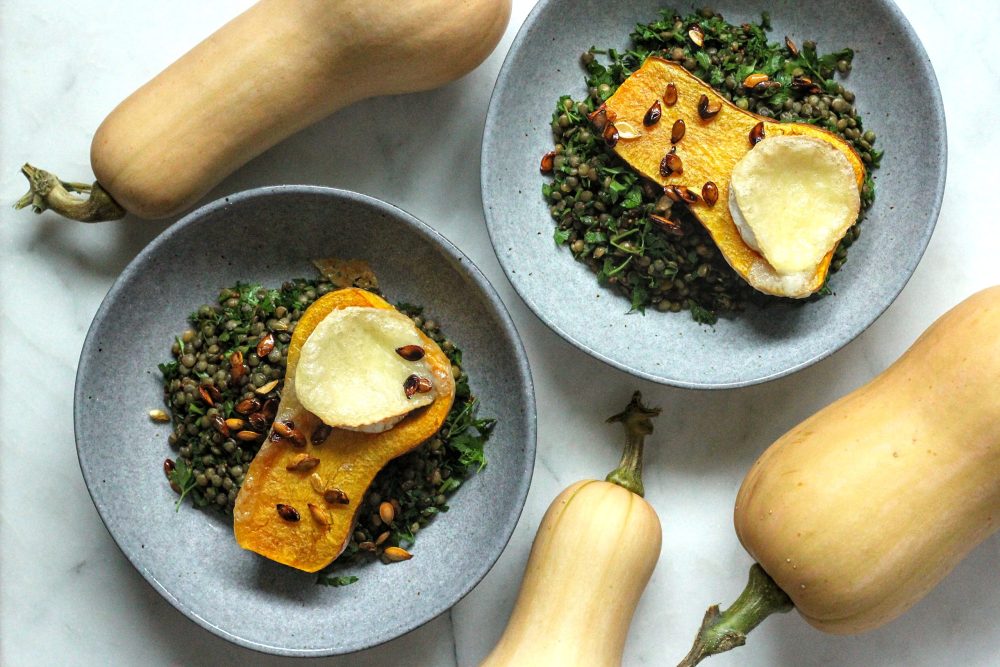
Salad means different things to different people. I refer to this as a salad, even though there is a distinct lack of green leafy vegetables as you might often think of. But trust me, this is worth adding to your repertoire!
It’s packed full of lovely ingredients that help provide a wide variety of nutrients including plenty of plant-based protein, fibre, vitamin A (in the form of beta-carotene), iron, folate and vitamin K1 to name but a few.
For those following a full plant-based diet try swapping the goat cheese for a plant-based cheese alternative, or use tofu and roast in the same way.
You also know that I love to use as much of my homegrown veg as possible. So, I’m making sure I save the seeds and roast them up as a crispy topping. It adds an extra texture dimension to the whole dish and saves edible food from going into the bin. The seeds also have slightly different nutritional properties to the flesh of the butternut squash itself, so it really is a win-win situation.
Serves 2
Ingredients
1 small butternut squash, around 400g when prepared, saving the seeds
2 cloves of garlic, skin on
2 tbsp extra virgin olive oil
100g goat cheese, sliced in half
100g puy lentils
1 tsp wholegrain mustard
1 tbsp balsamic vinegar
30g chives, finely chopped
50g flat-leaf parsley, finely chopped
Method
Preheat the oven to 180°C fan/ 200°C convection
Prep the butternut squash by removing the very ends and slicing in half lengthways. Remove the seeds, but save for later. Coat the butternut squash in 1 tbsp olive oil and place on a baking tray. In a separate small ovenproof dish add the garlic and 1/2 tbsp olive oil and cover. Bake for 25 minutes.
Meanwhile, separate the seeds from the pulp and dry before mixing with the remaining 1/2 tbsp olive oil. Remove the roasted garlic dish and spread the seeds out over the tray, and add the goat cheese into the cavity of the butternut squash. Bake for 12-15 minutes till the seeds are crispy and the cheese has melted.
Meanwhile, cook the lentils by bringing them to the boil and then simmer for 12-15 minutes till soft but still with a bite.
Remove the garlic skins and mash the garlic into the oil with the mustard and balsamic vinegar to make a sauce. Mix into the hot lentils, and once slightly cooled mix in the herbs.
Serve straight away hot, or equally delicious eaten cold as leftovers the next day.
Roasted Butternut Squash and Lentil Salad
Per serving: 565kcal/ 29g fat/ 11g saturated fat/ 40g carbohydrates/ 15g fibre/ 28g protein










 Dr Pippa