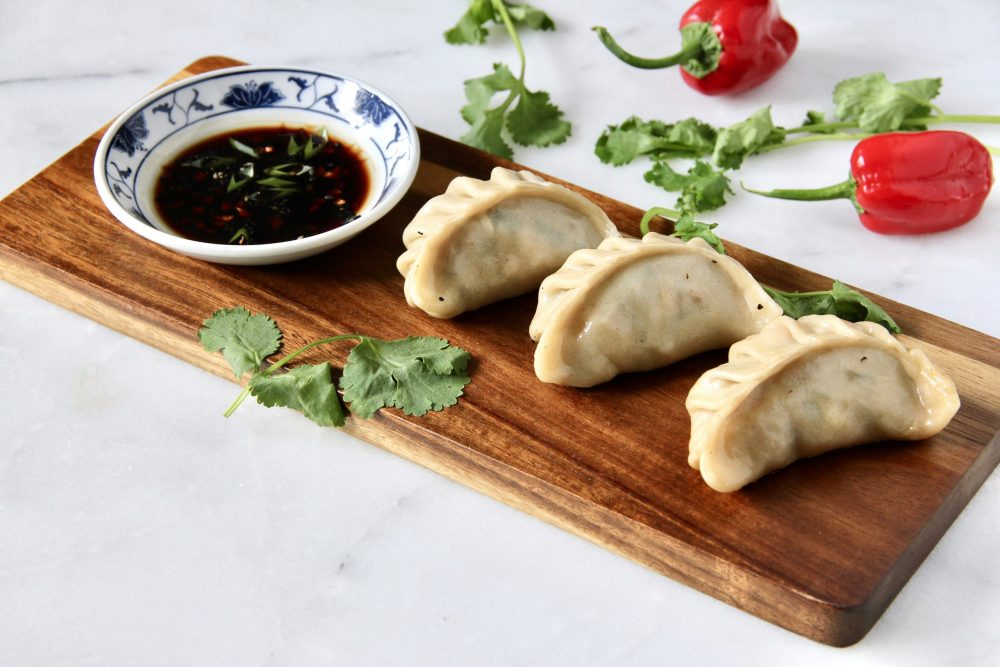
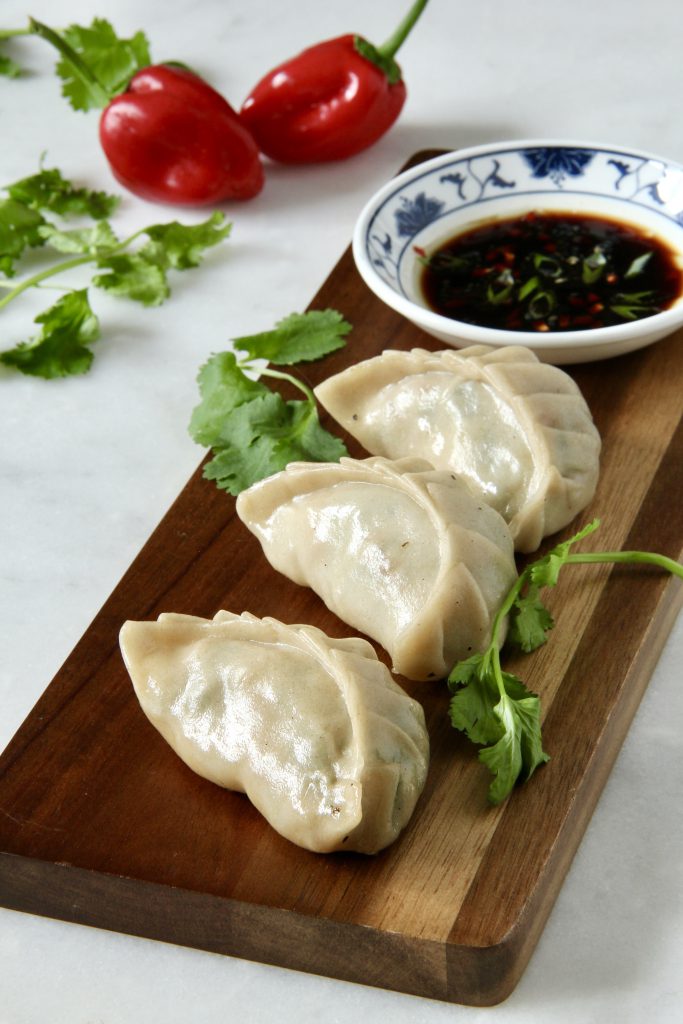
Vegetable and Tofu Gyoza

These easy to make dumplings look rather impressive. They also happen to be vegan, but if you wish you can add other flavours to the mix such as oyster sauce, fish sauce, or replace the tofu with an alternative source of protein.

If you want, you can also make a large batch of dumplings and freeze them. Simply line a baking tray with baking parchment and arrange the dumplings so they don’t touch. Freeze and then place into bags for up to 3 months. You can cook them straight from frozen, just add an extra few minutes onto the steaming time to make sure they are piping hot in the centre.

These little dumplings are delicious served with a simple dipping sauce made from soy sauce, sesame oil and rice wine vinegar. You can also add other flavours such as chilli, spring onion or sesame seeds. Alternatively, they are amazing dipped in some shop bought hoisin sauce!

Serves 3 as a starter

Ingredients
  • 1 portion of dumpling skins
  • 2 dried shiitake mushrooms, soaked and finely diced. Reserve the soaking liquid
  • 100g firm tofu
  • 30g cabbage, finely sliced
  • 30g carrot, finely diced
  • 30g bamboo shoots, finely sliced
  • 1 spring onion, finely chopped
  • 10g coriander, finely chopped
  • 1/2 tsp fresh ginger, very finely diced
  • 1 tsp sesame oil
  • 1 tsp Shaoxing wine
  • 2 tsp light soy sauce
  • 1 tsp cornflour
  • 1/2 tsp rapeseed oil

Method

  • Mix all of the ingredients, except the rapeseed oil, and 2 tablespoons of the reserved shiitake mushroom liquid together. Gently heat in a pan or wok till the cabbage has softened and the liquid has become slightly thick so it coats all the ingredients, about 2-3 minutes. Add extra mushroom liquid if needed.
  • Allow the mixture to cool to room temperature.
  • Take 1 dumpling skin and fill it with a heaped teaspoon of the mixture. Pinch the end and then pleat the top half of the skin onto the bottom half of the skin to create a slight crescent shape.
  • Add the rapeseed oil to your frying pan to stop the dumplings from sticking, and arrange them so they have at least 1 cm between each dumpling. You may need to cook them in batches depending on the size of your pan.
  • Cook for 2-3 minutes over a low-medium heat so they are golden on the bottom. Then add hot water to cover the bottom third of the dumpling and immediately cover with a lid to steam the dumplings.
  • After 5 minutes, remove the lid and allow any remaining liquid to evaporate off, allowing the bottoms to crisp for 1 minute.
  • Remove the dumplings onto a plate and enjoy hot with a dipping sauce of your choice.

Per serving: 230kcal/ 5.8g fat/ 1.3g saturated fat/ 33.2g carbohydrates/ 3.6g fibre/ 9.7g protein
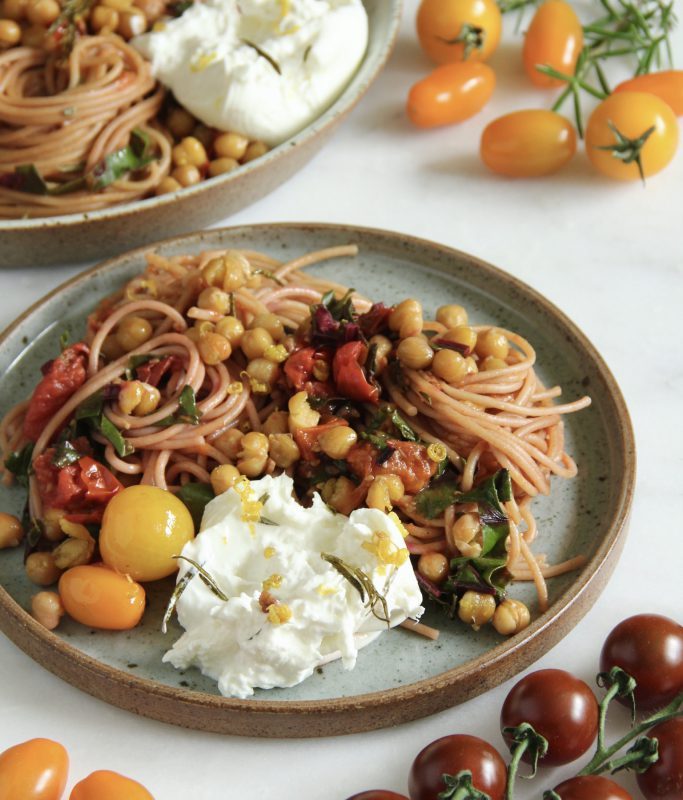
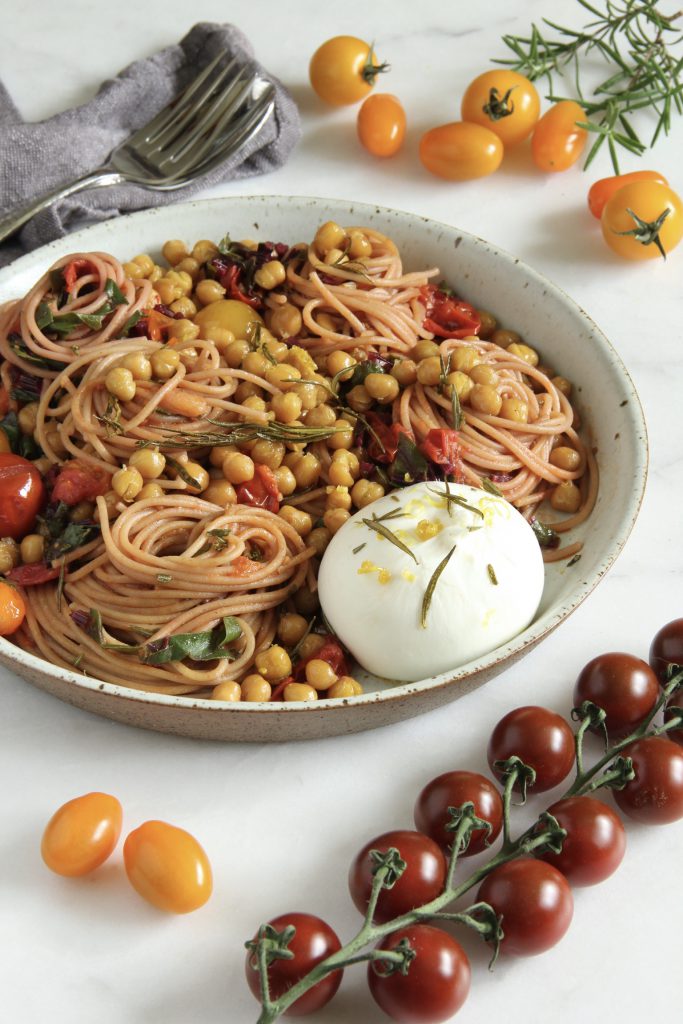
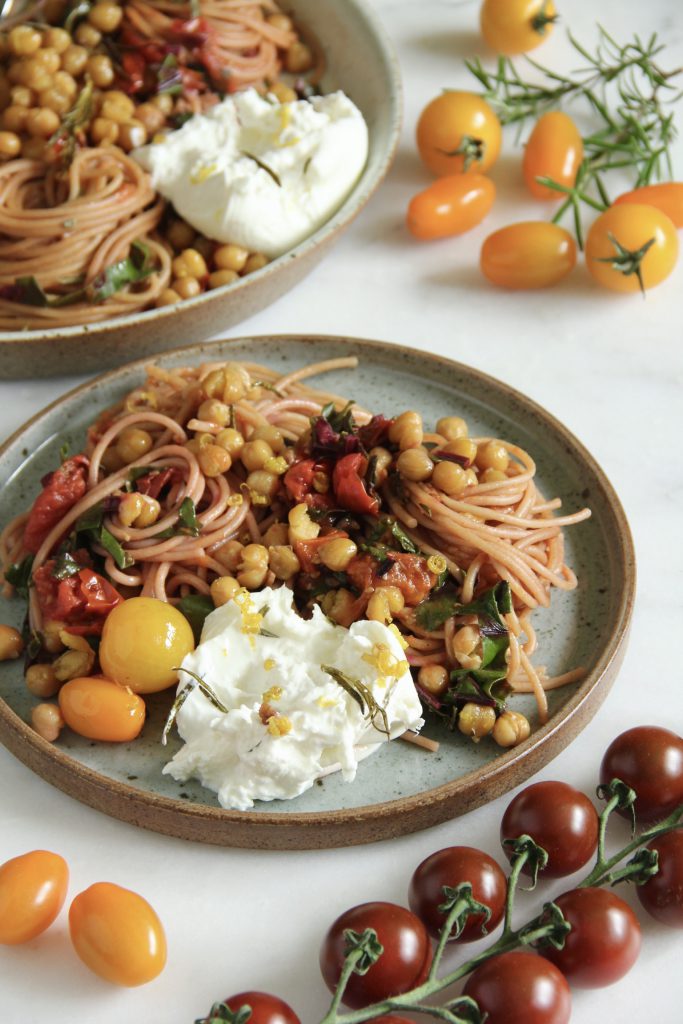
Crispy Lemon Rosemary Chickpea and Burrata Summer Pasta

I’m trying to find some inventive ways to use up the leftover beetroot leaves as I process them to try to preserve the taste of summer. Beetroot leaves are so similar to perpetual spinach or Swiss chard. For every homegrown beetroot given out, I also say to my willing receiver “did you know you can eat the leaves too?” There is absolutely no reason to waste them so apart from giving them to the chickens as a little treat, I’m also trying to utilise them myself. If you can get hold of whole beetroots with the leaves still attached, or are growing them yourself (or being gifted as I am doing with so many beetroots!) then you absolutely must try them!

The standard purple beetroots still contain some of the bright purple-red colouring found in the bulb, so I would only assume there are some of the same health benefits from eating the leaves as there are from the actual beetroot itself, although it a smaller quantity which is reflected in the light staining you get from the leaves themselves. There hasn’t been any research into this as far as I can see, but at the end of the day it is green and leafy, and as it’s not toxic to humans, I can only assume there must be some good to eating them whole vegetable from root to leaf.

For me, eating beetroot leaves is a true taste of summer, and something I am currently relishing. I hope that you can get your hands on some beetroot leaves, but if you can’t, or decide you need a little reminder of Summer when it’s dark and gloomy in Winter, use baby leaf spinach, kale or even cabbage.

While I think that standard “white” spaghetti would look more aesthetically pleasing, I am always drawn to using wholemeal pasta wherever possible due to the extra fibre (from 7g fibre per portion up to almost 12g). I also think it helps enhance the slight earthiness of the beetroot leaves.

Serves 3

Ingredients

  • 1 tin of chickpeas, drained and rinsed
  • 3 springs of rosemary, leaves removed from 1 sprig and roughly chopped
  • Zest of 1 unwaxed lemon
  • 2 tbsp extra virgin olive oil
  • 250g cherry tomatoes
  • 2 cloves of garlic
  • 1/2 tbsp balsamic vinegar
  • 200g wholemeal pasta
  • 150g beetroot leaves, roughly chopped
  • 1 ball of fresh burrata

Method

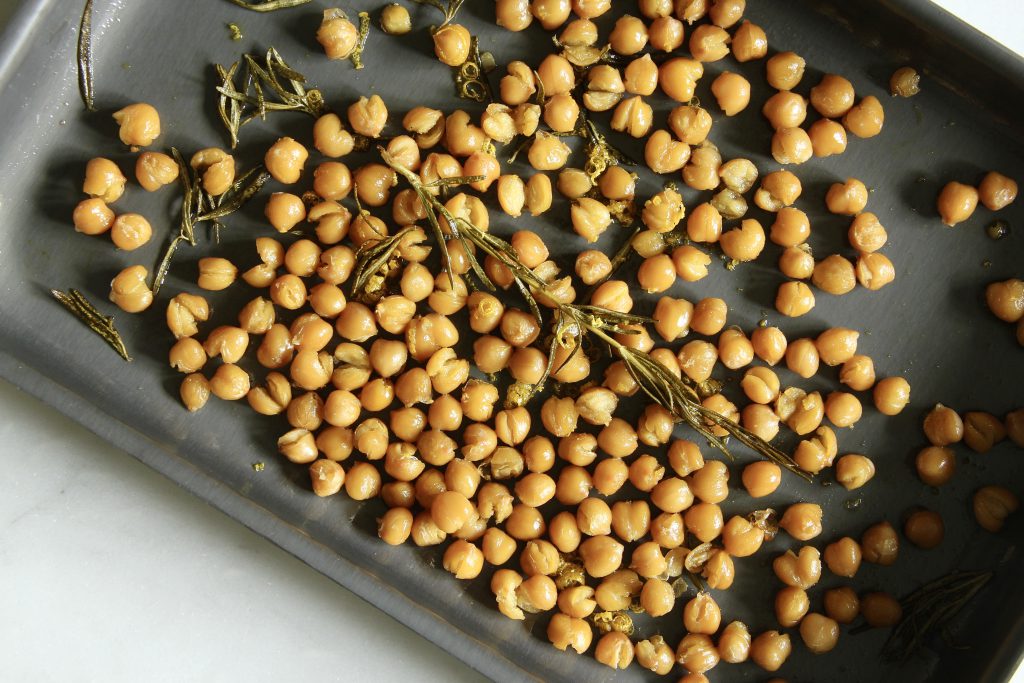
  • Mix the chickpeas, 1 tbsp oil, lemon zest, and 2 spring of rosemary in a baking tray. Bake at 180°C fan/ 200°C convection/gas mark 6 for 15 minutes till crispy and fragrant.
  • Meanwhile, add the tomatoes, garlic and remaining oil to a saucepan, and cook for 5 minutes, before adding the balsamic vinegar and chopped rosemary. If needed add a little water to stop it from sticking.
  • Boil the wholemeal pasta for 2 minutes less than the instructions, reserving a little pasta water.
  • Add the beetroot leaves into the tomato sauce before mixing in the cooked pasta. Return to the heat for 1 minute, adding some of the reserved pasta water if required to loosen the sauce.
  • Serve with the crispy chickpeas, crispy rosemary, and the burrata ball over the top.

Per serving: 501kcal/ 14.2g fat/ 7.0g saturated fat/ 70.0g carbohydrates/ 11.8g fibre/ 18.6g protein

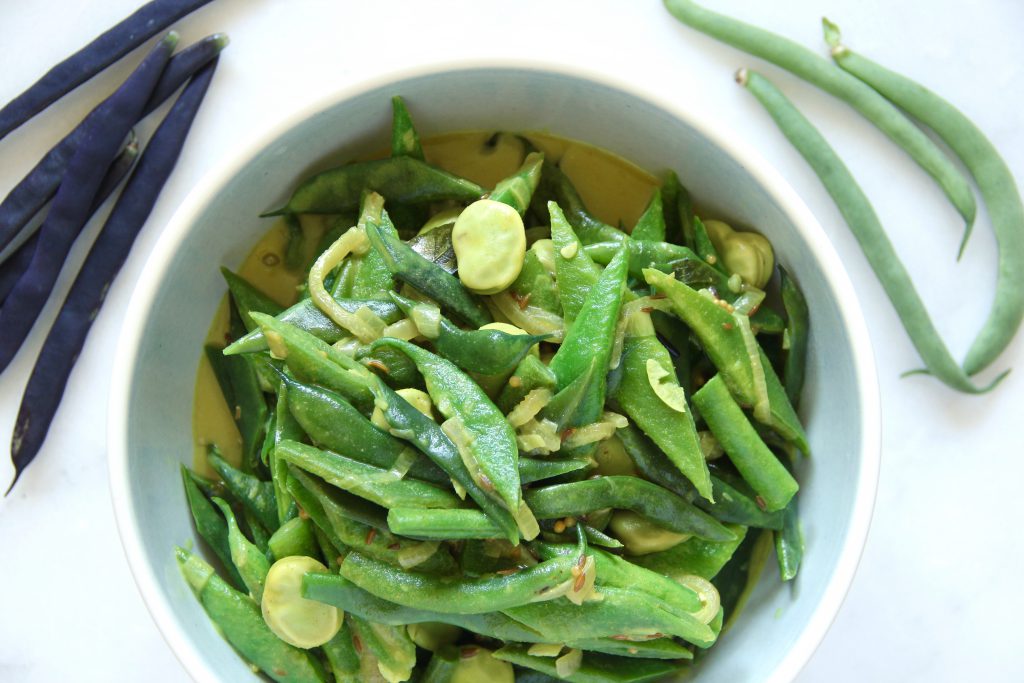
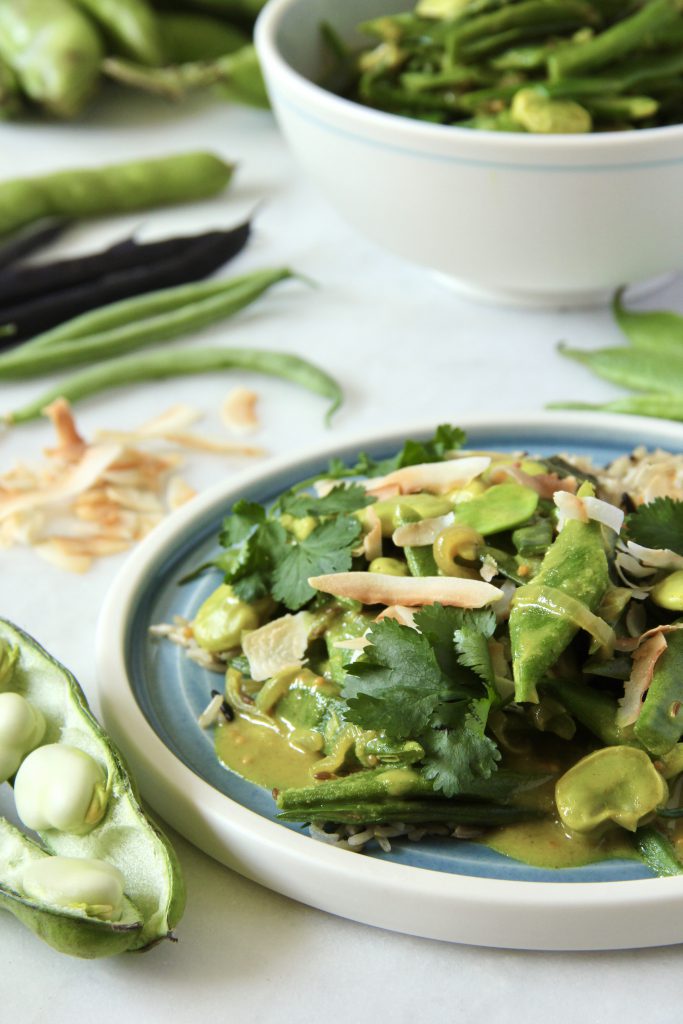
Green Bean Curry

I’m a firm believer that curries taste best when cooked long and slow, and often taste best the next day once the flavours have had time to mingle. However, there is always an exception to the rule, and this is it.

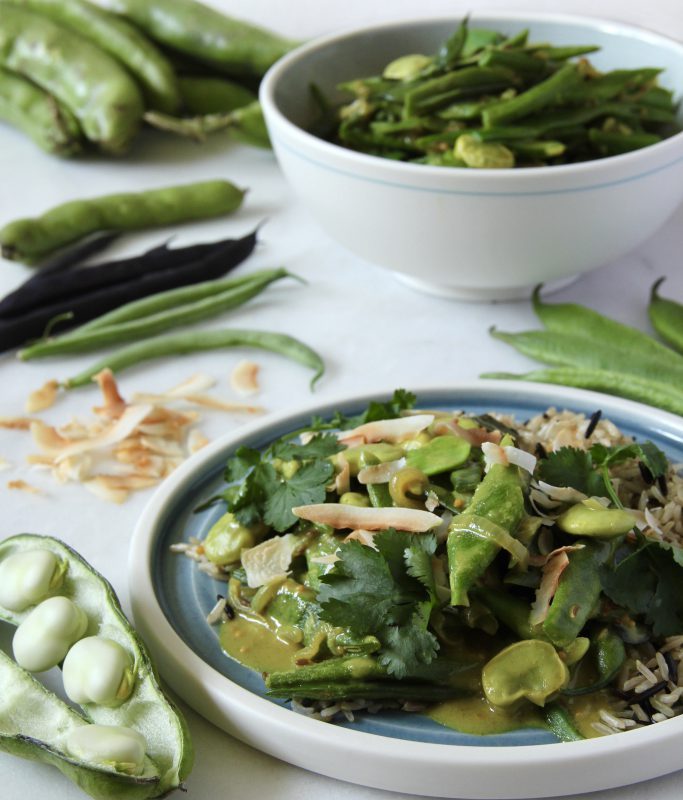
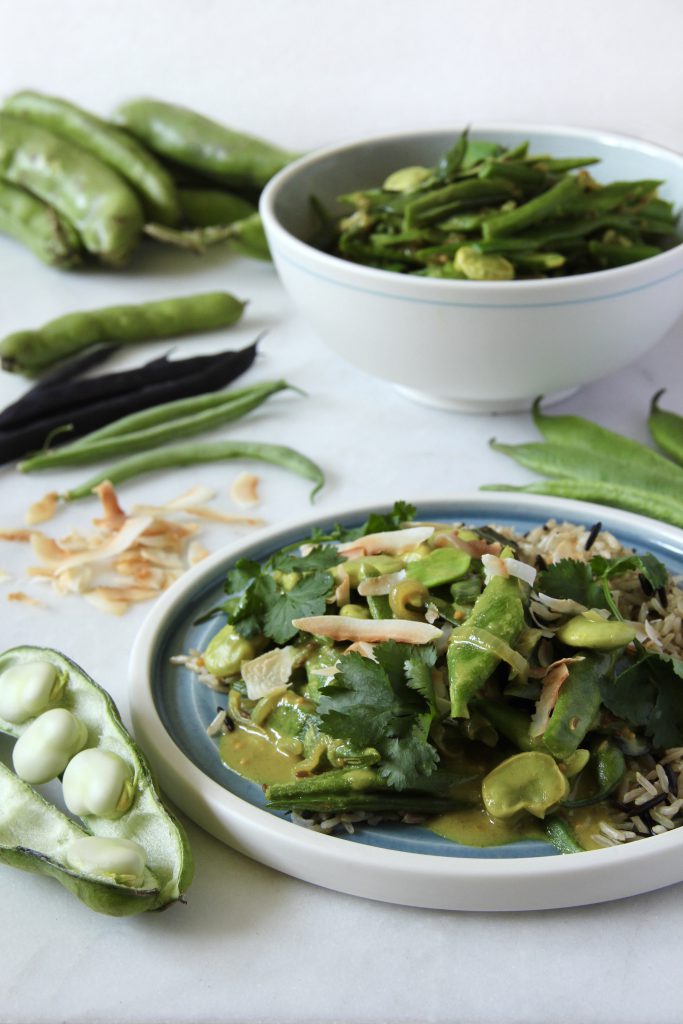
For those who are growing their own beans, you may be over-run with a large glut and not sure how to use them all up. Otherwise it’s time to buy some British seasonal beans while they’re in stock and make this delicious summer curry. Alternatively, you can buy frozen broad beans to make the dish all year round.

Serves 6

Ingredients

  • 2 onions, sliced
  • 1 tbsp vegetable oil
  • 3 garlic cloves, roughly diced
  • 1cm piece of ginger, finely diced
  • 15g butter
  • 2 tsp cumin seeds
  • 2 tsp mustard seeds
  • 1 tsp garam masala
  • 2 tsp turmeric
  • 1/4 tsp salt
  • Large pinch of curry leaves
  • 900g mixed green beans e.g. podded broad beans, runner beans, green beans, dwarf beans, all chopped into roughly equal sizes.
  • 300ml coconut milk

To serve

  • Brown basmati rice
  • Toasted coconut flakes
  • Fresh coriander

Method

  • Gently fry the onions in the vegetable oil till soft and translucent, but without colouring.
  • Add the garlic and ginger and cook for 2 minutes before adding the butter and spices.
  • Add the beans and stir to coat in the spices. Add the coconut milk and cook for 5 minutes. If the curry looks a little dry, add some water.
  • Serve over steamed rice and top with toasted coconut flakes and fresh coriander leaves.

Per serving: 195kcal/ 12.7g fat/ 2.4g saturated fat/ 12.3g carbohydrates/ 6.5g fibre/ 5.5g protein

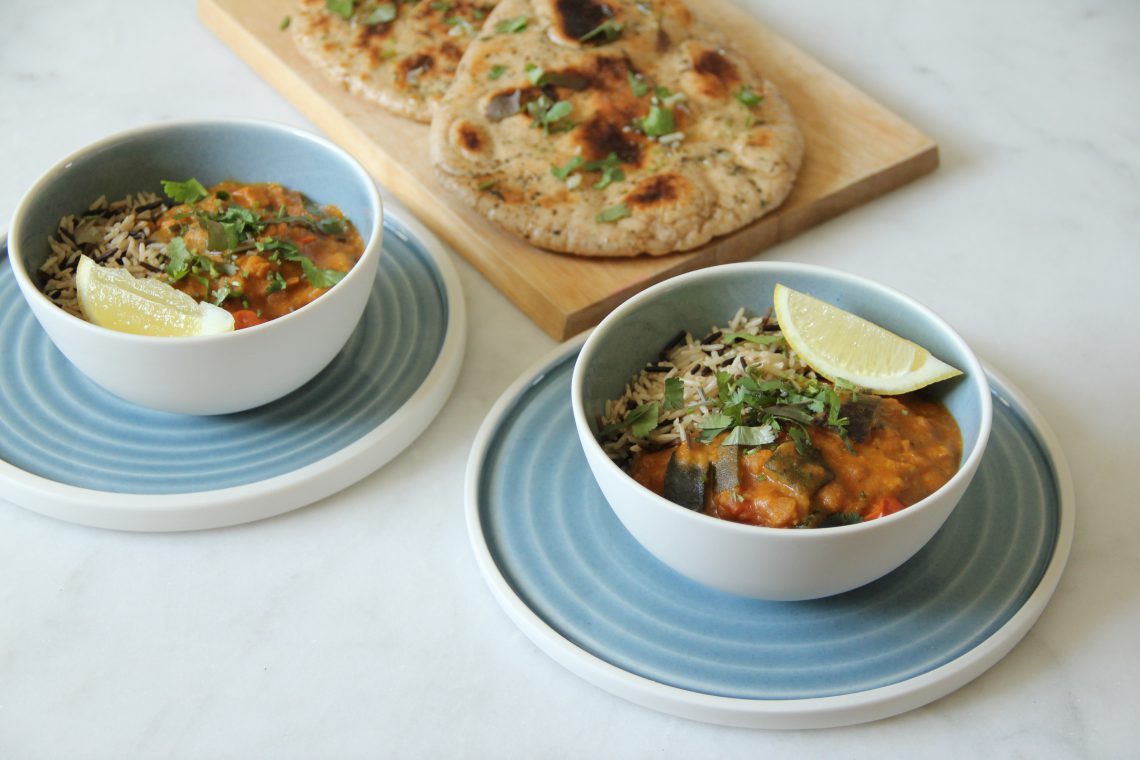
Yellow Split Pea Curry

Yellow split peas are such a versatile bean. So simple to cook and they make a really mean curry as would any lentil.

Yellow split peas are also extremely high in fibre, containing around 16g fibre per 100g cooked peas. In comparison, red lentils provide 6g fibre, and green lentils 8.7g when cooked.

Yellow split peas also retain a firmer texture when cooked, even for a long period of time. This means that they won’t fall apart, so you always get a rewarding chunky texture to your dish.

Serves 6

Ingredients

  • 2 tbsp vegetable oil
  • 2 large onions, sliced
  • 4 cloves garlic, roughly chopped
  • 20g ginger, roughly chopped
  • 2 tbsp tomato puree
  • 2 tsp ground turmeric
  • 2 tsp garam masala
  • 2 tsp chilli powder (or to taste)
  • 200g yellow split peas
  • 200g fresh tomatoes, roughly chopped
  • 1 large aubergine, roughly chopped
  • 1 courgette, roughly chopped
  • 300ml coconut milk
  • 30g coriander, chopped

To Serve

  • Lemon wedges
  • Cooked rice
  • Kefir naan

Method

  • Soften the onion in the oil till translucent but not brown.
  • Crush the garlic and ginger in a pestle and mortar and add to the onions. Cook for 2 minutes before adding in the tomato puree, dried spices, split peas, tomatoes, aubergine and courgette. Add 600ml water and simmer for 40 minutes till the peas are cooked through.
  • Add the coconut milk 5 minutes before serving.
  • Sprinkle in the coriander and serve with a wedge of lemon.

Per serving 334kcal/ 16.1g fat/ 1.6g saturated fat/ 25.4g carbohydrates/ 19.4g fibre/ 14.0g protein

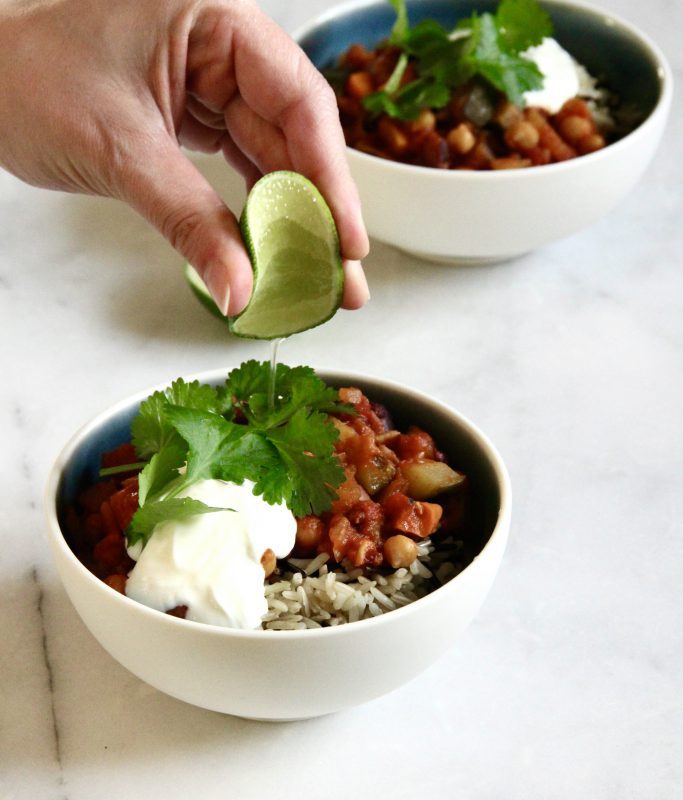
Smokey Chipotle Mixed Bean Stew

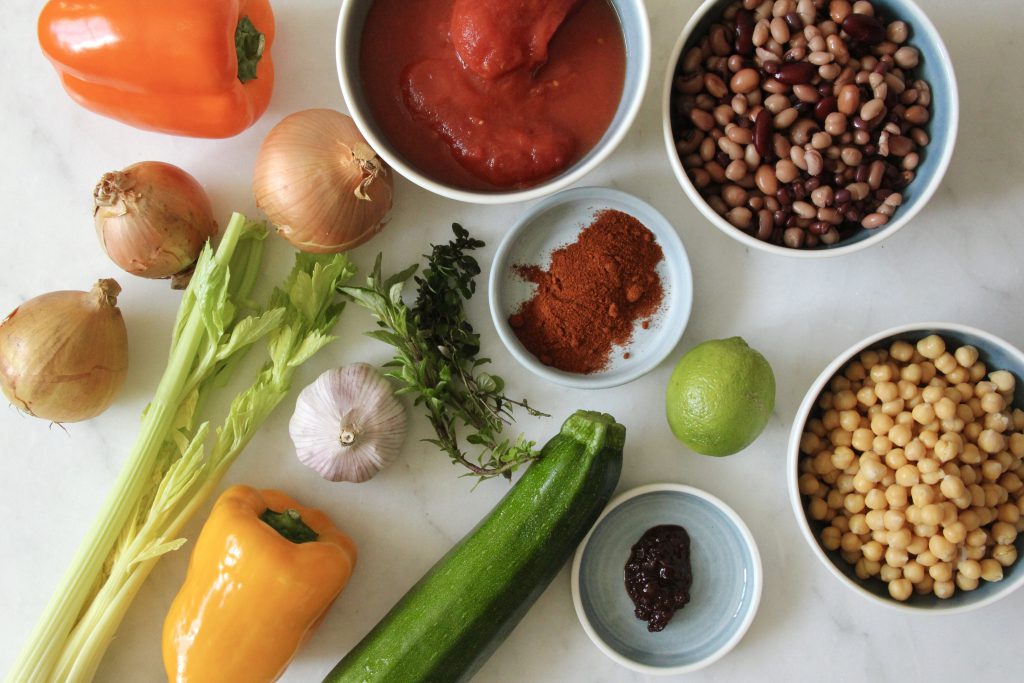
Looking to increase the diversity of the foods you eat? This is the perfect dish for you, you can add any other vegetables you wish, and serve it with different carbohydrates to further increase the variety of the plant based foods in your diet. I had a tin of 6 different mixed beans, this is a fantastic way to quickly boost your weekly plant variety. If you don’t have a mixed tin, try combining different tins, or use dried lentils to maxmise diversity. This specific recipe gives you 17 different plant foods on its own, and per serving provides 25% of your daily fibre recommendation. So why not try adding a few extra plant foods when serving it as a meal to further boost these numbers.

It’s also a big batch food which can be stored in the fridge for a few days or frozen down as a convenience food for a later date. You can thank me later!

Serves 8

Ingredients

  • 2 tbsp EVOO
  • 3 onions, sliced
  • 3 sticks of celery, diced
  • 4 cloves garlic, diced
  • 2 peppers, chopped
  • 1 courgette, chopped
  • 1 can mixed beans, drained and rinsed
  • 1 can chickpeas, drained and rinsed
  • 2 tins of tomatoes
  • 2 tsp smoked paprika
  • 2 tsp chipotle
  • 6 oregano sprigs
  • Juice of 1 lime

Method

  • Sweat the onions in the oil for 5 minutes till translucent. Then add the celery followed by the garlic and cook for a further 3 minutes.
  • Add the remaining ingredients and 400ml of water. Bring to the boil and then gently simmer for 45-60 minutes stirring occasionally till the liquid has reduced by half.
  • Remove the woody stems of any herbs and serve.
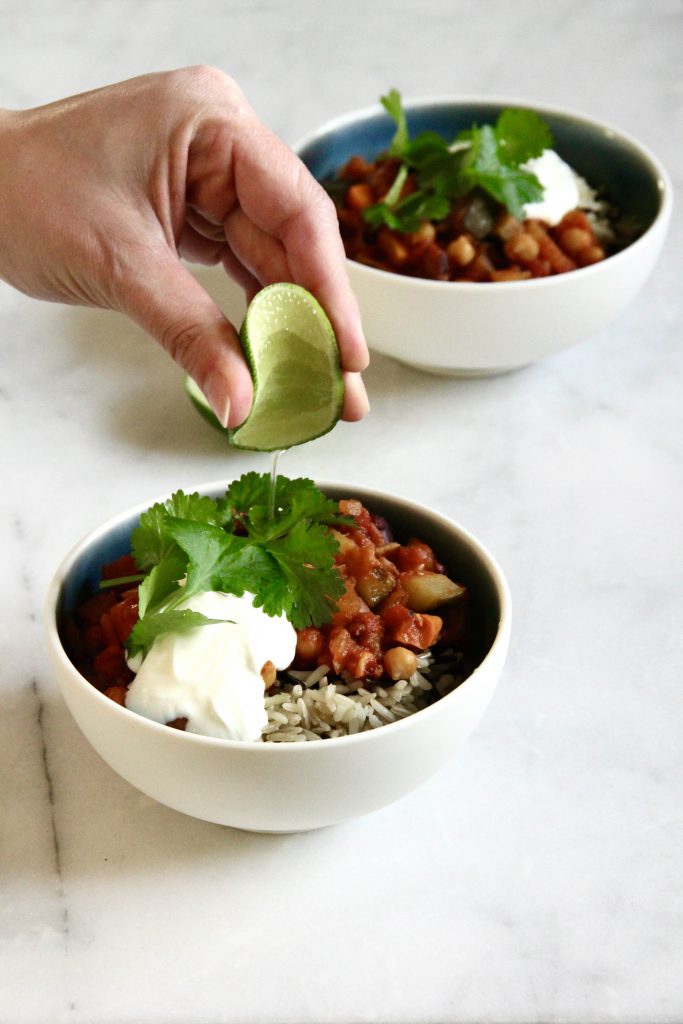
Delicious served with wholegrain rice, sour cream, fresh coriander and a squeeze of lime

Per serving: 159kcal/ 5.2g fat/ 2.9g saturated fat/ 18.4g carbohydrates/ 7.5g fibre/ 7.1g protein

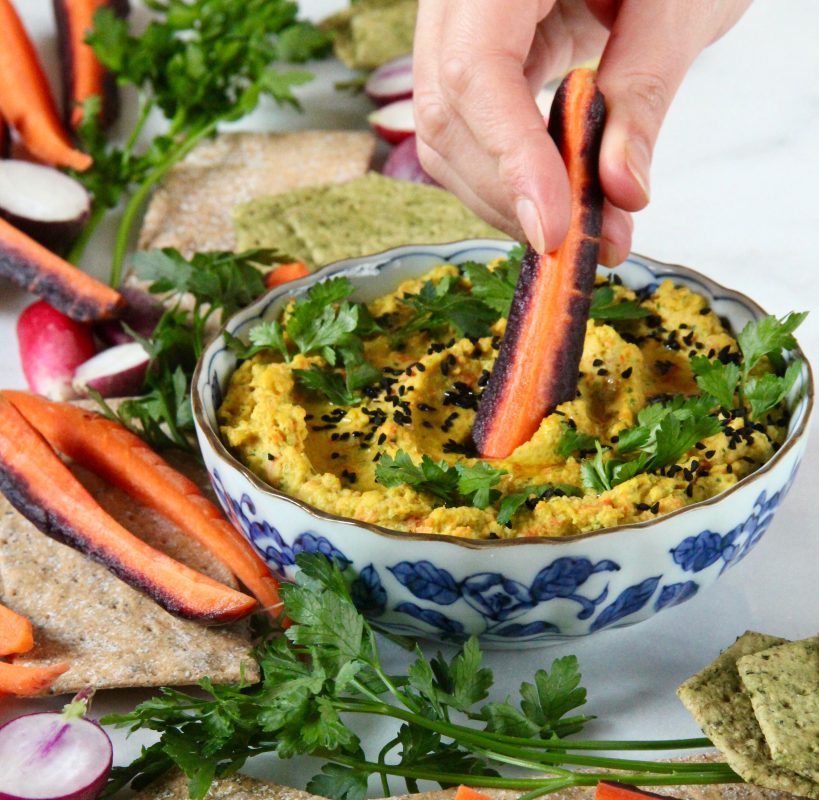
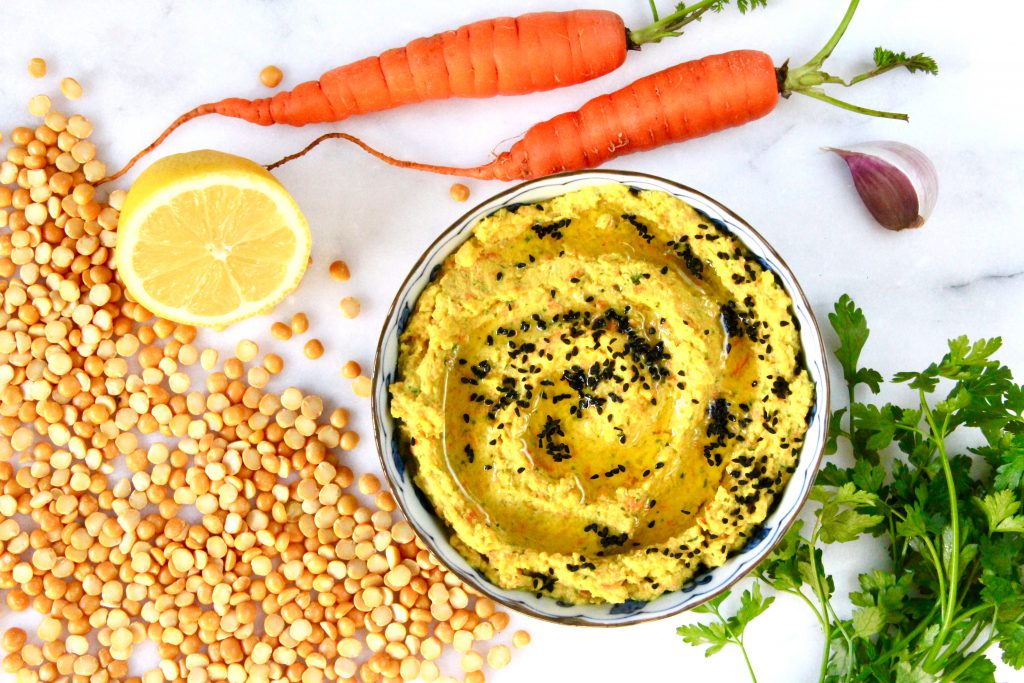
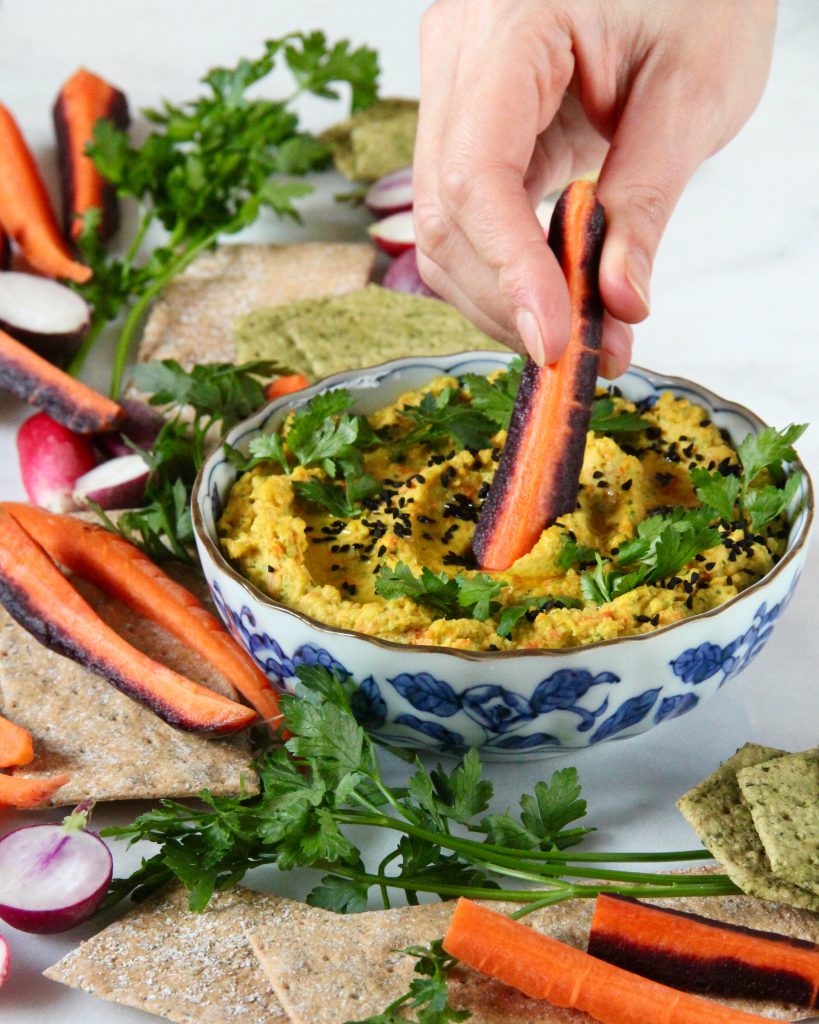
Roasted Carrot and Yellow Split Pea Hummus

Visiting the historical town of Winchester, we decided to stop for lunch at Hugh Fearnley-Whittingstall’s River Cottage Kitchen. We shared a starter of a mixed mezze board, but the single dish that stood out from the board for me was the carrot and yellow split pea hummus.

I haven’t been able to stop thinking about it, it may have been the best hummus I have ever had. So I trawled through Hugh’s books to find a recipe, but alas, there were none to be found. So I have endeavoured to make my own.

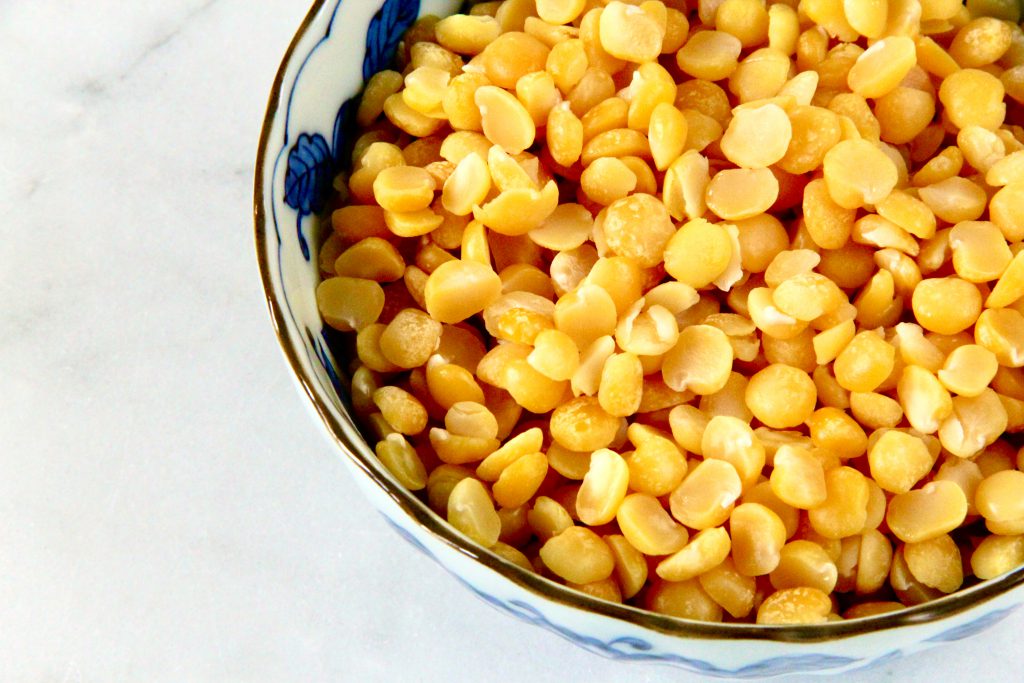
Cooked Yellow Split Peas

Split peas are a great addition to your diet, naturally low in fat, high in plant-based protein and a source of fibre. We can often forget about including beans and pulses in as part of our weekly plant food diversity, but we should be aiming to eat from all 6 categories of plant-based foods; fruits, vegetables, nuts, seeds, whole grains, and legumes. This particular recipe covers 4 out of the 6 groups, and by adding some wholegrain crackers, perhaps even topped with nuts you could maximise the diversity of your diet.

Serves 6

Recipe

  • 100g split yellow peas
  • 2 carrots, washed and chopped into large pieces
  • 2 cloves garlic, skins on
  • 30g tahini
  • 40ml extra virgin olive oil
  • 90ml water (you may need more or less depending on the texture you wish for)
  • 1/2 tsp ground cumin
  • 1/2 tsp ground turmeric
  • 30g flat leaf parsley, roughly chopped
  • Juice of a lemon
  • Salt and pepper to taste

To serve

  • Fresh Parsley leaves
  • Nigella seeds
  • Vegetable crudites e.g. carrots, radish, cauliflower
  • Crackers

Method

  • Wash the split peas in cold water, then top with 500ml water and bring to the boil for 10 minutes before lowering the heat to a gentile simmer for 25 minutes. Drain and allow to cool.
  • When the peas are simmering, roast the carrots and garlic cloves in the oven preheated to 180 ° C/170 ° C Fan/GM4 for 20 minutes. Allow to cool.
  • Add the cooked peas, carrots and garlic clove, removing the skin, to a food processor. Add the tahini, extra virgin olive oil, lemon juice, water, spices and parsley and blend. Season to taste and add more water if the dip remains too thick.
  • Serve sprinkled with nigella seeds and fresh parsley leaves.

Per serving 107kcal/ 3.6g fat/ 2.0g saturated fat/ 11.6g carbohydrates/ 3.1g fibre/ 5.3g protein

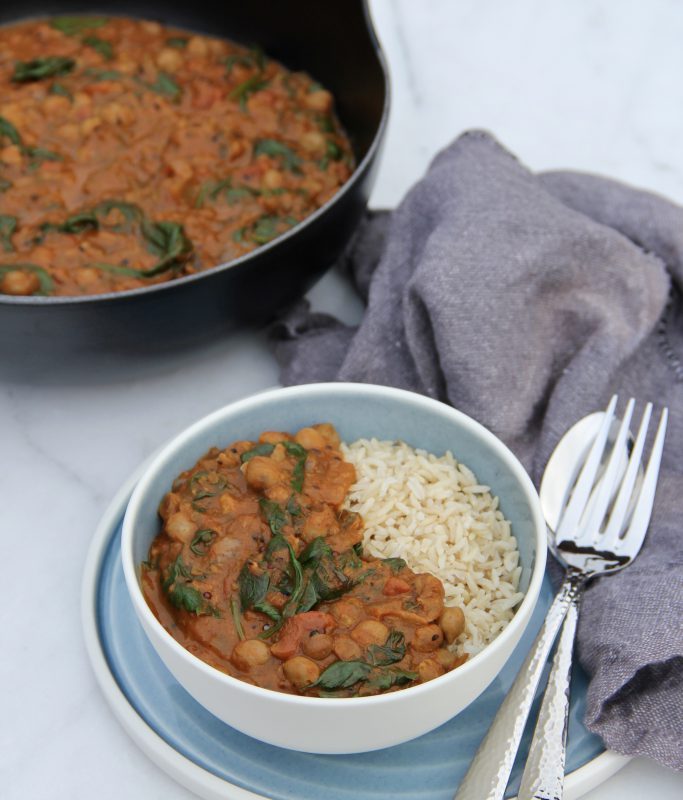
Vegan Chickpea Curry

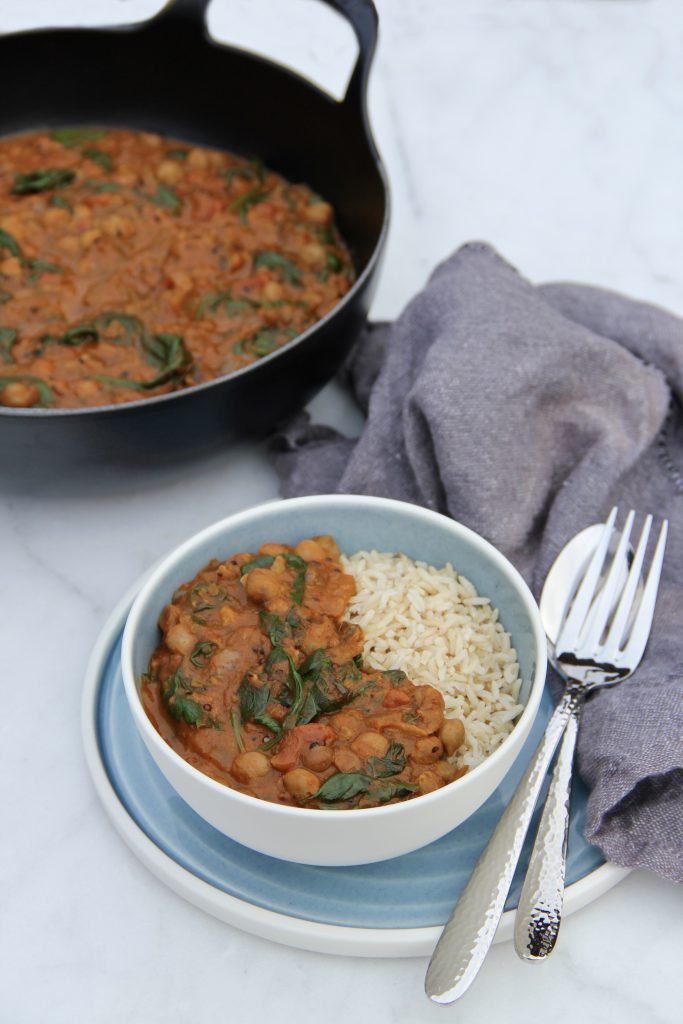
This is my store cupboard staples easy curry. I always have the tinned goods in my cupboard as backup should I find myself without anything fresh to cook with. And the best part is it taste better a day or two old, so there’s no reason why you can’t make it on a Sunday, as I have, ready for a quick and nutritious no-fuss mid-week meal.

It’s also perfect for those doing Veganuary as it is naturally vegan, and as a bonus contains over 9g of plant based protein.

Eating the rainbow

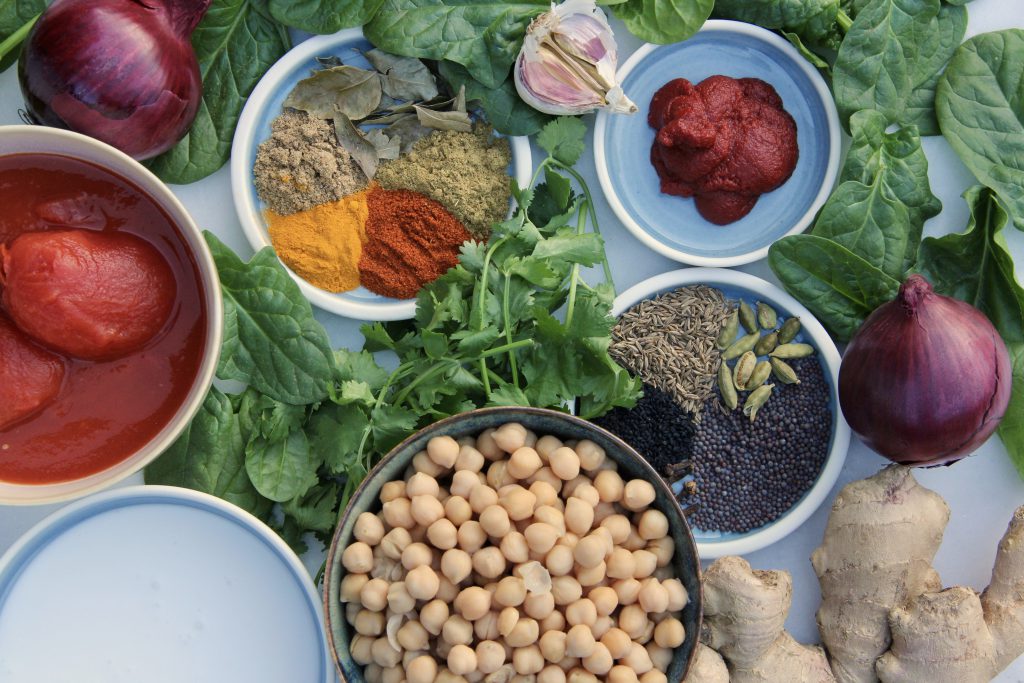
This dish is versatile in the number of plant foods, containing an array of 7 different herbs and spices to complement 8 different plant ingredients. Add the rice and you’re well on your way to your 30 different plant foods for the week. In addition, it is an excellent source of fibre, containing half the recommended daily fibre intake of 30g just in this dish alone.

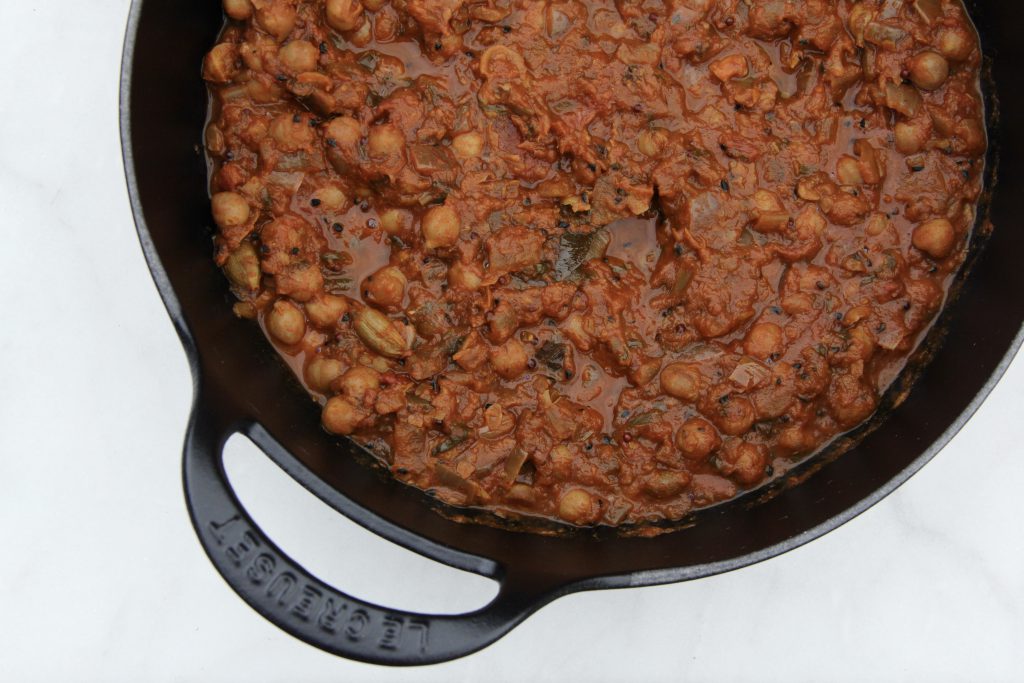
Cook the curry till thick

The trick to this dish is to cook it as slow and long as possible. If you don’t have much time to hand, it is still delicious if made within the hour, but if you have time, keep cooking on the lowest setting of your hob and top up with water when required. You could even get the curry ready, leave it overnight in the fridge and then quickly reheat it with the coconut milk and spinach the next day for a fast dinner.

The only other recommendation I can make would be to count in the cardamon pods and cloves. I hate nothing more than biting down on a whole clove mid way through my meal. Clove has a numbing effect, and is often used to help relieve tooth ache, not something I want to experience while eating my dinner. So, like a surgeon, I count them in, and then count them back out before serving, hopefully finding them all.

Serves 6

Ingredients

  • 2 onions, sliced
  • 2 tbsp rapeseed oil
  • 1 thumb sized piece of ginger
  • 5-6 cloves of garlic
  • 1 tsp onion seeds
  • 1 tsp mustard seeds
  • 1 tsp cumin seeds
  • 1 tsp cardamon seeds
  • 6 whole cloves
  • 1 tsp ground cumin
  • 1 tsp ground turmeric
  • 1 tsp chilli powder, or to taste
  • 1 tsp ground coriander
  • ~15 curry leaves
  • 35g tomato puree
  • 2 tins of chickpeas, drained and rinsed
  • 400g tinned tomatoes
  • 30g fresh coriander, chopped
  • 200ml coconut milk
  • 300g baby spinach leaves
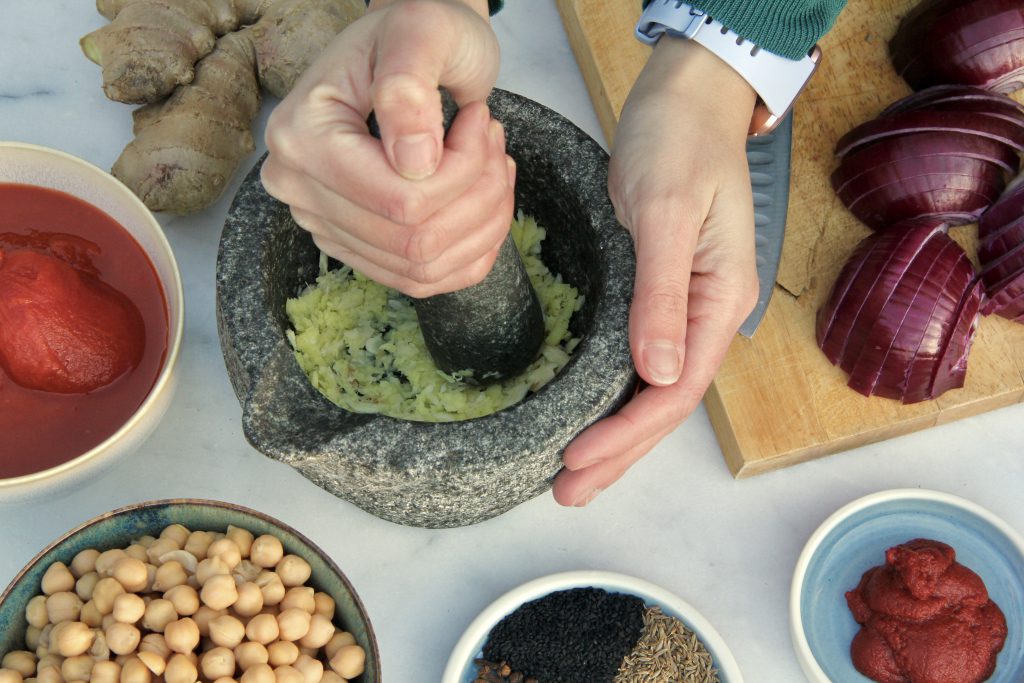
Use a pestle and mortar to crush the ginger and garlic

Method

  • Add the onions and rapeseed oil to a large pan and cook gently till the onions soften and become translucent.
  • Meanwhile, make a garlic and ginger paste in a pestle and mortar, bashing till as smooth as possible.
  • Add the garlic ginger paste, all the dried herbs and spices, tomato puree and chickpeas to the pan and cook together for 1 minute before adding the tinned tomatoes. Fill the empty tin with water and add the the pan.
  • Add the chopped coriander and allow to gently simmer away for an hour, or longer if you have the time. If the liquid reduces too much add some extra water.
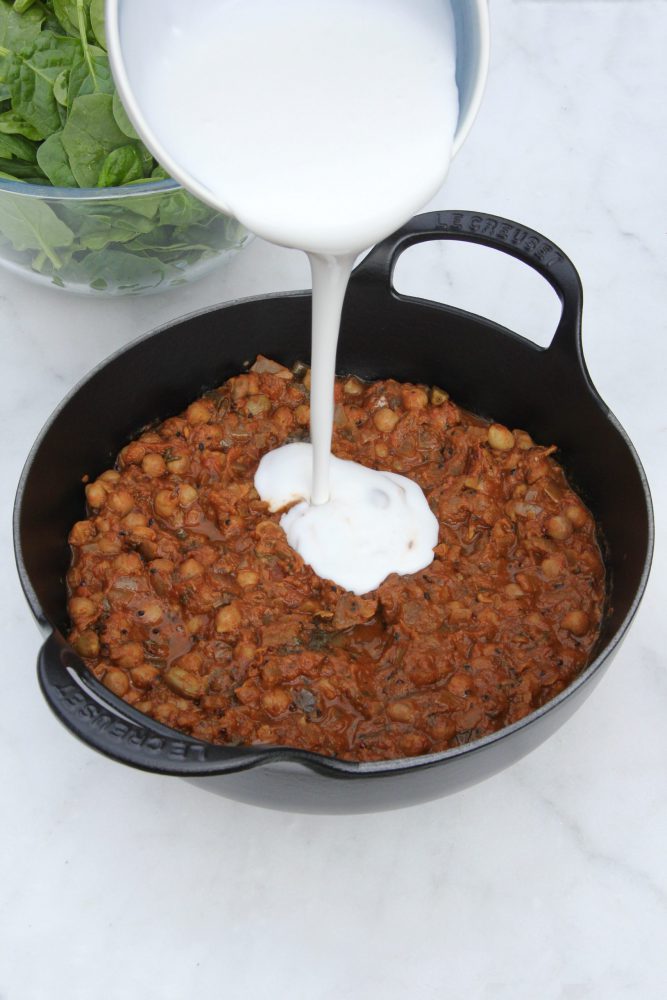
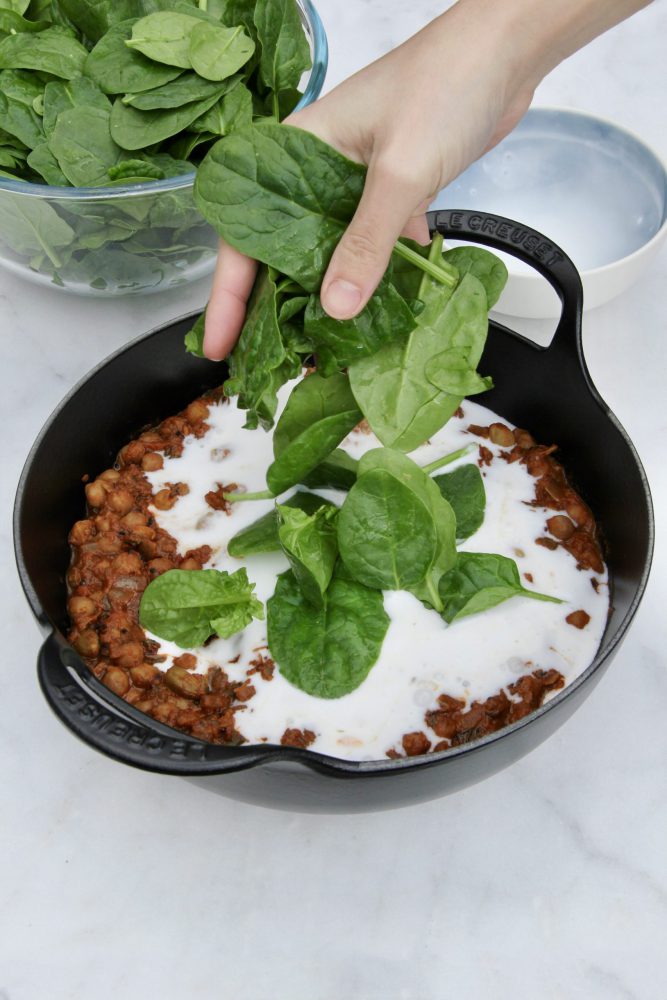
  • 10 minutes before serving, add the coconut milk and spinach before returning to the heat to allow the spinach to wilt. Season to taste.
  • Remove the cardamon pods and whole cloves, and serve with rice or naan.

Per serving 258kcal/ 13.6g fat/ 1.3g saturated fat/ 21.8g carbohydrates/ 15.9g fibre/ 9.3g protein