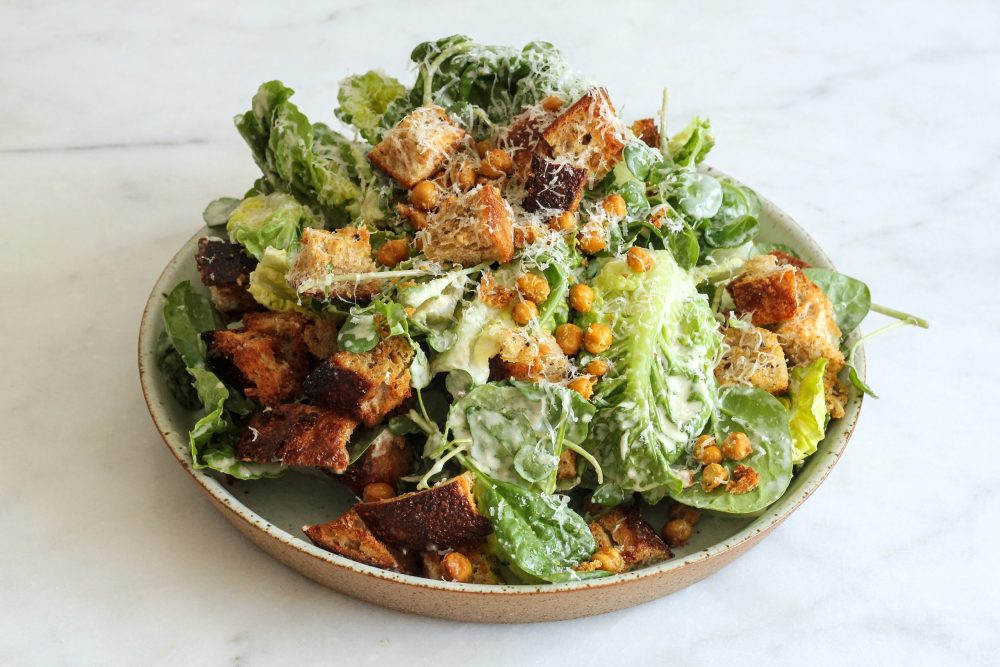
Gut Loving Chickpea Caesar Salad

My Gut Loving Crispy Chickpea Caesar Salad is a delicious way to increase diversity as well as pack in pre- and probiotics whilst delivering 13g of fibre and 30g of protein per serving!

Did you know that the bacteria found in Parmigiano Reggiano can survive and help to colonise our gut making it a delicious probiotic if eaten raw? And this paired with the live bacteria in the yoghurt (more probiotics) and plenty of prebiotics (chickpeas, garlic, extra virgin olive oil, rocket, spinach and watercress all being sources) and fibre diversity and quantity make this the perfect salad for both your tastebuds and gut microbiota.

Serves 2 as a main

  • 1 tin of chickpeas, drained and dried
  • 2.5 tbsp extra virgin olive oil
  • 180g stale sourdough bread, torn into bite-sized chunks
  • Juice of 1 lemon
  • 100g live yoghurt (I used a 0% fat variety)
  • 1 clove of garlic
  • 3 anchovies in oil (12g)
  • 60g Parmigiano Reggiano
  • 2 baby gem lettuce heads
  • 100g mixed rocket, spinach and watercress

Method

  • Mix the chickpeas with 1/2 tbsp olive oil and cook in an air fryer set to 200°C for 20 minutes
  • Mix the sourdough chunks with 1 tbsp olive oil and add to the chickpeas after 10 minutes.
  • Meanwhile, make the dressing by combining the lemon juice, yoghurt, garlic and anchovies together and blending till smooth. Add half the parmesan.
  • In a large mixing bowl, add the leaves and the dressing and mix well before adding most of the crispy chickpeas and croutons.
  • Serve in a large bowl and top with any leftover chickpeas and croutons, and the remaining parmesan. Eat straight away.
Gut Loving Chickpea Caesar Salad

Per serving: 663kcal/ 28g fat/ 4.1g saturated fat/ 65g carbohydrates/ 13g fibre/ 30g protein
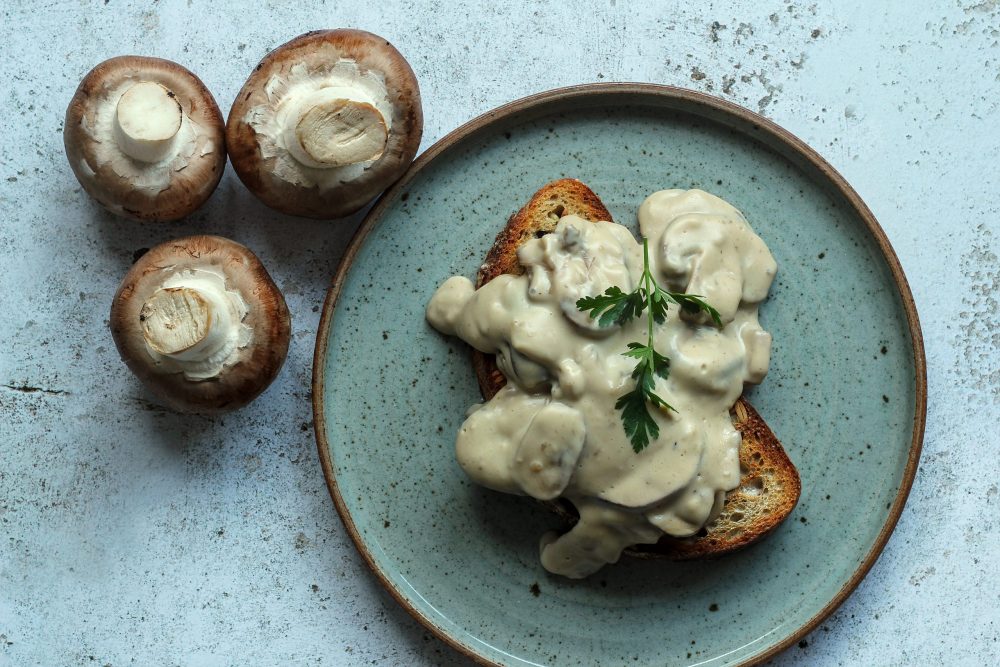
Mushrooms on Toast

This was a childhood recipe I would make it every weekend. I loved this recipe so much, but the original recipe used cow’s milk. I’ve turned it vegan by using some unsweetened soya milk and rapeseed oil in place of the butter. I still get that nostalgic feeling when eating this vegan version.

I’m using mushrooms which naturally contain vitamin D. I’ve written about this before where I talked about exposing shop-bought mushrooms to sunlight to make your own vitamin D mushrooms at home. You can buy mushrooms which have already been exposed to UVB rays, and therefore already contain vitamin D2. This can be useful if it’s not a sunny day or you don’t have time to let your mushrooms make vitamin D.

Serves 1

Ingredients

  • 10g rapeseed oil
  • 100g vitamin D mushrooms
  • 1 tbsp plain flour
  • 1 tbsp mushroom ketchup
  • 150ml unsweetened fortified soya milk
  • 1 slice of toast

Method

  • In a saucepan, heat the oil and fry the mushrooms till they release all their juices and they evapourate off.
  • Add the flour and mix into the mushrooms before adding the mushroom ketchup. Add the soya milk in a little bit at a time, stirring continuously to get a smooth sauce.
  • Once all the milk has been added, cook for a couple of minutes before serving piled high on a slice of toast
Mushrooms on Toast

Per serving: 409kcal/ 14g fat/ 1.6g saturated fat/ 56g carbohydrates/ 3.8g fibre/ 15g protein/ 6.2μg vitamin D2

Chipotle Chilli Beans

Iron can be found in animal sources e.g. meat and fish (known as haem iron) or from plant sources e.g. beans, pulses, nuts and fortified product such as cereals and bread (known as non-haem).

Serves 6

Ingredient

  • 1 chipotle chilli
  • 1 tbsp extra virgin olive oil
  • 2 red onions, chopped
  • 2 sticks of celery, diced
  • 3 garlic cloves, chopped
  • 1 tsp dried oregano
  • 2 tsp smoked paprika
  • 1/2 tsp white pepper
  • 1/2 tsp salt
  • 1 tin black beans, rinsed and drained
  • 1 tin haricot beans, rinsed and drained
  • 2 bell peppers, sliced
  • 1 tin of chopped tomatoes
  • 2 tbsp tomato puree
  • 30g coriander, chopped, leaves reserved
  • 200g kale, finely sliced

To serve

  • 6 portions of cooked brown basmati rice
  • 1 avocado, sliced
  • 6 tbsp soya yoghurt
  • 30g dairy-alternative cheese
  • 1 lime, cut into 6 wedges

Method

  • Soak the chipotle chilli in 100ml boiling water for 5 minutes.
  • Meanwhile, add the olive oil, onions and celery to a large pan and cook for 5 minutes till soft. Chop the now soaked chipotle chilli and add to the pan along with the garlic and cook for a few minutes.
  • Add the dried spices, beans and peppers and cook for 1 minute before adding in the tinned tomatoes, tomato puree, chipotle soaking water and around 200ml extra water. Add the coriander stems and cook for 20 minutes.
  • In the final 5 minutes of cooking, add the kale.
  • Serve in bowls with rice, and add the optional extras of avocado, soya yoghurt, dairy-free cheese and a squeeze of lime.

Per serving: 473kcal/ 13g fat/ 2.1g saturated fat/ 64g carbohydrates/ 15g fibre/ 16g protein/ 4.1mg iron

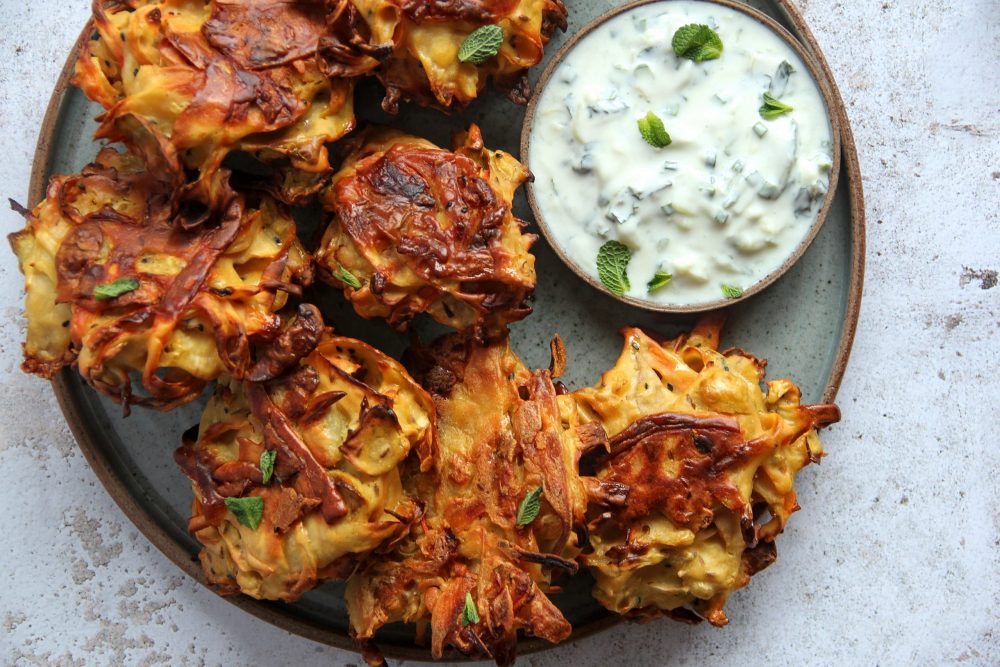
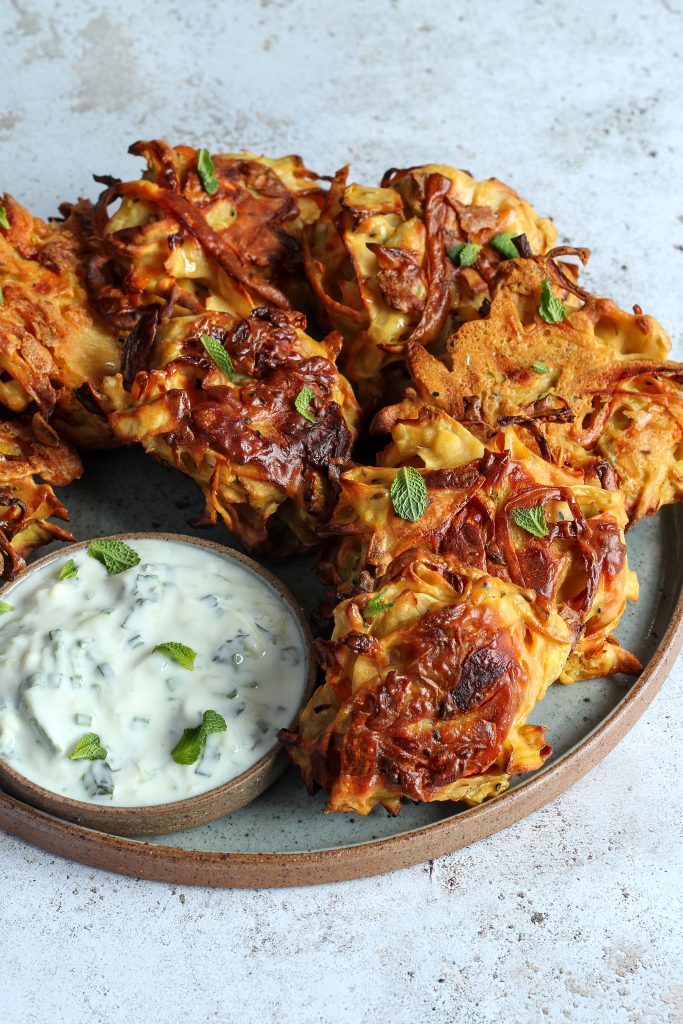
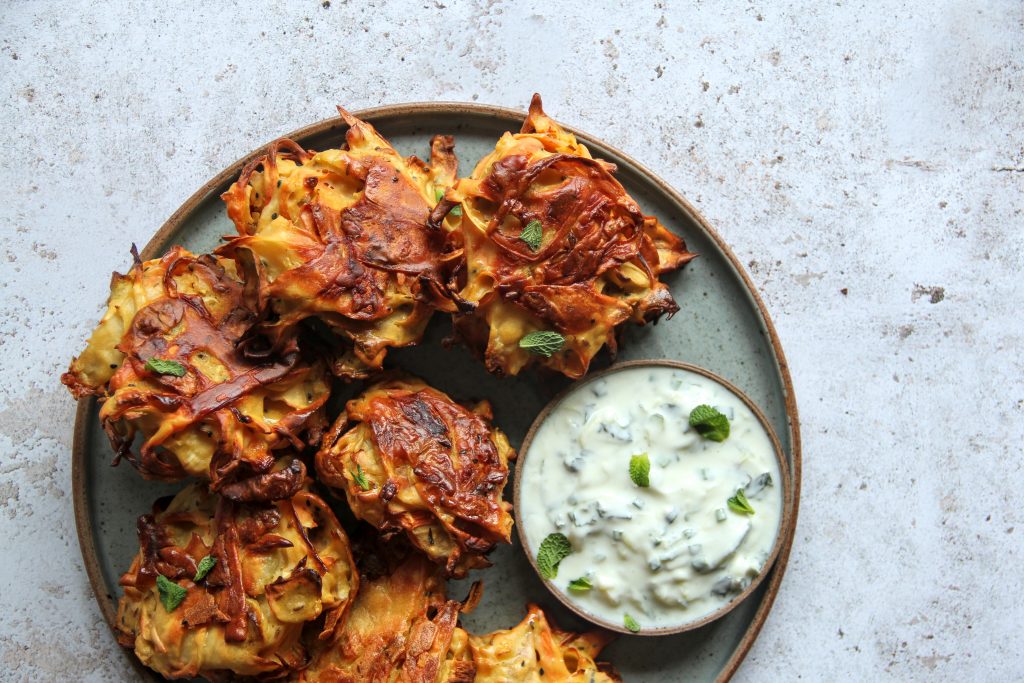
No Waste Vegetable Fritters

No Waste Vegetable Fritters

Use your leftover vegetable peelings from your Christmas Dinner to make these delicious No Waste Vegetable Fritters. They are so versatile in terms of what vegetables you want to use in them. I have used a combination of potato, parsnip, carrot and sprout peelings, but other suitable vegetables include onion, cabbage, kale, cauliflower (leaves included), broccoli, mushrooms or leeks.

Save the peelings in a Tupperware in the fridge for up to 3 days before making these fritters – you can adjust the gram flour (also known as chickpea flour or besan flour) and water to the weight of the vegetables.

Delicious served with a quick riata which can easily be adapted to vegan by using a plant-based yoghurt.

No Waste Vegetable Fritters

Makes around 8 fritters

Ingredients

  • 2 tbsp rapeseed oil
  • 400g vegetable peelings e.g. carrots, potatoes, parsnips and sprouts
  • 1″ ginger, grated
  • 1 clove garlic, grated
  • 1 tsp nigella seeds
  • 1.5 tsp cumin seeds
  • 250g gram flour
  • Juice of 1 lemon

To serve

  • 250g plain yoghurt of choice
  • 100g grated cucumber
  • 1 spring onion, chopped
  • 1 handful fresh mint, chopped
  • Juice of half a lemon

Method

  • Preheat the oven to 200°C fan/ 225°C convection
  • In a large baking tray add the oil and preheat in the oven
  • In a large bowl add the remaining fritter ingredients and mix together with around 150ml water, adding extra water if needed to get a thick batter consistence.
  • Remove the tray from the oven and drop patties of the mixture into the hot oil, evenly spaced out. You should make around 7-8 fritters.
  • Cook in the oven for 10 minutes, before flipping over, gently pressing down and cooking for a further 12-15 minutes till golden brown and crispy.
  • Meanwhile, mix the raita ingredients together.
  • Once the fritters are cooked through, serve alongside the riata.

Per serving*: 198kcal/ 5.2g fat/ 0.7g saturated fat/ 25g carbohydrates/ 5.2g fibre/ 10g protein

No Waste Vegetable Fritters

*Nutritional analysis completed based on particular vegetables listed and plain low fat yoghurt.

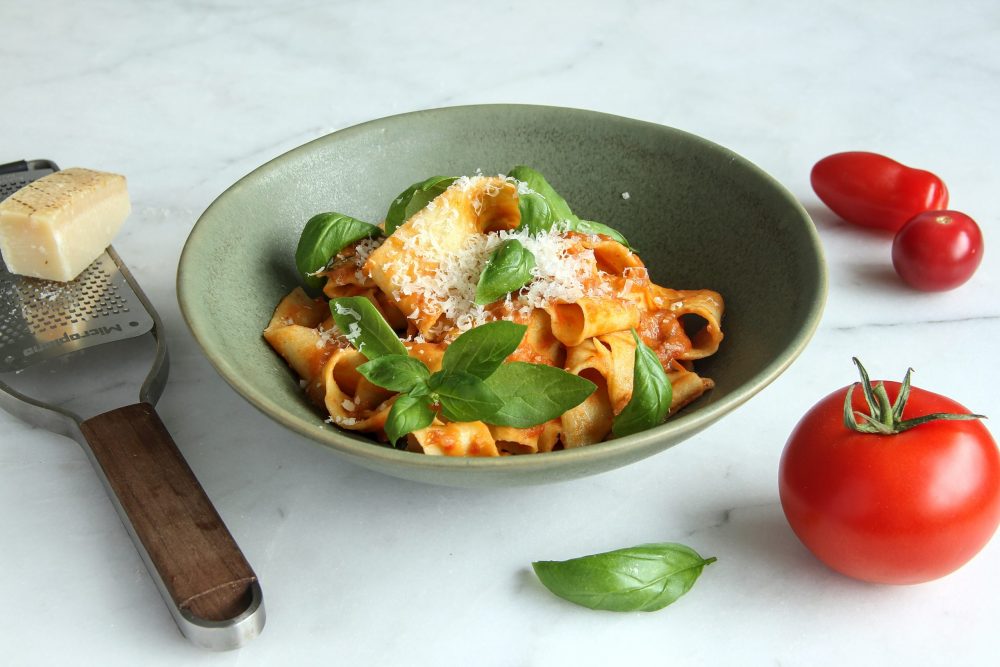
Roasted Red Pasta Sauce

It’s World Pasta Day so I’ve created an easy, nutritious and delicious pasta sauce for the occasion. Easily adaptable to make it vegan and gluten-free by swapping parmesan for a vegan hard cheese and pasta for gluten-free pasta.

Roasted Red Pasta

Serves 4

Ingredients

  • 600g tomatoes, roughly chopped
  • 3 cloves garlic, left in their skins
  • 1 red pepper, cut into quarters, seeds removed
  • 1 large red onion, cut into quarters
  • 3 tbsp extra virgin olive oil
  • 100g red lentils
  • 300ml water

To serve

  • 300g pasta
  • Parmesan
  • Fresh basil

Method

  • Preheat the oven to 160°C fan/180°C convection
  • In a large baking tray add the tomatoes, peppers, garlic, onion and oil. Mix and roast for 1 hour.
  • Meanwhile, in a saucepan add the red lentils and 300ml water. Bring to a boil and simmer for 20 minutes till soft.
  • Once the vegetables are cooked through, remove the skin from the garlic and transfer everything to a high-speed blender with the cooked lentils and their cooking water. Blend till smooth, seasoning to taste.
  • Stir through freshly cooked pasta, using a little reserved pasta water to let the sauce down to your desired consistency.
  • Serve topped with parmesan and fresh basil.

Per serving: 530kcal/ 15g fat/ 3.6g saturated fat/ 74g carbohydrates/ 7.7g fibre/ 20g protein

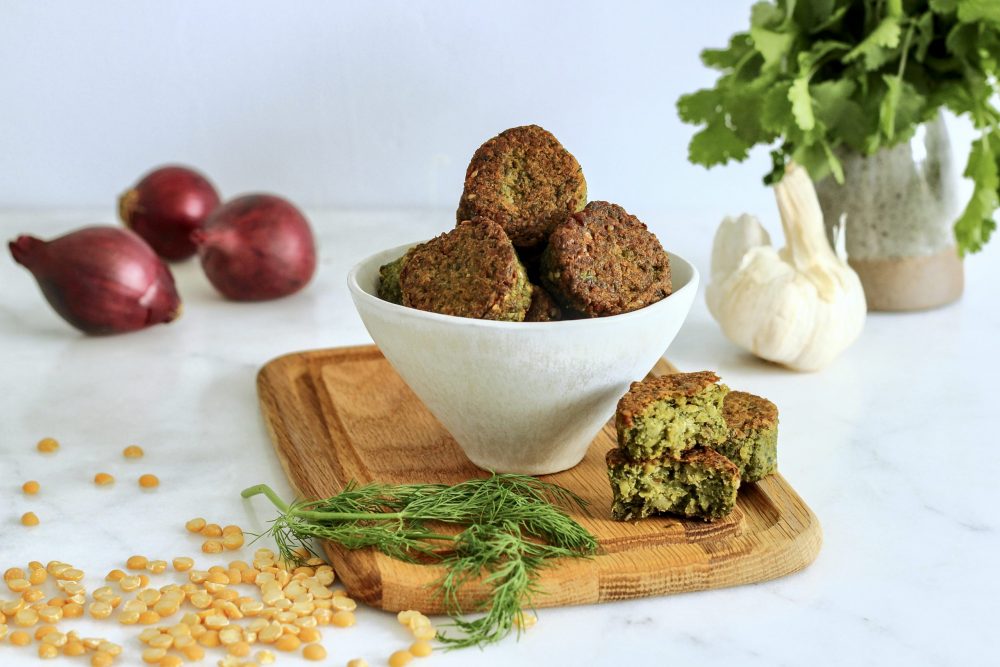
Yellow Split Pea Falafel

These little fritters have two main differences from the traditional falafel you would normally buy. Firstly their main ingredient is yellow split peas, as opposed to the traditional chickpea or fava bean. Secondly, they are baked in the oven rather than deep-fried. If neither of those facts have offended you then you’re in for a treat!

These make the perfect accompaniment to my easy hummus recipe to make a wrap, a nourish bowl or make large versions of the falafels and pop it in a burger bun for a vegan burger alternative.

Falafel and Hummus Salad Wrap

These falafel are packed full of nutrients, and each serving will provide you with:

  • 13g of plant protein
  • 18% of your fibre recommendation
  • 28+% of your daily iron requirements
  • 20+% of your zinc requirements
  • 10% of your calcium requirements

Serves 6

Ingredients

  • 200g yellow split peas, soaked overnight
  • 50g flat-leaf parsley, stems and leaves
  • 50g coriander, stems and leaves
  • 10g dill, stems and leaves
  • 1 medium red onion
  • 5 garlic cloves
  • 2 tsp cumin seeds
  • 1 tsp ground coriander
  • 1 tsp cayenne pepper
  • 1 tsp baking powder
  • 2 tsp sesame seeds
  • 120g gram flour
  • 3 tbsp extra virgin olive oil

Method

  • Cook the yellow split peas in fresh water for 30 minutes. Drain and allow to cool slightly.
  • Roughly chop the herb stems before adding all the ingredients into a food processor. Pulse till the desired texture of your falafels – I prefer mine to have some texture throughout.
  • Transfer to a bowl, cover and chill in the fridge for 1 hour.
  • Preheat the oven to 200°C fan/ 220°C convection. Place a heavy-bottomed tray in to preheat with the olive oil. Allow to come to temperature.
  • Meanwhile, take the cooled mixture and gently press into disk shapes. The mixture should make around 18-20 falafels depending on how big you make them.
  • Once the baking tray and oil are up to temperature, transfer the falafels in. As they hit the oil they should sizzle slightly.
  • Bake for 20-25 minutes, flipping halfway through once golden brown and crispy.

Per serving: 273kcal/ 9.3g fat/ 1.2g saturated fat/ 30g carbohydrates/ 5.4g fibre/ 13.2g protein

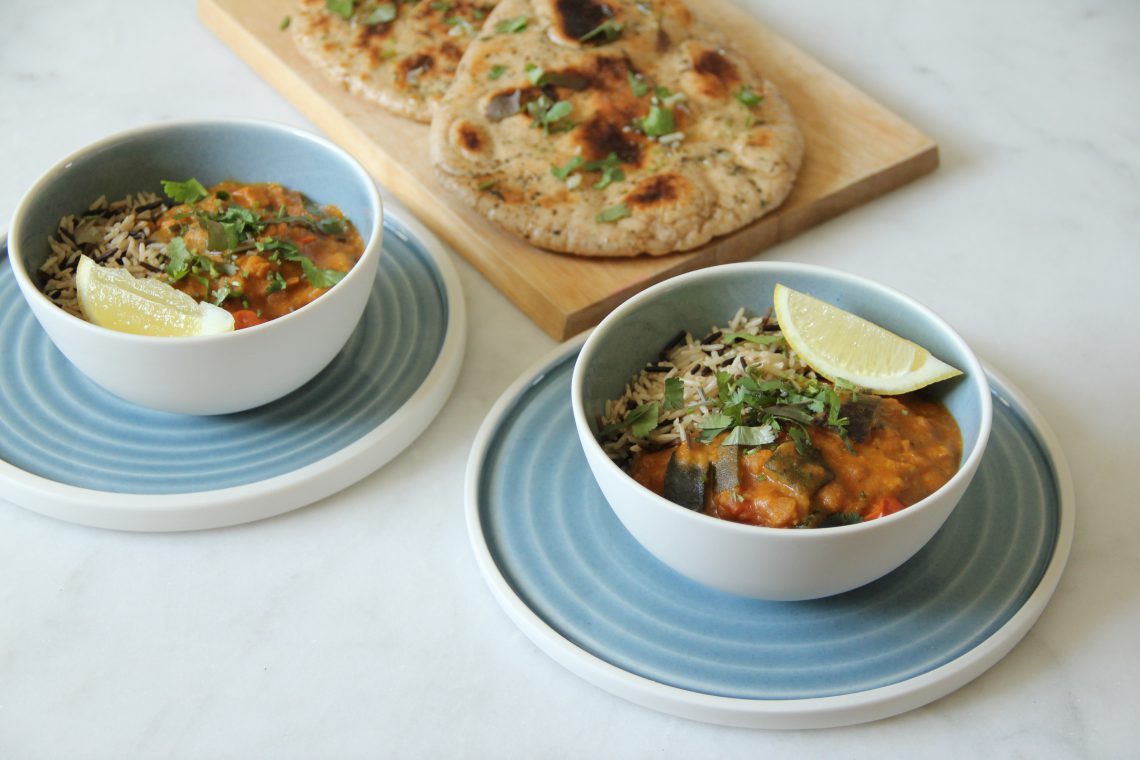
Yellow Split Pea Curry

Yellow split peas are such a versatile bean. So simple to cook and they make a really mean curry as would any lentil.

Yellow split peas are also extremely high in fibre, containing around 16g fibre per 100g cooked peas. In comparison, red lentils provide 6g fibre, and green lentils 8.7g when cooked.

Yellow split peas also retain a firmer texture when cooked, even for a long period of time. This means that they won’t fall apart, so you always get a rewarding chunky texture to your dish.

Serves 6

Ingredients

  • 2 tbsp vegetable oil
  • 2 large onions, sliced
  • 4 cloves garlic, roughly chopped
  • 20g ginger, roughly chopped
  • 2 tbsp tomato puree
  • 2 tsp ground turmeric
  • 2 tsp garam masala
  • 2 tsp chilli powder (or to taste)
  • 200g yellow split peas
  • 200g fresh tomatoes, roughly chopped
  • 1 large aubergine, roughly chopped
  • 1 courgette, roughly chopped
  • 300ml coconut milk
  • 30g coriander, chopped

To Serve

  • Lemon wedges
  • Cooked rice
  • Kefir naan

Method

  • Soften the onion in the oil till translucent but not brown.
  • Crush the garlic and ginger in a pestle and mortar and add to the onions. Cook for 2 minutes before adding in the tomato puree, dried spices, split peas, tomatoes, aubergine and courgette. Add 600ml water and simmer for 40 minutes till the peas are cooked through.
  • Add the coconut milk 5 minutes before serving.
  • Sprinkle in the coriander and serve with a wedge of lemon.

Per serving 334kcal/ 16.1g fat/ 1.6g saturated fat/ 25.4g carbohydrates/ 19.4g fibre/ 14.0g protein

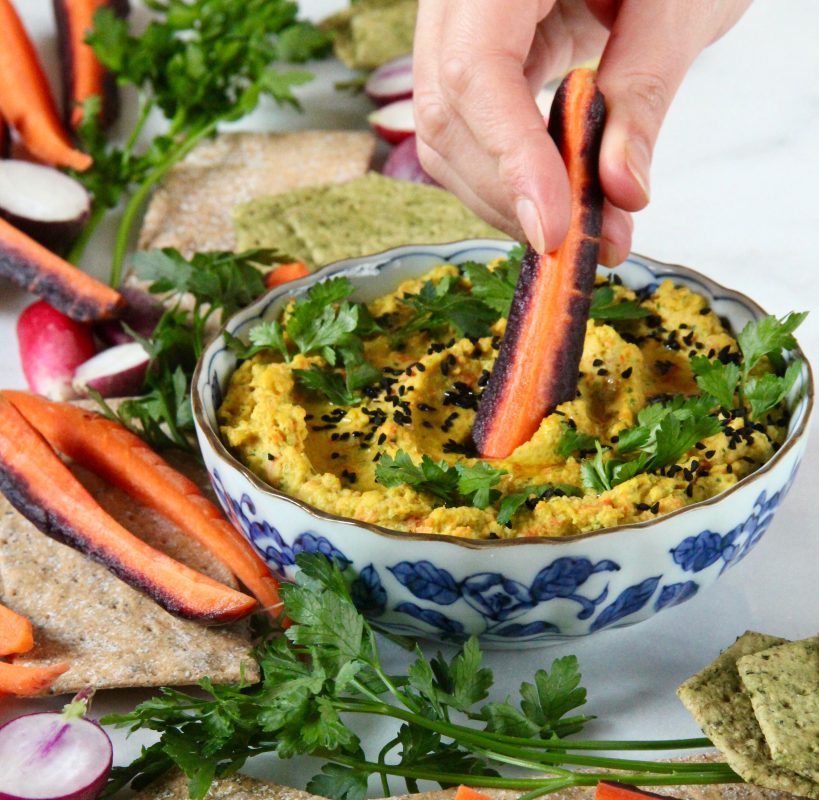
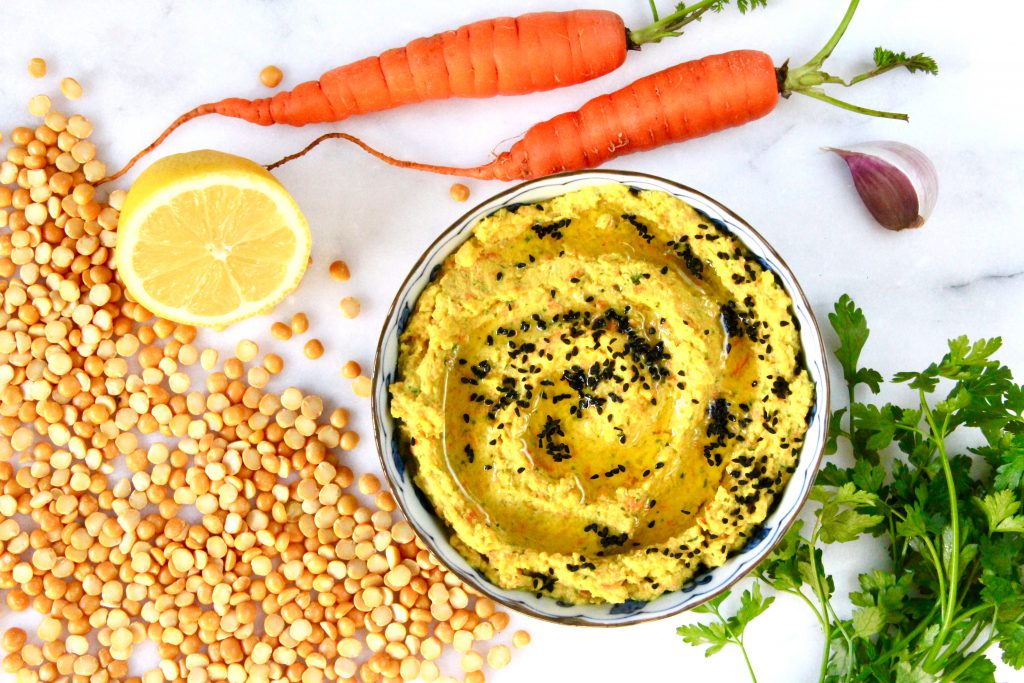
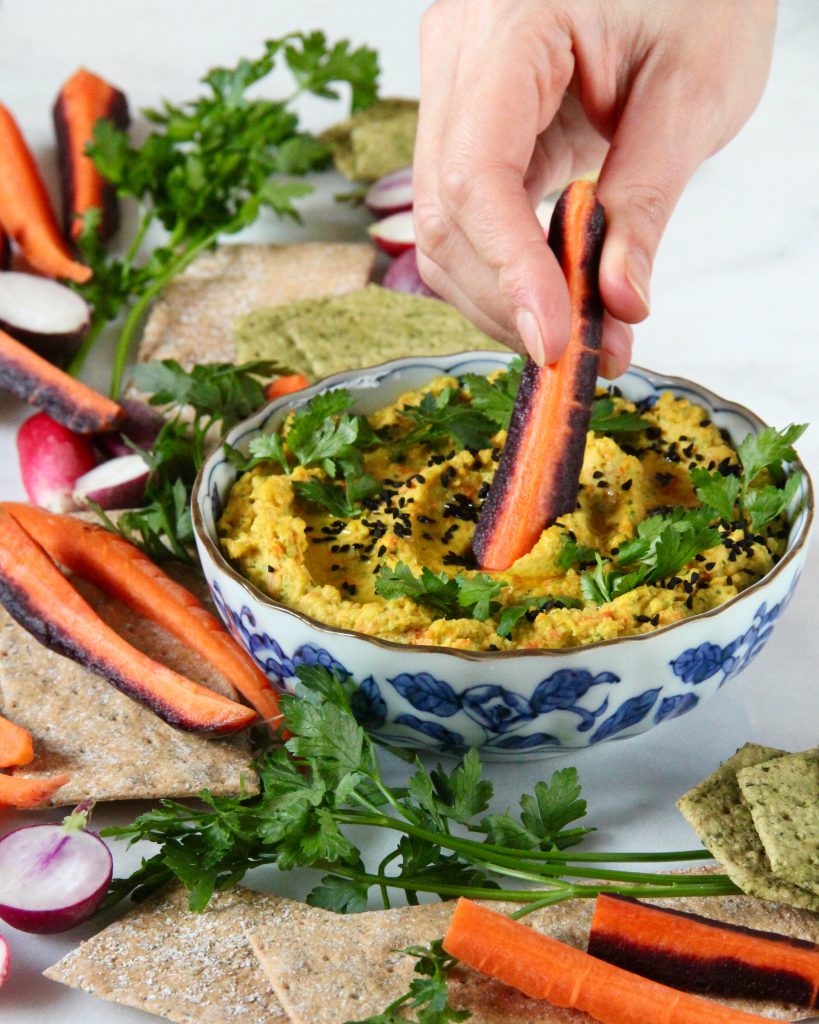
Roasted Carrot and Yellow Split Pea Hummus

Visiting the historical town of Winchester, we decided to stop for lunch at Hugh Fearnley-Whittingstall’s River Cottage Kitchen. We shared a starter of a mixed mezze board, but the single dish that stood out from the board for me was the carrot and yellow split pea hummus.

I haven’t been able to stop thinking about it, it may have been the best hummus I have ever had. So I trawled through Hugh’s books to find a recipe, but alas, there were none to be found. So I have endeavoured to make my own.

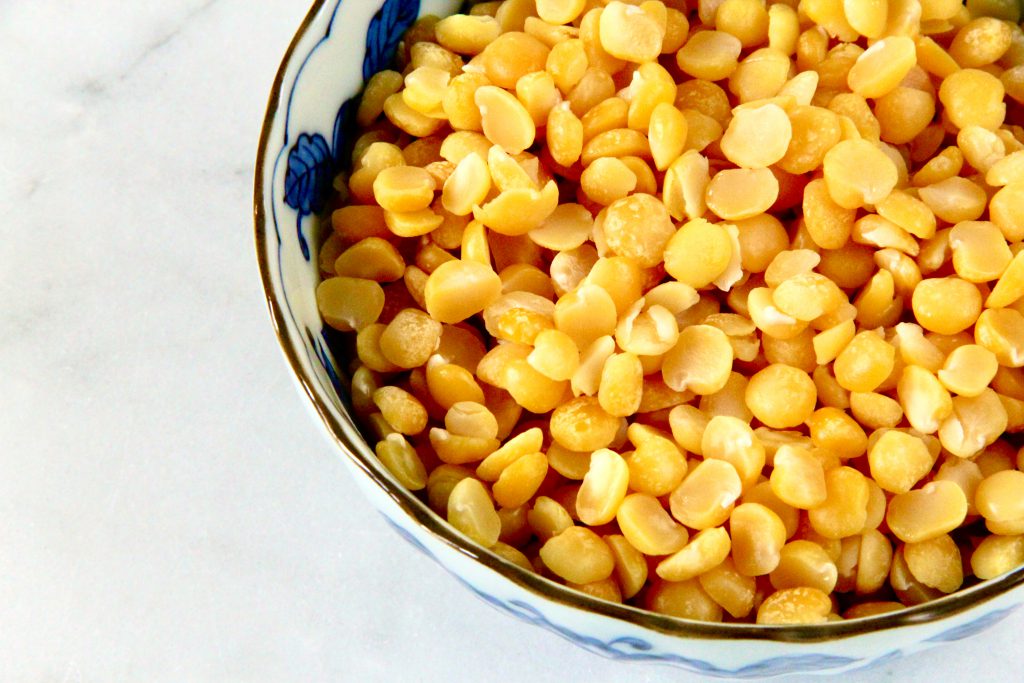
Cooked Yellow Split Peas

Split peas are a great addition to your diet, naturally low in fat, high in plant-based protein and a source of fibre. We can often forget about including beans and pulses in as part of our weekly plant food diversity, but we should be aiming to eat from all 6 categories of plant-based foods; fruits, vegetables, nuts, seeds, whole grains, and legumes. This particular recipe covers 4 out of the 6 groups, and by adding some wholegrain crackers, perhaps even topped with nuts you could maximise the diversity of your diet.

Serves 6

Recipe

  • 100g split yellow peas
  • 2 carrots, washed and chopped into large pieces
  • 2 cloves garlic, skins on
  • 30g tahini
  • 40ml extra virgin olive oil
  • 90ml water (you may need more or less depending on the texture you wish for)
  • 1/2 tsp ground cumin
  • 1/2 tsp ground turmeric
  • 30g flat leaf parsley, roughly chopped
  • Juice of a lemon
  • Salt and pepper to taste

To serve

  • Fresh Parsley leaves
  • Nigella seeds
  • Vegetable crudites e.g. carrots, radish, cauliflower
  • Crackers

Method

  • Wash the split peas in cold water, then top with 500ml water and bring to the boil for 10 minutes before lowering the heat to a gentile simmer for 25 minutes. Drain and allow to cool.
  • When the peas are simmering, roast the carrots and garlic cloves in the oven preheated to 180 ° C/170 ° C Fan/GM4 for 20 minutes. Allow to cool.
  • Add the cooked peas, carrots and garlic clove, removing the skin, to a food processor. Add the tahini, extra virgin olive oil, lemon juice, water, spices and parsley and blend. Season to taste and add more water if the dip remains too thick.
  • Serve sprinkled with nigella seeds and fresh parsley leaves.

Per serving 107kcal/ 3.6g fat/ 2.0g saturated fat/ 11.6g carbohydrates/ 3.1g fibre/ 5.3g protein

Cheats Refried Beans

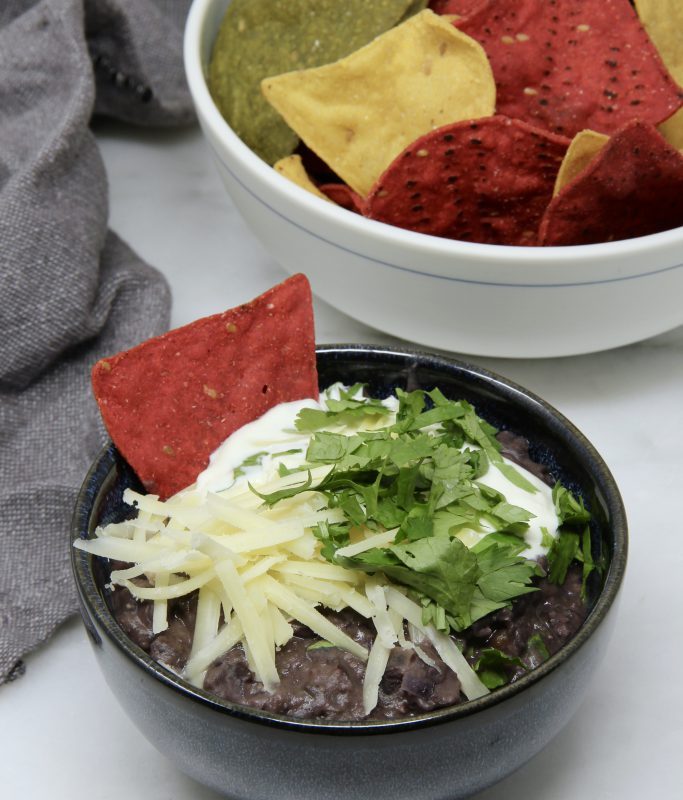
Refried beans are a party food staple in my house. I always make them whenever I’m having a gathering, but I have to be prepared and start the day before. However, this is the cheats version. I say cheat because I’m using already cooked beans from the tin. No need for soaking over night, or boiling for hours. You can decide to make these an hour before serving, without compromising on the taste.

This is a really versatile dip, something I always make in large batches as it sits well in the fridge for a week, ready to be lovingly transformed into the next meal. I love using this as a spread in a wrap for a burrito, quesadillas with melted cheese, enchiladas or even tostadas if you’re feeling fancy!

In addition, you can easily make these vegan. The recipe below is vegetarian, but if you replace the butter with rapeseed oil in the base mix, you’ll be all set for Veganuary. Then you can either use them as is, or use a vegan sour cream and cheese alternative to make the full on refried beans experience.

All that’s left to say is Happy New Year and enjoy whatever you’re doing (and eating)!

Serves 4

Recipe

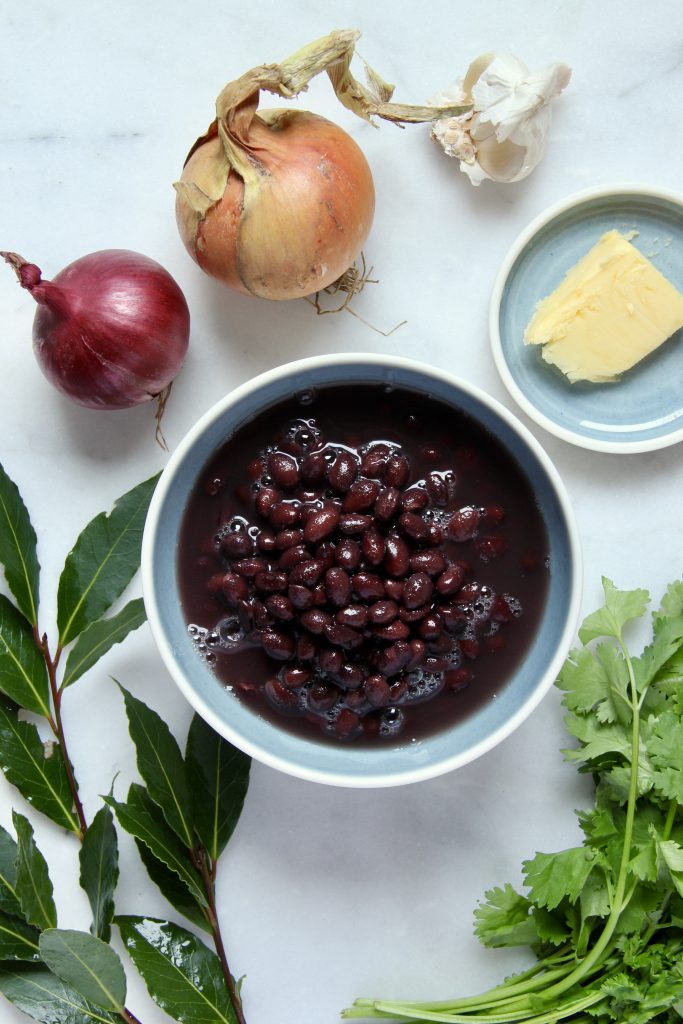
  • 1 tin of black beans
  • 3-4 large cloves of garlic, sliced in half
  • 1/2 white onion
  • 1 small bunch of coriander, stalks separated from leaves, leaves chopped
  • 3 fresh bayleaves, crushed
  • 1 red onion, finely diced
  • 20g butter (or rapeseed oil if making vegan)
  • 1 garlic clove, finely sliced

To serve (optional)

  • Soured cream
  • Cheese e.g. Cheddar, Cheshire or Wensleydale
  • Coriander leaves
  • Tortilla chips

Method

  • Pour the tin of black beans with their water into a pan. Fill the can with water and add to the beans.
  • Add the half onion, halved garlic, bayleaves and coriander stalks. Bring to the boil and allow to simmer for 30 minutes. If your beans were unsalted, add in salt to your taste.
  • Meanwhile, gently fry the red onion in your choice of fat till softened. Add the garlic and continue cooking for a further 2 minutes.
  • Drain the beans, reserving the cooking liquid. Discard the garlic, bayleaf, onion and coriander stalks.
  • Blend the beans with a little of the cooking water till the desired thickened of dipping. I like to keep mine quite chunky.
  • Add the fried onion and garlic and half the chopped coriander leaves.
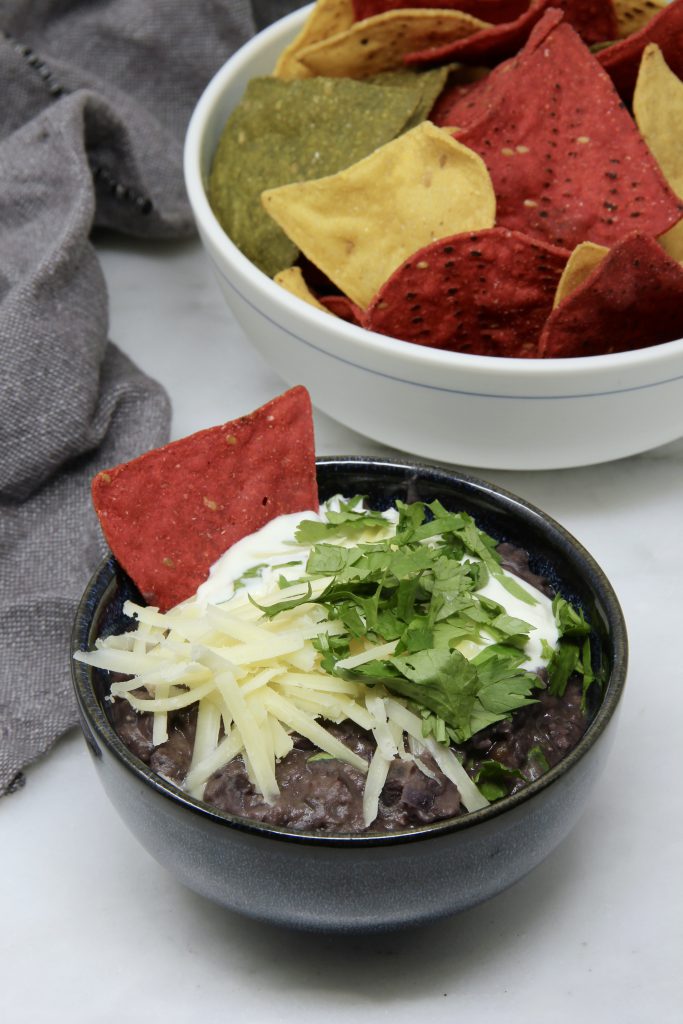
  • Top with soured cream, cheese and more coriander leaves and serve with tortilla chips.

Per Serving of Beans 96kcal/ 2.6g fat/ 1.5g saturated fat/ 11.2g carbohydrates/ 4.7 fibre/ 4.9g protein

Refried beans
Refried beans