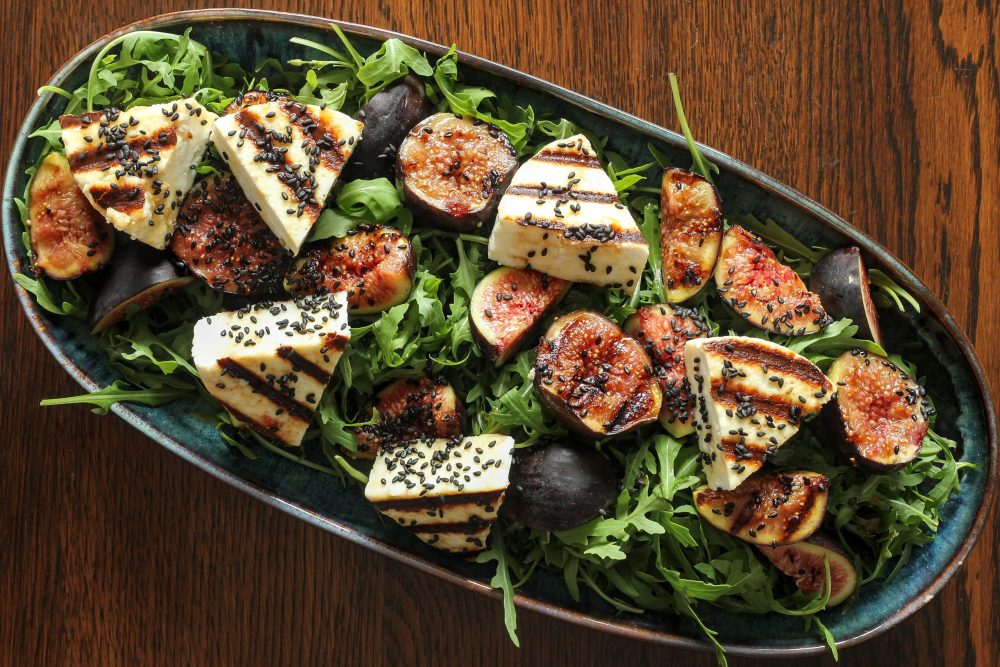
Griddled Manouri & Fig Salad

I know a lot of people love feta, but I’m afraid for me it’s one of my least favourite cheeses. I personally find it too salty, but when I saw this cheese I knew I needed to try it because I love goats cheese. For me this wasn’t as salty in taste as feta, as well as being much milder. What I didn’t realise till I had gotten home, made this dish, and thoroughly enjoyed it, was that manouri cheese is made as a by-product of the feta production, which is something I can definitely get on board with!

I also think this would be a great salad to serve at a barbecue, grilling the cheese and figs before plating up, should the UK weather start to actually resemble summer…

This salad is light enough to work as a side salad or a starter, but substantial enough to also work as a larger portion for a main meal when served with some good bread on the side.

Serves 4 as a starter or 2 as a main

Ingredients

  • 1 block of manouri cheese
  • 1 tbsp extra virgin olive oil
  • 8 figs, or around 230g, cut into halves and quarters
  • 120g rocket
  • 1 tbsp honey
  • 1 tsp black sesame seeds

To serve

  • Sourdough bread
  • 1 tbsp extra virgin olive oil

Method

  • If serving with sourdough, brush the sides with extra virgin olive oil and griddle till crispy with charred lines across the surface. Keep warm.
  • Brush the manouri with the olive oil and griddle for a few minutes on each side. Add some of the figs, brushed with any remaining olive oil – you can cook as many or as few as you like.
  • Once cooked through to your liking, add the rocket to a large serving dish and dot pieces of the cheese and figs over the top, drizzle with honey and sesame seeds.
  • Best enjoyed hot.
Griddled Manouri and Fig Salad

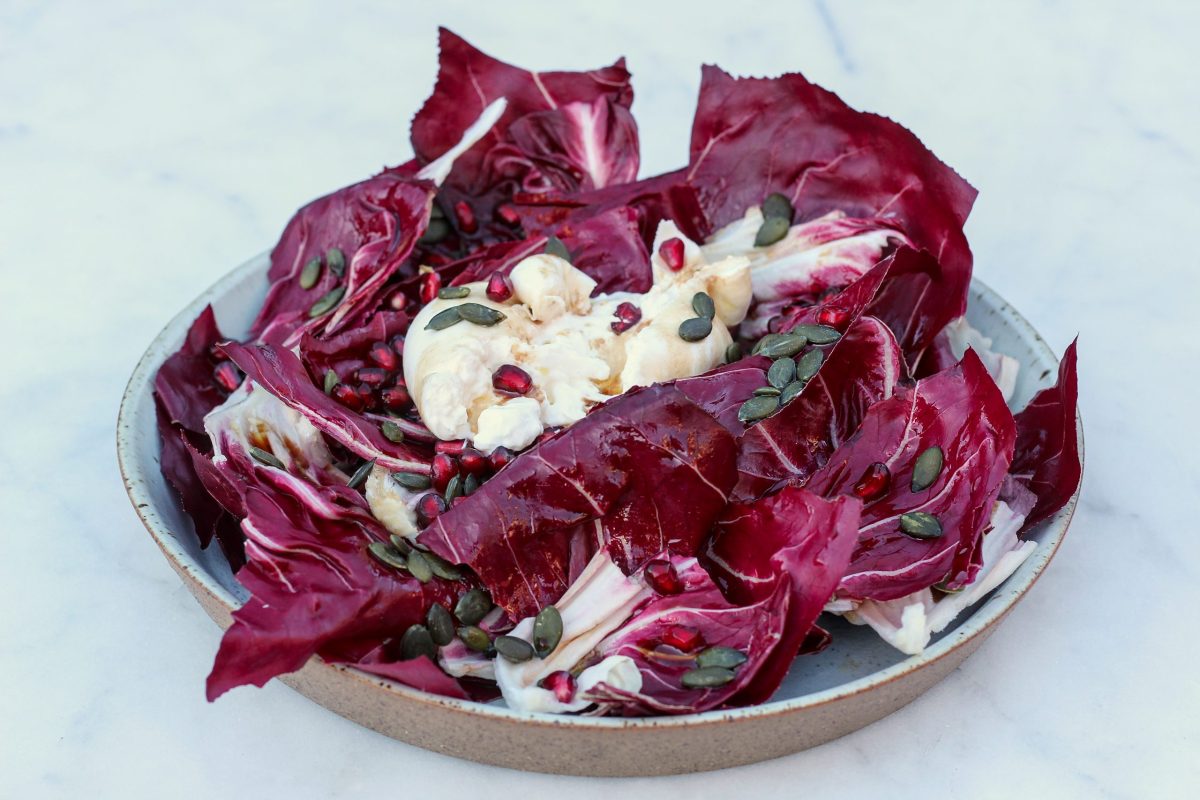
Radicchio and Burrata Salad

I had a very similar salad in a restaurant recently for a friend’s birthday. I thought I could recreate it, with a slight nutritional twist whereby each serving provides you with an actual portion of salad! It’s just as delicious as the restaurant, but knowing it’s providing that little bit of extra nutrition makes me forgive the fact that I’m actually eating a double portion of cheese in one go.

Serves 2

Ingredients

  • 6 large leaves of radicchio (160g)
  • 1 tbsp pomegranate molasses
  • 1 tbsp red wine vinegar
  • 2 tbsp extra virgin olive oil
  • 30g pumpkin seeds
  • 30g pomegranate seeds
  • 1 ball of burrata

Method

  • Mix the pomegranate molasses, vinegar and olive oil together in a small bowl
  • Tear the radicchio leaves into a more manageable size and arrange on a large plate.
  • Scatter the seeds over the top before placing the burrata in the middle and drizzling everything with the prepared salad dressing.
Radicchio and Burrata Salad

Per serving: 427kcal/ 35g fat/ 12g saturated fat/ 17g carbohydrates/ 2.3g fibre/ 10g protein

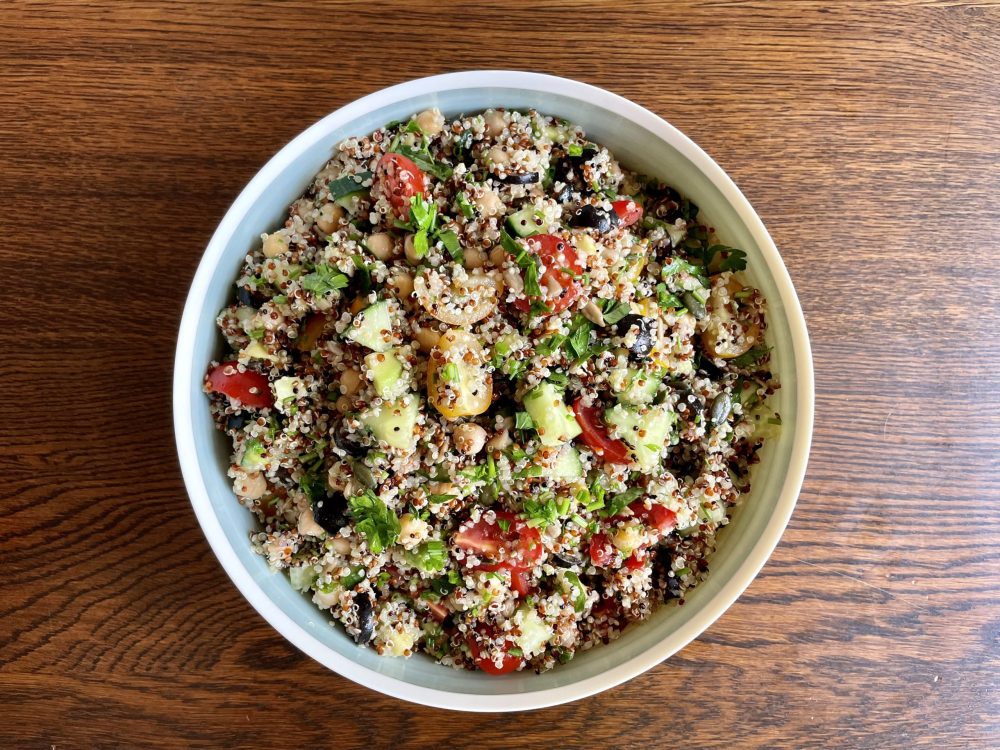
BNF’s Health Eating Week Summer Quinoa Salad

It’s the British Nutrition Foundation’s Healthy Eating Week and there are a few key health messages set out for this week:

  • Focus on fibre
  • Get at least 5-a-day
  • Using alternative protein sources
  • Staying hydrated
  • Reducing food waste

Here’s my super easy Summer Quinoa Salad recipe which incorporates all of these concepts in one dish.

Serves 4 as a main

Ingredients

  • 200g quinoa
  • 30ml extra virgin olive oil
  • 15g chives, chopped
  • 15g flat-leaf parsley, chopped
  • 200g cucumber, cubed
  • 250g cherry tomatoes, chopped
  • 1 tin of chickpeas, drained and rinsed
  • Juice of 2 lemons
  • 1 large avocado (use some of the lemon juice to prevent it from browning)
  • 80g black olives, roughly chopped
  • 20g pumpkin seeds
  • 20g sunflower seeds

Method

  • Add the quinoa to a pan with 400ml of cold water. Bring to a boil and allow to simmer for 12-15 minutes, or until all the water is absorbed. Remove from the heat and cover with a lid for 5 minutes before fluffing with a fork. Allow to cool.
  • Add the cooked quinoa to a large bowl along with all of the remaining ingredients and mix together.
  • Serve, remembering to put any spare salad away in a Tupperware in the fridge for the next day.

Per serving: 530kcal/ 29g fat/ 4.4g saturated fat/ 44g carbohydrates/ 11g fibre/16g protein

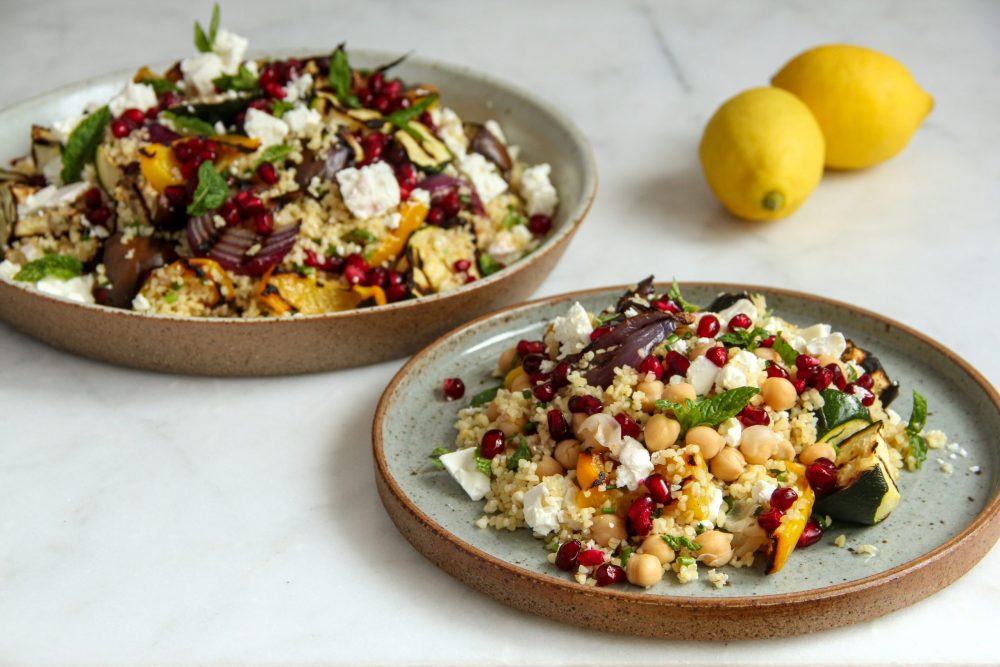
Chargrilled Vegetable, Feta and Bulgar Wheat Salad

The perfect side to go with your barbecue – delicious with all meats, fish or halloumi, or serve with a tin of chickpeas for a non-barbecue option should it be raining. Again.

Serve 4

Ingredients

  • 200g bulgar wheat
  • 1 aubergine
  • 1 pepper
  • 1 courgette
  • 1 large onion
  • 2 tbsp extra virgin olive oil
  • 1/2 bunch chives
  • 1/2 bunch mint
  • 2 lemons
  • 150g feta cheese
  • 80g pomegranate seeds

Method

  • Cook the bulgar wheat by adding to a large dish and pouring 220ml boiling water over the top. Cover and leave to steam for 5-10 minutes before fluffing with a form.
  • Meanwhile, chop all aubergine, pepper, courgette and onion into large chunks and coat with 1 tbsp olive oil.
  • Heat a griddle pan, and once hot cook the vegetable in batched till deeply marked with dark lines.
  • Chop the herbs, juice the lemon and mix into the bulgar wheat.
  • Once cooked, add the vegetables, crumble the feta in.
  • Serve in a large bowl with pomegranate seeds scattered over the top.

Per serving: 289kcal/ 11g fat/ 7.0g saturated fat/ 31.2g carbohydrates/ 7.8g fibre/ 13.8g protein

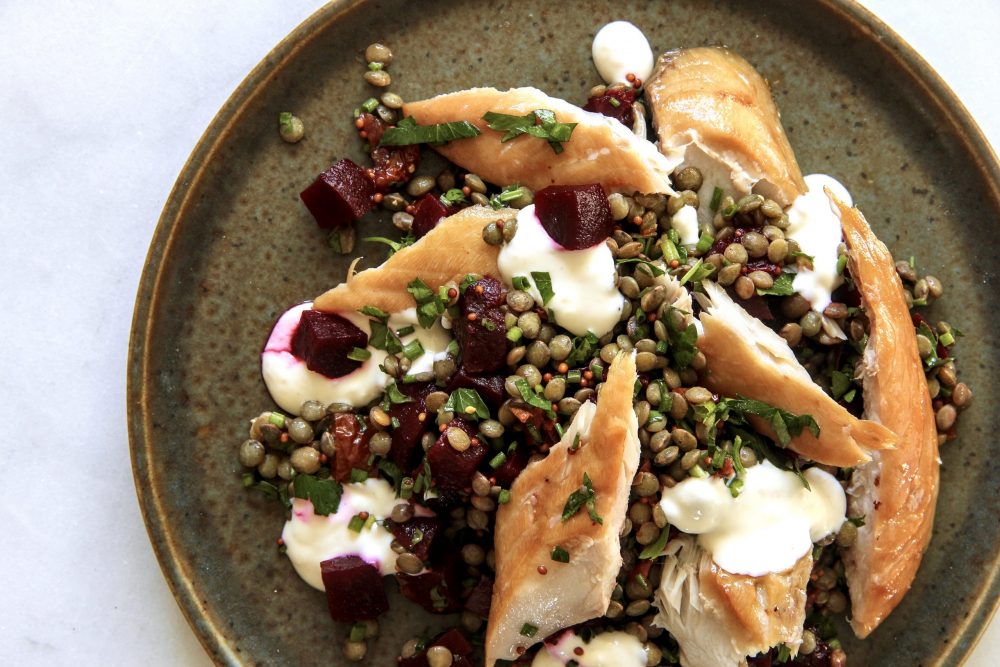
Smoked Mackerel, Lentil and Horseradish Salad

Getting oily fish in can be a challenge, and during lockdown I find it harder to get fresh fish weekly so I’ve been eating more smoked fish due to the increased shelf life. While I don’t plan on carrying this on beyond lockdown, and rather used smoked fish as a treat rather than a source of omega-3 fatty acids, for the while they have ended up as a partial staple in my lockdown diet. Here’s the lowdown on omega-3 fatty acids.

Omega-3 fatty acids area type of polyunsaturated fatty acid. These fats can’t be made in our bodies, so we rely on dietary sources instead. There are a few different forms of omega-3 fats, including eicosapentaenoic acid (EPA), docosahexaenoic acid (DHA) and alpha-linolenic acid (ALA).

Dietary sources of EPA and DHA include oily fish such as salmon, mackerel, kipper, herring, sardines and fresh tuna (but not tinned tuna); shellfish; and seaweed (but eating this more than once per week may provide too much iodine). Alternatively you can find EPA and DHA in omega-3 fortified products such as: dairy and dairy alternative products, eggs; and supplements.

ALA can be converted to EPA and DHA in our body, but this isn’t always converted in significant amounts, especially in relation to DHA, so there are less health benefits associated with consuming ALA. Dietary sources of ALA include seeds such as chia seeds, linseeds, hemp seeds (and hemp seed oil), walnuts (and walnut oil), pecans, hazelnuts; products derived from soybeans like soybean oil and tofu; rapeseed oil; green leafy vegetables and ALA supplements.

We should be aiming to eat 2 portions of fish a week, with at least 1 portion to be oily, with the upper limit set at 4 portions of oily fish per week due to pollutants being present in some fish which could build up in our bodies. Separately, women of childbearing age, pregnant or breastfeeding women should limit their intakes to two portions per week.

Using lots of store cupboard ingredients here, you could swap the fresh herbs out and use salad leaves, or use kale as an alternative vegetable. If you are really struggling to get fresh salad, or making this when you have run out of fresh foods opt for some frozen vegetables such as edamame beans or peppers. And for those who need a super quick lunch, this dish can be made in 2 minutes by using a pouch of ready-cooked lentils. Simply heat the lentils up and dress them with the herbs and spices and you’re good to go!

Serves 2

Ingredients

  • 100g puy lentils
  • 10g wholegrain mustard
  • 40g sundried tomatoes, finely chopped
  • 10g chives, chopped
  • 15g flat-leaf parsley, chopped
  • 120g pickled beetroot, finely cubed
  • 10g horseradish sauce
  • 50g reduced-fat creme fraiche
  • 2 fillets of smoked mackerel

Method

  • Place the lentils in a saucepan and cover with plenty of cold water. Bring to the boil and simmer for 12 minutes.
  • Once the lentils have cooked, drain and dress with the mustard and tomatoes whilst still hot. Allow to cool for 2 minutes before adding in the herbs.
  • Separately mix the horseradish and creme fraiche together.
  • Add the beetroot to the lentils and combine before plating up with the mackerel and horseradish sauce.

Per serving: 487kcal/ 28.6g fat/ 8.5g saturated fat/ 23.0g carbohydrates/ 12.9g fibre/ 28.2g protein

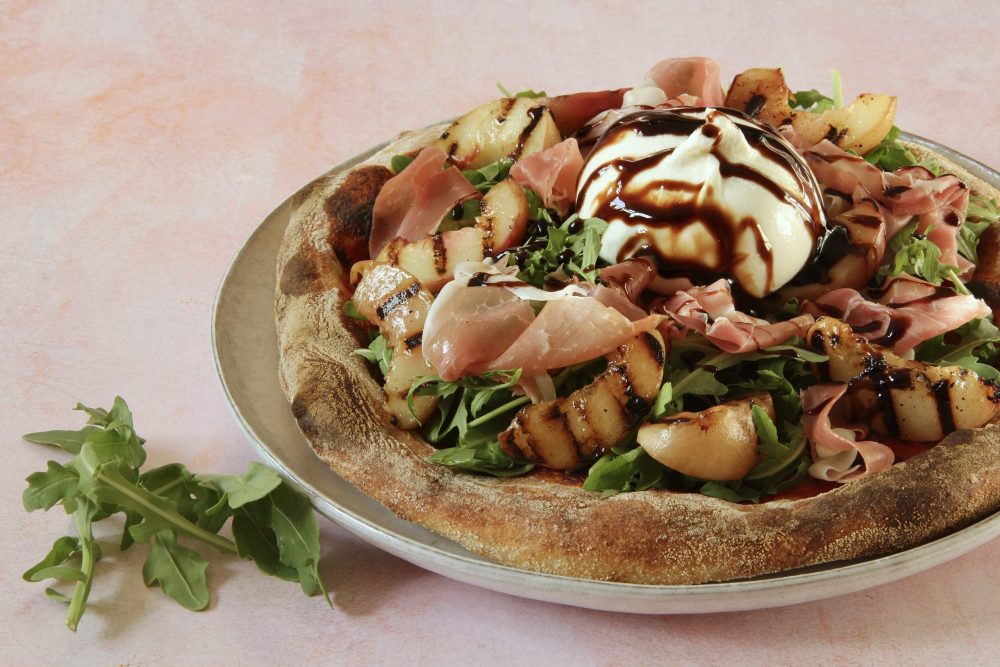
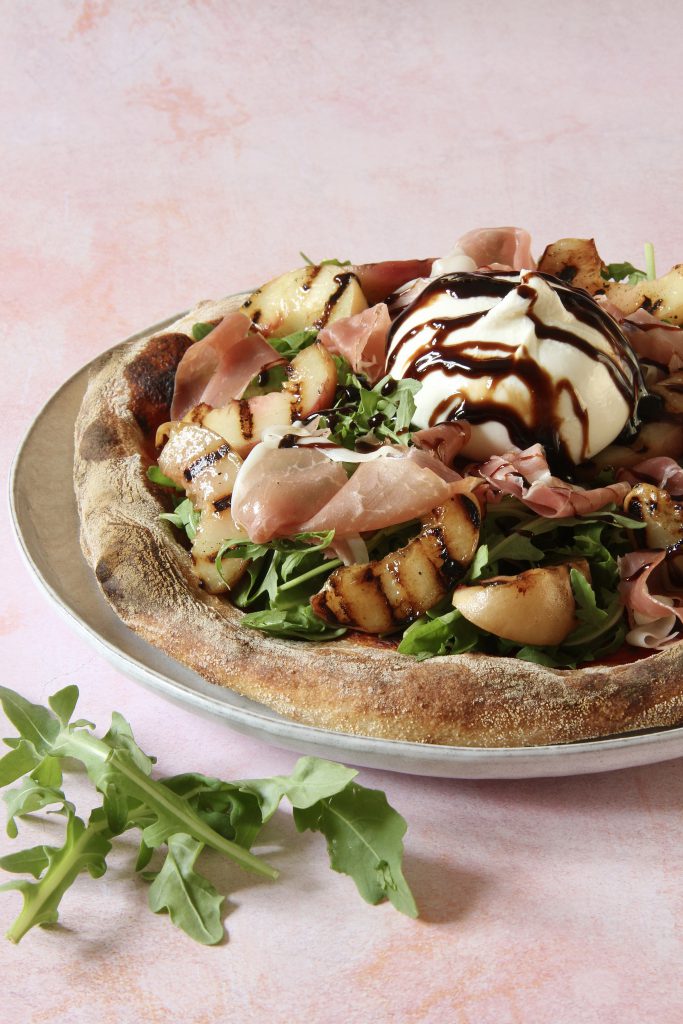
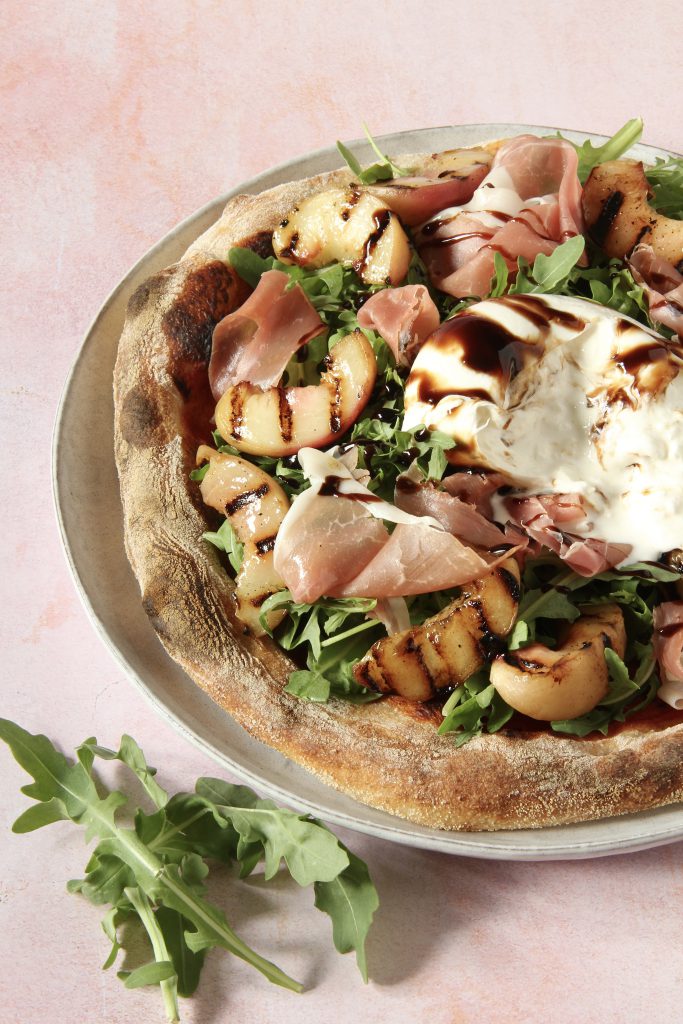
Burrata and Grilled Peach Salad Pizza

I made this for my friend who is an avid supporter of my sourdough pizzas, simply to give her something different to try. She may have protested slightly at the thought of having a “salad pizza”, but at the end of a week’s stay with me in my lockdown food bubble, this turned out to be one of her favourite foods we ate. And we ate a lot of foods!

This is easily adaptable to be vegetarian by omitting the Parma ham, and was in part inspired by a famous pizza chain’s vegan pizza dish I saw an old colleague have some 15 years ago. I must admit that back then, before I had started my path down nutrition, the thought of a cheeseless salad pizza did not appeal in the way it would do now.

If you are vegan, the base pizza dough recipe is completely vegan. You can still top it with the salad and grilled peaches, and it would be delicious as is, but I suspect the vegan dairy-free alternative cheese would make a wonderful addition to it.

Makes 1 pizza, serves 2

Ingredients

  • 1/3 portion of pizza dough
  • Semolina for dusting
  • 100g passata
  • 2 large ripe peaches or nectarines, cut into wedges
  • 1 tsp extra virgin olive oil
  • 80g rocket, watercress, baby leaf spinach or pea shoots
  • 3 slices of Parma ham
  • 1 ball burrata
  • Drizzle of balsamic glaze

Method

  • Preheat the oven to maximum temperature (mine is 275°C fan) and place a heavy bottom tray/pizza stone in the middle of the oven. Allow the oven to reach temperature and wait a further 10 minutes to ensure the tray is fully heated.
  • Dust the work surface with semolina, take a ball of dough and place it on the semolina and finely dust with flour.
  • Using your fingers, press around the edge 1 cm in to form a crust.
  • Using the palm of your hand, press inside this line to flatten the dough in the centre.
  • When you can press it no more, pick the dough up and using your knuckles, gently ease the dough out so it becomes thin and slightly transparent. Take care not to rip the dough. Ensure the base has an even covering of semolina.
  • Transfer the pizza base onto a pizza peel.
  • Add 100g passata over the base, up to but not on the crust part of the dough.
  • Transfer the pizza onto the tray in the oven using a strong and decisive forward and back motion to slide the pizza off the peel.
  • Cook the pizza for 6-7 minutes depending on the temperature of your oven. The pizza should have very dark golden blistered crusts, and the passata will have evaporated some of the liquid.
  • Meanwhile, heat a heavy-based griddle pan over a high heat.
  • Coat the peach wedges in the oil before grilling for 1-2 minutes per side.
  • Remove the pizza and allow to rest for 1 minute.
  • Scatter the pizza with the salad leaves and grilled peaches. Tear the Parma ham and evenly distribute over the pizza. Place the burrata ball in the centre and drizzle with the balsamic glaze.
  • Best eaten straight away.

Per serving: 756kcal/ 23.0g fat/ 11.4g saturated fat/ 88.7g carbohydrates/ 8.3g fibre/ 27.9g protein

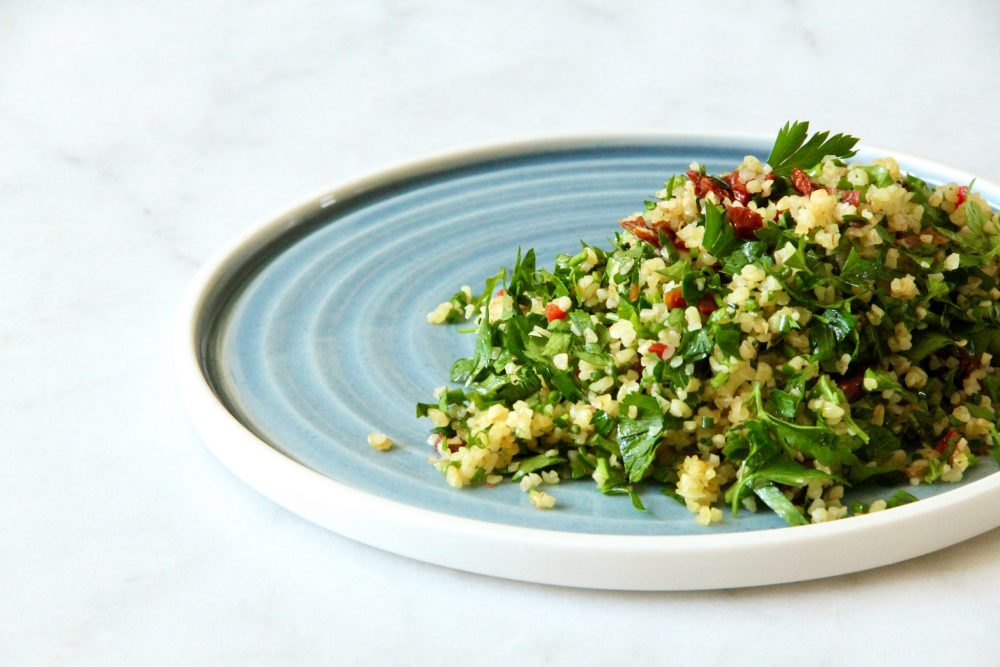
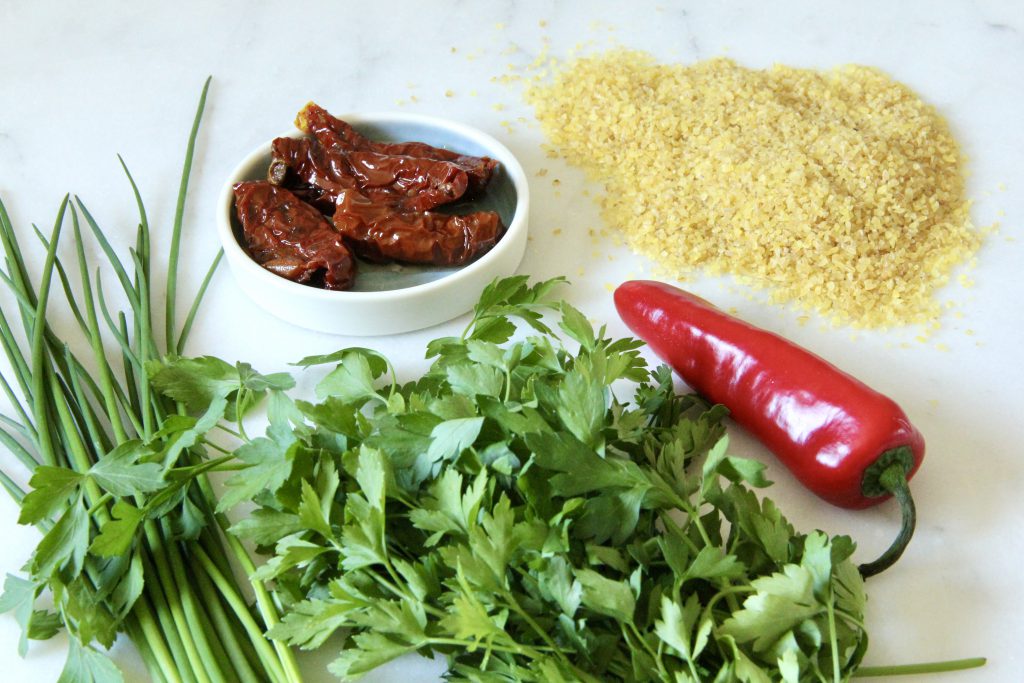
Sundried Tomato and Herb Bulgar Wheat

This is a staple in my house. I almost always have the store cupboard goods, and I grow chives in the garden so have them for most of the year, so all I really need to make sure I have bought is flat leaf parsley. And if you don’t have flat leaf parsley, you can substitute any green leaves in place, such as lettuce, rocket or even spinach.

I frequently have this as an easy lunch. I prepare it in a big batch and it will last 4 days in the fridge easily. Then I serve with with some salad vegetables, such as tomatoes, cucumber and avocado, and a source of protein. Usually I’d opt for tinned beans or cheeses such as goat’s cheese or halloumi, but fish, even tinned fish, also work well as do left over cuts of cold meat.

Ingredients

  • 100g bulgar wheat
  • 10g stock powder
  • 15g chives, finely chopped
  • 30g flat leaf parsley, finely chopped
  • 35g sun-dried tomatoes, finely sliced
  • Chilli, to taste, finely chopped

Method

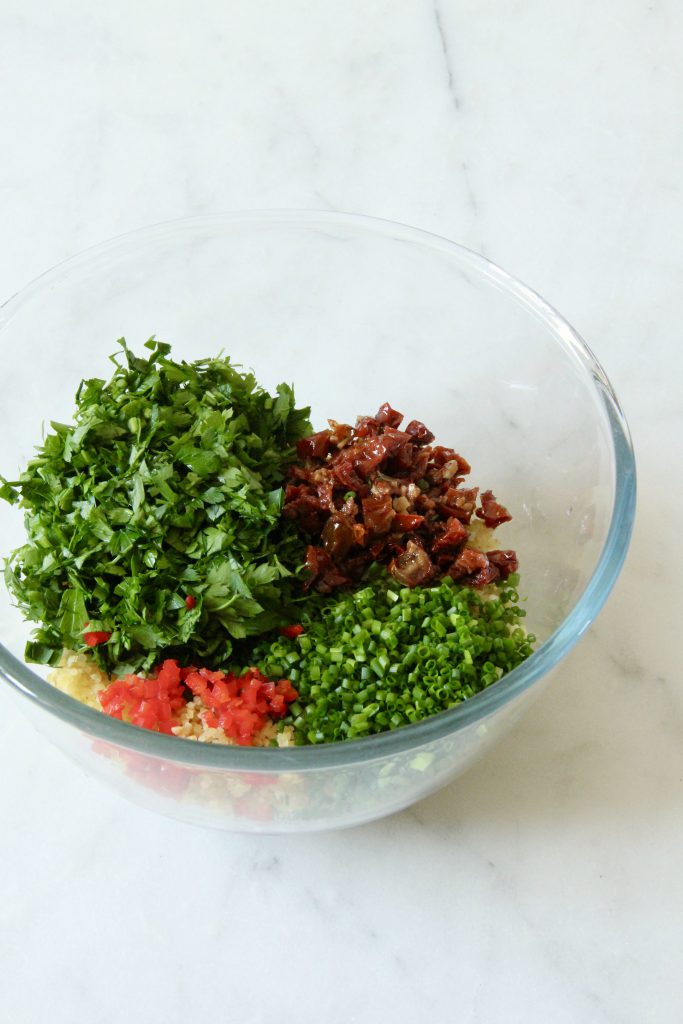
  • Bring 120ml water to the boil. Add the stock powder and bulgar wheat, remove from the heat and cover. Leave to cook for 5-8 minutes.
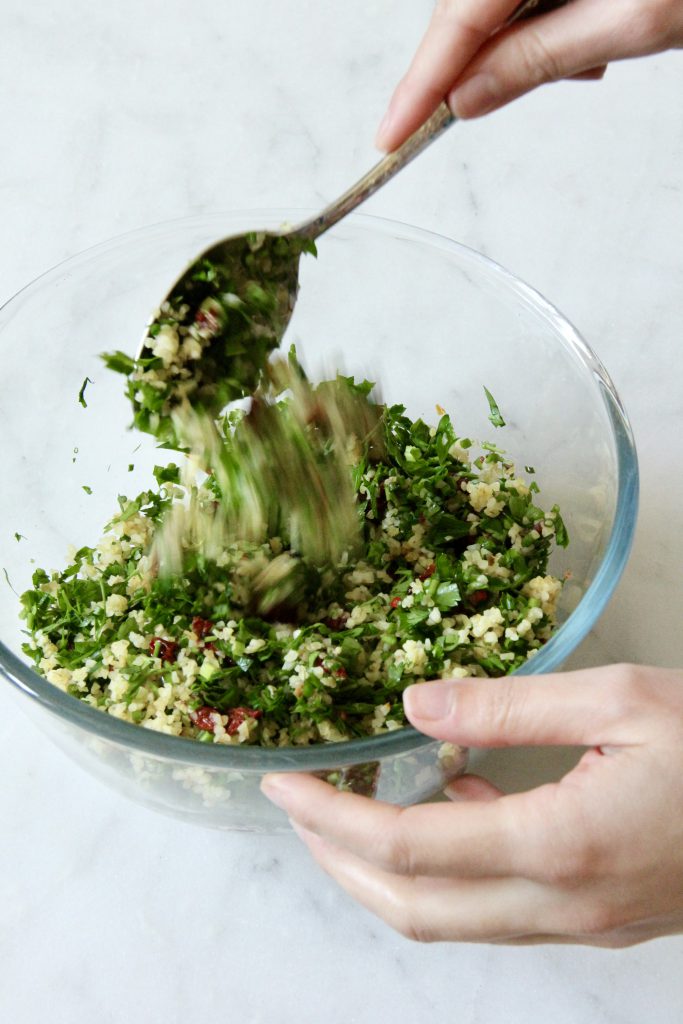
  • Once cooked, fluff with a fork and add all the remaining ingredients.

Per serving: 144kcal/ 1.4g fat/ 0.4g saturated fat/ 27.8g carbohydrates/ 8.9g fibre/ 7.0g protein

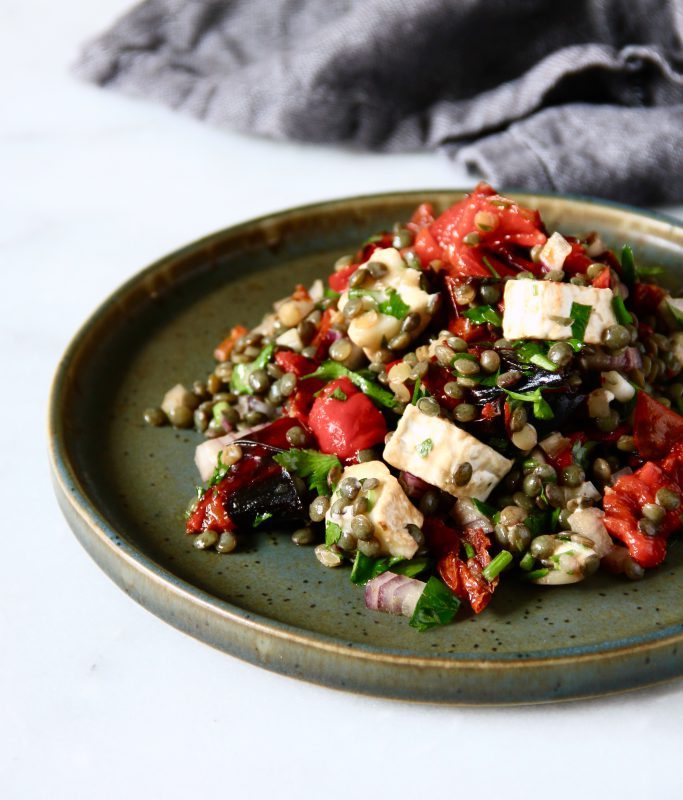
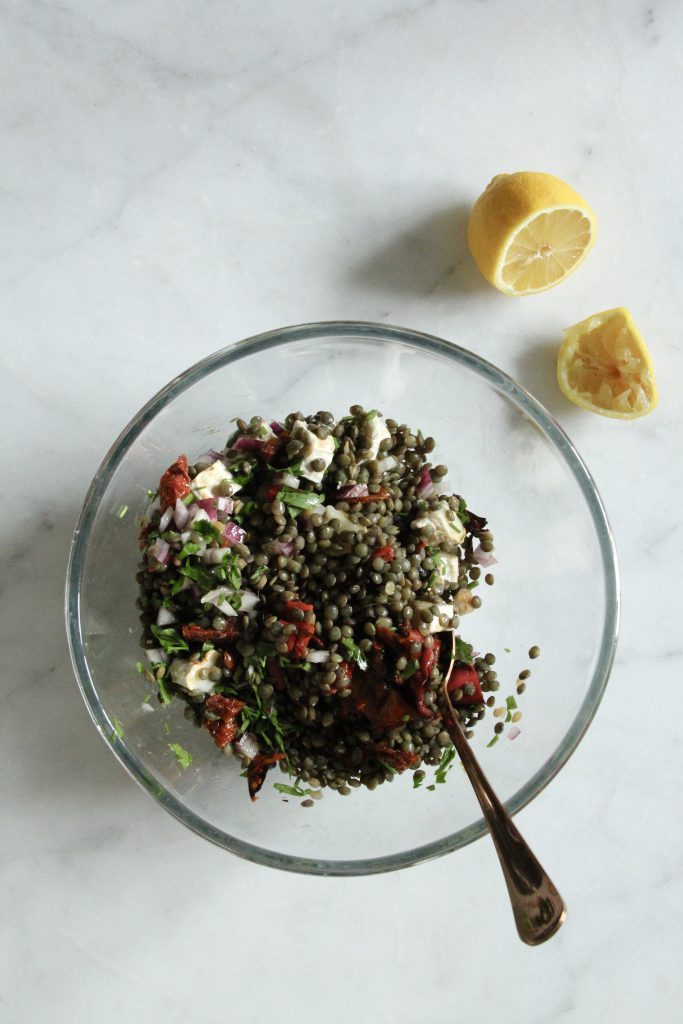
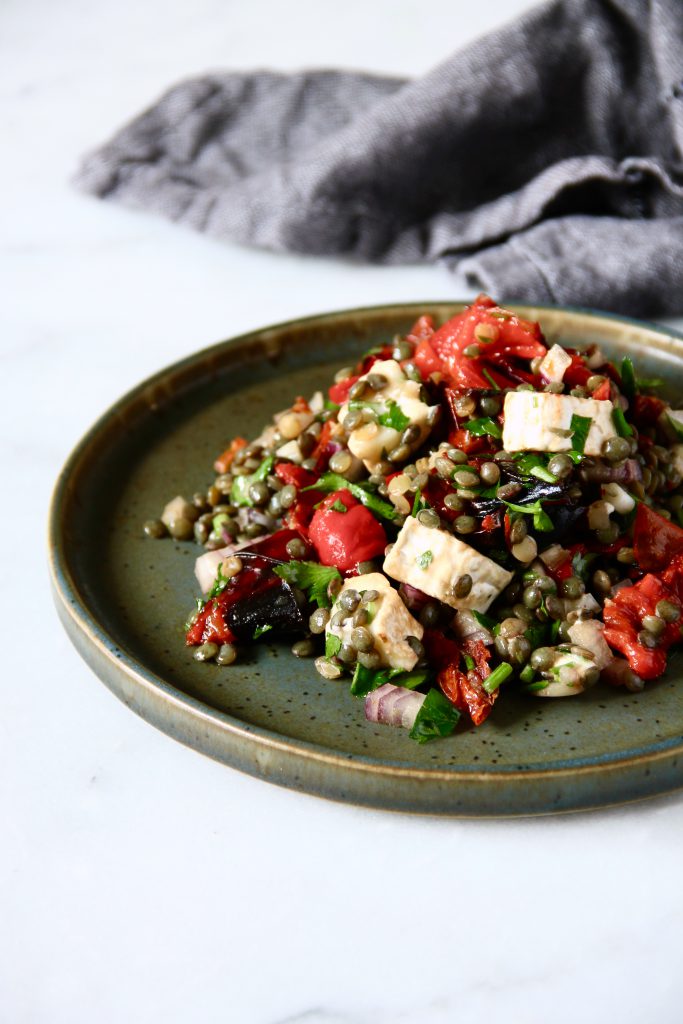
Red Pepper and Goat’s Cheese Salad

This recipe is adapted from the Meat Free Monday cookbook. I don’t think I could have assembled the ingredients any better than them, so, as they saying goes, if it ain’t broke, don’t fix it.

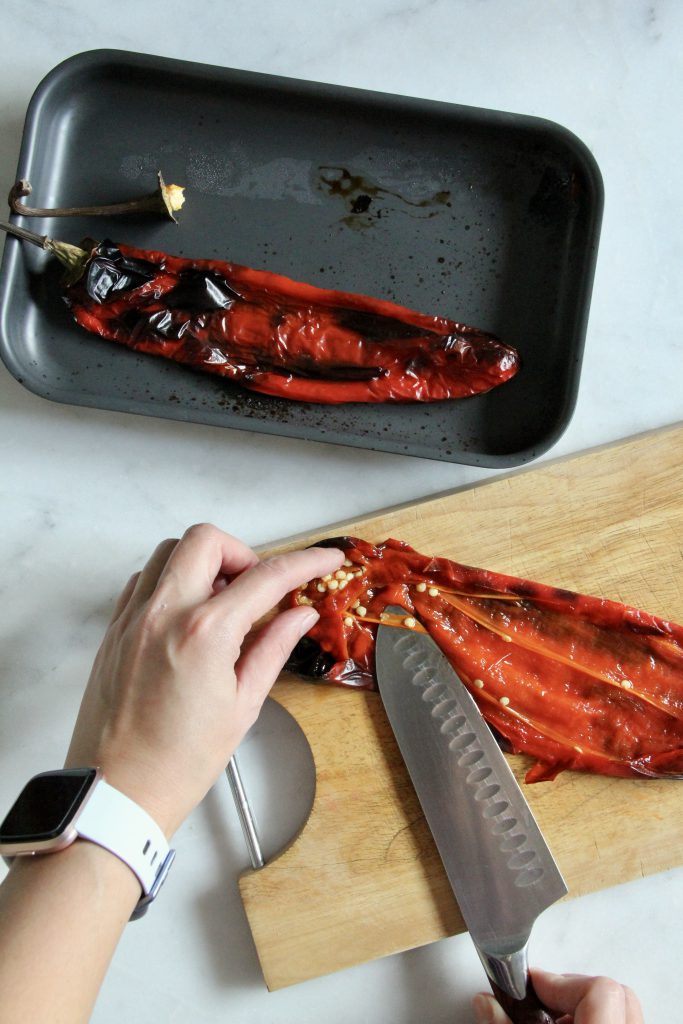
I do however alter the methods used. In the cookbook, they peel the peppers once cooked. You could do this if you wanted, but I leave the skins on as this add flavour, texture, fibre and also reduces the hands on time for making this dish. Win win.

I love using lentils in my salads. Not only are the a cheap cupboard food, they are packed full of plant-based protein and high in fibre. So much so, they are the biggest contributor of fibre to this dish which packs a whopping 14.6g per portion – that’s nearly half you daily target just in a single dish.

Serves 2

Recipe

  • 2 red peppers
  • 100g puy lentils
  • 60g goat’s cheese
  • 1 small red onion, finely diced
  • 3-4 sun-dried tomatoes
  • 1 bunch flat leaf parsley
  • 2 tsp olive oil
  • 2tsp balsamic vinegar
  • Juice of half a lemon

Method

  • Preheat the oven to 200°C/ 180°C fan/ gas mark 6. Place the peppers on a tray and roast for 30 minutes till blistered. Allow to cool.
  • Meanwhile, wash the lentils and cover with cold water. Bring up to the boil for 10 minutes, and the allow to gently simmer for 15-20 minutes till just firm in the centre. Drain.
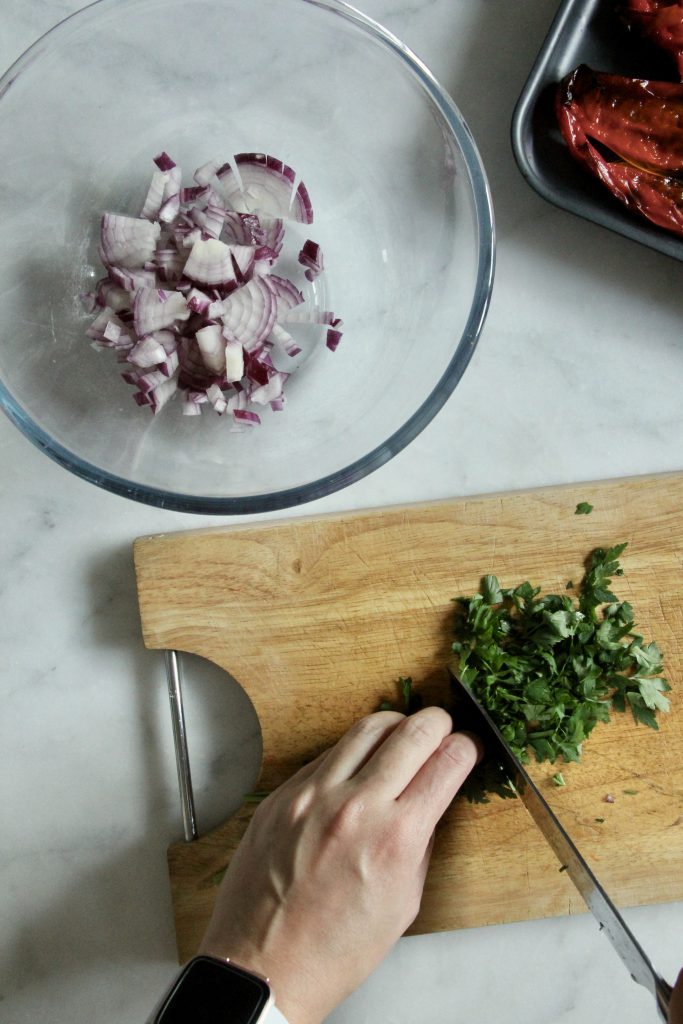
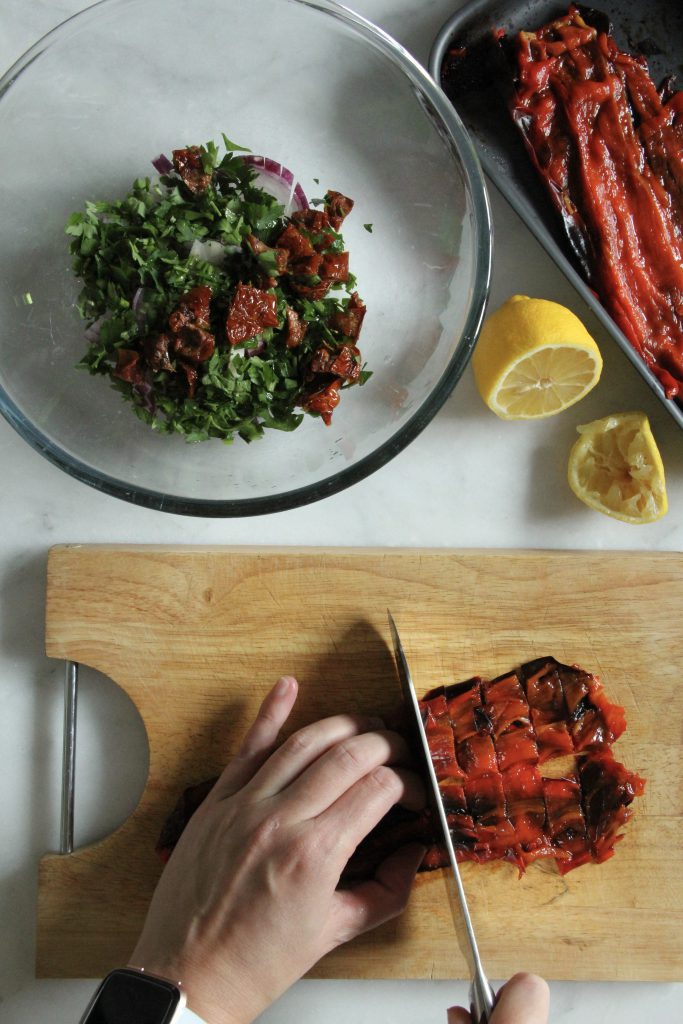
  • Once cool, de-seed and roughly chop the pepper, parsley, sun-dried tomatoes and goat’s cheese, and dress with the olive oil, balsamic vinegar and lemon juice.

Per serving 348kcal/ 13.3g fat/ 8.0g saturated fat/ 30g carbohydrates/ 14.6 fibre/ 19.6g protein

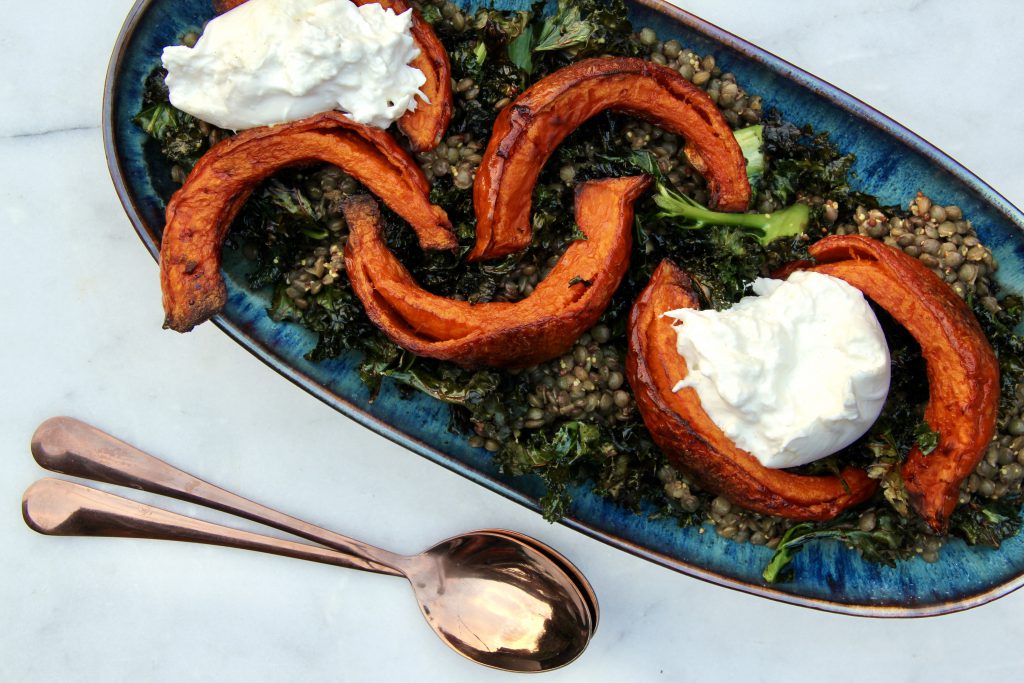
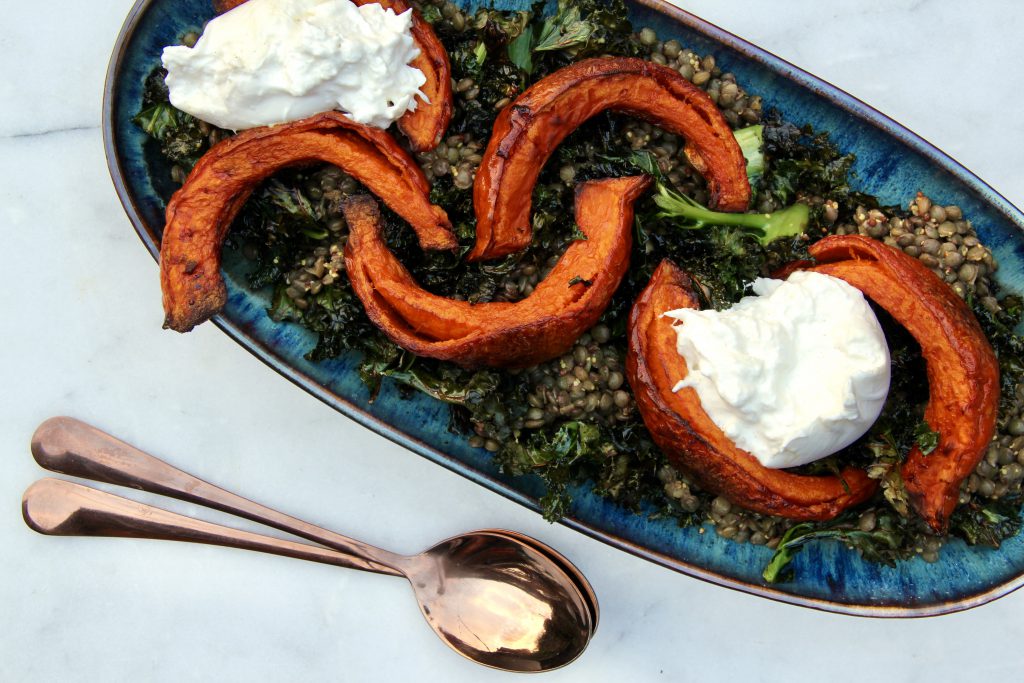
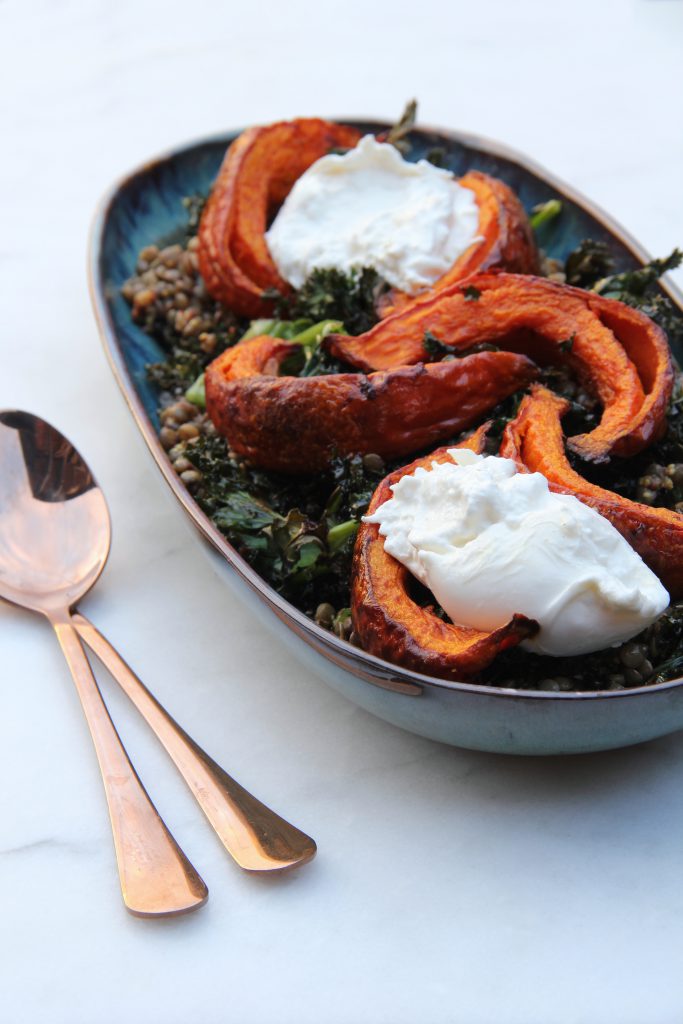
Roasted Squash, Kale and Lentil Winter Salad

Winter Salad Inspiration

A gorgeous winter salad which uses seasonal vegetables and lets them shine as stars in the dish. Kale, a vegetable best in winter, is roasted till crispy. If you’ve never tried crispy kale, now is the time!

Combining both kale and lentils in this dish helps to increase the plant based iron. Additionally, kale is a good source of vitamin K, which has been shown to be beneficial for heart health by helping keep our arteries clearer.

Roasted Squash Winter Salad

I absolutely adore creamy burrata, a cousin of mozzarella. If you can’t find burrata in the shops, substitute with mozzarella. It will still be delicious!

Serves 2

Recipe 

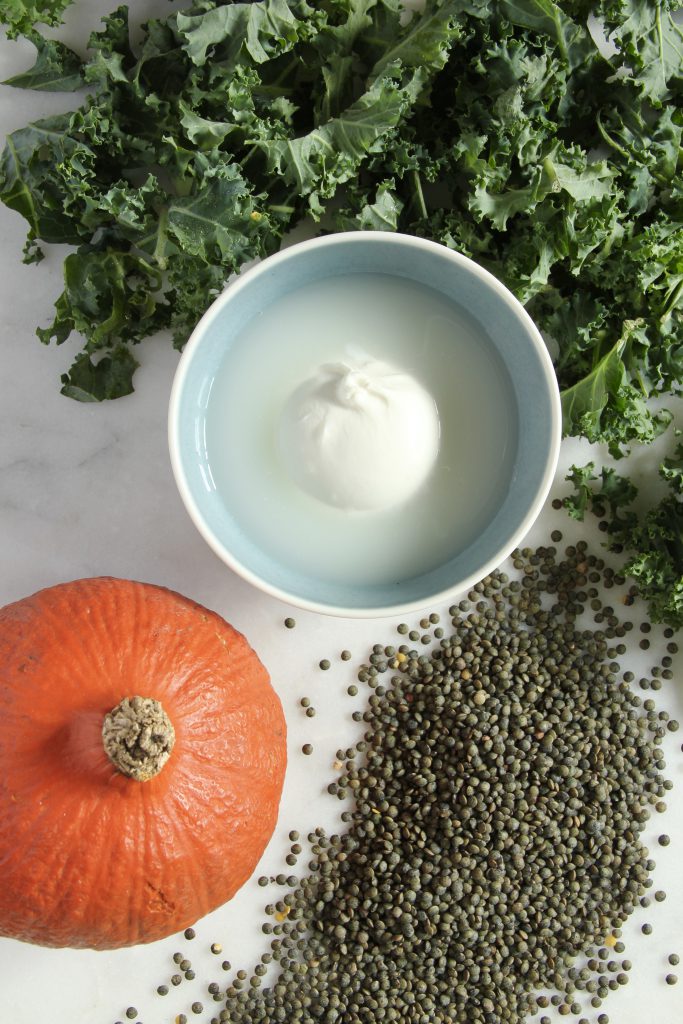
  • 300g Squash of choice, I’ve used Red Kuri, cut into large wedges
  • 2 tbsp rapeseed oil
  • 100g puy lentils
  • 10ml balsamic vinegar
  • 10g wholegrain mustard
  • 10ml extra virgin olive oil
  • 120g kale, washed and sliced into 1 inch chunks
  • 1 ball burrata
  • Seasoning to taste

Method 

  • Set the oven to 180°C fan/190°C convection. Place the squash on a baking tray and coat in 1 tbsp rapeseed oil and season. Roast for 30 minutes.
  • Meanwhile, cook the lentils by placing in a pan of cold water, bringing to the boil, and reducing the heat to a gentile simmer for 12-15 minutes till just firm to bite.
  • Drain the lentils and mix in the balsamic vinegar, mustard and olive oil.
  • Toss the remaining rapeseed oil with the kale, place on a second tray and roast for 8-10 minutes, turning every few minutes to allow every leaf to become crispy.
  • Layer the lentils, kale and squash onto plates and serve with the torn burrata ball over the top. Serve immediately.

Per serving 511 kcal/ 32.3g fat/ 12.4g saturated fat/ 32.5g carbohydrates/ 12.7g fibre/ 18.5g protein