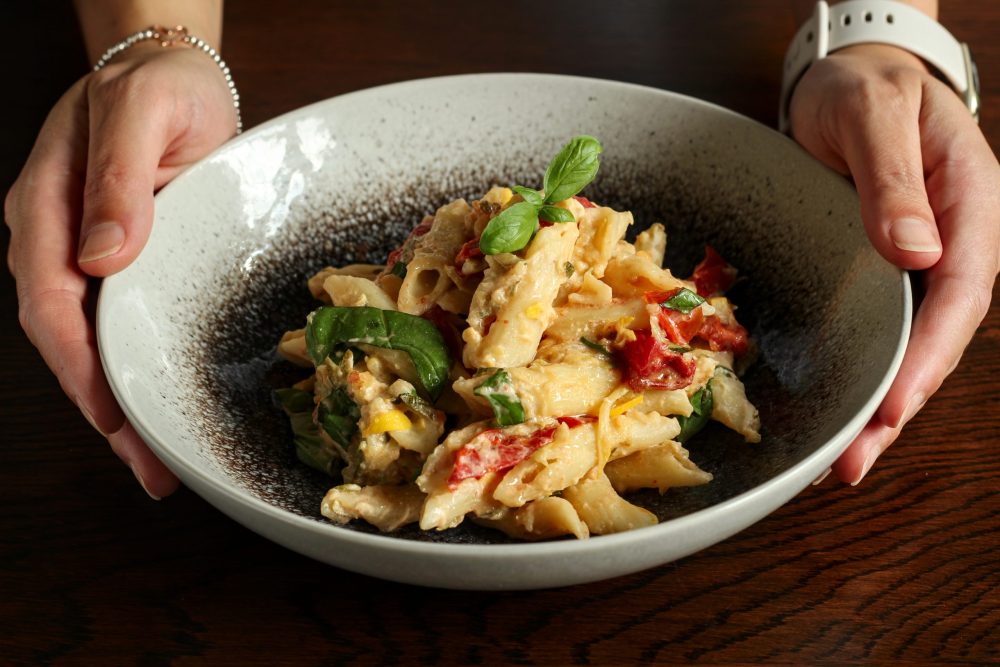
One Pan Boursin Pasta Bake

When you’re short on time but still want something freshly cooked without the hassle or the mess left after? Here’s my easy One Pan Boursin Pasta Bake which takes 5 minutes of prep and only makes 1 pan dirty!

I’m using seasonal courgettes and tomatoes to provide 2 of your 5-a-day in this dish, but if you don’t have these, or they’re not in season you can use other vegetables such as leeks, peppers, broccoli, cauliflower or even a tin of chopped tomatoes.

This dish is also naturally lower in salt, providing just 0.64g per adult-sized serving, making it family-friendly once you adjust the portion size.

Serves 3 hungry adults, or a family of 4

Ingredients

  • 300g dried pasta with a cooking time of about 10 minutes
  • 1 packet Boursin
  • 2 medium courgettes, or about 300g, grated
  • 250g cherry tomatoes, halved
  • 600ml boiling water
  • 30g basil, roughly chopped

Method

  • Preheat the oven to 180°C fan
  • In a large ovenproof dish, add the pasta and place the Boursin in the middle on top of the pasta. Cover the remaining exposed pasta with the grated courgettes and sliced tomatoes.
  • Add the boiling water and bake in the oven for 45 minutes.
  • Remove from the oven and mix everything together, add in the basil and season with pepper to taste.
  • Delicious served hot
One Pan Boursin Pasta Bake

Per adult serving: 600kcal/ 22g fat/ 13g saturated fat/ 75g carbohydrates/ 8.2g fibre/ 19g protein/ 0.64g salt
BNF’s Health Eating Week Summer Quinoa Salad

It’s the British Nutrition Foundation’s Healthy Eating Week and there are a few key health messages set out for this week:

  • Focus on fibre
  • Get at least 5-a-day
  • Using alternative protein sources
  • Staying hydrated
  • Reducing food waste

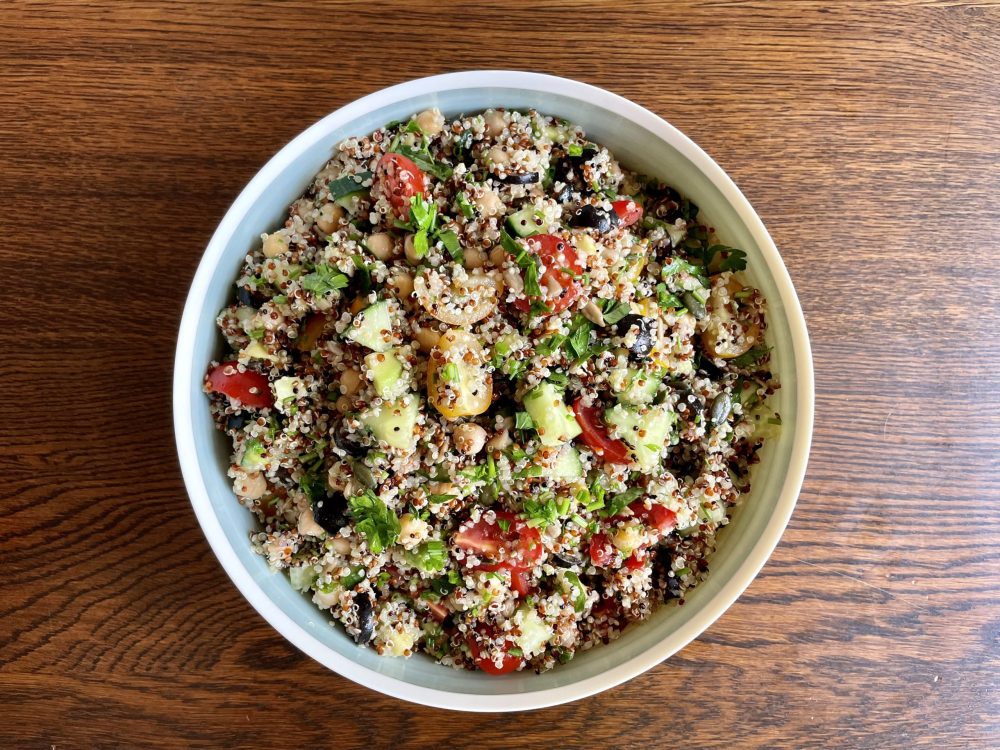
Here’s my super easy Summer Quinoa Salad recipe which incorporates all of these concepts in one dish.

Serves 4 as a main

Ingredients

  • 200g quinoa
  • 30ml extra virgin olive oil
  • 15g chives, chopped
  • 15g flat-leaf parsley, chopped
  • 200g cucumber, cubed
  • 250g cherry tomatoes, chopped
  • 1 tin of chickpeas, drained and rinsed
  • Juice of 2 lemons
  • 1 large avocado (use some of the lemon juice to prevent it from browning)
  • 80g black olives, roughly chopped
  • 20g pumpkin seeds
  • 20g sunflower seeds

Method

  • Add the quinoa to a pan with 400ml of cold water. Bring to a boil and allow to simmer for 12-15 minutes, or until all the water is absorbed. Remove from the heat and cover with a lid for 5 minutes before fluffing with a fork. Allow to cool.
  • Add the cooked quinoa to a large bowl along with all of the remaining ingredients and mix together.
  • Serve, remembering to put any spare salad away in a Tupperware in the fridge for the next day.

Per serving: 530kcal/ 29g fat/ 4.4g saturated fat/ 44g carbohydrates/ 11g fibre/16g protein

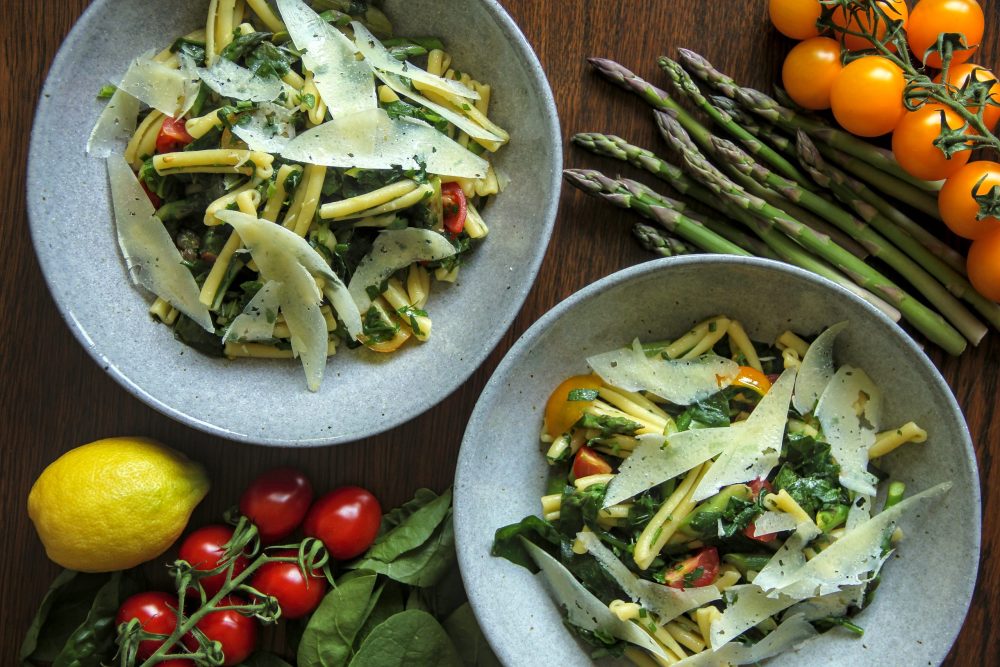
Asparagus and Tomato Pasta Salad

It’s British Tomato Fortnight as well as being halfway through the British Asparagus season, so I’m combining the two to make a delicious pasta salad that is perfect either hot or cold. Remember, allowing your pasta to cool helps create resistant starch which is fibre fuel for your gut microbes!

Serves 3

Ingredients

  • 250g pasta
  • 200g asparagus tips, roughly chopped
  • 100g spinach, roughly chopped
  • 3 tbsp extra virgin olive oil
  • 1 lemon, zest and juice
  • 100g British tomatoes, roughly chopped
  • 1/2 bunch basil, roughly chopped
  • 1/2 bunch flat leaf parsley, roughly chopped
  • 1/2 bunch chives, roughly chopped
  • Salt and pepper to taste
  • 30g pecorino cheese

Method

  • Bring a large pan of water to the boil and cook the pasta for 2 minutes less than the packet instructions. In the last minute of cooking add the asparagus tips before draining.
  • Add the spinach and olive oil, and stir to combine before adding all the remaining ingredients except the pecorino.
  • Serve the pasta in bowls, hot or cold, with pecorino shavings over the top.
Asparagus and Tomato Pasta Salad

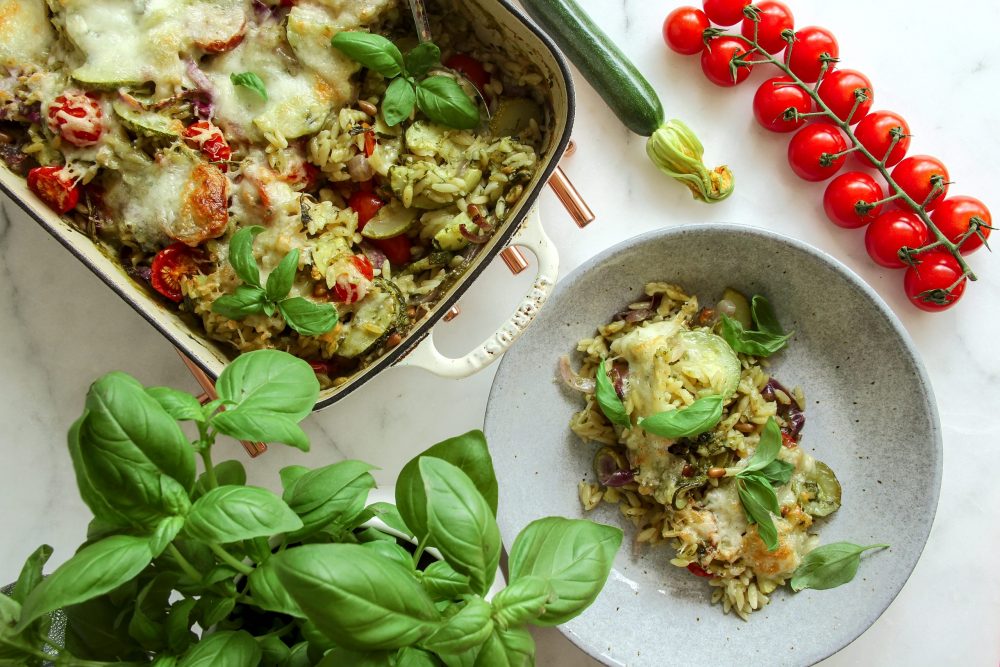
One Pan Orzo and Courgette Bake

An easy one-pan dish means cleaning up after eating is easy. Any leftovers are delicious the next day for lunch or dinner so don’t be put off by the large volume you make.

Serves 6

Ingredients

  • 1 large red onion, sliced
  • 400g courgettes, roughly chopped
  • 2 sprigs of rosemary, leaves removed
  • 5 sprigs of oregano, leaves removed
  • 4 garlic cloves, roughly chopped
  • 3 tbsp extra virgin olive oil
  • 500g orzo
  • 2 tbsp pesto of choice (I used my Spinach Pesto)
  • 250g baby tomatoes, halved
  • 1 ball of mozzarella
  • 50g parmesan, grated
  • Basil to serve

Method

  • Preheat the oven to 180°C fan/ 200°C convection
  • In a large pan, add the onion, courgettes, herbs, garlic and olive oil. Bake for 15 minutes.
  • Add the orzo, pesto and 800ml water before mixing. Layer the tomatoes over the top and bake for 20-25 minutes.
  • Roughly mix the orzo mix before layering the mozzarella and parmesan over the top.
  • Bake for a final 15 minutes and serve with fresh basil.
Orzo and Courgette Bake

Per serving: 525kcal/ 20g fat/ 6.9g saturated fat/ 62g carbohydrates/ 6.3g fibre/ 20g protein

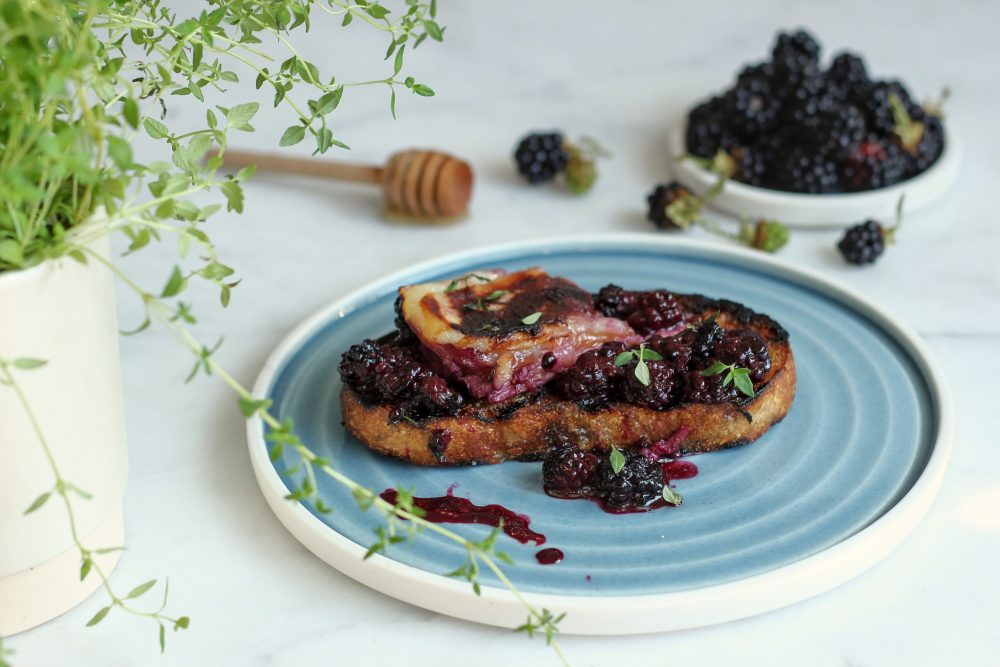
Baked Goats Cheese and Blackberries

Blackberries are a quintessential fruit of British summer. Growing wildly in hedgerows all over the UK, these delicious dark jewels can be easily picked at your leisure for both sweet and savoury dishes.

Serves 4 as a starter

Ingredients

  • 180g log of goats cheese
  • 200g blackberries
  • 1 tsp extra virgin olive oil
  • 1 tbsp honey
  • A few sprigs of thyme

To serve

  • Bread of choice, toasted if desired

Method

  • Preheat the oven to 180°C fan/ 200° convection
  • Slice the goats cheese in half and place in an ovenproof dish.
  • Scatter the blackberries around the edge, then drizzle the oil, honey and thyme over the top. Bake in the oven for 20 minutes.
  • Serve immediately with your choice of bread.
Baked Goats Cheese and Blackberries

Per serving: 198kcal/ 13.0g fat/ 8.2g saturated fat/ 9.4g carbohydrates/ 3.4g fibre/ 9.8g protein

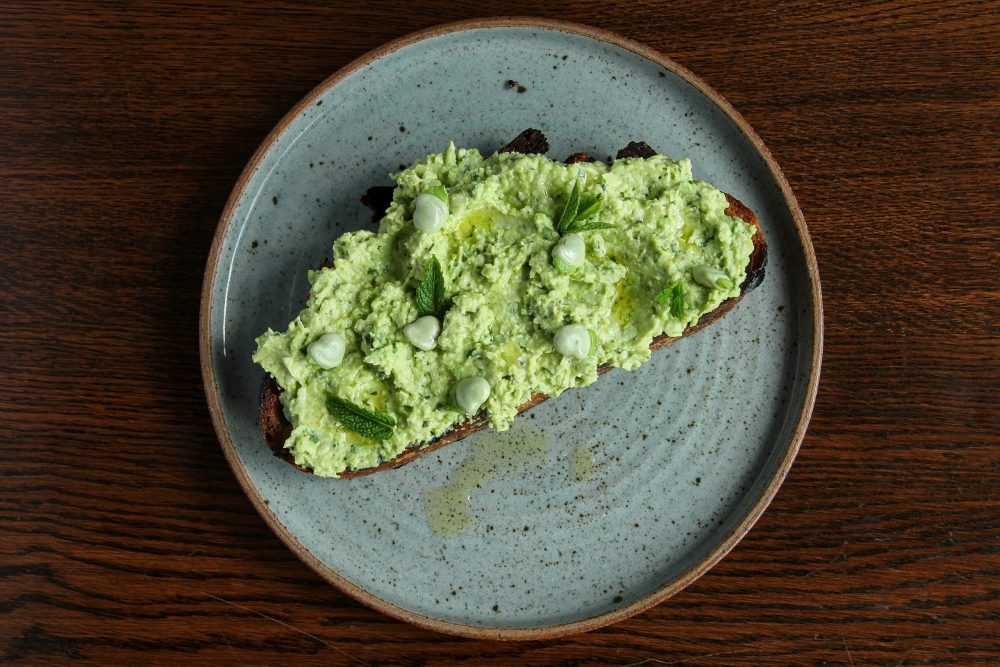
Broad Bean and Mint Hummus

Do you like broad beans? I think they’re a little bit like Marmite, you either love them or hate them. And I also firmly believe that those leathery little jackets surrounding each green bean is responsible for so many people not liking them, including to some extent, myself. They’re currently in season (from the end of June to the middle of September) so why not pick up a bag.

Many people will peel each bean out of its leathery jacket, revealing a bright green bean inside. I, however, do not do this because it’s time-consuming, wastes food, but also impacts the nutritional content. Those papery jackets actually contribute to the phenolic compounds as well as the fibre content.

However, the good news is that I have a delicious recipe with doesn’t remove the skins which both saves time and also keeps the maximum nutrition of the beans in the dish. It’s delicious, I promise that if you’re a fan of hummus this is going to be right up your street.

Serves 10

Ingredients

  • 750g broad beans in their pods, or around 300g depodded
  • 45g tahini
  • 1 garlic clove
  • 15g chives, chopped
  • 3 sprigs of mint, leaves removed
  • juice of 2 large lemons (around 90ml)
  • 50ml extra virgin olive oil

To serve

  • Toasted sourdough
  • A few reserved cooked broad beans
  • Mint leaves
  • Olive oil

Method

  • Bring a large pan of water to a boil. Cook the broad beans for 2 minutes before draining and plunging them into iced water. Drain once cool, reserving a few for decoration if desired.
  • In a food processor, add the cooked broad beans with all of the remaining ingredients.
  • Blitz till the desired consistency, adding a little extra water if needed. I like mine a little chunky.
  • Serve on toast dressed with extra broad beans, mint and olive oil, or with crudites.
  • Any remaining hummus can be stored in an airtight container for 3 days in the fridge.

Per 50g serving: 97kcal/ 8.0g fat/ 1.1g saturated fat/ 3.2g carbohydrates/ 1.9g fibre/ 2.8g protein

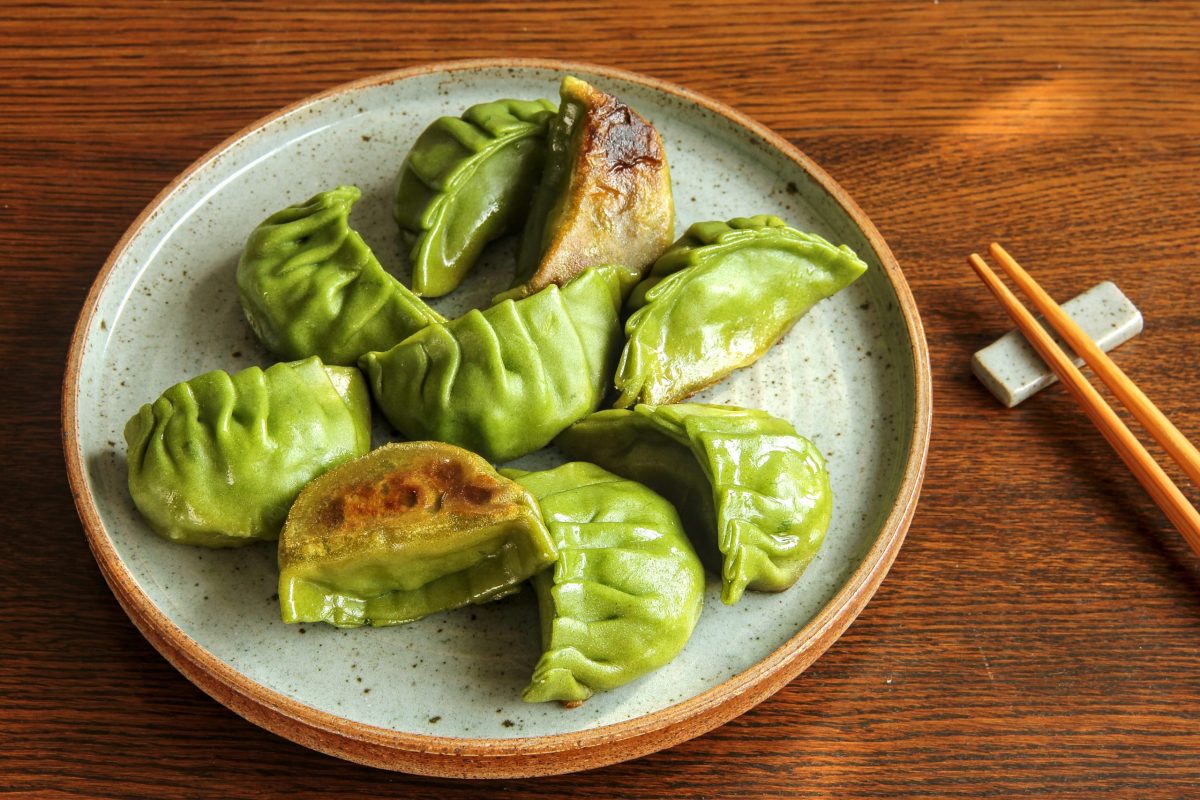
Wild Garlic and Prawn Dumplings

I’m not sure it would truly count as Spring if I didn’t make something glorious and green with wild garlic!

If you can’t get wild garlic, or it’s out of season, you can use garlic chives as an alternative and still get that lovely allium flavour through the dumplings. If you can’t get these either you can replace with spinach, and then add a minced garlic clove to the prawn filling – you will still get a gorgeous green hue in the dumpling wrappers, and the addition of a garlic clove to the mixture will add all the flavour you need.

Makes 12 dumplings

Ingredients

For the dumpling skins

  • 50g wild garlic or spinach leaves
  • 108g plain flour
  • 12g corn flour

For the filling

  • 150g raw prawns, minced
  • 50g bamboo shoots, roughly chopped
  • 5g fresh ginger, finely chopped
  • 1 tsp corn flour
  • 2 tsp soy sauce
  • 1 tsp sesame oil, plus extra for cooking
  • White pepper to taste
  • (1 garlic clove, minced if using spinach)
  • 1 tsp rapeseed oil

Method

  • To make the dumpling skins start by blending the wild garlic leaves to a paste. Strain the liquid off, weighing it as you do.
  • In a bowl, add the plain and corn flour, mixing together.
  • Take the strained liquid and top up with boiling water to make a total of 62g of liquid. Add this hot mixture to the flour and stir to a shaggy mixture. Cover and leave for 10-30 minutes.
  • Knead the dough till it is smooth and elastic. Cover and rest for 30-60 minutes.
  • Meanwhile prepare your filling by mixing all the ingredients together, except for the rapeseed oil.
  • Roll the dough into a long sausage shape and divide into 12 equal rounds.
  • Take one round, and cover the reaming pieces of dough, and press down with the palm of your hand on the cut surface to create a flat disk. Using a rolling pin, roll from the centre out, turn a quarter and repeat till you have created a round flat disk with a thin edge.
  • If not using immediately, cover to prevent it from drying it out as you continue to roll out the remaining dough.
  • Take one dumpling skin and fill it with a heaped teaspoon of the mixture. Using a little water over one half of the inside of the dough, start from one end and gently pinch with an overlap to seal each dumpling in a crescent shape. Repeat with the rest of the dough and mixture.
  • Add the rapeseed oil to a frying pan and heat gently. Arrange the dumplings so they have at least 1cm between each dumpling – you may need to cook them in batches depending on the size of your pan.
  • Cook for 2-3 minutes on a medium heat till the bottom turns golden on the bottom.
  • Boil the kettle and add water directly into the pan so it come up to the bottom third of the dumpling. Immediately cover with a lid to steam the dumplings.
  • After 5 minutes, remove the lid and allow any remaining liquid to evaporate off, add a dash of sesame oil to finish and crisp the bottom for 1 minute.
  • Remove from the pan and enjoy hot.
Wild Garlic & Prawn Dumplings

Per 4 dumplings: 232kcal/ 5.3g fat/ 0.8g saturated fat/ 32g carbohydrates/ 2.7g fibre/ 13g protein

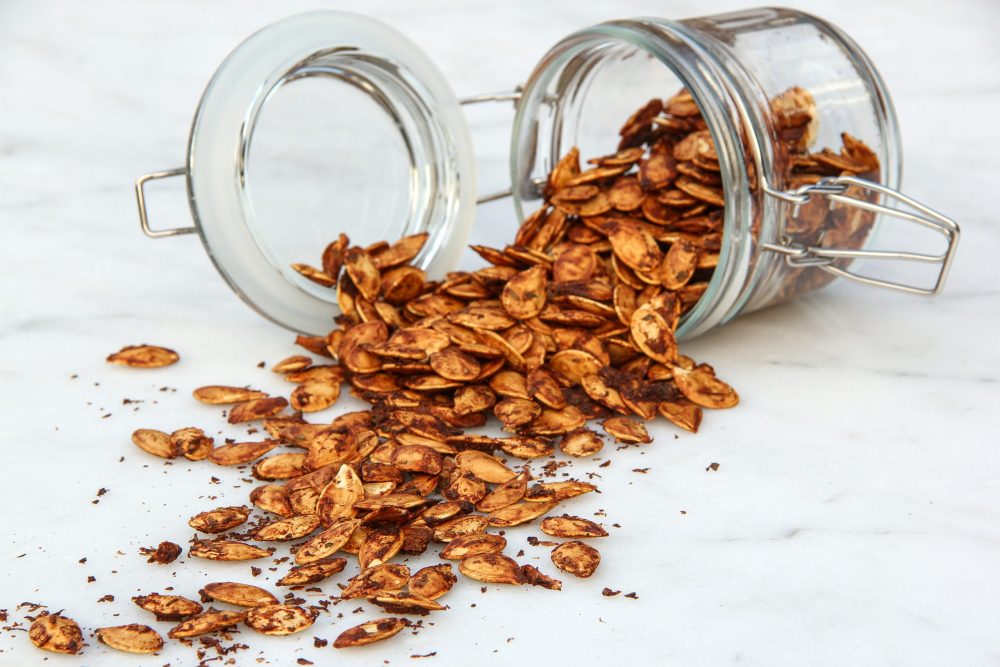
Spicy Roasted Pumpkin Seeds

Still looking for ways to use up your pumpkin this year? I’ve covered using the skin and the flesh, so not it’s time to talk about seeds! I don’t even wash the seeds, contrary to what many other people suggest. This helps keep the recipe as simple as possible, and also means that any pumpkin fibres still attached will soak up any flavours added to them aka flavour bomb!

Pumpkin seeds are full of magnesium, phosphorus, vitamin K and manganese, as well as being a good source of antioxidants. In addition, carving pumpkin seeds are higher in fibre than standard green pumpkin seeds bought from the shop – another win for making your own!

These little seeds make the perfect snack on the go, or alternatively, use them to add textures to soups or salads.

You could roast them plain, but I love the little extra kick from the lemon and cayenne pepper – feel free to use more for a bigger kick, or substitute with chilli powder.

Ingredients

  • 150g pumpkin seeds
  • 1 lemon, zest and juice
  • 1 tsp smoked paprika
  • 1 tsp dried oregano
  • 1 tsp dried coriander
  • 1/4 tsp cayenne pepper (option to add more for a bigger kick, or use chilli powder)
  • 1/4 tsp white pepper

Method

  • Preheat the oven to 150°C fan/ 160°C convection
  • Mix all the ingredients together and lay them out on a baking tray
  • Bake the seeds for 30-40 minutes, mixing twice during the cooking time, till crispy and you can just hear them start to pop
  • Allow to cool before storing in an airtight container

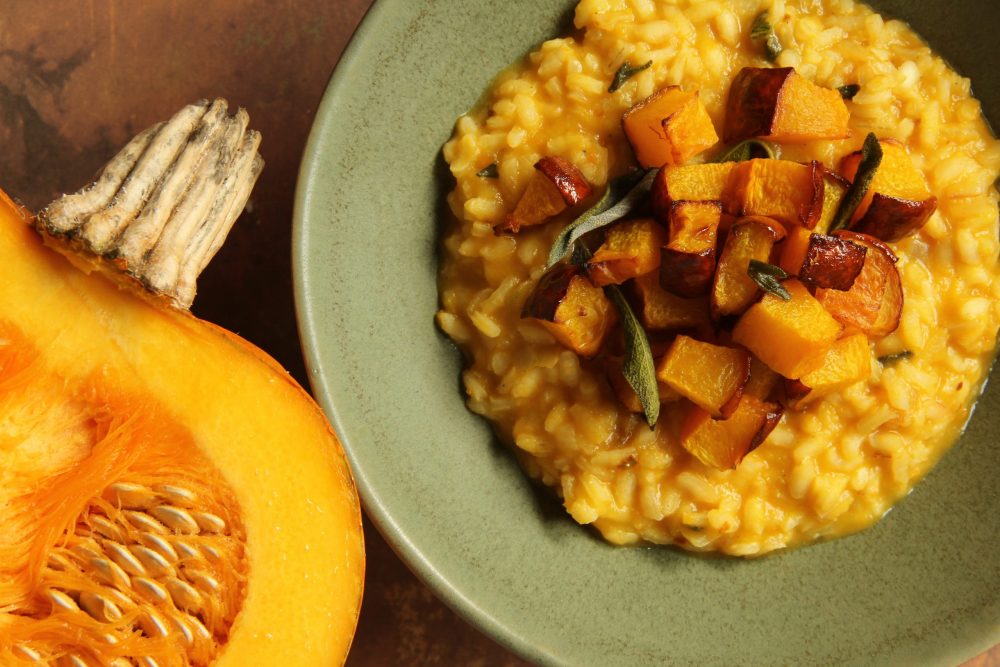
Golden Pumpkin Risotto

This is the perfect way to use up any pumpkin scraps you may have from Halloween carving! I’ve paired it with some carrot for an extra golden beta carotene boost, making the whole dish a gorgeous golden hue.

It is estimated that 14.5 million pumpkins will be wasted in the UK this year. Carving pumpkins are edible, from the skin to the flesh and even the seeds, so why not try to make use of some of the pumpkin scraps once you have carved your jack-o’-lantern. Reducing food waste helps reduce CO2 emissions, which in turn helps our planet.

It’s suitable for a gluten-free diet, just check you’re using suitable stock, or even for baby-led weaning if using a no-added salt stock (for very young babies you may need to blend/mash the rice). Optional to use homemade stock or some herbs and spices to make your own. If you want to make this dish vegan, substitute the butter for a little more oil, and the parmesan for some nutritional yeast.

Serves 4

Ingredients

  • 700ml stock
  • 100g pumpkin scraps such as inners or carving off-cuts
  • 100g carrots, roughly diced
  • 200g pumpkin, cut into cubes
  • 1/2 tsp extra virgin olive oil
  • 2-3 sprigs of sage, leaves removed
  • 1 large onion, finely diced
  • 1 tbsp extra virgin olive oil
  • 2 garlic cloves
  • 20g butter (use extra oil if making vegan)
  • 200g risotto rice
  • 150ml white wine (option to use extra stock)
  • 40g parmesan, grated

Method

  • Start by making the pumpkin stock by adding the pumpkin scraps, carrot and stock to a saucepan. Bring to the boil and simmer for 20 minutes till the pumpkin and carrots are cooked through. Blend till smooth and keep on a low heat.
  • Meanwhile, preheat the oven to 180°C fan/ 200°C convection. Add the pumpkin cubes to a baking tray and mix with 1/2 tbsp olive oil. Bake for 25 minutes, turning halfway through. Add the sage leaves and bake for a further 5 minutes.
  • While the pumpkin is roasting, take a large pan and gently cook the onions in the remaining oil till soft and translucent.
  • Add the garlic and cook for 1 minute before adding the butter.
  • Add the rice and toast for 2-3 minutes till fragrant. Add the white wine and stir.
  • Slowly add the stock, stirring the risotto continuously. As the stock is absorbed add more. If you run out of stock use boiled water to allow the rice to cook through so it has a little bite in the centre.
  • Remove the risotto from the heat and add the parmesan and 1/2 the toasted sage leaves. Season with pepper to taste.
  • Serve with the roasted pumpkin and remaining sage leaves over the top.

Per serving: 417kcal/ 15.0g fat/ 5.9g saturated fat/ 52g carbohydrates/ 5.3g fibre/ 9.2g protein

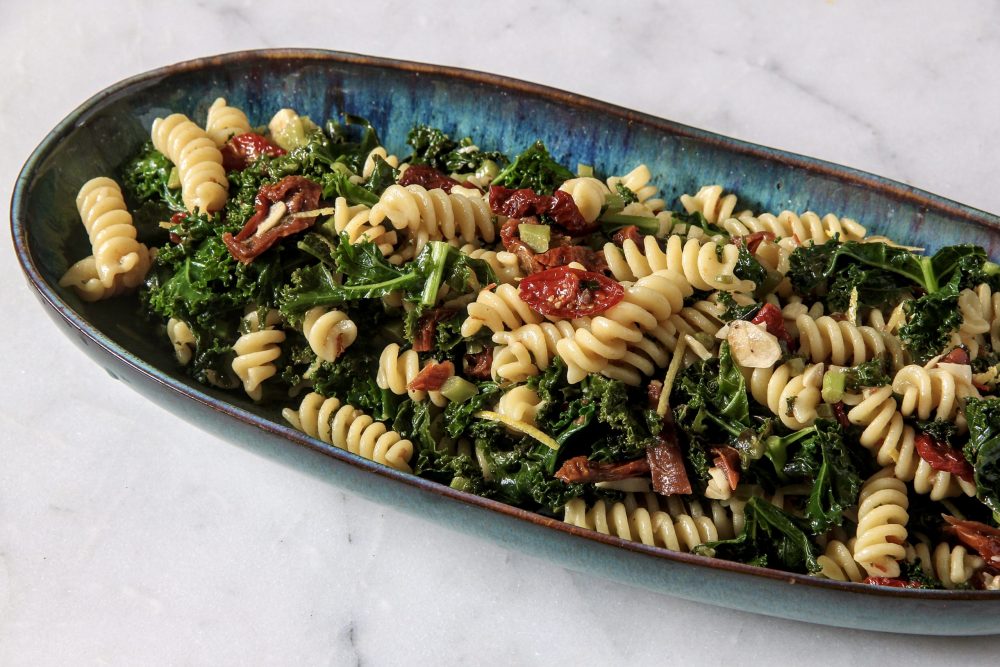
Sundried Tomato and Kale Pasta

Super simple, seasonal, and takes just 15 minutes to cook. Kale is a great source of vitamin K, as well as beta-carotene which the body can convert into vitamin A.

I see loads of recipes using kale where they strip the leafy part off the central stem. I love the contrast of textures, with the stem staying crunchy as the leaves become soft. It also helps reduce food wastage by eating the whole of the produce.

Kale is a plant-based source of dietary iron. Being from a plant, it is in the form of non-haem iron which means it is harder for the body to absorb. Using the lemon juice at the end of cooking adds vitamin C to the dish which can help increase the uptake of plant-based iron.

Serves 2

Ingredients

  • 150g dried pasta of choice
  • 1 tbsp extra virgin olive oil
  • 200g kale, roughly chopped
  • 60g sundried tomatoes, drained and roughly chopped
  • 4 cloves of garlic, roughly chopped
  • 1 unwaxed lemon, zest and juice

Method

  • Bring a large pan of water to the boil and cook the pasta for 2 minutes less than the packet instructions.
  • Separately, in a frying pan cook the kale with the oil for a few minutes till slightly soft.
  • Add the garlic and sundried tomatoes and cook for a further few minutes till fragrant. If needed, add a little pasta water to stop the garlic from burning.
  • Add the pasta with a tablespoon of pasta water and add the lemon zest and juice.
  • Stir to combine and serve immediately.

Per serving: 441kcal/ 11.8g fat/ 1.6g saturated fat/ 64.9g carbohydrates/ 9.0g fibre/ 13.8g protein

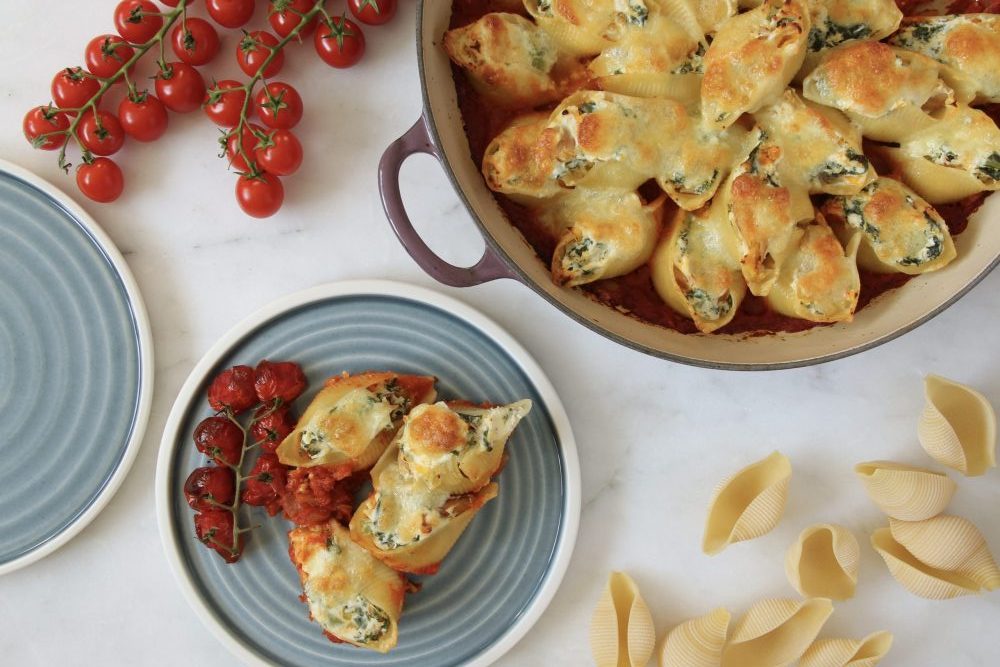
Squash, Kale and Ricotta Baked Shells

Seasonal autumnal butternut squash, roasted to maximise the flavour. Leaving the skin on the squash increases the fibre content, so don’t be tempted to peel! It’ll save you time, keep your gut bacteria happy, and increase the flavour of the whole dish as it caramelises in the over from its first roasting!

I like to leave everything a little chunky, this way you can actually see what you’re eating, whether it be the creamy ricotta, soft butternut squash or kale. The final topping of mozzarella gives a lovely golden hue to the whole dish, as well as giving some lovely texture which I always can’t resist to leave to the final mouthful.

This dish is perfect for wowing a crowd at a dinner party. It can happily sit in the fridge for a day or two, and by cooking the pasta in advance and allowing it to cool in the present of oil, you increase the fibre content through the formation of something called resistant starch. So don’t be afraid to prepare in advance and then whip out at a later date (even if it’s just for a mid-week dinner!). Alternatively, assemble the dish bar the final crown of mozzarella and you can freeze portions which can be cooked at a later date.

Serves 5

Recipe

  • 500g Butternut Squash, skin on and cubed
  • 200g giant pasta shells
  • 1 tbsp olive oil
  • 120g kale, sliced
  • 1 tsp rapeseed oil
  • 2 large onions, chopped
  • 3 cloves garlic
  • 350g rough passata
  • 500g ricotta
  • ¼ nutmeg, grated
  • 1 ball mozzarella

Method

  • Set the oven to 150°C fan/160°C convection. Place the butternut squash on a roasting tray and cook for 20 minutes till golden brown. Turn the oven up to 180°C.
  • Meanwhile, cook the pasta for 2 minutes less than the packet instructions. Drain and mix the olive oil over to stop the shells from sticking.
  • Steam the kale over boiling water for 4 minutes.
  • In a large ovenproof dish, gently sauté the onions in rapeseed oil over a low heat. Once soft add the garlic, cook for a further minute before adding the passata and cook till reduce by a third.
  • Meanwhile, mix the ricotta and nutmeg together and season to taste with salt and pepper. Break up the roasted squash roughly, add to the ricotta mix with the kale. Stuff the pasta shells with the mixture.
  • Off the heat, arrange the stuffed shells into the dish and top each shell with mozzarella.
  • Bake in the oven for 20-25 minutes till golden brown and bubbly.
  • Delicious served with roasted vegetables or a side salad.

Per serving 417kcal/ 20.0g fat/ 9.3g saturated fat/ 34.6g carbohydrates/ 5.0g fibre/ 18.6g protein

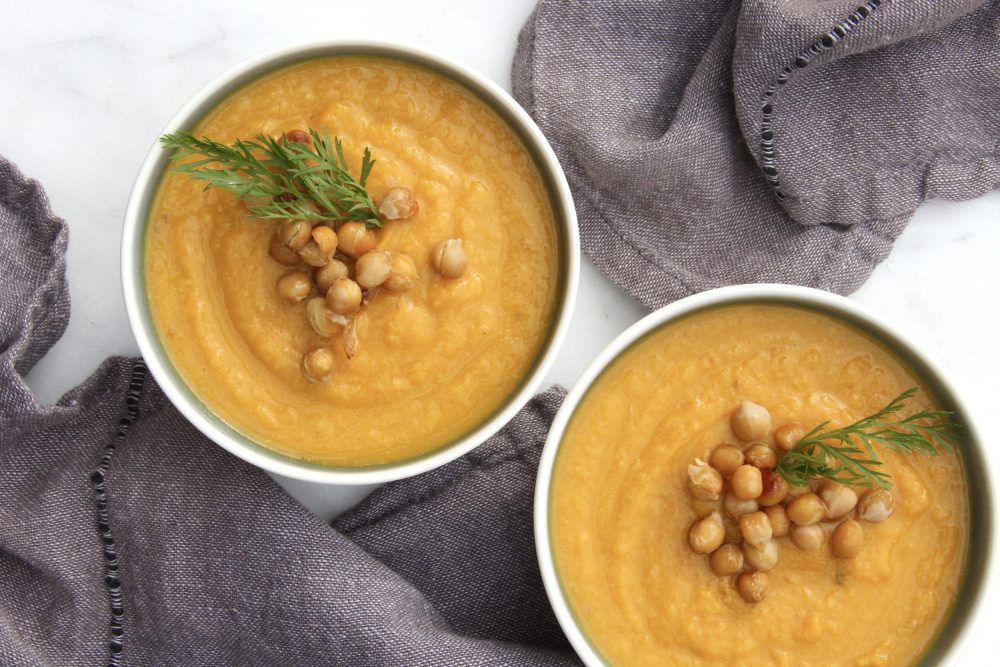
Roasted Butternut Squash, Carrot and Chickpea Soup

Autumn is upon us, so therefore so is soup season. I always enjoy a good bowl of hot soup on a crisp cold Autumn day, but sometimes I find myself wondering how to get the protein in for the meal. Using beans, pulses or lentils is a great way to include some protein in a soup meal.

In an effort to save time and reduce food waste I don’t peel the squash or carrots. Instead I scrub them before removing the tops and tail. The skin is easily blended into the soup and will contribute to some of the fibre content. What is not to love?

Any leftover soup can be stored in the fridge in an airtight container for up to 5 days. Alternatively, this soup freezes really well so you can make a large batch of this to pull out when you need a quick lunch.

Serves 4

Ingredients

  • 2 tbsp extra virgin olive oil
  • 400g butternut squash, cut into 1″ cubes
  • 400g carrots, cut into 1″ pieces
  • 1 large onion, cut into 1″ pieces
  • 4 clove of garlic, skin on
  • 1 tin of chickpeas, drained and rinsed
  • 1 stock cube of choice

Method

  • Preheat the oven to 180°C fan/ 190°C convection.
  • Mix all of the ingredients, except the stock cube, in a large roasting tin. Roast in the oven for 1 hour, stirring half way through.
  • Boil 900ml of water and add the stock cube.
  • Remove the garlic cloves from their skins and add the roasted vegetables to the stock.
  • Blend the soup to the consistency of choice and serve.

Per serving: 276kcal/ 11.5g fat/ 1.7g saturated fat/ 32.7g carbohydrates/ 8.0g fibre/ 7.0g protein