Sourdough Crackers

Sourdough crackers which use up all the left over sourdough discard, meaning that between each preparation of the leaven for baking, the discarded sourdough starter can be turned into their own item and reduce food waste. Simply store all the unused starter in a clean container in the fridge, topping it up as you make more starter. You can keep adding starter for around 2 weeks to save up enough to make these crackers.

Another great thing about this recipe is that it’s so forgiving, you can use whatever flours you happen to have in your cupboard. This way you can increase the fibre diversity for your weekly tally by using different grains such as spelt, rye or wholegrain flours. Some flours absorb more water than others, and depending on how wet your starter discard is will determine exactly how much flour is needed for the dough.

Mix up the cracker flavours by adding in different ingredients. The below recipe is a simple seeded recipe, but the addition of nigella seeds will give a savoury flavour, or top with a little grated cheese over the top before cutting a baking to make a cheese topped cracker.
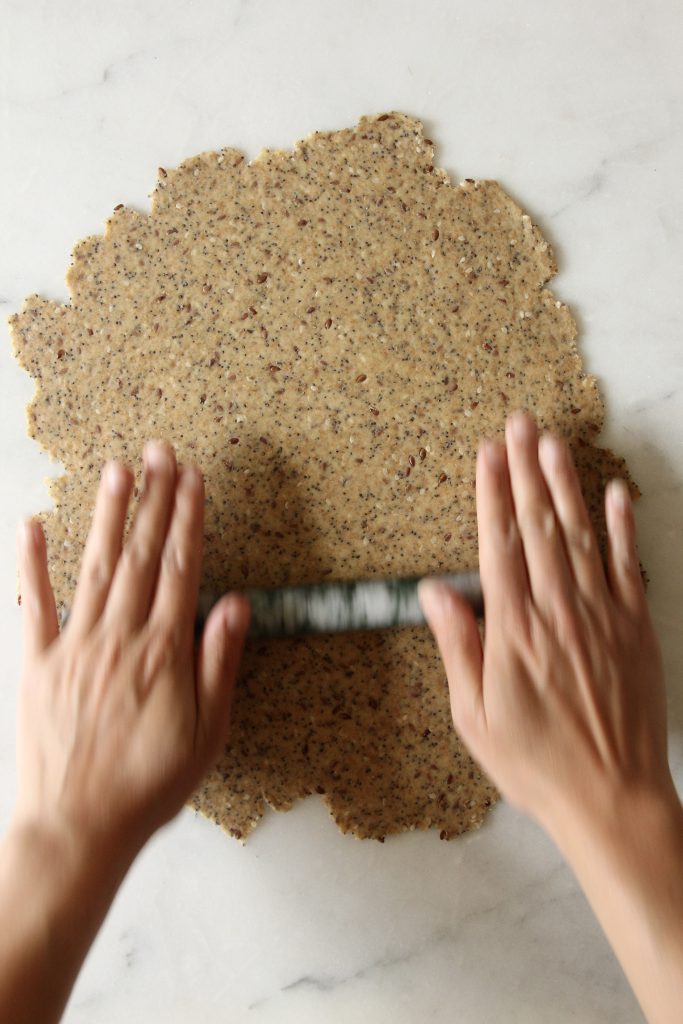
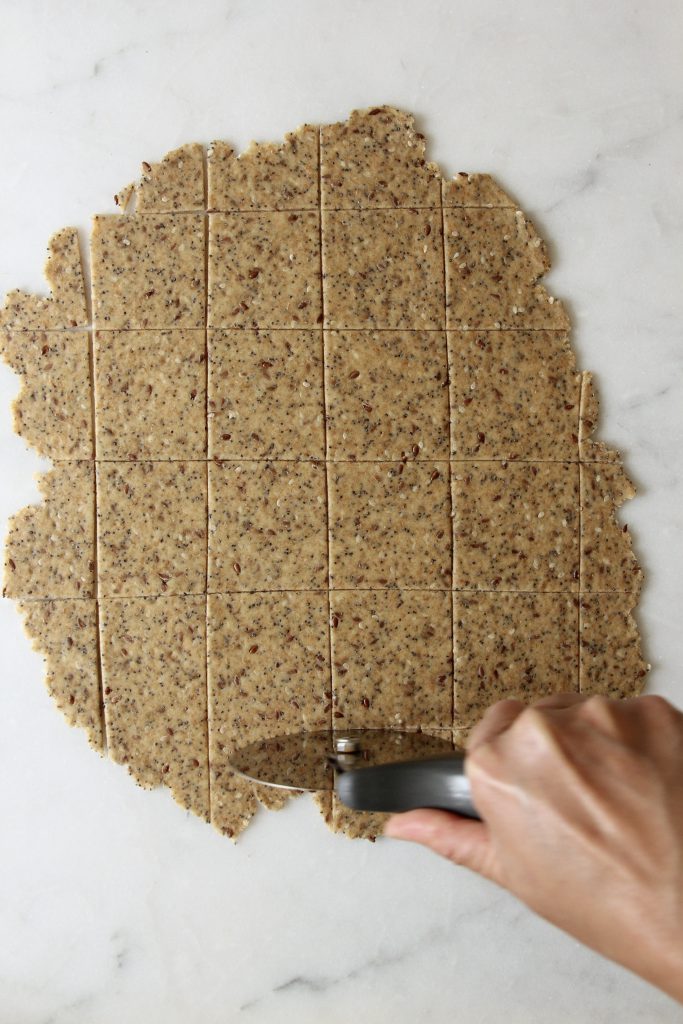
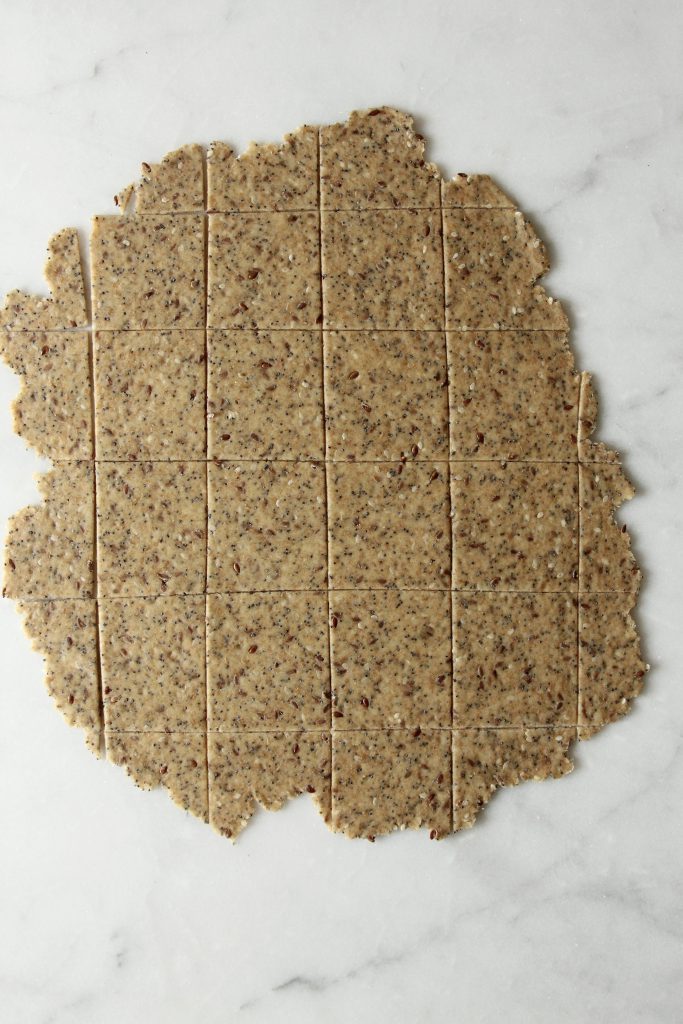
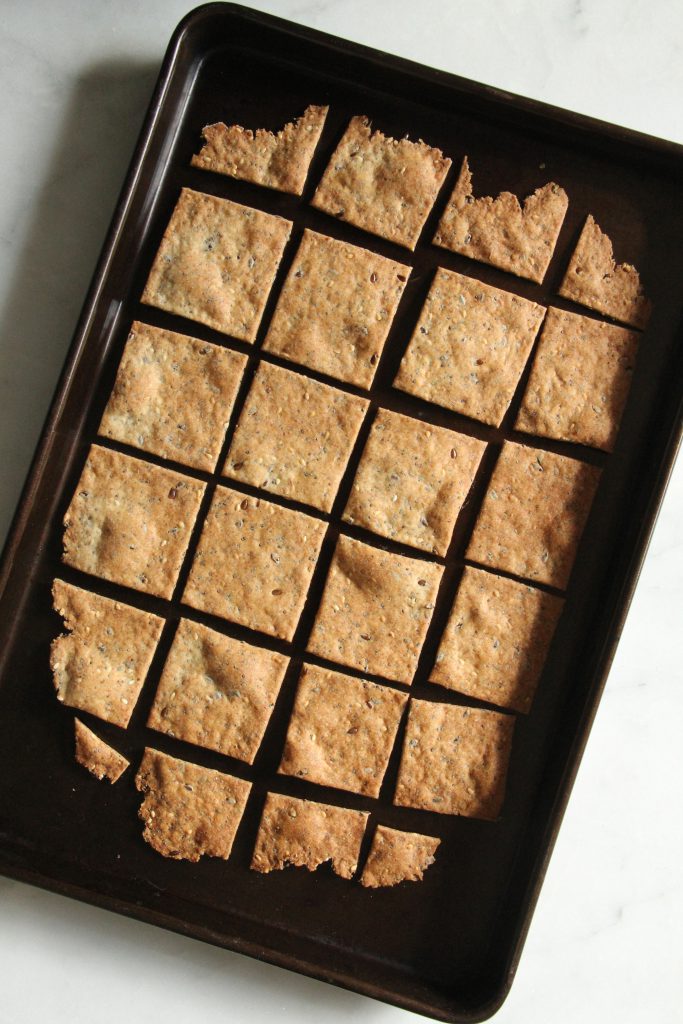
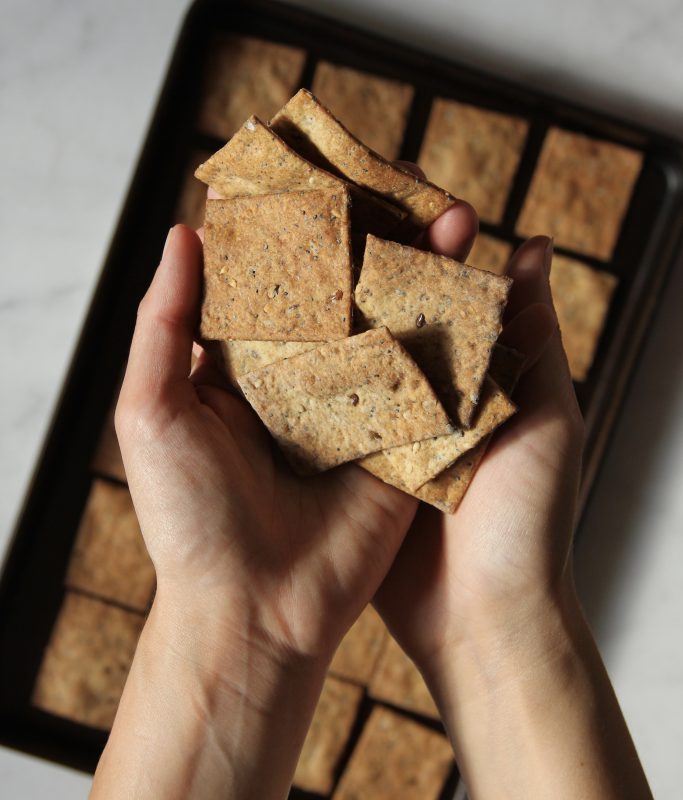
I keep my crackers very rustic looking. I simply roll out the dough and then run a pizza cutter through to make rough squares. You could of course jazz up their appearance by using a biscuit cutter to make specific shapes, or perhaps make them more seasonal with those cookie cutters you bought but never seem to get around to using…..!

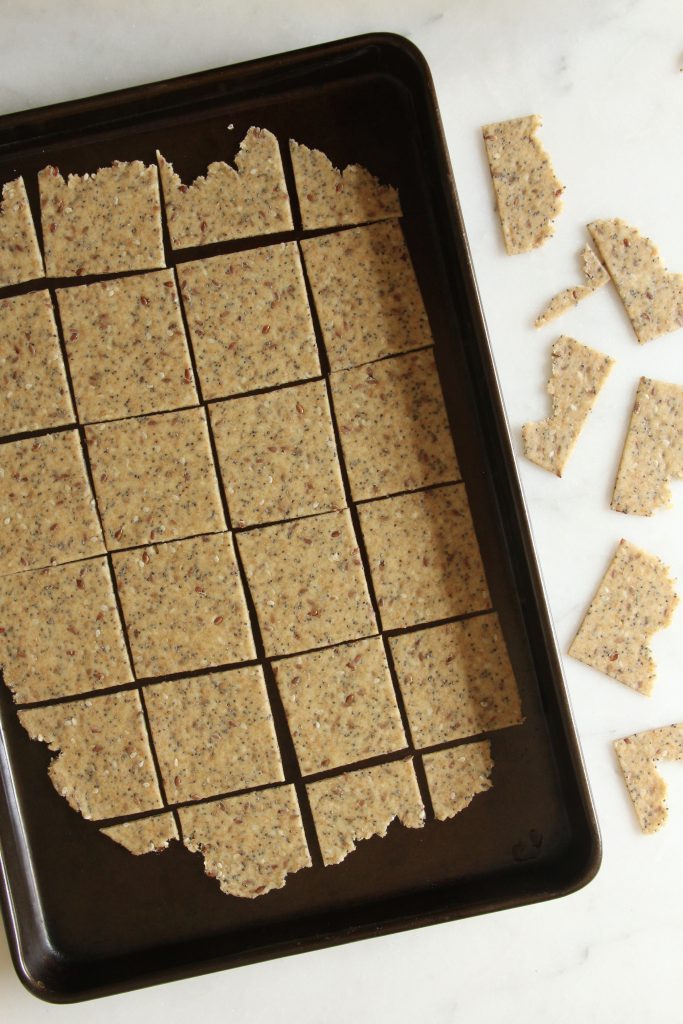
If you want to ensure you have flat crackers without air bubbles in them, prick them with a fork before baking. This will allow any trapped air to be released rather than bubbling up and creating a pillow shaped cracker.

Makes around 40 crackers

Ingredients

  • 175g sourdough discard
  • 125g flour of choice (I have used equal portions of spelt, rye and khorasan)
  • 30ml extra virgin olive oil
  • 30 mixed seeds of choice (I have used poppy, linseed and sesame)
Method

  • Add the starter, flour and oil in a bowl and mix together to combine. The mixture should be firm but pliable and not stick to your hands – add more flour or water depending on how it feels.
  • Mix the seeds in and knead the dough lightly for a few minutes till smooth. Cover and rest for 30 minutes.
  • Preheat the oven to 180°C fan/ 200°C convection.
  • Divide the ball into 2 and roll out to around 2mm thickness, using a little extra flour to stop the dough from sticking.
  • Cut into the desired cracker shape and size and place onto a baking sheet.
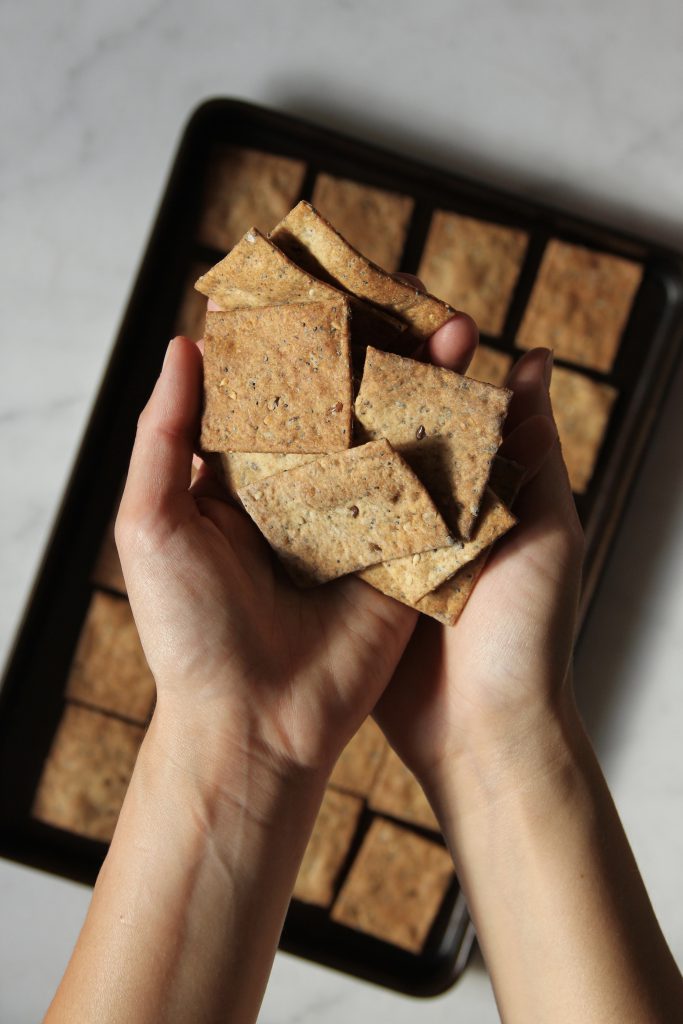
  • Bake for 10-15 minutes till golden brown and crispy.
  • Allow to cool completely before storing in an airtight container for up to 1 month.
Sourdough

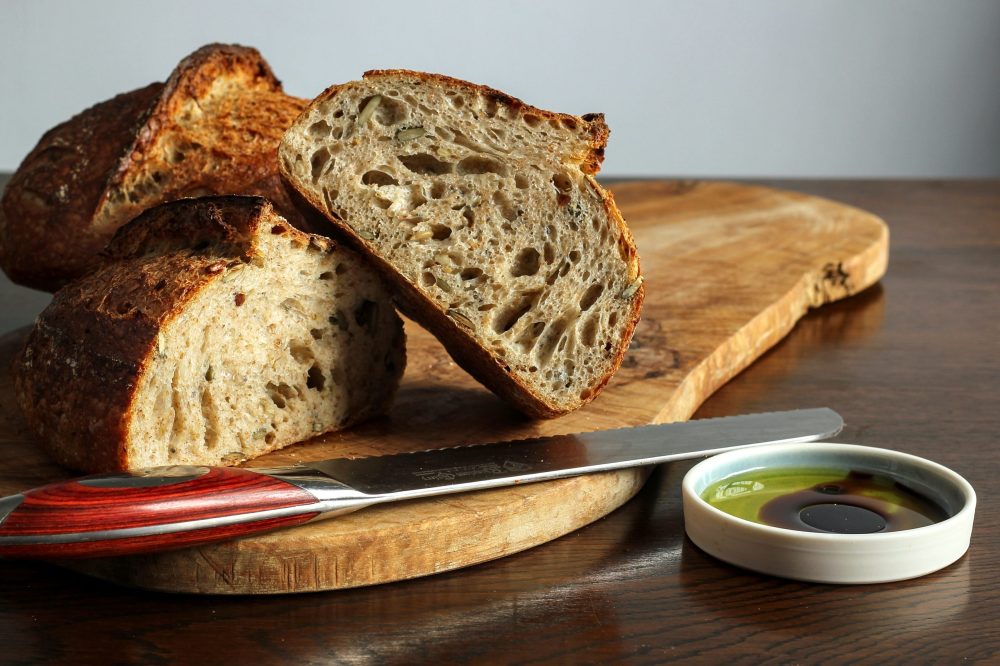
Sourdough. Risen with wild yeast, which come from Bert who lives in my fridge. Something so simple it is literally flour, water and salt. That’s it. It’s as simple as that, yet can be transformed into the most delicious bread. My recipe takes around 36 hours, and while it’s got only a few steps which require a lot of attention, it is well worth the wait. I always make 2 loaves, one to eat fresh on the day, and one sliced and frozen ready for eating later in the week.

If you haven’t got a starter, there’s no reason you can’t make one and have it ready to bake with in a week. Simply start by mixing 50% wholemeal and 50% white plain flour together. Take a handful and mix it with lukewarm water and leave in a cool area for a few days. Once you see bubbles forming, start to feed you starter by discarding about 80%, and adding 1:1 water and 50/50 flour blend to make a thick batter. Repeat this process ever day till it predictively rises and falls between feeds.

For a full tutorial length video visit my YouTube channel.

Makes 2 small loves, 1 large loaf, 3 pizza bases, or 1 large focaccia

Recipe

  • 15g starter
  • 25g wholemeal flour
  • 25g plain flour + extra for dusting
  • 100g strong wholemeal flour
  • 400g strong white flour
  • 8g salt
  • Seeds (optional)
  • Rice flour
  • Ice cubes

Method

  • Start the night before you plan to make the dough. Take 15g of your starter culture, add 50ml lukewarm water, 25g wholemeal flour and 25g plain white flour and mix well. Leave covered overnight at room temperature for around 10 hours. This is your leaven.
  • The next morning, mix the strong flours together in a large container. Measure 300ml of 25°C water, add 100g of leaven and mix. Pour over the flour and mix till a stiff dough forms. Cover and leave to rest for 30-45 minutes.
  • Measure 50ml of 25°C water and add 8g of salt. Stir to dissolve and pour over the dough. Mix in, scrunching and breaking the dough up. Once fully mixed cover and rest for 45-60 minutes.
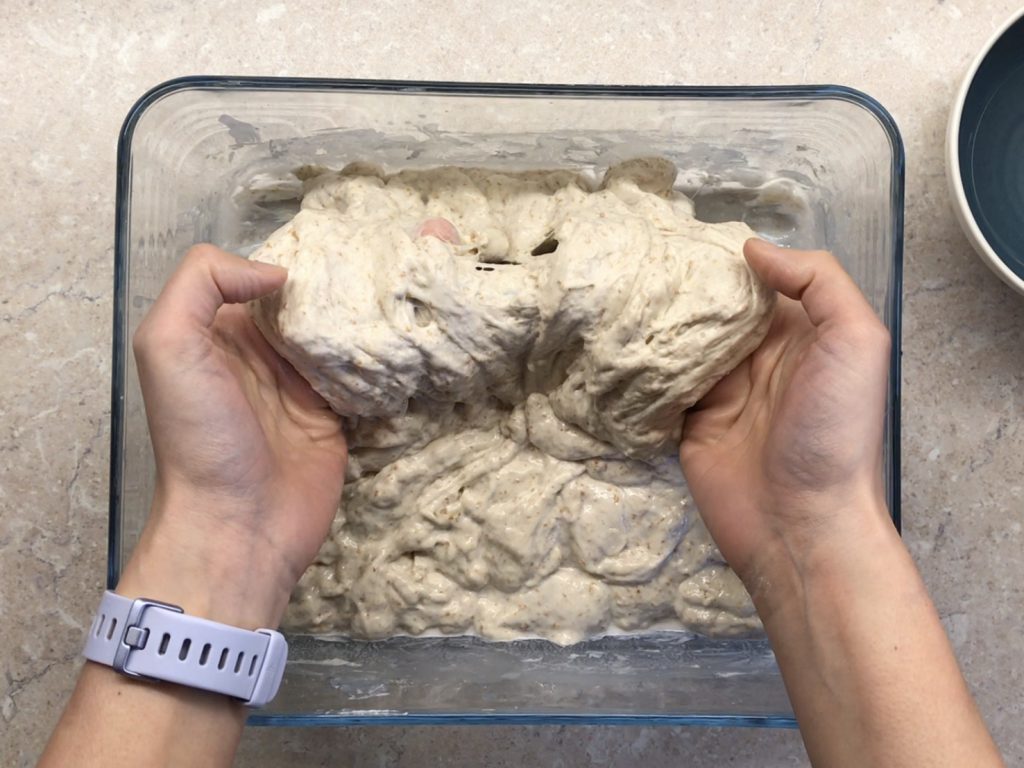
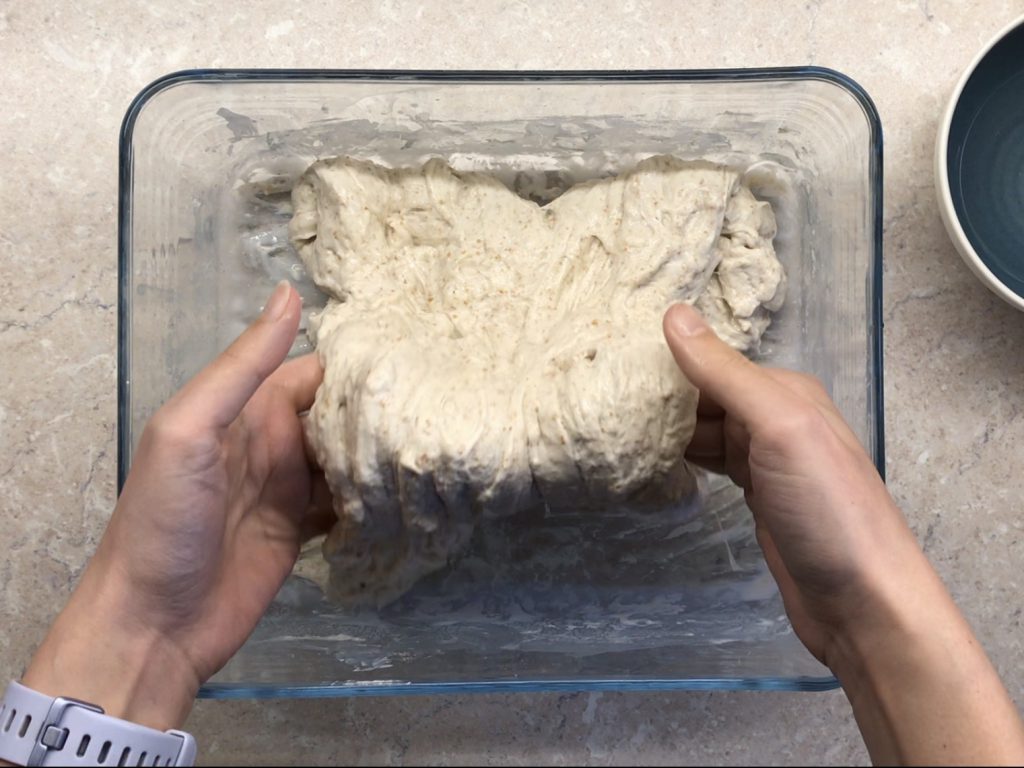
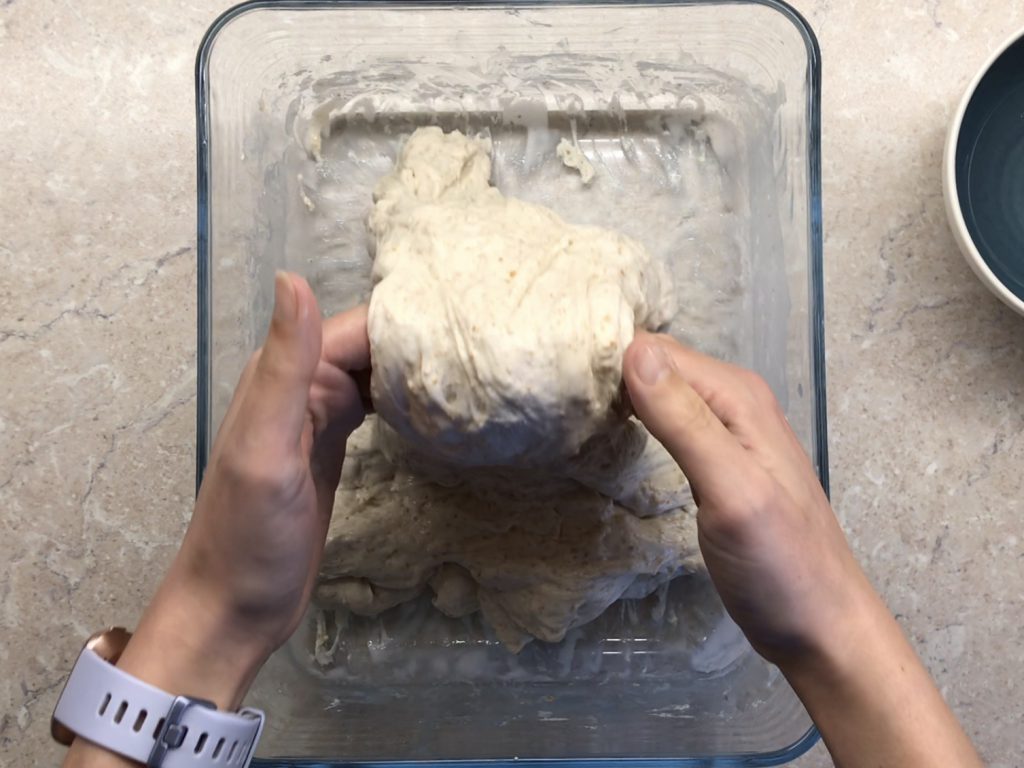
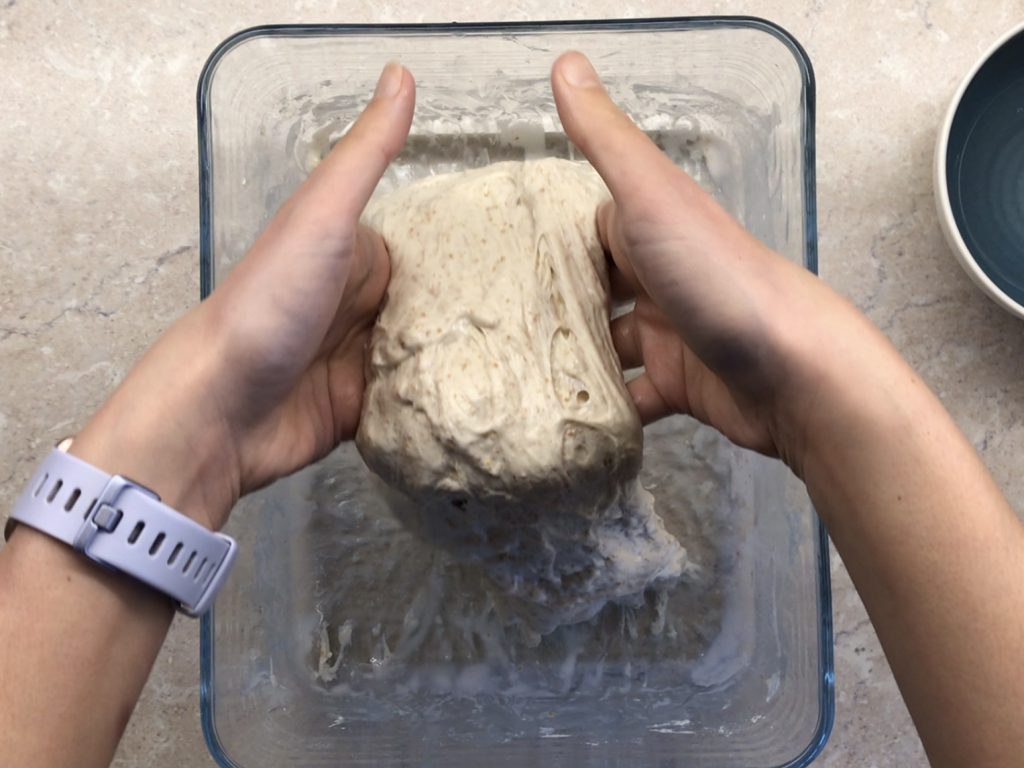
  • Dipping your hands in water to prevent the dough from sticking to you, perform a coil turn. Start by folding the top half of the dough under itself. Repeat for the bottom half of the dough. Turn the container 90° and repeat the process, folding the top half of the dough underneath itself and the bottom half of the dough underneath itself. This is one coil foil. Cover and leave for 45-60 minutes.
  • Repeat the process 3 more times. If you wish to add anything to the dough, do it before performing the second coil fold.
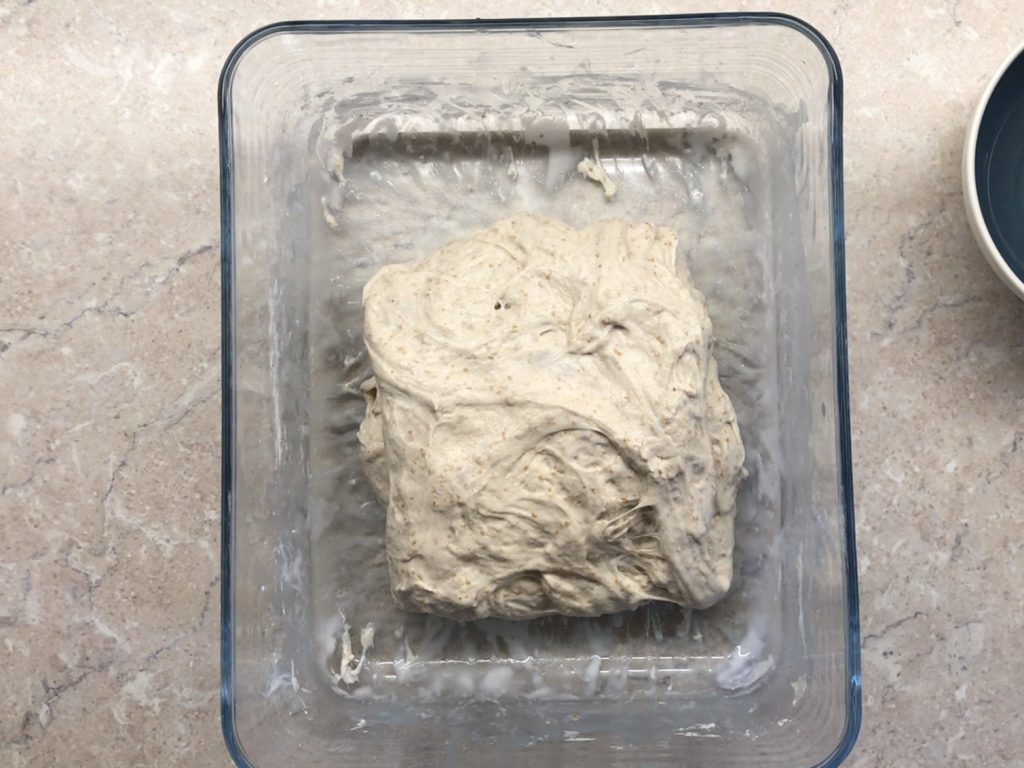
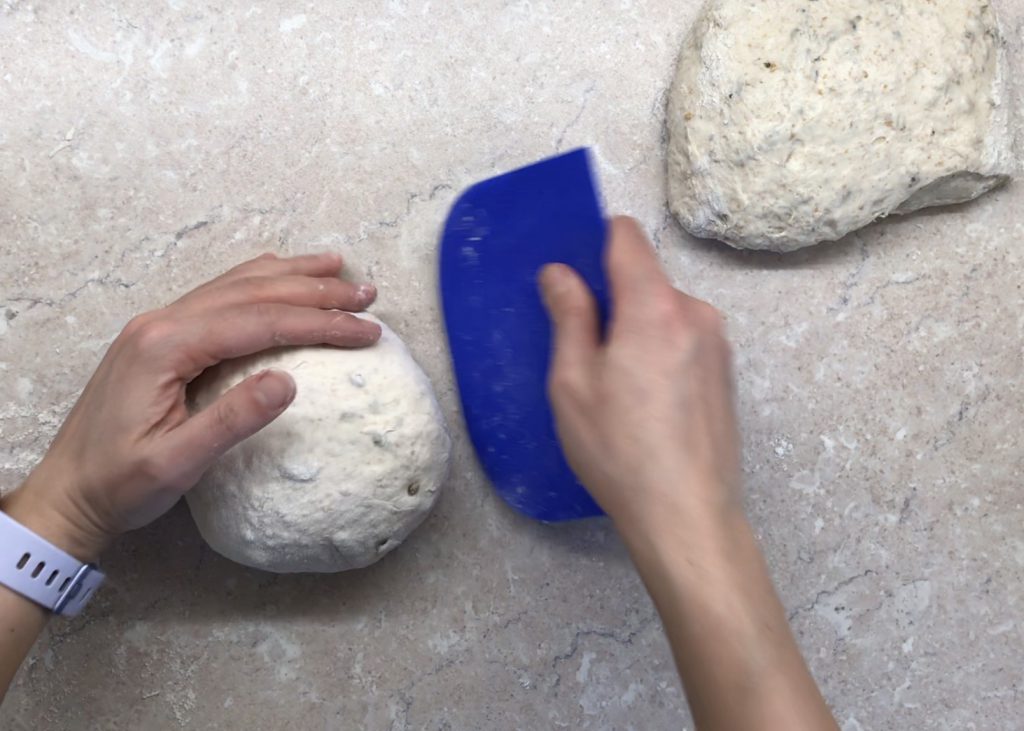
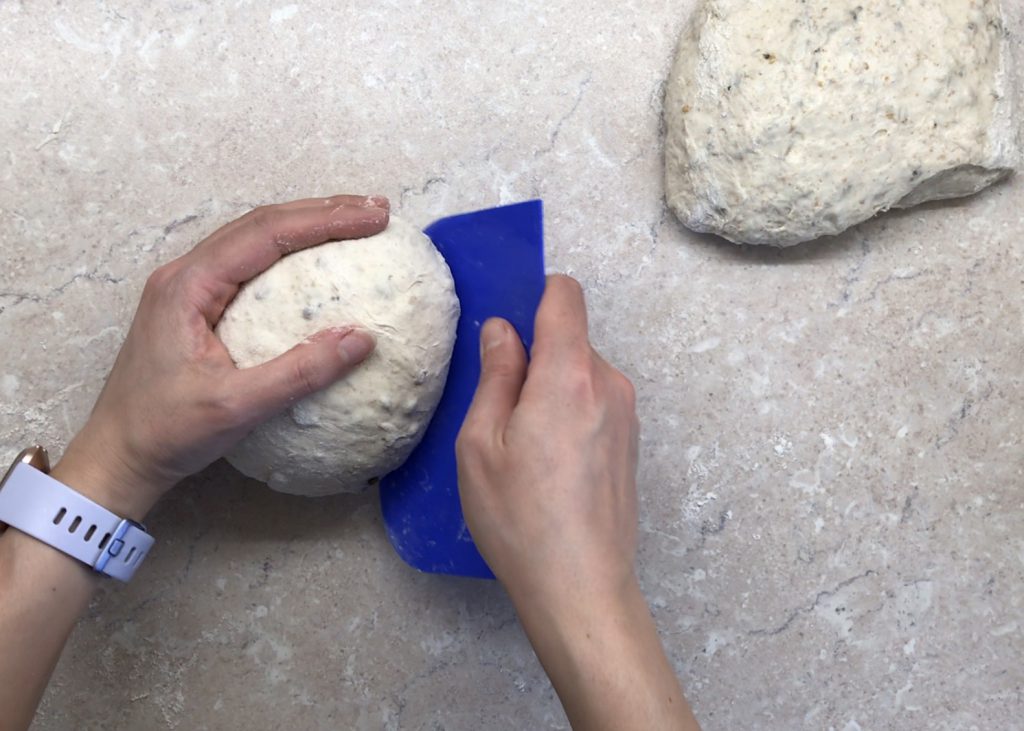
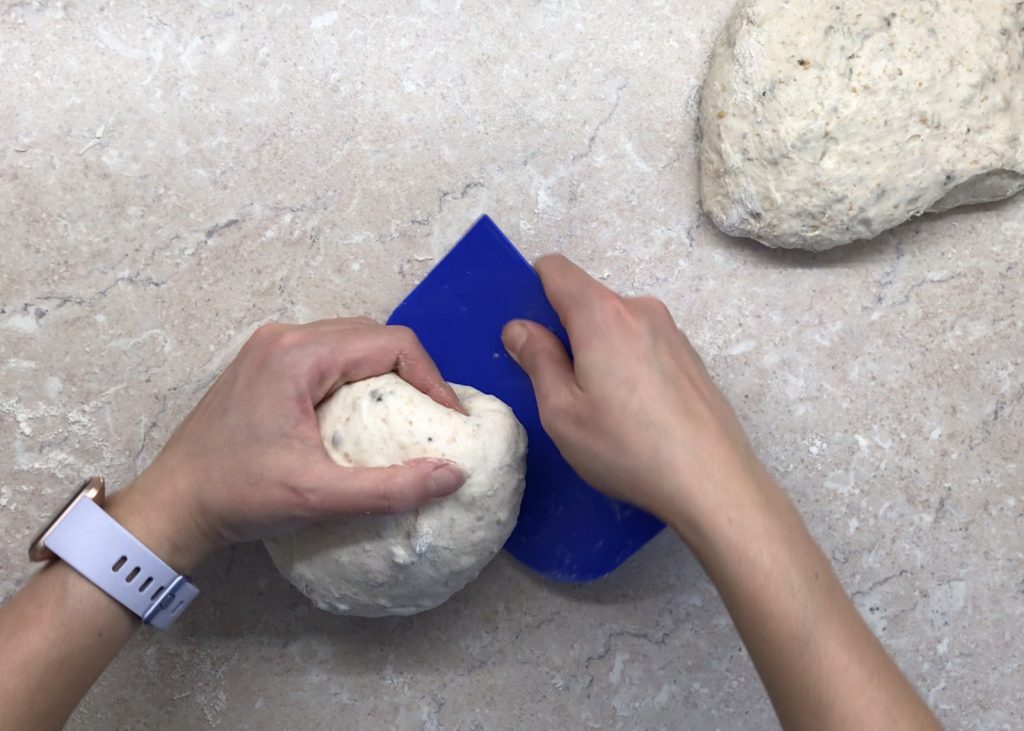
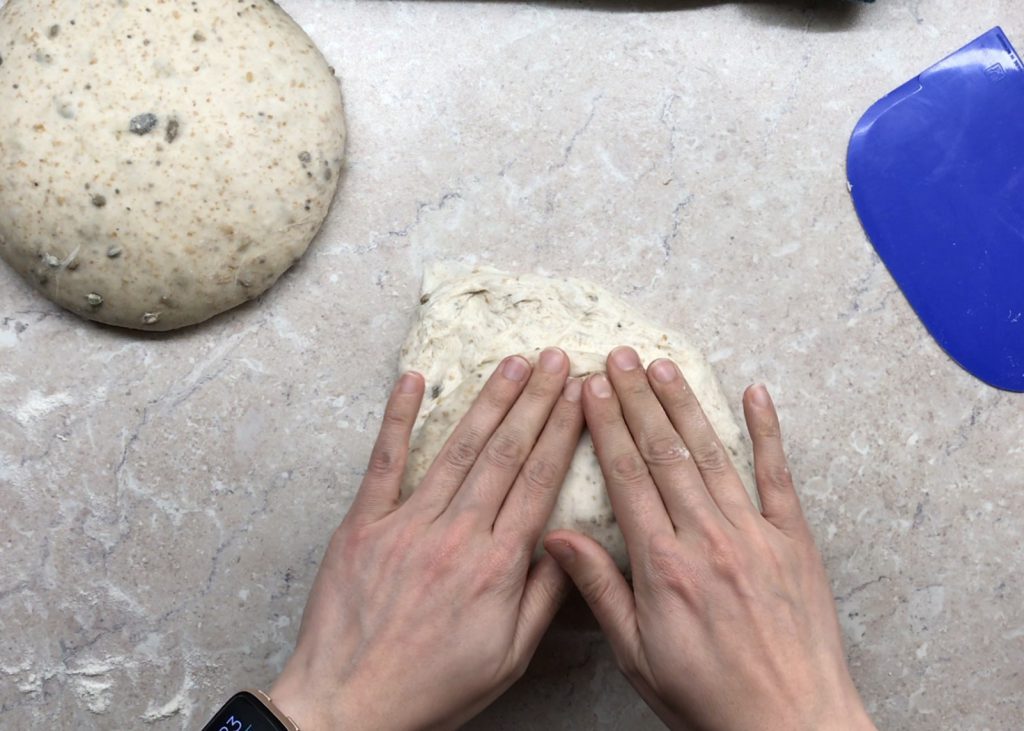
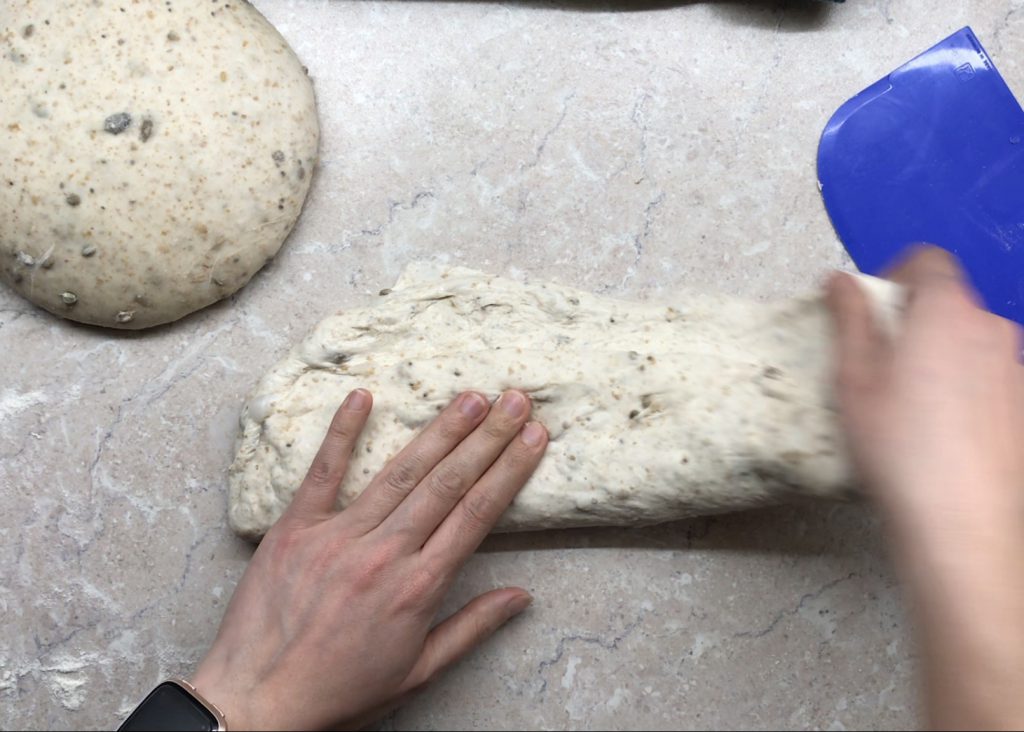
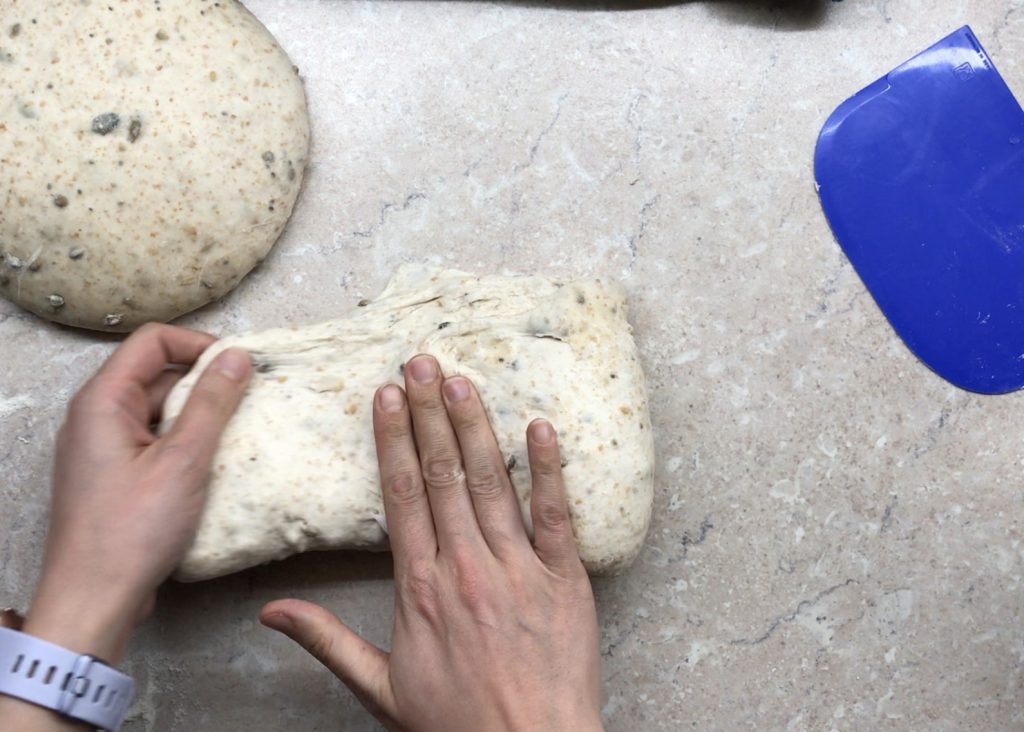
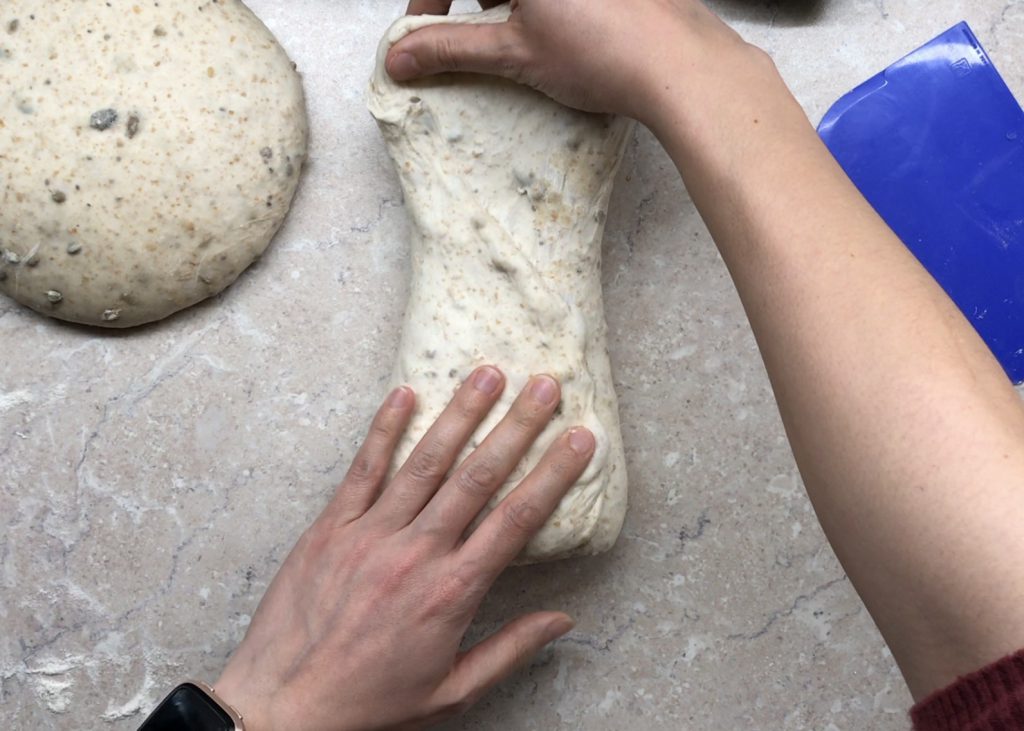
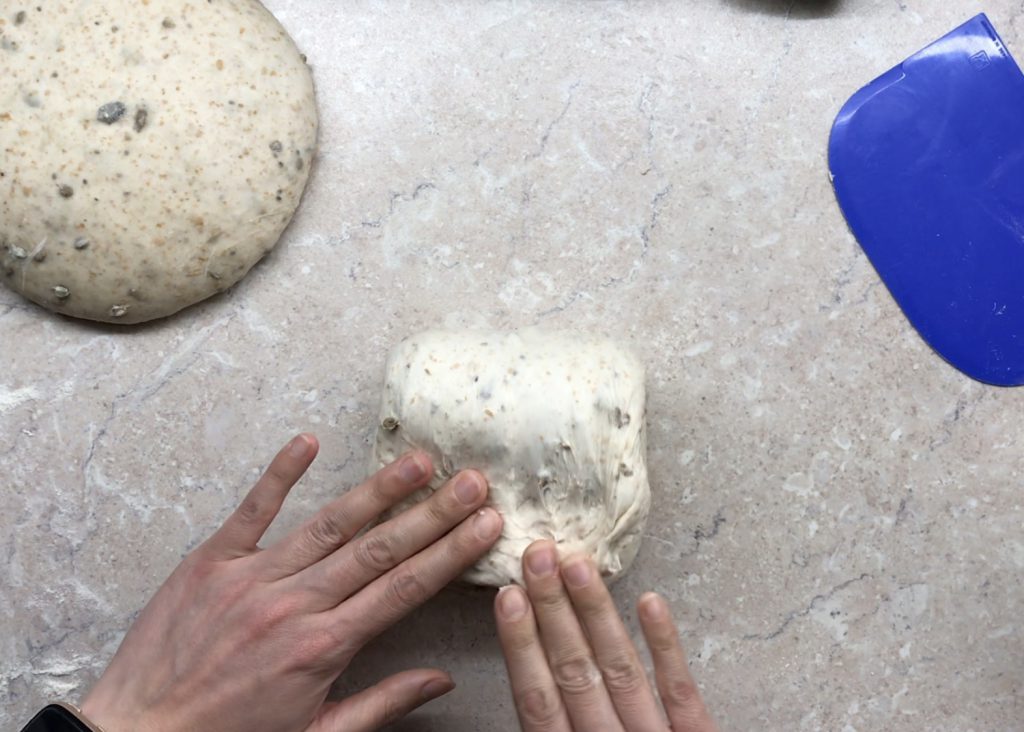
  • After a 60 minute rest after the 4th coil fold, use a dough spatula to pull the dough out onto the work surface and dust with a 50/50 mixture of plain flour and rice flour. If making 2 loaves, cut the dough into two and flip so the floured side is not on the bottom. Build tension in the dough by folding the edges into the centre of the dough, trying to incorporate as little flour as possible. Flip the ball over, and, using one hand and the dough spatula, work in a series of turns and pulls to create tension on the surface of the ball. Leave to rest on the worktop covered in a tea towel for 30 minutes.
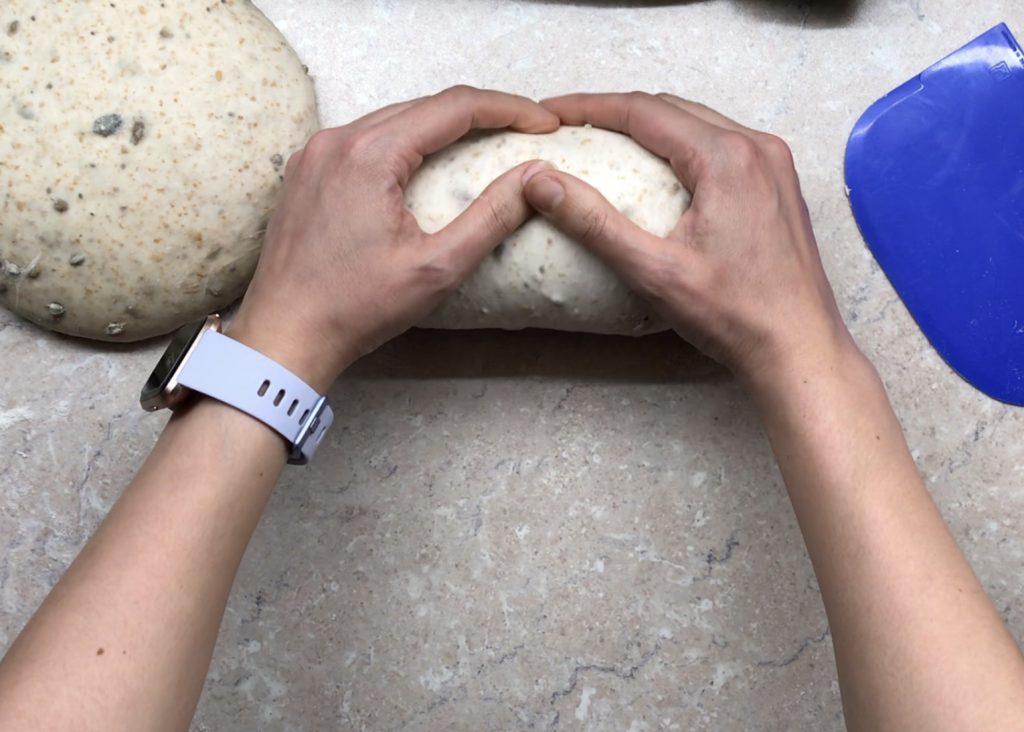
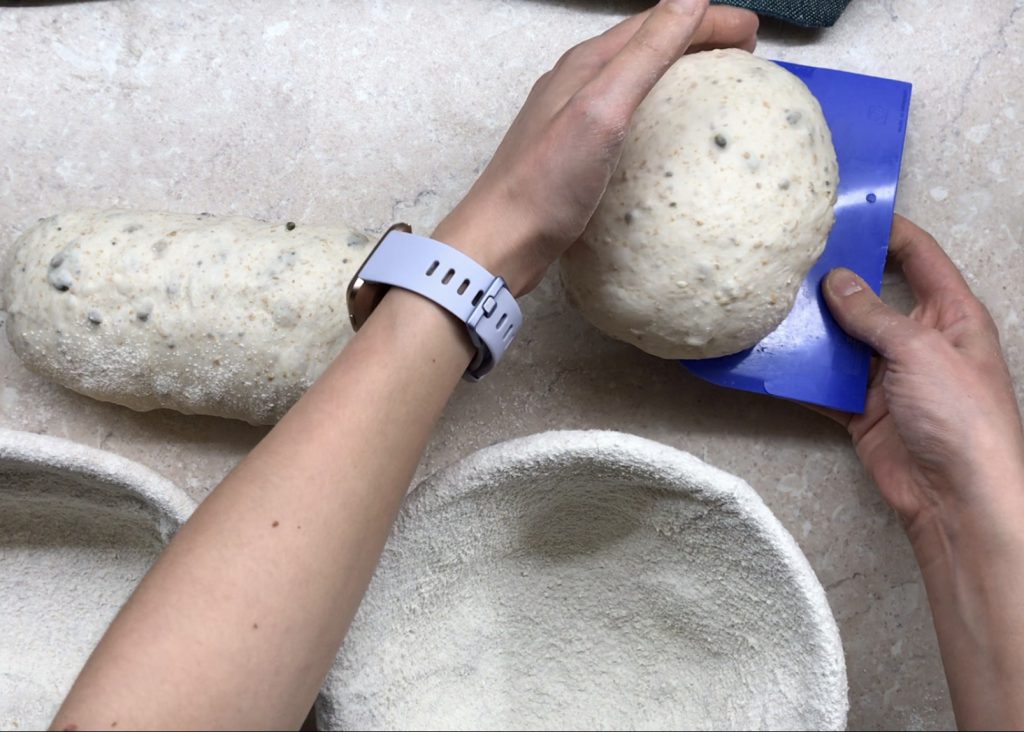
  • Lift each ball off keeping the round shape, flipping it do the underside is now the top. Take care not to knock out air, gently stretch the dough out, folding the bottom half almost to the top. Stretch the sides out, folding the right side into the centre followed by the left side. Finally, take the top, stretch out and fold up and over, and roll the whole ball away so the seams are on the bottom. Round the corners by cupping your hands around and gently pulling to create tension over the surface. Leave to rest for 1 minutes.
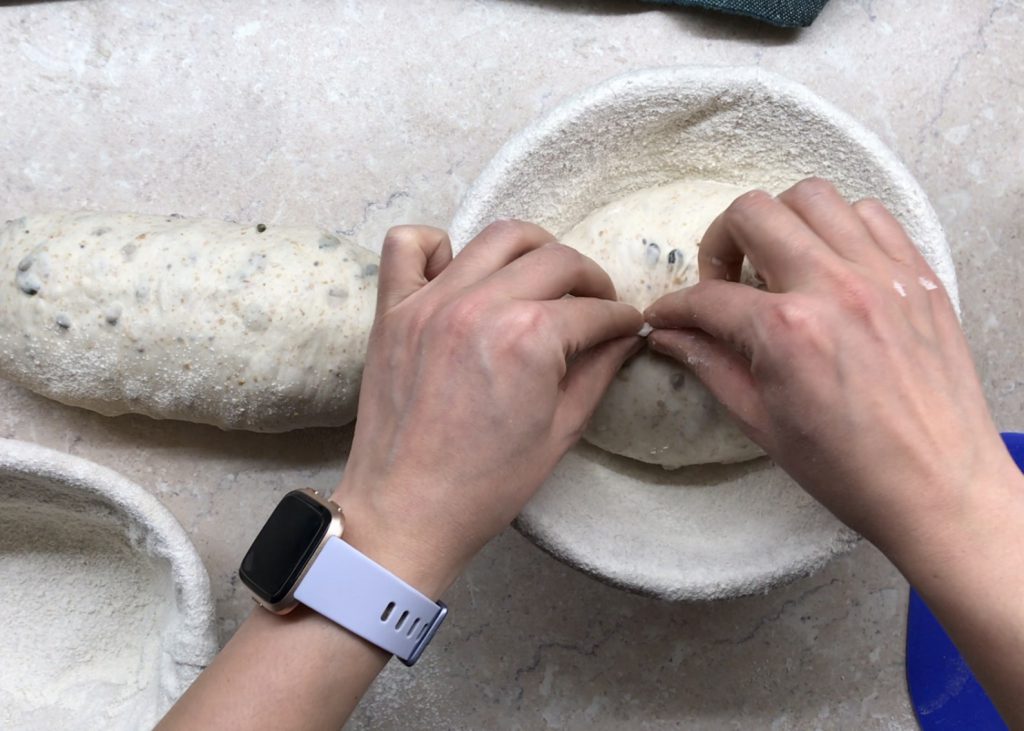
  • Dust a proving basket and transfer the shaped dough seam side up, pinching to maintain tension. Cover and leave to rise overnight in the fridge.
  • The next day, preheat the oven to maximum with a cast iron Dutch oven inside. Allow to reach temperature and leave for a further 20 minutes.
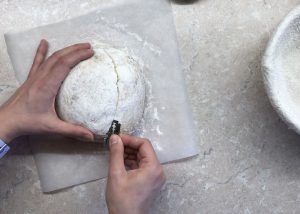
  • Remove the dough from the oven and cut a piece of baking parchment larger than your dough. Uncover the dough, place the parchment over the top and gently invert the dough out onto the work surface on the parchment. Dust off any excess flour, and make a deep, yet shallow angled cut across the surface of the bread. This cut will allow for “oven spring”. An unscored loaf will be stunted and may burst.
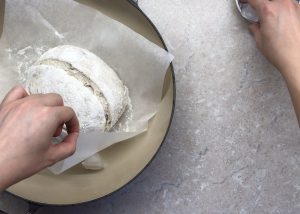
  • Moving as quickly and safely as possible, remove the bottom pan of the Dutch oven from the oven, leaving the lid in the oven, and place the dough and parchment into the pan. Add a few ice cubes to the pan under the parchment and immediately return to the oven, close the lid to trap the steam, shut the oven door and drop the oven temperature to 230°C and bake for 20 minutes.
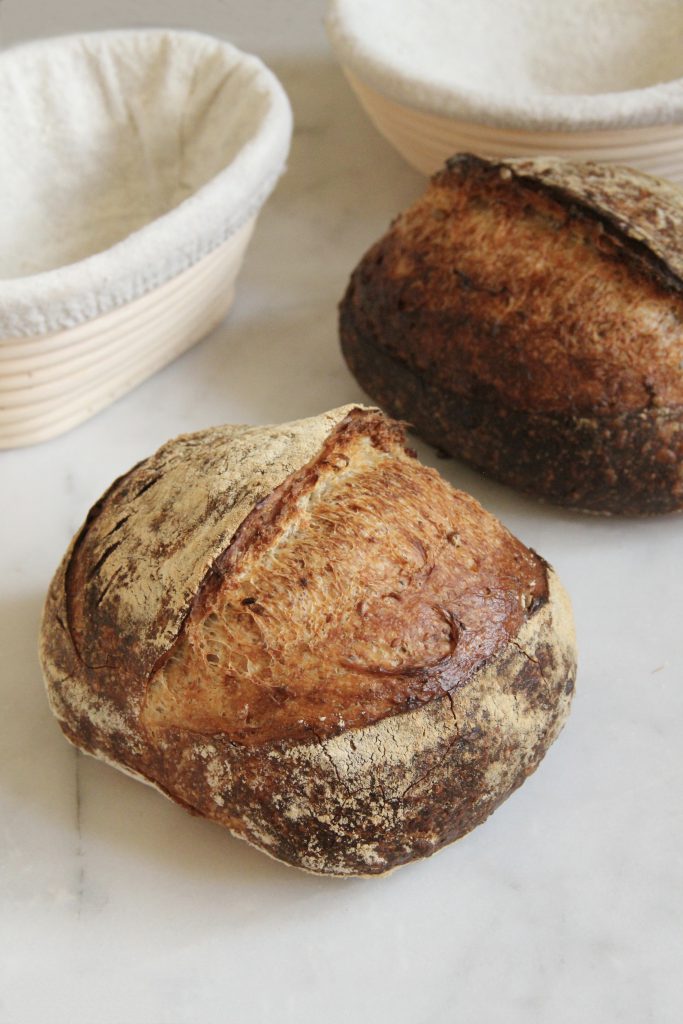
  • After 20 minutes, remove the lid and bake for a further 20 minutes till the crust is dark and crispy. Remove and allow to cool on a wire rack. Listen to your bread sing from the oven as the crust cools and crackles.
  • Once cooled slightly, slice and dip into balsamic vinegar and extra virgin olive oil.