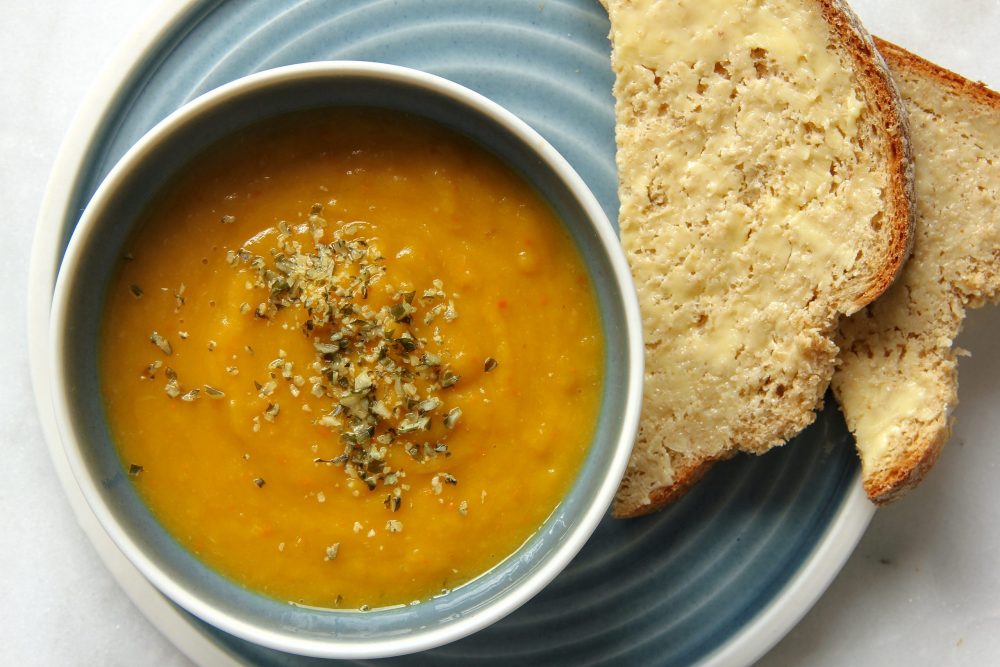
This easy soup also doubles up as an easy pasta sauce – win win! It’s naturally vegan if using a suitable stock powder, and if you use a no added salt stock cube it is suitable for babies and toddlers.
Serves 6
Ingredients
600g pumpkin, skin on and cubed
2 large onions, cut into 8ths
2 sticks of celery, chopped
1 tin of cannellini beans
4 garlic cloves, skin left on
2 tbsp extra virgin olive oil
700ml no added salt stock
100ml boiling water
20g pumpkin seeds, finely chopped if serving to young babies
Method
Add the pumpkin, onion, celery, beans, garlic and olive oil to a large roasting tray.
Mix well before roasting in a preheated oven set to 180°C fan/ 200°C convection, stirring halfway through.
Once cooked, remove the garlic from its skin.
Bring the stock up to the boil and add the roasted vegetables, deglazing the roasting tin with 100ml boiling water.
Bring the mixture back up to a boil before blending till smooth.
Serve with a sprinkle of pumpkin seeds.
Option to serve as a pasta sauce by stirring through freshly cooked pasta. Delicious with a sprinkle of nutritional yeast which is a great source of B vitamins and zinc.
Serve as soup, pasta or baby-led weaning pasta finger food
Per serving of soup: 175kcal/ 8.5g fat/ 1.3g saturated fat/ 17.0g carbohydrates/ 6.0g fibre/ 4.8g protein
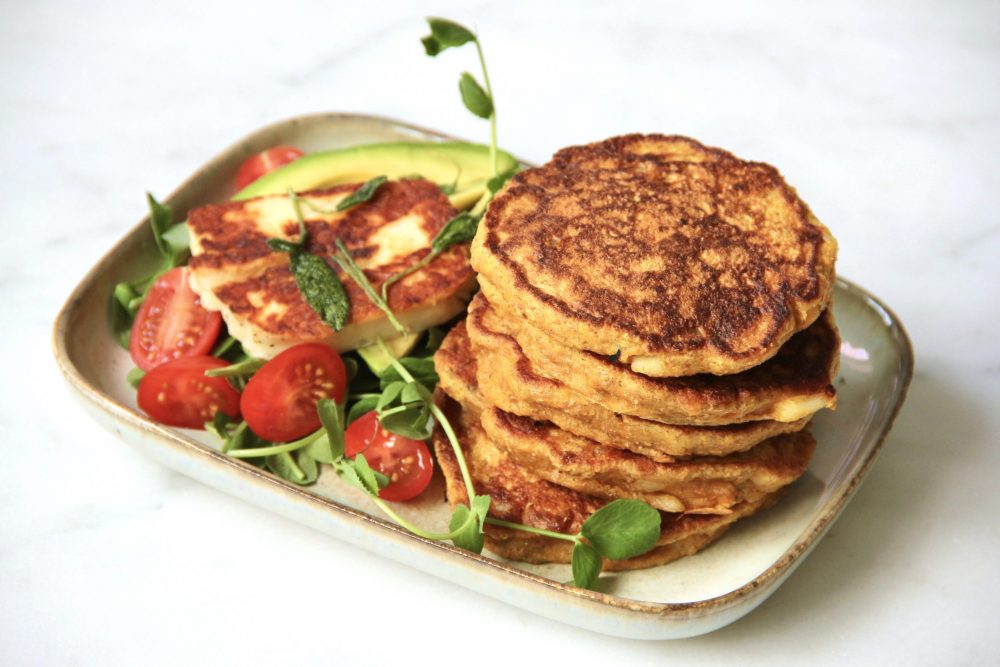
I love the combination of sage and squash. It’s one of my favourite winter flavour duo! Delicious any time of the day; serve at brunch with an egg cooked to your liking, or serve as lunch, or even dinner as a starter or main dish. These would be delicious with a soured cream sauce on the side, or make a spicy tomato and avocado salsa.
Serves 4 as a lighter meal or starter, or 2 as a main
Ingredients
350g squash in large chunks, skin left on
1 large egg
10 sage leaves, finely diced
250ml milk
1 block of halloumi, cut into four 1cm thick slices and the remaining finely shredded
150g wholemeal flour
1 tsp baking powder
1/4 nutmeg, grated
Olive oil for frying
Method
Roast the squash in a pre-heated oven set at 180°C for up 45 minutes till soft. Allow to cool slightly before peeling off the skin. You should have approximately 180-200g cooked squash.
Mash the squash in a large bowl, before adding in the sage, egg, milk and diced halloumi.
In a separate bowl, mix the remaining dry ingredients before combining with the wet ingredients. Mix to form a batter the consistency of thick double cream.
Heat a frying pan over a medium heat and add 1/2 tsp olive oil.
Allowing space between each pancake, take a ladel of batter and make a round for each pancake, allowing the mixture to spread naturally. Cook in batches according to the size of your frying pan.
Cook for 2 minutes per side, flipping with a spatula once bubbles have risen to the surface and the edge starts to dull. Cook for a further 2 minutes on the second side.
Keep cooked pancakes warm in an oven set to 100°C on a tray, keeping pancakes to a single layer if possible.
Once all the pancakes are cooked, add the remaining slices of halloumi to the pan and fry till crispy and golden on both sides.
Serve the pancakes in stacks and top with crispy halloumi.
Per serving: 406kcal/ 21.4g fat/ 11.3g saturated fat/ 33.4g carbohydrates/ 5.9g fibre/ 19.0g protein
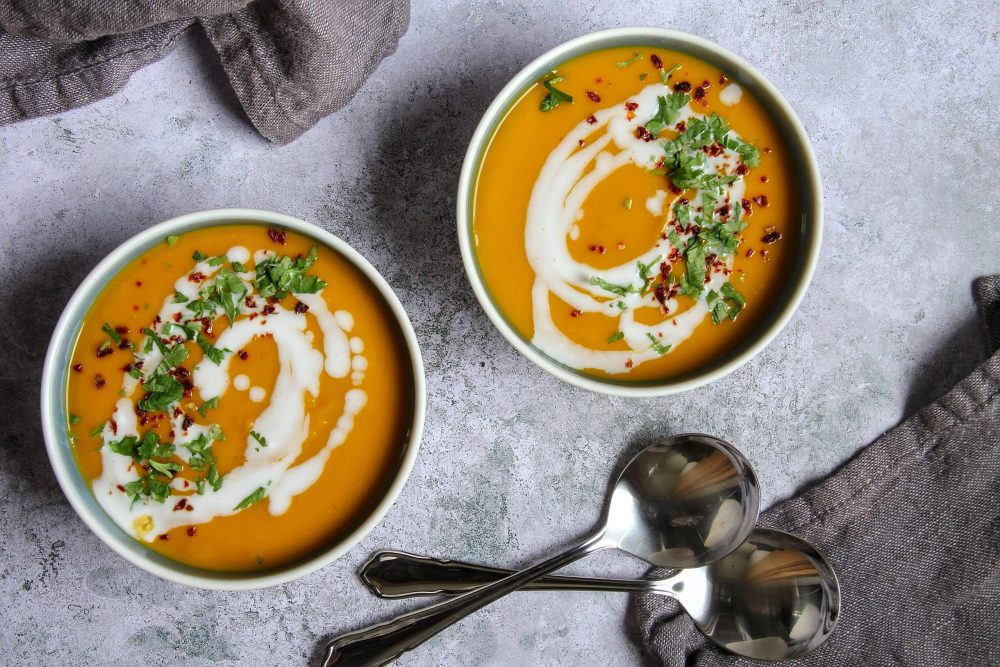
Soup with a delicious autumnal twist making the most out of seasonal pumpkins which are being carved up for Halloween.
Sadly, over half the pumpkins carved at Halloween are under-utilised. The flesh and seeds of carving pumpkins are all edible, even once they have been carved. Pumpkins are a great source of beta-carotene, the precursor to vitamin A as suggested by the gorgeous golden-orange hue of the flesh and, in most cases, skins. A word of caution, if your pumpkin happens to have green skin your soup will adopt a “chip shop curry sauce” colour. Don’t worry, it will still be equally delicious!
If you don’t have any pumpkins hanging around you can substitute butternut squash or sweet potato as an alternative. These vegetables are still high in beta-carotene, an antioxidant that has previously been shown to help reduce the risk of heart disease and certain cancers.
Serves 4
Ingredients
2 large onions, roughly chopped
2 tbsp extra virgin olive oil
4 cloves of garlic, roughly chopped
3 tsp ground cumin
2 tsp ground turmeric
1 tsp dried chilli, or to taste
200g red lentils
500g pumpkin, skin on and roughly diced
200ml coconut milk
10g stock powder
15g fresh coriander, finely sliced
Method
Gently fry the onion and oil in a large pan till soft and translucent. Add the garlic and cook for a further 2 minutes.
Add the dried spices and cook till fragrant before adding in the remaining ingredients with 1 litre of boiling water.
Allow to simmer for 20 minutes till the lentils and pumpkin are cooked through and soft.
Blend till smooth and serve.
Per serving: 447kcal/ 18.6g fat/ 2.3g saturated fat/ 50.7g carbohydrates/ 7.6g fibre/ 16.4g protein
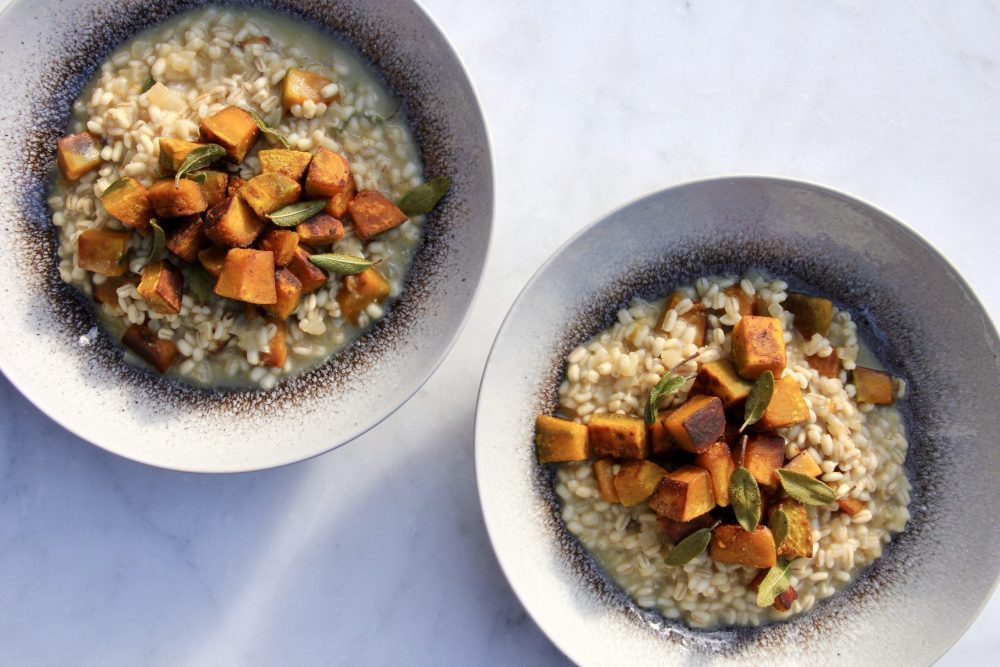
All the autumn flavours in this alternative risotto using pumpkin and sage. Technically, I am using a squash, Crown Price squash to be precise, but any pumpkin or firm squash will work in its place.
While I am always a fan of leaving skins of fruits and vegetables for the increased fibre and reduced time for cooking, I have removed the skin from this particular pumpkin as it is quite tough and would certainly draw attention away from the dish itself. If I were to replace the pumpkin with butternut squash I would leave the skin on. This can be done to your own personal preference.
Speaking of fibre, swapping traditional risotto rice for quick-cook pearl barley not only saves you time of cooking and stirring for a traditional risotto, but it also increases the fibre content of the dish. Replacing the pearl barley with white risotto rice would reduce the fibre content down by 4g per serving! That’s almost half the total fibre content of the dish. Pearl barley also stays a bit more al dente, which means the overall dish has a lovely firm bite which I particularly enjoy.
If you need to adapt to a dairy free version, substitute the butter for olive oil, and either omit the cheese or use a dairy-free alternative or you can use nutritional yeast for a slight cheesy flavour.
Serves 2
Ingredients
1 large onion, finely diced
15ml extra virgin olive oil
2 garlic cloves, crushed and chopped
100g quick cook pearl barley
175ml dry white wine (optional to replace with water)
10g stock powder
20g parmesan
250g pumpkin, skin peeled and cut into 1cm cubes
5ml extra virgin olive oil
20g butter
10 large sage leaves (or 20 small leaves)
Method
Gently fry the onion with 15ml olive oil over a low heat till transluscent and soft. Add the garlic and cook for a further 2 minutes.
Bring 350ml water up to the boil in a saucepan and add the stock, keep on a low heat.
Add the pearl barley to the onions and toast for 2 minutes. Add the white wine and stir to help release some of the starch.
Take a separate large frying pan and add 5ml oil and 15g butter. Once the butter has melted add the pumpkin. Allow to brown slowly over a medium heat, stirring frequently.
When the wine is almost absorbed add a ladleful of hot stock, and repeat till almost all the stock has been absorbed. Check the pearly barley is cooked, but still with some bite. This should take 10-12 minutes.
Once the risotto is almost cooked, move the pumpkin to one side of the pan, add the remaining 5g of butter to the now clear side and fry the sage leaves for 2 minute till crisp and fragrant.
Remove the risotto from the heat and add half of the sage and pumpkin to the risotto with the parmesan and stir through.
Dish up and serve with the remaining pumpkin and sage over the top.
Per serving: 549kcal/ 22.1g fat/ 9.0g saturated fat/ 54.5g carbohydrates/ 8.5g fibre/ 12.9g protein
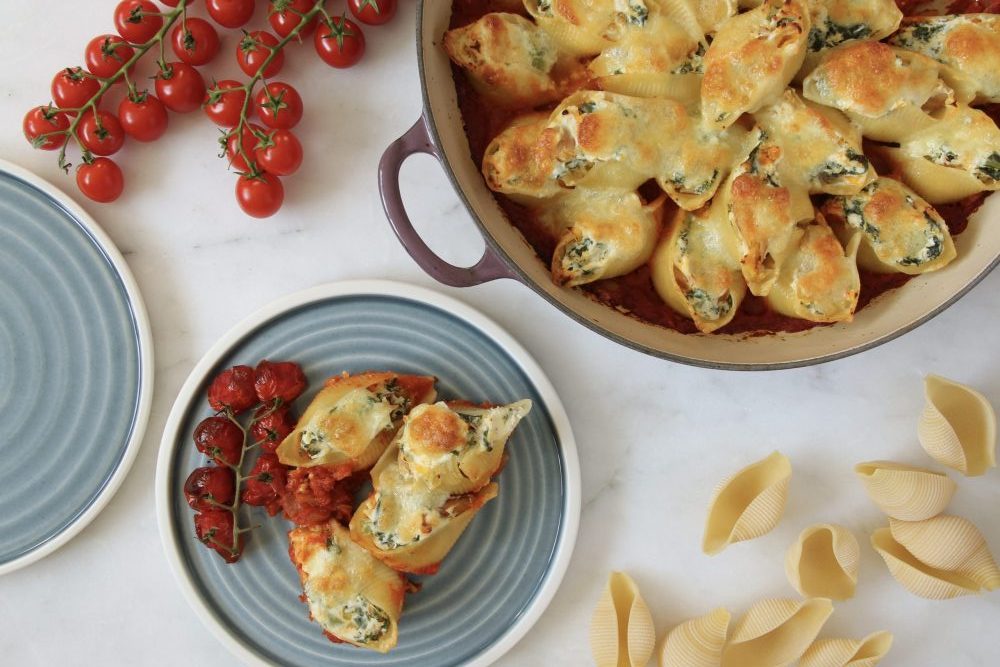
Seasonal autumnal butternut squash, roasted to maximise the
flavour. Leaving the skin on the squash increases the fibre content, so don’t
be tempted to peel! It’ll save you time, keep your gut bacteria happy, and
increase the flavour of the whole dish as it caramelises in the over from its
first roasting!
I like to leave everything a little chunky, this way you can
actually see what you’re eating, whether it be the creamy ricotta, soft
butternut squash or kale. The final topping of mozzarella gives a lovely golden
hue to the whole dish, as well as giving some lovely texture which I always
can’t resist to leave to the final mouthful.
This dish is perfect for wowing a crowd at a dinner party. It can happily sit in the fridge for a day or two, and by cooking the pasta in advance and allowing it to cool in the present of oil, you increase the fibre content through the formation of something called resistant starch. So don’t be afraid to prepare in advance and then whip out at a later date (even if it’s just for a mid-week dinner!). Alternatively, assemble the dish bar the final crown of mozzarella and you can freeze portions which can be cooked at a later date.
Serves 5
Recipe
500g Butternut Squash, skin
on and cubed
200g giant pasta shells
1 tbsp olive oil
120g kale, sliced
1 tsp rapeseed oil
2 large onions, chopped
3 cloves garlic
350g rough passata
500g ricotta
¼ nutmeg, grated
1 ball mozzarella
Method
Set the oven to 150°C fan/160°C convection. Place the butternut squash on a roasting tray and cook for 20 minutes till golden brown. Turn the oven up to 180°C.
Meanwhile, cook the pasta for 2 minutes less than the packet instructions. Drain and mix the olive oil over to stop the shells from sticking.
Steam the kale over boiling water for 4 minutes.
In a large ovenproof dish, gently sauté the onions in rapeseed oil over a low heat. Once soft add the garlic, cook for a further minute before adding the passata and cook till reduce by a third.
Meanwhile, mix the ricotta and nutmeg together and season to taste with salt and pepper. Break up the roasted squash roughly, add to the ricotta mix with the kale. Stuff the pasta shells with the mixture.
Off the heat, arrange the stuffed shells into the dish and top each shell with mozzarella.
Bake in the oven for 20-25 minutes till golden brown and bubbly.
Delicious served with roasted vegetables or a side salad.
Per serving 417kcal/ 20.0g fat/ 9.3g saturated fat/ 34.6g carbohydrates/ 5.0g fibre/ 18.6g protein
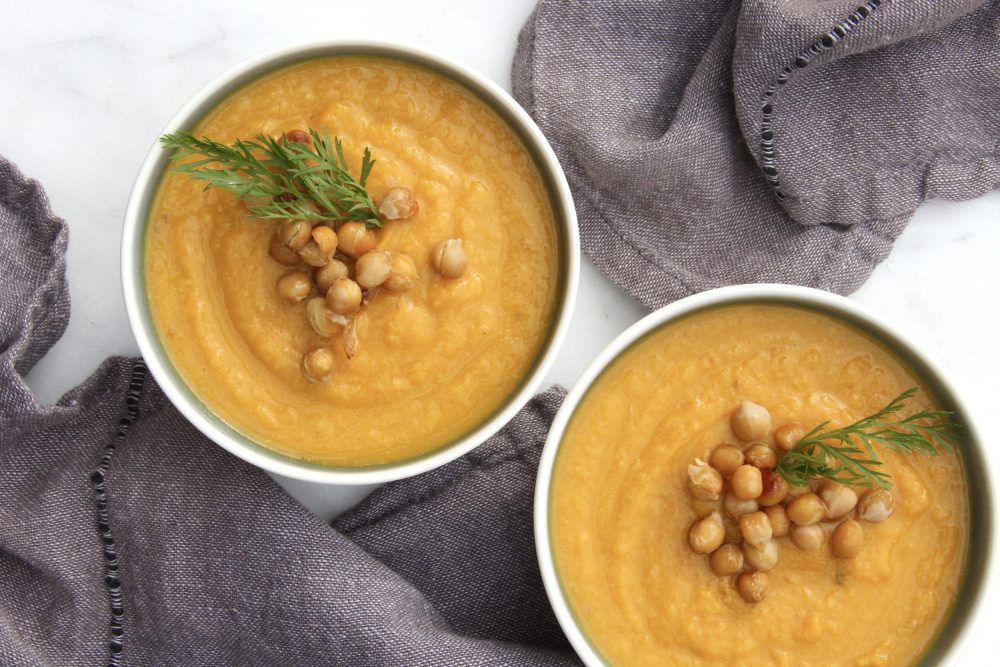
Autumn is upon us, so therefore so is soup season. I always enjoy a good bowl of hot soup on a crisp cold Autumn day, but sometimes I find myself wondering how to get the protein in for the meal. Using beans, pulses or lentils is a great way to include some protein in a soup meal.
In an effort to save time and reduce food waste I don’t peel the squash or carrots. Instead I scrub them before removing the tops and tail. The skin is easily blended into the soup and will contribute to some of the fibre content. What is not to love?
Any leftover soup can be stored in the fridge in an airtight container for up to 5 days. Alternatively, this soup freezes really well so you can make a large batch of this to pull out when you need a quick lunch.
Serves 4
Ingredients
2 tbsp extra virgin olive oil
400g butternut squash, cut into 1″ cubes
400g carrots, cut into 1″ pieces
1 large onion, cut into 1″ pieces
4 clove of garlic, skin on
1 tin of chickpeas, drained and rinsed
1 stock cube of choice
Method
Preheat the oven to 180°C fan/ 190°C convection.
Mix all of the ingredients, except the stock cube, in a large roasting tin. Roast in the oven for 1 hour, stirring half way through.
Boil 900ml of water and add the stock cube.
Remove the garlic cloves from their skins and add the roasted vegetables to the stock.
Blend the soup to the consistency of choice and serve.
Per serving: 276kcal/ 11.5g fat/ 1.7g saturated fat/ 32.7g carbohydrates/ 8.0g fibre/ 7.0g protein
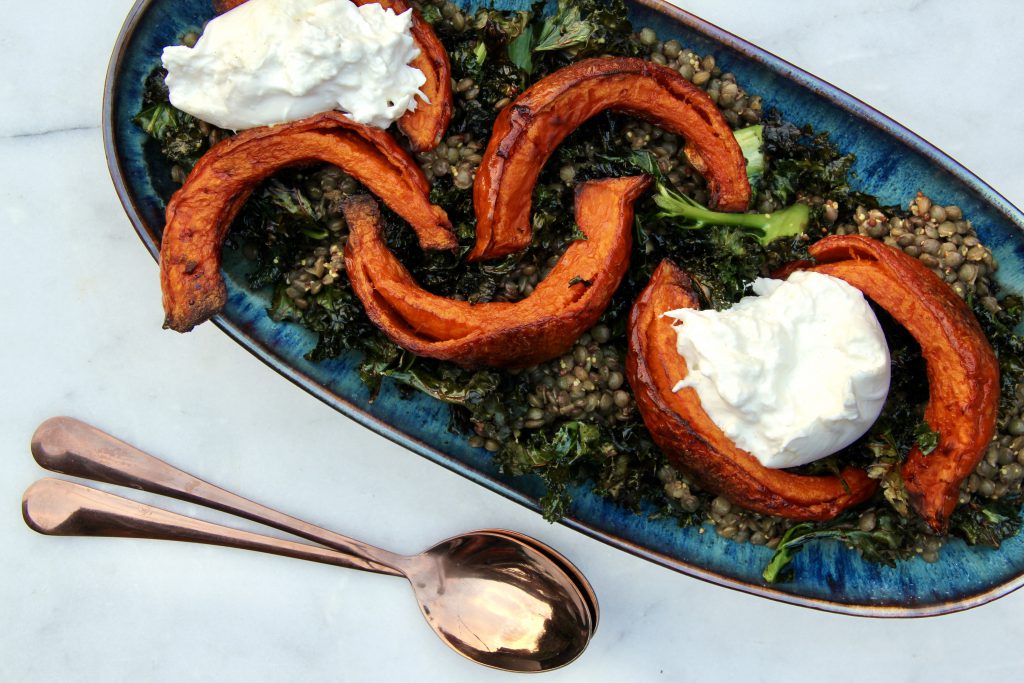
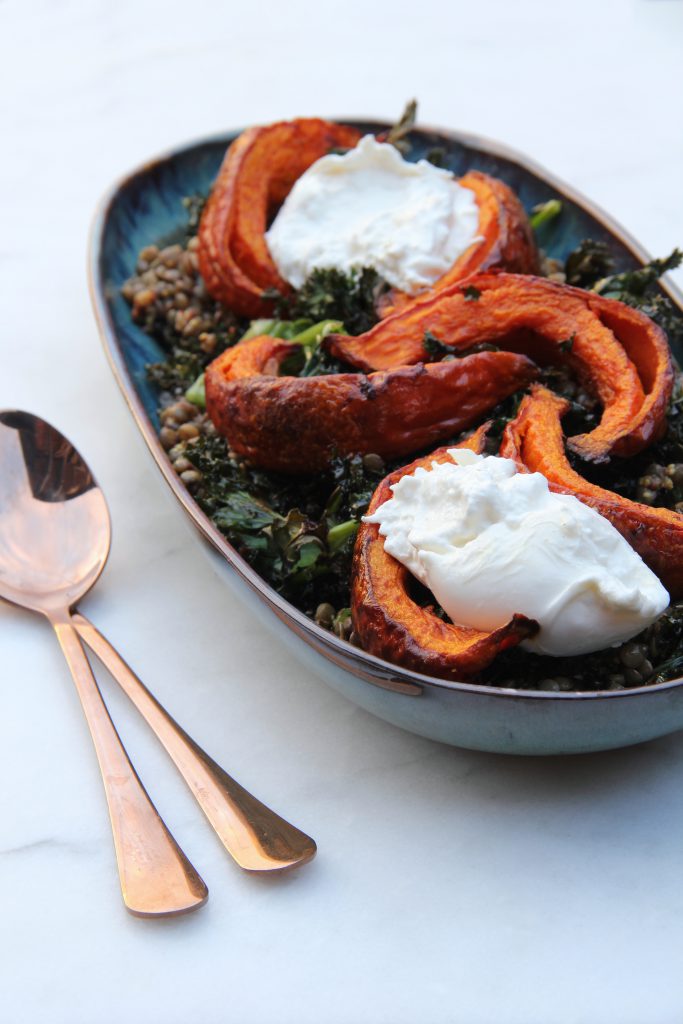
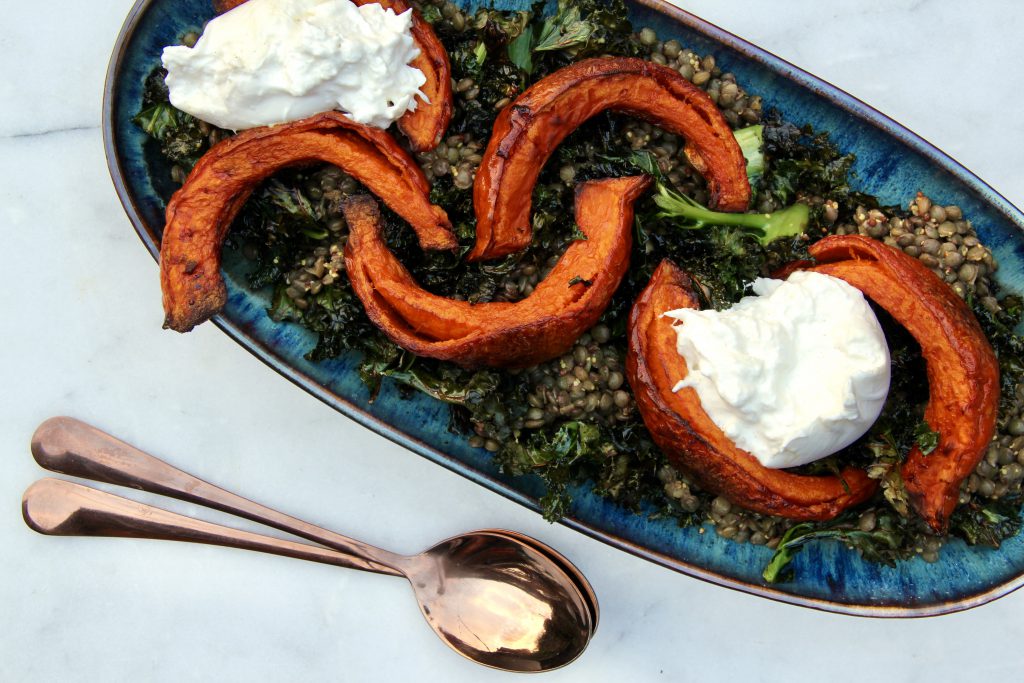
A gorgeous winter salad which uses seasonal vegetables and lets them shine as stars in the dish. Kale, a vegetable best in winter, is roasted till crispy. If you’ve never tried crispy kale, now is the time!
Combining both kale and lentils in this dish helps to increase the plant based iron. Additionally, kale is a good source of vitamin K, which has been shown to be beneficial for heart health by helping keep our arteries clearer.
Roasted Squash Winter Salad
I absolutely adore creamy burrata, a cousin of mozzarella. If you can’t find burrata in the shops, substitute with mozzarella. It will still be delicious!
Serves 2
Recipe
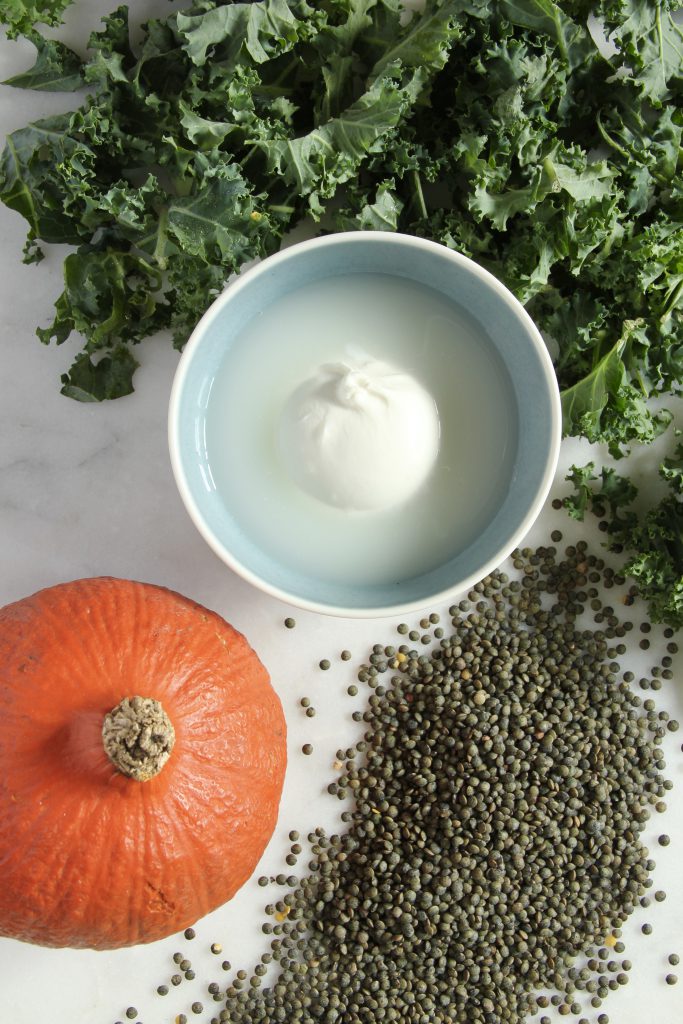
300g Squash of choice, I’ve used Red Kuri, cut into large wedges
2 tbsp rapeseed oil
100g puy lentils
10ml balsamic vinegar
10g wholegrain mustard
10ml extra virgin olive oil
120g kale, washed and sliced into 1 inch chunks
1 ball burrata
Seasoning to taste
Method
Set the oven to 180°C fan/190°C convection. Place the squash on a baking tray and coat in 1 tbsp rapeseed oil and season. Roast for 30 minutes.
Meanwhile, cook the lentils by placing in a pan of cold water, bringing to the boil, and reducing the heat to a gentile simmer for 12-15 minutes till just firm to bite.
Drain the lentils and mix in the balsamic vinegar, mustard and olive oil.
Toss the remaining rapeseed oil with the kale, place on a second tray and roast for 8-10 minutes, turning every few minutes to allow every leaf to become crispy.
Layer the lentils, kale and squash onto plates and serve with the torn burrata ball over the top. Serve immediately.
Per serving 511 kcal/ 32.3g fat/ 12.4g saturated fat/ 32.5g carbohydrates/ 12.7g fibre/ 18.5g protein









 Dr Pippa