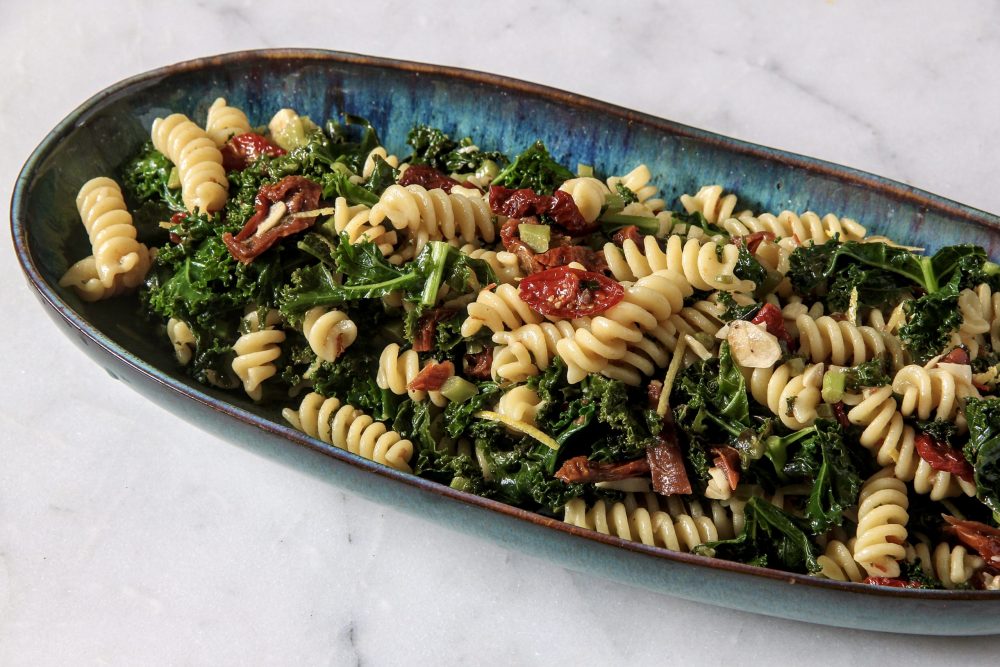
Sundried Tomato and Kale Pasta

Super simple, seasonal, and takes just 15 minutes to cook. Kale is a great source of vitamin K, as well as beta-carotene which the body can convert into vitamin A.

I see loads of recipes using kale where they strip the leafy part off the central stem. I love the contrast of textures, with the stem staying crunchy as the leaves become soft. It also helps reduce food wastage by eating the whole of the produce.

Kale is a plant-based source of dietary iron. Being from a plant, it is in the form of non-haem iron which means it is harder for the body to absorb. Using the lemon juice at the end of cooking adds vitamin C to the dish which can help increase the uptake of plant-based iron.

Serves 2

Ingredients

  • 150g dried pasta of choice
  • 1 tbsp extra virgin olive oil
  • 200g kale, roughly chopped
  • 60g sundried tomatoes, drained and roughly chopped
  • 4 cloves of garlic, roughly chopped
  • 1 unwaxed lemon, zest and juice

Method

  • Bring a large pan of water to the boil and cook the pasta for 2 minutes less than the packet instructions.
  • Separately, in a frying pan cook the kale with the oil for a few minutes till slightly soft.
  • Add the garlic and sundried tomatoes and cook for a further few minutes till fragrant. If needed, add a little pasta water to stop the garlic from burning.
  • Add the pasta with a tablespoon of pasta water and add the lemon zest and juice.
  • Stir to combine and serve immediately.

Per serving: 441kcal/ 11.8g fat/ 1.6g saturated fat/ 64.9g carbohydrates/ 9.0g fibre/ 13.8g protein
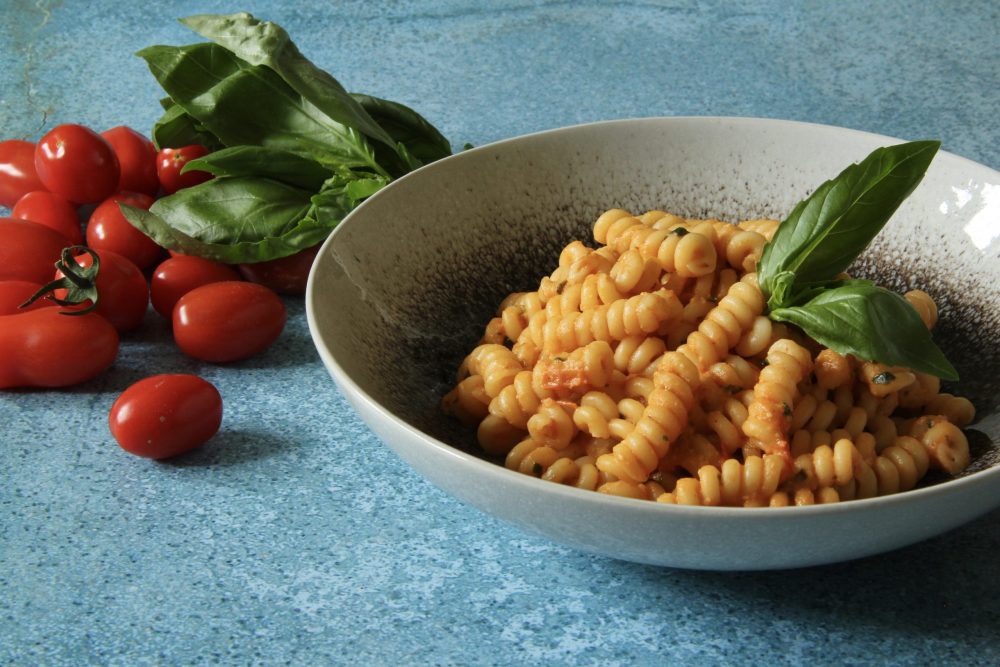
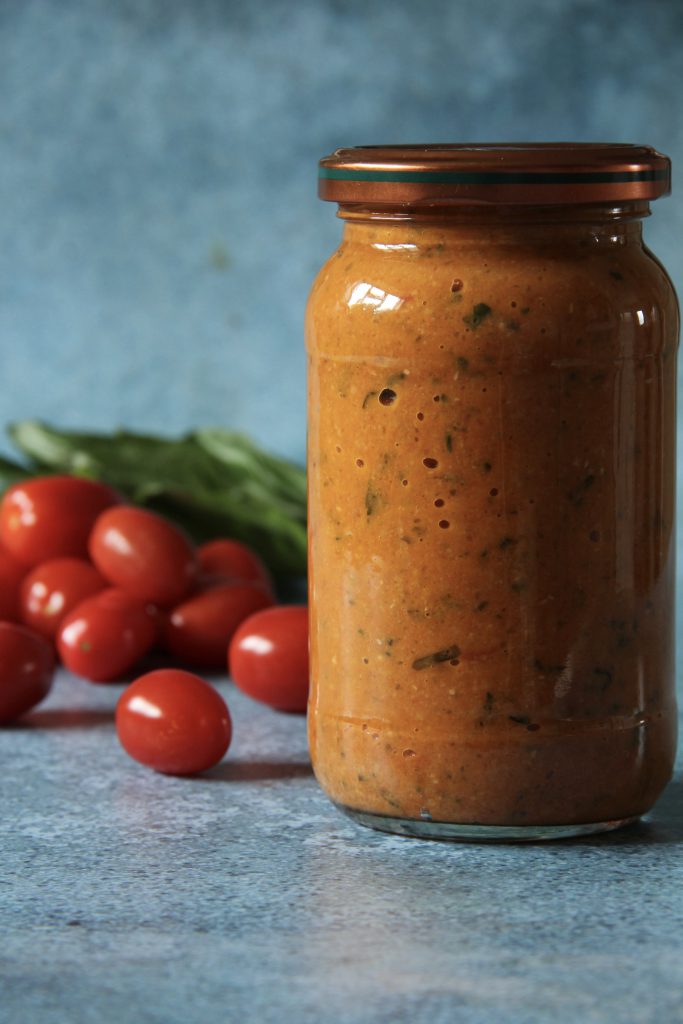
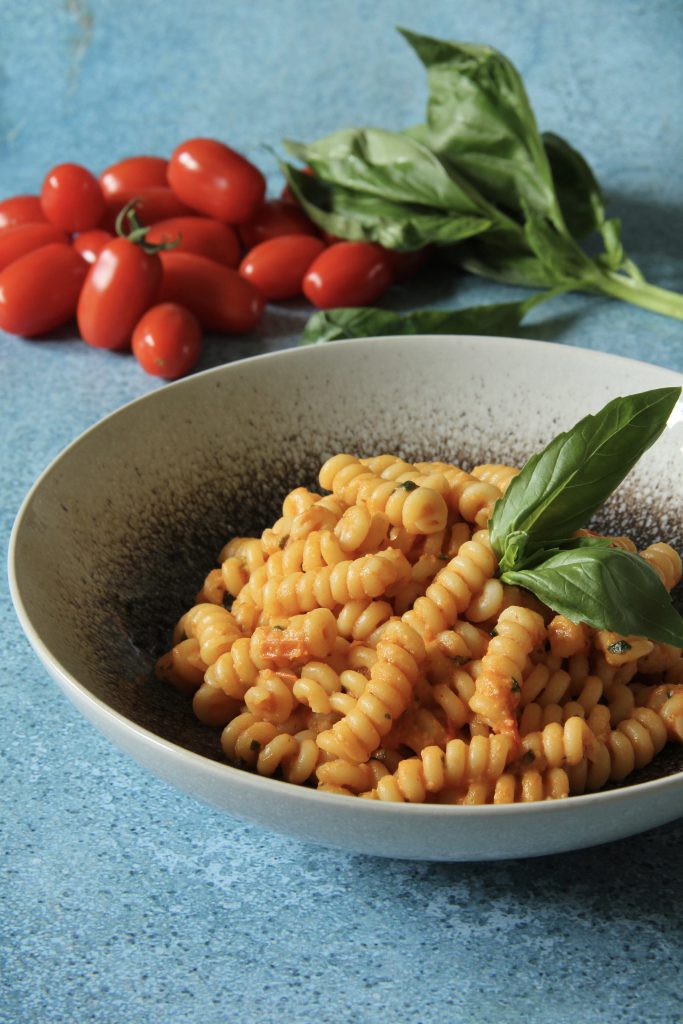
Tomato and Pine Nut Sauce

Using my homegrown sun-ripened tomatoes and pairing it with pine nuts makes for the most delicious and creamy sauce, yet is completely vegan! Perfectly paired with freshly cooked pasta, you could also use it over roasted vegetables, marinated cuts of meat, fish, or tofu, or spread it over freshly toasted bread to make a quick bruschetta.

Any left overs can be stored in the fridge in an airtight container for up to a week, or frozen for up to 3 months.

Makes 4 servings

Ingredients

  • 2 large onions, finely diced
  • 1 tbsp extra virgin olive oil
  • 500g tomatoes, roughly diced
  • 1 bunch of fresh basil, leaves and stalks
  • 50g pine nuts

Method

  • Cook the onions and oil together over a low heat till the onions become translucent and soft.
  • Add the tomatoes and roughly chopped basil stalks, bringing to a light boil over a medium-low heat. Keep cooking till the volume has reduced by a third and the mixture becomes thicker, about 20 minutes.
  • Meanwhile, lightly toast your pine nuts under the grill for a few minutes, turning frequently to prevent them from burning. Keep them lightly golden to retain their natural sweetness.
  • Add the basil leaves and pine nuts to the tomato mixture and blend till smooth.

Per serving: 163kcal/ 13.0g fat/ 1.2g saturated fat/ 8.3g carbohydrates/ 2.4g fibre/ 3.4g protein

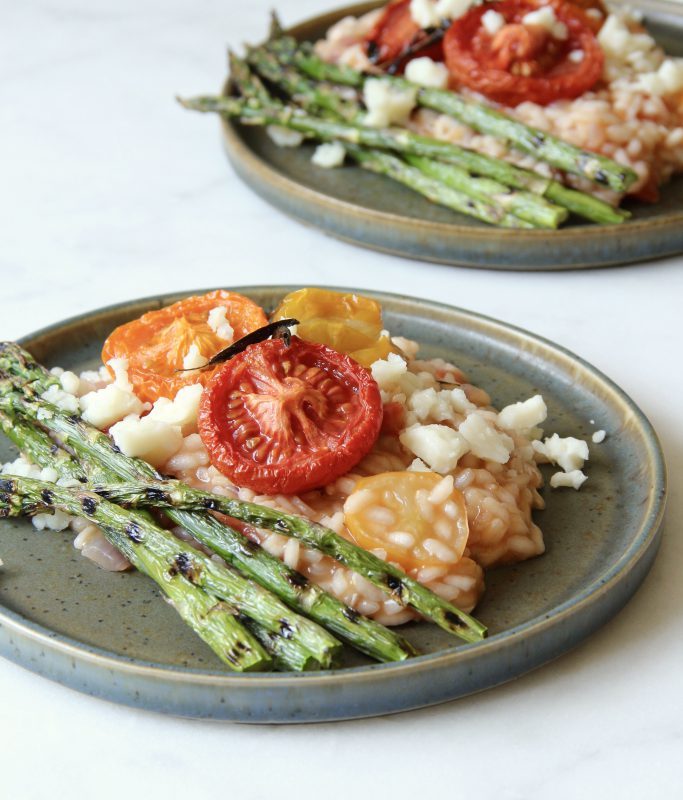
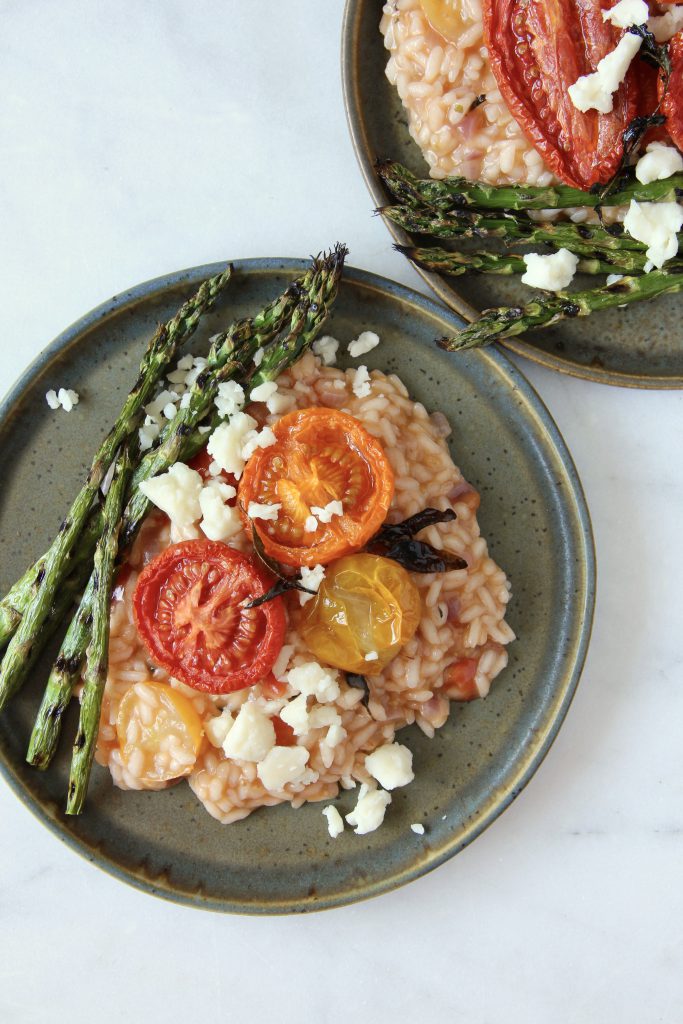
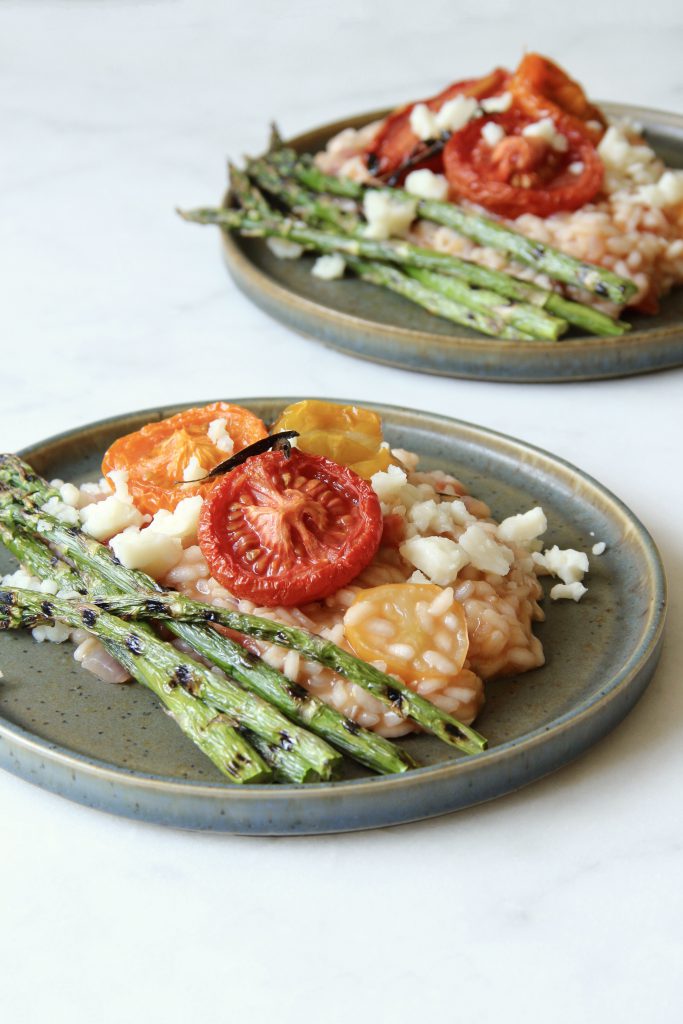
Tomato and Goats Cheese Risotto

Sticky slow-roasted tomatoes and crumbled goats cheese over a tomato risotto. A delicious summertime recipe I made in honour of British Tomato Fortnight.

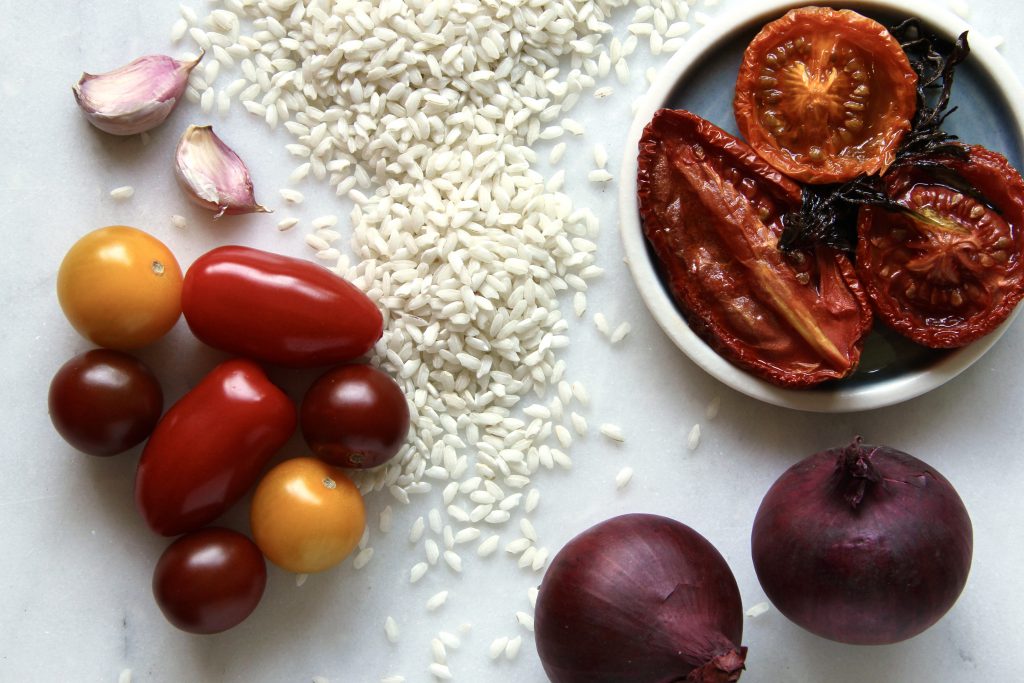
It uses my slow roasted tomatoes which helps increase their lycopene concentration, which is a type of antioxidant found in lots of yellow to red colours fruits and vegetables. In the case of tomatoes, processing helps increase the concentration and bioavailability of lycopene as the cells break down and become more absorbable. In addition, consuming tomatoes with oil also aids lycopene uptake by the body as it is a fat soluble nutrient.

Ingredients

  • 2 small red onions, finely chopped
  • 2 tsp extra virgin olive oil
  • 2 cloves of garlic, minced
  • 120g tomatoes, roughly chopped
  • 150g risotto rice
  • 150ml white wine
  • 1 tsp vegetable stock powder

To serve

Method

  • Gently fry the onions and oil together till soft and translucent. Add the garlic and cook for a further 2 minutes.
  • Add the tomatoes and allow to start cooking before adding in the rice. Coat the rice in the oil before adding the wine and stock in. Stir continuously and add hot water a little at a time as the liquid is absorbed. Cook till the rice is al dente (20-25 minutes).
  • Serve with the slow-roasted tomatoes and crumbled goats cheese over the top.

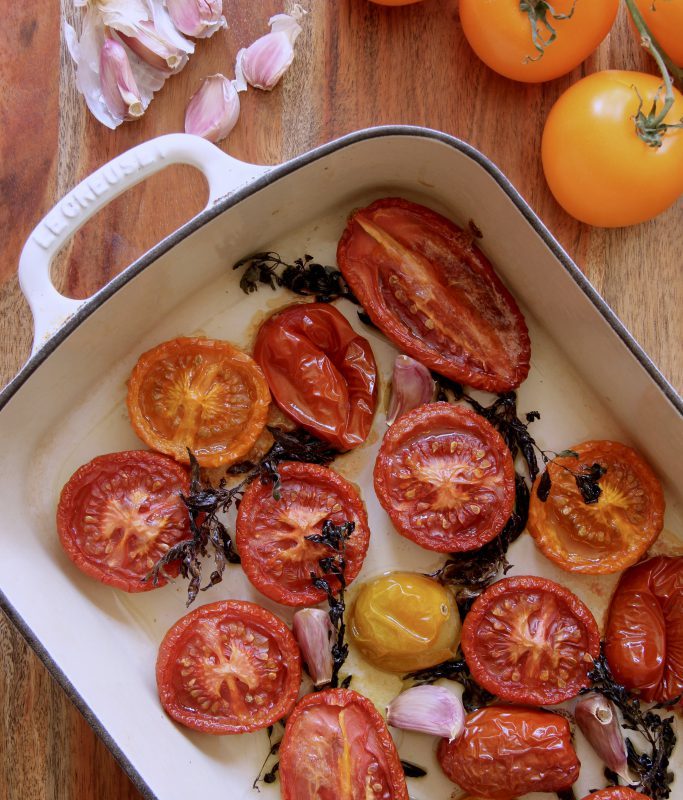
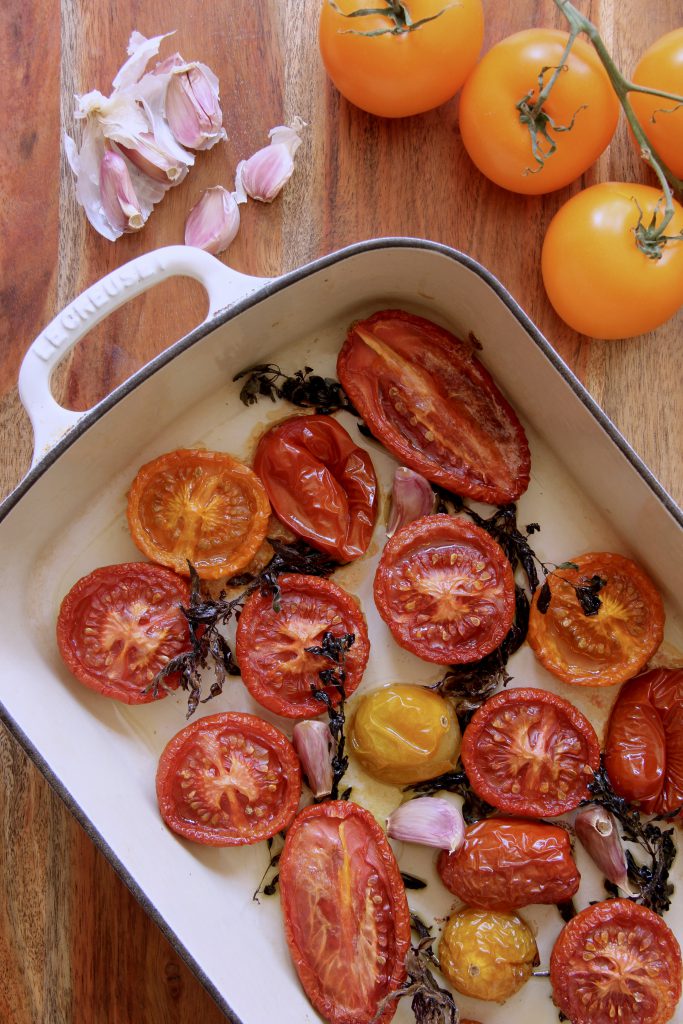
Slow Roasted Tomatoes

These tomatoes are so delicious and their flavours are concentrated due to the slow and low cooking. Additionally, the lycopene content of slow-roasted tomatoes is increased due to concentration from loss of water, as well as a break-down of cellular structures which helps release the lycopene and make it more bioavailable for us to absorb. Lycopene is a compound found in many fruits and vegetables, and is responsible for the colour of many yellow, orange and red fruits and vegetables and has been linked with improved cardiovascular outcome, alongside other health benefits including cancer.

Ingredients

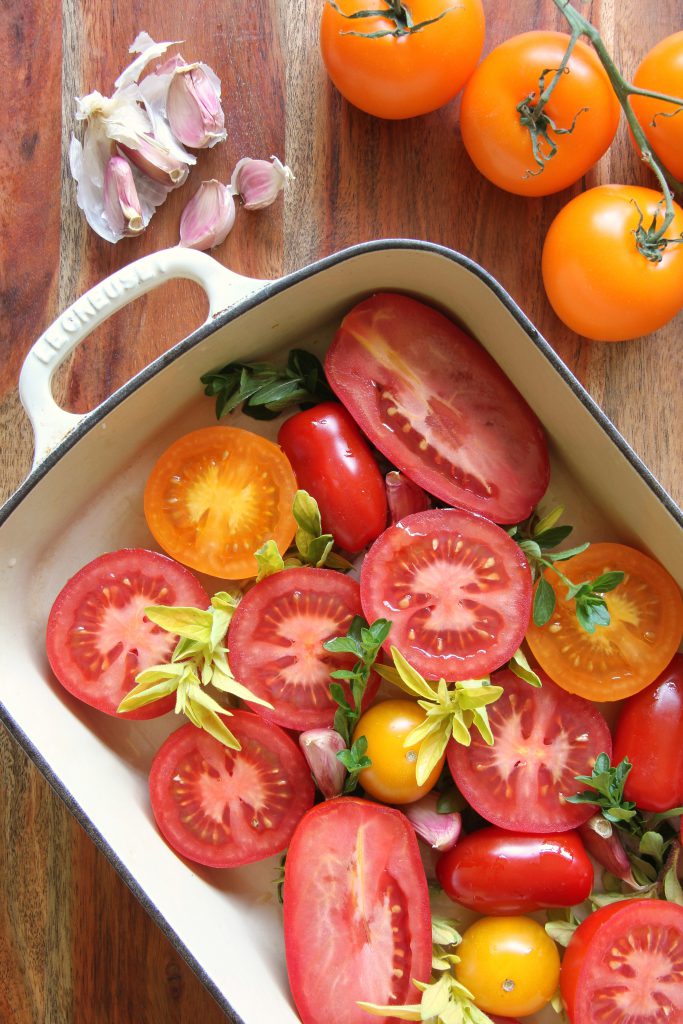
  • 600g tomatoes, large tomatoes sliced in half
  • 10 sprigs of herbs of choice (I have used golden oregano and marjoram)
  • 4 cloves of garlic, skin on
  • 1 tbsp extra virgin olive oil

Method

  • Preheat the oven to 100°C fan, 110°C convection, gas mark 1/4
  • Lay the tomatoes out on a large baking tray in a single layer with the herbs and garlic cloves. Drizzle over the olive oil onto all the tomatoes and slowly roast in the oven for 3 hours till sticky and concentrated.
  • Remove and use immediately, or store in a container in the fridge for up to 5 days.

Simple Fresh Tomato Sauce

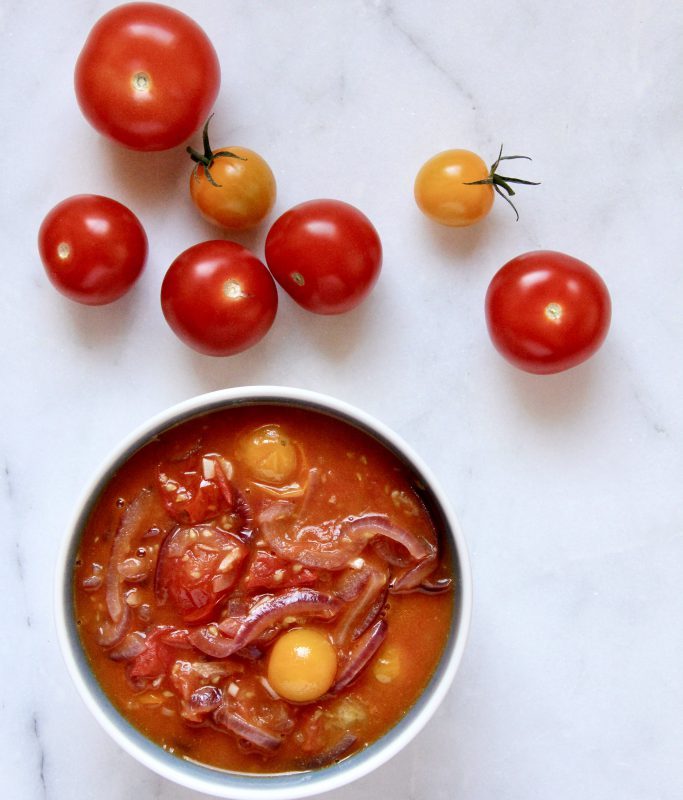
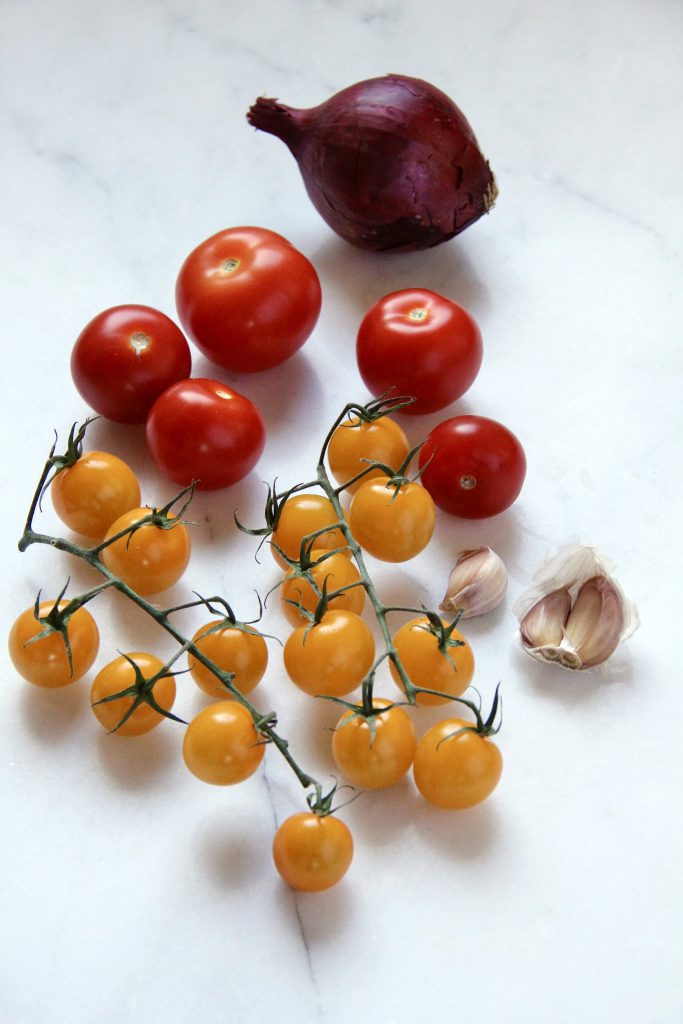
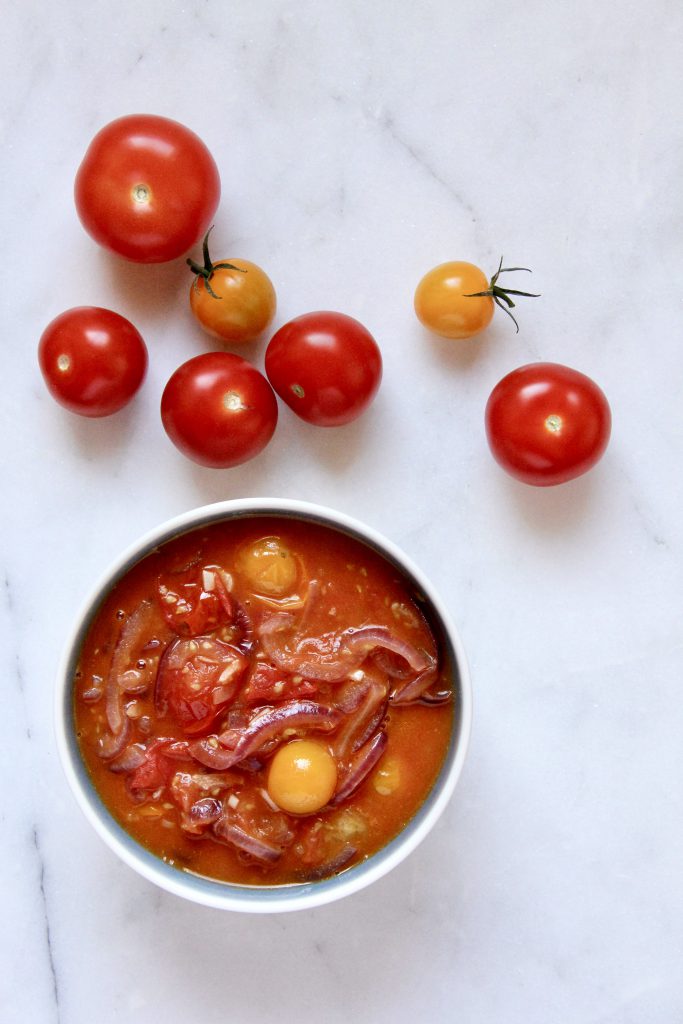
This is almost store cupboard friendly…. In fact you could say it’s empty fridge friendly! I always use this recipe as a base, as it can easily be adapted to suit your needs. Whenever I look in the fridge and see some sad looking tomatoes at the end of the week, I know I can lovingly transform them into a delicious sauce. An additional bonus is that cooking tomatoes in the presence of fats, EVOO in this case, actually helps increase the lycopene content and absorption. Lycopene is a type of plant phytochemical, which is beneficial to our bodies by having a positive effect on cardiovascular health as well as cancer prevention.

As I said, this is a very simple and basic sauce. You can easily perk it up depending on how you feel. Swap the water for wine for a deeper flavour, add those capers from the back of your fridge, or add some fresh herbs to save them from the bin! You can even spice things up with fresh or dried chilli.

For a Puttanesca sauce add chilli, capers, olives and anchovies. Add some cumin, turmeric and ground coriander as a base for a curry. Or make some baked beans by adding some paprika and a tin of cooked beans.

Once cooked, this sauce can happily sit in the fridge for a few days in an airtight container. Alternatively, you can pop it in the freezer for a fast dinner when you’re in a rush.

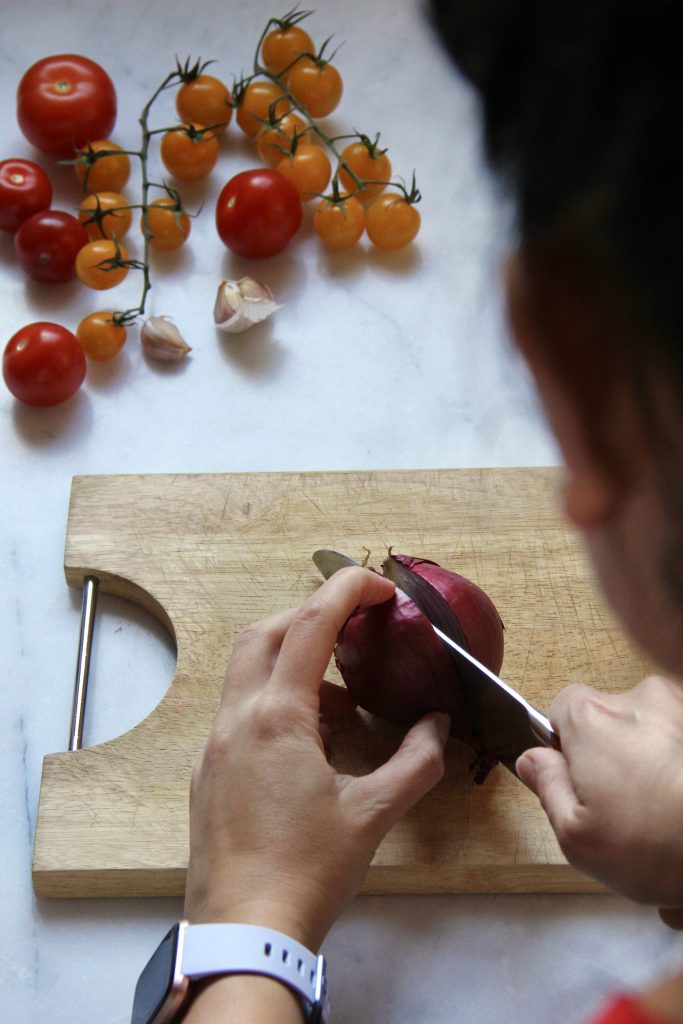
I’ve used a red onion, but any onion you have to hand will be fine. Even if you only have spring onions, give it a go!

Serves 2

Recipe

  • 1 tbsp extra virgin olive oil
  • 1 onion, chopped
  • 2-3 cloves of garlic, sliced
  • 250g fresh tomatoes, roughly chopped
  • 100ml water, option to use wine if you have any
  • Salt and pepper

Method

  • Cook the onions with the oil on a low temperature till soft and translucent.
  • Add the garlic and cook for a further 2 minutes before adding the tomatoes and water.
  • Simmer on a gentile heat for 15 minutes till the tomatoes burst and the sauce is reduced
  • Serve as is chunky, or if you prefer a smooth sauce, blend

Per serving 110kcal/ 7.8g fat/ 1.2g saturated fat/ 8.5g carbohydrates/ 2.1g fibre/ 1.5g protein