Guacamole

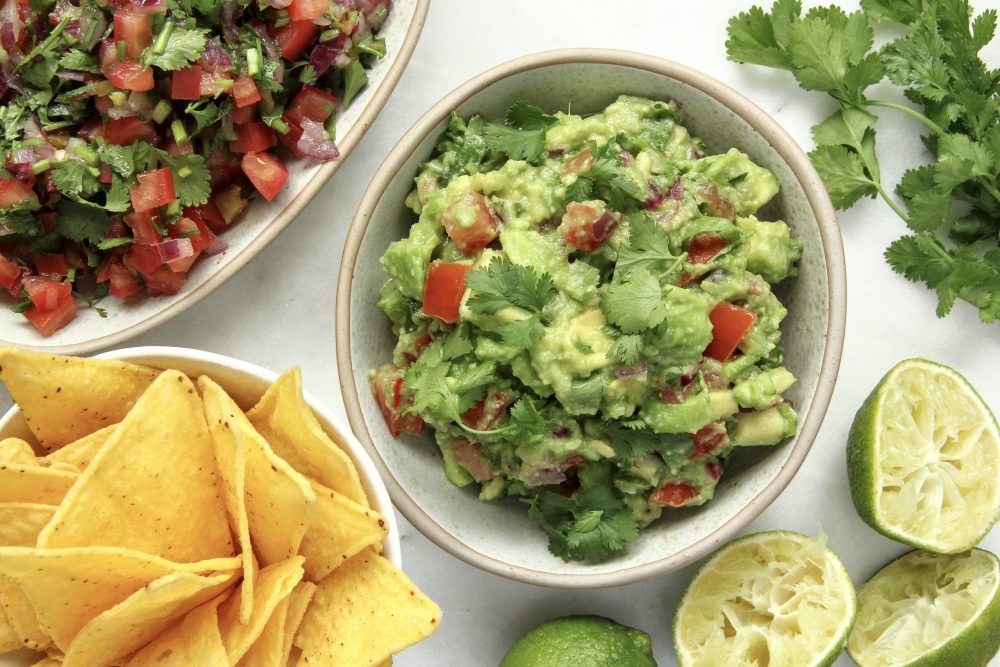
Super simple to make, and the best crowd-pleaser. You can simply serve it as a dip for your tortilla chips, or try adding this to your next burrito to take it to the next levels!

Serves 4

Ingredients

  • 1/2 a red onion, finely diced
  • 1/2 a chilli (or to taste), finely sliced
  • 2 medium avocados, or 3 small
  • 1-2 limes
  • 1 large tomato, deseeded
  • 1/2 a bunch of coriander

Method

  • In a large pestle and mortar, add the onion, chilli and a pinch of salt. Pound till the onions and chilli are half turned into a paste.
  • Peel and roughly dice the avocado, and add to the onion mix with the juice of 1 lime. Lightly pound till you have the desired texture; I like my guacamole with large chunks of avocado.
  • Dice the tomato and roughly chop the coriander. Add to the avocado and mix together. Taste and add more lime juice if needed.
  • Serve with chips or vegetable crudites

Create the perfect dip selection by also making some tomato salsa and some easy refried beans.

Pineapple, Lime and Coconut Ice Lollies

Feeling hot in this heatwave? Me too! So here’s one of my fun ways to help you keep cool this summer, and the good news is it’s good for you! Blended fruits with coconut milk make the perfect frozen popsicles. You could play around with the flavour combinations, but for me this is the summery flavour I’ve been craving to quench my thirst!

I’ve used a dairy free coconut milk alternative, but you could keep it vegan by using coconut milk from a tin. This might just make the popsicles a little creamier, so if you want to keep them as light and refreshing as possible, try the milk alternative drink.

These are suitable for all ages, including kids and younger children (they may like a little less lime so it’s not quite so sharp on the tastebuds), why not make a batch for the whole family to enjoy on a hot day.

Makes 6 100ml popsicles

Ingredients

  • 300g fresh or frozen pineapple
  • 250ml coconut milk alternative
  • Zest and juice of 2 limes

Method

  • Put the ingredients into a blender and blend till smooth.
  • Pour into your popsicle moulds and freeze for at least 8 hours.
  • Enjoy!
Pineapple, Lime & Coconut Popsicles

Per ice lolly : 43kcal/ 0.8g fat/ 0.5g saturated fat/ 8.8g carbohydrates/ 0.8g fibre/ 0.5g protein

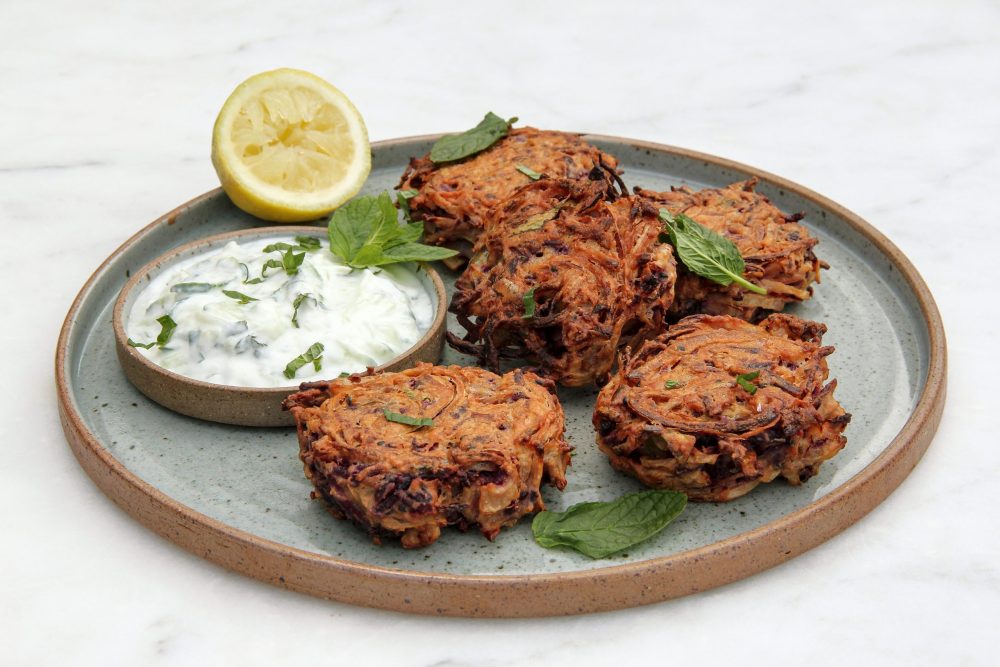
Onion and Purple Carrot Bhajis

Easy oven baked bhajis mean no stress about deep fat frying. Simply pop into the oven, turn half way through and Bob’s your uncle. Delicious served with my quick raita.

You could of course make this with standard orange carrots, or whatever colour you desire, but I just love the deep purple pops of colour when you break open each bhaji.

To make this dish completely vegan, use a plant-based yoghurt alternative. Just be sure to make sure it is the unsweetened variety.

Makes 6 large bhajis

Ingredients

  • 2 large onions, very finely sliced (around 200g)
  • 2 large purple carrot, grated (around 100g)
  • 2 cloves of garlic, minced
  • 1″ fresh ginger, minced
  • 20 curry leaves
  • 1 tsp cumin seeds
  • 1 tsp nigella seeds
  • 1/2 tsp ground chilli (optional)
  • Juice of 1 lemon
  • 150g gram flour
  • 2 tbsp rapeseed oil

For the raita

  • 150g yoghurt of choice
  • 3″ cucumber, grated
  • 1 small garlic clove, minced
  • 1 sprig of mint, finely sliced
  • Handful of coriander leaves, finely sliced
  • Squeeze of lemon

Method

  • Preheat the oven to 200°C fan/ 200°C convection
  • Add the oil to a large heavy-bottomed pan and place in the oven to preheat.
  • Mix the onions, carrot, spices and gram flour together in a bowl with 80ml cold water. The mixture should be sticky without being too dry or wet. If needed add a little more flour or water to get a thick consistency which coats all the vegetables.
  • Divide the mixture into 6 rounds.
  • Add the bhajis to the hot pan.
  • Cook for 10 minutes before flipping and cooking for a further 10-12 minutes till golden brown and crispy.
  • Remove and allow to drain on a piece of kitchen towel.
  • Meanwhile, place the grated cucumber into a clean tea towel and squeeze out all the excess moisture.
  • Add to a bowl with all the remaining raita ingredients and mix.

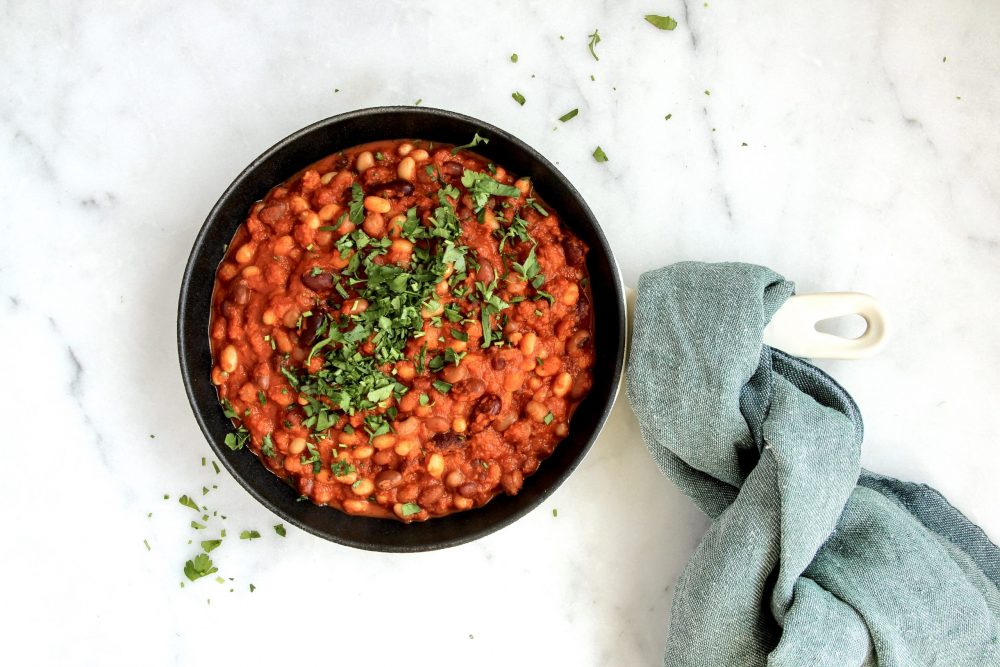
Smokey Baked Beans

Making your own baked beans can be so satisfying and give you greater control over what goes into them. A quick investigation into baked beans sold in UK supermarkets shows that the average 200g portion of standard baked beans will contain 1g of salt (ranging up to a staggering 1.6g).

It’s Salt Awareness Week (8th-14th March 2021), which aims to highlight the reduction of salt intakes. The UK recommendation is a maximum of 6g salt per day. However, the National Diet & Nutrition Survey showed that the average person was eating 8.4g salt in 2018-2019.

The greatest contributors to salt in our diet comes from processed foods and includes bread, cheese, and meat products such as bacon. Around 8% of our salt intakes comes from pre-prepared vegetables such as frozen chips, mashed potatoes and tinned produce. Watch out for tinned beans, pulses and vegetable is water with added salt. Additionally, watch out for tinned tomato products which add salt in. While salt is a preservative, it is not really needed in these products.

If you are looking to reduce your salt intake, you might find things taste a little bland at first. After a few weeks your tastebuds will become more sensitive to salt. You can always add other flavours to food to help in this transition period; try adding herbs, spices, lemon/lime juice or pepper to your meal.

These homemade baked beans contain a fraction of the salt content of their tinned counterparts, containing just 0.14g per 200g serving. Not only that, but you’ll also benefit from 8.7g of fibre and 11 different plant foods for fibre diversity. In addition, my baked beans are naturally sweetened using a carrot and smoked paprika, meaning there’s no added sugar to these beans either.

Store any leftover beans in an airtight container in the fridge for 3-4 days, or alternatively freeze in handy portions ready for a quick and easy meal.

Makes 7 portions

Ingredients

  • 2 large garlic cloves, roughly chopped
  • 1 large carrot (100g), grated
  • 1 tbsp extra virgin olive oil
  • 500g passata
  • 2 tsp smoked paprika
  • 1/2 tsp ground white pepper
  • 1/4 tsp mixed herbs
  • 1/2 tsp white wine vinegar
  • 2 tbsp tomato puree
  • 1 tin of haricot beans in water
  • 2 tins of mixed pulses in water

Method

  • Add the garlic, carrots and oil to a large pan and cook over a gentile heat for 5 minutes till softened.
  • Add the passata, herbs and spices, vinegar, tomato puree and 100ml water. Cook for a further 15-20 minutes over a low heat till the carrots become soft.
  • Blend to a smooth sauce and add the beans.
  • Cook over a low heat with the lid on for 15 minutes, stirring occasionally.

Per 200g serving 163kcal/ 3.4g fat/ 0.6g saturated fat/ 19.9g carbohydrates/ 8.7g fibre/ 9.5g protein/ 0.14g salt
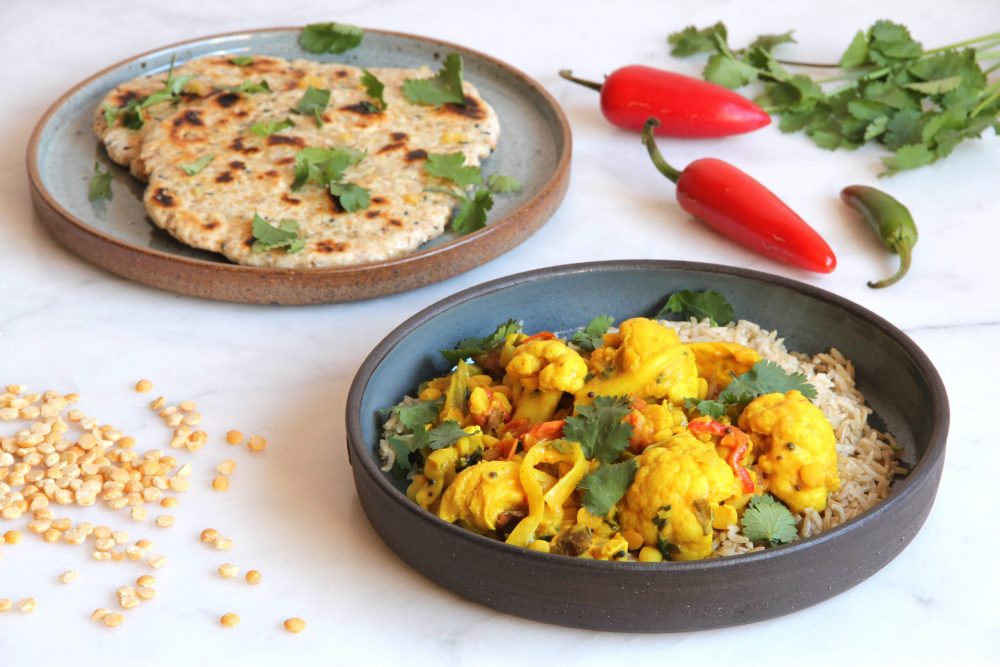
Yellow Split Pea and Cauliflower Curry

This recipe was born from a sad cauliflower and a wilted bunch of coriander left over at the end of the week which needed to be used up. It got a resounding “I rate this” from my partner as we ate leftovers the next day. Absolutely none of the cauliflower is wasted, I simply adore cauliflower leaves and for anyone who has not tried them, this is the perfect dish to utilise them.

This is a fantastic way to use up any other vegetables too. Mix and match with other cruciferous vegetables such as broccoli, Brussel sprouts or even kale, or use other vegetables such as courgette, aubergine or green beans.

Serves 6

Ingredients

  • 200g yellow split peas
  • 1 tsp mustard seeds
  • 1 tsp ground coriander
  • 2 tbsp rapeseed oil
  • 1 large or 2 small onions, sliced
  • 2″ piece of ginger, peeled and grated
  • 1 red chilli, sliced (or to taste)
  • 60g skin-on almonds, roughly chopped
  • 1 cauliflower head, cut into florets and leaves
  • 400ml coconut milk
  • 2 tsp ground turmeric
  • 200g fresh tomatoes, roughly chopped
  • 20g coriander, roughly chopped

To serve

  • Cooked rice

Method

  • Boil the split peas in plenty of water for 25 minutes, till cooked through but still firm.
  • Separately, in a large pan add the mustard seeds, ground coriander and oil over a medium heat.
  • When the mustard seeds start popping add the onion, ginger, chilli and almonds. Cook for 2-3 minutes.
  • Add the cauliflower, coconut milk, turmeric, tomatoes and half of the coriander.
  • Drain the cooked yellow split peas, reserving 50ml of cooking liquid, and to the cauliflower mix. Cook together for 5 minutes.
  • Serve with rice and the remaining coriander.

Per serving: 387kcal/ 17.3g fat/ 2.2g saturated fat/ 22.9g carbohydrates/ 16.7g fibre/ 16.8g protein

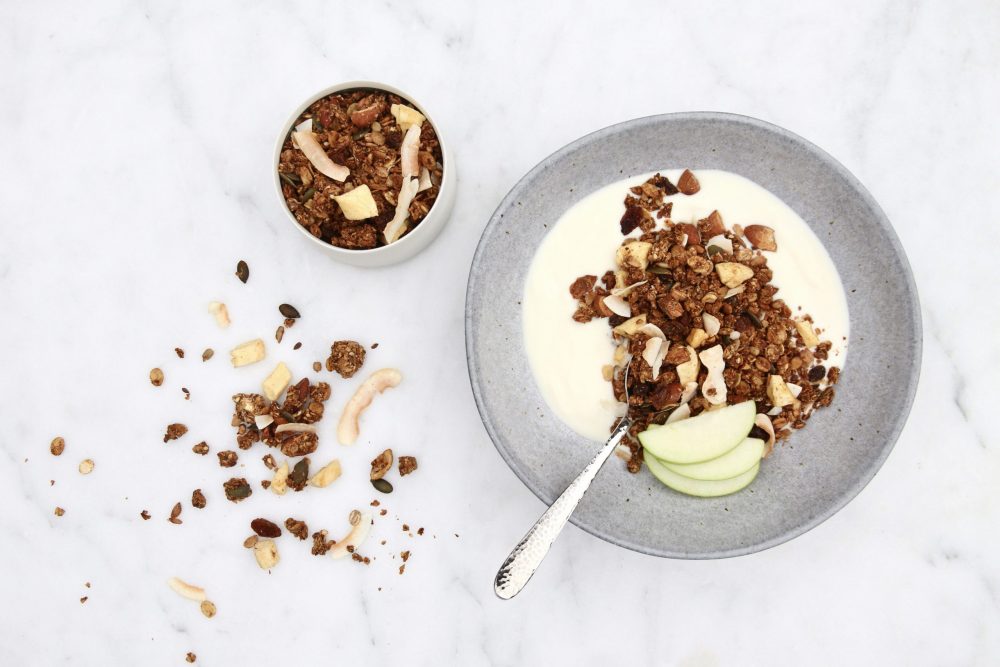
Apple and Cinnamon Granola

A winter version of my no added sugar granola is sure to please in the cold weather; warming cinnamon is paired with sweet apples making for the perfect pick-me-up for dark mornings.

Cinnamon is a spice containing lots of polyphenols, a type of plant chemical which is thought to be beneficial to health. In total, this granola is packed full of 16 different plant foods, providing you with just over half of your weekly diversity goal in just the granola on its own.

If you don’t have all the specific ingredients, try swapping them to maintain fibre diversity. You could use alternative grains to those listed, or use different nuts which can change the healthy fat profile of this granola.

Makes 16 servings

Ingredients

  • 100g stoned dates
  • 150g oats
  • 50g barley flakes
  • 50g rye flakes
  • 50g spelt flakes
  • 15g ground sweet cinnamon
  • 75 mixed seeds (I have used 15g each of chia, linseed, sesame, sunflower and pumpkin seeds)
  • 80g almonds, roughly chopped
  • 50g unsweetened desiccated coconut
  • 50g extra virgin olive oil
  • 30g coconut flakes
  • 70g dried unsweetened apple
  • 70g sultanas

Method

  • Preheat the oven to 120°C fan/ 130°C convection
  • Soak the dates in 150ml boiling water for a few minutes before blending into a smooth paste.
  • Meanwhile, mix the cereal flakes, cinnamon, seeds, almonds and coconut together.
  • Add the date puree and mix everything together.
  • Pour the oil in, mix, and then spread out onto a tray.
  • Bake for 90 minutes, stirring at minutes 30, 50 and 70.
  • Add the coconut flakes in for the last 20 minutes, before removing and allowing to cool.
  • Mix in the dried fruit and store in an airtight container.

Per 50g serving: 196kcal/ 6.4g fat/ 3.3g saturated fat/ 22.3g carbohydrates/ 5.8g fibre/ 5.4g protein

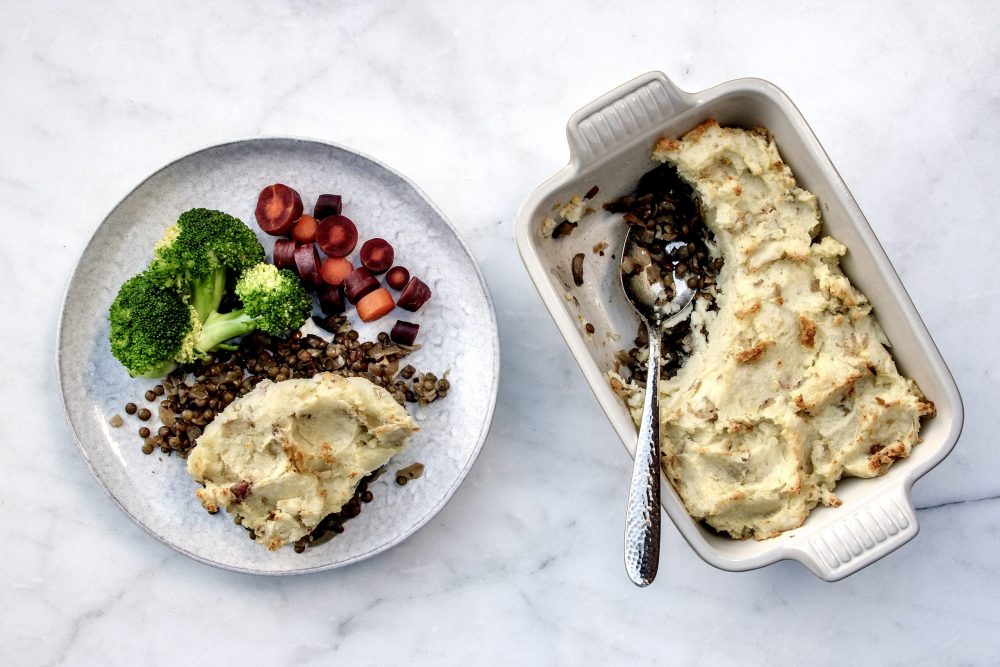
Mushroom, Lentil & Olive Oil Mash Pie

This is the recipes for those of you who already follow a vegan lifestyle. It’s also something for those who are doing Veganuary for the first time. It’s also perfect for anybody who is looking to increase their plant-based diet without necessarily being 100% vegan all the time.

This would work well with other vegetables such as leeks, celery, courgettes, or if mushrooms are not your thing use some fresh or tinned tomatoes which will cook into a tomato based sauce for the lentils to sit in.

Leaving the skin on the potatoes for the mash will make the dish quicker to prepare. You’ll also prevent any food waste as well as keep in the maximum fibre content.

Serves 2

Ingredients

  • 60g puy lentils
  • 35ml extra virgin olive oil
  • 1 large onion, finely diced
  • 1 garlic clove, finely chopped
  • 180g mushrooms, finely diced
  • 1/2 tsp vegan stock powder
  • A few sprigs of fresh thyme
  • 450g potatoes, skin left on, washed and cut into large chunks
  • 60ml soya milk

Method

  • Put the lentils into a pan and cover with plenty of cold water. Bring to the boil and then simmer for 15 minutes. Once cooked, drain the lentils reserving 2 tablespoons of cooking water.
  • Meanwhile, bring a pan of water to the boil and cook the potatoes till soft.
  • Separately, cook the onion in another pan with 10ml of olive oil over a low heat till they become soft and translucent.
  • Add the garlic and cook for 1 minute before adding the mushrooms in.
  • Add the stock powder and thyme leaves and allow to cook till the mushroom juices evaporate. Add the cooked lentils and reserved cooking liquid to the mushroom mixture.
  • Once the potatoes are cook, drain and allow to steam dry for 2 minutes. Heat the soya milk with the remaining olive oil in the pan used to cook the potatoes before adding them back in and mashing till smooth.
  • Preheat the oven to 180°C fan/ 200°C convection
  • Assemble the filling into an ovenproof dish and layer the mash over the top.
  • Bake for 25-30 minutes till the potato top turn crisp and golden brown.

Per serving: 513kcal/ 18.9g fat/ 2.9g saturated fat/ 66.6g carbohydrates/ 12.4g fibre/ 16.4g protein

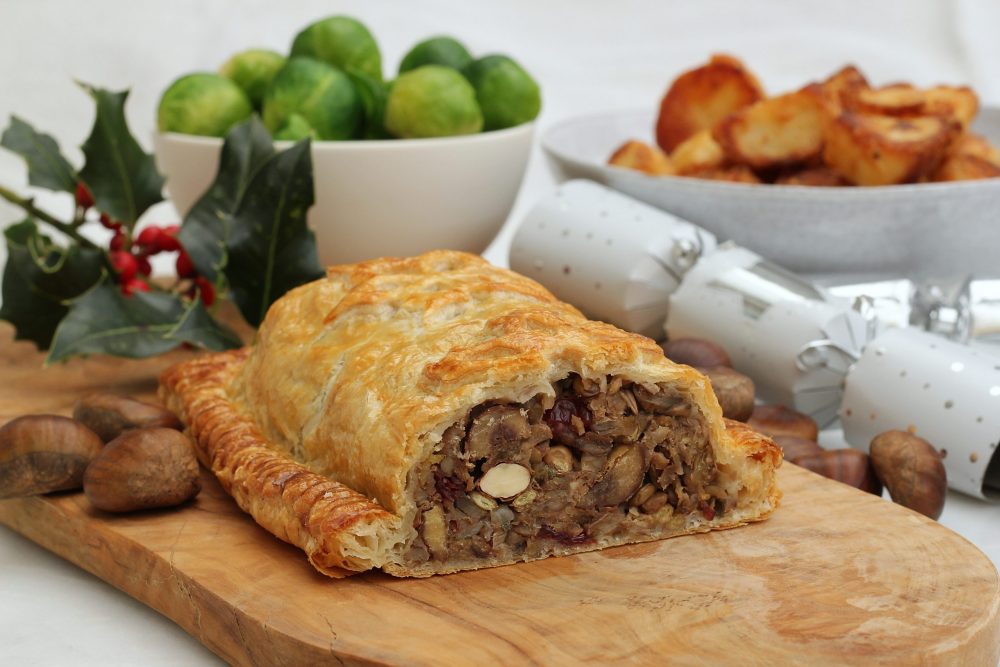
Festive Lentil, Mushroom and Chestnut Wellington

My Festive Lentil, Mushroom and Chestnut Wellington is sure to be a crowd-pleaser this Christmas. Packed full of flavours you would expect to find at Christmas and wrapped up in puff pastry. What is not to like?

This recipe is easily adapted to most dietary requirements. Swap the butter pastry to a butter-free puff pastry and swap the egg glaze for a mylk wash to give the pastry a lovely golden glow.

To make the wellington gluten-free use a gluten-free pastry and gluten-free oats. If you can’t find the oats, use 100g gluten-free flour in place of the oats and rice flour.

You can also swap a few ingredients around to suit what you fancy. If your festive tipple is not port, you could swap it for red wine, cognac or even keep it alcohol-free by using a little stock. Other herbs that would work well in this wellington include thyme, parsley or marjoram. You could also use dried herbs, but watch out as these can really pack a punch, so half a teaspoon should be plenty to give flavour. You could even change the almonds for alternative nuts such as pistachios or walnuts to give different dietary nutrients; walnuts are the only tree nut to contain significant amounts of alpha-linolenic acid, a type of omega-3 fatty acid which can be converted in the body to EPA and DHA fats found in oily fish. Great for anyone following a strictly plant-based diet or for those who don’t eat fish.

Serves 6-8

Ingredient

  • 120g green lentils
  • 3 bay leaves
  • 1 tbsp extra virgin olive oil
  • 1 red onion, finely diced
  • 200g mushrooms, finely diced
  • 10 sage leaves, sliced
  • 50g almonds, roughly chopped
  • 90g cooked chestnuts, roughly chopped
  • 50g dried cranberries
  • 60ml port
  • 50g rice flour
  • 50g cut oats
  • 400g puff pastry
  • 1 egg, beaten

Method

  • Wash the lentils in cold water. Add the bay leaves and bring the lentils to the boil. Reduce the heat to a simmer and cook for 20 minutes till the lentils are soft.
  • Meanwhile cook the oil and onion together over a low heat till soft and translucent.
  • Add the mushrooms to the onions and cook the mushrooms till the juices start to thicken slightly. Add the sage and cook for a further minute till fragrant.
  • Once the lentils are cooked, drain, remove the bay leaves and lightly mash. Add the mushroom mixture to the lentils followed by the almonds, chestnuts, cranberries, port, flour and cut oats. Mix to combine and season to taste.
  • Allow the mixture to cool completely.
  • Preheat the oven to 180°C fan/ 200°C convection.
  • Line a baking sheet with baking parchment.
  • Roll the pastry into a 35cm by 25cm rectangle. Cut lengthways down to make a 10cm by 35cm smaller rectangle. Remove 2cm from this piece to create a rectangle approximately 10cm by 33cm.
  • Place the now cooled mixture on this smaller rectangle of pastry, leaving a 1cm gap all around the edge, into a large log shape from short end to short end.
  • Using the egg, paint over the pastry seam. Lift the remaining larger rectangle of pastry over the mixture and press the pastry to seal with a fork.
  • Trim any excess pastry and use it to decorate the top of the pie.
  • Cut a small hole in the top of the wellington to allow the steam to escape and glaze the whole pie with an egg wash.
  • Bake the wellington for 25-30 minutes till golden brown all over.

Per sixth: 629kcal/ 25.3 fat/ 13.1g saturated fat/ 60.8g carbohydrates/ 8.0g fibre/ 18.3g protein

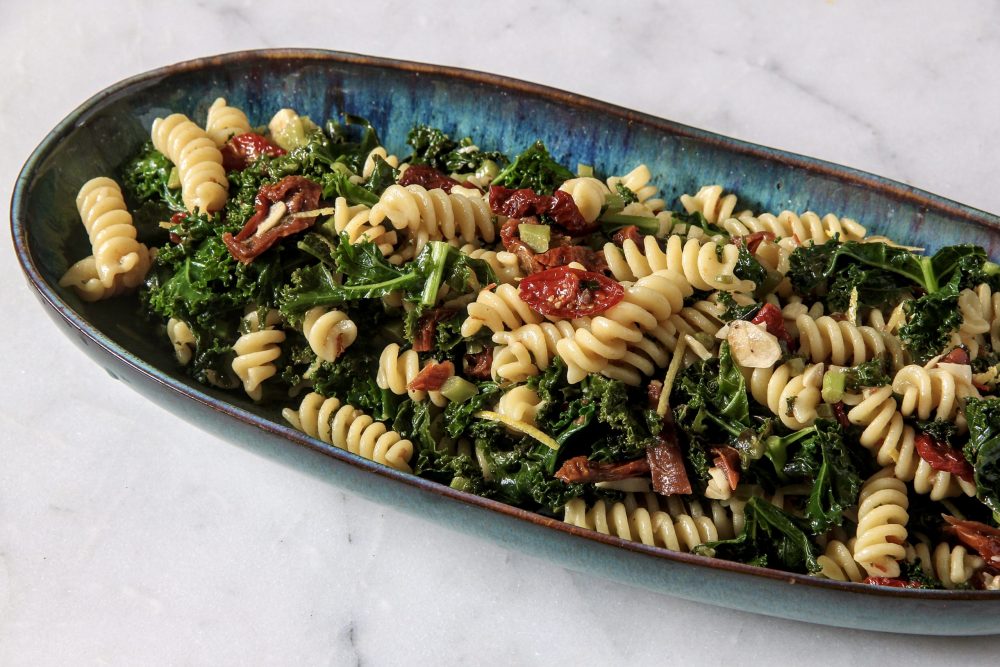
Sundried Tomato and Kale Pasta

Super simple, seasonal, and takes just 15 minutes to cook. Kale is a great source of vitamin K, as well as beta-carotene which the body can convert into vitamin A.

I see loads of recipes using kale where they strip the leafy part off the central stem. I love the contrast of textures, with the stem staying crunchy as the leaves become soft. It also helps reduce food wastage by eating the whole of the produce.

Kale is a plant-based source of dietary iron. Being from a plant, it is in the form of non-haem iron which means it is harder for the body to absorb. Using the lemon juice at the end of cooking adds vitamin C to the dish which can help increase the uptake of plant-based iron.

Serves 2

Ingredients

  • 150g dried pasta of choice
  • 1 tbsp extra virgin olive oil
  • 200g kale, roughly chopped
  • 60g sundried tomatoes, drained and roughly chopped
  • 4 cloves of garlic, roughly chopped
  • 1 unwaxed lemon, zest and juice

Method

  • Bring a large pan of water to the boil and cook the pasta for 2 minutes less than the packet instructions.
  • Separately, in a frying pan cook the kale with the oil for a few minutes till slightly soft.
  • Add the garlic and sundried tomatoes and cook for a further few minutes till fragrant. If needed, add a little pasta water to stop the garlic from burning.
  • Add the pasta with a tablespoon of pasta water and add the lemon zest and juice.
  • Stir to combine and serve immediately.

Per serving: 441kcal/ 11.8g fat/ 1.6g saturated fat/ 64.9g carbohydrates/ 9.0g fibre/ 13.8g protein

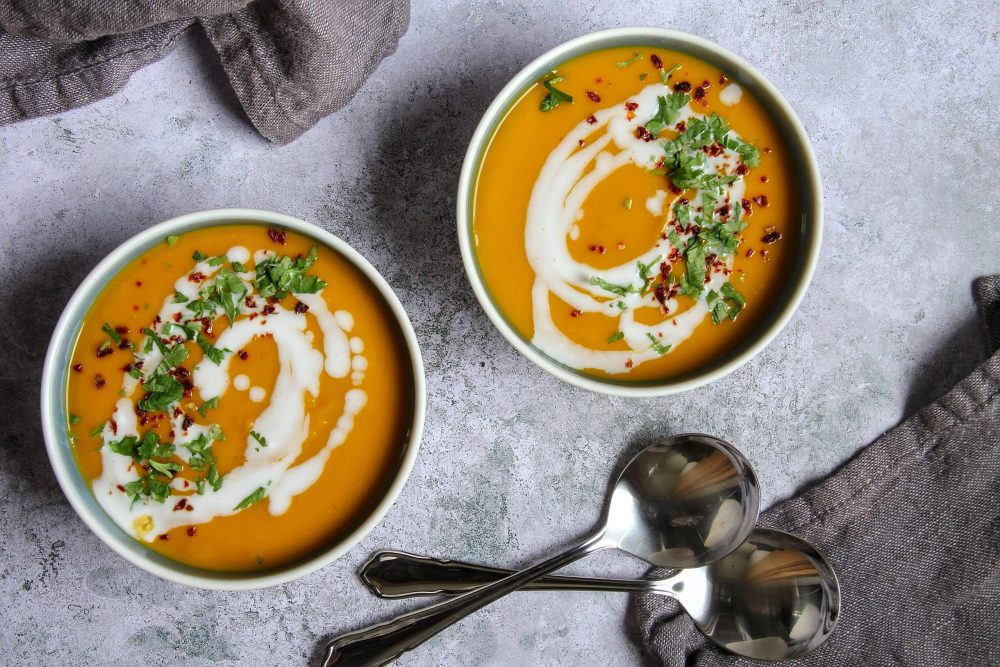
Spiced Pumpkin & Lentil Soup

Soup with a delicious autumnal twist making the most out of seasonal pumpkins which are being carved up for Halloween.

Sadly, over half the pumpkins carved at Halloween are under-utilised. The flesh and seeds of carving pumpkins are all edible, even once they have been carved. Pumpkins are a great source of beta-carotene, the precursor to vitamin A as suggested by the gorgeous golden-orange hue of the flesh and, in most cases, skins. A word of caution, if your pumpkin happens to have green skin your soup will adopt a “chip shop curry sauce” colour. Don’t worry, it will still be equally delicious!

If you don’t have any pumpkins hanging around you can substitute butternut squash or sweet potato as an alternative. These vegetables are still high in beta-carotene, an antioxidant that has previously been shown to help reduce the risk of heart disease and certain cancers.

Serves 4

Ingredients

  • 2 large onions, roughly chopped
  • 2 tbsp extra virgin olive oil
  • 4 cloves of garlic, roughly chopped
  • 3 tsp ground cumin
  • 2 tsp ground turmeric
  • 1 tsp dried chilli, or to taste
  • 200g red lentils
  • 500g pumpkin, skin on and roughly diced
  • 200ml coconut milk
  • 10g stock powder
  • 15g fresh coriander, finely sliced

Method

  • Gently fry the onion and oil in a large pan till soft and translucent. Add the garlic and cook for a further 2 minutes.
  • Add the dried spices and cook till fragrant before adding in the remaining ingredients with 1 litre of boiling water.
  • Allow to simmer for 20 minutes till the lentils and pumpkin are cooked through and soft.
  • Blend till smooth and serve.

Per serving: 447kcal/ 18.6g fat/ 2.3g saturated fat/ 50.7g carbohydrates/ 7.6g fibre/ 16.4g protein

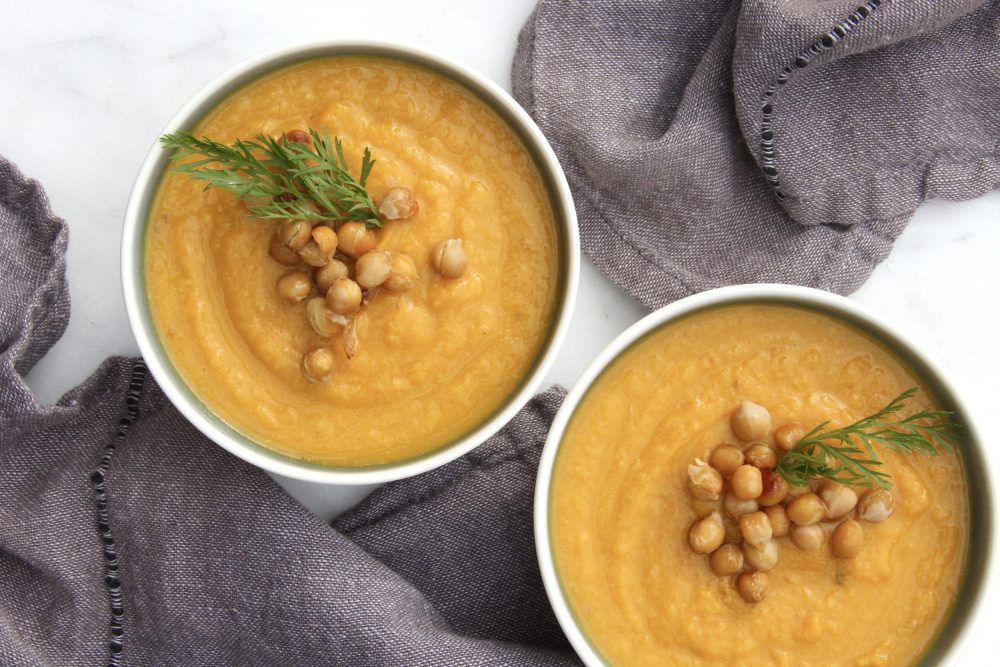
Roasted Butternut Squash, Carrot and Chickpea Soup

Autumn is upon us, so therefore so is soup season. I always enjoy a good bowl of hot soup on a crisp cold Autumn day, but sometimes I find myself wondering how to get the protein in for the meal. Using beans, pulses or lentils is a great way to include some protein in a soup meal.

In an effort to save time and reduce food waste I don’t peel the squash or carrots. Instead I scrub them before removing the tops and tail. The skin is easily blended into the soup and will contribute to some of the fibre content. What is not to love?

Any leftover soup can be stored in the fridge in an airtight container for up to 5 days. Alternatively, this soup freezes really well so you can make a large batch of this to pull out when you need a quick lunch.

Serves 4

Ingredients

  • 2 tbsp extra virgin olive oil
  • 400g butternut squash, cut into 1″ cubes
  • 400g carrots, cut into 1″ pieces
  • 1 large onion, cut into 1″ pieces
  • 4 clove of garlic, skin on
  • 1 tin of chickpeas, drained and rinsed
  • 1 stock cube of choice

Method

  • Preheat the oven to 180°C fan/ 190°C convection.
  • Mix all of the ingredients, except the stock cube, in a large roasting tin. Roast in the oven for 1 hour, stirring half way through.
  • Boil 900ml of water and add the stock cube.
  • Remove the garlic cloves from their skins and add the roasted vegetables to the stock.
  • Blend the soup to the consistency of choice and serve.

Per serving: 276kcal/ 11.5g fat/ 1.7g saturated fat/ 32.7g carbohydrates/ 8.0g fibre/ 7.0g protein

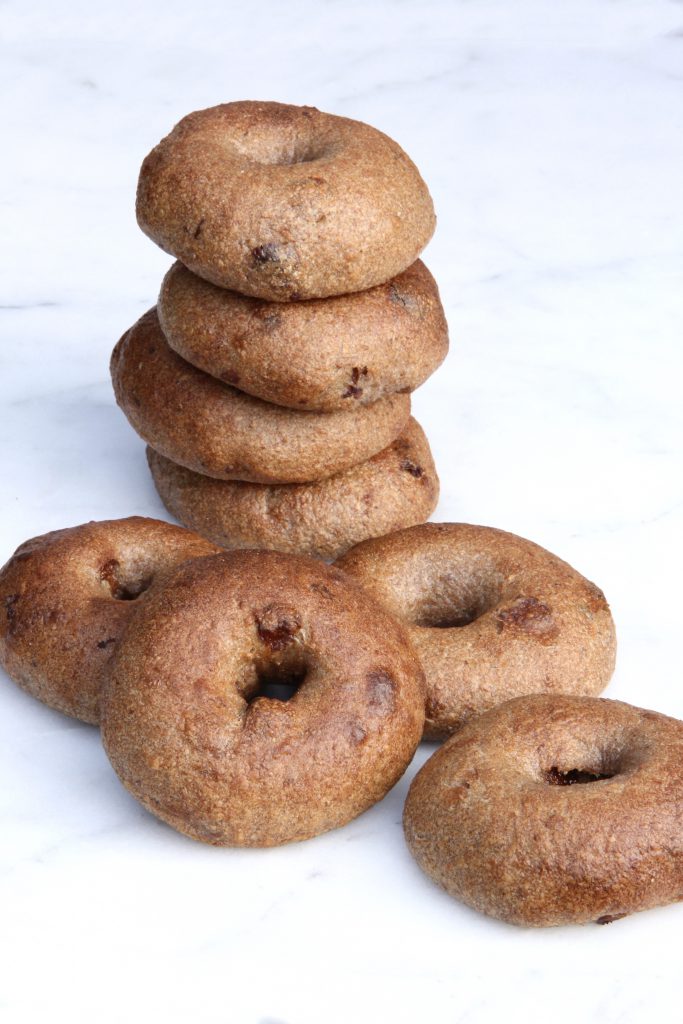
Sourdough Cinnamon and Sultana Bagels

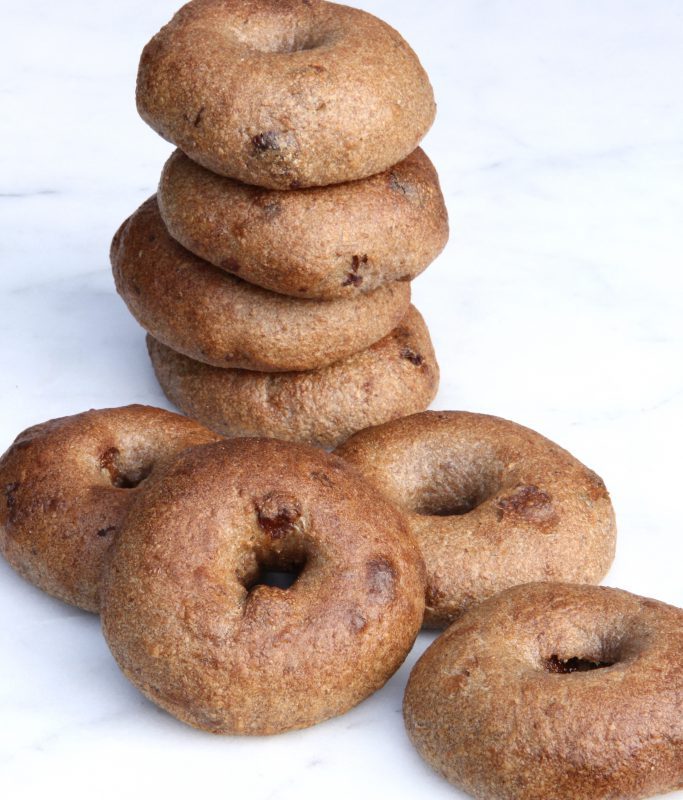
When I presented seeded multigrain sourdough bagels to my brother, the first thing he said was that I needed to make cinnamon and raisin sultanas. So grateful(!) but I took the constructive criticism and made this recipe for him.

I’ve adapted the Margot Bakery sourdough bagel recipe. It’s a great recipe, however, I could never fit 12 bagels onto my baking sheets, and the volume of dough was too large for my stand mixer! I also wanted to incorporate more wholemeal flour as a way of increasing the fibre content. I also didn’t have the malt syrup, so for anyone who wishes to make vegan bagels, swap the honey back out for the original malt syrup.

You could of course do the more traditional approach of cinnamon and raisin bagels, but I have always preferred sultanas over raisins. Other fruits that would work well in this recipes include dried blueberries, cranberries or cherries.

The bagels are best eaten fresh on the day, although still delicious if left for a day or two. A great way to capture that freshness is to slice the bagels in half and then freeze. This way they are ready to pop straight into the toaster from the freezer and are ready to be eaten within minutes.

Makes 12 bagels

Ingredients

For the leven

  • 35g 50:50 strong white: strong wholemeal flour
  • 115g 50:50 strong white: strong wholemeal flour
  • 25g granulated sugar

For the dough

  • 20g honey or malt syrup if making vegan
  • 180g strong white flour
  • 180g strong wholemeal flour
  • 400g plain flour
  • 12g salt
  • 10g ground sweet cinnamon
  • 120g sultanas

Extras

  • Vegetable oil
  • 50:50 mix plain flour: rice flour
  • 2 tsp bicarbonate of soda
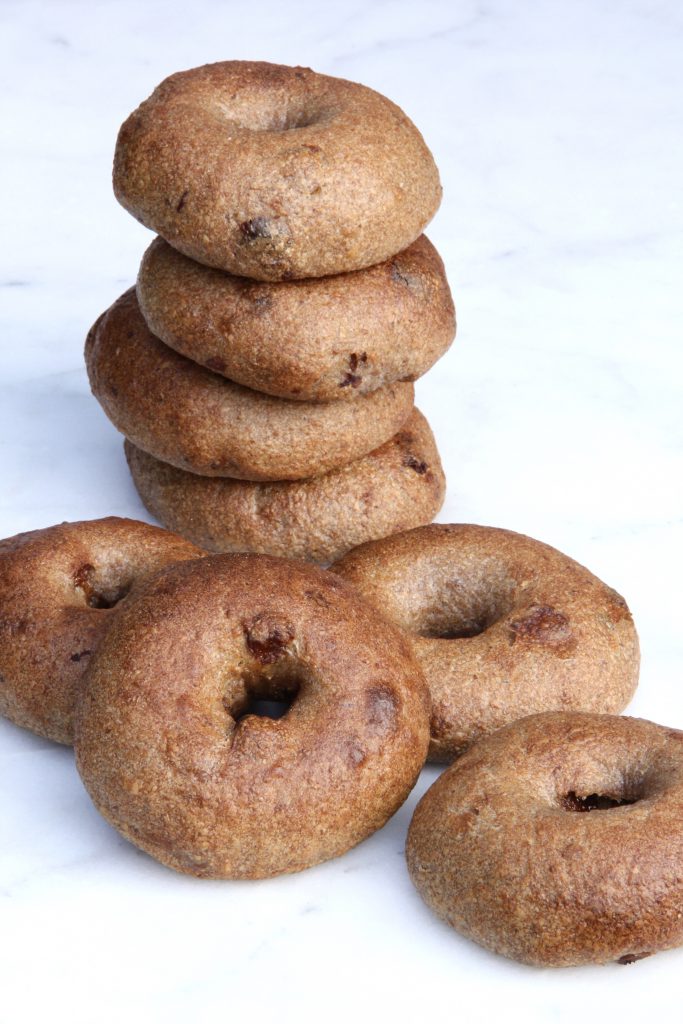
Sourdough Cinnamon and Sultana Bagels

Method

  • The morning before making the bagels, refresh your starter with 35g 50:50 strong white: strong wholemeal flour and 35g water. Mix and leave for 10-12 hours.
  • The night before making the bagels, in a large jar mix 70g of the refreshed starter mixture, 115g 50:50 strong white: strong wholemeal flour, the sugar and 70g water. Leave for 10-12 hours.
  • The next day, mix all the remaining ingredients, 425g water and 250g of the refreshed starter. Knead the dough on a medium setting of a stand mixer fitted with a dough hook, frequently scraping down the sides and hook, for around 8-10 minutes. Alternatively, you can work the dough by hand, but it will be sticky so resist the urge to add extra flour. Knead for 10 minutes.
  • Lightly grease a 3l container. Transfer the dough, cover and allow to rest at room temperature for 3 hours.
  • Line 2 large baking trays with baking parchment and dust with 50:50 rice and plain flour.
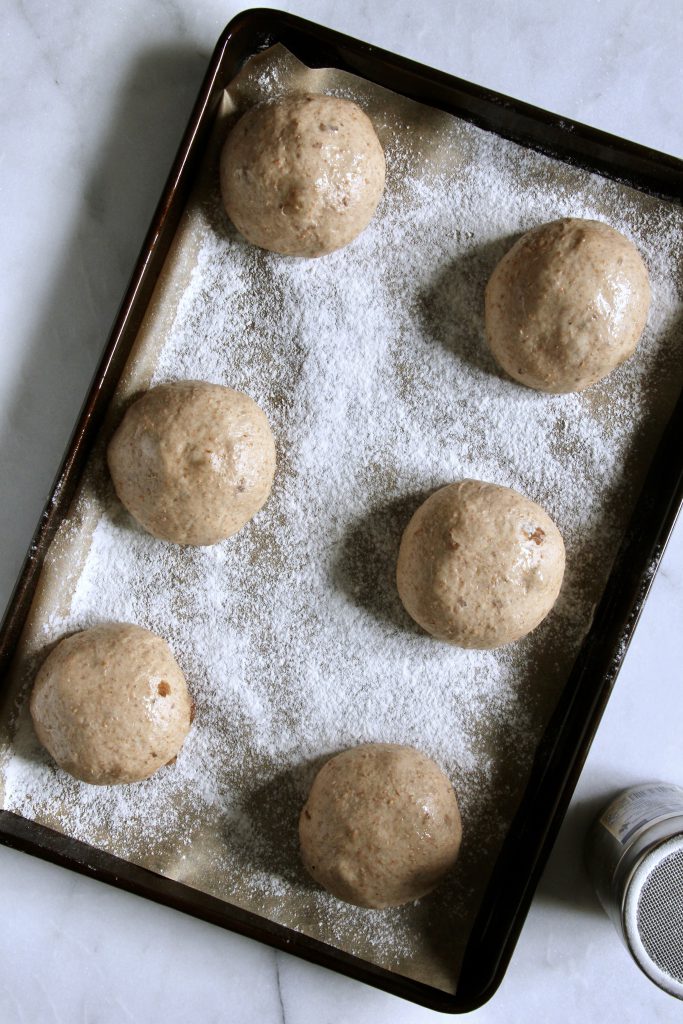
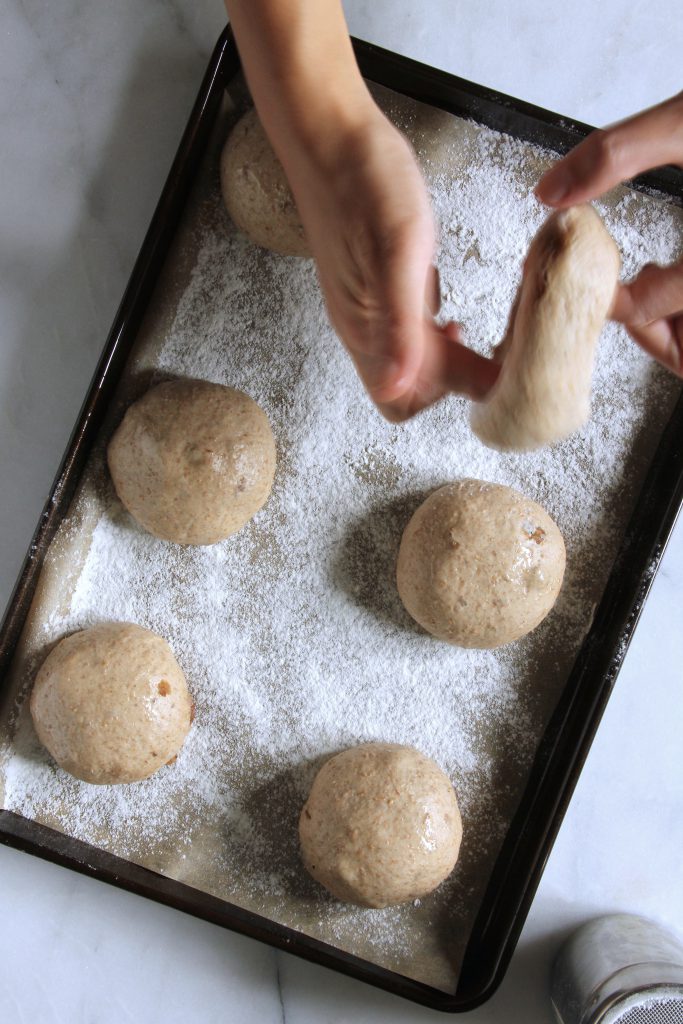
  • Divide the dough into 12 equal portions and roll out into neat balls. Try to tuck any sultanas into the dough to prevent burning when baking.
  • Place 6 balls evenly spaced out onto a tray and cover with lightly oiled clingfilm. Leave to rest for 1 hour at room temperature.
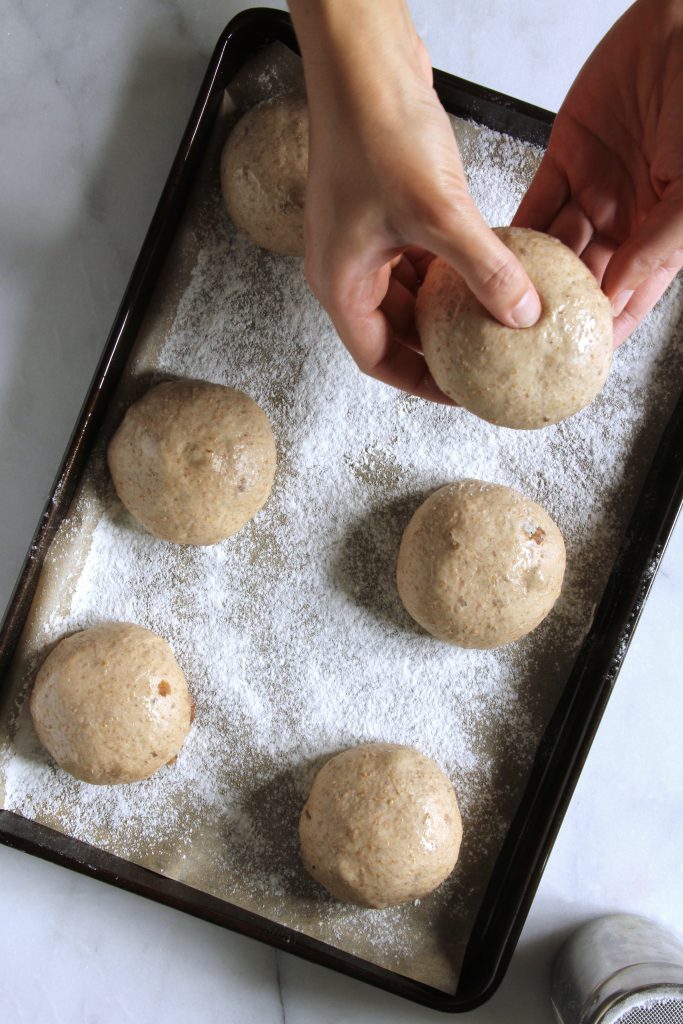
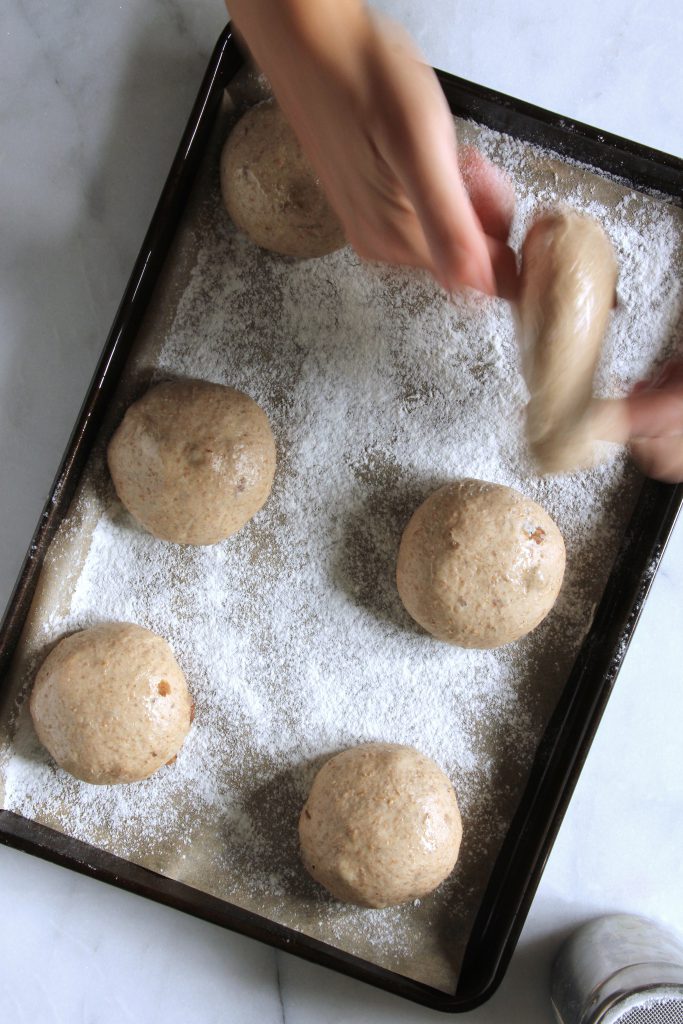
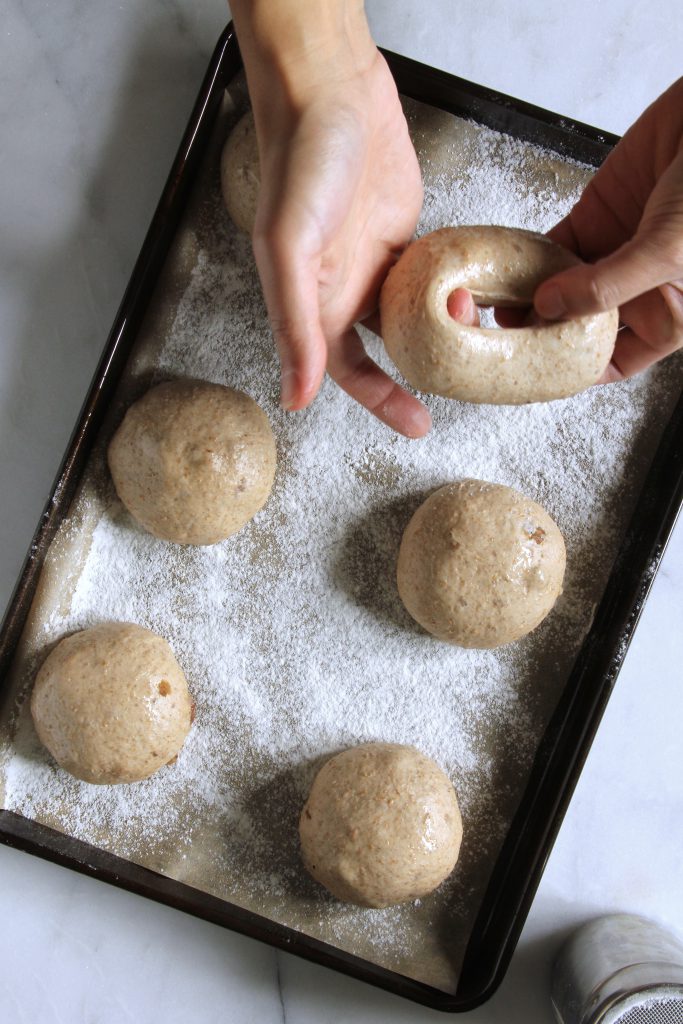
  • Peel back the clingfilm, take one ball and make a hole in the centre of the ball. Using two fingers, stretch the ball into a bagel shape using a winding motion. Redust the parchment with 50:50 rice and plain flour and place the bagel back down.
  • Repeat for the remaining 5 balls on the baking tray.
  • Starting back with the first bagel, repeat the winding stretch to open the bagel back up.
  • Cover back up with the oiled cling film and leave to prove at room temperature for 3-6 hours depending on the temperature of the room; in warmer weather prove for a shorter period of time.
  • Transfer to the fridge overnight for up to 24 hours.
  • The next day remove the bagels from the oven and allow to return to room temperature.
  • Preheat the oven to 220°C fan/240°C convection, place a tray in the bottom of the oven, and bring 2l of water to the boil in a large pan.
  • Once the water is boiling add the bicarbonate of soda.
  • Boil the bagels in batches of up to 3 depending on the size of your pan for 30 seconds.
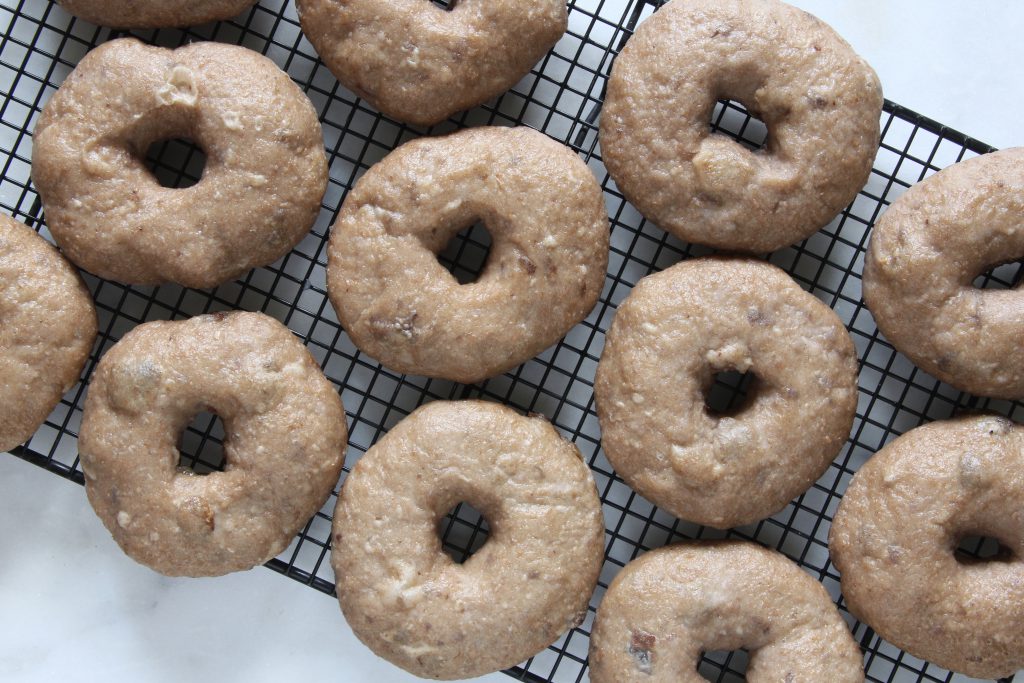
  • Remove and allow to dry slightly on a wire rack before transferring to a clean baking sheet lined with baking parchment, allowing space for them to expand in the oven.
Boiled bagels ready for baking
  • Once all the bagels are boiled, boil 200ml water.
  • As quickly as possible, place the trays of bagels into the oven and pour the boiled water into the tray at the bottom of the oven.
  • Close the door to trap as much steam as possible. Reduce the temperature of the oven to 20°C and bake for 15 minutes.
  • After 15 minutes, remove the tray of water and if your bagels are on split levels, rotate your trays around for even cooking. Bake for a further 8-9 minutes.
  • Remove and allow to cool on a wire rack.

Per bagel: 205kcal/ 1.2g fat/ 0.2g saturated fat/ 41.2g carbohydrates/ 3.1g fibre/ 6.6g protein