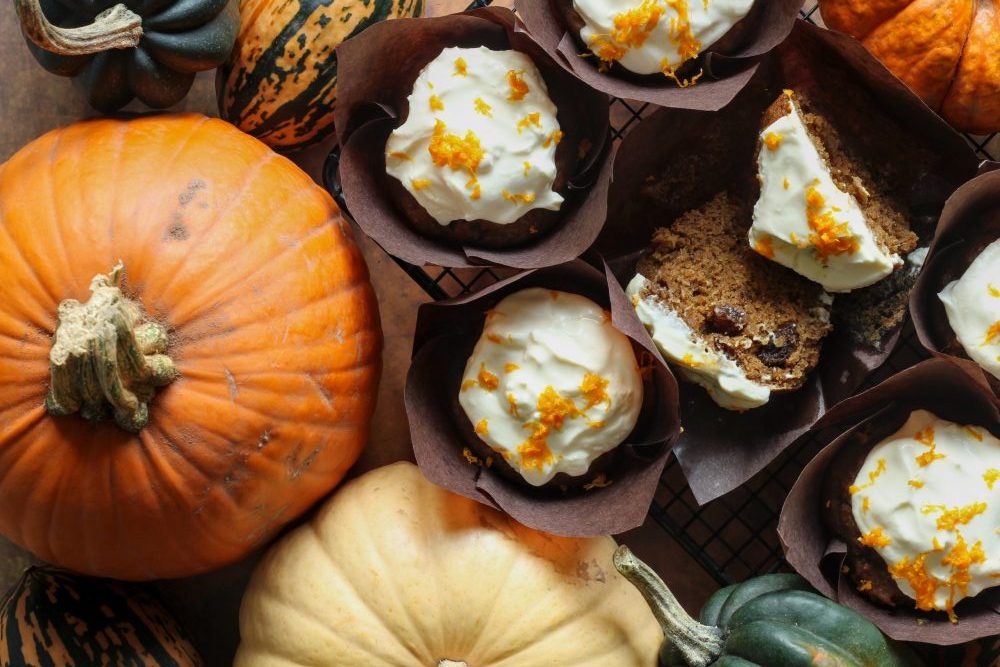
Spiced Pumpkin Muffins

No tricks, all treats here. Using dates to naturally sweeten these muffins with roasted pumpkin, autumnal spices and sultanas. Delicious as they are, they also can be topped with orange mascarpone icing for the final touch.

Makes 12 muffins

Ingredients

  • 200g pitted dates
  • 50ml boiling water
  • 200g roasted pumpkin flesh
  • 175g vegetable oil
  • 3 eggs
  • Zest and juice of 1 orange
  • 100g sultanas
  • 200g self raising flour
  • 2 tsp ground cinnamon
  • 1 tsp ground ginger
  • 1 tsp bicarbonate of soda
  • 1/4 teaspoon of grated nutmeg
  • 200g mascarpone

Method

  • Preheat the oven to 180°C fan/ 200°C convection
  • In a jug add the dates and boiling water. Allow to sit for 5 minutes before blending to a paste with the roasted pumpkin flesh.
  • In a large mixing bowl add the oil, eggs and date pumpkin puree. Mix together before adding the orange zest and sultanas. Mix again to combine.
  • Sieve the flour, spices and bicarbonate of soda into the wet mixture and fold in.
  • Line a muffin tray with 12 muffin cases. Evenly divide the batter between the 12 cases and bake for 25 minutes, or till a skewer inserted into the muffin comes out clean.
  • Remove from the tray and allow to completely cool on a cooling rack.
  • Just before serving mix the mascarpone and 1/2 the juice of and orange till smooth. Spoon onto the top of the muffin, and if desired decorate with more orange zest.
Spiced Pumpkin Muffins

Option to freeze the muffins once they are cooled for up to 3 months.

Per muffin: 364kcal/ 24g fat/ 6.4g saturated fat/ 31g carbohydrates/ 2g fibre/ 5.2g protein
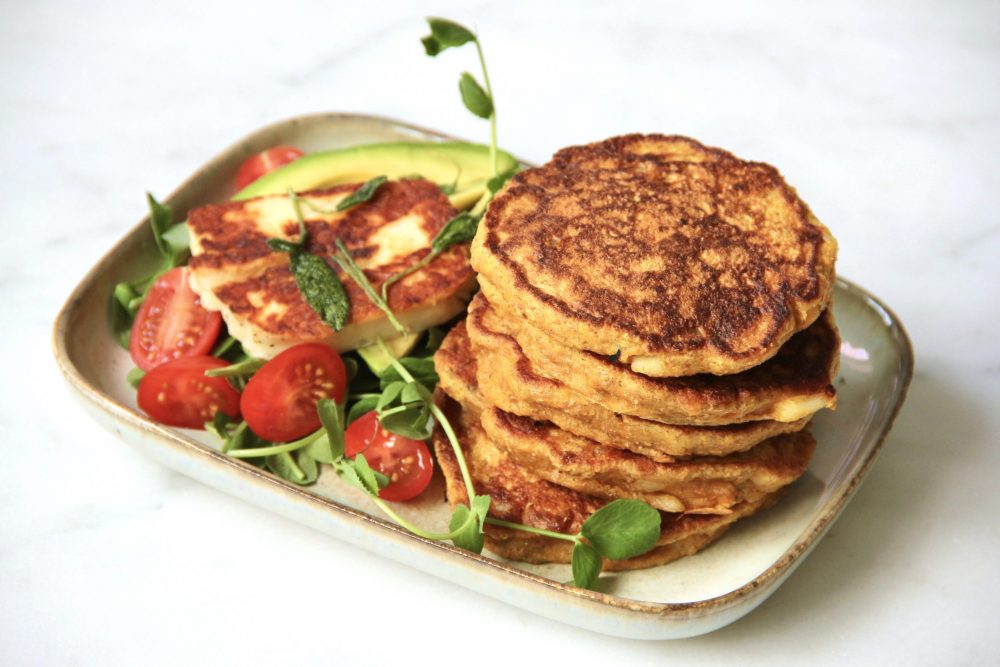
Roasted Squash and Halloumi Pancakes

I love the combination of sage and squash. It’s one of my favourite winter flavour duo! Delicious any time of the day; serve at brunch with an egg cooked to your liking, or serve as lunch, or even dinner as a starter or main dish. These would be delicious with a soured cream sauce on the side, or make a spicy tomato and avocado salsa.

Serves 4 as a lighter meal or starter, or 2 as a main

Ingredients

  • 350g squash in large chunks, skin left on
  • 1 large egg
  • 10 sage leaves, finely diced
  • 250ml milk
  • 1 block of halloumi, cut into four 1cm thick slices and the remaining finely shredded
  • 150g wholemeal flour
  • 1 tsp baking powder
  • 1/4 nutmeg, grated
  • Olive oil for frying

Method

  • Roast the squash in a pre-heated oven set at 180°C for up 45 minutes till soft. Allow to cool slightly before peeling off the skin. You should have approximately 180-200g cooked squash.
  • Mash the squash in a large bowl, before adding in the sage, egg, milk and diced halloumi.
  • In a separate bowl, mix the remaining dry ingredients before combining with the wet ingredients. Mix to form a batter the consistency of thick double cream.
  • Heat a frying pan over a medium heat and add 1/2 tsp olive oil.
  • Allowing space between each pancake, take a ladel of batter and make a round for each pancake, allowing the mixture to spread naturally. Cook in batches according to the size of your frying pan.
  • Cook for 2 minutes per side, flipping with a spatula once bubbles have risen to the surface and the edge starts to dull. Cook for a further 2 minutes on the second side.
  • Keep cooked pancakes warm in an oven set to 100°C on a tray, keeping pancakes to a single layer if possible.
  • Once all the pancakes are cooked, add the remaining slices of halloumi to the pan and fry till crispy and golden on both sides.
  • Serve the pancakes in stacks and top with crispy halloumi.

Per serving: 406kcal/ 21.4g fat/ 11.3g saturated fat/ 33.4g carbohydrates/ 5.9g fibre/ 19.0g protein

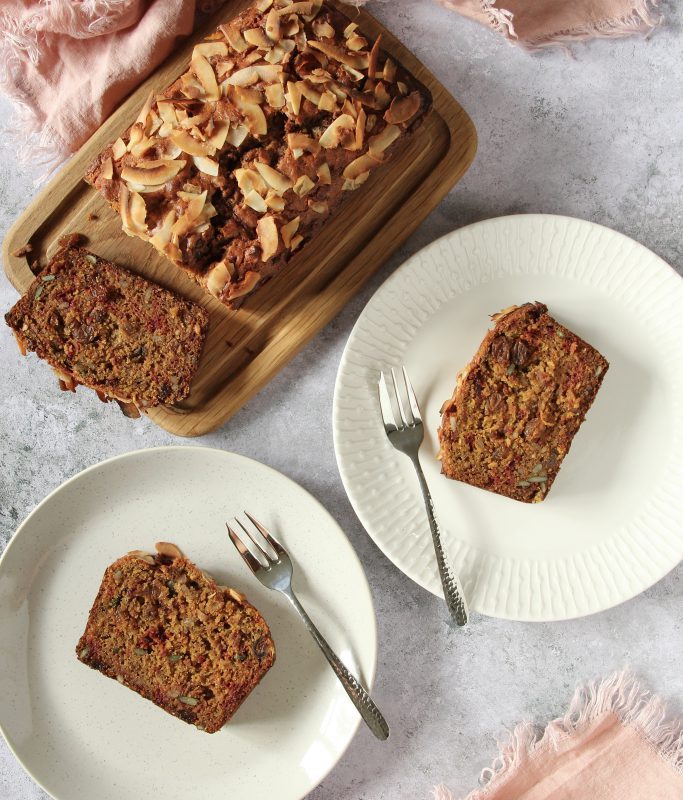
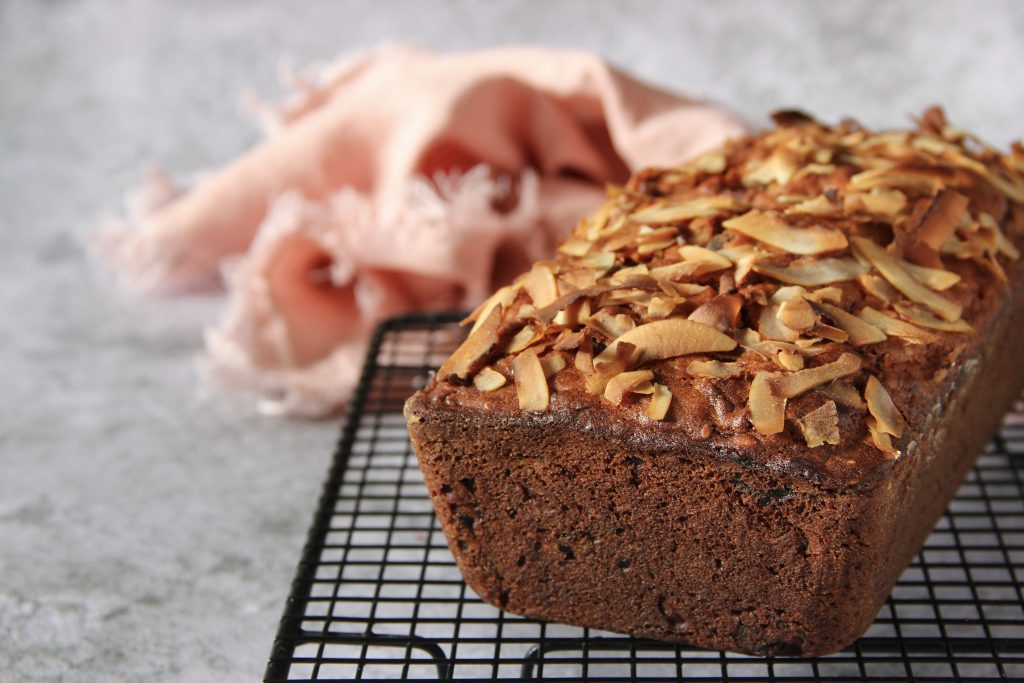
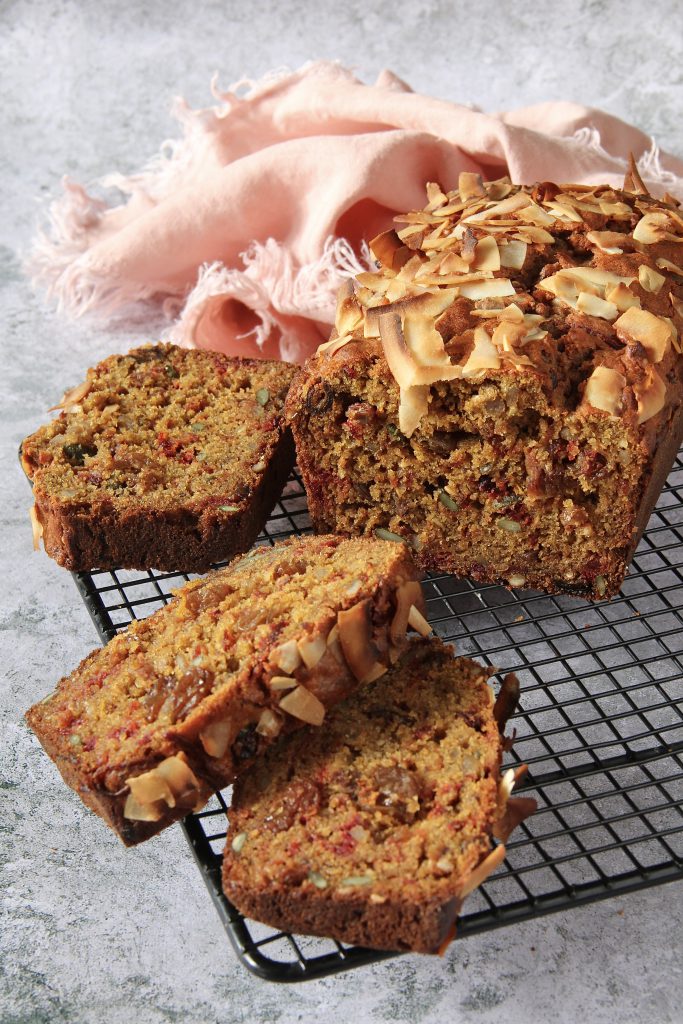
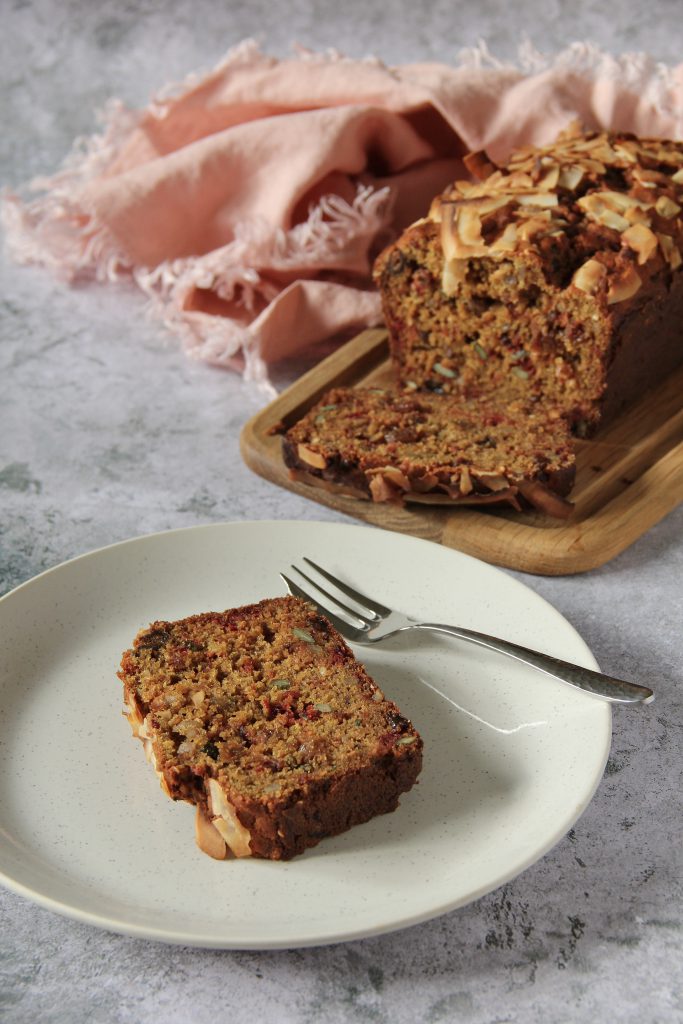
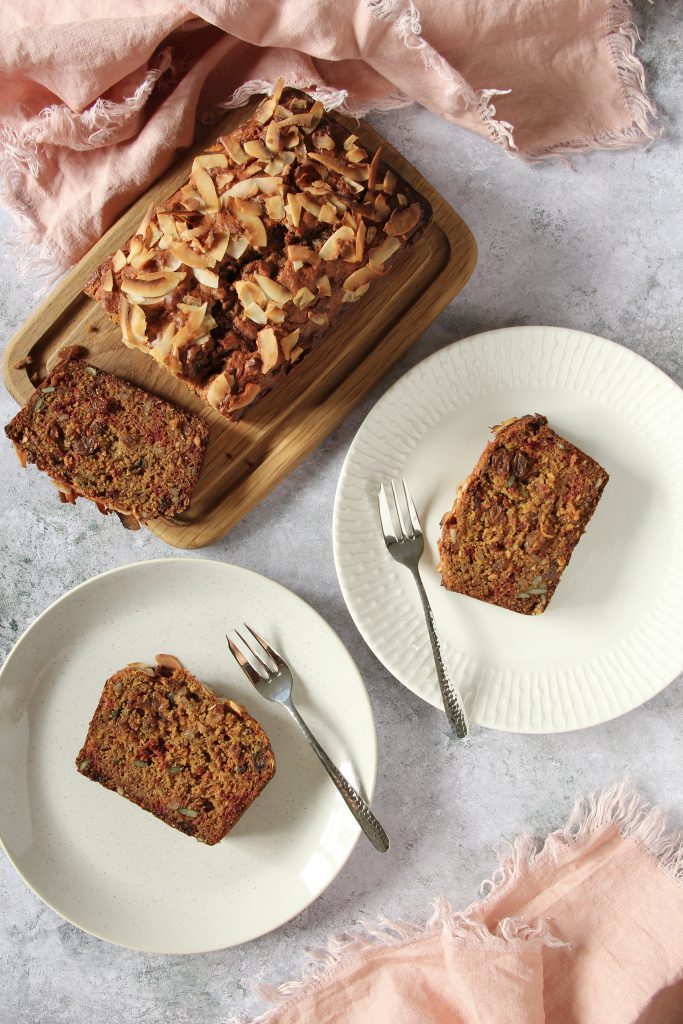
Seeded Beetroot Cake

This recipe was inspired by a recipe by Nigel Slater which I started making after growing beetroots for the first time (and rather successfully I might add). We had so many beetroots to use up I had to try to find new recipes to use them in. I thought this recipe was so delicious and was an easy way to use the rapidly growing beetroots.

I decided to make my own version of this cake seeing as there is so much added free sugars in the original recipe. While sugar is sugar at the end of the day, swapping dates in the place of sugar doesn’t make this cake much healthier than the original, but it is a nice twist which adds a little extra fibre diversity into the mix.

It’s also worth point out that while this recipe was going through the developmental stages I learnt that you cannot blend the dates directly with the oil as you would with water. It makes the most sticky mess and I almost gave up! So trust me on this one, blend with the water first and the mix in the oil at the end. That way there won’t be any frustrated cake tears.

Serves 10

Ingredients

  • Butter or oil, for greasing
  • 125g dates
  • 2 eggs, separated
  • Zest and juice of half a lemon
  • 180g self-raising flour
  • 1/2 tsp bicarbonate of soda
  • 1 tsp baking powder
  • 1/2 tsp ground cinnamon
  • 120ml extra virgin olive oil
  • 170g/5oz raw beetroot, peeled and grated
  • 75g/3oz sultanas or raisins
  • 75g/3oz mixed seeds (such as sunflower, pumpkin and linseed)
  • 10g coconut flakes

Method

  • Preheat the oven to 180°C fan/200°C convection.
  • Line a 1lb bread tin with baking parchment and grease the sides lightly.
  • In a jug, blend the dates and 50ml boiling water to a thick paste consistency. Add the egg yolks and lemon juice and mix before adding the oil and grated beetroot.
  • In a separate bowl, sieve the flour, bicarbonate of soda, baking powder and cinnamon together. Add the lemon zest, sultanas and seeds, mixing to evenly disperse them.
  • In a clean bowl, beat the egg whites to a soft peak consistency.
  • Mix the beetroot mixture with the dry ingredients, mixing to a batter before gently folding the egg whites in.
  • Pour into the lined tin, top with coconut flakes and bake for 40-45 minutes, covering with foil after 20 minutes. The cake is cooked when a skewer inserted into the middle of the cake comes out clean.
  • Leave to cool in the tin for 20 minutes before turning out onto a wire rack to cool completely.

Per slice: 291kcal/ 16.6g fat/ 2.9g saturated fat/ 28.9g carbohydrates/ 2.8g fibre/ 5.8g protein