Turkish Inspired Eggs

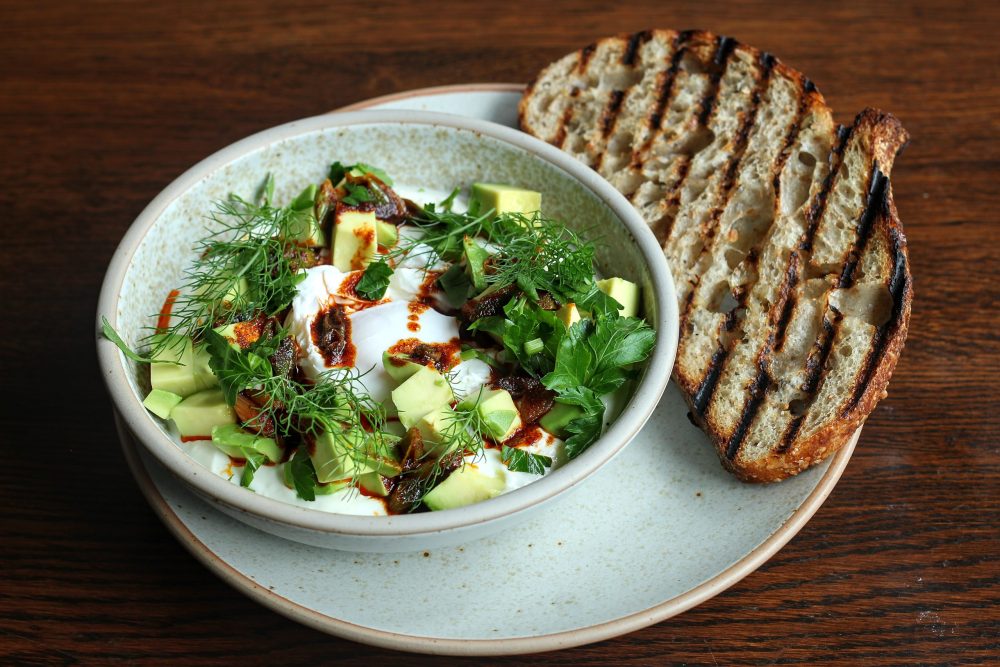
Post-exercise, you want to consume carbohydrates and protein to help replenish glycogen stores as well as help repair your muscles. My Turkish Inspired Eggs contain plenty of protein thanks to Yeo Valley 0% Greek Recipe*, as well as carbohydrates from the sourdough bread served with them. I’m also pairing in plenty of vitamins, minerals and antioxidants to help with recovery in the form of fresh fruits, veggies, and herbs and spices.

Ingredients

  • 150g Yeo Valley 0% Fat Greek Recipe*
  • 1 garlic clove, finely minced
  • 1 tbsp extra virgin olive oil
  • 1 spring onion, sliced
  • 1 tsp smoked paprika
  • 1 egg
  • 1/2 avocado
  • 1 tbsp flat-leaf parsley
  • A few sprigs of dill

To serve

  • 1 slice of seeded sourdough, toasted
  • 100g blueberries

Method

  1. Mix the garlic in with the yoghurt and season with salt and pepper
  2. Heat the olive oil in a pan till hot and pour over a heat-proof dish containing the spring onions and paprika to create a flavoured oil
  3. Poach an egg for 3.5 minutes, or to your liking
  4. Serve the egg on top of the yoghurt with the avocado, drizzle over the oil and top with parsley and dill
  5. Serve with sourdough and fresh fruit
Turkish Style Eggs

Per serving: 801kcal/ 41g fat/ 8.2g saturated fat/ 64g carbohydrates/ 11g fibre/ 39g protein

*Gifted product
Udon Carbonara

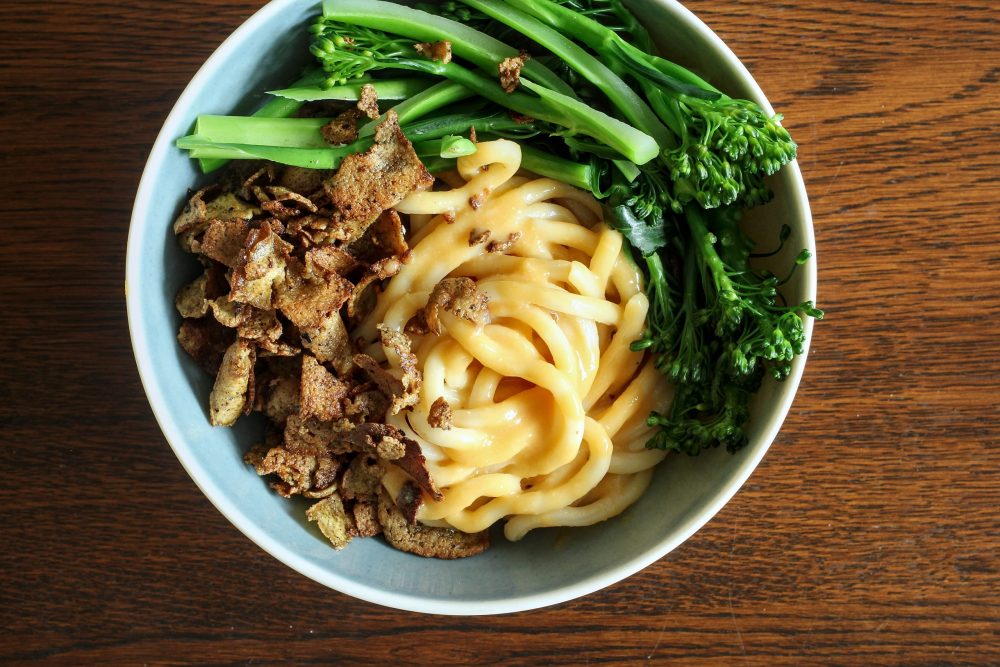
A super quick meal to make with plenty of umami flavours in addition to also providing you with your daily vitamin K requirements, needed to maintaining strong and healthy bones.

Serves 2

Ingredients

  • 180g smoked tofu, very thinly sliced
  • 1/2 tbsp extra virgin olive oil
  • 1 tbsp white miso paste
  • 2 egg yolks
  • 30g parmesan cheese
  • 1/2 tsp cracked black pepper
  • 2 packets of udon noodles
  • 200g sprouting broccoli (or Asian greens such as choi sum or gai lan)

Method

  • Pan-fry the tofu with the olive oil for 8-10 minutes till golden brown and crispy.
  • Meanwhile cook the udon noodles according to the packet instructions, adding the broccoli in for the last minute of cooking.
  • While the noodles are cooking make the sauce by combining the miso paste, egg yolks, parmesan cheese and cracked black pepper together, mixing well.
  • Using a little of the cooking water, temper the sauce to get the same consistency as double cream. Add the hot noodles and mix well till each noodle is coated with a glossy and smooth sauce.
  • Plate up and enjoy straight away.
Udon Carbonara

Per serving: 488kcal/ 20g fat/ 5.7g saturated fat/ 43g carbohydrates/ 7.8g fibre/ 29g protein

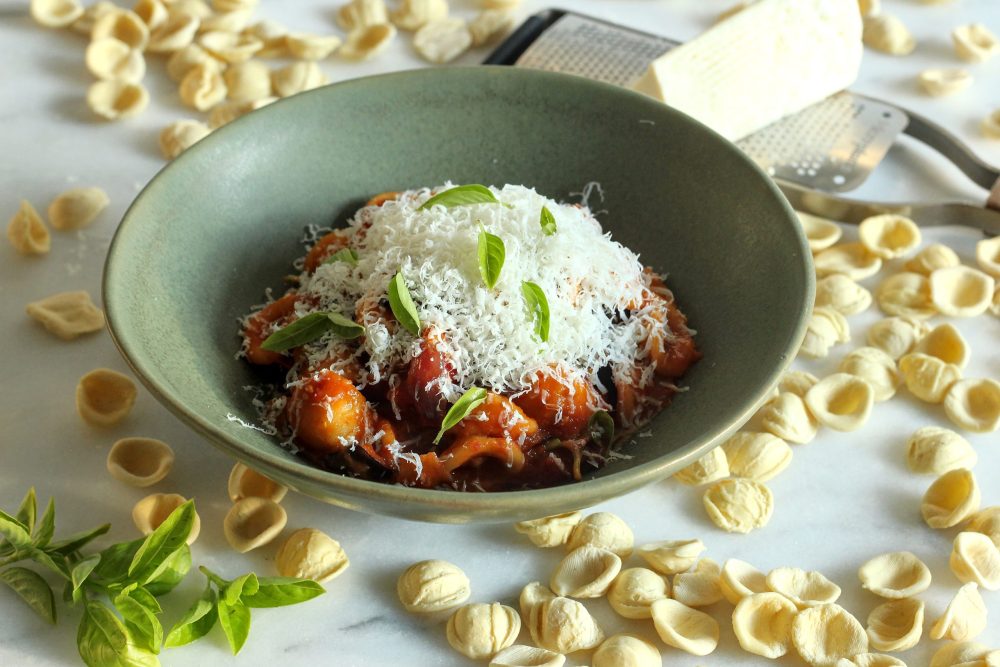
Pasta alla Norma con Ricotta Salata

My friend bought me back some lovely Italian gifts, including this handmade orecchiette made by an actual nonna, and a local cheese called ricotta salata which is a salty and sharp cheese. So, I wanted to make something worthy of these ingredients, and my friend suggested pasta alla norma, which is an aubergine and tomato pasta, and something I absolutely love.

I probably haven’t made this the traditional way, but roasting the vegetables in the oven means hands-free cooking for the best part as well as making a really creamy sauce that even my friend was admiring from through her phone!

Serves 3

Ingredients

  • 500g tomatoes, cut up into 1″ chunks
  • 2 large red onions, cut up into 1″ chunks
  • 4 garlic cloves, skin left on
  • 4 tbsp extra virgin olive oil
  • 2 aubergines, cut into 1″ cubes
  • 300g pasta shape of choice
  • A big handful of fresh basil
  • Ricotta salata to serve – if you can’t find this cheese, Parmigiana would work well.

Method

  • Preheat the oven to 180°C fan/200°C convection
  • Add the tomatoes, onion and garlic to a large roasting pan with half the olive oil and mix well, ensuring the garlic cloves are closer to the centre so they don’t burn. Roast for around 45 minutes, mixing half way through.
  • In a separate baking tin, add the aubergine and remaining olive oil and roast for 30 minutes, till crispy on the edges but soft on the inside.
  • When the vegetables are almost finished roasting, boil the pasta for 2 minutes shorter than the cooking time, reserving some pasta water.
  • Blend half the tomato mixture with all the garlic cloves, removing the skin, before adding it back to the roasting tin with the cooked pasta, aubergines, and basil. Add a little pasta water if needed to get the desired sauce consistency.
  • Serve hot and fresh with grated ricotta salata over the top and enjoy!
Pasta alla Norma

Per serving: 676kcal/ 24g fat/ 5.8g saturated fat/ 86g carbohydrates/ 11g fibre/ 21g protein

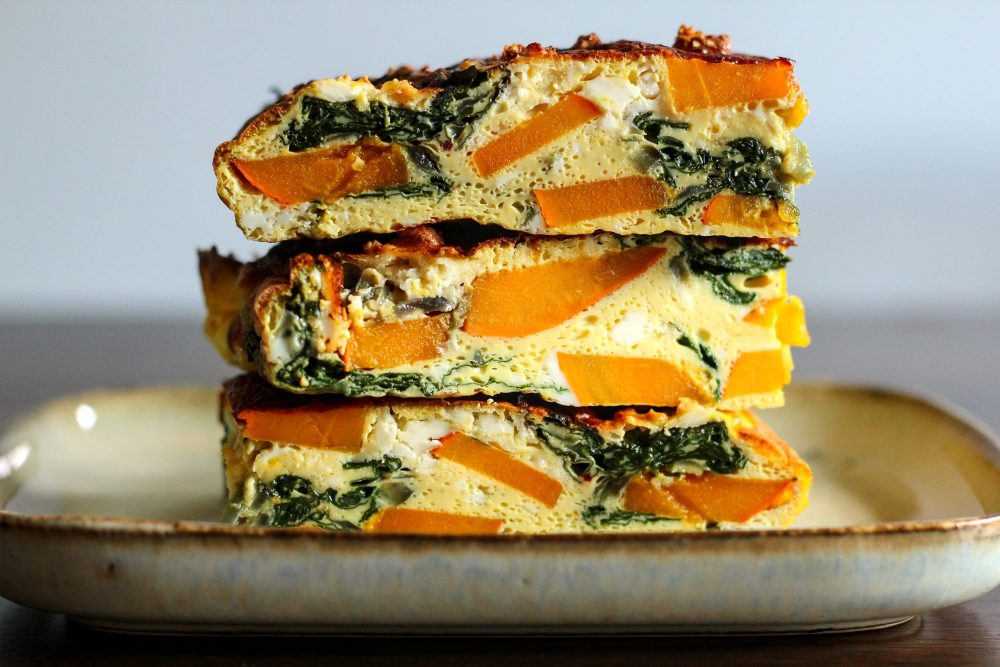
Kuri Squash Frittata

Serves 6 as a lighter meal that is still high in protein.

Ingredients

  • 2 tbsp extra virgin olive oil
  • 1 large red onion, sliced
  • 1/2 Kuri squash (350g), skin on and thinly sliced
  • 100g baby leaf spinach
  • 9 eggs
  • 100ml milk
  • 150g reduced fat feta cheese

Method

  • In a frying pan cook the onion for 2 minutes with the olive oil before adding in the squash and cooking for 5 minutes.
  • Add the spinach and allow it to wilt.
  • Whisk the eggs and milk, adding two-thirds of the feta before seasoning with pepper to taste.
  • Line a baking tin with parchment paper and add the cooked vegetables.
  • Pour over the egg mixture and scatter the remaining feta over the top.
  • Bake in a preheated oven set to 180°C fan/ 200°C convection for 22-25 minutes till golden brown and set.
  • Delicious served with a side salad.
Squash Frittata

Per serving: 241kcal/ 15g fat/ 4.8g saturated fat/ 7.9g carbohydrates/ 1.6*g fibre/ 18g protein

*Analysis completed with peeled butternut squash. Leaving the skin on the squash will help to increase the fibre content of this dish.

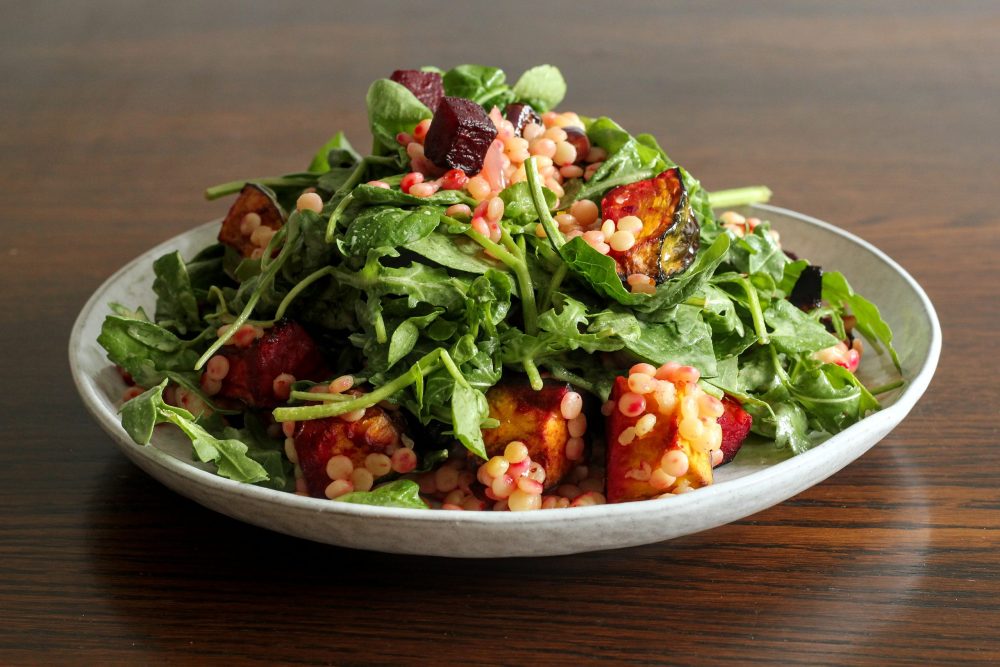
Roasted Squash & Beetroot Wholegrain Cous Cous Salad

Any squash variety will work here, I’ve used Kuri and Crown Prince, but Butternut, Table or Delicia would also work well here. If you can’t find giant wholegrain cous cous you can use standard wholegrain cous cous which only require rehydrating in 110% boiling water.

Serves 3

Ingredients

  • 400g squash, skin on, cubed
  • 1 large onion, sliced into wedges
  • 2-3 beetroot (300g), peeled and cut into cubes
  • 3 tbsp extra virgin olive oil
  • 150g giant wholegrain cous cous
  • 1 heaped tablespoon djion mustard
  • 1 tbsp red wine vinegar
  • 200g salad leaves e.g. rocket, baby leaf spinach or watercress
  • 90g goats cheese

Method

  1. Mix the squash, onion and beetroot together with 1 tbsp olive oil. Roast in a preheated oven set to 180°C fan.
  2. Meanwhile cook the giant cous cous according to the packet instructions, drain, and add 1/2 tbsp olive oil to stop the grains from sticking together.
  3. Mix the dijon mustard, red wine vinegar and remaining olive oil and pour onto the cous cous while hot and mix to combine.
  4. Add the roasted vegetables, deglazing the pan with a little boiling water, before adding the spinach.
  5. Plate up and top with goats cheese.
Roasted Squash & Beetroot Salad

Per serving: 434kcal/ 24g fat/ 7.7g saturated fat/ 34g carbohydrates/ 9.1g fibre/ 15g protein

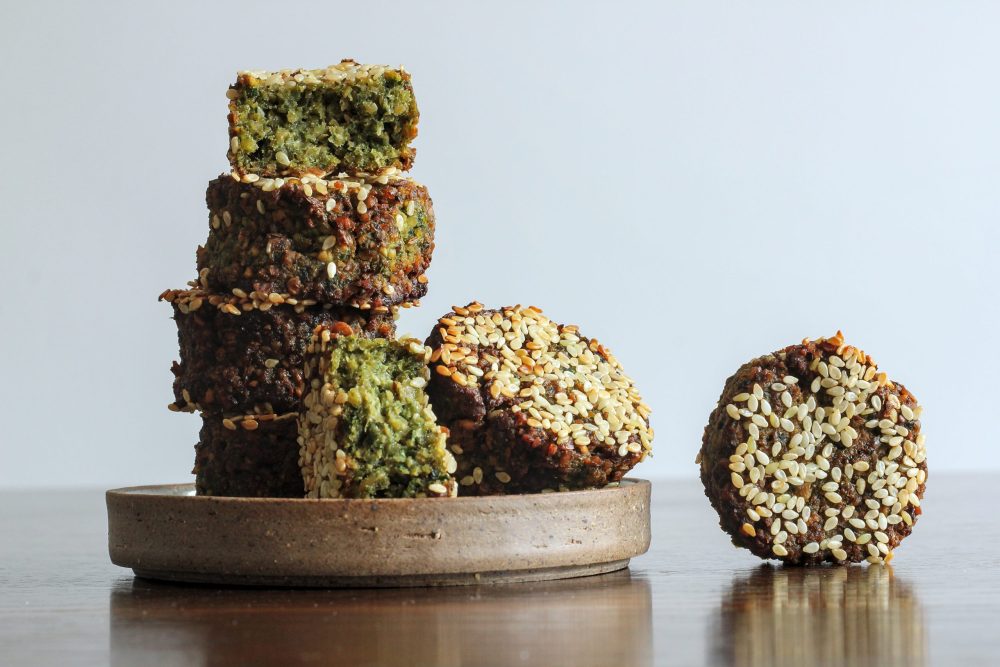
Air Fryer Falafel

I used to work at King’s College London as a postdoctoral researcher and there was this little falafel stall just around the corner which would be mine and my colleagues go to spot when we were treating ourselves to lunch out (or running back to the metabolic research unit!).

These falafel are a nod to those which I used to have more frequently than I would like to admit, but I’ve put a healthy twist on them by cooking them in the air fryer, making no deep fat frying. This helps to reduce the overall fat of the falafel, as well as using extra virgin olive oil, which is a healthy fat which probably wasn’t the oil used for frying at the stall.

Makes 24 falafel

Ingredients

  • 250g dried chickpeas, soaked for at least 8 hours in cold water
  • 1 large red onion
  • 45g flat-leaf parsley
  • 20g dill
  • 30g coriander
  • Green chillis to taste (optional)
  • 1 tbsp ground cumin
  • 1 tbsp cumin seeds
  • 1/2 tsp salt
  • 1/2 tsp bicarbonate of soda
  • 2-3 heaped tablespoons of gram flour
  • 30g sesame seeds
  • 3 tbsp extra virgin olive oil

Method

  1. Add the soaked chickpeas, onion, herbs, spices, salt and bicarbonate of soda to a blender and pulse till everything is finely chopped and combined.
  2. Mix in the gram flour to get a consistency that is still wet, but just holds together when gently pressed.
  3. Rest in the fridge for 30 minutes.
  4. Using a 2 tbsp measure, create little pucks of the mixture and gently top with sesame seeds on each of the flat sides.
  5. Place each falafel onto a non-stick baking tray (or line with baking parchment) leaving a 1cm gap between them.
  6. Brush with olive oil on the top and bake in the air fryer* for 15 minutes, flipping halfway through.
  7. Serve hot and crispy!

*option to bake in an oven set to 200°C fan for 15-20 minutes

Air Fryer Falafel

Per serving (4 falafel): 280kcal/ 12g fat/ 1.7g saturated fat/ 24g carbohydrates/ 11g fibre/ 13g protein

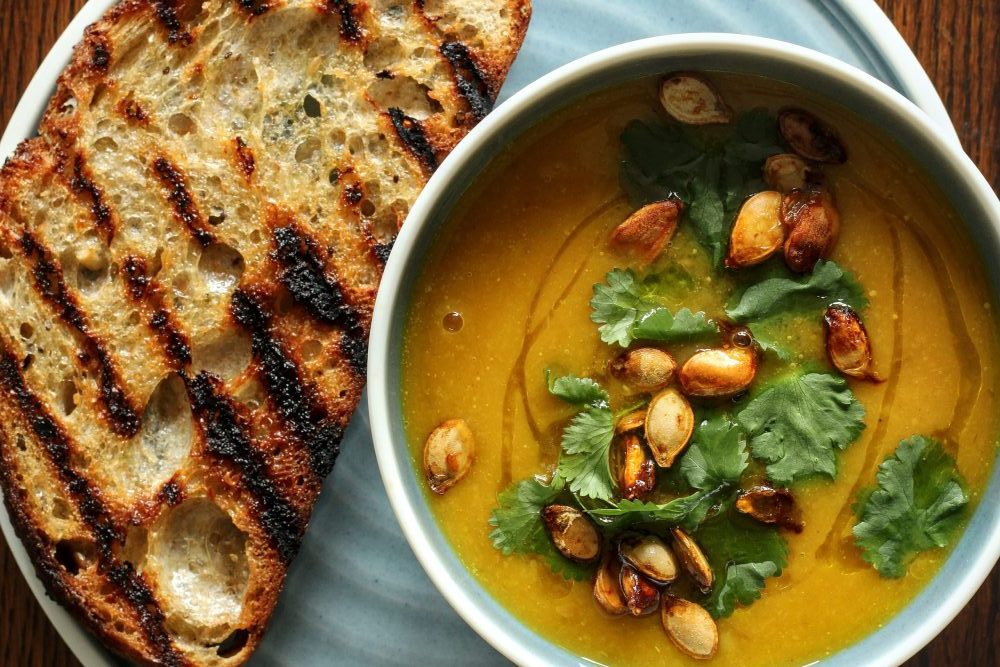
Spiced Butternut Squash & Lentil Soup

My friend doesn’t like thick soups, which is often the case when using curcubits. This, however, is a very thin soup, which still packs a punch.

Each serving provides you with a third of your daily fibre requirements, making it a great meal choice on cold winter days.

Serves 4

Ingredients

  • 1 large red onion, roughly chopped
  • 2.5 tbsp extra virgin olive oil
  • 2 cloves of garlic, roughly chopped
  • 1 tbsp cumin seeds
  • 650g pumpkin, skin on and roughly diced, seeds reserved
  • 100g red lentils
  • 1/2 tsp salt
  • 1/2 tsp white pepper
  • 1 tsp ground turmeric
  • 15g fresh coriander

Method

  • Gently fry the onion and 2 tbsp oil in a large pan till soft and translucent. Add the garlic and cook for a further 2 minutes.
  • Add the cumin seeds and cook till fragrant before adding in the butternut squash and lentils with 1 litre of boiling water.
  • Allow to simmer for 20 minutes till the lentils and squash are cooked through and soft.
  • Meanwhile, coat the squash seeds with the remaining 1/2 tbsp extra virgin olive oil and roast in an oven set to 180°C fan for 12 minutes, or 6-8 minutes in an air fryer.
  • Blend till smooth, seasoning with the remaining spice and serve with the crispy seeds and coriander leaves.
Spiced Butternut Squash and Lentil Soup

Per serving: 302kcal/ 13g fat/ 2.0g saturated fat/ 29g carbohydrates/ 10g fibre/ 13g protein

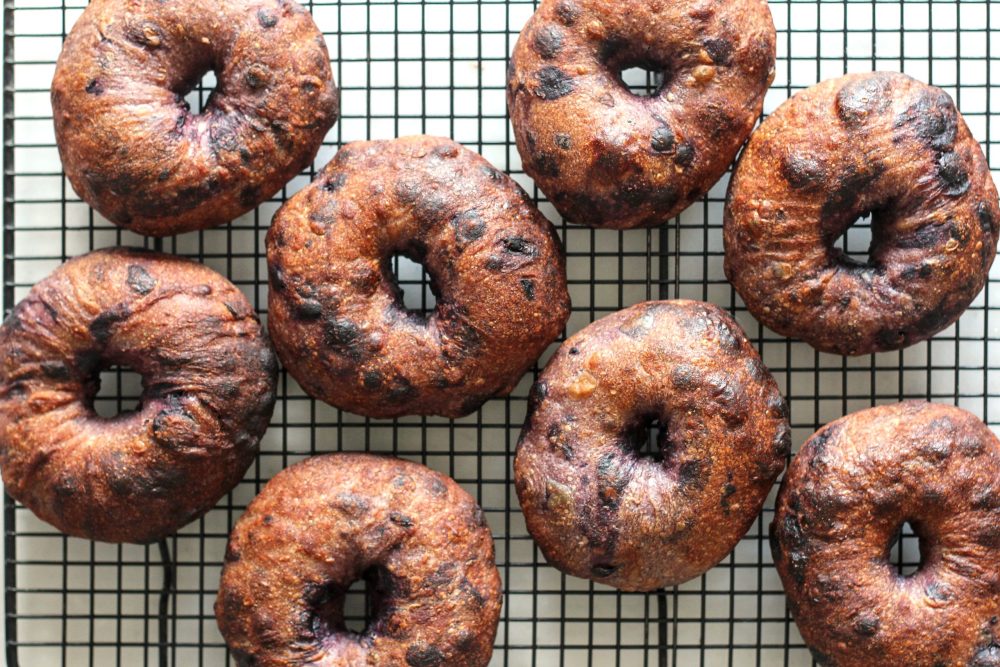
Sourdough Blueberry Bagels

Blueberry sourdough bagels. Just a small amount of work and you will have the most delicious bagels – chewy crusts with a soft centre, filled with sweet and tangy blueberries which you know will do you good.

If you can’t find freeze-dried blueberries you can leave these out. Most shop-bought dried blueberries are sweetened with fruit juice and therefore won’t work as a replacement.

Makes 9 bagels

Ingredients

  • 200g frozen blueberries
  • 40g caster sugar
  • 150g active starter, refreshed 10-12 hours before
  • 500g bread flour
  • 8g salt
  • 75g freeze-dried blueberries (optional)
  • 20g molasses (to make vegan) or honey
  • Rice flour for dusting

Method

  1. Add the frozen blueberries to a large mixing bowl and pour over 200ml of boiling water. Allow the blueberries to thaw for 5 minutes.
  2. Add the caster sugar and sourdough starter and mix.
  3. Add the flour and salt, and mix in the bowl by hand for around 5 minutes before transferring to the work surface and kneading for a further 5 minutes. It will be sticky but keep working it.
  4. Transfer back to the mixing bowl, cover and rest for 1 hour.
  5. Top the dough back onto the work surface and knead for 1-2 minutes, adding the freeze-dried blueberries if using. Cover and prove at room temperature for 3 hours.
  6. Divide the dough into 9 equal portions around 125g and shape into a tight ball, using rice flour to stop them from sticking. Allow to rest for 30 minutes.
  7. Pinch the centre of each ball with your thumb and index finger, creating a hole. Then using both index fingers spin the dough around to create a bagel shape. Cover and rest in the fridge overnight, or for at least 8 hours.
  8. The next day, set the oven to 220°C fan, bring a large pan of water to a boil, and add the molasses.
  9. Boil each bagel for 30 seconds on each side before removing onto a wire cooling rack.
  10. Bake on a lined tray for 18-20 minutes, till golden brown and nicely puffed up.
  11. Delicious served with your favourite cream cheese and extra berries.

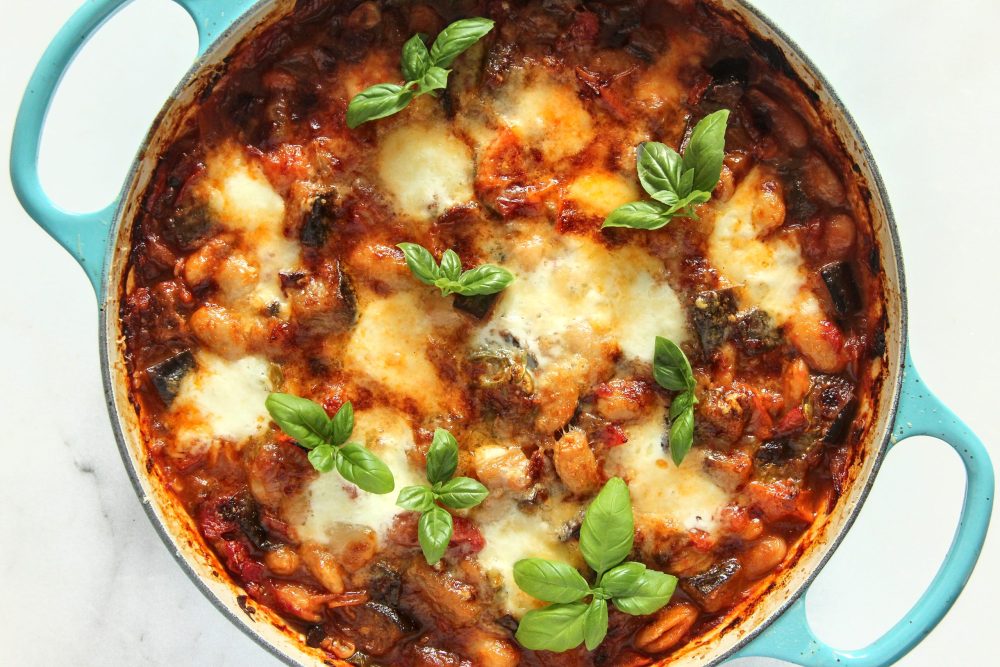
Parmigiana Beans

This whole dish could very easily be made completely in the oven, making it more hands-free.

I used Isle of Wight tomatoes and aubergines which are currently in season, and are more locally produced with fewer air miles, making them more sustainable as part of Sustainable September.

Serves 4

Ingredients

  • 2-3 red onions (300g), diced
  • 3 tbsp extra virgin olive oil
  • 2 aubergine, diced
  • 5 cloves of garlic, finely sliced
  • 1kg tomatoes, roughly chopped
  • 30g basil
  • 570g butterbeans in stock
  • 125g mozzarella
  • 50g Parmigiano Reggiano

Method

  • Preheat the oven to 180°C fan/ 200°C convection.
  • In a large ovenproof dish, cook the onions in the olive oil for 5 minutes over a medium heat before adding the aubergine. Cook for a further 5 minutes before adding the garlic*.
  • Add the tomatoes and transfer to the oven to cook for 30 minutes till the tomatoes have softened.
  • Add the beans with their stock and most of the basil, stir to combine and return to the oven, cooking for a further 10 minutes till the sauce thickens.
  • Scatter the mozzarella over the top with half the Parmigiano Reggiano and return to the oven for 10-15 minutes when the cheese has melted and is golden brown. Scatter with the remaining basil and Parmigiano before serving straight away with thick slices of bread.

*Option to do this step in the oven

Parmigiana Beans

Per serving (excluding bread): 422kcal/ 21g fat/ 8.8g saturated fat/ 28g carbohydrates/ 15g fibre/ 20g protein

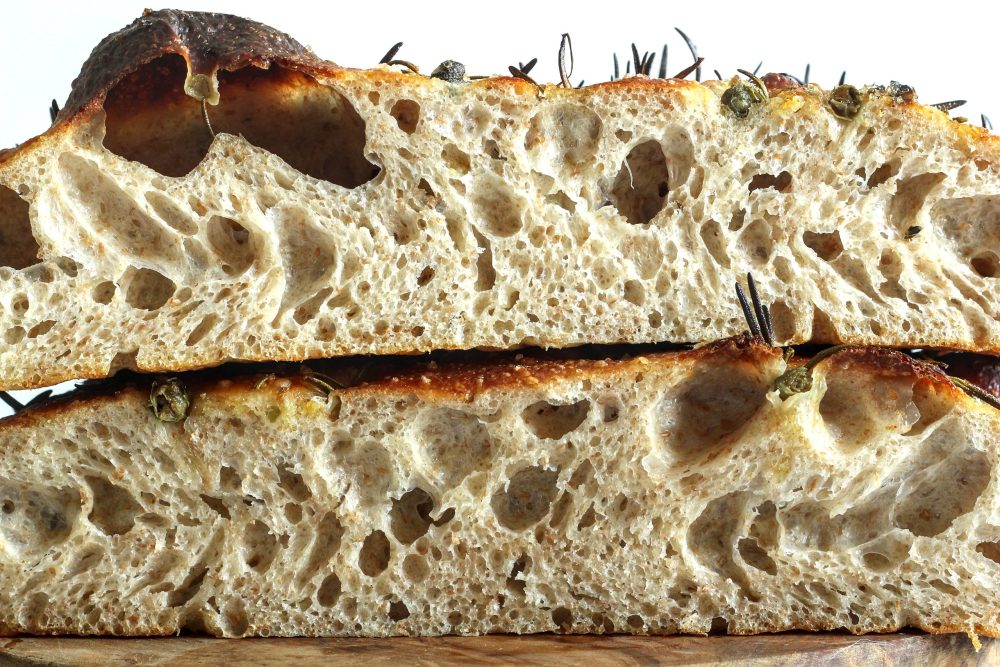
Sicilian Caper Focaccia

Makes 1 large focaccia which will serve 8 minimum

Ingredients

  • 150g levain, refreshed 8-12 hours earlier
  • 15ml extra virgin olive oil plus extra for later
  • 150g wholemeal bread flour
  • 600g white bread flour
  • 12g salt
  • Salted caper
  • A few sprigs of rosemary

Method

  • Mix the levain, 500ml water and 15ml olive oil together before adding the flours and mixing to make a shaggy dough. Leave for 30 minutes covered.
  • Mix 12g of salt with 75ml water till dissolved, and pour over the dough, scrunching the dough with your hand to mix it in. The dough should look very rough and almost broken into small pieces. Cover and leave for 45 minutes.
  • Over the next few hours complete 4 sets of coil folds, allowing the dough to rest for 45-60 minutes between each fold.
  • Line and grease a large baking tray with olive oil. Gently transfer the dough to the baking tray and push the dough over the surface so it reaches the corners as best you can – there will be some resistance so don’t force it.
  • Cover the dough and leave in the fridge to slowly rise overnight – anywhere between 8-24 hours depending on your schedule
  • The next day preheat your oven to maximum temperature, add a small empty tray to the bottom of the oven for steam later, and remove the focaccia from the fridge.
  • Once the oven is up to temperature, uncover the dough and drizzle with a little olive oil. Using wet fingers, press your fingertips through the surface of the dough to create plenty of dimples before adding capers (with a little of their salt) and rosemary to the dimples.
  • Place the focaccia in the oven, adding water into the hot tray to create steam, closing the door as quickly as possible to trap the steam in, and reduce the oven temperature to 225°C fan/ 245°C convection for 20 minutes.
  • Remove the tray with water and bake for another 5 minutes* till the crust is golden.
  • Remove from the oven, and allow to cool on a wire rack.
Sicilian Caper Sourdough Focaccia

Bulgar Wheat Salad with Chickpeas

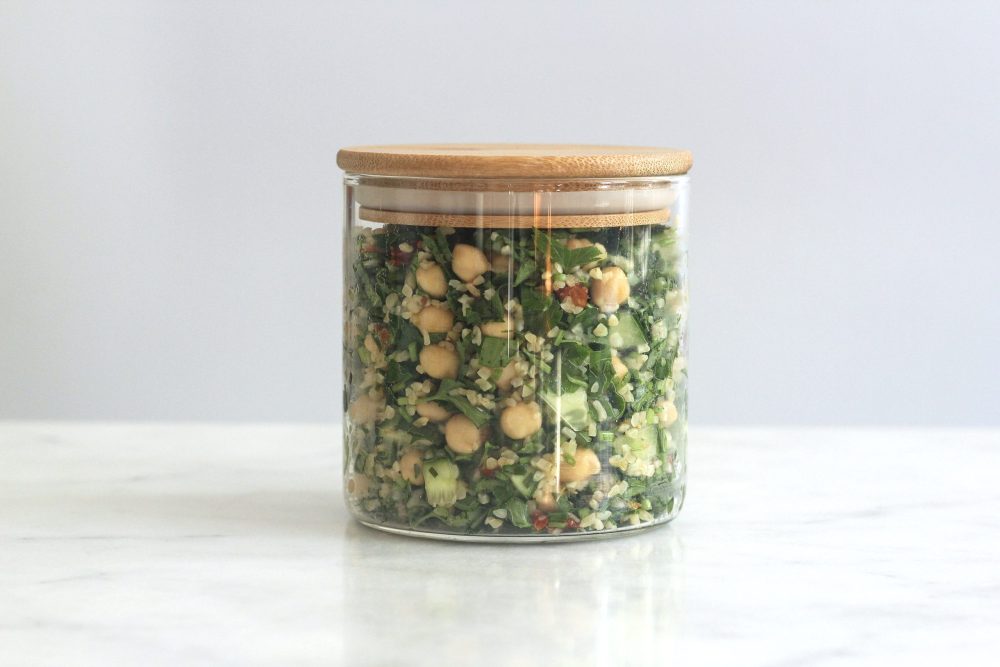
Did you know that the average Brit spends £1000 buying lunch at work over the course of the year? This cost, coupled with the single-use packaging and missed opportunity for added nutrition is why I’ve teamed up with MyNutriWeb as part of Sustainable September to help you be more sustainable when it comes to lunch. It is estimated that 28% of people look to social media to influence their lunch choices, so let me influence you with my sustainable bulgar wheat salad with chickpeas which costs less than a meal deal, is packed full of fibre, and provides 20g of plant-based protein. You can read the full blog on MyNutriWeb’s webpage.

Serves 2 but can easily be doubled up to make more lunches

  • 100g bulgar wheat
  • 20g chives, finely chopped
  • Juice of 1 lemon
  • 6 sundried tomatoes, chopped, with
  • 200g cucumber, diced
  • 100g flat-leaf parsley, chopped
  • 1 tin of chickpeas, drained (look for those with no added salt)

Method

  1. Add the bulgar wheat and chives to a large mixing bowl and pour 120ml boiling water over the top. Cover and leave to steam for 10 minutes till all the water has been absorbed.
  2. Once cooked, fluff the bulgar wheat and stir in the remaining ingredients.

Substitutions:

  • Bulgar wheat for couscous, quinoa, or orzo
  • Chives for spring onions or finely diced red onion
  • Sun-dried tomatoes for fresh, or roasted peppers, or artichokes
  • Cucumber for courgettes, or leftover roast vegetables
  • Flat leaf parsley for lettuce, rocket, watercress, spinach or any other leafy green
  • Chickpeas for any other beans e.g. butter beans, kidney beans, haricot beans
Bulgar Wheat Salad with Chickpeas

Per serving: 448kcal/ 8g fat/ 1.1g saturated fat/ 65g carbohydrates/ 18g fibre/ 20g protein

Gut Loving Chickpea Caesar Salad

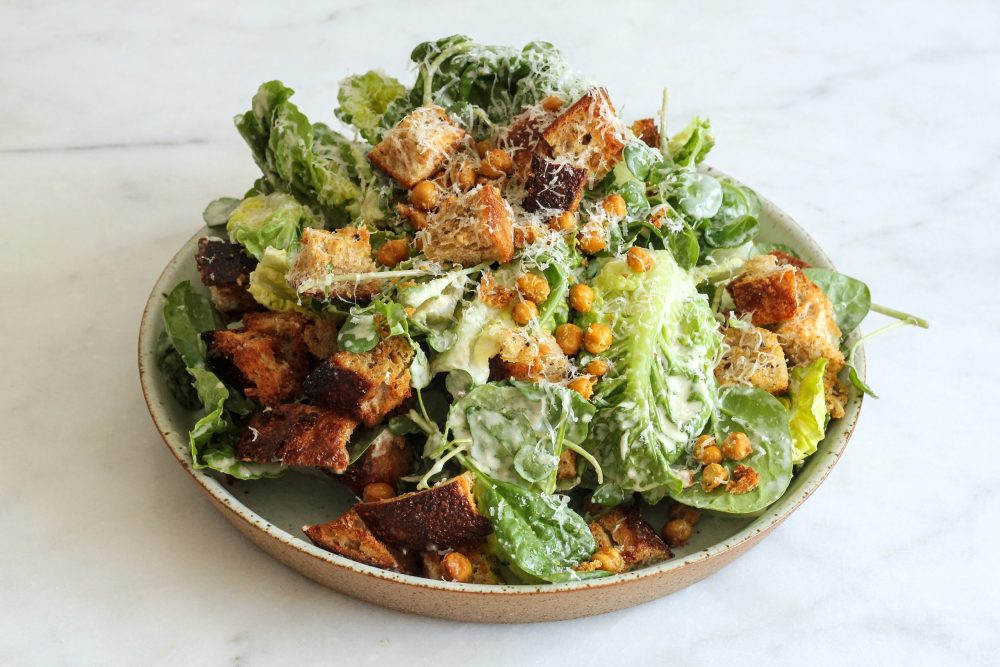
My Gut Loving Crispy Chickpea Caesar Salad is a delicious way to increase diversity as well as pack in pre- and probiotics whilst delivering 13g of fibre and 30g of protein per serving!

Did you know that the bacteria found in Parmigiano Reggiano can survive and help to colonise our gut making it a delicious probiotic if eaten raw? And this paired with the live bacteria in the yoghurt (more probiotics) and plenty of prebiotics (chickpeas, garlic, extra virgin olive oil, rocket, spinach and watercress all being sources) and fibre diversity and quantity make this the perfect salad for both your tastebuds and gut microbiota.

Serves 2 as a main

  • 1 tin of chickpeas, drained and dried
  • 2.5 tbsp extra virgin olive oil
  • 180g stale sourdough bread, torn into bite-sized chunks
  • Juice of 1 lemon
  • 100g live yoghurt (I used a 0% fat variety)
  • 1 clove of garlic
  • 3 anchovies in oil (12g)
  • 60g Parmigiano Reggiano
  • 2 baby gem lettuce heads
  • 100g mixed rocket, spinach and watercress

Method

  • Mix the chickpeas with 1/2 tbsp olive oil and cook in an air fryer set to 200°C for 20 minutes
  • Mix the sourdough chunks with 1 tbsp olive oil and add to the chickpeas after 10 minutes.
  • Meanwhile, make the dressing by combining the lemon juice, yoghurt, garlic and anchovies together and blending till smooth. Add half the parmesan.
  • In a large mixing bowl, add the leaves and the dressing and mix well before adding most of the crispy chickpeas and croutons.
  • Serve in a large bowl and top with any leftover chickpeas and croutons, and the remaining parmesan. Eat straight away.
Gut Loving Chickpea Caesar Salad

Per serving: 663kcal/ 28g fat/ 4.1g saturated fat/ 65g carbohydrates/ 13g fibre/ 30g protein