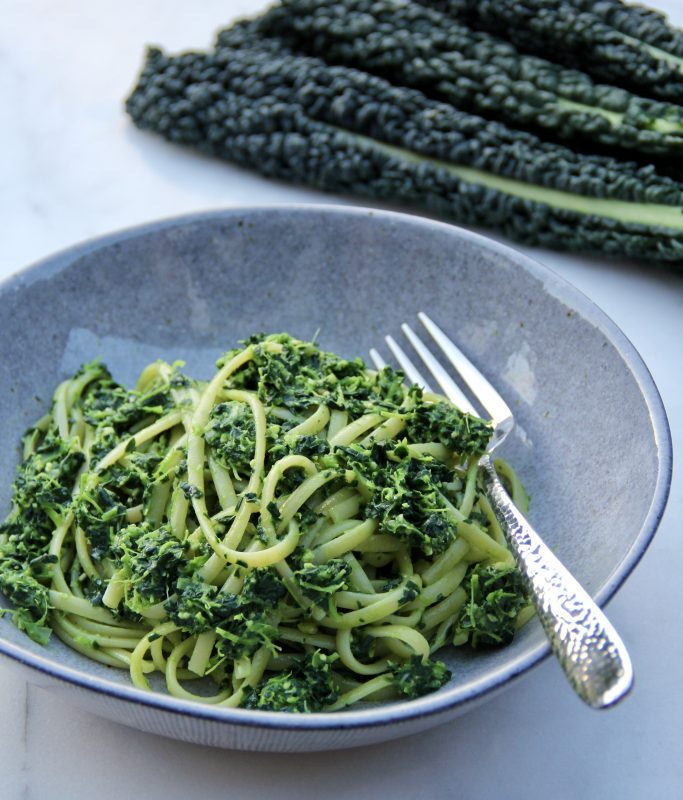
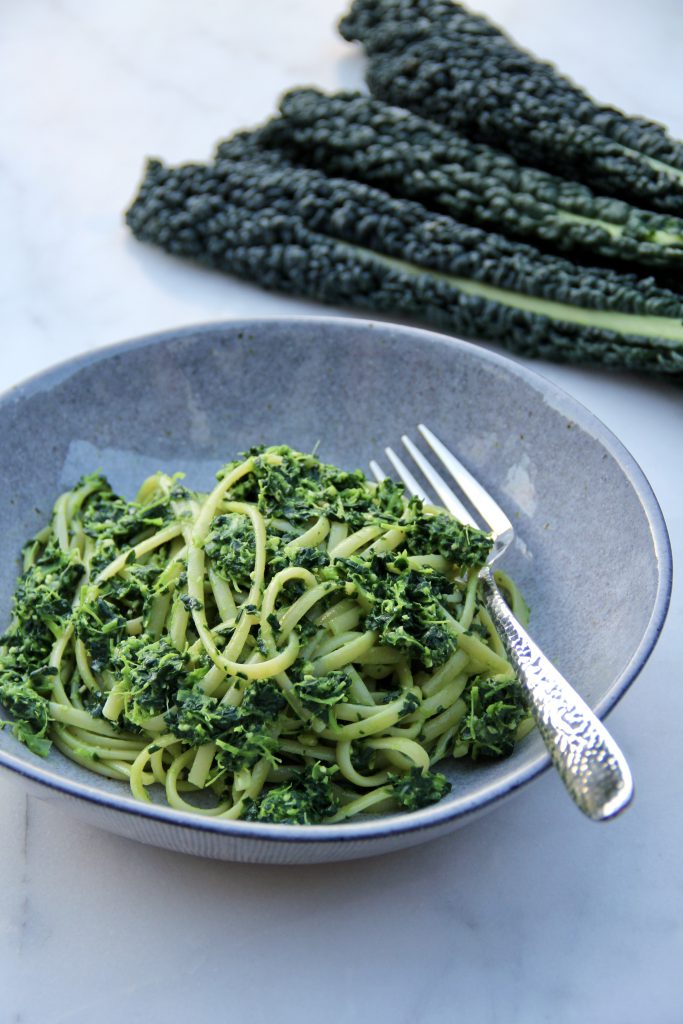
Kale Pesto with Pasta

Super easy to make, taking just the time of the pasta to cook, it’s seasonal, packed full of fibre, providing 5 sources of plant-based goodness….. what’s not to love?!?

I leave the stems of the kale in. It adds an extra crunch to the dish, which I absolutely love, but also means maximising the fibre content of this dish as well as less food waste, which we really hate! Double bonus!

You could make a large quantity of this pesto and store it in an airtight container in the fridge for a few days. Alternatively, pop it into the freezer in portion sizes ready to whip out when the cupboards are looking a little bare.
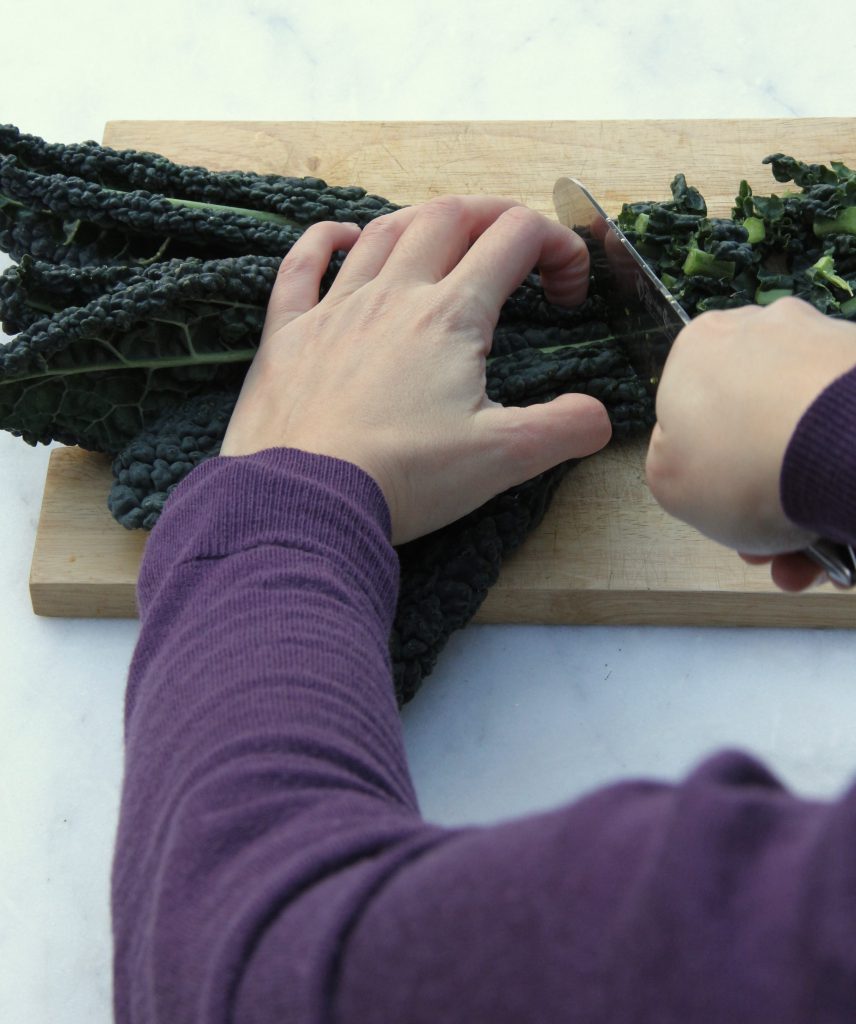
Keeping the stems on the kale helps maximise the fibre content and reduce food waste

Serves 1

Recipe

  • 100g kale, washed and roughly chopped
  • 1 clove garlic, peeled
  • 15ml extra virgin olive oil
  • 20g toasted pine nuts
  • 20g parmesan, finely grated
  • 75g pasta

Method

  • Bring a pan of water to the boil. Add the kale and garlic clove and blanch for 1 minute. Remove from the water into a jug for blending.
  • Add the pasta to the boiling water and cook for 1 minute less than the packet instructions.
  • Meanwhile, blend the blanched kale and garlic, before adding the oil, pine nuts and parmesan. Blend again, adding a little pasta water if too thick.
  • Drain the pasta, reserving a little of the cooking water. Return to the pan.
  • Add the pesto and return to the heat to warm everything through. Loosen the pesto sauce with the reserved pasta water if needed. Serve immediately.

Per serving of kale pesto 388kcal/ 35g fat/ 6.7g saturated fat/ 3.8g carbohydrates/ 3.8 fibre/ 13.1g protein
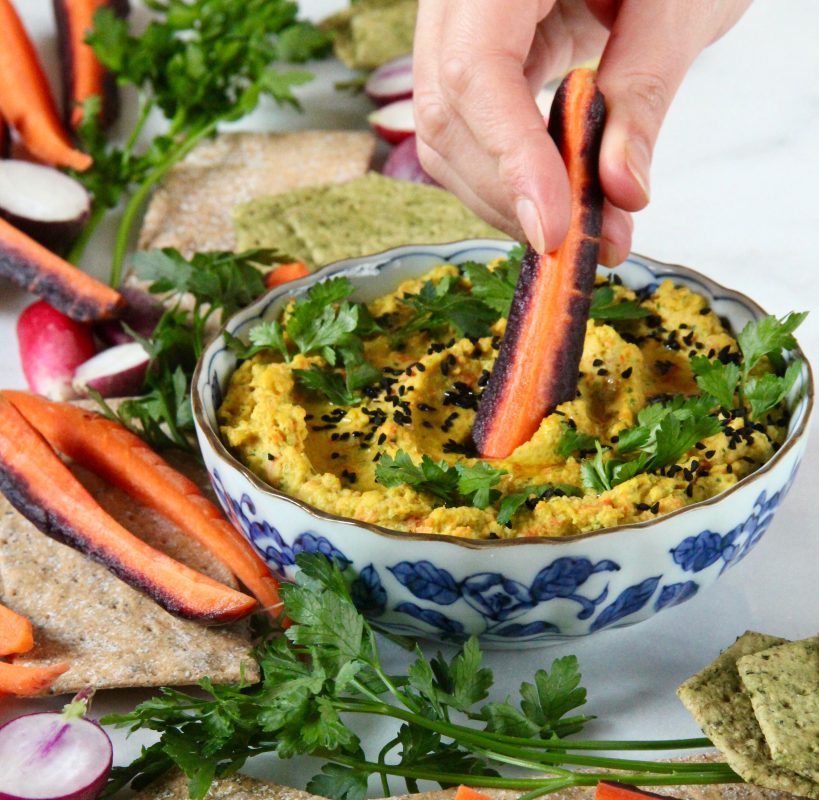
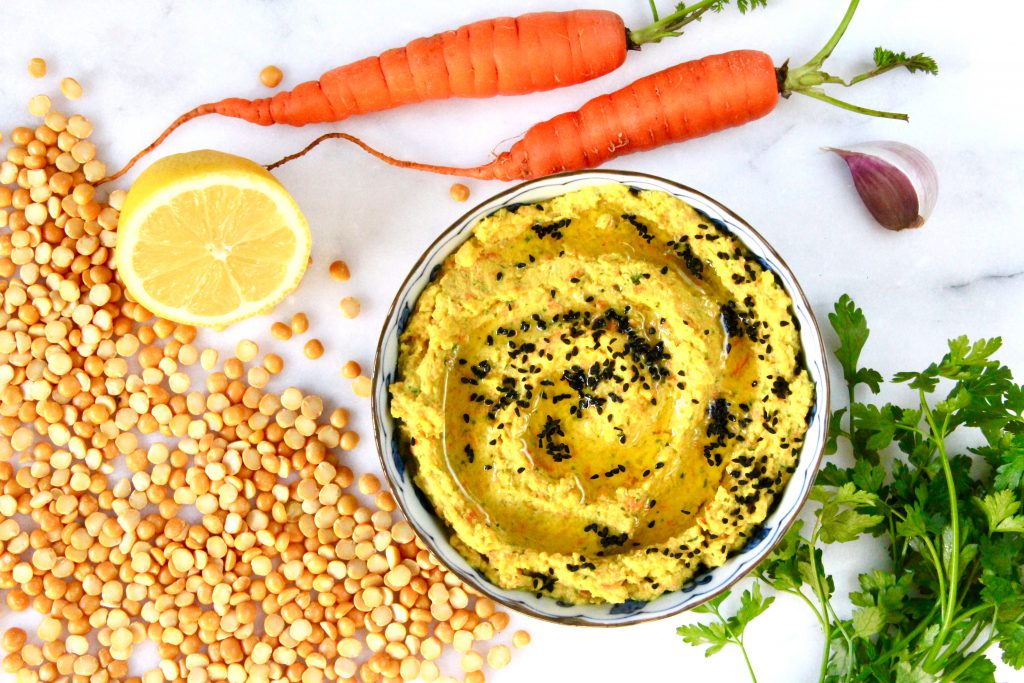
Roasted Carrot and Yellow Split Pea Hummus

Visiting the historical town of Winchester, we decided to stop for lunch at Hugh Fearnley-Whittingstall’s River Cottage Kitchen. We shared a starter of a mixed mezze board, but the single dish that stood out from the board for me was the carrot and yellow split pea hummus.

I haven’t been able to stop thinking about it, it may have been the best hummus I have ever had. So I trawled through Hugh’s books to find a recipe, but alas, there were none to be found. So I have endeavoured to make my own.

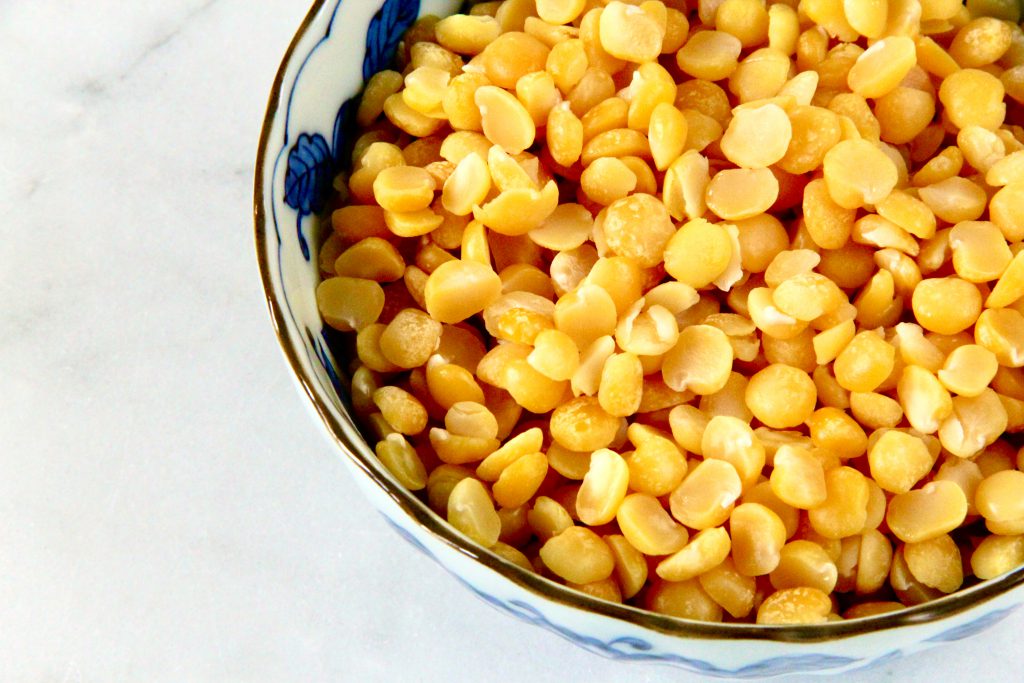
Cooked Yellow Split Peas

Split peas are a great addition to your diet, naturally low in fat, high in plant-based protein and a source of fibre. We can often forget about including beans and pulses in as part of our weekly plant food diversity, but we should be aiming to eat from all 6 categories of plant-based foods; fruits, vegetables, nuts, seeds, whole grains, and legumes. This particular recipe covers 4 out of the 6 groups, and by adding some wholegrain crackers, perhaps even topped with nuts you could maximise the diversity of your diet.

Serves 6

Recipe

  • 100g split yellow peas
  • 2 carrots, washed and chopped into large pieces
  • 2 cloves garlic, skins on
  • 30g tahini
  • 40ml extra virgin olive oil
  • 90ml water (you may need more or less depending on the texture you wish for)
  • 1/2 tsp ground cumin
  • 1/2 tsp ground turmeric
  • 30g flat leaf parsley, roughly chopped
  • Juice of a lemon
  • Salt and pepper to taste

To serve

  • Fresh Parsley leaves
  • Nigella seeds
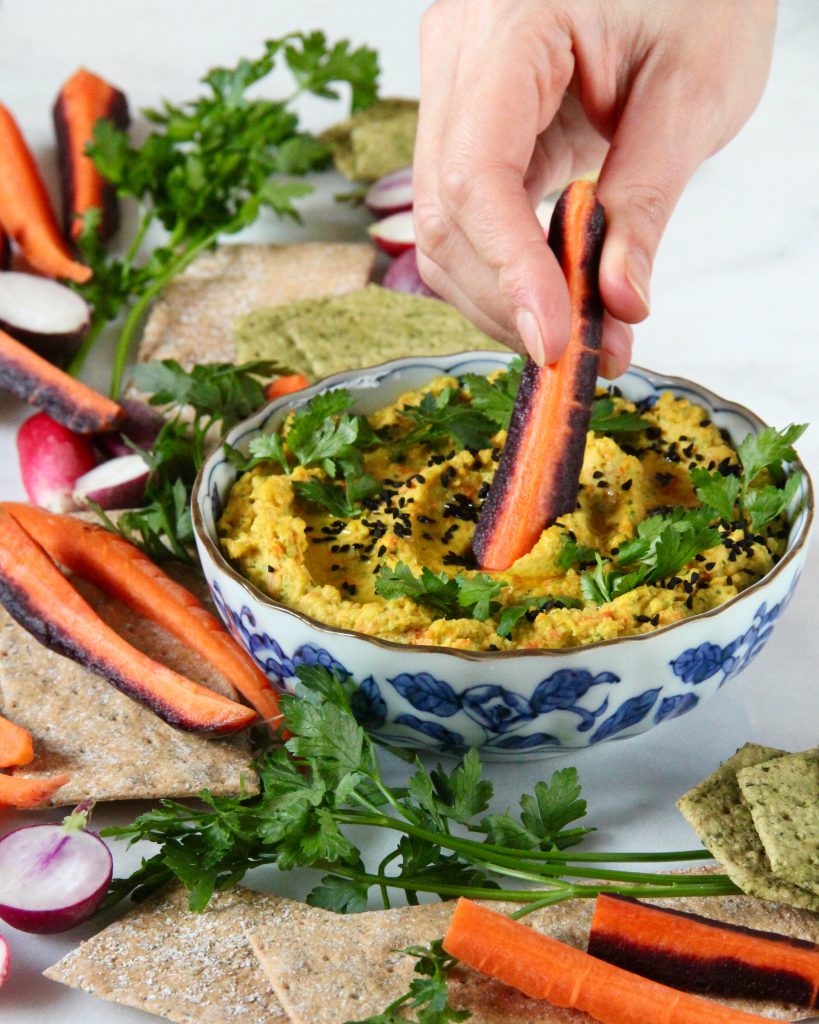
  • Vegetable crudites e.g. carrots, radish, cauliflower
  • Crackers

Method

  • Wash the split peas in cold water, then top with 500ml water and bring to the boil for 10 minutes before lowering the heat to a gentile simmer for 25 minutes. Drain and allow to cool.
  • When the peas are simmering, roast the carrots and garlic cloves in the oven preheated to 180 ° C/170 ° C Fan/GM4 for 20 minutes. Allow to cool.
  • Add the cooked peas, carrots and garlic clove, removing the skin, to a food processor. Add the tahini, extra virgin olive oil, lemon juice, water, spices and parsley and blend. Season to taste and add more water if the dip remains too thick.
  • Serve sprinkled with nigella seeds and fresh parsley leaves.

Per serving 107kcal/ 3.6g fat/ 2.0g saturated fat/ 11.6g carbohydrates/ 3.1g fibre/ 5.3g protein
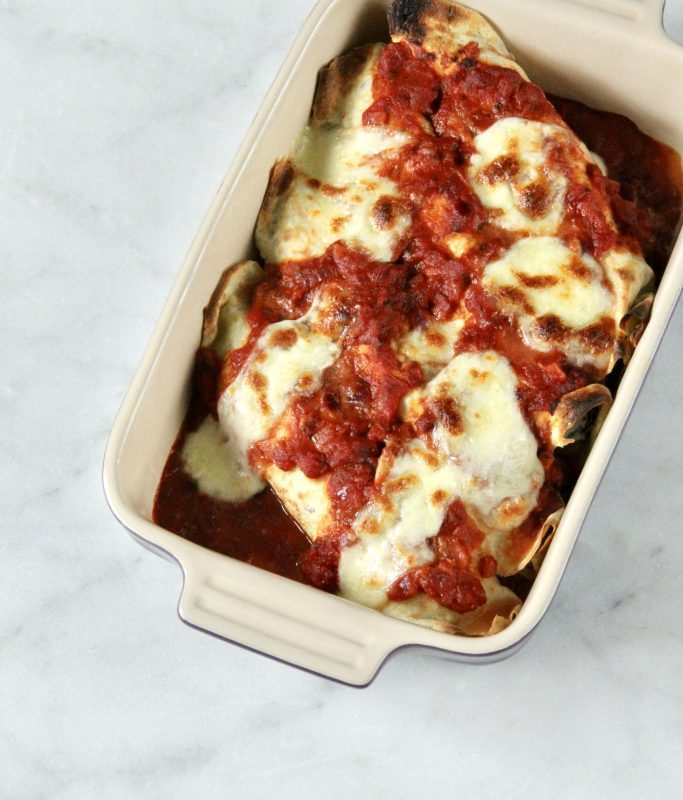
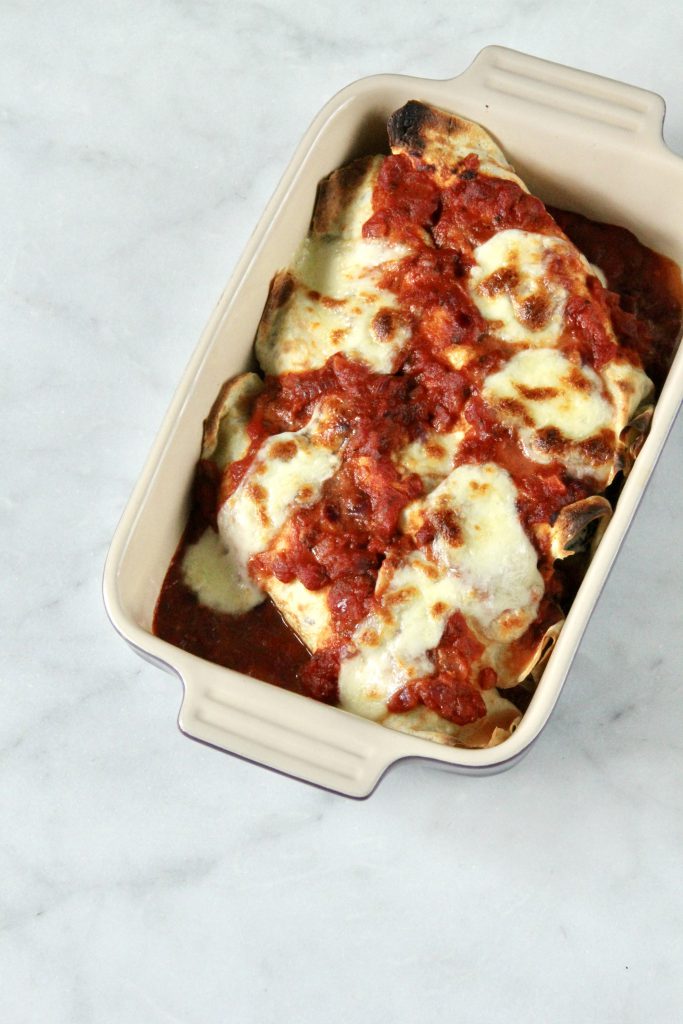
Spinach and Ricotta Pancakes

While for many Shrove Tuesday will mean pancakes for breakfast, I prefer to have my savoury pancakes for dinner!

Whatever crepes you have left over can be donated to pudding in the form of lemon and sugar, but making this savoury dish is sure to be a crowd pleaser.

You can use ready made thin pancakes, or crepes, as long as they aren’t sweetened. If you’re making your own, this is a great opportunity to add some extra nutritious ingredients, such as I have (sesame and linseeds) to help increase the fibre content.

Serves 4

Recipe

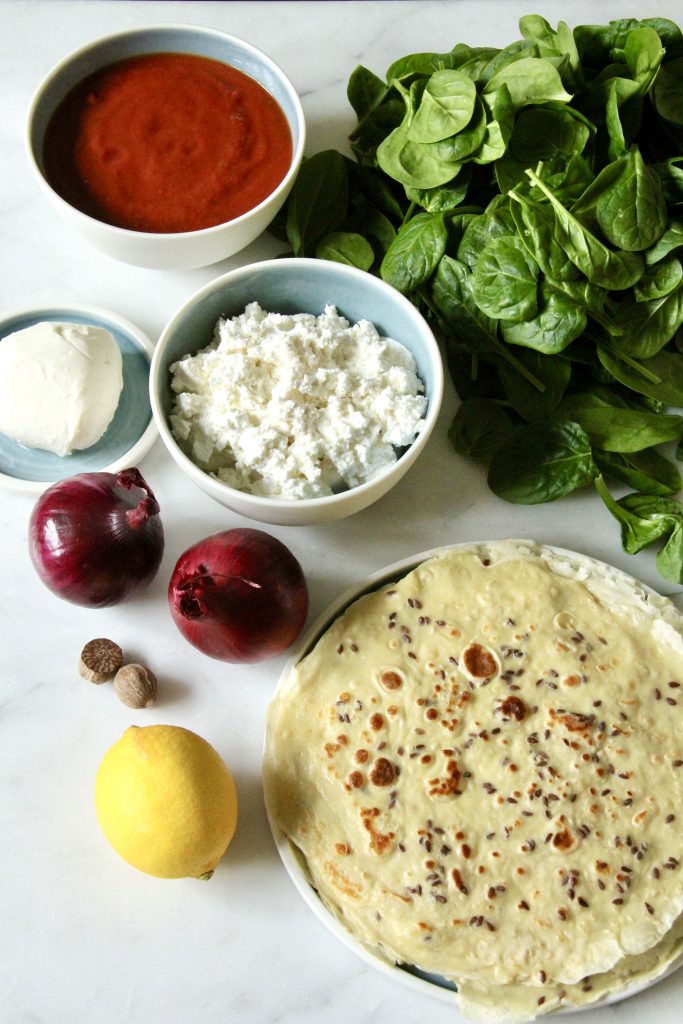
  • 6-8 savoury pancakes
  • 400g spinach
  • 2 onions, I’ve used red, diced
  • 1 tbsp olive oil
  • 2 garlic cloves, chopped
  • 400g passata
  • 500g ricotta
  • Zest of 1 unwaxed lemon
  • 1/4 nutmeg, grated
  • 1 ball mozzarella

Method

  • Preheat the oven to 180°C/ 170°C Fan
  • Cook the spinach in a pan on the lowest setting till completely wilted. Allow to cool and squeeze as much liquid out using a clean tea towel. Roughly chop.
  • Meanwhile, cook the onions in the olive oil and allow to soften and become translucent. Add the garlic and cook for a further 2 minutes before adding the passata. Cook for 5 minutes while you prepare the pancake filling.
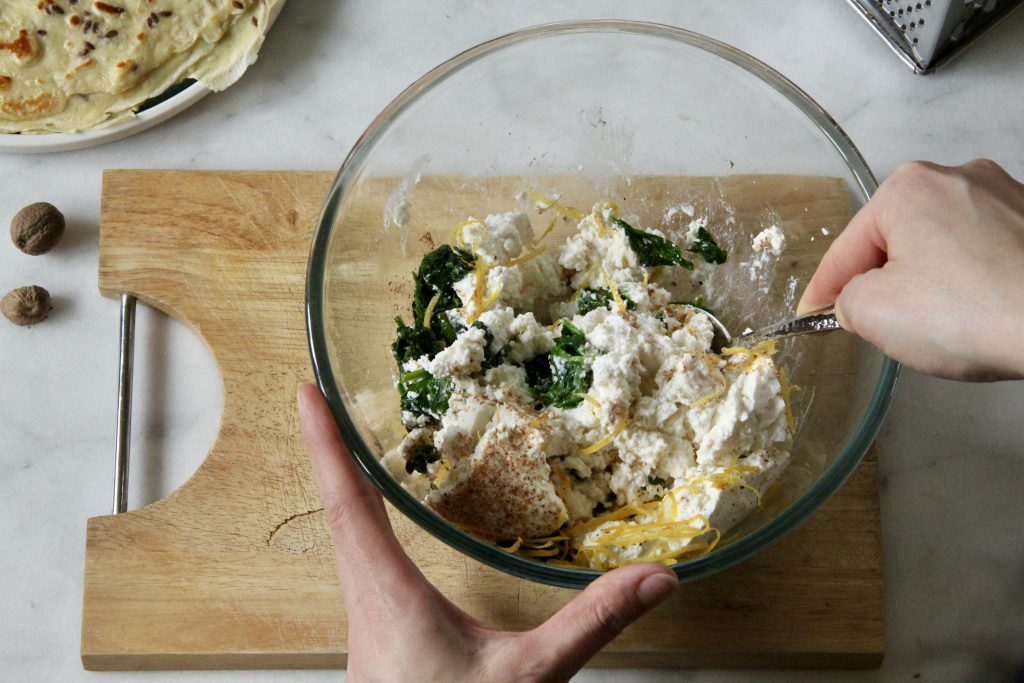
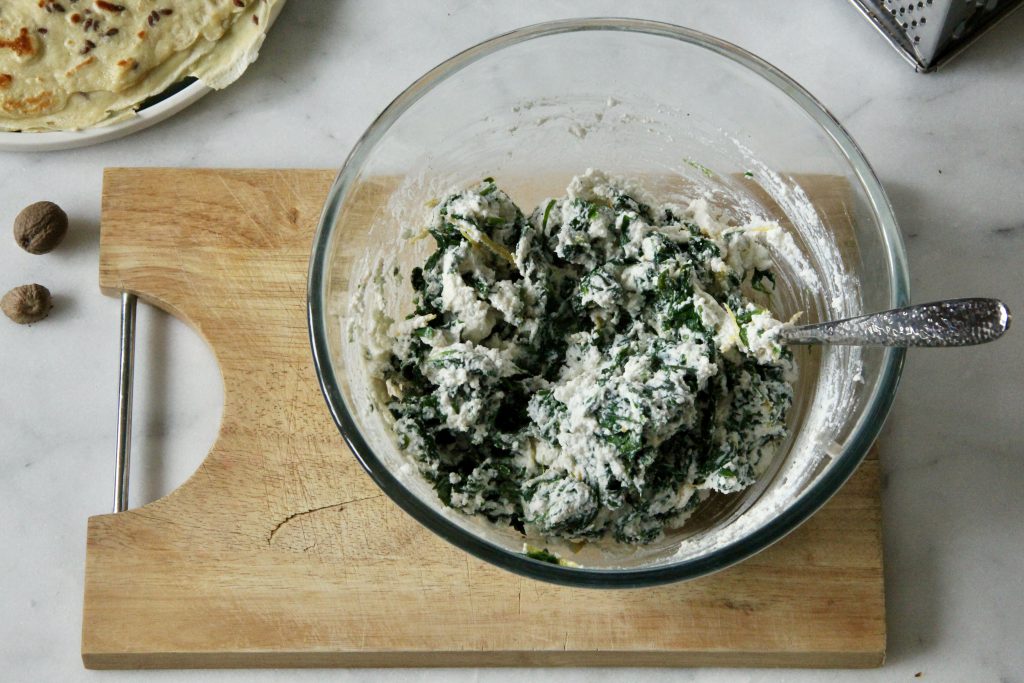
  • Mix the ricotta, lemon zest and nutmeg. Season to taste with salt and pepper and add the roughly chopped spinach.
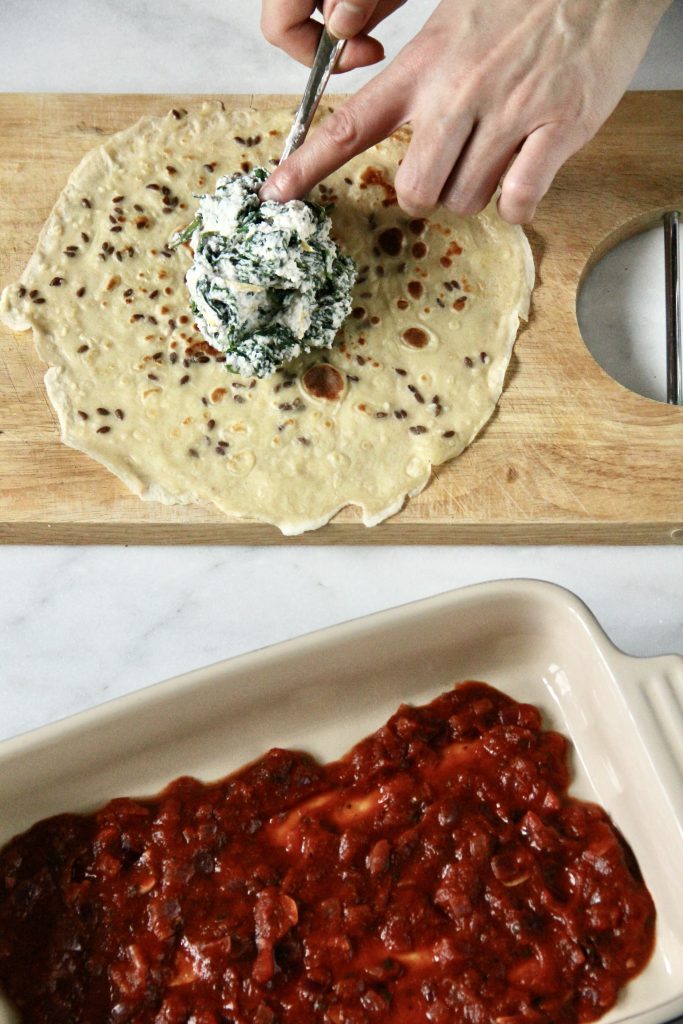
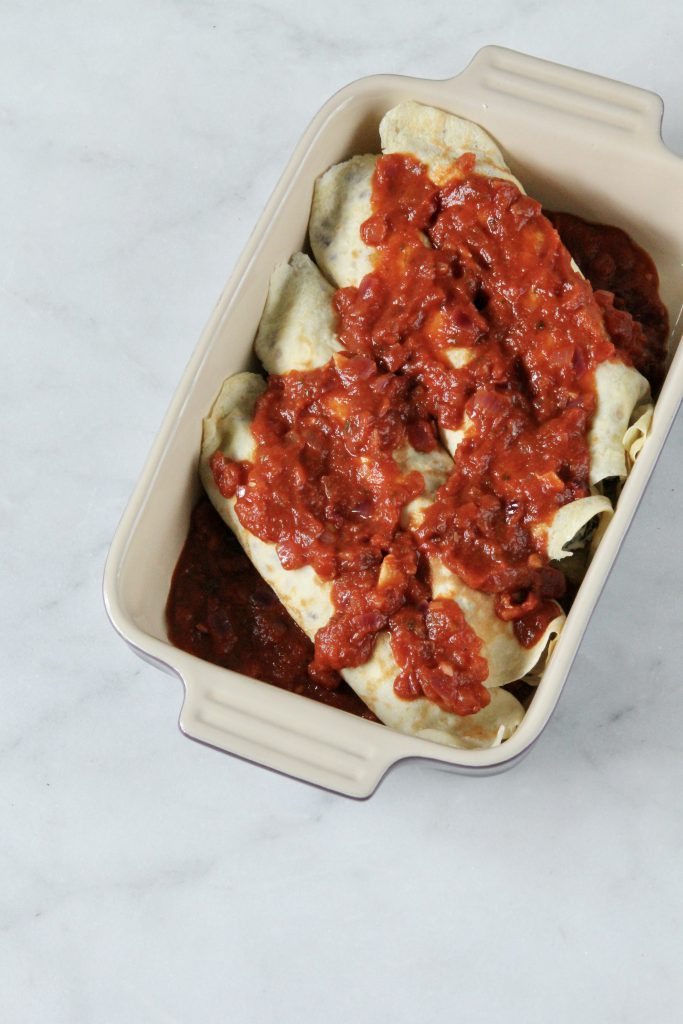
  • Layer half the tomato sauce into a large ovenproof dish.
  • Add a generous spoonful of the ricotta mix into the middle of a pancake, spreading through the center. Roll the pancake up and place in the passata sauce. Repeat until all the pancakes and ricotta mixture are used.
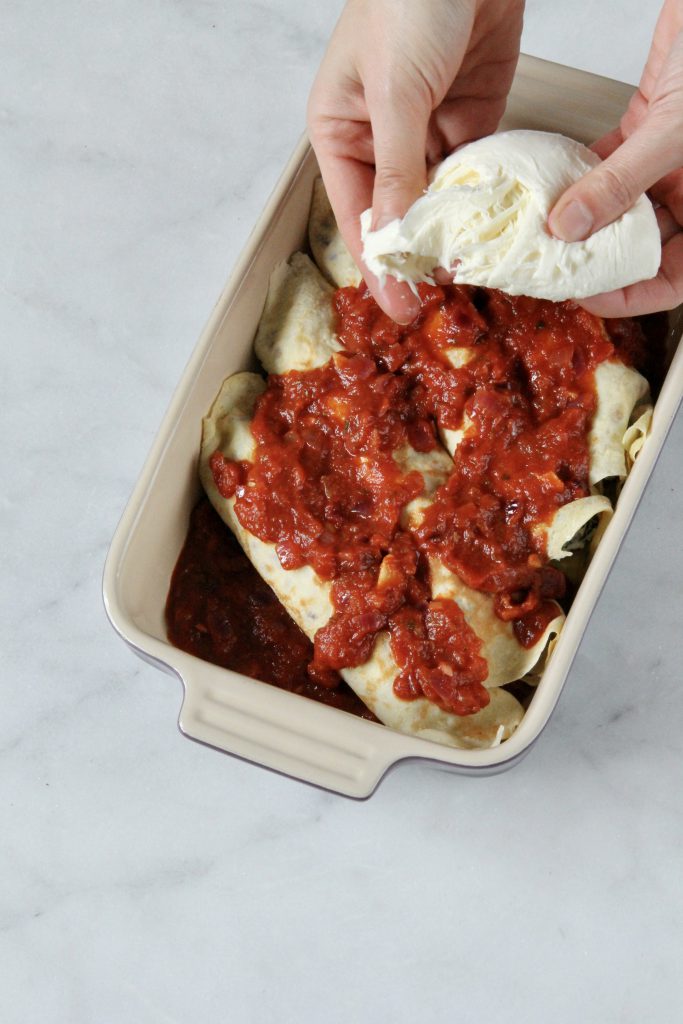
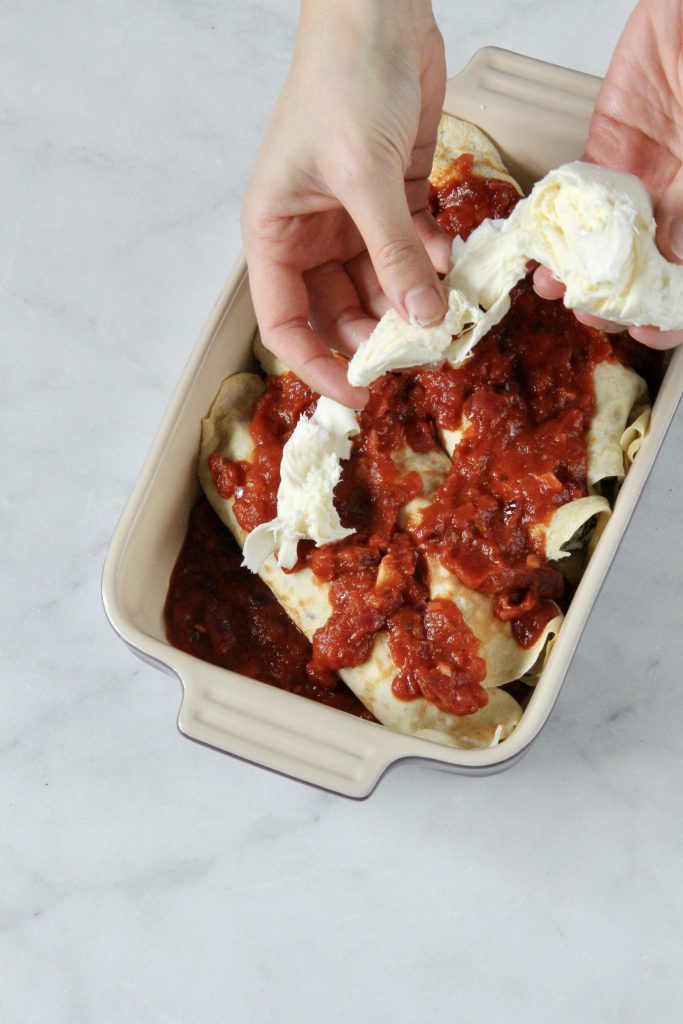
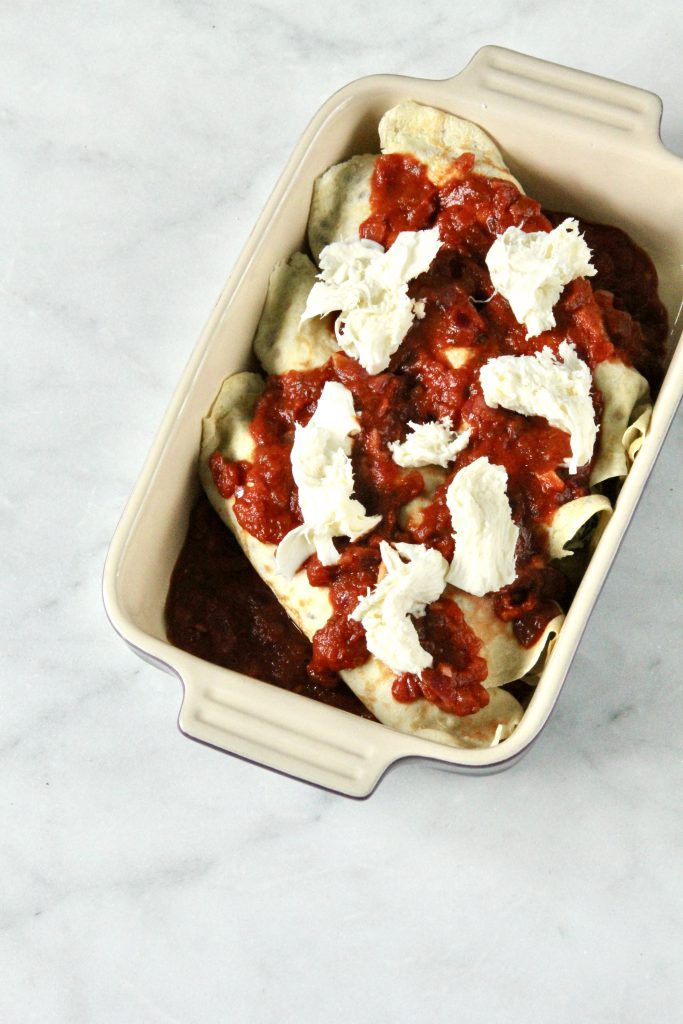
  • Spread the remaining tomato sauce over the tops of the pancakes and top with torn pieces of mozzarella.
  • Bake in the oven for 20-25 minutes till golden brown and bubbling.

Per serving 455kcal/ 24.7g fat/ 13.7g saturated fat/ 31.2g carbohydrates/ 5.9g fibre/ 24.2g protein
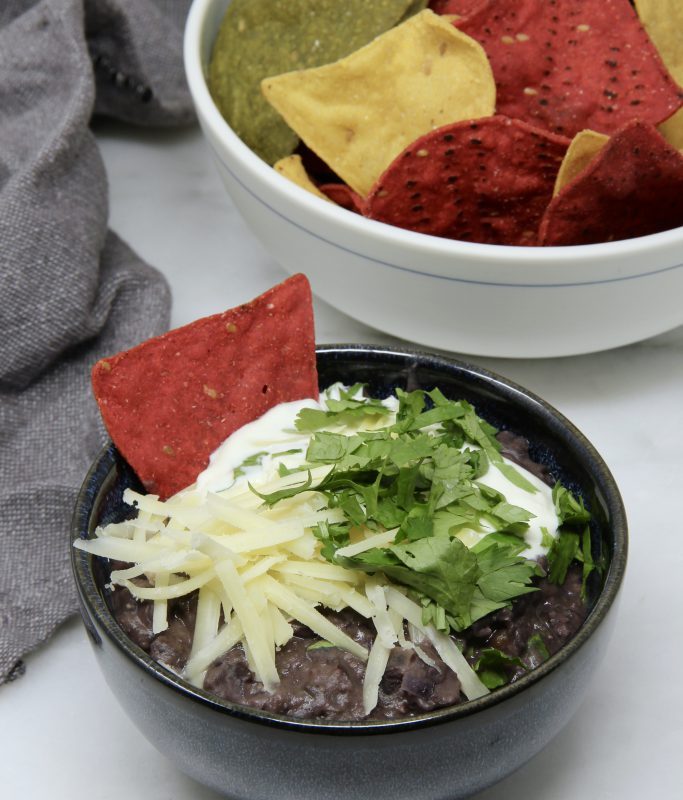
Cheats Refried Beans

Refried beans are a party food staple in my house. I always make them whenever I’m having a gathering, but I have to be prepared and start the day before. However, this is the cheats version. I say cheat because I’m using already cooked beans from the tin. No need for soaking over night, or boiling for hours. You can decide to make these an hour before serving, without compromising on the taste.

This is a really versatile dip, something I always make in large batches as it sits well in the fridge for a week, ready to be lovingly transformed into the next meal. I love using this as a spread in a wrap for a burrito, quesadillas with melted cheese, enchiladas or even tostadas if you’re feeling fancy!

In addition, you can easily make these vegan. The recipe below is vegetarian, but if you replace the butter with rapeseed oil in the base mix, you’ll be all set for Veganuary. Then you can either use them as is, or use a vegan sour cream and cheese alternative to make the full on refried beans experience.

All that’s left to say is Happy New Year and enjoy whatever you’re doing (and eating)!

Serves 4

Recipe

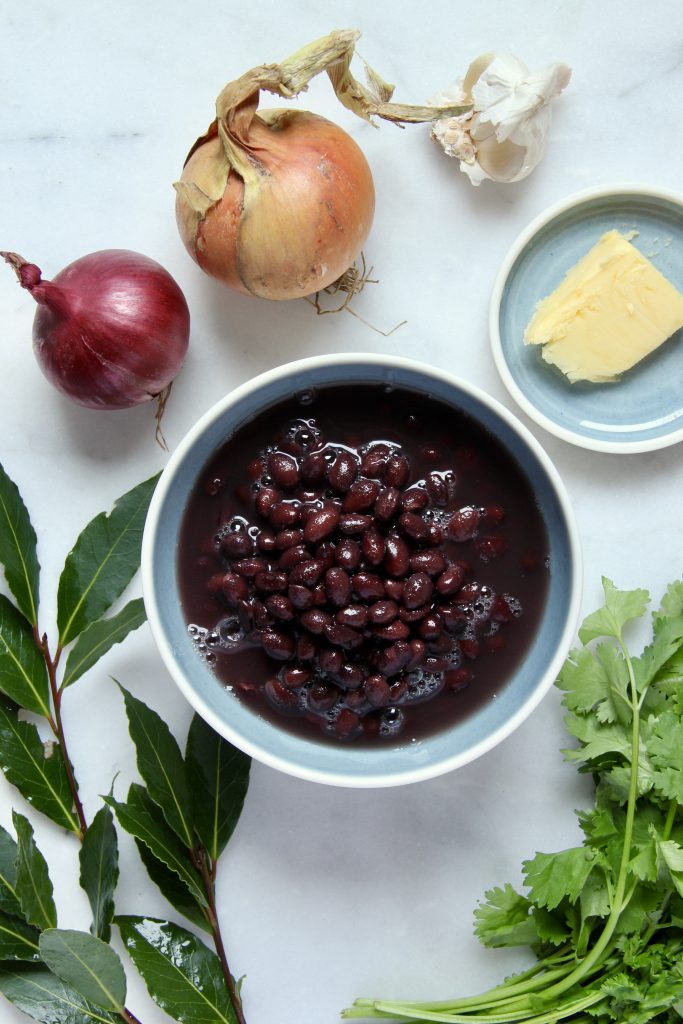
  • 1 tin of black beans
  • 3-4 large cloves of garlic, sliced in half
  • 1/2 white onion
  • 1 small bunch of coriander, stalks separated from leaves, leaves chopped
  • 3 fresh bayleaves, crushed
  • 1 red onion, finely diced
  • 20g butter (or rapeseed oil if making vegan)
  • 1 garlic clove, finely sliced

To serve (optional)

  • Soured cream
  • Cheese e.g. Cheddar, Cheshire or Wensleydale
  • Coriander leaves
  • Tortilla chips

Method

  • Pour the tin of black beans with their water into a pan. Fill the can with water and add to the beans.
  • Add the half onion, halved garlic, bayleaves and coriander stalks. Bring to the boil and allow to simmer for 30 minutes. If your beans were unsalted, add in salt to your taste.
  • Meanwhile, gently fry the red onion in your choice of fat till softened. Add the garlic and continue cooking for a further 2 minutes.
  • Drain the beans, reserving the cooking liquid. Discard the garlic, bayleaf, onion and coriander stalks.
  • Blend the beans with a little of the cooking water till the desired thickened of dipping. I like to keep mine quite chunky.
  • Add the fried onion and garlic and half the chopped coriander leaves.
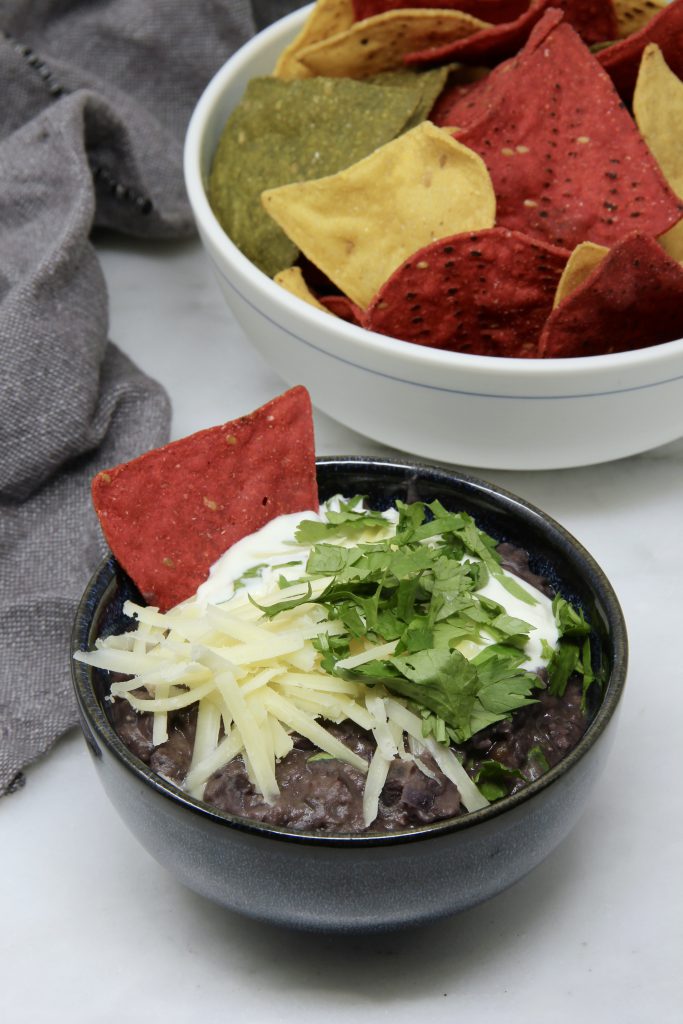
  • Top with soured cream, cheese and more coriander leaves and serve with tortilla chips.

Per Serving of Beans 96kcal/ 2.6g fat/ 1.5g saturated fat/ 11.2g carbohydrates/ 4.7 fibre/ 4.9g protein
Refried beans
Refried beans

Mince Pies

Whether you made your own mincemeat or not, there are still ways to help increase the diversity of plant fibres in your mince pies. You could try adding in some extra dried fruit to bought mincemeat, zesting in some clementine zest, or try adding carrot like in my own mincemeat recipe. And you don’t have to stop there, you can even change the pastry!

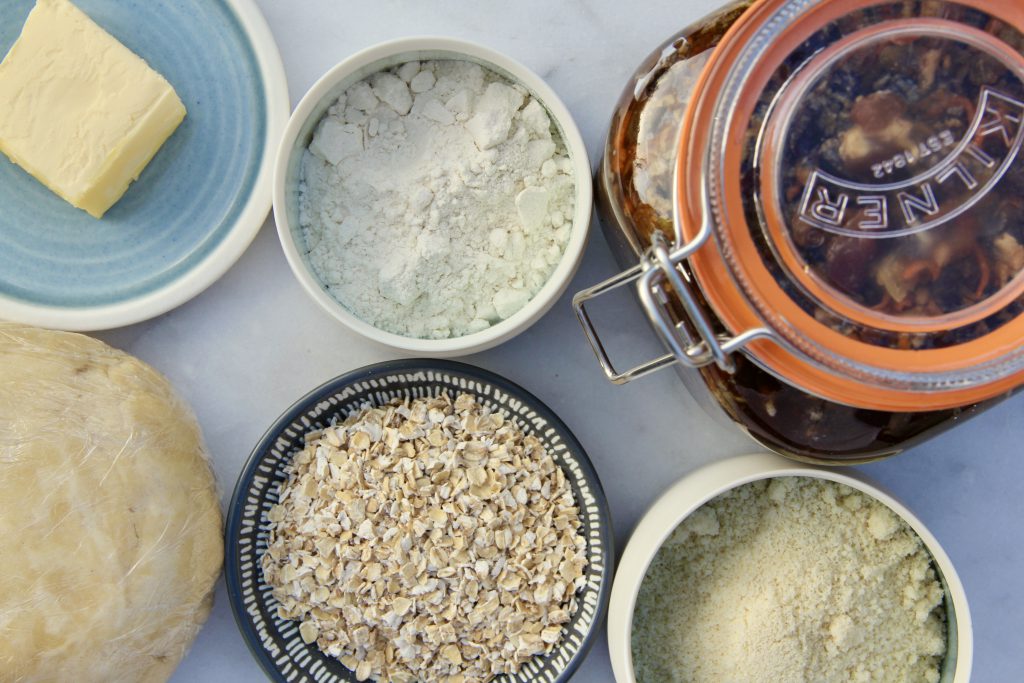
In my recipe, I use a mixture of shortcrust pastry to stay traditional, but use a crumble topping instead, keeping it lighter, but also so it allows me to include more plant sources. I use both oats and ground almonds in my crumble.

Each of my mince pies contains around double that of shop bought mince pies. I always find it harder to include fibrous foods over the festive period as there are so many treats to eat! My homemade mince pies contain 8 different source of plant-based goodness, and research shows those who eat 30 or more different sources of plant-based foods per week have an increased variety of gut microbiota in comparison those who eat 10 or fewer different sources. So feed your microbiome!

These mince pies are delicious served warm with vanilla custard, a true Christmas time treat.

If you want to make vegan mince pies, use a pre-made vegetable oil based shortcrust pastry and top with the crumble mixture substituting the butter for rapeseed oil.

Makes 12 deep-filled mince pies

Recipe

  • 750g mincemeat, shop bought or homemade
  • Short crust pastry, either bought or homemade (see below)
  • 75g plain flour
  • 50g fridge cold butter
  • 25g rolled oats
  • 50g ground almonds
  • 25g soft light brown sugar

Method

  • Preheat the oven to 200°C/180°C Fan
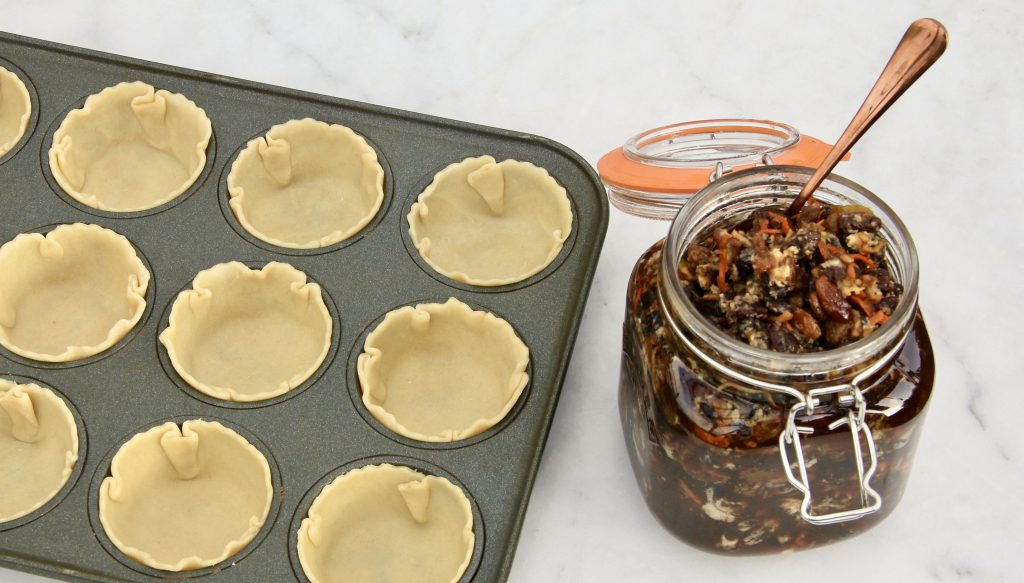
  • Roll the pastry out to 2mm, around the thickness of a 2p coin.
  • Cut disks of pastry out to 11-12cm diameter and line a muffin tray.
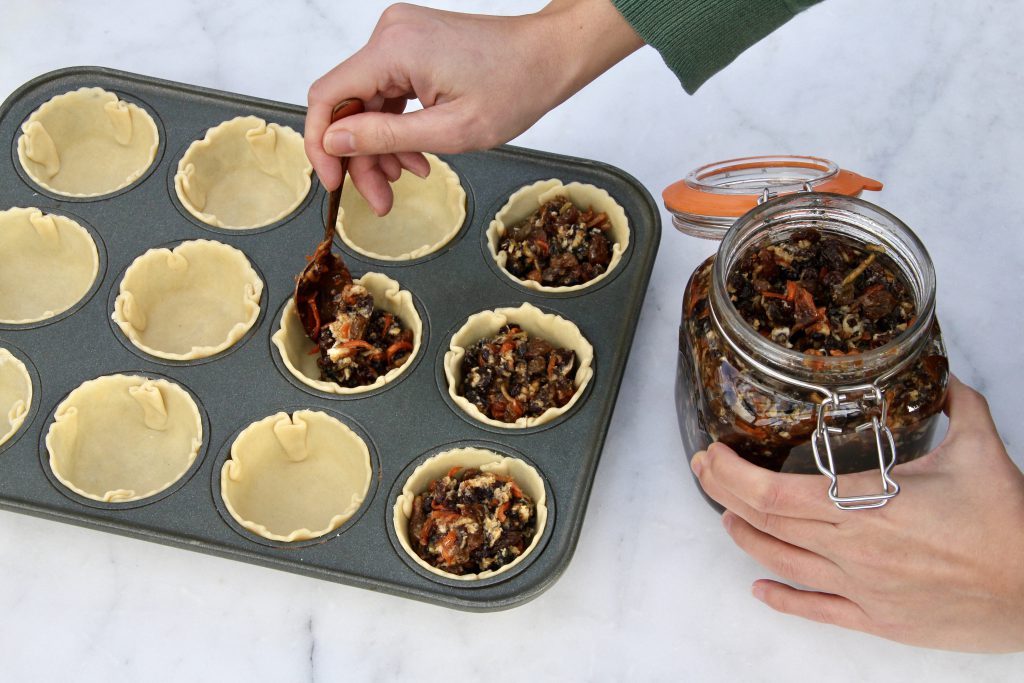
  • Fill each case with mincemeat, leaving a little gap at the top.
  • Make the crumble topping by mixing the flour and butter together until the mixture resembles fine breadcrumbs.
  • Add the oats, almonds and sugar and combine.
  • Top each mince pie with a spoonful of the crumble topping*.
  • Bake for 22-25 minutes till golden brown.
  • Cool on a wire rack

To make your own shortcrust pastry combine 225g plain flour with 100g cold butter till it resemble bread crumbs. Add just enough cold water to form a dough. Wrap and rest it in the fridge for 30 minutes before rolling.

Mince Pies

Per Mince Pie 327kcal/ 13.7g fat/ 4.5g saturated fat/ 48.1g carbohydrates/ 2.5 fibre/ 3.2g protein

*Crumble topping makes enough for 24 mince pies

Mincemeat

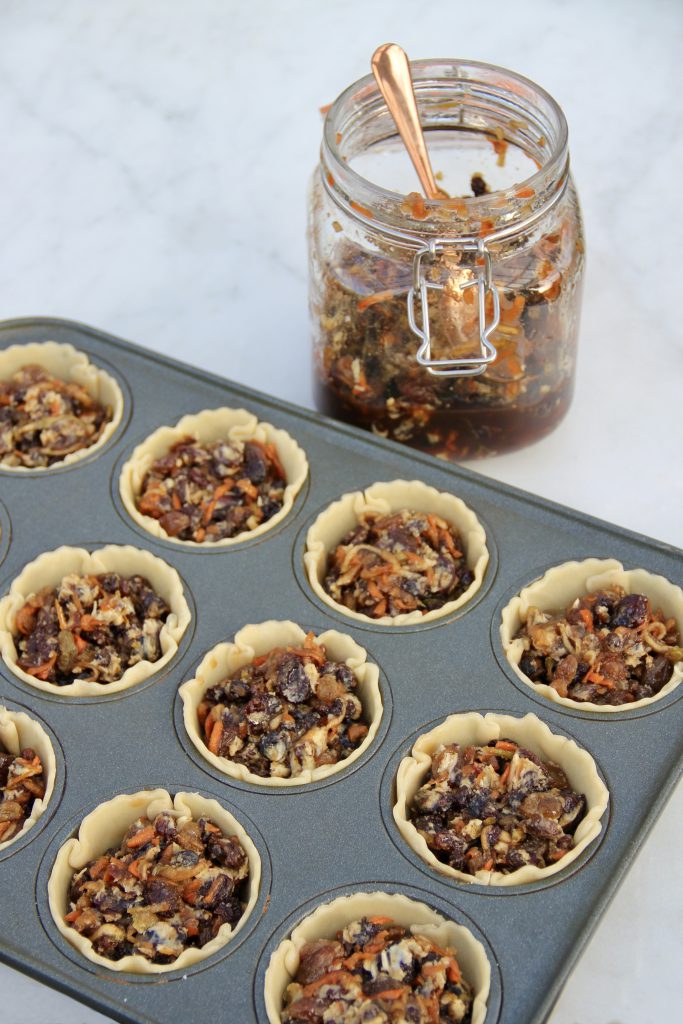
Homemade mince pies are something special at Christmas. Taking it one step further and making your own mincemeat means you can decide what goes in. For me, shop bought mincemeat sometimes feels like it’s missing some of the fruit. Making your own mincemeat is so quick, and I guarantee the flavour will be so much better than the shop bought stuff, and it’s ready to use in just 24 hours so there’s no excuses for not making your own!

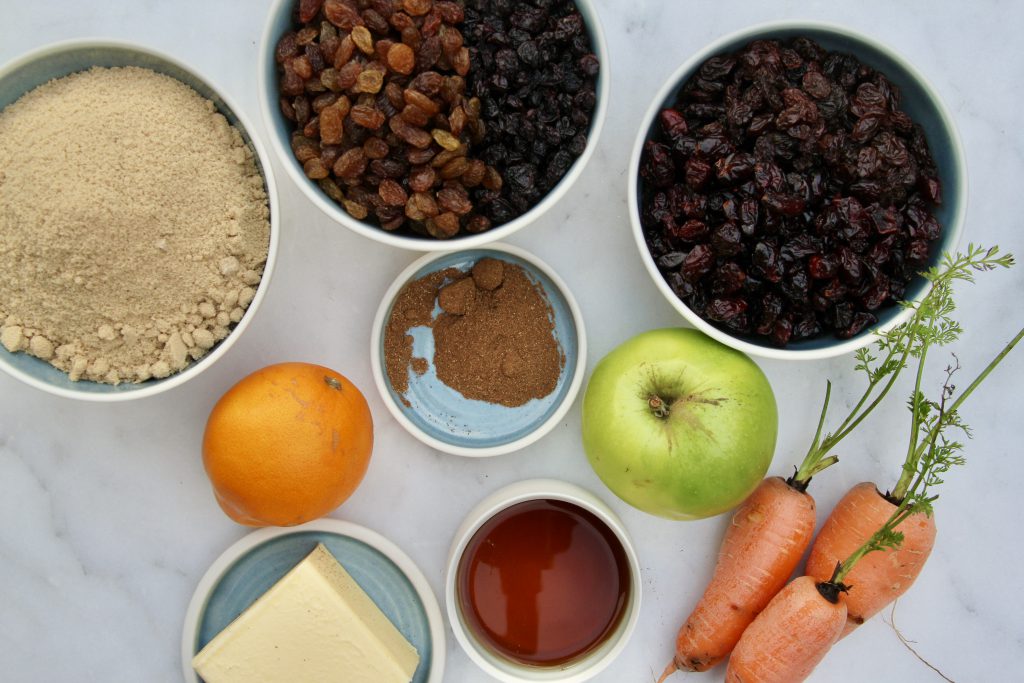
Mincemeat Ingredients

I use butter rather than suet in my recipe. I think this gives a much richer flavour, and is also vegetarian friendly. You’ll also see I don’t stop at just fruit. A sneaky carrot also makes it into the mix in my version. This is great for increasing the diversity of plant fibres in this recipe, which we know can be beneficial for your gut microbiota and gut health in general. Why not treat your microbes this Christmas too!

Overall this basic mincemeat recipe uses 6 different plant-based fibre sources, alongside mixed spice. You can substitute different fruit in depending on your taste, for example cherries, apricot or mixed peel.

A generous swig of cognac

Makes enough mincemeat for 24 deep filled individual mince pies

Recipe

  • 200g sultanas
  • 200g raisins
  • 200g currants
  • 100g dried cranberries
  • 1 large carrot (or 3 small like my allotment carrots!)
  • 1 cooking apple
  • 350g soft light brown sugar
  • 175g fridge cold butter (option to use vegetarian suet to make vegan, or to be a traditionalist and use beef suet)
  • 2 tsp ground mixed spice
  • 1 organic orange
  • 100ml cognac, brandy, whisky or rum

Method

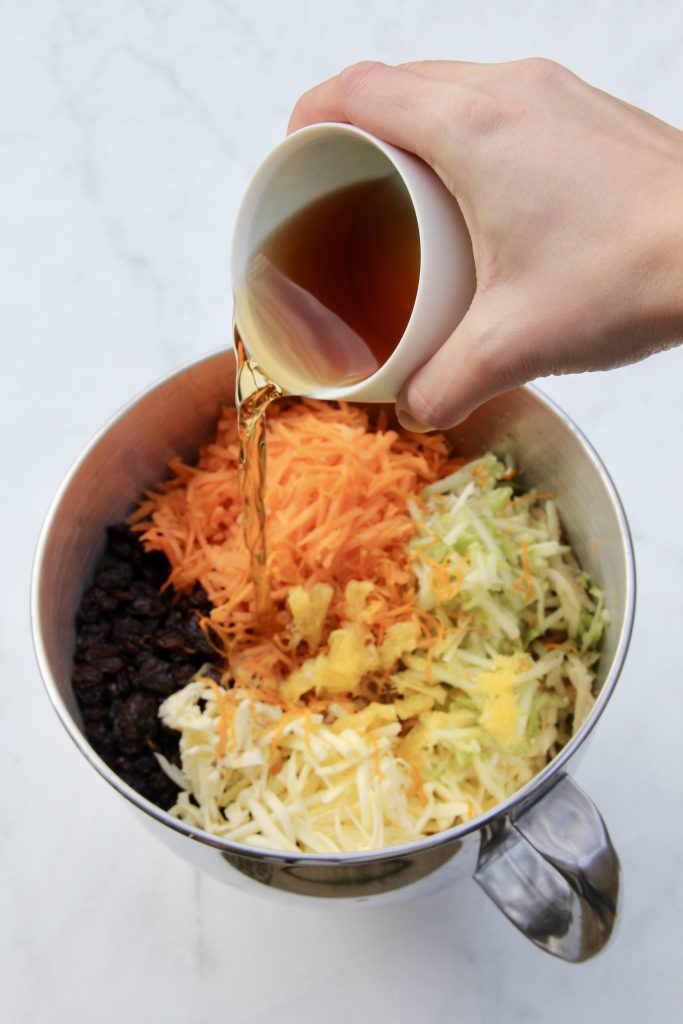
  • Coarsely grate the apple, carrot and butter.
  • Zest and juice the orange, taking as much of the segment flesh as possible.
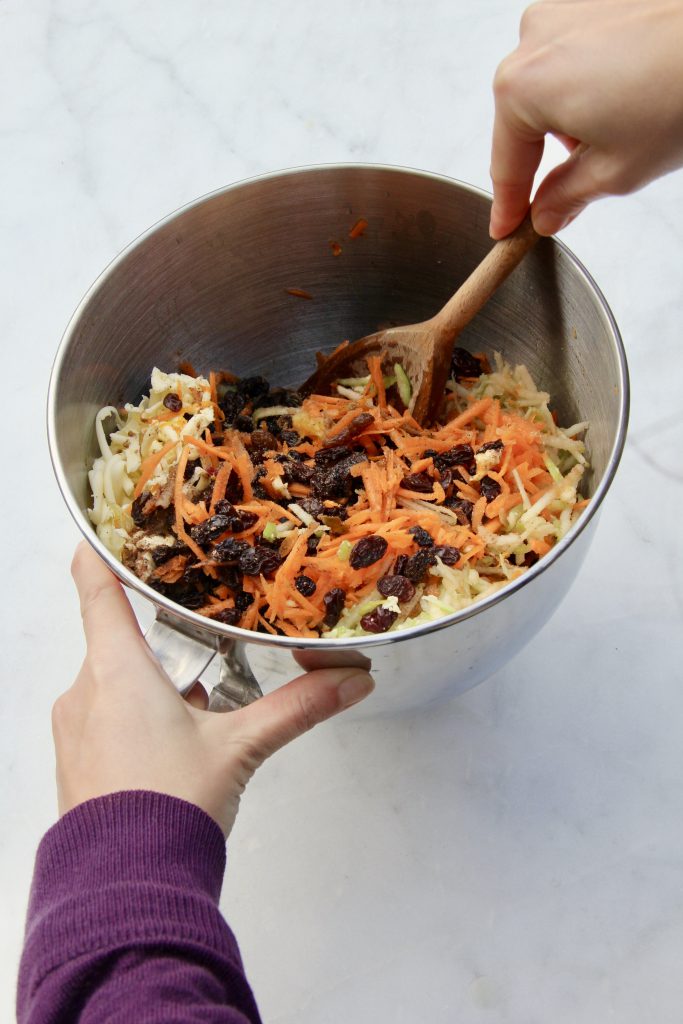
  • Put all the ingredients in a large bowl and mix together. Set aside covered with a tea towel.
  • Stir occasionally for the next 24 hours.
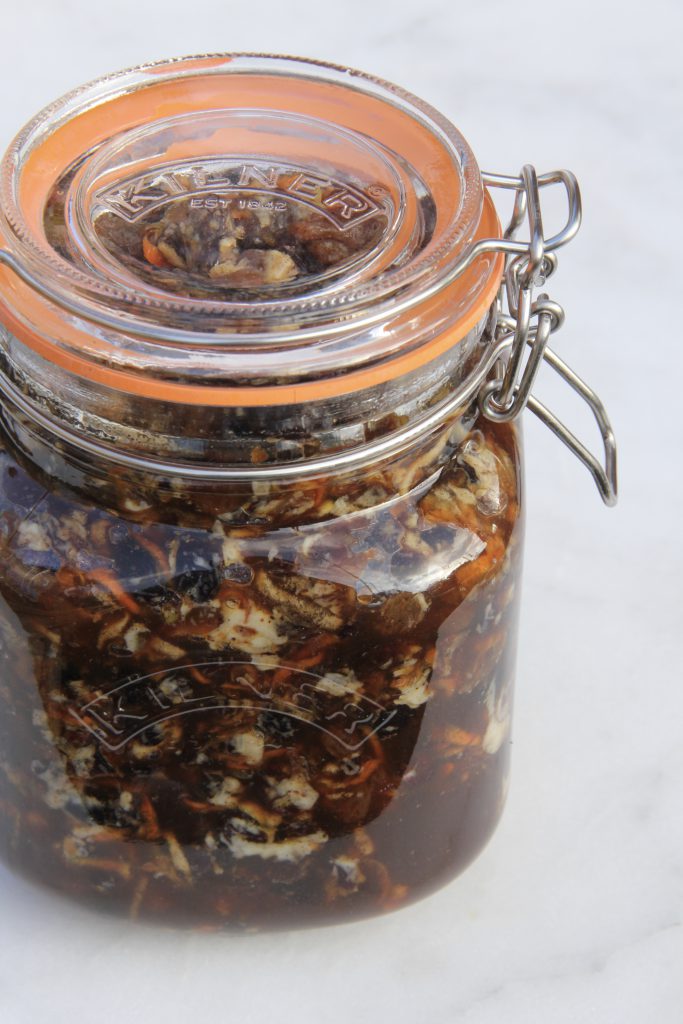
  • Fill previously sterilised jars with the mincemeat, ensuring to push out all the air.
  • Seal and leave in a cool dark place for up to 6 months to mature.

Per 100g 304kcal/ 9.2g fat/ 5.9g saturated fat/ 49.5g carbohydrates/ 2.8g fibre/ 1.4g protein

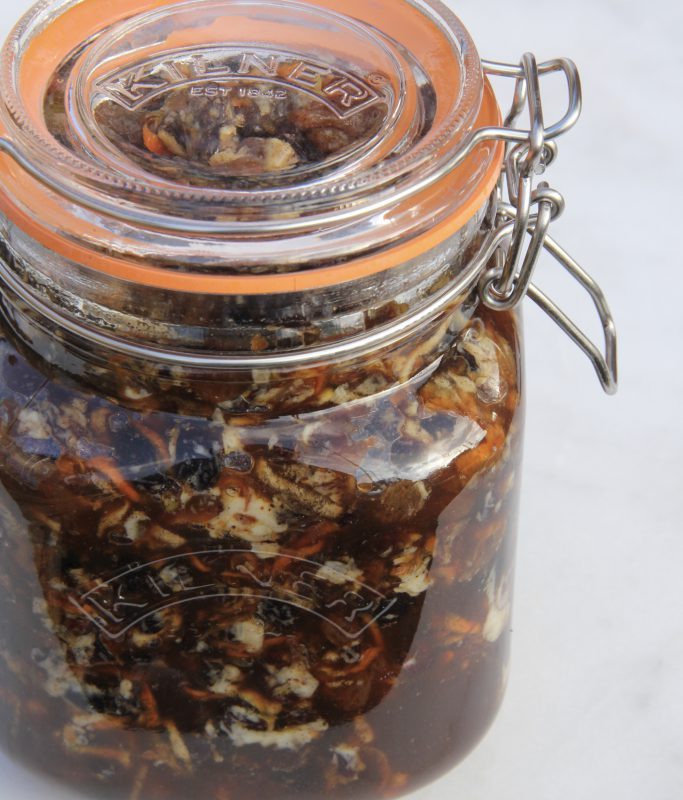
Homemade mincemeat

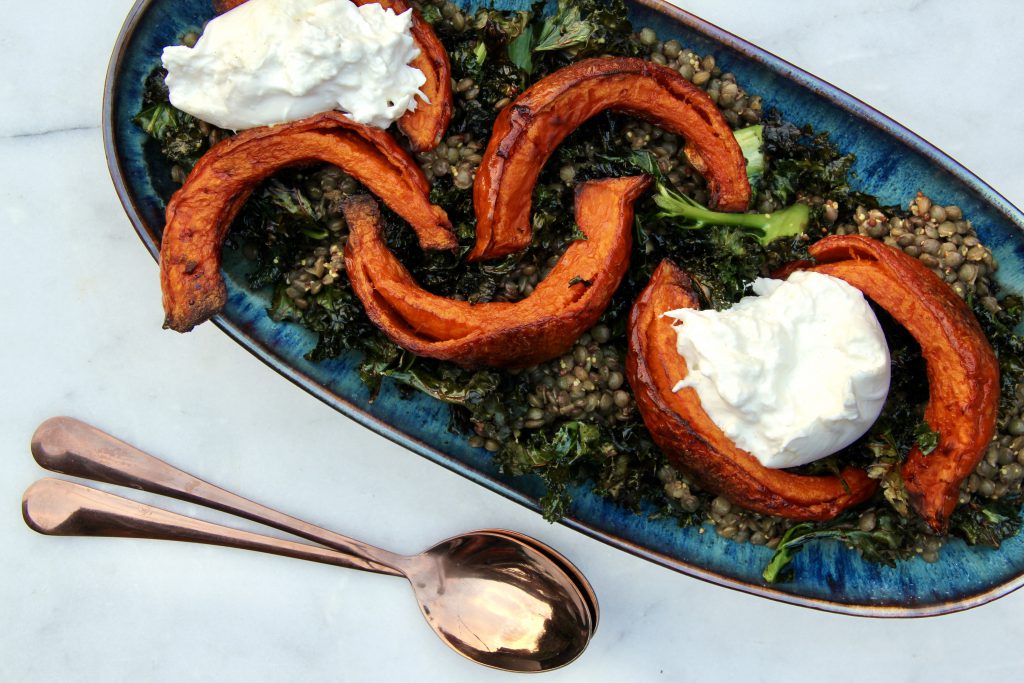
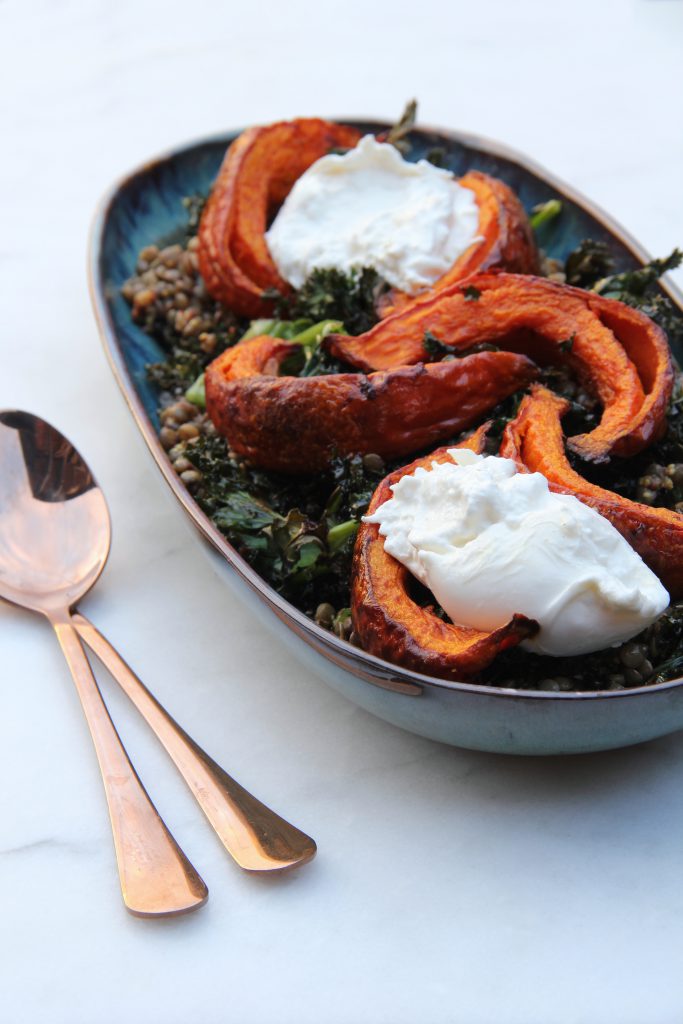
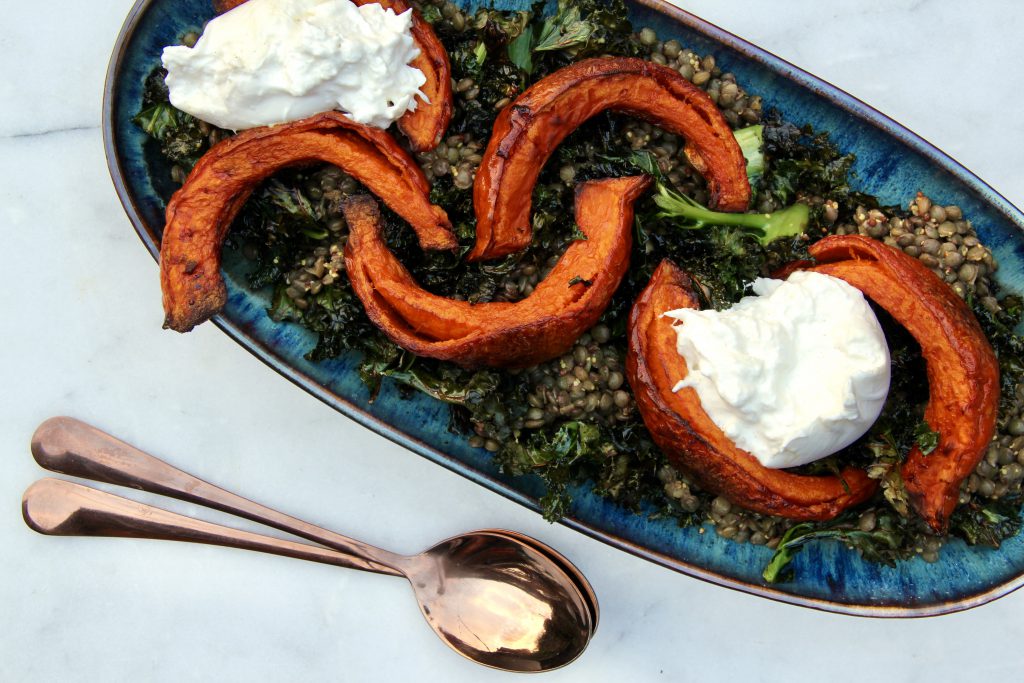
Roasted Squash, Kale and Lentil Winter Salad

Winter Salad Inspiration

A gorgeous winter salad which uses seasonal vegetables and lets them shine as stars in the dish. Kale, a vegetable best in winter, is roasted till crispy. If you’ve never tried crispy kale, now is the time!

Combining both kale and lentils in this dish helps to increase the plant based iron. Additionally, kale is a good source of vitamin K, which has been shown to be beneficial for heart health by helping keep our arteries clearer.

Roasted Squash Winter Salad

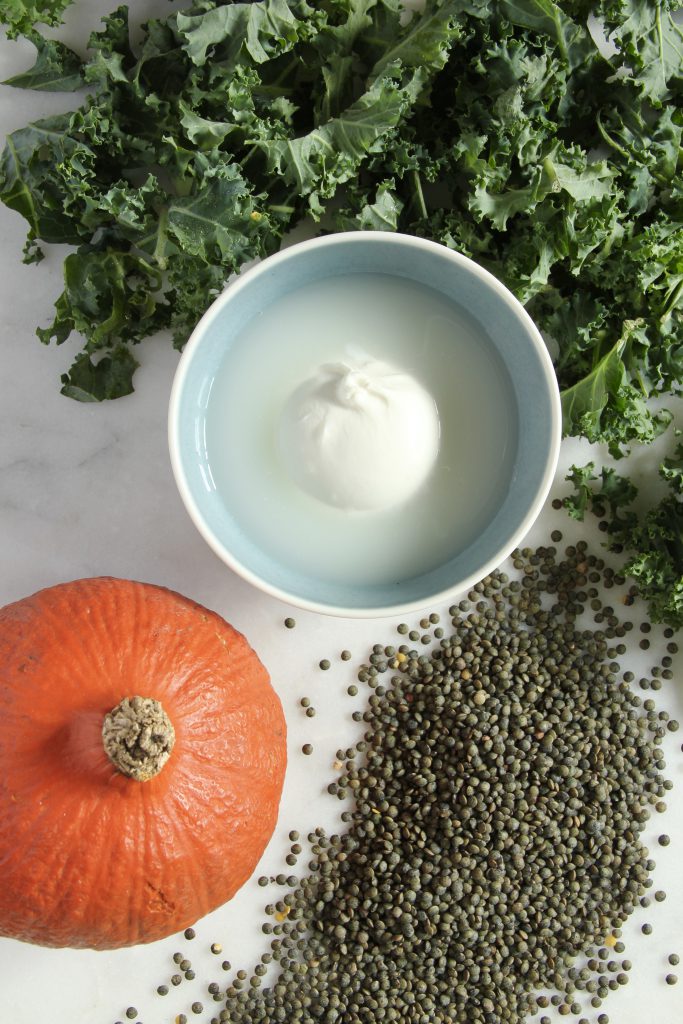
I absolutely adore creamy burrata, a cousin of mozzarella. If you can’t find burrata in the shops, substitute with mozzarella. It will still be delicious!

Serves 2

Recipe 

  • 300g Squash of choice, I’ve used Red Kuri, cut into large wedges
  • 2 tbsp rapeseed oil
  • 100g puy lentils
  • 10ml balsamic vinegar
  • 10g wholegrain mustard
  • 10ml extra virgin olive oil
  • 120g kale, washed and sliced into 1 inch chunks
  • 1 ball burrata
  • Seasoning to taste

Method 

  • Set the oven to 180°C fan/190°C convection. Place the squash on a baking tray and coat in 1 tbsp rapeseed oil and season. Roast for 30 minutes.
  • Meanwhile, cook the lentils by placing in a pan of cold water, bringing to the boil, and reducing the heat to a gentile simmer for 12-15 minutes till just firm to bite.
  • Drain the lentils and mix in the balsamic vinegar, mustard and olive oil.
  • Toss the remaining rapeseed oil with the kale, place on a second tray and roast for 8-10 minutes, turning every few minutes to allow every leaf to become crispy.
  • Layer the lentils, kale and squash onto plates and serve with the torn burrata ball over the top. Serve immediately.

Per serving 511 kcal/ 32.3g fat/ 12.4g saturated fat/ 32.5g carbohydrates/ 12.7g fibre/ 18.5g protein