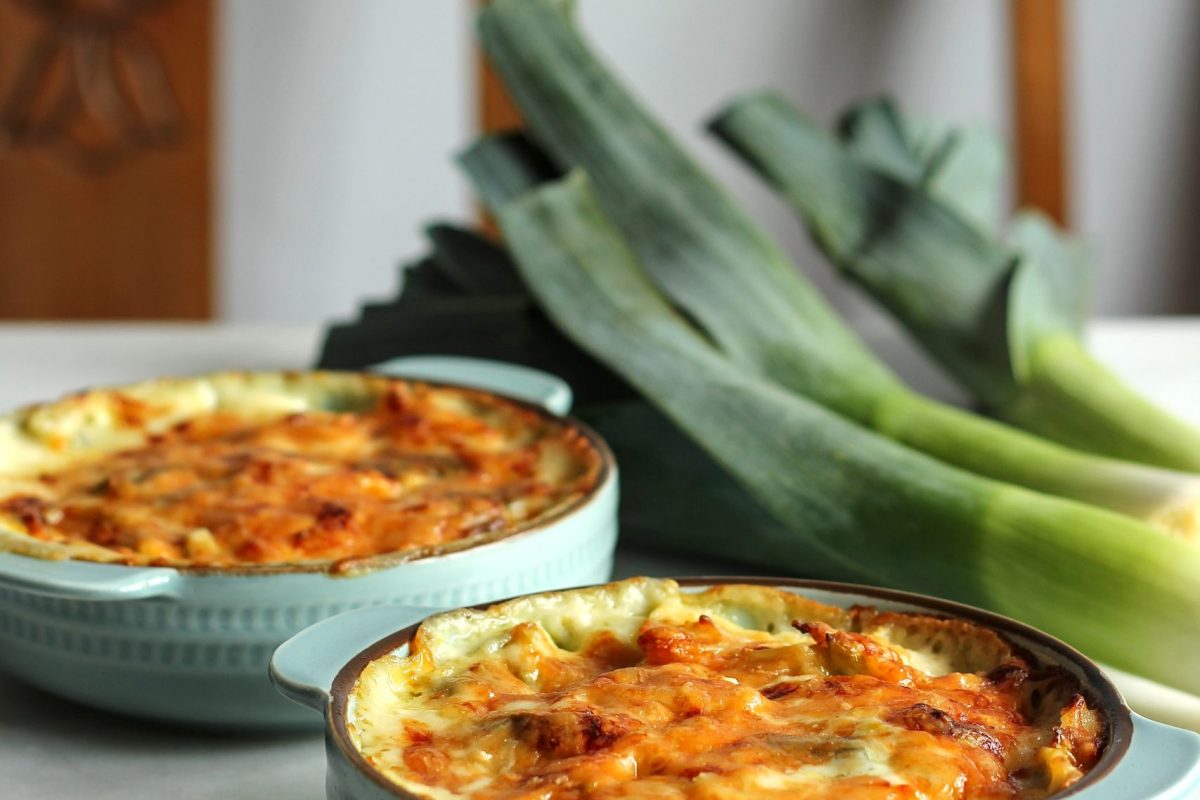
I love a warm and comforting bowl of pasta when it’s cold and grey outside. It really helps to brighten my mood. I also want it to be seasonal, so I’ve used leeks in this dish, which adds flavour as well as some prebiotics.
Feel free to swap for any other cheese you have in the fridge. The sweet leeks will go well with most cheeses. I just love the cheese pull of melted Gruyère.
Serves 2
Ingredients
1 leek, approximately 200g, washed and sliced
40g butter
35g plain flour
450ml semi-skimmed milk
1 tsp mustard
100g Gruyère cheese, grated
150g pasta shape of choice
Method
Gently cook the leek in the butter till soft, before adding in the flour. Mix to create a paste and slowly add the milk, stirring continuously to create a smooth sauce.
Once all the milk is added, stir in the mustard and half the Gruyère.
Meanwhile, cook the pasta according to the packet instructions, drain, and then stir the sauce through.
Pour the pasta into an ovenproof dish, top with the remaining cheese, and bake at 180°C fan/ 200°C convection for 15-20 minutes till golden brown and bubbling.
Per serving: 816kcal/ 39g fat/ 24g saturated fat/ 79g carbohydrates/ 7.2g fibre/ 34g protein
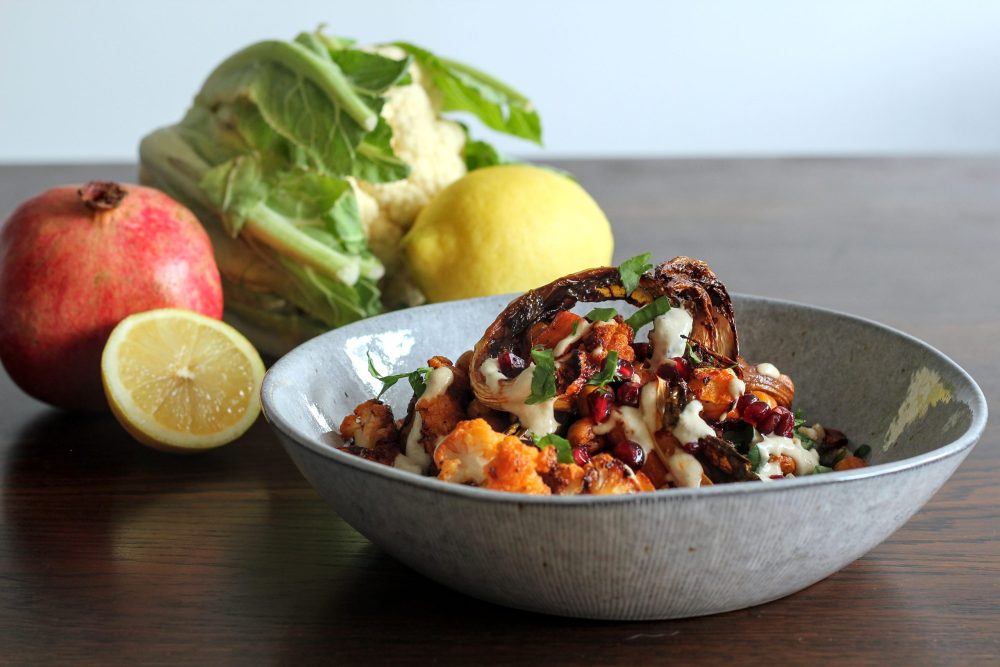
Using my principles of sustainable nutrition, here is a delicious recipe incorporating using more of the food we grow and reducing food waste, eating more plant-based proteins, cooking in bulk, and diversifying the foods we grow and eat. Added all together each serving of my Roasted Harissa Cauliflower and Chickpea Traybake with Herbed Spelt provides you with a whopping 19g fibre and 22g plant-based protein.
Serves 6
Ingredients
1 large cauliflower head, leaves and all (1.1kg), cut up into chunks, and larger leaves sliced in half through the stem
3 carrots, cut into chunks
2 red onions, cut into wedges
80g harissa paste
2 tsp cumin seeds
3 tbsp extra virgin olive oil
2 tins of chickpeas, drained, rinsed and patted dry
300g spelt
50g flat-leaf parsley, roughly chopped
30g chives, finely sliced
2 tbsp tahini
Juice of half a lemon
4 tbsp of pomegranate seeds
Method
Preheat the oven to 180°C fan/ 200°C convection while you prep the cauliflower, carrots and onions. Mix these veg together with the harissa paste and 2 tbsp olive oil. Spread out over 2 trays and roast for 20 minutes.
Mix the remaining oil and chickpeas together, and add to the trays, mixing the partially cooked veg.
Meanwhile, cook the spelt by bringing it to a boil in a large pan of water, and then allow to simmer for 20-30 minutes depending on the type of spelt you have. It should remain al dente in the middle. Once cooked, allow to cool slightly before adding the herbs in.
Make a dressing by mixing the tahini and lemon juice together. It will become thick, so thin with water to a consistency of double cream, or your preference.
Serve everything together, topped with the tahini dressing and sprinkle with pomegranate seeds over the top.
Harissa Roasted Cauliflower and Chickpea Bake
Per serving: 487kcal/ 10g fat/ 1.4g saturated fat/ 68g carbohydrates/ 19g fibre/ 22g protein
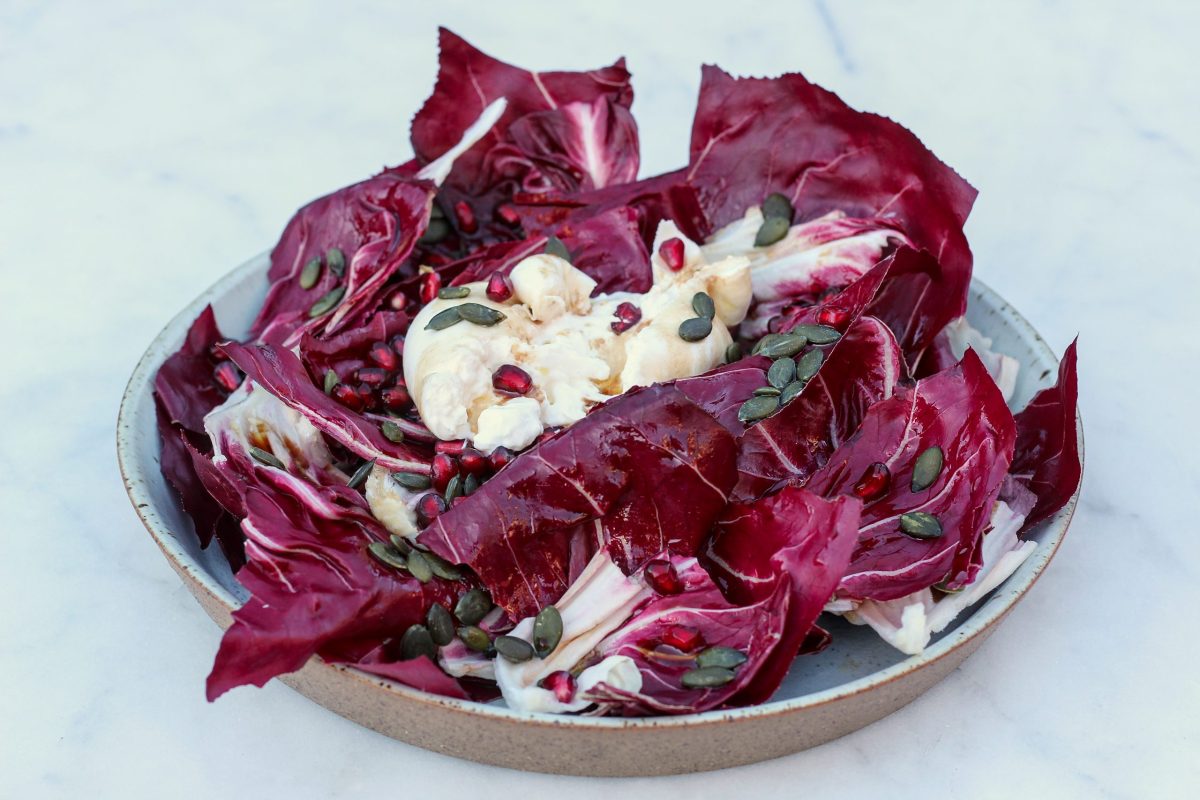
I had a very similar salad in a restaurant recently for a friend’s birthday. I thought I could recreate it, with a slight nutritional twist whereby each serving provides you with an actual portion of salad! It’s just as delicious as the restaurant, but knowing it’s providing that little bit of extra nutrition makes me forgive the fact that I’m actually eating a double portion of cheese in one go.
Serves 2
Ingredients
6 large leaves of radicchio (160g)
1 tbsp pomegranate molasses
1 tbsp red wine vinegar
2 tbsp extra virgin olive oil
30g pumpkin seeds
30g pomegranate seeds
1 ball of burrata
Method
Mix the pomegranate molasses, vinegar and olive oil together in a small bowl
Tear the radicchio leaves into a more manageable size and arrange on a large plate.
Scatter the seeds over the top before placing the burrata in the middle and drizzling everything with the prepared salad dressing.
Radicchio and Burrata Salad
Per serving: 427kcal/ 35g fat/ 12g saturated fat/ 17g carbohydrates/ 2.3g fibre/ 10g protein
If I was to ask you which is the best thing to eat to help with regular bowel movements, or to help relieve constipation, most of you would probably answer with prunes. They’re a classic home remedy for helping to keep you regular thanks to their high level of sorbitol. Sorbitol is a type of dietary fibre which is able to help draw water into the lumen of the gut, and therefore can help to soften hard stools, making them easier to pass.
So how do kiwi fruits come into this then? Well, kiwi fruit have more recently been hitting the headlines for their role in constipation which could be due to a specific enzyme called actinidin. Actinidin is a digestive enzyme that breaks down proteins, improves gastric emptying and may help facilitate laxation through its stimulation of receptors in the colon. Furthermore, kiwis have a high polyphenol content, which may also confer digestive health benefits. Polyphenols can promote the growth of beneficial gut bacteria, such as bifidobacteria. And finally, kiwis have a high water holding capacity and high viscosity, which helps with fecal bulking and softening.
Recent studies have demonstrated significant results in the treatment of constipation in healthy patients with IBS-C and in patients with functional constipation [1, 2]. Researchers used MRI techniques to identify the mechanism of action behind kiwi’s laxative effect and found that the consumption of two kiwi fruit daily increased water content in the small bowel and descending colon and increased colonic bulk. These MRI data are consistent with the observation that an increase in stool frequency with looser stool consistencies are seen with the consumption of two kiwi fruit daily and suggests that kiwis can be used as a natural, diet therapy for those with mild constipation [3].
Another study explored the comparative effectiveness of three natural treatments in patients with chronic constipation. This research is among the first data addressing the effectiveness and tolerability of kiwi fruit on chronic constipation in the United States. Seventy-five adults with either functional constipation or IBS type Constipation were provided around 6g of fibre per day in the form of two green kiwi fruit, 12 prunes (100g) or 12 grams of psyllium over a four-week treatment period. All participants experienced similar proportions of spontaneous bowel movements. However, the participants given kiwi fruit reported fewer adverse effects than those reported by patients treated with the prunes and psyllium. Notably, a smaller proportion of patients were dissatisfied with the kiwi fruit compared with the prunes or psyllium [4]. In addition, a randomised cross-over study looked at the effectiveness of 5g of dietary fiber from golden kiwifruit versus 5g of dietary fiber through a fibre supplement and saw similar improvements in stool consistency, straining and discomfort [5].
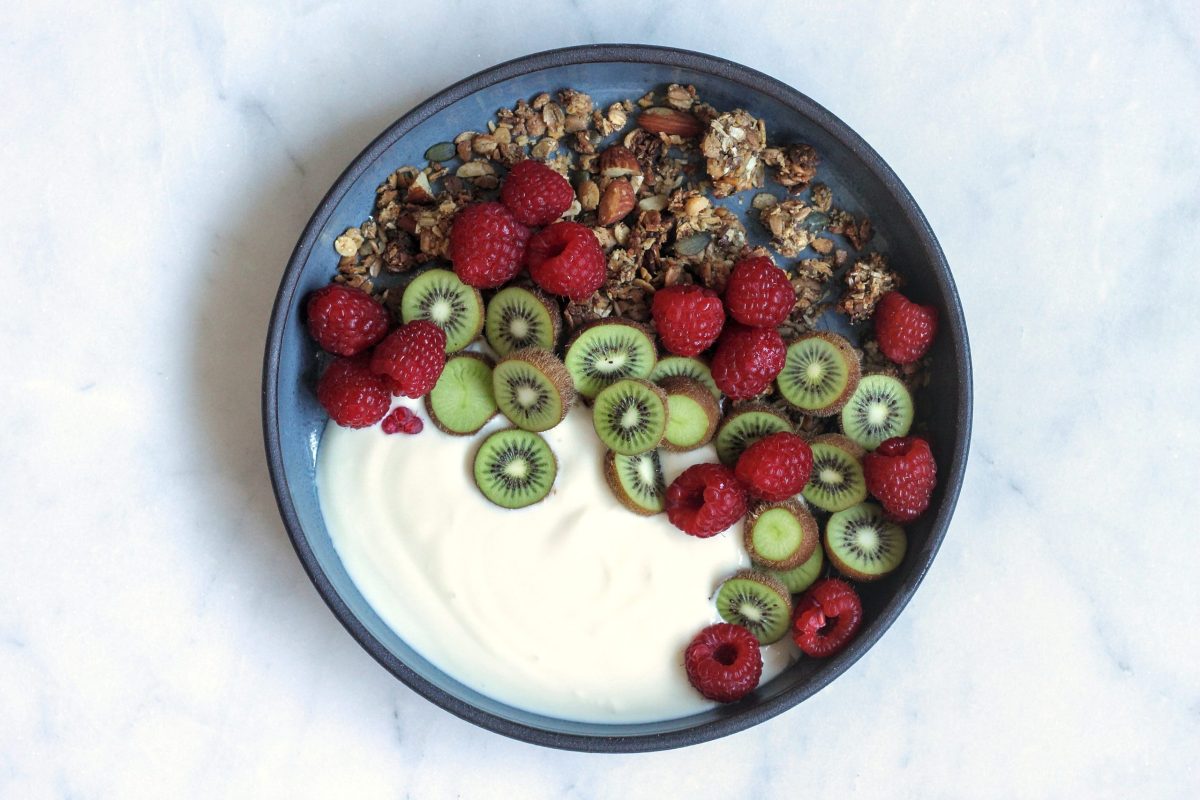
Kiwi Granola
I’ve paired my mini homegrown kiwis with no added sugar granola and some raspberries, which are another source of fibre, for the best gut-loving effect.
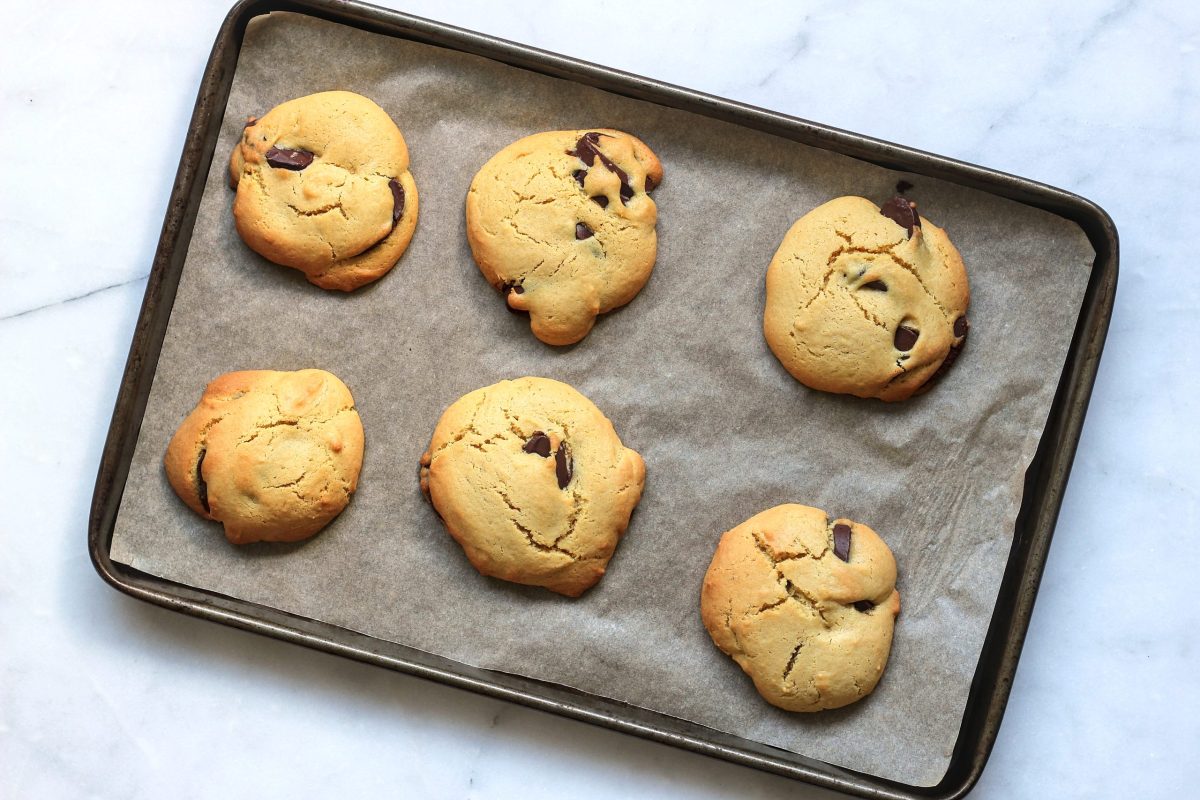
People talk about the 4 C’s when it comes to diamonds, but I’m talking about the 4 C’s when it comes to cookies! These are delicious, super soft whilst still chewy, yet completely gluten-free thanks to the use of chickpea flower, otherwise known as gram flour.
I also have to give credit to my then 6-year-old nephew, who, after I had made brunch with some gluten-free vegetable fritters, asked if we could make some gluten-free cookies for his mummy using my special flour. And here we are. A word of caution, the raw batter is disgusting! But it’s transformed once it’s cooked, so, a) don’t lick the bowl clean and b) trust the process!
Makes 12 cookies
Ingredients
125g unsalted butter
100g soft light brown sugar
2 eggs
1 tsp vanilla extract
250g chickpea/gram flour
1/2 tbsp gluten-free baking powder
1/4 tsp salt
175 dark chocolate chips
Method
Preheat the oven to 160°C fan/ 180°C convection and line 2 large baking trays with baking parchment.
In a large mixing bowl, add the butter and melt in the microwave or bain marie. Once melted mix in the sugar, mixing well before adding in the eggs and vanilla extract.
Sieve the flour, baking powder and salt together before adding to the wet ingredients and mixing to form a stiff dough. Add the chocolate chips and mix to incorporate.
Spoon 12 equal blobs of dough across 2 baking trays with a gap between each cookie, before trying to flatten slightly.
Bake in the oven for 12-15 minutes till lightly golden brown on the edges. Allow to cool on the tray for 10 minutes before tucking into a warm cookie.
Chocolate Chip Chickpea Cookies
Per cookie: 283kcal/ 17g fat/ 9.5g saturated fat/ 24g carbohydrates/ 3.7g fibre/ 7.3g protein
Rather than growing a carving pumpkin, I prefer to grow squash as they’re a bit more tasty than standard carving pumpkins. I’m also all about the guts, so in this recipe I’m using the whole of the edible pumpkins, with just the inedible stalk and pumpkin bum, aka the blossom end, left for the compost bin. I keep the skin of the butternut squash on the flesh – this helps save time, and prevent unnecessary food waste, but also a lot of people injure themselves when peeling squash so let’s keep the gore to fake blood.
This is also perfect to make if you are cooking something else in the oven already. You can roast the vegetables in advance, and then when you are ready turn them into the soup at a later time – just allow everything to come back to the boil for a few minutes before blending.
If you don’t have a squash to hand but still want to make this soup you can opt for pre-prepared butternut squash from the freezer which can be more convenient for some people. If this is the case try using green pumpkin seeds you can buy in the shops.
Squash and pumpkins are excellent sources of beta-carotene, which our body converts into vitamin A. We need this vitamin to help maintain healthy skin, a healthy immune system, and also help our eyes to see in the dark! Or at least that’s what the kid’s like to hear most often!
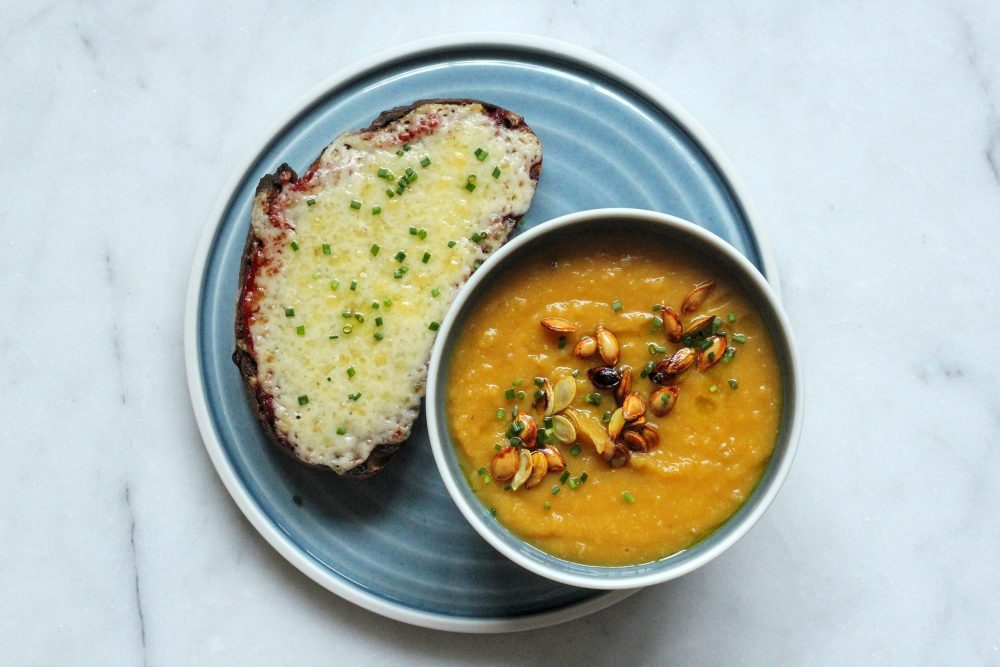
I love serving my soup with some tomato cheese on sourdough toast! It’s such a treat, and helps make this soup a balanced meal.
Makes 6 generous servings
Ingredients
1 large butternut squash, cut into large chunks – mine was 1.3kg once I had prepared it
3 onions, quartered
1 head of garlic, the very top removed
2.5 tbsp extra virgin olive oil
150g red lentils
1 stock cube, I used a vegetable one
Herbs for garnishing e.g. flat-leaf parsley or chives
Method
Preheat the oven to 180°C fan/ GM6
To a large baking tray, add the cubed butternut squash, quartered onions, garlic bulb, and 2 tbsp extra virgin olive oil. Mix to evenly coat everything with oil, and place the garlic in the middle of the tray to prevent it from burning. Roast in the oven for 45 minutes till the veg start to turn golden brown.
Meanwhile, prepare the squash seeds by placing the squash “guts” into a bowl and adding some water. Loosen the seeds from the stringy flesh before placing on a clean teatowel to thoroughly dry. Place the seeds into a small baking tray, adding the remaining half tbsp extra virgin olive oil and mixing to evenly coat. Place the tray at the bottom of the oven and roast for 10-15 minutes till deep golden in colour and crispy.
While the veg is roasting, bring around 600ml water to the boil and add the lentils and stock cube. Cook the lentils for around 10 minutes till soft.
Once the veg is cooked, add it to the pan with the now cooked lentils, and squeeze the garlic out of the paper. Deglaze the pan with boiling water, and then top up the water in the pan so it covers the vegetables. In total, you will need to add around 1.8l of water. Bring everything back to a boil and cook for 5 minutes before blending into a soup of your desired consistency, adding more water to thin the soup if desired, and seasoning with pepper to taste.
Serve the soup piping hot, dressed with a little extra olive oil if desired, and scattered with fresh herbs and crispy seeds.
Roasted Butternut Squash and Red Lentil Soup
Per serving*: 285kcal/ 8.1g fat/ 1.2g saturated fat/ 37g carbohydrates/ 11g fibre/ 11g protein
*nutritional analysis using pumpkin seeds, which are different to the seeds found in a squash
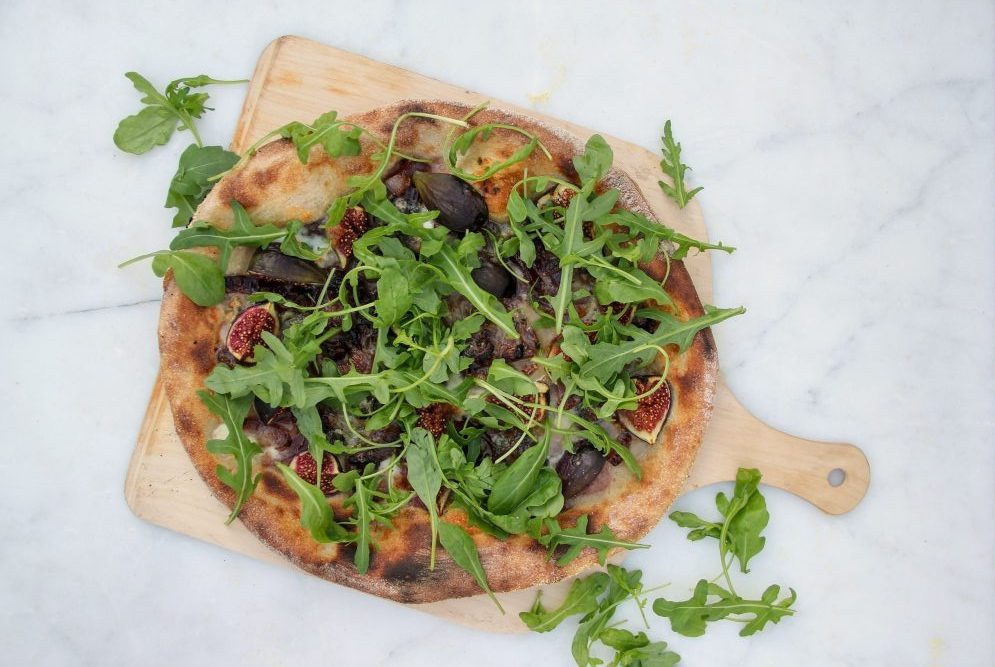
As fig season comes to an end, here’s an extremely delicious way of celebrating their seasonality in a savoury form. You’ll also be pleased to know that each serving (half a pizza) counts as 2 of your 5-a-day and provides over 20% of your daily fibre goals!
I use half Roquefort and half buffalo mozzarella in this recipe, as Roquefort (and other blue cheeses) are higher in salt (up to 6 times more salt in some cases). This therefore helps to give the desired salty flavour without the pizza being overly salty.
Makes 1 pizza which will feed 1 very hungry person, or two adequately hungry people
Start by adding the onions, olive oil, sugar, thyme, and water to a pan and cooking over a low heat till soft and caramelised for around 25-30 minutes, making sure the onions don’t burn.
Meanwhile, preheat the oven to maximum temperature (mine is 275°C fan) and place a heavy bottom tray/pizza stone in the middle of the oven. Allow the oven to reach temperature and wait a further 10 minutes to ensure the tray is fully heated.
Dust the work surface with semolina, take a ball of dough and place it on the semolina and finely dust with flour.
Using your fingers, press around the edge 1 cm in to form a crust.
Using the palm of your hand, press inside this line to flatten the dough in the centre.
When you can press it no more, pick the dough up and using your knuckles, gently ease the dough out so it becomes thin and slightly transparent. Take care not to rip the dough. Ensure the base has an even covering of semolina.
Transfer the pizza base onto a pizza peel
Scatter the cooked onions, figs and cheeses over the top.
Transfer the pizza onto the tray in the oven using a strong and decisive forward and back motion to slide the pizza off the peel.
Cook the pizza for anywhere between 6-9 minutes depending on the temperature of your oven. The pizza should have very dark golden blistered crusts, and the mozzarella and passata should be bubbling and start turning golden.
Remove the pizza from the oven, and scatter with fresh rocket.
Best eaten straight away.
Per half pizza: 609kcal/ 19g fat/ 9.8g saturated fat/ 82g carbohydrates/ 7.1g fibre/ 24g protein
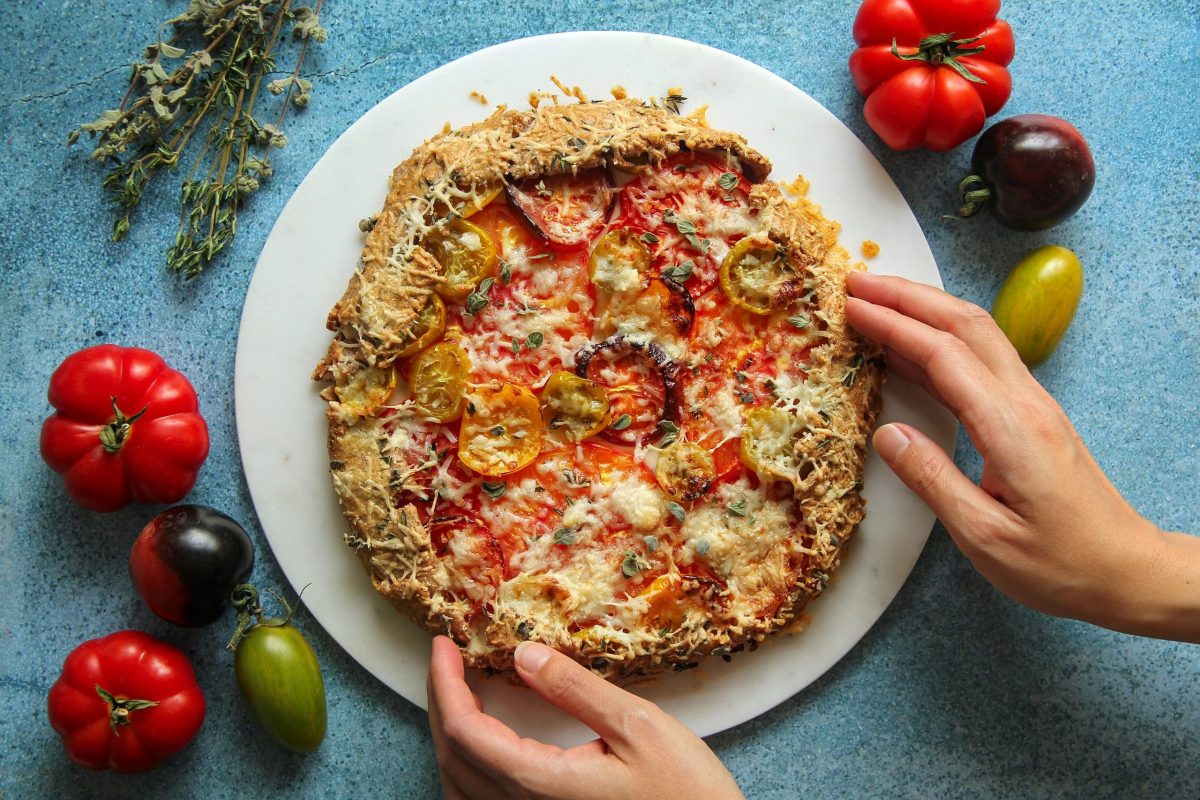
This recipe is for anyone who is clinging to these last few warm days of summer. It’s the end of my tomato growing season, my courgette plants are on the brink of shutting down, and the nights are slowly drawing in. So here’s a comforting summer-style galette making the most of those wonderful tomatoes. Other veg that would work well in place of tomatoes here include courgettes, Swiss chard, aubergine, peppers, kale, leeks or even onions – most of these would need cooking either partially, or fully, before placing on top.
Serves 6 as a starter or 4 as a main
Ingredients
65g cold unsalted butter, cut into cubes
160g wholemeal plain flour
3 tsp fresh thyme leaves
100g soft goats cheese
100g cream cheese
2 tsp fresh oregano leaves
1/4 tsp white pepper
325g sliced tomatoes
1 egg, beaten
40g hard goats cheese
Method
Make the pastry by combining the butter, flour and 1 tsp thyme leaves together till it resembles breadcrumbs with your fingertips. Then add 35-40ml ice cold water and bring together to form a dough. Cover and refrigerate for 30 minutes.
Meanwhile, mix the soft goat cheese, cream cheese, 1 tsp thyme, 1 tsp oregano and pepper together till smooth.
Preheat the oven to 180°C fan/ 200°C convection
Roll the dough out to make a large disk approximately 25cm diameter and transfer it onto a lined baking sheet. Spread the cheese mixture over the base, leaving a 1-inch border around the edge. Layer on the cut tomatoes.
Gently fold the edges over onto the filling. Brush the exposed pastry crust with the beaten egg and dust the whole galette with the remaining herbs and hard goats cheese, paying particular attention to the pastry edge.
Bake in the oven to 20 minutes till the pastry turns a deeper golden colour and the tomatoes have softened.
Delicious served warm or cold for a packed lunch.
I love serving my galette with a side salad with yet more tomatoes
Per sixth: 310kcal/ 20g fat/ 13g saturated fat/ 19g carbohydrates/ 3.4g fibre/ 9.9g protein
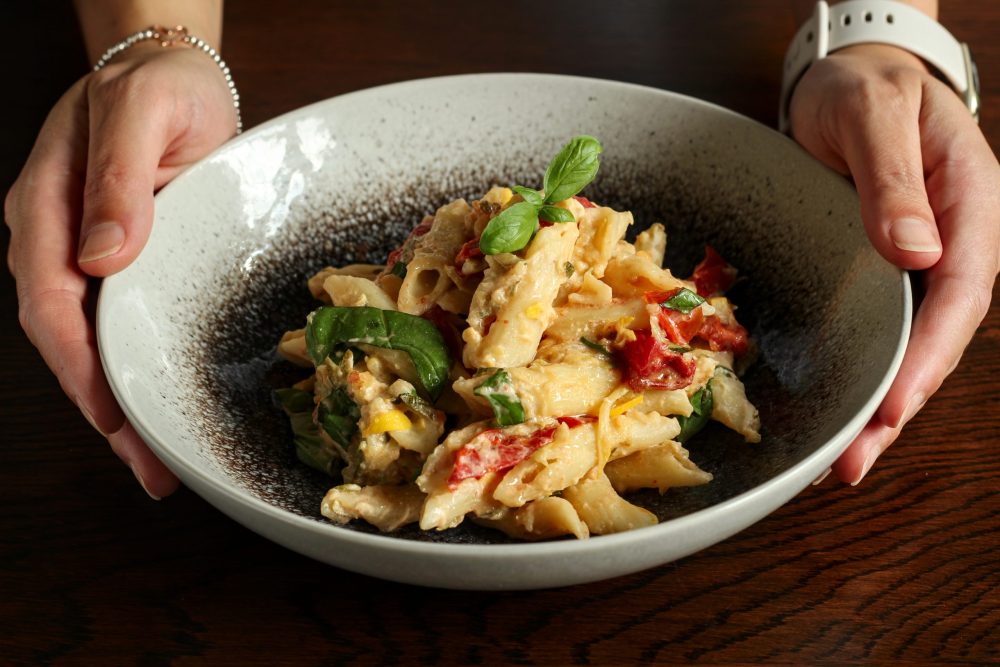
When you’re short on time but still want something freshly cooked without the hassle or the mess left after? Here’s my easy One Pan Boursin Pasta Bake which takes 5 minutes of prep and only makes 1 pan dirty!
I’m using seasonal courgettes and tomatoes to provide 2 of your 5-a-day in this dish, but if you don’t have these, or they’re not in season you can use other vegetables such as leeks, peppers, broccoli, cauliflower or even a tin of chopped tomatoes.
This dish is also naturally lower in salt, providing just 0.64g per adult-sized serving, making it family-friendly once you adjust the portion size.
Serves 3 hungry adults, or a family of 4
Ingredients
300g dried pasta with a cooking time of about 10 minutes
In a large ovenproof dish, add the pasta and place the Boursin in the middle on top of the pasta. Cover the remaining exposed pasta with the grated courgettes and sliced tomatoes.
Add the boiling water and bake in the oven for 45 minutes.
Remove from the oven and mix everything together, add in the basil and season with pepper to taste.
Delicious served hot
One Pan Boursin Pasta Bake
Per adult serving: 600kcal/ 22g fat/ 13g saturated fat/ 75g carbohydrates/ 8.2g fibre/ 19g protein/ 0.64g salt
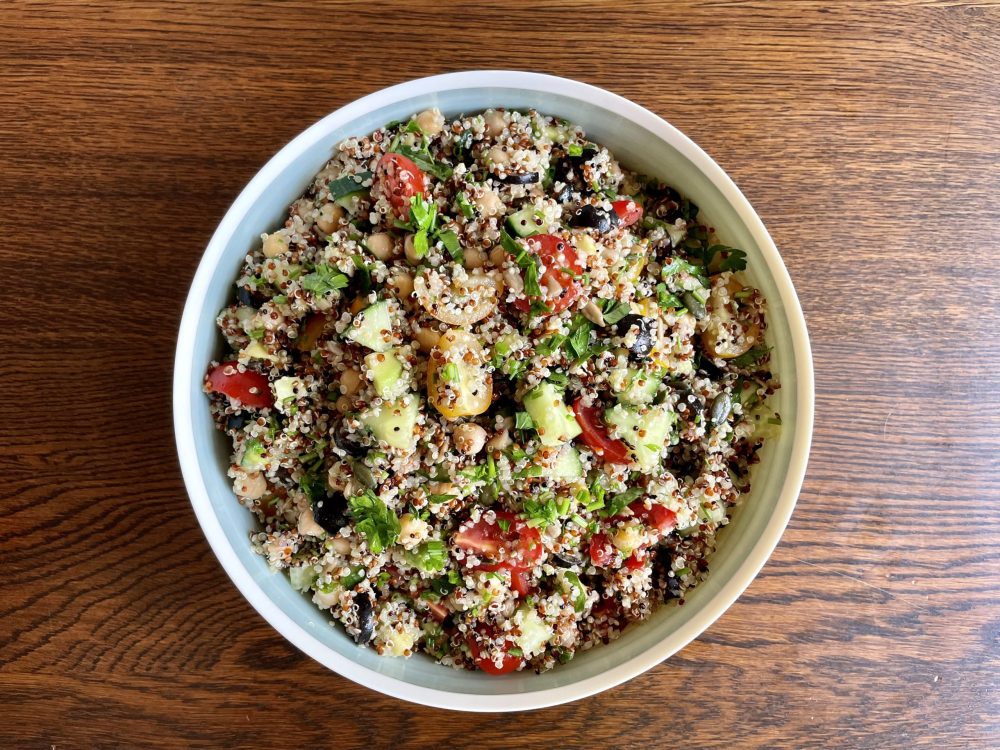
Here’s my super easy Summer Quinoa Salad recipe which incorporates all of these concepts in one dish.
Serves 4 as a main
Ingredients
200g quinoa
30ml extra virgin olive oil
15g chives, chopped
15g flat-leaf parsley, chopped
200g cucumber, cubed
250g cherry tomatoes, chopped
1 tin of chickpeas, drained and rinsed
Juice of 2 lemons
1 large avocado (use some of the lemon juice to prevent it from browning)
80g black olives, roughly chopped
20g pumpkin seeds
20g sunflower seeds
Method
Add the quinoa to a pan with 400ml of cold water. Bring to a boil and allow to simmer for 12-15 minutes, or until all the water is absorbed. Remove from the heat and cover with a lid for 5 minutes before fluffing with a fork. Allow to cool.
Add the cooked quinoa to a large bowl along with all of the remaining ingredients and mix together.
Serve, remembering to put any spare salad away in a Tupperware in the fridge for the next day.
Per serving: 530kcal/ 29g fat/ 4.4g saturated fat/ 44g carbohydrates/ 11g fibre/16g protein
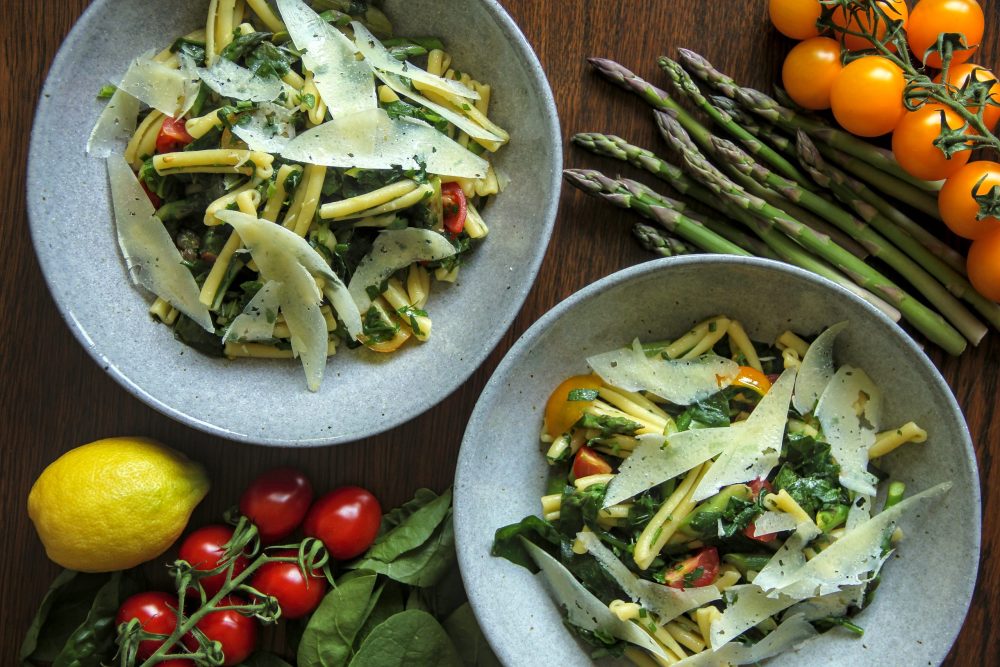
It’s British Tomato Fortnight as well as being halfway through the British Asparagus season, so I’m combining the two to make a delicious pasta salad that is perfect either hot or cold. Remember, allowing your pasta to cool helps create resistant starch which is fibre fuel for your gut microbes!
Serves 3
Ingredients
250g pasta
200g asparagus tips, roughly chopped
100g spinach, roughly chopped
3 tbsp extra virgin olive oil
1 lemon, zest and juice
100g British tomatoes, roughly chopped
1/2 bunch basil, roughly chopped
1/2 bunch flat leaf parsley, roughly chopped
1/2 bunch chives, roughly chopped
Salt and pepper to taste
30g pecorino cheese
Method
Bring a large pan of water to the boil and cook the pasta for 2 minutes less than the packet instructions. In the last minute of cooking add the asparagus tips before draining.
Add the spinach and olive oil, and stir to combine before adding all the remaining ingredients except the pecorino.
Serve the pasta in bowls, hot or cold, with pecorino shavings over the top.
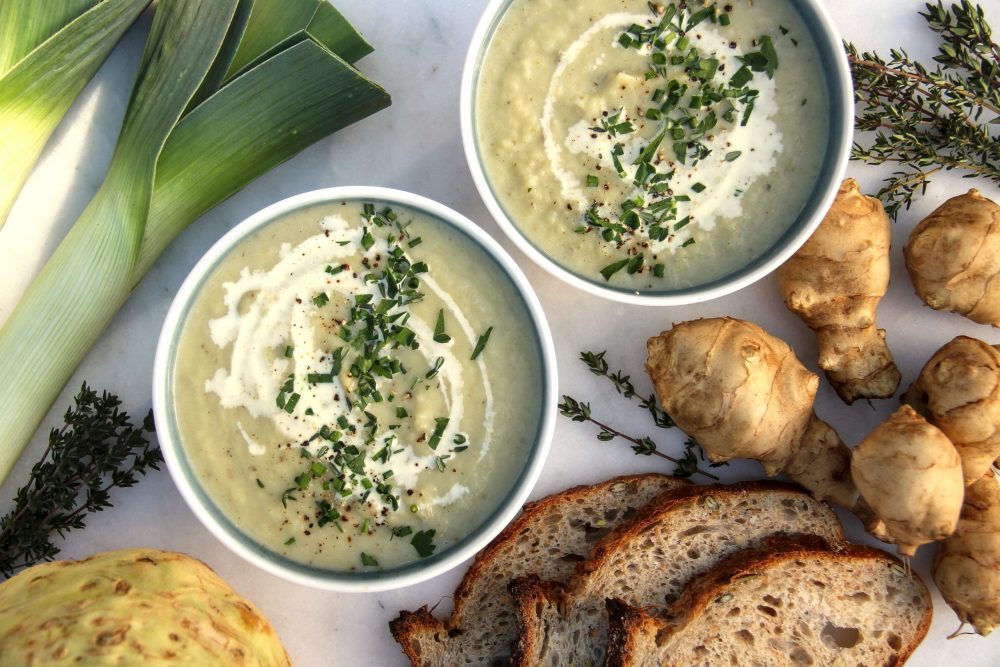
What do Jerusalem artichokes, garlic, onions and leeks all have in common? They’re all prebiotics, which means they help feed the good bacteria in your gut.
If you’re not used to eating lots of prebiotics in your diet, you may well feel a little gassy after, but that’s your gut microbiota enjoying these special fibres. When they enjoy them, they ferment them, producing extra gas which you may notice either as bloating or flatulence. All good things, but always good to know in advance of this happening.
Serves 10
Ingredients
2 tbsp extra virgin olive oil
2 large onions, sliced
2 leeks, sliced
4 sticks of celery, sliced
5 garlic cloves
400g celeriac, roughly chopped
800g Jerusalem artichokes, roughly chopped
250ml white wine
1 stock cube dissolved in 1.2l hot water
1 bunch of thyme
150ml double cream
To serve
Extra chopped herbs e.g. thyme leaves, chives, flat leaf parsley
Sourdough bread
Method
In a large pan, add the oil, onion, leeks and celery and cook for 5 mintues till soft.
Add the garlic, celeriac and Jerusalem artichokes followed by the wine, stock and thyme. Cook till the vegetables are soft.
Remove the woody herb stems before blending with the double cream. Season to taste with pepper.
Serve sprinkled with extra herbs and pepper and a slice of sourdough bread
Prebiotic Winter Soup
Per serving of soup: 204kcal/ 11g fat/ 5.6g saturated fat/ 15g carbohydrates/ 5.1g fibre/ 3.4g protein











 Dr Pippa