No Waste Vegetable Fritters

No Waste Vegetable Fritters

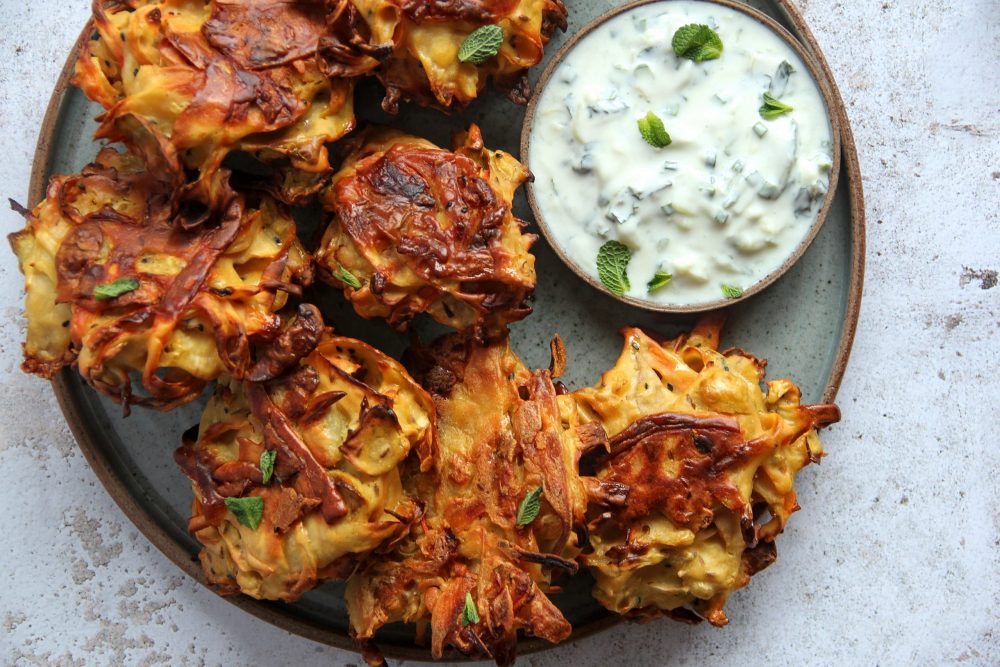
Use your leftover vegetable peelings from your Christmas Dinner to make these delicious No Waste Vegetable Fritters. They are so versatile in terms of what vegetables you want to use in them. I have used a combination of potato, parsnip, carrot and sprout peelings, but other suitable vegetables include onion, cabbage, kale, cauliflower (leaves included), broccoli, mushrooms or leeks.

Save the peelings in a Tupperware in the fridge for up to 3 days before making these fritters – you can adjust the gram flour (also known as chickpea flour or besan flour) and water to the weight of the vegetables.

Delicious served with a quick riata which can easily be adapted to vegan by using a plant-based yoghurt.
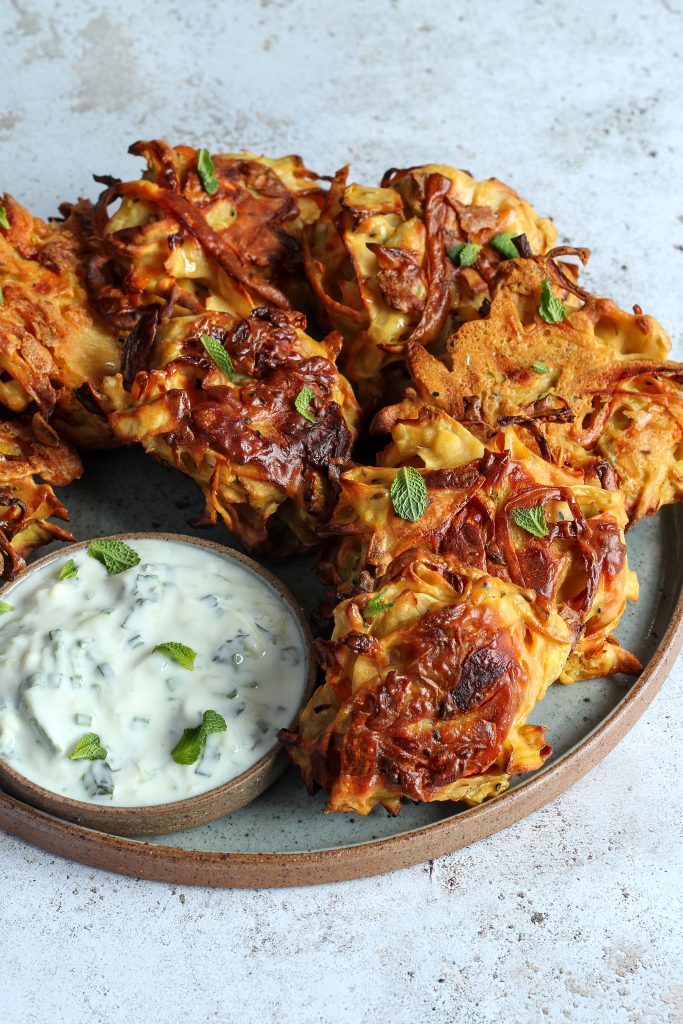
No Waste Vegetable Fritters

Makes around 8 fritters

Ingredients

  • 2 tbsp rapeseed oil
  • 400g vegetable peelings e.g. carrots, potatoes, parsnips and sprouts
  • 1″ ginger, grated
  • 1 clove garlic, grated
  • 1 tsp nigella seeds
  • 1.5 tsp cumin seeds
  • 250g gram flour
  • Juice of 1 lemon

To serve

  • 250g plain yoghurt of choice
  • 100g grated cucumber
  • 1 spring onion, chopped
  • 1 handful fresh mint, chopped
  • Juice of half a lemon

Method

  • Preheat the oven to 200°C fan/ 225°C convection
  • In a large baking tray add the oil and preheat in the oven
  • In a large bowl add the remaining fritter ingredients and mix together with around 150ml water, adding extra water if needed to get a thick batter consistence.
  • Remove the tray from the oven and drop patties of the mixture into the hot oil, evenly spaced out. You should make around 7-8 fritters.
  • Cook in the oven for 10 minutes, before flipping over, gently pressing down and cooking for a further 12-15 minutes till golden brown and crispy.
  • Meanwhile, mix the raita ingredients together.
  • Once the fritters are cooked through, serve alongside the riata.

Per serving*: 198kcal/ 5.2g fat/ 0.7g saturated fat/ 25g carbohydrates/ 5.2g fibre/ 10g protein
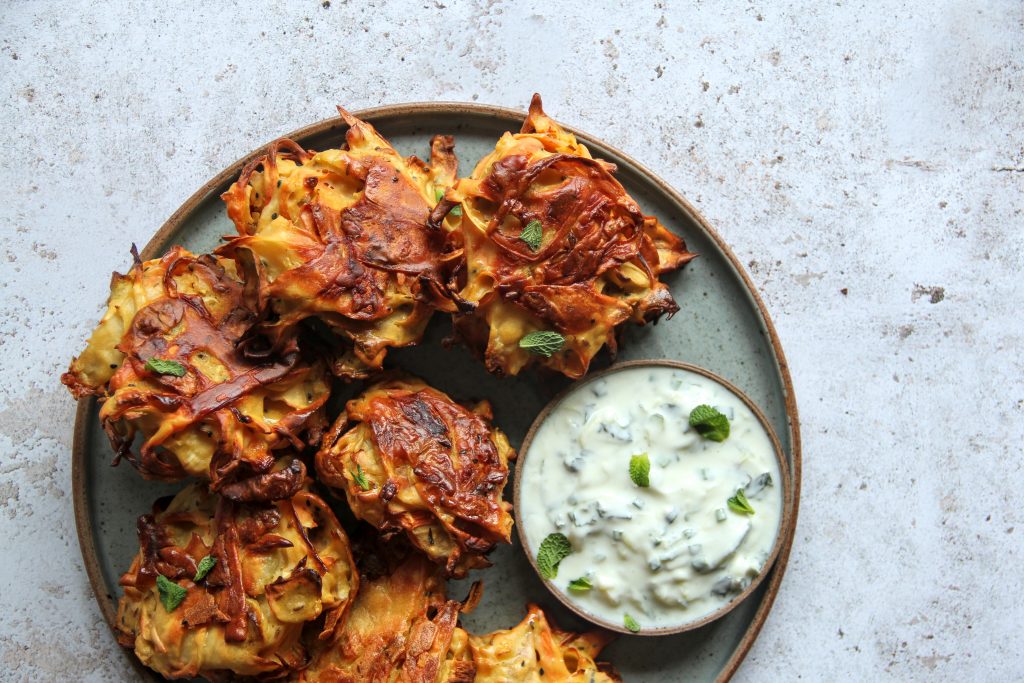
No Waste Vegetable Fritters

*Nutritional analysis completed based on particular vegetables listed and plain low fat yoghurt.
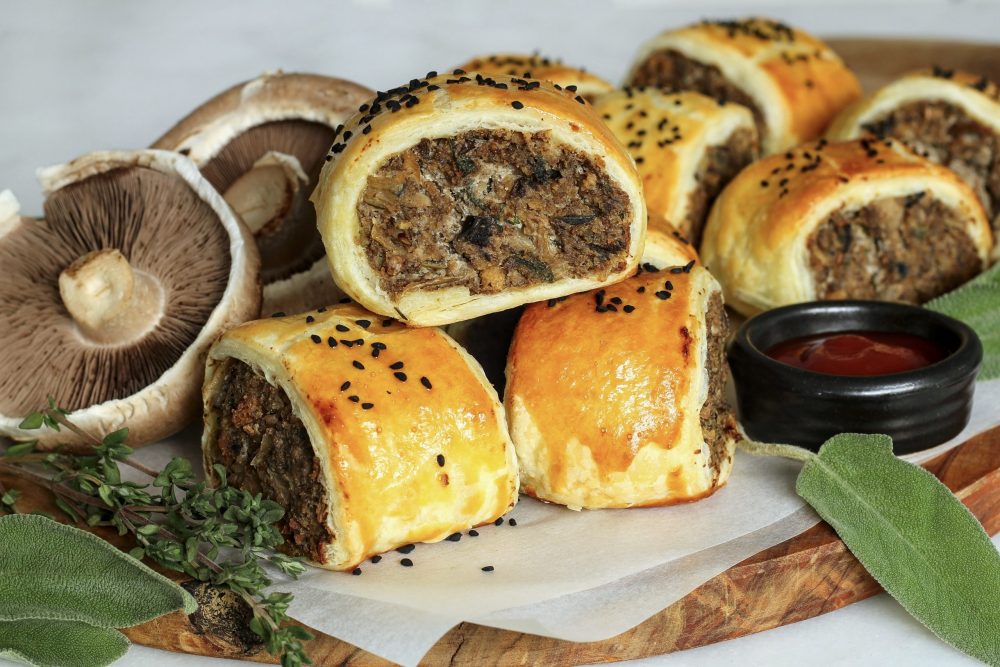
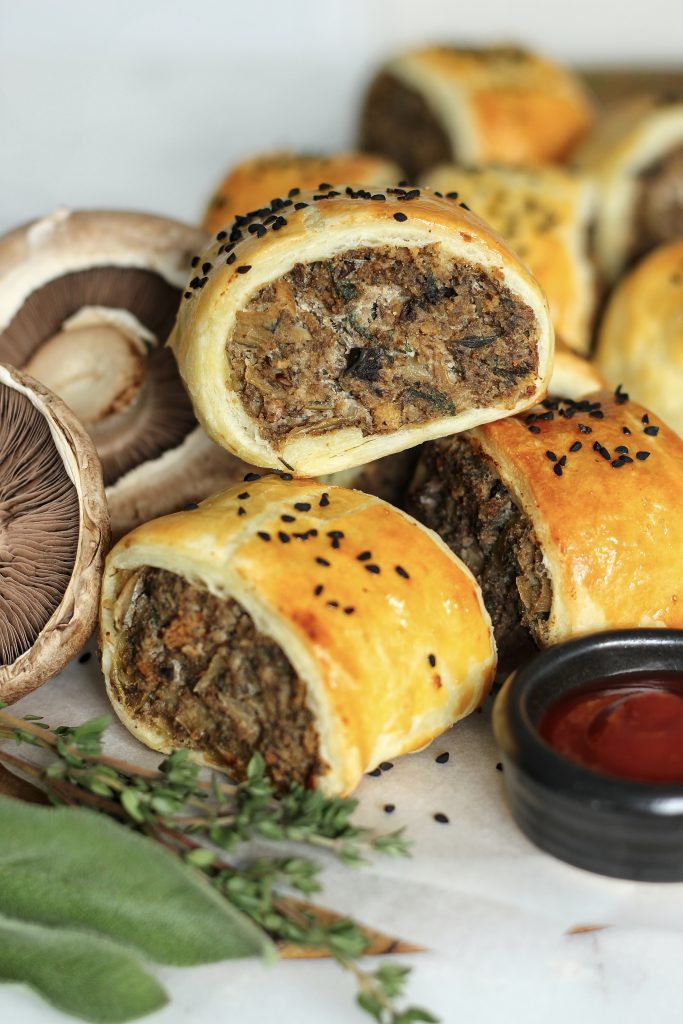
Mushroom and Tofu Sausage Rolls

Mushroom & Tofu Sausage Rolls

For me, sausage rolls come out 2 times during the year; picnics and Christmas! While I do love a meat-based sausage roll, I wanted to create something which non-meat eaters could also enjoy without simply turning to a ready-made vegetarian sausage. This also means I’m having the benefit of plant foods, and less processed red meat which we know can be bad for our health.

You can make a bigger batch of these, partially cook them for 15 minutes and then reheat before your guests arrive for 10 minutes. Alternatively, you can freeze them down for longer-term storage. Simply cook from frozen for 15-18 minutes till crisp and piping hot.

These are also perfect for young children as they are naturally lower in salt in comparison to most shop-bought sausage rolls. Additionally, they are a softer texture inside in comparison to meat, which might be more pleasing to younger children.

To make the sausage rolls egg-free, swap the egg glaze for a milk-wash glaze.

Makes 12

Ingredients

  • 5g dried mushrooms
  • 50ml boiling water
  • 1 tbsp rapeseed oil
  • 1 onion, finely sliced
  • 2 garlic cloves, finely chopped
  • 250g mushrooms, finely chopped
  • 200g firm tofu
  • 10 sprigs thyme
  • 2 sprigs sage
  • 1 tsp pepper
  • 1/4 tsp nutmeg
  • 250g ricotta
  • 50g breadcrumbs
  • 1 sheet puff pastry
  • 1 egg, beaten
  • a few pinches of seeds e.g. nigella seeds, sesame seeds

Method

  • Pour the boiling water over the dried mushrooms to rehydrate them.
  • Meanwhile, heat the oil in a saucepan and cook the onion for 5 minutes over a low heat till soft and translucent. Add the garlic and cook for a further 2 minutes.
  • Add the fresh and rehydrated mushrooms to the onion mixture and cook till all the liquid evaporates off.
  • Add the tofu, herbs and spices and cook till dry again.
  • Drain any excess liquid off the ricotta. Add to a large mixing bowl with the breadcrumbs and the mushroom mixture. Mix well and allow to fully cool to fridge temperature.
  • Preheat the oven to 180°C fan/ 200°C convection
  • Meanwhile, cut the pastry sheet into 2 pieces through the longer edge to create two smaller rectangles. Shape the mushroom mixture into the centre of the two pieces of pastry, leaving a large gap on either long edge.
  • Using the egg, paint across one edge to act as glue. Take the edge without the egg on it and fold it over the mushroom mixture, rolling it onto the egg-washed edge to seal.
  • Cut each log into 6 pieces and place on a lined baking tray. Brush the tops with the remaining egg wash and sprinkle with seeds.
  • Bake in the oven for 25 minutes till golden brown and crispy.
  • Enjoy hot, or cold
Vegetarian Sausage Rolls

Per sausage roll: 255kcal/ 16g fat/ 7.3g saturated fat/ 14g carbohydrates/ 2.1g fibre/ 12g protein

Roasted Red Pasta Sauce

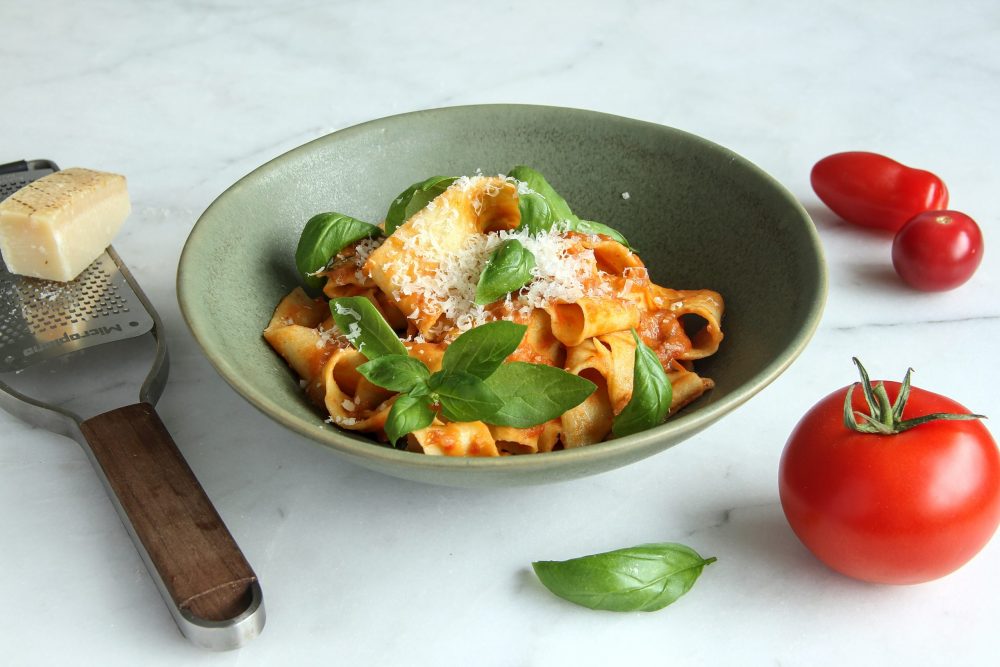
It’s World Pasta Day so I’ve created an easy, nutritious and delicious pasta sauce for the occasion. Easily adaptable to make it vegan and gluten-free by swapping parmesan for a vegan hard cheese and pasta for gluten-free pasta.

Roasted Red Pasta

Serves 4

Ingredients

  • 600g tomatoes, roughly chopped
  • 3 cloves garlic, left in their skins
  • 1 red pepper, cut into quarters, seeds removed
  • 1 large red onion, cut into quarters
  • 3 tbsp extra virgin olive oil
  • 100g red lentils
  • 300ml water

To serve

  • 300g pasta
  • Parmesan
  • Fresh basil

Method

  • Preheat the oven to 160°C fan/180°C convection
  • In a large baking tray add the tomatoes, peppers, garlic, onion and oil. Mix and roast for 1 hour.
  • Meanwhile, in a saucepan add the red lentils and 300ml water. Bring to a boil and simmer for 20 minutes till soft.
  • Once the vegetables are cooked through, remove the skin from the garlic and transfer everything to a high-speed blender with the cooked lentils and their cooking water. Blend till smooth, seasoning to taste.
  • Stir through freshly cooked pasta, using a little reserved pasta water to let the sauce down to your desired consistency.
  • Serve topped with parmesan and fresh basil.

Per serving: 530kcal/ 15g fat/ 3.6g saturated fat/ 74g carbohydrates/ 7.7g fibre/ 20g protein

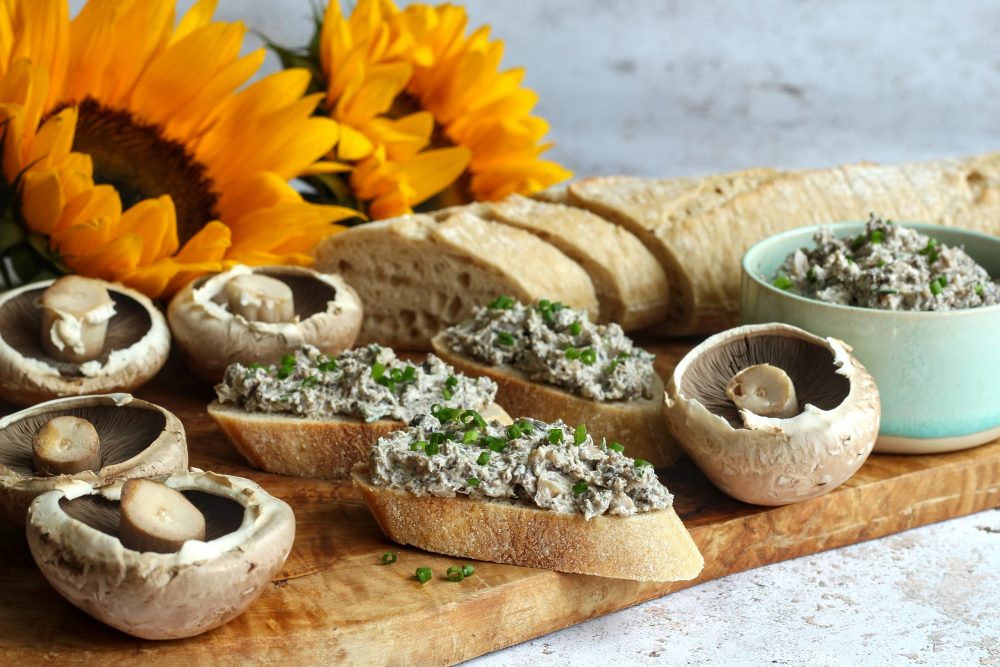
Roasted Mushroom Pate

Combining deliciously roasted and sticky garlic with vitamin D-enriched mushrooms (read my previous post on enriching your mushrooms with vitamin D by clicking here) for a delicious and nutritious spread. Make a large batch and I promise you won’t regret it! Try serving these up as little canapes on thinly sliced toasted bread at your next dinner party.

Makes 17 portions

Ingredients

  • 1 bulb of garlic
  • 1 tbsp extra virgin olive oil
  • 500g mushrooms of choice
  • 1 tbsp rapeseed oil
  • 20 sprigs of thyme
  • 300g cream cheese
  • 15g chives, chopped
  • 1/2 tsp white pepper
  • 1 tbsp lemon juice

Method

  • Preheat the oven to 160°C fan/ 180°C convection
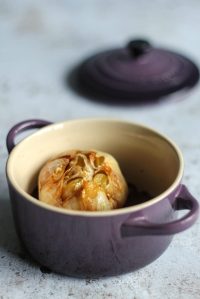
  • Slice the top off the garlic bulb to expose the very tops of the cloves. Place in a mini cocotte or on double-layered tin foil. Drizzle with the olive oil, cover and place into the oven.
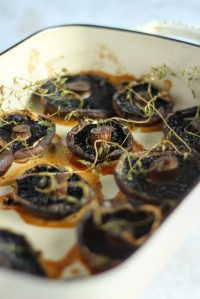
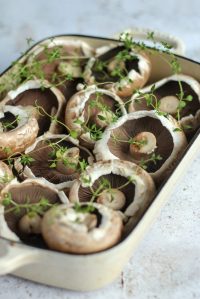
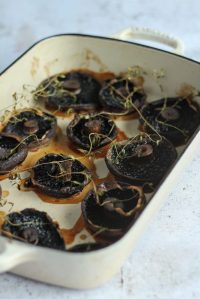
  • Meanwhile, add the mushrooms to a large tray, drizzle with the rapeseed oil and 10 sprigs of thyme. Roast in the oven for 1 hour till the mushrooms are sticky and shrunken.

  • Once the mushrooms are cooked check the garlic is soft and remove from the oven to cool – it may need a further 10-15 minutes depending on the size of your bulb and your vessel.
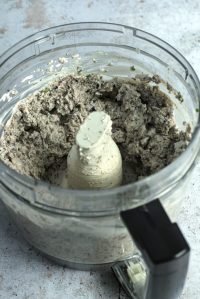
  • Once cooled, to a food processor add the mushrooms, remove the thyme leaves from the roasted thyme, chives, white pepper, and lemon. Add the remaining fresh thyme leaves and 5-6 cloves of roasted garlic. Blend to the desired consistency, checking the seasoning is to your taste.
  • Serve with crusty bread, crackers or stir into a risotto just at the end. Any leftovers can be stored in the fridge for up to 5 days, or frozen for up to 2 months.
Roasted Mushroom Pate

Per serving: 58kcal/ 4.8g fat/ 2.9g saturated fat/ 1.6g carbohydrates/ 0.5g fibre/ 1.7g protein

One Pan Orzo and Courgette Bake

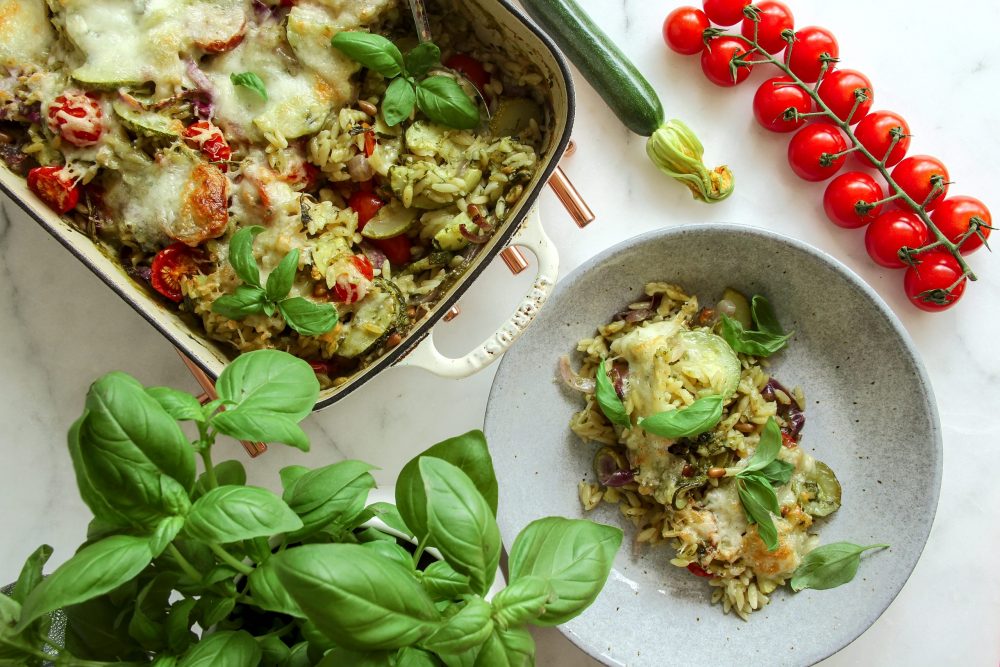
An easy one-pan dish means cleaning up after eating is easy. Any leftovers are delicious the next day for lunch or dinner so don’t be put off by the large volume you make.

Serves 6

Ingredients

  • 1 large red onion, sliced
  • 400g courgettes, roughly chopped
  • 2 sprigs of rosemary, leaves removed
  • 5 sprigs of oregano, leaves removed
  • 4 garlic cloves, roughly chopped
  • 3 tbsp extra virgin olive oil
  • 500g orzo
  • 2 tbsp pesto of choice (I used my Spinach Pesto)
  • 250g baby tomatoes, halved
  • 1 ball of mozzarella
  • 50g parmesan, grated
  • Basil to serve

Method

  • Preheat the oven to 180°C fan/ 200°C convection
  • In a large pan, add the onion, courgettes, herbs, garlic and olive oil. Bake for 15 minutes.
  • Add the orzo, pesto and 800ml water before mixing. Layer the tomatoes over the top and bake for 20-25 minutes.
  • Roughly mix the orzo mix before layering the mozzarella and parmesan over the top.
  • Bake for a final 15 minutes and serve with fresh basil.
Orzo and Courgette Bake

Per serving: 525kcal/ 20g fat/ 6.9g saturated fat/ 62g carbohydrates/ 6.3g fibre/ 20g protein

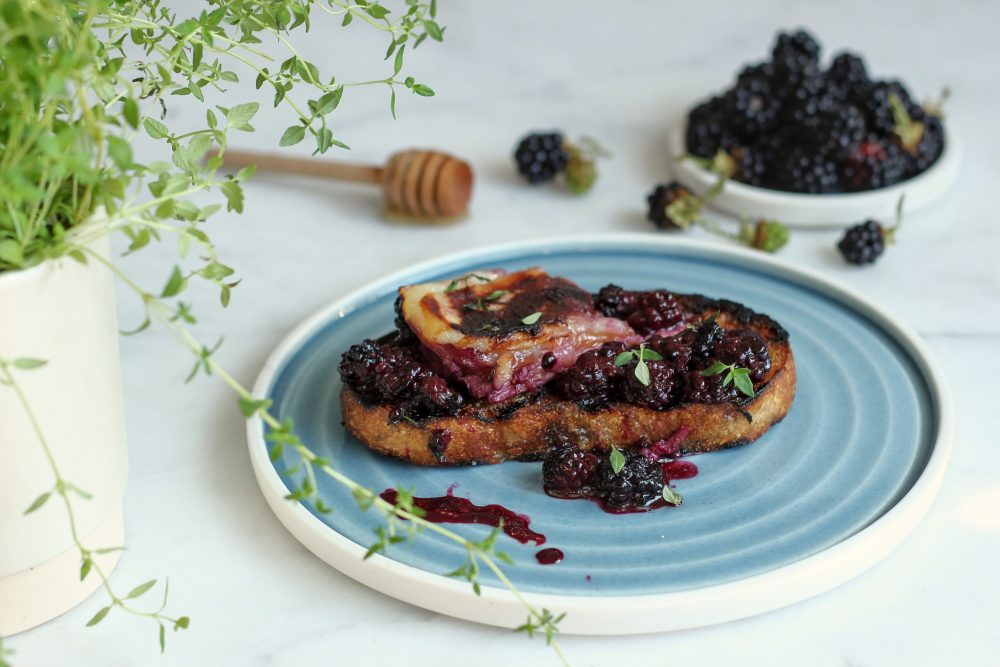
Baked Goats Cheese and Blackberries

Blackberries are a quintessential fruit of British summer. Growing wildly in hedgerows all over the UK, these delicious dark jewels can be easily picked at your leisure for both sweet and savoury dishes.

Serves 4 as a starter

Ingredients

  • 180g log of goats cheese
  • 200g blackberries
  • 1 tsp extra virgin olive oil
  • 1 tbsp honey
  • A few sprigs of thyme

To serve

  • Bread of choice, toasted if desired

Method

  • Preheat the oven to 180°C fan/ 200° convection
  • Slice the goats cheese in half and place in an ovenproof dish.
  • Scatter the blackberries around the edge, then drizzle the oil, honey and thyme over the top. Bake in the oven for 20 minutes.
  • Serve immediately with your choice of bread.
Baked Goats Cheese and Blackberries

Per serving: 198kcal/ 13.0g fat/ 8.2g saturated fat/ 9.4g carbohydrates/ 3.4g fibre/ 9.8g protein

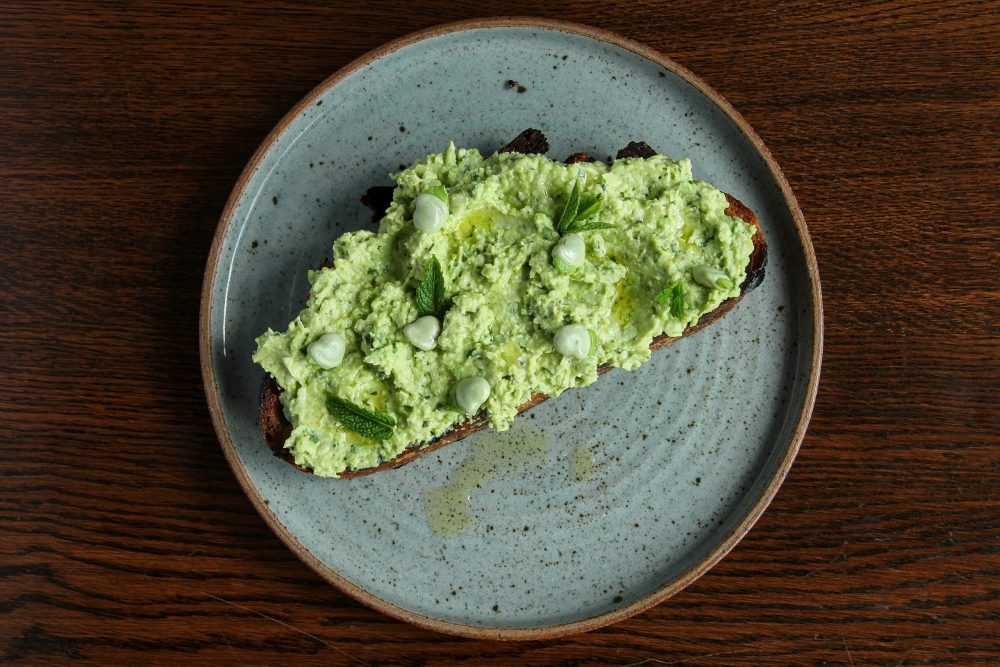
Broad Bean and Mint Hummus

Do you like broad beans? I think they’re a little bit like Marmite, you either love them or hate them. And I also firmly believe that those leathery little jackets surrounding each green bean is responsible for so many people not liking them, including to some extent, myself. They’re currently in season (from the end of June to the middle of September) so why not pick up a bag.

Many people will peel each bean out of its leathery jacket, revealing a bright green bean inside. I, however, do not do this because it’s time-consuming, wastes food, but also impacts the nutritional content. Those papery jackets actually contribute to the phenolic compounds as well as the fibre content.

However, the good news is that I have a delicious recipe with doesn’t remove the skins which both saves time and also keeps the maximum nutrition of the beans in the dish. It’s delicious, I promise that if you’re a fan of hummus this is going to be right up your street.

Serves 10

Ingredients

  • 750g broad beans in their pods, or around 300g depodded
  • 45g tahini
  • 1 garlic clove
  • 15g chives, chopped
  • 3 sprigs of mint, leaves removed
  • juice of 2 large lemons (around 90ml)
  • 50ml extra virgin olive oil

To serve

  • Toasted sourdough
  • A few reserved cooked broad beans
  • Mint leaves
  • Olive oil

Method

  • Bring a large pan of water to a boil. Cook the broad beans for 2 minutes before draining and plunging them into iced water. Drain once cool, reserving a few for decoration if desired.
  • In a food processor, add the cooked broad beans with all of the remaining ingredients.
  • Blitz till the desired consistency, adding a little extra water if needed. I like mine a little chunky.
  • Serve on toast dressed with extra broad beans, mint and olive oil, or with crudites.
  • Any remaining hummus can be stored in an airtight container for 3 days in the fridge.

Per 50g serving: 97kcal/ 8.0g fat/ 1.1g saturated fat/ 3.2g carbohydrates/ 1.9g fibre/ 2.8g protein

Griddled Asparagus and Poached Egg

I adore asparagus season, fleeting as it is. Therefore having it for breakfast seems the perfect way to enjoy the season to the max.

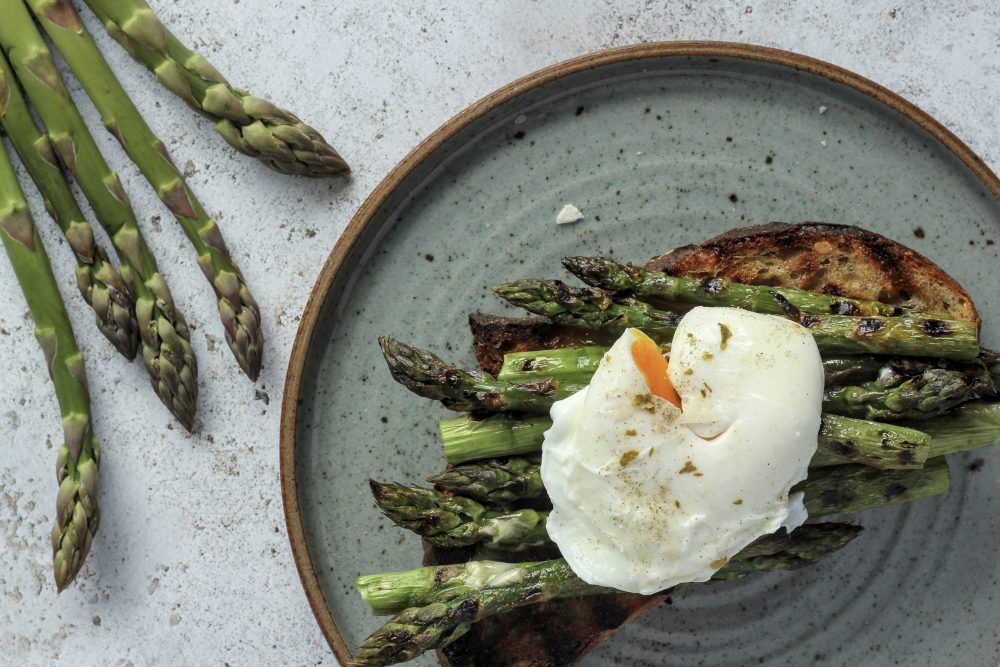
I love having asparagus soldiers dipped in a soft-boiled egg. But if I have the time I love nothing more than griddling it over a hot pan and serving it with a beautifully soft poached egg and some sourdough. For me this is the perfect springtime brunch.

Seasonal British asparagus also emits 5 times less CO2 in comparison to those transported from abroad. Therefore if you want to reduce your food carbon footprint, enjoy British asparagus in its peak season from mid-April to the end of May.

Serves 1

Ingredients

  • 1 small bunch of fresh British asparagus
  • 1 slice of sourdough
  • Extra virgin olive oil
  • 1 egg
  • Butter (optional)
  • Salt and pepper

Method

  • Prepare the asparagus by snapping off the woody ends
  • Preheat a griddle pan
  • Oil one side of the sourdough and place on the griddle pan to cook.
  • Lightly oil the asparagus and place it in the griddle pan alongside the bread
  • Before flipping the bread, oil the second side.
  • Cook for a few minutes till charred
  • Meanwhile, bring a pan of water to a gentle simmer, gently swirl and poach the egg for 3-4 minutes depending on your taste
  • Assemble the asparagus on the sourdough, adding the optional knob of butter on the asparagus if desired before topping with the poached egg
  • Season with salt and pepper to your taste and enjoy

Roasted Tofu and Mediterranean Vegetables

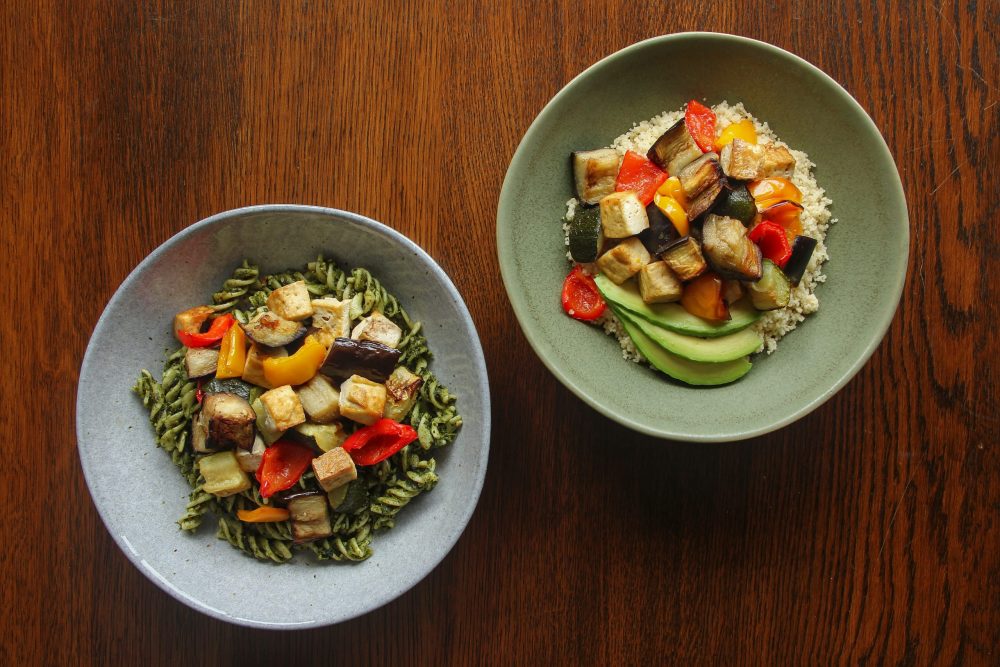
I love this simple combination. It’s a great base for so many different dishes, and it’s perfect for Veganuary. Tofu is a good source of vegan protein, while also being a source of calcium if it’s been set with either calcium sulfate or calcium phosphate.

Other vegetables that work really well in this include:

  • Marrow
  • Squashes
  • Pumpkins
  • Mushrooms
  • Tomatoes
  • Onions
  • Garlic (roast in their skins)
  • Fennel
  • Leeks

No tofu? Here are your protein alternatives:

  • Chickpeas, either roasted or stirred in at the end
  • Tempeh
  • Halloumi (making the dish vegetarian)
  • Serve with hummus in a sandwich, salad or with cous cous

Serves 4

Ingredients

  • 2 aubgerines
  • 2 tbsp rapeseed oil
  • 1 large, or 2 small courgettes
  • 2 peppers
  • 1 block of firm tofu

Method

  • Preheat an oven to 180°C fan/200°C convection.
  • Add the oil to a large roasting tray.
  • Slice the aubergine into chunks and immediately toss in the oil.
  • Chop the remaining ingredients, add to the tray and mix together, seasoning with pepper.
  • Roast in the oven for 50-60 minutes, stirring halfway through, till the edges of the vegetables and tofu go golden.
  • Serve with your choice of carbohydrates such as lemon and herb cous cous or kale pesto pasta – swap the parmesan for nutritional yeast to make it vegan
Delicious served with lemon and herb cous cous, or pesto pasta

Store any leftovers in a sealed tupperware for up to 3 days in the fridge.

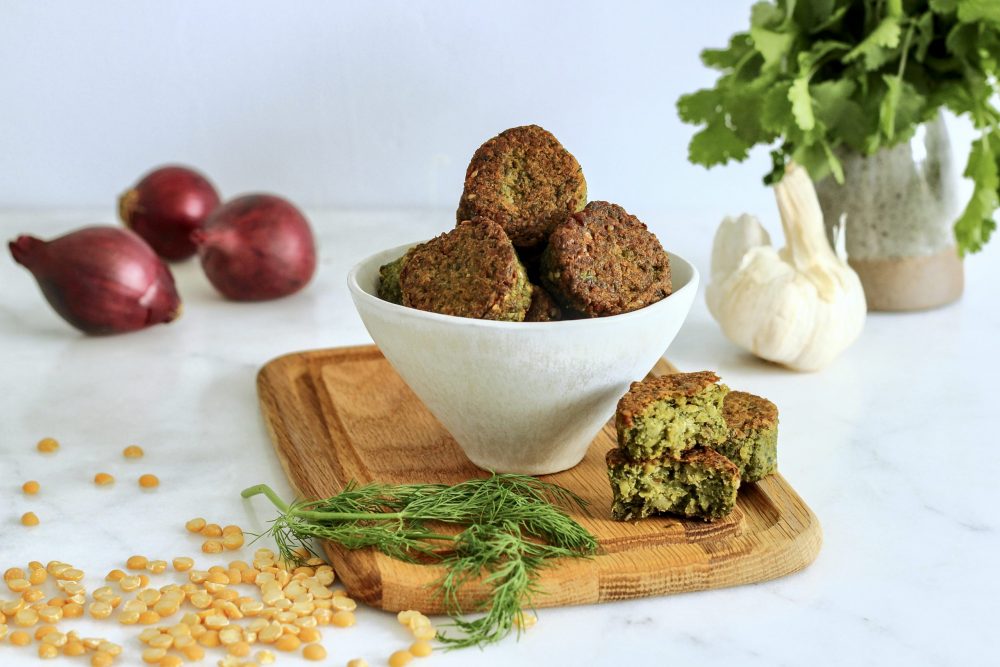
Yellow Split Pea Falafel

These little fritters have two main differences from the traditional falafel you would normally buy. Firstly their main ingredient is yellow split peas, as opposed to the traditional chickpea or fava bean. Secondly, they are baked in the oven rather than deep-fried. If neither of those facts have offended you then you’re in for a treat!

These make the perfect accompaniment to my easy hummus recipe to make a wrap, a nourish bowl or make large versions of the falafels and pop it in a burger bun for a vegan burger alternative.

Falafel and Hummus Salad Wrap

These falafel are packed full of nutrients, and each serving will provide you with:

  • 13g of plant protein
  • 18% of your fibre recommendation
  • 28+% of your daily iron requirements
  • 20+% of your zinc requirements
  • 10% of your calcium requirements

Serves 6

Ingredients

  • 200g yellow split peas, soaked overnight
  • 50g flat-leaf parsley, stems and leaves
  • 50g coriander, stems and leaves
  • 10g dill, stems and leaves
  • 1 medium red onion
  • 5 garlic cloves
  • 2 tsp cumin seeds
  • 1 tsp ground coriander
  • 1 tsp cayenne pepper
  • 1 tsp baking powder
  • 2 tsp sesame seeds
  • 120g gram flour
  • 3 tbsp extra virgin olive oil

Method

  • Cook the yellow split peas in fresh water for 30 minutes. Drain and allow to cool slightly.
  • Roughly chop the herb stems before adding all the ingredients into a food processor. Pulse till the desired texture of your falafels – I prefer mine to have some texture throughout.
  • Transfer to a bowl, cover and chill in the fridge for 1 hour.
  • Preheat the oven to 200°C fan/ 220°C convection. Place a heavy-bottomed tray in to preheat with the olive oil. Allow to come to temperature.
  • Meanwhile, take the cooled mixture and gently press into disk shapes. The mixture should make around 18-20 falafels depending on how big you make them.
  • Once the baking tray and oil are up to temperature, transfer the falafels in. As they hit the oil they should sizzle slightly.
  • Bake for 20-25 minutes, flipping halfway through once golden brown and crispy.

Per serving: 273kcal/ 9.3g fat/ 1.2g saturated fat/ 30g carbohydrates/ 5.4g fibre/ 13.2g protein

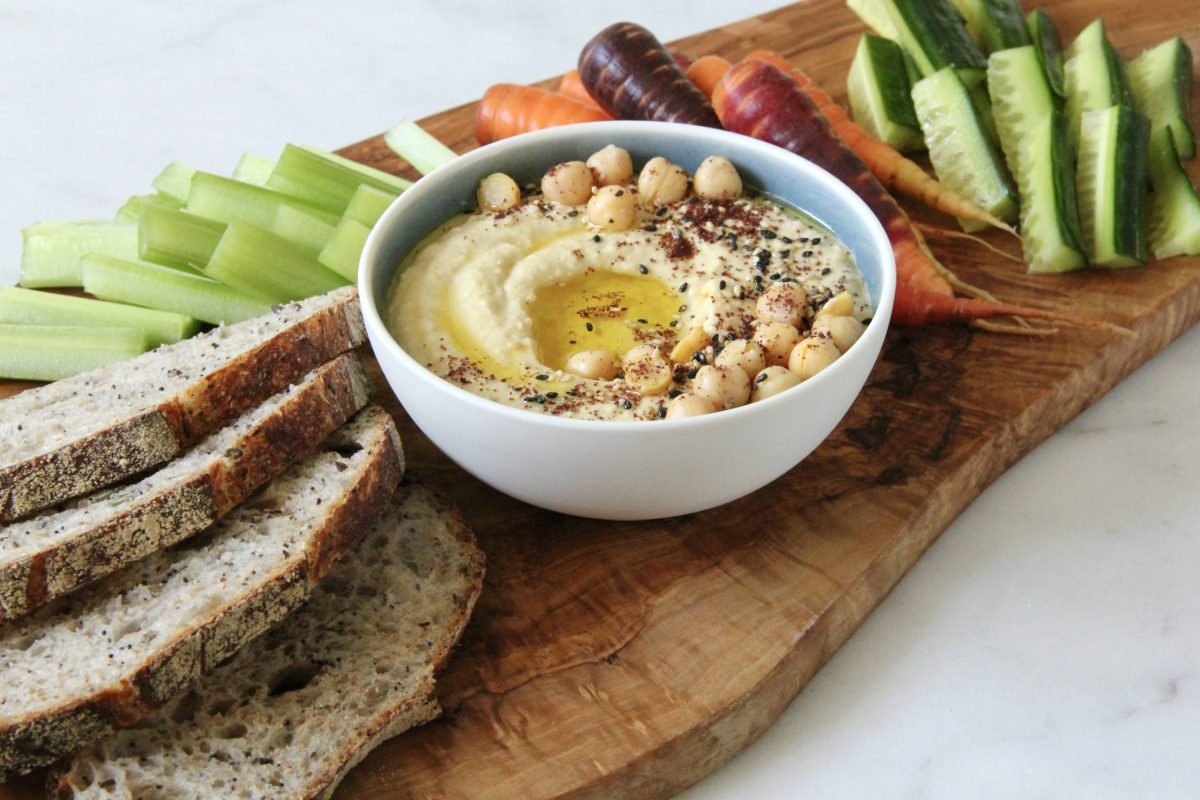
Easy Hummus

A super easy hummus recipe that can be ready in minutes. Use this as a healthy snack alternative, or as a component of a larger meal.

Chickpeas are good sources of plant-based iron, and the combination with lemon juice as a source of vitamin C means that the iron absorption from these sources will be increased; something that vegans and vegetarians will need to be aware of. Iron requirements differ according to sex and age; for pre-menopausal women a serving of hummus will provide 18% of iron requirements, whilst for men and post-menopausal women it’s over 30%.

Separately, chickpeas and sesame seeds, or tahini, in this case, are a good source of calcium. Each serving of hummus provides you with 8% of your daily calcium requirements, and that’s on its own. You could further increase the calcium content of your hummus meal by using broccoli crudités, or serving with brown or white bread which is fortified with calcium in the UK by law.

Makes 7 portions

Ingredients

  • 150g drained tinned chickpeas
  • 1 garlic clove, peeled
  • 45g tahini
  • 30ml extra virgin olive oil
  • Juice of 1 large lemon
  • ½ tsp ground cumin

To serve

  • Chickpeas
  • Extra virgin olive oil
  • Sesame seeds
  • Sumac
  • Vegetable crudités
  • Bread

Method

  • Add the chickpeas, garlic, tahini, olive oil, lemon juice and cumin to a food processor
  • Blend to your desired consistency, adding 1–2 tablespoons of water if needed
  • Serve in a bowl scattered with extra toppings such as cooked chickpeas, olive oil, sesame seeds and sumac with your favourite crudités
  • Any leftovers can be stored in the fridge in a covered container for three days

Per 45g serving: 114kcal/ 8.9g fat/ 1.2g saturated fat/ 4.0g carbohydrates/ 1.8g fibre/ 3.4g protein

For more information about key nutrients in vegan diets check out the blog I have written for MyNutriWeb.

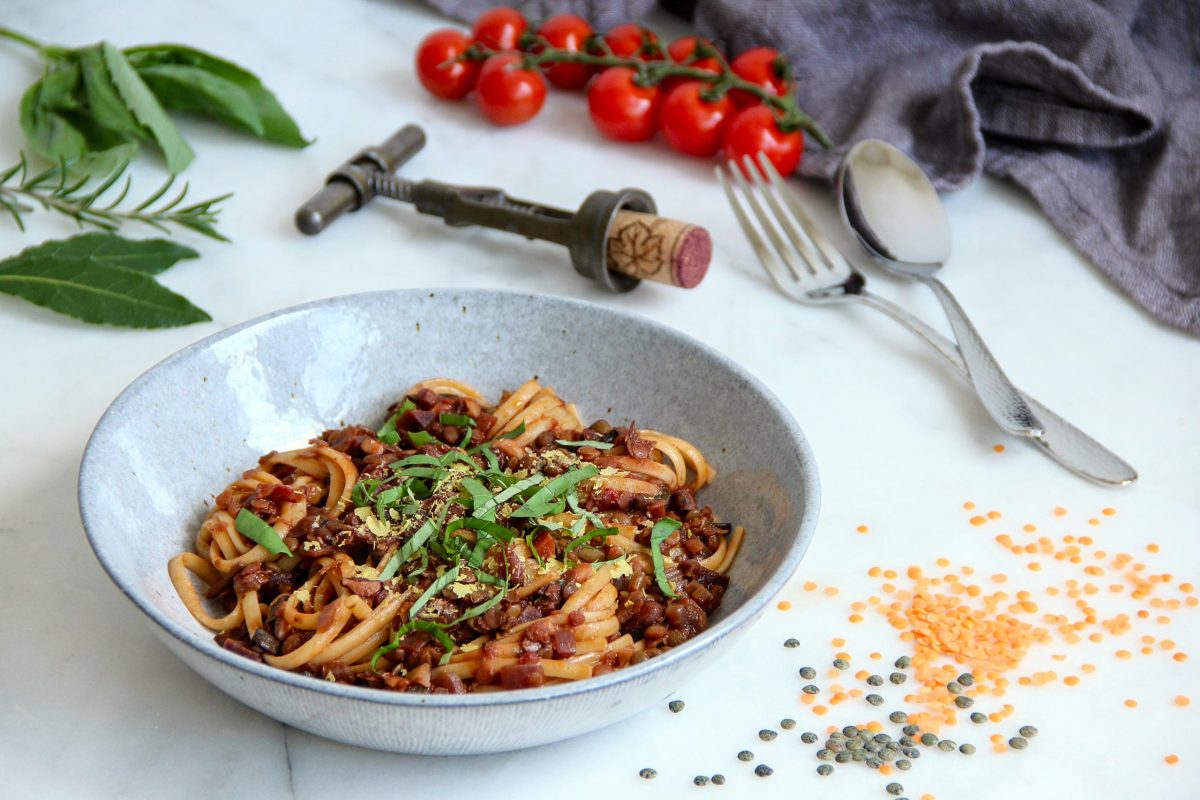
Lentil, Mushroom and Almond Ragu

A delicious meal-free ragu alternative that won’t make you wonder where the meat is!

Serves 6

Ingredients

For the ragu

  • 2 tbsp extra virgin olive oil
  • 1 large onion, diced
  • 2 sticks of celery, diced
  • 2 carrots, scrubbed and diced
  • 2 cloves of garlic, finely diced
  • 250g mushrooms, diced
  • 60g skin-on almonds, chopped
  • 100g red lentils
  • 100g puy lentils
  • 1 stock cube
  • 200ml red wine (option to replace with water)
  • 400g tinned tomatoes
  • 2 tbsp tomato puree
  • 20g dried porcini mushrooms, roughly broken
  • 3 bay leaves
  • 10 spring of thyme
  • 3 sprigs of rosemary
  • 10 sage leaves, finely chopped
  • 10 sprigs of fresh basil, stems chopped (option to save some leaves for garnish)

To serve

  • 450g spaghetti
  • Nutritional yeast (vegan) or parmesan (vegetarian)
  • Fresh basil leaves

Method

  • In a large saucepan, add the oil, onion, celery and carrot. Cook for 5 minutes without browning.
  • Add the garlic, cook for 1 minute before adding the fresh mushrooms in. Cook for 5 minutes till the mushrooms have released and reabsorbed their liquid.
  • Add all the remaining sauce ingredients along with 600ml water. Bring to the boil and then gently simmer for 45 minutes.
  • In a separate pan boil water. Cook the pasts for 2 minutes less than the packet instructions.
  • Drain the pasta and return it to the pan, reserving some of the cooking liquid.
  • Add the ragu to the pasta and stir through, adding pasta water to loosen the ragu if needed. Cook for 1 minute over a low heat.
  • Serve immediately with nutritional yeast or parmesan and fresh basil leaves over the top.

Per serving: 599kcal/ 13g fat/ 1.6g saturated fat/ 81g carbohydrates/ 13g fibre/ 26g protein