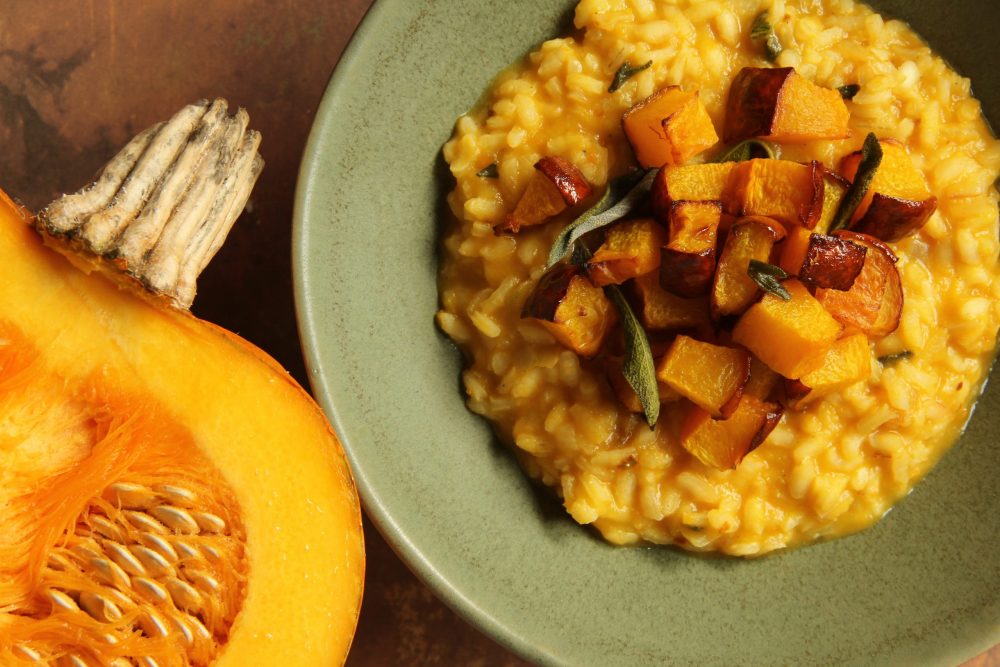
Golden Pumpkin Risotto

This is the perfect way to use up any pumpkin scraps you may have from Halloween carving! I’ve paired it with some carrot for an extra golden beta carotene boost, making the whole dish a gorgeous golden hue.

It is estimated that 14.5 million pumpkins will be wasted in the UK this year. Carving pumpkins are edible, from the skin to the flesh and even the seeds, so why not try to make use of some of the pumpkin scraps once you have carved your jack-o’-lantern. Reducing food waste helps reduce CO2 emissions, which in turn helps our planet.

It’s suitable for a gluten-free diet, just check you’re using suitable stock, or even for baby-led weaning if using a no-added salt stock (for very young babies you may need to blend/mash the rice). Optional to use homemade stock or some herbs and spices to make your own. If you want to make this dish vegan, substitute the butter for a little more oil, and the parmesan for some nutritional yeast.

Serves 4

Ingredients

  • 700ml stock
  • 100g pumpkin scraps such as inners or carving off-cuts
  • 100g carrots, roughly diced
  • 200g pumpkin, cut into cubes
  • 1/2 tsp extra virgin olive oil
  • 2-3 sprigs of sage, leaves removed
  • 1 large onion, finely diced
  • 1 tbsp extra virgin olive oil
  • 2 garlic cloves
  • 20g butter (use extra oil if making vegan)
  • 200g risotto rice
  • 150ml white wine (option to use extra stock)
  • 40g parmesan, grated

Method

  • Start by making the pumpkin stock by adding the pumpkin scraps, carrot and stock to a saucepan. Bring to the boil and simmer for 20 minutes till the pumpkin and carrots are cooked through. Blend till smooth and keep on a low heat.
  • Meanwhile, preheat the oven to 180°C fan/ 200°C convection. Add the pumpkin cubes to a baking tray and mix with 1/2 tbsp olive oil. Bake for 25 minutes, turning halfway through. Add the sage leaves and bake for a further 5 minutes.
  • While the pumpkin is roasting, take a large pan and gently cook the onions in the remaining oil till soft and translucent.
  • Add the garlic and cook for 1 minute before adding the butter.
  • Add the rice and toast for 2-3 minutes till fragrant. Add the white wine and stir.
  • Slowly add the stock, stirring the risotto continuously. As the stock is absorbed add more. If you run out of stock use boiled water to allow the rice to cook through so it has a little bite in the centre.
  • Remove the risotto from the heat and add the parmesan and 1/2 the toasted sage leaves. Season with pepper to taste.
  • Serve with the roasted pumpkin and remaining sage leaves over the top.

Per serving: 417kcal/ 15.0g fat/ 5.9g saturated fat/ 52g carbohydrates/ 5.3g fibre/ 9.2g protein
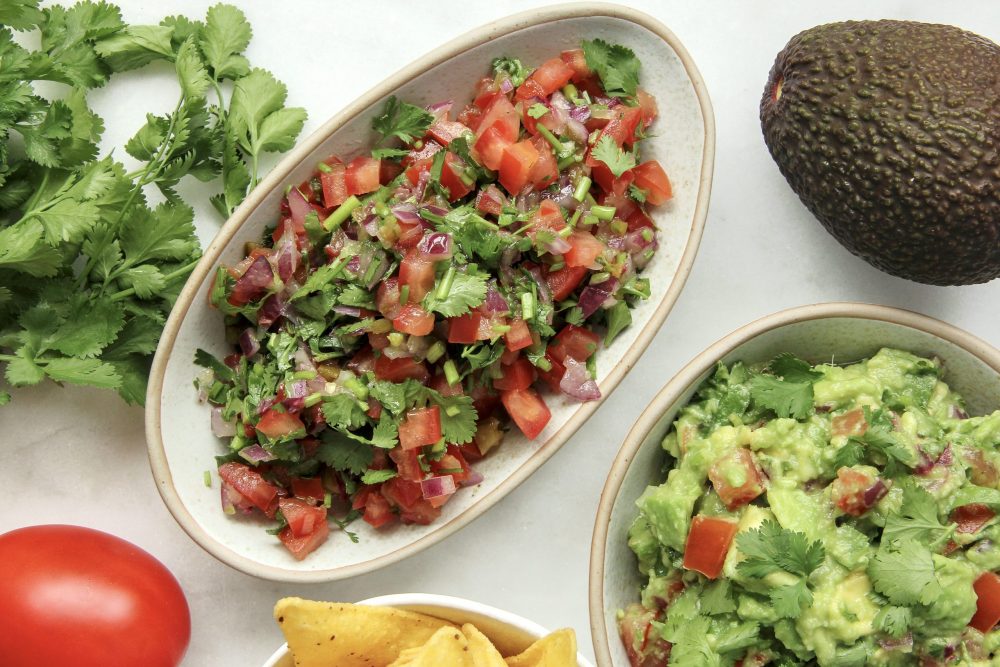
Tomato Salsa

This bright and refreshing salsa can be loaded onto a stack of nachos, or used as a dip. It’s really easy to make but definitely best eaten on the same day as it is made. You can increase the spice level to your own taste, and keep it mild by leaving the fresh chilli out and just using a few jalapeños instead.

Serves 4

Ingredients

  • 1/2 a red onion, finely diced
  • 1/2 a chilli (or to taste), finely sliced
  • 2 large tomatoes, deseeded
  • 5-6 pickled jalapenos (or to taste)
  • 1/2 a bunch of coriander
  • 1 lime
  • 2 tsp extra virgin olive oil

Method

  • In a large pestle and mortar, add the onion, chilli and a pinch of salt. Pound till the onions and chilli are half turned into a paste.
  • Dice the tomatoes and roughly chop the jalapenos and coriander. Add to the onion mix with the olive oil and juice of half a lime.
  • Mix together and check the seasoning, adding more lime juice or coriander to your taste.
  • Serve with chips or vegetable crudites

Create the perfect dip selection by also making some guacamole and some easy refried beans.

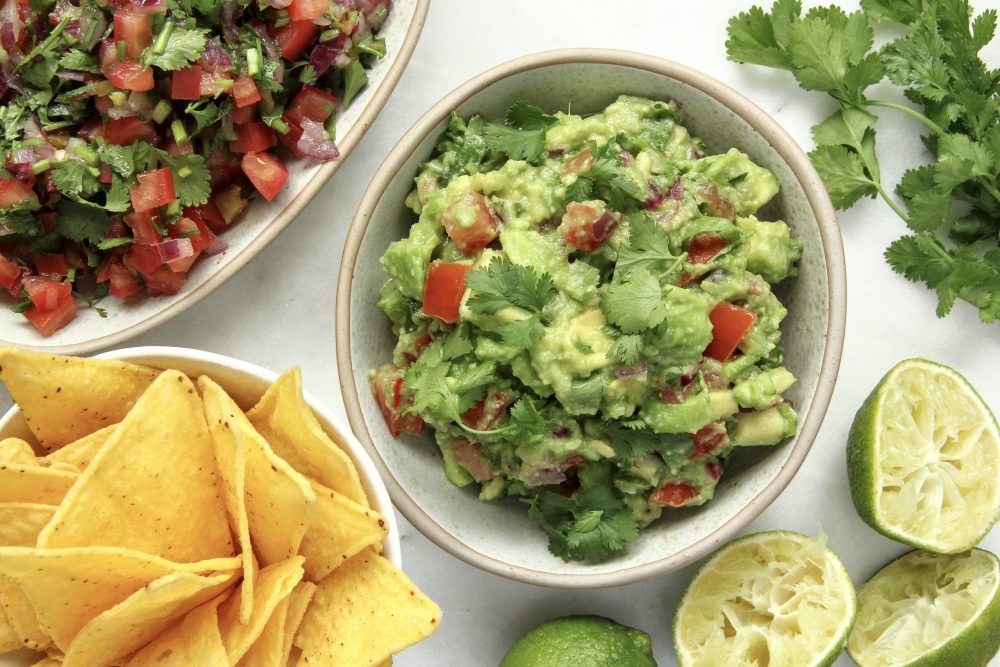
Guacamole

Super simple to make, and the best crowd-pleaser. You can simply serve it as a dip for your tortilla chips, or try adding this to your next burrito to take it to the next levels!

Serves 4

Ingredients

  • 1/2 a red onion, finely diced
  • 1/2 a chilli (or to taste), finely sliced
  • 2 medium avocados, or 3 small
  • 1-2 limes
  • 1 large tomato, deseeded
  • 1/2 a bunch of coriander

Method

  • In a large pestle and mortar, add the onion, chilli and a pinch of salt. Pound till the onions and chilli are half turned into a paste.
  • Peel and roughly dice the avocado, and add to the onion mix with the juice of 1 lime. Lightly pound till you have the desired texture; I like my guacamole with large chunks of avocado.
  • Dice the tomato and roughly chop the coriander. Add to the avocado and mix together. Taste and add more lime juice if needed.
  • Serve with chips or vegetable crudites

Create the perfect dip selection by also making some tomato salsa and some easy refried beans.

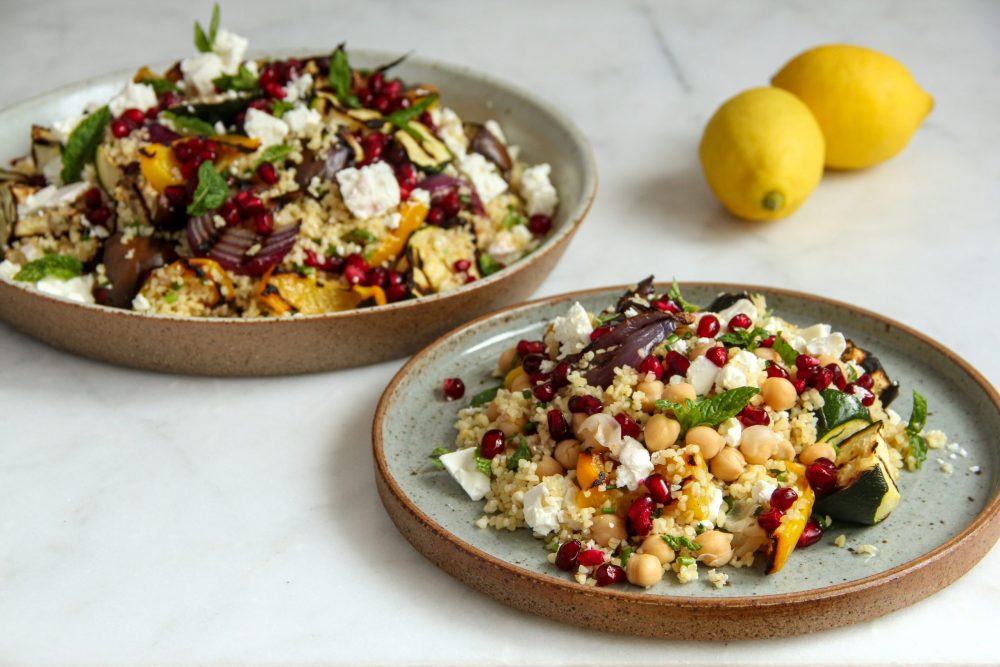
Chargrilled Vegetable, Feta and Bulgar Wheat Salad

The perfect side to go with your barbecue – delicious with all meats, fish or halloumi, or serve with a tin of chickpeas for a non-barbecue option should it be raining. Again.

Serve 4

Ingredients

  • 200g bulgar wheat
  • 1 aubergine
  • 1 pepper
  • 1 courgette
  • 1 large onion
  • 2 tbsp extra virgin olive oil
  • 1/2 bunch chives
  • 1/2 bunch mint
  • 2 lemons
  • 150g feta cheese
  • 80g pomegranate seeds

Method

  • Cook the bulgar wheat by adding to a large dish and pouring 220ml boiling water over the top. Cover and leave to steam for 5-10 minutes before fluffing with a form.
  • Meanwhile, chop all aubergine, pepper, courgette and onion into large chunks and coat with 1 tbsp olive oil.
  • Heat a griddle pan, and once hot cook the vegetable in batched till deeply marked with dark lines.
  • Chop the herbs, juice the lemon and mix into the bulgar wheat.
  • Once cooked, add the vegetables, crumble the feta in.
  • Serve in a large bowl with pomegranate seeds scattered over the top.

Per serving: 289kcal/ 11g fat/ 7.0g saturated fat/ 31.2g carbohydrates/ 7.8g fibre/ 13.8g protein

Sweet Potato and Black Bean Quesadillas

Delicious quesadillas packed full of plant-based protein from the black beans. Leave the skins on the sweet potatoes to maximise fibre content (over 17g per portion of quesadillas even before you’ve added the sides!) and reduce food waste.

Serves 3

Ingredients

  • 2-3 sweet potatoes (total 300g), cut into 1/2 inch cubes with the skin on
  • 1 tsp smoked paprika
  • 1 tsp extra virgin olive oil
  • 1 onion, diced
  • 2 garlic cloves, finely chopped
  • 1 tin of black beans, drained and rinsed
  • 1 handful of coriander, roughly chopped
  • 1 tsp dried oregano
  • 1 tsp ground white pepper
  • 100g cheese such as Cheddar cheese (I have used a lighter cheddar to keep saturated fats lower), garted
  • 3 wholemeal tortilla wraps
  • 1 tbsp extra virgin olive oil

To serve

  • Pickled onions
  • Soured cream
  • Jalapeños
  • Avocado
  • Tomato salsa

Method

  • Preheat the oven to 180°C fan.
  • Toss the sweet potato in the smoked paprika. Roast on a large baking tray for 15-20 minutes till soft. Once removed set the oven temperature to 200°C fan.
  • Meanwhile, gently fry the onion in 1tsp olive oil for 10 minutes till soft and translucent. Add the garlic and fry for a further 5 minutes.
  • In a large bowl, half mash the black beans before adding the onion mixture, sweet potatoes, oregano, white pepper and coriander. Mix together, lightly mashing the potatoes.
  • Take 1 tortilla wrap and brush with olive oil. Flip the tortilla wrap over and fill with 1/3 of the sweet potato mixture over one half of the wrap. Top with 1/3 of the cheese. Repeat with the remaining wraps and mixture.
  • Place the filled wraps onto the baking sheet used to cook the potatoes, and top with a second baking sheet.
  • Bake for 12-15 minutes till golden brown.
  • Serve cut into triangles with your choice of toppings.

Per quesadilla : 539kcal/ 18.1g fat/ 7.4g saturated fat/ 61.6g carbohydrates/ 17.5g fibre/ 24.5g protein

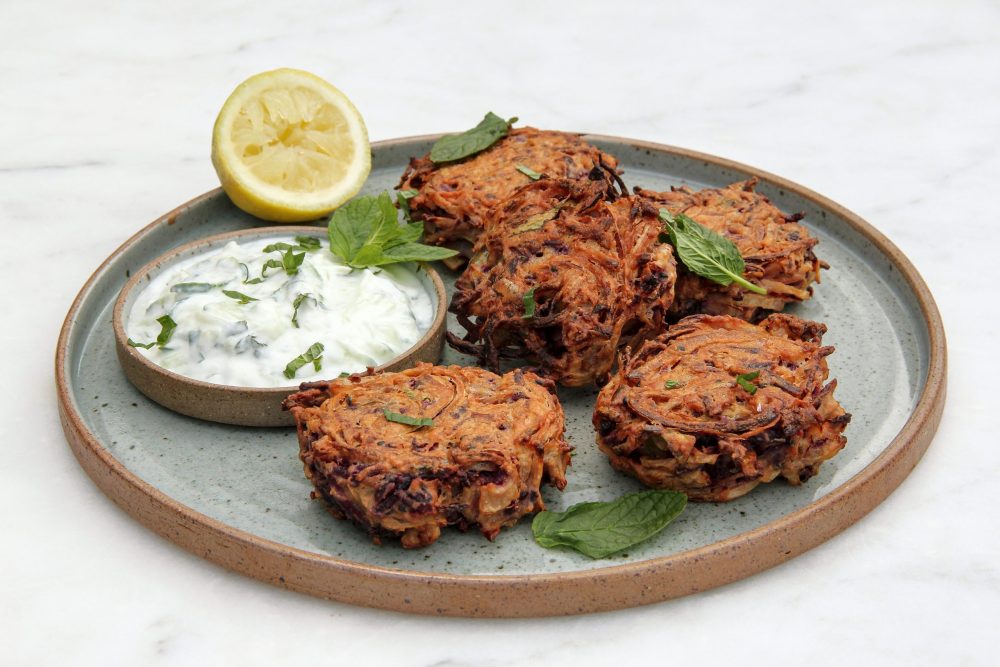
Onion and Purple Carrot Bhajis

Easy oven baked bhajis mean no stress about deep fat frying. Simply pop into the oven, turn half way through and Bob’s your uncle. Delicious served with my quick raita.

You could of course make this with standard orange carrots, or whatever colour you desire, but I just love the deep purple pops of colour when you break open each bhaji.

To make this dish completely vegan, use a plant-based yoghurt alternative. Just be sure to make sure it is the unsweetened variety.

Makes 6 large bhajis

Ingredients

  • 2 large onions, very finely sliced (around 200g)
  • 2 large purple carrot, grated (around 100g)
  • 2 cloves of garlic, minced
  • 1″ fresh ginger, minced
  • 20 curry leaves
  • 1 tsp cumin seeds
  • 1 tsp nigella seeds
  • 1/2 tsp ground chilli (optional)
  • Juice of 1 lemon
  • 150g gram flour
  • 2 tbsp rapeseed oil

For the raita

  • 150g yoghurt of choice
  • 3″ cucumber, grated
  • 1 small garlic clove, minced
  • 1 sprig of mint, finely sliced
  • Handful of coriander leaves, finely sliced
  • Squeeze of lemon

Method

  • Preheat the oven to 200°C fan/ 200°C convection
  • Add the oil to a large heavy-bottomed pan and place in the oven to preheat.
  • Mix the onions, carrot, spices and gram flour together in a bowl with 80ml cold water. The mixture should be sticky without being too dry or wet. If needed add a little more flour or water to get a thick consistency which coats all the vegetables.
  • Divide the mixture into 6 rounds.
  • Add the bhajis to the hot pan.
  • Cook for 10 minutes before flipping and cooking for a further 10-12 minutes till golden brown and crispy.
  • Remove and allow to drain on a piece of kitchen towel.
  • Meanwhile, place the grated cucumber into a clean tea towel and squeeze out all the excess moisture.
  • Add to a bowl with all the remaining raita ingredients and mix.

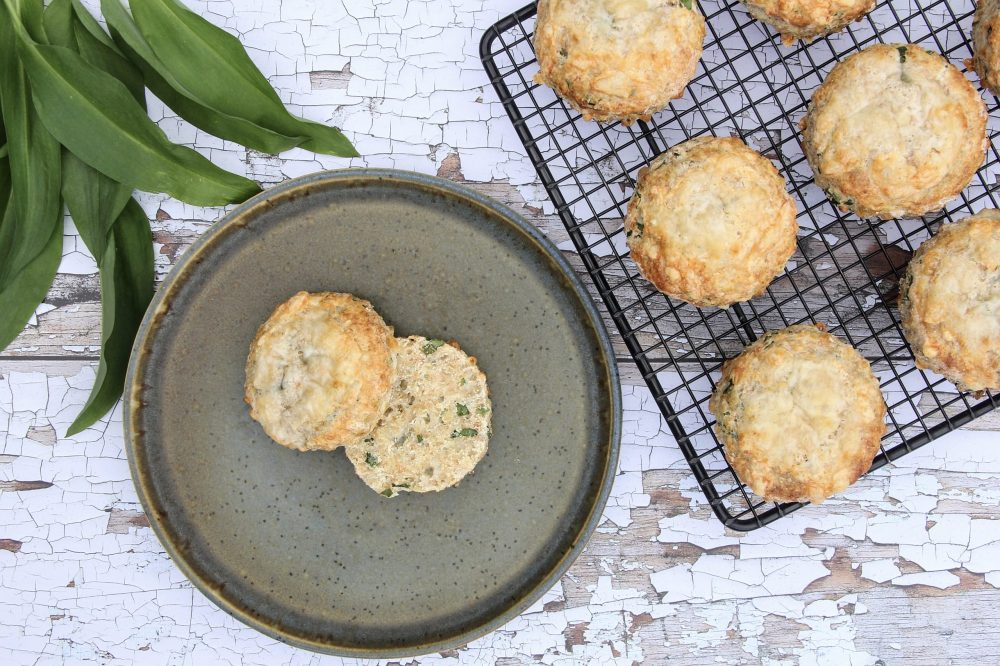
Sheep’s Cheese and Wild Garlic Scones

Seasonal savoury scones. If you can’t get wild garlic, or it’s our of season, substitute with chives, spring onions, or spinach with a small clove of grated garlic.

Don’t like sheep’s cheese? Whatever cheese you like would be suitable as long as it is medium-hard e.g. Gruyere, Manchego, Cheddar, Wensleydale, Goat’s etc

Makes 9 scones

Ingredients

  • 125g plain wholemeal flour
  • 125g plain flour
  • 1 tsp baking powder
  • 50g butter, cold, cut into small cubes
  • 125g hard sheep’s cheese, grated
  • 30g wild garlic, roughly chopped
  • 1 egg
  • Approximately 140ml semi-skimmed milk

Method

  • Preheat the oven to 220°C/ 200°C fan
  • Add the flours, baking powder and butter to a large mixing bowl. Mix the butter into the flour using your fingertips till it resembles breadcrumbs.
  • Mix 100g of the cheese in, reserving 25g, and all the wild garlic.
  • Crack the egg into a measuring jug and top the volume up to 200ml of liquid with milk. Mix.
  • Add the egg mixture to the dry ingredients – you may not need it all so hold back around 20ml – and mix to form a soft but sticky dough.
  • Turn out onto a floured surface and knead for 30 seconds till it comes together.
  • Roll out to 2.5cm (1 inch) thick and using a 6-7cm cutter, cut rounds of the mixture out, dredging the cutter with flour between each cut to keep the sides clean.
  • Reroll any remaining dough.
  • Place the scones onto a lined baking tray, brush the top with any remaining egg milk mixture and top with the remaining cheese. Bake for 15 minutes till risen and golden brown.
  • Transfer onto a wire rack.
  • Allow to cool completely before storing in an airtight container for up to 3 days or freezing for up to 3 months.

Per scone*: 205kcal/ 10.1g fat/ 6.0g saturated fat/ 20.8g carbohydrates/ 2.4g fibre/ 7.2g protein

*Analysis done using chive nutritional information.

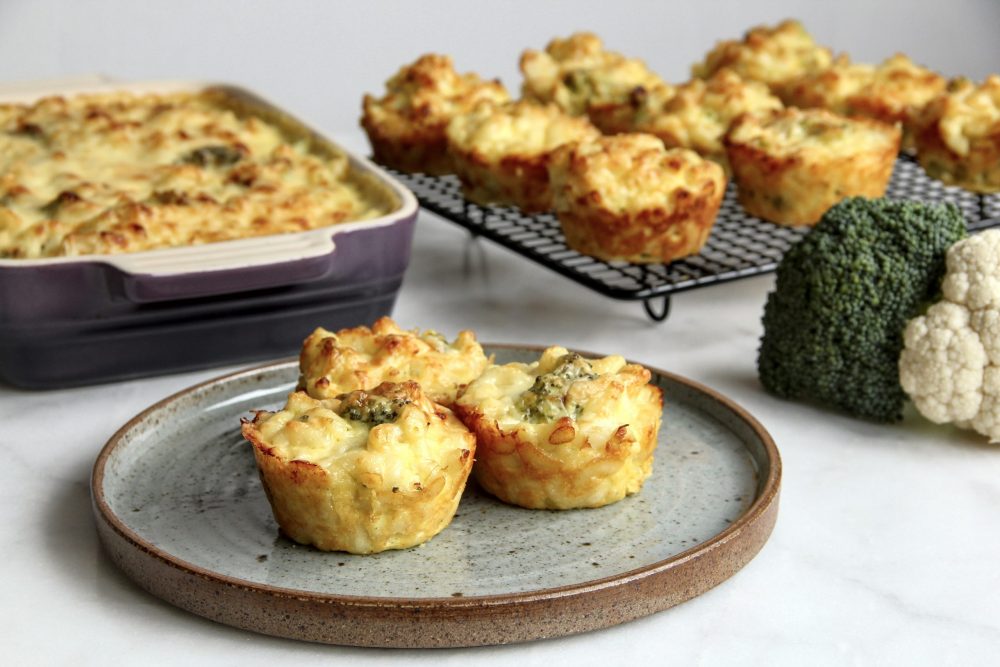
Cauliflower & Broccoli Macaroni Bites

When cauliflower cheese and macaroni cheese collide.

I made this recipe for child nutritionist Charlotte Stirling-Reed. She loved the idea of these muffins for baby led weaning. For more information on this topic head to her website.

Makes approximately 15 muffins

Ingredients

  • 180g macaroni – I have used a high fibre variety
  • 150g broccoli, cut into small florets
  • 150g cauliflower, cut into small florets
  • 40g butter
  • 45g plain flour
  • 600ml milk*
  • 1 tsp English mustard (optional)
  • 120g reduced fat cheddar cheese*, grated
  • Pepper to taste
  • 1 egg
  • Oil for greasing OR muffin cases

Method

  • Preheat the oven to 180°C fan/ 200°C convection
  • Bring a large pan of water to boil. Cook the macaroni according to packet instructions, and steam the cauliflower and broccoli over the top of the pasta as it cooks.
  • Meanwhile, melt the butter in a saucepan and add the flour.
  • Slowly add in the milk a quarter at a time, stirring to prevent any lumps.
  • Option to add 1 teaspoon of English mustard.
  • Add half the grated cheese to the mix and allow to melt. Season with pepper to taste
  • Once the pasta is cooked, drain and stir into the sauce with the cauliflower and broccoli.
  • Add the egg and mix.
  • Line a muffin tray with cases, or lightly grease a non-stick tray. Fill each hole with mixture (2-3 spoonful’s).
  • Top with the reaming half of cheese.
  • Bake in the oven for 18-20 minutes till golden brown.
  • Allow to cool completely in trays before removing unless in muffin cases, in which case you can remove after 5 minutes.

Suitable for freezing as easy grab and go options. Can be served cold, microwaved or oven heated.

*For children aged 2 and under use full fat dairy products including cheeses.

If you need an egg-free option you can omit the egg, but you will need to completely cool the bites in the tray and the chill them in the fridge before removing them so they can set in shape.

If you’re more of a traditionalist, you can make standard macaroni cheese by leaving the egg out and placing the mixture in an ovenproof dish. Simply top with the remaining half of cheese and bake in an oven set to 180°C fan for 25 minutes till golden brown and bubbling. You could also prep this dish ahead of time, pop it in the fridge and then bake for an easy mid-week meal for the family.

Per bite: 126kcal/ 5.2g fat/ 3.1g saturated fat/ 12.7g carbohydrates/ 2.2g fibre/ 6.2g protein

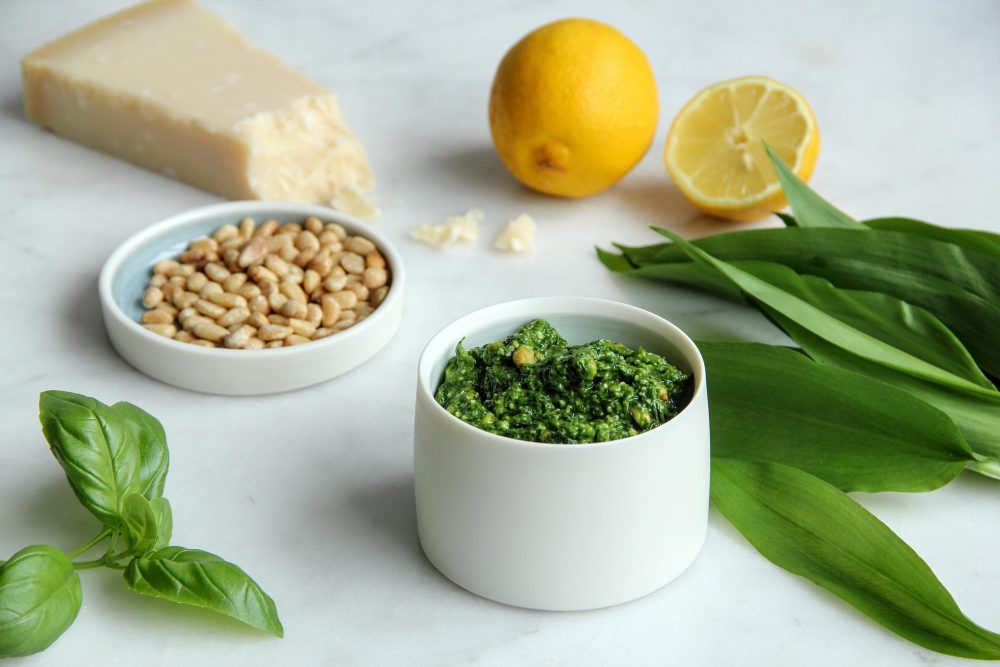
Wild Garlic Pesto

Wild Garlic Pesto

Could wild garlic be a low FODMAP alternative to garlic?

A 2019 paper investigated the fructan content of wild garlic and other herbs commonly used in Bulgaria. From their analysis, the authors found that the total fructans (FODMAPs) were lower in wild garlic in comparison to chives (2.2g vs 5.7g per 100g dried weight). Interestingly, people following low FODMAP diets tolerate chives and are encouraged to use chives in place of onions in recipes. While this research hasn’t been validated by Monash University, the leading site for low FODMAP food analysis, the finding suggest it may be worth self-challenging yourself! If you happen to know that garlic is one of your trigger foods and are able (and willing) to try this herb, please do get in touch to let me know how you got on.

Serve 4-5 people

Ingredients

  • 100g wild garlic, roughly chopped
  • 30g basil, leaves and stalks roughly chopped
  • 3 tbsp extra virgin olive oil
  • 1 tsp lemon juice
  • 40g toasted pine nuts
  • 45g parmesan, grated

Method

  • Blend the wild garlic, basil, olive oil and lemon juice together.
  • Add the pine nuts and parmesan and blend to the consistency of your choice – I prefer to keep mine with some texture in it.

Delicious served with my egg pasta recipe. If you want a double hit of wild garlic, try adding in a handful of wild garlic to make it vibrant green.

Wild Garlic Egg Pasta

Any leftover pesto can be stored in an airtight container in the fridge for up to 5 days – layer a little oil over the top to help reduce any oxidation. Alternatively, you can freeze your pesto in containers, or in ice cube trays for future use.

NOTE: Wild garlic looks very similar to the poisonous Lily of the Valley. If you aren’t sure, do not pick. Alternatively, it is available to buy for supermarkets, farmer’s markets, and to grow at home from garden centres.

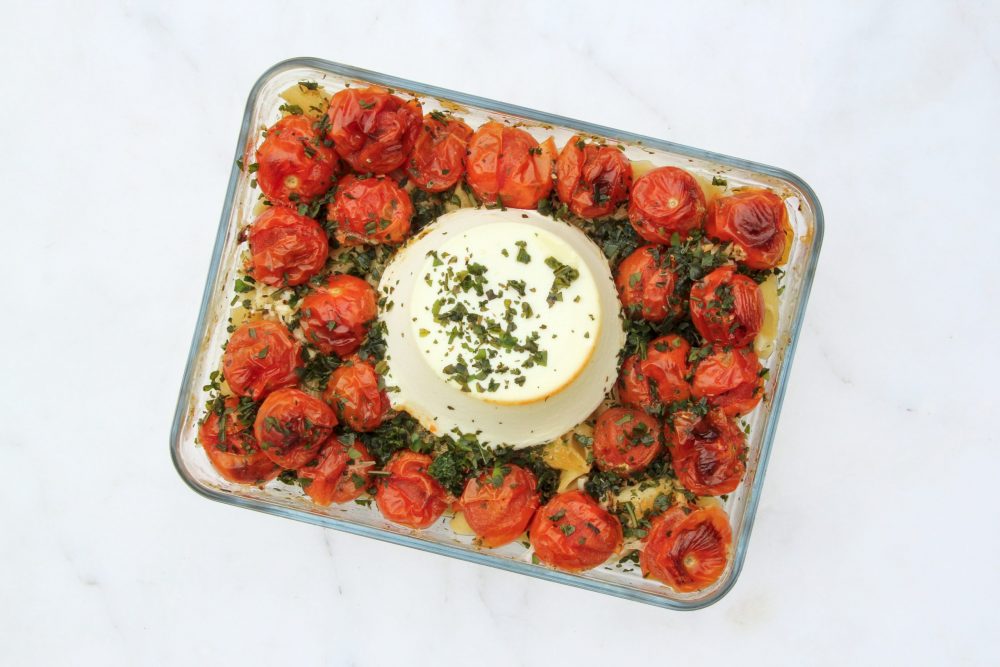
Oven Baked Ricotta Pasta Bake

So there’s the TikTok trending baked feta and tomato pasta, and you thought it couldn’t possibly get any easier, and yet here it is. 5 minutes of food prep, bang it in the oven and 45 minutes later you simply stir and serve. It’s perfect for busy mums juggling young children thanks to swapping out the feta for ricotta cheese.

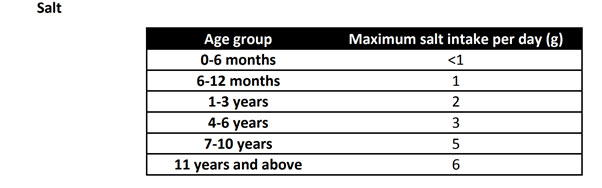
Ricotta cheese is naturally much lower in salt in comparison to feta, containing around 0.3g salt per 100g. In comparison, feta can have up to ten times that amount. Swapping the feta our for ricotta in the recipe reduces the salt per portion from 1.5g to 0.24g. The recommendation for adults is a maximum of 6g per day, and that is an upper limit rather than a target to hit (our bodies actually need less than 1g per day to survive). Too much salt can lead to diseases such a heart disease and high blood pressure, so watching your salt intake is important. For children and babies this recommendation is much lower. The table below, taken from the British Nutrition Foundation shows the maximum salt levels for children at different ages.

I developed this recipe for baby and child nutritionist Charlotte Stirling-Read which is suitable for young babies (peel the skins off the cooked cherry tomatoes if serving to young babies without teeth), toddlers and adults, making it the perfect mid-week family dinner when you’re rushed off your feet.

Serves 3 adults, or a family of 4

Ingredients

  • 250g pasta with a 10-12 minute cooking time
  • 1/2 tsp dried oregano
  • 400g cherry tomatoes
  • 2-3 garlic cloves, chopped
  • 1 tub (250g) ricotta
  • 2 tbsp extra virgin olive oil
  • 1 tbsp basil, fresh or frozen

Method

  • Preheat the oven to 180°C fan/ 200°C convection
  • In a large oven-proof dish (minimum 1.8l capacity) combine the pasta, oregano and 550ml boiling water. Mix to disperse the oregano evenly.
  • Top with garlic and cherry tomatoes, leaving a space in the centre for the ricotta.
  • Turn the ricotta out into the centre and drizzle the oil over everything.
  • Bake in the oven for 45 minutes.
  • Remove from the oven, top with the basil and mix everything thoroughly, crushing the tomatoes and the ricotta to make the sauce.

Per serving: 511kcal/ 17.1g fat/ 5.9g saturated fat/ 68.7g carbohydrates/ 4.8g fibre/ 18.2g protein

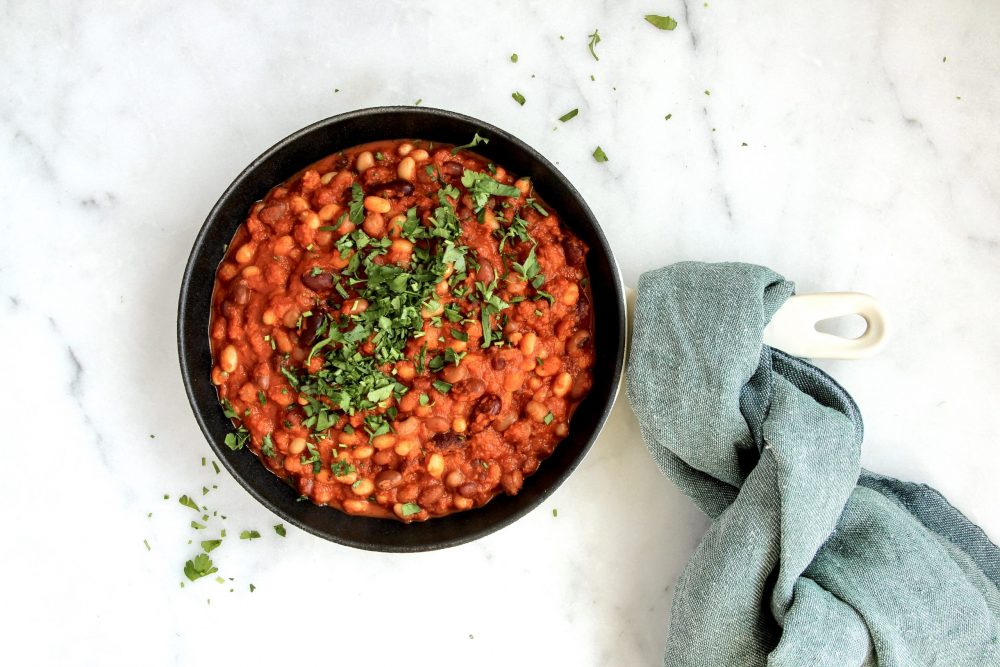
Smokey Baked Beans

Making your own baked beans can be so satisfying and give you greater control over what goes into them. A quick investigation into baked beans sold in UK supermarkets shows that the average 200g portion of standard baked beans will contain 1g of salt (ranging up to a staggering 1.6g).

It’s Salt Awareness Week (8th-14th March 2021), which aims to highlight the reduction of salt intakes. The UK recommendation is a maximum of 6g salt per day. However, the National Diet & Nutrition Survey showed that the average person was eating 8.4g salt in 2018-2019.

The greatest contributors to salt in our diet comes from processed foods and includes bread, cheese, and meat products such as bacon. Around 8% of our salt intakes comes from pre-prepared vegetables such as frozen chips, mashed potatoes and tinned produce. Watch out for tinned beans, pulses and vegetable is water with added salt. Additionally, watch out for tinned tomato products which add salt in. While salt is a preservative, it is not really needed in these products.

If you are looking to reduce your salt intake, you might find things taste a little bland at first. After a few weeks your tastebuds will become more sensitive to salt. You can always add other flavours to food to help in this transition period; try adding herbs, spices, lemon/lime juice or pepper to your meal.

These homemade baked beans contain a fraction of the salt content of their tinned counterparts, containing just 0.14g per 200g serving. Not only that, but you’ll also benefit from 8.7g of fibre and 11 different plant foods for fibre diversity. In addition, my baked beans are naturally sweetened using a carrot and smoked paprika, meaning there’s no added sugar to these beans either.

Store any leftover beans in an airtight container in the fridge for 3-4 days, or alternatively freeze in handy portions ready for a quick and easy meal.

Makes 7 portions

Ingredients

  • 2 large garlic cloves, roughly chopped
  • 1 large carrot (100g), grated
  • 1 tbsp extra virgin olive oil
  • 500g passata
  • 2 tsp smoked paprika
  • 1/2 tsp ground white pepper
  • 1/4 tsp mixed herbs
  • 1/2 tsp white wine vinegar
  • 2 tbsp tomato puree
  • 1 tin of haricot beans in water
  • 2 tins of mixed pulses in water

Method

  • Add the garlic, carrots and oil to a large pan and cook over a gentile heat for 5 minutes till softened.
  • Add the passata, herbs and spices, vinegar, tomato puree and 100ml water. Cook for a further 15-20 minutes over a low heat till the carrots become soft.
  • Blend to a smooth sauce and add the beans.
  • Cook over a low heat with the lid on for 15 minutes, stirring occasionally.

Per 200g serving 163kcal/ 3.4g fat/ 0.6g saturated fat/ 19.9g carbohydrates/ 8.7g fibre/ 9.5g protein/ 0.14g salt

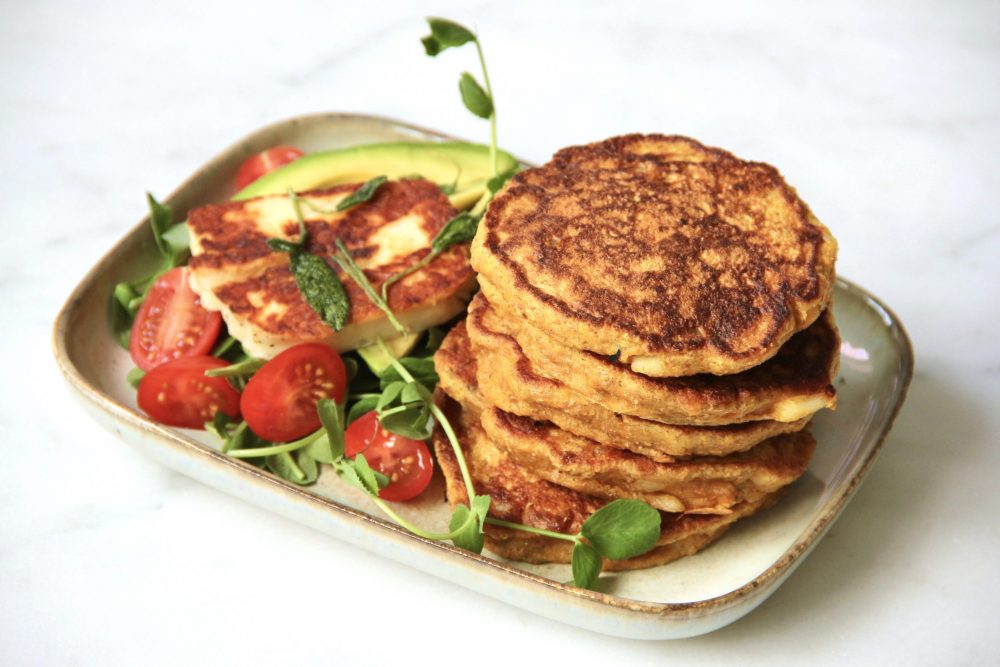
Roasted Squash and Halloumi Pancakes

I love the combination of sage and squash. It’s one of my favourite winter flavour duo! Delicious any time of the day; serve at brunch with an egg cooked to your liking, or serve as lunch, or even dinner as a starter or main dish. These would be delicious with a soured cream sauce on the side, or make a spicy tomato and avocado salsa.

Serves 4 as a lighter meal or starter, or 2 as a main

Ingredients

  • 350g squash in large chunks, skin left on
  • 1 large egg
  • 10 sage leaves, finely diced
  • 250ml milk
  • 1 block of halloumi, cut into four 1cm thick slices and the remaining finely shredded
  • 150g wholemeal flour
  • 1 tsp baking powder
  • 1/4 nutmeg, grated
  • Olive oil for frying

Method

  • Roast the squash in a pre-heated oven set at 180°C for up 45 minutes till soft. Allow to cool slightly before peeling off the skin. You should have approximately 180-200g cooked squash.
  • Mash the squash in a large bowl, before adding in the sage, egg, milk and diced halloumi.
  • In a separate bowl, mix the remaining dry ingredients before combining with the wet ingredients. Mix to form a batter the consistency of thick double cream.
  • Heat a frying pan over a medium heat and add 1/2 tsp olive oil.
  • Allowing space between each pancake, take a ladel of batter and make a round for each pancake, allowing the mixture to spread naturally. Cook in batches according to the size of your frying pan.
  • Cook for 2 minutes per side, flipping with a spatula once bubbles have risen to the surface and the edge starts to dull. Cook for a further 2 minutes on the second side.
  • Keep cooked pancakes warm in an oven set to 100°C on a tray, keeping pancakes to a single layer if possible.
  • Once all the pancakes are cooked, add the remaining slices of halloumi to the pan and fry till crispy and golden on both sides.
  • Serve the pancakes in stacks and top with crispy halloumi.

Per serving: 406kcal/ 21.4g fat/ 11.3g saturated fat/ 33.4g carbohydrates/ 5.9g fibre/ 19.0g protein