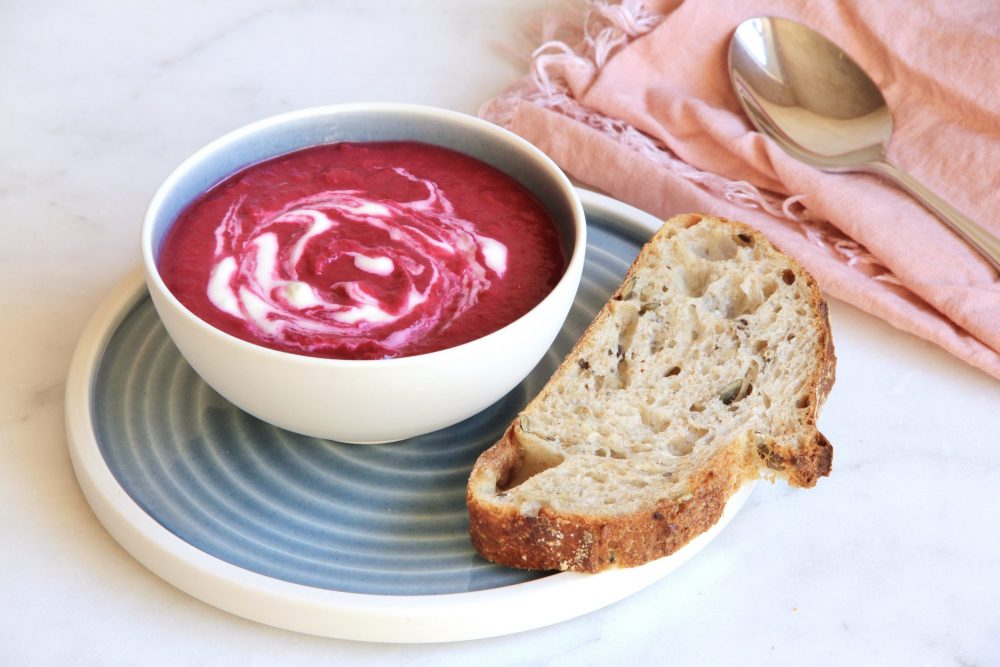
Beetroot, Parsnip and Horseradish Soup

Seasonal root vegetables make a simple, but super tasty soup which packs a punch. Fresh horseradish is super pungent and will got “straight up your nose”. I suggest starting with half the amount of fresh horseradish and tasting before adding more. Once you find the level you’re happy with you can stop. However, if you accidentally over do it, add a little extra creme fraiche which will help tone the heat down.

Cant get fresh horseradish? No problem, swap in some creamed horseradish or horseradish sauce. Or if the mustard flavour is not to your taste you could add ginger in instead which will add a warmth to the soup.

To make vegan omit the creme fraiche and use a dairy free yoghurt or dairy free cream alternative.

Serves 5

Ingredients

  • 1 large onion, sliced
  • 1 tbsp extra virgin olive oil
  • 2 cloves of garlic, roughly chopped
  • 400g parsnips, scrubbed (or peeled) and chopped into large chunks
  • 220g potatoes, scrubbed and cut into large chunks
  • 300g beetroot, peeled and cut into large chunks
  • 20g fresh horseradish, or to taste, finely grated
  • 60g creme fraiche

Method

  • In a large pan heat the onions and oil and cook over a low heat till soft and translucent.
  • Add the garlic and cook for a further minute.
  • Add the parsnips, potatoes and beetroot to the pan along with 900ml water. Bring to the boil and allow to simmer for 30 minutes.
  • Blend the soup till smooth and add the horseradish to taste.
  • Serve in bowls and top with a spoon of creme fraiche with sourdough bread on the side to dip in.

Per serving: 245kcal/ 10.4g fat/ 3.4g saturated fat/ 30.7g carbohydrates/ 7.0g fibre/ 4.6g protein
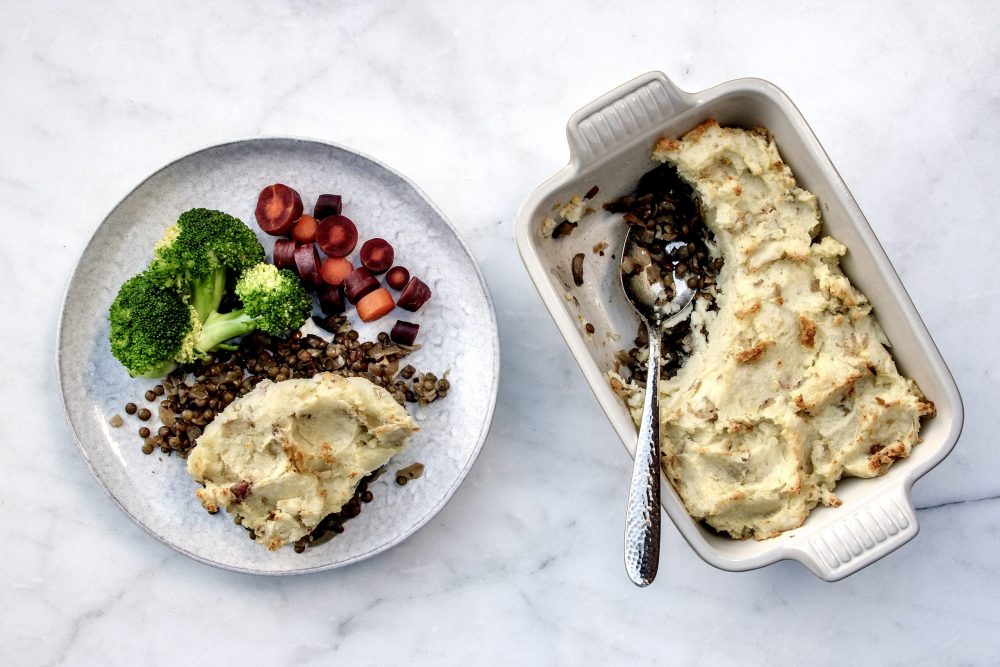
Mushroom, Lentil & Olive Oil Mash Pie

This is the recipes for those of you who already follow a vegan lifestyle. It’s also something for those who are doing Veganuary for the first time. It’s also perfect for anybody who is looking to increase their plant-based diet without necessarily being 100% vegan all the time.

This would work well with other vegetables such as leeks, celery, courgettes, or if mushrooms are not your thing use some fresh or tinned tomatoes which will cook into a tomato based sauce for the lentils to sit in.

Leaving the skin on the potatoes for the mash will make the dish quicker to prepare. You’ll also prevent any food waste as well as keep in the maximum fibre content.

Serves 2

Ingredients

  • 60g puy lentils
  • 35ml extra virgin olive oil
  • 1 large onion, finely diced
  • 1 garlic clove, finely chopped
  • 180g mushrooms, finely diced
  • 1/2 tsp vegan stock powder
  • A few sprigs of fresh thyme
  • 450g potatoes, skin left on, washed and cut into large chunks
  • 60ml soya milk

Method

  • Put the lentils into a pan and cover with plenty of cold water. Bring to the boil and then simmer for 15 minutes. Once cooked, drain the lentils reserving 2 tablespoons of cooking water.
  • Meanwhile, bring a pan of water to the boil and cook the potatoes till soft.
  • Separately, cook the onion in another pan with 10ml of olive oil over a low heat till they become soft and translucent.
  • Add the garlic and cook for 1 minute before adding the mushrooms in.
  • Add the stock powder and thyme leaves and allow to cook till the mushroom juices evaporate. Add the cooked lentils and reserved cooking liquid to the mushroom mixture.
  • Once the potatoes are cook, drain and allow to steam dry for 2 minutes. Heat the soya milk with the remaining olive oil in the pan used to cook the potatoes before adding them back in and mashing till smooth.
  • Preheat the oven to 180°C fan/ 200°C convection
  • Assemble the filling into an ovenproof dish and layer the mash over the top.
  • Bake for 25-30 minutes till the potato top turn crisp and golden brown.

Per serving: 513kcal/ 18.9g fat/ 2.9g saturated fat/ 66.6g carbohydrates/ 12.4g fibre/ 16.4g protein

Wholemeal Mince Pies

A simple wholemeal shortcrust pastry enriched with almonds and butter to give you 8 plant points in total if using my mincemeat recipe.

If you are using shop bought mincemeat you could try adding a little extra fibre diversity by adding in some grated apple, carrot or dried cranberries.

Makes 8 mince pies

Ingredients

  • 40g ground almonds
  • 175g wholemeal flour
  • 120g fridge cold butter, cut into small cubes
  • 55g caster sugar
  • 1 medium egg
  • Plain flour for dusting
  • 1/3 portion of mincemeat (approximately 500g)
  • Egg or milk to join the pastry

Method

  • Mix the ground almonds, flour and butter in a large bowl with your fingertips till it resembles breadcrumbs.
  • Add the sugar, briefly mix, and then add the egg to bind. Knead the pastry till it forms a sticky ball, wrap it up and put it in the fridge to rest for a minimum of 30 minutes. The pastry can be made using a food processor or can be made the day in advance.
  • Preheat the oven to 180°C fan/ 200°C convection
  • Take 2/3 of the pastry and roll to 4-5mm thickness using flour to stop it from sticking. Use a circular cutter 2cm bigger than the tin hole, gently dust the underside and press into the muffin tin. Repeat to make 8 lined holes in total.
  • Fill each pastry case with around 45g mincemeat, leaving a 1cm gap from the top.
  • Take the remaining 1/2 of the pastry and roll to a thickness of 2-3mm. Take a cutter the same size as the muffin tin and cut 8 lids.
  • Using milk or egg, brush the pastry case and stick the lid down.
  • Poke a hole in the top of each pie to allow the steam to escape.
  • Optional: decorate the top with any remaining pastry, sticking it in place with the milk or egg.
  • Bake in the oven for 18-22 minutes till the pastry is golden brown and crisp.
  • Allow to cool for 5 minutes before taking out of the tray and allowing to cool on a wire rack.

Per mince pie: 358kcal/ 18.5g fat/ 10.3g saturated fat/ 41.2g carbohydrates/ 3.6g fibre/ 4.5g protein

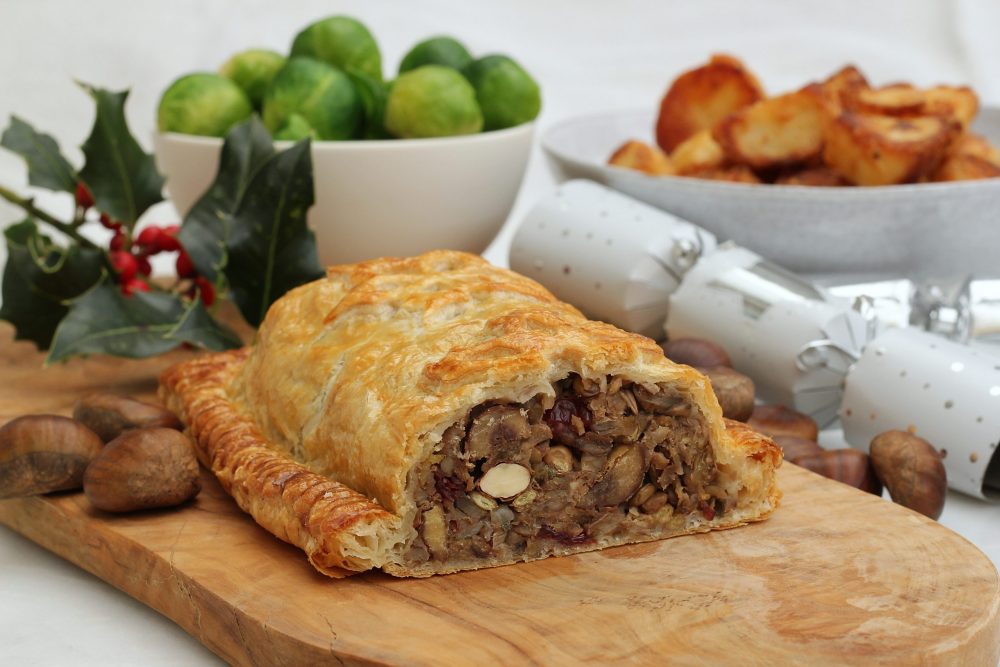
Festive Lentil, Mushroom and Chestnut Wellington

My Festive Lentil, Mushroom and Chestnut Wellington is sure to be a crowd-pleaser this Christmas. Packed full of flavours you would expect to find at Christmas and wrapped up in puff pastry. What is not to like?

This recipe is easily adapted to most dietary requirements. Swap the butter pastry to a butter-free puff pastry and swap the egg glaze for a mylk wash to give the pastry a lovely golden glow.

To make the wellington gluten-free use a gluten-free pastry and gluten-free oats. If you can’t find the oats, use 100g gluten-free flour in place of the oats and rice flour.

You can also swap a few ingredients around to suit what you fancy. If your festive tipple is not port, you could swap it for red wine, cognac or even keep it alcohol-free by using a little stock. Other herbs that would work well in this wellington include thyme, parsley or marjoram. You could also use dried herbs, but watch out as these can really pack a punch, so half a teaspoon should be plenty to give flavour. You could even change the almonds for alternative nuts such as pistachios or walnuts to give different dietary nutrients; walnuts are the only tree nut to contain significant amounts of alpha-linolenic acid, a type of omega-3 fatty acid which can be converted in the body to EPA and DHA fats found in oily fish. Great for anyone following a strictly plant-based diet or for those who don’t eat fish.

Serves 6-8

Ingredient

  • 120g green lentils
  • 3 bay leaves
  • 1 tbsp extra virgin olive oil
  • 1 red onion, finely diced
  • 200g mushrooms, finely diced
  • 10 sage leaves, sliced
  • 50g almonds, roughly chopped
  • 90g cooked chestnuts, roughly chopped
  • 50g dried cranberries
  • 60ml port
  • 50g rice flour
  • 50g cut oats
  • 400g puff pastry
  • 1 egg, beaten

Method

  • Wash the lentils in cold water. Add the bay leaves and bring the lentils to the boil. Reduce the heat to a simmer and cook for 20 minutes till the lentils are soft.
  • Meanwhile cook the oil and onion together over a low heat till soft and translucent.
  • Add the mushrooms to the onions and cook the mushrooms till the juices start to thicken slightly. Add the sage and cook for a further minute till fragrant.
  • Once the lentils are cooked, drain, remove the bay leaves and lightly mash. Add the mushroom mixture to the lentils followed by the almonds, chestnuts, cranberries, port, flour and cut oats. Mix to combine and season to taste.
  • Allow the mixture to cool completely.
  • Preheat the oven to 180°C fan/ 200°C convection.
  • Line a baking sheet with baking parchment.
  • Roll the pastry into a 35cm by 25cm rectangle. Cut lengthways down to make a 10cm by 35cm smaller rectangle. Remove 2cm from this piece to create a rectangle approximately 10cm by 33cm.
  • Place the now cooled mixture on this smaller rectangle of pastry, leaving a 1cm gap all around the edge, into a large log shape from short end to short end.
  • Using the egg, paint over the pastry seam. Lift the remaining larger rectangle of pastry over the mixture and press the pastry to seal with a fork.
  • Trim any excess pastry and use it to decorate the top of the pie.
  • Cut a small hole in the top of the wellington to allow the steam to escape and glaze the whole pie with an egg wash.
  • Bake the wellington for 25-30 minutes till golden brown all over.

Per sixth: 629kcal/ 25.3 fat/ 13.1g saturated fat/ 60.8g carbohydrates/ 8.0g fibre/ 18.3g protein

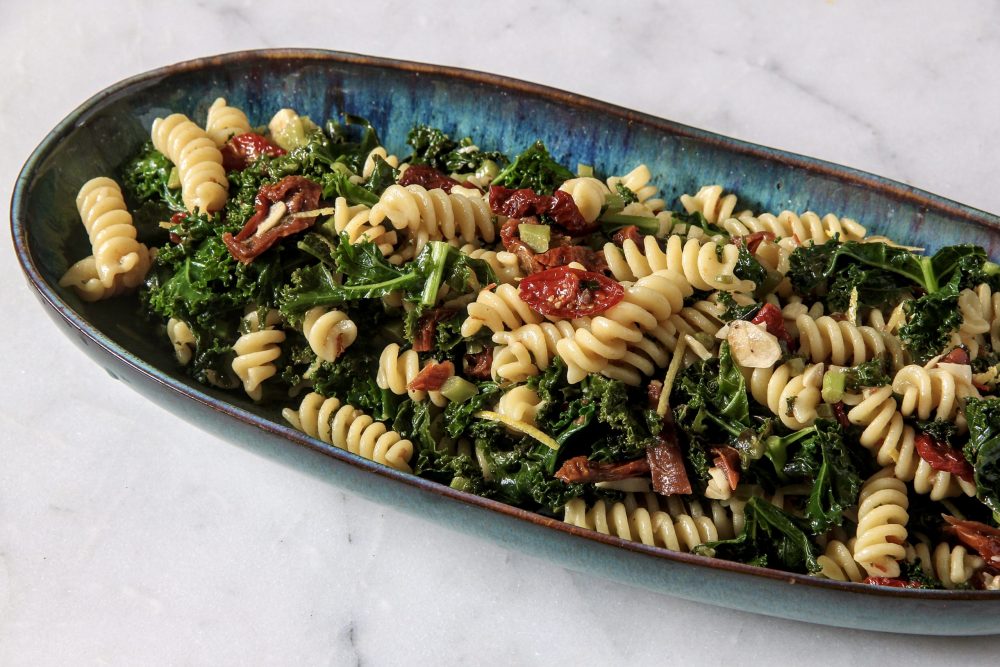
Sundried Tomato and Kale Pasta

Super simple, seasonal, and takes just 15 minutes to cook. Kale is a great source of vitamin K, as well as beta-carotene which the body can convert into vitamin A.

I see loads of recipes using kale where they strip the leafy part off the central stem. I love the contrast of textures, with the stem staying crunchy as the leaves become soft. It also helps reduce food wastage by eating the whole of the produce.

Kale is a plant-based source of dietary iron. Being from a plant, it is in the form of non-haem iron which means it is harder for the body to absorb. Using the lemon juice at the end of cooking adds vitamin C to the dish which can help increase the uptake of plant-based iron.

Serves 2

Ingredients

  • 150g dried pasta of choice
  • 1 tbsp extra virgin olive oil
  • 200g kale, roughly chopped
  • 60g sundried tomatoes, drained and roughly chopped
  • 4 cloves of garlic, roughly chopped
  • 1 unwaxed lemon, zest and juice

Method

  • Bring a large pan of water to the boil and cook the pasta for 2 minutes less than the packet instructions.
  • Separately, in a frying pan cook the kale with the oil for a few minutes till slightly soft.
  • Add the garlic and sundried tomatoes and cook for a further few minutes till fragrant. If needed, add a little pasta water to stop the garlic from burning.
  • Add the pasta with a tablespoon of pasta water and add the lemon zest and juice.
  • Stir to combine and serve immediately.

Per serving: 441kcal/ 11.8g fat/ 1.6g saturated fat/ 64.9g carbohydrates/ 9.0g fibre/ 13.8g protein

Spiced Pumpkin & Lentil Soup

Soup with a delicious autumnal twist making the most out of seasonal pumpkins which are being carved up for Halloween.

Sadly, over half the pumpkins carved at Halloween are under-utilised. The flesh and seeds of carving pumpkins are all edible, even once they have been carved. Pumpkins are a great source of beta-carotene, the precursor to vitamin A as suggested by the gorgeous golden-orange hue of the flesh and, in most cases, skins. A word of caution, if your pumpkin happens to have green skin your soup will adopt a “chip shop curry sauce” colour. Don’t worry, it will still be equally delicious!

If you don’t have any pumpkins hanging around you can substitute butternut squash or sweet potato as an alternative. These vegetables are still high in beta-carotene, an antioxidant that has previously been shown to help reduce the risk of heart disease and certain cancers.

Serves 4

Ingredients

  • 2 large onions, roughly chopped
  • 2 tbsp extra virgin olive oil
  • 4 cloves of garlic, roughly chopped
  • 3 tsp ground cumin
  • 2 tsp ground turmeric
  • 1 tsp dried chilli, or to taste
  • 200g red lentils
  • 500g pumpkin, skin on and roughly diced
  • 200ml coconut milk
  • 10g stock powder
  • 15g fresh coriander, finely sliced

Method

  • Gently fry the onion and oil in a large pan till soft and translucent. Add the garlic and cook for a further 2 minutes.
  • Add the dried spices and cook till fragrant before adding in the remaining ingredients with 1 litre of boiling water.
  • Allow to simmer for 20 minutes till the lentils and pumpkin are cooked through and soft.
  • Blend till smooth and serve.

Per serving: 447kcal/ 18.6g fat/ 2.3g saturated fat/ 50.7g carbohydrates/ 7.6g fibre/ 16.4g protein

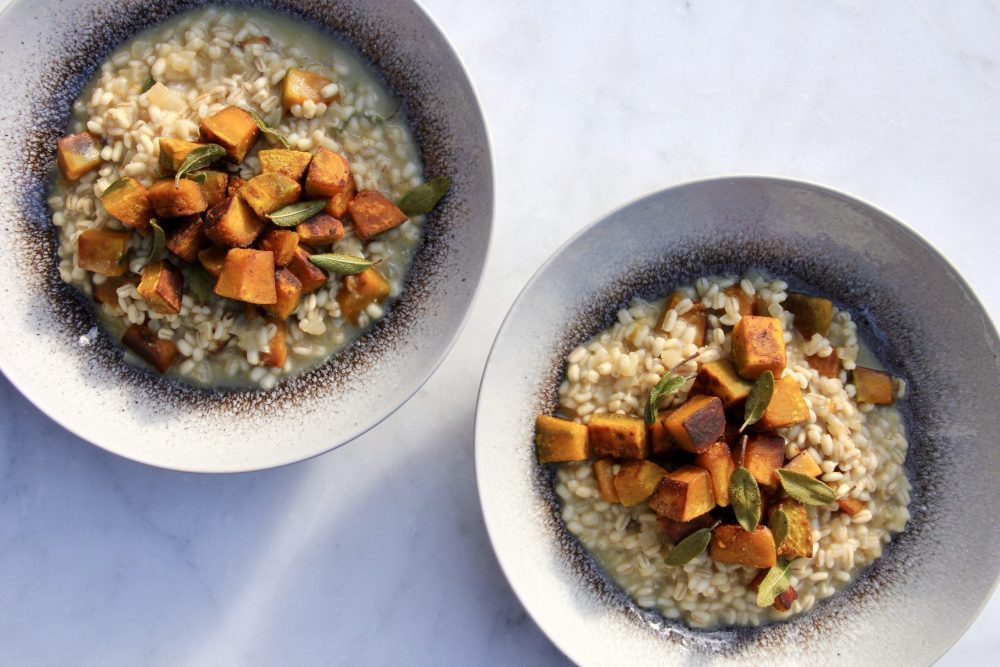
Pumpkin and Sage Pearl Barley Risotto

All the autumn flavours in this alternative risotto using pumpkin and sage. Technically, I am using a squash, Crown Price squash to be precise, but any pumpkin or firm squash will work in its place.

While I am always a fan of leaving skins of fruits and vegetables for the increased fibre and reduced time for cooking, I have removed the skin from this particular pumpkin as it is quite tough and would certainly draw attention away from the dish itself. If I were to replace the pumpkin with butternut squash I would leave the skin on. This can be done to your own personal preference.

Speaking of fibre, swapping traditional risotto rice for quick-cook pearl barley not only saves you time of cooking and stirring for a traditional risotto, but it also increases the fibre content of the dish. Replacing the pearl barley with white risotto rice would reduce the fibre content down by 4g per serving! That’s almost half the total fibre content of the dish. Pearl barley also stays a bit more al dente, which means the overall dish has a lovely firm bite which I particularly enjoy.

If you need to adapt to a dairy free version, substitute the butter for olive oil, and either omit the cheese or use a dairy-free alternative or you can use nutritional yeast for a slight cheesy flavour.

Serves 2

Ingredients

  • 1 large onion, finely diced
  • 15ml extra virgin olive oil
  • 2 garlic cloves, crushed and chopped
  • 100g quick cook pearl barley
  • 175ml dry white wine (optional to replace with water)
  • 10g stock powder
  • 20g parmesan
  • 250g pumpkin, skin peeled and cut into 1cm cubes
  • 5ml extra virgin olive oil
  • 20g butter
  • 10 large sage leaves (or 20 small leaves)

Method

  • Gently fry the onion with 15ml olive oil over a low heat till transluscent and soft. Add the garlic and cook for a further 2 minutes.
  • Bring 350ml water up to the boil in a saucepan and add the stock, keep on a low heat.
  • Add the pearl barley to the onions and toast for 2 minutes. Add the white wine and stir to help release some of the starch.
  • Take a separate large frying pan and add 5ml oil and 15g butter. Once the butter has melted add the pumpkin. Allow to brown slowly over a medium heat, stirring frequently.
  • When the wine is almost absorbed add a ladleful of hot stock, and repeat till almost all the stock has been absorbed. Check the pearly barley is cooked, but still with some bite. This should take 10-12 minutes.
  • Once the risotto is almost cooked, move the pumpkin to one side of the pan, add the remaining 5g of butter to the now clear side and fry the sage leaves for 2 minute till crisp and fragrant.
  • Remove the risotto from the heat and add half of the sage and pumpkin to the risotto with the parmesan and stir through.
  • Dish up and serve with the remaining pumpkin and sage over the top.

Per serving: 549kcal/ 22.1g fat/ 9.0g saturated fat/ 54.5g carbohydrates/ 8.5g fibre/ 12.9g protein

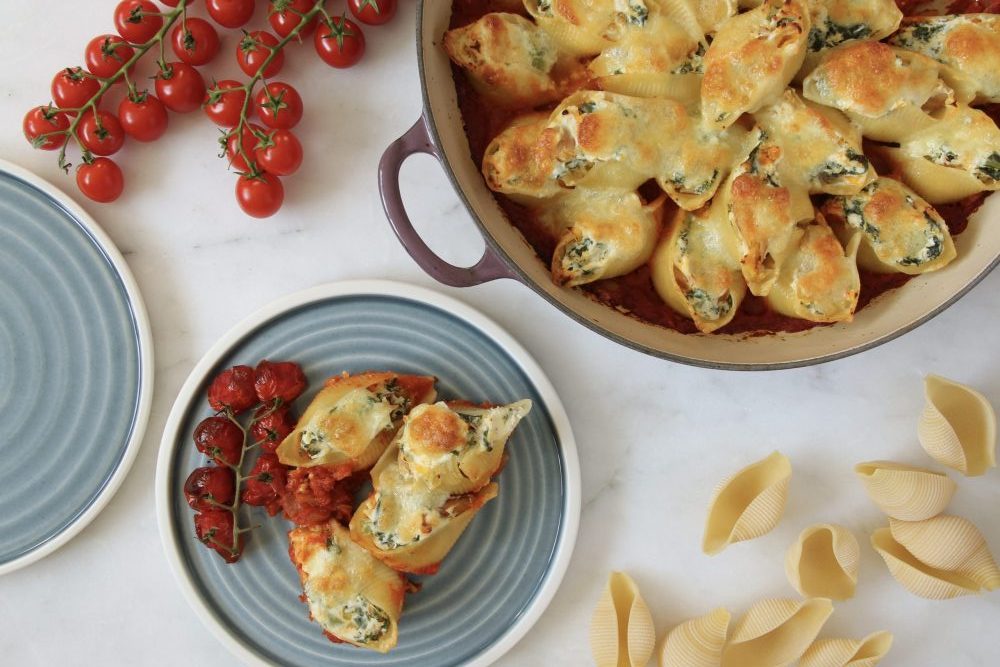
Squash, Kale and Ricotta Baked Shells

Seasonal autumnal butternut squash, roasted to maximise the flavour. Leaving the skin on the squash increases the fibre content, so don’t be tempted to peel! It’ll save you time, keep your gut bacteria happy, and increase the flavour of the whole dish as it caramelises in the over from its first roasting!

I like to leave everything a little chunky, this way you can actually see what you’re eating, whether it be the creamy ricotta, soft butternut squash or kale. The final topping of mozzarella gives a lovely golden hue to the whole dish, as well as giving some lovely texture which I always can’t resist to leave to the final mouthful.

This dish is perfect for wowing a crowd at a dinner party. It can happily sit in the fridge for a day or two, and by cooking the pasta in advance and allowing it to cool in the present of oil, you increase the fibre content through the formation of something called resistant starch. So don’t be afraid to prepare in advance and then whip out at a later date (even if it’s just for a mid-week dinner!). Alternatively, assemble the dish bar the final crown of mozzarella and you can freeze portions which can be cooked at a later date.

Serves 5

Recipe

  • 500g Butternut Squash, skin on and cubed
  • 200g giant pasta shells
  • 1 tbsp olive oil
  • 120g kale, sliced
  • 1 tsp rapeseed oil
  • 2 large onions, chopped
  • 3 cloves garlic
  • 350g rough passata
  • 500g ricotta
  • ¼ nutmeg, grated
  • 1 ball mozzarella

Method

  • Set the oven to 150°C fan/160°C convection. Place the butternut squash on a roasting tray and cook for 20 minutes till golden brown. Turn the oven up to 180°C.
  • Meanwhile, cook the pasta for 2 minutes less than the packet instructions. Drain and mix the olive oil over to stop the shells from sticking.
  • Steam the kale over boiling water for 4 minutes.
  • In a large ovenproof dish, gently sauté the onions in rapeseed oil over a low heat. Once soft add the garlic, cook for a further minute before adding the passata and cook till reduce by a third.
  • Meanwhile, mix the ricotta and nutmeg together and season to taste with salt and pepper. Break up the roasted squash roughly, add to the ricotta mix with the kale. Stuff the pasta shells with the mixture.
  • Off the heat, arrange the stuffed shells into the dish and top each shell with mozzarella.
  • Bake in the oven for 20-25 minutes till golden brown and bubbly.
  • Delicious served with roasted vegetables or a side salad.

Per serving 417kcal/ 20.0g fat/ 9.3g saturated fat/ 34.6g carbohydrates/ 5.0g fibre/ 18.6g protein
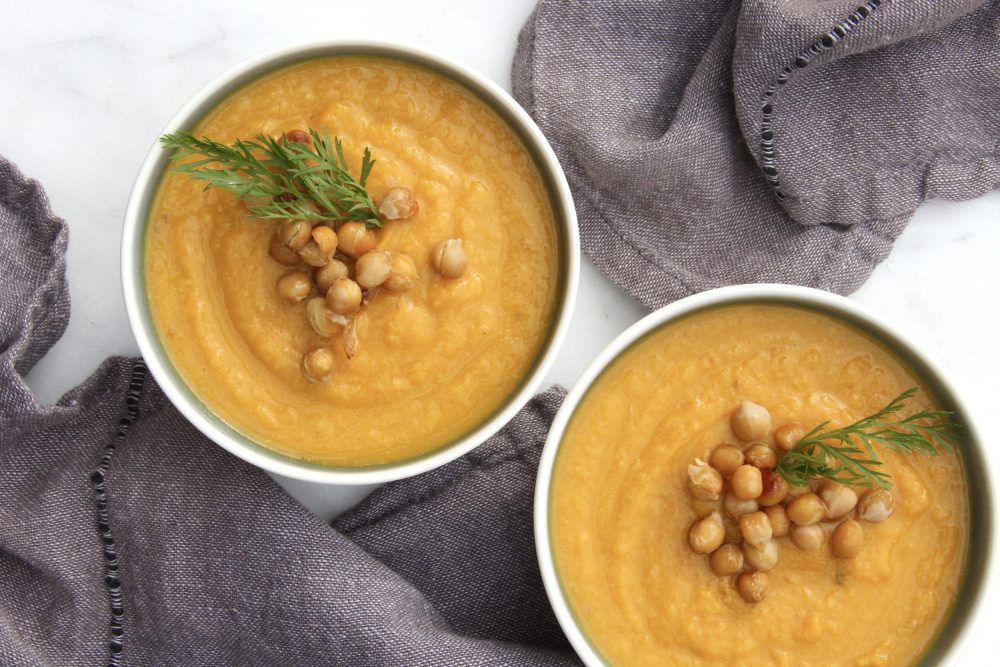
Roasted Butternut Squash, Carrot and Chickpea Soup

Autumn is upon us, so therefore so is soup season. I always enjoy a good bowl of hot soup on a crisp cold Autumn day, but sometimes I find myself wondering how to get the protein in for the meal. Using beans, pulses or lentils is a great way to include some protein in a soup meal.

In an effort to save time and reduce food waste I don’t peel the squash or carrots. Instead I scrub them before removing the tops and tail. The skin is easily blended into the soup and will contribute to some of the fibre content. What is not to love?

Any leftover soup can be stored in the fridge in an airtight container for up to 5 days. Alternatively, this soup freezes really well so you can make a large batch of this to pull out when you need a quick lunch.

Serves 4

Ingredients

  • 2 tbsp extra virgin olive oil
  • 400g butternut squash, cut into 1″ cubes
  • 400g carrots, cut into 1″ pieces
  • 1 large onion, cut into 1″ pieces
  • 4 clove of garlic, skin on
  • 1 tin of chickpeas, drained and rinsed
  • 1 stock cube of choice

Method

  • Preheat the oven to 180°C fan/ 190°C convection.
  • Mix all of the ingredients, except the stock cube, in a large roasting tin. Roast in the oven for 1 hour, stirring half way through.
  • Boil 900ml of water and add the stock cube.
  • Remove the garlic cloves from their skins and add the roasted vegetables to the stock.
  • Blend the soup to the consistency of choice and serve.

Per serving: 276kcal/ 11.5g fat/ 1.7g saturated fat/ 32.7g carbohydrates/ 8.0g fibre/ 7.0g protein

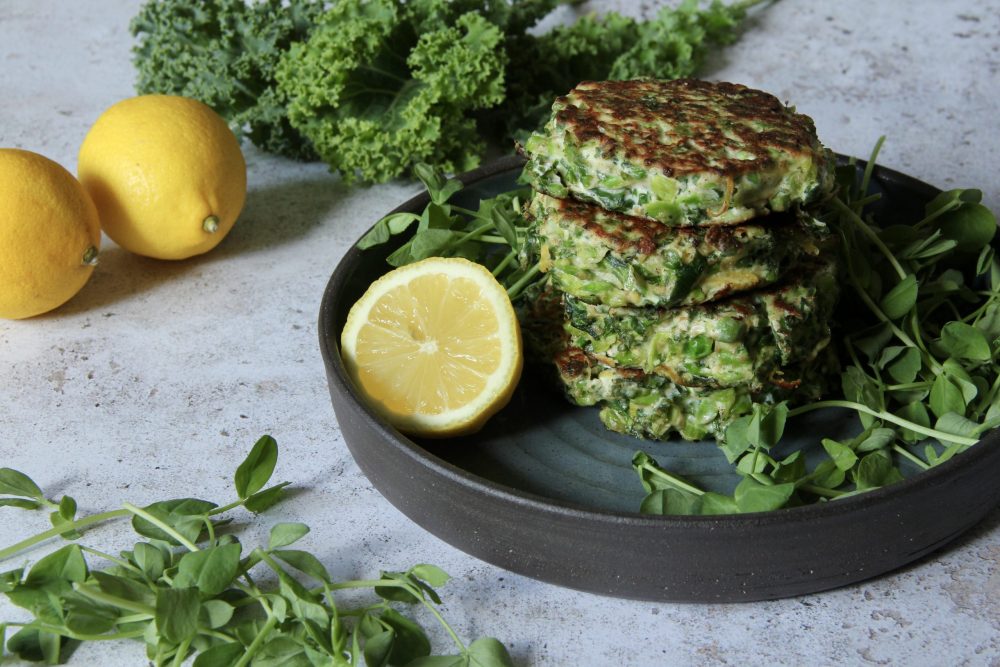
Green Kale Fritters

I’ve got so much kale growing at the allotment. Both curly kale and Cavolo Nero. I love them both, and I believe they both have their place in particular dishes. These fritters, however, will benefit from any type of kale you grow or can buy in the shops. Alternatively, if you don’t have kale you could use other green leafy vegetables such as cabbage, spinach, Swiss Chard or spring greens.

I also use frozen peas and edamame beans. Much cheaper and handy as they are kept in the freezer ready for use whenever you want. Frozen vegetables can also often have higher nutrient content as they are picked at their peak and then frozen within hours, locking in nutrients that may be lost otherwise.

If you need to make gluten-free fritters, use gram flour or rice flour instead of wholemeal flour. I use wholemeal because it helps with the fibre content of the fritters, but also is something I keep in the cupboard as a staple. The flour’s role in the fritters is just to help bind them together. When I didn’t add the flour in during recipe testing they fritters were extremely fragile and would easily fall apart. While they tasted great, I thought they were too difficult to handle.

These fritters are delicious simply served with a wedge of lemon and some salad leaves of choice. Serving with the lemon after cooking adds vitamin C which can help your absorb the plant-based iron from the beans and kale. You could add any other toppings of your choice such as a poached egg to make the perfect brunch, or top with hummus, guacamole, soured cream or your favourite sauce.

Makes 8 fritters

Ingredients

  • 150g kale, finely sliced
  • 75g frozen peas, defrosted
  • 75g frozen edamame beans, defrosted
  • 250g ricotta
  • 3 large eggs
  • Zest of 1 lemon
  • 8-10 mint leaves, finely sliced
  • 15g parsley, finely sliced
  • 1/2 a nutmeg, grated
  • 30g wholemeal flour, or if making gluten-free gram flour or rice flour
  • 2 tsp extra virgin olive oil

To serve

  • Salad leaves of choice
  • Lemon wedges
  • Poached egg (optional)

Method

  • Place the sliced kale into a large bowl. Boil the kettle and pour over the kale to blanch for 30 seconds before draining and running under cold water to maintain the bright green colouring. Drain as much water from the kale.
  • In a separate large bowl add the peas and edamame beans and crush before adding all the remaining ingredients except the flour.
  • Add the kale and mix to distribute throughout the batter. Add the flour and mix.
  • Preheat large frying pan and heat over a medium heat with 1 tsp oil.
  • Take a heaped spoonful of batter and place into the pan to form a fritter. Cook in batches for 2-3 minutes per side till golden brown.
  • Serve the fritters with fresh pea shoots and lemon wedge, and optional top with a poached egg.

Per 2 fritters: 232kcal/ 13.7g fat/ 5.0g saturated fat/ 10.9g carbohydrates/ 4.1g fibre/ 15.5g protein

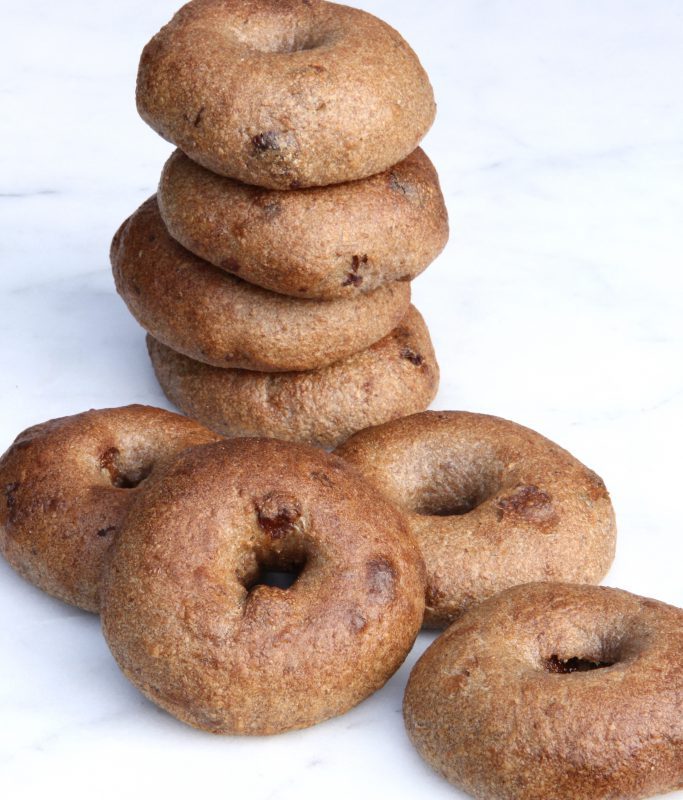
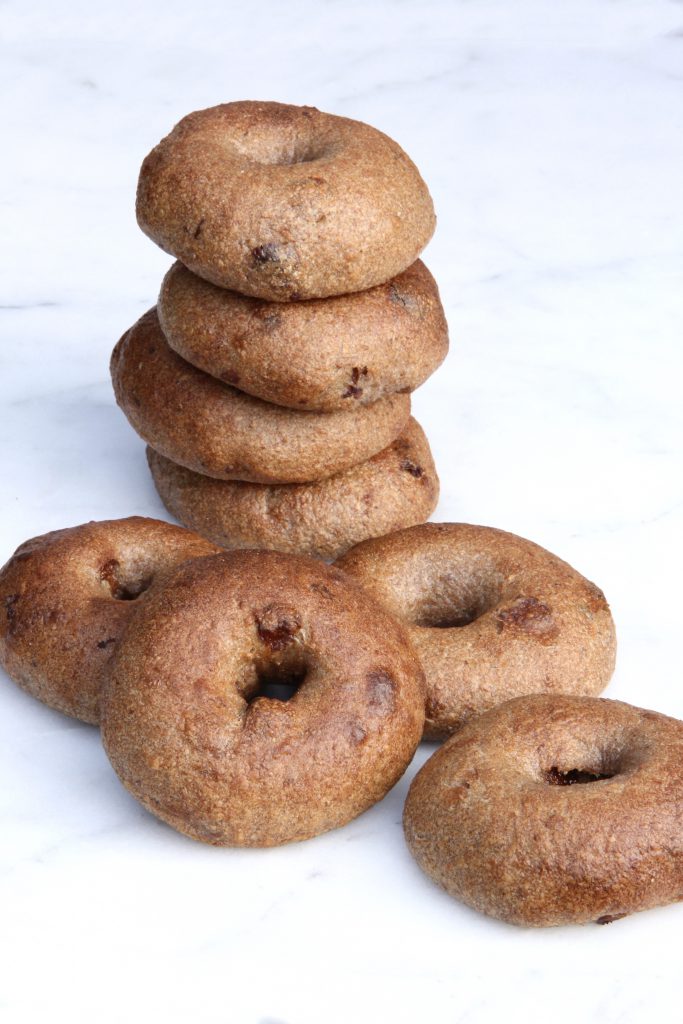
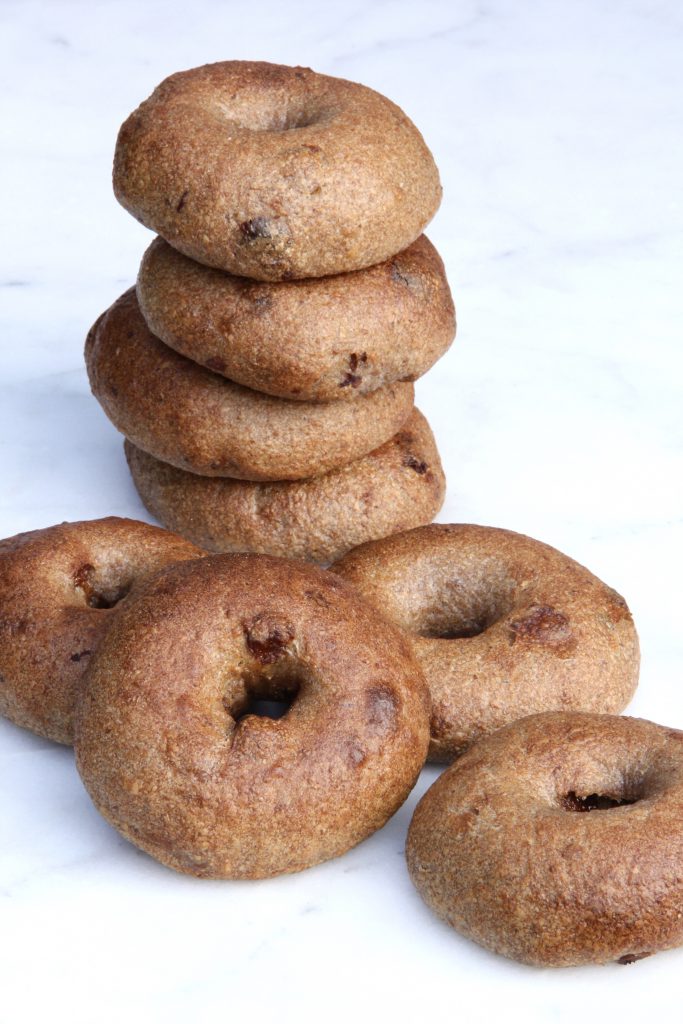
Sourdough Cinnamon and Sultana Bagels

When I presented seeded multigrain sourdough bagels to my brother, the first thing he said was that I needed to make cinnamon and raisin sultanas. So grateful(!) but I took the constructive criticism and made this recipe for him.

I’ve adapted the Margot Bakery sourdough bagel recipe. It’s a great recipe, however, I could never fit 12 bagels onto my baking sheets, and the volume of dough was too large for my stand mixer! I also wanted to incorporate more wholemeal flour as a way of increasing the fibre content. I also didn’t have the malt syrup, so for anyone who wishes to make vegan bagels, swap the honey back out for the original malt syrup.

You could of course do the more traditional approach of cinnamon and raisin bagels, but I have always preferred sultanas over raisins. Other fruits that would work well in this recipes include dried blueberries, cranberries or cherries.

The bagels are best eaten fresh on the day, although still delicious if left for a day or two. A great way to capture that freshness is to slice the bagels in half and then freeze. This way they are ready to pop straight into the toaster from the freezer and are ready to be eaten within minutes.

Makes 12 bagels

Ingredients

For the leven

  • 35g 50:50 strong white: strong wholemeal flour
  • 115g 50:50 strong white: strong wholemeal flour
  • 25g granulated sugar

For the dough

  • 20g honey or malt syrup if making vegan
  • 180g strong white flour
  • 180g strong wholemeal flour
  • 400g plain flour
  • 12g salt
  • 10g ground sweet cinnamon
  • 120g sultanas

Extras

  • Vegetable oil
  • 50:50 mix plain flour: rice flour
  • 2 tsp bicarbonate of soda
Sourdough Cinnamon and Sultana Bagels

Method

  • The morning before making the bagels, refresh your starter with 35g 50:50 strong white: strong wholemeal flour and 35g water. Mix and leave for 10-12 hours.
  • The night before making the bagels, in a large jar mix 70g of the refreshed starter mixture, 115g 50:50 strong white: strong wholemeal flour, the sugar and 70g water. Leave for 10-12 hours.
  • The next day, mix all the remaining ingredients, 425g water and 250g of the refreshed starter. Knead the dough on a medium setting of a stand mixer fitted with a dough hook, frequently scraping down the sides and hook, for around 8-10 minutes. Alternatively, you can work the dough by hand, but it will be sticky so resist the urge to add extra flour. Knead for 10 minutes.
  • Lightly grease a 3l container. Transfer the dough, cover and allow to rest at room temperature for 3 hours.
  • Line 2 large baking trays with baking parchment and dust with 50:50 rice and plain flour.
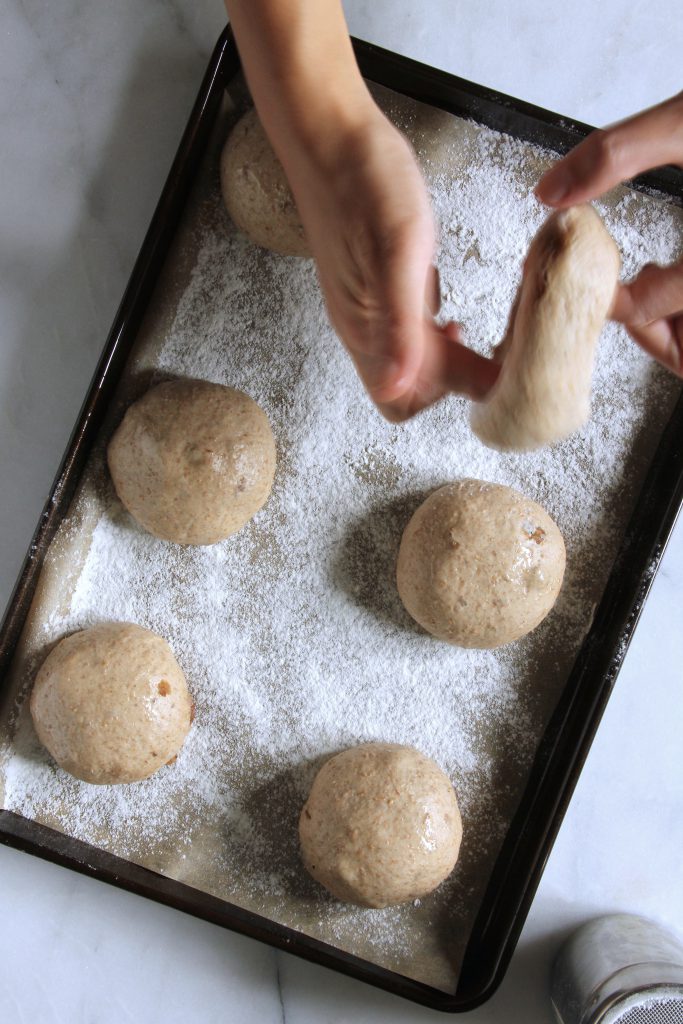
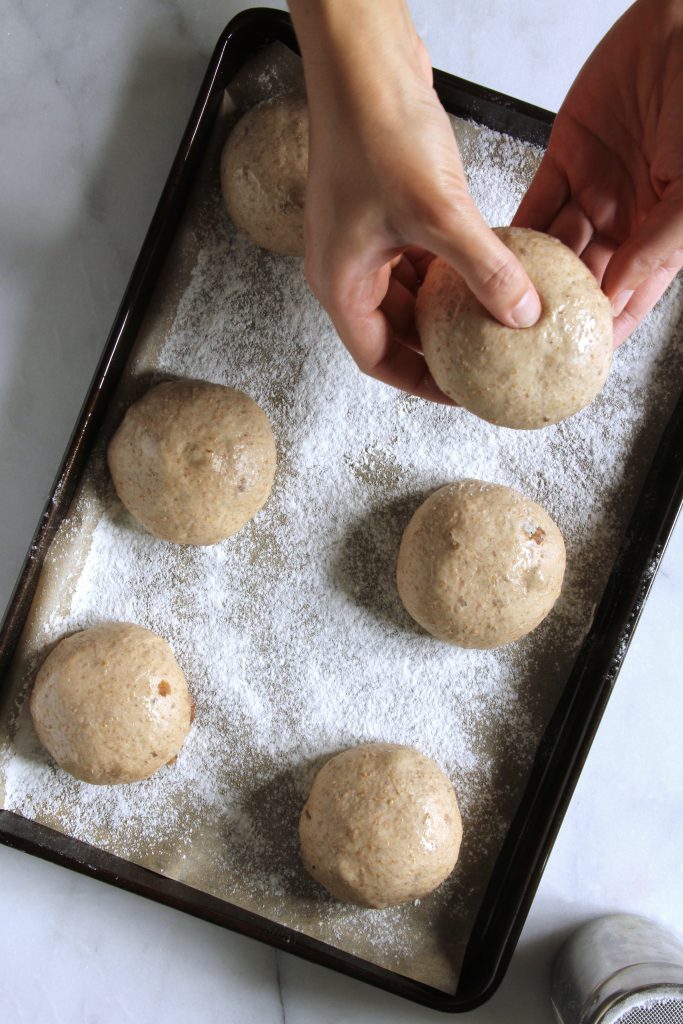
  • Divide the dough into 12 equal portions and roll out into neat balls. Try to tuck any sultanas into the dough to prevent burning when baking.
  • Place 6 balls evenly spaced out onto a tray and cover with lightly oiled clingfilm. Leave to rest for 1 hour at room temperature.
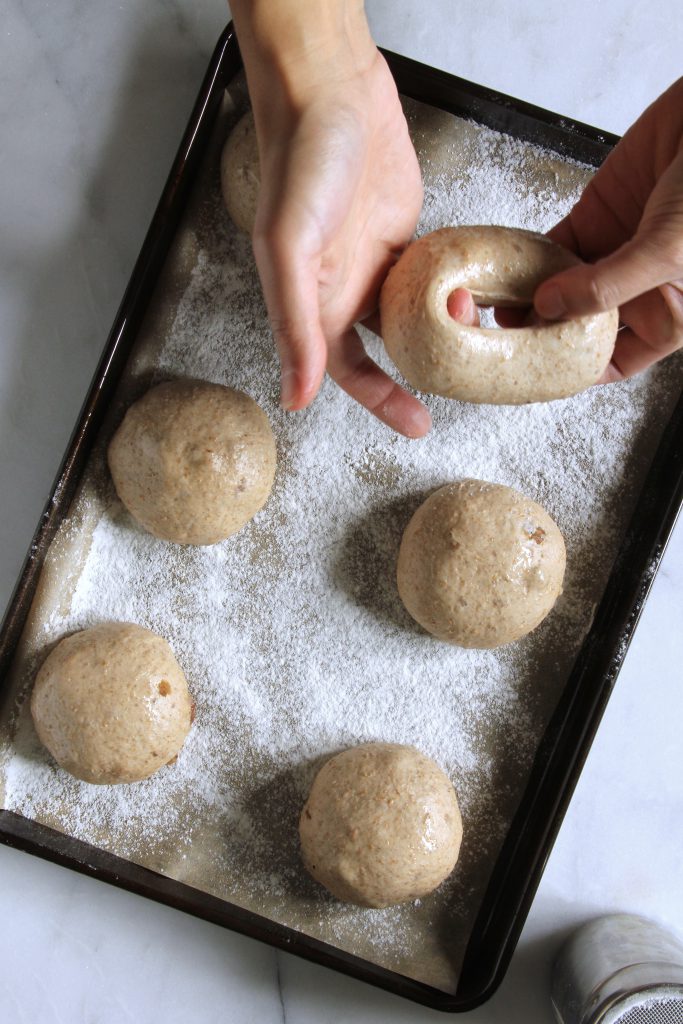
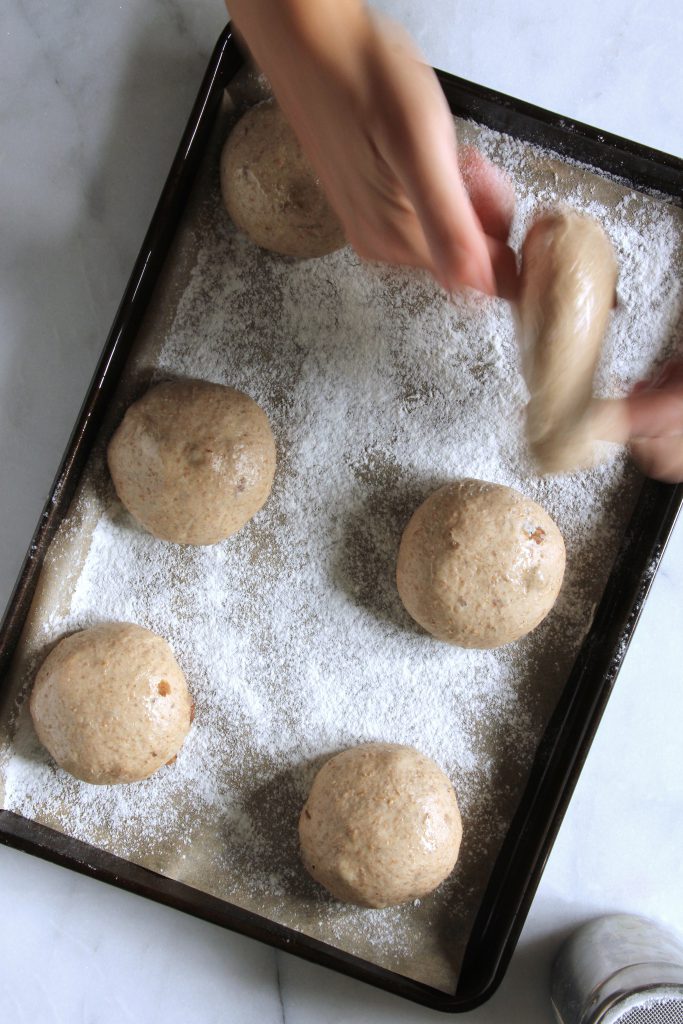
  • Peel back the clingfilm, take one ball and make a hole in the centre of the ball. Using two fingers, stretch the ball into a bagel shape using a winding motion. Redust the parchment with 50:50 rice and plain flour and place the bagel back down.
  • Repeat for the remaining 5 balls on the baking tray.
  • Starting back with the first bagel, repeat the winding stretch to open the bagel back up.
  • Cover back up with the oiled cling film and leave to prove at room temperature for 3-6 hours depending on the temperature of the room; in warmer weather prove for a shorter period of time.
  • Transfer to the fridge overnight for up to 24 hours.
  • The next day remove the bagels from the oven and allow to return to room temperature.
  • Preheat the oven to 220°C fan/240°C convection, place a tray in the bottom of the oven, and bring 2l of water to the boil in a large pan.
  • Once the water is boiling add the bicarbonate of soda.
  • Boil the bagels in batches of up to 3 depending on the size of your pan for 30 seconds.
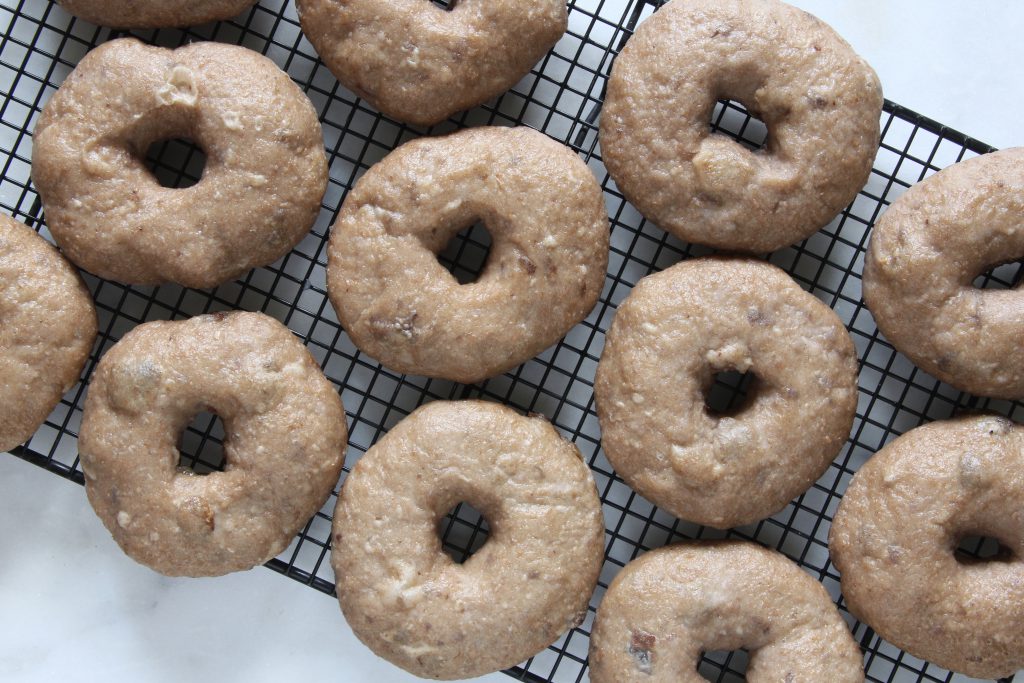
  • Remove and allow to dry slightly on a wire rack before transferring to a clean baking sheet lined with baking parchment, allowing space for them to expand in the oven.
Boiled bagels ready for baking
  • Once all the bagels are boiled, boil 200ml water.
  • As quickly as possible, place the trays of bagels into the oven and pour the boiled water into the tray at the bottom of the oven.
  • Close the door to trap as much steam as possible. Reduce the temperature of the oven to 20°C and bake for 15 minutes.
  • After 15 minutes, remove the tray of water and if your bagels are on split levels, rotate your trays around for even cooking. Bake for a further 8-9 minutes.
  • Remove and allow to cool on a wire rack.

Per bagel: 205kcal/ 1.2g fat/ 0.2g saturated fat/ 41.2g carbohydrates/ 3.1g fibre/ 6.6g protein

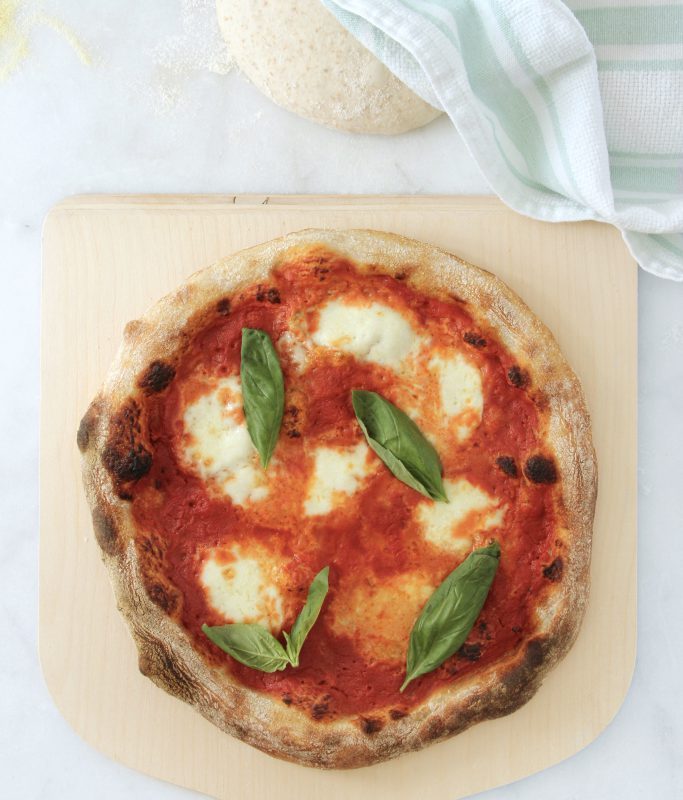
Sourdough Margherita Pizza

Simple, classic, completely delicious. You could pimp it out with any toppings you wish, or just keep it as is.

The trick is to have a very thick pizza pan or a pizza stone. These retain the heat when you put the pizza on to cook, resulting in a crispy base. I use a cast iron pizza pan, which can seriously retain its heat.
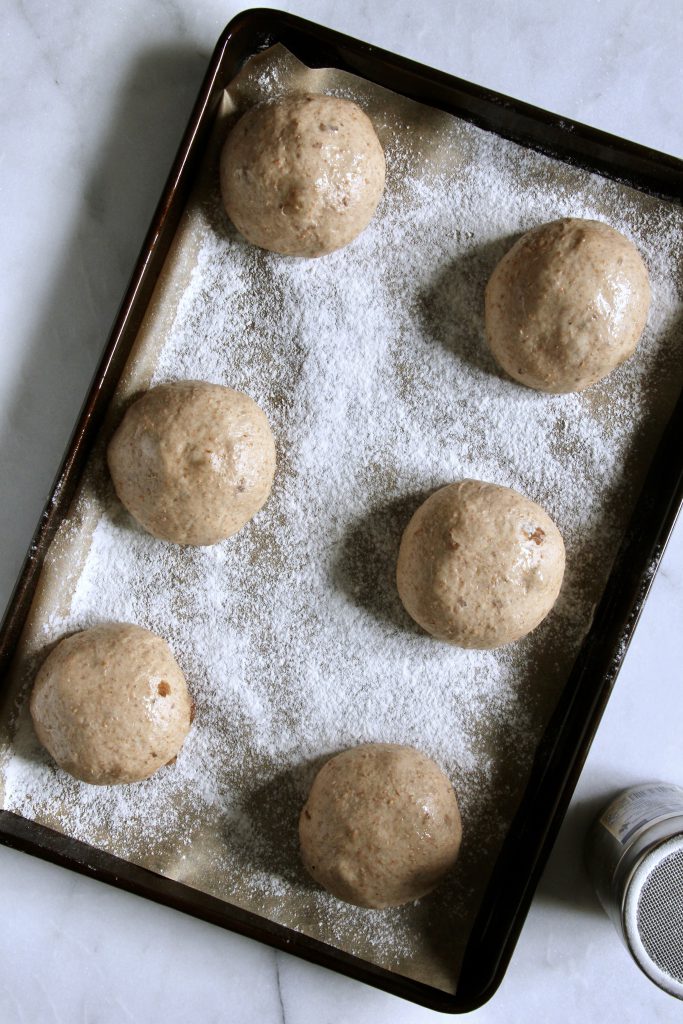
Use my sourdough base recipe, picking up after the 30 minute bench rest.

Makes 3 pizzas

Ingredients

  • 300g passata
  • 150g buffalo mozzarella
  • 3 springs of fresh basil
  • Semolina and flour for dusting

Method

  • Preheat the oven to maximum temperature (mine is 275°C fan) and place a heavy bottom tray/pizza stone in the middle of the oven. Allow the oven to reach temperature and wait a further 10 minutes to ensure the tray is fully heated.
  • Dust the work surface with semolina, take a ball of dough and place it on the semolina and finely dust with flour.
  • Using your fingers, press around the edge 1 cm in to form a crust.
  • Using the palm of your hand, press inside this line to flattern the dough in the centre.
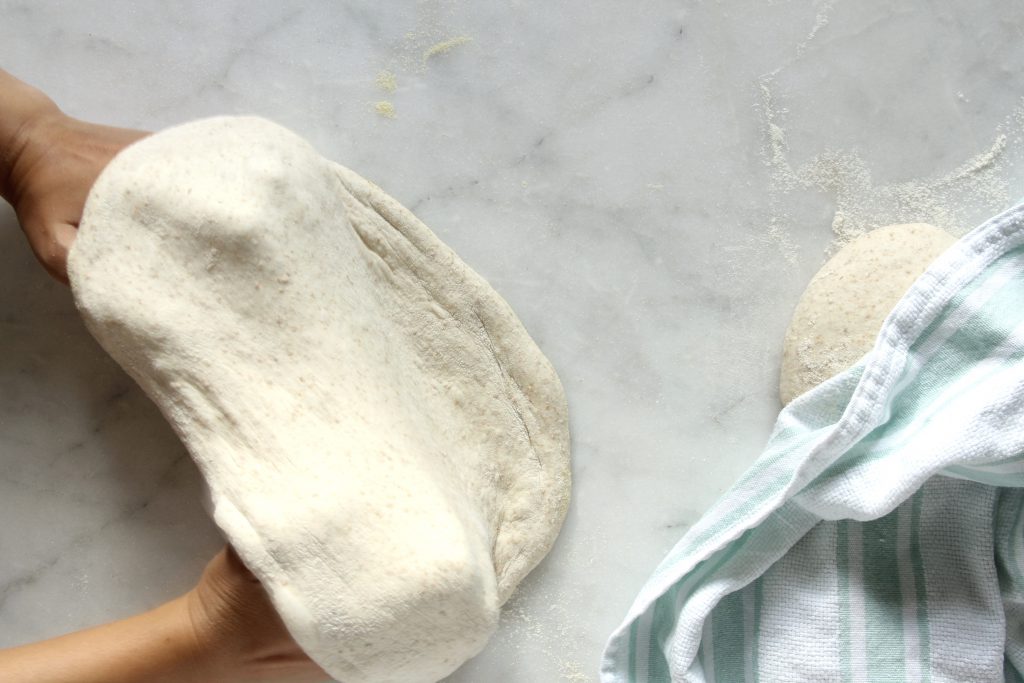
  • When you can press it no more, pick the dough up and using your knuckles, gently ease the dough out so it becomes thin and slightly transparent. Take care not to rip the dough. Ensure the base has an even covering of semolina.
  • Transfer the pizza base onto a pizza peel.
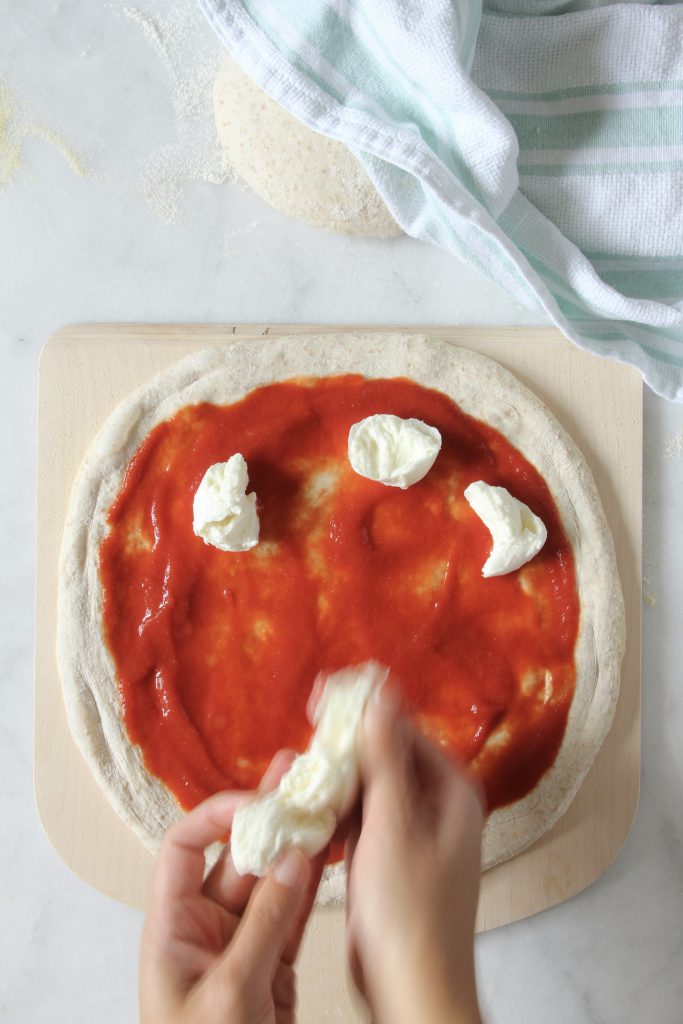
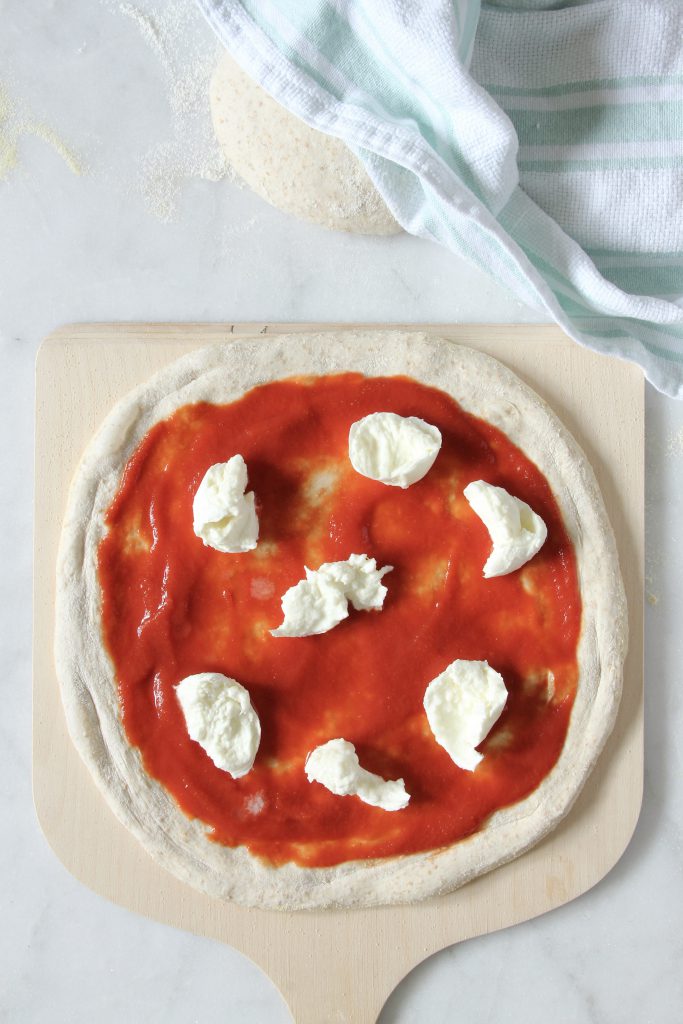
  • Add 100g passata over the base, up to but not on the crust part of the dough.
  • Tear 50g buffalo mozzarella into large chunks and scatter over the passata.
  • Transfer the pizza onto the tray in the oven using a strong and decisive forward and back motion to slide the pizza off the peel.
  • Cook the pizza for anywhere between 6-9 minutes depending on the temperature of your oven. The pizza should have very dark golden blistered crusts, and the mozzarella and passata should be bubbling and start turning golden.
  • Remove the pizza, and scatter with fresh basil leaves.
  • Best eaten straight away.

Per whole pizza: 1028kcal/ 13.3g fat/ 7.2g saturated fat/ 145.4g carbohydrates/ 12.3g fibre/ 38.6g protein